
Alifu, the Prince/ss (阿莉芙, Wang Yu-lin, 2017)

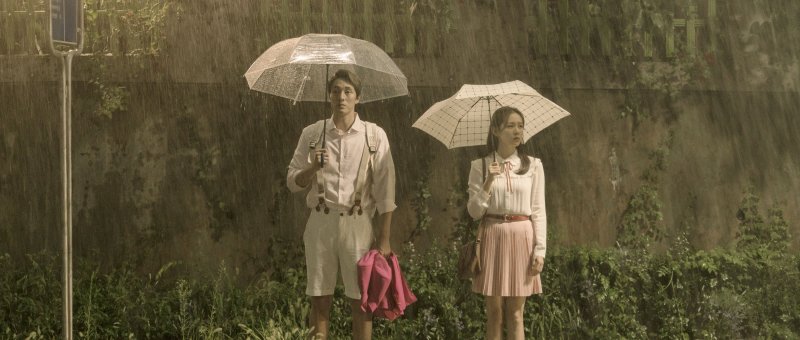
Alifu posterAmong Asian nations, Taiwan has a reputation for being liberal and permissive but if you’re a minority within a minority life is far from easy even if you manage to find support from others in a similar position. So it is for Alifu (Utjung Tjakivalid) – the conflicted soul at the centre of Wang Yu-lin’s nuanced depiction of the road towards self acceptance and actualisation in the face of competing duties and obligations, Alifu, the Prince/ss (阿莉芙, Ālìfú). While Alifu struggles with the demands of being the heir to the Chieftainship of an indigenous tribe with all the rights and obligations that entails, her lesbian roommate struggles with a bad breakup and growing feelings for her transitioning best friend, a drag queen is conflicted about his sexuality, and a transgender bar owner worries for the future of those close to her after she is diagnosed with a terminal illness. Despite the multitude of difficult circumstances, each attempts to deal with their problems in a mature and rational fashion finding love and mutual support from their friends and community even if others sometimes require a little more time.

Alifu, born the son of a tribal chief, identifies as a woman and has been working in a hairdressers in the city to save up for gender reassignment surgery. Her plans for the future are thrown into disarray when she is abruptly called home, walking into a family meeting during which her father (Ara Kimbo) suddenly announces that he is stepping down because of poor health and that his son will be taking over. Though it is possible for a woman to succeed as chief, Alifu has not disclosed her intentions to transition to her traditionally minded father who wears a prominent wooden cross around his neck and does not seem to be particularly understanding of his child’s feelings or emotions, caring only for his appearance in the eyes of the tribe.

Alifu’s transition is subtly revealed in the lengthy opening in which she slowly sheds her “masculine” appearance by discarding her baseball cap, rearranging her hair and stepping into the ladies loos where she puts on colourful lipstick and hoop earrings before making her way to the hairdressers where she earns her living. Meanwhile, her lesbian roommate Pei-Zhen (Chao Yi-Lan) thinks nothing of leaving the house dressed in a way which best makes her feel comfortable only to cause a mini ruckus in the salon when her ex gives her the side-eye for openly flirting with another client apparently after “something special”. After hours, Alifu picks up extra money by doing hair and makeup for the drag acts at a local gay bar where she has also drawn close to the owner, Sherry (Bamboo Chen), who is in a long-term though apparently non-sexual relationship with a former gangster (Wu Pong-fong).

Alifu soon develops a liking for a new drag act at the bar, describing him as somehow “not like the others”. Chris (Cheng Jen-shuo), a local government worker, is a mild mannered sort apparently happily married to a piano teacher (Angie Wang) and living a conventional middle-class life, except that he likes to stay out late on Fridays performing at Sherry’s drag bar. Though it would be a mistake to assume Chris is gay just because he enjoys drag, his “secret life” eventually places a wedge between himself and his wife who is hurt to find out about his alter-ego through a third party. Chris’ wife doesn’t necessarily disapprove of his drag career but is disturbed to discover such a big secret in her married life and, understandably, has a lot of questions about the status of their relationship – something Chris isn’t keen on talking about leading to his wife finally throwing him out. Struggling to reconcile his drag persona with his need for a conventional life, Chris finds himself exiled and unable to integrate himself fully as whole person, torn between his conflicting desires. 

Meanwhile, Alifu’s ever supportive best friend Pei-Zhen has begun to develop feelings for her roommate despite the fact that Alifu has no interest in women and Pei-Zhen is a lesbian with no previous interest in male genitals. Seducing her, Pei-Zhen reassures Alifu that male or female she will always love her – something which becomes a minor theme in arguing for fluidity and self identification over culturally defined notions of gender, echoed in the relationship of Sherry and her partner which seems to be deep and loving but also celibate. Perhaps overly convenient, the union of Alifu and Pei-Zhen does at least provide an opportunity to experience the best of both worlds in allowing Alifu to fulfil her obligations to her tribe while also living an authentic life as a transgender woman.

Warm and filled with a particularly Taiwanese brand of humour, Alifu is a sympathetic exploration of life on the margins, both from the perspectives of the LGBT community and that of the indigenous peoples attempting to preserve their traditional culture whilst acknowledging their place in the modern world. Arriving at an important moment, Wang Yu-lin’s empathetic drama is a celebration of love and equality but most of all of the power of self-acceptance and actualisation in bringing about real social change.


Screened as part of the Chinese Visual Festival 2018.

Original trailer (English subtitles)
Somewhere Beyond the Mist (藍天白雲, Cheung King-wai, 2017)

Somewhere Beyond the Mist posterCheung King-wai, making his narrative feature debut, opens with a quote from Dostoevsky’s The Brothers Karamazov to the effect that people, even bad people, are often far more innocent and pure-hearted than most realise, including we ourselves. The quote, overlaid above the vision of the city at night glowing red like dying furnace, introduces us to the story we are about to hear – one which is dark, too dark perhaps to imagine, but then again all too real. Caught in the twilight half light, Hong Kong is fiery cauldron of hell, yet when the sun rises and the mist rolls in, it’s hard to see what the night made so terrible.

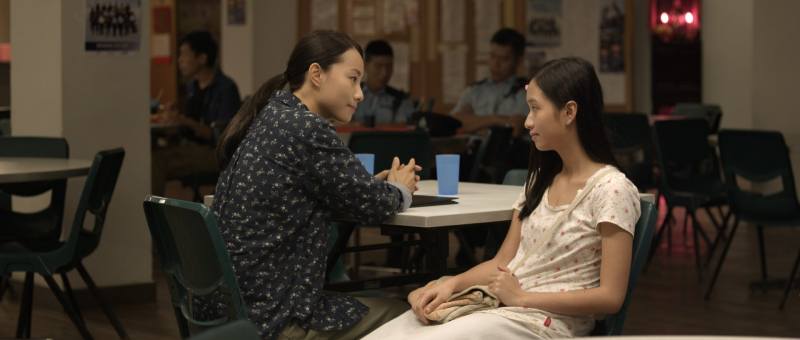
As if to underline the confusion, we begin with a lost old man who is desperately searching either for a way in or a way out. His housekeeper eventually comes to find him and bring him home and we discover he is the father of one of our heroines, Angela (Stephy Tang Lai-yan) – a police detective expecting her first child. Angela’s father, Dr. Ho, is suffering from advanced dementia which is beginning to take its toll on Angela’s home life even if she leaves most of the responsibility to her compassionate husband, Tony.

Meanwhile, the bodies of a middle-aged couple have been discovered at a reservoir. The police set about looking for the couple’s missing daughter, Connie (Rachel Leung Yung-ting), only to find her holed up in the mountains with her best friend Eric (Zeno Koo Ting-hin). Connie reacts with eerie calm when informed of the deaths of her parents, merely repeating that she was already aware before agreeing to accompany the police to the station where she, matter of factly, confesses to having been the one who murdered them.

Cheung’s intention is not to create a murder mystery, Connie freely confesses her crime and isn’t particularly interested in explanations or justifications (though as it turns out, she would have plenty). He is much more interested in the examining the society which made such an “unthinkable” crime possible, exposing the dark heart of an increasingly confused city which finds itself pulled in two directions by various political anxieties.

Back with the original image of the city as a pit of hell, each of our protagonists becomes a link in a circular chain of violence, turning their own feelings of oppression, marginalisation, and despair back on their fellow suffers. Connie, as we find out, comes from an extremely dysfunctional home in which her truck driver father lists small time pimping among his “hobbies”, openly masturbates while watching hardcore Japanese pornography in the family living room only enjoying it more for the thought of taunting his teenage daughter, rapes the family’s disabled mother, and seemingly ignores his grown up son. Catching Connie’s friend Eric hiding in a cupboard in her room, he assumes the pair are up to no good and drags the boy out to viciously beat him with his belt just to remind him who it is that is boss around here, pausing only to remind Connie that “a virgin pussy” is worth more money and if she’s that desperate he can find her a client to satisfy both their needs.

Strangely enough, Eric does not completely object to the beating. He sees it as a sign of validation. Like Connie, Eric is also a lonely, marginalised figure but in his case because he is gay and desperately wants not to be. Being mistaken for Connie’s boyfriend is, in his eyes, a kind of proof of his “manhood” and so it’s a beating he is almost grateful to receive unlike those from his schoolmates who taunt him with broom handles and scream homophobic slurs which only add to his feelings of extreme worthlessness. Eric wanted to be friends with Connie to escape both suspicion and loneliness, but she, in a cutting moment of despair, also uses his insecurity over his sexuality and feelings of inadequacy as a “man” against him to get him to help with her plan to free herself of parental tyranny. Connie hates bullies, but she hates people who don’t stand up to them more. Thus she becomes the gentle defender of another marginalised figure – Jessica, an Indian girl who is targeted because she wears trousers under her school skirt, constantly assailed with slurs about “stinky” curry and various other stereotypical insults that leave her in tears.

Eric points out that his beating at the hands of Connie’s father didn’t bother him because it was “understandable” – a father finds a boy hiding in his daughter’s room and chases him out. The logic is sound, it’s a story you’ve heard before – not like the senseless acts of violence which surround him every day and cannot be explained. Connie’s crime too seems “understandable” given all she’s suffered, a precaution taken to save her from a still more terrible fate she feared might soon come her way. This is the uncomfortable realisation with which Angela is faced during her investigation, forcing her to confront her own difficult relationship with her apparently tyrannical father who made her mother’s life a misery. Angela has to accept that she could easily have been Connie, or Connie her, though she ultimately made the (still taboo) decision to place her father into a home rather than continue to look after him herself. Tube fed and alone, Angela’s father is utterly powerless but however much she wishes she could abandon him she continues to visit even if her resentment is plain. Then again, if a parent breaks the contract first in failing to care for their child in infancy, should the child still be expected to care for them when they are old? Perhaps they owe each other nothing other than civility and an attempt at forgiveness.

Asked why she ran to the mountains, Connie replies that she went to live “the life I deserve”. Dreaming of a world “beyond the mist”, free from the city’s confusion and the constant stream of violence passing from one lonely soul to another, Connie transgressed in order to free herself but has only found greater imprisonment and ongoing mental torment. Beautifully photographed, Cheung’s narrative debut is a bleak and gloomy affair but somehow maintains its belief in a better place Somewhere Beyond the Mist even if it continues to elude us.


Screened as part of the Chinese Visual Festival 2018.

Original trailer (English subtitles)

Soundless Wind Chime (無聲風鈴, Kit Hung, 2009)

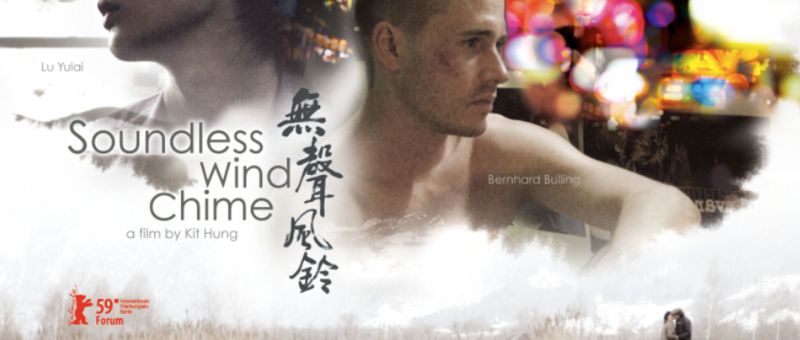
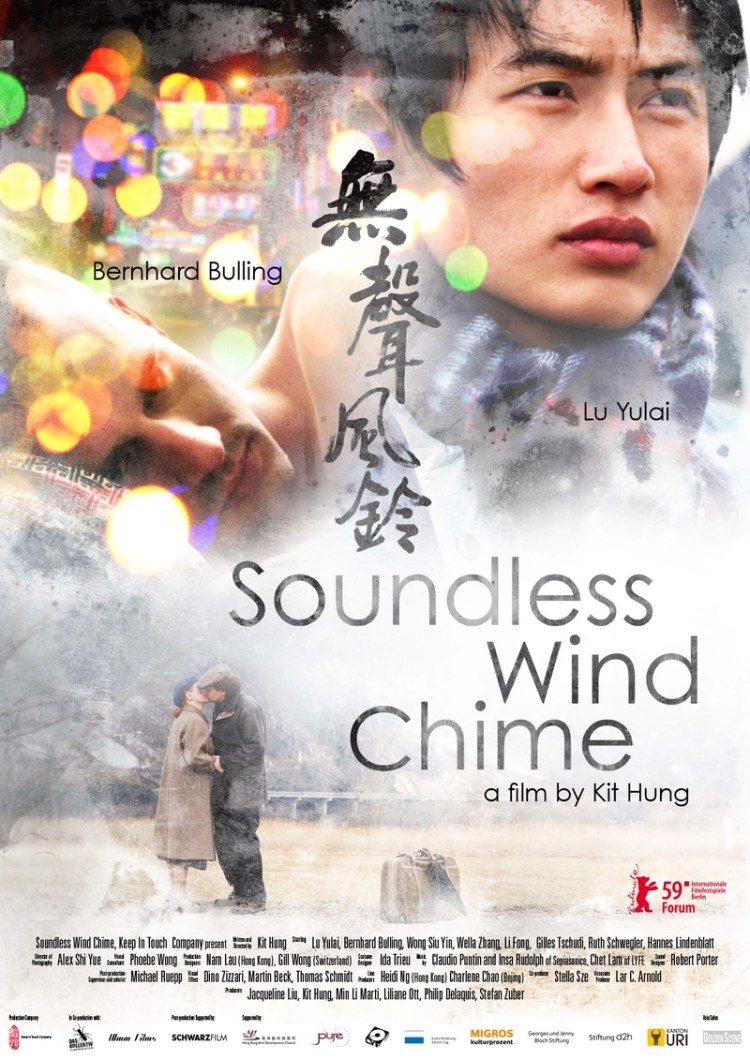
Soundless Wind Chime posterTwo transients find love in the crowded streets of Hong Kong, only to lose it again and long for its return. Deliberately obscure, Kit Hung’s debut Soundless Wind Chime (無聲風鈴, Wúshēng Fēng Líng) is an elegy for lost love, a poetic meditation on the power of memory and a treatise on the art of letting go. Though the lovers manage to construct a world for themselves shielded from the external chaos, its shell gradually fractures under the pressure of real world concerns until tragedy finally intervenes and shatters it forever.

Ricky (Lu Yulai), a mainlander recently arrived in Hong Kong, lives with an aunt (Wella Zhang) who makes a living through prostitution, while he makes ends meet as a delivery boy at neighbourhood eatery. One day, he pauses on the job to watch a foreign juggler (Hannes Lindenblatt) at which point his wallet is stolen by a foreign pickpocket who we later learn to be a German speaking Swiss man named Pascal (Bernhard Bulling). Pascal is currently in an abusive relationship with the juggler whose act is a set up to attract a crowd so that Pascal can rob the captivated spectators. After being beaten up and then brutally raped by his boyfriend, Pascal ups and leaves, eking out a living through juggling on the streets. Arriving at Ricky’s restaurant, he gives him his wallet (and ID card) back and the two strike up a friendship that soon becomes more, living together first at Ricky’s aunt’s and then getting their own place where they can truly be themselves.

To begin with the relationship is a rather happy and open one. Though Ricky decides to leave his aunt’s place immediately after she figures out that he is gay and in a relationship with Pascal, she does not disapprove of his sexuality and only stops to warn him not to invite his ailing mother to Hong Kong because she doesn’t know what the fallout will be from realising her sister is a prostitute and her son is gay all at the same time. Likewise, the lively ladies at the restaurant all seem fairly accepting (or perhaps just oblivious) of Ricky’s relationship with Pascal, impressed by his juggling skill and including him in their after hours mahjong games. The young couple do however have their differences, notably in Pascal’s self destructive streak which sends him back into Hong Kong’s gay nightlife scene while Ricky would rather just spend time home alone together.

The disjointed, non-linear narrative opens in the middle with Ricky making his way to Switzerland in search of Pascal, in a spiritual more than literal sense. Whilst there he runs into another man, Ueli, who looks exactly like Pascal even if he is nothing like him in spirit. The film’s title is inspired by the Chinese belief that a soul lingers after it leaves the body, attaching itself to an animal in order to stay longer and make its last goodbyes. Traditionally, a wind chime is though to reveal the presence of spirits, and it is this Ricky has come looking for as the wind chime outside Ueli’s antique shop gleefully trembles as if it were pleased to see him.

Ricky’s memories spiral away from him as snow covered Switzerland echoes sunny Hong Kong, each thought and action recalling some part of his life with Pascal while he grows closer to the wounded, grieving Ueli whom he believes, on some level, to be Pascal returned to him in another form. Later, Hung shifts the action to the Mainland where Ricky has returned to look after his dying mother, working as a taxi driver to make ends meet. Unable to find Pascal, uncertain whether his soul has flown to Hong Kong where they made their home or the place where he was born, Ricky has himself returned to source and prompted Ueli to make his journey in reverse, bringing him news of Pascal but also perhaps promising an end rather than a beginning.

Hung wears his influences on his sleeves – his style owes much to Wong Kai-Wai but more particularly to Tsai Ming-Liang as his frequent forays into surrealistic musical interludes make plain. Yet his narrative is confused and overly impressionistic, withholding essential pieces of information which would make sense of the more obscure elements such as the lost luggage receipt Ricky takes with him to Switzerland and the contents of the bag he ultimately obtains. Deeply melancholic and filled with a wistful sense of longing – the soundless wind chime of the title lying silent yet attentive, Hung’s dreamlike debut is a strangely affecting exploration of grief and transience as his hero learns how to live after love, abandoning his pain to realms of nostalgia and rediscovering the peaceful emptiness of ordinary silence.


Screened as part of the Chinese Visual Festival 2018.

Original trailer (English subtitles)
Inuyashiki (いぬやしき, Shinsuke Sato, 2018)

inuyashiki_poster_B1_0206D_fin_ol_3Japanese cinema has long been preoccupied by the conflict between age and youth though it usually comes down on the side of the youngsters, even when rebuking them for their selfish immorality. Inuyashiki (いぬやしき), adapted from the manga by Hiroya Oku, is similarly understanding but makes a hero of its sad dad protagonist whose adult life has been a socially acceptable disaster, while finding sympathy for his villainous teenage counterpart who resents his lack of possibilities in an already unfair world.

Unsuccessful salaryman Inuyashiki (Noritake Kinashi) has just moved into a new house of which he is very proud but his wife (Mari Hamada) and children find small and old fashioned. He’s bought sushi to celebrate the occasion, but the other family members ignore him and head out for dinner on their own. Held in contempt at home, Inuyashiki’s working life is also something of a disaster in which he is publicly berated by his boss who threatens to fire him, leaving Inuyashiki kneeling in supplication just to be allowed to work until retirement so he can keep up the mortgage payments on that new house (which he bought for his family who all hate him).

To make matters worse, Inuyashiki has also just received the news that he is suffering from terminal cancer and has only a few months to live. His only ray of sunshine appears when he finds an abandoned dog, Hanako, and decides to adopt her but his wife orders him to throw the dog out in case it messes up the house (that she already hates). Sadly walking Hanako to the park with the intention of sending her on her way, Inuyashiki is struck by a mysterious blast and later wakes up to discover he has become an all powerful cyborg with booster rockets on his back and guns in his arms.

Inuyashiki’s first instinct is that he can use his new found powers to save people. Contemplating his mortality, Inuyashiki was made to feel that his life had been a failure; he’d never done anything of consequence and had never been able to protect anyone. Reviving a wounded bird in the street, he realises he has the power to heal along with super sensitive hearing which allows him to hear the cries of those in peril.

Meanwhile, the teenager caught in the same blast, Shishigami (Takeru Satoh), is heading in the opposite direction. Shishigami is also filled with resentment though mostly as regards his poverty and comparative lack of possibilities. He hates that his single-mother (Yuki Saito) has to work herself to the bone because his father (Kiyohiko Shibukawa) left the family for another woman with whom he has built another home and become extremely wealthy. He hates that his video game otaku friend (Kanata Hongo) is mercilessly bullied and has stopped coming to school altogether rather than fight back. Filled with a young man’s rage and a mild kind of psychopathy, Shishigami doesn’t see why it’s wrong to become a bully rather than fighting them. Frustrated beyond reason he declares war on an uncaring society and sentences everyone in Japan to death for their indifference to their fellow citizens.

The conflict between the angel and the devil concludes in predictably bombastic fashion as our two cyborgs go head to head in a climactic battle for the soul of Japan. Strangely enough both men are motivated by love even if one’s actions are darker than the other’s. Inuyashiki wants to protect, to be someone his family can respect and depend on – he flees the scenes of his miracles because he isn’t interested in being a “hero”, just in being of use. Shishigami, by contrast, is motivated by love for his mother whose continuing suffering proves too much for him to bear though his attempts to take revenge only end in more tragedy. Mustering all the technology of the age from smartphones to live broadcasts, Shishigami makes himself a familiar face on TV sets and LCD screens across the country to preach his message of hate as a declaration of war.

Shishigami proclaims that Inuyashiki’s sense of justice is no match for his hate, but there is a definite irony in the squaring off of two men from different generations trying to figure out their differences by pounding the living hell out of each other and destroying half of Tokyo in the process. Still, that is in many ways the point as these two “gods” actively choose the sides of light and darkness, vying for the right to rule the future as forces of destruction or salvation.


Screened at the 20th Udine Far East Film Festival.

Original trailer (English subtitles)
The Blood of Wolves (孤狼の血, Kazuya Shiraishi, 2018)

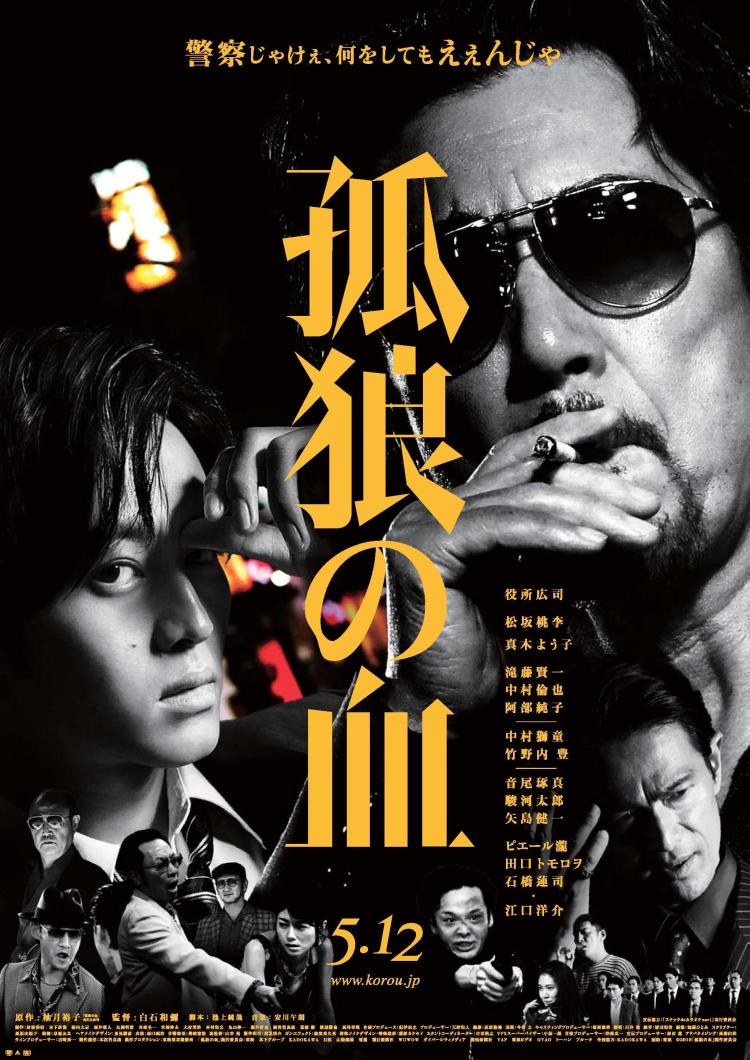
korou_honpos_0220_fin.aiJapanese cinema, like American cinema, is one of the few in which the hero cop is a recognisable trope. Though they may be bumbling, inefficient, obsessed with bureaucracy, or perhaps just lazy, police in Japanese cinema are rarely corrupt or actively engaged in criminality. Even within the realms of the “jitsuroku” gangster movie, the police maintain a fringe presence, permitting the existence of the underground crime world in order to contain it. “Jitsuroku” is, in a fashion, where we find ourselves with Kazuya Shiraishi’s throwback underworld police story, The Blood of Wolves (孤狼の血, Koro no Chi). Set in 1988, the end of the Showa Era which had seen the rebirth of post-war Japan and the ascendency of yakuza thuggery, The Blood of Wolves is based on a novel by Yuko Yuzuki rather than a “true account” of life on the frontlines of gangsterdom, but otherwise draws inspiration from the Battles Without Honour series in updating the story of nihilistic yakuza violence to the bubble era.

In 1988, a young accountant “goes missing” sending his sister to ask the police for help in locating him. The case gets passed to sleazy detective Ogami (Koji Yakusho) and his new rookie partner, Hioka (Tori Matsuzaka). Ogami leers disturbingly at the dame who just walked into his office before dismissing the newbie and extracting a sexual favour from the distressed relative of the missing man. Unfortunately, the accountant turns up dead and the bank he worked for turns out to be a yakuza front caught up in a burgeoning gang war between the Odani with whom Ogami has long standing connections and the gang from the next town over who are looking to increase their territory.

Ogami, a chain smoking, hard drinking, womanising detective of the old school, has one foot in the yakuza world and the other on the side of law enforcement. Hioka, a recent graduate from the local but also elite Hiroshima University (something of a rarity in his current occupation), is not quite sure what to make of his new boss and his decidedly “unorthodox” methods, becoming increasingly concerned about the way the police force operates in a town defined by organised crime. Deciding that Ogami has gone too far, he eventually makes the decision to go to IA with a list of complaints but there’s still so much he doesn’t know about Hiroshima and it is possible he may have picked the wrong side.

What he discovers is that the police force is so intrinsically rotten as to have become little more than a yakuza gang itself, only one with the legal right to carry guns and a more impressive uniform. Ogami, for all his faults, apparently has his heart in the right place. His “friendships” with gangsters are more means to an end than they are spiritual corruption, gaining leverage that will help him keep a lid on gang war – after all, no one wants a return to the turbulent days of the 1970s when the streets ran red with the blood of unlucky foot soldiers and that of the civilians who got in their way. Meanwhile Hioka, starting out as the straight-laced rookie, is himself “corrupted” by the corruption he uncovers, developing a complex mix of disgust and admiration for Ogami’s practiced methods of manipulation which, apparently, place public safety above all else.

Ogami, as he tells the conflicted Hioka, knows he walks a tightrope every day, neatly straddling the line between cop and yakuza, and the only way to stay alive is to keep on walking knowing one slip may lead to his doom. He may say cops can do whatever they like in pursuit of “justice” (and he does), but Ogami has his lines that cannot be crossed, unlike others in his organisation who care only for themselves and have long since given up any pretence of working for the public good.

Shiraishi channels classic Fukasaku from the noticeably retro Toei logo at the film’s opening to the voice over narration, garish red on screen text, and frequent use of freeze frames familiar from the Battles Without Honour series and associated “jitsuroku” gangster fare that followed in its wake. Moving the action up to 1988, the gangster world is once again in flux as it tries to corporatise itself to get in on the profits of bubble era prosperity which largely has no need for the thuggish gangster antics of the chaotic post-war years in which the yakuza could paint itself as a defender of the poor and oppressed no matter how ridiculous it might have been in reality. Ogami is a dying breed, a relic of the Showa era meeting its natural end, but perhaps you need to be a wolf to catch a wolf and guardian spirits can come in unexpected forms.


Screened at the 20th Udine Far East Film Festival.

Original trailer (English subtitles)

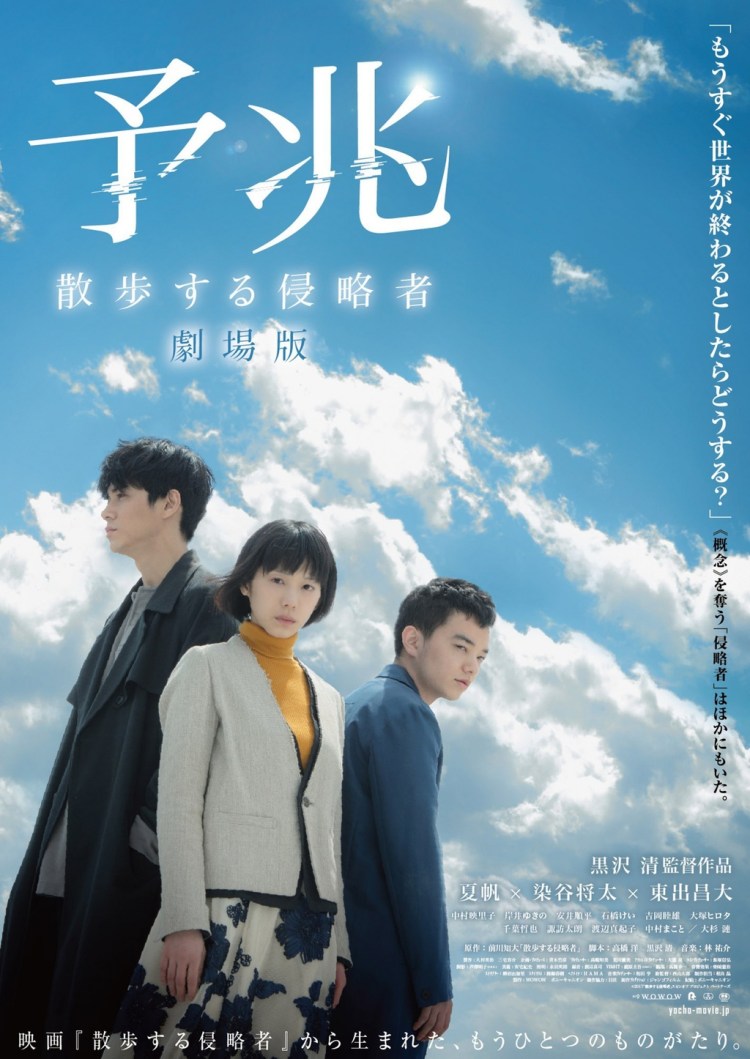
Yocho (Foreboding) (予兆 散歩する侵略者, Kiyoshi Kurosawa, 2017)

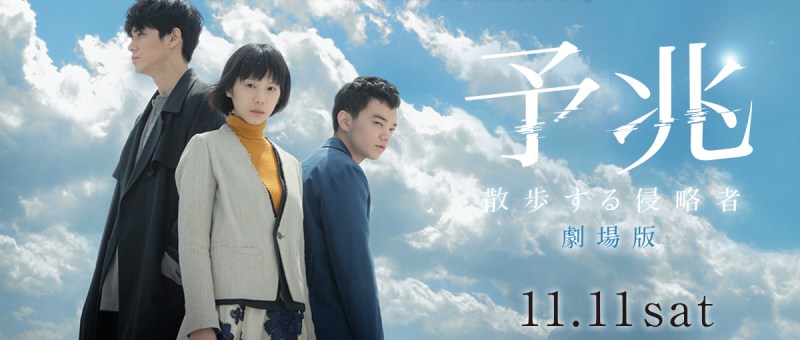
Yocho posterBefore We Vanish, Kiyoshi Kurosawa’s take on the alien invasion drama, was an oddly romantic affair which made a case for the ineffability of love as the only possible form of human salvation. Meanwhile, cheating on cinema with television, Kurosawa tells us a different story. Yocho (Foreboding) (予兆 散歩する侵略者, Yocho: Sanpo Suru Shinryakusha) was first conceived as a TV drama running as a companion piece to the big screen experience but its canvas is noticeably darker. At heart, we have the same story with a slight variation as a bold wife attempts to save her weak willed husband from alien manipulation, risking all to keep him safe him while the world burns around her. What we see this time is less the enduring power of love as a force for good, than yet another form of human weakness which encourages selfishness and creates a space into which nefarious forces may move.

In contrast to Masami Nagasawa’s conflicted, wounded wife of Before we Vanish, Etsuko (Kaho) is happily married to Tatsuo (Shota Sometani) who works at the local hospital. As she loves her husband so much, Etsuko is quick to realise there’s something not quite right in the way he’s been silently gazing off into space and walking around like a man possessed. Meanwhile, she’s accosted by a friend at work who asks to stay over because she’s too afraid to go home on account of “the ghost”. Eventually Etsuko goes investigating and discovers “the ghost” is really just her friend’s dad only her friend seems to have forgotten all about him and doesn’t quite understand what a “father” is anymore. Fearing the worst, Etsuko arranges to take her to the hospital, which is where she comes into contact with the strange and intimidating Dr. Makabe (Masahiro Higashide).

Dr. Makabe is one of the alien invaders seen in Before We Vanish who have come to Earth on a scouting mission ahead of its destruction. His mission is to steal “concepts” from people’s heads so the aliens can catalogue soon to be extinct humanity. Makabe has recruited Tatsuo to be his guide but this is a very different arrangement to that Shinji makes with his “wife” Narumi. Tatsuo is not so much an interpreter as an informant. His “job” is to select Makabe’s “victims” in return for preferential treatment when the apocalypse arrives. Increasingly conflicted in betraying his own species, Tatsuo is going slowly off the rails while the world disintegrates all around around him.

Etsuko, meanwhile, has a kind of superpower of her own in that she is apparently “immune” to alien interference. They can’t take concepts from her, they can’t manipulate her will, and they can’t break her bond with her beloved (if slightly useless) husband. The power of love still reigns supreme but this time it’s not entirely a good thing as Etsuko, who has the means to resist the evil invaders, focusses on rescuing her one true love rather than defending humanity. Love is her weakness, whereas Tatsuo’s seems to be a low lying resentment of his lack of authority. A showdown with Makabe sees him offer a grim prognosis, as long as humans lust for power there will be no escape.

Makabe, meanwhile, has experienced the opposite revelation to his Before we Vanish counterpart in learning about death and human fear of mortality. Suddenly knowing what it means to die, he understands something of human existence, realising that death is forever beside you. Love maybe be the cure for “eternal loneliness”, but Makabe’s enlightenment is born of fear and darkness rather than human warmth.

Yocho, in a sense, mirrors Before We Vanish but in a darker hue. Etsuko and Tatsuo maybe a “happier” couple than Shinji and Narumi, but Tatsuo has already crossed to the dark side, abandoning his humanity and committing heinous and unthinkable acts on behalf of his alien master out of fear and desire. Makabe, taking Tatsuo to task, points out his weakness in his need for painkilling drugs to overcome the punishment Makabe has handed down for his betrayal. Humans, he says, always choose the comforting lie over the painful truth, swallowing pain killers rather than killing the pain by dealing with its root cause. This is in a way what Etsuko has chosen to do in her quest to save Tatsuo rather than using her skills to resist the alien invasion, though Makabe remains oddly fascinated by her various unusual qualities. Foreboding fills the frame as Etsuko meditates on the various oddities of her world while the skies thunder behind her, sending curtains billowing ominously in the absence of wind. A wounded Makabe ironically remarks that he has “underestimated the power of love”, reminding us that the greatest of human strengths is also its weakness, promising destruction as much as salvation.


Screened at the 20th Udine Far East Film Festival.

Original trailer (English subtitles)

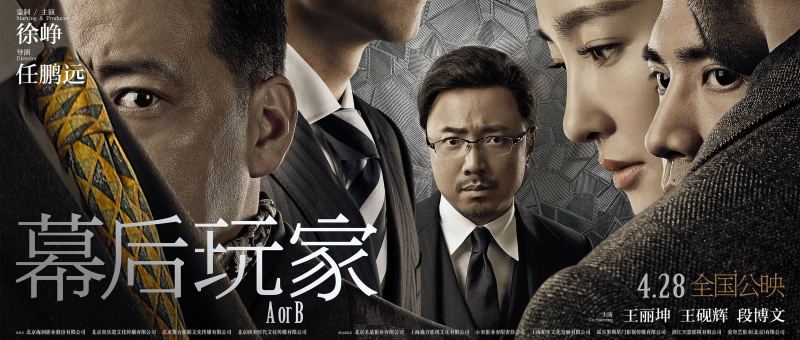
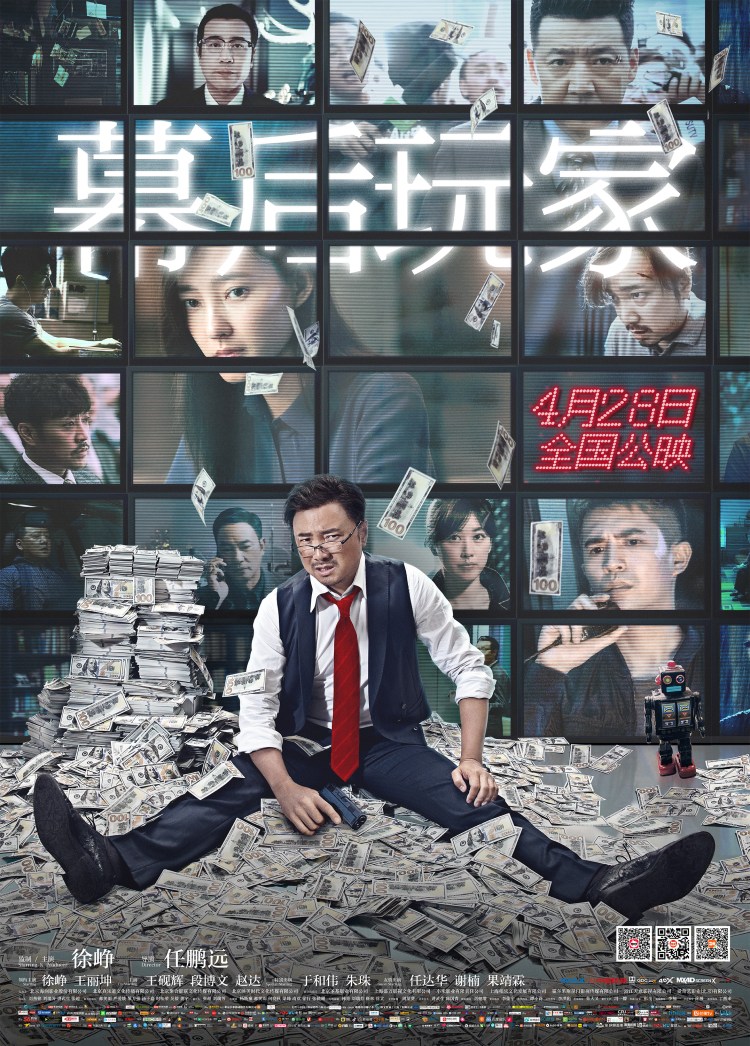
A or B (幕后玩家, Ren Pengyuan, 2018)

A or B poster 2It’s difficult not to read every film that comes out of the Mainland as a comment on modern China but there does seem to be a persistent need to address the rapid changes engulfing the increasingly prosperous society through the medium of cinema. A or B (幕后玩家, Mùhòu Wánjiā) is the latest in a long line of thrillers to ask if the pursuit of economic success has resulted in the decline of traditional morality. Life is, according to a mysterious voice on the other end of a walkie talkie, a series of choices – A or B, you or me. When someone says they have no choice, what they usually mean is that they have chosen me over you and expect the decision to be understood because if the situation were reversed, you would have done the same.

Corrupt financial billionaire Zhong Xiaonian (Xu Zheng) has been content to justify himself with this excuse. Having ousted his predecessor through blackmail and manipulation, he rose to be the head of a vast corporate empire while Zeng (Simon Yam), his former boss, committed suicide, a ruined and humiliated figure reduced to abject despair by Zhong’s campaign of malicious finagling. Despite his vast wealth, Zhong’s appetite for success remains unsatisfied while his wife Simeng (Wang Likun), disgusted by his ongoing descent into avaricious amorality, threatens to leave rather than watch him destroy himself.

With a number of schemes in operation, Zhong returns home drunk one evening to find his wife gone, collapsing into a restless drunken stupor. When he wakes up he discovers that he is now trapped inside his mansion – the windows have been boarded up and all the doors locked. Finding a walkie talkie in a box, Zhong is messaged by a mysterious voice who tells him that every morning at 9.30 (just as the financial news begins) he will be given a binary choice. Zhong must choose A or B or his kidnapper will set both in motion.

A or B is a complex kidnap thriller, but it’s also the story of a marriage and a metaphor for the compromises of modernity. Zhong, once an ambitious youngster from a humble background, claims he set himself on the road to ruin in pursuit of a “good life” on behalf of his wife. His wife, however, has a wildly different view of a “good life” to that of her husband. Simeng sacrificed her journalistic ambitious of becoming a war photographer to shift into technology in order to better understand Zhong only to be forced to give that up too when her discoveries of his duplicities began to alarm her. What Simeng wanted was less the huge mansion and expensive jewellery than a stable life of ordinary comfort with a loving and attentive husband who strived to understand her in the way she tried to understand him – something Zhong has completely failed to realise in his male drive to get ahead. Simeng threatens to leave, not because Zhong’s increasing moral depravity has killed her love for him, but that through leaving (and taking a number of his shares with her) she may be able to wake him up and put a stop to his headlong descent into amoral criminality.

Zhong has indeed fallen quite far as his first few A or B choices make clear. It doesn’t take him long to decide to throw a lifelong friend under the bus rather than further damage his business enterprise, only latterly making a frantic appeal to his captor to find out what happened to him. Confronted by the very real and often tragic consequences of his “choices” Zhong is forced into a reconsideration of the last decade of his life. Rather than ruminate, his first instinct is for action and so he sets about trying to escape his makeshift cage little knowing that his captor may have factored his ingenuity in to their original plan. He cannot however escape his final responsibility for becoming the man he is and faces the ultimate binary choice – to continue as he is and slide further down the road to ruin, or turn himself in to the police admitting his wrongdoing and pledging to start again on a more comfortable moral footing.

The identity of the kidnapper and their motives may be fairly easy to guess, but director Ren Pengyuan keeps the tension high as Zhong – played by comedy star Xu Zheng flexing his dramatic muscles, battles himself while trying to bridge the gap between the man he’d like to be and the one he has become. Fiercely critical of the empty materialism that has begun to define modern success, A or B insists that there is a choice to be made when it comes to deciding what gets sacrificed in the quest for prosperity. Zhong at least seems to have rediscovered what is important, reaffirming his commitment to an honest, if simpler, life warmed by the humble pleasure of wanton soup delivered by loving hands.


A or B opens in selected UK cinemas on 4th May courtesy of Cine Asia – check out the official website to find out where it’s playing near you.

Original trailer (English subtitles)
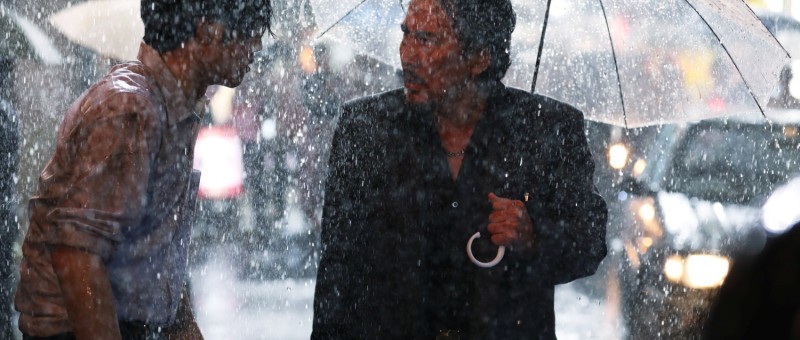
One Cut of the Dead (カメラを止めるな!, Shinichiro Ueda, 2017)

One Cut of the DeadYou know how it is – you turn up to make a low budget zombie movie in a disused water filtration plant apparently once used by the military for dodgy human experimentation and a load of real zombies suddenly turn up to join the fun. Then again, at least zombies don’t have over protective managers hovering on the sidelines or require catering services so in some ways they are the perfect extras. The debut feature from Shinichiro Ueda, One Cut of the Dead (カメラを止めるな!, Camera wo Tomeru na!) is a clever bait and switch, opening with a frenetic low budget zombie chase sequence before cutting to behind the scenes where just about everything is going hilariously wrong.

As the film opens, an actress is in the middle of the 42nd take of a scene in which she is attacked by her zombified boyfriend when the director yells “cut” and begins berating her for her non-existent acting skills before storming off in a huff. The actress, the boyfriend, and the makeup artist whose many hobbies include women’s self defence are enjoying a cup of coffee when a bunch of real zombies suddenly show up with murderous intent. All shot in one cut, the 40 minute chase sequence is a celebration of all things zombie with appendages flying off with gay abandon as blood soaks the screen and our plucky heroine ends up somehow in the middle of a pentagram painted on a rooftop.

Viewers who aren’t paying attention and attempt to leave after “credits” roll will be doing themselves a huge disservice – this high impact opening has been something of a ruse to take us into the real meat of the drama in the zany backstage antics in which just about everything is going just about as wrong as it could possibly go. It turns out “One Cut of the Dead” is a one camera one cut TV special made to launch a brand new zombie channel. Our director, Higurashi, who played “The Director” in One Cut, has found himself at the helm because no one else would take on such an outrageous proposal and, unlike his onscreen counterpart, is too kind and mild mannered to say no.

Higurashi’s career has perhaps become zombified in itself. The producers have chosen him for his ironic slogan – “Fast, cheap, but…average”, and he’s made his way in the minor TV film biz by keeping his head down and just getting on with the job even when it’s as “inconsequential” as a reconstruction sequence for cheesy TV news item. The chance to direct a drama is then an exciting one even if it’s for an equally cheesy TV horror show with a gimmick that’s doomed to fail.

Thus he finds himself on set with a pair of idols – she constantly worrying about what her agency will say to the various problems presented by being in a zombie movie, and he constantly rude and arrogant. Meanwhile, a previous acquaintance of Higurashi’s set to play the cameraman has a serious drink problem, the actor playing the boom operator has a series of digestive issues, and the woman playing the makeup artist is in a car accident with the man playing the director just a couple of hours before the camera rolls. Improvising wildly and making fantastic use of a set of cue cards, Higurashi manages to keep it all together despite the ensuing chaos.

The real genius of the film lies in the cleverness of the original bait and switch. The aesthetic of the zombie sequence is pure low budget horror with noticeably low grade camera quality and deliberately iffy special effects. On the first pass through there are several moments that look like shoddy direction – Higurashi talks to the cameraman who isn’t supposed to be there, the three actors witter on about nothing, the actress continues screaming for way too long etc but each of these mini moments loops back perfectly into the second half farce in which the crew is desperately trying to overcome several obstacles at once and keep the camera rolling to get through the 30-minute live broadcast without anyone noticing.

In the background, Higurashi is also facing some minor family drama with his grown up daughter who wants to direct but needs to work on her people skills. Her keen eye for detail and youthful ingenuity eventually helps the crew figure out a way to keep going, but in the end it’s teamwork that sees them through as they learn to overcome their differences and work together to get what they need. Hilarious, self aware, and filled with homages to classic horror, One Cut of the Dead is an oddly warmhearted comedy in which the zombies are the least of anyone’s worries.


One Cut of the Dead received its international premiere at the 20th Udine Far East Film Festival and will be released in the UK by Third Window Films later in the year.

Original trailer (English subtitles)
Last Child (살아남은 아이, Shin Dong-seok, 2017)

Last Child posterPeople grieve in different ways. Some stop altogether, lost in a fog of confusion and regret, while others try to keep themselves busy or at least feel as if they are doing “something” to try and find whatever positivity they can in the midst of such terrible tragedy. The parents at the centre of Shin Dong-seok’s extraordinarily accomplished debut feature Last Child (살아남은 아이, Salanameun Ayi) find themselves on opposite sides of a grief divide after their son is killed trying to save another boy from drowning. While the mother is angry and resentful, the father finds strength in pride for his son’s act of heroism, nominating him for a local heroes award and donating the compensation money they have been awarded to their son’s school to fund a new scholarship place in his name.

Eunchan, the teenage son of Misook (Kim Yeo-jin) and Sungcheol (Choi Moo-seong), passed away some months ago leaving his parents numb and grief stricken. As far as they’re aware, Eunchan lost his life while valiantly trying to save that of another boy – Kihyun (Seong Yu-bin). Asking after the boy whom his son sacrificed his life to save, Sungcheol is dismayed to learn that he’s dropped out of school, possibly as a consequence of bullying and social stigma because of the well publicised incident he has been involved in.

Spotting Kihyun around town riding his delivery scooter, Sungcheol later decides to intervene when he catches sight of some other boys harassing him. Sungcheol buys the boy dinner and tells him to call if he ever needs anything. Kihyun, despite his obvious discomfort calls when the manager of the fast food restaurant he had been delivering for accuses him of lying about his bike being stolen. As Kihyun is a minor, he needs a responsible adult to talk to the police but his mother abandoned him years ago and though his father used to send money for his upkeep, he has now remarried and severed all connection with his son. Feeling sorry for the boy and not wanting Eunchan’s sacrifice to go to “waste”, Sungcheol offers Kihyun a job in his interior construction company as a trainee apprentice.

Though originally shy and afraid, Kihyun begins to blossom under the gentle, positive parental input of Sungcheol as he picks up the paternal reins, not only teaching him a trade but investing in him the confidence to succeed. Misook, horrified at first by her husband’s decision, begins to come around to this wounded young man who perhaps reminds her a little of her own son. Despite his lingering feelings of shame and guilt in accepting such kindness from the people he feels may continue to suffer solely because of his continued existence, Kihyun slowly starts to look on Misook and Sungcheol  as surrogate parents as they provide the love and care he has never really known from Sungcheol’s down to earth fatherly pep talks to Misook’s home cooked dinners.

Kihyun does, however, have a secret he has been withholding from Misook and Sungcheol which becomes increasingly difficult for him to keep the nicer they are to him and the more he comes to respect them. Though he might have been able to push it to the back of his mind, an unexpected meeting with another friend of Eunchan’s who was also there that fateful day convinces him he has to speak the truth no matter how much more pain it may to cause to all concerned (including himself).

Sungcheol had invested heavily in the heroic nature of his son’s death and finding out it might not have been quite so straightforwardly noble as originally described is a crushing blow for him. The reopening of a wound which had begun to scar pushes Misook and Sungcheol back into their respective corners as they each attempt to process the situation in their own particular way, beginning to mildly resent each other in the process. Meanwhile, having considered the matter closed, there is little appetite to reopen the investigation into Eunchan’s death. The other parents club together to keep their kids out of it while the school sends a polite message asking Misook and Sungcheol to leave it alone to avoid damaging the school’s reputation. Sungcheol, filled with a righteous anger and a need to find out what really happened to his son, is advised to drop the matter, that it’s better to be remembered as a “hero” rather than a “victim”, implying that Sungcheol ’s quest for “truth” is in someway sullying his son’s memory.

Kihyun, meanwhile, is a mess of conflicted emotions. Grieving himself for the family he’d begun to form with Misook and Sungcheol , he tries to move on with his life whilst hoping to somehow repair what has been broken. Kihyun is not a bad kid at heart, whether changed by his experiences or simply freed from a destructive environment, but he has done bad things which fill him with guilt and remorse compounded by the faith and kindness Misook and Sungcheol have tried to show him.

Yet good as they are, the intensity of their rage and pain threatens to consume the bereaved parents who begin to turn their thoughts towards poetic justice and exacting their own revenge even if they also know it will only bring them more suffering. Isolated by their grief, ostracised for the need for truth, and torn apart by their ambivalent emotions towards each other, the trio walk headlong into a spiralling abyss of nihilistic violence and despair, rejecting the idea of a future in which the concept of family continues to exist. Shin’s drama is bleak in the extreme but strangely hopeful in its clear hearted determination to believe in human goodness which just might be the only way back from the brink.


Screened at the 20th Udine Far East Film Festival.

Original trailer (English subtitles)
Interview with director Shin Dong-seok from the 2017 Busan International Film Festival. (scenes from the film not subtitled, interview subtitled in English)

Be with You (지금 만나러 갑니다, Lee Jang-hoon, 2018)

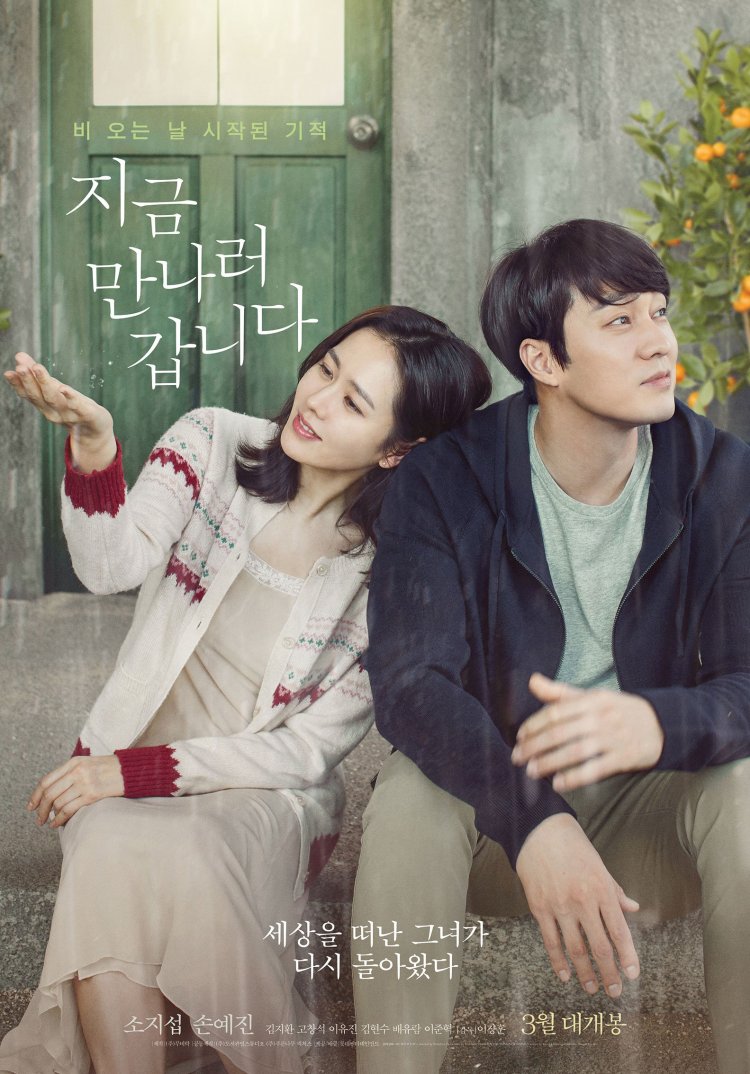
be with you Korean posterWhen Nobuhiro Doi’s Be With You was released in 2004, it followed the even more popular Crying Out Love in the Centre of the World as the second in a wave of “jun-ai” or “pure love” romantic dramas in which the heroes and heroines struggle to move past romantic tragedy. Where Be With You differed from the genre norm was on its focus on a love that was already successful – the couple were older, had married, and even had a son before their happiness was taken from them by a cruel illness. Lee Jang-hoon, adapting the source novel by Takuji Ichikawa, shifts the setting to Korea but more or less follows Doi’s blueprint with a number of notable exceptions.

Rather than the framing sequence which kicks off the original, Lee opens with the beautifully illustrated picture book Soo-a (Son Ye-jin) made for her son shortly before she passed away. In the book a cute mummy penguin lives up above in Cloudland watching her baby through a crack in the clouds. When the rainy season arrives, the mummy penguin will be able to catch the Raindrop Train to come back to Earth, but before the summer ends she’ll have to return else she’ll lose her place among the clouds and won’t be able to watch over her son even from afar.

Little Ji-ho (Kim Ji-hwan) has taken the book to heart and really believes his mother will come back when the first rains fall. His father, Woo-jin (So Ji-sub), knows better but hasn’t the heart to tell his son that the book is just a story and that he will never see his mother again. Against the odds, Ji-ho and Woo-jin do indeed find a woman who looks exactly like Soo-a collapsed in an abandoned railway tunnel in the forest but she has no memory of her life as a wife and mother or of the family who’ve been patiently waiting for her return.

In contrast to her counterpart in Doi’s original, Son Ye-jin’s Soo-a is a much less passive presence, less inclined to simply go along with her new circumstances and keen to remind us that the decision to “work or lurk” is entirely her own. Likewise, Lee scales back on Woo-jin’s disability, rendering it far less visible than it had been in Doi’s adaptation. Bar some barbed comments from insensitive relatives at Soo-a’s funeral who question Woo-jin’s ability to raise his son alone, Woo-jin suffers little by the way of stigma regarding his medical condition though he does worry he might have embarrassed his son by pushing himself too hard at a school sports day and making himself ill in the process. Rather than the typical “jun-ai” selfish selflessness which caused the hero to breakup with his one true love out of a noble desire not to be a burden, Woo-jin’s decision is perhaps more out of pride and insecurity than it is out of misplaced consideration.

Nevertheless the timeless innocence of the couple’s early courtship (such as it was) retains its essential sweetness. As Soo-a can’t remember her romantic past, Woo-jin recounts his recollection of it to her in all its painful honesty, and in return later gets to hear her side of events thanks to the diary she left behind for him to read. Having met in high school, the pair entertained crushes on each other they assumed were unrequited, never quite working up the courage to declare themselves and squandering opportunities through nerves and awkwardness. Reliving their original romance the couple fall in love all over again only to be parted by a season’s end.

Yet it is familial love rather than the romantic which eventually takes centre stage as the love of Soo-a and Woo-jin envelops their son in something deeper and richer than your average tragic love story and becomes all the more poignant for it. Realising her time is short, Soo-a sets about teaching her husband and son how to live without her – showing Ji-ho how cook eggs, how to do the washing, how to keep the place tidy etc while giving them a few more happy memories to see them through and reminding them to take care of each other in her absence. Dreamlike and ethereal as Lee effortlessly blends one time period into another in a vast web of memory, Be With You is a heartbreaking drama in which a family must attempt to come to terms with irreparable loss through learning to treasure past happiness and living on in its memory.


Screened at the 20th Udine Far East Film Festival.

Also screened as the first in a series of teaser screenings for the upcoming London Korean Film Festival. The next screening in the series will be Memoir of a Murderer on 21st May, Regent Street Cinema.

International trailer (English subtitles)