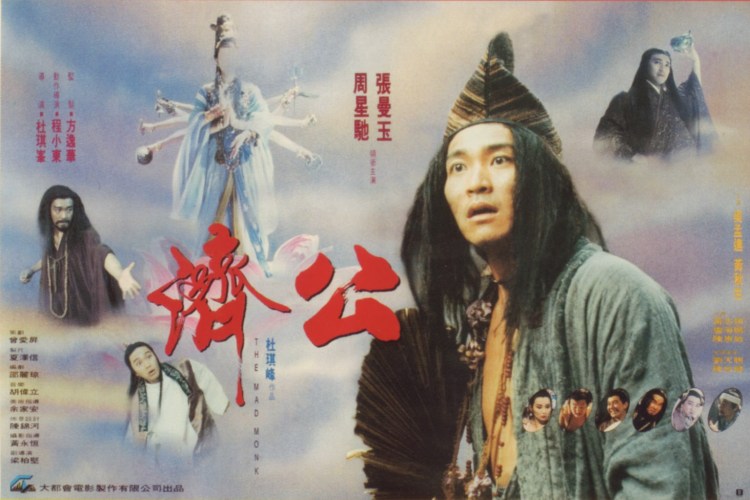
 “The Mad Monk” sounds like a great name for a creepy ghost, emerging robed and chanting from the shadows to make you fear for your mortal soul. Sadly, The Mad Monk (濟公, Jì Gōng) features only one “ghost”, but it might just be the cutest in cinema history. The second of Johnnie To’s Shaw Brothers collaborations with comedy star Stephen Chow is another wisecracking romp in which Chow revels in his smart alec superiority, settling bets made in heaven and eventually vowing to spread peace and love across the whole world.
Dragon Fighter Lo Han (Stephen Chow) has a low opinion of his fellow celestial beings. He thinks they ought to be taking more of an interest rather than blindly following the rules. Consequently, Lo Has been making all kinds of mischief and the other gods are very annoyed. They’ve appealed to their high arbitrator – the goddess of mercy (Anita Mui). Wisecraking Lo Han first tries to fob the gods off by sending his friend, Tiger Fighter (Ng Man-tat), instead but can’t resist offering a few more words of smugness in his own defence. Nevertheless, the goddess sees something in Lo Han’s argument and, rather than condemn him to a life as an animal, sets him a challenge – go to Earth and change the fates of three people whose destinies are set to remain the same for the next nine lives. Lo Han agrees and the “Mad Monk” is born.
Like Justice, My Foot, Mad Monk is an opportunity for Chow to show off his verbal dexterity with occasional forays into martial arts. Sadly much of the fast and furious dialogue does not translate though Chow’s spirited performance helps to breathe life into the comedy. Slightly less forgivably, To and Chow repeat jokes from the earlier film including one odd, very much of its time sequence in which Chow walks in on two gay men enjoying a banana in the privacy of their own room. Other attempts at long running jokes include Tiger’s metamorphosis into a giant baby which soon becomes tiring but is eventually forgotten.
Lo Han’s mission is to “reform” a prostitute (Maggie Cheung) who enjoys her work too much, a beggar (Anthony Wong ) with social anxiety and low self esteem, and a stone hearted villain (Kirk Wong) intent on inflicting as much evil as possible on the Mad Monk and his cohorts. Whilst living as a mortal, Lo Han is not allowed to use any of his celestial magic, but is given a magic fan which can be used three times a day. The goddess of mercy instructs Lo Han that he is to use his sincerity to convert these dyed in the wool sinners, which he does – descending to Earth in an oddly Christlike fashion, determined to save these lost souls even if he’s doing it for the pleasure of winning a bet more than an altruistic desire to help “troubled” people back onto what he sees as “the right path”.
Like many Shaw Brothers comedies, Mad Monk’s narrative is its least important element. The nonsensical plot races from one random incident to another, glued together with over the top slapstick and the occasional martial arts showdown. By the end, Lo Han has wound up in a monster movie as he tries to stop a giant marauding spirit from destroying the city even though he is running out of time for his personal quest and currently has other pressing concerns. Lo Han’s “sincere” attempts to manipulate his targets into changing their ways may seem as if they fail, but even if the effects will be felt in the next life rather than this one, Lo Han has made difference in the mortal world, albeit not quite the one he expected. Seemingly out of nowhere, Lo Han’s mission seems to have changed him too as he begins extolling the virtues of compassion and insisting on building another paradise to spread peace and love through the world. Like the film itself, it’s a noble cause but one that sadly never hits its mark.
Celestial Pictures trailer (Cantonese with English subtitles)
 Now in its 70th year, the
  Visual artist Xu Bing’s first debut feature
  Wang Bing’s documentary
  In Kim Dae-hwan’s
  Ryutaro Ninomiya directs himself in
  The first feature documentary from Lee Yong Chao,
  Han Yumeng’s
  Kei Chikaura’s
 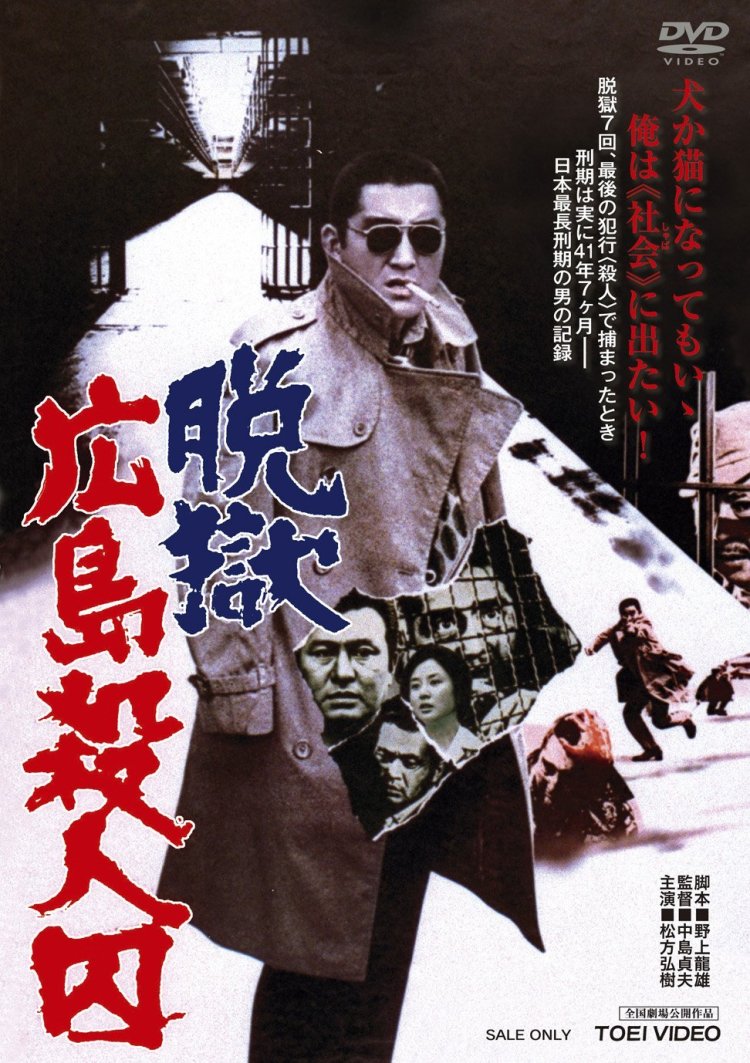 Sadao Nakajima had made his name with Toei’s particular brand of violent action movie, but by the early seventies, the classic yakuza flick was going out of fashion. Datsugoku Hiroshima Satsujinshu (脱獄広島殺人囚, AKA The Rapacious Jailbreaker) follows in the wake of seminal genre buster,
 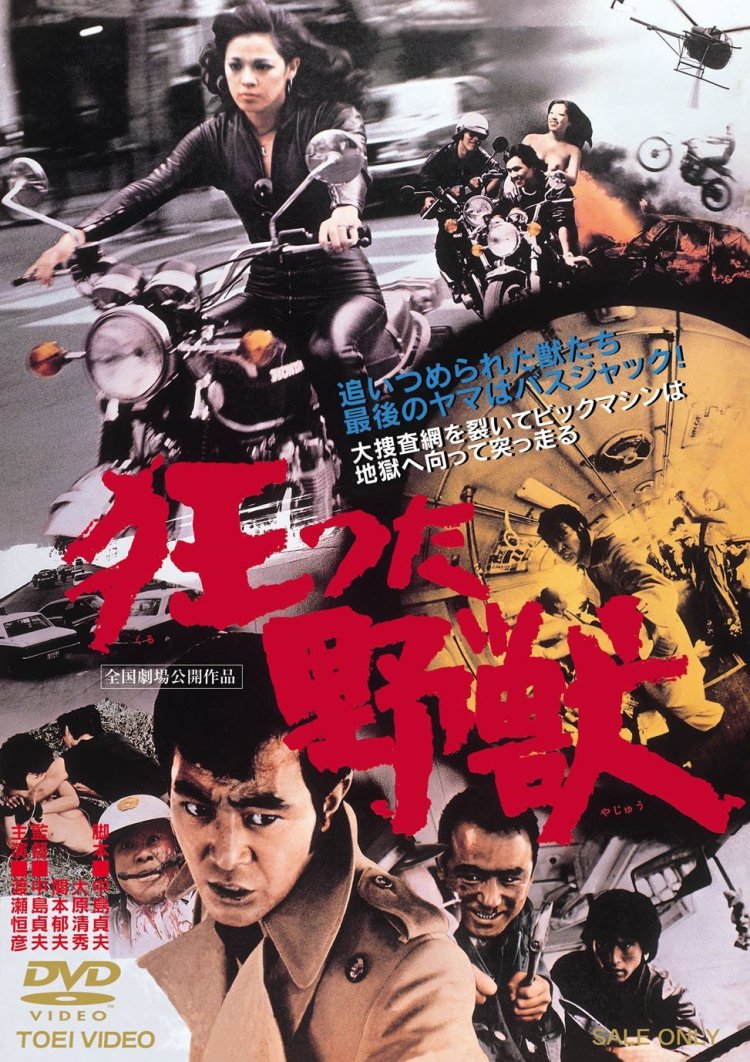 Robbing a bank is harder than it looks but if it does all go very wrong, escaping by bus is not an ideal solution. Sadao Nakajima is best known for his gritty yakuza movies but Kurutta Yaju ( 狂った野獣, Crazed Beast/Savage Beast Goes Mad) takes him in a slightly different direction with its strangely comic tale of bus hijacking, counter hijacking, inept police, and fretting mothers. If it can go wrong it will go wrong, and for a busload of people in Kyoto one sunny morning, it’s going to be a very strange day indeed.
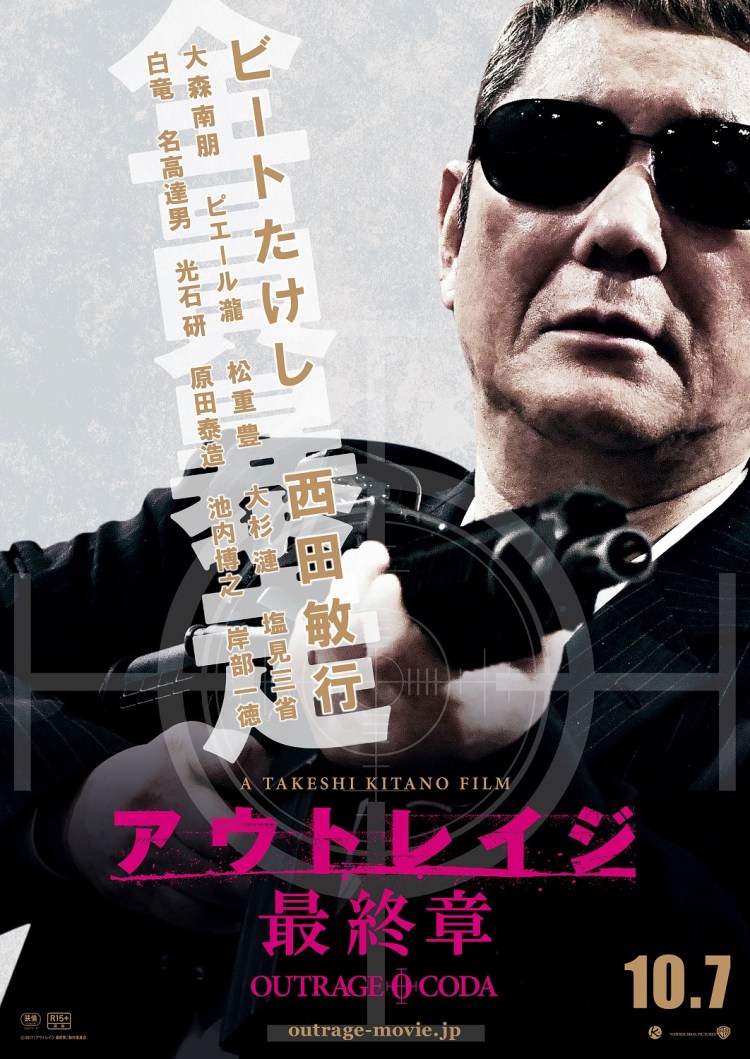 The Venice Film Festival has unveiled the full lineup for 2017. Sadly, it is a poor showing for East Asian cinema with only four films in total included in this year’s programme (bar the possibility of a few late additions announced as the festival gets closer) and only Japan and China represented.
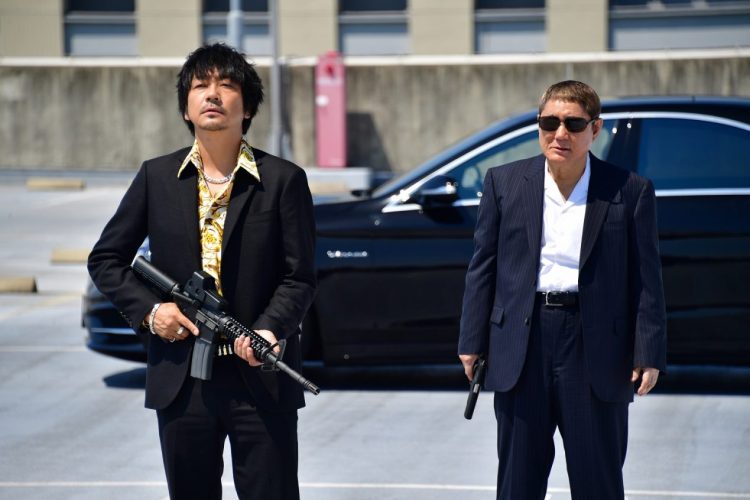 The biggest hitter in terms of the festival as a whole is Takeshi Kitano’s Outrage Coda. The third in Kitano’s Outrage saga, Coda follows Otomo (played by Kitano himself) as he returns to Japan following gang trouble in South Korea. Outrage Coda will screen as the closing night gala.
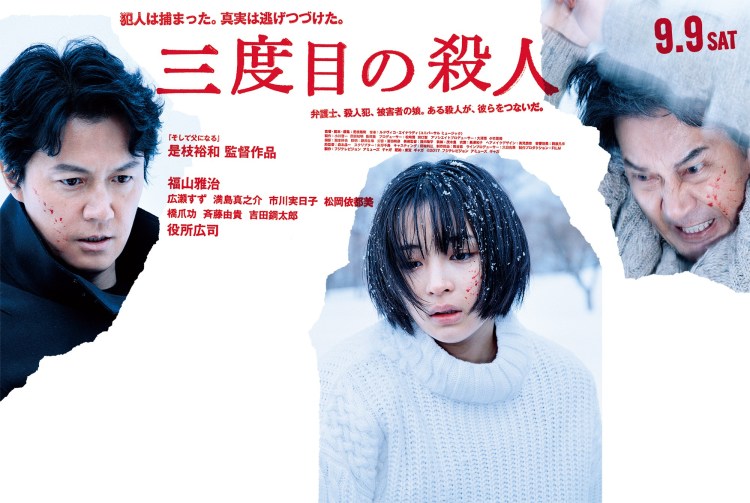 The only other Japanese film included in the programme this year is the latest from festival favourite Hirokazu Koreeda – The Third Murder. A departure from Koreeda’s usual focus on drama, The Third Murder is a crime thriller in which Masaharu Fukuyama (Like Father, Like Son) plays top lawyer Shigemori working on the defence of a murder/robbery suspect (Koji Yakusho) who previously served time for murder 30 years before. The defendant admits his crime and wants to plead guilty even if he will almost certainly get the death penalty but the more Shigemori looks into the case the more doubts he accrues.
 Moving on to China, Ai Weiwei’s documentary Human Flow charts the global scale of the ongoing refugee crisis. Playing in competition.
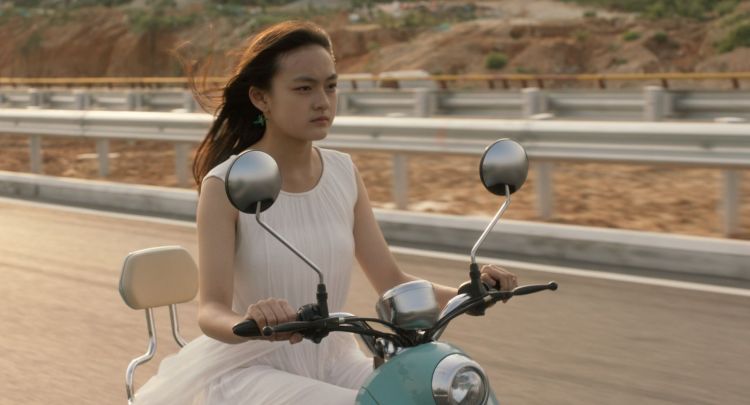 Finally Vivian Qu’s Angels Wear White is the story of two teenage girls assaulted in a hotel room by a middle aged man, and the receptionist who says nothing in fear of losing her job. Sadly, Vivian Qu is also the only female director with a film playing in competition.
 A relatively rare phenomenon, a lucid dream is one in which the dreamer is aware they are asleep and “awake” enough to influence the outcome. Rather than using the ability to probe some kind of existential question, Korean science fiction thriller Lucid Dream (루시드 드림) focusses on the evidence gathering possibilities, going one step further than hypnotic regression to revisit old memories and zoom in on previously missed details.
 Yasushi Sato, a Hakodate native, has provided the source material for some of the best films of recent times including Mipo O’s The Light Shines Only There and Nobuhiro Yamashita’s
 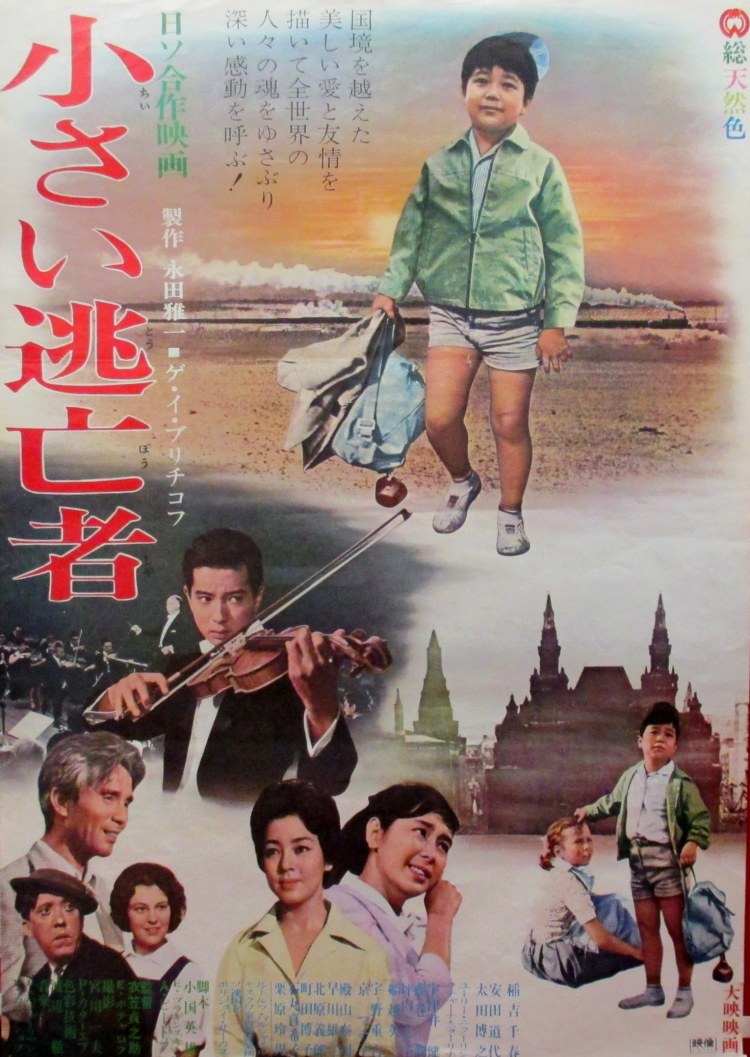 Teinosuke Kinugasa maybe best known for his avant-garde masterpiece The page of Madness even if his subsequent work leant towards a more commercial direction. His final film is just as unusual, though perhaps for different reason. In 1966, Kinugasa co-directed The Little Runaway (小さい逃亡者, Chiisai Tobosha) with Russian director Eduard Bocharov in the first of such collaborations ever created. Truth be told, aside from the geographical proximity, the Japan of 1966 could not be more different from its Soviet counterpart as the Eastern block remained mired in the “cold war” while Japan raced ahead towards its very own, capitalist, economic miracle. Perhaps looking at both sides with kind eyes, The Little Runaway has its heart in the right place with its messages of the universality of human goodness and endurance but broadly makes a success of them if failing to disguise the obvious propaganda gloss.
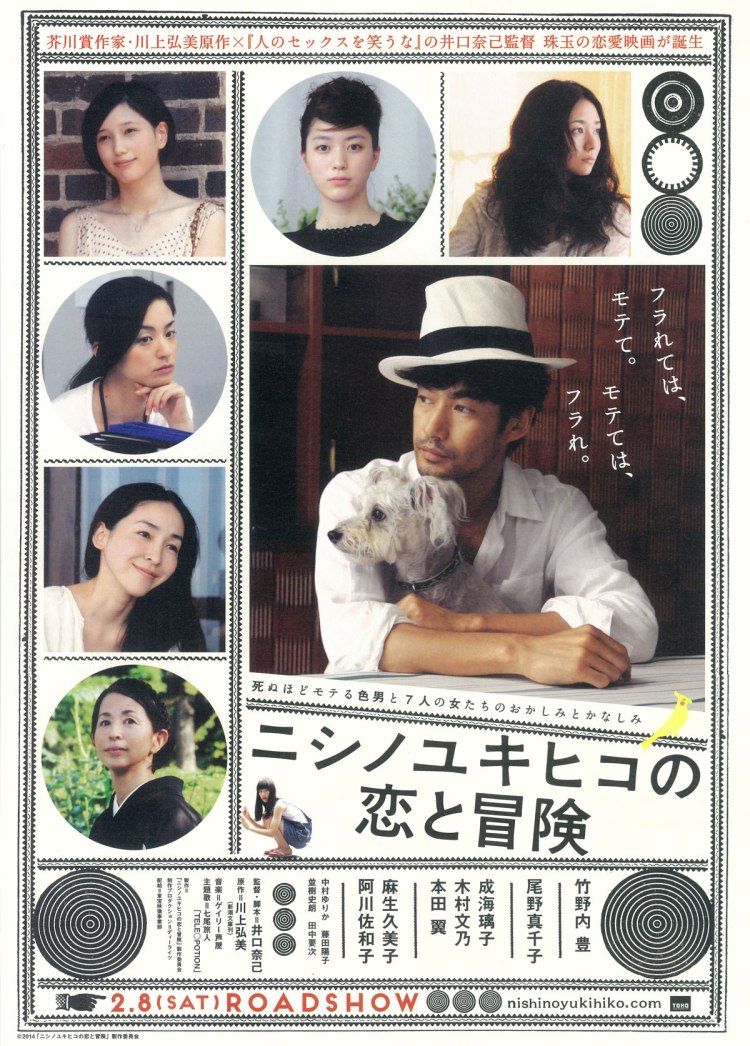 Every love story is a ghost story, as the aphorism made popular (though not perhaps coined) by David Foster Wallace goes. For The Tale of Nishio (ニシノユキヒコの恋と冒険, Nishino Yukihiko no Koi to Boken), adapted from the novel by Hiromi Kawakami, this is a literal truth as the hero dies not long after the film begins and then returns to visit an old lover, only to find her gone, having ghosted her own family including a now teenage daughter. The Japanese title, which is identical to Kawakami’s novel, means something more like Yukihiko Nishino’s Adventures in Love which might give more of an indication into his repeated failures to find the “normal” family life he apparently sought, but then his life is a kind of cautionary tale offered up as a fable. What looks like kindness sometimes isn’t, and things done for others can in fact be for the most selfish of reasons.
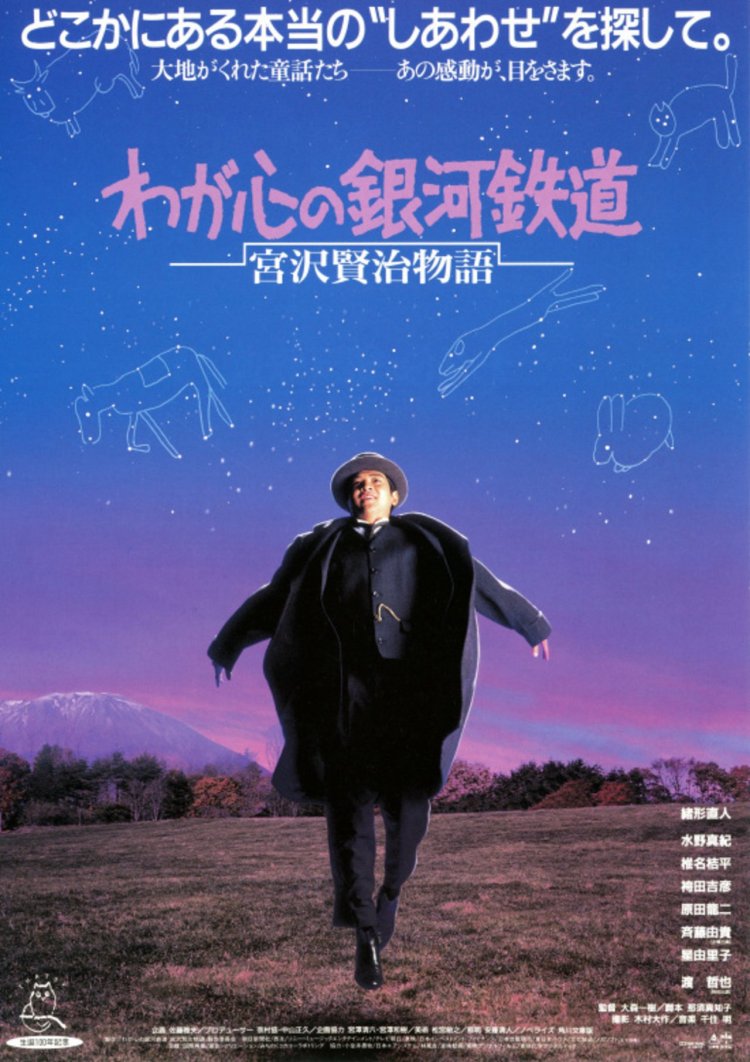 Kenji Miyazawa is one of the giants of modern Japanese literature. Studied in schools and beloved by children everywhere, Night on the Galactic Railroad has become a cultural touchstone but Miyazawa died from pneumonia at 37 years of age long before his work was widely appreciated. Night Train to the Stars (わが心の銀河鉄道 宮沢賢治物語, Waga Kokoro no Ginga Tetsudo: Miyazawa Kenji no Monogatari), commissioned to mark the centenary of Miyazawa’s birth, attempts to tell his story, set as it is against the backdrop of rising militarism.
