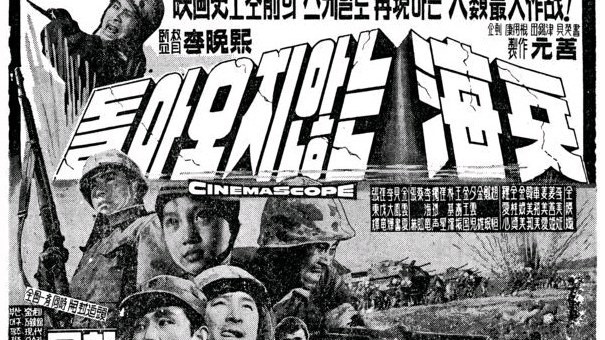
 Lee Man-hee was among the most prolific of Korean directors until his untimely death at the age of just 43 in 1975, but even among so many well regarded works The Marines Who Never Returned (돌아오지 않는 해병, 돌아오지 않는 해병, Doraoji Anneun Haebyong) has taken on an especial place in Korean film culture. Lee had himself served in the Korean War and brought his own ambivalent attitudes to the piece, expressing both an abject rejection of the senseless loss of life but also a warmth and nostalgia for the camaraderie born only out of such immediate danger. The film’s title, as melancholy as it is, points to this same ambivalence by signalling the eventually unhappy fates of these ordinary men but also according them a ghostly, unresolved future.
In the midst of the Korean War, a squad of South Korean soldiers is on patrol and taking fire from the Chinese in an urban environment. While they bide their time in a trench, a young girl and her pregnant mother run out of a nearby building. The girl runs clear but the mother is shot and killed in the crossfire. One of the soldiers is deeply struck by the scene and insists they at least make sure the little girl is safe. Pushing deeper into the building, the soldiers come upon a truly horrifying, hellish scene of men trussed up and hanging from the ceilings while bodies of the townspeople lie piled along the floor. The same soldier who wanted to save the little girl finds his own sister among the dead, just one face among so many.
From this point on the tale is narrated by the little girl, Young-hui (Jeon Young-sun), who is adopted by the troop of marines and smuggled around inside an old army kit bag so that the superiors do not find out about her presence. Young-hui proves a resilient little girl who obviously misses her parents but begins to care deeply for the soldiers who have taken her in. Giving each of her new uncles nicknames, Young-hui becomes the squad’s mascot and a symbol of everything it is they’re fighting for. Yet this makeshift family also has its share of difficulties. A problem arises when Young-hui recognises a new recruit, Choi (Choi Moo-ryong), as a man from her village. Choi is the brother of the man who joined the other side, took Young-hui’s father away and killed the sister of Private Goo, discovered so casually among the many dead in Young-hui’s village alone.
The conflict between Choi and Goo is emblematic of many ordinary families throughout Korea as fathers and sons, brothers and sisters, decided on different paths and found themselves on opposing sides of a war. Choi, as is pointed out, is not responsible for his brother’s actions – he clearly does not condone or agree with them, but still he feels responsible enough to understand Goo’s anger and resentment. Goo in turn realises his anger is pointless and misdirected but is powerless to change the way he feels. This situation is no one’s fault, but they’ll all pay the price anyway.
Lee spares no expense in recreating the hellish battles scenes more akin to the first war than the second with its outdated tanks, dugouts, and trenches. The easy, familial life of the camp soon gives way to action and danger as the squad meet their ends one by one. Away from the battlefield the men feel displaced within their own country – caught in the midst of a civil war yet also subjugated by foreign forces, barred from UN only bars and referred to as “tuppenny Koreans” by the “hostesses” in comparison to their big spending compatriots. Making his goodbye speech, the commanding officer instructs his comrade to return home and ask if anybody really needs to go to war, but rising from the trenches their thoughts are all for their fallen friends who will never see home again. These men remain “lost” on the battlefield, a lingering memory of loss and sacrifice which is impossible to resolve even so many years later.
The Marines Who Never Returned is the first in The Korean Film Archive’s Lee Man-hee box set which comes with English subtitles on all four films as well as a bilingual booklet but the film is also currently available to stream via the Korean Film Archive’s YouTube channel.
 Following their
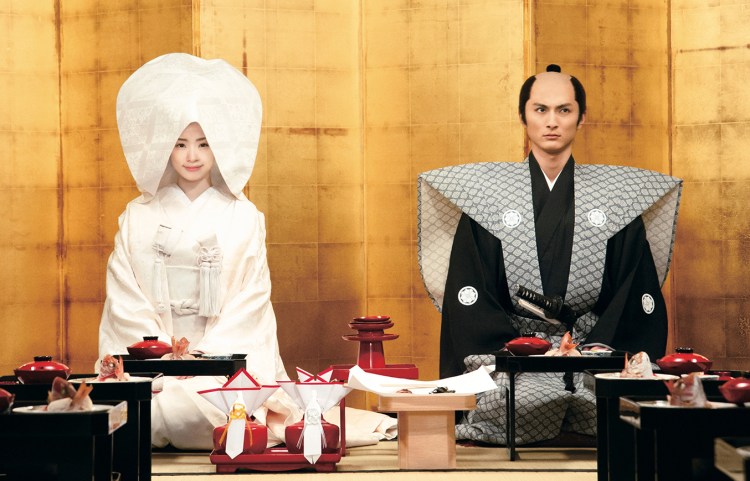
 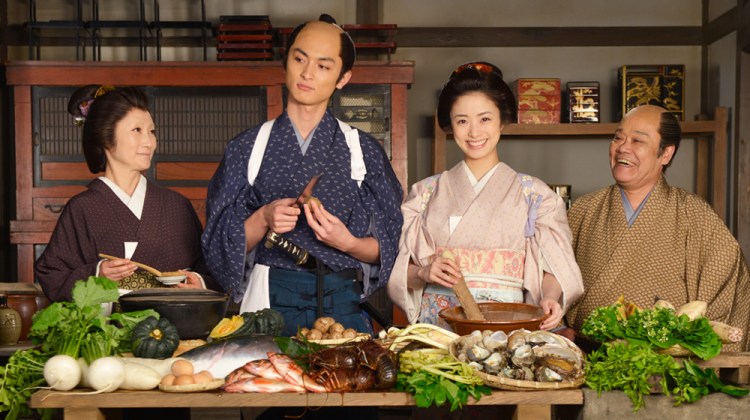 First up, A Tale of Samurai Cooking: A True Love Story proves that the way to a man’s heart is through his stomach (rather than through his chest with a sword). Headstrong Haru (Aya Ueto) gets “sent back” from her first marriage and then receives an interesting proposal from the Emperor’s own samurai cooks thanks to her awesome skills in the kitchen. Her husband to be, Yasunobu (Kengo Kora), is very unhappy about this seeing as he still wants to be a “real” samurai and is nursing a broken heart.
  Based on the writings of the real Jun Nishimura, Shuichi Okita’s The Chef of South Polar follows a put upon chef as he’s forced to leave his family and become the sole cook for seven research scientists marooned at the South Pole for a whole year. Despite the hazardous conditions Nishimura keeps churning out beautifully presented dishes while the guys all go slowly mad together.
  Naomi Kawase’s An (Sweet Bean) is a less comedic tale of inter-generational friendship, social injustice and continuing stigma towards those suffering illness, and a celebration of tradition passed from one era to the next. Masatoshi Nagase plays a struggling doriaki chef who gets a few tips from a strange old lady (Kirin Kiki). He originally turns her down for a job at his stand because of her age and gnarled hands, but tasting her bean paste, there is no way he can refuse.
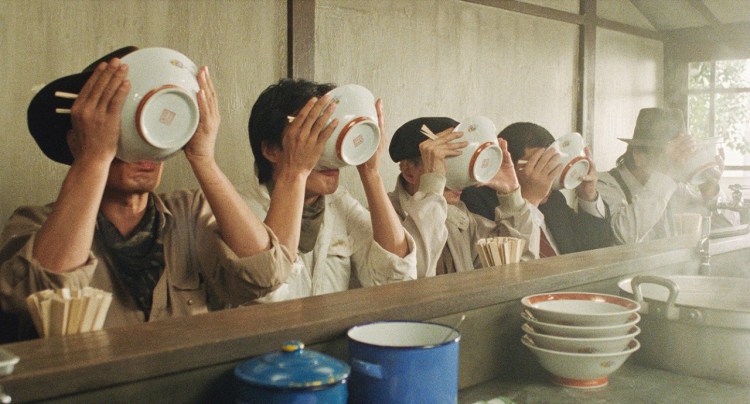 And finally the greatest food movie of them all – Juzo Itami’s Tampopo! This iconic comedy follows the titular widow as she tries to make a success of her ramen stand with the help of lonely truck drivers Goro and Gun. While Tampopo is busy with her noodles, Itami ventures off on a cultural odyssey to explore the various ways food is used and misused in Japanese society.
 “More specific, less poetic” the distressed author hero of Lee Myung-se’s M (엠) repeatedly types after a difficult conversation with his editor. Almost a meta comment on Lee’s process, it’s just as well that it’s advice he didn’t take – M is a noir poem, a metaphor for an artist’s torture, and a living ghost story in which a man shifts between worlds of memory, haunted and hunted by unidentifiable pain. Reality, dream, and madness mingle and merge as a single kernel of confusion causes widespread panic in a desperate writer’s already strained mind.
 Hiroya Oku’s long running manga series Gantz has already been adapted as a TV anime as well as two very successful live action films from Shinsuke Sato. Gantz:O (ガンツ:オー) is the first feature length animated treatment of the series and makes use of 3D CGI and motion capture for a hyperrealistic approach to alien killing action. “O” for Osaka rather than “0” for zero, the movie is inspired by the spin-off Osaka arc of the manga shifting the action south from the regular setting of central Tokyo.
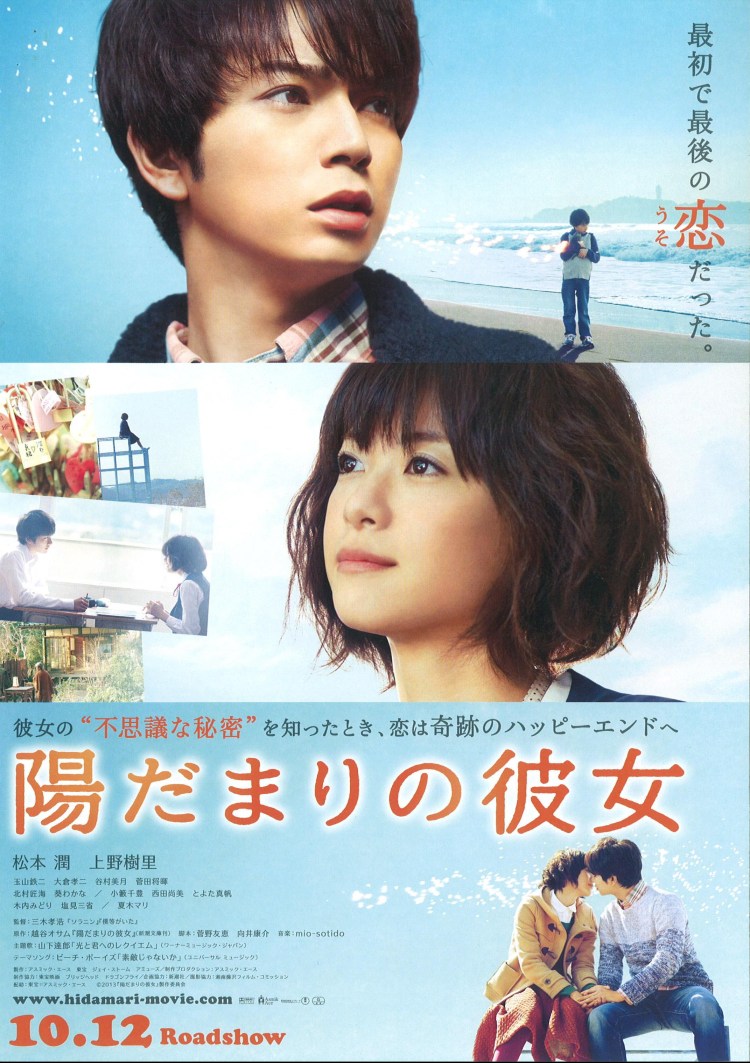 The “jun-ai” boom might have been well and truly over by the time Takahiro Miki’s Girl in the Sunny Place (陽だまりの彼女, Hidamari no Kanojo) hit the screen, but tales of true love doomed are unlikely to go out of fashion any time soon. Based on a novel by Osamu Koshigaya, Girl in the Sunny Place is another genial romance in which teenage friends are separated, find each other again, become happy and then have that happiness threatened, but it’s also one that hinges on a strange magical realism born of the affinity between humans and cats.
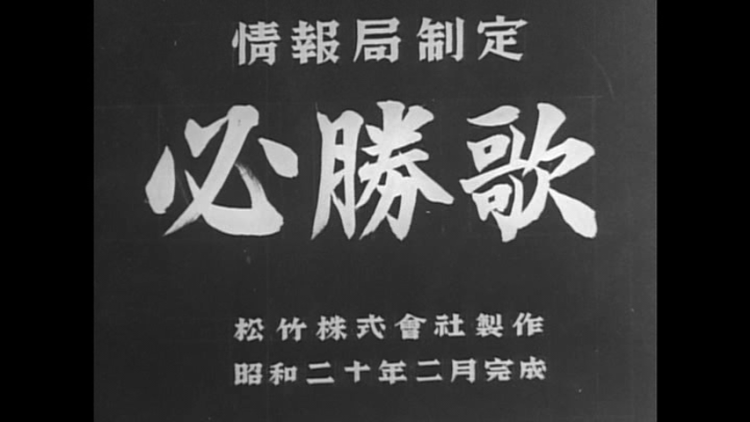 Completed in 1945, Victory Song (必勝歌, Hisshoka) is a strangely optimistic title for this full on propaganda effort intended to show how ordinary people were still working hard for the Emperor and refusing to read the writing on the wall. Like all propaganda films it is supposed to reinforce the views of the ruling regime, encourage conformity, and raise morale yet there are also tiny background hints of ongoing suffering which must be endured. Composed of 13 parts, Victory Song pictures the lives of ordinary people from all walks of life though all, of course, in some way connected with the military or the war effort more generally. Seven directors worked on the film – Masahiro Makino, Kenji Mizoguchi, Hiroshi Shimizu, Tomotaka Tasaka, Tatsuo Osone, Koichi Takagi, and Tetsuo Ichikawa, and it appears to have been a speedy production, made for little money though starring some of the studio’s biggest stars in smallish roles.
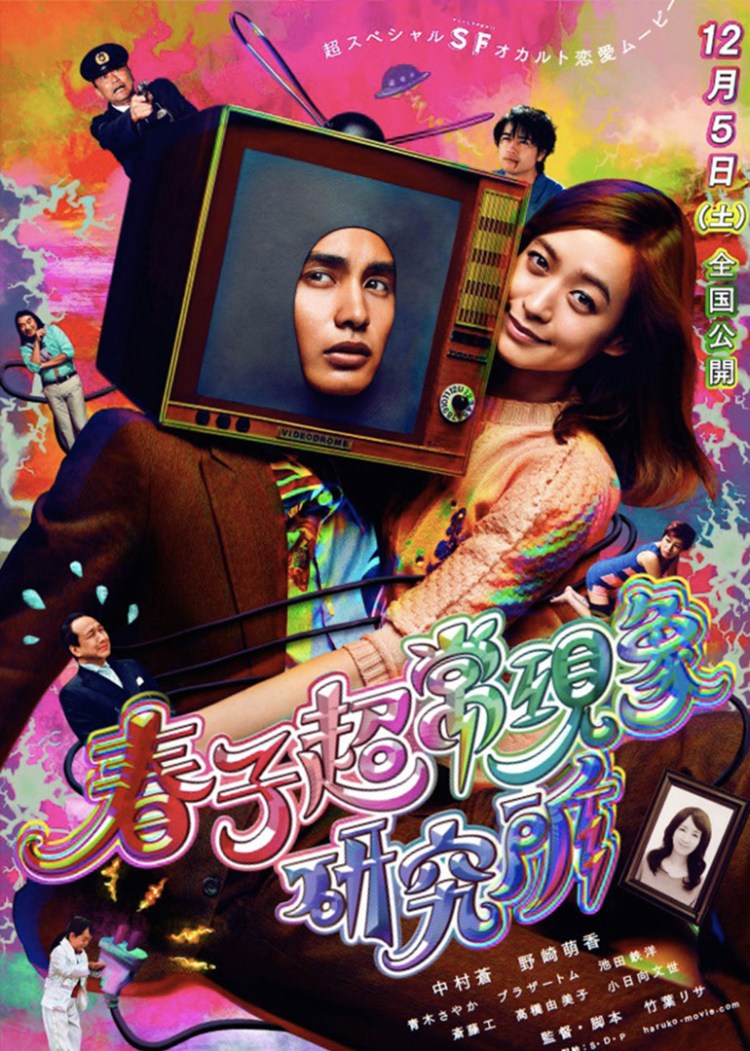 In the brave new Netflix era, perhaps it’s not unusual to hear someone exclaim that their most significant relationship is with their television, but most people do not mean it as literally as Haruko, the heroine of the self titled Haruko’s Paranormal Laboratory (春子超常現象研究所, Haruko Chojogensho Kenkyujo). Lisa Takeba returns with her second film which proves to be just as strange and quirky as the first and all the better for it. Haruko’s world is a surreal one in which a TV coming to life is perfectly natural, as is the widespread plague of “artistic” behaviour which involves robbing the local 100 yen store for loose change and randomly setting fire to things. Yet Haruko’s problems are the normal ones at heart – namely, loneliness and disconnection. Takeba’s setting may be a strange fever dream filled with fiendishly clever, zany humour but the fear and anxiety are all too real.
