The Pit of Death (怪談おとし穴, Koji Shima, 1968)

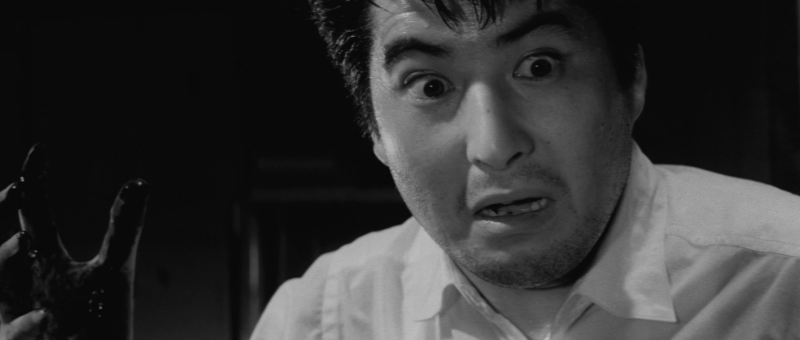
The building at the centre of Koji Shima’s dread-fuelled horror noir Pit of Death (怪談おとし穴, Kaidan Otoshi Ana) is said to be haunted by the spirits of the many people who died during its construction. In his opening voiceover, anti-hero Kuramoto (Mikio Narita) likens the city to a hornet’s nest, the salaryman drones mindlessly buzzing around the business district as if driven by some supernatural force. In that sense, the office building itself becomes an eerie place, the nexus of the salaryman dream which in the end drags all to hell. 

Largely a retelling of Yotsuya Kaidan for the mid-20th century with a little A Place in the Sun thrown in, the film finds Kuramoto an ambitious man deluded by consumerism and resentful of the classism and snobbishness which limit his prospects as a man who has otherwise been able to pull himself out of poverty. His boss pointedly speaks of his talents which include the ability to speak several languages despite only having attended night school rather than university while it’s unusual for a man of his background to hold this kind of position even if he’s only a secretary and not yet an executive. Nevertheless, his boss clearly sees him as a potential successor and plans to marry him to his daughter (Mako Sanjo) who has in some ways inexplicably developed a crush on him.

But Kuramoto is already in a relationship with typist Etsuko (Mayumi Nagisa). In fact, the reason the boss is so pleased with him is largely down to her in that he asked Etsuko to sleep with their foreign client, Mr Hancock, to seal the deal which she duly did. Kuramoto plans to throw her over in order to pursue his dream of taking over the company so he can look down on those who once looked down on him. He tells Etsuko that the marriage will be in name only, that he isn’t attracted to the boss’ daughter Midori, and their relationship will continue as before only to be confused when Etsuko is not totally on board with the plan. She tells him she’s pregnant with his child though he callously points out it could be Hancock’s and insists on an abortion thereafter determining he must kill her so that he can fulfil his destiny by joining the executive class. 

His desires are obvious when he steps into Midori’s home and gazes at a painting crassly asking how much it’s worth, admitting that he’s the kind of poor person who has a fascination with luxury. His forward propulsion is driven by a fear of poverty, the trauma of the hard life he’s had and the futility he felt in his inability to escape it. Yet it’s also a kind of class rebellion motivated by resentment for the prejudice held against him as a man without means in a highly stratified society. Paradoxically, he will do anything and everything to be accepted as a member of the elite class including murdering Etsuko, the symbol of the working class past he fears will drag him down.

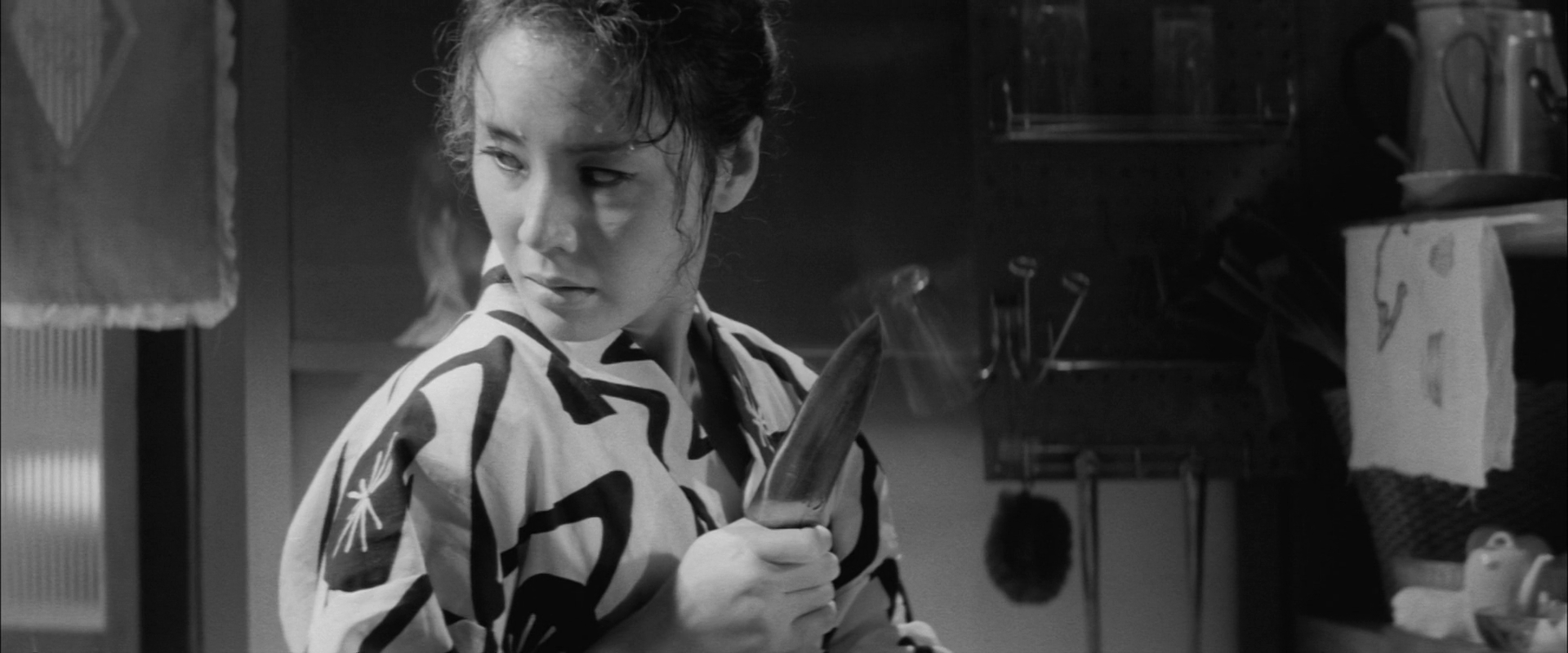
Etsuko does indeed drag him down eventually in her own revenge against his callousness and the double standards of a patriarchal society. Her relationship with Kuramoto seems to be a secret in the office while he uses and discards her when no longer useful to him. She too is trapped within this building of a newly corporatised society but can rise no further alone and is in a fairly bleak position without Kuramoto for she has already thrown away her only bargaining chip by entering a sexual relationship with him. Should she attempt to raise his child alone as a never married single mother, her life would be very difficult indeed if not actually impossible. Nevertheless, she does have real power over Kuramoto in her ability to expose the affair and ruin his chances of career advancement through dynastic marriage destroying any possibility of his future success. 

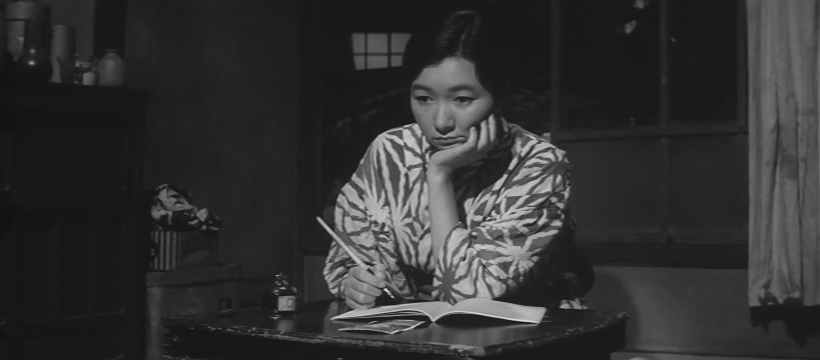
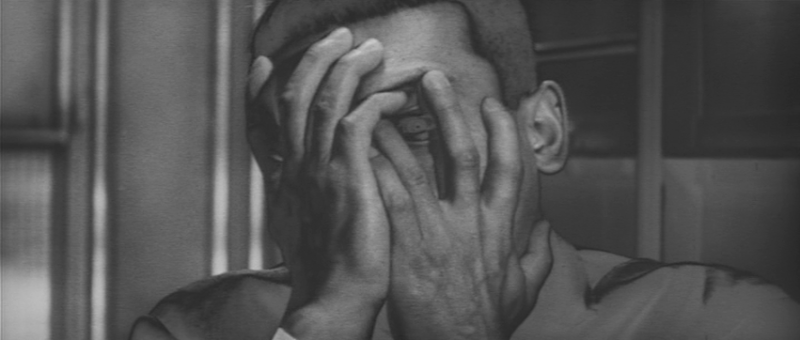
In Kuramoto’s mind, Etsuko cackles like a witch or evil spirit. Her hair billows out into the wind like a vengeful ghost, though the first few times Kuramoto only imagines her death. He sees himself push her off a roof, only to be surprised to see her still standing over him. Etsuko haunts Kuramoto while alive as an image of his destruction all while he silently plots hers. He plans to use the building against her, hiding her body inside it where he assumes no one will see. In the end, it’s as if this building, an edifice of soulless corporatising capitalism, consumes them both, drawing them in with their unfulfilled desires until they fall into the bottomless pit of post-war ambition. Shima makes frequent use of solarisation and film noir lighting to destabilise Kuramoto’s world as his mental state starts to fracture along with innovative use of split screens to lend the space a sense of eerie continuity but ultimately posits the salaryman society as a kind of death trap beckoning greedy souls towards their demise with an inexorable fatalism.

Dissolution Rites (解散式, Kinji Fukasaku, 1967)

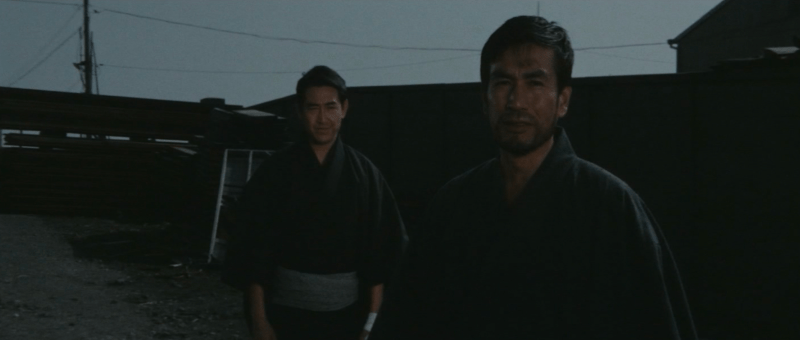
“We’re all legitimate businessmen now” as a former yakuza explains to a recently released foot soldier stepping out into a very different Japan in Kinji Fukasaku’s Dissolution Rites (解散式, Kaisan Shiki, AKA Ceremony of Disbanding). The funereal opening scenes feature the first in a series of dissolution rites as a man dressed in black reads from a scroll and explains that all the local yakuza clans will be disbanding because despite “working day and night for the benefit of the world and humanity in the spirit of democracy” times have changed and they find themselves unnecessary.

There at the beginning of that change, Sawaki (Koji Tsuruta) served eight years in prison for the murder of a rival gang boss to ensure his gang got hold of a local landfill site where they later built an oil complex. While he was inside, his boss died and his clan disbanded leaving him with nowhere to go but thankfully looked out for by an old friend, Shimamura, who has since become a construction magnate. On his arrival at Shimamura’s office, however, he’s ambushed in a suspected case of mistaken identity while the man driving him is killed. 

Shimamura (Fumio Watanabe) tells him he’s gone straight, but it soon becomes clear that even as yakuza forsake the streets for more organised crime they still behave like thugs using the same old tactics to get what they want. Shimamura is in cahoots with a corrupt local politician, Kawashima (Asao Uchida), and is determined to get access to another stretch of bombed out wasteland owned by an egalitarian doctor, Omachi, who refuses to sell because he’s set up a community there of marginalised people, including Sawaki’s former girlfriend Mie (Misako Watanabe), who work on his chicken farm. Meanwhile, Shimamura is targeted by rival “legitimate businessman”, Sakurada (Hosei Komatsu), who pulls a few dirty tricks of his own in an effort to cut Shimamura out of the picture.

Once again Tsuruta plays a man who is out of step with his times, partly because he’s been in prison but also in his fierce commitment to a now outdated code of gangsterdom. “The chivalry that we were taught was just a way for bosses to use their soldiers” Shimumura insists, “you’ll look foolish if you don’t get rid of it”, disingenuously casting his transformation into a legitimate businessman as a way of freeing himself from yakuza oppression. Sawaki turns down his offer to join the business because it seems a bit dodgy while intensely disappointed to discover another former colleague, Kubo (Kyosuke Machida), running a trafficking ring masquerading as a management studio for cabaret singers and strippers by tricking women with the offer of good jobs then getting the hooked on drugs and shipping to them to Okinawa to do sex work near the US bases.  

On his return, Sawaki is also stalked by the man whose arm he severed in killing the rival boss who turn out to be, like him, an old school gangster which is why he insists on his revenge only to find an unexpected kindred spirit as the two men find themselves each adrift in a world in which no one really cares about humanity and honour. Sakai (Tetsuro Tanba) chooses to walk a different path, conducting his disbandment ceremony in protest of yakuza corruption. Like many Tsuruta heroes, Sawaki also has the possibility of walking away and living a conventional family life as a husband and father having been forgiven by Mei but inevitably is pulled in a darker direction by the necessities of his code. The oil complex he helped to create is only a symbol of the duplicities of the post-war society allowing men like Shimamura to get rich while literally choking the life out of those like Mei whom they now want to kick out of her home to add insult to injury. 

There’s no one more tragic than a yakuza Sawaki admits, knowing there is no longer any place for him in an amoral gangster society while unable to simply leave it and enjoy a quiet life with the woman he loves. An indictment both of corporatised yakuza and the equally duplicitous practices of “legitimate” businesses and corrupt authorities, the film ends in another righteous assault filmed handheld with Fukasaku’s characteristically canted angles amid the chaos and confusion of a rapidly changing society. 

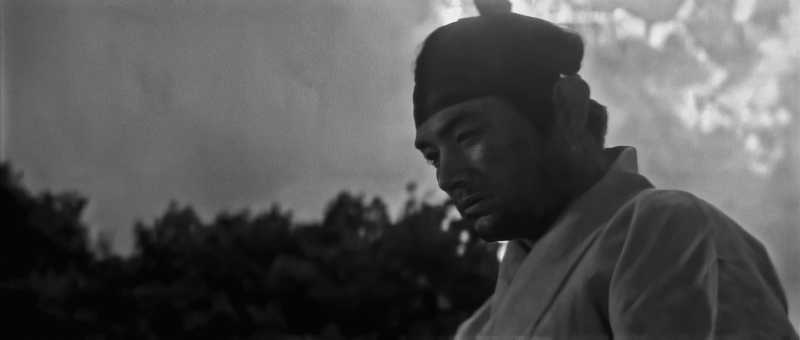
A Swordsman in the Twilight (황혼의 검객, Jeong Chang-hwa, 1967)

Jeong Chang-hwa is better known for the films he made with Shaw Brothers in Hong Kong, including the iconic King Boxer which helped to kick start the Kung Fu craze of the 1970s, than for earlier films he made in his native Korea. Nevertheless, while he was there he also instrumental in creating a new genre of Korean swordplay films with A Wandering Swordsman And 108 Bars of Gold and 1967’s A Swordsman In The Twilight (황혼의 검객, Hwanghonui Geomgaek).

Drawing inspiration from both Japanese samurai movies and King Hu’s wuxia dramas, the film is set in 1691 and like many Korean historical dramas revolves around intrigue in the court. Our hero is however not a high ranking courtier but as he describes himself a struggling vassal who was lucky to get his job as a lowly palace guard because he has no real connections nor does he come from a prominent family and his skills and long years of study mean almost nothing in this society ruled by status. The more things change, the more they stay the same. In any case, he was not unhappy with his life, got on well with his father-in-law, a poor scholar, and had a loving wife and daughter, who like him, valued human decency over ambition. 

But it’s that gets them into trouble when the venomous Lady Jang stages a palace coup to usurp the position of rightful queen, Min. Queen Min is depicted as a shining example of traditional femininity and idealised womanhood. Though the situation she finds herself in is unfair, she bears it with good grace and refuses the small comforts others offer her saying only that she is a sinner and it’s only right she suffers this way for displeasing the king. Hyang-nyeo (Yoon Jeong-hee), wife of swordsman Tae-won (Namkoong Won), was once her servant and shares her birthday so feels an especial connection to her. Pitying Queen Min seeing her forced to walk barefoot through the mud she offers her shoes and for this crime is hounded by the Jang faction on account of her supposed treason.

Having taken the local governor and his clerk, who are also against the Jang faction but don’t know how to oppose it, hostage, Tae-won narrates his long sad story and reasons for his desire for revenge against corrupt courtier Oh Gi-ryong (Heo Jang-kang) who, it seems, is also motivated by resentment and sexual jealousy after having once proposed to Hyang-nyeo but been instantly rejected by her father who did not wish to marry his daughter off to a thug. As such, he comes to embody the evils of the feudal order in his casual cruelty and pettiness. When we’re first introduced to Tae-won he saves a young woman who was about to be dragged off by Gi-ryong’s henchmen presumably as a consort for their immediate boss, Gi-ryong’s right-hand man, but is warned by the other villagers that he should leave town quickly else the Jang gang will be after him. That is however, exactly what Tae-won wants. He fights a series of duels with Gi-ryong, the first of which ends with Gi-ryong simply running away when Tae-won breaks his sword and in their final confrontation he resorts to the cowardly use of firearms not to mention an entire squad of minions pitched solely against a wounded Tae-won and the unarmed governor.

What it comes down to is a last stand by men who know the right path and are now willing to defend it rather than turn a blind eye to injustice. Tae-won’s own brother (Park Am) had thrown his lot in with Gi-ryong in the hope of personal advancement, willingly aligning himself with the winning side and complicit in its dubious morality. This of course puts him in a difficult position, though he implies he will be prepared to sacrifice Tae-won and his family if necessary even if he also tries to find a better solution such as suggesting Tae-won kill Queen Min to prove his loyalty to the Jang faction. In an odd way, it speaks to the contemporary era as a treatise on how to live under an authoritarian regime not to mention the creeping heartlessness of an increasingly capitalistic society. 

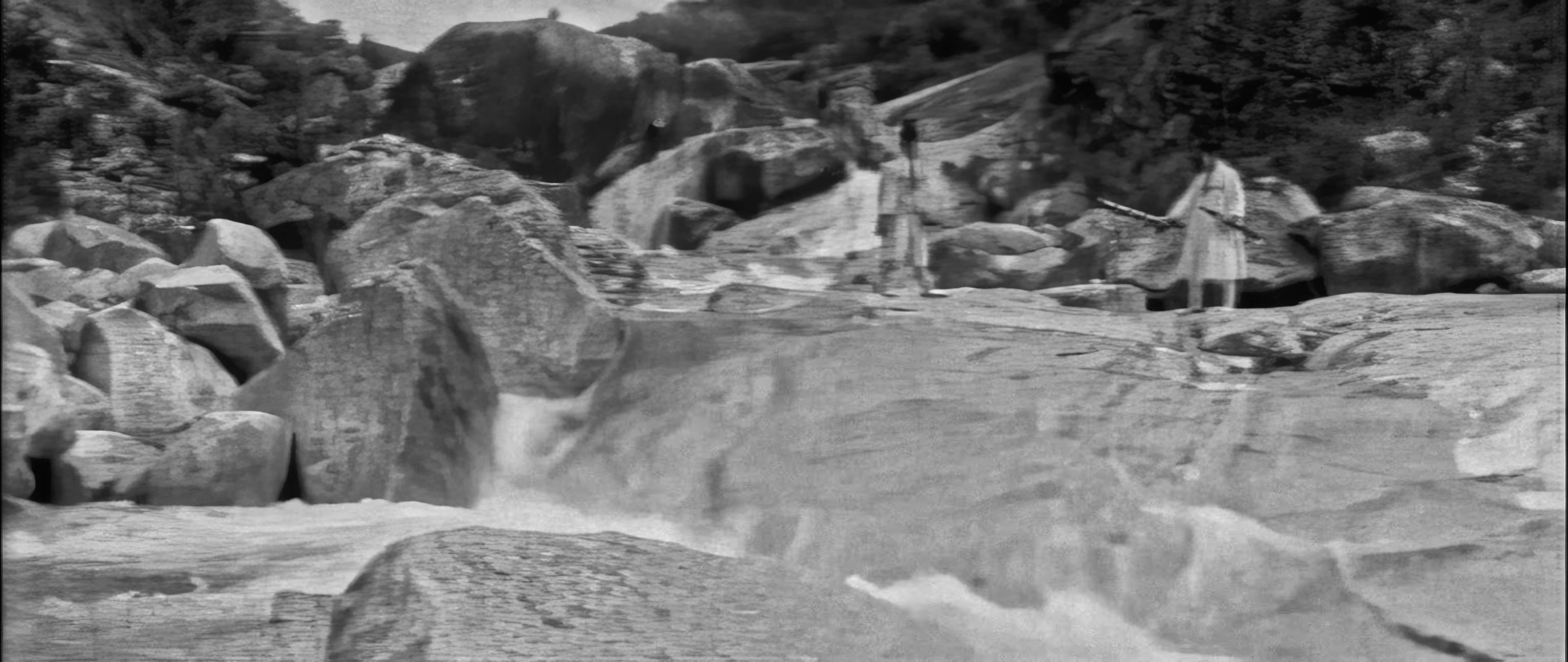
This sense personal rebellion may owe more to the jianghu sensibility found in the wuxia movies of King Hu than to the righteous nobility of the samurai film even if the ending strongly echoes chanbara epics in which the hero is displaced from his community and condemned to wander as a perpetual outlaw in a society which does not live up to his ideals. While staging beautifully framed action sequences such as fight at a rocky brook, Jeong undoubtedly draws inspiration from Hu in the use of trampolines and majestic jumps that have an almost supernatural quality. The sword fights are largely bloodless until the final confrontation but also violent and visceral. Gi-ryong’s henchman plays with a minion he feels has betrayed him by lightly scratching his throat before going in for the kill and such cruelty seems to be a hallmark of the Jang faction. But despite the seeming positivity of the ending in which a kind of solidarity has been discovered between Tae-won and the governor, the film ends on an ambivalent note with the fate of the nation still unknown as Lady Jang stoops to shamanic black magic to hold sway and darkness, the lingering shadows of authoritarianism, still hang over the swordsman even if he is in a way free as s rootless wanderer no longer quite bound by feudal constraint. 


A Swordsman in the Twilight screened as part of Echoes in Time: Korean Films of the Golden Age and New Cinema.

Wild Ducks and Green Onions (カモとねぎ, Senkichi Taniguchi, 1968)

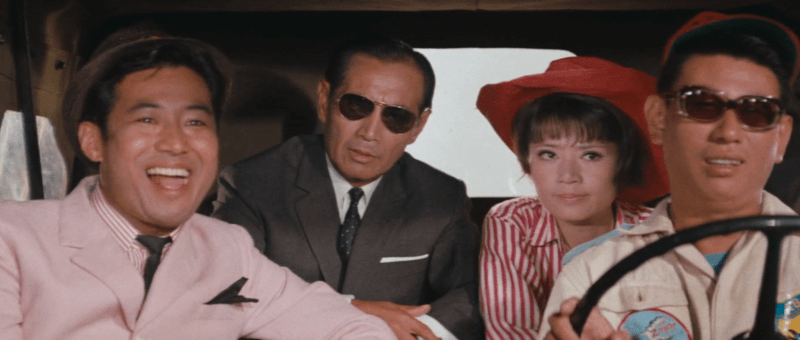
Outside of Japan, Senkichi Taniguchi is most likely best known as the director of Toshiro Mifune’s debut film Snow Trail, or else as the screenwriter of one of Akira Kurosawa’s lesser known works The Silent Duel. Yet throughout the 1960s, he also made a series of silly comedies including Wild Ducks and Green Onions (カモとねぎ, Kamo to Negi), an absurd crime caper revolving around a gentleman thief’s attempts to plot the perfect crime while assisted by two bumbling henchmen and a young woman with a hidden agenda.

The film’s Japanese title is likely inspired by a proverb, “a duck comes carrying an onion” which means something close to “there’s a sucker born every minute” though it might be up for debate who exactly is the sucker here. In any case, dapper mastermind Nobukichi (Masayuki Mori) has plotted the perfect heist which involves rigging a speedboat race by nobbling the propellers on two of the four boats and then betting accordingly. So far so good, but the enigmatic Mami (Mako Midori) has been watching their every move and is able to swipe the bag containing the money before henchmen Yosuke (Hideo Sunazuka) and Kyuhei (Tadao Takashima) can return it to their boss who for once has agreed to an equal split. The guys eventually track her down, but she tells them she spent the money on bail for her husband but it turns out he left the police station with two other women and hasn’t been seen since. The gang then determine to track him down to get the money back, but become involved in several other scams along the way. 

Despite having been able to rob them blind, all the men seem to be under the impression that Mami is a brainless airhead though she later reveals herself to speak fluent English and in fact comes up with a few scams of her own that are better than Nobukichi’s whom the guys refer to as “Cap’n”. Nevertheless, the guys only tolerate her because they need to find her husband though all’s not quite as it seems. Kyuhei in particular seems to have a rather misogynistic streak and is somewhat jealous that Nobukichi gets to have Mami to himself though he remains a perfect gentleman, sleeping on the sofa and giving her the bed. But it’s Kyuhei’s lascivious nature that eventually gets them into trouble when he tries to drag a reluctant Yosuke into a cinema screening pink films only to be pulled aside by some kind of anti-delinquency brigade who read off some unconvincing statistics stating that 80% of young male sex offenders are fans of pink films. 

This annoys them so much they decide to scam the organiser, Tomiko (Hisano Yamaoka), by appealing to her vanity and tricking her association, which is dedicated to conservative family values, into watching (and apparently enjoying) a porn film on school premises believing it to be an “educational movie”. Tomiko in some senses represents the forces of order against which the gang are rebelling, though she’ll get her revenge in time. In any case, they find a more worthy target after travelling to a seaside town and encountering the daughter of a man who has been poisoned by industrial pollution while the local factory insists everything is within “safe limits” and they aren’t the cause of the sickness spreading across the area. 

Conducting another expert heist to steal the secret documents to prove otherwise, Nobukichi could make a lot of money blackmailing the factory owner but instead gives the report to the man’s daughter so she can pursue justice and compensation for her father much to the chagrin of Mami and proving that it isn’t all about the money after all. Then again, he has another document that, once translated by Mami, reveals the factory has actually been producing Napalm for the Americans which is a bit of a grey area as far as the constitution is concerned. This time, they play a nasty trick on the heartless factory owner (Eijiro Tono) though he is hardly remorseful and in fact was too greedy to pay their blackmail money despite the vast sums it would cost him if the news ever got out. 

Despite its silliness and absurdity, the film takes an ironic swipe at serious issues of the day such as scandals like the Minamata disease and Mary Whitehouse-esque social campaigners ranting about a decline in morals while simultaneously enjoying the platform that protesting them grants them. In some ways, the gang themselves exist as a kind of rebellion against the salaryman society with their various scams presented as silly games targeting faceless or ridiculous figures who can either afford to lose the money or were ripe for a comeuppance though in the end, crime doesn’t really pay either and the gang find themselves hoist by their own petards, robbed of enjoying their ill-gotten gains by unexpected twists of fate. Very much of its time the film has a kind of charm in its whimsical score and pastel colours but has lingering darkness in its threats of unexploded bombs and hidden Okinawan torture facilities in a society increasingly ruled by amoral capitalists.


Tengu Priest (お坊主天狗, Yasushi Sasaki, 1962)

Disparate denizens of Edo are united in one thing in Yasushi Sasaki’s light hearted jidaigeki, Tengu Priest (お坊主天狗, Obozu tengu), revenge. Like many jidaigeki, what they really want is revenge against the evils of feudalism to which they have each fallen victim, but also acknowledge that they have found something better in being outside it in the solidarity that exists between them as outsiders free from the obligations of samurai society if also with loose ends waiting to be tied.

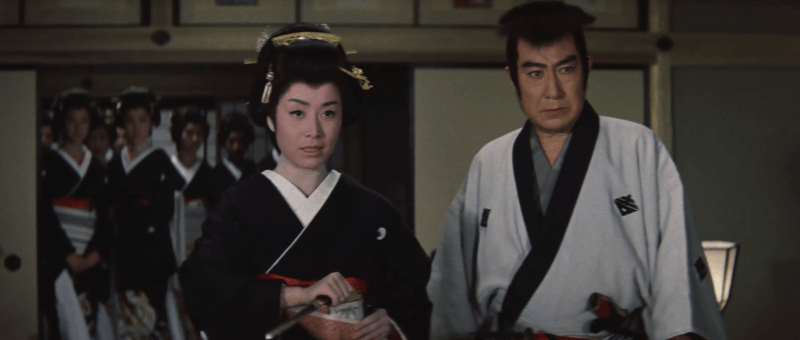
Once a hatamoto with a 1000 Koku stipend, Obo Kichiza (Chiezo Kataoka) is now a much feared figure keeping order in Edo. When some yakuza toughs are hassling the geisha Kozome (Hibari Misora) at the theatre, insisting that she serve them sake even as she reminds them she’s off the clock, one look from him stops them dead though Kichizo is also impressed with Kozome’s nerve. Like him, Kozome is also in Edo for revenge. Formerly a samurai’s daughter, she became a geisha to look for the man who killed her father in a stupid quarrel over a fencing duel. Kichiza, meanwhile, seeks revenge against the local lord, Honda Etsu (Masao Mishima), who killed his father in a fit of temper when he ordered him to commit seppuku for causing his son-in-law to fall off his horse but he refused. 

Loyal retainer Kinpei (Ryutaro Otomo) had begged for his forgiveness and insisted that he could get Etsu to reform but three years have passed and not only has he bribed his way to head office but his behaviour has declined still further. We see him cruelly cut down a maid seemingly for no reason, simply ordering his men to get rid of the body. Etsu has a reputation for random violence while drunk, but as he is the lord, there are no real consequences for him. His retainers cover up his crimes, and Kinpei’s sole attempt to talk some sense into him goes nowhere, meanwhile his chief adviser Shichinosuke (Sentaro Fushimi) is basically running the show telling others the lord is not in his right mind and cannot make decisions so he must make them for him.

They are all, including Etsu himself, victims of the feudal order in which the systems of power are necessarily corrupt. In his yakuza persona, Kichiza has struck up a friendship with another geisha, Kozuru (Naoko Kubo), who was actually a lady in waiting working as a maid at his estate. She has long been in love with him, but the class difference would have made any union impossible. Ironically, she remarks to Kozome that even in their present state they are still a Hatamoto and a lady in waiting so she dare not express her love for him. Only once his revenge is concluded and he’s fully abandoned his samurai status can Kichiza truly be free to embrace a relationship with Kozuru while conversely Kozome regains her life as a samurai’s daughter by avenging the death of her father.

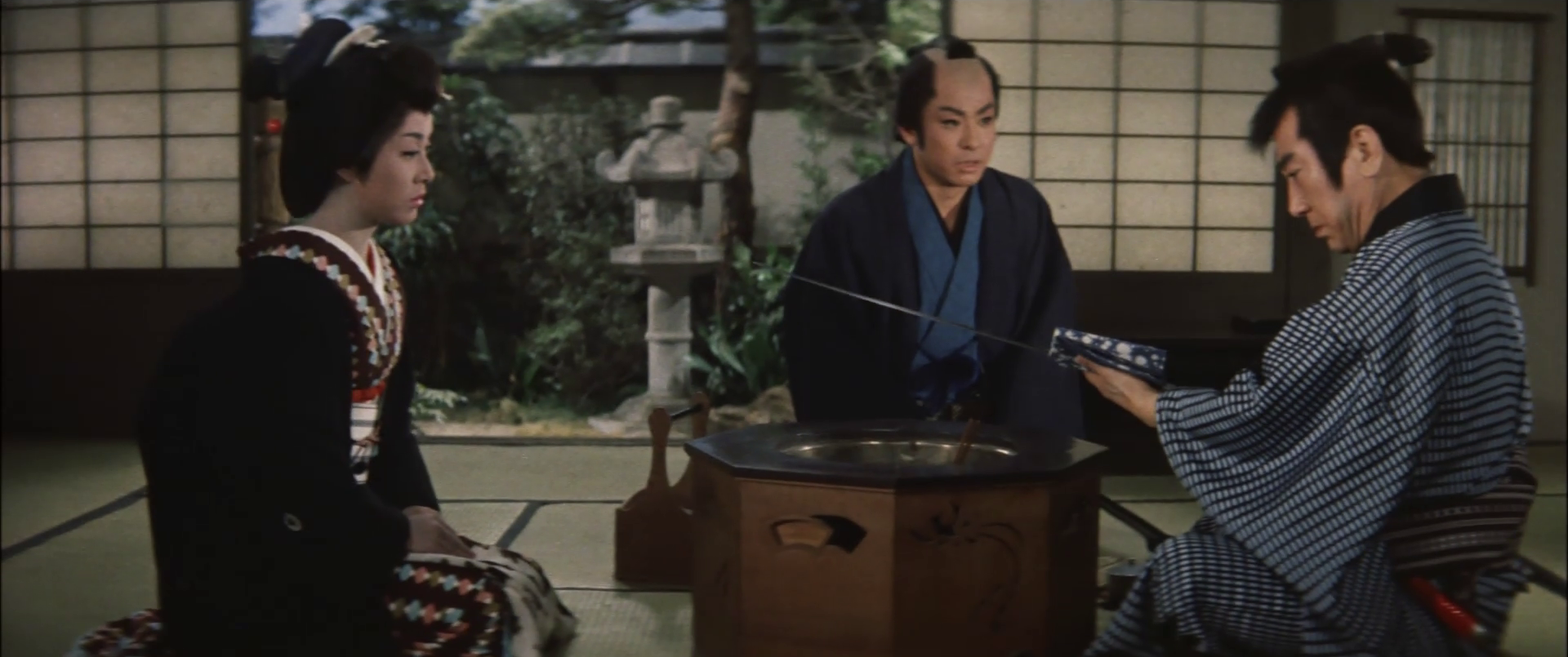
Kozome asks for Kichiza’s help to track down the target of her revenge, but he also respects her wishes and understands that it’s something she must do herself as does eccentric sword sharpener Shinzaburo (Hashizo Okawa ) who actively stands back so she, another wronged woman, can stick the knife in. Hibari Misora’s role in the film is smaller than one might expect as her revenge subplot is secondary to Kichiza’s and she has relatively little screen time with only a brief musical sequence during a naginata dance though she does participate in the high octane final showdown in which all grievances are exorcised and a kind of order returned to the samurai realm even if it must be destroyed to so as Kinpei resolves to protect both the lives and livelihoods of their many retainers and the integrity of Kichiza, going so far as to congratulate Kozome on the successful completion of her revenge. 

Yet what made the whole thing possible was Kichiza’s own band of outlaw drifters whom he allowed to live in his home he later says just so that they would have a place to come and be together so that they might more easily reintegrate into mainstream society. He might have lost his domain and samurai status but has discovered something better in this accidental community. They may be in a sense almost like retainers to him, but if so they stay by choice rather than obligation and help out of a genuine sense of loyalty and affection. In essence, in taking his revenge, he frees himself from the oppressive nature of the samurai code and is able to live like an ordinary man lamenting that if only he and Kinpei had both been ronin they could have enjoyed their time together for longer. Lighthearted and cheerful despite its dark themes, the film is nevertheless a condemnation of the hypocrisies and abuses of a feudal society in which freedom is to be found only among those who live outside it.


Jungle Block (地図のない町, Ko Nakahira, 1960)

The contradictions of the post-war era are thrown into stark relief in the forced redevelopment of slum area on the edge of an increasingly prosperous city in Ko Nakahira’s intense noir, Jungle Block (地図のない町, Chizu no nai Machi). The slightly unfortunate English title may hark back to that chosen for a US screening of Nakahira’s landmark film Crazed Fruit, Juvenile Jungle, or just echo the titles of classic Hollywood noir movies such as Asphalt Jungle and Blackboard Jungle, but otherwise has little to do with the content of the film. The Japanese title, meanwhile, means something like “a town not marked on the map” and hints at the invisibility of those who live in this slum, a self-built post-war shantytown inhabited by those largely left behind by the nation’s rising prosperity. 

Then again, Shinsuke (Ryoji Hayama) seems to have fallen behind on his own account. We’re later told that he resigned from his position at the hospital because of some kind of medical mistake for which he blames himself and has since taken to drink and gambling while working at the poor clinic run by his former mentor Kasama. The most immediate effect of his, perhaps unnecessary, decision to resign was that it prevented the marriage of his younger sister, Sakiko (Kazuko Yoshiyuki), as he was then financially dependent on her. Having delayed the wedding for two years waiting for Shinsuke to pull himself together, Sakiko and her fiancé are set upon by local gangsters working for yakuza turned politician and legitimate businessman Azusa (Osamu Takizawa). Sakiko attempts to take her own life and the relationship does not survive this crisis thanks to her fiancé’s wounded masculinity in having been unable to save her or stand up to the goons afterwards. 

As repeated flashbacks reveal, Azusa is the root of the disease spreading across the city. It’s he that’s intent on clearing the slum, as he says just doing what the government has asked him to do, planning to build luxury apartments on its site along with supermarkets and entertainment facilities. Perhaps it’s not an entirely bad thing to clear a slum, the living conditions are in themselves a health hazard, but Azusa has drastically cut the amount of compensation on offer preventing the residents from securing new places to live and essentially rendering them homeless which defeats the humanitarian justification for forcing them out when most of them don’t want to go. 

Kayoko (Yoko Minamida), an old flame of Shinsuke’s who’s since become a sex worker to pay off her father’s debts to loan sharks and ends up as Azusa’s mistress, has a cat that she confesses to mistreating which makes her feel better only to feel terrible afterwards. The film seems to align the cat with the people of the slums who are bullied by men like Azusa who have untold influence buying off police and politicians while he himself later holds public office. The cat eventually fights back by scratching Kayoko who acknowledges it’s her own fault for her treatment of it, while it’s clear that the anger of the slum dwellers will eventually boil over and they too will strike back against the corruptions of this post-war era which otherwise sees fit to leave them behind. 

Meanwhile, Shinsuke plots a revenge he may not have the courage to take explaining to Kasama (Jukichi Uno), otherwise the voice of moral reason, that it’s the city that sick and the only way to save it is an operation to remove the Azusa-shaped tumour that’s currently killing it. It’s not for mere convenience that his weapon of choice is a scalpel. Kasama, however, tells him that he’s got the wrong idea and it’s their responsibility as doctors to take the long-term view and patiently run their clinic to produce results in the far off future. But Kasama’s eventual decision would seem to walk that back, suggesting that perhaps a radical solution really is necessary to save the patient from the ravages of amoral capitalism. 

Then again, like Kayoko’s father Yoshichi (Jun Hamamura) who is branded a “cripple” and “only half a man” by Azusa, Shinsuke begins to realise that perhaps you can’t create lasting change on your own and taking out Azusa won’t solve the problem as someone else will simply rise to take his place. There is a pervasive sense of hopelessness, Shinsuke caught and frantic amid the dim backstreets of this rundown town desperate for revenge when the police are in league with Azusa and no one really cares about the residents of the slum who are beginning to lose the will to resist. Nevertheless, eventually rediscovering himself Shinsuke opts to follow Kasama’s path insisting that will join the ranks of “good, honest, people” who, like the cat, will eventually scratch back until then resisting by “doing the right thing” even in the face of violence and intimidation while staunching the flow of corruption and cruelty from the seeping wounds of the post-war society.


DVD release trailer (no subtitles)

A Water Mill (물레방아, Lee Man-hee, 1966)

It’s not every day you wander into your own funeral. Or to be more precise, the death rite that Bong-won (Shin Young-kyun) unwittingly intrudes on in Lee Man-Hee’s feudal era fable A Water Mill (물레방아, Mullebanga) is for someone who died in a time no can remember. The old lady who explains it to him says that it happened long before she was born, implying at least the villagers have been enacting this ritual since time immemorial yet it’s almost as if Bong-won were walking towards a point of origin, drawn inexorably by forces beyond his control to play his part in this immortal ritual dance.

To that extent, Bong-won becomes a kind of “everyman” in this cautionary tale by virtue of the fact that he is nameless. Asked for his surname, he says he isn’t sure. It might be Kim or Park, later someone else says Lee which fills out the triumvirate of Korea’s most common family names. He says at one point that he doesn’t remember his mother, but thinks that she may have been a sex worker and his father a man who didn’t pay. But the fact he has no last name places him firmly at the bottom of the feudal hierarchy and most at the mercy of its hypocrisies and contradictions. He was on his way somewhere else when he fatefully found a sock floating the river that seems to flow towards him from his own future but that he will later gift perhaps to its original owner, the mysterious Geum-boon (Ko Eun-ah) with whom he falls in a deep, obsessive love that takes over the whole of his life.

Others in the village tell him that there is no such woman. An old man assures him she must have been some kind of ghost or supernatural creature come to trick him and Geum-boon does indeed take on a kind of eeriness. After deciding to stay in the village and look for her, Bong-won catches sight of Geum-boon in a forest glade bathing naked in a pool as the bright summer sun beats down on her but when he eventually makes his way down the mountain she has already disappeared. In chasing Geum-boon, he chases death but most evidently in the ways his obsession with her causes him to contravene the feudal order. He rebels against the landlord he was working for in refusing to collect her debt, then contracts himself to another in order to pay it so that he might marry her.

But ghost or not, Geum-boon is herself constrained by feudalism’s aggressive patriarchy. Force married to an invalid, she cared for him for three years until his death and then is pressed for his debts by the local landlord who wields them against her in order to claim her body. Married to Bong-won who has become an indentured servant, she is once again pursued by a landlord insistent on his droit du seigneur who exiles Bong-won to the pottery fields to get him out of the way. Geum-boon’s ambivalence does seem to give her a sometimes demonic quality as she laughs in the face of the landlord like something possessed and though she at first seems to like Bong-won and fear the attentions of the landlord she is also intrigued by the frankness of his current mistress who sees in her relationship with him the possibilities of transgressing class boundaries not to mention escaping a dull husband who will never be anything other than a servant. 

The film seems to suggest that Bong-won is powerless, while Geum-boon does at least have some power to wield. Even the landlord tells her that he has nothing to offer other than his money and power and even if becoming lady of the manor is a little far-fetched it seems unreasonable to criticise her if she did decide to become the landlord’s mistress as the path towards overcoming her circumstances lies in trading her body for influence. One could argue Bong-won does the same in leveraging his strength and his labour, but all it buys him is further exploitation and the eventual humiliation of knowing the landlord has been sleeping with his wife. 

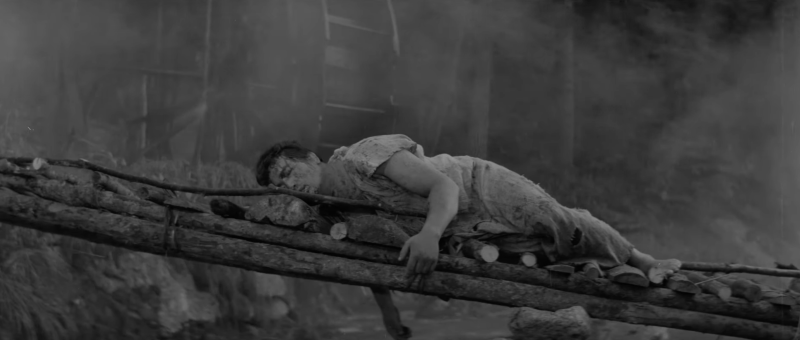
Feudalism therefore destroys natural human emotions such as love when all life is transactional in a constant, and largely futile, struggle for survival. Bong-won turns to the spiritual realm for help, asking a shaman how he can win back his wife but she gives him the rather bizarre instructions to steal three sets of underwear and throw them in the river on 3rd August while bowing to the west. Needless to say, that doesn’t work out very well for him. The fates truly do seem to be against Bong-won. Lee adds a touch of supernatural dread as Bong-won finds himself surrounded by howling winds as he fatefully makes his way towards the water mill and his destiny. The ritual dance is perfectly recreated as Bong-won and Geum-boon retake their roles in the play, their actions matching those of the masked players as Bong-won collapses on the bridge just as the demon had though there is no positive resolution in what is now both reality and fable. What we’re left with is the tragedy of feudalism, but also the maddening futility of obsessive desire for that which is and has always been ever so slightly out of reach.


Hoodlum Soldier (兵隊やくざ, Yasuzo Masumura, 1965)

The opening voiceover of Yasuzo Masumura’s Hoodlum Soldier (兵隊やくざ, Heitai Yakuza) explains to us that the settlement we’re looking at is effectively a huge prison in the desert inhabited only the Japanese military from which there is no escape. To ram the point home, the camera lingers on the decomposed skeleton of Japanese infantrymen half-buried in the mud only a short distance from the fort’s borders. This is the fate of the soldier, it seems to tell us with nihilistic futility as if in effect all of these men are already dead while imprisoned inside the death cult that is militarism. 

Yet, our heroes will eventually escape. At least that’s how it seems at the end of the film though there are a further eight instalments in this series. A mismatched pair who develop something akin to a sadomasochistic relationship, they each resist this system in opposing ways. “College boy” Arita (Takahiro Tamura) is just waiting out the end of his contract, continually refusing promotions so that he will be discharged at the end of his three-year term and allowed to return to Tokyo a free man. Omiya (Shintaro Katsu), by contrast, is a man who has no real concept of hierarchy or authority. As he later says, he doesn’t do anything he doesn’t want to do and it’s not so much that he resists authority but is simply indifferent to it.

As Arita explains, the the army is a hierarchy that’s founded on violence. The mildest infraction is dealt with through a process of slapping in which those of higher status assert their authority by inflicting violence on those below. We’re told that laws have recently been put in place to regulate the violence implemented as disciple with excessive force now apparently frowned upon leaving this culture of slapping as the only accepted form of judging an action right or wrong though it’s also clear that these rules are not always respected even by those who made them. The very system is then itself corrupt and unfair, which Arita knows and therefore contrives to live outside of it in so much as he does not participate in this chain of violence.

Neither does Omiya but in an opposing way. On joining the unit, he simply does not react to being slapped by his superior officer and in that way makes it clear that he cannot be controlled by violence. He does not fight back, but only uses to violence to oppose what he sees as injustice and it’s this refusal to just accept the unfairness of army life that makes him a thorn in the side to army command. They assign a reluctant Arita as his mentor, much to his chagrin because he fears that Omiya will get him into trouble and damage his chances of making it to his discharge without incident. But the funny thing is that Omiya does submit himself to Arita’s authority precisely because he does not brutalise him and never uses violence as a means of control. Omiya respects Arita, and therefore listens to him when he explains why a particular course of action is disadvantageous to himself and will only result in further violence. 

To Arita, Omiya at times seems like a bullheaded brawler who thinks a fight is over when someone is knocked out or surrenders and is unable to see the potential for reprisals, but he’s smarter than he gives him credit for and the bond between them is quite genuine even at times homoerotic as they each declare they don’t want to be parted from each other seemingly the only two sane men marooned amid the folly of war in Manchuria. Omiya respects Arita because he does not use violence against him, but in other senses perhaps craves it and is willing to inflict violence on himself in order to save Arita from being forced to do so by the system under which they live which would obviously cause him mental anguish. The power dynamics between them shift as the fortunes of the war decline with Arita eventually declaring that Omiya is now his superior and may issue him orders which he will then obey.

The statement may however be ironic in that they are in the process of escaping the hierarchal society by hijacking its most potent symbol, a train. Omiya declares themselves free of it in pointing out that China stretches to the borders of Russia and Europe as if the whole world were now open to them that they are no longer bound by the walls of the literal prison that is the army camp and the symbolic ones of the militarist society ruled by violence. As Arita had pointed out, the camp ran itself like a prison and was akin to a yakuza society with the different factions often at war with each other. Goverened by macho posturing, every transgression must be solved through violence to approve each man’s status with Omiya’s perpetually high in part because he doesn’t really care very much for the hierarchy only for what he sees as righteousness. 

The two men bond with a Japanese sex worker who they realise is just as trapped as they are by the force that underpins militarism, violent patriarchy. She also feels her situation to be futile, that even if she should return to Japan there will no future for her because of her past in sex work while she currently has no more control than they do and is simply pulled around by her employers to wherever the army goes now that the frontlines are in constant flux and the retreat south has begun. Arita and Omiya free themselves by decoupling from the train leaving the sleeping soldiers yet to awake from the cruel spell of militarism inside while they seek freer futures. Our heroes are men who in effect simply choose to remove themselves from an absurd and destructive social order which speaks just as well to the contemporary society of docile salarymen living in a different kind of prison but perhaps no more free than previous generations while tied to a feudalistic, patriarchal social hierarchy. 


Hoodlum Soldier screened as part of this year’s Camera Japan.

Original trailer (no subtitles)

A Wanderer’s Notebook (放浪記, Mikio Naruse, 1962)

Many of Mikio Naruse’s most famous films are adapted from the work of Fumiko Hayashi, a pioneering female author who chronicled the life of a working class woman with startling frankness. Yet his dramatisation of her life, A Wanderer’s Notebook (放浪記, Horo-ki), is both a little more reactionary than one might have expected and surprisingly unflattering even in the heroine’s eventual triumph in escaping her poverty through artistry. Even so if perhaps sentimentalising the economically difficult society of the 1920s in emphasising the suffering which gave rise to Hayashi’s art, the film does lay bare the divisions of class and gender that she did to some extent transgress in pursuit of her literary destiny. 

Naruse and his screenwriters Toshiro Ide and Sumie Tanaka bookend the the film with a literal “lonely lane” which the young Fumiko walks with her itinerant salespeople parents. As a small child, she sees her father arrested for a snake oil scam peddling some kind of wondrous lotion, setting up both her disdain for men in general and her determination not to be deceived by them at least unwittingly. She has no formal education but is a voracious reader well versed in the literary culture of the time and intensely resentful of if resigned to her poverty. In the frequent sections of text which litter the screen taken directly from her novels, she details her purchases, wages, and longing for the small luxuries she can in no way afford. 

As an uneducated woman in the 1920s her working opportunities are few. She exasperatedly relates standing in a queue with hundreds of other women waiting for an interview for a company job only to be told they’ll let her know, while her other opportunity involves meeting a theatre director at a station who later takes her to his hotel/office and makes it plain he’s not really interested in her CV. She gets a job at the office of a stockbroker, but lies about being able to do accounts and is flummoxed by double entry bookkeeping getting herself fired on day one. After a brief stint in factory painting toys, she leaves with a friend to become a hostess but is also fired on her first day for getting drunk and being unwilling to ingratiate herself with the boorish men who frequent such establishments. 

Despite her animosity, she is drawn towards men who are callous and self-involved, firstly taking up with a poet and actor who praises her work but turns out to have several “wives” on the go, and then begins living with a broody writer, Fukuchi, who is insecure and violent, resentful at her success in wake of his failure. Perhaps because of her experiences, she seems to resent any hint of kindness though sometimes kind herself, lending money to her friend whose mother is in need and often ready to stand up for others whom she feels are being mistreated. A kindly widower in the boarding house where she lives with her mother, Yasuoka, falls in love with her but she repeatedly rejects him partly as someone suggests because he is not handsome, but mainly because of his goodness and kindness towards her. Nevertheless, he continues to support always ready in her time of need though having accepted that she will never return his feelings or accept his proposal. 

Perhaps her might have liked to have been kinder, but was too wounded by her experiences to permit herself. In any case at the film’s conclusion in which she has achieved success and in fact become wealthy it appears to have made her cold and judgemental. She instructs her maid to send a man away believing he is from a charity set up to help the poor, insisting that the poor must work for industry is the only path out of poverty implying that as she managed it herself those who cannot are simply not applying themselves when she of all people should know how fallacious the sentiment is. As if to bear out the chip on her shoulder, she forces her mother to wear a ridiculous kimono from a bygone era that is heavy for an old woman and makes her feel foolish because of her own mental image of the finery she dreamed of providing her on escaping the persistent hardship of their lives. 

As she says, she’s no interest in the socialist politics espoused by the literary circles in which she later comes to move, pointing out that the poor have no time for waving flags. One of her greatest supporters is himself from a noble family despite his progressive politics and in truth can never really understand the lives of women like Fumiko. He describes her work as like upending a rubbish bin and poking through it with a stick, at once fascinated and repulsed by a frankness he may see as vulgar. At one point he accuses her of writing poverty porn, playing on her humble origins for copy and becoming something of a one note writer. 

In truth, the film is not really based on the novel from which it takes its title but on the play that was adapted from it, while the novel itself was apparently reworked and republished several times in response to reader taste giving rise to a series of questions both about its essential authenticity and what it was that it was attempting to convey. In the film at least, moments after her literary success, Fumiko is challenged by a fellow female writer, Kyoko, who was once her love rival, that she cheated in a contest by failing to submit Kyoko’s entry until after the deadline had passed, though as it seems she would have won anyway. She is occasionally underhanded, perhaps because she feels she has no other choice, but then as we can see there is no particular solidarity between women save the kindly landladies who often let her delay her rent payments. Fumiko feels herself to be alone and her quest is not really for literary success but simply for her next meal, though she feels the slights of the bitchy women and arrogant men who mock her commonness while simultaneously exploiting it as entertainment. 

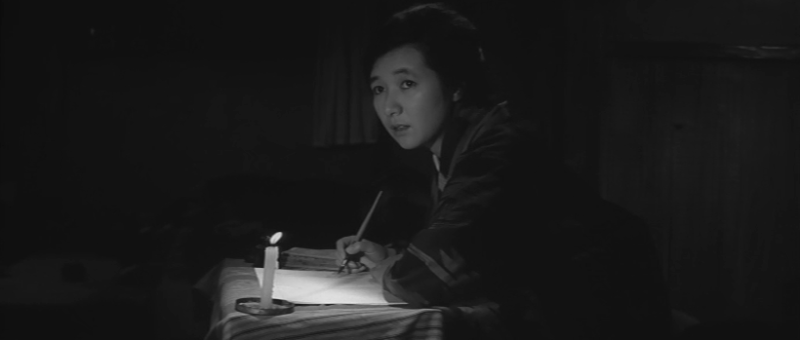
On the one hand, her success seems to signal a triumph of independence having freed herself from the need to depend on terrible men though she also she seems to have met and married a warmhearted painter who cares for her and supports her work while she has also been able to give her mother the level of comfort they both once dreamed of. Even so, the unavoidable fact that she dies at such a young age implies she’s worked herself into an early grave in a sense punishing her for her rejection of contemporary social norms undercutting her achievements with some regressive moralising while the one thing she still desires, rest, is given to her only in death. In Takamine’s highly stylised performance, as some have implied perhaps intended to mimic the silent screen, Fumiko is at once a carefree young woman who dances and sings and a melancholy fatalist with a self-destructive talent for choosing insecure and self-involved men, but above all else a woman walking a lonely road towards her own fulfilment while searching for a way out of poverty that need not transgress her particular sense of righteousness. 


Original trailer (no subtitles)

Sound in the Mist (霧の音, Hiroshi Shimizu, 1956)

In the opening scenes of Hiroshi Shimizu’s Sound in the Mist (霧の音, Kiri no Oto), a young woman tells another that “as women, we need to create our own happiness,” though as it turns out it’s something that neither of them are really able to do. A classic melodrama, the film once again hints at Shimizu’s mistrust of romance and the frustrating inability of men and women to communicate or embrace their love for one another even when the seeming barriers preventing it have been removed.

To that extent, it’s interesting that the chief disagreement between unhappily married botanist Kazuhiko (Ken Uehara) and his wife Katsuyo is over her feminist politics and desire to devote herself to women’s emancipation under the new post-war constitution. The main bone of contention is that she wants to sell a mountain owned by Kazuhiko’s family to fund her political career though as he later says this mountain is his life. In any case he lets her sell it, believing there’s no point putting up a fight. He puts up even less of one in his relationship with Tsuruko (Michiyo Kogure), his assistant who is hopelessly in love with him yet after his wife’s angry visit decides to absent herself feeling as if she’s in the way.

It was her friend Ayako, a Tokyo dancer, who told her that women need to make their own happiness but in the end she couldn’t do it either. She was similarly involved with a weak-willed married man who continued to vacillate over leaving his wife offering the justification that he didn’t want to mess things up for his children. Eventually the pair find escape through double suicide which only emphasises the futility of their romantic connection. Tsuruko similarly makes several comments about the idea of death and dying, stating that if she were to die she’d want to go to a particular spot in the mountain which seems like heaven to her.

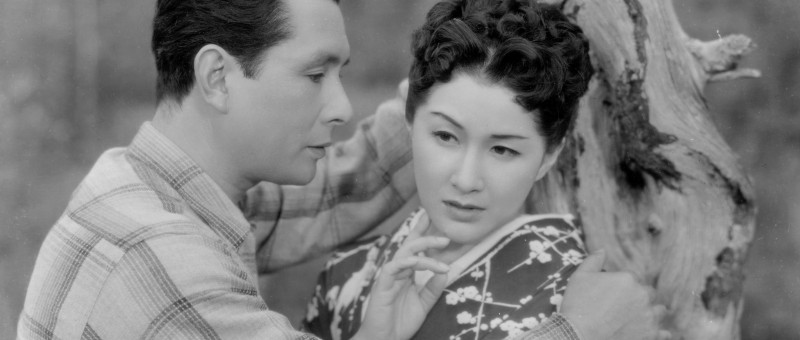
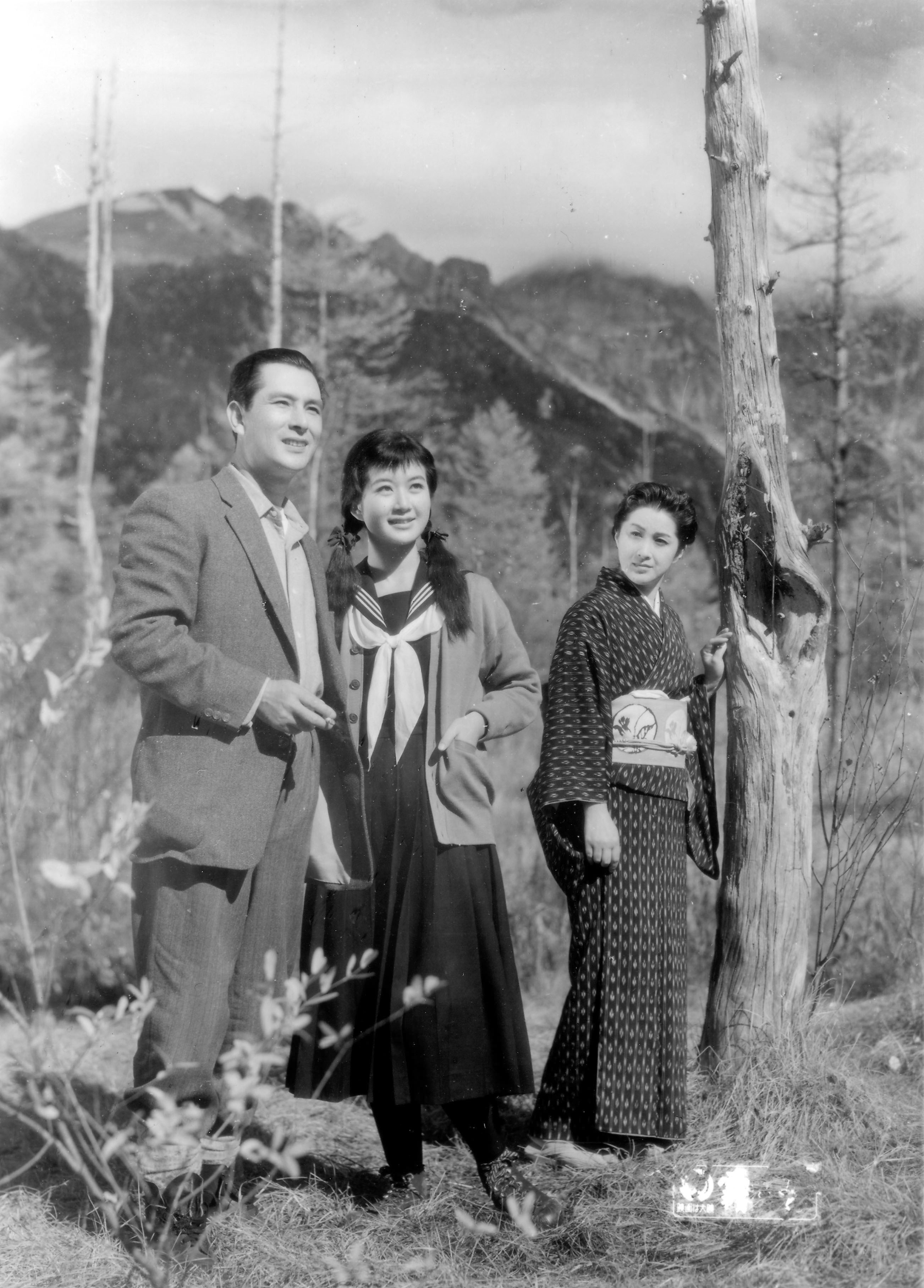
Though Katsuyo describes it as a “filthy” place the cabin does indeed become a kind of haven, a bubble of apparently chaste love and longing inhabited only by Kazuhiko and Tsuruko as the voiceover says hiding out from post-war chaos. Tsuruko seems to be the kind of woman Kazuhiko regards as the ideal wife in that she cares for him and supports his work even if he tells Katsuyo he just needed someone to run errands and do the grocery shopping so Tsuruko is there as his maid. Both are at pains to emphasise that no physical relationship exists between them but are otherwise prevented from acting on the their love because of Kazuhiko’s marriage along the existence of his daughter, Yuko (Keiko Fujita), who may be adversely affected by her parents’ decision to divorce in an age when such things were less common.

Kazuhiko continues to return to the mountain cabin which has since become an inn at regular intervals to see the Harvest Moon, as does Tsuruko though she also carries a degree of shame that makes her fear re-encountering Kazuhiko having become a geisha apparently solely to ensure her proximity to the mountain. Once again filming with the gentle lateral motion familiar from his later films, Shimizu focuses on the landscape and suggests that these lovers are only free to love in the natural world unconstrained by the petty concerns of civilisation which prevent them from embracing their desires. The sound in the mist is perhaps that of Kazuhiko’s latent romanticism and the implication that to him it may be better to suffer for love than to accept it. The same may be true for Tsuruko who is equally powerless if filled with regret that in the end she gave up so easily rather than fight for the love of her life.

On the other hand, the cabin seems to have given rise to a love match between Kazuhiko’s daughter Yuko and her husband who vow to continue the tradition of coming to the inn on the occasion of the Harvest Moon which marks both their wedding anniversary and the time they met. Yuko’s melancholy expression on coming to an understanding of her father’s “special memories” suggests a gentle sympathy but also that this younger generation is freer to love though no less romantic.The poignant closing scenes in which Kazuhiko wanders into the mist are nevertheless filled with irresolution, regret, and a longing that express only a deep sadness for the misconnections and misunderstandings of a less open past.


Sound in the Mist screens at Japan Society New York on May 23/30 as part of Hiroshi Shimizu Part 2: The Postwar and Independent Years.