The Empty Table (食卓のない家, Masaki Kobayashi, 1985)

The Empty TableJapanese cinema of the 1980s is marked by an increasing desire to interrogate the idea of “the family” in an atmosphere of individualist consumerism. Yoshimitsu’s Morita’s The Family Game had blown the traditional ideas of filial piety and the primacy of the patriarch wide open in exposing his ordinary middle-class family as little more than a simulacrum as its various members sleepwalked through life playing the roles expected of them free of the true feeling one would expect to define familial bonds. A year later, Sogo Ishii’s The Crazy Family took a different, perhaps more positive approach, in depicting a family descending into madness through the various social pressures of maintaining a conventional middle-class life in the cramped environment of frenetic Tokyo. Masaki Kobayashi, unlike many of his contemporaries, was not so much interested in families as in individuals whose struggles to assert themselves in a conformist society became his major focus. The Empty Table (食卓のない家, Shokutaku no nai Ie) is not perhaps “a family drama” but it is, if indirectly, a drama about family and the ways in which the wider familial context of society at large often seeks to misuse it.

Set in 1973, The Empty Table is also among the earliest films to tackle the aftermath of the 1972 Asama-Sanso Incident. For ten days in February, the nation watched live as the police found themselves in a stand off with five United Red Army former student radicals who had taken the wife of an innkeeper hostage and holed up in a mountain lodge, refusing to give themselves up to the police. The discoveries surrounding the conduct of the United Red Army which had descended into a cult-like madness involving several murders of its members (including one of a heavily pregnant woman) shocked the nation and finally ended the student movement in Japan.

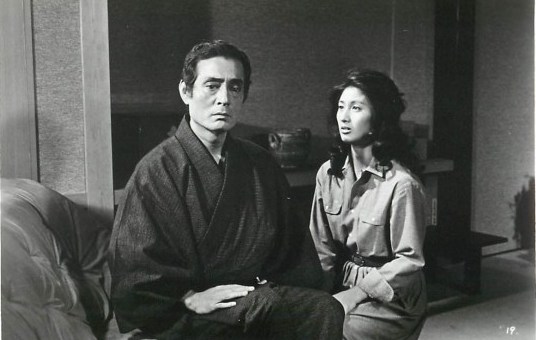
Kidoji (Tatsuya Nakadai) is the father of one of the student radicals, Otohiko (Kiichi Nakai), who took part in the siege. In Japanese culture, it’s usual for the parents of a person involved in a scandal to come forward and offer an official apology to the nation on behalf of the their children. During the siege itself the family had also been weaponised as mothers, particularly, were enlisted to shout from outside the inn, offering poignant messages intended to get their sons to give themselves up and come home. Kidoji, unlike the other fathers (one of whom hanged himself in shame), refuses his social obligation on the grounds that the actions of his grownup son are no longer his responsibility. 

As a scientist, Kidoji is used to thinking things through in rational terms and outside of Japan his logic may seem unassailable – after all, it is unreasonable to hold the conduct of a family member against an otherwise upright and obedient citizen. In Japan however his actions make him seem cold and unfeeling, as if he has disowned both his son and his position as the father of a family with whom rests ultimate responsibility for those listed on his family register. This way of thinking may be very feudal, but it is the way things work not just in the late 20th century, but even in the early 21st.

Kidoji’s refusal to do what is expected of him eventually leads to the crumbling of the family unit. Far from the cheerful scene we see of Kidoji, his wife, and their three children seated around a dinner table in celebration, the family now eat separately and Kidoji returns home to cold meals and an empty table. Kidoji’s wife, Yumiko (Mayumi Ogawa), has had a breakdown and had to be hospitalised, while his daughter Tamae (Kie Nakai) is forced to break off her engagement only to resort to underhanded methods to be allowed to marry the man she loves. While Otohiko languishes in prison, only his younger brother Osamu (Takayuki Takemoto) remains at home.

Kobayashi’s central concern is the conflict in Kidoji’s heart as he faces a choice between maintaining his principles and saving his family pain. It’s not that Kidoji feels nothing – on the contrary, he is profoundly wounded by all that has happened to him, but ironically enough, puts on the face society expects but does not want in maintaining his composure in a situation of extreme difficulty. Kidoji’s deepest anxieties rest in the need to “take responsibility”, something he must do in acknowledging that it’s not his son’s disgrace which has destroyed his family but his own rigidity in refusing to bend his principles and obey social convention. What Kidoji wants is for his son to take responsibility for his own choices as an individual rather than expecting his family to carry his load for him. He must, however, also take responsibility for the effect his choices have had on others, including on his family, and accept his role both as an individual and as a member of a society with rights and obligations.

Kidoji’s refusal to apologise on behalf of his son looks to the rest of society like an abnegation of his paternal authority, and without paternal authority the family unit crumbles like a feudal household whose lord has been murdered. Yet Kidoji, like many of Kobayashi’s heroes, refuses to compromise his principals no matter how much personal pain they eventually cause him. Where the rules of society make no sense to him, he will ignore (if not quite oppose) them, remaining true to his own notions of moral righteousness.

In many ways, Kidoji is the archetypal Kobayashi hero – standing up to social oppression and refusing to simply give in even when he knows how beneficial that may be to all concerned. He is also, however, just as problematic in allowing his family to continue suffering in preservation of his personal beliefs. Kobayashi’s final feature film, The Empty Table is extremely dated in terms of shooting style with its overly theatrical dialogue and frequent use of voice over and monologue which were long out of fashion by the mid-1980s. Kobayashi does, however, return to the more expressionist style of his earlier career, moving towards an etherial sense of poetry as his hero contemplates his place in a society which often asks him to behave in ways which compromise his essential value system. The family, broken as it is, is also (partly) mended once again as Kidoji begins to reconcile his various “responsibilities” into a more comprehensive whole as he prepares to welcome a new generation seemingly as determined to live in as principled and unorthodox a way as he himself has.


Jagko (짝코, AKA Pursuit of Death, Im Kwon-taek, 1980)

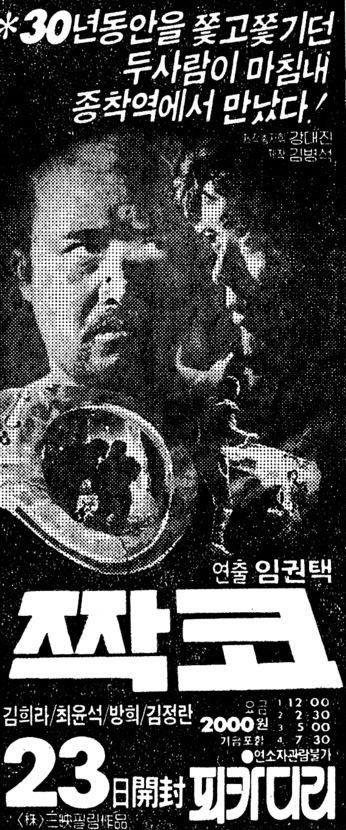
Jagko poster

During the dark days of the dictatorships, the “anti-communist film” was a mainstay of the Korean film industry. Though it wasn’t exactly possible to make a pro-communist film and that therefore any and all films were at least implicitly anti-communist, the authorities had been especially keen on films which took a hardline on anything remotely leftwing. By the late ‘70s however times were changing and a more nuanced view of recent history began to become possible. Im Kwon-taek is thought to be among the first directors whose work precipitated a shift from the “anti-communist” to the “division” film in which the tragedy of the division itself takes precedence over the demonisation of the North (though such views were perhaps not as uncommon as might be assumed in films from the late ‘50s and early ‘60s before the passing of the Motion Picture Law). Jagko’s (짝코) two haunted protagonists are both flawed men betrayed by their country and changing times realising they have wasted their youth on a cat and mouse game over an outdated ideological disagreement when the conflict that defined their lives was merely a proxy war fought by two super powers on Korean soil.

Song (Choi Yoon-seok), a former policeman, is picked up by a vagrancy patrol and taken to a “rehabilitation centre”. Despite the name the centre is more like a debtors’ prison and Song is now a prisoner of poverty who will not be allowed to leave unless redeemed by a family member (of which he has none or he might not be here). Nevertheless, the men are treated well, fed three meals a day, and only asked for a couple of hours of non-strenuous work with the rest of the time marked “free”. Once Song has begun to calm down, he makes a shocking discovery. He is convinced that a man lying ill a few beds over is none other than Jagko (Kim Hee-ra) – a former North Korean partisan and the man he holds responsible for ruining his life.

Im lets us in on the stories of both men via a series of flashbacks. Though he pretends not to know him, the other man, calling himself Kim, is indeed “Jagko” though his life has been just as miserable as Song’s. Back on Mount Jiri at the end of the Korean war, Song was a respected policeman – he left school at 12 and made a name for himself catching partisans. When he catches the legendary Jagko, wanted for a series of atrocities and terrorist acts, all Song can do is boast and talk of his imminent promotion after which he will enjoy a life of comfort. Unsurprisingly, Jagko is not exactly happy for him but allows his captor to prattle on in order to buy time for his escape. It is Song’s own arrogance which permits him to do so. Claiming to need the bathroom, Jagko offers Song a gold ring hidden in his shoe which Song scoffs at, but he does loosen his cuffs to facilitate Jagko’s relief at which point he manages to headbutt him and run away. Song is accused of taking bribes and dismissed. He is humiliated and loses his status, job, and family all in one go. Fixated on Jagko, Song gives up everything to chase him in order to turn him in to his former commander and have him clear his name by confirming that he was not bribed and did not sell out his country for gold.

Almost thirty years later both men are older than their years, broken and defeated. As one of the rehabilitation centre residents puts it, they’re all about to die – what does it matter now if someone was a communist or a partisan, what good could it possibly do to drag the past up all these years later? For Song it’s almost as if there is no “past”, the last few decades have been spent in a relentless pursuit of the man who holds the key to his good name. He wants to undo the folly of his hubris by overwriting it, but time has passed and what he’s lost cannot be reclaimed. Meanwhile, Jagko is not an ideologically crazed leftist, but a lonely old man who is now in poor health and has nothing but regrets. The two men bond in their mutual suffering and work together to escape, but the world they emerge into is not that of their youth. Song was disempowered when he entered the facility – they took his arrest rope away from him, but when he tackles the weakened Jagko to the ground and tries to call two policemen on patrol over to arrest him as an “escaped communist guerrilla” the young officers of the law have no idea what he’s talking about. Those words no longer mean anything. The bemused policemen conclude the old men must be escaped mental patients before spotting the rehabilitation centre uniform and jogging off to phone someone to come and take them back.

The old men’s quarrel is exposed as ridiculous. Jagko, less angry more soulful, remarks that men like he and Song are the most pitiful souls on Earth as he watches America sit down with Russia on the TV and realises he is merely a victim of ongoing global geopolitical manoeuvring. It’s no longer a question of left and right, both men are victims of their times, neither “good” nor “bad” but flawed and human. We do not know if Jagko did the things Song says he did but he has paid a heavy price all the same. Song, by contrast, has shifted all the blame for his fate onto Jagko, believing that if he can catch him he can somehow make it all right, but of course he can’t and is trapped in a spiral of denial in refusing to accept his own responsibility for the tragedies of his life. What is to blame is the folly of war and particularly of an internecine fraternal conflict which remains unresolved and may well be unresolvable unless an attempt is made to address the past with empathy and understanding in place of enmity and rancour.


Jagko is available on blu-ray courtesy of the Korean Film Archive. The set includes subtitles in English, Japanese, and Korean with the audio commentary by Kim Dae-seung and editor of Cine21 Ju Sung-chul also subtitled in English. The audio commentaries from the DVD edition included with the Im Kwon-taek boxset, one by director Im Kwon-taek and film critic Huh Moon-yung, and the other by screenwriter Song Gil-han and film critic and director Kim Hong-joon, unfortunately do not carry over the English subtitles. The set also comes with a bi-lingual Korean/English booklet featuring an essay by film critic and professor Park Yuhee. Not currently available to stream via the Korean Film Archive’s YouTube channel.

Downtown Heroes (ダウンタウンヒーローズ, AKA Hope and Pain, Yoji Yamada, 1988)

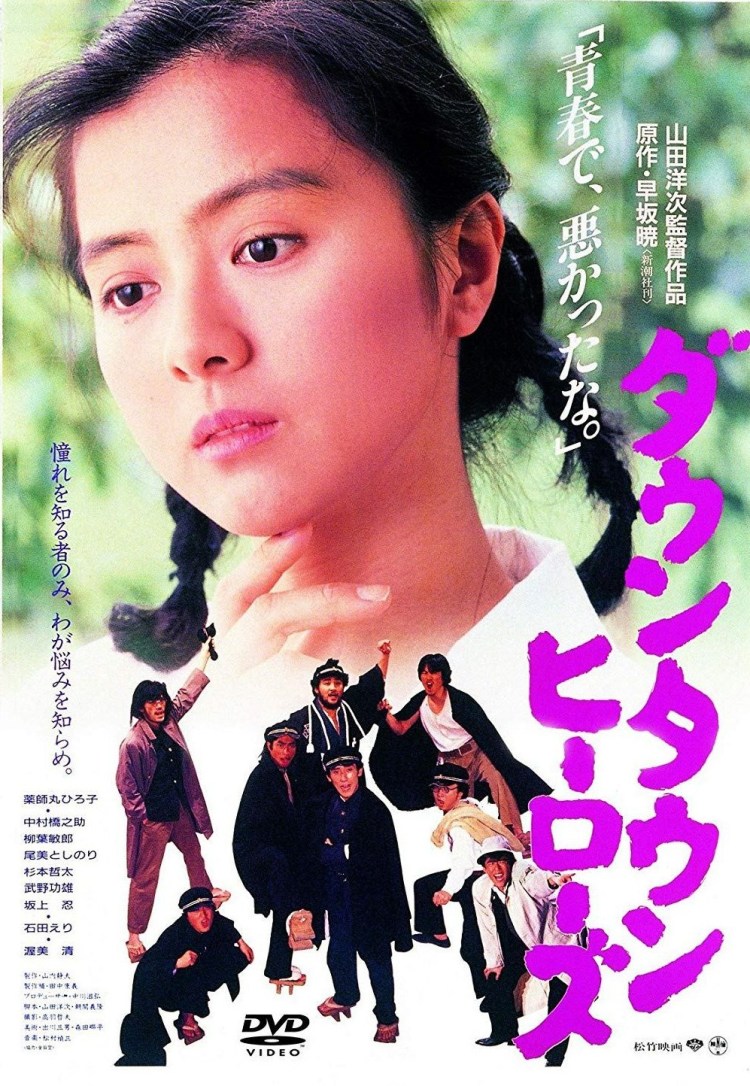
Downtown Heroes posterUnlike many of his contemporaries, Yoji Yamada was an infrequent visitor to the youth movie. Best remembered for his long running Tora-san series, Yamada’s later output is marked by an alternation of laughter and tears, running between raucous family comedies and poignant examinations of wartime loss. Set in the immediate postwar period, 1988’s Downtown Heroes (ダウンタウンヒーローズ, AKA Hope and Pain) adapts the autobiographical novel by Akira Hayasaka for a twin tale of endings and beginnings as a group of boys prepare to leave the Japan of their childhood behind and set out into the brand-new post-war future.

Our narrator for the tale is Hayasaka’s stand-in, Kosuke (Hashinosuke Nakamura), a sensitive young man from the mountains studying at the prestigious boys’ boarding school in town. The Matsuyama high school is one of the last to still be operating in Japan’s pre-war educational model. In fact, when the boys graduate the school will shut down in favour of the American 6-3-3 standard model of organising the educational system. Nevertheless, Kosuke and his friends enjoy what seems like a fantastically broad curriculum to modern eyes, much of which consists of classic German literature. Rather than their family names, the boys refer to each other with a series of nicknames inspired by their studies and have been heavily influenced by European left-wing political ideology. Accordingly, they are less than happy about the imposed American “reforms” and, paradoxically, the restrictions placed on their individual “freedom” by the “imperialist” occupation.

The central drama revolves around two episodes occurring one after another during the final year of high school. The first involves Kosuke’s friend Arles (Toshinori Omi) and a prostitute he helps to rescue from the red light district – Sakiko (Eri Ishida) was supposed to elope with a student from the school, but he didn’t show up and if the people from the brothel she was sold to find her she’ll be in big trouble. Her suitor turns out to be a fraud, but the boys are committed to saving her and hide Sakiko in their dorm, sharing their meagre rations with her before helping her escape to her home town. Meanwhile, the boys are also preparing for the very last culture festival the school will ever see at which they will present their adaptation of a classic German play. The snag is, the play needs a girl. Eventually the gang enlist the help of Fusako (Hiroko Yakushimaru) – a student at the girls’ school recently repatriated from Manchuria who also happens to be the young lady Kosuke had a meet cute with on the road and has been in love with ever since. Trouble brews when Gan (Tetta Sugimoto), the play’s director, falls in love with her too.

Told from the POV both of the old and the young Kosuke, the atmosphere is one of intense melancholy and inescapable nostalgia. Though these were times of hardship – rationing is fierce and intense, so much so that the school no longer serves meals at all on Sundays and the boys largely subsist on rice gruel, they were also times of joy and possibility. These are however youngsters in the best tradition of the sensitive young men of Japanese literature. They feel everything deeply, fully aware that they are living on the cusp of something new, which necessarily also means to be standing atop a grave. Their world is collapsing and the values they’ve been given (progressive though they seem to be) are about to be thrown out of the window. They have been taught that nothing is more important than their personal autonomy and that personal freedom is attained only through overcoming hardship, but their lives will increasingly be dictated by occupying forces and they feel themselves robbed of something without the right to reply.

Nevertheless their problems are also ordinary teenage ones of romantic crises and friendship dilemmas. Kosuke struggles with his love at first sight crush on Fusako but remains too diffident to say anything until it’s almost too late, while he also struggles to figure out what the most proper thing to do is when Gan reveals he is also in love with her. Gan, a sensitive writer, apparently burns with longing – so much so that he’s written a book long confession of love in apology for being unable to declare himself in person. Kosuke, a good friend, agrees to deliver the letter but both of them have neglected to consider Fusakao’s feelings so bound up are they in their own solipsistic dramas. Fusako was also struck by the love bug on her first meeting with Kosuke and has been patiently waiting for him to say something (as is the custom of the time). She is therefore doubly hurt and offended when he delivers a mini-tome on the theme of love from someone else before attempting to leave abruptly in a huff. Truth be told, there are few women who would enjoy being handed a thesis as a confession, but Fusako is really not in the mood to read one now.

Ending on a melancholy epilogue in which the old Kosuke looks on at field of young men playing American football before some others in running shorts brush past him and a young couple enjoy an evening walk, Yamada embraces the mild sense of deflation that has been building since the beginning. Young love faded and the dreams of youth were destined to come to nothing – not quite a tragedy, or perhaps only one of the ordinary kind, but food for the regrets of age all the same. The times were hard, and then they got better but somehow they were never so happy again. A youth drama indeed.


Original trailer (no subtitles)

Theme song “Jidai” performed by Hiroko Yakushimaru

The Emperor’s Naked Army Marches On (ゆきゆきて、神軍, Kazuo Hara, 1987)

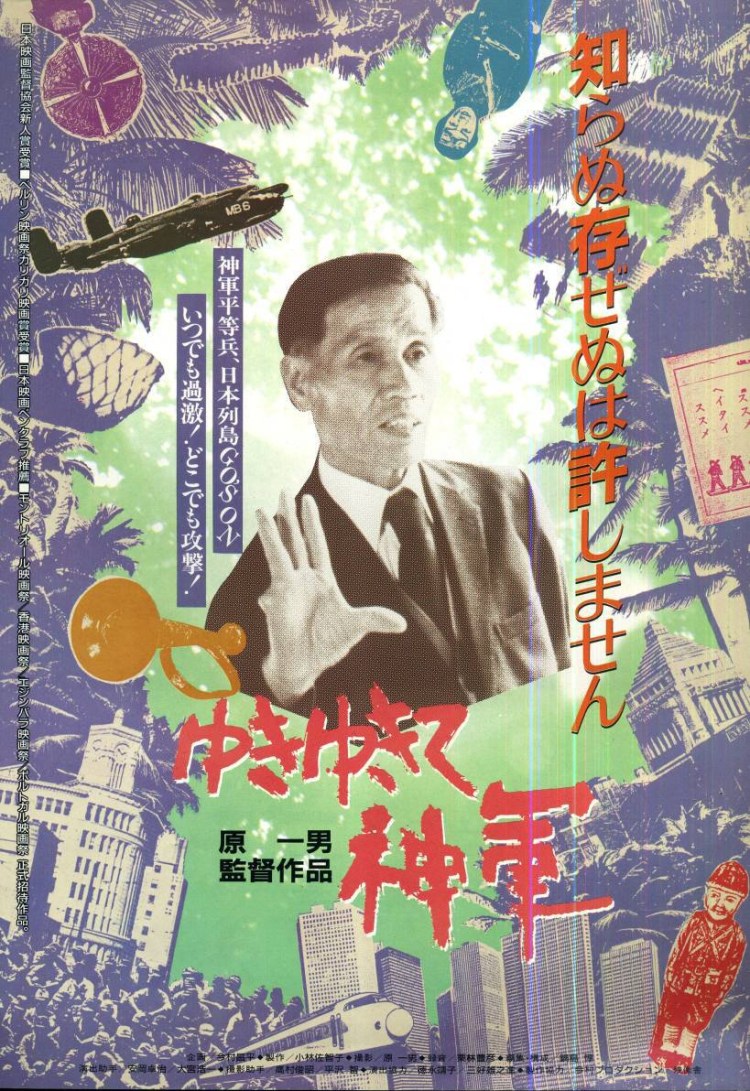
The Emperor's Naked Army Marches On PosterThe relationship between a director and a subject can often be a complex one. Who is really leading who and towards what end is a difficult enough question at the best of times, but when your subject is an unhinged crackpot with a definite agenda, a natural love of the camera, and an unpredictable violent streak, it’s an inescapable conundrum. Kenzo Okuzaki, a Pacific War veteran with a deeply seated grudge against the emperor for his refusal to acknowledge his war guilt, first came to the attention of director Shohei Imamura but a second stretch in prison for firing pachinko balls at the object of his wrath put paid to his directorial hopes. 10 years later Imamura passes his subject on to Kazuo Hara who finds himself increasingly at the mercy of his mercurial campaign for truth and reconciliation.

The main thrust of Okuzaki’s current activities lies in uncovering the facts behind the deaths of two enlisted men who were executed in New Guinea three weeks after the war was over. Okuzaki believes the men were murdered and lays the blame at the feet firstly of the officers on the ground and ultimately at those of the emperor who created the circumstances in which all of this horror was allowed to bloom. To assist him in his investigations, Okuzaki ropes in the families of the victims – one a Shinto priestess who is convinced she sees her brother in her dreams and on her altar, and the other a conflicted brother who just wants to know the truth. The truth, however, may be hard to hear, as one of the men Okuzaki corners tries to tell them. Like most of the others questioned about the events of almost forty years before, he advises the family that it’s better not to know while emphasising that their relatives died through no fault of their own.

What is probably obvious to Okuzaki but not to the relatively less cynical family members is that an issue is being skirted. The soldier makes out that he doesn’t want to go into the deaths because the men were executed for desertion – something which is absurd in itself when the war was already over, and that he did not want the family to experience the shame and social stigma of being related to “cowards” who failed in their “duty”. Such notions are already out of date by the late ‘80s, but evidently still weigh heavily on the minds of veterans. Wanting to spare others the pain and shame of discovering the truth about what happened in New Guinea is a frequent excuse offered by those questioned, but perhaps a way of deflecting their own reluctance to speak of such deeply traumatic, extremely difficult events.

Getting them to open up is not Okuzaki’s first thought. Okuzaki himself is a strange man with a disturbing aura and a tendency to self-aggrandisement. When we first meet him he’s acting as a go-between at a wedding of a man he met through his “activism” which is to say a fellow combatant in Okuzaki’s campaign against “The Establishment”. A wedding speech might not be the most appropriate moment to embark on a personal history that involves going to prison for murdering someone you “did not want” to murder as well as a litany of anti-establishment acts including the pachinko ball incident and distributing “pornographic” pictures of the emperor to shoppers at a Tokyo department store. Nevertheless, Okuzaki is extremely proud of these “achievements” which exemplify how he alone has continued to fight the good fight in the post-war world. He sees his original conviction as karma not for his actions in the Pacific but the wastefulness of his life afterwards. He now believes he was saved from New Guinea in order to educate the young about the horrors of war and ensure none of this ever happens again.

Problematically, his main weapon in this fight is violence. Okuzaki’s manner is one of extreme politeness, bordering on obsequiousness, but he is also direct and aggressive, becoming violent when his subjects decline to answer his questions. The relatives are there to shame the officers into speaking the truth through being directly confronted by the human costs of their actions, but Okuzaki’s personal bluster hasn’t thought through the various ways in which his tactics might make it more difficult for them to speak. After all, Okuzaki is a veteran of New Guinea himself, if these men could feel comfortable talking to anyone about their experiences, you’d think they could turn to someone like Okuzaki if only he were not so frightening a presence. Uncomfortably enough, the violence does seem to work and Okuzaki gets his answers through intimidation which leaves his quarry broken and compliant. Despite claiming to work for world peace, Okuzaki believes that his violence is justified by the worthiness of his aims, which you have to admit is an oddly familiar mantra.

His subject’s propensity for violence places Hara in a difficult position, as do his frequent attempts at engineering the situation including roping in his wife and a couple of male friends to pose as relatives of the deceased when the original couple tire of Okuzaki’s exploitative antics. Okuzaki quite obviously has a very clear aim for what he perhaps sees as a propaganda exercise for his ongoing cause which might stand in deep contrast to that of his director who is, after all, a bystander reconstructing narrative after the fact. Okuzaki emerges as a symbol of a nation’s repressed trauma, skittering between officious politeness and belligerent violence while offering a bizarre, quasi-religious philosophy about god’s plan for us all. Hara remains caught between conflicting impulses, unwittingly complicit in Okuzaki’s personal war against war while trying to maintain control in the face of his constant manipulations. As a portrait of a madman The Emperor’s Naked Army Marches On excels, painting Okuzaki as a product of his own mad times while refusing to back away from the bitter truths his madness is so keen to expose.


The Emperor’s Naked Army Marches On (ゆきゆきて、神軍, Yuki Yukite, Shingun) was screened as part of a Kazuo Hara focus at Open City Documentary Festival 2018.

Short clip from the film (English subtitles)

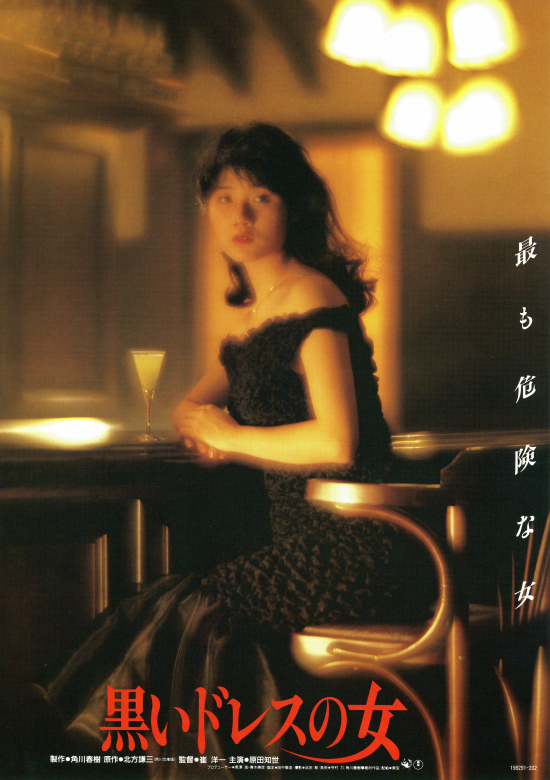
The Lady in a Black Dress (黒いドレスの女, Yoichi Sai, 1987)

Lady in a Black Dress posterHaruki Kadokawa had become almost synonymous with commercial filmmaking throughout the 1980s and his steady stream of idol-led teen movies was indeed in full swing by 1987, but his idols, as well as his audiences, were perhaps beginning to grow up. Yoichi Sai’s first outing for Kadokawa had been with the typically cheery Someday, Someone Will Be Killed which was inspired by the most genre’s representative author, Jiro Akagawa, and followed the adventures of an upperclass girl who is suddenly plunged into a world of intrigue when her reporter father disappears after dropping a floppy disk into her handbag. A year later he’d skewed darker with a hardboiled yakuza tale starring Tatsuya Fuji as part of Kadokawa’s gritty action line, but he neatly brings to two together in The Lady in a Black Dress (黒いドレスの女, Kuroi Dress no Onna) which features the then 20-year-old star of The Little Girl Who Conquered Time, Tomoyo Harada, in another noir-inflected crime thriller again adapted from a novel by Kenzo Kitakata.

We first meet the titular “lady in a black dress” walking alone alone along a busy motorway until she is kerb crawled by a yakuza in a fancy car. Declaring she intends to walk to Tokyo (a very long way), Reiko (Tomoyo Harada) nevertheless ends up getting into the mysterious man’s vehicle despite avowing that she “hates yakuza”. The yakuza goon does however drive her safely into the city and drop her off at her chosen destination – a race course, where she begins her quest to look for “someone”. By coincidence, the yakuza was also heading to the race course where he intended to stab a rival gangster – Shoji (Bunta Sugawara), who makes no attempt to get away and seemingly allows himself to be stabbed by the younger man. Shoji, as it happens, is the temporary responsibility of the man Reiko has been looking for – Tamura (Toshiyuki Nagashima), a former salaryman turned bar owner with fringe ties to the yakuza. Putting on her little black dress, Reiko finally finds herself at his upscale jazz bar where she petitions him for a job and a place to stay, dropping the name of Tamura’s sister-in-law who apparently advised her to try hiding out with him.

Reiko is, after a fashion, the dame who walked into Tamura’s gin joint with the (mild) intention to cause trouble, but, in keeping with the nature of the material, what she arouses in Tamura and later Shoji is a latent white knight paternalism. Curious enough to rifle through her luggage while she’s out, Tamura is concerned to find a pistol hidden among her belongings but when caught with it, Reiko offers the somewhat dark confession that the gun is less for her “protection” than her suicide. Not quite believing her, Tamura advises Reiko not to try anything like that in his place of business and to take it somewhere else. Nevertheless, Reiko stays in Tamura’s bar, eventually sharing a room with melancholy yakuza Shoji who is also hiding out there until the plan comes together to get him out of the country and away from the rival gangsters out for his blood.

As it turns out, Reiko had good reason to “hate yakuza” but she can’t seem to get away from them even in the city. Tamura’s life has also been ruined by organised crime as we later find out, and it’s these coincidental ties which eventually bring Reiko to him through his embittered sister-in-law who had been the mistress of Reiko’s lecherous step-father. The codes of honour and revenge create their own chaos as Shoji attempts to embrace and avoid his inevitable fate while his trusted underling (the yakuza who gave Reiko a lift) tries to help him – first by an act of symbolic though non-life threatening stabbing and then through a brotherly vow to face him himself to bring the situation to a close in the kindest way possible.

Meanwhile, a storm brews around a missing notebook which supposedly contains all the sordid details of the dodgy business deals brokered by a now corporatised yakuza who, while still engaging in general thuggery, are careful to mediate their world of organised crime through legitimate business enterprises. Reiko, like many a Kadokawa heroine, is an upperclass girl – somewhat sheltered and innocent, but trying to seem less so in order to win support and protection against the forces which are pursuing her. Though the film slots neatly into the “idol” subgenre, Harada takes much less of a leading role than in the studio’s regular idol output, retaining the mysterious air of the “lady in a black dress” while the men fight back against the yakuza only gradually exposing the truths behind the threat posed to Reiko.

Consequently, Reiko occupies a strangely liminal space as an adolescent girl, by turns femme fatale and damsel in distress. Wily and resourceful, Reiko formulates her own plan for getting the gangsters off her back, even if it’s one which may result in a partial compromise rather than victory. Though Kadokawa’s idol movies could be surprisingly dark, The Lady in a Black Dress pushes the genre into more adult territory as Reiko faces quite real dangers including sexual violence while wielding her femininity as a weapon (albeit inexpertly) – something quite unthinkable in the generally innocent idol movie world in which the heroine’s safety is always assured. Sai reframes the idol drama as a hardboiled B-movie noir scored by sophisticated jazz and peopled by melancholy barmen and worn-out yakuza weighed down by life’s regrets, while occasionally switching back to Reiko who attempts to bury her fear and anxiety by dancing furiously in a very hip 1987 nightclub. Darker than Kadokawa’s generally “cute” tales of plucky heroines and completely devoid of musical sequences (Harada does not sing nor provide the theme tune), The Lady in a Black dress is a surprisingly mature crime drama which nevertheless makes room for its heroine’s eventual triumph and subsequent exit from the murky Tokyo underground for the brighter skies of her more natural environment.


TV spot (no subtitles)

Theme song – Kuroi Dress no Onna -Ritual- by dip in the pool.

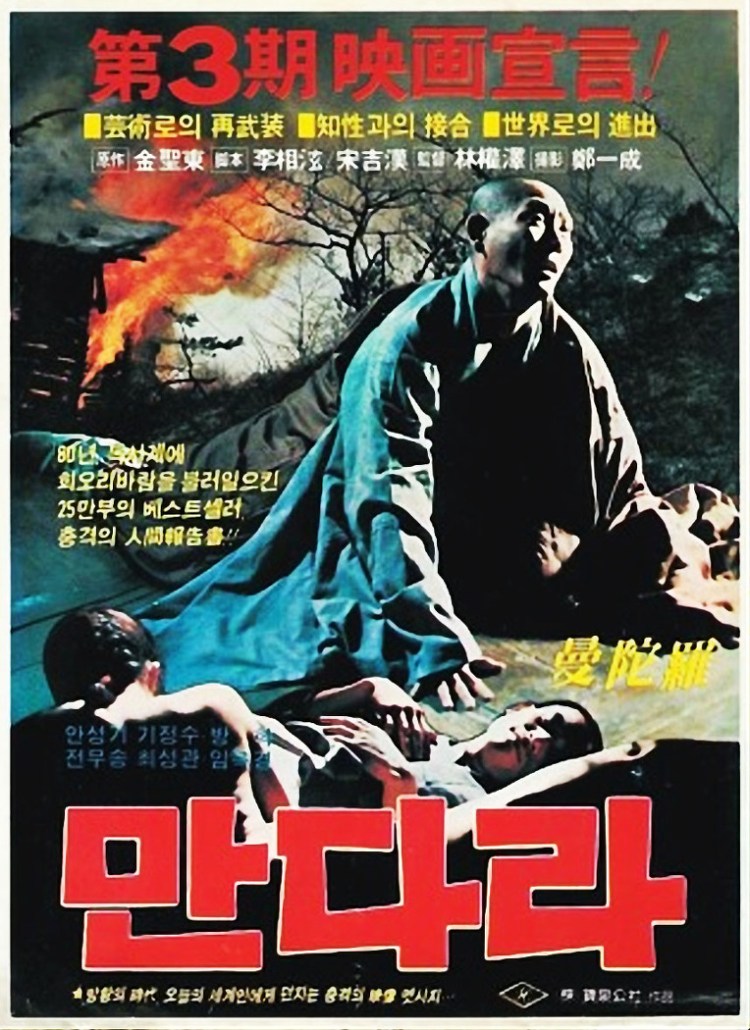
Mandala (曼陀羅 / 만다라, Im Kwon-taek, 1981)

Mandala posterIn a world defined by suffering, does one have the right to retreat into the self and engage in a personal quest for enlightenment or is true enlightenment to be found in the confluence of human consciousness? Im Kwon-taek has some profound questions to ask about human spirituality, the futility of existence, and the transcendence of the self in his 1981 masterpiece, Mandala (曼陀羅 / 만다라). Two monks with very different ideas of spiritual fulfilment meet, part, argue, and perhaps finally understand each other as they walk solitary, individual paths towards Nirvana, each also doubting the purpose of their quest and its ultimate resolution.

Beob-wun (Ahn Sung-ki) dropped out of university and broke-up with his girlfriend in order to become a monk. Consumed with nihilistic thoughts about the futility of existence, he could not go on living a meaningless life. Six years later, Beob-wun is on a bus which is stopped at a checkpoint. Another man in monk’s robes fails to furnish an official monk’s ID card to the authorities and is unceremoniously ejected. Beob-wun gets off the bus too out of a sense of professional courtesy and a desire to help, but Jisan (Jeon Moo-song) is not exactly the kind of monk a serious minded man like Beob-wun would usually want to associate with. Nevertheless, he is oddly fascinated by him, conflicted yet drawn.

Jisan has a sad history of his own. After an indiscretion with a girl at a mountain temple, he was falsely accused of rape and subsequently defrocked. Nevertheless, he continues to practice as a wandering monk, seeking enlightenment in his own way and at his own pace. Jisan’s Buddhas are buried at the bottom of bottles of soju and in the hearts of women – most especially that of the girl from the temple, Ok-sun (Bang Hee), to whom he often returns and is unable to forget. Beob-wun retreats when tested, he doesn’t look at the things which tempt him. Jisan runs headlong towards his demons and defeats them by satiation, but the relief is only temporary – the old emptiness soon returns and the cycle of spiritual deaths and rebirths begins itself again.

When Beob-wun’s former girlfriend, Young-ju, tracks him town to a mountain retreat and confronts him over his “selfish” decision to run away from all his problems by hiding in a temple, he tells her that temples aren’t places for the defeated but to lead one’s life and save the lives of others. She quite fairly asks why he can’t save her life by returning to the world, but Beob-wun looks away. Beob-wun is in denial. He can’t forget Young-ju and has come to resent her as an obstacle to his path towards enlightenment, blaming her for existing rather than himself for his failure to “overcome” her.

There is something dark and dangerous in Beob-wun’s wilful negation of his desires which later manifests as violence, first in a memory or perhaps a fantasy of rape, and then more directly against a woman who was attempting to tempt him into breaking his self affirmed vows of chastity. Jisan’s philosophy is melancholy and perhaps hopeless in its own way, but brighter and free from artifice or malice. Having separated from Jisan, Beob-wun reunites with a fellow monk who has taken their mentor’s instructions to “burn away” the fetters of the mind literally by setting fire to his fingers in order to transcend himself through conquering physical pain. His friend tells him of a funny monk he met on an island who was the only one to rush in and help when the islanders were struck down by a mysterious plague. Jisan fulfilled his duty to others. The other monk sat in the woods on his own praying for his personal enlightenment while the islanders continued to suffer alone.

Jisan, and later Beob-wun’s friend Sugwan, have chosen to look for themselves as reflected in the souls of others, but Beob-wun remains trapped within his own solipsistic belief that he can only overcome his suffering and find an answer to his existential crisis through entirely negating the outside world. Beob-wun is the kind that keeps his head down and avoids getting involved with other people’s troubles – the reminders of an authoritarian regime are everywhere, but a part of him knows that Jisan, for all his faults, is the most “enlightened” man he’s ever known, if only for being the least like himself. The quest for “enlightenment” might be an intensely selfish act of self harm, but the need to create meaning from meaningless persists, for good or ill, and Beob-wun remains lost on the never-ending road to Nirvana, a solitary traveller without hope or expectation.


Mandala was screened as part of the Korean Cultural Centre’s Korean Film Nights 2018: Rebels With a Cause screening series. It is also available on DVD as part of the Korean Film Archive’s Im Kwon-taek box set, as well as online via the Korean Film Archive’s YouTube channel.

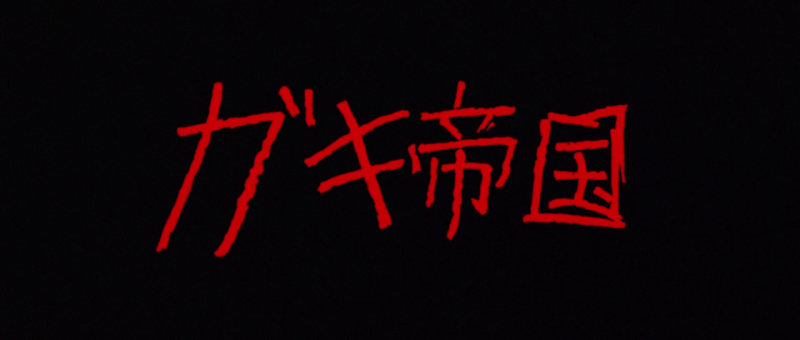
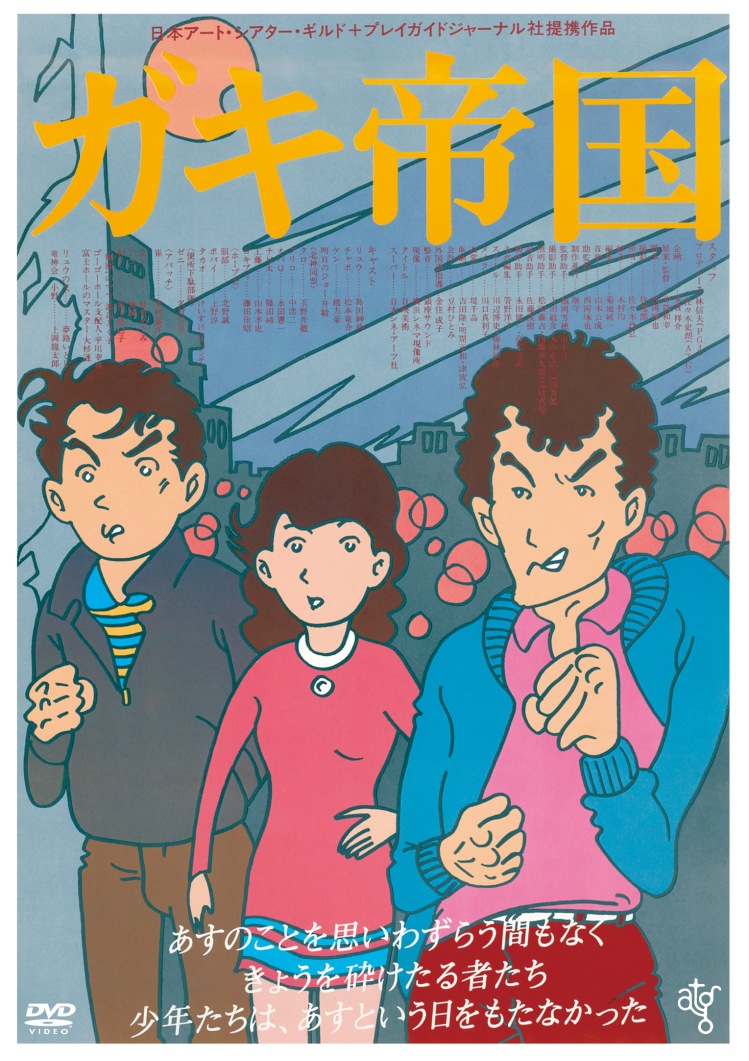
Empire of Kids (ガキ帝国, Kazuyuki Izutsu, 1981)

Empire of Kids posterJapan in 1981 was a vastly different place than the Japan of 1967. Rising economic prosperity had produced an amiable social calm in which desire for conventional success and increasingly aspirational consumerism had replaced the firebrand need for social change which had defined the previous decade. Filmmaker, film critic, and sometimes outspoken TV personality Kazuyuki Izutsu was presumedly not a huge fan of consumerism and for this, his first “mainstream” film made for ATG, retreats back to the Osaka of 1967 in which petty street punks lamented their lack of opportunities by banding together and battling for control of their respective neighbourhoods like boys in the schoolyard only armed with knives and filled with nihilistic desperation.

The film opens with our “hero”, Ryu (Shinsuke Shimada), being released from juvie after presumably getting into trouble for his petty punk antics. Waiting for him are his two best friends – soulful zainichi Korean Ken (Cho Bang-ho), and rockabilly Chabo (Ryusuke Matsumoto). Ryu is released alongside another boy, Ko (Takeshi Masu), whom he tries to recruit into their mini gang but quickly becomes an enemy, teaming up with the boys’ rivals – the Hokushin Alliance, while also becoming a potential rival for Ryu’s old girlfriend with dancing dreams, Kyoko (Megumi Sanuki). The boys, still in their last year of high school, become obsessed with trouncing their competition, proving their manhood on the streets while asserting their rightful place as the dominant forces in their native area, but as it increases in intensity the game becomes frighteningly serious and its dangers all too apparent.

Izutsu’s film fits comfortably into the “delinquent” genre but perhaps takes its cues from the Hollywood cinema of alienation more than the tough guy antics of the youth movie past. From Chabo’s bright red jacket and neatly greased quiff, the starting point is Rebel Without a Cause as these otherwise not too bad kids struggle with their place in the world, unable to see a clear path and direction for themselves in the society of 1967 which seemed both frustratingly open and closed to unremarkable lower middle-class boys. Ryu’s brother is going to give up football to go to cram school so he doesn’t end up like Ryu, while Ryu has taken to reading brain training books to try and get back on the academic path to success which he fears may have already passed him by. Ken, idly talking of the future, can’t see much beyond winding up in the yakuza, opening a bowling alley, or maybe becoming a comedian (this is Osaka after all). None of these guys is going to university or getting a salaryman job, they know not much awaits them outside of low-paid manual work, marriage, children, family and death, so they take their frustrations out on each other playing at gangsterism out on the streets.

For Ryu, Ken, and Chabo the reasons for their violence are “honourable” – they want to keep their local space local and are committed to defending it from the “external” threat of the shadier street punks from uptown. Apparently from stable economic backgrounds, the boys’ acts of street justice have no particular economic component, in contrast to those of the Hokushin Alliance which positions itself as a yakuza training school with a brutal hazing regime for new recruits and a business plan which involves hunting young women and trapping them through rape and blackmail to force them into prostitution. 

Aside from lack of direction, Ken – the most introspective of the boys, also has to deal with the constant threat of discrimination due to his roots as an ethnic Korean living in Japan. One of the reasons he hates the Hokushin Alliance and distrusts some of the other gangs is that they deliberately target Koreans in racially motivated attacks. One of his old friends, Zeni (Masaaki Namura), is a member of an all Korean street gang which attempts to defend itself against the strong anti-Korean sentiment out on the streets but finds itself outgunned by the sheer weight of numbers. Ken speaks Korean openly with his friends (even when there are non-Koreans close-by) and has no interest in hiding his ethnic identity even if he uses his Japanese name in his every day life, while Ko (whom we later realise is also ethnically Korean) hides his ethnicity completely and subsumes himself into the Hokushin with a view to finally joining the yakuza even whilst knowing that the gangs he has joined are extremely prejudiced against “foreigners” and Koreans in particular. Ken would never out someone deliberately, but finds Ko’s attitude difficult to stomach, not only in his willingness to hide his roots to fit in with gangster thugs, but in his willingness to persecute his own in order to do it.

The atmosphere that surrounds the boys is one of intense futility. They fight each other pointlessly, like children in the playground, and it’s all fun and games until someone reaches for a knife. Petty disputes quickly escalate when the yakuza gets itself involved in children’s games – an assault rifle, after all, has little place in a kids’ disco where teenagers come to drink Coca Cola and slow dance to a terrible covers band singing the “uncool” music of the day. Despite the melancholy air of frustration and inevitability, Empire of Kids (ガキ帝国, Gaki Teikoku) adopts the otherwise warm and nostalgic tone of the Japanese teen movie, embracing the typically Osakan need for spiky comedy even as our guys fall ever deeper into the hole their society has cut out for them. There are few rays of sunshine to be found here, friendships are broken, trusts betrayed, and futures ruined but then again, that was only life, in Osaka, in 1967.


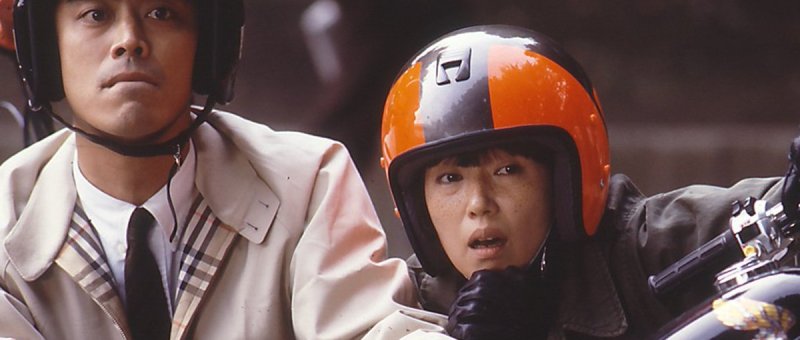
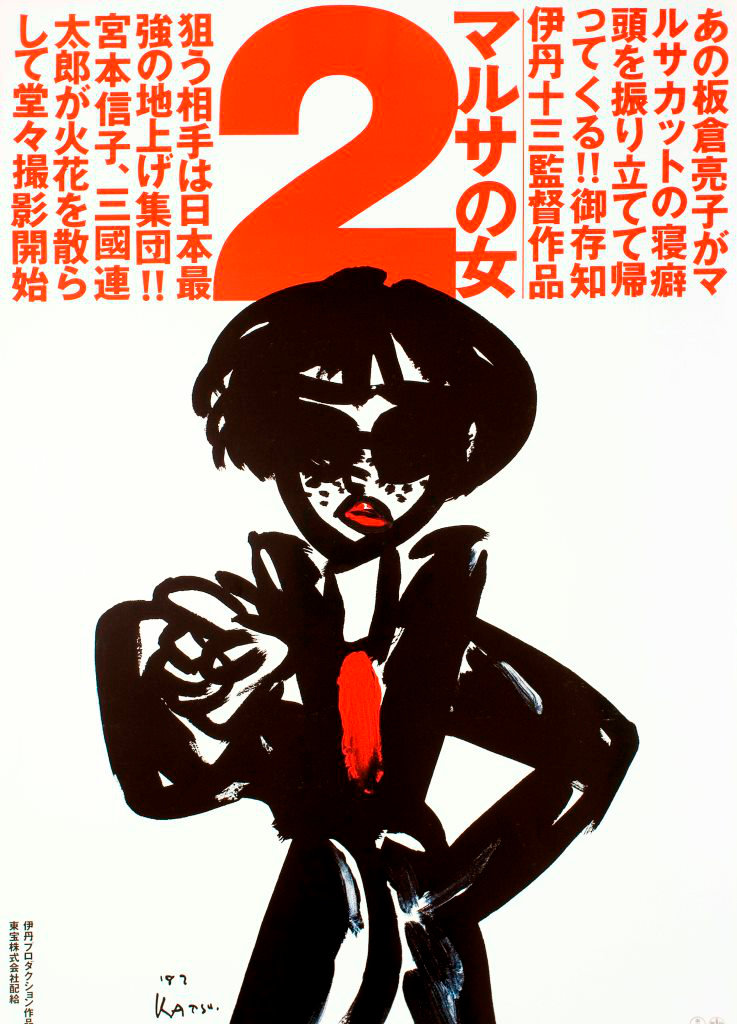
A Taxing Woman’s Return (マルサの女2, Juzo Itami, 1988)

Taxing Woman 2 posterA Taxing Woman introduced us to Ryoko Itakura (Nobuko Miyamoto) – an oddball detective working as an insurance inspector who met her Irene Adler in a tax dodging corporate gangster with a limp. A year later she’s back, still the only woman working with the tax inspectorate and apparently still a dogged pursuer of those who would seek to defraud the Japanese government of its rightful earnings. Ryoko may have been a stickler for the rules who applied the same dog with a bone approach to a mom and pop store chowing down on its own supplies as to a dodgy yakuza led conspiracy, but she also believed in justice – something which stands her in good stead when she rubs up against a dodgy cult which, again, is a yakuza front but adds insult to injury by deliberately manipulating the vulnerable.

The action opens with some kids poking at the dead body of a “landshark” floating in a pond before flashing to a meeting of officials sucking crab meat from the shell and wondering what they’re going to do about this land they need cleared now their heavy is out of the picture. The corrupt politician from the first film, Urushibara (Takeya Nakamura), is apparently still involved in semi-legal land deals but palms the assignment off on a colleague. The big wigs need to empty a dated housing complex on some valuable land so they can build a vanity skyscraper – office space apparently being scarce in mid bubble Tokyo.

To do this they enlist the services of dodgy cult leader Onizawa (Rentaro Mikuni) and his troop of yakuza goons. Most of the tenants have already signed but they have three key holdouts – a diner owner clinging on to the family legacy, a stubborn paparazzo, and an intellectual professor who heads up the housing association. Unlike the yakuza of Taxing Woman, these guys have not reformed – they are the new/old style of lawless thugs who are perfectly prepared to threaten women and children to get their own way. Making it impossible for the tenants to stay through intimidation and noise torture, they stoop to blackmail to seal the deal.

Despite arriving only a year after A Taxing Woman, Taxing Woman’s Return (マルサの女2, Marusa no Onna 2) takes place in a much darker, though more obviously comedic, world. Whereas the earlier film adopted a noticeably ambivalent attitude to the tax inspectors and the enterprising gangsters, the villains of A Taxing Woman’s Return are so heinous and morally bankrupt as to be entirely indefensible even if the inspectorate takes a turn for the bumbling to compensate. The “cult” is, of course, merely a convenient money laundering front and tax dodge for the yakuza – religious organisations are exempt from taxation in the vast majority of cases which may be why the local tax office records hundreds of registered “religious bodies” in its jurisdiction alone. That doesn’t mean it doesn’t have its loyal followers, often vulnerable people looking for spiritual fulfilment but being bled dry by the money hungry cultists while the leader’s wife swans around in sables costing more than the average annual salary. A desperate devotee in need of a loan puts his own teenage daughter up as collateral only to see her raped by Onizawa, eventually becoming pregnant by him at only 16 years of age and thereafter becoming his devoted concubine in a bizarre instance of Stockholm Syndrome.

Yet for all the background darkness of weird cultists and nasty yakuza backed up by corrupt and venial politicians, Itami ups the cartoonish sense of the absurd with our hero Ryoko clambering over rooftops to listen in to the bad guys while her boss throws himself down flights of stairs and has to battle piercing sirens to get into the villains’ secret vault. It is however a dark humour as the opening makes plain with its troupe of little children staring at the strange shape floating in the water – a motif later repeated when a yakuza is gunned down in the street only for another group of children to pour over him as he expires, a single tear rolling down his cheek. The original spongy white body gives way to the businessmen sucking spongy white crab out its shell while insensitively discussing the late land shark, and the yakuza are unafraid to deploy a maggot infested severed hand (thankfully a fake picked up from a friend who makes horror movies) to convince the tenants they mean business.

At the end of A Taxing Woman, the gangster and the inspector reached something of a truce but one which came down, broadly, on the side of right. This time things aren’t quite so simple. The conspiracy is bigger and deeper, stretching all the way into the Diet and about more than just office space in still developing Tokyo. Onizawa, regarding himself as public servant, tries to say he did it all for his country, that if someone didn’t get their hands dirty Tokyo would be eclipsed by Hong Kong or Seoul. A post-war justification for a bubble era problem, but one that takes us straight back to the first film in Onizawa’s second proposition that only through money does he truly feel “immortal”. He may be a liar and a cheat, but he’s only a symptom of rapidly spreading infection, one which Ryoko and her team are powerless to cure, trapped on the wrong side of the fence while the bad guys build monuments to economic hubris, indulging in vanity in an era of bad faith which is about to be brought to a rather abrupt close.


Currently available to stream in the US/UK via FilmStruck.

Original trailer (no subtitles)

A Taxing Woman (マルサの女, Juzo Itami, 1987)

A Taxing Woman posterIn bubble era Japan where the champagne flows and the neon lights sparkle all night long, even the yakuza are incorporating. Having skewered complicated social mores in The Funeral and then poked fun at his nation’s obsession with food in Tampopo, Juzo Itami turns his attention to the twin concerns of money and collective responsibility in the taxation themed procedural A Taxing Woman (マルサの女, Marusa no Onna). Once again starring the director’s wife Nobuko Miyamoto, A Taxing Woman is an accidental chronicle of its age as Japanese society nears the end of a period of intense social change in which acquisition has divorced mergers, and individualism has replaced the post-war spirit of mutual cooperation.

Ryoko Itakura (Nobuko Miyamoto), a single mother and assistant in the tax office, has a keen eye for scammers. She demonstrates this on a stakeout with a younger female colleague in which she keeps a shrewd eye on the till at her local cafe and comes to the conclusion that they’ve been running a system where they don’t declare all of their cheques. Running her eyes over the accounts of a mom and pop grocery store, she notices some irregularities in the figures and figures out the elderly couple feed themselves from the supplies for the shop but don’t “pay” themselves for their own upkeep. That might seem “perfectly reasonable” to most people, but it’s technically a small form of “embezzlement” and Ryoko doesn’t like figures which don’t add up. Seeing as the couple probably didn’t realise what they were doing was “wrong” she lets them off, this time, as long as they go by the book in the future. A more complicated investigation of a pachinko parlour finds a more concrete form of misappropriation, but Ryoko is fooled by the owner’s sudden collapse into inconsolable grief after being caught out and leaves him in the capable hands of his confused accountant.

Nevertheless, Ryoko may have met her match in sleezy corporate yakuza Hideki Gondo (Tsutomu Yamazaki). Dressing in a series of sharp suits, Gondo walks with a pronounced limp that hints at a more violent past but as his rival from the Nakagawa gang points out, violence is a relic of a bygone era – these days gangsters go to jail for “tax evasion” as means of furthering their “business opportunities” and facilitating ongoing political corruption. Gondo’s business empire is wide ranging but mainly centres on hotels, which is how he arouses Ryoko’s interest. She looks at the numbers, does a few quick calculations, and realises either the business isn’t viable or the correct figures aren’t being reported. Ryoko doesn’t like it when the books don’t balance and so she sets her sights on the seedy Gondo, but quickly discovers she has quite a lot in common with her quarry.

Itami was apparently inspired to make A Taxing Woman after the success of Tampopo shoved him into a higher tax bracket. Given Japanese taxes (at the time) were extremely high, getting around them had become something of a national obsession even if, in contrast to the preceding 30 years or so, there was plenty of money around to begin with. More than the unexpected tendency towards civil disobedience the times seemed to cultivate, Itami homes in on the increasingly absurd desire for senseless acquisition the bubble era was engendering. Thus Gondo who owns a large family home well stocked with symbols of his rising social status, also occupies a bachelor pad where he keeps a mistress which reflects the gaudy excess of the age right down to its random stuffed hyena. Nevertheless when one of the tax clerks asks for some advice as to how to have it all, Gondo replies that that’s easy – to save money, you simply avoid spending it. Gondo lets his glass run over and delights in licking the edges. It’s all about delayed gratification, apparently, and having a secret room full of gold bars to gaze at in order to relieve some of that anxiety for the future.

Gondo, like many of his ilk, has “diversified” – yakuza are no longer thuggish gangsters but incorporated organisations operating “legitimate” businesses through “illegitimate” means. Thus we first find him using a nurse who allows herself to be molested by an elderly, terminally ill client whose identity they will steal to found a company they can quickly dissolve when he dies to shift their assets around and avoid the tax man. Later he pulls another real estate scam by pressing a desperate family but his real focus is the love hotels, whose slightly embarrassing existence ensures that not many come poking around. Ryoko, however, is unlikely to let such a large scam slide and delights as much in closing loopholes as Gondo does in finding them. Noticing a kindred spirit, Gondo quite openly asks his new tax inspector “friend” what she’d think if he married his mistress, gave her all his money, and divorced her – divorce proceeds are after all tax free. Sounds great, she tells him, as long as you trust your wife not to skip town with all the doe.

Ryoko, a modern woman of the bubble era, single and career driven, is a slightly odd figure with her officious approach to her job and unforgiving rigour. Unlike her colleague who dresses in the glamorous and gaudy fashions of the times, Ryoko wears dowdy suits and her mentor boss is always reminding her about her “bed hair”, meanwhile she stays late at the office and offers instructions to her five year old son over the phone as to how to microwave his dinner. Though there is another woman working with her at the tax office, when she’s finally promoted to full tax inspector status she finds herself in a room full of guys who apparently hardly ever go home. On her first job she’s only really brought along because she’s a woman and they want to threaten a mob boss’ mistress with a strip search to find a missing key for a safety deposit box. The mistress, however, tries to throw them off the sent by publicly stripping off and encouraging them to check her “cavity” if they’re so keen to find this key, only for Ryoko to find it under the sink while all the guys are busy being shocked. Ryoko’s methods are occasionally as underhanded as Gondo’s and, like his schemes, built on gaming the system but she’s certainly a force to be reckoned with for those considering defrauding the Japanese government.

Gondo’s schemes excel because they aren’t entirely illegal, only clever ways of manipulating the system, but they’re also a symptom of a large conspiracy which encompasses improprieties right up the chain as banks, corporations, and politicians are all part of the same dark economy managed by a corporatising yakuza. Gondo takes frequent calls from a local representative who often “helps him out”. Later the same representative tries to put pressure on the tax office to back off, but Ryoko’s boss points out that he doesn’t need to because the press are already on the story so he should probably get started on his damage control rather than bothering public servants. Gondo and Ryoko, perhaps as bad as each other, lock horns in a battle wills but discover a strange degree of respect arising between them in having discovered a worthy adversary. There’s something undeniably absurd in Ryoko’s firm determination to catch out struggling businesses and the confused elderly with the same tenacity as taking on a yakuza fronted conspiracy, and there’s something undeniably amusing in Gondo’s attempts to beat the man by playing him at his own game, but the overall winner is Itami who once again succeeds in skewering his nation’s often contradictory social codes with gentle humour and a dispassionate, forgiving eye.


Currently available to stream in the US/UK via FilmStruck.

Original trailer (no subtitles)

Kaisha Monogatari: Memories of You (会社物語 MEMORIES OF YOU, Jun Ichikawa, 1988)

Kaisha monogatari dvd coverJapanese corporate life is a strange thing – sometimes more cult than job, the company demands absolute dedication from its devotees though it promises them little more than a guaranteed life of toil. Being cast out from one’s company is akin to being robbed of one’s identity. Retirement is therefore not quite so much of a reward as an excommunication – especially to those who have given so much of themselves to an employer that they don’t quite know who they are when the suit comes off. This is especially true of the hero of Jun Ichikawa’s 1988 existential drama, Kaisha Monogatari: Memories of You (会社物語 MEMORIES OF YOU). The title is deceptively romantic – in fact there was an identically titled idol starring melodrama released the same year, but it is in a way a love story of an old man who finally gets a chance to reunite with the dreams he abandoned in youth while coming to terms with his old age and the various ways the world has moved past him.

Very early one morning, veteran salary man Hanaoka (Hajime Hana) stares into the empty screen of his television set from the comfort of his kotatsu, examining his own tearful face before his wife gets up to prepare breakfast. Hanaoka is set to retire soon, after 34 years of corporate life. His career has been unremarkable and he has few friends at the office – he feels he most likely will not be missed when he goes. Home life is not too successful either. Hanaoka’s grown-up daughter has come home with a daughter of her own after a divorce, and Hanaoka’s son is currently a NEET would-be-student supposedly studying to retake entrance exams though his mother is convinced he’s just messing around and avoiding getting a job.

Though Hanaoka is a section head, it’s clear he’s not rated by his colleagues who gossip about him behind his back while his mild and timid nature sees him sitting quietly forgotten in the back of meetings. He does however have admirers including one of the older ladies in the admin staff who has always been comforted by Hanaoka’s gleeful laughter, suddenly feeling the world expand as she watched him beavering away earnestly. Despite this, nobody is very excited about his leaving party. Discussing things among themselves, the office ladies lament that planning farewell parties is either too depressing to just too much hassle, while gossiping guys in the men’s room complain that Hanaoka was never very good at his job anyway and his leaving do will be a “pitiful” affair. All of this proves too much for the kind hearted, shy, Hanaoka who eventually decides to have a goodbye note distributed around the office in which he tells everyone that there’s no need to bother with yet another office party in the overly festive December to the relief (and consternation) of all.

Hanaoka does, however, have to write his official goodbye for the company newsletter (1000 characters due by Dec. 15). Struggling to find the words, he writes a first draft in which he declares the deep sorrow he feels on having to leave his corporate family behind – after all these are people he’s dined and gone drinking with for 34 years, through good times and bad, company picnics, and away days. He’s spent longer with the office ladies than his wife, had more conversations with his subordinates than with his son. The company has been his life, and leaving it is a kind of death. Embarrassed he screws up the draft and throws it away, only to encounter another salaryman returning late (and more than a little the worse for wear) who lets him have a go on the very high tech laser guns he’s just won at bingo.

Yet Hanaoka does manage to find a solution in reconnecting with his younger self and makes a few new friends in the process. In his youth, Hanaoka was a jazz drummer – sophisticated as it is, jazz was the music of his glory days and so he finds many of the other men in his position share his love of music and were also forced to abandon their musical dreams for corporate careers. Now freed of the burdens of the salaryman, they decide to form a band of their own and even to give a special concert in place of Hanaoka’s leaving do.

Meanwhile, Yumi (Yumi Nishiyama), the office lady who reminds Hanaoka of his younger self, is undergoing something of a crisis when she realises that her boyfriend is not as serious about the relationship as she is and has been seeing someone else behind her back – the CEO’s daughter whom he intends to marry to further his career. Kaisha Monogatari is, in many ways, the passing of a baton from the post-war generation to the bubble era though getting ahead through advantageous arranged marriage is apparently still a viable option. Those of Hanaoka’s age had to work hard, rebuilding the nation after crushing wartime defeat from bombed out ruins to the economic miracle of the East. Their children, by contrast had things easy – they hardly have to worry at all. Hanaoka’s son, apparently a delinquent lost and confused by the comparative freedom of economic stability, has no need to submit himself to the insane demands of life as a company man but millions like him will, because that’s just what you do.

Hanaoka finds a way to break out of the corporate straightjacket through re-embracing his love of jazz, proving there is something left inside him when you strip the company man away but there is nevertheless something sad in having wasted so much time slaving away for a organisation that is ultimately so ungrateful for the sacrifice. A gloomy picture of bubble era Japan in which families are fragmenting, young men choose career over love, and old men are made to feel worthless once their economic function is spent, Kaisha Monogatari: Memories of You does offer the faintest glimmer of hope in the goodness of men like Hanaoka, no matter how they may have failed those around them, whose lives may be brighter when finally allowed to be themselves again.