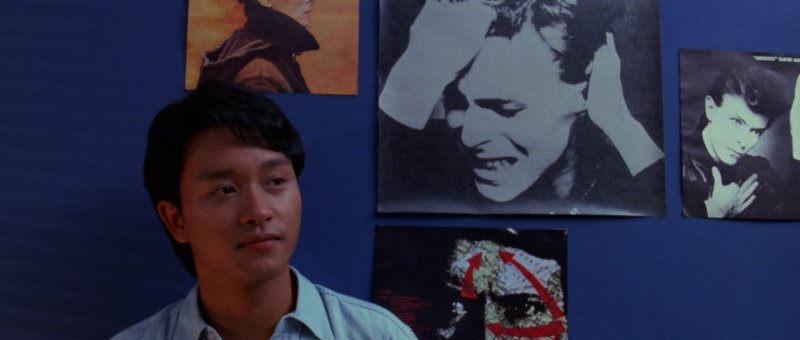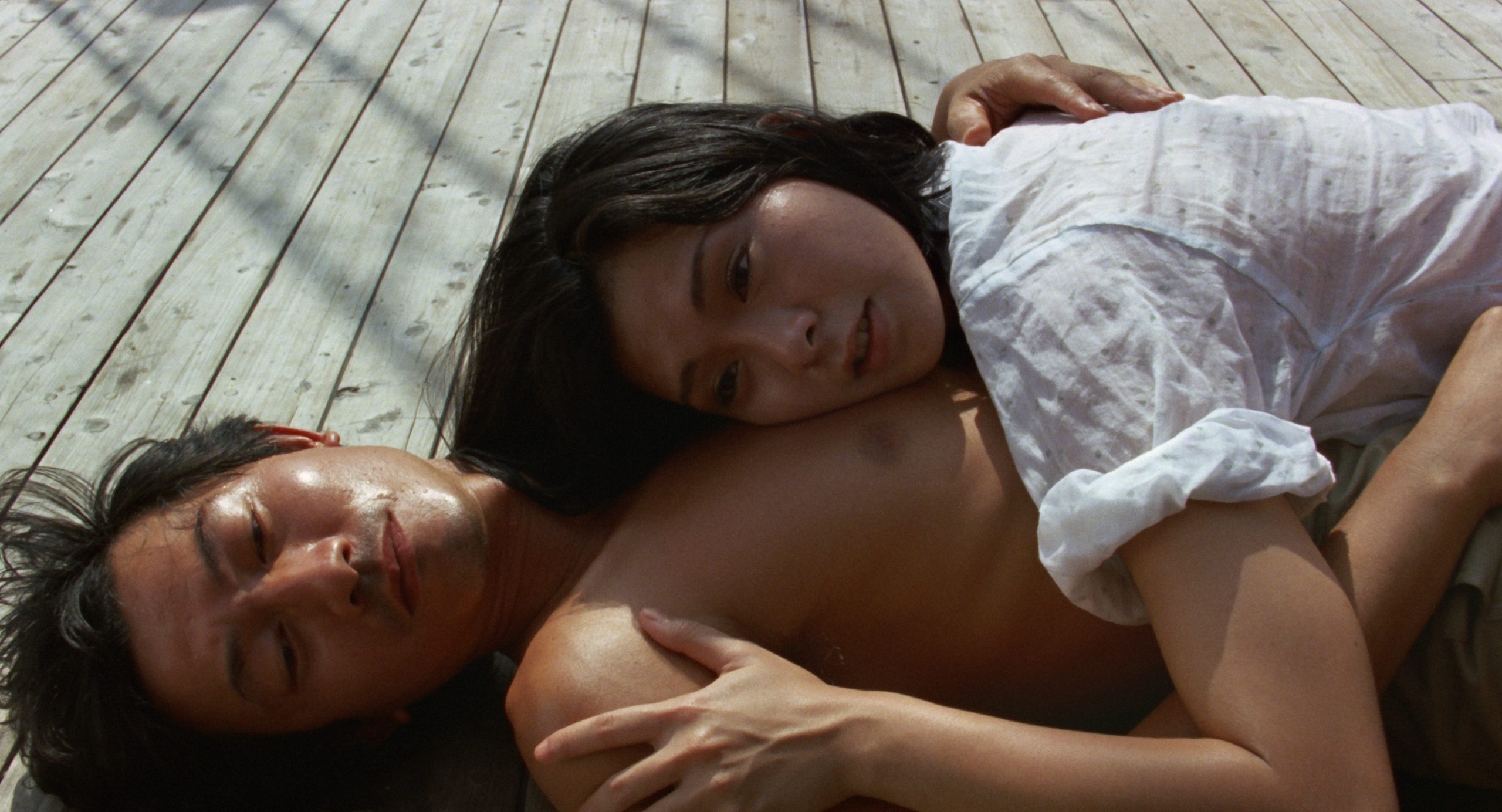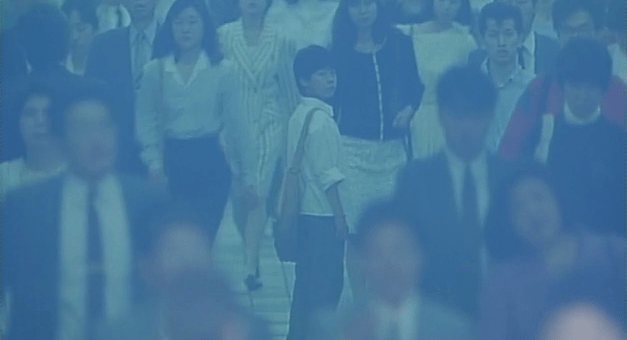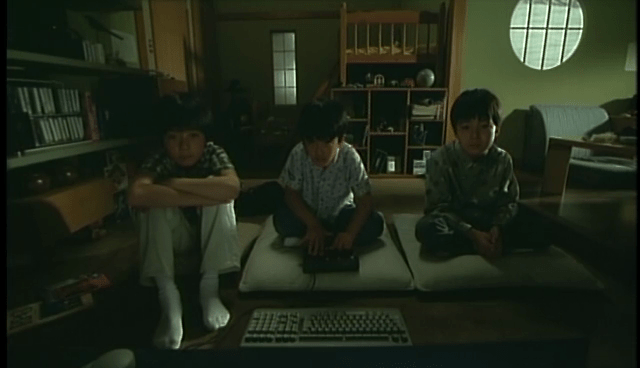
Sa Bangji (사방지, Song Kyung-shik, 1988)

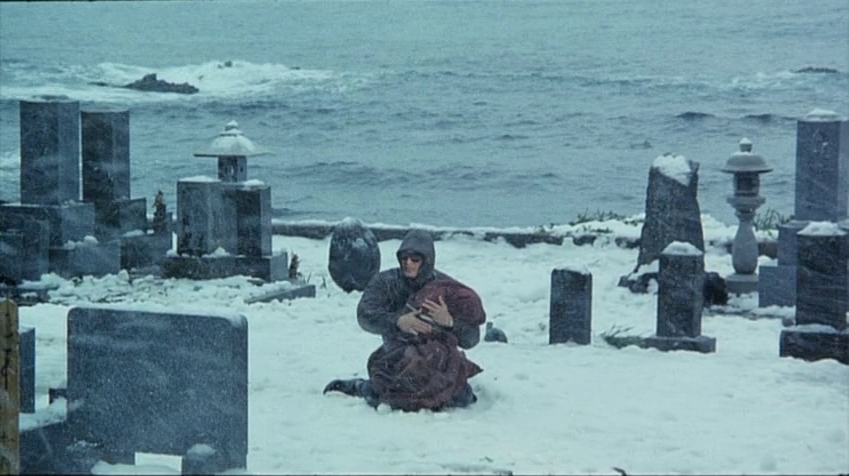
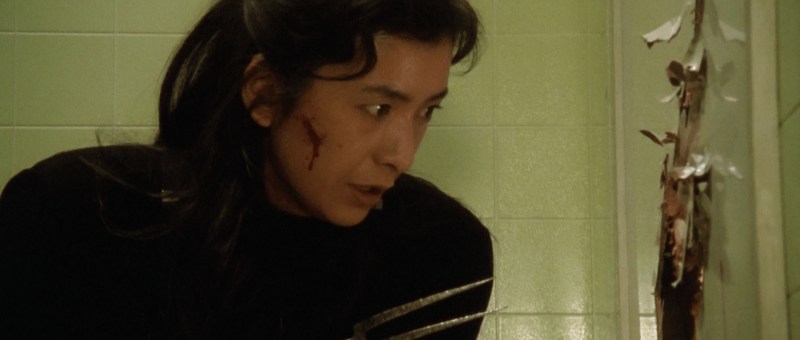
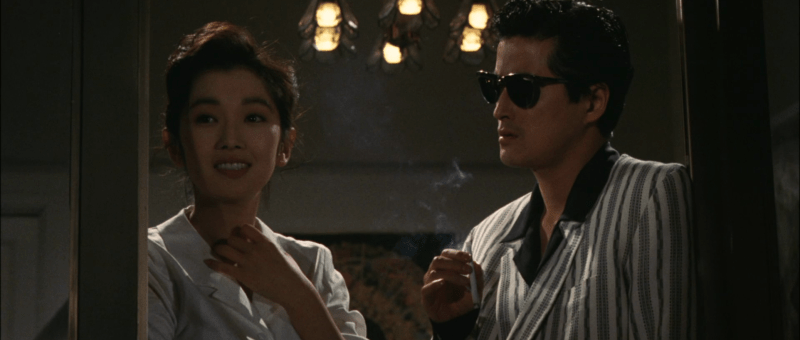
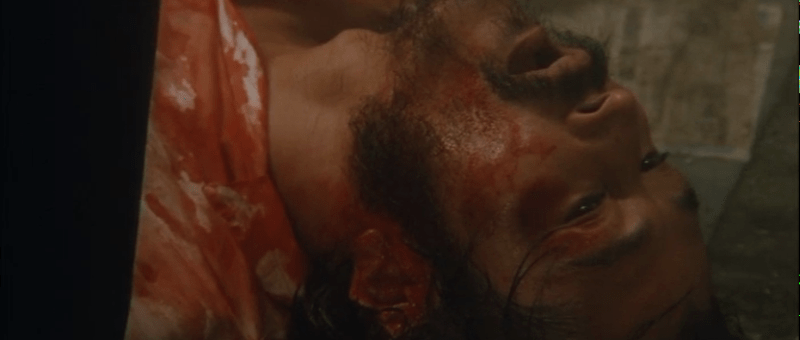
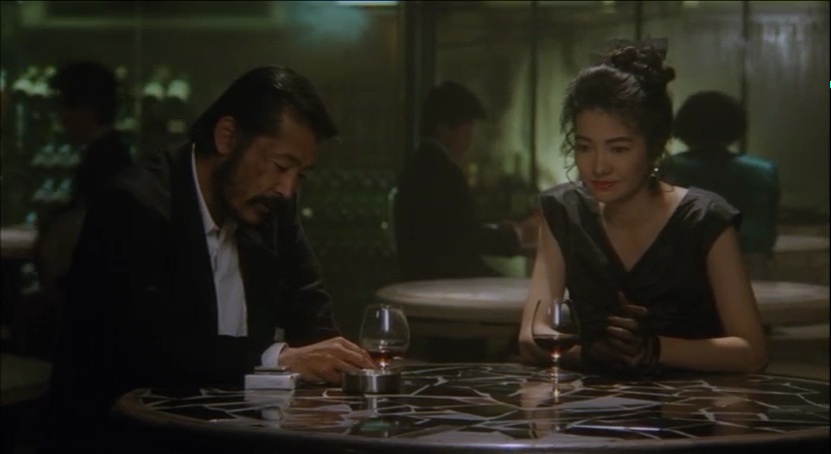
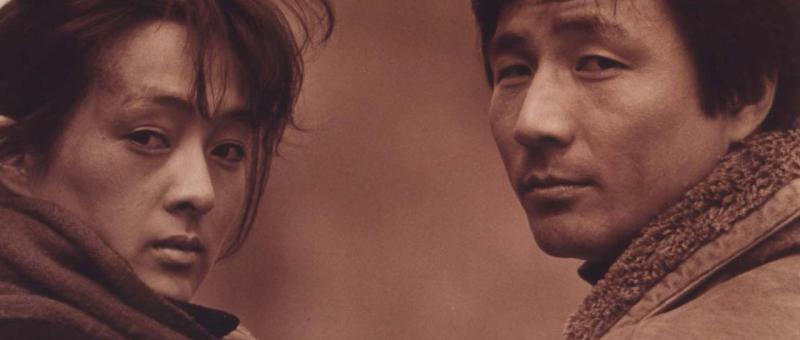
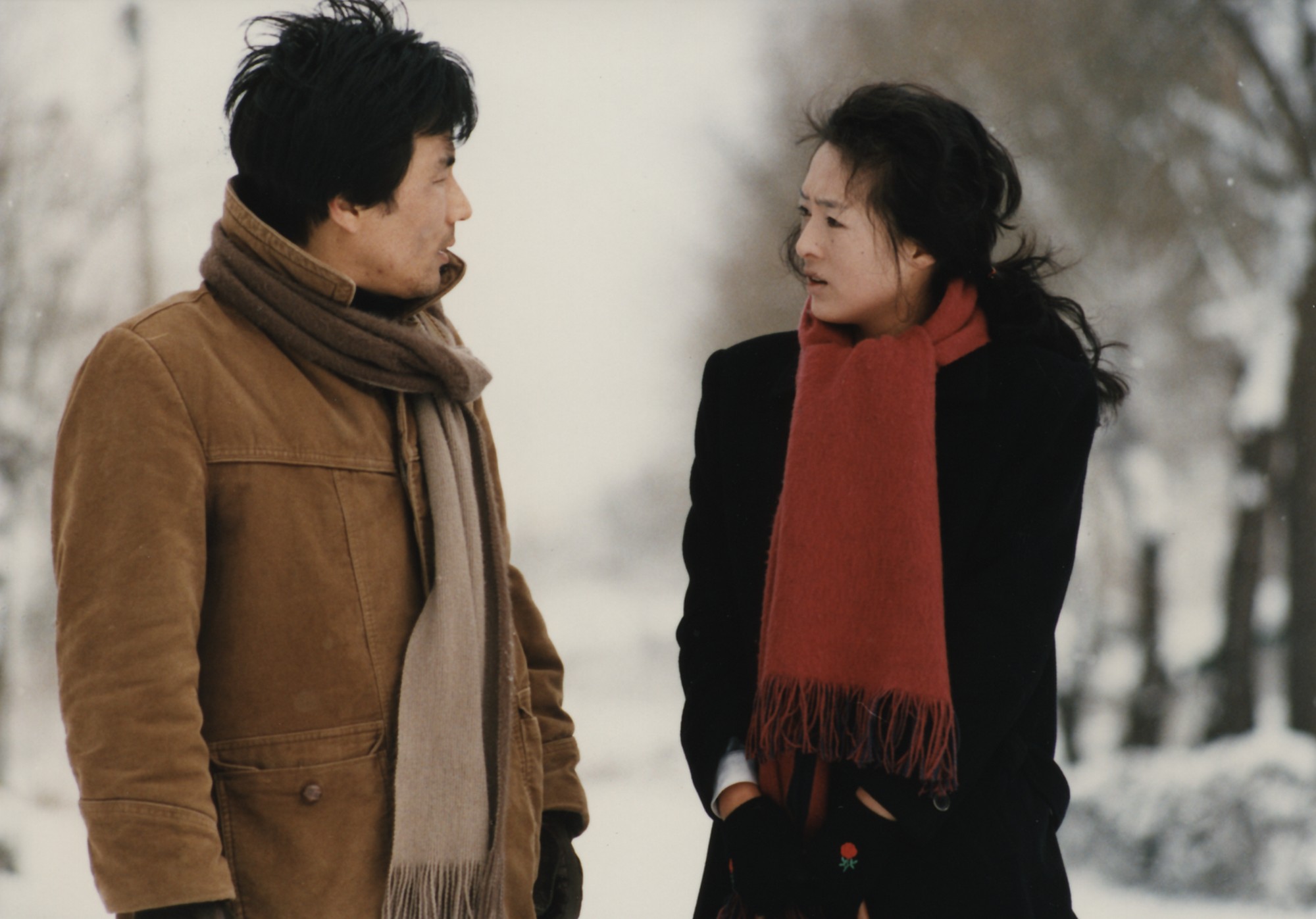
The presence of an intersex person presents an existential threat to a fiercely patriarchal social order in Song Kyung-shik’s intense feudal-era drama, Sa Bangji (사방지). Inspired by the life of a historical figure who was exiled from mainstream society because of their gender identity, the film finds its protagonist continually exploited as a fetishised object of desire challenging the sexual repression of a society in which women were required to display no sexuality. 

The monks at the temple where Sa Bangji (Lee Hye-young) was raised advise them that they cannot live in the secular world and with good reason, as the hostility with which they are later greeted makes clear. On looking at them, a shamaness immediately has a vision of a snail, which is as she later explains a “hermaphrodite” creature, and immediately seems to have grasped their secret. The shamaness explodes with rage and insists the noble house by whom Sa Bangji has reluctantly been taken in as a maid should expel them at once for they will only bring misfortune and potentially death. They are later told that they are abomination born from their parents’ bad karma and made to pay the price for it with only the kind Buddhist monk reminding Sa Bangji that there will always be a place at the temple for them and that bad karma can always be overcome with goodness and light. 

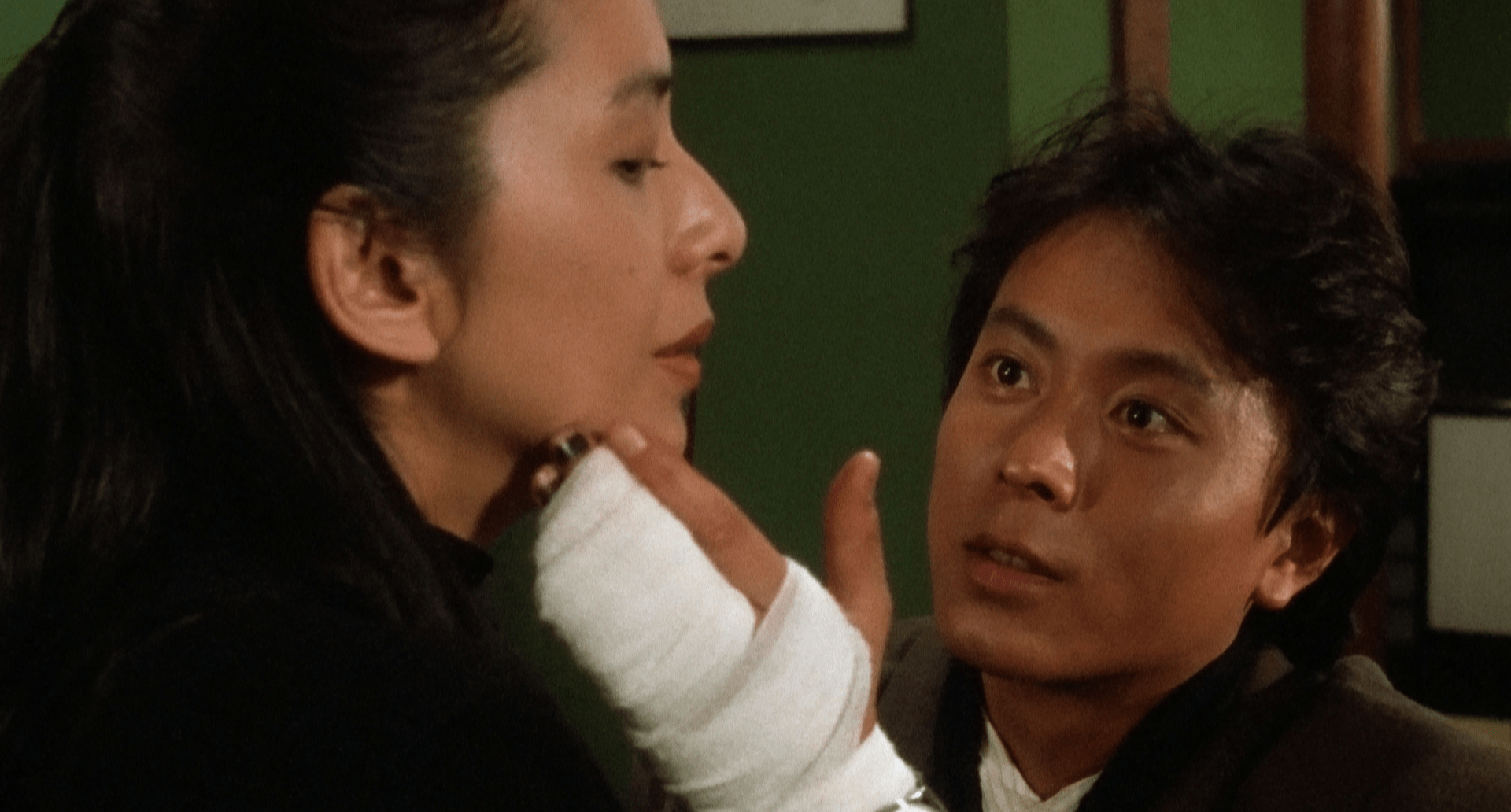
Sa Bangji hadn’t wanted to leave the temple because they longed to see the world beyond it, only that even in this comparatively safe space they felt a burden while again ironically caught between two worlds neither nun nor layman. Though they present as a woman, Sa Bangji has male genitalia and is at pains to keep their true nature hidden. When the widow Lee So-sa (Bang Hee) encounters Sa Bangji at the temple, she too is drawn to their uncanniness and determines to “rescue” them from a monastic existence by taking them back to her home as a maid. Once there, she begins on what can only be described as a campaign of sexual harassment in which she continually makes advances to Sa Bangji who repeatedly turns them down because they are afraid of what will happen once their gender atypicality is exposed. So-sa in fact forces it out of them by accusing Sa Bangji of stealing a precious ring as a pretext for strip searching them. 

This ring is later exchanged as a token of their love once they have indeed become intimate and discovered in each other romantic fulfilment. Yet the ring also echoes the constraint which surrounds each of them by virtue of not being male in feudal society. “How dare you make decisions all by yourself” So-sa is told when she arrives home to the estate of her husband’s family with Sa Bangji in tow, even as a noblewoman unable to exercise much agency and dependent on relatives who blame her for her late husband’s death. Her chief oppressor is of course her mother-in-law who, as an older woman, has more power, though no more freedom, and uses it to control other women. So-sa keeps Sa Bangji captive as a kind of plaything and accidental sex slave, in part to ensure their identity is not revealed, but they do seem to have found a transgressive freedom in the genuine connection between them which is brokered by Sa Bangji’s otherness.

It is Sa Bangji’s hidden “masculinity” that both gives them power and makes them vulnerable. So-sa eventually betrays them, unable to defy the feudal order to protect the person she loves, and Sa Bangji finds themselves once again imprisoned this time by the shamaness who pimps them out to other sexually frustrated women who are not permitted to express sexual desire such as widows and concubines as part of what she originally claims is a plot of revenge against oppressive nobility who forced her shaman husband to father a noble woman’s child and then killed him to keep the secret. 

Sa Bangji too wants revenge and eventually insists that they are going to show the word the beauty of their body, only for that body to be repeatedly commodified and seen as little more alive than the dildo So-sa shockingly removes from a locked chest in order to ease her frustrated desires as a youthful widow. They are called a “freak”, and eventually come to see themselves as a “monster”, “neither male nor female” and therefore existing outside of the tightly ordered patriarchal feudal society which is what makes them such a threat. In the end, not even the sacred land of the temple is safe from secular intrigue. Sa Bangji makes a drastic decision in an attempt to free themselves from gender-based oppression but it isn’t enough to overcome the world’s cruelty and leaves them once again caught between two worlds, unable to overcome the fragile masculinity of the patriarchal feudal order. 


Sa Bangji screens at Genesis 29th April as part of this year’s Queer East 

Typhoon Club (台風クラブ, Shinji Somai, 1985)

A collection of frustrated teens find themselves trapped within a literal storm of adolescence in Shinji Somai’s seminal youth drama Typhoon Club (台風クラブ, Taifu Club). “You’ve been acting weird lately” one character says to another, but he’s been “acting weird” too and so has everyone else as they attempt to reconcile themselves with an oncoming world of phoney adulthood, impending mortality, and the advent of desires they either are unable or afraid to understand, or perhaps understand all too well but worry they will not be understood. 

Most of the teens seem to look to the pensive Mikami (Yuichi Mikami) as a mentor figure. It’s Mikami they call when some of the girls end up half drowning male classmate Akira (Toshiyuki Matsunaga) after some “fun” in the pool gets out of hand. Luckily, Akira is not too badly affected either physically or emotionally, but presents something of a mirror to Mikami’s introspection. Slightly dim and etherial, he entertains his friends by seeing how many pencils he can stick up his nose at the same time, but he’s also as he later says the first to see the rain once it eventually arrives. Notably he leaves before it traps several of the others inside the school without adult supervision and otherwise misses out on the climactic events inside. Even so, Rie (Yuki Kudo), who also misses out by virtue of randomly stealing off to Tokyo for the day, later remarks that he too seems like he’s grown though her words may also be a kind of self projection. 

Mikami’s kind of girlfriend, perpetual spoon-bender Rie, finds herself at a literal crossroads after waking up late because her mother evidently did not return home the night before. Eventually she sets off for class running all the way, but then reaches a fork in the road and changes her mind heading to Tokyo instead. Mikami has been accepted into a prestigious high school there, and perhaps a part of her wanted to go too or at least to get closer to him through familiarity with an unfamiliar environment. Unfortunately she soon encounters a firearms enthusiast (Toshinori Omi) who buys her new clothes and takes her back to his flat which she thankfully manages to escape even if she’s stuck in the city because of a landslide caused by the typhoon.  

Mikami, however, continues to worry about her unable to understand why he’s the only one seemingly bothered about her whereabouts believing she’s “gone crazy”. Trapped in the school, the kids try to ring their teacher Umemiya (Tomokazu Miura) for help but he’s already drunk and can’t really be bothered. In any case he has problems of his own in that his girlfriend’s mother suddenly turned up during class to berate him for stringing her daughter along and also having borrowed a large amount of money which obviously ought to have some strings attached, only as it turns out Junko leant the money to another guy she was seeing though it’s not exactly clear whether she and Umemiya actually broke up or not. “In 15 years you’ll be exactly like me” Umemiya bitterly intones into the phone when Mikami directly states that he no longer respects him deepening Mikami’s adolescent sense of nihilistic despair. 

Of all the teens, he does seem to be the most preoccupied with death. “As long as she’s an egg, the hen can’t fly” he and his brother reflect on discussing if it’s possible for an individual to transcend its species and if it’s possible to transcend it though death all of which lends his eventual decision a note of poignant irony even if its absurd grimness seems to be a strange homage to The Inugami Family. As he points out to his somewhat disturbed friend Ken (Shigeru Benibayashi), “I am not like you” and indeed Ken isn’t quite like the other teens. Obsessed with fellow student Michiko (Yuka Ohnishi) but unable to articulate his feelings, Ken pours acid down her back and watches her squirm as it eats into her flesh. Repeating pleasantries to himself as a mantra, he later attempts to rape her after violently kicking in the dividing walls of the school only to be stopped in his tracks on noticing the scar again and being reminded that he is hurting her. 

The storm seems to provoke a kind of madness, the teens embracing an elusive freedom entirely at odds with the rigid educational environment. The other three girls trapped in the school are a lesbian couple who’d been hiding out in the drama department and their third wheel friend who might otherwise have been keen to hide their relationship from prying eyes having previously been caught out by a bemused and seemingly all seeing Akira. But in this temporary space of constraint and liberation, the teens are each free for a moment at least to be who they are with even Ken and Michiko seemingly setting aside what had just happened between them. They co-opt the stage for a dance party and then take it outside, throwing off their clothes to dance (almost) naked in the rain while a fully clothed Rie does something similar on the streets of the capital. In some ways, in that moment at least they begin to transcend themselves crossing a line into adulthood in a symbolic rebirth. In any case, Somai’s characteristically long takes add to the etherial atmosphere as do his occasional forays into the strange such as Rie’s encounter with a pair of ocarina-playing performance artists in an empty arcade. “We want to go home, but we can’t move” Mikami says looking for guidance his teacher is unwilling to give him neatly underlining the adolescent condition as the teens begin realise they’ll have to find their own way out of this particular storm. 


Typhoon Club screens at Japan Society New York on April 28 as part of Rites of Passage: The Films of Shinji Somai

Ping Pong (乒乓, Leong Po-Chih, 1986)

A young woman wrestles with her cultural identity when tasked with executing a will she can’t even read in Leong Po-Chih’s 1986 diaspora drama, Ping Pong (乒乓). The dead man’s family members can agree on only one thing, that they hate the will and won’t sign it, but are also constantly reminding themselves that “the third principle” of being Chinese, according to uncle Siu Loong (Victor Kan), is to obey the elders’ wishes and never question them. 

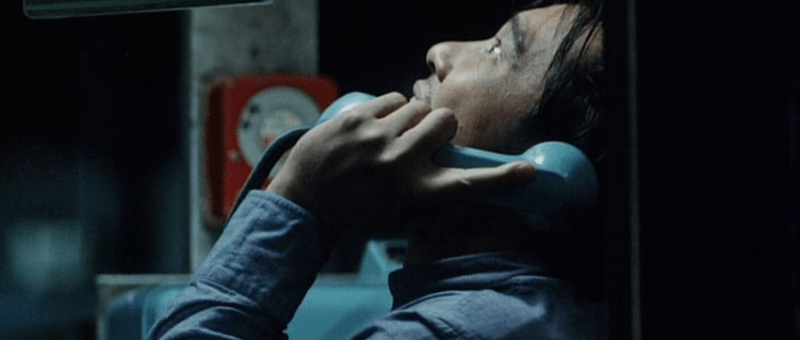
Sam Wong (K. C. Leong) is found dead in a telephone box still clasping the receiver not far from his incredibly successful Chinatown restaurant. Elaine Choi (Lucy Sheen) is a young British-Chinese lawyer who arrived in the UK from Macao around the age of seven following the deaths of her parents. Her first problem is that she no longer remembers any Chinese and is unable to read the will she’s been charged with executing, eventually getting a family member to help her decode it while realising that it’s going to set the cat amongst the pigeons. Her sense of cultural dislocation is only deepened when she attends Sam’s Taoist funeral and admits to the British wife of Sam’s son Alan (Ric Young) that she has no idea what’s going on either. Sam’s wife Ying (Lam Fung), who came to the UK at 17 for an arranged marriage, hurriedly shoos her daughter-in-law out while berating her son for not knowing how inappropriate it is for a pregnant woman to attend a funeral. Elaine is also told that her presence is inappropriate and invited instead to a dinner at Sam’s restaurant the following day to read out the will. 

Of course, it’s not unusual to encounter discord among family members when it comes to settling an estate, but Sam seems to have either entirely misunderstood his relatives or else deliberately set out to teach them a lesson, one that will help them recover the Chinese identity they may each be in danger of losing. Alan has become a professor and married an upper middle-class British woman (Victoria Wicks). Their home is the epitome of a certain kind of stereotypical Englishness while Alan appears to show little interest in his cultural legacy. The absent Michael (David Yip) who doesn’t even attend the funeral or will reading runs a flashy fusion-style “Chinese” restaurant which is entirely staffed by Italians and holds regular cream pie parties. Michael is an embodiment of the spirit of the age. Educated in expensive boarding schools, he’s become an obnoxious English gentlemen in cricket jumpers and sharp suits who plans to build a seven-storey leisure complex on Gerrard Street with money from a Hong Kong millionaire looking to escape Handover anxiety. For Michael, his Chinese heritage is just something to be sold and repackaged to people to who don’t know any better. The design for the leisure centre is like some orientalist fever dream, a fairytale pagoda channeling Grauman’s Chinese Theatre and Cinderella’s Castle. 

Sam left him the restaurant on the condition he run it “the Chinese way”, which obviously isn’t something Michael was particularly keen on doing. Michael’s older half-sister, Cherry (Barbara Yu Ling), a child of Sam’s first marriage in China, is also resentful that her father left the warehouse she’d been managing to her step-mother Ying along with the family home, while leaving a farm they owned growing Chinese vegetables to family friend, Mr Chen (Robert Lee), rather than to one of the descendants. Her husband Siu Loong, a former Hong Kong cop, tries to teach their children “Chineseness” through rote learning and casual violence including the instruction that children should obey without question, but otherwise supports his wife’s hope of firing Elaine in favour of someone who knows the way Chinatown works and can be relied upon to reinterpret the will in their favour. 

That she wasn’t from “Chinatown” might be why Sam chose Elaine in the first place, realising that she’d carry out his wishes rather than her own interpretation of them. She becomes preoccupied with the identity of the person on the other end of the phone when Sam died while herself growing to like the Wongs and trying to smooth over their familial discord. What she comes to understand is that Sam knew exactly what he was doing, trying to engineer a course correction in the lives of his overly Westernised children to force them to get back in touch with their roots rather than lose their Chinese heritage. But then China is also changing. Sam wanted to be buried in his hometown back on the Mainland, and so Elaine heads to the embassy only to met by an ironic civil servant who has pictures of pandas and pagodas on the wall of his office. He hands Elaine a bunch of tourism pamphlets while instructing her that she should learn her Chinese so she can go back to her “homeland”. “Which one?” she scoffs, chuckling at the newly open China now also commodifying its cultural heritage as a destination for curious Westerners as she chucks the pamphlets in the bin directly outside the embassy. 

Sam’s will may be the ultimate act of patriarchal manipulation, not least in his passing over of his daughter in favour of the prodigal son who had seemingly rejected everything he stood for, but does ultimately allow the family to begin repairing itself while reclaiming their cultural identity. Elaine, who had deftly fended off the patronising overtures from her sleazy boss who refers to her as his “pretty little Chinese lawyer”, also gains a sense of herself as a female warrior like the wuxia comics she loved as a child in Macao while doing her best to protect Sam’s legacy in executing his wishes. An atmospheric evocation of  smokey ‘80s London Chinatown on the brink of change, Ping Pong allows its heroine to begin to find her answers only to discover they lead her right back to source. “Everything moves in cycles” Elaine philosophises envisaging her own new beginning in a changing society. 


Ping Pong screened as part of this year’s Hong Kong Film Festival UK.

All About Ah-Long (阿郎的故事, Johnnie To, 1989)

“Don’t ever make mistakes, you’ll never get a second chance!” warns the hero of Johnnie To’s melancholy male melodrama, All About Ah-Long (阿郎的故事). Ah-Long is indeed a man who’s made mistakes, mistakes he fears can never be corrected that have removed all possibility of his redemption only to be presented with new hope through a chance encounter and to have that hope eventually smashed by the cruel hand of fate. 

A former motorcycle racer, Ah-Long (Chow Yun-fat) has a job driving a truck at a quarry and lives in a tiny two room apartment sharing a bed with his 10-year-old son, Porky (Huang Kun-Hsuen). A fateful introduction from an old friend, Dragon (Ng Man-tat), accidentally reunites him with former girlfriend Por Por (Sylvia Chang), now calling herself Sylvia having become a successful ad executive after moving to the US following the couple’s acrimonious breakup while Ah-Long, badly injured in a motorcycle crash, ended up spending some time in prison. Sylvia’s class conscious mother had not approved of the relationship and in fact told her that the baby had died to convince her to move abroad. Discovering that Porky is alive, she begins to want him back planning to take him with her when she returns the to the US in the company of her fiancé Patrick (Alan Yu Ka-Lun). 

The situation may be somewhat reminiscent of the then recent Kramer vs Kramer but the parameters of the dilemma are different. Sylvia did not wilfully abandon her child nor is she being asked to choose between motherhood and personal fulfilment though as we later discover the traumatic circumstances of Porky’s birth have left her unable to bear any more children meaning that Porky is the only possibility of her reclaiming her maternity. Her request is in its own way selfish, considering her own feelings over Porky’s in suggesting they remove him from his home and everything he’s known while disrupting the clearly very close relationship between Ah-Long and his son. There is also something uncomfortable in the mediation of her love as she showers Porky with expensive gifts Ah-Long could never hope to provide, almost as if she were trying to buy him or at least tempt him away from wholesome working class Hong Kong towards consumerist paradise in the US hinting at the new international possibilities of a future outside of the post-Handover nation. Emptying his bank account, Ah-Long buys the puppy in a pet store window that Porky had doted on, but the boy barely reacts too busy playing with the new desktop computer Sylvia has set up for him in addition to tidying the apartment and making soup while Ah-Long was out. 

Through flashback we realise that Ah-Long was womanising bad boy, drunk and abusive, but has apparently seen the error of his ways humbled by his accident and matured by fatherhood now apparently reformed and dedicated solely to Porky’s upbringing. All he wants for him is a comfortable life and he knows that Sylvia can give that to him even if it means leaving Ah-Long behind alone in Hong Kong. While Sylvia’s fiancé Patrick claims not to care about her past but becomes increasingly controlling and paranoid, unwilling to accept Porky and insistent that they adopt a child of their own while resentful of her relationship with Ah-Long, Ah-Long continues to dream of a traditional family reunion with Porky showing the former lovers how to walk together during a parents’ three-legged race at the school sports day. 

Yet there is always a degree of distance between the one-time couple. To opens the film with the camera looking up at a pair of high rise buildings as it sinks to street level and then rises finding first Ah-Long’s moped and then the tiny apartment he shares with Porky. The camera pulls up again to catch the name of the swanky hotel where Sylvia is staying, a captivated Porky mystified by the elegant glass elevators rising inside, while Sylvia can hardly bear the literal rollercoaster ride at a local theme park the implication being that she can no longer bear the ups and downs of a life like Ah-Long’s while Porky may not be able to ascend to her life of middle-class stability. The promise of a life of comfort threatens to break the bond between father and son, the question becoming whether it is selfish of Ah-Long to prioritise their emotional bond in a life of wholesome poverty rather than sacrifice himself in allowing Sylvia to take Porky with her back to affluent if emotionally empty America. 

Even so, it begins to seem as if the pair may reach a form of equilibrium that places them on a similar level as Sylvia rejects the overbearing Patrick and leaves a door open for the reunion of the traditional family with a reformed Ah-Long who has learned the error of his ways and done his best to make amends. In true To fashion, however, fate has other ideas. Ah-Long sees his longed for dream in front of him and rides fast towards it only to be denied as if the universe had suddenly refused to grant him his redemption. The bleak conclusion perhaps implies that there really are no second chances for men like Ah-Long no matter how much they want them, while the peculiar contradictions of pre-Handover Hong Kong preclude such ordinary visions of happiness as could be found in familial reunification. 


Trailer (no subtitles)

Kagemusha (影武者, Akira Kurosawa, 1980)

“The shadow of a man can never stand up and walk on its own” a shadow warrior laments, wondering what happens to the shadow once the man is gone. Set at the tail end of the Sengoku era, Akira Kurosawa’s Kagemusha (影武者) charts the transformation of a man reborn as someone else and discovers that he’s better at playing the role he’s been assigned than the man who was born to play it only to fall victim to his own hubris and self-delusion. 

The nameless hero (Tatsuya Nakadai) is a lowborn thief sentenced to death only to be reprieved thanks to his uncanny resemblance to the local lord, Takeda Shingen (also Tatsuya Nakadai), whose double he must play if he’s to keep his life. The shadow objects to this characterisation, outraged that a man who has killed hundreds and robbed whole domains dares to call him a scoundrel. Shingen agrees he too is morally compromised. He banished his father and killed his own son but justifies it as a necessary evil in his quest to conquer Japan hoping to unify it bringing an end to the Warring States period and ensuring peace throughout the land. 

The shadow goes along with it, but does not really realise the full implications of his decision. He tries to smash a giant urn hoping to find treasure to escape with, but is confronted by a corpse bearing his own face. Shingen has been killed by an enemy sniper in an act of hubris sneaking around a castle under siege hoping (not) to hear the sound of a flute. Before passing away, Shingen instructs his men to keep his death a secret for three years, retreating to defend their own domain rather than conquer others. But there are spies everywhere and news of his apparent demise soon travels to the allied Oda Nobunaga (Daisuke Ryu) and Tokugawa Ieyasu (Masayuki Yui), his rivals for the potential hegemony over a unified Japan. The shadow Shingen must keep up the pretence to keep the dream alive and protect the Takeda Clan from being swallowed whole by the advance of Nobunaga. 

Shingen had been the “immoveable mountain”, the solid force that anchors his troops from behind but also an implacable leader famed for his austerity. The shadow Shingen is almost caught out by the honest reaction of his grandson and heir Takemaru (Kota Yui) who immediately blurts out that this man is not his grandfather because he is no longer scary, while he’s also bucked by Shingen’s horse who in the end cannot be fooled. His retainers wisely come up with a ruse that he’s too ill to see his mistresses lest they realise the thief’s body does not bear the same scars even as everything about him from the way he talks and moves and laughs is different. Yet in his sudden conversion on witnessing Shingen’s funeral on lake Suwa and resolving that he wants to do something to serve the man who saved his life, the shadow proves an effective leader who earns the trust and affection of his immediate retainers but is equally struck by their sacrifice as they give their lives to protect him. 

Meanwhile, his illegitimate son Katsuyori (Kenichi Hagiwara), skipped over in the succession, complains that he can never emerge from his father’s shadow emphasising the ways in which the feudal order disrupts genuine relationships between people and bringing a note of poignancy to the connection that emerges between the shadow Shingen and little Takemaru otherwise raised to perpetuate that same emotional austerity. Hoping to eclipse his father, Katsuyori too experiences a moment of hubris, successful in his first campaign but then over ambitious, forgetting his father’s teachings and walking straight into a trap only to be defeated by Nobunaga’s superior technology. 

Nobukado (Tsutomu Yamazaki), Shingen’s brother and sometime shadow, remarks that he hardly knew who he was once his brother was gone, and wonders what will become of the shadow once the three years are up. In a sense, the thief is already dead. As Nobukado puts it, it’s as if Shingen has possessed him, his confidence in his alternate persona apparently solidified by the victory at Takatenjin castle. But the sight of so many dead seems to unnerve him in the hellish spectacle of death that is a Sengoku battlefield knowing that these men died if not quite for him than for his image. When he attempts to mount Shingen’s horse, it’s either born of hubristic self-delusion in wanting to prove that he truly has become him, or else a bid for freedom and to be relieved of his shadow persona. Either way, he becomes a kind of ghost, once again watching his men from behind but this time invisibly and powerless to do anything but watch as they are massacred by Nobunaga’s guns. 

Earlier on he’d had a kind of nightmare, painted in surrealist hues by Kurosawa who conjures battlegrounds of angry reds and violent purples along with ominous rainbows, seeing himself dragged down into the water by Shingen’s ghost which he has now seemingly become. In the end all he can do is accept his fate in a final act of futility running defenceless towards the enemy line and reaching out to retrieve his banner from its watery fate only to be carried past it on a current of red. “I’m not a puppet, you can’t control me” the thief had said, but in the end just like everyone else he was powerless, another casualty of the casual cruelties and meaningless struggles of the feudal order. 


Kagemusha screens at the BFI Southbank, London on 11th & 31st January 2023 as part of the Kurosawa season.

Original trailer (English subtitles)

Seven Days War (ぼくらの七日間戦争, Hiroshi Sugawara, 1988)

“What’s wrong with a little happiness?” one of the “eight heroes” of Aoba Jr. High Class 1-A asks, retreating from the duplicitous adult world into a teenage paradise. Another Kadokawa teen movie, Seven Days War (ぼくらの七日間戦争, Bokura no Nanoka-kan Senso) adapts the first in a series of Kadokawa novels by Osamu Soda and situates itself very much in the throws of the Bubble era in which the young rail not only against a rigid, conformist society but familial disappointment and the enduring legacy of the authoritarian past. 

According to the principal’s assembly speech, at Aoba Jr. High the motto for the day is “intellect, morality, and physique”. While he’s busy talking, another teacher, Yashiro (Shiro Sano), is patiently going through students’ bags and confiscating things he doesn’t like, even such innocent items as hairbrushes lest they should be used “to attract boys” rather than to maintain one’s appearance as the school would doubtless wish seeing as we later see the same teacher taking a ruler to make sure all the girls’ skirts are at regulation length. A boy late for assembly is also taken to task over his hair, accused of having had a perm and physically dragged towards a water butt by violent P. E teacher Mr. Sakae (Yasuaki Kurata) who later beats another overweight student for not performing well enough on the monkey bars. 

It’s small wonder the kids want to rebel. Eight of the boys in Yashiro’s class suddenly disappear one day, seceding to form their own society hiding out in a disused factory. Discovered and questioned, their only demands are to have the bad teachers fired and for all the students to be treated equally, but as expected their requests fall on deaf ears. Mindful of the school’s reputation, the principal tries to calm the anxious mothers but his underling, Nozawa (Yasuo Daichi), cooly absolves himself of all responsibility insensitively telling the parents that their children’s actions are obviously a reflection of poor parenting rather than a reaction to conditions at the school. 

As crude as that sounds, it’s accidentally echoed in another of the children’s demands in that they reject the idea that “children are robbers of parents’ lives”. Many of them are dealing with some degree of familial discord, often caused by the socio-economic stresses of the Bubble era in which everyone works all the time. The parents of ringleader Eiji (Kenichiro Kikuchi) are always arguing because his father is never around to help out at home, claiming that his golf weekends etc are essential work activities while his mother complains she’s worn out expected to handle the domestic responsibilities all alone. The broody Hiroshi (Toshitada Nabeshima) resents his mother for never being home, forever off working and communicating with him largely through answerphone messages. Nakao (Ken Ohsawa), the most studious of the boys, complains that he doesn’t really like the subjects he’s forced to study and only goes to cram school to please his parents. Hitomi (Rie Miyazawa), a female student who ends up joining the group later, is often left to her own devices with her father away working in Mexico and her mother always off “playing golf” which she seems to suspect is a euphemism for some other activity. 

What the kids want is to be free to be themselves, rejecting the salaryman straitjacket the mainstream world seems to be preparing for them. This being 1988, it goes without saying that the older teachers were children themselves during wartime and the legacy of militarism seems to have endured in their extreme love of order and discipline which has also infected the slightly younger and especially scary Yashiro. The wartime echoes are driven home by the very random find of a WWII tank for some reason hidden in the factory which the kids eventually repurpose and weaponise as part of their resistance, fortifying their hideout with a series of otherwise non-lethal booby traps to keep the authorities out even after the principal orders armed troops in. In the final confrontation, Nozawa turns up wearing a WWII German uniform only to be humiliatingly defeated by one of the gang’s Mousetrap-esque devices. 

Their rebellion, however, remains temporary and goodnatured, culminating in a beautiful fireworks display that has the adults admiring their artistry, while they later appear dressed once again in their school uniforms apparently considering their next revolutionary act. A Bubble-era time capsule, Seven Days War has much in common with other ‘80s kids movies, but positions its contemporary teens at the intersection of the authoritarian past and the consumerist present each of which conspire to rob them of their freedom but in their own way fighting back for their right to be themselves in a still conformist society.


Music video (no subtitles)

You’ll Fall For Me (君は僕をスキになる, Takayoshi Watanabe, 1989)

Two mismatched friends find themselves caught up in an ironic love square in Takayoshi Watanabe’s infinitely charming Christmas rom-com, You’ll Fall for Me (君は僕をスキになる, Kimi wa Boku wo Suki ni Naru). A bubble-era nonsense comedy filled with surreal humour and zany gags along with genuine heart, the film pits friendship against love but not only of the romantic kind as the two women each consider acts of selflessness in knowing that pursuing, or preventing the other from pursuing, their romantic destiny will necessarily cause each of them pain. 

Beginning in the summer the film opens with a bizarre incident in which mousy pudding-obsessed librarian Tomoko (Yuki Saito) thinks she sees her neighbour across the way, Chika (Kuniko Yamada), jump off the roof of a nearby building only it turns out to be a strange practical joke. Chika certainly has a flair for the dramatic along with an unusual personality that has made her something of an outcast at her office job while even her friendship with Tomoko seems somewhat one-sided with her constant refrains of “you’re my best friend!” which are generally met by a blunt reply from Tomoko of “we’re not friends”. In any case, Chika’s current dilemma is that she doesn’t have a date lined up for Christmas Eve and thinks she’s jinxed because she always seems to get dumped right before the big day, while Tomoko is rather shy and it seems had no expectations of getting a boyfriend anyway. 

Their prospective suitors are a couple of salarymen, the feckless son of a CEO, Kyosuke (Masaya Kato), and his nerdy best friend Junpei (Senri Oe) who like Tomoko is a spectacles wearer. The pair have a typical meet cute when they bump into each other at a crossing and knock each other’s glasses off, each ending up with the wrong pair and not realising until it’s too late. Meanwhile, at the office, Kyosuke is being pressured by his father (Jo Shishido) to embrace adult responsibility and meet a prospective candidate for an arranged marriage who looks suspiciously like Chika though Kyosuke never looks at the photo. To get him off his back, he says he’s dating a woman from the company. Because he’s just that popular, a stage event is organised at which Kyosuke is supposed to announce who it is he has his eye on but he scandalises just about everyone by naming Chika who wasn’t really in the running. 

In the opening scenes, however, the guys had been indulging in a bit of 80s excess dribbling champagne from a helicopter some of which had rained down on Tomoko as if anointing her from above. She ends up having a second meet cute, this time with Kyosuke, who accidentally hypnotises her to think she’s a dog leading her to then attack him. A similar thing happens to Chika who is looked after by Junpei after having too much to drink on a date with Kyosuke at a nightclub where Tomoko had also agreed to go on an awkward date with Junpei. Inconveniently, the entirely mismatched Kyosuke ends up falling for the mousy charms of Tomoko who at this point doesn’t know that he’s “dating” Chika.

While the film presents an interesting picture of women in the workplace at the height of the bubble era, it also subtly undermines the prevailing consumerist culture of the age while preserving the romanticisation of Christmas. They two women each want to find a boyfriend to spend Christmas Eve with partly for reasons of social status and partly because they are simply quite lonely, Chika in particular very invested in her friendship with Tomoko while she, much more introverted, seems continually exasperated but despite herself allows Chika to dominate her existence. After becoming aware of their romantic conflict, the two women end up spending Christmas Eve together at a nice restaurant prioritising friendship over romance until one of them realises the other is unhappy and after discovering a note from their suitor asking them to meet in a local park chooses to spend the rest of the evening alone so her friend can go get her man. 

Then again, there’s a clear idea that Tomoko in particular is undergoing a kind of transformation signalling her shift away from Junpei by deciding to get contacts, putting on lipstick, and dressing in a slightly less mousy fashion while Chika’s attempt to become the sort of woman that Kyosuke would date by dressing and acting more like the other women in the office largely backfires. Meanwhile Kyosuke and Junpei are also changing, Kyosuke giving up his womanising ways and becoming more serious in his pursuit of Tomoko while Junpei comes to appreciate the vulnerable force of nature that is Chika. The film takes its title from Kyosuke’s attempt at hypnotising Tomoko into falling in love with him only to find that he’s the one who’s fallen under her spell as they move towards the anticipated Christmas Eve climax accompanied by the now classic song by Tatsuro Yamashita. Faced with the choice, the women do indeed choose friendship over love but discover that it isn’t really a choice at all because they both just want their friend to be happy even if it means a lonely Christmas for themselves as the ironic role reversal of the closing coda makes clear.


Original trailer (no subtitles)

Tatsuro Yamashita – Christmas Eve

The Shootout (凶弾, Toru Murakawa, 1982)

The seishun eiga or youth films of the 1960s often had an ambivalent attitude to rebellious youngsters who for various reasons were not able to accommodate themselves to the times in which they lived, but few were prepared to ask real questions about society’s responsibility towards young people in difficult situations who had often been let down by the same state institutions which only sought to demonise them. Based on a story by Hiroshi Fukuda which was inspired by a real life ferry hijack which outraged the nation when the police opted to shoot the teenage hijacker dead, Toru Murakawa’s The Shootout (凶弾, Kyodan) stars the nephew of 60s youth movie king Yujiro Ishihara and places the blame firmly at the door of the police and other public services whose gradual and needless escalation of events leads only to tragedy. 

Teenagers Hideo (Yoshizumi Ishihara), Numa (Masato Furuoya), and Soichi (Tatsuo Yamada) met in reform school and have become something like brothers. All of them either never knew their parents or lost them young and have developed a healthy distrust of authority thanks to their experiences. As the film opens, the boys run cheerfully through the streets of a small rural town headed to the mountains where they play with a shotgun Hideo inherited from his late father. While driving back the boys pick up a distressed young woman, Hiromi (Mio Takaki), running barefoot through the pouring rain, but soon come to the attention of a pair of bored policemen the older of whom has a definite problem with the “unreliable” youth of the day and all their “sissy” music. They pull car over for speeding which is a problem not only because Soichi has been drinking, but because it is also not his car. He took the neighbour’s when his was taken away and it’s been reported stolen. 

While the younger policeman processes Soichi, the older one decides to kick off after finding the shotgun, banging Hideo’s head against the side of the car and then attacking Numa with a police truncheon when he asks him politely to stop before punching him in the face and kneeing him in the stomach though at this point neither of the boys has made any attempt to resist. Continuing to kick him on the ground, the policeman tells Numa that he should have more respect for his parents which is something of a sore spot because Numa was a foundling raised in the care system. Snapping, Numa hits the policeman over the head with the shotgun leaving him crawling on the muddy ground in danger of drowning while having suffered a serious head injury. 

This is first of many needless escalations that the boys encounter. The policeman was not really interested in serving the law, only in validating his authority and in reality little better than a thug himself. If he had not needlessly inflicted violence on the two young men, which is in itself an act of extreme entitlement given his age and fitness level compared to that of two physically fit teenage boys, none of the succeeding action would have taken place. The boys feel that they are unfairly victimised and are understandably mistrustful of the police because as they say even when they are doing their best to adhere to the rules of mainstream society they are written off as reform school boys not least by the police who have already decided that they are innately bad and must be guilty of whatever it is they are accused. 

The boys find the same thing when they decide to turn themselves in after a few days on the run and go to their social worker for help. The social worker lives in a temple and first seems as if he’s going to help when they explain and ask him to mediate for them with the police who they fear will not listen to the real story, but it soon becomes clear that he only wants to help Hideo who is the grandson of a diplomat and a promising student while foundling Numa is according to him unsalvageable. If only the social worker had been prepared to listen to them, the hijacking would never have happened. All the boys ever ask for is that someone pay attention to their side of things, honestly without prejudice, but all they’re ever told is that the word of a reform school boy is worthless which really begs the question of what the reform school is for in the first place. 

Then again there are a handful of sympathetic officers including one in charge of the original incident who makes it clear to his men that they should not be judging the suspects on their backgrounds while another (Kunie Tanaka) who was responsible for arresting Hideo when he killed his sister’s no good violent boyfriend during a fight reflects that he had beautiful eyes for a murderer and has come to question the nature of contemporary policing feeling perhaps that boys like these deserve help rather than punishment. The only person who does make an effort to listen is the fatherly captain of the ferry which Hideo ends up hijacking (Tomisaburo Wakayama) who seems to be getting through to him only to have his progress undermined by the police who again only want to preserve their own authority. 

Comparing the ferryjacking to the 1972 Munich terrorist attack, which seems rather hyperbolic even though the situation is obviously dangerous given the hostage taker is an emotionally volatile teenage boy with at this point two powerful firearms, the police and Coast Guard determine that killing him is likely the only solution. Obviously never having studied much about hostage negotiation, they surround the boat when it stops to refuel pushing Hideo further into a corner and increasing the likelihood that he may end up feeling out of options and decide to take everyone else with him when he goes. From the police’s point of view, perhaps that adds an extra justification to their clear determination to kill when the implication is that to them boys like Hideo are just a threat to be neutralised, another powder keg reform school boy who would have caused trouble eventually. 

That the public do not agree with the police’s actions perhaps says something about contemporary social attitudes, that in general people do not want to live under such rigid authoritarianism and could see that Hideo was merely a frightened boy who could have been talked down if again someone, other than the captain who did his best to save him, had been prepared to listen rather than once again needlessly escalating the situation to preserve the image of police authority. On the flip side, we’re also shown that the shooting has an adverse effect on the remorseful police sniper who is also at a moment of emotional strain caring for a wife dying of a brain tumour at only 25. Reminiscent of Rebel Without a Cause, The Shootout like its heroes has a healthy distrust of authority figures but also a small faith in the wider public while asking serious questions about the way society treats those who are often the most in need of care and protection. 


The Surrogate Woman (씨받이, Im Kwon-taek, 1986)

“They seem to live for honouring the dead” the bemused heroine of Im Kwon-taek’s Surrogate Woman (씨받이, Ssibaji) explains to her visiting mother of the noble society she has been unwittingly plunged into but still struggles to understand. A condemnation both of a society which continues to value sons over daughters and of the absurdity of ancestral rites along with the hierarchies of the feudal order, Kwon’s impassioned historical drama speaks directly to the contemporary era in which in many ways nothing has changed.

In any case, Ok-nyeo (Kang Soo-yeon) is fated to become a surrogate woman. As the woman who seems to be in charge in a small community ensconced in a valley which from a certain vantage point seems to resemble female genitalia explains, surrogate mothers who bear daughters are expected to raise them themselves but the children are considered undesirable for marriage and generally end up becoming surrogate mothers themselves. Ok-nyeo’s mother had not wanted such a fate for her daughter, but is in the end powerless to prevent it especially given the allure of the generous payment promised on the birth of a male child. Ok-nyeo thinks she can endure anything for the promise of a comfortable life afterwards but is simply too young and naive to understand the emotional consequences of her decision, that her child will be removed from her seconds after birth and handed to another woman to raise. 

The situation is not much better for the wife who is made to feel as if she has failed in not having conceived a child during her 12 years of marriage. Both she and the grandmother who is so insistent on ensuring the existence of a male heir now that her husband has died and their only son is childless, express anxiety about Ok-nyeo’s youth, as did the women in the village, fearing that at 17 she is not yet physically or emotionally mature enough to bear a healthy child. The man they sent to select her seems to have done so out of personal preference, explaining that of all the women he picked a virgin though this raises several practical issues given the nature of surrogacy. Even so there is something quite perverse in the fact that it is the grandmother, the wife of a noble family of Confucianist scholars, who is actively participating in this system that renders women little more than wandering wombs now that she has the only real power that she will ever experience in her life as a widow turned head of household. 

On the other hand, it’s clear that this isn’t an ideal arrangement for the man either. The husband, Sang-kyu, is reluctant. He thinks it’s morally wrong and against his Confucianist philosophy while he is also attached to his wife and has no desire to sleep with other women. Nevertheless, he becomes attached to Ok-nyeo to a degree that is regarded as inappropriate by his family members and advisors, sneaking out to sleep with her for reasons other than conceiving an heir. When Ok-nyeo becomes pregnant they send him away to a temple in an attempt to sever their emotional connection, though he immediately sleeps with her again on his return despite the fact that she is already pregnant. For this transgression, Ok-nyeo’s mother is beaten while Ok-nyeo herself had earlier been punished for seducing him though she is completely confined to a single room for the entirety of her stay at the house lest anyone find out the embarrassing secret that the family have hired a surrogate. 

While Ok-nyeo and Sang-kyu make love in the bushes, drunken men from the party he’d been attending have a dull conversation about the nature of ancestral rites which is in its own way transgressive as they ask themselves where these ancestral spirits actually are, trying to make sense of what the rituals are for and what they mean but emerging with only confusion for they are largely meaningless. They praise women for rescuing the ancestral tablets at the expense of their children and constantly incur vast expense sacrificing food for those who can no longer eat. As someone remarks, the dead dislike their world and long to stay in ours but the living hardly live at all and spend all their time in service of those who are no longer here. All of it, this vast system that traps women like Ok-nyeo along with men like Sang-kyu the Confucian scholar, stems from this desire to placate departed souls at the expense of those still breathing. 

Yet Ok-nyeo is almost like a ghost herself, an invisible presence locked up in a backroom concealed as a dirty secret. Her mother reminds her that Sang-kyu is an aristocrat and she is not, they do not really regard her as human and what she is is stabled like a horse brought for mating to be taken home once the foal is born. They snuck her in by night and will insist that she leaves in darkness mere hours after her son’s birth. Meanwhile, she will be tortured by her captors who burn her stomach and force her to drink strange potions in the name of having a son. Sang-kyu too is forced to drink deer blood to improve his manliness while Ok-nyeo is advised to stare at the moon to the point of dizziness. She perhaps falls for Sang-kyu because he is her only real human contact though it appears they never actually speak to each other, while he discovers a kind of liberation in the permission to dispense with the sublimation of his sexual desire normally demanded by his Confucianist teachings. 

But few of them acknowledge the cruelty with which Ok-nyeo and the surrogate women are treated, the pain and despair her mother had tried to warn her of. Ok-nyeo had said anything was worth the price of 10 fields, but soon cries out that she’d give them all up for her son unable to accept that the boy will never be hers for to be a surrogate woman is to be denied one’s own existence. Caught in the night, she can only stare back through the fog as the carriage departs forever separating her from her child and the man she had unwisely come to love. As the closing titles explain, returning to the funereal scenes with which the film had opened, Ok-nyeo has become a victim of a society that prizes sons over daughters as have so many women like her even centuries later in which enlightenment has brought little freedom for those oppressed by class and patriarchy.


The Surrogate Woman screened as part of this year’s London Korean Film Festival.

Trailer (no subtitles)

My Neighbor Totoro (となりのトトロ, Hayao Miyazaki, 1988)

© 1988 Studio Ghibli

“Trees and people used to be good friends” explains a father to his little girls newly arrived in the idyllic countryside of post-war Japan seeking respite from the destructive modernity that has made their mother ill. Released alongside the harrowing wartime drama Grave of the Fireflies, My Neighbor Totoro (となりのトトロ, Tonari no Totoro) is a charming tale of childhood adventure if not quite without its shades of darkness in which two sisters embrace the wonder of the natural world while trying to come to terms with mortality and the uncertainties of adulthood. 

Satsuki (Noriko Hidaka) and her younger sister Mei (Chika Sakamoto) have moved into a large, ramshackle house in a rural village on the outskirts of Tokyo for the benefit of their mother’s health while she remains in hospital a few miles away. Living with their cheerful father (Shigesato Itoi), a professor in the city, the girls rejoice in exploring their new environment learning of the dust bunnies that inhabited their home before they moved in. An old lady from the village (Tanie Kitabayashi) who’s come to help keep house until the girls’ mother returns home explains that she could see the “soot spreaders” too when she was a child but presumably not anymore. The idea that the soot speakers will soon move on appears to make the sisters sad, and everyone including the parents is quite excited about the idea of living in a “haunted house” even if it’s one that rattles a little in the wind. It’s younger sister Mei who later follows the trail of acorns that mysteriously appear in their home and encounters a series of strange forest creatures she names “Totoro” that eventually introduce the girls to a parallel world of magic and fantasy. 

Their father probably doesn’t believe them, but indulges the girls’ stories and adventures while encouraging them to embrace a sense of wonder in their environment along with something deeper and older than contemporary modernity. “You probably met the king of this forest” he explains to Mei, pausing to offer a word of thanks to the ancient tree he says first drew him to the house that will be their new family home. Whether Totoro is “real” or simply a childish fantasy he helps the sisters escape their anxiety over their mother’s absence, not least by introducing them to new life in the seeds the girls plant in their garden and patiently wait to grow. The oldest, Satsuki, is perhaps a little more aware, worried that her father might not have told her everything about her mother’s condition and processing the idea that there is a possibility she won’t come home to them. She wants to protect her sister from the same fears but perhaps can’t, eventually losing her patience with her and instantly regretful when Mei goes off in a huff and gets lost.

There is darkness in the village too, a floating sandal in a nearby lake giving rise to fears that a child may have fallen in and drowned, but there’s also the gentle strength of the community in the kindly old lady and her shy grandson Kanta (Toshiyuki Amagasa) along with all the other villagers who come out in force to look for Mei fearing she may have tried to visit her mother at the hospital on her own. The old lady prays furiously while muttering Buddhist sutras and it’s probably not a coincidence that Mei sits by a row of Jizo statues after realising that she’s lost not knowing what to do. The girls are always careful to offer thanks at the Jizo shrine just as their father thanked the tree though it’s Totoro and the Catbus that eventually bring them back together echoing a sense that in a just world kindness will always be repaid. 

The countryside is in many ways closer to that just world, largely free of the evils of modernity such as the pollution of industry that has corrupted the cities. Technology is often unreliable, dad’s train is late, telegrams bring bad news, and telephone calls result in anxious waits, but life in the village is peaceful and happy and the people help each other when times are hard. It may be an idealised vision of rural living, but there’s no denying its appeal. Evoking a sense of nostalgia in its beautifully painted backgrounds, Miyazaki’s gentle drama is like much of his work an advocation for the importance of nature as a source of healing but equally for wonder in the fantastical adventures of two little girls finding strength and possibility in the heart of the forest.


My Neighbor Totoro screens on 35mm at Japan Society New York on Nov.4 as part of the Monthly Anime series. Japan Society will also be hosting a talk with puppet artist Basil Twist on Nov. 10 delving behind the scenes of the Royal Shakespeare Company’s currently running stage adaptation.

Trailer (English subtitles)

Images: © 1988 Studio Ghibli