Good Morning Show (グッドモーニングショー, Ryoichi Kimizuka, 2016)

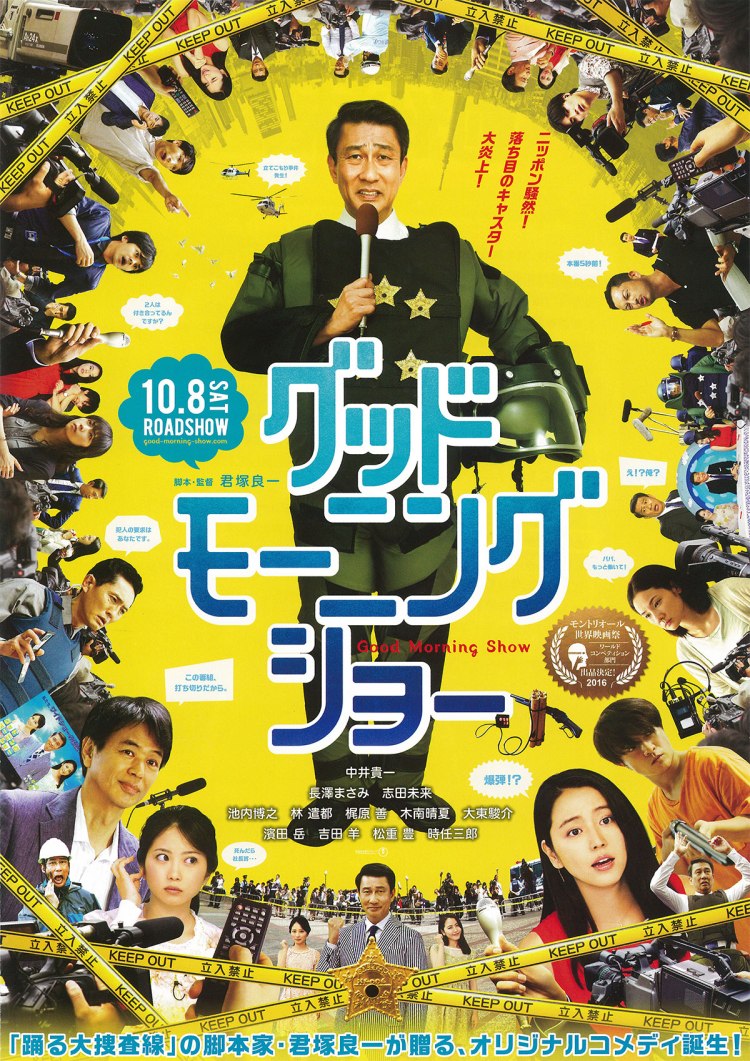
Good Morning Show posterThirty years before Good Morning Show (グッドモーニングショー), No More Comics showed us that the news is serious business and it seems the intervening three decades have not done much to change that. Good Morning Show is the kind of vacuous TV magazine programme that seems to have become popular the world over but Japan has mastered in its entirety. This is a news programme for people trying to avoid the news – there’s just enough of the essentials to keep the average viewer up to date with the big ticket item of the day, but the rest is horoscopes, cakes, and celebrity gossip. The morning news sets the mood for the rest of the day, and isn’t it in everyone’s interest if it’s blue skies all the way ahead? Perhaps so, but whatever happened to serious journalism?

Good Morning Show’s veteran anchor, Sumida (Kiichi Nakai), used to be a top talent on the evening news but a spot of “inappropriate” reporting from the scene of a disaster has had him relegated to the nonsensical early morning magazine show which involves getting up at 3am everyday and becoming something of an expert on pastries. Sumida’s day starts badly when he gets up to find his wife (Yo Yoshida) and son (Mihiro) still awake. As it turns out, there’s a family crisis. Sumida’s student son has got his girlfriend pregnant and has decided to do the right thing and get married, no matter what his dad might have to say about it. Sumida is definitely not happy but he’s also late for work. On the way, he finds out that his co-anchor, Keiko (Masami Nagasawa), with whom he apparently had some kind of drunken indiscretion, has decided that they’re now a couple and is about to announce as much live on air. Luckily for Sumida, a third crisis enters his life when a gunman (Gaku Hamada) takes a cafe hostage and asks directly for the Good Morning Show host to visit him at the scene.

The Good Morning Show exists entirely to cater to its audience’s baser instincts, but its simple charms are apparently going out of style and the show will be cancelled if they don’t get their numbers up soon. The hostage crisis is a godsend in this regard as is Sumida’s unexpected importance to the case which gets the show on the ground reporting live from the scene with exclusive access. Given this shift in broadcast tastes, it’s strange there’s no reference to social media though Good Morning Show is apparently viewable via the internet with a large portion of the audience tuning in on their smartphones during their morning commute. This sense of “community” seems to be key to the show’s appeal as the interactive poling which usually asks silly questions intended to spark debate such as whether or not to throw out gifts from old lovers, becomes central to the hostage case in deciding whether Sumida and the gunman should live or die live on air.

The gunman, like many, turns out to be just another angry young man frustrated that no one will listen to his complaints. At first it looks like Sumida may be in some way responsible, either because of his botched reporting on an earlier disaster or a connection to an incident in the cafe some years previously, but it turns out the major factor is a kind of hypocritical smugness that’s become the Good Morning Show’s trademark. For all of his frustrations with the format, Sumida is depressingly good at mindless twaddle and his fake “worry” about the future of the nation has got the gunman’s back up. The key issue is still more personal as the gunman feels himself excluded from the community feeling fostered by the show when he tries to make himself heard via its channels and is ignored.

A definite irony when Good Morning Show’s major selling point is “ignoring” the real news. Yes, they run a small item on the important headline of the day which provides Sumida a chance to “worry” about corrupt politicians misappropriating public funds etc, but then the show moves on to more cheerful areas like celebrity affairs and delicious cakes. Sumida ends up committing the newsman’s mortal sin – he becomes the news, much as the reporter at the centre of No More Comics did before him, though like the show itself it’s the personal which wins the day. Saying the things he couldn’t say to directly to his own son, Sumida tries to forge a connection with the gunman who is not a bad person, just another youngster at the end of his tether with an uncaring world. The connections are made through glass, but they are made all the same (even if imperfectly and with less than total honesty). Good Morning Show is, like its namesake, a fairly disposable effort but fun while it lasts. Then again sometimes the most harmless things do the most harm.


Original trailer (English subtitles)
N@NIMONO (何者, Daisuke Miura, 2016)

Nanimono posterGrowing up is a series of battles in Japan. Exam hell soon gives way to the freedom and liberation of university but students know that their carefree days of youth and discovery will be short lived. Job hunting is done en masse and takes place in the final year of study (or even before). The process of securing a work placement is much the same as deciding on which school to apply to – attending job fairs to meet with representatives, getting hold of brochures, talking to anyone and everyone you know about the various reputations of the big firms, and then figuring out what your best bets are. Many companies run written exams which are then followed by group interviews in which the applicants are made to answer humiliating questions in front of their fellow candidates. What this all amounts to is a gradual erasure of the self in order to become the perfect hire, making the same tired phrases sound interesting in an effort to say all the right things whilst trying not too seem calculating or too bland.

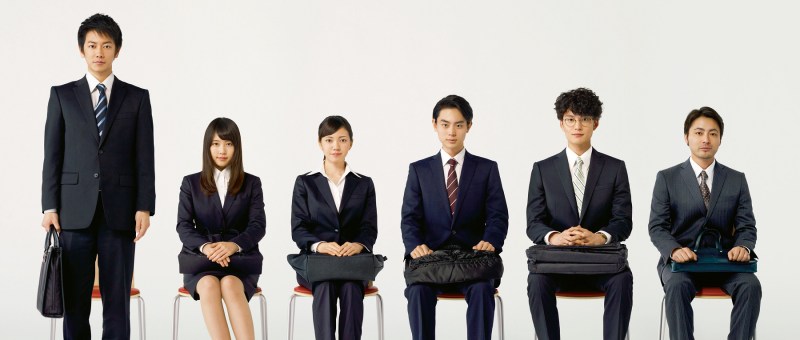
The group at the centre of Daisuke Miura’s adaptation of the Naoki Prize winning novel by Ryo Asai, N@NIMONO (何者, Nanimono, AKA Somebody / Someone), know this better than most. Protagonist Takuto (Takeru Satoh) used to be interested in theatre but has abandoned his dreams of the stage for the mainstream route into company life while his friend Kotaro (Masaki Suda) has played his last gig as the lead singer of a rock band, died his hair black again, and got a smart haircut in preparation for interviews. The boys are still good friends and roommates despite the fact that Takuto has long been carrying a torch for Kotaro’s former girlfriend, Mizuki (Kasumi Arimura), who has just returned from studying abroad. Mizuki is good friends with another girl, Rica (Fumi Nikaido), who happens to live upstairs from the boys and suggests that the four of them all get together to compare notes on the job hunting process. Rica lives with her boyfriend (still somewhat unusual in Japan), Takayoshi (Masaki Okada), who is working as a freelance journalist and is disdainful of the others’ passage into the regular workaday world but later tries to get into it himself.

There is a kind of sadness involved in this process, even if no one seriously thinks about fighting back. Everyone wants to get their foot onto that corporate ladder to become “someone”, at least in the eyes of society. There are a lot of rungs on the ladder to success, and if you miss your footing it’s near impossible to get it back – you’ll wind up one of the many crowded round the bottom staring up at the top even if you don’t want to admit it. University is the last time time there is real scope for indulging one’s personality before the corporate life takes hold – thus Takuto and Kotaro both accept that their artistic pursuits have to go in their quest for a regular middle-class life even if they inwardly struggle with their decisions to “sell-out”.

Takayoshi thinks of himself as above all this. He asks himself what all of this is for, why people put themselves through this humiliating ritual just to be locked into a nine to five that makes them miserable and turns them into soulless drones. There’s an obvious answer to that, and Takayoshi’s refusal to take it into account borders on the offensive, as does his often patronising attitude to those actively engaged in the job hunting process, but his hypocrisy is eventually brought home to him when he turns down a project to work with another artist because he thinks their work isn’t good enough. Maybe there’s courage in just putting something of yourself out there, even if it isn’t very good, rather than sitting at home looking down on everything and critiquing everyone else’s life choices whilst getting nothing done yourself.

It’s this conflict between interior and exterior life in which N@NIMONO is most interested. Main character Takuto begins as the everyman, depressed and stressed by his job hunting odyssey but aloof isolationism soon reveals itself as a kind of cowardice and self-involvement born of insecurity as he takes to a “secret” Twitter account for acerbic comments on his friends’ lives, sarcastically taking cruel potshots safe in the knowledge of his anonymity. Takuto’s entire concept of himself is a construction as his eventual descent into abstraction shows us in recasting his interaction with his friends as an avant-garde theatre show in which he finally begins to see the various ways his resentment of others is really just a way of expressing dissatisfaction with himself. This inability to fully integrate his own personality is offered as the final reason he hasn’t managed to find employment – his insincerity marks him out as a poor prospect. Takuto’s final realisation that he is unable to successfully answer the standard interview question “define your own personality in under one minute” for the perfectly sensible reason that the task is impossible kickstarts his own journey to a more complete life, even if it doesn’t do much to help the countless other “someones” out there hammered into a standard sized holes as mere cogs in the great social machine.


N@NIMONO seems to have been screened under the English titles of both “Somebody” and “Someone” but “N@NIMONO” is the one that features on the title card of the English subtitled Hong Kong blu-ray.

Original trailer (no subtitles)

Antiporno (アンチポルノ, Sion Sono, 2016)

Antiporno posterIf freedom exists in Japanese cinema, it exists only through sexual liberation. Only in this most private of acts can true individual will be expressed. Sion Sono, ever the contrarian, wants to ask if that very idea of “freedom” is in itself oppressive and he’s chosen to do that through his contribution to the Roman Porno Reboot Project in which five contemporary directors attempt to recreate Nikkatsu’s line in ‘70s soft-core pornography.

Opening in a room of bold primary colours – the sunlit walls of the yellow bedchamber and the garish red of the doorless bathroom, Sono homes in on the figure of Kyoko (Ami Tomite) who lies face down on a bed with her underwear around her ankles. She seems somehow broken and exhausted, staring into a piece of glass from a shattered mirror and making ominous statements to herself. Suddenly her mood changes, no longer the maudlin woman she transforms into the cute and quirky high schooler so beloved of certain genres of Japanese entertainment. When her assistant arrives, Kyoko delights in humiliating her, forcing Noriko (Mariko Tsutsui) to crawl around on all fours wearing a dog collar and then ordering her to allow herself to be raped by an (all female) team of newspaper reporters.

So far, so Petra von Kant, but Sono doesn’t stop here. He shows us that this brightly coloured room is a stand-in for Kyoko’s fracturing psyche, a failed attempt to order her chaotic world. Someone shouts “cut” and we’re on a film set – roles are reversed, Kyoko is no longer in control. Her memories enter free fall as she flits between an awkward (possibly imagined) childhood, and her present predicament as, alternately, plaything and dominatrix.

The roots of Kyoko’s confusion stem back to the contradiction in her parents’, or really her society’s, attitude to sex. During a very strange family dinner, Kyoko and her younger sister have a frank discussion with mum and dad about male and female genitals and how they fit together. The language is pointed, but Kyoko’s father has very clear ideas about what is obscene and what isn’t – “Cocks” are what men stick into prostitutes and they’re obscene, but he has no sensible answer when pressed on how exactly “cocks” and “male genitalia” can be all that different. Her parents tell her sex is indecent and shameful while continuing to talk about their own sex life openly and refusing to shield their daughters from their obvious appetites. They offer no answer for this continuing paradox, only the affirmation that Kyoko’s desires are “indecent” and must be rejected.

Kyoko’s sister finds her freedom in another way, but Kyoko pursues hers through sexuality, looking for a connection in midst of true liberation. She wants to become a “whore” which the adult version of herself describes as “a woman so pure it breaks her own heart”, but what she’s looking for is the freedom which eludes her in her day to day living. Kyoko and later Noriko repeat the mantra that they will dismantle the “annoying freedoms which restrict me”,  lamenting that there is no freedom of speech in a country like Japan and that no woman has ever been able to attain their own freedom in a world entirely controlled by men. A protest against the renewal of the ANPO security treaty runs on the TV while Kyoko’s sister holds up a book of butterflies, exclaiming that all the free things fly away. The women of Japan, according to Noriko, praise free speech but reject their own freedom, forced to chase false liberations and endlessly allowing themselves to be manipulated by a culture they themselves willingly create.

The fly away butterflies hit the ceiling, and Kyoko’s captive lizard cannot escape its bottle. Sono seems to suggest that there is no true freedom, that the very idea of “true freedom” as mediated through the idea of sexual liberation is itself another fallacy used to manipulate women into doing what men want. Kyoko ends up in a “Roman Porno” to empower herself, but is disempowered by it – rendered an anonymous object trapped inside an entirely different kind of tube. Blinded by colours and memory she searches for an escape but finds none, groping for the mechanism to set herself free from the delusion of liberation but grasping only empty air.


Antiporno is available to stream in the UK via Mubi until 8th January and will be released on blu-ray by Third Window Films in April 2018.

Original trailer (English subtitles)
White Ant (白蟻─慾望謎網, Chu Hsien-che, 2016)

白蟻_poster_D_0105_final_更新tenga_cs5White Ant (白蟻─慾望謎網, Báiyǐ – Yùwàng Mí Wǎng) – another name for termite, is an apt title for this first indie narrative feature from veteran Taiwanese documentarian, Chu Hsien-che. Voyeurism, sexual fetish, social conservatism, stigma, embarrassment, and longstanding mental illness conspire towards tragedy as one young man becomes the target for a betrayed woman’s scorn, an innocent bystander in her quest for revenge as a salve for her own repressed emotional pain and loneliness. Chu certainly finds plenty of that as guilt and shame continue to eat away at our protagonists, burrowing ever deeper like the termite of the title, undermining already fragile foundations in each of these differently damaged people.

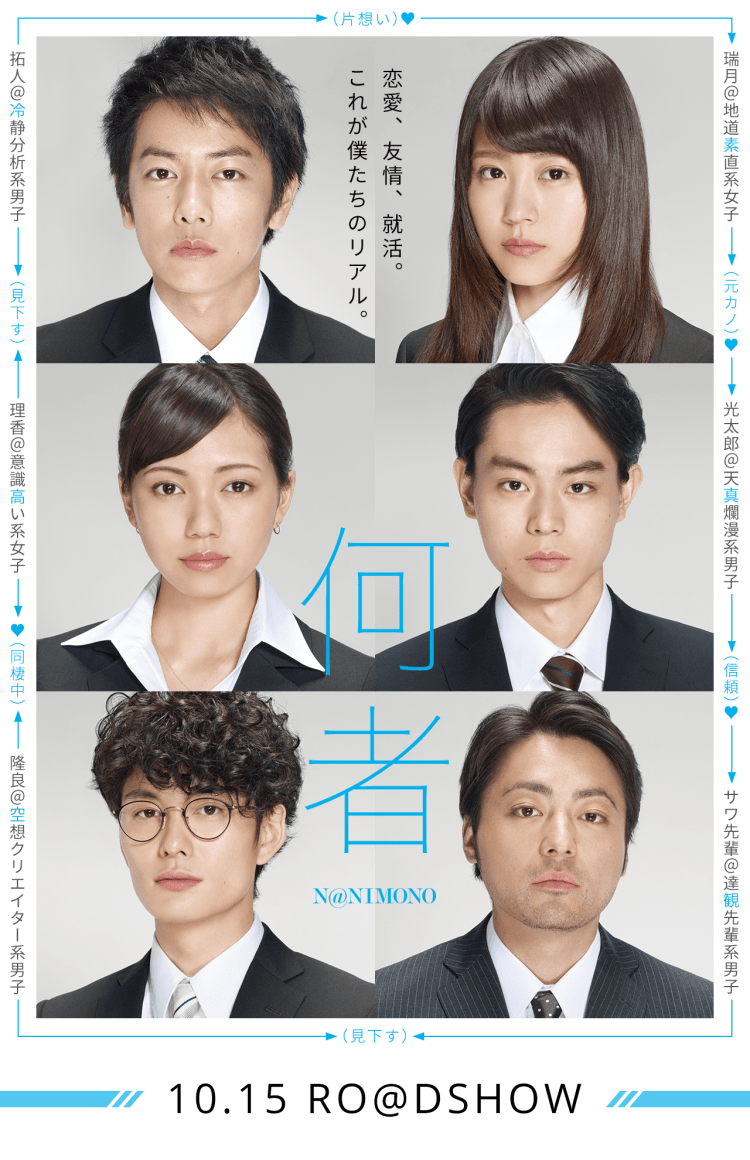
Bai Yide (Chris Wu Kan-Ren) is a quiet, aloof young man who works in a bookstore. On his way home one day, he stops to swipe a set of ladies’ underwear hanging out to dry in the courtyard where he lives. Bai puts on the underwear and then removes it to masturbate in front of his mirror, reduced to angry, desperate tears in the shame of his compulsion.

Unbeknownst to Bai, his illicit activities have not gone unnoticed. Two bored students, Tang Junhong (Aviis Zhong) and her minion Lu Peiyi, saw Bai steal the pants and bra and filmed him doing it. On the rebound for a bad breakup and looking for some random payback, Junhong mails Bai a copy of the DVD exposing his sordid needs. Junhong is, apparently, offended by Bai’s “depravity” though her true motivations remain unclear even to herself. Despite the urgings of Peiyi and Peiyi’s boyfriend who partially assists through his social media accounts, Junhong continues to taunt Bai who soon descends into a cycle of paranoia and depression which eventually has tragic consequences of the kind Junhong had not intended or imagined.

Besides the act of theft, which has admittedly deprived someone of a set of underwear, Bai’s unusual fetishes serve to harm no one though they appear to cause him a degree of mental stress in feeling himself to be in someway transgressive and required to keep his tastes firmly under wraps. The act of theft may be an attraction in and of itself, though if Bai desired pristine, unworn underwear he would likely find it difficult to acquire for the same reasons that lead him to feel ashamed just for wanting it. Junhong has no real right to feel as outraged as she does – it’s not as if Bai stole her pants or harmed her in any way. He is simply an innocent bystander who happened to step into a space approximating that of Junhong’s ex on whom she vowed revenge.

As we later find out from Bai’s melancholy mother, Lan (Yu Tai-yan), Bai had been experiencing a degree of mental distress since childhood. Following the death of his father and subsequently witnessing his mother with another man, Bai has suffered with a compulsion to steal ladies’ underwear beginning with Lan’s. Lan blames herself for this – in having been both too clingy in allowing him to sleep in the same bed long past the age most children lock themselves away in their own rooms, and in having been too self-centred in taking a lover which, she feels, led to a neglect of her son’s interests. Bai, suffering apparent paranoia and depression even in childhood, believing that there is a voice in his hair which torments him, is further unbalanced by Junhong’s campaign of terror. Trying to track down the blackmailer and figure out what is they want out of all of this, he becomes suspicious of everyone, permanently on edge, terrified, and angry lest his sordid secret be revealed.

Driven half mad by her own frenzy of vengeance, Junhong’s actions places a wedge between herself and her best friend Pieyi who thinks things have gone far enough. Friendships ruined, Junhong ends up just as lonely and isolated as Bai before eventually emerging scarred and guilty, unwilling to process the unintended consequences of what she saw as an amusing series of practical jokes probably designed to make her feel powerful when she felt anything but. Junhong attempts to atone by connecting with Bai’s sorrowful mother, Lan, who doesn’t know her true identity, but in any case continues to blame herself for her son’s death. Lan, a tragic figure, is also isolated by her feelings of guilt and self loathing both in claiming responsibility for Bai’s mental instability and for the loss of her husband which kickstarted the pair’s eventual downfall.

Strangely enough the two women bond through their shared guilt and grief, finding common ground even after the truth is revealed. Despite this final plea for empathy and connection, Chu’s premise seems to rest on an association of unusual sexual proclivities with mental illness. Bai’s suffering is never condemned, indeed the film seems to believe he should suffer for his “perversions” rather than criticising the society which has relentlessly excluded him, viewing his instability as further evidence of his otherness rather than a symptom of the isolation he is forced to feel through continued rejections. Nevertheless, Chu does seem to be clear that it is these repressed emotions that eventually become white ants, burrowing deeply inside the sufferer until they threaten to destroy the foundations of humanity, though whether the damage can ever be fully repaired appears to be far less clear.


Seen on Mubi.

Original trailer (English subtitles)

Interview with director Chu Hsien-che from Busan 2016

Lu Over the Wall (夜明け告げるルーのうた, Masaaki Yuasa, 2017)

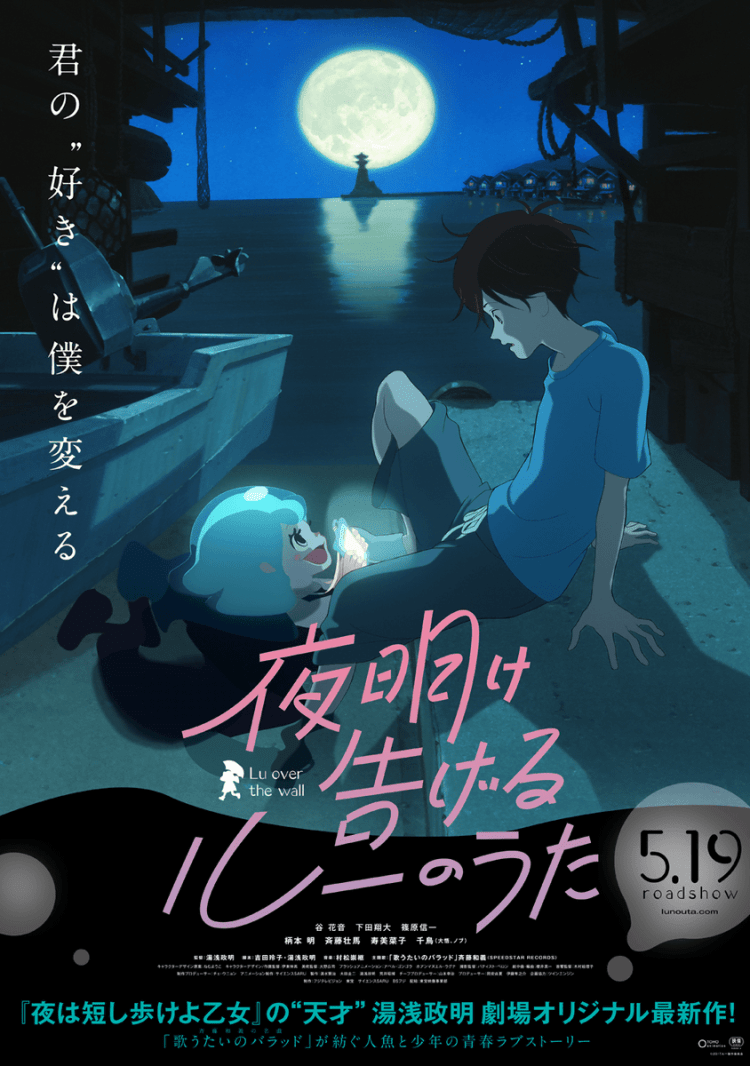
Lu over the wall posterComing of age dramas are the mainstay of anime, but if anyone was going to take one in a pleasingly new direction it would be Masaaki Yuasa. His second release of 2017 following the comparatively more abstract The Night is Short, Walk on Girl, Lu Over the Wall (夜明け告げるルーのうた, Yoake Tsugeru Lu no Uta) is the tale of a boy learning to break of out his emotional repression in order to step into a healthier adulthood but it’s also one of learning to live with loss and grief. From the Irish selkie to the conventional mermaid, people of the sea have more often than not stood in for people from a land of lost things where souls are carried away and lonely sailors lured to their doom, but perhaps we’ve simply misunderstood them and the song they sing isn’t intended to make us sad but only to make us remember the joy of living.

Sullen teenager Kai (Shota Shimoda) is in his last year of middle school with a lot of decisions awaiting him as to the further direction of his life. For the moment, Kai lives in the small fishing village of “Hinashi” somewhere in Southern Japan. “Hinashi” literally means “sunless” and the town is indeed overshadowed by a large cliff which blocks the town from the sun but there’s a more metaphorical kind of gloominess lurking here too. Kai is not the only miserable one, pretty much all of the townspeople once dreamt of escape but have either proved unable to get away from their small town roots, or have tried and failed to make it somewhere else before reluctantly returning, salmon-like, to the place of their births. The only one, it seems, to successfully make it out is Kai’s mum who left the family when Kai was small.

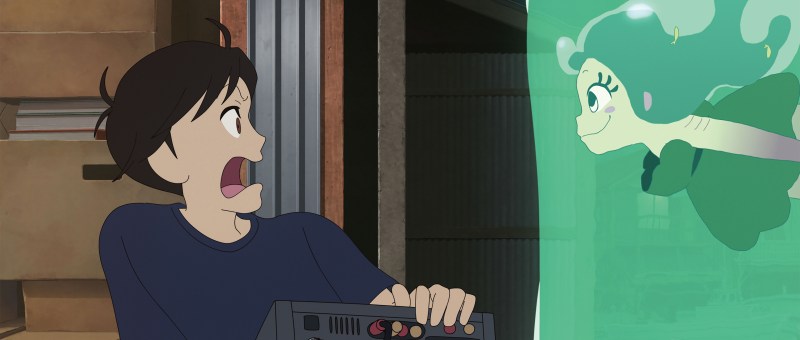
Much to his father’s (Shinichi Shinohara) irritation, Kai’s big dream is music though he’s less than thrilled when bamboozled into joining two other aspiring rockstar teens, Kunio (Soma Saito) and Yuho (Minako Kotobuki), as the third member of “Seirèn” even if it does give him an excuse to explore the generally forbidden territory of Mermaid Island. Whilst there, the trio’s song calls out to a music loving Merfolk girl, Lu (Kanon Tani), who can’t resist joining in and, awkwardly, is a much better lead vocalist than the divaish Yuho.

Lu, a charmingly vibrant toddler-type, is perfectly primed to bring this moribund town back to its sunny old self. Able to conjure her own portable corridors of water to travel over land, Lu tracks down Kai hoping to hear more wonderful music and making childish attempts to communicate through broken Japanese so that she can learn to understand the human world. Lu is not, however, the image most of the townspeople have when they think about Merfolk considering most of the local legends paint them as voraciously carnivorous predators existing only to steal landlubbing souls.

The Merfolk are a perfect metaphor for most of the ills consuming the town – a never seen manifestation of unknown fears. Everyone here has lost someone or something at sea (this is, after all a fishing village) or to the city, or just in themselves in learning to accept reality over the lure of unattainable dreams. Kai’s young and caring if distant father tries to push his son towards the “correct” path of non-stop studying and moral uprightness, but his son is just like teenage him, dreaming musical dreams of escape. It might have all gone wrong for Kai’s dad, but as he’s finally able to admit thanks to the guidance of Lu, he doesn’t regret a minute of it.

Ironically enough, Kai’s name is also the word for shellfish in Japanese, making his grandfather’s (Akira Emoto) frequent lament that the muscles in his dinner won’t open more than a little pointed. Kai is definitively closed off, refusing to even open the letters from his mother and keeping himself aloof at school and at home. Yet he’s not the only one who needs to open up – forced to dance to Lu’s tune (literally) each of the townspeople comes to make peace with those things that are so very hard to say, either letting past traumas float away or deciding to swim away with them.

It is, however, a little uncomfortable when the final resolution takes on a romantic dimension seeing as Lu has been painted as an adorable child with her giant bubbly head, cute high pitched voice, and childishly broken Japanese, not to mention that a secondary plot strand revolves around her father (an anthropomorphised shark/killer whale) who has attempted to shed some prejudices of his own to help his daughter in her desire to make friends with humans. Nevertheless, Yuasa and his scriptwriter Reiko do their best to do justice to all the ills of the town from the corporate greed of the mermaid loving old timer who wants to open a theme park exploiting their image, to the creepy behaviour of Yuho’s governor father, and the ever present themes of loss, guilt, and disappointment. The trio of teens at the centre may have felt themselves trapped in a dead end town, but thanks to Lu they come to realise that they too can jump over the wall and go wherever they want so long as they take the music with them.


Lu Over the Wall is in UK cinemas for one night only on 6th December 2017 courtesy of Anime Ltd.. Find out where it’s screening near you via the official Lu Over the Wall microsite.

Anime Ltd. trailer (Dialogue free)

Ending Note: Death of a Japanese Salesman (エンディングノート, Mami Sunada, 2011)

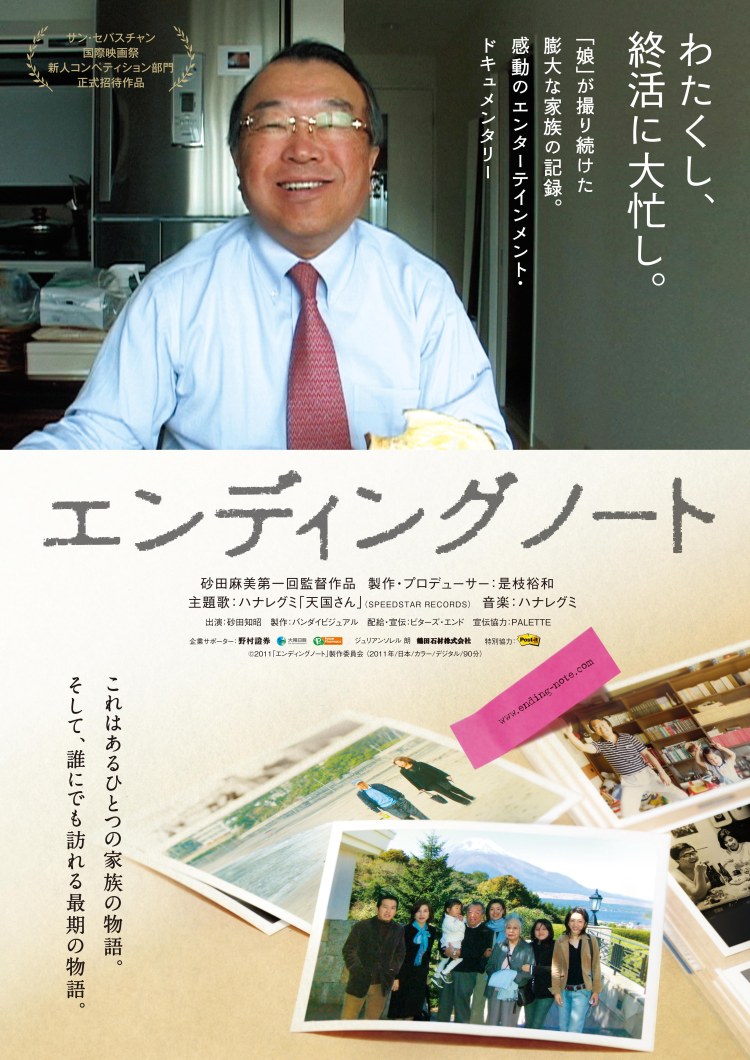
emi_3For various reasons, external commentators on Japanese culture have long held the view that the idea of “death” takes on a much more central position in the lives of ordinary people than it might elsewhere. Death is, however, as much of a taboo in Japan as it is elsewhere – few want to talk about the process of death and dying, of illness and of caring for the sick. Perhaps as a way to evade this particular paradox, there is another tradition in which those aware of their own impending death write a kind of letter for those they will leave behind. Like a testament which accompanies a will, the “isho” can include biographical details, confessions, advice and apologies by way of a final word of parting and a demonstration of having accepted one’s death.

This concept is what inspires the subject of Mami Sunada’s documentary, Death of a Japanese Salesman (エンディングノート, Ending Note), in his desire to create an “Ending Note” when diagnosed with terminal stomach cancer shortly after retiring from a lifetime spent as a regular salaryman. Tomoaki Sunada’s “Ending Note” is intended to be something warmer than an isho and completely divorced from any legal concept but nevertheless a kind of letter saying the things it was too hard to say out loud.

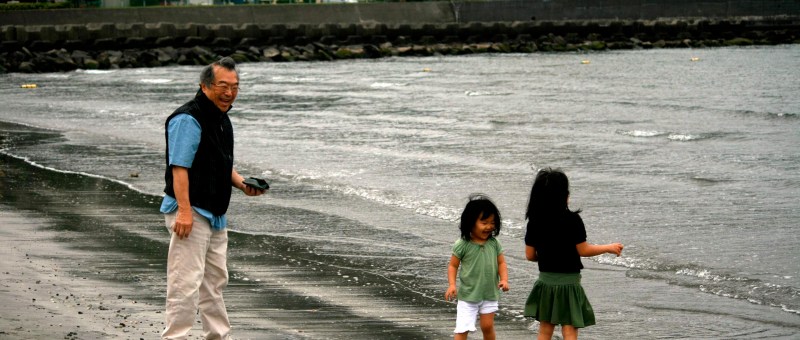
Sunada captures her father’s last days with equal parts affection and detachment. Tomoaki is a humorous man whose wide grin and dry wit help to alleviate what is an unavoidably heavy subject as he comes to terms with the aggressive nature of his illness. The thing is, Tomoaki never gets round to writing that “Ending Note” because he’s just too busy living to think about dying. What he writes is a kind of bucket list which runs from typically practical concerns such as looking at venues in which his funeral might be held and talking over converting to Christianity, to definitively patching things up with his wife and getting to see his three grandchildren again who live abroad in America because of his son’s job.

Living in America Tomoaki’s son perhaps has things a little easier than his father did (even if he’s inherited Tomoaki’s notorious attention to detail and meticulous planning). As Tomoaki puts it in one of Sunada’s flashback moments, middle-aged men like him built the modern Japan. Exclaiming “The company is life!”, albeit with an ironic smile on his face he leaves for work just as he did every morning for over forty years at the same company and for most of it in marketing and sales. The traditional Japanese family demanded a strict division of labour with men pouring their efforts and emotions into their careers and women, supposedly, subsuming their hopes and desires into creating a happy family home. During their working lives, therefore, men like Tomoaki rarely got to see the families they were working to support, placing undue burdens on their wives and appearing as little more than absent disciplinarians to their children. Retirement offers an opportunity to finally become a part of family life, enjoying the days out and long lunches often so impossible for a company man, but Tomoaki has been robbed of the right to enjoy his old age by a cancer diagnosis received almost immediately after the end of his career.

Sunada in effect writes her father’s Ending Note for him, both through the film and the voice over narration she herself delivers written in her father’s playfully ironic authorial voice. Taking cheeky potshots at herself as the “accidental” youngest child whose still unmarried state apparently weighs on her dying father’s mind, Sunada adds both bite and warmth to her “father’s” final words as he waxes philosophical on death and the afterlife while trying to plan pragmatically for his own eventual end. The whimsical indie score also lends to the lightness of the exercise but Sunada does not shy away from the rapidity of her father’s decline or cruelty of his illness, taking her camera away only at the moment of death. Raw and painful, Sunada’s fearsome exploration of the process of dying is one of ordinary tragedy but also becomes a glorious celebration of life from all of its sadness and difficulties to shared laughter and the joy of new arrivals.


Screened as part of Archipelago: Exploring the Landscape of Contemporary Japanese Women Filmmakers.

Original trailer (no subtitles)

Trivisa (樹大招風, Frank Hui & Jevons Au & Vicky Wong, 2016)

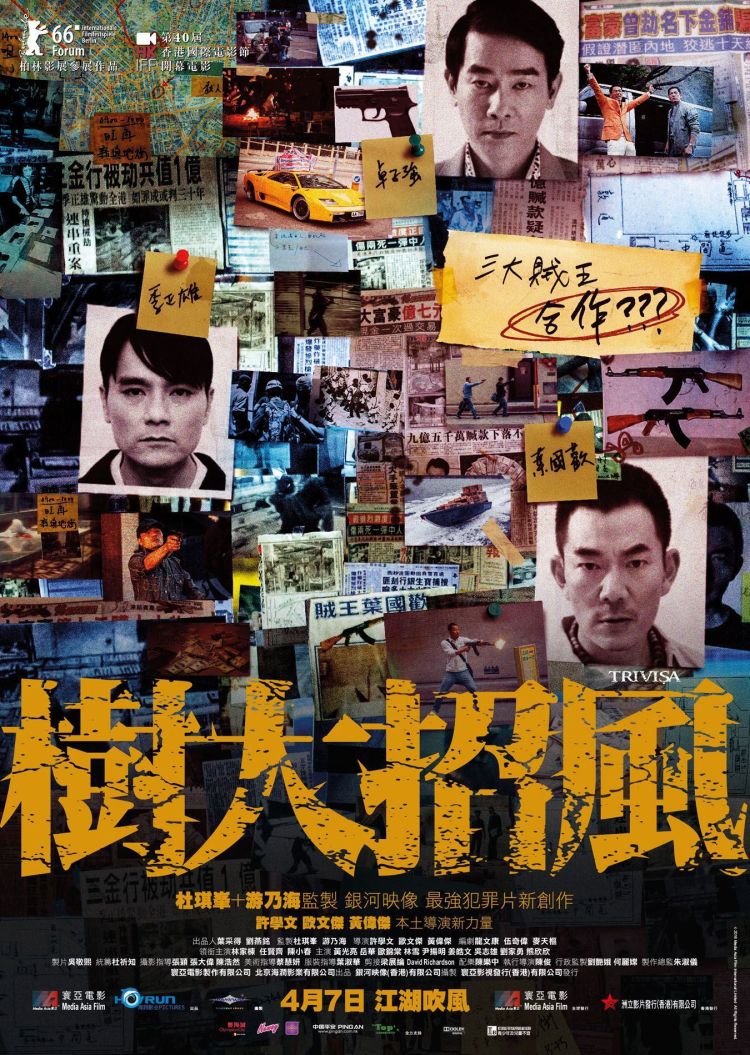
Trivisa posterIt’s worth just taking a moment to appreciate the fact that a film named for the three Buddhist poisons – delusion, desire, and fury, is intended as a criticism of Hong Kong as an SAR that revels in the glory and subsequent downfall of three famous criminals who discover that crime does not pay right on the eve of the handover. Mentored by Johnnie To, Trivisa (樹大招風) is directed by three young hopefuls discovered through his Fresh Wave program each of whom directs one of the film’s three story strands which revolve around a trio of famous Hong Kong criminals.

Back in the ‘80s, as Mrs. Thatcher delivers her pledges on the Hong Kong handover, King of Thieves Kwai Ching-hung (Gordon Lam) gets stopped by a random police patrol, kills the officers, and then has to fake his identity to escape. 15 years later he’s a petty mobile phone trafficker dreaming of pulling off a big score. Meanwhile, Yip Kwok Foon (Richie Jen), once known for his AK47 brandishing robberies is a “legitimate businessman” smuggling black market electronics into Hong Kong and bribing Mainland officials to do it, while Cheuk Tze Keung (Jordan Chan) is a flamboyant gangster revelling in underworld glory and dreaming of eternal fame.

Rather than weave the three stories into one coherent whole or run them as entirely separate episodes, the three strands run across and through each other only to briefly reunite in the ironic conclusion. The most famous of the three real life criminals, Kwai Ching-hung’s arc is perhaps the most familiar though rather than fighting an existential battle against his bad self, Kwai’s quest is to regain his title as Hong Kong’s most audacious thief. To do this, he’s reunited with an old friend and comrade in arms who’s retired from the life and married a Thai woman with whom he has an adorable little daughter. Unbeknownst to him, Kwai has not come for old times’ sake but is taking advantage of the fact that the family live directly opposite his latest score. Employing two Mainland mercenaries, Kwai has his eyes on the prize but his friend is wilier than he remembered, is quickly suspicious of Kwai’s friendship with his daughter, and has his suspicions confirmed when he finds his kid’s backpack full of guns.

Yip’s story, by contrast, is one of diminished expectations and ongoing financial woes. An early scene at a restaurant finds Yip in the company of Mainland officials to whom he must scrape and bow, placating them with various bribes and engaging in the strange trade of precious vases which seems to pass as currency among corrupt civil servants. Corporate shenanigans and business disputes, however, are no substitute for good old fashioned firefights and Yip’s frustration with his new career is sure to lead to some kind of explosion at some point in time.

Cheuk becomes the lynchpin of the three as he takes an advantage of a rumour that the three “Kings of Thieves” are getting together to plan a giant heist to track down the other two and see if he can make it work for real. The most successful and happiest in his life, Cheuk has made his fortune out of ostentatious crime – kidnapping the sons of the extremely wealthy for hearty ransoms. He is, however, bored and dreams of making a giant splash which will ensure his name remains in the history books for evermore – i.e., blowing up the Queen.

Facing the approaching handover, each is aware the world will change, unsure as to how they’re in the process of trying to secure their futures either way. Kwai wants one last heist, Yip has already begun courting Chinese business, and Cheuk just wants to be the face in all the papers across the entire Chinese world. Kwai’s sin is “desire” – he wants one last hit as a criminal mastermind and he’s willing to take advantage of his friend (and even his friend’s young daughter) to get it, Yip’s sin is “fury” as dealing with constant humiliation leaves him longing for his AK 47, and Cheuk’s failing is “delusion” in his all encompassing need to be the big dog around town, all flashy suits and toothy grins. On the eve of the handover they all meet a reckoning – betrayal, a stupid and pointless death, or merely ridiculous downfall.

The heyday of crime has, it seems, ended but that’s definitely a bad thing, laying bare a change in dynamics between nations and a decline in the kind of independence which allows the flourishing of a criminal enterprise. Bearing To’s hallmark in its tripartite structure, ironic comments on fate and connection, and eventual decent into random gun battle, Trivisa is a ramshackle exploration of a watershed moment in which even hardened criminals must learn to live in a brave new world or risk being consumed by it.


Screened at Creative Visions: Hong Kong Cinema 1997 – 2017

Original trailer (English subtitles)

Gallants (打擂台, Derek Kwok & Clement Cheng, 2010)

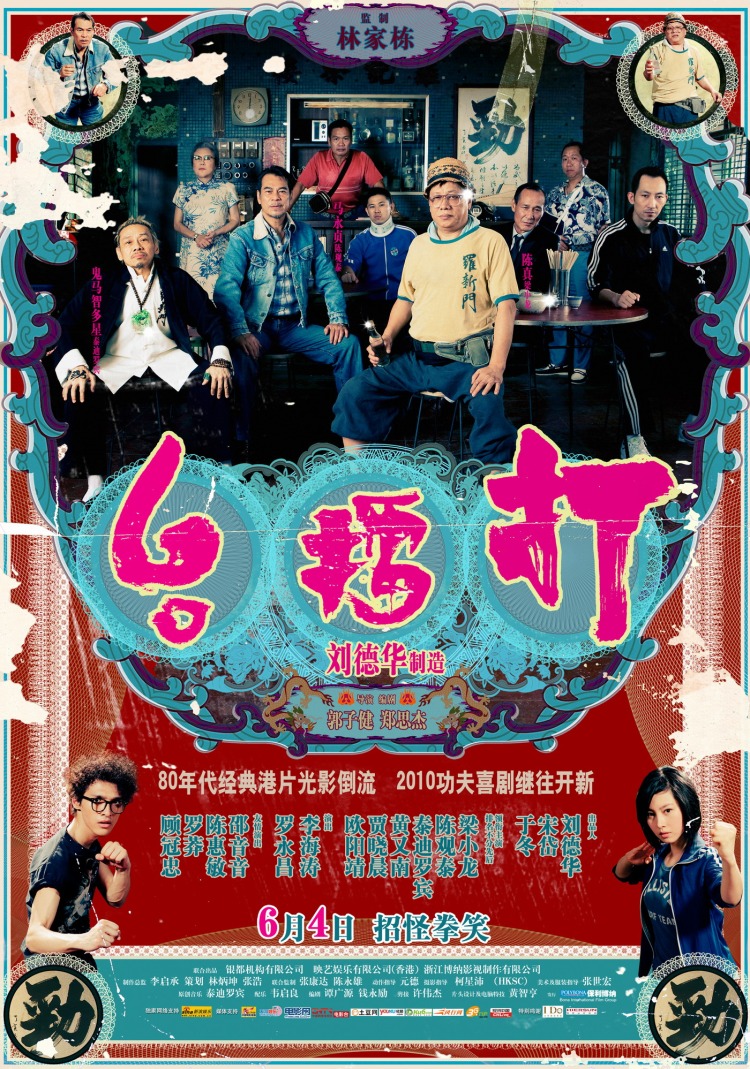
Gallants PosterLike the master at the centre of Derek Kwok and Clement Cheng’s Gallants (打擂台), old school martial arts movies have been in a deep sleep since their Shaw Brothers heyday. Drawing inspiration from the kung fu films of old, Gallants is a tale of buried heroism suddenly reawakening and the risks of writing off veteran challengers just because of their age. It’s also a tribute to those perhaps more innocent times and, in contrast to a prevailing trend, a true Hong Kong film filled with typically Cantonese (sometimes untranslatable humour) and meta references to the area’s long cinematic history.

For a brief moment in his childhood, Cheung (Wong You-nam) was the unbeatable superhero who never lost a fight. These days, he’s a nerdy loser who sometimes hides under his desk to escape his angry boss. Despatched by the shady real estate company he works for, Cheung is sent back to his rural hometown entrusted with the mission of convincing the local population to surrender their homes so the developers can build a large scale complex. Whilst there he gets attacked by local punks only to be saved by an old guy who has immense kung fu skills.

The old guy turns out to be one of two living in a ramshackle tea house that used to be a martial arts studio. Tiger (Leung Siu-lung) and Dragon (Chen Kuan-tai) turned the Gate of Law into a teahouse to make ends meet while their legendary sifu, Master Law (Teddy Robin), has been in a coma for the last 30 years. When a fight breaks out and the old guys get to strut their stuff against a local kingpin, Cheung decides to petition them to take him on as a pupil. In a classic case of bad timing, Cheung is around when the teahouse is raided again and someone attacks Master Law causing him to wake up and act as if the last 30 years never happened. He thinks Cheung is both of his young pupils, Tiger and Dragon, in one and that the real 30 years older versions of Tiger and Dragon are some random old guys Cheung has agreed to train out of pity.

If you don’t fight, you won’t lose quips Law, but if you fight you have to win. Like any good martial movie, Gallants is more about the journey than the destination. Rather than focussing solely on Cheung who experiences several conflicts of the heart when he realises that his adversary is the childhood friend he used to bully and that he was technically on the wrong side to begin with, Kwok and Cheng broaden the canvas to allow Tiger, Dragon, and Law to take centre stage. Still skilled martial artists, the guys give it their all in the knowledge that they’ll have to work far harder now that they aren’t as agile as they once were. Still, they have the true spirit of kung fu and resolve to keep getting back up each time they’re knocked down.

This oddly defeatist attitude which presupposes humiliation but insists on perseverance gives the film much of its warmhearted, ironic tone as the hapless martial arts heroes repeatedly fail yet refuse to back down. The other source of comedy lies in the hilarious performance of the tiny Teddy Robin as the supposedly all powerful Law. Law, as it turns out, is a wisecracking lecher who sets about flirting with just about every young girl he lays eyes on before decamping to a hostess bar and asking for the ladies from 30 years ago. Former starlet Susan Shaw makes an amusing cameo as the long suffering, lovelorn doctor apparently in love with Law since their youth who has continued to care for him throughout his illness but is entirely forgotten when Law wakes up in full on sleaze mode.

Bizarre gags including one about a missing preserved duck, jostle with impressive action sequences performed by two veterans proving they’ve still got what it takes all these years later. The aesthetic is pure ‘70s Shaw Brothers complete with speedy zooms and whip pans accompanied by an overly dramatic score, lovingly echoing the classic kung fu era rather than trying to attack it through parody. As funny as it all is, and it is, Gallants is also surprisingly warmhearted as it finds space to value the skills of its elderly protagonists as well as the enduring bonds of friendship which connect them.


Screened at Creative Visions: Hong Kong Cinema 1997 – 2017

Original trailer (English subtitles)
Wet Woman in the Wind (風に濡れた女, Akihiko Shiota, 2016)

wet woman in the wind poster largeBack in the early ‘70s, Nikkatsu reacted to the gradual box office decline of Japanese cinema by taking things one step further than their already edgy youth output in rebranding themselves as a purveyor of softcore pornography known as Roman Porno. Unlike the familiar “pink film”, Roman Porno was made with the assets of a major studio behind it including better actors, production values, and distribution power but it still obeyed strict genre rules calling for speedy turnarounds, minimal running times and the requisite amount of nudity (to the permitted parameters) at set intervals. 45 years later Roman Porno is back in a series of films directed by some of today’s most interesting directors who attempt to recreate the genre anew for modern audiences whilst paying homage to the originals.

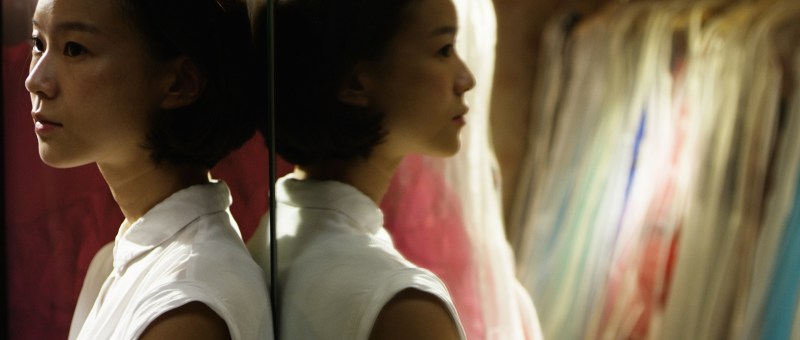
Akihiko Shiota’s Wet Woman in the Wind (風に濡れた女, Kaze ni Nureta Onna) starts as it means to go on with hapless protagonist Kosuke (Tasuku Nagaoka) sitting by a river looking sad just as a strange young woman suddenly rides her bicycle directly into the nearby lake before climbing out and stripping off her T-shirt (which, amusingly enough reads “you need tissues for your issues”), revealing her bare breasts to a complete stranger. Kosuke is baffled and confused. He tries to leave but the woman follows him, asking if she can stay with him tonight because she has nowhere else to go. Kosuke is resolved, he’s given up girls and wants nothing whatsoever to do with weird women from ponds but Shiori (Yuki Mamiya) is not one to take no for an answer.

It’s never made clear but something unpleasant has obviously happened to Kosuke that has made him retreat from the city with his tail between his legs (so to speak). A respected playwright, Kosuke seems to have had something of an existential crisis and has decided to condemn himself to a life of self-imposed isolation because “you have to be alone if you really want to think deeply about things”. His isolation is, however, only up to a point. Kosuke’s semi-primitive lifestyle sees him living in a shack in the woods but he has electric lighting provided by generator batteries and grinds his own coffee beans by hand after buying them from a local cafe owned by a man Kosuke went to university with but claims not to have known at the time. The cafe owner’s wife has recently left and he blames Kosuke for reawakening a desire in her that had apparently lain dormant with her husband.

In a shocking coincidence, Shiori has also taken a job at the cafe and has set about seducing the recently lonely owner who has now become fixated and jealous, once again afraid Kosuke in particular is going to steal away his new plaything just like he stole his wife. This is a fallacy on several levels, not least that Shiori is not a woman to be constrained by any man but a true free spirit who gives her love freely to whomever that she chooses.

Spirit might be the best way to describe Shiori who arrives and departs with the wind, a force of nature with the sole intent of freeing her targets of the burden of repressed desires. A radio broadcast later reveals that a tiger has been on the run from the nearby zoo and if this were a fable, you could almost believe the tiger to be Shiori, sinking her teeth into soft centre of human weakness and leaving right after she tears its throat out.

Free spirit as she is, Shiori does find herself in moments of danger as the the threat of sexual violence rears its ugly head. Kosuke likes to think of himself as an enlightened kind of man, an intellectual, but he’s also a self-involved womaniser not above attempting to force himself on a woman he feels to be his for the taking or, half in jest, threatening to rape a former lover. Yet for Shiori much of this is sport – she sees through Kosuke and neatly undercuts all of his self delusions and neuroses, but she’s also merely toying with him.

Finding himself literally kicked out of bed and rendered redundant when Shiori finds more pleasure in getting together with his former lover Kyoko, Kosuke wanders outside in confusion and seduces, with a degree of tenderness, Kyoko’s shy, bespectacled assistant, Yuko. When the morning comes, however, he feels he made a mistake. Yuko has become attached to him, sharing a traumatic childhood story only for Kosuke to brush it aside and encourage her to go out into the world to explore the rich pleasures on offer now that he has “awakened” her. Kosuke remains as self-centred as ever, but Yuko at least does perhaps find something in his words of “wisdom”.

As in all good sex comedy, the men are pathetic slaves to desires they find themselves unable to express, whether out of fear or cultural ideals of masculinity, while the women remain in control and must guide the men either towards a healthier outlook or their own destruction. Both Kosuke and the cafe owner conspire in their own downfall in misguided battles for possession or conquest. Having already suffered defeat, Kosuke has retreated from the field dejected and humiliated, but in his all out impassioned attempt to re-enter the world of carnality he literally brings his entire universe crashing down around his ears. Forced to realise his own ridiculousness, Kosuke is left alone with little else to do than survey the scale of the destruction his various delusions have wrought. A fun loving pastiche, Wet Woman in the Wind is an oddly whimsical tale, witty yet insightful even its seeming lightness.


Currently available to stream via Mubi.

Original trailer (English subtitles) NSFW!
Echoes of the Rainbow (歲月神偷, Alex Law, 2010)

echoes of the Rainbow posterThe tragedy of childhood is that you can’t quite see it on the ground. Looking back the truth is plainer but it’s also painful, containing all the warmth of those times but also the regrets and irreconcilable longings. Alex Law’s small scale personal tale of inevitable tragedies mixed with intense nostalgia, Echoes of the Rainbow (歲月神偷, Shui Yuet Sun Tau), is deeply sincere and more than earns its turn for the sentimental in its never wavering feeling of authenticity as it paints a picture of a rapidly disappearing Hong Kong and a childhood lived in a big brother’s shadow.

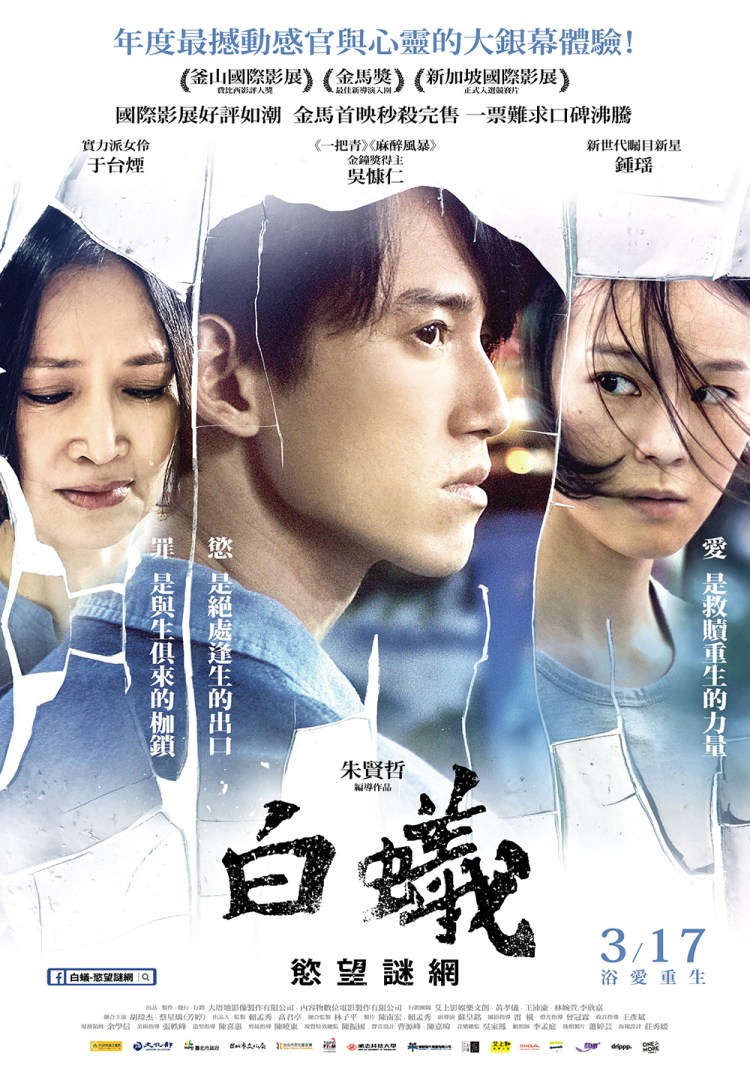
Eight-year-old “Big Ears” (Buzz Chung) lives with his cobbler father (Simon Yam) at the end of a long, run-down street of shopkeepers. Amusingly enough, Big Ears’ uncle (Paul Chun) lives at the other end of the street where he cuts hair so the family kind of has the full run of the place, head to toe. While Big Ears whiles his time away daydreaming,  putting a fish bowl on his head and pretending to be an astronaut or indulging in his favourite hobby – kleptomania, his big brother Desmond (Aarif Lee) is busy doing everything right. A tall, strong teenager with more than a passing resemblance to Bruce Lee, Desmond is a track and field star and academically gifted student at the prestigious Diocesan Boys’ School. Big Ears loves everything about his big brother, including his sort of girlfriend Flora (Evelyn Choi).

Law sketches the everyday lives of this ordinary family with the sort of details which randomly recall themselves years later – the tear on his father’s T-shirt from where it hits the end of his chisel, the taste of Autumn Moon Cake, the random conversations with passersby. The small community on this run-down street more is like an extended family in and of itself as the families take their meals on tables outside, each overhearing each other’s conversations and interfering in various family dramas. Big Ears quips that his mum (Sandra Ng) is known as “Mrs. Outlaw” because she’ll talk her way into or out of anything and has a talent for talking people around to her way of thinking, but the warmth and love between his parents is never shaken. Even in the midst of an encroaching tragedy, Mr. Law takes the time to design a pretty pair of ultra comfortable shoes for his harried wife who often complains about her corns.

Seen through little Big Ears’ eyes, the film avoids the bigger picture or any political concerns save for the presence of the corrupt colonial forces as represented by Sergeant Brian who speaks fluent Cantonese but stresses that English is essential for “getting on” in Hong Kong. Sergeant Brian is also going to get one whole box of the moon cakes Big Ears wanted all for himself and his mum has been paying for in instalments for the last few months, but the reason for his visit is a rise in the protection money the local police takes from shopkeepers. If the Laws can’t pay it (and they can’t, really) they’ll be evicted. Not that Big Ears would know, but business is bad and the family is spending most of its income on Desmond’s expensive school fees so it’s doubly galling to them when his grades and athletic success begin to decline.

Big Ears is a naughty little boy, but often gets away with it because he’s just so darn cute. His pilfering habit goes largely undetected even though he steals quite ostentatious items like a glowing goblet souvenir from a movie starring his favourite actress whose picture he also sells with a fake signatures attached, a British flag from a nearby base, and even a pottery statue of the Monkey King from an actual temple. Desmond has this theory about about double rainbows that are an inversion of each other – something that could easily work for himself and his brother with Desmond’s essential goodness contrasting nicely with Big Ears’ roguish adventures whilst also speaking for the enduring bond between the brothers.

Even before the literal typhoon rips through Big Ears’ idyllic childhood home, there are signs of trouble on the horizon – firstly in Desmond’s melancholy love story with fellow tropical fish enthusiast Flora who turns out to come from an entirely different world filled with all the ease and possibility so absent from the Law’s, and then in Desmond’s gradual slowing down. The respective catch phrases of Big Ears’ parents signify the twin pillars of the age with his father’s insistence that “nothing is more important than the roof” as he works steadily to keep one over his boys, and his mother’s instances that life is “half difficult, half wonderful” but “you have to keep believing”. Earning a right to melodrama through fierce authenticity, Echoes of the Rainbow does not negate its tearjerking premise but rings it for all of its joy and sorrow, revelling in nostalgia but also in a kind of hopefulness born of having weathered a storm and survived to witness the birth of new rainbows lighting up the sky.


Screened at Creative Visions: Hong Kong Cinema 1997 – 2017

Original trailer (English subtitles)