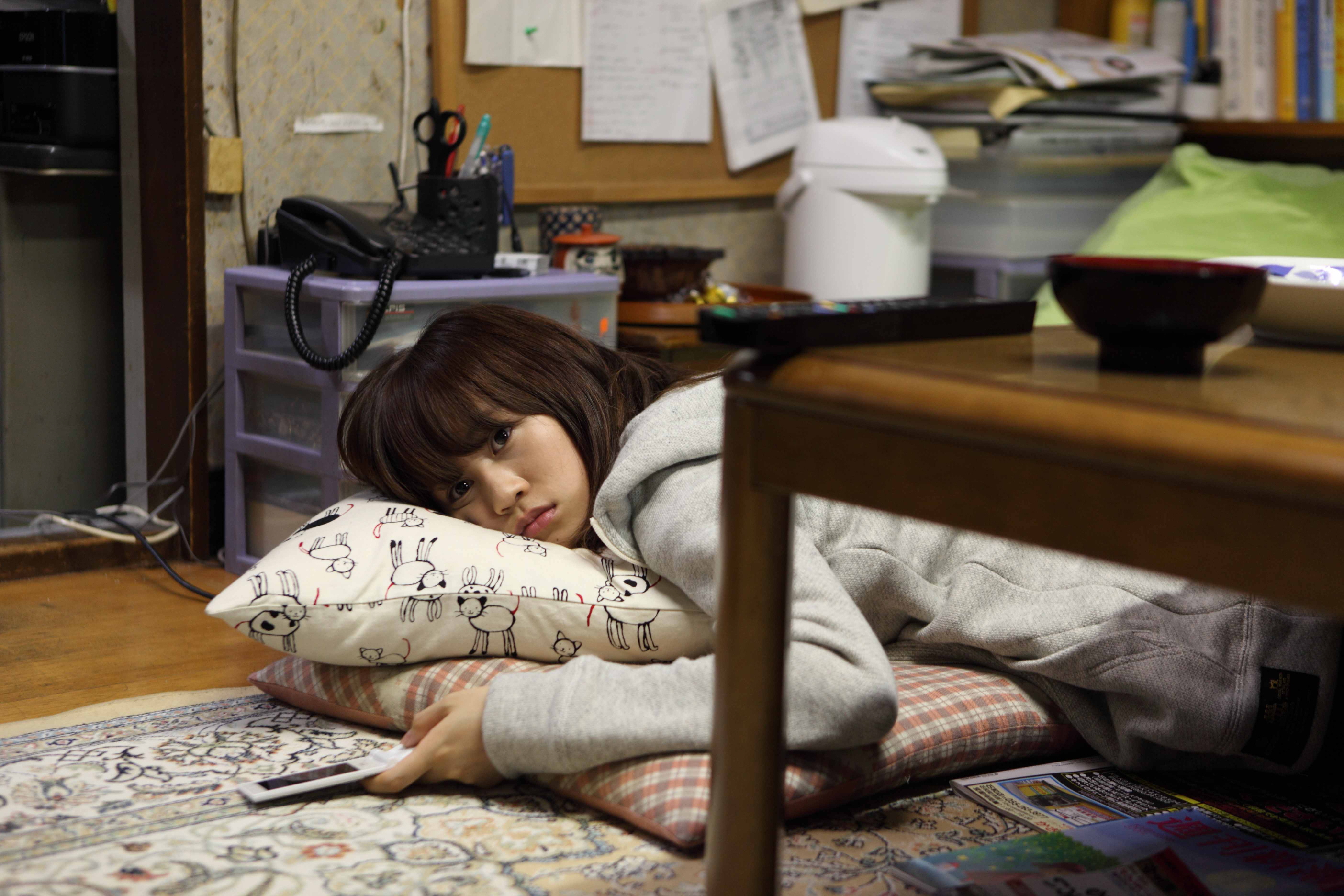
Kiyoshi Kurosawa has taken a turn for the romantic in his later career. Both 2013’s Real (リアル 完全なる首長竜の日, Real: Kanzen Naru Kubinagaryu no Hi) and Journey to the Shore follow an Orpheus into the underworld searching for a lost love stolen by death, but where Journey to the Shore is a tale of letting go, Real is very much the opposite (or so it would seem). Taking on much more of a science-fiction bent than Kurosawa’s previous work, Real adapts the Rokuro Inui novel A Perfect Day for a Pleisiosaur in which the boyfriend of a woman in a coma journeys into her subconscious through a process known as “sensing” in order to help her face up to whatever it is that’s keeping her asleep and lead her back towards the living world (or so we think). Strange and surreal, Real is a meditation on love, trauma, and the nature of consciousness in which “reality” itself is constantly in shift.
Koichi (Takeru Satoh) and Atsumi (Haruka Ayase) are childhood friends now living together as a couple. Despite their apparent happiness, one year after we see them enjoying a cheerful breakfast Atsumi is in a coma following a suicide attempt and Koichi is about to undergo an experimental procedure known as “sensing” to try and venture inside her consciousness to find out why she did it and possibly help her wake up.
Koichi makes contact and finds Atsumi living more or less as she had before, inhabiting their shared apartment and hard at work on a manga series, Roomi, which is now on hiatus following her indisposition. Roomi, like much of Atsumi’s work, is dark and macabre – the story of a serial killer who murders people in increasingly violent and disturbing ways. The brief flashes of bloody victims Koichi begins to notice in his peripheral vision soon give way to “philosophical zombies” or the NPCs of of the subconscious which take the form of badly animated third parties peopling Atsumi’s mind. What Atsumi wants from Koichi is to find a drawing of a Pleisiosaur she drew for him when they were children, because it was “perfect” and will help restore her faith in herself as an artist.
The Pleisiosaur turns out to be a little more significant than it first seems, taking Koichi and Atsumi back to the remote island where they first met. Almost like Stalker’s “The Zone” the island is a place of ruined dreams and frustrated inertia where some kind of accident related to the construction of a resort Koichi’s father was involved in building has permanently destroyed any idea of progress. This frozen, rubble strewn landscape perfectly reflects the lost world of the trapped dreamers as they battle the ghost of a shared yet half forgotten childhood trauma.
Though less obviously disturbing than some of Kurosawa’s previous forays into eerie psychological horror, Real has its share of typically J-horror tropes including a dripping wet ghost albeit this time one of a little boy popping up in unexpected places. Kurosawa opts for a hyperreal aesthetic, filming with harsh digital cameras which make little concession to the obviously cinematic, adding to the appropriately lifeless atmosphere of Koichi’s “real” world life and the surreal dreamworld of Atsumi. Koichi’s oddly pyjama-like clothing adds to the ongoing uncertainty as the two worlds blur into each other, becoming indistinct as the screen texture suddenly changes or the camera rolls to an unusual angle.
Shifting from Tarkovsky’s landscapes of desolation to Antonioni’s fog filled confusion, Kurosawa peels back the layers of repressed trauma to finally get to the core of what’s trapping the protagonist’s psyche within its frozen state. Childhood friends as they are, Koichi and Atsumi are trapped by a sense of guilt for something that they were both witness to all those years ago and so to overcome it, they will need to face it together. This time Orpheus descends but refuses to leave alone, battling literal dinosaurs from the distant past which must be placated with tokens of affection and, finally, heartfelt apologies. The “real” remains obscure, but Kurosawa does, at least, demonstrate his faith in love as salvation in a climax that echoes A Matter of Life and Death even if in a surreal and not altogether successful way.
International trailer (English subtitles)
 Despite the potential raciness of the title, The Liar and his Lover (カノジョは嘘を愛しすぎてる, Kanojo wa Uso wo Aishisugiteru) is another innocent tale of youthful romance adapted from a shojo manga by Kotomi Aoki. As is customary in the genre, the heroine is cute yet earnest, emotionally honest and fiercely clear cut whereas the hero is a broken hearted artist much in the need of the love of a good woman. Innocent and chaste as it all is, Liar also imports the worst aspects of shojo in its unseemly age gap romance between a 25 year old musician and the 16 year old high school girl he picks up on a whim and then apparently falls for precisely because of her uncomplicated goodness.
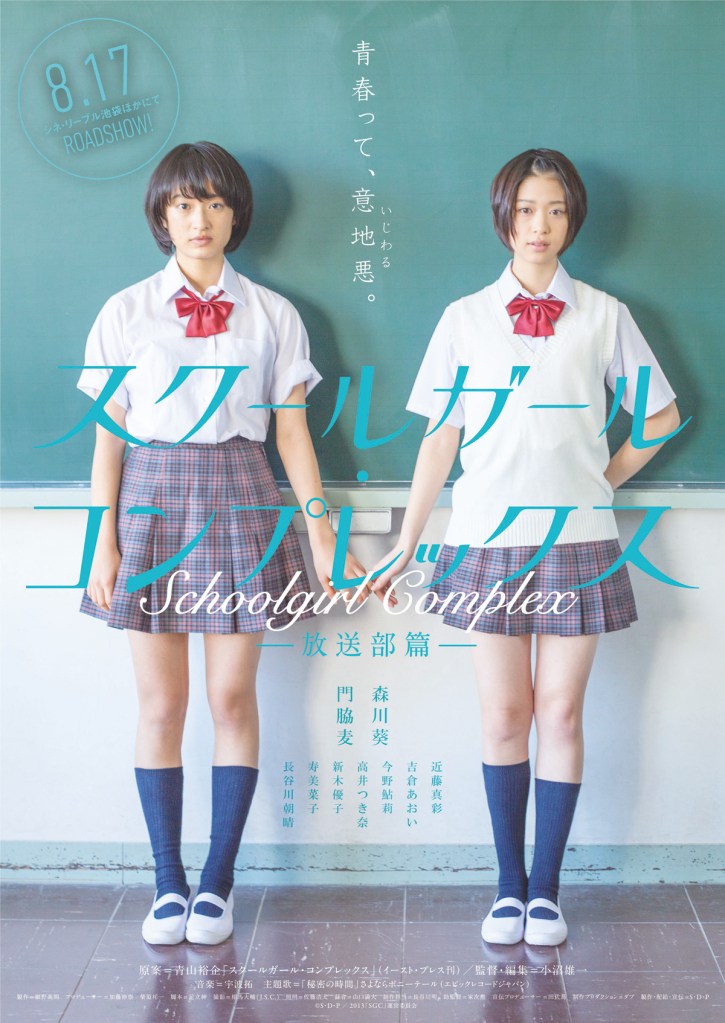 Schoolgirl Complex is a popular photo book featuring the work of Yuki Aoyama and does indeed focus on that most most Japanese of fixations – the school girl and her iconic uniform. Aoyama’s book presents itself as taking the POV of a teenage boy, gazing longly from a position of total innocence at the unattainable female figures who, in the book, are entirely faceless. Given a more concrete narrative, this filmic adaptation (スクールガール コンプレックス 放送部篇, Schoolgirl Complex Housoubu-hen) directed by Yuichi Onuma takes a slightly different tack in dispensing with high school boys altogether for a tale of self discovery and sexual confusion set in an all girls school in which almost everyone has a crush on someone, but sadly finds only adolescent suffering as so eloquently described by Osamu Dazai whose Schoolgirl informs much of the narrative.
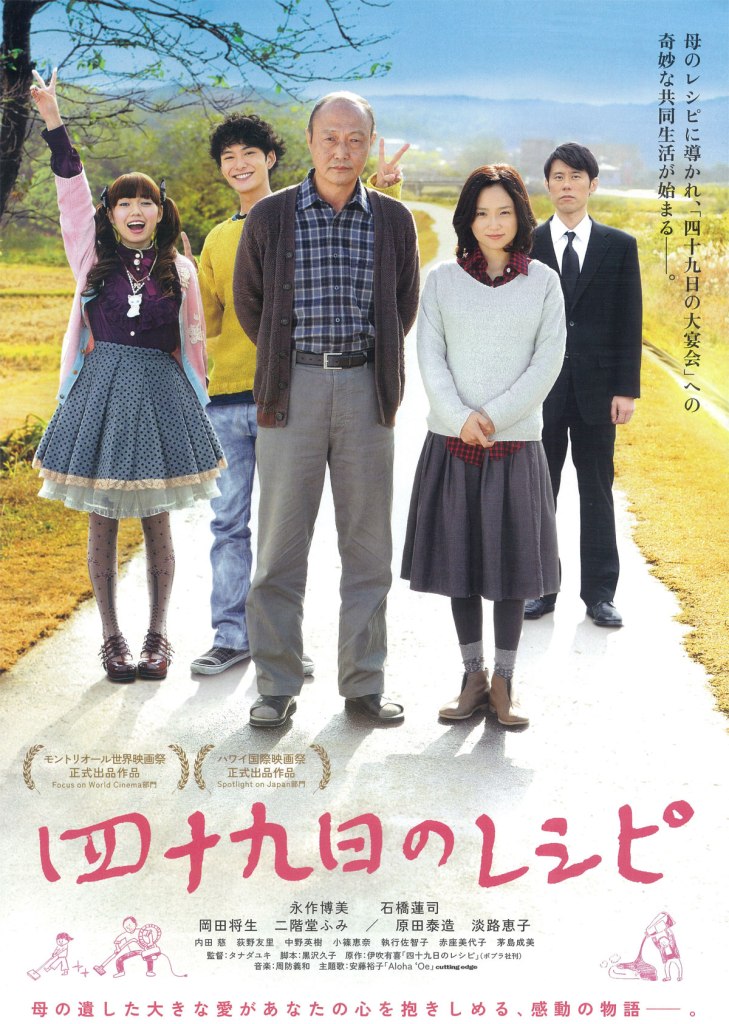 When everything goes wrong you go home, but Yuriko, the protagonist of Yuki Tanada’s adaptation of Yuki Ibuki’s novel might feel justified in wondering if she’s made a series of huge mistakes considering the strange situation she now finds herself in. Far from the schmaltzy cooking movie the title might suggest, Mourning Recipe (四十九日のレシピ, Shijuukunichi no Recipe) is a trail of breadcrumbs left by the recently deceased family matriarch, still thinking of others before herself as she tries to help everyone move on after she is no longer there to guide them. Approaching the often difficult circumstances with her characteristic warmth and compassion, Tanada takes what could have become a trite treatise on the healing power of grief into a nuanced character study as each of the left behind now has to seek their own path in deciding how to live the rest of their lives.
 There are few things in life which cannot at least be improved by a full and frank apology. Sometimes that apology will need to go beyond a simple, if heart felt, “I’m Sorry” to truly make amends but as long as there’s a genuine desire to make things right, it can be done. Some people do, however, need help in navigating this complex series of culturally defined rituals which is where the enterprising hero of Nobuo Mizuta’s The Apology King (謝罪の王様, Shazai no Ousama), Ryoro Kurojima (Sadao Abe), comes in. As head of the Tokyo Apology Centre, Kurojima is on hand to save the needy who find themselves requiring extrication from all kinds of sticky situations such as accidentally getting sold into prostitution by the yakuza or causing small diplomatic incidents with a tiny yet very angry foreign country.
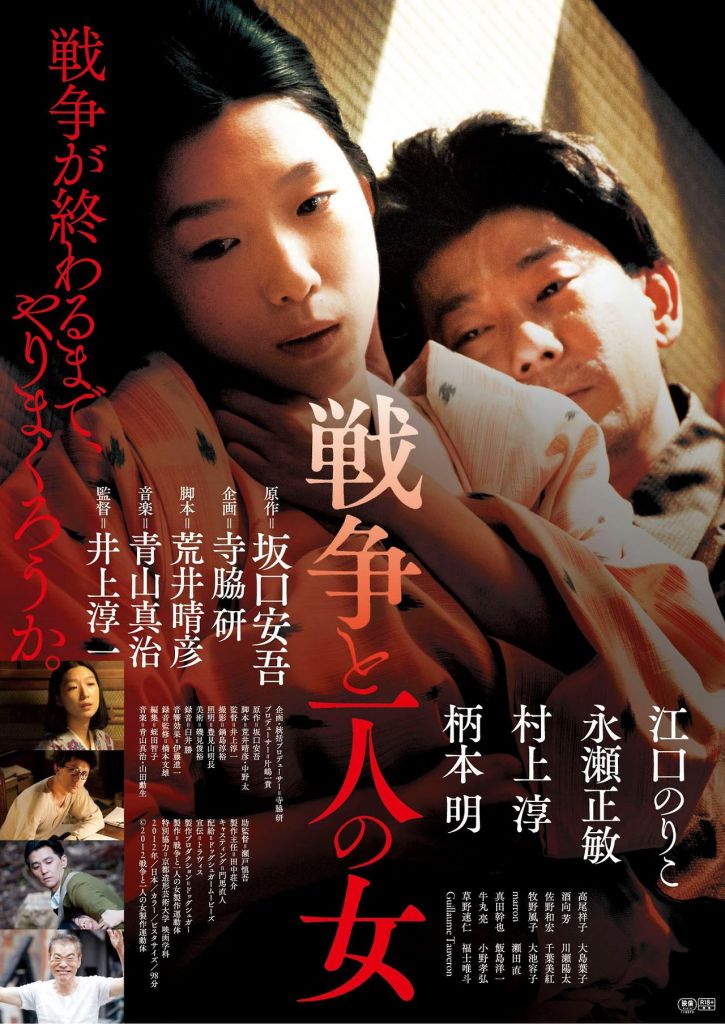 Junichi Inoue is better known as a screenwriter and frequent collaborator of avant-garde/pink film provocateur Koji Wakamatsu. A Woman and a War (戦争と一人の女, Senso to Hitori no Onna) marks his first time in the director’s chair and finds him working with someone else’s script but staying firmly within the pink genre. Adapted from a contemporary novel by Ango Sakaguchi published in 1946, A Woman and a War is an intense look at domestic female suffering during a time generalised chaos.
 How many times were you told as a child, someday you will understand this? There are so many things you don’t see until it’s too late, and children being as they are, are almost programmed to see things from a self directed tunnel vision. Such is the case for Mugiko – a young woman with dreams of becoming an anime voice actress who is suddenly reunited with her estranged mother of whom she has almost no memory.
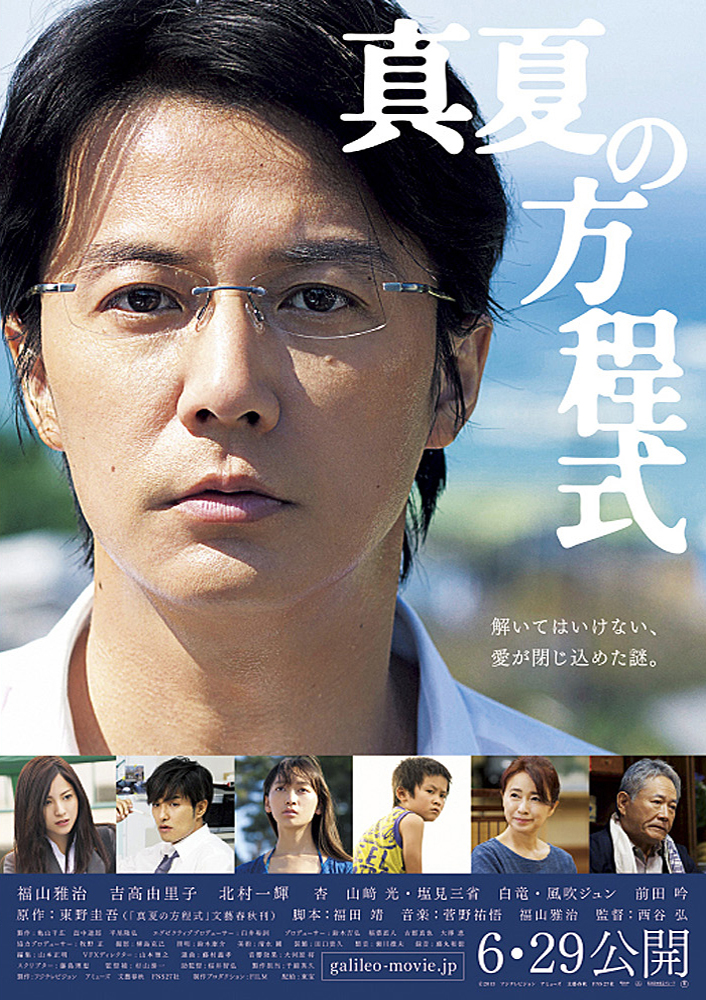 Sometimes it’s handy to know an omniscient genius detective, but then again sometimes it’s not. You have to wonder why people keep inviting famous detectives to their parties given what’s obviously going to unfold – they do rather seem to be a magnet for murders. Anyhow, the famous physicist and sometime consultant to Japan’s police force, “Galileo”, is about to have another busman’s holiday as he travels to a small coastal town which is currently holding a mediation between an offshore mining company and the local residents who are worried about the development’s effects on the area’s sea life.
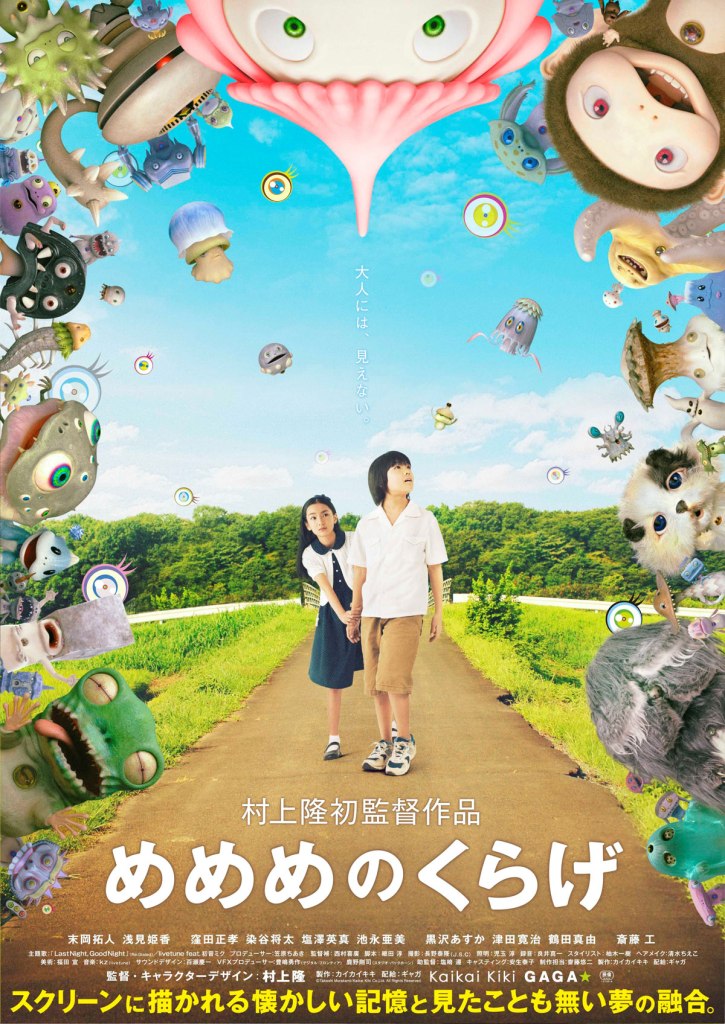 Jellyfish Eyes (めめめのくらげ, Mememe no Kurage) is the feature film debut of the internationally popular Japanese artist, Takashi Murakami. Well known for his cutesy character designs which are as likely to turn up in the world’s best regarded art galleries as they are on a kid’s backpack, Murakami is one of Japan’s most highly regarded art exports. Having unsuccessfully tried to raise interest in the more obvious totally CG animation, Murakami has enlisted the help of gore master Yoshihiro Nishimura for some director’s chair tips in creating a live action/CGI hybrid. Jellyfish Eyes is very definitely a kids’ movie, calling it a “family film” seems unfair when the age cut off is most likely around seven or eight years old but those who meet the (lack of) height requirement are sure to lap it up.