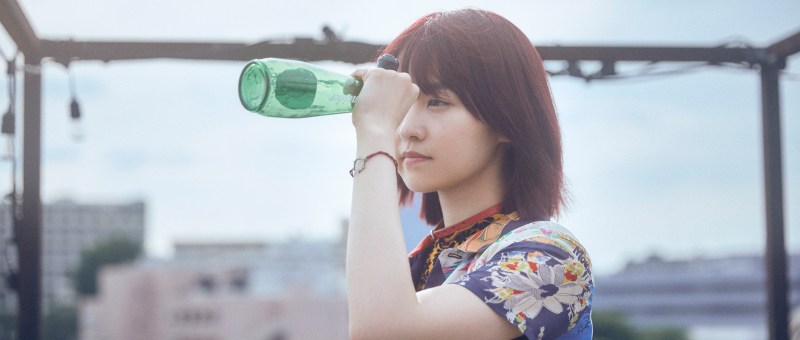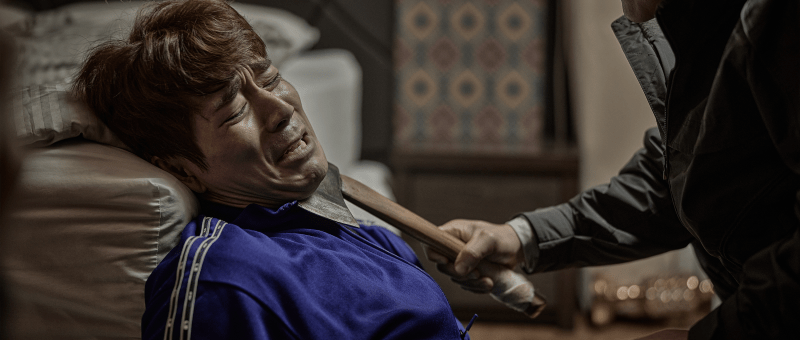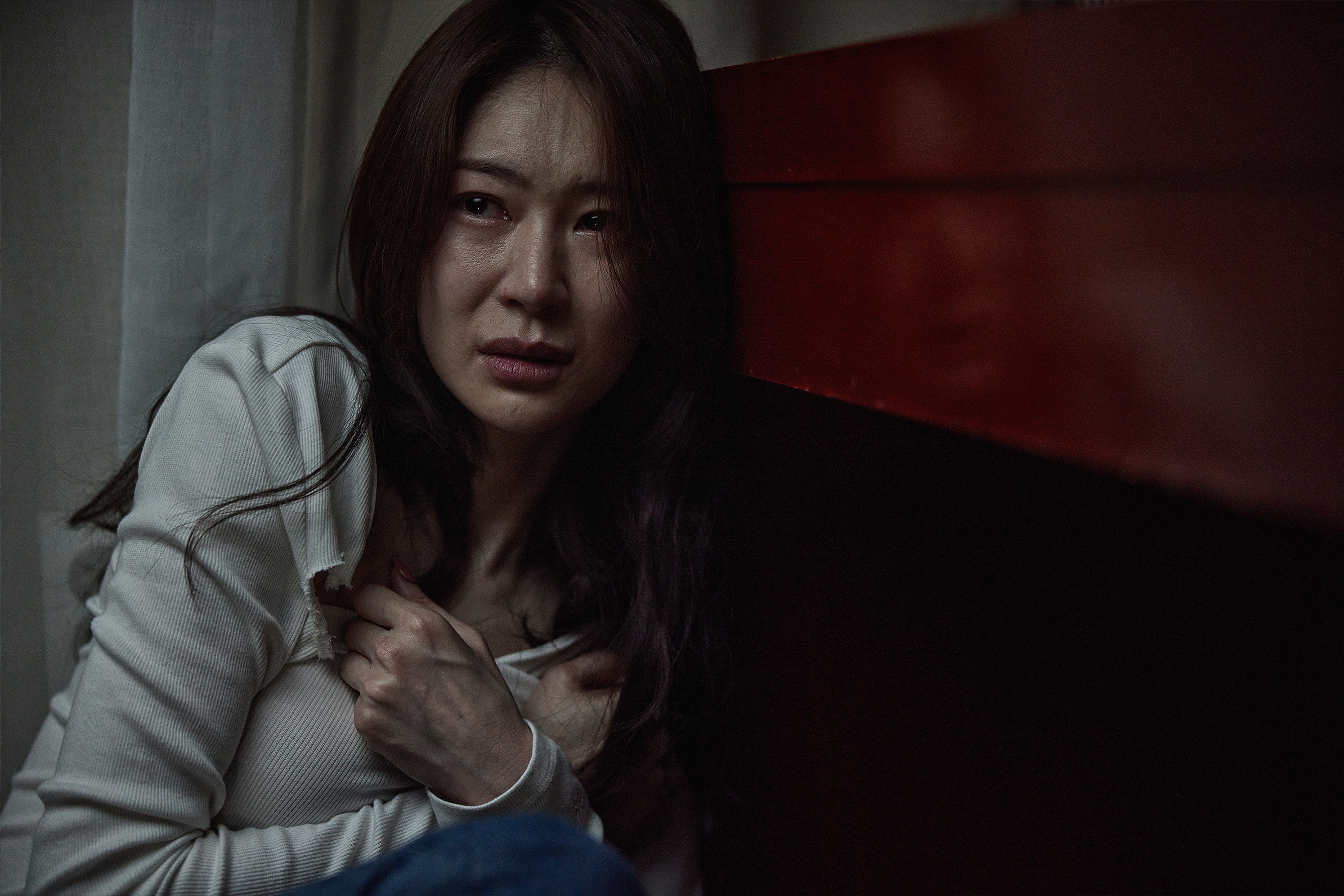
Cat Kiss (고양이 키스, Hwang Soo-bin, 2022)

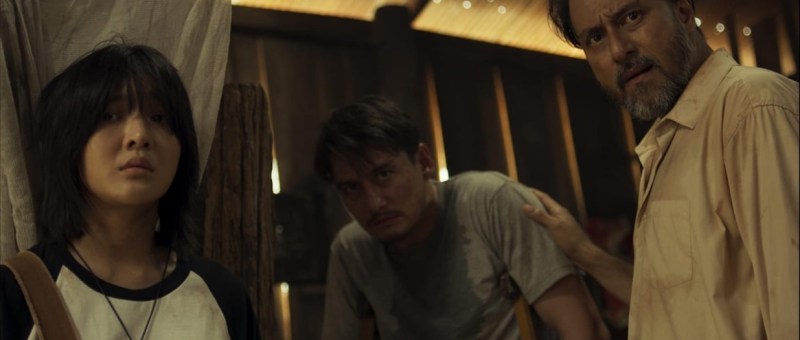
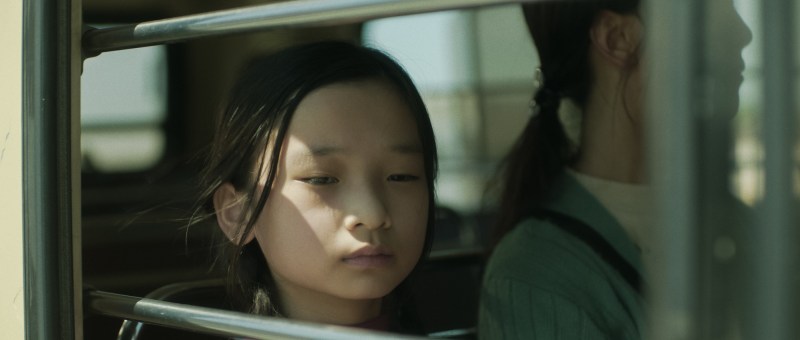
A widowed single father’s life is suddenly thrown into disarray when his son’s decision to take in a local stray cat forces him to confront the trauma of his wife’s death in Hwang Soo-bin’s light-hearted drama, Cat Kiss (고양이 키스, Goyangi Kiss). Less a study in the inertia of grief than an empathetic tale of how caring for others can reopen a heart that was closed, the film leans in hard to its cat-themed metaphors of finding comfort and support in expected places. 

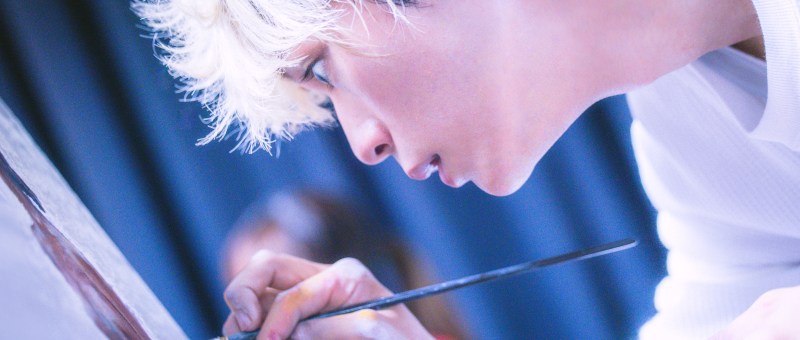
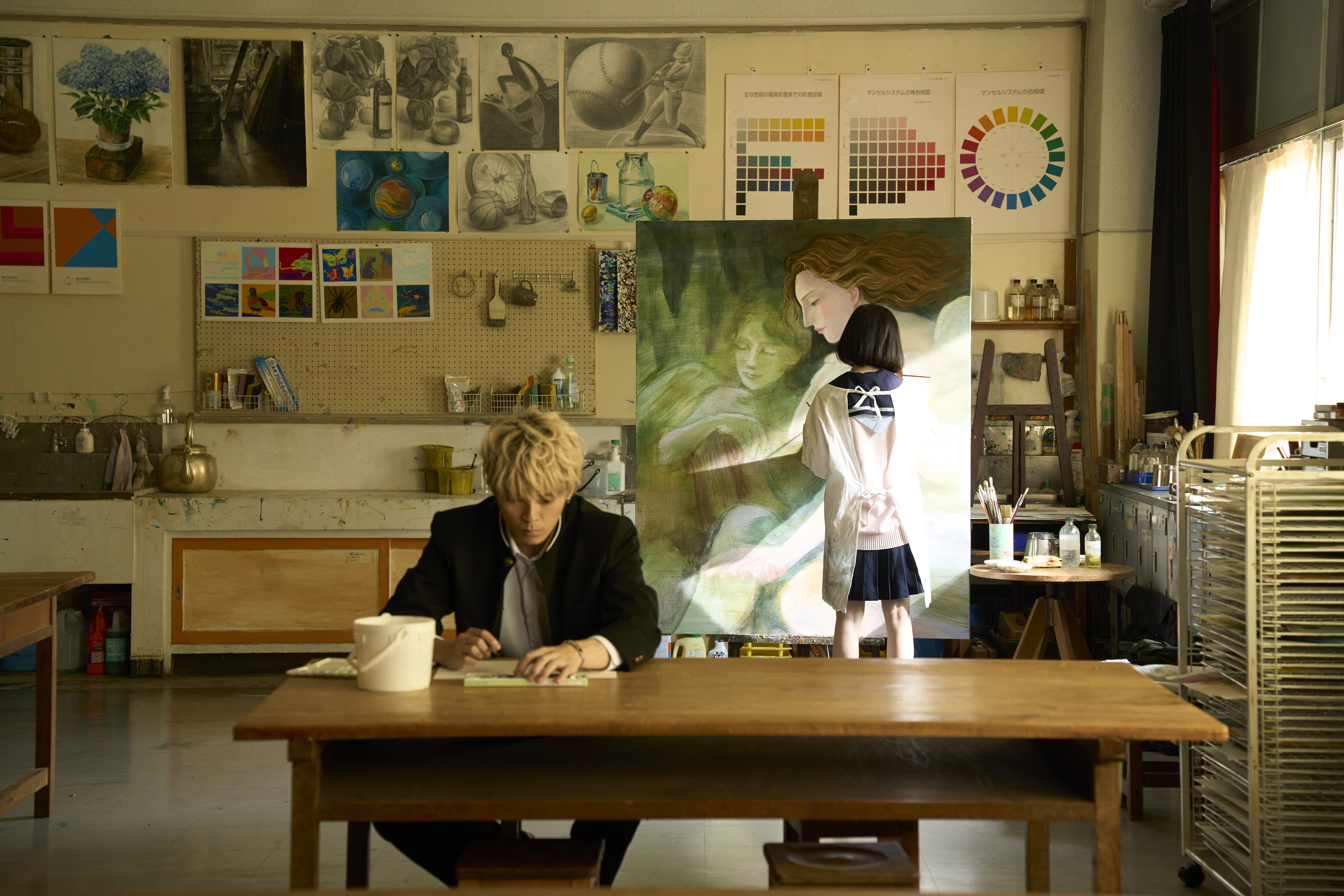
In any case, since his illustrator wife passed away Young-hee’s (Oh Dong-min) been unable to venture into her drawing room without having a panic attack. That might be why his son, Jae-in (Shin sua), decides to hide a kitten in there that he claims followed him home from a school trip. Unfortunately, Young-hee is allergic to cats and immediately wants to get rid of it but is convinced not to by Ro-un (Ryu Abel), an energetic and cheerful woman who runs a local repair shop and comes to fix their leaky roof.

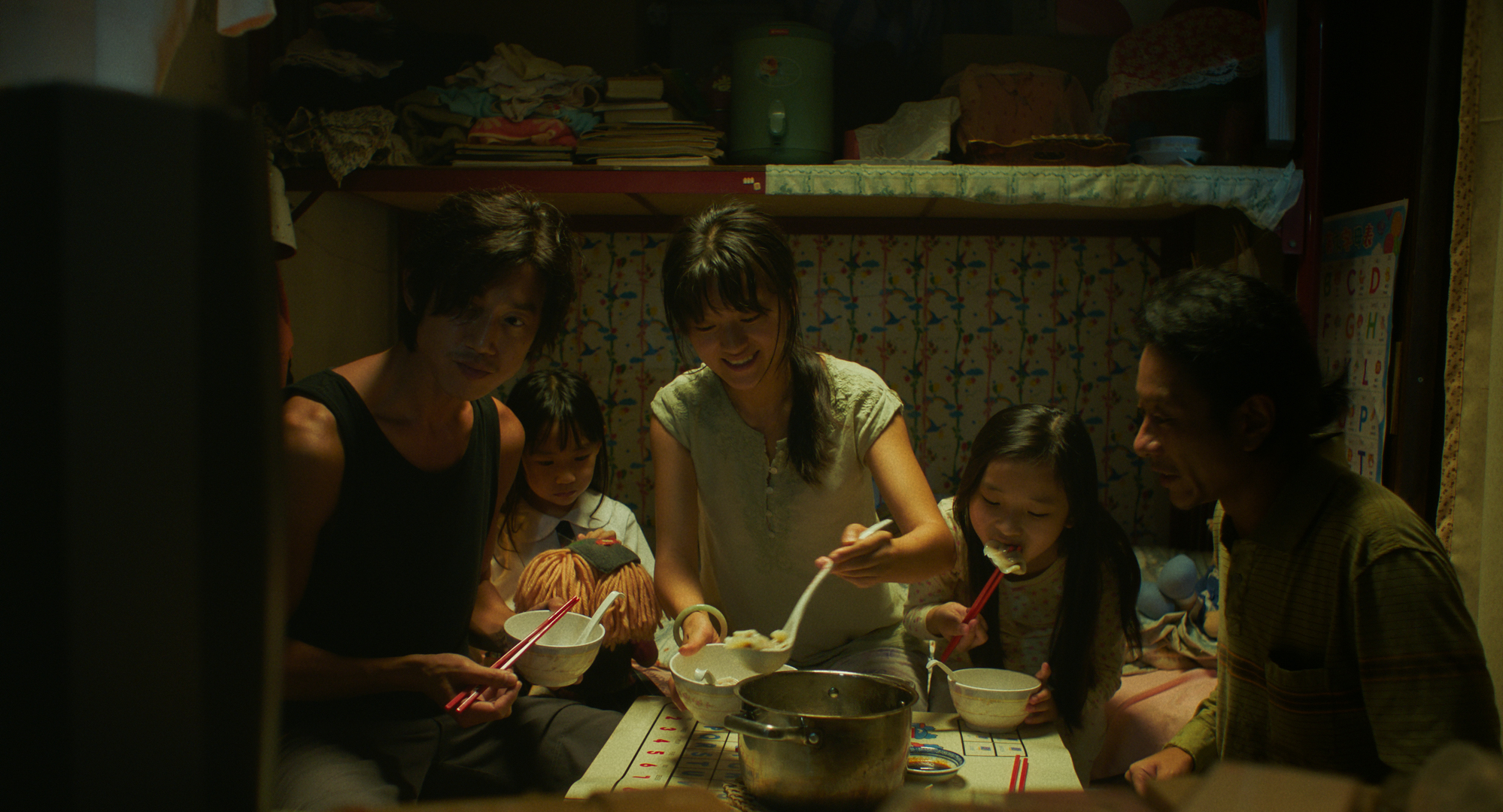
Fixing the roof is partly what she carries on doing, bonding with the family and trying to help them move on with their lives through turning the drawing room into a cat room in a kind of compromise with Young-hee’s allergies only it’s as much the emotional connection that he’s allergic to as the feline itself. The same might be said of his odd relationship with his neighbours, a family of three who live across the way that includes a little girl Jae-in sometimes plays with. Finding Young-hee collapsed after a panic attack, the neighbours tell him he can always come knock on their door if he has a problem but he isn’t really ready for that kind of connection yet. 

Young-hee’s grief-stricken inertia is plain from his expressionless face and generally melancholy aura. Even Jae-in remarks that he’s always sad a little moody. Ro-un’s mission is to make the family smile again though she has an uphill battle but equally, Young-hee does not try to deflect her attentions which some might see as overbearing given that she’s more or less forced him to erase the last traces of his late wife from their home, but as if responding to a cat kiss slowly allows her into their lives and hearts as a more positive influence amid their melancholy.

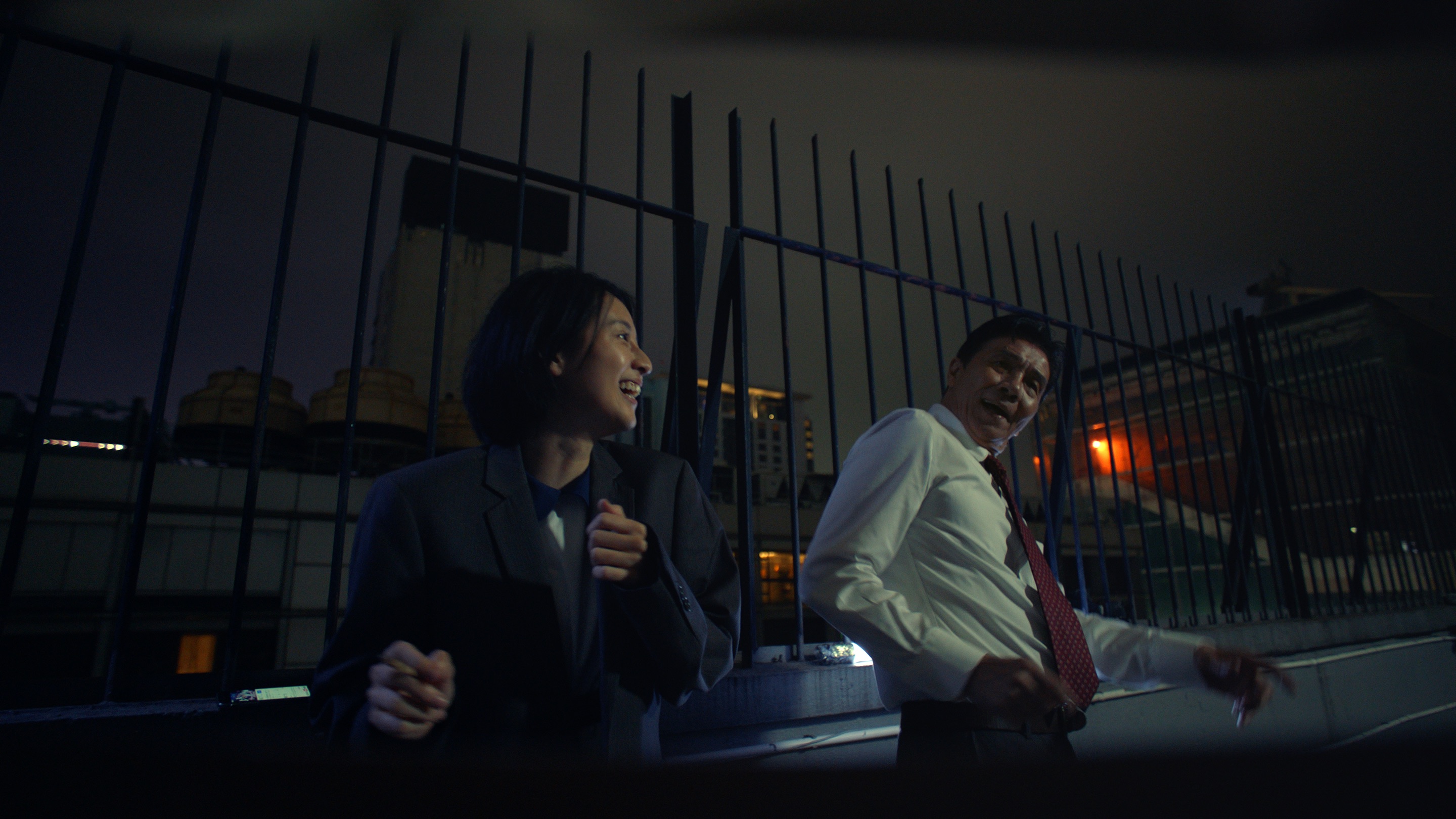
She meanwhile is carrying a heavy burden of her own which goes a little beyond the loss of her cat which closely resembles that rescued by Jae-in. They are all in a sense stray cats looking for someone to take care of them and restore some of what they’ve lost. Even the family across the way which Young-hee had so envied has its sources of tension stemming from the unfulfilled desires of the parents with salaryman dad dreaming of becoming a dancer and the mother looking for more things to do outside the home now her daughter’s a little older. The daughter meanwhile has a hangup of her own in regards to traditional femininity, resentful that people have said Jae-in is prettier than she is despite being boy, and criticising her being “strong”. 

Another strong woman, Ro-un tells her not to be afraid of her physicality though her choice of words somehow backfires. A kind of runaway herself, she too is trapped in a state of inertia by a traumatic past she hasn’t fully dealt with while remaining upbeat and relentlessly cheerful as a kind of coping mechanism for the blows life has dealt her. Focussing on the cat provides them with a roundabout way of communicating and an opportunity for developing a shared intimacy that gently guides them back into the world. 

Despite the melancholia of the situation, Hwang keeps the tone light and adds a little quirky, down to earth humour including small instances of animation echoing Young-hee’s late wife’s occupation as an illustrator. Somewhere between offbeat romcom and grieving drama, the film is a kind of testament to the healing power of cats along with their tendency to find good people to take care of them just as those who become cat butlers slowly begin to open their hearts while generally making the world a slightly less unfriendly place.


Cat Kiss screened as part of the 18th Season of Asian Pop-Up Cinema.

International trailer (English subtitles)

Old Fox (老狐狸 , Hsiao Ya-chuan, 2023)

It’s all about “inequality”, according to the titular Old Fox (老狐狸, lǎohúli). Or at least knowing how to leverage it. Inequality is something that’s coming to bother the young hero of Hsiao Ya-chuan’s coming-of-age drama in which a small boy finds himself torn between two father figures, one a wily old slumlandlord with a heart of stone and the other his melancholy and disappointed but kindhearted father who simply endures the many blows that life has dealt him. 

Set in Taipei in 1989 shortly before an apocalyptic stock market crash in the post-martial law economy crushes the hopes of millions of ordinary people convinced to invest their savings, the film wastes no time in showing us the various inequalities in play in small alleyway of traditional stores all owned by Boss Xie (Akio Chen) whom many seem to regard as a kind of saviour even if he cares not at all about them. Jie’s (Bai Run-yin) father Tai-lai (Liu Kuan-ting) works in a local restaurant and rents a room above a beef noodle cafe for which he pays in cash every week to Miss Lin (Eugenie Liu), a pretty young woman working for Boss Xie and enjoying an unusual amount of power for someone of her age and gender for a society still somewhat conservative. 

Tai-lai has been patiently saving money so that he can afford to buy a house and open a hair salon which was the dream of his late wife, but obvlious to the world around him he hasn’t noticed that prices are continuing to rise placing his dream of homeownership further out of his reach. Meanwhile, Jie is bullied at school and called a “snitch” without understanding why or even what the word means. This sense powerlessness and inferiority maybe be why he’s drawn to Boss Xie, a man who does after all exude power if also a sense of menace and melancholy. Xie in turn sees in Jie a potential protégé, both a mirror of his younger self and an echo of the son he lost who rebelled against everything he represents.

Nicknamed Old Fox, Xie stands for everything that’s wrong with the contemporary society which is about to implode in the financial crash. Wounded by his childhood poverty in which he, like Jie, also pleaded with a local landlord to sell his mother a property, Xie has adopted a ruthlessly selfish disregard for the lives of others teaching Jie his mantra of “none of my damn business” while the boy develops a worrying admiration for the aura a man like Xie projects and actively enjoys the sensation that others fear him. While hanging out with Xie he comes to look down on men like his father whom Xie calls “losers” who care only for others and disregard themselves. Xie teaches him to leverage the inequalities of power and turn his enemies’ weakness back against them to increase his own strength placing him further at odds with Tai-lai’s innate goodness and down-to-earth humanity. 

Yet we can also see that Tai-lai has had a life of disappointment. A woman who comes into the restaurant (Mugi Kadowaki) now married to a thuggish local big wig is a former childhood sweetheart from whom he was separated by time and circumstance while it also seems that Miss Lin has taken a liking to him though he appears not to have noticed. At home he plays the saxophone and takes in tailoring while resigned to saving a little longer before he’ll finally be able to buy a house and achieve his dreams. Tai-lai is one of the few who does not play the stock market and is therefore free of the danger it represents while Jie soon becomes sick of his his father’s frugality in their regular practice of turning the boiler off after having a bath and keeping their taps on a slow drip so they don’t trip the water metre and longs to become a man like Boss Xie unafraid to exploit any advantage in complete disregard for the lives of others. 

A brief coda set in the present in the day suggests that the older Jie may have found a happy medium, at least disguising a genuine concern for the safety and happiness of others as being solely about profit, while Xie’s sadness and doubts about the path his life has taken are never far from the surface as the society teeters on the brink of financial disaster. Capturing a palpable sense of late ’80s Taipei the film has a nostalgic atmosphere but also an equally prescient quality in the things that are only half-visible to the younger Jie in the melancholy disappointments of the adults who surround him still struggling to reroot themselves in a new society while overburdened by the failures of the old.


Old Fox screens April 22nd as part of this year’s San Diego Asian Film Festival Spring Showcase.

Original trailer (English subtitles)

OUT (Hiroshi Shinagawa, 2023)

Delinquent dramas have been having a bit of a moment over the last few years and like many Hiroshi Shinagawa’s manga adaptation OUT is a comic retro throwback to the genre’s ‘80s heyday. Some of the action may seem a little a outdated, but macho posturing will never really go out of style and there is genuine heart in the newfound brotherhood between local punk Kaname (Koshi Mizukami) and the recently released Tatsuya (Yuki Kura) who is torn between trying to go straight and rejoining the ultra manly society of the biker gangs.

Then again it quickly becomes clear that part of the problem is too many people have already given up on Tatsuya and are eagerly relishing the prospect of his failure. Having spent a few months in juvenile detention for fighting, he’s no desire to go back but is also resentful about the lack of control he now has over his life if grateful to have been taken in by an uncle and aunt who run a Korean barbecue restaurant in Chiba. Their faith in him makes him want to live up to it, but equally he can’t bring himself not to respond to challenges of masculinity rather comically insisting that he square off with new rival Kaname through a game of sumo so he won’t break the terms of his parole by hitting someone. As might be expected, the two men become friends through fighting but Kaname turns out to be the deputy leader of a local biker gang bringing Tatsuya once more into contact with random and pointless violence. 

This is the double meaning of “out”, not only that Tatsuya is “out” of juvie and and outsider to the gangs in Chiba but also and outlaw by nature who can’t be tamed by the demands of the civil society. Yet what he’s confronted by is a new sense of masculinity that’s not founded solely on dominance through violence, status or macho posturing but love and brotherhood. A young woman he takes a liking to, Chihiro (Yuki Yoda), wastes no time telling him she thinks he’s pathetic in his ongoing obsession with his male pride while trying to make him realise that there are people who care for him and would be upset if he went and got himself killed which makes his whole way of life completely irresponsible.

But at the same time, the rival gang that’s after his new friends has shifted into violence and murder, making money through trafficking drugs and blackmailing women into sex work after incapacitating them and threatening them with sex tapes. Obviously, even his newfound code of manliness means he must stand up to this new kind of injustice even if it sends him back to prison. What he learns from Chihiro is that kindness is more attractive than coolness while his uncle gives him a similar lesson, econouraing him to channel his rebellious energy in a more positive direction just as he now dedicates his whole life to protecting his wife and the restaurant. 

Shinagawa approaches the material with a sense of humour undercutting the ridiculousness of the male posturing with gently mocking affection. He maintains some of the key elements of the genre such as the surreal manga-style hairdos while embracing its essential outlandishness. The fight scenes themselves are also surprisingly violent if also a little ironic as he cuts between gang leader Atchan (Kotaro Daigo) jumping on a guy’s face to Tatsuya’s aunt remarking that he seems like a nice kid. Some degree of CGI has evidently been employed to aid the visceral of the violence as we think we see faces coming in for a pummelling along with impressive drop kicks, though the mass brawls are in themselves well choreographed and dynamic while remaining within the realms of what a petty street punk could do reasonably do. Shinagawa also leans into the manga origins with frequent use of line drawings in scene transitions and character introductions. In essence Tatsuya is attempting to reclaim his self-esteem, finally embracing the of repeated phrase “Im stupid, but I’m not trash” to claim the right to live a less chaotic life while recommitting himself to knuckling down in the barbecue restaurant in defiance of those who thought him to be worthless, finally out of his self-imposed prison and into a happier future.


 OUT screened as part of the 18th Season of Asian Pop-Up Cinema.

Original trailer (English subtitles)

My Favorite Love Story (어쩌면 해피엔딩, Lee Won-hoi, 2023)

Robots aren’t programmed to love autonomously according to Oliver (Shin Joo-hyup), a helperbot seemingly abandoned by his long lost owner, or as he terms it, friend, James in Lee Won-hoi’s quirky musical romance, My Favourite Love Story (어쩌면 해피엔딩, eojjeomyeon happy ending). It’s an odd thing to say in a way, what does it mean to love “autonomously”? Or perhaps he is simply alluding to the fact that there must obviously be some robots who are programmed for love even if “love” is as good a word as any to describe the way he’s bonded to James that causes him to wait by the window like a wife willing her husband back from the war. 

Oliver rarely leaves the apartment and enjoys conversation only with a handful of potted plants and the postman who delivers vintage copies of Life magazine, jazz records, and repair kits daily. We can see that Oliver’s word is small and frozen in time, though he looks out on a Seoul that seems to him a paradise while we’re told that it’s so polluted people have started evacuating to Jeju Island. It’s because of the pollution that production of helper robots has been stopped along with that of repair kids. There is something quite poignant about the forced ageing Oliver undergoes having been abandoned by a society that valued him only for his usefulness and now prevents him from being able to repair himself as if he were suddenly denied basic medical treatment and regarded always as a lesser being. On the road trip he eventually takes with the more cynical Claire (Kang Hye-in), he encounters signs that reads “no robots” while doing his best to act human despite his obvious awkwardness. 

While Oliver is upbeat and content to wait for James certain that he’ll one day return, Claire is carrying heavier baggage stemming from her treatment by her former owners that convinces her humans are all bad and ready to discard them at any moment. Needing to borrow his charger, she bamboozles her way into Oliver’s life and convinces him to go on a trip to Jeju to look for James and unexpectedly finds herself falling in love along the way. But as Oliver says, love isn’t something that’s in their programming. After all, love causes lots of problems so why would we code it into machines we’ve built solely to serve us?

In any case, the discovery they make is that love is sad and also impossible in the knowledge that will someday inevitably end. Claire’s needs for repairs are more urgent than Oliver’s, while the world around them also seems to be crumbling and not least because of human negligence. They consider simply editing their memories to remove the new discoveries they’ve made about themselves and the world not to mention love in order to return to the state of inertia in which they existed before each just waiting for something while quietly falling apart.

Adapted from a one act fringe musical, the score has a contemporary Broadway feel which perhaps isn’t surprising given that it was written by an American musical theatre composer and sparked for the book writer by a chance encounter with the Damon Albarn song Everybody Robots in Brooklyn. Thematically, it asks whether it’s worth paying the price of love given that every romance has an expiry date even if theoretically a robot to could live forever were it not for humanity destroying the planet and then callously abandoning them. The original title translates as the more apt “maybe happy ending” hinting at the sense of inevitability in the pair’s constant reunions and desire for reconnection though they still seem reluctant to place their faith in love alone even as the world around them continues to improve and the skies above Seoul are clear once again. With its retro aesthetics and cineliteracy, the film ads a degree of timelessness to its quirky tale of robots finding love while attempting to deal with their abandonment issues in a world of human indifference and in fact settles for a different kind of inertia in the cycle of a tentative romance that might one day result in a happy ending.


My Favorite Love Story screened as part of the 18th Season of Asian Pop-Up Cinema.

International trailer (English subtitles)

Takano Tofu (高野豆腐店の春, Mitsuhiro Mihara, 2023)

There’s an untranslated title card at the beginning of Mitushiro Mihara’s poignant dramedy Takano Tofu (高野豆腐店の春, Takano Tofu-ten no Haru) that describes the film as a story about the end of Heisei and it is in many ways about the end of an era, or perhaps of eras, but equally new beginnings and the eternal wellspring of life. With subtle hints of Ozu playing out as a kind of mashup of Late Autumn and Late Spring, it suggests that it’s never really too late to find happiness or to start something new even while preserving the best of the old. 

Harbingers of change are, however, lingering on the horizon as a customer to Takano Tofu remarks agreeing with daughter Haru (Kumiko Aso) that they need to innovate to stay in the game when the big new supermarket opens a few streets away. But change is not something father Tatsuo (Tatsuya Fuji) is keen on and especially when it comes to his tofu which is why he’s cancelled Haru’s popular new product of fried tofu and cheese despite its popularity and is also dead against her idea of expanding their network to sell in Tokyo.

There is something inherently comforting about the peacefulness of this quiet corner of Onomichi as Mihara captures it even if it also seems like a place out of time more Showa even than Heisei with its family businesses and old-fashioned shopping arcade. But equally there’s an underlying loneliness and answered longing along with a sense of lives disrupted by historical circumstance. Ironically enough, Tatsuo receives news from the hospital that one of the arteries to his heart is blocked requiring an operation to get everything working again and then immediately bumps into an old woman about his own age with whom he eventually bonds over the shared traumas of living in post-war Japan along with the lingering social stigma towards those affected by the dropping of the atomic bomb. We later learn that the failure of Haru’s marriage was in part caused by her father-in-law’s prejudice fearing her irradiated genes would contaminate his bloodline.

Then again, perhaps the pity expressed towards Fumie (Kumi Nakamura) as a woman who never married plays into outdated and sexist social attitudes that also lead Tatsuo and his friends to decide to find a mate for Haru given his sudden mortality crisis and fear that like Fumie she will be left alone when he eventually passes away. Of course, what it amounts to is a bunch of old men trying to decide who a middle-aged woman should marry while deliberately avoiding asking her if that’s even something she’s interested in. Having experienced marriage already perhaps she’s no desire to do so again and is perfectly happy the way things are. In any case she’s infinitely capable of finding a husband for herself if she wanted one. The prospective match they come up with for her is perfect on paper, youngish, handsome, wealthy and cultured, yet as it turns out what Haru might prefer is someone more ordinary, down to earth, and straightforward ironically enough just like tofu. 

As she later says, Tatsuo’s tofu has the flavour he gives it. Nicely textured, surprisingly soft on the inside, with a slight hint of astringency. There may be a minor pun involved in the Japanese title in that it can be read either as “Haru of Takano Tofu”, or as the meaning of her name implies “Spring at Takano Tofu” hinting both at a sense of transience and resurgence as Tatsuo takes in the cherry blossoms with Fumie and reflects on all they’ve experienced throughout the long years, the hardship and heartbreak of the post-war era. Yet as he says life is for living and it’s as much as you can hope for to look back and laugh at a life well lived. Maybe some things don’t need to change all that much, like carefully produced artisanal tofu as rich in soul as those who make it, but there’s always room for a little innovation and tiny chances for new happiness that could easily pass you by if you aren’t willing to take a risk or two and place a bet on change.


Takano Tofu screened as part of the 18th Season of Asian Pop-Up Cinema.

Original trailer (no subtitles)

Exhuma (파묘, Jang Jae-hyun, 2024)

The vengeful ghost of Japanese imperialism rises to take its revenge on its forgetful children in Jang Jae-hyun’s eerie supernatural horror, Exhuma (파묘, Pamyo). As in The Wailing, the supernatural threat is in this case not of Korean origin which causes a problem for otherwise powerful shaman Hwa-rim (Kim Go-eun). As a Korean exorcist, she is apparently not best placed to defeat an alien spirit while insisting that Japanese ghosts are more dangerous because they kill indiscriminately and cannot be reasoned with.

This is often true of ghosts in Japanese folklore. Their grudges become all-consuming. Revenge is often taken against society or humanity in general rather than a specific target and can even affect those the ghost once would not have wished to harm. In this case, it appears the supernatural entity in question has retained some of his selfhood while screaming for a hundred years having been sealed away in what one person describes as the worst burial plot in Korea. The ghost’s newborn great grandson won’t stop crying, apparently a family affliction, and so they want to do something about this apparent curse. But that requires digging into the past and unearthing its unpleasantness such as the fact the family’s immense wealth is thanks to the great-grandfather’s questionable politics as a full on militarist committed to the furthering of the Japanese empire. 

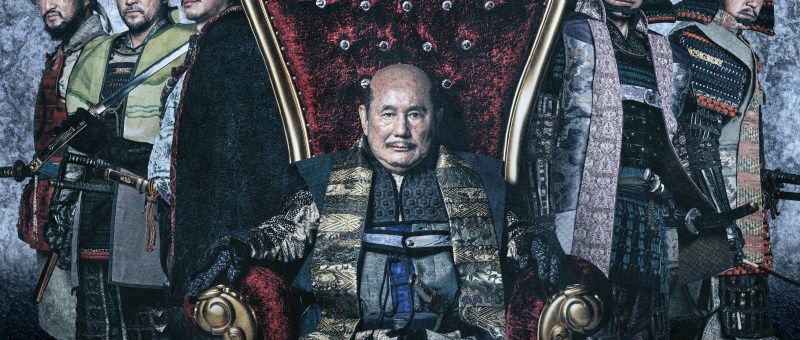
Meanwhile, the other ghost that haunts them is that of a giant samurai who was killed at the battle of Sekigahara, which of course means he could also have participated in Hideyoshi’s invasion of Korea only eight years previously. The film hints at backstories, never explaining why it is that Hwa-rim speaks fluent Japanese or what it was that happened in Japan except that she apparently found out that Korean shamanism doesn’t work that well on the average Japanese ghost. It all goes back to some kind of mad monk and fox diviner who did some black magic on the peninsula as a whole though it’s not clear exactly what it’s been doing for the last 70 years or so. 

These different kinds of spiritual practice and folklore beliefs jangle together seemingly without border or conflict. The funeral director (Yoo Hae-jin) who works with Hwa-rim and her geomancer friend (Choi Min-sik) is a Christian but apparently has no objection to witnessing shamanic rights nor disbelief in their power as if his twin belief systems simply sat next to each other. Even so, there does seem to be something entirely distinct about Hwa-rim’s practice that is different from Japanese Shintoism despite it its superficial similarities to the extent that her abilities have no effect on a Japanese spirit. 

Then again, this evil is older and deeper than the original ghost apparently wailing for a hundred years about his imprisonment and keen to take down all his descendants in self-destructive revenge. A grave digger spots what seems to be a snake with the head of a person, while no one seems to take the warnings about opening the coffin seriously. Everyone talks about grave robbers, ironically looking for riches among the dead, though the what the team find themselves doing is unearthing the buried past, trying to free themselves from it and perhaps the oppressive yoke of the colonialist legacy.

Jang heightens the sense of anxiety with faced paced, rhythmic editing coupled with scenes of extreme eeriness. He hints at a world beyond our own filled with vengeful spirits and lurking evil while the threats are largely supernatural rather than human even if the ghosts themselves did originate as ordinary people who were also fairly problematic before they died. In some ways, the film might be saying that it doesn’t do any good to go digging up the past but also that if you don’t you may have to live with a slowly festering evil that will visit itself on your children and your children’s children. Still, like the little boy who secretly kept grandma’s false teeth because he wanted something to remember her by, the past can be a difficult thing to let go of and simply re-burying it in a nicer place may not be enough to free yourself from the long buried generational trauma of an almost forgotten past.


US trailer (English subtitles)

Drifting Flowers, Flowing Days (この日々が凪いだら, Yutaka Tsunemachi, 2023)

Life goes on as usual, until it doesn’t. The couple at the centre of Yutaka Tsunemachi’s debut feature Drifting Flowers, Flowing Days (この日々が凪いだら, Kono Hibi Ga Naidara), are about to hit the crisis of youth in which they begin to think seriously about their futures and fear that their lives can no longer continue simply as they were but also struggle to find direction while torn between what society views as a successful life and their own desires.

The crunch point comes when Hiroto (Hiroki Sato), a construction worker, and Futaba (Kaho Seto), who works in a florist’s, learn that their rundown apartment block is going to be demolished and they have six months to find somewhere else to live. While Futaba idly looks at wedding rings, she isn’t really sure how Hiroto views their relationship or if he’s even assuming they’ll finding somewhere new together. The financial strain of an unexpected move also has her wondering if she should give up her job in the florist’s, which she enjoys due to her love of flowers, and start looking for a regular company job but an attempt to talk about it with Hiroto only results in petulance born of male pride as he takes it as her complaining he doesn’t earn enough with his job as a casual labourer. 

Another source of friction is that Hiroto seems reluctant to meet Futaba’s family while refusing to introduce her to his hinting at longstanding childhood trauma stemming from a legacy of domestic abuse and a father who lost himself in drink. Even so, he’s drawn to an older man at work, Haruo, who soldiers on despite his decreasing physical capability. When he is unceremoniously fired, the Haruo takes his own life having lost his both his means of supporting himself and his sense of purpose. Haruo might remind him of father though Hiroto feels somewhat guilty that he didn’t do very much to help while he was alive and resentful towards his heartless boss and colleagues who did nothing more than make fun of him. 

This idea of people being disposable tools of corporate entities is further born out by the experiences of his hometown friend, Daigo (Masashi Yamada), who is feeling burned out by his dream job in the city largely thanks to a bullying boss and overbearing work culture. A friend who experienced something similar tells him she just quit her job and feels much better so if he doesn’t feel appreciated he should leave, but it’s not really that simple. Not only does he need a steady income to survive but there’s a degree of shame and trepidation in not following the conventional path, the same shame and trepidation that has Futaba worrying she’s being irresponsible in following her dream of opening a florist’s of her own rather than using her degree to get a better paid job and start saving for the next phase of adulthood while still uncertain if Hiroto is going to want to get married and settle down. 

Experiencing another crisis that forces him to confront his childhood trauma, Hiroto sighs that his future is shrouded in darkness and he wishes that it was all set out for him an ironic inversion of the crisis experienced by others his age that they resent being railroaded into a life of conventional success that in fact does not make them happy. In any case, he emerges with a little more clarity about the kind of future he might want no longer so frightened of commitment or suspicious of familial bonds. What the youngsters experience is a perhaps premature end to their youth symbolised by the literal tearing down of their world in the soon to be demolished apartment block that forces them out of their inertia and onto a path towards a more settled adulthood. But equally that doesn’t necessarily mean that they have to abandon their dreams or live up to an ideal of conventional success if it’s not what they want but can begin to find other futures for themselves outside of the mainstream that are valid and satisfying. Tsunemachi follows them with a hazy detachment but captures something of the anxieties of contemporary youth still struggling to find accommodation with demands of living in a judgmental and uncertain society. 


Drifting Flowers, Flowing Days screened as part of the 18th Season of Asian Pop-Up Cinema.

Original trailer (English subtitles)

Faraway Family (彼方の家族, Taro Kawasaki & Eisuke Sakauchi, 2023)

It may be a truism to say that you never really know what’s going on in other people’s lives, but even if a family looks superficially happy and gives the impression everything is going just perfectly for them that might not actually be the case. The title of Taro Kawasaki & Eisuke Sakauchi’s Faraway Family (彼方の家族, Kanata no Kazoku) has a double meaning in that in the Japanese title can be also read as “Kanata’s Family” which is the name of the hero and also a word meaning “somewhere in the distance” which is in fact how both of the boys feel their fathers to exist. 

Kanata may feel it more closely in that he lost his father in the 2011 tsunami and has never really dealt with the grief having moved to Yamagata with his mother. Kanata’s father also had quite a difficult relationship with his fisherman grandfather who was intent on railroading him to take over the boat and seemingly never had a good word for anyone yet his father lost his life after heading to the harbour to look for him explaining only that he was family. Now the only breadwinner in the family, his mother has to work to support them and is therefore often absent, leaving him money to buy dinner from a convenience store which he usually eats alone. 

Having become withdrawn and fearful of making new relationships that may end suddenly, Kanata also has the added stigma of being someone from Fukushima in the wake of the nuclear disaster. His new teacher, Yoshikazu, makes a well-meaning faux pas in telling Kanata to consider him a father figure yet as it turns out Yoshikazu is a fairly compromised one. On being introduced to his classmate Riku who is also Yoshikazu’s son he thinks he’s had his face rubbed in it with this picture of the perfect family.

But what he discovers is that Riku has many of the same problems as himself seeing as he also fears he does not really fit in his family and wonders if they’d be happier and better off if he weren’t in it. Unlike Riku, Kanata doesn’t seem to be overly burdened by parental expectation and despite the problems between his father and grandfather his early childhood seems to have been happy and filled with love and cheerfulness. His problem is more to do with what he’s lost and the resulting sense of absence it’s left behind as he finds himself eternally missing his father. 

For Riku meanwhile, it’s the connection itself which is painfully absent. The more he tries to connect with Yoshikazu the more it seems to backfire while Yoshikazu seems obsessed with the idea of his getting into Japan’s most prestigious university mostly for his own gratification as double proof of what a great teacher and father he is. Or else, to mask his own sense of inadequacy in that he would feel embarrassed professionally if his own son turned out not to be academically inclined. Riku’s family don’t celebrate birthdays and he can’t ever remember getting a present but when he decides to try and buy one for Yoshikazu it’s a reminder of a happier memory when he simply played with him as a loving father rather than a hard taskmaster driving him on to a vicarious goal as evidence of his controlling nature. 

Kanata seems to have had more than his share of tragedy in life and is painfully aware of the things just our of reach but also increasingly that not all of them are and if you’re not careful you can in fact be the one to push them away. Shooting in the icy snow of a Yamagata winter, Kawasaki and Sakauchi capture the frostiness of the boys’ emotional isolation but also the quickening warmth of their friendship as they bond over their shared loneliness in pining for an absent father. What Kanata learns is to embrace the things that seem somewhere far away for they do at least exist there, even if no longer present in a physical sense, and that the memory of them can be warm and comforting rather than painful or lonely. 


Faraway Family screened as part of this year’s Osaka Asian Film Festival.

Original trailer (no subtitles)

Polar Rescue (搜救, Lo Chi-leung, 2022)

One of the more surprising things about Polar Rescue (搜救, sōujiù, AKA Come Back Home), a rare vehicle for Donnie Yen outside of the martial arts and action genres, is just how unheroic its panicked hero is. Though he may start off as a frantic parent who has our sympathies, we later begin to realise that he is at least severely flawed while there are also a few perhaps subversive hints towards the pressures of the modern China which have frustrated his attempts to be what he would assume a good father to be.

Despite later hints that the family is in a spot of financial bother, they’ve all gone on what looks like a fairly expensive skiing holiday in a European-style resort. The problem begins towards the end of their stay when eight-year-old Lele starts acting up in part because his father, De (Donnie Yen), promised to take him to Lake Tian to see the monster but has broken his word because of road closures due to the adverse weather. Wanting to make it up to his son, De decides to try going anyway via the backroads which are still open but soon enough gets stuck in a ditch. Events from this point on are deliberately obscured, but somehow Lele gets separated from his parents and sister and goes missing in the freezing wilderness. 

Rather than a father’s one man race against time to find his missing son, the film soon shifts into familiar China has your back territory as the full force of artic rescue complete with helicopters and specialist equipment is deployed to find this one missing boy. De is still not satisfied and at several points frustrates the rescue effort by getting into trouble himself without really reflecting that it’s his own irresponsibility and paternal failure that have caused the rescuers to risk their own lives trying to find his son. 

Though we might originally have sympathised with him, particularly as it seems clear Lele is behaving very badly and will not listen to either of his parents, we later come to doubt De on learning that Lele’s disappearance is at least in part related to an incredibly ill-advised though perhaps understandable parenting decision. As the film would have it, De is both too old fashioned in his authoritarian approach in which he’s often been violent towards his son, and too slack as evidenced by the boy’s bad behaviour. He’s failing in most metrics as a father given that he’s run into career difficulty as an engineer after challenging some of the nation’s famously lax safety regulations on a site he was working on he believed to be unsafe and then getting swindled on another construction project by a client who ran off with all the money. He also seems reluctant to allow his wife (Han Xue) to work to ease the family’s financial burden out of a mistaken sense of male pride. 

This ties in somewhat to the propagandist themes as we see him totting up how much it would cost to send his kids to school overseas only for his wife to tut that Chinese education is good too, while the fact the family have two children also hints at a new ideal in the wake of the loosening of the One Child Policy to encourage correction to the rapidly ageing population. The rescuers, meanwhile, are portrayed in a perhaps slightly ambiguous light given than many of them quickly become sick of De and think they should stop looking given the unlikeliness of a child surviving alone for several days in such freezing conditions. Some even suspect De may be responsible for his son’s disappearance and is using them to cover up the crime. Even so, they get to sing a rousing song to the tune of Bella Ciao and re-echo their commitment not to give up until they’ve found Lele even if it turns out to be too late to save him.

A subplot about the two-sided nature of social media in cases like these is dealt with only superficially, while many other things do not quite make sense including the inclusion of a bear and his cub whose appearance, though obviously serving a symbolic purpose, seems like overkill. Nevertheless, there’s a good degree of ambiguity in the central disappearance that helps to head off the otherwise predictable nature of its trajectory. 


Polar Rescue is out now in the US on Digital and Blu-ray courtesy of Well Go Usa.

US trailer (English subtitles)

WE 12 (12怪盜, Berry Ho Kwok-man, 2023)

Phenomenally popular Cantopop boyband Mirror have been dominating the Hong Kong box office lately with several of the guys playing regular roles in movies not particularly designed as vehicles for their star persona such as Anson Lo’s turn in arty horror It Remains, or Lokman Yeung in Mad Fate. We 12 (12怪盜) is however the first time the band have made a movie altogether as an ensemble star vehicle and is clearly intended for their many devoted fans filled as it is with what seem to be in jokes and references to the guys’ “real” personas or at least those of the “character” they play in terms of their membership of Mirror.

The guys’ solo projects and movie work are perhaps hinted at in the film’s central thesis, if you can call it that, in that the boys have been doing too many solo missions and have lost their team spirit. In the universe of the film, they’re a kind of crime fighting zodiac who do things like save princesses and conduct jewel heists. Each of the band members, who use similar character names, is introduced with a special power which ranges from the ability to converse telepathically with animals to the nebulous “strategic planning” and the downright plain “abseiling” which seems particularly unfair given that any of the other guys could obviously learn to abseil too and then he wouldn’t have a power anymore.

In any case, their group mission is to stop a mad scientist from activating a device which can send mosquitos to other universes because it would destroy our ecosystem. Meanwhile other scientists are working on creating a “right-wing chicken” which turns out to be less political than it sounds and in fact much more absurd, along with a series of other cancer causing foods just in case you weren’t sure if they were really “evil” or not. Even so, the plot isn’t really important more a means of tying the silliness together given that focus is split between the 12 guys who each have their particular moment to shine and personalised gags. When the big job goes wrong because they decided to all do their own thing rather than work as a team, they have to come back together again and rediscover the equilibrium of Kaito (i.e. Mirror). 

Which is all to say, it’s a little impenetrable to the uninitiated but fans of the band will doubtless be in heaven. It’s all in the grand tradition of boyband popstar movies in which the silliness is sort of the point in generating a sense of conspiracy with fans that they’re the ones who get the jokes because of their intimate relationships with the stars. The film also features extended cameos from fellow Cantopop group Error who play their back up team and have a few gags of their own, while Malaysian actress and star of Table for Six Lin Min Chen also has a small cameo as the kidnapped princess. 

The best performance comes however from The Sparring Partner’s Yeung Wai-lun as the slimy security manager Johnny who is obsessed with order and dresses in fascist uniform so obviously out of keeping with the silliness and absurdity the boys represent in a mild kind of rebellion towards anything serious or grown up society in general. There is something quite childish about the way the gags suddenly pop up out of nowhere along with the otherwise nonsensical nature of the film which isn’t so much a nonsense comedy like those of the 80s and 90s as much something totally random perhaps intended to express the essence of Mirror or at least that which its fans believe it to be. For all of these reasons, the film makes very little literal sense and does not hang together very well for anyone not already well versed in the world of the band but presumably plays out just fine for anyone with a 21st-century equivalent of a decoder ring and a silly sense of humour willing to join the boys for whatever crazy adventure they may be embarking on next.


WE 12 is on UK cinemas now courtesy of CineAsia.