Evil Does Not Exist (悪は存在しない, Ryusuke Hamaguchi, 2023)

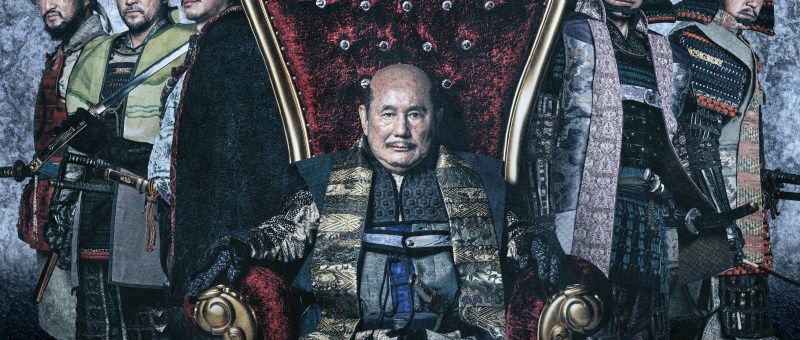
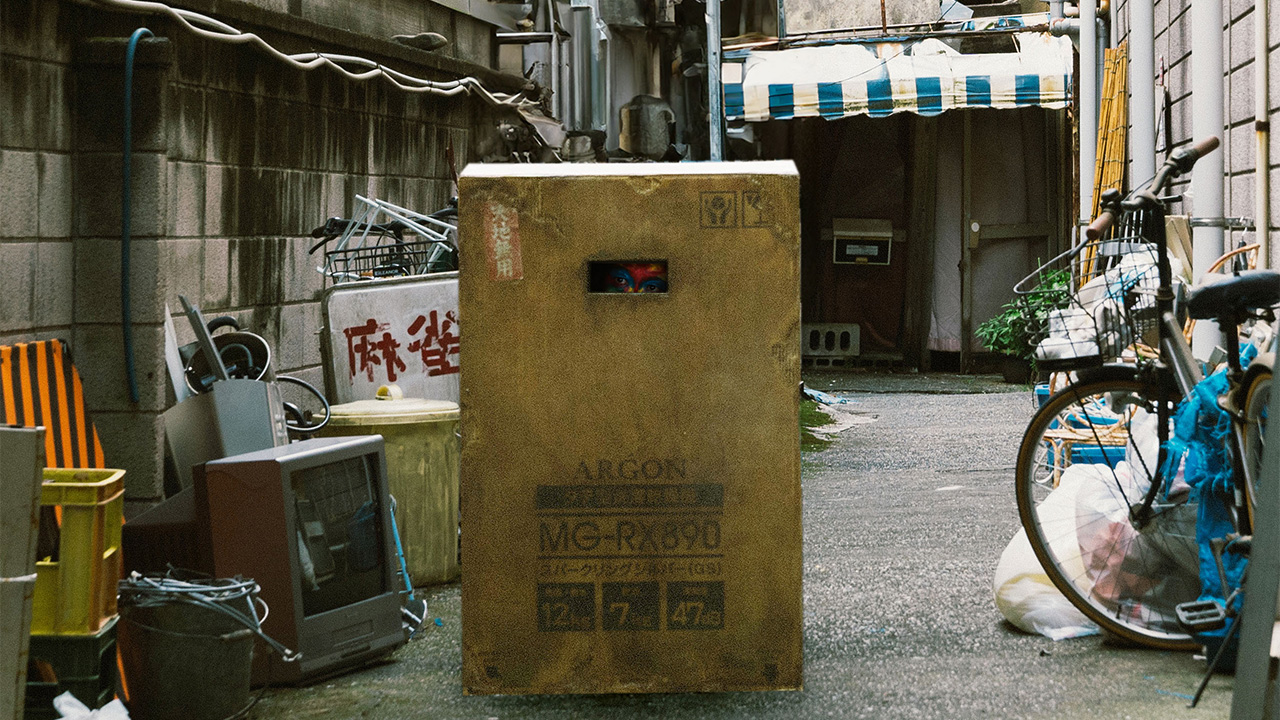
Whatever happens upstream affects those further down according to the headman of a small village faced with incursion from city dwellers hoping to turn their peaceful idyll into a tourist hotspot in Ryusuke Hamaguchi’s eco drama Evil Does Not Exist (悪は存在しない, Aku wa Sonzai Shinai). He reminds them that those at the top have a responsibility to those below, and it’s only because of this sense of mutual consideration that life is possible here. It’s an obvious metaphor for the contemporary society in which those with money and power have largely forgotten about those without, but then the film’s title also asks us a question. What is “evil”, does it exist or not, or is it merely in inextricable part of nature human and otherwise that balances out the good?

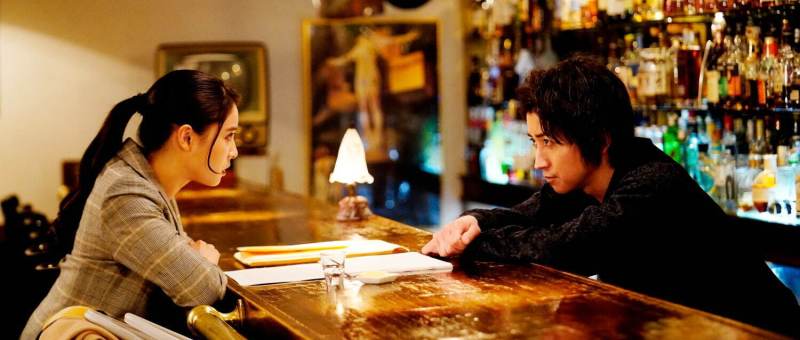
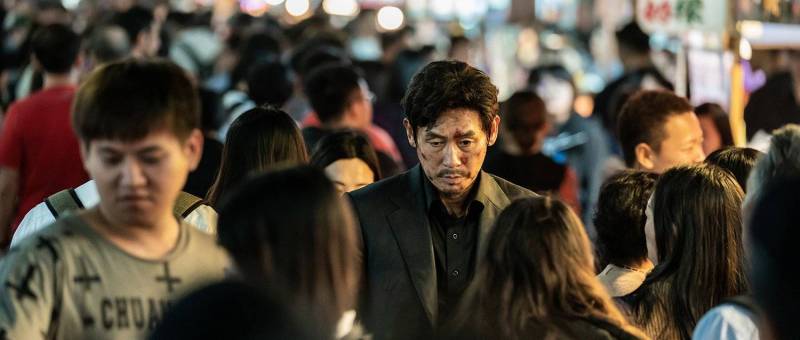
After a long tracking shot along the trees shot from below, Hamaguchi focuses on the figure of Takumi, a man at home in nature patiently sawing and cutting logs. He teams up with another man, Kazuo, to harvest water from a local stream we later realise is being used by an udon restaurant for a superior taste. Takumi shows him wild wasabi and explains how the locals use it, suggesting that Kazuo consider adding some to his dishes. Like him, Takumi’s daughter also seems to be at home in the forest, wandering off to walk home alone when Takumi inevitably forgets to pick her up from school.

Takumi describes himself as a “jack of all trades” or more to the point a local odd job man, but seems in many ways he’s one who keeps the balance. The problem they have now, is that a company from Tokyo has bought some land and is intent on stetting up a “glamping” resort in the village. A pair of agents turn up from the city to give a kind of question and answer session, but as one of the attendees later suggests it’s mainly to make themselves look good. Unable to answer most of the villagers’ quite reasonable questions all they can do is state they’ll take their opinions into account while offering flawed promises of financial gain and insistence that people from Tokyo will visit as if that were some kind of honour. It doesn’t seem to occur to them that the villagers maybe happy as they are and aren’t interested in further material gain while understandably wary of the effects of the resort on the local area from increased traffic and pollution. The agents encounter unexpected resistance centring on the septic tank which has been penciled in for an area which would lead to the contamination of wells and groundwater while it’s also clear that the company are determined to cost cut with the agents blithely telling them that a little bit of sewage in your drinking water never harmed anyone and in any case it’s within the permitted amount. 

Others ask questions about fire risk and understaffing with the agents later asking Takumi to become the resort’s caretaker, insulting him with the implication that he’s some kind of layabout easily bought with a fat paycheque. He corrects them that he has a job and doesn’t need the money, though they persist with asking him to be a kind of advisor. Takahashi, a jaded manager, is soon captivated by the area and in particular Takumi’s manliness in his log splitting and mysterious demeanour but there’s something inevitably harsh and unforgiving about nature even if it’s man that has corrupted it. Gunshots are heard over the horizon, men hunting deer. Takumi and Hana walk past the carcass of one who bled out from a bullet wound and was presumably just left there dying for no real reason. Takumi tells the agents that their site is on a deer path, so they’d need high fences which might put the customers off but reflecting that wild deer aren’t usually “dangerous” unless they’re sick or have been shot. Takumi asks where the deer are supposed to go but gets only a shrug of the shoulders and “somewhere else” from Takahashi, but there are only so many other places, what if this is the last one? If you continue to displace things, there won’t be anywhere left for anyone.

Still, as Takumi says it’s not that villagers have already decided to resist the glamping project, only that they want their fair complaints to be addressed and are willing to engage with the process if only the agents would treat them with a little more respect. But that’s something thin on the ground from the execs in Tokyo who think they’re all a load of bumpkins easily bought off with promises of a better economic future. To Takumi it is really a matter of balance, something that should be maintained for one’s protection as much as anything else. The ominous score which frequently cuts out abruptly adds to an edge of unease and supernatural dread in the ancientness of the natural world even if as Takumi points out this isn’t their ancestral land. It’s a new village that originated in the immediate post-war era when returning soldiers were given land to farm. They are all to some degree outsiders, as perhaps are humans in this inhuman place, but also ones who’ve found a way to live in it that’s as much about respect for the land and others as it is about survival.


Evil Does Not Exist opens in UK cinemas of 5th April courtesy of Modern Films.

UK trailer (English subtitles)

Heavy Snow (폭설, Yun Su-ik, 2023)

“It’s obvious it was a romance, why did you pretend it wasn’t?” one wounded woman asks another while their connection seems to be frustrated by internalised shame and conflicting desires. Yun Su-ik’s frosty drama Heavy Snow (폭설, pokseol) does indeed seem to suggest that their love for each other can only exist in a kind of otherworld, eventually segueing into a metaphysical realm which simultaneously implies that this isn’t actually a romance but self-reflection and interrogation as a tomboyish actress searches for herself inside her various roles.

Indeed, Su-an (Han Hae-in) views Seol (Han So-hee) with a kind of awe which might be understandable given that Seol is a TV drama superstar improbably transferring to her rural arts school for a break from the world of showbiz. Or as Seol would later imply, because she’s become too difficult to manage and is rebelling against the emptiness of her ostensibly glamorous life through increasing acts of reckless self-harm. Su-an might wonder if that’s all her flirtation is, an attempt to flaunt a taboo while otherwise puzzled and jealous as to why someone like Seol would actually be interested in her. 

Yet Su-an’s interest is also in part idolisation, attracted to Seol because she fears she is everything she wants to be but isn’t, beautiful and talented. But Seol seems to doubt she’s either of those things while otherwise superficially confident in her sexuality and drawn to Su-an because of her ordinariness. Experiencing a moment of identity crisis, she’s looking for herself outside the frame yet also perhaps like Su-an caught in moment of self-idolisation. Noticing one of the giant billboards of her face that the litter the city she briefly touches it before walking away as if attracted to an image of herself she recognises and doesn’t. 

Yet it seems it’s less the awkwardness of too much intimacy that causes Su-an to pull away when Seol kisses her than shame. She tells Seol that she thinks it isn’t right, and perhaps goes on to regret that decision while continually pining for an idealised teenage love. The two women in a sense trade places. Years later Su-an is a famous TV actress, having in a way taken over the image of Seol, while Seol is evidently no longer acting but a depressed and defeated figure still resentful of Su-an’s rejection. The effects of their shifting fame deepen the gap between them with the teenage Su-an further nervous in her relationship with Seol knowing the danger that her celebrity presents. There is a suggestion that their creative desires conflict with the romantic, that they feel they cannot embrace their sexuality freely and remain in the entertainment industry because of the intense pressures a conservative society places on prominent people to be shining examples of moral purity. Each of them appear to become worn out by the demands of their fame, Su-an turning to drugs in attempt to mask her depression while the teenage Seol ponders quitting acting to become more her authentic self.

In the dreamlike third act which commences at the sea, a touchstone for each of the women connected to the innocence of their teenage romance, may suggest that in looking for Seol Su-an is really looking for herself or perhaps simply to recapture the person she was at the beginning of everything. At odds with each other, the two women become marooned in a snowbound land with no one else around. Finally repairing their relationship, it seems that they can only embrace their love in this barren place where no one else exists to judge them. The implication maybe that as Seol says the things Su-an wants to say to Seol she really wants to say to herself in a desire for self-acceptance, but equally that we can’t be sure that any of this “real” rather than dream or wishfulment.  In any case all that remains is a painful longing either for an unrealised love or the elusive self. 

Hinting at the pressures of the contemporary society, the unrealistic expectations placed on those in entertainment industry and outward social conservatism the film never less presents its central romance with an evenhanded poignancy even in its continuing impossibility as the two women continue to look for the self in each other but seemingly struggling to see past the hollow images of their own self-projections.


Original trailer (no subtitles)

Heavy Snow screened as part of this year’s BFI Flare.

Performing Kaoru’s Funeral (カオルの葬式, Noriko Yuasa, 2024)

According to an undertaker in Noriko Yuasa’s darkly comic drama Performing Kaoru’s Funeral (カオルの葬式, Kaoru no Ososhiki) death is a kind of natural disaster. Despite the sometimes farcical going ons at this particular funeral, he does indeed have point in the sense of inevitable tragedy that the colours events as a dejected middle-aged man attempts to clarify his memories while overseeing the funeral of a woman he was once married to but evidently had not seen in many years.

To this extent, as the title says, Jun is “performing” Kaoru’s funeral though perhaps it’s true enough that there’s always an degree of performance in involved. As Kaoru’s young daughter, also named Kaoru, says, no one here believes in god or Buddha and this ritualised mourning process doesn’t seem to be helping her process her grief. From time to time, Yuasa cuts back to a Bruegel-esque image of a painting of hell complete with demons staring pots with people in boiling water suggesting that this too is a kind of purgatorial hellscape.

Suddenly tasked with MCing his former wife’s funeral Jun takes it with good grace if also a little confusion. Guests mainly seem to be using it as an opportunity to vent their dissatisfaction or settle old grievances. The atmosphere is strange, somehow fraught and otherworldly while the other guests seem to treat Jun as an interloper never really considering that he may be grieving too. The ritualised act of performing the funeral causes him to remember his married life along with the woman who seems to have remained an enigma to him and may have done so to everyone. 

Once an aspiring actor, Jun is now a defeated figure employed as a driver for girls working at a Soapland. Before receiving the call about the funeral he’s beaten up by a pair of gangsters after intervening when one of them tried to assault the girl he was driving. Presented in a boxy square, Jun’s flashback memories have an unreal quality as if his marriage was a kind of fairytale or a dream he was woken from too soon. Kaoru’s decision to make him the chief mourner at her funeral may in a sense have been ironic, a final acknowledgement of the role he played in her life but also grants him a valuable opportunity to set the past to rest and perhaps begin to move on. 

For some of the other guests, however, that doesn’t quite seem to be the case. Some lie about their relationship with Kaoru or else cause unexpected trouble in venting a petty grievance. A rival screenwriter turns up to get drunk and make catty remarks, while a middle-aged man also uses the occasion to lay into his daughter-in-law with a lengthy misogynistic rant about his unmanly son’s inability to manage his wife. Little Kaoru seems largely left on her own, expected to carry out these rituals while grieving for her mother with no real support. A small subplot revolves around the potential candidates for her father, but none of them, bar perhaps Indonesian restaurant owner Wayan and Jun himself who claims she cannot be his pays much attention to her.

After opening with a grim scene of Kaoru on the slab, much the action is accompained by the urgent sound of something ticking as if marking out the passage of time while lending a sense of urgency to something that is no longer really urgent. Brought together by her deaths, the guests each have their own relationship with the deceased and like Jun and little Kaoru perhaps begin to process their grief and move step forward though in other ways also the opposite in one’s near literal inability to let go. The girl Jun had been escorting found an abandoned urn on the train and took it home with a kind of perverse delight musing on the reasons someone might leave their urn behind. In a way, that’s what Jun is trying to do, let his past drift away, Kaoru somehow setting him free to start living his life again after he sees her off. As the screenwriter said every script has to have a moment of catharsis and Yuasa’s tragicomic tale does indeed have its share of melancholy poignancy but ends on a bittersweet note of thank you and farewell as Jun and little Kaoru sail off into a new future having laid the past to rest.


Performing Kaoru’s Funeral screened as part of this year’s Osaka Asian Film Festival.

Original trailer (English subtitles)

The Soul (緝魂, Cheng Wei-Hao, 2021)

“Affection is the greatest obstacle on the path to success” according to the villain at the centre of Cheng Wei-Hao’s philosophical mystery, The Soul (緝魂, Jī Hún). Adapted from a science-fiction novel by Jiang Bo, Cheng’s near future tale has a series of questions to ask about legacy, family, love, and repression as its earnest investigator tries to come to terms with his oncoming end while living with treatment resistant cancer and trying to decide what is the best way to support his wife and unborn child in his impending absence. 

In 2032, police are called to the palatial estate of a local tycoon only to find him brutally murdered. Perhaps there’s nothing so shocking about that, powerful men have enemies, yet the strange thing is that Wang (Samuel Ku) was already dying of brain cancer and had a very short time left to live so there would seem to be little advantage in bumping him off early. The prime suspect is his disgruntled son Tien-yu (Erek Lin) who was seen leaving the mansion in a hurry and is known to bear a grudge against his father over his mother’s death while Wang’s much younger second wife Li Yen (Sun Anke) also identifies him as the killer. But there are definitely a few things which don’t add up here. Why is Wang’s business partner Wan named as his second choice as heir after Li Yen despite the rumours he had been having an affair with first wife Su-chen (Baijia Zhang), why are there security cameras in Li Yen’s bedroom, and why would a man with so little time left to live opt for an arranged marriage to an orphaned 20-year-old woman from one of the orphanages his philanthropic organisation supports?

Those are all questions which immediately present themselves to veteran investigator Liang (Chang Chen) whose own wife Pau (Janine Chang Chun-ning), also a policewoman, is pregnant with their child while he has just learnt that his cancer has resisted all treatment and may in fact be incurable. Deciding his remaining time may be best spent providing what he can for his family he asks his boss for his job back and specifically to be put on the Wang case, immediately homing in on the company’s radical new treatment for cancer through transplanting rejuvenated neurons directly into the brain. He begins to wonder what comes with it if you begin implanting neurons that belong to someone else but gets no reply from Wan in the middle of his sales pitch. 

Hinted at in the Chinese title the question that arises is that of the connection between soul and flesh and whether it becomes possible to achieve a kind of immortality through colonising brains in healthy bodies, an idea which might of course prove appealing to Liang if he were not so innately incorruptible. Then again as his wife says, perhaps it’s easier to die. It’s the ones left behind who have it hardest, suddenly left to deal with everything on their own. That might be why she finds herself tempted by their rather obvious conflict of interest in compromising her integrity to buy her husband a few more days while he wonders what the point of such a sacrifice might be.

Yet what we discover in the unhappy saga of the Wangs is both a megalomaniacal obsession with control that extends beyond one’s own lifetime and a tragic love story born of internalised shame that led to a lifetime of repression and unhappiness in the inability to be one’s authentic self. Liang describes the RNA treatment as an expression of the living’s obsession with the dead, while others describe it as “modern necromancy” oddly echoing the black magic which Su-chen, herself a neuroscientist, and her son had apparently been practicing in their intense resentment of Wang. Pau insists she’d rather believe a soul exists no matter in what form, but if you make division of yourself you may also face an unexpected existential threat born of your own internal conflicts and mutual desire for survival. A slow burn mystery, Cheng’s eerie drama has its share of hokum but nevertheless asks some pertinent questions about the nature of humanity in an increasingly technological age, what it is we leave behind and how it is we move forward (or not) with the process of letting go even as its ironic final moments provide a kind of justice emotional and literal in restoration of a family. 


Tsujiura Renbo (辻占恋慕, Daisuke Ono, 2021)

Is there a point at which you should accept your artistic dreams won’t come true, cut your losses, and try to transition into a more conventional life? That’s the dilemma the heroes of Daisuke Ono’s Tsujiura Renbo (辻占恋慕) find themselves contending with while wondering if it’s better to compromise your artistic integrity and surrender to the realities of the contemporary entertainment industry or resign yourself to the idea of your art becoming merely a side gig rather than a full-time occupation. 

The dilemma is all the more acute for Shinta (Daisuke Ono) because he’s recently turned 30 and is experiencing a moment of existential crisis. The band he’s been in since college has never really got anywhere, and this particular evening his guitarist, Naoya, hasn’t even bothered to turn up. Luckily for him, a sullen young female folksinger, Emi (Saori), offers to accompany him for just the one track so that he can still try and rustle up some interest in a few CDs but it’s clear during their set that Emi has real star power effortlessly outshining him vocalising on his own song. Shinta thinks the gig is up, eventually deciding his efforts might be better placed in helping Emi receive the recognition she deserves becoming her manager after spending a weird night in her apartment which is also the office of her record label which has only one other artist and is essentially the last hurrah of an ancient retiree. 

Part of Emi’s problem is that she’s an old school folksy singer-songwriter with intense Meiko Kaji energy. Even those who support her worry her music’s too old-fashioned for a chart-obsessed industry while her tsundere personality is distinctly at odds with the traditional ways in which female artists are marketed in what is still an incredibly sexist environment. Emi had complained that the club at which she first met Shinta was populated largely by slightly creepy middle-aged men there to see the main act, underground idol star Azuki (Rena Kato) who specialises in upbeat yet bland pop and makes the majority of her money through meet and greet sessions with her top fans who are perhaps sometimes dangerously obsessed with her star persona. These kinds of fans aren’t generally interested in folk music, but even so Emi is repeatedly advised to go down the same path of selling handshakes and autographs to ticket buyers more interested in the fan experience than hearing anything she has to say.

To that extent, it’s odd that neither Shinta nor anyone considers harnessing her tsundere energy to hook a different kind of audience that might be attracted to her defiance rather than the bland cuteness represented by Azuki. Azuki meanwhile may be cynical but perhaps she’s also sensible, explaining to Shinta that after hearing he and the others earnestly discussing music she decided it was better to go in a different direction realising she’d soon age out of the underground idol demographic in which the average career might last only a few months, deciding to turn her idol persona into a marketable brand and more or less ignoring the musical part of her act altogether. Shinta begins to wonder if he’s been marketing her wrong, that he shouldn’t have tried to push Emi towards the mainstream but focus on her unique talent as an old school live act. 

Then again, each 30 years old and already exhausting their budget perhaps it’s simply too late to move beyond the live house circuit. A visit from a colleague of Emi’s at the callcentre where she works to make ends meet, herself an aspiring actress, warns him that Emi may be at her limit but unable to quit in part in fear of letting him down even as their relationship is constantly eroded by the pressures of trying to make their musical dream come true. She has real talent, but doing what it would take to become successful might kill it and her, a music critic from a big paper bluntly telling Shinta that though he can see her newer album is more “commercial” that’s only made it “bland” robbing it of everything that once made it interesting. If playing to crowds of weird old men who’ve only come because Azuki told them to is as good as it gets, maybe it’s best to accept defeat rather than watch Emi tear herself apart. As it turns out the reason Naoya never turned up to the gig was that he won big on pachinko and realised he had much more chance of making a life for himself on that than he ever had with music. Maybe it doesn’t work out in the end and all you have is “nostalgic love” for a period in time, but that might not be so bad in and of itself and the music will always be there for you whether anyone’s listening or not.


Original trailer (no subtitles)

Push Pause (ココでのはなし, Ryoma Kosasa, 2023)

A small hotel becomes a refuge for those “struggling with the everyday” according to live-in helper Utako in Ryoma Kosasa’s heartwarming drama, Push Pause (ココでのはなし, Kokoro de no Hanashi). As she said, most of their customers are there because they’re uncertain of something and looking to take take some time out for reflection, much as she is while otherwise taking advantage of the tranquil and unjudgemental space of the inn along with the comfort it offers.

Guest House Coco is however suffering too amid the post-pandemic decline in custom. Th owner Hirofumi, attempts to sell his bike to pick up some extra cash only to discover it worth much less than he thought. The first of their guests, Tamotsu, is struggling for similar reasons seeing as the owner of the batting cages where he works is considering closing down as customers continue to stay away leaving him floundering for new direction. Helping an old friend move brings him into contact with someone he worked with for the Paralympics, but it only seems to fuel his sense of insecurity reflecting that unlike his friend he has no talents or ambitions and isn’t sure he wants to return to work for with him because it only makes him feel bad.

For Xiaolu, meanwhile, she’s dealing with issues as of a different order while house hunting in Tokyo ahead of a job transfer. Though her colleague had agreed to help her, he suddenly tells her he’d rather she didn’t come mostly it seems because he’s afraid she’ll expose him as an otaku thanks to their shared love of anime and people in the office will make fun of him. But then he also drops in that most of his colleagues are subtly racist, even insensitively adding that Xiaolu doesn’t “look Chinese” on first glance especially as her Japanese is so good unwittingly exposing his own latent prejudice. Her parents in China keep calling her to come home especially as her grandmother is in poor health leaving Xiaolu feeling guilty and now slightly unwanted unsure if it’s a good idea to accept the transfer or even remain in Japan at all.

Even Izumi, a permanet resident of the guest house, accidentally hurts her feelings in innocently asking if she’s from China on hearing her name though as it turns out Izumi was herself born in Manchuria and apparently a war orphan though in truth she seems nowhere near old enough to have been born in the 1940s. In any case, Izumi is the beating heart of Coco providing the warm and homely environment that sets people at their ease and makes them feel welcome and accepted. As she tells Xiaolu, fate has a way of bringing people together or at least getting them where they need to be so they can make an informed choice about their futures.

That’s why she echoes the title of the film in giving some advice to the young from a position of age in telling them that it’s alright to slow down, take a few moments to think things through rather than feeling as if they need to charge ahead. According to her, youth is just a part of your life that doesn’t even last very long so there’s no need to rush through it which seems like valuable advice to near middle-aged inn owner Hirofumi who is considering proposing to his girlfriend but is uncertain because she has children already and he isn’t sure they’ll accept him. Utako too has her own problems she’s in part been hiding from in leaving her home town to hole up in the inn. 

As if bearing out the sense of community that arises at there, Utako reveals that they stay in contact with their guests giving them the sense of a secure place to return to where they’ll always be accepted and cared for. Thanks to the support of the others at the Coco, each of them begin to find new directions in their lives and are able to proceed with more confidence and certainty. Warmhearted and empathetic Kosasa’s gentle drama is and ode to the quiet solidarity and unexpected connections that arise between people each struggling with the everyday but finding new strength in each other.


The 8th Night (제8일의 밤, Kim Tae-hyoung, 2021)

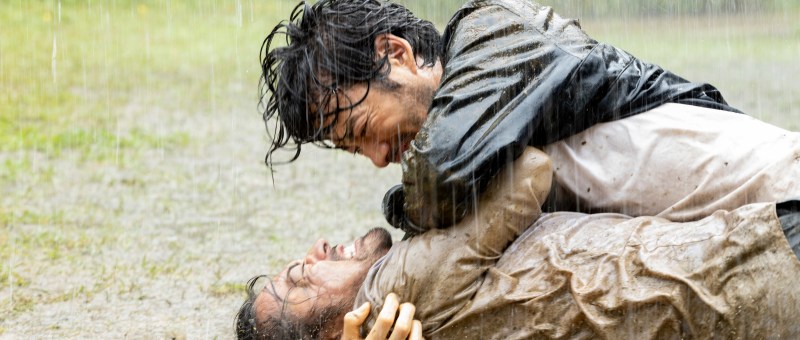
“But even the most trivial moments of our predetermined fate are meaningful as pieces of the whole” according to embittered former monk Jin-su having reached a moment of philosophical epiphany after bringing his karmic retribution full circle. Another in the recent series of Buddhist supernatural thrillers from Korea, Kim Tae-hyoung’s The 8th Night (제8일의 밤, Je8ileui Bam) once again turns apocalyptic as an ancient evil is set for accidental revival thanks, largely, to the wounded pride of a bitter old man. 

As the opening voice over explains, thousands of years ago the world was threatened by a powerful demon. Luckily, Buddha managed to vanquish him, tearing out his two eyes, one black one red, and burying them on opposite sides of the Earth in order to prevent them ever being reunited. Some people, however, just can’t resist chaos which is presumably why Professor Kim (Park Hae-joon) insists on retrieving the canister containing the Red Eye from its desert resting place, thereafter releasing its power when his discovery is rejected by both Buddhist and scholarly authorities. Sensing a disturbance in the equilibrium of the world along with the upcoming Blood Moon, priest Hajeong (Lee Eol) realises the prophecy of which he has been a guardian is about to come true. His big, somewhat unethical plan, is to kill off one of the seven pre-ordained victims of the Red Eye which he plans to possess in order to reunite with its partner in and stop it body hopping towards the apocalypse. 

You can make a case for greater good, but murdering an innocent person to put an end to a curse seems at best unfair, not to mention not very Buddhist. Hajeong sends young monk Cheong-Seok (Nam Da-reum) to track down his former pupil, Jin-su (Lee Sung-min) then known as Seonhwa to give him the instruction to assassinate the “Virgin Shaman” with a holy axe to stop Red Eye in its tracks. Jin-su is seemingly unconflicted about the murder but is carrying his own baggage, now living as a resentful construction worker. As it turns out, he and Cheong-seok are also linked by a karmic circle of guilt and trauma that the boy doesn’t remember and Jin-su has been running away from since leaving the temple. Meanwhile, he is also plagued by voices of departed spirits he for some reason refuses to help cross over to the other side. 

Meanwhile, over on the side of the rational, two policemen mirror the monks’ movements as they investigate the strange paper chain of mummified corpses turning up all over the city. Veteran cop Ho-tae (Park Hae-joon) feels responsible for his feckless associate Dong-jin, blaming himself for an accident which has left him physically impaired while resisting instructions from his boss to fire him. Yet the pair are entirely ill equipped to investigate this case of spiritual malevolence, confused by its religious connotations but perhaps filled with suspicion on realising that all of the victims belong to the same “meditation group” for people with suicidal thoughts which has been offering “free” blood tests and apparently paying for attendance. Described by one as more like a cult, the shady meditation group might be one kind of evil but what they’re currently facing is on an entirely different level. 

The irony is that it’s Jin-su who must learn to save the world by finding closure with his own traumatic past, generating a paternal bond with young monk Cheong-seok who is so excited by the world beyond the temple that he accidentally breaks his vow of silence and then can’t stop talking. Cheong-seok’s sense of wonder and confusion, unsure what to do about the meat he keeps finding in his food but also slightly bemused by Jin-su’s willingness to eat it for him, stands in direct contrast to Jin-su’s embittered cynicism as he attempts to resist his destiny only to receive a ghostly reminder that you can’t escape your fate and, in any case, his duty would simply fall on the successor, Cheong-seok. In order to save the world, he has to free not only himself but also Cheong-seok too from the cycle of karmic retribution which binds each of them in the “agony and anxiety” of the monster’s separated eyes, determining to set them to rest once again to restore a sense of balance in a destabilising world. A buddhist procedural, Kim’s supernatural horror may rediscover that hell is a place on Earth but eventually allows its heroes the possibility of escape if only in the willingness to free themselves from the shackles of the traumatic past. 


Original trailer (English subtitles)

The Missing (Iti Mapukpukaw, Carl Joseph E. Papa, 2023)

The title of Carl Joseph E. Papa’s meta animation The Missing (Iti Mapukpukaw) most obviously refers to the hero’s uncle with whom his mother has lost contact, but in a deeper sense refers to the protagonist himself and the various things he too is missing which notably includes his mouth. Shot in a rotoscope style, Eric’s (Carlo Aquino) mouth is literally blurred out as if it had been erased and smoothed over. He can no longer speak but uses a dry erase board to communicate with those around him.

His troubles start just he’s about to go on a sort of date with coworker Carlo (Gio Gahol) which ends with them discovering the body of his uncle who has apparently passed away in a lonely death. It’s it at this point that Eric is plagued by an alien who keeps trying to abduct him claiming that they have unfinished business. Eric later asserts that he’s afraid the alien is trying to take over his body, hinting at a deeper childhood trauma and anxiety over bodily autonomy and intimacy. The alien’s attacks seem intensify as he grows closer to Carlo, frustrating their tentative romance as if it actively trying to obstruct it. 

The alien’s presence leads to what may seem to others like strange or inconsiderate behaviour. He disappears on Carlo, locks him out of his flat, and seemingly drops out of contact for days on end causing him not an inconsiderate degree of worry given he’s just lost his uncle and appears to be in a state of emotional distress. Yet the most surprising thing is even on being told about the alien Carlo decides to just go with it, taking Eric’s explanation at face value and trying to help him evade it for as long as possible. He eventually admits that he can’t see what Eric sees and they aren’t where he thinks they are but otherwise provides a safe and non-judgmental presence that quietly supports him while he battles his internal demons. His mother Linda (Dolly De Leon) does something similar apparently aware of the alien’s existence, but not what lies behind it or what it really might mean.

Just as reality and fantasy begin to blur for Eric, Papa uses the medium to express his mental state as the world seems to literally crumble around him. The alien steals parts of his body and they literally disappear, a missing ear and blurred out eye along with a blankness where his hand should be. When Eric begins to recall his childhood memories, the animation style switches from the sophisticated rotoscoping of the rest of the film to something much simpler echoing a child’s drawings. In these sequences, the face of Eric’s uncle is always scribbled over in black pen echoing his more literal refusal to see and accept the past. He has been literally silenced by his trauma but now finds it banging on the doors of his mind demanding to be let in.

Yet the reason he is able to overcome it is precisely because of the love an acceptance he receives from his mother and Carlo who never question his reality or attempt to break him out of it, instead deciding to join him there and help him in his quest to get rid of the alien that has plagued him since his childhood. Only this way can he begin to reclaim the parts of himself that were missing, digging through the buried past to retrieve what was taken from him and eventually recovering his voice. 

His quest has a gently absurd quality as parts of him suddenly detach themselves and run away, leaving it unclear for much of the film if Eric’s alien is “real” in a more concrete sense or merely a representation of his childhood trauma and very much inspired by logics and aesthetics of a small child who has been forced to keep a secret out of fear and shame and thereby unable to communicate his pain. In the end it’s love that brings him out of it, a gentle, patient and unconditional love that takes him as he is and gives him the space to find his own way out his trauma. Filled with a sense of warmth despite the darkness of its centre Carl Joseph E. Papa’s strangely poignant film for all its talk of aliens and destruction is remarkably human allowing its protagonist to finally begins to recover himself thanks to the loving support of those around him.


The Missing screened as part of this year’s Osaka Asian Film Festival.

Original trailer (English subtitles)

Not Friends (เพื่อน (ไม่) สนิท, Atta Hemwadee, 2023)

There’s a gentle sense of loss that runs through Atta Hemwadee’s quirky Thai dramedy Not Friends (เพื่อน (ไม่) สนิท), not only for those who are now absent and exist only in our memories but for missed opportunities and things left unsaid. Then again, its hero, Pae (Anthony Buisseret), takes a while to warm up to the benefits of friendship, like many teenage boys resentful and alienated, unable to accept the hand extended to him by his infinitely cheerful new deskmate, Joe (Pisitpol Ekaphongpisit), who walks around with a beatific smile permanently plastered across his face. 

Before he can make amends, however, Joe is hit by a car after returning from a school trip sending the school into a period of shocked mourning that for some reason includes a talent contest. After hearing of a competition that offers entrance to film school as a prize, Pae decides to enter and to make his late “best friend” Joe the focus of the film only to immediately be caught out in his duplicity by Joe’s former best friend Bokeh (Thitiya Jirapornsilp) who resents his intention to exploit Joe’s death for his own ends. 

It has to be said, that Pae does not come out of this well though his predicament does highlight a social stigma towards working class boys in his intense desire to escape having to take over his dad’s flour mill having been teased by his former classmates about his “stinky shirt” because he has to air dry his clothes in an area adjacent to the factory. A similar sense of lonely alienation is found in a short story Joe had submitted to a story contest which is about a boy who feels hopelessly ordinary and looks up to the stars thinking about all the other versions of himself on other planets who are “special”, top athletes or super spies or dim but loved by those around him. The boy wants his other selves to see him and know that he is special too, but seems not to feel it himself. 

Coming late to the idea, Pae slowly realises that Joe is special because “Joe is our friend” though he’d mostly ignored his attempts at friendship while he was alive. In any case, he doesn’t really notice the friendships he’s making with Bokeh or the others working on the film either but remains focussed on his own goal of winning the contest and escaping the flour mill. In the end the film he’s making ends up becoming less about Joe himself and more of an ode to absent friends, something echoed in Bokeh’s valedictory speech in which she bids goodbye to her “best not friends” and hopes that though they may not meet, they’ll miss each other every now and then. 

It comes down to a question of what friendship really is and whether Pae can be persuaded to abandon his sense of self interest to defend it. He realises that Joe had a lot of dreams too, ones he never got to fulfil and a couple that could be fulfilled for him if not in reality than in fantasy imagining how their lives might have turned out if Pae had been less self-involved and Joe had lived. Still, on finding out something unexpected he’s forced to confront the idea that perhaps you don’t really know anyone. Everyone knows a slightly different version of the same person but friendship is really about shared intimacy and a willingness to be open and vulnerable while simultaneously respecting the boundaries of others.

To that extent it really is about the friends we make along the way. Pae slowly comes to realise that he’s accidentally become friends with the crew on the film and lets go of some of his resentment becoming less self-centred and more willing to interact with others even warming to his father and family business he’d previously been ashamed of while also gaining the courage to pursue his dream of a career in film. Cineliterate, Atta Hemwadee breaks the action with a filmmaking rap and makes frequent references to popular film but invests the high school movie with a wistful sense of loss and nostalgia for the absent friends of youth whom we miss once in a while but are in another sense always with us. 


 Not Friends screened as part of this year’s Osaka Asian Film Festival.

Trailer (English subtitles)

The Clinic (ဆေးခန်း, Midi Z, 2023)

The title of Midi Z’s documentary The Clinic (ဆေးခန်) most obviously refers to that run by the two doctors at its centre providing a safe haven in the midst of chaos, but the director apparently envisaged secondary meaning in which the entire nation is a clinic filled with those in desperate need for treatment. It does seem that there is a lot of sickness and despair in this small corner of Yangon, the husband and wife doctors largely treating conditions related to alcohol and mental illness while otherwise powerless to do much more than treat their symptoms. 

It’s clear that there is little medical provision otherwise available in the local area. One woman has brought her sister from several towns over, explaining that there aren’t many doctors as kind as these ones are. They even invite their patients to return for dinner. The woman’s sister, however, has picked up head lice after a stay in hospital and seems to be under what they assume is a delusion of having been tried by the army for joining the Rohingya and rebelling against the Burmese state despite living in completely the wrong part of the country to have any contact with the conflict. Later the doctors sit in a cafe and listen to a speech by Aung San Suu Kyi about the Rohingya crisis which ends with an announcement for the delegates to head to a post-conference party. Doctor Aung Min quips that apparently they are not invited.

Aung Min is not invited to the party in many ways as he discovers when a film he’s made is screened at a human rights film festival but he’s harangued by a pro-military audience member who found his work offensive. A filmmaker as well as a doctor, he’s planning a film about an actor with fractured cultural identity as a Buddhist Rakhine taken to Bangladesh by the Rohingya. The actor is conflicted while considering whether to accept a film role that requires him to have a beard knowing that he may be mistaken for a Rohingya and will face social censure. In a meta touch, Aung Min’s film is like this one somewhere between documentary and narrative, incorporating photographs of the felling Rohingya in anguish and agony.

Meanwhile, Aung Min and his wife San San Oo treat similar ailments in their clinic, notably one middle-aged man with an infected leg wound originally caused by a drunken accident. Aung Min tells the man he might have to cut his leg off, but struggles to convince him when he says he’ll have to avoid alcohol for a few months to try to save it. San San Oo also answers the phone to reports of people in severe mental distress threatening to harm themselves or others. In quieter moments they offer art therapy to some of their patients and otherwise attempt provide a safe and comforting space. Both artists themselves, San San Oo is a keen painter while Aung Min has his film career. 

The film follows them in the midst of the military coup, the famous video of the woman filming a yoga session as the soldiers head towards the seat of government, during which the doctors and the clinic seem to stand firm while overseas radio reports reflect on the dire situation in the nation. Yet they are largely powerless to treat the wider sicknesses around them, the fear, the anxiety, guilt or indifference in a divided society. Instead, they take solace in their art but also in its capacity to heal while keeping the clinic open as a beacon of hope for wounded locals and those from further afield. 

Midi Z films with a detached naturalism that sometimes adds to a sense of absurdity echoing the outside chaos of the society mired in anxiety and confusion. “What’s in a film isn’t real,” Aung Min and a potential actor reflect, but even if this were not a documentary that is never quite true. Midi Z hints at the wider sicknesses in the society but in the end finds only powerlessness to treat it if tempered by the resilience of the doctors who keep their clinic open even in the darkest hours allowing the illumination of their signage to stand as a small beacon of hope amid so much despair.


The Clinic (ဆေးခန်း, Midi Z, 2003) screens in New York 17th March as part of this year’s First Look.