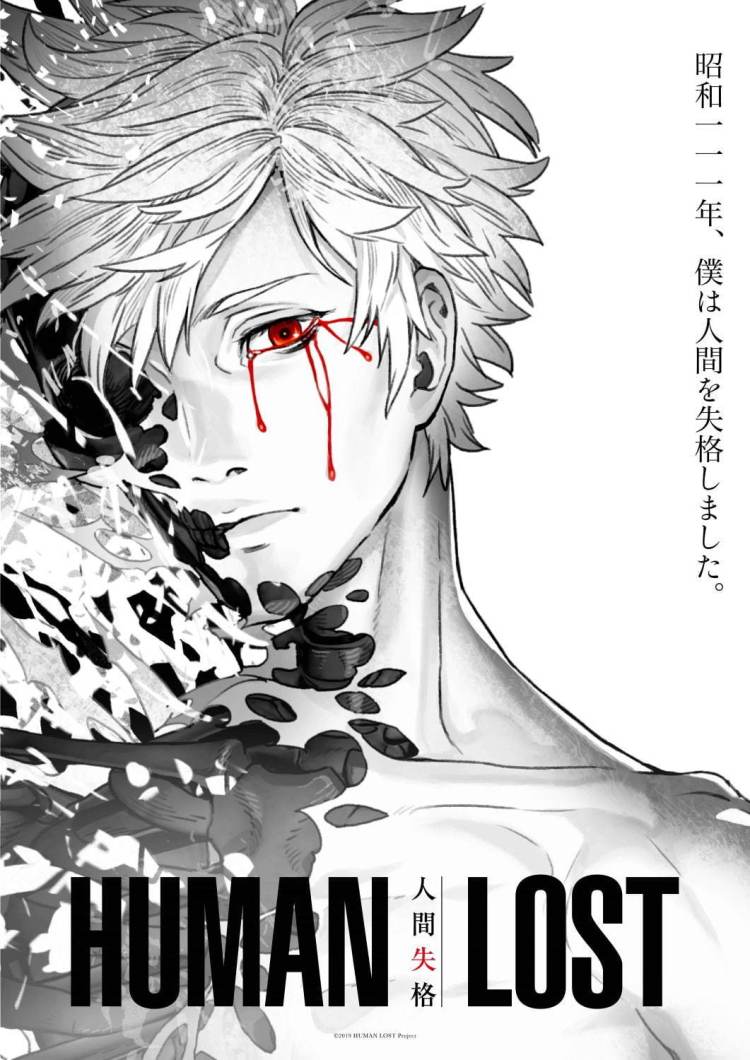
I Go Gaga, My Dear (ぼけますから、よろしくお願いします。, Naoko Nobutomo, 2018)

I go gaga posterWith the population ageing at unprecedented levels, Japanese society is facing a series of interconnected social issues as it contemplates the best way of caring for large numbers of elderly people often living away from family members who, in the past, might have been expected to bear responsibility. What sometimes gets forgotten, however, is the human dimension as older people go on living their everyday lives sometimes surrounded by family and sometimes not. Veteran TV director Naoko Nobutomo’s first feature I Go Gaga, My Dear (ぼけますから、よろしくお願いします。, Bokemasukara, Yoroshiku Onegaishimasu) follows her ageing parents from her own perspective as their daughter as they continue supporting each other into old age.

Nobutomo begins her story on New Year’s Day 2014 as she begins to notice a change in her sprightly, independent mother Fumiko and decides to take her to a doctor where they discover she is in the early stages of Alzheimer’s. Over the next three years, Fumiko’s condition intensifies while her husband of 60 years, Yoshinori, does his best to care for her though he himself is already over 90.

Flashing back to home video taken in earlier years, Nobutomo recalls her difficulty dealing with breast cancer at 45 throughout which her mother had been there to look after her. Having looked after her family for all of her life, there is an especial irony that now it’s Fumiko who needs looking after and it is perhaps these small moments of change that force her to acknowledge a gradual decline in her living standards even if she cannot clearly process them. Though Yoshinori bravely starts taking more domestic responsibility at 95, losing the ability to cook for herself is an obvious blow to Fumiko who nevertheless determines to keep her kitchen spotlessly clean.

Luckily, Fumiko and Yoshinori have a generous health insurance policy which entitles them to assistance in the home though that is something they obviously feel ambivalent about accessing. Fumiko, in particular, remains confused about the presence and role of their new helper, believing she is something to do with the insurance company, and is a little resentful of her offer to help with physically difficult housework such as cleaning the bath and emptying the washing machine. Likewise, she is originally reluctant to attend the daycare centre but noticeably perks up after being given a valuable opportunity to socialise rather than staying home all day with relatively little stimulation.

Seeing that her parents are struggling to manage on their own, Nobutomo wonders if she should give up her job in Tokyo and come home to Kure to look after them but is assured by her father that they’d prefer her to go on living her own life. Yoshinori, born in 1920, wanted to study literature at university but the war got in the way. Perhaps for this reason, he was determined that his daughter follow her dreams and is profoundly happy that she’s been able to make a career doing something she loves in the big city. Fumiko too, marrying at the comparatively late age of 30, had been a career woman, graduating from a woman’s school and working as an accountant before her marriage. A notably progressive pair, perhaps usually for the times in which they lived, they were content to let their daughter live the life she wanted to live and never placed any particular pressure on her to conform by getting married and having children.

Married for over 60 years, Fumiko and Yoshinori are determined to go on living independently and managing on their own as best they can. Fumiko, however, has brief painful moments of anxiety in which she is acutely aware of her declining condition and implications for her future. Some days she refuses to get out of bed, either resigned to the fact that “life isn’t always happy”, or lamenting that her life “miserable”. Neither of them want to be a “burden”, but find it increasingly difficult to continue managing on their own as much as they prefer to be as independent as possible. Nevertheless, they go on supporting each other much as they always have living together in hope and happiness while Nobutomo watches warmly from the sidelines supporting them in the same way they supported her, gently and with compassionate understanding.


I Go Gaga, My Dear was screened as part of Japan Cuts 2019.

Original trailer (English subtitles)
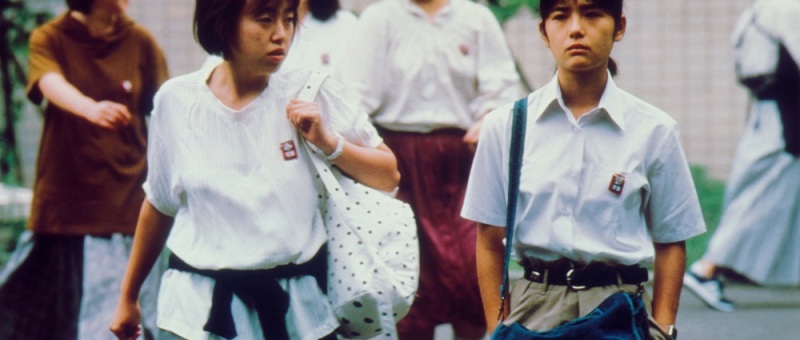
Red Snow (赤い雪, Sayaka Kai, 2019)

Red Snow poster 2“We’re just pieces of a puzzle” a temporarily deranged woman exclaims to a gloomy seeker after truth in Sayaka Kai’s eerie debut Red Snow (赤い雪, Akai Yuki). Truth, as it turns out is an elusive concept for these variously troubled souls trapped in a purgatorial tailspin on their gloomy island home. When a stranger comes to town intent on unearthing the long buried past, he stirs up deeply repressed emotion and barely concealed anger but finds himself floundering in the maddening snows of a possibly imaginary coastal village. 

30 years previously, a young boy, Takumi, went missing on the way to a friend’s house accompanied by his brother Kazuki who claims he simply disappeared from view in the heavy snow. Sometime later, a child’s remains were found in a burned out building. The prime suspect was a strange woman with a young daughter who escaped the fire in the middle of the night in a suspiciously elegant outfit. Nevertheless, the woman was later exonerated and the truth behind Takumi’s disappearance remained shrouded in mystery.

In the present day, a reporter, Kodachi (Arata Iura), arrives in town with the intention of writing some kind of exposé on the case. He interviews the detective involved and makes contact with Kazuki (Masatoshi Nagase), now a broken middle-aged man who has dedicated his life to perfecting the art of lacquerware. A secondary lead takes him to Sayuri (Nahana) – the daughter of the prime suspect now, in a tragic piece of circularity, an outcast herself and possibly a sex worker in a violent relationship with an older man (Koichi Sato) who may or may not be her pimp.

Each of them has tried to move on from the unresolved tragedy of Takumi’s disappearance, but all appear to have failed. Kazuki dreams of the day his brother vanished right in front of his eyes, seeing a little red jumper lost in the snow but unable to remember anything more. He fears he will never know what happened unless his memory somehow returns, though as his mentor tells him what actually happened and the way you remember it are often different. Waxing philosophical, Kodachi muses that memory is what links the past and future but memory, and therefore life itself, is ambiguous. The “truth” may be unknowable and known at the same time to those who refuse to confront its various contradictions. 

Like the young Sayuri watching through a tiny crack in the wardrobe door where her abusive mother has placed her out of the way of all her “fun”, nobody sees the whole of anything. The young Sayuri morphs into the adult Sayuri and into her mother whom she fears she has become. The only witness to the incident, Sayuri refuses to speak of it though perhaps there’s more kindness in her silence than it first seems even if her unwillingness to remember may also be a kind of self preservation. She too is a victim, but is blamed all the same despite being only a small child powerless to intervene or be held complicit in whatever it is her mother might have done or not done in her quest for survival.

Sayuri remains trapped within the orbit of her now absent mother, herself an outcast in another abusive relationship this time with a sociopathic old man, while Kazuki struggles to accommodate his sense of guilt for something he can’t quite remember. Emotions briefly bubble to the surface, petty resentments and jealousies that pass between all small children but might perhaps have had terrible consequences one snowy night. Sayuri may be right when she insists that they are pieces of a puzzle, each holding tiny fragments of truth that might be assembled into a coherent whole, but also aware that if they did so they may not like the picture that they see.

Eerie and ethereal, the snowy coastal town almost may not exist at all haunted as it is by traumatised souls trapped in a purgatorial cycle of guilt and confusion as they try to piece together the past. Sayaka Kai’s dreamlike, poetic debut is a visually impressive existential mystery in which past and present intertwine leaving our troubled heroes lost in a fog of falling snow unable to access the future through the corrupted pathways of memory.


Red Snow was screened as part of Japan Cuts 2019.

Original trailer (English subtitles)

The Chaplain (教誨師, Dai Sako, 2018)

The Chaplian posterJapan is one of the few developed nations which still maintains the death penalty, though in practice infrequently. The sentence of death is handed down almost exclusively to mass or serial murderers, child killers, or those whose crimes are judged to be of extraordinary barbarity. Unlike other nations, Japan houses those on death row not in prisons but in detention centres, denying them the rights that are afforded to regular prisoners such as visitation, exercise, and entertainment. Execution must be carried out within five days of the judgement being handed down. The prisoner themselves is informed on the morning of their death and given a choice of last meal, but their family members, legal team, and the general public are only informed once it has taken place preventing any last minute attempts for a stay.

In what would be his final screen role (and his first as a producer), Ren Osugi stars as a prison chaplain, Saeki, attempting to guide a series of Death Row prisoners towards spiritual peace as they prepare to accept their judgement. Though none of the prisoners he visits protests their innocence, some are more repentant than others and not all of them have fully internalised the fact they will never leave the facility even when no further legal attempts to commute their sentences seem to be underway. Some might say there is an element of exploitation in sending a chaplain in at all seeing as this is literally a captive audience. The crimes which lead to being on Death Row are necessarily extreme, many prisoners either have no remaining family members or have been abandoned by them out of shame, leaving them intensely lonely and devoid of human contact (not even televisions or radios are permitted). They are therefore much more interested in conversation than they are in The Bible or accepting Jesus into their hearts.

Then again, Saeki’s first visit is to a man who says nothing at all, allowing him to fill the silence with some of his own backstory which hints at a personal trauma possibly informing his desire to save the souls of these unfortunate people. Another prisoner, by contrast, is all too eager to convert but, as Saeki soon realises, is almost entirely illiterate and therefore struggling to hear the word of God through being unable to read. Saeki does his best to help them, gently listening to their fears and worries but encounters a familiar series of social problems which made their fates inevitable stemming from entrenched poverty and social inequality.

Only six months into the job, he wonders if he’s really getting through and if his efforts are worthwhile. His most challenging prisoner is a young man convicted of a mass killing of those with learning difficulties (inspired by a real life case), whom he deemed to be a drain on national resources. A hyper-rational sociopath, Takamiya (Leo Tamaoki) baits Saeki with unassailable, coldhearted logic which asks why, if he’s happy enough to kill and eat “stupid” animals like cows and pigs, but not “clever” ones like dolphins, his application of the same logic to the human world can be wrong? If all creatures have an equal right to life, then killing for food is as wrong as any other kind of killing and the death penalty nothing more than state sanctioned murder. There is no rational answer for Takamiya’s philosophy and aside from his abhorrent, unfeeling rationality he may have a point when it comes to social hypocrisy. All Saeki can do is ask him to stand with the people that he killed, and acknowledge that God or no God, Saeki too will be with him until the very end.

If Takamiya begins to question the terrifying rationalism which led him to his truly barbaric act, he does so probably not because of Saeki’s ministrations but because of his proximity to death. Meanwhile, another prisoner, Suzuki (Kanji Furutachi), convicted of a stalker murder, seems to have picked up entirely the wrong message in coming to blame just about everyone else for his crime and absolving himself of responsibility. He might have found peace, but it is not the kind of peace he was supposed to find. Noguchi (Setsuko Karasuma), meanwhile, the only female prisoner, continues to talk about the future as if she really thinks she’s getting out. Only Shoichi (Takeo Gozu), an elderly man, seems to truly accept Saeki’s teachings though it is perhaps enough to make him feel as if he really is making a difference.

Sako opts for subtlety in pointing out the inherent hypocritical immorality of the death penalty and particularly in the context of the Japanese legal system which relies heavily on confessions often extracted under duress. Battling his own sense of guilt, Saeki tries to save himself by saving the souls of others but finds his work an uphill battle in a society which prefers not to speak of unpleasant matters and thereby renders itself absolute and unaccountable in the rigidity of its justice.


The Chaplain (教誨師, Kyoukaishi) was screened as part of Japan Cuts 2019.

Original trailer (English subtitles)
Orphan’s Blues (オーファンズ・ブルース, Riho Kudo, 2018)

Orphan's Blues posterThe past becomes an irresistible trap for a collection of variously troubled souls in Riho Kudo’s Pia winning feature Orphan’s Blues (オーファンズ・ブルース). “Things change” the heroine laments, unable to keep up with the relentless passage of time as her memory begins to collapse in on itself, leaving only nostalgia behind. A poetic exploration of grief, rootlessness, and trauma, Kudo’s bold debut sends its fugitive protagonists on a sad road trip into the long buried past as they attempt to dig up their childhood innocence in escape from an intolerable present.

Emma (Yukino Murakami), a middle-aged woman making a living with a tiny book stand at the side of the road in a small town, has been experiencing unexplained moments of memory loss – forgetting to place a customer’s order, leaving taps on, repeating herself having forgotten that she’s asked this question several times before. Losing the present sends her back to thoughts of the past as evidenced by a picture of a pack of elephants drawn by her childhood friend, Yang (Yu Yoshii), with whom she grew up in the same orphanage. Longing for that same closeness, she decides to track him down but a visit to Chinatown proves fruitless, as does an attempt to call in at the last address she had. Determined to find out what happened to Yang, she reconnects with another friend, Van (Takuro Kamikawa), who is in the process of fleeing to Tahiti with his girlfriend Yuri (Nagiko Tsuji) after stealing some gangsters’ money. When that doesn’t work out they end up accompanying Emma to a small inn run by a woman, Luca (Tamaki Kuboso), who was once in a relationship with Yang, and where a mysterious young man, Aki (Shion Sasaki), is currently staying.

All of our protagonists, bar perhaps Yuri, have a prominent burn somewhere on their body. Emma’s is on her left shoulder – a scald mark she keeps rubbing at times of stress. Van has a scar from a cigarette burn on his right arm, while Luca has what looks like a brand where a wedding ring might once have been worn. Even Aki has some kind scar on his right wrist, conveniently hidden by his long-sleeved shirts. Each of these people is in some way connected by the absent Yang, desperately in search of him even if some perhaps are more aware than others what might have befallen their absent friend.

Luca, who has a series of elephant tattoos across the nape of her neck, recounts that Yang once told her that elephants separate from the pack after receiving a premonition of their deaths. To spare the others the suffering of seeing them pass away, they leave before they go. Yang, they posit, may have followed their example but if he has all he has done is provoke additional suffering among his confused friends. Emma struggles to remember, frustrated by her inability to stay in the present while being pulled towards the past, feeling as if she’s missing some vital clue which will explain everything.

Meanwhile, the tensions between the five residents at the inn ebb and flow. Yuri, who never knew Yang and is beginning to fear she and Van will never get to Tahiti after all, feels herself excluded from the ongoing drama. She resents the closeness between Van and Emma, irritated that only Emma knows how to calm him down in the midst of emotional meltdown, while wondering how long he’s going to keep her waiting in this strangely liminal space caught between a past she never knew and a possibly unattainable future.   

Waiting is however where they are. Van wants to go back, return to a happy place the three childhood friends once travelled and dig up something they buried but can no longer remember. Emma, confused, eventually finds herself rooted in a delusion of the past, unable to see the present clearly while Van is left with little choice other than to abandon himself to facilitate her temporary happiness. Scarred, they run from a disappointing future into childhood nostalgia unable to reconcile the adults they’ve become with the children they once were. Literally as well as figuratively orphaned, they remain adrift with no clear place to belong or return to. Subtle and poetic, Kudo’s beautifully lensed debut is an achingly melancholy piece but one which perhaps finds hope in the solidarity of the lost as much as it suggests there is no path forward for those who can only look back.


Orphan’s Blues screens in New York on July 28 as part of Japan Cuts 2019.

Original trailer (English subtitles)

The Journalist (新聞記者, Michihito Fujii, 2019)

The Journalist poster 2In these days of “fake news” and misinformation, a robust press is more important than ever. In Japan, however, the news media institution has long been decried as toothless, if not actually in league with the ruling regime. A timely and appropriately exasperated conspiracy thriller, Michihito Fujii’s The Journalist (新聞記者, Shinbun kisha) is inspired by the non-fiction book by newspaper reporter Isoko Mochizuki who makes a brief appearance at the beginning of the film and has herself been singled out as “problematic” by politicians unused to being held to account and objecting to her intensive interview technique.

Mochizuki’s fictionalised stand in, Erika Yoshioka (Shim Eun-kyung), is a rookie reporter who grew up in America with her Japanese journalist father and Korean mother. Following her father’s “suicide” she returned to Japan and is currently working for Toto News where she receives a mysterious fax containing information about a suspicious government plan to found a new medical university.

Meanwhile, idealistic former international diplomat Sugihara is on temporary secondment to CIRO (Cabinet Intelligence and Research Office) – a secretive organisation set up under the occupation to mirror the US’ CIA but often criticised for acting like a secret police force and expending too much effort on spying on ordinary Japanese citizens on Japanese soil rather than gathering useful international intelligence. Sugihara (Tori Matsuzaka) finds himself conflicted in his new work, the first assignment of which is handling a smear campaign against a young woman (clearly inspired by the Shiori Ito case) who has accused a high ranking journalist close to the government of rape. A married man with a baby on the way, he fears rocking the boat but resents his complicity with such obvious government finagling and failure to counter the misogynistic narrative that passes for office banter.

When his former mentor, Kanzaki (Kazuya Takahashi), commits suicide, no longer able to live with his compromises, Sugihara begins to reconsider his decision not to go against his superiors but finds it difficult to countenance “betraying” his organisation even in the knowledge that they are no longer working in the best interests of the people. Yoshioka, with whom he eventually bonds after witnessing her sympathetic treatment of Kanzaki’s bereaved daughter, may in some senses be better placed to resist given her overseas upbringing. Where Sugihara and the news media at large struggle with the idea of standing up to authority, Yoshioka is keen to sell the ideals of journalistic integrity, insisting that a robust press is essential in holding power to account.

Meanwhile, she finds herself a lone voice adrift in the largely patriarchal world of Japanese news media. Leaving the press conference called by the woman accusing the government crony of rape, she stops to tell off a pair of journalists making sexist comments but receives only a brief eye roll before they walk away laughing. She also finds herself resented by her colleagues for pointing out that their hounding of Kanzaki’s bereaved wife and daughter at his funeral is insensitive and inappropriate, but refuses to back down in fierce determination to do what is right even if it is not popular.

Meanwhile, Sugihara’s odious boss Tada (Tetsushi Tanaka) is desperately trying to keep a grip on power from the shadows. He uses Sugihara’s conflicted loyalties against him, subtlety reminding him that he has a wife and newborn daughter to whom he has a greater responsibility, and insisting that there is no “shame” in complicity when it comes to maintaining “the illusion of democracy”. CIRO, it has to be said, does not come out of this well as it wilfully does the government’s dirty work – covering up the indiscretions of “valuable” politicians and their relatives in order to avoid the unpleasant chaos of unwelcome political scandals. Kanzaki’s compromises left him a broken and defeated man, Sugihara wonders what kind of man his daughter would think him to be if he too just went along with the government line and enabled their subversion of democracy solely for personal and economic security.

The press may be waking up, but The Journalist’s chief takeaway is that change comes when enough people find the courage to keep saying no. As the ending implies, the battle is far from over but it has perhaps begun thanks to the efforts of those like Mochizuki and her filmic counterpart Yoshioka as well as the courage of whistleblowers like Sugihara who risk personal ruin merely for speaking out. A timely, urgent defence of press freedom in the face of tightening authoritarianism, The Journalist is an all too plausible conspiracy thriller in which the last guardians of liberal democracy are the nails which refuse to be hammered down.


The Journalist screens in New York on July 27 as part of Japan Cuts 2019.

Original trailer (English subtitles)

Stare (シライサン, Hirotaka Adachi, 2019) [Fantasia 2019]

Stare 3If you’re attacked by a bear, the advice is not to run, but to stand your ground before backing away slowly while calmly explaining to the bear that you mean it no harm and would like to go home now. Similar advice will serve you well if you’re unlucky enough to be cursed by “Shirai-san” (シライサン), the vengeful ghost of an all-powerful shamaness who, for some reason, really doesn’t like for people to know her name. One crucial difference, however, is that Shirai-san demands a different kind of respect. She can’t abide deference, and will kill all those who look away from her extremely large eyes.

This three young people learn to their cost after indulging in an ill-advised scary story session in a quiet inn. An oft repeated piece about a creepy wedding photo invites a visiting liquor store delivery boy, Watanabe (Shota Sometani), to recount a tale of pure horror he was told as a boy about a man chased by a strange woman who claimed to know him and wanted to take her revenge for his supposedly knowing her name (which he apparently didn’t until she told it to him). The man tells her to pick on someone else who knows her as “Shirai-san” which is how the story ends, with fingers pointing at the horrified listeners. Of course, it’s just a silly campfire story, but before long all three of the students are dead of supposed heart attacks of such magnitude that they caused their eyes to explode.

Meanwhile, the left behind – friend Mizuki (Marie Iitoyo), and brother Haruo (Yu Inaba), begin an investigation which will eventually see them too cursed by the figure of Shirai-san. Later they are joined by equally dejected reporter Mamiya (Shugo Oshinari), still grieving for his young daughter killed in a traffic accident some time ago. All modern people, none of the three really believes that their loved ones died because of an ancient curse, but their investigation leads them to just that conclusion, leaving them to ponder how exactly they might be able to survive if not actually break it.

In any case, Shirai-san’s wrath is directed at all those who know her name no matter how they came to learn it. Like many a J-horror ghost, what she feeds on is fear. As Haruo’s father told him, perhaps in cold comfort, there is one upside to death – that by dying you lose your fear of it. Thereby you can come to accept the idea of death and pass peacefully with no need for further anxiety about the end. It’s an ironic statement, but not without its truth. Picking apart the mystery, Mizuki wonders how exactly you might write the name “Shirai”, working under the assumption that it’s the most normal way which means “white well” (白井) only to wonder if it’s not a way of saying “death coming” (死来) rather than actually her name.

Shirai-san might be, in that sense, merely the evocation of mortality, stalking dark corners and striking seemingly at random. One victim thinks they find a way to placate her, that if you can bear to stare her in the eye long enough she will eventually disappear, but you cannot escape “death” by facing it down only meet it with dignity. Our heroes are plagued by visions of the people they’ve lost, haunted by possibly imagined grudges and irresolvable guilt over human failings, the way they fear they may have made people feel or otherwise let them down. Shirai-san plays on their mortal insecurities, luring them to their doom with a mix of relief from suffering and guilt-ridden atonement.

Well known horror maestro Hirotaka Adachi (AKA Otsuichi) injects new vigour into the classic J-horror ghost with Shirai-san seemingly unafraid to strike in broad daylight and public places while her presence is eerily felt in the most tranquil of locations, echoed in the innocent tinkle of bicycle bells. A cruel curse spread by resentment and negativity, Shirai-san’s revenge is one which offers only an ironic escape and remains frustratingly inscrutable even at the very end. Nevertheless, she does, perhaps, come for us all in one way or another. The least you can do is look her in the eye.


Stare was screened as part of the 2019 Fantasia International Film Festival.

Original trailer (English subtitles)
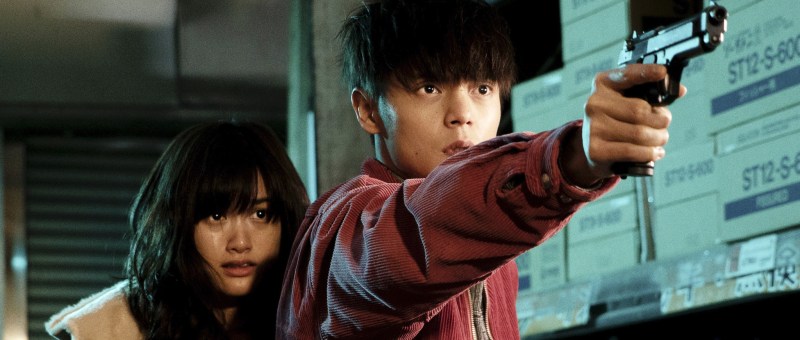
Erica 38 (エリカ38, Yuichi Hibi, 2019)

Erica 38 poster“Everybody’s life is in someway unfulfilling”, admits the philosophical victim of a con woman in ripped from the headlines tale Erica 38 (エリカ38). “It’s like a crutch” he adds, without a little fantasy you can’t go on. Like the “Erica” of the title, her victims are also looking for escape from an unsatisfying reality, and unfortunately for them already have what she feels would make her life more bearable – vast wealth. Returning to Japan after three decades abroad, director Yuichi Hibi does his best to humanise the figure of the coldhearted grifter, painting her as just another disappointed, lonely old woman desperately trying to recapture the sense of possibility so cruelly denied her in youth.

Later rebranding herself as “Erica”, a 38-year-old woman of means, our “heroine” is Satoko Watanabe (Miyoko Asada), an ageing bar hostess supplementing her income by peddling a dodgy multi-vitamin pyramid scheme to bored housewives eager to make a few extra bucks. Her sales pitch, however, gets her noticed by a refined old woman sitting close by in an upscale hotel during in one of her sessions. The woman, Mrs. Ito (Midori Kiuchi), introduces her to a “friend”, Hirasawa (Takehiro Hira), who cuts in with a sales pitch of his own in branding himself as a paid up member of the global elite who works with the Pentagon on important international matters. Hirasawa heavily implies his business is not quite on the level, but Satoko, captivated by his suave sophistication, fails to realise just how dodgy he really is. Before long, she’s joined him in his “consultation” business, selling fraudulent investment opportunities in the emerging market of Cambodia.

It is surprisingly easy to sympathise with the dejected Satoko as she falls under Hirasawa’s spell. Already well into her 50s when the film begins and clearly over 60 when she rebrands herself as the 38-year-old Erica, Satoko has led an unhappy life beginning with a traumatic childhood lived in the shadow of an abusive, adulterous father. The only memory of joy from her youth is when she and her mother (Kirin Kiki) giggled together after accidentally tipping rat poison into dad’s miso soup. Life since then, it seems, has been one disappointment after another spent in the hostess bars of Kabukicho. What all of that means, however, is that she’s become skilled in the art of selling fantasy. All that time invested in extracting cold hard cash from lonely men has set her in good stead for selling unrealistic investment opportunities to the already comfortably off.

Unrepentant, Satoko tells herself that she bears no responsibility towards those who lost money in her scams because they were chasing exactly the same thing she was – escape, and they both found it at least for a moment. Her victims made the decision themselves, she never forced anyone, and so it’s their own fault that they fell for her patter while she perhaps laments only that she’s been foolish and profligate in not planning better for the eventual implosion of all her schemes.

“There’s a thin line between real and fake”, she tells a party guest admiring one of her paintings, “if someone sees it as real then real it is”. Satoko’s cons are, in essence, an extension of the paradox of the hostess business. Anyone with an ounce of sense would have seen that the business isn’t legitimate, but like a salaryman in a hostess bar they invest in the semblance of connection while knowing in a sense that isn’t “real”. Ironically enough, Satoko is forced to realise that the first victim of her subterfuge is herself. Chasing a dream of love, she fell hard for Hirasawa without thinking him through. Hirasawa succeeds in his schemes because he’s scrupulously careful in maintaining his persona – he operates out of hotels, has no fixed address, and uses several cellphones. As Satoko later finds out, he is effectively running a harem, romancing several women all like herself bringing in the big bucks while he sits back relatively risk free. She has been used, once again.

The implosion of her dream of romantic escape is what sends her to Thailand where she ponders a reset, rebranding herself as the 38-year-old Erica of the title and beginning an affair with a young and handsome Thai man she rescued from gangsters with her ill-gotten gains. Porche (Woraphop Klaisang) later describes her as “My Angel”, of course realising that she was much older than she claimed but claiming not to care. It may be that he really did love her, but you can’t ignore the corruption of all that money and the power that it buys. In the end, money can’t buy you love, or a path out of loneliness, or a cure for disappointment.

Satoko was, like many, just another lonely, disappointed old lady trying to escape an unsatisfying present through a fantasy of returning to the past, rebooting herself as a successful business woman, loved and in love, as someone with a brighter future to look forward to. Her sales patter worked because it was “true”, the similarly dejected could sense in her the desperation for escape and as they wanted to escape too they let her take them with her. A melancholy tale of delusion and disillusionment, Erica 38 has immense sympathy for the scammer and the scammed painting them both as victims of an often unfair, conformist society in which freedom is the rarest commodity of them all.


Erica 38 screens in New York on July 25 as part of Japan Cuts 2019.

Original trailer (English subtitles)

His Lost Name (夜明け, Nanako Hirose, 2018)

His Lost Name poster 1Family as performance has become a prominent theme in the ongoing development of the family drama. Ever since The Family Game punched a gaping hole through the sanctities of the family unit, nothing has quite been the same. Then again, performance only goes so far and will necessarily fail when there is no genuine connection to back it up. Every family has its problems, according to Tetsu the bereaved patriarch at the centre of His Lost Name (夜明け, Yoake), but you cannot simply escape them through substitution or subterfuge.

When Tetsu (Kaoru Kobayashi) finds a young man passed out on a riverbank, his first instinct is to help him. He takes him home, but the man though obviously grateful remains reticent, only latterly identifying himself as “Shinichi Yoshida” (Yuya Yagira) which, as Tetsu points out, is a suspiciously common name. “Shinichi” starts working at Tetsu’s furniture factory and is warmly welcomed by the other employees as well as Tetsu’s fiancée Hiromi (Keiko Horiuchi) who runs the office. He is, however, somewhat nervous, shrinking away from passing policemen and having a full on meltdown when a friend tries to take his picture.

Tetsu, meanwhile, has not been entirely truthful either. His wife and son, also (coincidentally) called Shinichi, were killed in a car accident some years previously. Despite having arranged to officialise his relationship with Hiromi, it seems he’s not quite ready to leave the past behind and is not planning to live with her even after they marry nor has he made much of a motion to separate himself from his former family home.

The arrival of the new “Shinichi” is then a fortuitous one, in some senses, in that it affords Tetsu a path back towards the son he’s lost. This is perhaps why he is so keen to look after Shinichi despite knowing that he’s not telling him the whole truth and is obviously on the run from something or other. Shinichi tells him that he’s on a “soul-searching” vacation and is in this tiny village because he visited it at some unspecified point in the past. Tetsu is content to let him be, confident that Shinichi will offer up more truth when the occasion calls but also hoping to persuade him to stay in the place of the Shinichi he has already lost.

Snippets of what he says may be true – an overbearing, authoritarian father and cold family background suggest Shinichi is looking for exactly what Tetsu offers him. Yet Tetsu, trying his best to do better, may be little different. He argued with his Shinichi because he rejected the furniture business to be an electrician. Tetsu railroaded his son in much the same way Shinichi’s father did him, and despite his instruction to “choose your own path” is clearly grooming his surrogate son as an heir (much to the disappointment of Shoji (Young Dais), a loyal worker at the factory who clearly loves Tetsu and is a good friend to Shinichi).

Both accepting that what passes between them is to some extent a simulacrum, the two men take what they need, fulfilling the roles of family a little more than superficially but painfully missing the mark. Meanwhile, their awkward closeness begins to disrupt Tetsu’s peaceful existence in dredging up memories of the past, damaging his relationship with Hiromi and placing a strain on his business. Shoji, upset that Shinichi froze rather than back him up during an incident we can infer was in some degree triggering, angrily tells him that he should “trust us more”. He may well have a point in that Shinichi’s reticence prevents him becoming a full member of the “family” but it’s less a matter of trust in others than belief in himself that keeps Shinichi silent.

Unable to accept himself as himself, and failing to step into the persona of “Shinichi”, all Shinichi is left with is intense shame and self-loathing. The failure of the Shinichi persona perhaps forces him to reclaim his own name, but the shame still remains as does the sense of drifting confusion which prevents him from moving forward with his life. Tetsu meanwhile is forced to accept that he cannot save his son and is ill-equipped to help this confused young man with whom he has made all the same mistakes as before, burdening him with unfair parental expectations he knows for certain that the boy cannot carry. A tale of fractured identities, fraying familial bonds, and irresolvable guilt, His Lost Name leaves its heroes much as it found them, mired in shame and regret but with perhaps a degree of acceptance for that which cannot be changed.


His Lost Name screens in New York on July 23 as part of Japan Cuts 2019.

International trailer (English subtitles)

Samurai Shifters (引っ越し大名!, Isshin Inudo, 2019)

Samurai Shifters poster 1Forced transfers have been in the news of late. Japanese companies, keen to attract and keep younger workers in the midst of a growing labour shortage, have been offering more modern working rights such as paid parental leave but also using them as increased leverage to force employees to take jobs in far flung places after returning to work – after all, you aren’t going to up and quit with a new baby to support.

As Isshin Inudo’s Samurai Shifters (引っ越し大名!, Hikkoshi Daimyo!) proves, contemporary corporate culture is not so different from the samurai ways of old. Back in the 17th century, the Shogun kept a tight grip on his power by shifting his lords round every so often in order to keep them on their toes. Seeing as they had to pay all the expenses and handle logistics themselves, relocating left a clan weakened and dangerously exposed which of course means they were unlikely to challenge the Shogun’s power and would be keen to keep his favour in order to avoid being asked to make regular moves to unprofitable places.

When the Echizen Matsudaira clan is ordered to move a considerable distance, crossing the sea to a new residence in Kyushu which isn’t even really a “castle”, they have a big problem because their previous relocation officer has passed away since their last move. Predictably, no one wants this totally thankless job which warrants seppuku if you mess it up so it falls to introverted librarian Harunosuke (Gen Hoshino) who is too shy refuse (even if he had much of a choice, which he doesn’t). Unfortunately for some, however, Harunosuke is both smart and kind which means he’s good at figuring out solutions to complicated problems and reluctant to exercise his samurai privilege to do so.

In fact Harunosuke is something of an odd samurai. As others later put it, he doesn’t care about status or seniority and has a natural tendency to treat everybody equally. When the head of accounts advises him to take loans from merchants with no intention to pay them back, he objects not only to the dishonesty but to the unfairness of stealing hard-earned money from ordinary people solely under the rationale that they are entitled to do so because they are samurai and therefore superior. Likewise, when he finds out that his predecessor was of a lower rank and that all his achievements were credited to his superiors he makes a point of going to his grave to apologise which earns him some brownie points with the man’s pretty daughter, Oran (Mitsuki Takahata), who was not previously minded to help him because of the way her father had been treated.

Harunosuke’s natural goodness begins to endear him to the jaded samurai now in his care. Though they might be suspicious of some of his methods including his “decluttering” program, they quickly come on board when they realise he is not intending to exclude himself from his ordinances and even consents to burn his own books in order to make it plain that everyone is in the same boat. He hesitates in his growing attraction to Oran (who in turn is also taken with him because of his atypical tendency to compassion) not only because of his natural diffidence but because he feels it might be selfish to pursue a romance while urging everyone else towards austerity.

Meanwhile, “romance” is why all this started in the first place. The lord, Naonori Matsudaira (Mitsuhiro Oikawa), is in a relationship with his steward (something which seems to be known to most and not particularly an issue). While he was in Edo, he rudely rebuffed the attentions of another lord, Yoshiyasu Yanagisawa (Osamu Mukai), who seems to have taken rejection badly and has it in for the clan as a whole. In an interesting role reversal, his advisor laments that perhaps it would have been better for everyone if he’d just submitted himself, but nevertheless a few thousand people are now affected by the petty romantic squabbles of elite samurai in far off Edo.

Bookish and reticent as he is, Harunosuke sees his chance to “go to war against the unjust Shogunate” by engineering a plan which allows them to reduce the burden of moving, reluctantly having to demote some samurai and leave them behind as ordinary farmers with the promise that they will be reinstated as soon as the clan resumes its former status. Asking the samurai to drop their superiority and carry their own bags for a change has profound implications for their society, but Harunosuke’s practical goodness eventually wins out as the clan comes together as one rather than obsessing over their petty internal divisions. A cheerful tale of homecoming, friendship, and warmhearted egalitarianism, Samurai Shifters is an oddly topical period comedy which satirises the vagaries of modern corporate culture through the prism of samurai-era mores but does so with a wry smile as Harunosuke finds a way to live within the system without compromising his principles and eventually wins all with little more than a compassionate heart and a finely tuned mind.


Samurai Shifters screens in New York on July 21 as part of Japan Cuts 2019.

Teaser trailer (English subtitles)
His Bad Blood (いつくしみふかき, Koichiro Oyama, 2019) [Fantasia 2019]

His Bad Blood PosterThe sins of the father are visited on the son. Rural superstitions run deep, but is it really fair to condemn a child for having “bad blood” or will the prejudice itself become a self-fulfilling prophecy? The young man at the centre of Koichiro Oyama’s debut feature His Bad Blood (いつくしみふかき, Itsukushimi Fukaki) struggles to assert himself in a small community where his father’s (minor) crimes are still painfully present, but then perhaps like any other young man he himself needs to lay his father’s ghost to rest in order to find his own path.

Decades ago, no good drifter Hiroshi (Ikkei Watanabe) drifted into a small-town in search of a place to die after his latest business venture collapsed, but there found the kindly Kayoko who gave him a home and a chance to start again. Unfortunately, however, Hiroshi reverted to type and after being sent home to get the baby clothes while his wife was in labour, decided to run off with the family’s savings instead only to be caught in the act by Kayoko’s brother Yoshitaka whom he wounded in a fight that eventually saw him beaten by a mob and hounded out of town.

In the present day, Shinichi (Yu Toyama), the son, is a strange, shy young man who has been unable to hold down a job and is widely disliked by the community and especially by his resentful uncle. When the area is plagued by a spate of burglaries, Yoshitaka jumps to the “obvious” conclusion and attempts to have Shinichi hounded out of town the same way he got rid of his father. Hurt that not even his mother believes he is innocent of the crimes of which he is accused, Shinichi takes refuge with the local preacher (Akio Kaneda) where, unbeknownst to him, his estranged father has also decamped to hide out after a life of petty crime finally catches up to him.

Though set firmly in the present day, Oyama’s debut has a distinctly depression-era dustbowl feel with its rural backwater suddenly stirred up by rumours of the railroad’s eventual arrival while the non-conformist Christian church hands down messages of love and compassion in trying times. Hiroshi, possibly unreformable, even puts on a show of getting religion only to go full snake oil salesman in staging a revival inside the Reverend’s church in which his personal prophet, Tanaka Xavier XVI, makes a “disabled” woman walk and successfully stimulates the record crowd to hand over their cash in hope of salvation while Shinichi and the Reverend look on in confused horror.

To engineer some kind of forward motion, the Reverend pushes the two men together but keeps their connection a secret until finally revealing it in the hope that the pair might finally be able to put some kind of lid on the past. Looking for his father, Shinichi avows he’d like to mess up his life just like his father has done to his, but discovers that Hiroshi’s life is pretty messed up already and likely always has been. His fate was pretty much sealed the day pushed the baby clothes out of the way and opened the family safe instead. Shinichi’s job isn’t to save his dad, no one can, but try and accept him so that he can, a sense, reject his “bad blood” and those who condemn him for it to claim his own identity and walk his own path.

Before he can do all of that, however, he’ll have to escape the secondary curse of the unfair prejudice he faces from his home community as a supposed carrier of “bad blood”, destined for criminality and inherently untrustworthy. Despite all he suffers, Shinichi valiantly refuses to become what everyone says he is while deeply resenting his absent father for saddling him with this unhappy destiny. It is, however, Hiroshi who accidentally gives him forward motion through the unlikely shared dream of making an honest killing in the shortly to boom real estate business when the railroad comes to town. An equally unlikely love affair with a similarly strange young woman (Keiko Koike) provides additional possibilities, but still leaves Shinichi feeling trapped by his past despite her urgings to “just be yourself and live in the future with me”. A melancholy tale of freeing oneself from the judgement of others and learning to step out of a father’s shadow, His Bad Blood is a promising debut from Oyama who addresses a difficult subject with compassionate humanism as his melancholy hero finds the courage to walk away from a toxic past towards a more promising future.


His Bad Blood was screened as part of the 2019 Fantasia International Film Festival.

International trailer (English subtitles)