Counters (카운터스, Lee Il-ha, 2017)

Counters poster 1The far right is on the rise the world over and Japan is no exception. A resurgent nationalism has long been a worry as the memory of wartime folly fades and the young, manipulated by fears of the nuclear threat from North Korea and frustrated by a stagnant economy, are duped by the messages of unscrupulous forces who convince them the cause of all their troubles is an easily scapegoated minority. Lee Il-ha’s documentary Counters (카운터스) takes a look at the deeply entrenched xenophobic racism directed at “Zainichi” Koreans and the counter protest movement against it which finds itself divided over the question of violence.

The main focus of Lee’s documentary is the enigmatic leader of the “Otoko-gumi” (lit. “men’s group”, a noticeably yakuza-esque name) – former mob boss Takahashi. Unlike many of the “Counters” who turn up to disrupt right-wing rallies, Takahashi identifies himself as a right-winger who venerates the Emperor and the Imperial past but cannot tolerate the unfettered bullying of those who shout vile racist statements while preaching the glory of Japan. A former yakuza, Takahashi himself had originally been taken in by the falsehoods spread by men like Sakurai – the virulently racist leader of Zaitokukai which makes the dubious claim that Zainichi Koreans are somehow “privileged” thanks to special residency arrangements originally set up to avoid the bureaucratic nightmare of trying to account for all the Korean (and Taiwanese) residents who arrived as Japanese citizens during the colonial period. Though he had harboured doubts about the anti-Korean propaganda he’d been hearing, it wasn’t until he had the opportunity of a straightforward conversation with an activist that he came to realise that it was all lies and the guys on the other side had a point after all.

Later, one of his comrades describes Takahashi as an old school yakuza – the kind that thinks it’s his job to protect people and stand up for those who can’t stand up for themselves. Takahashi evidently doesn’t like bullies or liars and was brought into the struggle by witnessing an old lady in kabukicho crying after a protest. His methods are, however, those of the street. Running Otoko like a gang he determines that the best way to silence the racists is to rough them up so they’ll think twice about coming back.

This places places Otoko at odds with the mainstream Counter movement which is committed to non-violent protest and social change through outreach and education. Though their aims share much in common, the Counter organisation fears becoming with associated with Otoko because of its less savoury elements – not only the violence itself but Takahashi’s criminal past and ties to the yakuza. If the Counters want to be taken seriously as a legitimate protest group, they have to be careful to present a professional, diplomatic image. Meanwhile, Otoko is free to shake things up without needing to think too hard about anything much beyond crushing the racist right.

Another activist engaged in building a shelter for oppressed minorities – not just Zainichi Koreans but Ainu, Brazilian-Japanese, LGBTQ+ etc, admits as much when he attempts to probe the paradox of Takahashi’s liminal status in the political world. The progressive movement has long been bound by its own principles and progress has been slow. Like it or not, Otoko seems to have created a shift in the political landscape no matter how one might feel about their methods. Takahashi corrals his men into building the shelter by day, but is a frequent visitor to the Yasukuni shrine in the mornings. Nevertheless, he remains an unlikely ally at the side of all oppressed peoples including transgender men and women and the LGBTQ+ community.

Lee imbues his footage with the true punk spirit, spinning back from Takahashi’s violent clashes to a whimsical jazz overshadowing the shadiness of government while playing heavily with on screen text and effects which occasionally trivialise the action as in Sakurai’s failed showdown with the Mayor of Osaka who proves once and for all that he won’t have any of Sakurai’s nonsense in his kind and welcoming city. The level of vitriol on show is truly shocking with heinous, violent statements offered by ordinary young women turning on the kawaii to call for the deaths of a persecuted minority while middle-school girls influenced by right-wing fathers preach atrocity in the streets (tacitly confirming the veracity of various other atrocities the right is usually keen to deny). The long awaited anti-hate speech law may finally have been passed, but there is still much work to do. The Sakurais of the world aren’t giving up, but neither are the Counters. A timely reminder that now more than ever resistance is the key.


Counters was screened as part of the 2018 New York Asian Film Festival.

Original trailer (Korean subtitles only)

Knockout (どついたるねん, Junji Sakamoto, 1989)

Knockout cap 1Thirty years after his debut, the career of director Junji Sakamoto has proved hard to pin down. An early focus on manly action drama gave way to character pieces, issue films, and comedy, but it was with his breakout first feature Knockout (どついたるねん, Dotsuitarunen) that something like a signature style was born. One of Japan’s many boxing movies (perhaps an unexpectedly populous genre), Knockout is once again the story of a man fighting himself as he struggles to overcome serious physical injury, emotional trauma, and his own fiercely unpleasant personality to finally become the kind of champion he has always feared himself incapable of becoming.

Dreaming dreams of boxing glory, Adachi (Hidekazu Akai) trained hard since he was a small boy and eventually became a champion of the ring. However, an ill-timed blow from a subpar opponent left him with an unexpected, life threatening injury requiring brain surgery after which he was advised to stay behind the ropes for the remainder of his days. A total asshole with a violent streak, Adachi can’t help alienating all those around him including childhood friend Takako (Haruko Sagara) whose father owns the National Brand gym where he used to train and had given vague promises of taking over once he retired. In his newly irritable state, Adachi has decided to start his own high class gym and has teamed up with a boxing enthusiast friend, Harada (Tetsuya Yuki), who runs a gay club, to buy National Brand’s promoter license to set up alone.

This being the kind of film that it is, it’s a given that Adachi will eventually want to get back in the ring despite all the inherent risks to his physical body. Nevertheless, the journey towards that realisation will be a humbling one as he is forced to confront the fact that he is a terrible person whose intense self obsession and intimidating behaviour has everyone around him walking on eggshells. Consequently, he does not make a particularly good boxing coach thanks to his didactic methods and rigid insistence on doing everything his own way. Only the kindly assistance of an older man, Sajima (Yoshio Harada), who also retired from the ring through injury, begins to show him the error of his ways but it’s not until he’s truly alienated all of his prospective pupils, as well as his patient backer, that he finally understands where it is that he belongs. 

Set in his native Osaka, Sakamoto weaves a rich tapestry of local life from the feisty Takako who dearly wanted to get in the ring herself only to be met with the constant refrain that boxing’s not for girls, to the mysterious Harada and his largely offscreen gay bar at which Adachi seems to be a frequent yet unwilling visitor who claims the place is too “weird” and fears interacting with others in the establishment. Meanwhile the applicants at his new gym which promises training with a “kindly” coach run from young toughs to softening salarymen desperate to engage with their dwindling masculinity. This is definitively a manly affair in which the frustrations of young(ish) men take centre stage though mainly through the destructive effects they have on the world around them – you’ll nary find a face around here that doesn’t have a bruise on it. While Adachi’s parents tiptoe around their own son as if he were some sort of gangster, Takako is the only one willing and able to stand up to him save the late entry of Sajima who appears to be dealing with some neatly symmetrical family issues of his own.

Starring real life boxer Hidekazu Akai, Knockout strives for realism in the ring even whilst emphasising the ongoing psychodrama that lies behind it. Adachi, like many boxing heroes, is engaged in constant battle with himself, trying to overcome the frightened little boy he once was rather than accepting him and admitting that even older he is often still scared and angry without really knowing why. Perhaps through his final, infinitely dangerous entry into the ring he will find some kind of answers to the questions he has been too afraid to ask but he has, in any case, become less of a problem for those around him in his continued quest towards becoming the best version of himself.


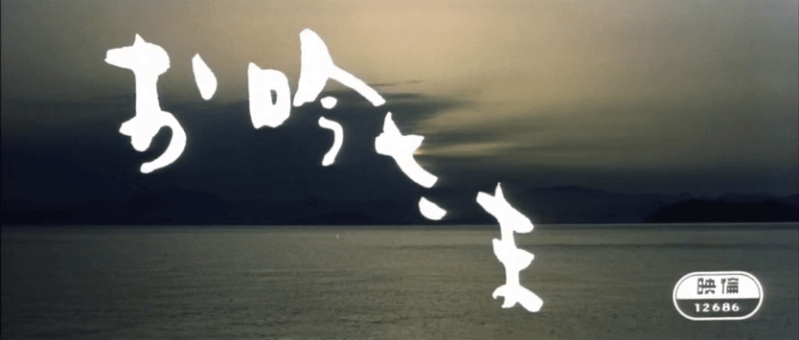
Love Under the Crucifix (お吟さま, Kinuyo Tanaka, 1962)

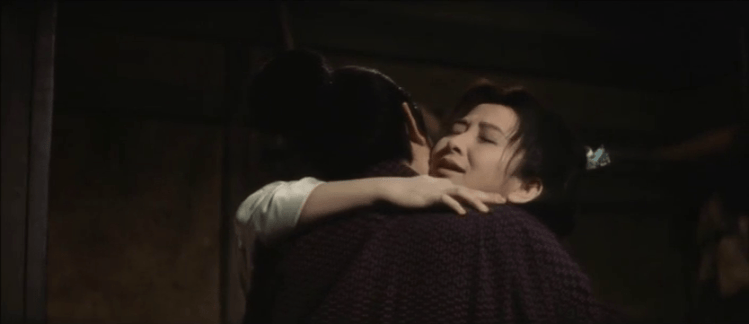
Love Under the Crucifix cap 1A legendary screen actress, Kinuyo Tanaka completed only six films in her career as a director. The last film that she would ever make, Love Under the Crucifix (お吟さま, Ogin-sama), is the only one to be set in the historical past taking place against the backdrop of turbulent late 16th century politics just forty years or so before the nation would embark on 200 years of self imposed isolation undertaken in the name of preserving the national character while solidifying a political regime. As in her other films, however, Tanaka employs a standard melodrama narrative in order to subvert it. Her heroine defies all “for love”, but not so much in itself as for the right to it and to the legitimisation of her feelings as a human woman with all the rights and freedoms that ought to entail.

The film begins in the 15th year of Tensho (or 1587). Toyotomi Hideyoshi (Osamu Takizawa) is attempting to solidify his command over a Japan which is in a state of constant warfare. Meanwhile, foreign trade and influences, including Christianity, are flooding into the nation. There is growing suspicion among Hideyoshi’s advisors that Christian converts are nothing more than foreign spies working to undermine the social order and cannot be trusted. Therefore, Christianity is a spanner thrown in the works of Hideyoshi’s plans for peace and unification, only no one is quite sure as yet what to do about it except disapprove.

Meanwhile, our heroine, Ogin (Ineko Arima), is the step-daughter of prominent tea master Rikyu (Ganjiro Nakamura). She has long been in love with Ukon (Tatsuya Nakadai) – a young lord who has converted to Christianity and is in fact already married. Despite the impossibility of her love, Ogin holds fast to its purity and has refused all entreaties to marry. However, she is placed in a difficult position when it is made clear that a prominent suitor affiliated with the local lord desires her. Rikyu affirms that he will follow Ogin’s will, but Mozuya (Hisaya Ito) is too important a man to be refused out of hand and the consequences of turning him down may be severe. Ogin searches for a sign from Ukon, but he coldly tells her to marry, refusing any confirmation of the feelings which she believes to exist between them.

The film’s English title, Love Under the Crucifix, reminds us that this is not so much a story of religious freedom as social oppression. Divorced form its Christianising context, the crucifix was in this era the primary punishment for sexual transgression, most often for both men and women committing adultery or daring to love in places where society would not approve. Thus Ogin lives her life under it in being reminded of the potential costs of her inappropriate emotions. Even so, observing a young woman tied to the cross (Keiko Kishi) and apparently electing to go to her death rather than become the concubine of the local lord against her will, Ogin sees in it not censure but defiance and path towards personal empowerment if only in ultimate negation.

The literal crucifix becomes a noose around Ogin’s neck in the form of the necklace given to her by Ukon. Ogin remains unconvinced by Ukon’s religiosity even if she respects it but later resents the austerity it provokes in him while wondering if his friendship with her was only ever a pathway to conversion. Ukon’s troubles are multiple, not only is he oppressed by the social strictures of his time but also by an additional burden of Christianising morality which instructs him that his feelings are sinful and must be rejected.

Later, Ogin berates Ukon insisting that all of this suffering and the predicament they now find themselves in might have been avoided if only he had not kept his feelings hidden. Ukon’s religiosity obliges him to behave in ways which are cruel and selfish, and which ultimately bring him little other than additional suffering and unhappiness. This emotional tension has also played into the hands of the ruling regime who are content to use their feelings, and the prevailing tendency towards properness, against them as a plot against Rikyu and to prevent Ukon’s return as a military rival.

Despite Rikyu’s best efforts, Ogin has indeed become a pawn in the hands of men. Rikyu, as we’re reminded at the film’s conclusion, fell from favour and committed ritual suicide at the age of 70. Like Ogin, he remained true to himself even when politically unwise, advancing his philosophies of simplicity and respect for the natural world in the face of what he saw as Hideyoshi’s increasingly gaudy superficiality. Thus he councils Ogin that there is nothing wrong in her feelings and her only duty to him or to anyone else is to try to live happily even if that means she must live in hiding with the less courageous Ukon who refuses to abandon his faith but struggles to find the courage to fight for love, or more specifically for the right to love, as Ogin has done all her life.

Ogin is, in a sense, already on the cross as she continues to suffer not for faith but for faith in love and in her own right to her individual feelings and agency. Faced with being forced to surrender her body to a man she does not love because of a cruel game played by men for men, Ogin prefers death and finds in it the ultimate expression of her personal freedom and emotional authenticity.


Girls of the Night (女ばかりの夜, Kinuyo Tanaka, 1961)

vlcsnap-2019-03-15-00h18m28s351

Working from a Keisuke Kinoshita script, Kinuyo Tanaka’s first film as a director, Love Letter, made a point of exploring the often hypocritical and contradictory attitudes towards women who had engaged in sex work or become the mistresses of American servicemen in the immediate aftermath of the defeat. For her fifth film, Tanaka returns to the same subject but this time adapting a novel by Masako Yana scripted by Sumie Tanaka (no relation) with whom she’d previously collaborated on The Eternal Breasts. Somewhat suggestively retitled Girls of the Night (女ばかりの夜, Onna Bakari no Yoru), Tanaka’s adaptation tones down the novel’s sensuality but dares to ask a series of subversive questions regarding female agency and sexuality in the rapidly changing post-war society.

Set in the contemporary era, the film opens with reportage-style voiceover and newspaper clippings highlighting the enforcement of the anti-prostitution laws of 1958. According to the voiceover, the red light districts of Japan may have all but disappeared but streetwalking and other forms of casual sex work are still very much a part of the post-war economy. In an attempt to bridge the gap between the old ways and new, those arrested by the police are divided into two camps – those deemed beyond “redemption” sent to prison, and the rest to reform centres such as the Shiragiku Protective Facility for Women which is where we find our heroines.

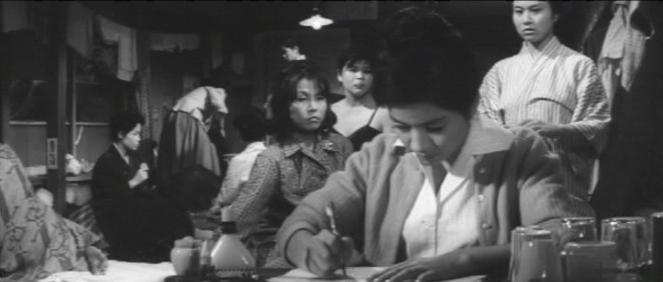
The reform centre itself is a fairly progressive place and much more forward looking that seen in the earlier Women of the Night though perhaps sometimes patronising even as it makes a strenuous attempt not look down on the women who enter its care. Our first entry into the facility is in the company of a similarly well meaning women’s association whose misplaced pity only reinforces their innately privileged position. They are as far from many of these women as it is possible to be and struggle to understand how it is possible that they found themselves engaging in a practice they find both shameful and degrading. Having got to know many of the women through trying to help them, the school’s headmistress Nogami (Chikage Awashima) and her assistant are better placed to understand even if they also apologise that many of the women in their care are of “low IQ” and fail to convey the kinds of pressures that many have been subject to from desperate poverty to bad family situations and abusive relationships.

Abuse and the trauma of abuse remains one of the barriers to the women moving on, as in the reason many of them found themselves in sex work was because of their relationship with an exploitative partner who either forced them to sell their bodies or left them with no other choice in order to support themselves through being unable or unwilling to work. Nogami, a compassionate and understanding woman, is at pains to insist that the reason many of these women see nothing wrong in sex work is that they have an insufficient level of self respect and value their bodily autonomy too cheaply in allowing others to buy and sell access to it without full consideration of everything that implies.

Then again, asked by one of her most promising cases, Kuniko (Hisako Hara), what is actually so “bad” about sex work, Nogami is forced to admit that she doesn’t know – only that it is now illegal and her job is to help these women live “honest” lives within law. It is difficult to evade the hypocrisy that Nogami is telling these women that they should exercise full agency over their bodies while simultaneously telling them what they shouldn’t be doing with them, but then for all the centre’s talk about “purity” Nogami herself is refreshingly frank and practical in her approach to helping these women towards reintegration into mainstream society in the assumption that that is something they would want rather than out of any quasi-religious ideas of moral goodness.

Shame and social stigma, however, become another barrier as Kuniko finds to her cost in her attempts to move on from the centre. At her first placement as a live-in assistant at a grocer’s, she is quickly outed by a nosy deliveryman already acquainted with the true nature of the Shiragiku centre. The exposure of Kuniko’s past provokes not only mild disgust and suspicion among “respectable” people but also unwanted male attention from those who assume her former life as a sex worker means that they are already entitled to her sexuality with or without her consent.

Thinking the direct approach might be better, Kuniko decides to share her past with the ladies in the dorm at her next job in a factory but they are not quite as supportive as she might have hoped. Despite the fact that many of these young women are sexually active and in fact involved in what might be thought of as acts of casual sex work, they collectively look down on Kuniko while also seeking to exploit her both for the practical knowledge they assume she must have and by attempting to pimp her out to other men they know. When the attempt fails (Kuniko humiliates the three men who try to pressure her into sex by frightening them off with nothing more than confidence and self-possession), the women turn on her and enact an extremely violent and sadistic revenge.

Despite what she observed at the centre, Kuniko learns to her cost that she cannot necessarily rely on female solidarity as a bulwark against male exploitation. Nevertheless, it is to female communities and friendships that she ultimately returns. The leader of the women’s group from the beginning turns out to be less of a dilettante than she first seems and eventually takes Kuniko in with a promising job in a rose a garden which seems to suit her perfectly. Roses, however, have thorns – this one’s being her tentative relationship with gardener Hayakawa (Yosuke Natsuki) who is aware of her past but falls in love with her anyway only for her romance to hit the barrier of entrenched social mores when she discovers that Hayakawa is in fact a member of a noble family. In another instance of women not helping women, Hayakawa’s mother puts the kibosh on her daughter-in-law being a former sex worker which both reinforces Kuniko’s sense of being irreparably damaged and makes her feel as if she has become a problem for a man with whom she has fallen in love. Vowing to live up to Hayakawa’s vision of her as a “pure” woman, Kuniko retreats once again to a supportive community of women – this time of pearl divers in what seems to be an act of spiritual cleansing.

In Kuniko’s final identification of the “disgracefulness” of her past and declaration that she does not hate the world but only herself, Girls of the Night shifts into a more conventional register than the broadly empathetic, subversively positive attitude it had hitherto adopted towards the idea of sex work and the women who engage in it, opting to blame the woman rather than engage with the various forces of social oppression which attempt to micromanage female sexuality. Nevertheless, Tanaka’s deft touch remains as sympathetic as it’s possible to be in affirming that there is a path forward for those who might feel trapped by past transgression even if it simultaneously insists that its heroine save herself only by rejecting her happy ending in atonement for her past “sins”.


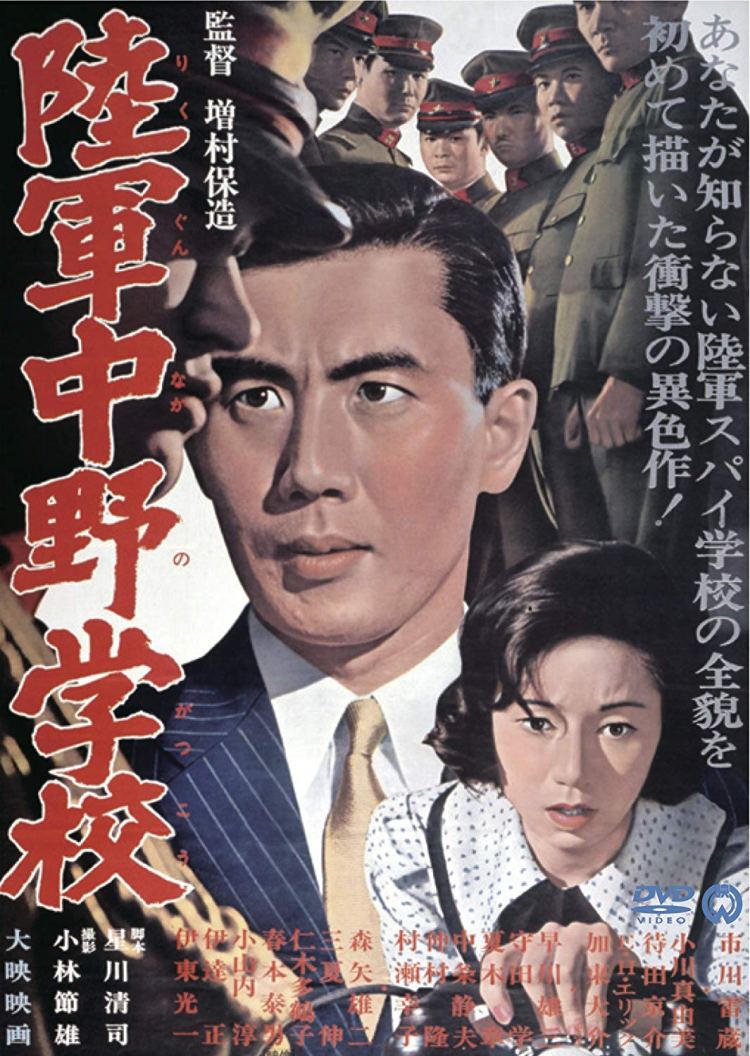
Nakano Spy School (陸軍中野学校, Yasuzo Masumura, 1966)

Nakano Spy School posterFor Yasuzo Masumura, freedom and individuality were often elusive concepts in a society as rigidly conformist as Japan’s even in the increasingly liberal post-war era. Casting an eye back almost 30 years, 1966’s Nakano Spy School (陸軍中野学校, Rikugun Nakano Gakko) stopped to ask what it took to make young men and women abandon their sense of self in order to become faceless warriors for cause in which it was extremely difficult to believe. Masumura described his spy story not as a critique of militarism but of the naivety of youth, carried away by misguided passions and essentially seduced by a corrupted sense of romantic heroism.

In October 1938, reservist Jiro Miyoshi (Raizo Ichikawa) has been putting off marriage to his fiancée Yukiko (Mayumi Ogawa) until he’s completed his obligatory two years of military service overseas. At the mercy of his times, he’s suddenly given a new and mysterious assignment as one of the first recruits to the Nakano Spy School – the first military intelligence training school in Japan. He tells his family that he’ll be away for an unspecified period of time but unbeknownst to him, entering the spy school will require a complete erasure of his original identity. Miyoshi will cease to exist, and Shiina will take his place.

Masumura paints the spy school with a hint of absurdist camp clearly inspired by James Bond as the recruits take lessons in ridiculous gadgetry, safecracking, and the erotic arts while learning to act like gentlemen even if not exactly born to the manor. What he’s most interested in, however, is how these fiercely intelligent and brave young men were convinced to abandon their identities in order to serve an abstract cause like country. The answer he finds, surprisingly, is “passion”. Jiro is among the first to question the rationale of their would-be-spymaster who tells them that their role will be indispensable in Japan’s ongoing activities in Asia in order to “liberate” to continent from European imperialists. An exasperated recruit points out that Japan’s main aim is colonisation which doesn’t quite square with Lieutenant Kusanagi’s (Daisuke Kato) depiction of them as revolutionary insurrectionists. Kusanagi agrees but offers only the justification that he set the school up against the army’s wishes because he knew things had to change. He doesn’t quite claim to be anti-militarist despite his insistence that a spy’s greatest weapon is empathy, but appeals to a sense of righteousness rather than loyalty in winning hearts and minds.

A strange, avuncular man, Lieutenant Kusanagi is an odd fit for the militarist crowd. A former spy himself, his entire conception of spyhood seems to be informed by European romance which is why he trains his guys to become suave gentlemen who know how to be charming at dances and manipulate feminine affection in order to facilitate their missions. Nevertheless, despite his affiliation he appears to be a basically good, noble hearted man who cares deeply for the men under his command even in the knowledge that he is training them for a precarious existence in which many of them will die young. He asks them to abandon not only their presents but their futures and they do it, not for Japan but for this very good, very earnest man who has earned their respect and whose dream they wish to realise even at the costs of their lives.

Jiro is only too quick to forget about Yukiko after throwing his lot in with Kusanagi. Yukiko, however, is frantic and leaves her job working for a British trading company to become a typist with the army in the hope of hearing news of him. Her position in the office obviously makes her a top asset for British intelligence by whom she eventually recruited. Her former boss, who turns out to be a high ranking spy, tells her that Jiro is dead – executed for speaking out against the war, and that her real enemy is none other than the Japanese army whose iron militarist grip is slowly destroying her nation.

Like Jiro, Yukiko is recruited through “passion” only this time out of anger and revenge, hastening the fall of those she believes responsible for the death of the man she loves. The irony is cruel. Jiro is presented with a choice – on discovering that Yukiko is a mole, he could choose to save the woman he loves but risk losing the chance to take down the operative that is running her. His original choice is to do nothing, allow events to take their course and absolve himself of responsibility even in the knowledge that if caught Yukiko will face extreme cruelty at the hands of the military police. He never considers rescue. Only a conversation with the kindly, remorseful Kusanagi leads him towards a “kinder” solution which is in itself a kind of spiritual suicide.

It is this question that Masumura wants to ask, what force is so strong that it could make a young man wilfully destroy his humanity in its service? The answer isn’t patriotism, it’s a kind of misplaced love and the passionate earnestness of a good man who himself is working for a misguided cause in which he believes totally. Jiro does not sacrifice himself for Japan, he sacrifices himself for Kusanagi because Kusanagi is good and he is young and naive enough to be swayed by goodness and passion alone. It is not militarism which seduces Jiro, but the misuse of his youthful idealism and absolute faith in the righteousness of one man who convinced him that he too was good and could act only in goodness.


Original trailer (no subtitles)

Fly Me to the Saitama (翔んで埼玉, Hideki Takeuchi, 2019)

Fly Me to the Saitama posterThe suburbia vs metropolis divide can be a difficult one to parse though there’s rarely a culture that hasn’t indulged in it. In England, for example, suburbia is to some a byword for quiet respectability, an aspirational sort of village green utopianism built on middle-class success as opposed to frivolous urban sophistication. Then again, city dwellers often look down on those from the surrounding towns as “provincial” or even dare we say it “common”. Saitama, a suburban area close enough to Tokyo to operate as a part of the commuter belt, has long been the butt of many a joke thanks to a quip from an ‘80s comedian which labeled it “Dasaitama” in an amusing bit of wordplay which forever linked it with the word “dasai” which means “naff”.

“Dasaitama” is a label which seems to haunt the protagonists of Hideki Takeuchi’s adaptation of the popular ’80s manga by Mineo Maya. Fly Me to the Saitama (翔んで埼玉, Tonde Saitama) opens in the present day with an ordinary family who are accompanying social climber daughter Aimi (Haruka Shimazaki) to Tokyo for her engagement party. While dad is quietly seething over this perceived slight to his beloved homeland, someone turns on the local radio station which is currently running an item on an “urban legend” about a long ago (well, in the ‘80s) period of oppression in which residents of Saitama (and other neighbouring “uncool” towns) had to get a visa to travel to Tokyo where they were treated as second-class citizens fit only for the jobs regular Tokyoites didn’t want to do and forced to live in hovels (which the snobbish city dwellers somehow thought made them feel more at home). The legend recounts the tale of a brave revolutionary who convinced the Saitamans to rise up, shake off their internalised feelings of inferiority, and reclaim their Saitama pride!

Shifting into an imagined fantasy of 20th century Japan which is in part inspired by warring states factionalism, Fly Me to the Saitama is, in the words of Aimi, a kind of “boys love” pastiche which riffs off everything from The Rose of Versailles to Star Wars while indulging in the (happily) never really forbidden love of mayor’s son Momomi (Fumi Nikaido) who has a girl’s name and feminine appearance but is actually a guy, and the dashing would-be-revolutionary Rei (Gackt) who has just returned from studying abroad in America and inevitably brought back some original ideas about individual freedom and a classless society. Having been born and raised in Tokyo, Momomi has a fully integrated superiority complex which encourages him to look down on Saitamans as lesser humans, almost untouchables, whose very existence is somewhat embarrassing. Only after being humbled, and then kissed, by Rei are his eyes opened to the evils of inequality and the ongoing corruption within his own household.

It goes without saying that much of Fly Me to the Saitama’s humour is extremely local and likely to prove mystifying to those with only rudimentary knowledge of daily life in Japan at least as far as it extends to regional stereotypes and ambivalent feelings towards hometown pride in a nation in which many still find themselves taking care not to let their accent slip after having moved to the capital lest they out themselves as an unsophisticated bumpkin. Yet there is perhaps something universal in its fierce opposition towards ingrained snobberies and petty class hierarchies which pokes fun both at the social climbing small-towners like Aimi desperate to escape the “dasai” countryside for the bright lights of Tokyo, and her proudly “dasai” dad, while asking the hoity-toity Tokyoites to get over themselves, and making a quiet plea for a little peace, love, and understanding along the way.

Then again, the Saitamans may have had a little more than freedom on their minds. If the “Saitamafication” of the world resulted in an expansion of mid-range shopping malls and chain restaurants filled with peaceful, happy people would that really be such a bad thing? Saitama might not be as “exciting” or as “cool” as Tokyo but it’s a nice enough place to live when all’s said and done. Perhaps that’s a frightening thought, but if the Saitama revolution ushers in a brave new world of freedom and equality then who really could argue with that?


Fly Me to the Saitama is screening as the opening night movie of the eighth season of Chicago’s Asian Pop-Up Cinema on March 12 at AMC River East 21, 7pm where director Hideki Takeuchi will be present in person for an introduction and Q&A.

Original trailer (English subtitles)

Nazeka Saitama – a novelty record released in 1981 and somewhat appropriately recorded in a style popular 15 years earlier.

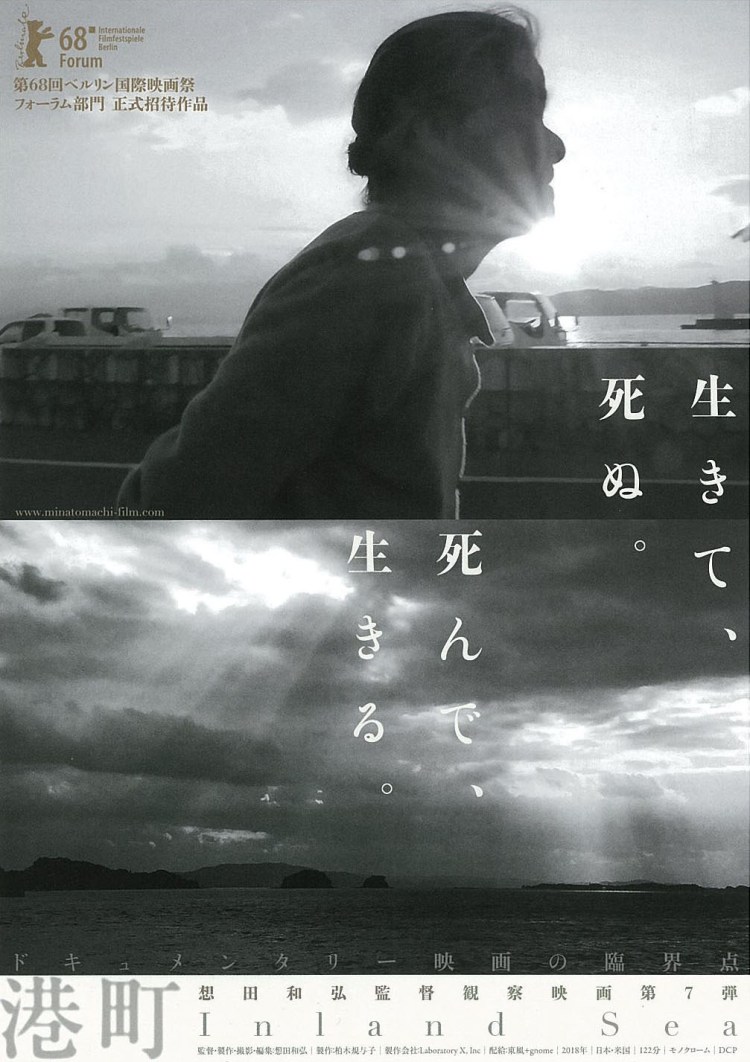
Inland Sea (港町, Kazuhiro Soda, 2018)

Inland sea posterJapan’s ageing population continues to provoke shifts in the social fabric, not least in small rural towns where the elderly now dominate and have been largely left to fend for themselves as if time had simply left them behind. Following his previous documentary Oyster Factory, documentarian Kazuhiro Soda returns to small town coastal Japan with Inland Sea (港町, Minatomachi). Focussing on the village of Ushimado, he observes those still clinging on to an archaic way of life despite advanced age and increasing hardship.

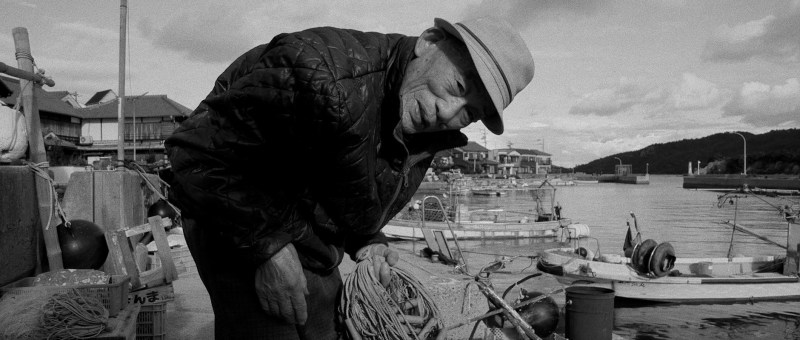
The first of Soda’s primary subjects, Waichiro, is now 86 years old and hard of hearing yet he still takes his boat out every day to fish in the hope of returning home with a prime catch. His living is, as he explains, precarious given that his equipment is now expensive while the price of fish has severely declined. A later meeting with fishmonger Koso makes plain that not every catch is equal – live(ly) fish fetch the most money, while dead ones bring in in only half and like everything else the price of fish is also dependent on demand.

Koso refuses to tell us her “real” age outside of amusingly describing herself as a “late stage elderly” which sounds like something she probably read on a well meaning but somewhat patronising government leaflet. In any case, she is a sprightly, energetic woman who seems far younger than her years and is something of a neighbourhood hub as she makes her rounds delivering fresh seafood to the mostly elderly residents who eagerly await the next tasty catch.

Most of the other residents are, however, more like Waichiro in advanced old age and mostly left to their own devices now that their children have left for the cities never to return. Kumiko, an 84-year-old widow who still works by the waterside preparing fish is just one such woman with a heartbreaking post-war story she later relates in a typically matter of fact fashion. Becoming a kind of guide for Soda and his producer as they explore the small village, Kumiko often attempts to steal the spotlight – bad mouthing her neighbours live on camera while they stand right behind her as in the case of her apparent bestie whom, she insensitively tells us, has “no friends” and a poor relationship with her family despite having eight children which most of the other lonely older people might consider as something of a luxury.

Relating her sad life story in which she laments a feeling of disconnection from the place in which she lives owing to having lost her family in the war and been adopted at age four by a fisherman and his wife who denied her an education (as was the thinking in those days), Kumiko lays bare a melancholy underside of the post-war boom which seems to have left towns like these (the ones that survived at all) almost untouched as if frozen in time. The world has pulled away, leaving Ushimado behind like a rock pool filled with water long after the tide has gone out.

Soda’s decision to regrade the film in black and white after shooting in colour adds a poignant touch to his casting of Ushimado as a place somewhat out of time. Wandering around, Kumiko begins to point out empty houses, mostly belonging to the recently deceased, which make up the bulk of the town and it’s true that the vast majority of the people we meet are older save perhaps for a younger woman helping at a cafe and a middle-aged one who takes care to feed the many stray cats who are the area’s other main residents with leftover fish offal. There is, however, perhaps fresh hope for towns like Ushimado as evidenced by the mild surprise expressed in discovering the range of dishes on offer at the local coffee shop seeing as technological advances and better transport links may help to draw some of those who left for the city back to the country even if not to fishing. At the very last, colour returns to the screen reminding us that there is life in this place still and that its stillness should not be mistaken for transience.


Streaming almost globally via Mubi until 1st April 2019.

Original trailer (English subtitles)

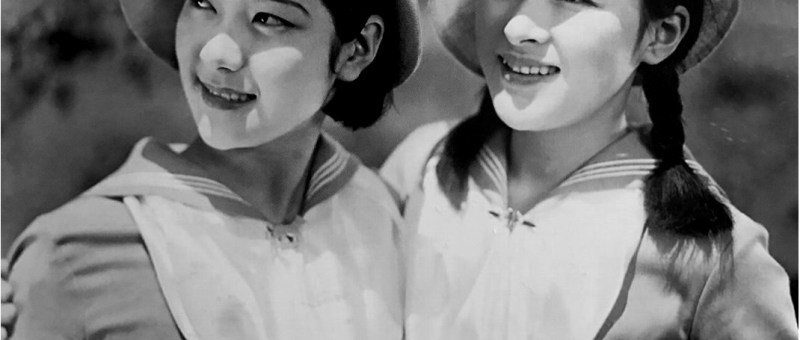
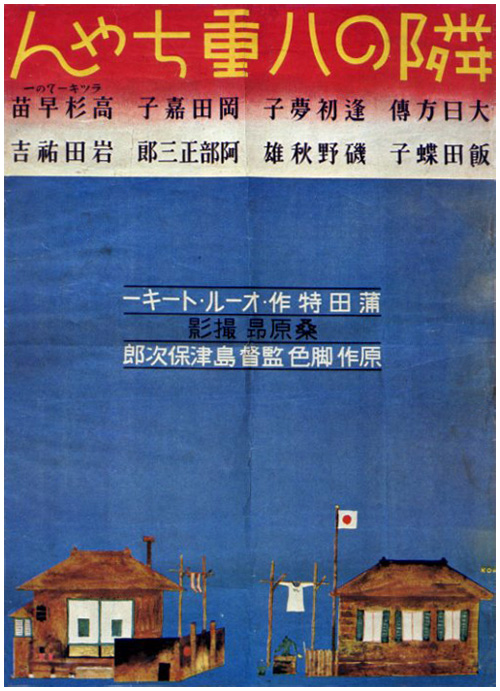
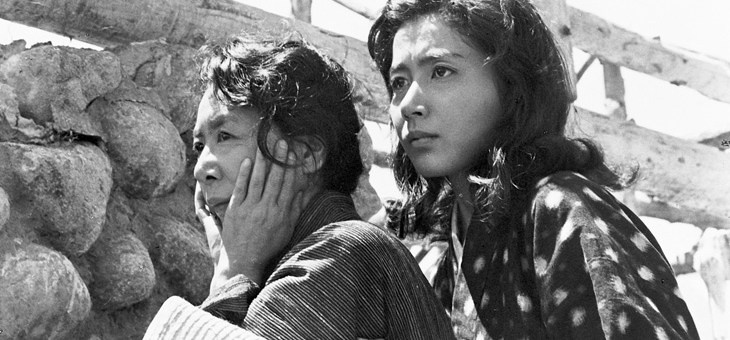
Our Neighbor, Miss Yae (隣の八重ちゃん, Yasujiro Shimazu, 1934)

Our Neighbour Miss Yae poster

Retrospectively, Japan in the 1930s looks like a time of misery and darkness, permanently overshadowed by oppressive government and coming tragedy. However, life went on much as it had before with all its customary joys and sorrows. The films of Yasujiro Shimazu are indeed among the least politicised of the era (which might make them, in an odd way, among the most politicised) and Our Neighbour, Miss Yae (隣の八重ちゃん, Tonari no Yae-chan) is no exception in its presentation of the everyday easiness between two very close families and the burgeoning romance between the younger daughter and older son of each.

Notably, the film opens with a scene of intense suburbia as the brothers, middle-schooler Seiji (Akio Isono) and university student Keitaro (Den Obinata), play catch in the yard training for Seiji’s big game at which he has a shot at playing at the legendary Koshien stadium. As young men are want to do, they break next-door’s window but luckily Mrs. Hattori (Choko Iida) across the way is a nice woman who hardly minds, especially as this is such a regular occurrence that the families almost have an account with the local glazers.

The Hattoris and the Arais are so close that it’s no problem at all for Keitaro to jump the fence and hang out with Mrs. Hattori, who even offers to feed him, when he arrives home early to find himself locked out while his mother (Ayako Katsuragi) has gone shopping. Despite his ease in the Hattoris’ home, he is flustered when the girl next-door, Yae (Yumeko Aizome), gets back from a school with a friend in tow. Even more so when he overhears the two girls’ typically teenage conversation in which they briefly touch on Yae’s possible feelings for him while somewhat provocatively discussing breast size – something Keitaro awkwardly chastises Yae for when she returns to the living room in more comfortable clothing.

Shimazu dramatises Keitaro’s embarrassment through his ongoing clumsiness – first of all spilling tea on his floor cushion and attempting to hide it by folding the cushion in half and placing it oddly between thighs and calves, and then by tipping pickles everywhere while awkwardly trying to share them with Yae (much to the amusement of her perspicacious friend who has missed absolutely nothing in this series of awkward exchanges). Yae eventually tries to take the cushion back as it’s a good one only meant for “guests” (which she evidently does not regard Keitaro to be) only to discover his mishap with the tea which is something they can all have a good laugh over. Through all of this Keitaro and Yae seem almost like a young couple already, gently bickering but with real affection. It’s all very innocent but also flirtatious to the extent that the offer to darn a pair of socks almost seems like an elaborate metaphor but then really what could say true love better than a willingness to deal with someone’s stinky footwear?

Seiji is forced to recall his brother’s cute and innocent piece of flirtatious banter when commiserating with Yae’s melancholy older sister, Kyoko (Yoshiko Okada), who returns home unexpectedly after having apparently walked out on an unhappy marriage. An act unthinkable to her mother, Kyoko resolves to have a divorce on account of her husband’s improper relations with the maid and generally frivolous character. Keitaro jokingly said that if he had a wife he’d make her put his socks on for him everyday and she’d have to do it. Keitaro might have been joking, but there’s something in what he said and in Kyoko’s insistence that she doesn’t want to be so “submissive”, preferring to be alone rather than spend another second with a man for whom she has no respect.

Kyoko is, after a fashion, the film’s antagonist in that she begins to come between Yae and Keitaro, destabilising the easy relationship between the families by introducing unexpected tension into the otherwise happy Hattori home. Longing to return to a more innocent girlhood but mindful that she can no longer be as “pure” as Yae, Kyoko is torn between two different kinds of being. She takes on the male role, using her status and position in an attempt at seduction. Becoming a third wheel on Yae’s attempt to ask Keitaro out to the pictures, Kyoko buys the whole gang dinner at an expensive restaurant at which she gets roaringly drunk and falls asleep on Keitaro’s shoulder in the cab on the way home. Noticing Keitaro’s discomfort and irritated on a personal level, Yae asks her to move only for Kyoko to state, ironically, that as she’s paid for the evening she’s sure he can put up with it.

In any case, Kyoko becomes an unanswered question. She remains trapped, wanting her independence but unable to access it. She refuses to return to her husband, but finds scant support from her family who remain preoccupied with potential scandal and the difficult future prospects for a divorced woman. Despite Mrs. Arai’s reassurance that perhaps those things no longer matter so much to younger people, which both women seem to view as a positive development, Mrs. Hattori fails to see the effect her disapproval is having on her daughter’s mental state until it is too late. 

Shimazu doesn’t seem to have much of answer for what to do about women like Kyoko save to leave the question dangling. He does not send her back to her (possibly abusive) husband or find a way for her to move past her difficult circumstances but allows her to become another lost woman whose sense of possibility has been gradually eroded by an oppressive society. Nevertheless, counter to her melancholy we have the girlish innocence of Yae who seems to be on a path of natural, easy connection with the straightforward Keitaro. Even so, her brief idyll is then ruptured by political interventions which might take her far away from her putative love. This potential disaster is eventually partially reversed, mimicking the familiar pattern that one family must be broken in order for another to be formed though in a somewhat perverse fashion that sees Yae become a temporary member of the Arai household but as something more like a sister.

This final intervention of the political is the only hint of external darkness. Shimazu’s vision of ordinary contemporary life is a cosmopolitan one filled with Hollywood glamour which references Fredric March and takes the gang to watch a fairly disturbing Betty Boop cartoon on the big screen while the boys dream of baseball glory and the parents look on mystified but happy. Yet despite the generalised happiness of the serene suburban world they inhabit, there is a mild note of disquiet presented by a deliberate lack of resolution which sends Yae, no longer a neighbour, skipping off happily into the future full of childish innocence while others make their way in a much less certain world.


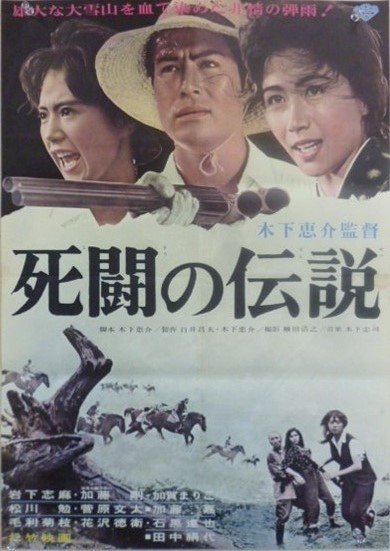
A Legend or Was It? (死闘の伝説, Keisuke Kinoshita, 1963)

A Legend or Was it posterIn 1951’s Boyhood, Kinoshita had painted a less than idealised portrait of village life during wartime. With pressure mounting ranks were closing, “outsiders” were not welcome. The family at the centre of Boyhood had more reasons to worry in that they had, by necessity, removed themselves from a commonality in their ideological opposition to imperialism but newcomers are always vulnerable when they find themselves undefended and without friends. 1963’s A Legend or Was It? (死闘の伝説, Shito no Densetsu, AKA Legend of a Duel to the Death) tells a similar story, but darker as a family of evacuees fall foul not only of lingering feudal mores but a growing resentment in which they find themselves held responsible for all the evils of war.

Beginning with a brief colour framing sequence, Kinoshita shows us a contemporary Hokkaido village filled with cheerful rural folk who mourn each other’s losses and share each other’s joys while shouldering communal burdens. A voice over, however, reminds us that something ugly happened in this beautiful place twenty years previously. Something of which all are too ashamed to speak. Switching back to black and white and the same village in the summer of 1945, he introduces us to Hideyuki Sonobe (Go Kato) who has just come home from the war to convalesce from a battlefield injury. Hideyuki’s engineer father went off to serve his country and hasn’t been heard from since, and neither has his brother who joined the air corp. His mother (Kinuyo Tanaka), sister Kieko (Shima Iwashita), and younger brother Norio (Tsutomu Matsukawa) have evacuated from Tokyo to this small Hokkaido village where they live in a disused cottage some distance from the main settlement.

The family had been getting by in the village thanks to the support of its mayor, Takamori, but relations have soured of late following an unexpected marriage proposal. Takamori’s son Goichi (Bunta Sugawara), a war veteran with a ruined hand and young master complex, wants to marry Kieko. She doesn’t want to marry him, but the family worry about possible repercussions if they turn him down. It just so happens that Hideyuki recognises Goichi and doesn’t like what he sees – he once witnessed him committing an atrocity in China and knows he is not the sort of man he would want his sister to marry, let alone marry out of fear and practicality. Hideyuki, as the head of the family, turns the proposal down and it turns out they were right to worry. The family’s field is soon vandalised and the police won’t help. When other fields meet the same fate, a rumour spreads that the Sonobes are behind it – taking revenge on the village on as a whole. The villagers swing behind Goichi, using the feud as a cover to ease their own petty grievances.

City dwellers by nature, the Sonobes have wandered into a land little understood in which feudal bonds still matter and mob mentality is only few misplaced words away. The village serves a microcosm of Japanese society at war in which Takamori becomes the unassailable authority and his cruel son the embodiment of militarism. Goichi embraces his role as a young master with relish, riding around the town on horse back and occasionally barking orders at his obedient peasants, stopping only to issue a beating to anyone he feels has slighted him – even taking offence at an innocuous folksong about a man who was rejected in love and subsequently incurred a disability. Despite all of that, however, few can find the strength to resist the pull of the old masters and the majority resolutely fall behind Goichi, willing to die for him if necessary.

As the desperation intensifies and it appears the war, far off as it is, is all but lost, a kind of creeping madness takes hold in which the Sonobes become somehow responsible for the greater madness that has stolen so many sons and husbands from this tiny village otherwise untouched by violence or famine. An embodiment of city civilisation the Sonobes come to represent everything the village feels threatened by, branded as “bandits” and blamed for everything from murder to vegetable theft. The central issue, one of a weak and violent man who felt himself entitled to any woman he wanted and refused to accept the legitimacy of her right to refuse, falls by the wayside as just another facet of the spiralling madness born of corrupted male pride and misplaced loyalties.

Kinoshita returns to the idyllic countryside to close his framing sequence, reminding us that these events may have been unthought to the level of myth but such things did happen even if those who remember are too ashamed to recall them. Tense and inevitable, A Legend or Was It? reframes an age of fear and madness as a timeless village story in which the corrupted bonds of feudalism fuel the fires of resentment and impotence until all that remains is the irrationality of violence.


Original trailer (no subtitles)

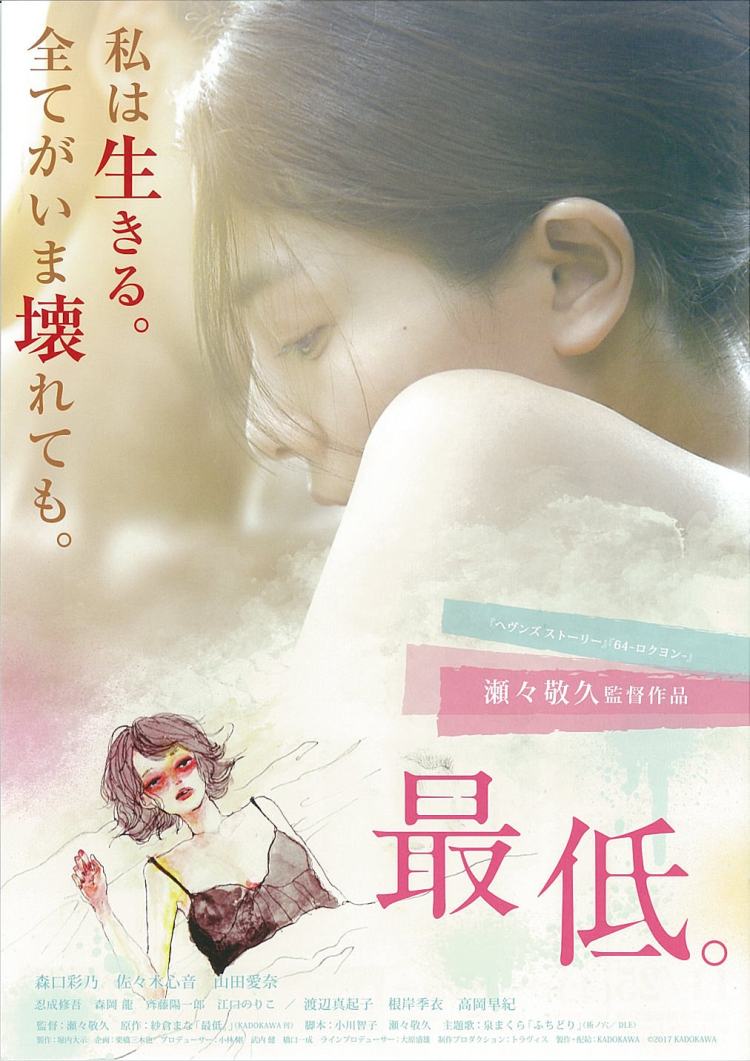
The Lowlife (最低, Takahisa Zeze, 2017)

The Lowlife 2017In terms of the mainstream cinema industry, the AV (“adult video”) world is viewed with suspicion and distain. AV is where unlucky women end up after having the misfortune to encounter unscrupulous yakuza or be born to feckless parents whose debts they are forced to pay with their bodies. However, mainstream cinema perhaps has a reason to demonise its rival on top of reflecting persistent social stigmas relating to the expression of sexuality. Takahisa Zeze began his career in “pink film”, which is to say softcore pornography, and casts a non-judgemental eye over the modern hardcore porn scene in The Lowlife (最低, Saitei), adapting a novel by AV actress and gravure model Mana Sakura which explores the lives of three women who each have been impacted by the industry.

The first two of our heroines – college dropout Ayano (Kokone Sasaki), and melancholy housewife Miho (Ayano Moriguchi), have made a free choice to enter the AV industry mostly out of loneliness and insecurity. Ayano, who claims to be the only “ugly” one among her many sisters, is convinced to take part in a porn shoot by an unscrupulous boyfriend but finds herself reassured in being adored by the camera and appreciated on set, if only briefly. Miho, meanwhile, is trapped in an unsatisfying marriage to a man who has begun sleeping in his study and continually puts off the discussion of starting a family despite Miho’s intense desire to become a mother. Checking on her husband one morning she is dismayed to find a porn DVD in the open tray of his laptop which feels like a double betrayal in that he has obviously not been “working” all night and has avoided intimacy with her while finding release somewhere else. Irritated, Miho takes the extreme decision of becoming a porn star herself as a strange kind of revenge and motion towards personal fulfilment.

Our third heroine, Ayako (Aina Yamada), however, is looking at the same problem from a different angle in that she is daughter of a single-mother who had previously worked in the porn industry before returning home to her own single-mother to start again and raise her daughter. Takako (Saki Takaoka) is a difficult, flighty woman who still likes to live the high life drinking with random guys and rolling in late or sometimes not at all to the constant worry of her anxious daughter. A gifted artist, Ayako is a shy, gloomy girl who finds it hard to connect with her peers and resents her mother for her unconventional lifestyle. Her problems intensify when she wins a prominent art prize and irritates a classmate who seems to be stalking her causing him to spread the rumour of Takako’s past all over the school.

Social stigma is indeed one of the main problems each of the women face. Ayano, who seems to be otherwise happy enough with her life AV, gets an unexpected visit from her concerned mother and scornful sister when someone presumably spots her in a video and decides to have a word. As Ayano points out to her annoyingly judgemental sister, that means whoever told them just outed themselves as an AV-watcher so perhaps she should ask her boyfriend about that before making sarky comments. Nevertheless, nobody really says anything about the men who consume pornography, only about the “immoral” women who star in them. Ayano’s mother Izumi (Makiko Watanabe) blames herself, complaining that Ayano was the only one of her daughters she never quite bonded with, by turns angry with her for “shaming” the family and concerned that she has “thrown her life away” by becoming forever tainted with the stigma of having been involved in the sex industry.

Corrupted maternity becomes a somewhat uncomfortable theme as each of the women assesses their relationships with other women in the context of the traditional family. Having given up work and become a housewife as society expects, Miho has done everything right but is intensely unhappy because her husband will not move to the next step by starting a family. At 35, she feels her life stagnating, that everything is already settled and nothing will change from now until the time she dies. Neglected by a husband who seems to have lost interest in her as a woman as well as in their shared endeavour of building a home, she finds herself drawn to AV as a path to sexual fulfilment which isn’t really infidelity while also subverting her image of superficial perfection and embracing another identity outside of the home. She remains, however, conflicted as she gazes jealously at a happy family out on holiday at the pleasant mountain lodge where they’ll shoot the movie away from prying eyes. Her involvement in AV is, in a way, also an act of self harm as she punishes herself for her inability to become a mother, while also getting back at her disinterested husband.

Even so, Zeze is careful to frame the AV industry in a positive light. On arrival at the agency, Miho is greeted by an extremely sensitive and sympathetic manager who does his best to ease her concerns while making her feel safe at her most vulnerable. Having felt so neglected and lonely at home, the AV world provides her with a place that she is appreciated, desired as a woman and treated like a star. Similarly, Ayano who had believed herself “ugly” and unlovable begins to gain confidence in herself thanks to being appreciated by the camera, eventually striking up a relationship with a nice guy journalist in a bar which seems like it might develop into something more. While some might argue that the industry is merely exploiting feminine insecurities, it cannot be denied that both women find in it a path towards self acceptance and actualisation.

Despite the fiercely non-judgemental tone, a late plot twist further casts Miho’s transgression as a fall rather than a rise while an eventual connection with Ayako further deepens the maternal subtext as she completes the circle by mothering the lost young woman trying to come to terms with her atypical family situation. Ayako’s grandmother too seems to prescribe motherhood as the answer to all life’s mysteries even if the answer is often that they can’t be solved and all that remains is the urgency of living. Zeze’s depiction of the porn industry might be a rosy one glossing over the seamier side in favour of presenting a world built on empowerment rather than exploitation, but its infinitely sympathetic eye makes plain that porn is just a job like any other and the women who work in it do not deserve the scorn that society often chooses to heap on them.


Original trailer (no subtitles)