The Island Closest to Heaven (天国にいちばん近い島, Nobuhiko Obayashi, 1984)

On its publication in the mid-1960s, Katsura Morimura’s autobiographical travelogue The Island Closest to Heaven (天国にいちばん近い島, Tengoku ni Ichiban Chikai Shima) became something of a publishing phenomenon and is credited with creating a romanticised image of the Pacific islands in the post-war Japanese imagination. Nobuhiko Obayashi’s 1984 film adaptation in fact prominently features adverts for the UTA New Caledonia tour and acts as something like a tourist information video showcasing the idyllic island scenery and well appointed resort accommodation if also later featuring the decidedly less well appointed establishments on the other side of town where the locals live and and work. 

It is however first and foremost a vehicle for Kadokawa idol star Tomoyo Harada who had made her debut in Obayashi’s The Little Girl Who Conquered Time and was now onto her third lead having starred in Curtain Call earlier in the year which Haruki Kadokawa had directed himself. As such, the film is only loosely based on Morimura’s novel, recasting the heroine as a recently bereaved 16-year-old embarking on a coming-of-age adventure while travelling overseas looking for herself and a sense of the safety and stability she experienced before her father’s death. 

In the prologue sequence which opens the film, shot with a muted, pink-tinted colour filter, a younger Mari sits on the edge of a bridge with her father holding her from behind. As both she and her father are dressed in yukata, as are others who pass them on the bridge, we can assume that it is summer and possibly around the time of Bon festival which adds an extra degree of poignancy to their conversation in which her father quietly clearly anticipates his own death. He tells her about a distant island far to the south and close enough to Heaven for God to call on where it is always warm and sunny and the people always happy. Mari asks for the name of the place and is told it is called New Caledonia, possibly a name her father picked out of the air without thinking but becomes to her a symbol of the bond that existed between them and place she must visit now that her father is no longer physically present in her life. 

What she’s looking for is in a sense a path back to her father or at least a means a coming to terms with his absence. Her mother (Kayo Matsuo) may appear somewhat indifferent, but it’s clear that it’s a kind of pride she feels in her daughter’s first steps into adulthood knowing that she has raised a determined young woman if one with her head in the clouds like her father. Her sentiment is later echoed by an older woman (Nobuko Otowa) who has come to New Caledonia in order to make peace with the death of her husband 39 years previously when his submarine was sunk during the war, stating that all these years later her abiding memory is pride that she fell in love with someone she could be proud of. “Love is the story of your whole life” she tells Mari, who is herself just beginning to understand that life is a process of love and loss as she searches for her island and eventually finds it in the eyes of a local boy who yearns for an island far to the north where it’s always bright and sunny and the people are always happy. 

Mari’s interactions on the island are torn between two men, the young Taro (Ryoichi Takayanagi) who is fascinated by the idea of Japan where his grandfather first came from to dig nickel, and a much older man, Yuichi (Toru Minegishi), who seems to be arrested, stuck on the island and unable to move forward with his life because of a youthful broken heart. Mari reminds him of the young woman he loved and lost, trying to recapture the magic with a moment that seems to reference Jules Verne’s The Green Ray, but of course failing to do so. There is something uncomfortable in their relationship given that Mari is only 16 and this man is perhaps already in his 40s, yet her decision to leave the safety of the tour group and venture astray with him to find what she is looking for rather than what the tour guide wants to show her demonstrates her independent spirt and impending adulthood in taking an active control over her life and future. 

In this way the island is a liminal space in more ways than one, symbolically connecting the mortal world and the other while allowing Mari to transition into adulthood as symbolised by her return home now no longer wearing her glasses in having opened her eyes to a fuller reality. Nevertheless, the film does follow the line of the book which is very of its time in its presentation of the indigenous community which is bound up with the idea of a smiling island people lazing in the sun of a tropical paradise while possessing profound spiritual knowledge. Mari’s literal coming of age is symbolised by a fever she endures after being stung by a sting ray, coming to during a tribal dance and then collapsing again to awaken as if reborn into adulthood.  

After this transition it’s implied that her relationship with Taro will have to end, that this brief summer adventure like so many in Obayashi’s films was just about making memories to carry forward in the further course of life. But then as her seemingly unburdened tour group friend had pointed out, Mari found Taro by chance twice before and so may someday find him again just as Mari’s intervention has earned Yuichi and his first love a second chance no longer so enthral to the illusionary power of the green ray but making choices informed by the realities of love that may still be “romantic” if no longer quite so naive. Shifting into a more contemplative register than other similarly themed Kadokawa idol movies, The Island Closest to Heaven is one of Obayashi’s most straightforward features save for its brief use of colour filters in the opening and closing scenes and the lengthy title sequence which draws inspiration from classic Hollywood melodrama, but engages with some of his key themes in the romantic nostalgia of love and loss as his heroine comes to a new understanding of herself while bidding goodbye to the past. 


The Island Closest to Heaven is released on blu-ray on 17th October courtesy of Third Window Films as part of the Nobuhiko Obayashi’s 80s Kadokawa Years box set alongside School in the Crosshairs, The Girl Who Leapt Through Time, and His Motorbike, Her Island.

Original trailer (English subtitles)

Theme song performed by Tomoyo Harada

Shrieking in the Rain (雨に叫べば, Eiji Uchida, 2021)

“Let’s change Japanese film” a duplicitous distributor tries to convince a diffident director though his “creators first” stance predictably turns out to be somewhat disingenuous. Inhabiting the same territory as Netflix’s Naked Director, Eiji Uchida’s meta dramedy Shrieking in the Rain (雨に叫べば, Ame ni Sakebeba) finds a young woman struggling to take charge of her artistic vision while plagued by workplace sexism, commercial concerns, and absurd censorship regulations but finally claiming her space and along with it her right to make art even if not quite everyone understands it, 

Set entirely on a Toei lot in the summer of 1988, the film opens with rookie director Hanako (Marika Matsumoto) locking herself inside a car with her hands clamped over her ears, fed up with the chaos that seems to surround her. How Hanako got the job in the first place is anyone’s guess, but it later becomes clear that she is in a sense being exploited by the producer, Tachibana (Kazuya Takahashi), who thinks a pretty young girl directing a softcore porno is a selling point in itself. Meanwhile, he’s teamed up with an US-based production company and its Japanese producer, Inoue (Kiyohiko Shibukawa), who seems fairly exasperated by the Japanese-style shoot and despite his pretty words is all about the business. For him, the main selling points are the actors, one a young idol star intending to boost his profile by getting into films and the other a veteran actress stripping off for the first time in an attempt to revitalise her fading career. 

Surrounded by male industry veterans, Hanako struggles to get her voice heard and feels under confident on set as they encircle her and bark orders she doesn’t quite understand. Her decisions are continually overruled by the male AD, cameraman, and finally Tachibana who always has his mind on the bottom line while Hanako’s inability to express herself to the crew results in endless takes of scenes that others tell her are “pointless” and should be cut despite her protestations that they are essential to the piece. A forthright female makeup artist (Chika Uchida) asks if filmmaking should really be this heartless as she watches Hanako humiliated by the chauvinistic cameraman who forces her to get on her knees and beg for help, while a more sympathetic grip (Gaku Hamada) later tells her that becoming a successful director has little to do with talent and a lot to do with the art of compromise. 

Nevertheless, Hanako tries to hold on to her artistic vision even while some roll their eyes considering the project is a softcore romantic melodrama revolving around a love triangle involving two brothers in love with same woman. Inoue claps back that film is a business, admitting that when he said creators first he just meant the ones that make money. According to him, anyone could direct the film because all anyone’s interested in is the actress’ bared breasts and the teenybopper appeal of top idol Shinji. Or in other words, it doesn’t really need to be good, it’s going to sell anyway. In any case, it seems incongruous to cast a squeaky clean idol in an edgy erotic drama especially considering that if they want to market it to his fans then they need to secure a rating which allows them to see it without adult supervision. Business concerns and censorship eventually collide when the rather befuddled censor puts a red line through some of their kink and explains that the actress’ third hip thrust has just earned them an X rating. 

Unlike Hanako and her similarly troubled junior camerawoman Yoshie (Serena Motola), veteran actress Kaede at least knows how to advocate for herself and get what she wants on set so that she can do her best work. Only in this case doing her best work means she wants to go for real with arrogant idol star Shinji who refuses to wear a modesty sock or trim his pubic hair to fit in with the arcane regulations of the censors board. Shinji is brought to task by aspiring actor Kazuto who is pissed off by his unprofessional behaviour while struggling to get a foothold in a difficult industry and apparently finding one through a romantic relationship with the producer which otherwise seems to be a secret from cast and crew. 

In any case a final confrontation prompts a rebellion against Inoue’s production line metaphor as the crew reaffirm that they are a team working together on an artistic endeavour not mere cogs in his machine. Reemerging in bright red lipstick, Hanako returns to retake what’s hers boldly claiming her artistic vision and taking charge on set before descending into an unexpected musical number. With a retro sensibility, the film neatly echoes late 80s production style with a cutesy background score often heard in movies of the era while posters for top Toei movies from the 70s and 80s such as Yukihiro Sawada’s No Grave for Us line the walls. A meta rebuke against the constraints placed on filmmakers by those who shout “creators first” to bolster their image but never follow through Shrieking in the Rain, is at once a homage to the classic days of low budget Toei erotica and an inspirational tale of an artist finding her voice in a sometimes repressive industry.


Shrieking in the Rain screened as part of this year’s Camera Japan.

Original trailer (no subtitles)

Angel’s Egg (天使のたまご, Mamoru Oshii, 1985)

How do you go on living in a ruined world? In Mamoru Oshii’s surrealist animation Angel’s Egg (天使のたまご, Tenshi no Tamago), a solitary young girl and a nihilistic soldier find themselves on opposite sides of an ideological divide one living by faith alone and the other needing proof yet in his own way seeking signs of salvation. “You have to break an egg if you are to know what is inside” the soldier tells the girl, yet the girl knows that to break the egg open is to forever destroy what it represents however fragile or illusionary that may be. 

In a distant time, a vast ship lands in a desert on an apparently ravaged world. Meanwhile, a little girl cradles a large egg, often placing it under her dress appearing as if she were pregnant. While roaming the land, perhaps in search of something, she encounters a young man in a military uniform who carries a weapon in the shape of a cross. The pair begin travelling together, but it soon becomes clear that they are ideologically opposed. The soldier cannot understand why the girl continues to protect the egg without knowing what, if anything, it contains while she cannot understand his need to know or why the simple act of faith in its potential is not enough for him. 

The egg seems to represent something like hope for the rebirth of a world humanity may have already have ruined. Both the soldier and the girl talk of a giant egg nestled in a tree that contains a kind of saviour bird who will herald the world’s recovery. The soldier quotes at length from The Bible and in particular the story of the flood, implying that they are in a sense still waiting for the return of the dove but while the girl feels a need to protect the egg, convinced that it may one day hatch, the soldier barely believes anymore in the bird’s existence. When he strikes, it is as much to crush hope as it is to verify it because this hope is painful to him and his life is easier without it. The soldier is a representative of a wandering people, feeling himself abandoned and no longer knowing who he is or where he has come from, yet clinging to a vague memory of potential salvation in the image of a bird in a tree he cannot be certain was not part of a dream. 

The pair find first the image of a tree, but to our eyes is looks almost like a circuit board hinting a technological advance that may have been lost. The fact that it’s a fossilised skeleton of a bird that they later come across may perhaps suggest that hope is now extinct and the egg merely an empty shell that represents only false promise and delusion. But even if that were the case, it’s a delusion that allows the girl to go on living, incubating a better future in the hope of the rebirth the bird would bring with it in the restoration of the natural world. 

“Keep precious things inside you or you will lose them” the soldier claims, in a way reminding the girl that it is not the material object of the egg which she needs to guard but what it represents. The soldier’s nihilistic despair is in a sense echoed in authoritarianism which he serves and which the girl’s faith undermines. The ship’s exterior is peopled with statues which later seem to represent those in prayer, the girl later among them fossilised like the bird as symbol of a failed salvation. But then, connecting with another self, the girl births new hope for the future, fresh eggs awaiting other hands and bodies to keep them warm in the belief that they may one day hatch. 

Working closely with artist Yoshitaka Amano, the world that Oshii conjures is one of complete despair in which there is only pain and loneliness. Perhaps the girl is no different than the fishermen chasing shadowy ghosts of whales as they float through the air in what appear to be the streets of a 19th century European city. A surrealist tone poem, Angel’s Egg is defiantly obscure in its ontological questioning yet in the end may suggest that hope’s survival is in its own way a kind of salvation. 


Angel’s Egg screens at Japan Society New York on Oct. 14 as part of the Monthly Anime series.

Trailer (English subtitles)

Lust of the White Serpent (蛇精の淫, Morihei Magatani, 1960)

The lingering inequalities of the feudal society are manifested in a snake woman’s thwarted desire for love in Morihei Magatani’s Shintoho horror Lust of the White Serpent (蛇精の淫, Jasei no In). Not quite as salacious as its title may imply, Magatani’s film takes a sympathetic view of the classic snake lady painting her as a tragic heroine betrayed by the codes of the mortal world with its persistent classism and misogyny while offering the conflicted hero caught between the old and the new only a compromised escape in spirituality. 

In what the opening voiceover describes as a local legend that has been passed on “since ancient days” though seemingly taking place in the relatively recent past, village boy Minokichi (Hiroshi Asami) hears a woman’s screams while walking along a mountain path and investigates to find her writhing around in the long grass. Having been attacked by a snake, the woman, Kinu (Kinuko Obata), seems confused though Minokichi recognises her as the daughter of the village headman and offers to carry her home. Unfortunately Kinu’s retinue immediately jump to the conclusion that filthy peasant boy Minokichi must have abducted her, roundly beating him for having dared to lay his hands on such a fine lady. “Even if you try to interact with them, they won’t treat you as an equal. This our fate” his mother reminds him cautioning him against any further attempts at interclass friendship. 

The problem is that the half-crazed Kinu has apparently imprinted on Minokichi and insists that she will marry only him or else die. This is unwelcome news for her father who had been considering marrying her off to the son of a local businessman who has learning difficulties on the promise of a seat on the prefectural council. As for Minokichi, he is technically betrothed to childhood friend Kiyo (Yumiko Matsubara) but is growing resentful having fallen for Kinu but knowing that their romance is impossible because of the barrier of social class. In a surprising move, Kinu’s father chooses his daughter’s happiness over both the current social order and his own financial gain in formally offering Kinu to Minokichi who is then conflicted, at first reassuring Kiyo that he cannot accept only for her to tell him that he must on hearing the rather naive conviction of the local policeman that this taboo-breaking interclass union will liberate the villagers from their subjugation by the townspeople and they’ll never be looked down again. 

As it turns out, Kinu has been possessed by the spirit of a snake woman, Sakurako, who fell in love with Minokichi after he saved her when she became trapped on a rock. The pair had had a brief affair a year earlier which Minokichi’s mother had put a stop to fearful that Minokichi was falling victim to a curse and that Sakurako meant to drain him of his energy and move on. “My background doesn’t matter, does it?” Sakurako had ironically asked having explained to Minokichi that she was just “a poor girl with no one to turn to” echoing the forbidden quality of Minokichi’s romance with Kinu. Yet their relationship is also transgressive in spanning two worlds. “Intimacy with an animal is non-Buddhistic behaviour” Minokichi is later scolded by an intense priest though still finding himself drawn to Sakurako despite the entreaties of his mother and Kiyo trying to drag him back to the village and his “proper” place in the contemporary social order. 

As for Kinu little thought is given to this reckless usurpation of her body, Sakurako seemingly having chosen her to appeal to Minokichi’s desire for social advancement. Once everyone knows she is possessed by a snake spirit things get even stranger with some of the men in the village believing that the only way to tell is to sleep with her. Having tried a shinto shamaness who confirmed a diagnosis of possession by a white snake, Kinu’s father tries a Western doctor branded a “horny weirdo” by the villagers. Despite everyone knowing this and that he is clearly drunk, the doctor is left alone in a room with Kinu and proceeds to rape her while the servant Sakuzo who had beaten Minokichi merely for touching his mistress watches silently from outside. When Sakurako strangles the doctor, winding her snake body around his chest, it is read as an expression of the snake’s curse, everyone instantly understanding what the doctor had done but merely covering up the crime while later petitioning Kinu’s father to have her sent away to save them from the havoc she is wreaking with storms, droughts, and floods in protest at her unhappy fate. 

Minokichi who was supposed to unite two worlds and dissolve barriers finds himself in a liminal state no longer a member of either, Kiyo’s father refusing to welcome him back into the village while having separated from Kinu on realising she is a snake woman denies him a place in the town. While he tells himself that he should know his place, reintegrate himself into the village and accept his proper social role by settling down and marrying Kiyo as he was supposed to do he cannot let go of his desire for Sakurako/Kinu and in the end cannot resist following her even if or perhaps precisely because it may lead to his death. When the “curse” is broken he is led away once again only this time by the priest as a new devotee of Buddhism reinforcing a spiritual message but ironically also implying that Minokichi’s fault was in trying to help others, firstly the snake and secondly Kinu, when he should like his mother advised have minded his own business and refrained from interacting with those outside of his immediate community be they beautiful noblewomen or alluring snake spirits. Though light on effects, Magatani ups the atmosphere with copious fog while employing a series of dissolves for the snake women’s transformations and some superimposition for their wrathful curses. The message may be know your place or you’ll end up nowhere, but the film nevertheless has unexpected sympathy for the lonely Sakurako beaten into submission by a cruel and misogynistic society. 


Original trailer (no subtitles)

The Hunter’s Diary (猟人日記, Ko Nakahira, 1964)

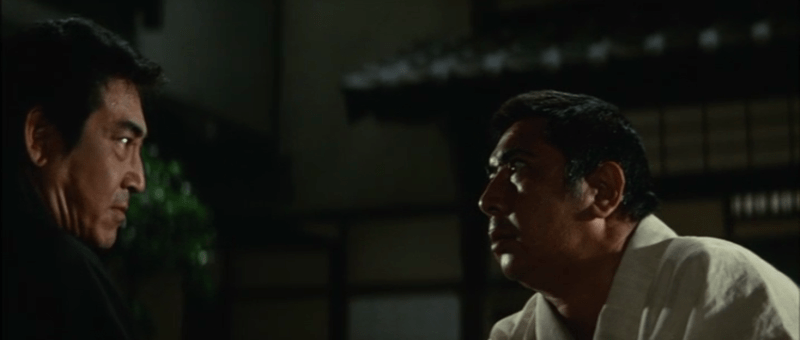
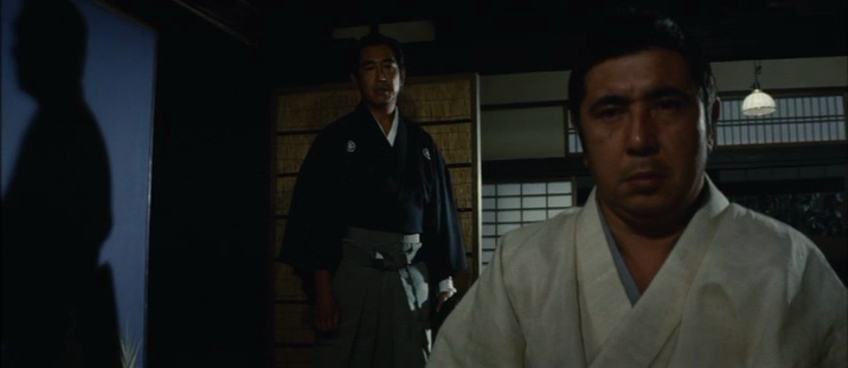
Ko Nakahira is most closely associated with the seminal Nikkatsu Sun Tribe film Crazed Fruit which sent Yujiro Ishihara to stardom though he began his career at Shochiku in 1948 alongside Seijun Suzuki who like Nakahira would transfer to the newly re-established Nikkatsu when it resumed production in 1954. Suzuki was rather famously let go in 1968 due to creative differences with Nakahira also leaving the studio that year in similar circumstances having decamped to Shaw Brothers in Hong Kong in 1967 where he remade some of his previous hits including 1964’s Hunter’s Diary (猟人日記, Ryojin Nikki). 

Based on a mystery novel by Masako Togawa who in fact stars in her only film role as the hero’s little seen wife, Hunter’s Diary is one of a string of films in the mid-1960s critical of the functioning of the legal system in the post-war society. Nakahira opens with a lengthy sequence introducing new forensic technologies which anticipate the use of DNA as an investigative tool in the use of blood type analysis to place a suspect at a crime scene. This science will however be undercut by the sympathetic lawyer Hatanaka (Kazuo Kitamura) who reminds us that the presence of such evidence is not proof in and of itself in much the same way that DNA has since become the new smoking gun and is as susceptible to misuse as any other kind of forensic technique. 

It’s a problem for the hero, Honda (Noboru Nakaya), because his blood type is incredibly rare. In fact he was once in the paper for saving a baby by coming to the rescue with a donation just in time which as we later discover is ironic because much of his behaviour is shaped by the loss of his own child who was born with osteogenesis imperfecta and did not survive. The traumatic circumstances of the birth left his wife, Taneko, with a fear of pregnancy that eventually destroyed their marriage. The couple now live largely apart, she in her family’s country mansion painting disturbing pictures and he in the city “hunting” women for one night stands adopting the persona of a man who is foreign or part-Japanese. There is something of the fear of foreignness seen in other similarly themed films of the era in the fact that Honda’s child is born in Mexico while the couple had met and married in the US, Taneko convinced that had they returned to Japan earlier her baby may have survived while Honda claims that “intellectual” women are drawn to foreign men as he assumes his rather creepy “Monsieur Soubra” alter-ego complete with a funny accent and slightly broken Japanese. 

He positions his “hunting” as a way of dealing with the collapse of his marriage and his guilt over the death of his child overcoming his sense of impotence through transgressive sexuality though many of the women Hatanaka later interviews describe him as disappointingly vanilla and as we discover his games might have begun long before. Meanwhile the women are themselves judged for their sexuality, the discovery of a male muscle magazine in the home of a mousy spinster somewhat amusing to Honda while the unintended darkness of his sport is brought home by the film’s opening sequence in which a 19-year-old woman who became pregnant after he seduced and abandoned her takes her own life in shame and desperation only to be branded an “idiot” by her grieving sister for having slept with a man she had only just met. When a previous conquest of his is murdered in her apartment, Honda is momentarily worried but assumes it’s a grim coincidence. When her death is followed by that of a woman who could have provided him with an alibi he comes to the conclusion that someone is trying to frame him. 

Hatanaka’s conviction is that “the law is everything in court” and that Honda should not be judged on his moral character for his sleazy philandering only on the basis of the evidence presented which he believes may have been deliberately planted to incriminate him. His investigations take him to unlikely places discovering the potentially unethical practices of blood donation programs along with the illegal sale of blood and other bodily fluids such as semen while seeing the tables turned on visiting a gay bar where a male sex worker reports a weird encounter with a suspicious client, and salesman continues to frequent a Turkish bath hoping to run into a woman who seduced him but may only have been interested in his blood type. Honda soon forgets the name of the woman who took her own life, but is haunted by the visions of the women he has harmed while simultaneously rejecting the labels placed on him as a pervert or a predator and believing that his child’s death is punishment for his “abnormal sexuality” as some may brand it. 

This sense of guilt is also reflected in his worry that he is a “spreader of death”, as if though he did not kill them directly he were the carrier of a disease or else some kind of grim reaper beckoning these women towards their demise though he evidently thinks little of them outside of their status as trophies and does not stop to consider the consequences of his actions on others. Above his bed in his city hideout (officially he lives in a hotel) there is a picture of a fox hunt making plain that his satisfaction lies in the chase rather than its conclusion yet otherwise his motives are rather banal. He cannot leave his wife because he married into her prominent family and his social standing depends on his connection to them, likewise he decides against alerting the police or the building’s caretaker on discovering one of the women’s bodies because his reputation would be ruined if were to become involved in a murder and his secret life exposed. Ironically his salvation comes precisely because of this social standing when his wealthy father-in-law hires Hatanaka to handle his appeal and save him from the death penalty. 

Hatanaka had resigned from a previous position in opposition to the system, disappointed on meeting the lawyer who defended Honda at trial and realising they did not attempt to mount a defence nor investigate his case simply try to mitigate it in the hope of working it down to a custodial sentence. He instructs his naive young assistant who wonders if Honda is the sort of man they should be saving that she should approach every case on its merits as if the defendant is innocent without bringing in external moral judgements on his character. As he tells him, Honda may be legally vindicated but his moral judgement would depend on how he lives his life from then on later offering him a kind of absolution in telling him that one of his conquests, who does not want to be identified, gave birth to a son who is healthy and happy signalling that his is not an original sin and he does not bear that kind of responsibility for the death of his child. Veering towards the avant-garde Nakahira makes frequent use of superimposition and dissolves to reflect Honda’s fracturing mental state along with the persistence of his guilt while shifting into the purely documentarian in his lengthy explanation of forensic techniques and the science behind blood types but always returns to the Hitchcockian interplay of sex, death, and remorse which is true source of Honda’s trial. 


DVD remaster trailer (no subtitles)

Love Life (Koji Fukada, 2022)

Emotional distance and the contradictions of the modern family conspire against a grief-stricken newlywed couple in Koji Fukada’s moving social drama inspired by the 1991 Akiko Yano hit, Love Life. Interrogating love in all its forms along with its limitations, Fukada seems to asks if love is ever enough to overcome a sense of loneliness or if the space between people can really be bridged by communication alone while the couple find themselves pulled back towards the unfulfilled potential of failed romance in contemplating the possibilities of different if not necessary better futures. 

The fracture points in the recent marriage of Jiro (Kento Nagayama) and Taeko (Fumino Kimura) are thrown into relief during a double celebration as the couple host what is superficially a party for Taeko’s six-year-old son Keita (Tetsuta Shimada) winning an Othello competition but in reality a surprise do for father-in-law Makoto’s (Tomorowo Taguchi) 64th birthday. The elephant in the room is that Makoto does not approve of the marriage, making a rather unkind remark about second hand goods in irritation that his son has chosen to marry a woman who already had a son. Though Jiro’s mother Akie (Misuzu Kanno) is in general kind and keen to defend her new daughter-in-law even she tactlessly adds that she hopes the couple provide them with their “own” grandchild as soon as they can. The remark appears to cut to the quick of the already wounded Taeko, a look of dumbfounded confusion on her face in this sudden moment of accidental rejection. 

During the party, Keita is killed in a tragic domestic accident of the kind for which no one is to blame and could easily strike any family. Police questioning further emphasises the couple’s disconnection as a policewoman probes why Jiro had not legally adopted Keita as his son when they married only to discover that he did not want to do so until he’d received his father’s permission to add him to their family register. Though only married for a little under a year, Jiro had felt himself to be Keita’s father and loved him as a son yet is awkward in his grief, wanting to cry alongside his wife but feeling as if he had no right to do so. The feeling is compounded when Keita’s estranged father, Park Shinji (Atom Sunada), suddenly arrives at the funeral, soaking wet and in inappropriate clothes, to first breakdown over the coffin and then roundly strike his former wife across the face before being escorted away by security. 

In a mirrored scene, Taeko had asked her husband shortly before the party about another woman, Yamazaki (Hirona Yamazaki), sensing that there may have been something between them and feeling an anxiety in the precarity of their married life. Jiro is then left anxious by the resurfacing of Shinji yet trying to act against it, later advising Taeko that she should feel free to help him seeing as it seems he has fallen on hard times and has no one else to turn to as he is deaf and communicates in Korean sign language which few around him know. Taeko had previously used sign language to slip into a different world with her son when Jiro had asked why he never wants to play Othello with him only for Keita to reply in silence that it’s only because he’s not very good at it. There is a palpable pain on his face observing the closeness that exists between Taeko and Shinji as they communicate in a private language while, as Yamazaki later describes it, he is a man never quite able to look anyone in the eye. 

While he is drawn back to his unfinished business with Yamazaki, Taeko finds herself filling the void in her life by trying to rescue Shinji. Treating him almost as a child, she comes to believe that he cannot survive without her yet later realises that the intimacy she felt between them was only an illusion, Shinji had never really been emotionally honest with her and there are in fact plenty of other people with whom he can communicate if only he chose to do so. Just as she had been isolated at the party, marooned in the kitchen on her own, she is abandoned once again yet perhaps coming to a final acceptance of her son’s death along with a clearer understanding of her love and life even if it all it means is walking in parallel with no clear direction. A melancholy mediation on grief, Love Life suggests you don’t so much move on from the past as take it with you even as the pair of conflicted lovers determine to look to the future rather than the past as a path to salvation.


Love Life screens 8th/9th/14th October as part of this year’s BFI London Film Festival.

Original trailer (Japan subtitles only)

Small, Slow But Steady (ケイコ 目を澄ませて, Sho Miyake, 2022)

Part way through Sho Miyake’s empathetic character study Small, Slow But Steady (ケイコ 目を澄ませて, Keiko, Me wo Sumasete), an older man visits a doctor and is told that though he may think there is nothing really to worry about at the moment, a tiny drop of water falling steadily can soon make its mark in stone. It’s in one sense the small, slow, but steady stresses of everyday life that have eaten away at the soul of Keiko (Yukino Kishii), an aspiring boxer who is fast losing the will the fight. Yet it is also a small, slow, but steady process that allows her to begin moving again, climbing a new hill towards the next bout no longer so afraid of leaving the safety of the familiar. 

Deaf since birth, Keiko became a professional boxer two years previously and makes ends meet with a part-time job in housekeeping at an upscale hotel. Miyake often positions her as in a way free of the frenetic nature of the noisy city, unaffected by the shouts of rude passersby and unlike the men at her boxing gym never subjected to angry rants from her coaches. Yet it’s also at times as if she feels a kind of loneliness in the minor rejections of an indifferent society which often fails to cater to her difference. Few people are able to sign, even those at her gym haven’t learned, while others are sometimes impatient in her attempts to communicate. The restrictions of the coronavirus pandemic meanwhile only make things worse for her given that constant masking means she can no longer rely on lipreading nor can she hear the public health messages being blasted out in public spaces reminding citizens that there is a state of emergency in place and they should restrict their journeys to the barest of essentials. 

Then again, in the gym, she obviously cannot sign because the gloves her impede her ability to communicate. Nor can she hear the session bell or words of encouragement and advice from her coaches and the crowd. The chairman of the boxing club (Tomokazu Miura) admits in an interview that deafness is potentially fatal for a boxer, but that what Keiko may crave is a kind of internal peace in the surrender to the purely physical which allows her to empty her mind of everyday troubles. She may have taken up boxing as some say after being bullied as a child because of her disability, quite literally fighting back against a conformist society she refuses to beaten by, but has also found something reassuring in its slow and steady rhythms that allows her to reorient herself blow after blow. 

The chairman also says, however, that it’s not a matter of having a preternatural talent so much as a steady work ethic and above all a big a heart, describing her finally as simply “a really nice person”. “Why don’t you have your guard up properly?” another of her coaches asks her, while her brother having noticed there is obviously something bothering her tries to get her to talk, only for her to point out that “talking doesn’t doesn’t make a person any less alone”. With rumours the pandemic, along with the boss’ failing health, will finally take the boxing gym too, Keiko fears losing this final safe space but finds herself unable to stand up and fight for it. Though she had struggled to find a gym who would accommodate her disability, she is ambivalent when a new solution is found in an empathetic female coach (Makiko Watanabe) running a modern training facility who is learning sign language and keen to empower her in her own decision making rather than patronise or railroad her. Afraid of getting hurt, she takes a step back unwilling leave the security of the past for the possibility of the future. 

As Keiko reminds herself in her diary, self-control is the most important thing and the force she struggles with, suddenly losing her concentration in the middle of a match because the thoughtless referee keeps telling her to listen to him when he calls stop. In the end, it’s something quite trivial that sets her back on the path, a kind yet seemingly meaningless moment of acknowledgement from an unexpected source. Shot in a richly textured 16mm, Miyake captures Keiko’s isolated everyday with stunning clarity finding her alone amid the noisy city staring into space and looking for direction. Using intertitles to translate sign language his composition mimics that of a silent movie and lends an almost elegiac quality to the moribund boxing gym as it becomes an accidental victim of its times but ends on a note of quite resilience in the small, slow, but steady rhythms of gentle forward motion. 


Small, Slow But Steady screened as part of this year’s BFI London Film Festival.

Original trailer (no subtitles)

Ringu (リング, Hideo Nakata, 1998)

As the investigative duo at the centre of Hideo Nakata’s eerie supernatural horror Ringu (リング) begin to unlock the mystery of Sadako, we’re told that a strange woman who may have had some kind of psychic powers was loathed by those around her in part because of her habit of sitting and staring at the sea. Nakata opens the film with waves and often returns to them as if suggesting in this millennial horror that what we fear is a transmission we cannot see. In the end there may not be so much difference between the magic of an analogue TV broadcast and a message from another plane. 

In any case, perhaps the central message is that one should pay more attention to the words of those whose warnings are often dismissed on the grounds of their age and gender. Journalist Reiko (Nanako Matsushima), for example, doesn’t seem too invested in a video she’s making about a cursed video related by a trio of high school girls in a cafe who explain that they don’t personally know anyone who’s died after watching it but have been reliably informed by friends of friends who apparently do. As will later be discovered, the girls actually give Reiko crucial information but for whatever reason she does not remember it until coming to the same conclusion herself. In any case, it’s not until her own niece, Tomoko (Yuko Takeuchi), dies in mysterious circumstances that Reiko starts to wonder if this is more than a spooky story elevating the chain letter to new technological heights.

According to the urban legend, if you watch the cursed tape you’ll immediately get a phone call telling you you’ll die in seven days. The supernatural entity now synonymous with the film, Sadako, is manipulating these still analogue waves for herself. Sending her messages via television and telephone she is a literal ghost of the airwaves and as Reiko’s ex-husband Ryuji later puts it radiating her sense of rage in her own mistreatment, insisting that her story be known and that those who refuse to acknowledge it should not be allowed to survive. Just as Reiko should have listened to the high school girls, someone should have listened to Sadako and because they didn’t others now have no choice. 

In a sense Sadako represents this nascent fear of technological advancement. When Reiko answers her flip phone, it’s a reminder that there’s no escape from unwanted communication even if you can in theory try to switch it off. The girl with Tomoko when she died was driven out of her mind and now won’t venture anywhere near a television, as if you could escape Sadako’s wrath by merely keeping your distance from the portal. The two teenagers who died around the same time as Tomoko were in a car in the middle of nowhere, but cars have radios which receive radio waves. Sadako travels through the air, invisible until she chooses not to be. She may only have a direct line, but it is in one sense a call for help she’s issuing only in the very inefficient manner of a vengeful ghost whose rage has become indiscriminate or at least directed towards the society that wronged her and everyone in it rather than a single guilty party. 

In a certain sense, you can cure the curse only by spreading it. If everyone everywhere suddenly understood, learned Sadako’s painful history, then the curse would wither and die with no new hosts to go to which is perhaps what Sadako wants. Yet it leaves Reiko with a dilemma, knowing that to save the lives of those closest to her she may have to ask someone else to risk their life or even expose them without their consent. Throughout the film she’s been depicted as an imperfect mother, divorced and often leaving her small son Yoichi to fend for himself at home while the boy at one point walks past his own father in the street and does not seem to recognise him so absent had he been in his life. Through their shared quest to undo the curse, the pair in a sense reclaim their parental roles and repair their familial ties in working together to save their son’s life in contrast to the parental figures surrounding Sadako who may have done the reverse. Sadako frightens us because of her transgressive qualities, quite literally transgressing the barriers between ourselves and the stories we tell by crawling out of them and finding us here, on the other side of the screen, where we thought we were safe to remind us not to look away and to listen to those whose voices are all too often ignored. 


Ringu screens at Japan Society New York on Oct. 7 as part of the Monthly Classics series.

20th anniversary trailer (English subtitles)

Unlock Your Heart (ひらいて, Rin Shuto, 2021)

A straight-A student and popular girl enters a self-destructive tailspin on discovering her longterm crush has a secret girlfriend in Rin Shuto’s adaptation of the novel by Risa Wataya, Unlock Your Heart (ひらいて, Hirate). Wataya also penned the source material for Akiko Ohku’s Tremble All You Want and Hold Me Back, and while Shuto may shift away from Ohku’s quirky style she maintains and intensifies an underlying sense of unease in what has the potential to develop into an incredibly messy situation. 

As the film opens, popular girl Ai (Anna Yamada) walks away from a dance rehearsal and discovers fellow student Miyuki (Haruka Imo) collapsed by a tree next to a pouch containing her insulin. Barely conscious, Miyuki asks her for something sweet and Ai soon returns with some sugary juice. Unable to find to an efficient way of getting her to drink it, Ai passes the liquid from her own mouth in a literal kiss of life that seems have an unexpected effect on her. Meanwhile, after sneaking into the school late at night with some friends halfheartedly joking about stealing the exam papers, Ai raids the locker of her crush, Tatoe (Ryuto Sakuma), and discovers a series of love letters which turn out to be from Miyuki. 

For some reason this revelation turns Ai’s life upside-down even though she later reveals that she had been enduring the silent crush on Tatoe for some years without ever acting on it. It may partly be that Ai is popular and attractive and so the idea that someone may not find her desirable is destabilising, cutting to the quick of her teenage insecurity while pulling the rug out from under her if she had indeed thought of Tatoe as a kind of comfortable backstop or easy plan B. Enraged, she befriends Miyuki yet for unclear reasons, perhaps hoping to get some insider info on Tatoe, find out what it is Miyuki has and she doesn’t, or somehow break them up, but finally settles on seduction unexpectedly kissing her again in an echo of their awkward meet cute.  

At heart, Ai does not understand herself and is operating with no real plan. Each escalation seems to come as a surprise even to herself leaving her with moments of internal conflict gazing into a mirror wondering what it is she’s doing. On separate occasions, both Miyuki and Tatoe accuse her of lying and indeed she is, most particularly to herself in a wholesale denial of her own desires which fuels her impulsive and self-destructive behaviour. Others accuse her of being selfish and self-absorbed, unable to look beyond herself and indifferent to the feelings of others which is also in its way a reflection of the degree to which she is consumed by internal confusion, driven slowly out of her mind while taking out her frustration on those around her not least in her increasingly dark manipulation of Miyuki and Tatoe. In the end, as Tatoe points out, she’s little different from his abusive father in her need to possess and control but it’s the extreme control that she’s trying to exercise over herself and the desires she can not accept that is causing her self-destructive behaviour. 

Only Miyuki seems to be able to see through her, at least to an extent, yet it’s not entirely clear at first if she responds to Ai’s advances willingly or simply goes along with them because she has no other friends and is afraid Ai will reject her if she refuses. Ostracised by the students because of her diabetes which is of course a very visible condition in that it requires her to inject herself while at school, Miyuki is shy and lonely while required to keep her relationship with Tatoe a secret because of his abusive father. But as Miyuki later puts it in her letter, Ai isn’t quite as aloof as she’d like to pretend and acts with an unexpected tenderness and consideration, even a kind of vulnerability, in moments of intimacy that betray the true self otherwise stifled by anxiety and internalised shame. With a persistent air of danger and unease spurred by Ai’s impulsive and chaotic nature, Shuto’s intense drama reaches its climax in its deliberately abrupt conclusion perfectly capturing the heroine’s moment of realisation imbued with all of her idiosyncratic messiness. 


Unlock Your Heart screened as part of this year’s Camera Japan.

International trailer (English subtitles)

The Midnight Maiden War (真夜中乙女戦争, Ken Ninomiya, 2022)

An apathetic college student is pulled between nihilistic destruction and the desire for life in Ken Ninomiya’s adaptation of the novel by F, Midnight Maiden War (真夜中乙女戦争, Mayonaka Otome Senso). “Do those who struggle for life deserve to be defeated as evil?” is a question that is put to him while he asks himself if there’s something wrong in his yearning for a “boring”, conventional existence with a good job, house in the suburbs and people to share it. Then again as the forces of darkness point out, those who long for normality usually cannot attain it which only fuels their sense of resentment towards a “rotten” society. 

The unnamed protagonist (Ren Nagase) has come to Tokyo from Kobe to attend university and as his family are not wealthy is supposed to be studying for a scholarship exam while supporting himself with part-time jobs. Only as he’s abruptly let go from his side gig, he finds himself unfulfilled by his studies and wondering what the point is in wasting his youth just to lead a dull life of drudgery. In an intense act of self-sabotage which later goes viral, he tells his English professor (Makiko Watanabe) to her face that her classes are pointless while calculating exactly how much they cost per hour which turns out to be the equivalent to three hours of labour for his mother, the price of a new text book, or three months’ Netflix subscription which oddly becomes a kind of currency benchmark. He can’t see that anything he’s learning will be of much use to him in the further course of his life when the only prize is conventionality even if that conventionality might also provide basic comfort. 

After joining a mysterious “hide and seek” club and becoming distracted by a series of minor bombings of public bins on campus, the hero is pulled between a woman only known as “Sempai” (Elaiza Ikeda), and a man only known as “The Man in the Black Suit” (Tasuku Emoto) who sell him conflicting visions of hope and darkness. While Sempai thinks it’s wrong to belittle those who want to live their lives and are genuinely content with the conventional, The Man in the Black Suit quite literally wants to burn it all to the ground. What begins as an awkward friendship between two awkward men, soon develops into a cult-like organisation of, as the hero puts it, “social outcasts”, drawn to the Man in the Black Suit’s desire to destroy the rotten society which has rejected them through blowing up Tokyo on Christmas Day. 

Positing Tokyo Tower as the “root of unhappiness”, the hero claims he wants only to destroy, and most particularly himself along with everything else. Experiencing extreme ennui, he struggles to find meaning in his life yet is also conflicted in the breadth of the The Man in Black’s goals being fairly indifferent to the existence of others and unconvinced that those merely complicit in the system should also be targets of his social revenge. If not quite dragged towards the light, he realises that he must kill the nihilist within himself and in a sense be reborn, as the Man in Black puts it, as the god of a new world. “You’re alive, that’s good enough for me” Sempai echoes as the hero does at least in a sense embrace life even amid so much destruction. 

Ken Ninomiya has become closely identified with a singular style heavily inspired by music video and often taking place in Tokyo clubland. Midnight Maiden War is in many ways a much more conventional film mimicking the aesthetic of other similarly themed manga and light novel adaptations featuring only one real party scene and no extended musical sequences while routing itself in a more recognisably ordinary reality albeit one secretly ruled by a lonely tech genius. It does however feature his characteristic neon-leaning colour palate, focus pulls, and striking composition such as the revolving upside down shot which opens the film and hints at the unnamed protagonist’s sense of dislocation. Quite literally a tale of darkness and light, the film finds its dejected hero struggling to find meaning in a stultifying existence but perhaps finally discovering what it is to live if only at the end of the world. 


The Midnight Maiden War screened as part of this year’s Camera Japan.

Original trailer (English subtitles)