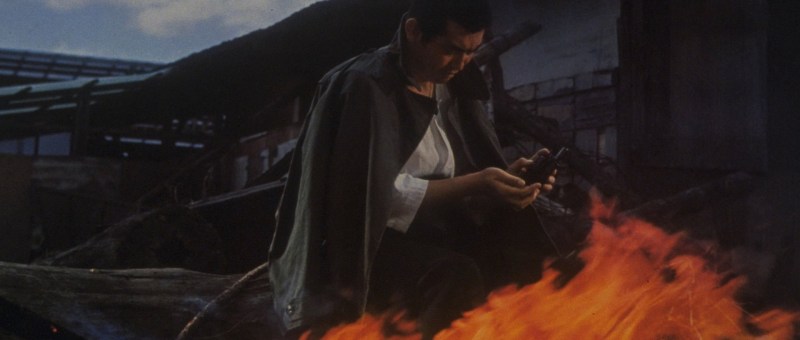
The Great Chase (華麗なる追跡, Norifumi Suzuki, 1975)

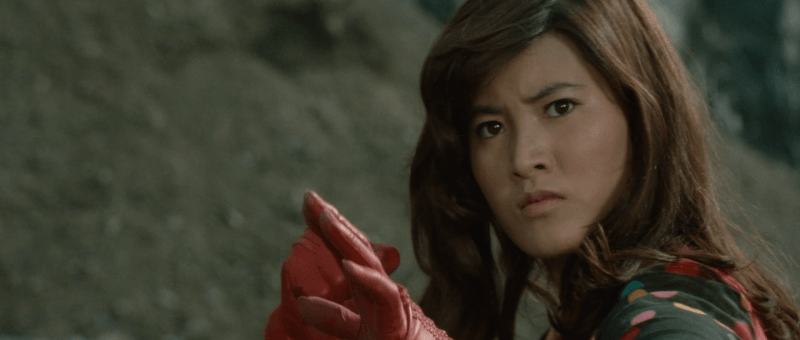
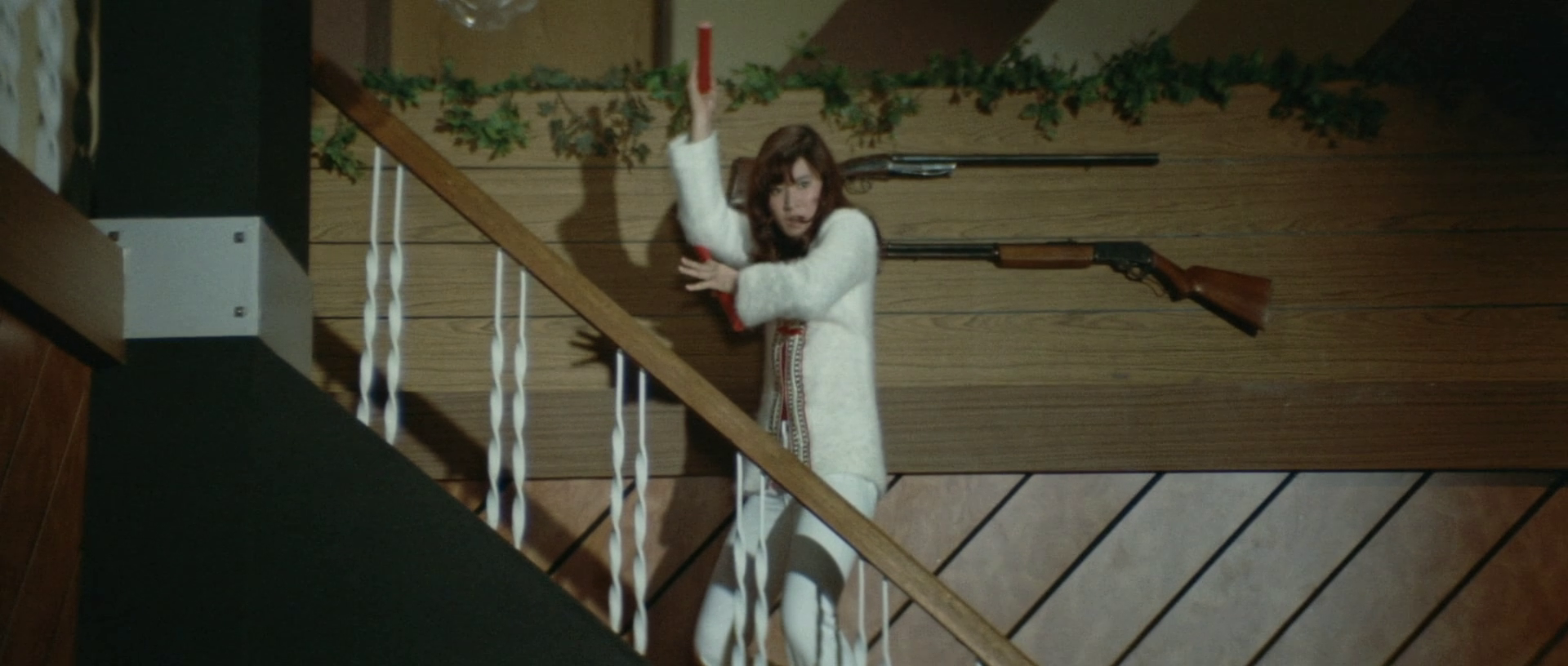
What about if you rebooted the Bannai Tarao series, but the hero was a female spy who is also a champion race driver and martial artist? Norifumi Suzuki did actually make a Bannai Tarao move in 1978 starring Akira Kobayashi, but the heroine of The Great Chase (華麗なる追跡, Karei-naru Tsuiseki) certainly loves a disguise or two and like the famous man of a thousand faces seems to have no trouble pulling them off as she infiltrates a gang of evil traffickers led by a furry which has come up with an ace new plan of packing heroin into coffins and having them shipped to nuns!

Oh, and the gang were also behind the death of her father who “committed suicide” in prison after being framed for drug smuggling. The Great Chase takes place in a world of pure pulp which somehow maintains its sense of cartoonish innocence even after Shinobu (Etsuko Shihomi) has infiltrated the heart of darkness and seen most of her associates killed by sadistic gang boss Inomata (Bin Amatsu). But at the same time, it delves into a deep sense of ‘70s paranoia as it becomes clear that the authority figures are all corrupt. Inomata has become a politician, while Shinobu’s father’s murder was orchestrated by the prison warden who was working with him in return for financial gain. The man who framed her father was a friend of his, implying that no one can really be trusted when there’s money to be made.

In a roundabout way,as this sense of anxiety is only reinforced by Shinobu’s role as some sort of secret agent working for the spy ring run by her uncle which is currently hot on the trail of the drug dealers even if they haven’t yet figured out who their boss is. Conversely, her home life is as wholesome as it could be with her two adopted siblings who run a florist’s along with Shinobu’s fan club. Her status as a kind of race car idol lends Shinobu a particular kind of ‘70s cool and turns her into some sort of superhuman figure capable of triumphing over any kind of adversity like a superhero worthy of any kid’s lunchbox. The siblings, Nagi (Fujika Omori) and Shinpei (Naoyuki Sugano), were taken in as orphans by her father which once again signals his goodness in contrast to the greed and selfishness of the gang that had him killed to cover up their crimes. 

That they peddle in drugs marks them out as a force of social disruption, but they’re also actively heretical in hiding behind the shield of the church. Suzuki frequently uses religious imagery in his films and here again echoes the romanticism of School of the Holy Beast with the use of red roses to decorate the coffin of the unfortunate young woman who has been turned into a vessel for smuggling drugs and has for some reason been laid out otherwise entirely naked. When it comes to retrieving the merchandise, we can see that many of the habits are being worn by men while Inomata himself masquerades as a priest. Then again, perhaps he is merely indulging his love of costume play seeing as he also has a hobby of wearing a furry bear suit to attack and rape women in his living room. 

Inomata’s claws then seem to represent something else, a rapacious, grasping sense of patriarchy in which he also uses drugs to bind women to him. Shinobu’s childhood friend Yukiko (Hisako Tanaka) has apparently fallen victim and laments that she is possessed by him body and soul to the point that the old Yukiko is dead which is why she hasn’t been able to step in and help Shinobu and is doing so now fearing that it may cost her her life. Suddenly, it’s all quite grim with the basement sex cult, whipping and torture, but Shinobu maintains her plucky spirit and is somehow able to lure Inomata towards a cable-car-based showdown. With a cameo from real life wrestler / singer Mach Fumiake, the film enters a kind of meta commentary on a real-life Shinobu (though she was not, as far as anyone knows, one of Japan’s top spies), but otherwise remains within the realms of pulp in which the heroine is able to pull off her difficult mission with the help of her talent for disguises before dramatically unmasking herself as the woman who’s going to take them all down. Camp to the max and incredibly surreal, the film never drops its sense of silliness even as the grim events enveloping Shinobu lead to tragic consequences that she barely has time to deal with before barrelling straight into the next duel with the forces of corruption.


*Norifumi Suzuki’s name is actually “Noribumi” but he has become known as “Norifumi” to English-speaking audiences.
Festival Champ (お祭り野郎 魚河岸の兄弟分, Norifumi Suzuki, 1976)

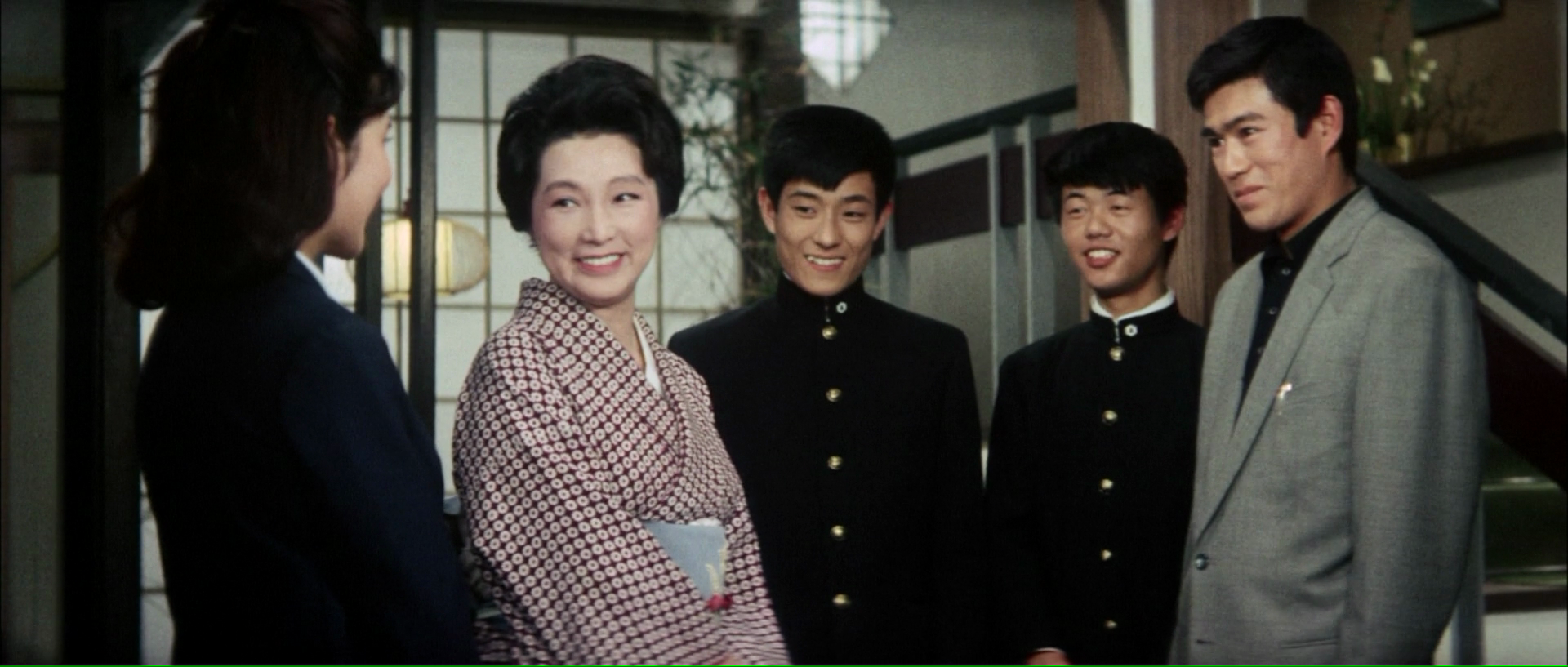
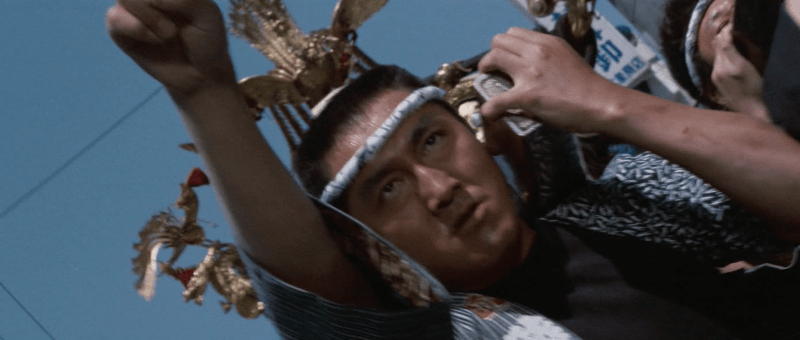
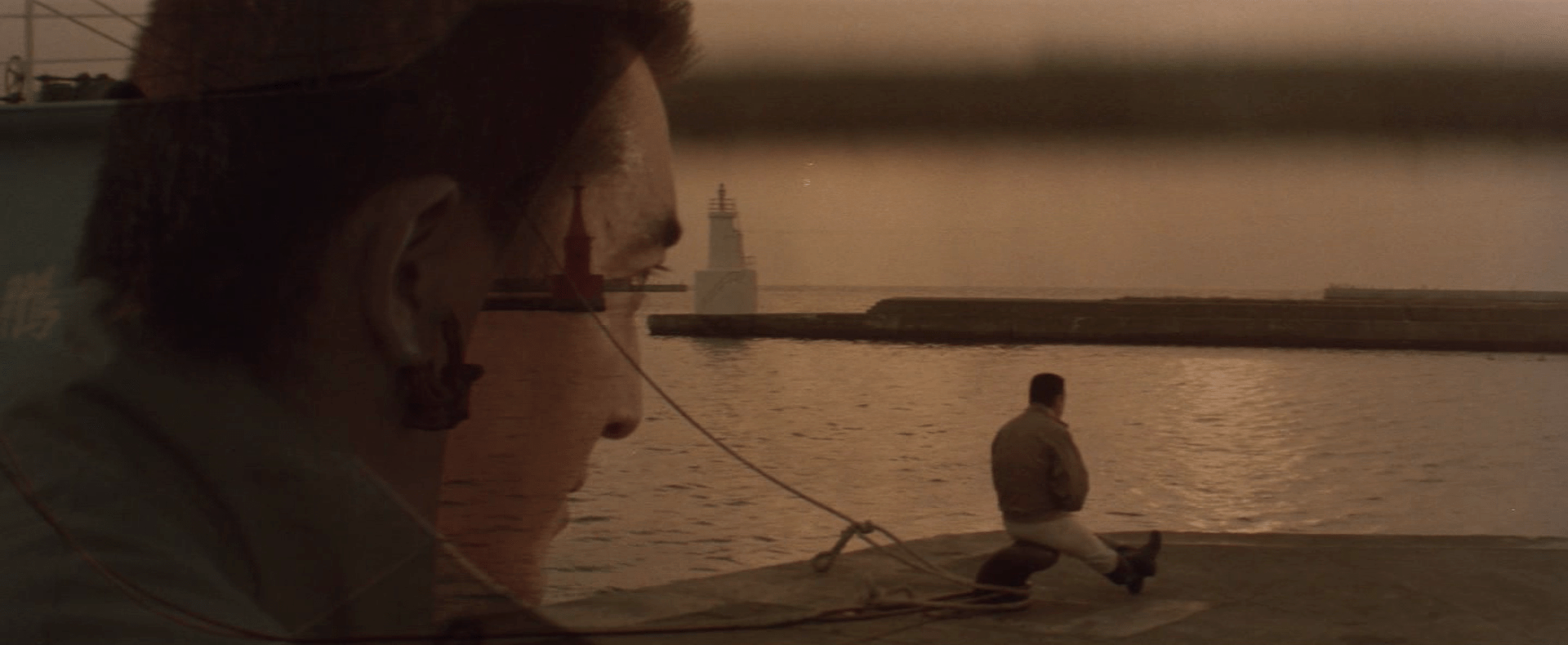
Who doesn’t love a festival? The hero of Norifumi Suzuki’s Festival Champ (お祭り野郎 魚河岸の兄弟分, Omatsuri yaro: Uogashi no Kyodai-bun) loves them so much that he travels all over Japan to help out in places where young men have become thin on the ground thanks to increasing urbanisation and rural depopulation. Following the success of Suzuki’s entries in the Truck Yaro series in 1975 and 1976, the film was part of a new line of comedies and sports movies launched by Toei as well as a vehicle for Hiroki Matsukata who was trying to move on from yakuza movies.

Katsuo (Hiroki Matsukata) is however something of a goodhearted bruiser who is always getting into manly scraps and especially at the festivals he travels to which is a pretty good hook for an ongoing series. But it’s not all that great for his employer who runs a family fishmonger’s at the Uogashi fish market and complains that Katsuo’s always running off and causing trouble. The fish market itself takes on an exoticised quality in the opening sequence which features a voice over from karate queen Etsuko Shihomi, here in a purely dramatic role, who is the daughter of a well-to-do traditional Japanese restaurant and travels there daily by speedboat to pick up the best fresh fish available. Suzuki throws in some documentary-style stock footage and statistics about the market that lend a strangely corporate feel, but then homes in on its capacity as a community hub. Kiyoko says it’s her favourite place precisely because there’s nothing formal about it. Deals are done through body language and you don’t need any kind of resume to work there, everyone’s welcome. 

That may be the implied contrast between Kiyoko’s father, who owns an upscale place and cultivates genuine relationships with local fishermen and brokers, and local boy made good Kurosaki who has supposedly become the CEO of a restaurant chain, itself a symbol of the soulless corporation of ‘70s Japan. Kurosaki rocks up dressed like a yakuza, but everyone treats him as a successful businessman and in part thanks to Katsuo’s boss Zenjiro’s recommendation is eager to make deals with him but predictably he’s running a huge scam that could destroy the local economy. Zenjiro is later faced with the difficult decision of selling his family business to repay all the other fishermen and brokers that have fallen foul of him. 

It’s this societal sense of unfairness that stripper Kumi (Terumi Azuma) hints at when she says she feels “frustrated” and that her long-lost brother Eiji (Toru Emori) probably feels even more frustrated than she does after he slaps her having found out that she’s become a burlesque dancer. As she points out to him, he ran away from home and left her behind with the aunt that was cruel to them so what exactly he expected her to do is a mystery. In the end, it’s his own fault for abandoning her, so he has no leg to stand on in criticising her for the way she’s lived her life. Kumi is well accepted in the local community and walks around in very elegant attire which gives her the air of an “ojosan” or upperclass lady to much greater extent that Kiyoko has in her love of the earthy world of the fish market. The fact that she turns out to be suffering from a tragic terminal illness perhaps only reinforces this sense of unfairness, that the modern world has essentially poisoned her and she can no longer survive in it.

The only things that give her solace are Katsuo and the idea of joining in carrying a shrine festival which would seem to be ways of reconnecting with a more essential Japaneseness. Despite his rowdiness, Katsuo is as she describes him the kindest person she’s ever met and a more positive vision of a still traditional masculinity that looks to protect the community and those around him. He gets into a fight with Eiji, but after exchanging a few blows the men become firm friends, while it’s trying to hook his wimpy friend Kinichi up with a date that brings him to Kumi in the first place. Meanwhile, it seems like Ayuko (Junko Natsu) has a crush on him and despite Zenjiro’s exasperation with Katsuo, everyone expects that he will eventually marry her and take over the family business. 

And so, it’s only a violent, but also quite funny, intervention from Katsuo that can eventually overcome the disruption Kurosaki threatens. Suzuki throws in a lot of his trademark weirdness including all of Zenjiro’s other daughters having fishy names, and a local sex worker who is insatiably aroused by octopuses followed by a gag in which Katsuo is trolled with a suggestive-looking shellfish, but mostly rests on a sense of qualified wholesomeness and community all carried on Katsuo’s broad shoulders as the lone guardian of a more essential Japaneseness otherwise uncorrupted by venal post-war capitalism.


*Norifumi Suzuki’s name is actually “Noribumi” but he has become known as “Norifumi” to English-speaking audiences.
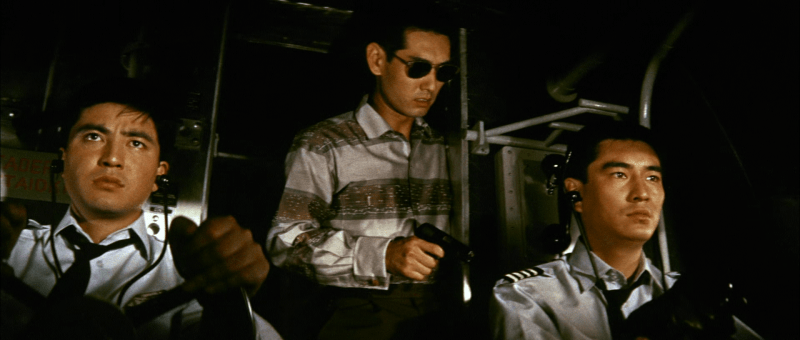
Four Hours of Terror (高度7000米 恐怖の四時間, Tsuneo Kobayashi, 1959)

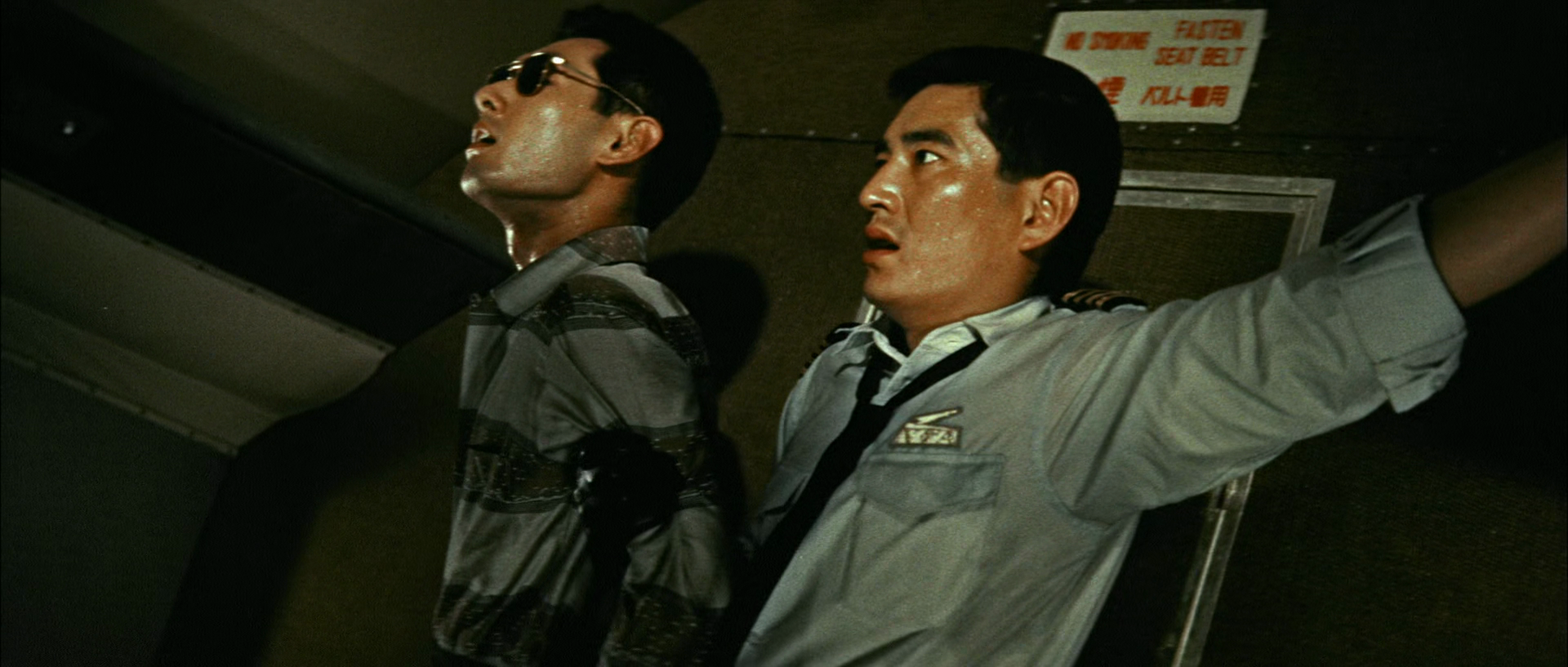
It seems quite strange now to think of a time when air travel was both new and exciting and as easy as catching a bus. It’s this juxtaposition that Tsuneo Kobayashi’s hijacking thriller Four Hours of Terror (高度7000米 恐怖の四時間, Kodo Nanasen Metoru: Kyofu no Yojikan) plays with as an armed fugitive takes a passenger plane hostage in an attempt to escape after committing a murder while those on board struggle to accommodate themselves to this new form of transportation. 

This sense of exoticisation is obvious from the opening voiceover which sings the praises of Haneda airport as the gateway to a newly internationalised Japan though in actuality the flight in question is a domestic service travelling from Tokyo to Sapporo. The voiceover also introduces us to each of the passengers which come from differing strata of society and even includes a middle-aged American couple. There are in fact three generations of couples on board who seem to represent different stages of life from the newly wed students so wrapped up marital bliss that they barely notice anything else, to a long-married reporter and his wife on their first holiday together since their honeymoon, and an elderly couple returning from a trip to the capital who are mystified by this new age of mass media and air travel. The newlyweds apparently won this free trip on an aeroplane after agreeing to have their wedding broadcast on television in an early example of reality TV, reinforcing the sense of irony that they weren’t necessarily supposed to be on this doomed flight after all. 

Neither was car saleswoman Kazuko (Hitomi Nakahara) who has apparently been pulled away to Sapporo by a short notice business opportunity. She gets a standby ticket, as does her boyfriend/rival Fujio (Tatsuo Umemiya) who is also on track to the same opportunity. Weirdly, Kazuko is not overly sympathetic having randomly kicked a basket containing a little dog about to be smuggled on the plane by its doting owner, but does perhaps represent something of a more independent post-war womanhood even as she effortlessly deflects unwanted attentions from a client she may also have been exploiting in order to obtain his business. Having boarded the plane, she ends up sitting next to another man who requested a standby ticket and was using a surname that was the same as hers but evidently turns out to have been assumed. So lax is the security, you don’t necessarily have to travel under your legal name. In any case, she briefly flirts with him as an overture to a business relationship and also to annoy Fujio before overhearing a news report about the escaped fugitive on her portable radio.

Kida (Fumitake Omura), the fugitive, is dressed like a stereotypical yakuza which makes it odd that no one treats him with suspicion until they spot he’s carrying a gun which he had no trouble at all bringing on board. Though hijackings are not exactly unheard of, they aren’t particularly common either so no one would really suppose anyone had any reason to take a domestic flight to the provinces hostage, and really that was never Kida’s intention merely a last resort after being discovered. Later he gives a partial justification for his life of crime in that his mother beat him and then threw him off a cliff which is why he has a false leg. In any case, there’s a small moment of potential redemption towards the end when the kindly old lady tells him he can’t undo what he’s done, but could still resolve to change assuming they all survive this difficult situation with the plane which now has mechanical problems thanks to the gun going off. 

Even so, it’s the passengers who tie Kida up after the pilot ,Yamamoto (Ken Takakura), manages to disarm him by weaponising the plane. By flying to a high altitude, they knock him out with the air pressure, but are then faced with the mechanical failure of the landing gear which seems to be linked to with Yamamoto’s wartime trauma. A secondary drama revolves around his stoical character with one of the stewardesses apparently in love with him while simultaneously wary of his iciness given that he apparently showed no emotion after receiving the news his wife had passed away but simply flew the plane home as normal. Some see this as his devotion to the aircraft which is in a way a commitment to his duty over his human feelings, the factor that perhaps allows him to save the plane and get the passengers home safely. He is however saved by his love for his late wife with the cigarette case that contains her photo saving him from the worst effects of a bullet. 

The same may go for the co-pilot Hara (Kenji Imai) who is dragging his feet over his marriage to Yamamoto’s sister because he wants to achieve 3000 flight hours before getting married so he can call himself a real pilot. Though the film plants the seeds of these random plot threads and the social commentary that goes with them, it does not particularly engage while the hijacking itself remains fairly low key given that Kida is not a particularly “bad” bad guy. He just wants to go to a random place where the police won’t be waiting for him, but otherwise refrains from harassing the passengers save threatening a little boy travelling on his own to return to his parents after visiting his grandfather in Tokyo. In essence, there’s a kind of innocence and naivety in play which speaks to something of post-war hopefulness and a wonder in the frantic pace of progress in which the day is saved by keeping calm and carrying on even in the face of severe adversity.


Trailer (no subtitles)

Here Because of You (君たちがいて僕がいた, Ryuichi Takamori, 1964)

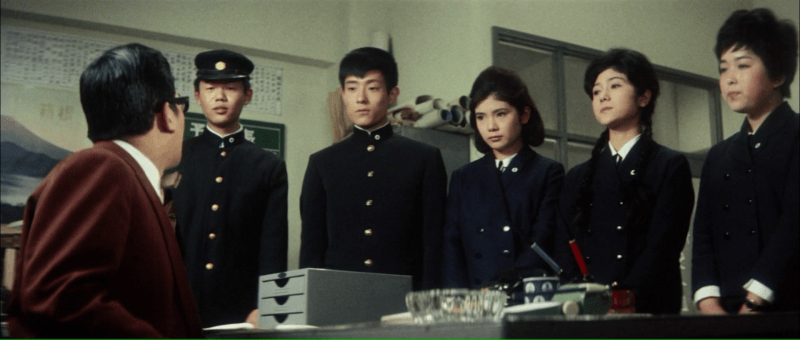
“The strength of our modern generation is that we never let anything get us down, and we’ll go after what we want without a moment’s hesitation.” The heroine of Ryuichi Takamori’s cheerful teen comedy Here Because of You (君たちがいて僕がいた, Kimitachi ga Ite Boku ga Ita) encapsulates a sense of post-war youth while trying to convince a sullen friend to join her in standing up to injustice when their teacher is smeared in the press, but he for his own reasons remains indignant and defeatist certain that nothing they do will make any difference. 

Essentially a vehicle for Toei teen stars Chiyoko Honma and Kazuo Funaki, the film is like many similarly themed youth movies of the time a progressive appeal to a new generation intent on rebelling against the social conservatism of their parents along with the injustice and inequality that accompanied it. The villain of the piece is the father of one of the students, Akira (Masaaki Sakai), who has become wealthy and is intent on throwing his weight around. Tanaka (Ken Sudo) wants his son to go to the best university in Japan and does not take kindly to the advice of his teacher, Mr. Yamabuki (Sonny Chiba), that Akira is just not up to it academically and putting so much pressure on him to achieve something which is almost certainly beyond him will only make the boy suffer. 

Akira is one of those kids with his head in the clouds who isn’t particularly good at anything. School is in general a torture for him and he himself knows that Tokyo University is not a possibility though he’s prepared to do his best if only his father would lower his expectations and let him apply to a college that is more within his capabilities. Both Tanaka and Mr. Yamabuki are however partially at fault when Akira is injured during a PE lesson that he was supposed to be excused from, Tanaka having told him not to participate in sports but to spend the lesson doing extra study instead. Mr. Yamabuki had thought that Akira had just not been applying himself, but a combination of a lack of physical agility due to being kept off PE and being encouraged to push himself further than he should lead to him falling from some climbing bars and spraining his ankle.

As might be expected, Tanaka is not happy and even asks for a second opinion on his son’s minor leg injury while deepening his grudge against Yamabuki. Tanaka also has a minor grudge against fellow student Hiroshi (Kazuo Funaki) who threw a bucket of frogs at him (to which he is allergic) for reasons Hiroshi doesn’t fully understand after hearing him kick off about Akira’s college prospects. It’s Hiroshi who fulfils the role of rebellious youth in the angry impulsivity that he often cannot explain. He’s been saying he doesn’t want to go to college but it’s because his older sister was forced to leave education during in middle school because of the family’s poverty and has become a geisha in order to pay for his tuition. Yamabuki and Hiroshi’s sister Yukiko (Junko Miyazono) develop a fondness for each other while discussing Hiroshi’s education, and it’s this suggestion of there being some impropriety in a schoolteacher dating a geisha that Tanaka takes to papers in effort to get Yamabuki fired. 

Meanwhile, Hiroshi’s cheerful classmate Chieko (Chiyoko Honma) has also developed a crush of Yamabuki. Claiming that she intends to marry him, she goes so far as to turn up at his house and insist on doing his laundry but he quite reasonably tells her that as an adult man his wife would have to be an adult woman. Surprisingly, she gets over it quite quickly and realises that Hiroshi is a much better match for her instead, but nevertheless springs into action when Yamabuki is unfairly smeared in the press. Even she is originally scandalised by the suggestion that her long widowed mother (Mieko Takamine) may have feelings for a local doctor (Shuji Sano), but soon comes round to the idea that there’s nothing wrong with it if she has just as there’s no problem with a teacher dating a geisha. She claims she would be more offended if each of them were forced to deny their feelings for each other because of social propriety and is intensely annoyed by the network of local corruption she uncovers in investigating the origins of the false news report which also suggests Yamabuki may have been inappropriately carrying on with a student, presumably herself. 

As chairman of the parent teacher association, Tanaka tries to railroad the headmaster into firing Yamabuki by holding a kangaroo court at which Yamabuki is prevented from speaking in his own defence all while his character is assassinated. But the kids, who previously witnessed a drunken Tanaka harassing Yukiko, aren’t having any of it and abandon their lessons to surround the meeting vowing that they’ll go on hunger strike if they aren’t listened to which won’t look very good in the national papers. What they bring about is a kind of democratic revolution in which the corrupt authority of Tanaka is deposed in favour of the more evenhanded chairpersonship of Chieko’s grandmother who turns out to be the oldest person in the room at 63. The children will not be ordered around or told what to think and will stand up to injustice where they find it, which is very bad news for those like Tanaka who are used to getting their way because of their privilege and social status. It’s all very wholesome and innocent, perfectly in keeping with the zeitgeist while remaining cheerful and upbeat even with Hiroshi’s continued brooding until Chieko finally manages to win him over. A charming teen musical adventure with a handful of songs performed by its idol stars, the film’s infectious energy is difficult to beat.


The Sand City in Manchuria (砂漠を渡る太陽, Kiyoshi Saeki, 1960)

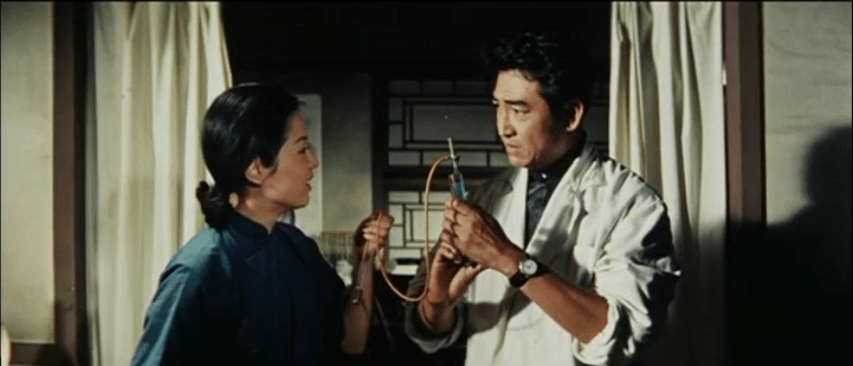
A pure hearted doctor stands strong against the forces of imperialism if somewhat ambivalently in Kiyoshi Saeki’s wartime drama The Sand City in Manchuria (砂漠を渡る太陽, Sabaku wo Wataru Taiyo). “Why isn’t there just one country? I don’t want a country” a young Chinese woman exclaims towards the film’s conclusion in what is intended as an anti-war statement but also invites the inference that the one country should be Japan and that China is wrong to resist the kind of “co-existence” that the idealistic hero is fond of preaching. 

Dr. Soda (Koji Tsuruta), known as Soh, has been in Manchuria for two years running a poor clinic in a trading outpost on a smuggling route through the desert. He came, he later tells another Japanese transplant, after being talked into it by a pastor who told him about US missionaries who endured hardship in the Gobi desert and lamented that no Japanese people had been willing to take on such “thankless” work in the midst of the imperial expansion. There is a kind of awkwardness in Soda’s positioning as the good Japanese doctor which perhaps reflects the view from 1960 in that he objects to the way the Japanese military operates in Manchuria and most particularly to Japanese exceptionalism which causes them to look down on the local Chinese community as lesser beings, but within that all he preaches is equality and co-existence which suggests that he sees nothing particularly wrong in Japan being in Manchuria in the first place while implying that the Chinese are expected to simply co-exist with an occupying force to which they have in any case been given no choice but to consent. 

Nevertheless, it’s clear that the Japanese are in this case the bad guys. Soda is at one point accosted by a drunken soldier who takes against his choice to adopt Chinese dress while rudely refusing to pay his rickshaw driver. The animosity of some in the town is well justified as we hear that their mother was murdered by a Japanese soldier, or that they were raped by Japanese troops and now have nothing but hate for them to they extent that they would withhold vital medical treatment from a child rather than consider allowing Soda to treat them. Soda’s main paying job is working at an opium clinic hinting at the various ways imperialist powers have used the opium trade to bolster their control over the local population, while it later becomes clear that one of the Chinese doctors has been in cahoots with a corrupt Japanese intelligence officer to, ironically, syphon off opium meant for medical uses and sell it to addicts in a truly diabolical business plan. 

Though Soda is well respected in the town because he offers free medical treatment to those who could never otherwise afford it, he is sometimes naive about their real living conditions. Outraged that a young woman has been sold into sexual slavery, he marches off to the red light district to buy her back but is confused on his return realising her family aren’t all that happy about it because they cannot afford to feed her and were depending on the money she would send them because the father has become addicted to opium and can no longer work. The girl, Hoa (Yoshiko Sakuma), becomes somewhat attached to Soda but he is largely uninterested in her because she is only 17, while her affection for him causes tension with the daughter of an exiled Russian professor which is only repaired once they all start working together for the common good after the town after it comes under threat from infectious disease. 

In an echo of our present times, it seems not much has changed in the last 80 years or so, the townspeople quickly turn on Soda once it become clear that he’s putting the town on lockdown to prevent the spread of infectious meningitis after a Russian soldier stumbles in and dies of it. The disease firstly exposes the essential racism even among those Japanese people who have lived in Manchuria longterm such as the mysterious Ishida (So Yamamura) who remarks that diseases like that only affect the Manchurians and they’ll be fine because they are “more hygienic”, while simultaneously painting the infection as a symptom of foreign corruption delivered by the Russian incursion. Soda visits a larger hospital to get the samples confirmed but is told that the disease has not been seen in Manchuria before and so they have no vaccine stocks leaving him dependent on the smuggling network to get the supplies he needs. As the town is a trading outpost whose entire economy is dependent on the business of travellers just passing through, the townspeople are obviously opposed to the idea of keeping them out fearing that they will soon starve going so far as to tear down Soda’s quarantine signs while throwing stones at his house. 

In another irony, it’s Ishida’s pistol that wields ultimate control immediately silencing the mayor’s objections in a rude reminder of the local hierarchy. Many of the townspeople including inn owner Huang (Yunosuke Ito) and Hoa’s sister Shari (Naoko Kubo) are involved with the resistance to which Soda seems to remain quite oblivious and in any case adopts something of a neutral position but gains a grudging respect from Huang thanks to his humanitarianism that eventually saves him from brutal bandit Riyan (a rare villain role for a young Ken Takakura). In any case, as the corrupt Japanese officials pull out to escape the imminent Russian incursion, Soda decides to stay in part to atone for the sins of the Japanese in an acceptance of his responsibility as a Japanese person if one who has not (directly) participated in the imperialist project even if he was in a sense still underpinning it. Essentially a repurposed ninkyo eiga starring Koji Tsuruta as a morally upright man surrounded by corruption but trying to do the right thing to protect those who cannot protect themselves, there is an undeniable awkwardness in the film’s imperialist ambivalence but also a well intentioned desire to look back at the wartime past with clearer eyes and a humanitarian spirit. 


Graveyard of Honor (仁義の墓場, Kinji Fukasaku, 1975)

“Like hell you’re free” the “hero” of Kinji Fukasaku’s Graveyard of Honor (仁義の墓場, Jingi no Hakaba) coolly snaps back in squaring off against a rival gang in a crowded marketplace. Perhaps a familiar scene in the jitsuroku eiga, a genre Fukasaku had helped usher into being and later solidified in the hugely influential Battles Without Honour and Humanity series. A reaction against the increasingly outdated ninkyo eiga and their tales of noble pre-war gangsterdom, the jitsuroku or “true account” movie claimed a higher level of authenticity, inspired by the real lives of notorious gangsters and depicting the chaotic post-war period as it really was, a Graveyard of Honor. 

Based on another true crime novel by Battles Without Honour and Humanity’s Goro Fujita, Graveyard of Honour charts the slow self-implosion of reckless gangster Rikio Ishikawa (Tetsuya Watari). In keeping with the jitsuroku mould, Fukasaku opens in documentary mode, onscreen text giving us Rikio’s pregnant birthdate of 6th August, 1924 before giving way to the voices of, we assume, real people who actually knew him when he was child. They describe him alternately as shy, an oversensitive crybaby, and an evil genius in waiting who was always different from the others and had a lifelong ambition to become a yakuza. They wonder if it was the chaos of the post-war world which turned him into a “rabid dog” but note that he was in fact just as crazy before the war and after.

A cellmate during his time in juvenile detention recalls that Rikio would often liken himself to a balloon, intending to rise and rise until he burst but his trajectory will be quite the opposite. A mess of contradictions, he repeatedly tells his remarkably understanding boss Kawada (Hajime Hana) that whatever it is he’s done this time it was all for the gang but all he ever does is cause trouble, picking fights with the rival area gangs in an obsessive need for masculine dominance over his surroundings. His trip to juvie was apparently down to getting into a fight defending Kawada’s honour, implying that he was “the sort of kid who genuinely respected his godfather”, yet it’s in transgressing this most important of unwritten yakuza rules that he damns himself. Beaten up as punishment for setting fire to the car of a gang boss he felt slighted him, Rikio is asked for his finger but gets so drunk psyching himself up that he eventually turns on his own side and is exiled from the capital for a decade. 

That gang boss, meanwhile, Nozu (Noboru Ando), is currently running for political office in Japan’s new push towards democracy. He eventually loses but only by a small margin, bearing out that in this extremely difficult post-war environment, the yakuza is still a respected, if perhaps also feared, force providing services which ordinary people are sometimes grateful for in that they provide a buffer against other kinds of threat. Meanwhile, the first of Rikio’s gang raids is undertaken against so called “third country nationals” a dogwhistle euphemism for Zainichi Koreans, Chinese, Taiwanese, and other citizens from nations colonised by Japan during in its imperialist expansion who entered the country as Japanese citizens but have now been “liberated” only to face further oppression while those like Rikio accuse them of looking down on and taking revenge against the Japanese for the abuse they suffered as imperial subjects. When both sides are arrested a racist policeman allows the yakuza to escape, thanking them for helping him round up all the Chinese businessmen who will now go to jail for illegal gambling allowing the local gangs to seize their turf. 

The greatest irony is, however, that the American occupation forces may be the biggest gang of all, willingly collaborating with Kawada in peddling blackmarket whiskey (amongst other things) from the local base. The yakuza is also in collaboration with the local sex workers who use their connections with American servicemen to facilitate yakuza business. When Rikio starts a fight with a rival gang in a local bar that threatens to spark a war, it’s the Americans who are called in as neutral third party mediator, Nozu being unable to fulfil that role in having an affiliation with Kawada. The Americans, however, merely issue a loudspeaker announcement for the gang members to disperse or face possible arrest, keeping the peace if somewhat hypocritically. 

Rikio, meanwhile, continues to flounder. Exiled from his gang, he becomes addicted to hard drugs and gets a problematic minion of his own, Ozaki (Kunie Tanaka), not to mention contracting tuberculosis. In a particularly morbid moment, he has his own gravestone carved, perhaps detecting that the end is near or at least that an ending is coming for him. In another somewhat inexplicable turn of his life, though a common trope in jitsuroku, he eventually marries the sex worker who fell in love with him after he raped her, presumably touched by his concern after he burned a hole in her tatami mat floor. Wearied by grief and already out of his mind, a final act of nihilistic craziness sees him approach his former boss for the turf and capital to form his own gang, crunching his late wife’s bones as hardened gang members look on in utter disbelief. 

Rikio’s desire for freedom, to be his own boss, is elusive as the red balloon we often see floating away away from him, free in a way he’ll never be. “Don’t these young people respect the code anymore?” Kawada exasperatedly asks on hearing that Rikio has broken the terms of his exile and returned only a year into his sentence. But Rikio’s tragedy may in a sense be that he understood the code too well. On the side of his tombstone he writes the word “jingi”, honour and humanity, full in the knowledge that such concepts in which he seems to have believed no longer exist in the cruel and chaotic post-war world which forces even true believers to betray themselves in a desperate bid for survival. “We all live by a code” his friend echoes, “there’s just no way around the rules”. 

A case of printing the legend, Fukasaku’s take on the life of Rikio Ishikawa may not quite be the “true account” it claims but is in its own strange way a tale of frustrated gangster nobility, a cry baby’s failure to become the man he wanted to be in the complicated post-war landscape. Capturing the confusion of the era through frantic, handheld camera Fukasaku nevertheless takes a turn for the melancholy and mediative in his shifts to sepia, the listless vacant look of a drugged up Rikio somehow standing in for the nihilistic emptiness of a life lived in honour’s graveyard. 


Original trailer (English subtitles)

Snake Woman’s Curse (怪談蛇女, Nobuo Nakagawa, 1968)

The landed gentry find themselves haunted by the feudal legacy in Nobuo Nakagawa’s Meiji-era ghost story, Snake Woman’s Curse (怪談蛇女, Kaidan Hebi-onna). Though the figure of the vengeful ghost is rightly feared, they are rarely directly dangerous pushing their targets to damn themselves as they rail against the manifestation of their deeply buried guilt, yet the guilt here is perhaps buried deeper still as those who once had power find themselves floundering in the death throws of feudalism. 

As the opening voice over explains, the screen oppressively letterboxed to an extreme degree, the tale takes place in Onuma, a small village yet to be Westernised where the ruling family brutally exploit the tenant farmers still regarded as part of their fief. Old Yasuke (Ko Nishimura) chases after the local lord Onuma (Seizaburo Kawazu) and begs him not to kick him off his land, vowing that even if he has to eat dirt he will repay his debts. Onuma pays him no attention and Yasuke is soon thrown by the wayside after trying to catch hold of his cart. Concussed, all he can do is repeat his pleas not to lose the farm, and though he seems to recover passes away some days later leaving his wife Sue (Chiaki Tsukioka) and daughter Asa (Yukiko Kuwahara) alone. Heartless, Onuma evicts the women and knocks the house down to plant mulberry trees in its place while offering them “jobs” in his household for which they will not be paid for at least 10 years while they work off Yasuke’s debts. 

In addition to terrorising the peasants on the land, we discover that the Onumas are also running a sweatshop, a sign on the wall of Asa’s new place of employment reading that she must rise at 4am and be at work by 5 where she must stay until 9pm. There is to be no talking between the women in the workplace. Sue meanwhile is enlisted as a maid, but Onuma’s wife Masae (Akemi Negishi) immediately takes against her while she is continually sexually harassed by Onuma. Like father like son, the young master Takeo (Shingo Yamashiro) has also taken a fancy to Asa, though he is soon to be married to the daughter of the local mayor (Yukie Kagawa), a match all seem to regard as auspicious. 

Immediately after his soul vacates his body, Yasuke fetches up to haunt Onuma who is perhaps more affected by his guilt than his feudal upbringing would allow him to admit. Questioned later, he likens the peasants on his land to worms in the earth claiming that the deaths of one or two are no real matter and in any case nothing at all to do with him. “You people can survive drinking water and eating anything” he cruelly snaps back seconds after exclaiming he will fire the entire weaving staff as if that would put an end to the curse, paying little consideration to the fact he’s likely just condemned them to starvation. An exploitative landlord, he cares nothing for his feudal responsibility and all for his privileges. He and his son reserve the right to do as they please, regarding peasant women as theirs to be taken and having no real right to refuse. They do not believe there are any consequences for their actions because they are in a sense above the law of the land. 

Yet modernity is coming. We see our first uniformed policemen descend on the village after Sutematsu (Kunio Murai), Asa’s intended before her virtual enslavement through debt bondage, creates a scene at Takeo’s wedding in protest of the family’s treatment of Asa. Onuma’s attempts to reject the authority of the police in refusing their summons, describing it as “rude”, roundly fail, as do his attempts to leverage his feudal privilege in threatening to have the police chief fired in order to avoid answering his questions. His grip on authority is weakening as power necessarily reverts to the mechanisms of the state rendering him in some senses equal with those who till the soil. 

Even so, it’s spiritual rather than Earthly justice which will eventually do for him. The ghosts, such as they are, are mere echoes of time repeating the essential messages of the moments in which they died. Yasuke pleads for his land, he does not harm Onuma directly but causes Onuma to harm himself as he thrashes around trying in vain to vanquish a ghost with his gentleman’s cane. The family is, essentially, crushed under the weight of their feudal injustices as their noble house collapses all around them with modernity knocking on the door. Shooting in unusually lush colour, Nakagawa makes the most of his famously effective ghostly apparitions, finally drenching the screen itself in blood, but closes with an image of serenity in which justice of a kind at least has been served leaving the wronged to walk peacefully towards salvation while their tormentors will perhaps be travelling in another direction condemned not only for their own heartless venality but for that of the system that allowed them so ruthlessly to exploit those they ought to have protected. 


Original trailer (no subtitles)

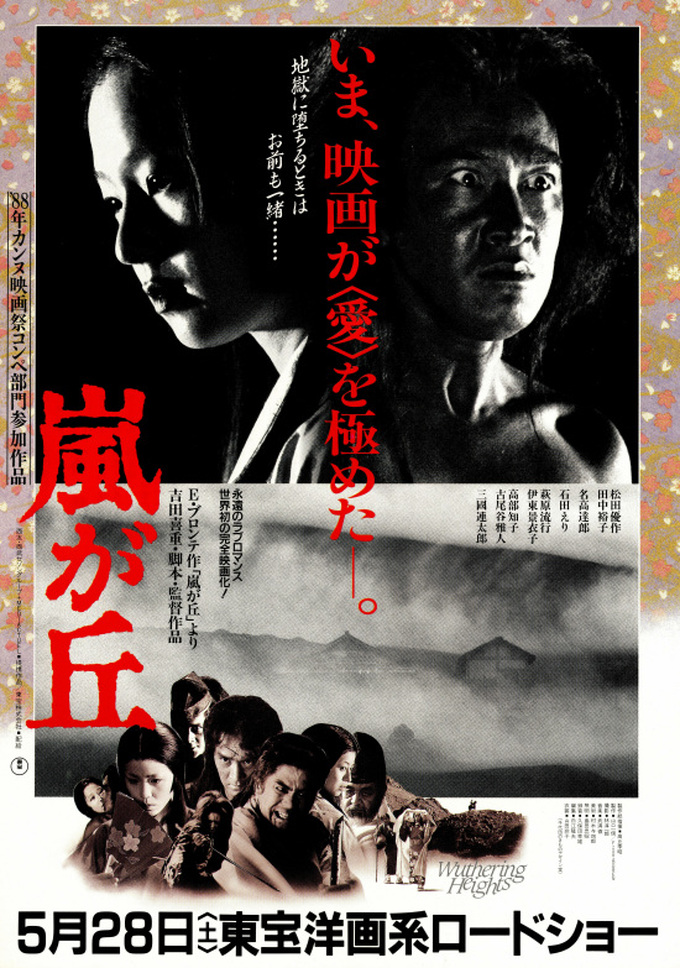
Wuthering Heights (嵐が丘, Kiju Yoshida, 1988)

Wuthering Heights poster“In this decadent age, who believes in the gods’ anger?” asks a cynical priest, willingly inviting evil into his home in the hope of brokering a change in his constraining circumstances. A key figure of the avant garde, Kiju (Yoshishige) Yoshida, like many of his contemporaries, struggled in the heavily commercialised cinema industry of the 1970s and beyond, finding the international arena more receptive to his arthouse concerns. 1988’s Wuthering Heights (嵐が丘, Arashi ga Oka), a distinctly Japanese take on Emily Brontë’s classic novel, found funding in France where it perhaps neatly sits alongside superficially similar efforts from his similarly constrained contemporaries, but as always Yoshida’s vision is darker, more disturbing than that of the big budget epics which aimed to recapture golden age glories.

Yoshida swaps the desolate Yorkshire moors for a smokey hellscape settled in ash on the side of an unpredictable volcano. The Yamabes are a priestly family in charge of conducting various rituals to keep the serpent god happy, preventing an eruption and ensuring good rains. The house is spilt in two with a feud underway between the East mansion and the West. The East mansion is where we lay our scene as old Yamabe returns from an extended sojourn in the city, bringing back with him a feral child he found starving under a bridge and later names “Onimaru” (Yûsaku Matsuda) in honour of his “demonic” appearance.

“Demonic” maybe an unkind word to use about any child and primed to become a self-fulling prophecy, but as someone later puts it Onimaru “does not belong to this world”. He is “an evil man” whose “cruelty knows no limits”, yet two women are drawn into his orbit and find themselves unable to break free of his passionate intensity. His step-sister, Kinu (Yuko Tanaka), our Cathy stand-in, bonds with him in childhood feeling a kind of elemental connection perhaps forbidden to her as a woman of feudal Japan subject to the whims of male society. Yet she alone sees through him to humanity buried below, “your curse is the proof you will never stop loving me” she offers darkly while seducing him the night before her marriage to another man (Tatsuo Nadaka). Later that man’s sister (Eri Ishida), positioning herself as potential bride, cites the fact that he is “consumed by jealousy” as further proof that he is more man than demon, but Onimaru himself seems uncertain so deep is he in rage and resentment.

That resentment is perhaps as much about class as about anything else. A feral child, living like an animal on the streets of an unforgiving city, he’s an ill fit for the rarefied mansion of a local lord with a spiritual mission, albeit one which imprisons him in his home and forbids him from associating with the world below. Yamabe took him in for his “boldness”, actively seeking his demonic dynamism while his own son, Hidemaru (Nagare Hagiwara), remains disappointingly conservative and wedded to his old-fashioned elite entitlement. Hidemaru’s resentment of Onimaru is not so much born of parental rejection in his father’s abrupt decision to go out and find a more satisfactory son than the one dutifully waiting at home, but irritation in Onimaru’s irregular status. He resents that a mere “peasant”, a man who should be among the servants, is permitted to share his space, and it seems, has usurped his position in his father’s eyes to be groomed as an heir to the illustrious Yamabe name.

Hidemaru eventually leaves in disgust, setting off to make a conventionally successful life for himself in the city, latterly returning with a wife and son to claim his birthright only after his father’s death. Yet Hidemaru suffers too. His wife is raped and murdered by bandits, agents of chaos and yet a product of the system he was so keen to uphold, leaving him a drunken, dissolute figure unable to fulfil his obligations to the god of fire while Onimaru prospers in a violent world and is eventually gifted that which he most wanted – stewardship of the Yamabe clan.

Even so, he cannot fully possess Kinu who remains lost to him, ruined by her own internal conflict between individualism and obedience. After coming of age, her father tells her women of the Yamabe clan must leave the mountain to serve as priestesses in the shrine, but Kinu wants to “live as a true woman”. She cannot have Onimaru, but does not want to leave him so she engineers a marriage with the rival West mansion and the kindly Mitsuhiko who brands his house as one of light as opposed to the gloomy shadows of the East. Kinu has attempted to seize her own future, at least in part, but finds herself conflicted, torn between her affection for Mitsuhiko who is gentleness personified and her need for Onimaru’s brooding intensity.

Yet Yoshida’s Wuthering Heights is less a story of forbidden, transgressive loves than it is of elemental destruction, the anger of the gods manifested as imploded repression and its fiery aftermath. Yamabe, the father figure, brings “evil” into his home, infecting it with dark desire and deep resentments seemingly in the knowledge it will burn it to the ground. The third generation, orphaned and finally independent, are left to make what restitution they can and so the tale begins to reset and repeat with cousins, Hidemaru’s grown and now subjugated son Yoshimaru (Masato Furuoya), and Kinu’s fiesty daughter (Tomoko Takabe), returning their ire to the force of their oppression – Onimaru, still fearsome and implacable though ageing and maddened by his unanswerable love for a dead woman whose corpse he has begun to covet.

Kinu, on her deathbed, promised to drag Onimaru to hell (assuming they weren’t already there) if only to protect her new family and finally does just that as he finds himself expelled by the next generation, dragging a coffin off into the fiery distance. “In every way, our world is accursed” insists an exasperated retainer. Everything here is corrupt, rotten, suppurating under the weight of oppressive traditions which restrict freedom and insist on order at the price of humanity. Yoshida’s noh-inspired aesthetics add to the atmosphere of fable as his embattled protagonists attempt to reconcile their natures with their civility but find there is no answer for repressed desire other than destruction and eventual rebirth.


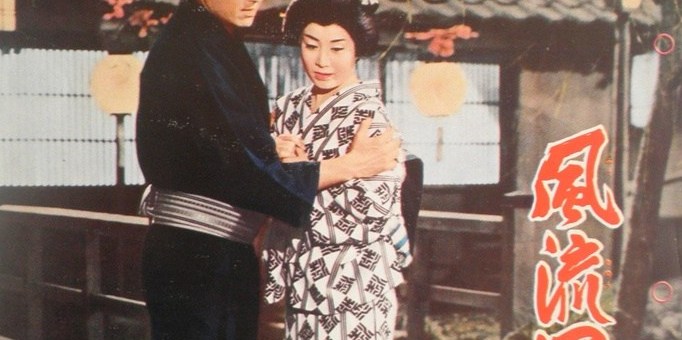
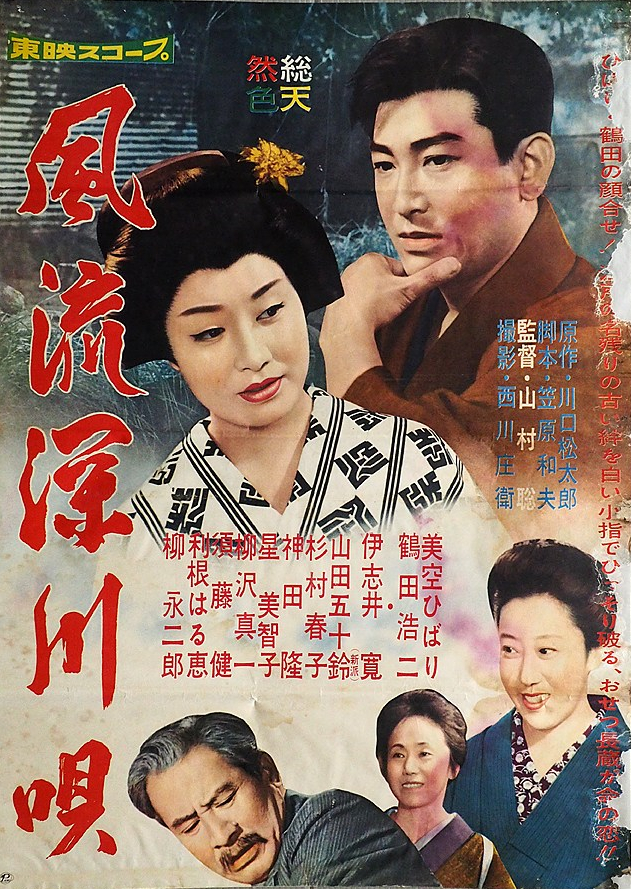
Deep River Melody (風流深川唄, So Yamamura, 1960)

Deep River Melody poster 2An actor with a long and distinguished career, So Yamamura first stepped behind the camera in 1953 with an adaptation of the famous proletarian novel by Takeji Kobayashi, The Crab Cannery Ship (later adapted by Sabu in 2009), and eventually completed six features. Deep River Melody (風流深川唄, Furyu Fukagawa Uta), released in 1960 and adapted from a novel by Matsutaro Kawaguchi, was last among them and starred post-war singing sensation Hibari Misora in the leading role. Hibari Misora was a frequent presence at Toei through the ‘50s and ‘60s, appearing in a series of musical dramas both period and contemporary but Deep River Melody is among the small number of purely dramatic pieces in which she starred which do not feature any musical numbers even over the opening and closing.

Set in the early years of militarism, the story revolves around Setsu (Hibari Misora) – the daughter of a restaurant owner, and her head chef, Cho (Koji Tsuruta). Having grown up together, Setsu and Cho have quietly fallen in love but these are times in which it is difficult to state one’s feelings plainly. Luckily, Setsu’s father, Isaburo (Kan Ishii), and his warm hearted mistress (Isuzu Yamada), have noticed the growing affection between the pair and are only too happy for them. What could be better after all than the head chef marrying into the family? Despite some qualms on Cho’s side in breaking a class ceiling taboo, the matter appears to be settled and both he and Setsu are blissfully happy.

However, tragedy soon strikes. Isaburo unwisely agreed to become the guarantor of a loan taken out by Shunsuke Ohta (So Yamamura) – the leader of the communist party in Japan (not an easy thing to be amid the rising tides of militarism). He, of course, defaults on the loan putting the restaurant at risk. The other relatives, learning of the prospective marriage between Setsu and Cho are extremely unhappy, viewing it as improper for mere servant to inherit the restaurant. Isaburo stands firm, but matters are pushed to crisis point by grumpy uncle Koshikawa who is determined to act as a go-between for the wealthy son of a rival restaurant who has long had designs on Setsu.

Though this is definitively a pre-war story, many of the problems faced by Setsu and Cho are the same as those in Hibari Misora’s contemporary movies in that she, in particular, finds herself trapped by a series of outdated social codes in which her extended family expect her to consent to marry a man she does even like for money in order to save their “good” name. They believe Isaburo is a feckless fool who has lost the restaurant through a needless gesture of loyalty towards a man who had been good to him in the past and was now in trouble. Isaburo places human relationships above money and politics, remaining uninterested in the relatives’ insistence on class hierarchies and preservation of the family’s good standing. Though he may, to a degree at least, be sympathetic towards Ohta’s political intentions, he acts as guarantor out of respect and gratitude rather than deep belief in a cause.

Nevertheless, the barriers between Cho and Setsu are less physical than they are psychological. Cho, raised as a servant, feels himself inferior and has difficulty accepting Isaburo’s talk of marriage owing to their differing social status. Isaburo, somewhat embarrassed, has not yet spoken with Setsu, but then knows his daughter well and is right in assuming the pair will eventually sort things out on their own if given a gentle push. When the relationship is tested by the restaurant’s failure, Isaburo and Setsu stand firm. No one entered this relationship for the wrong reasons – Cho loves the restaurant and everyone who works in it, but he fell in love with Setsu independently and would marry her for nothing. He remains uncertain, however, if his devotion is selfish and if the best way to love her is to leave her and allow her to save her familial legacy by marrying a man with money.

Like many post-war films, Deep River Melody is essentially about learning to let go of outdated ideas and that the maintenance of tradition is less important than individual happiness. Setsu and her father are ready to let go rather than commit themselves to a course of lifelong unhappiness solely to please their snooty relatives. Cho, however, struggles to free himself of a feeling of social inferiority. His own family tell him that his desire to marry Setsu is not only wrong but dangerous, that they have built a life for themselves though being loyal servants and that crossing the class divide risks all of their futures. Conflicted, Cho remains unwilling to fight for his love because he does not believe he can win and not only that, he feels it would be inappropriate to even try. If the pair are to find true happiness, they will have to find the courage to move on from the past and build their own future free of feudal ideas but to do so will require both sacrifice and support in the belief that a better life is possible.


Brutal Tales of Chivalry (昭和残侠伝, Kiyoshi Saeki, 1965)

brutal tales of chivalry posterBrutal Tales of Chivalry (昭和残侠伝, Showa Zankyo-den) – a title which neatly sums up the “ninkyo eiga”. These old school gangsters still feel their traditional responsibilities deeply, acting as the protectors of ordinary people, obeying all of their arcane rules and abiding by the law of honour (if not the laws of the state the authority of which they refuse to fully recognise). Yet in the desperation of the post-war world, the old ways are losing ground to unscrupulous upstarts, prepared to jettison their long-held honour in favour of a dog eat dog mentality. This is the central battleground of Kiyoshi Saeki’s 1965 film which looks back at the immediate post-war period from a distance of only 15 years to ask the question where now? The city is in ruins, the people are starving, women are being forced into prostitution, but what is going to be done about it – should the good people of Asakusa accept the rule of violent punks in return for the possibility of investment in infrastructure, or continue to struggle through slowly with the old-fashioned patronage of “good yakuza” like the Kozu Family?

Here is where we find ourselves in the 21st year of the Showa Era (1947) – the small marketplace in Asakusa is rife with black marketeers and illegal goods, but it’s still the only mechanism by which people are able to survive. The market is overseen by the elderly patriarch of the Kozu Family, Gennosuke (Tomosaburo Ii), who does his best to ensure a kind of “fairness” in its operation, at least in as far as yakuza rules extend. His territory is currently under threat from a rival gang – the Shinsei (literally “new truth”) who obey no such rules and are growing ever more ruthless in their quest to control the local area. Their big idea is to build an entirely new marketplace with a roof to make it a permanent and pleasant place for traders to do business – they will finance this through a kind of crowdfunding paid for by the merchants themselves who will also be paying protection money and kickbacks to the Shinsei. Everyone approves of the covered market project, even the Kozu, but if it means letting the Shinsei assume control is it a price worth paying?

This is a question which faces prodigal son Seiji (Ken Takakura) who returns from the war to find his city in ruins, Gennosuke murdered by the Shinsei, that he is now the new head of the Kozu, and that the woman he loved has been given away in a dynastic marriage to man from another minor clan. Before he died, Gennosuke was able to dictate two important instructions – that Seiji was to take over, and that the gang should proceed on a note of peace, avoiding violence or aggression where possible, leading by example rather than attempting to crush their new rivals. Seiji, having just returned from one battlefield is intent on following Gennosuke’s orders but how far can he really survive on the moral high ground when his opponents are content to fight dirty from down below?

The “Showa” era spanned some 60 years of turbulent Japanese history but in 1965 it was just under 40 years old and already beginning to generate the complicated feelings of nostalgia which are still attached to it today. Showa is right there in the Japanese title as if it were an age already passed but it’s clear in 1965 that something has shifted, one age has or is beginning to give way to another. The desperation of the post-war world with its empty, rubble strewn vistas and population filled with hunger and despair has ebbed away now that Japan is back on the world stage following the 1964 Olympics and the economy has as last begun to pick up. The young no longer fixate on the rights and wrongs of empire building, war and surrender but have begun to turn their attention towards the American occupation, social justice, and foreign conflicts. The young of 1947 were middle-aged in 1965, no one would begrudge them romanticising their youth, and so even if the world of Brutal Tales of Chivalry is a bleak one it still contains a kind of nostalgia for the kind of honourable gangster inhabited by Takakura who embodies traditional values some may feel are under represented in modern society.

Yet, for all that, there’s something subtly subversive in the film’s eventual suggestion that pacifism will only go so far and that one side or another must be banished from the battlefield through violence if peace is ever to prosper. Still, the struggle is a noble one in which honour is defined by strength of character and the selfless desire to ensure the well-being of others as much as it is to a blind observation of arcane rules and obsolete, meaningless ritual. The first in a long running series, Brutal Tales of Chivalry helped established Takakura’s iconic presence which eventually became synonymous with the “ninkyo eiga” as a personification of idealised Japanese masculinity, tough but caring even if passion is often repressed or redirected into violence. Remnants may be all that’s left of “chivalry” in the new Showa era, but there’s a degree of beauty in this brutality that refuses to die even as its era passes.


Now available on Region A blu-ray from Twilight Time (limited to 3000 copies only)

Original trailer (no subtitles)