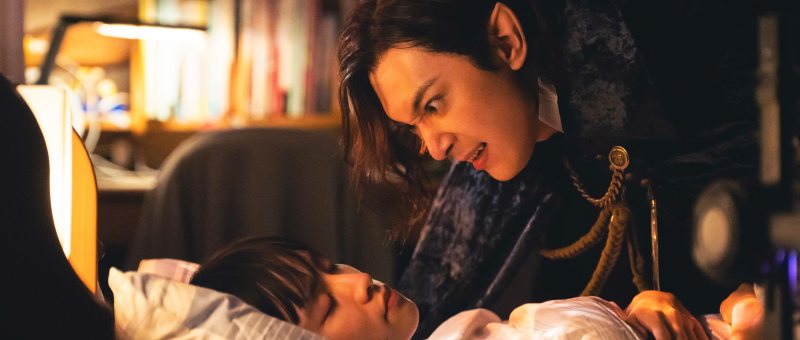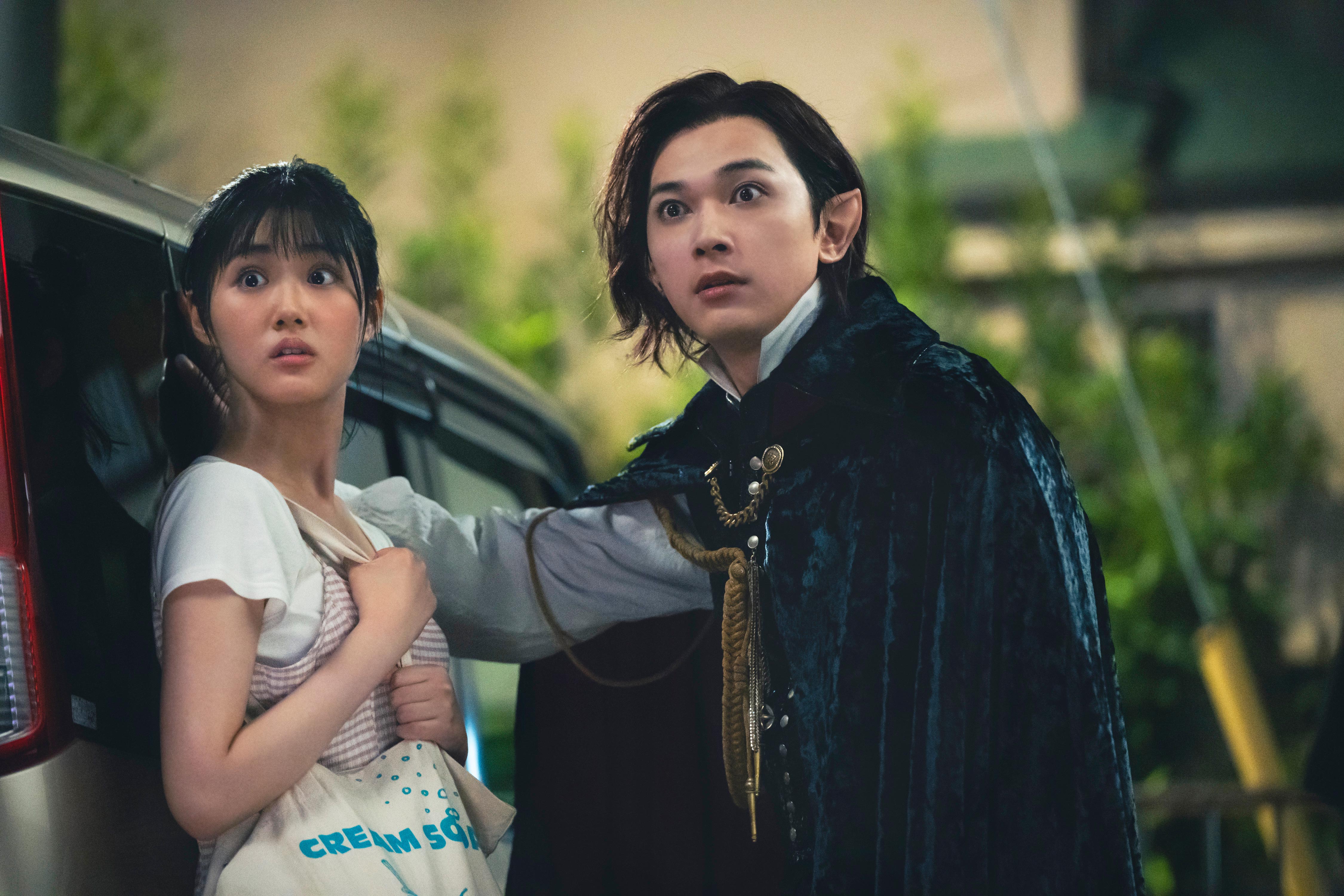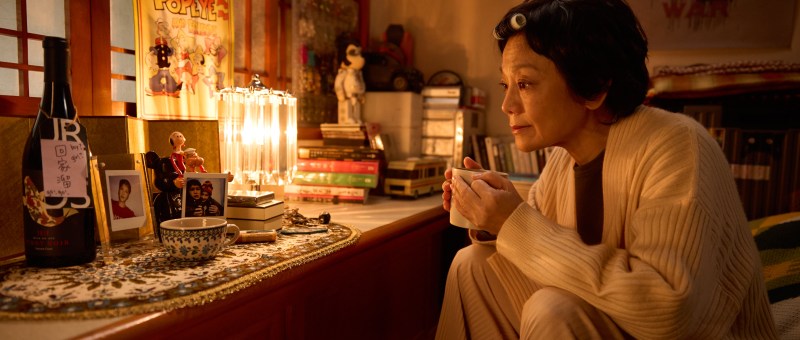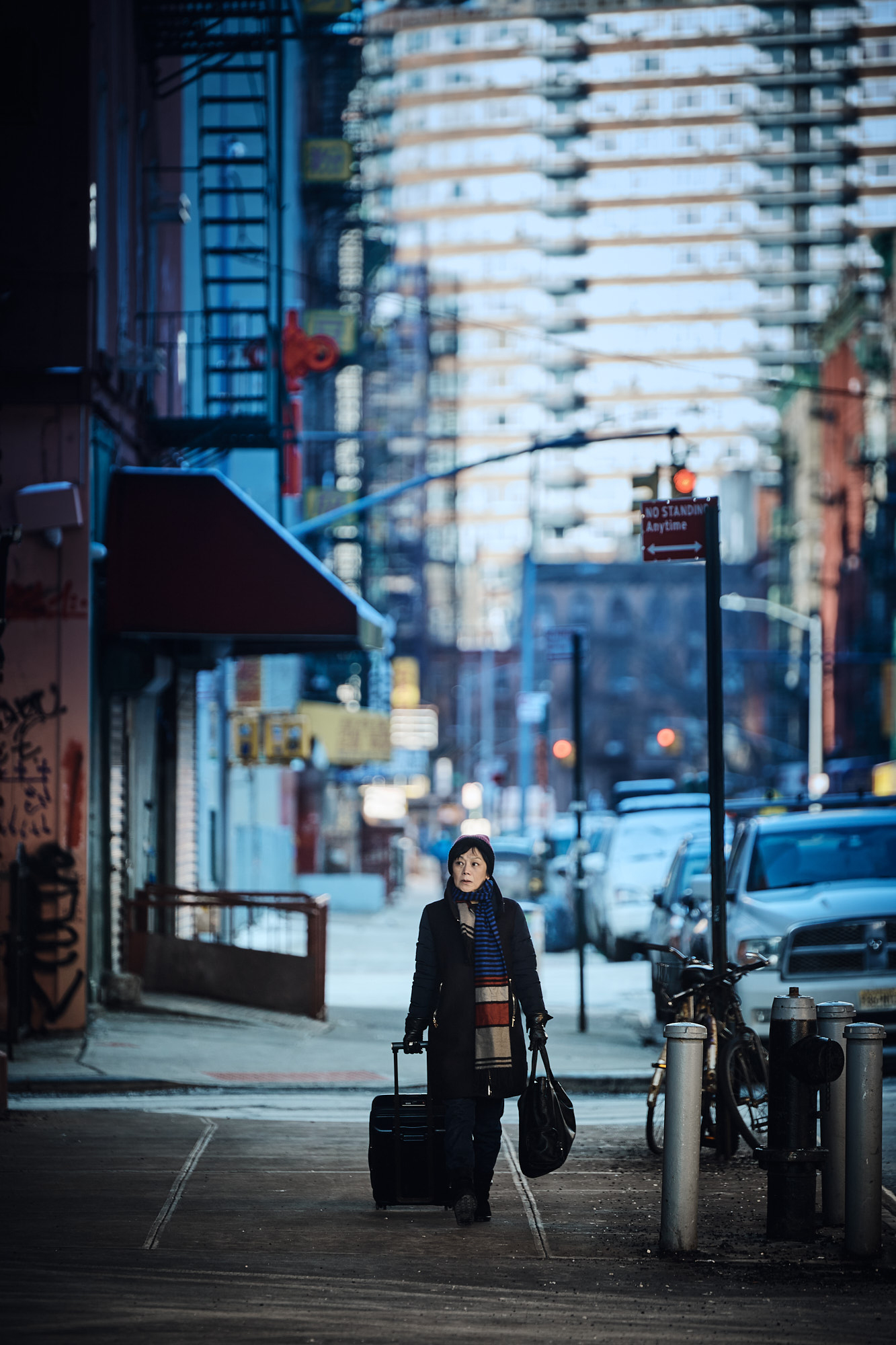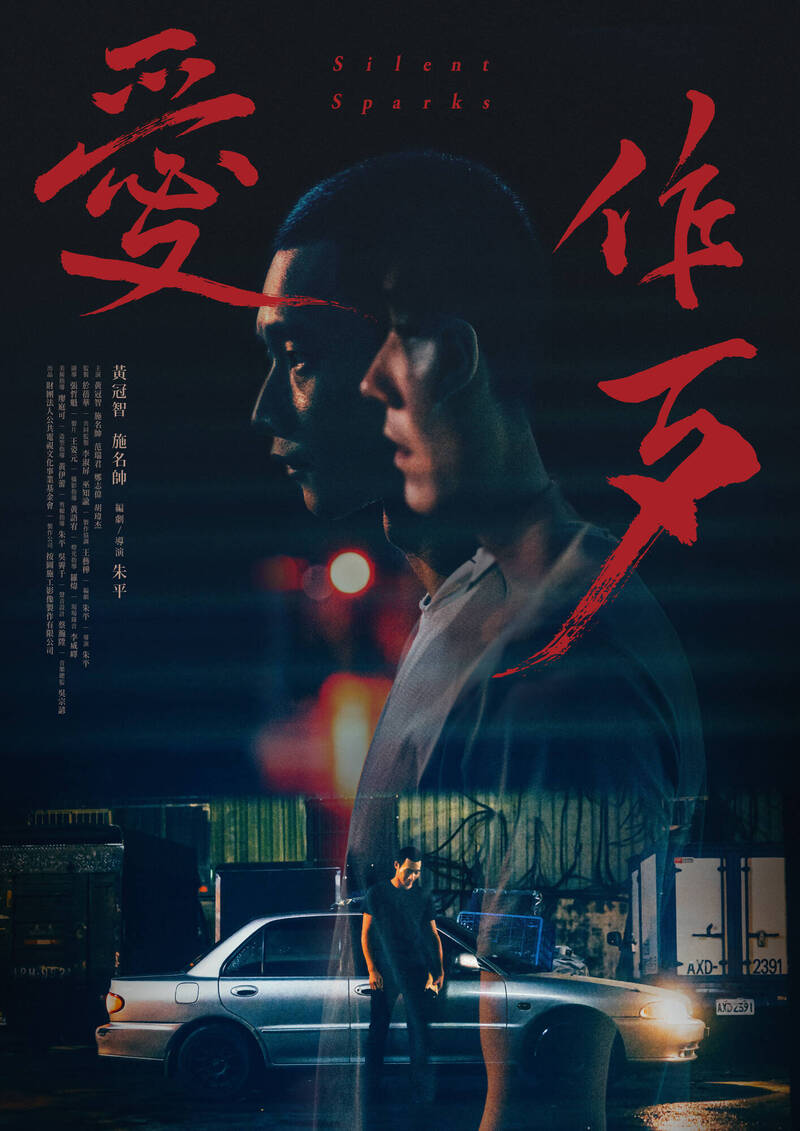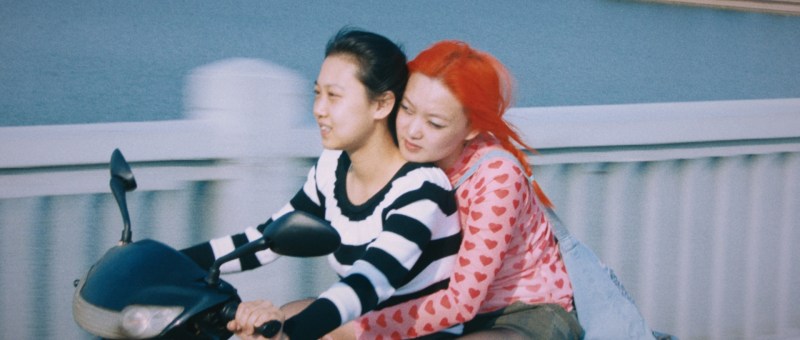
Come Dance With Me (来来, Liu Yunyi & Wei Bozhi, 2019)

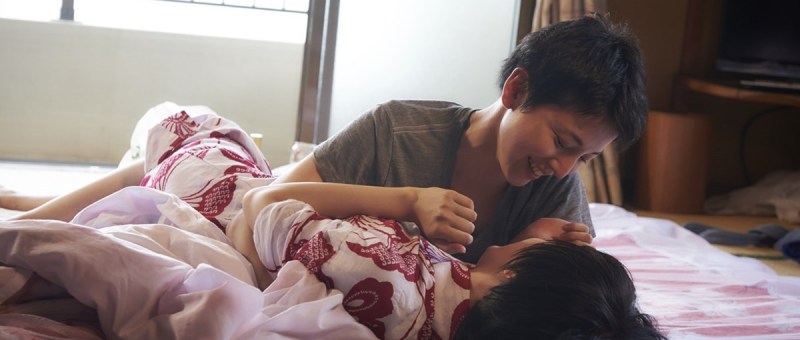
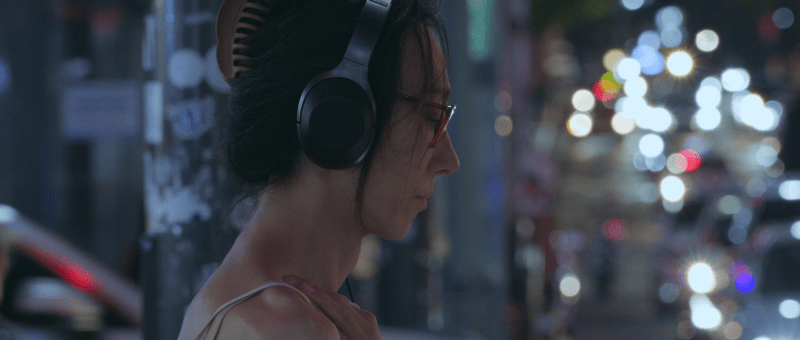
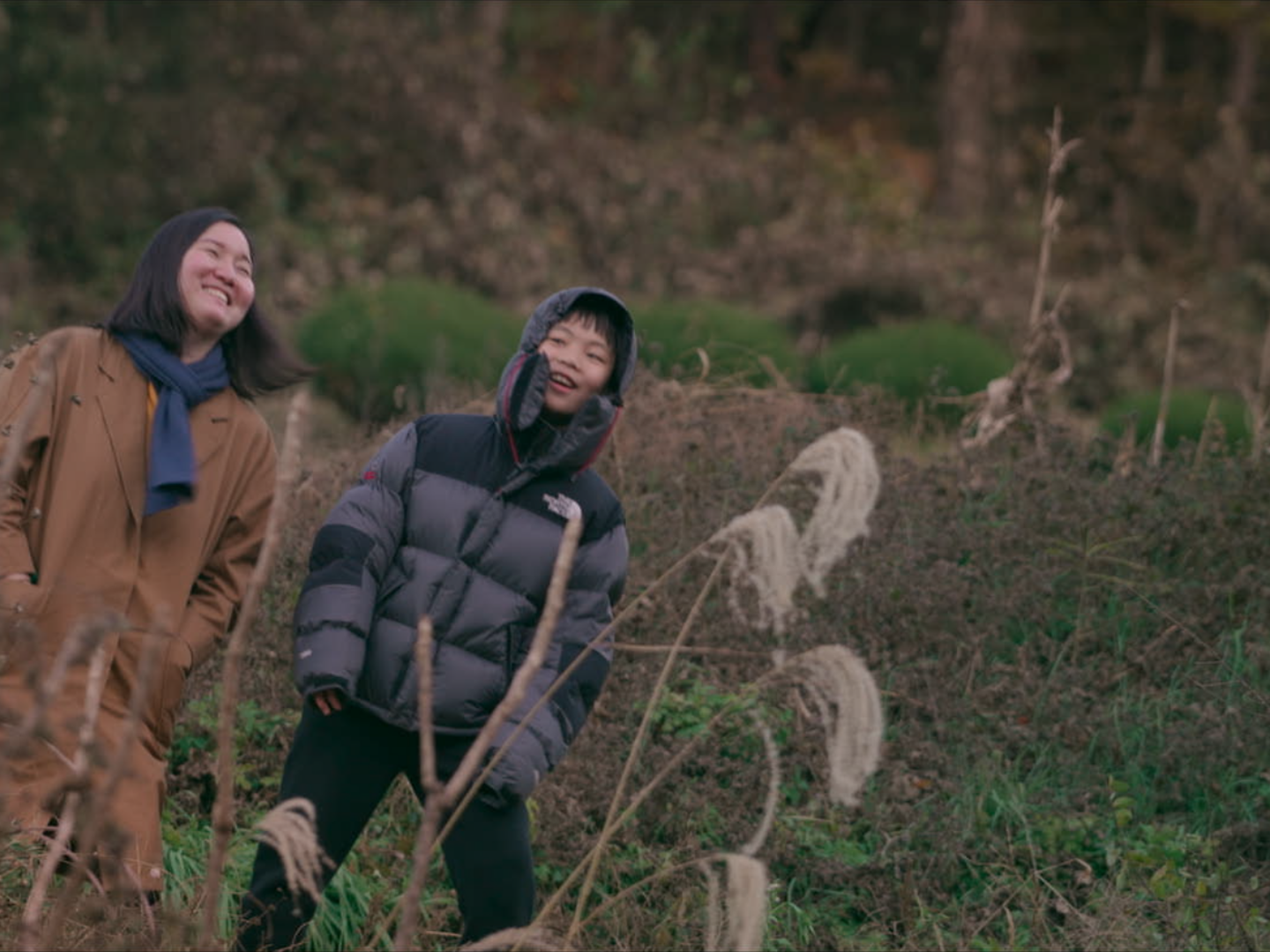
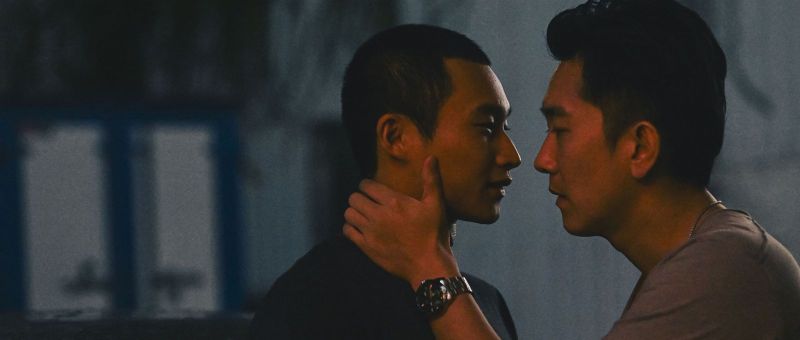
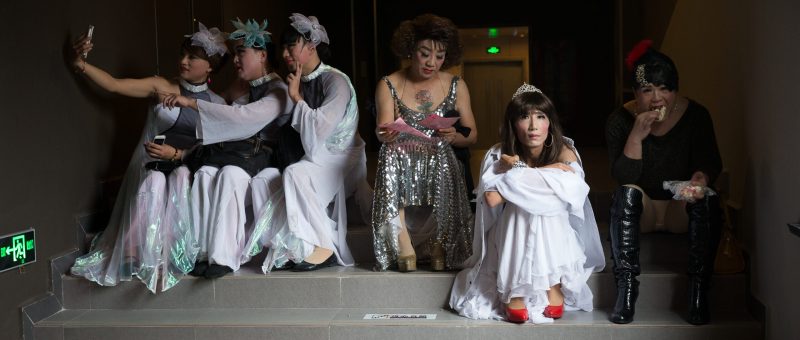
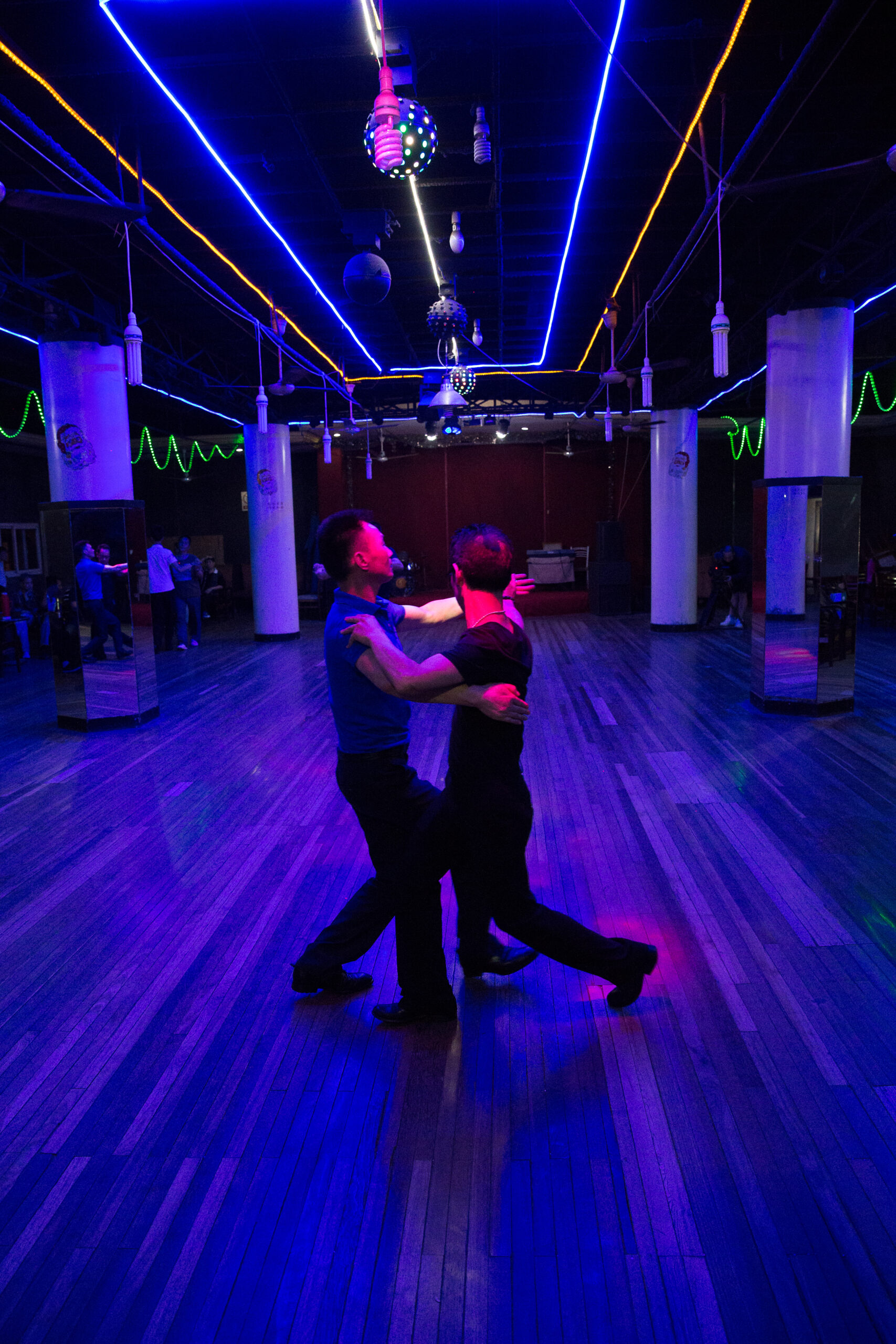
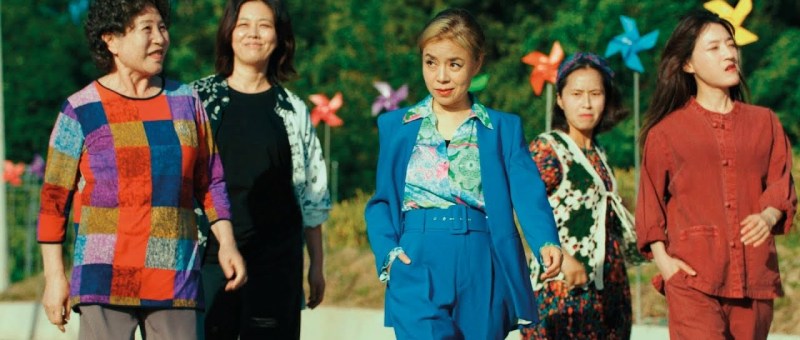
“You need to fight for your place in society,” according to Jiaojiao, one of several regulars at the Lai Lai Ballroom interviewed as part of Liu Yunyi & Wei Bozhi’s documentary, Come Dance With Me (来来, lái lái). As several of them mention, the ballroom had been a refuge for the LGBTQ+ community, though times have now changed. These days, younger people prefer clubs and bars, while many of those who used to come are now elderly and don’t get out as much meaning that the ballrooms are mainly meeting places for the now middle-aged men who first frequented them 20 years earlier.

That they exist at all and this documentary could be made might be surprising given prevalent anti-LGBTQ+ attitudes from the censors’ board and wider community. It’s true enough that Lai Lai became a community hub and its partial closure for the 2016 G20 conference leaves them with no place to go. The various people that Liu & Wei interview come from various walks of life as they demonstrate in the opening sequence in which an old man visits a temple, a younger one visits a park, and Lai Lai’s manager Min walks through the neighbourhood and gets something to eat at a small cafe. 

The old man from the temple best expresses the inherent contradictions both of his religion and the wider society in which he relates that Buddhist monks are supposed to overcome their desires. Young monks are forbidden from taking wives and also from touching women, but technically speaking, the same prohibitions do not exist between men and homosexual acts are not unusual in the temple. Conversely, the young man who went to the park reveals that he has been living with HIV for the last seven years and that he lost his job because of it. In despair, he tried to take his own life only for his godmother to explain to him that people with high blood pressure also need to take medication for the rest of their life so it’s no different from that.

Still, he’s convinced himself of the impossibility of having a relationship sure that no one would stay with him after finding out. He says that he once told a close friend that he had AIDS and the friend quickly distanced himself from him and effectively disappeared from his life. The film later follows him on another day out with a young man, Li Yapeng, but an ill-fated decision to take a five-hour bus trip to go see him backfires when Yapeng not only fails to come and meet him but seems less than enthusiastic about his impromptu visit before abruptly breaking up with him. Another older man relates that he once had a lover who was diagnosed with HIV but told that he could not receive treatment in Shanghai and should return to his hometown. A Shanghai native, the older man resolved that, as he was already old and it would take several years for symptoms to emerge at which point he may be dead anyway, he would deliberately contract HIV and get medicine to give to him. What he didn’t realise is that the treatment isn’t the same for anyone and the medication he was prescribed was no good for his boyfriend, who then went back to his hometown and got treated there. Unfortunately, the treatment didn’t agree with him and he elected to stop taking it, passing away not long after.

Jiaojiao, meanwhile, has been with their partner Fei Er for 26 years, though Fei Er is now having health issues. Fei Er describes their relationship as rock solid and the same as that of any heterosexual couple in that now they’ve been together so long, 26 years is effectively forever and neither of them is ever going to abandon the other no matter what may come. Nevertheless, Jiaojiao also describes an additional layer of stigmatisation in that they have breasts, a fact which it seems they still hide from extended relatives having made the original decision to get them without telling anyone first. Done in a private clinic, the procedure also left them with ongoing medical issues caused by the failure to drain the wound properly. In a later conversation, they suggest that the primary motivation for getting breast surgery was financial. They now work as a dominatrix, but do not like doing it describing some of the men as “disgusting”. Their marginalised status prevents them from gaining more mainstream employment in a still conservative society. They have all found a place for themselves at Lai Lai, but as the press notes reveal, it abruptly closed its doors in 2018 with no one sure when or if it will reopen. Nevertheless, its legacy lives on as a space of warmth and acceptance that gave each of them a place to belong and be joyful no matter the difficulties of the world outside.


Come Dance With Me screens at Centre 151 3rd May as part of this year’s Queer East.

1 Girl Infinite (Lilly Hu, 2025)

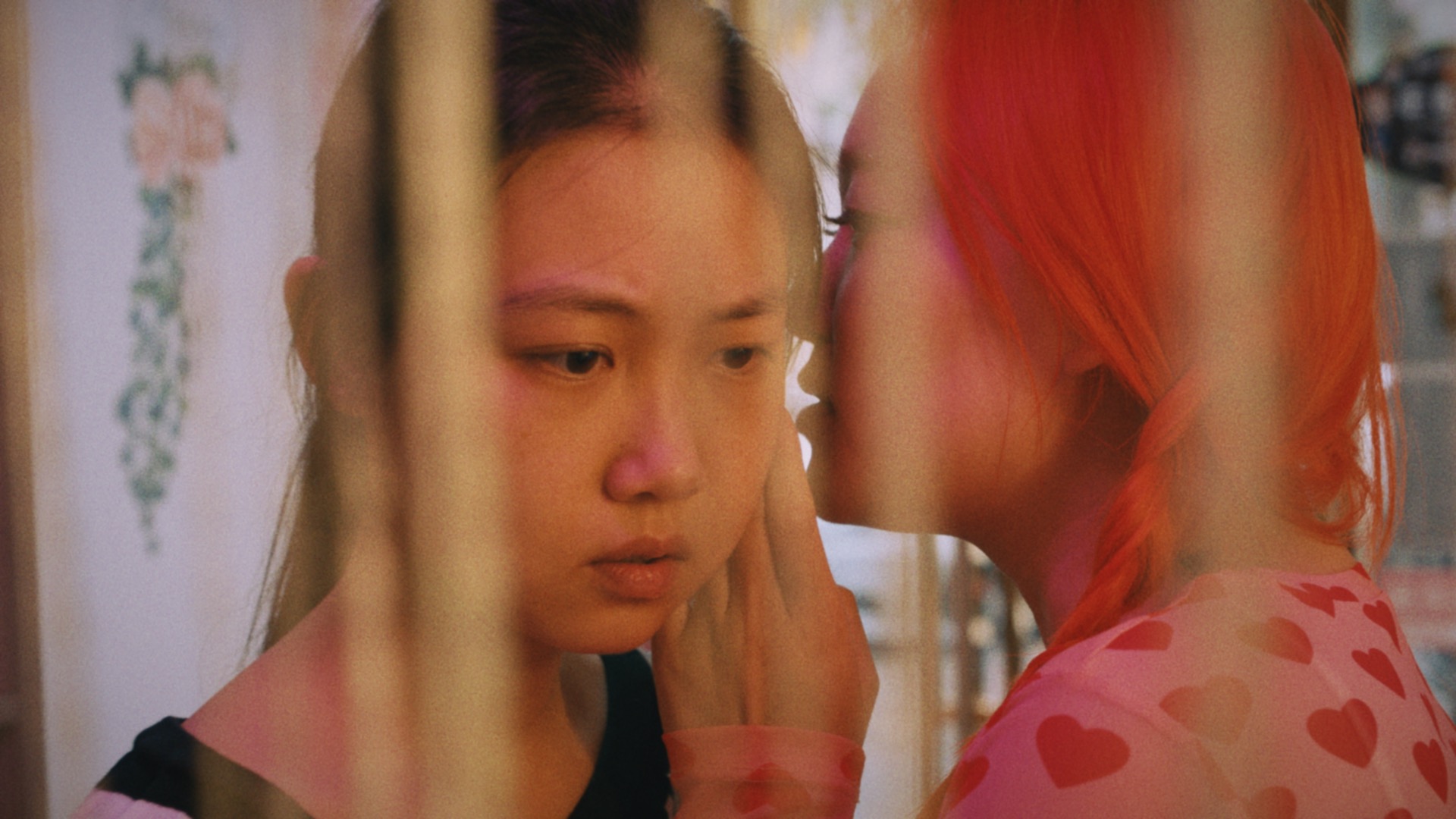
There’s a moment in Lilly Hu’s gritty Changsha-set drama 1 Girl Infinite in which the heroine, Yinjia (Chen Xuanyu), watches as a fishmonger bashes a fish to death. He repeatedly smacks its head into the ground and, in a moment of foreshadowing, hits it with his meat cleaver while the fish flails around helplessly, gasping for air and twitching its tail. Yinjia winces and half looks away, but also sees something of herself in the way this poor creature is tossed around and eventually gutted in much the same way that she feels herself to be battered by her society.

Indeed, the film opens with her reading her suicide note in which she states that however she may die it has nothing to do with Xia Yutong (Lilly Hu), though in actuality it has everything to do with her. Abandoned by both of her parents, 19-year-old Yinjia has adopted a quasi-maternal role over Tong Tong who lives in her apartment and shares her bed, though the relationship, from Tong Tong’s perspective at least, remains curiously ill-defined. In the early light of morning, Yinjia silently gazes at her sleeping figure, but Tong Tong often rejects her gestures of intimacy. She won’t let Yinjia hug her in the street because she’s “too heavy,” and there is a clinginess to Yinjia that spills over into possessiveness and control that might be off-putting, but equally it seems that Tong Tong pushes her away because she herself doesn’t know how to process this relationship or her feelings for Yinjia. 

Then again, perhaps it is really about not having anywhere else to go as she unconvincingly tells her friends when they complain she’s brought “that girl,” again. Tong Tong tells them that Yinjia is just some girl who won’t stop following her around and acts like she’s a drag, but is at other times clingy herself and in rare moments of freedom expressing a silent affection for Yinjia. Nevertheless, there is a marked contrast between the more straight-laced Yinja and Tong Tong’s punkish friends who seem to represent two opposing worlds. Yinja glares at them constantly, resenting their indiscriminate use of drugs and the dangerous situations it could get them into, but appears to want to rescue Tong Tong who might not actually want to be rescued.

When Tong Tong gets involved in another ill-defined and possibly transactional relationship with local drug dealer Chen Wen (Bo Yang), it further disrupts their dynamic and pushes Yinjia towards the edge as she falls into a self-destructive obsession while convinced that she will lose Tong Tong. Tong Tong is convinced that Chen Wen will take her to America, which it seems clear that he has no real intention to do, where people live in big houses and everyone has a job. In this way, he represents a more literal kind of escape from the problems of contemporary China in which she is trapped in a dissatisfying socio-economic position from which she sees no way out. After she loses her virginity to Chen Wan, the camera cuts to a Burberry bag containing a designer dress that echoes Tong Tong’s need for consumerist affirmation. 

Tong Tong clearly aspires to his life of wealth and comfort, but it’s equally true that Chen Wen’s financial stability is rooted in illegality and moral dubiousness in his indifference to the harm his line of business causes. When the girls visit his apartment, there’s another woman there that is being fed drugs and is eventually manhandled out when her reaction to them begins to annoy Chen Wen and his henchman. She may be a harbinger of what may become of Tong Tong if she gives in to this bargain and a further provocation for Yinjia who is determined to prevent her from doing so by any means necessary. It’s never quite clear whether either relationship is any more than transactional from Tong Tong’s point of view, or whether she’s really aware of the realities of her relationship with Chen Wen which he clearly doesn’t view with much seriousness, though she continues to refer to herself as his girlfriend and evidently really believed he meant it when he said he’d take her to America. 

Yinjia meanwhile glares at the world around her and strikes back self-destructively. She scores a partial victory in seeming to have impressed Chen Wen in the depths of her devotion and the lengths that she would go to to maintain control over Tong Tong, though it’s also somewhat hollow and ironic given that he almost certainly never meant to take her to America anyway nor keep her around very long. Left with no parental input or societal safety net, the two women are each adrift and left with only each other to rely on. Though locked in a somewhat toxic embrace, the relationship between them is the only hint of purity in their otherwise impure world of betrayal and exploitation.


1 Girl Infinite screens at Rio Cinema 3rd May as part of this year’s Queer East.

Manok (이반리 장만옥, Lee Yu-jin, 2025)

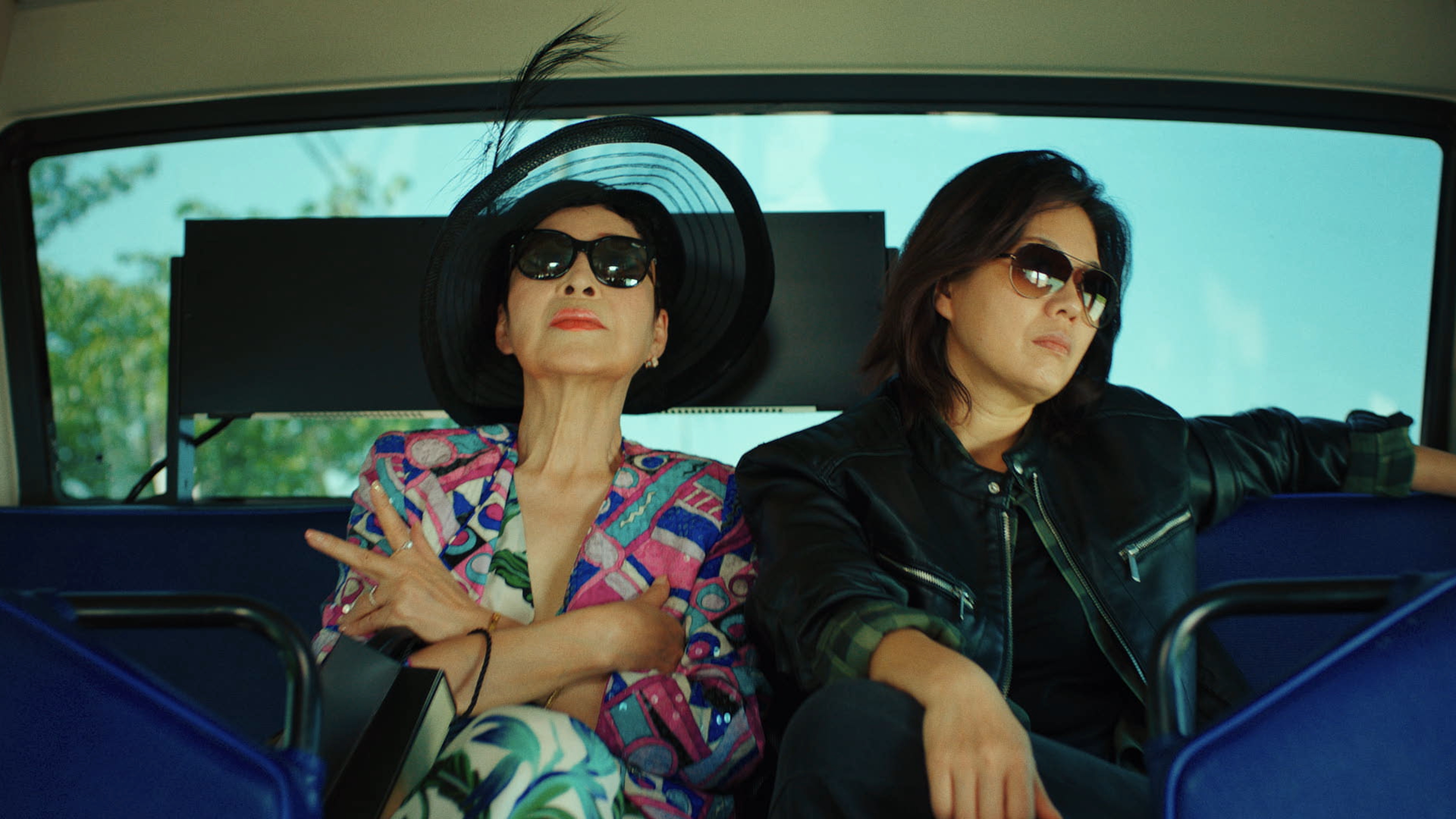
When Manok returns to her rural hometown in the wake of her mother’s death, the irony is that some accuse her of running away from the humiliation of the implosion of her life in Seoul, but in other ways she has unfinished business in Iban-ri and this time she isn’t going to let them drive her away. Lee Yu-jin’s warmhearted dramedy is at heart about a love of community, or rather communities that might not at first seem compatible or even mutually exclusive but are then integrated by the sheer force of Manok’s determination.

Now in her 50s, Manok (Yang Mal-bok) had owned a popular lesbian bar in Seoul and was at the forefront of queer activism in the city hosting the annual after party for the Pride parade for the last 20 years. But times have changed and the young queer community has begun to find new places to root itself while Manok struggles to adjust to the generational shift taking place. Finding out on the same day that her mother has died and her brothers don’t really want her at the funeral, she’s losing the parade after party and without it her bar will probably go out of business, and her long-term partner Geum-ja (Kim Jung-young) knew all along but didn’t say anything out of fear of her reaction, sends her into frenetic spiral in which she abruptly leaves town and decamps to the house her mother inexplicably left her back in Iban-ri.

Manok had left town to live a more authentic life having tried to accommodate herself to conventionality through marriage but finding it unbearable. She is not exactly welcomed back with open arms as her brothers repeatedly blame her for being a “nasty lesbian,” and using it as a justification for increasing their share of the inheritance to cut her out. Her ex-husband, meanwhile, has become the city chief and rules the local area with an iron hand while misusing his position to exploit the local community. Manok ends up coming to the rescue of his child, Jae-yeon, whose transgender identity he repeatedly rejects while Jae-yeon faces discrimination and harassment from his schoolmates.

Jae-yeon is in many ways the reason that Manok can’t simply leave again and try to reconstruct her life in Seoul because nothing’s really changed in Iban-ri and Jae-yeon is facing all the same problems she once did but without the well-earned armour the middle-aged Manok has managed to forge for herself that allows her to stare down injustice with a steely gaze. Then again, back in Seoul, younger members of the community had accused her of being self-aggrandising, that she was overfond of justifying her actions as being for their benefit when really she simply enjoyed the status of being a community leader. In Iban-ri, however, she gains some time to reflect and truly becomes a part of this community that she again wants to save, this time by challenging her ex to win the position of city chief herself and enact change through kindness and solidarity. While the young leave for the cities, many left behind are elderly and are in their way just as exiled as Manok with the city chief failing in his obligations to look after them.

Later Manok says that her ambition is to make Iban-ri a place where no one is lonely or feels the kind of isolation she once felt through being rejected by those around her because of her sexuality. As her ex pathetically tries to cling on to his patriarchal authority, Manok decides to do things the Iban-ri way by winning hearts and minds and eventually showing them that there’s nothing to fear as she too reoccupies her mother’s house with her partner in tow finally claiming her claiming her space in this place that had no place for her. As Geum-ja had said, Manok really does love her community and sets about making Iban-ri a happier and healthier town where people care for and about each other and no one is left behind. A warm and quirky exploration of small-town life and the power of authenticity the film’s infectious spirit is difficult to deny as the joy it finds in the queer identity even amid so much fear and hostility brokered by one woman’s determination not to back down because there are kids who need protecting in Iban-ri and they all they deserve a Manok in their lives.


Manok screened as part of this year’s BFI Flare.

Trailer (English subtitles)

Summer’s Camera (여름의 카메라, Divine Sung, 2025)

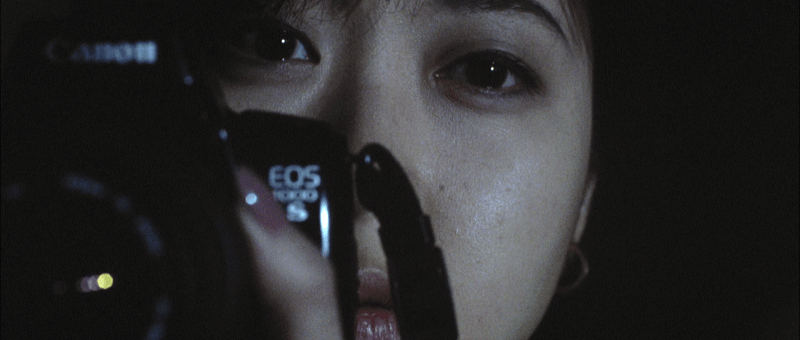
Summer can’t bring herself to press the shutter button on the last four exposures left on the unfinished roll of film her father left behind. Her unwillingness to do so and seeming abandonment of their shared passion for photography hints at her difficulty to come to terms with his passing along with her own sense of adolescent confusion. But just as her father had told her she would, she learned to hear the shutter for herself and took three of her four remaining photos without thinking, all of Yeonwoo, the star of the school’s football team by whom she is unexpectedly captivated.

Well, perhaps not all that unexpectedly. Summer appears to already be aware of her queerness even if she hasn’t explored it yet and quickly finds that her interest is returned by Yeonwoo who immediately responds to her roundabout confession of love by asking her out. Which is all to say, this world is quite different from that Summer’s father Jihoon inhabited in his youth even if it’s rosier than the still conservative reality of contemporary South Korea. Summer’s direct announcement to her best friend that she likes girls is met with a simple “I know,” having noticed that she never took photos of guys and only a little hurt that she never said anything before and hasn’t let her in on her recent dating news.

But what Summer discovers after taking one very deliberate photo of Yeonwoo and having the film developed is that her father also took pictures of someone he liked and that someone was a boy, Maru. Of course, this revelation is quite destabilising for her. She can’t get her head around her father’s relationship with herself and her mother if he was gay though as her friend points out, he may have been bisexual which actually didn’t occur to her. In a quest for answers, Summer approaches the now middle-aged Maru and eventually like her friends did of her simply accepts this unknown fact about Jihoon while finding in Maru someone who’s gone through the same things she’s experiencing and with whom she can discuss the things she can’t yet talk about with her mother or friends. 

In her recollections, we never see the face of the adult Jihoon. He always appears with her back to her or just out of frame reflecting the ways in which she no longer feels as if she knew her father and has lost sight of her relationship with him in the wake of her loss. Though told it was a traffic accident, Summer wonders if in reality he might have taken his own life and chosen to leave her behind. Through re-embracing photography, she begins to rediscover him and come into herself gaining not only the confidence to be who she is but to believe that loss is something she can bear while like Yeonwoo’s running hobby which apparently can alter the flow of time, photography is also a means of trapping a memory which means that nothing’s ever really gone.

With the universal love and acceptance that seems to surround Summer, the film implies that the world has moved on and if her father chose conventionality over love that’s a choice that she may not need to make. Even so, in Maru she finds a strong queer role model who even in his own sadness and grief in his lost love for Jihoon is able to help her move forward in showing her a different side of her father which she had never known. He helps her navigate young love and offers a safe space for her to be herself until she’s ready to confront the unresolved past and make peace with it. Though perhaps tinged with melancholy and longing, Summer’s world is otherwise bright and sunny. Filled both with the giddiness of first love and the deep sadness of a catastrophic loss, it is nevertheless warm and beautiful as Summer sees it through the camera lens. With the shutter button as her guiding light, Summer learns to see in new ways peering both back into the past and ahead into her future now less fearful and more certain of herself having reclaimed both something of the father she lost and the one she never knew.


Summer’s Camera screened as part of this year’s BFI Flare.

Trailer (English subtitles)

Okinawa Blue Note (오키나와 블루노트, Cho Sung-kyu, 2024)

If you run into someone who has the same name, same birthday, and was on the same flight as you to a random destination wouldn’t you call that fate? The protagonists of Cho Sung-kyu’s Okinawa Blue Note (오키나와 블루노트) prefer to think of it as mere coincidence, at least to begin with. They each have different reasons for coming to Okinawa, but then again perhaps fate sent them here to get a new lease on their lives if not to fall in love.

Love does however seem a little unlikely for the mismatched pair each named Kim Jungmin who are about as different from each other as it’s possible to be. Yet the male Jungmin’s (Kim Dong-wan) animosity is somewhat understandable given that his arrival in Okinawa has become chaotic thanks to the female Jungmin’s (Hwang Seung-eon) presence given that she mistakenly ended up with both his pre-booked car and room reservation because the staff members only checked the name and not the booking number. Jungmin isn’t the sort of person who copes well with complications, nor does he cope well with noisy, more extroverted people like the female Jungmin who is also annoyed by the whole thing but on the other hand doesn’t think it’s really her problem having merely assumed she’d been lucky enough to receive a free upgrade rather than actively nabbing someone’s more expensive package. Nevertheless, he’s forced to get along with her because he needs to borrow her rental car to get around which also means accompanying her on her touristic adventures and getting swept up in her enthusiastic exploration of the island.

The female Jungmin has a tendency to drink too much, say things she shouldn’t, and forget about them by the next morning. The male Jungmin, by contrast doesn’t drink because he is living with rheumatoid arthritis though he says he intends to drink again if his condition improves. He writes romance novels and doesn’t use the internet all that much. She writes webtoons and posts stories to instagram. They really have very little in common aside with a sense of dissatisfaction about their lives, their names, birthdays, and travel itinerary but you can’t deny that their meeting is like one of the male Jungmin’s novels as even he finds himself musing on a new story about someone who comes to Okinawa to patch things up with an old lover only to fall in love with a whale shark they met along the way.

Gradually it becomes apparent that the female Jung-min is here to confess her feelings to a boy from Korea who, it turns out, may have come to Okinawa in search of greater freedom rather than needing to be liberated from his tank which ironically may be more the case for the male Jungmin. Though it’s obvious from their second meeting with Taemin’s colleague Hiro that the two men are a couple, the female Jungmin can’t seem to see or accept it nor does he actually tell her outright that he’s gay only that all he wants from her is friendship as he’s explained several times before only she was too drunk at the time to remember she’s already declared her feelings and been rejected. What the female Jungmin saw as “fate” really was just coincidence and personal myth making as Taemin too had his own fate to follow that led him to Okinawa where he was freer to pursue his romantic desires, if only slightly, than in the still conservative Korea. When the male Jungmin floats an idea for a book inspired by his time in Okinawa the two men give their consent to be included but also ask their relationship remain a same sex one rather than the heterosexual casting Jungmin had given it possibly out of an attempt to disguise their identity but also an underlying squeamishness towards the inclusion of LGBTQ+ issues.

Nevertheless, the male Jungmin is able to re-envision the situation by turning his life into fiction and exploring a relationship between himself and the female Jungmin with the roles somewhat reversed in which he is a stereotypically hard drinking, chain-smoking writer and the female Jungmin a put upon woman with rheumatoid arthritis helping someone else achieve their romantic desires. Is this life imitating art, or art imitating life? Whatever it is, it seems the trip to Okinawa with its tranquil streets, picturesque environment, friendly and laid-back people has offered each of them opportunities both romantic and creative in a moment of unexpected serendipity, or perhaps this time it really was fate after all.


Okinawa Blue Note had its World Premiere as part of this year’s Cinema at Sea.

Albino (アルビノ, Toru Kamei, 2016)

Two women struggle to free themselves from the abuses of a patriarchal and conservative society in Toru Kamei’s tragic lesbian romance, Albino (アルビノ). Though perhaps somewhat out of touch in its tacit implication that same sex love is inherently destructive, Kamei’s sensitive drama finds its marginalised heroines seeking mutual rescue but finding only temporary respite in the bubble of their love fraught as it is with danger and confusion as they each in their own way struggle to escape their respective prisons literal and self imposed. 

Butch plumber Yashima (Fujiko) has always felt somewhat ill at ease, that her inside doesn’t match her out, and the disconnect has made her reluctant to associate with others. On a job one day she encounters a strange young woman, Kyu (Satsuki Maue), wearing a high school uniform who can’t seem to stop gazing at her. Yashima fixes the problem with her sink which was clogged with paper tissue, but is surprised when Kyu calls back and says it happened again. On her return visit, while Kyu’s stepfather is out, Kyu asks Yashima to have a look at the bathroom where she gingerly seduces her, both women perhaps surprised by the depth of their desire. Problematic age gap aside, the two women embark on a passionate sexual affair but struggle to free themselves from the forces which constrain them outside of their intense physical connection. 

Hinting at a kind of gender dysphoria, Yashima lives as a man but feels pressured into conforming to conventional femininity. She’s the only woman at her job as a plumber, perhaps still stereotypically regarded as a male occupation, and simultaneously regarded as one of the boys made complicit in the misogynistic banter of her boss and colleague. Resented for her unwomanliness, she’s eventually assaulted by her skeevy vanmate who refuses to believe her when she says she has no interest in men. She implies that prior to her relationship with Kyu, she hadn’t considered other women but had perhaps thought of herself as male, and is immediately overwhelmed by her newfound desire. Meanwhile, she’s also dealing with familial trauma in her difficult relationship with her alcoholic mother who frequently turns up only to ask for money to spend on drink. 

Kyu, meanwhile, is more directly oppressed, trapped in an abusive environment with violent stepfather who repeatedly rapes her, his tissues the ones which eventually clog the sink after she tries to wash them away. She claims that the uniform is a fashion statement, though the implication seems to be that her stepfather does not allow her out of the house even to go to school if indeed she is still a student despite her claims to the contrary. That might also explain why she continues to clog the sink and call the plumber, potentially alerting Yashima’s boss not to mention the colleague who seems to have realised there’s something going on, rather than simply ring her directly even after she’s really only coming for sex. Kyu makes a habit of giving Yashima hard candies after each of their meetings, Yashima eventually realising that they spell out the word “help”, but she remains too traumatised to escape convinced that her stepfather would find her wherever they went. 

Somewhat awkwardly, the implication is that Yashima’s relationship with Kyu is the force which motivates her to accept her femininity, the younger woman transgressively kissing her after staining her lips with menstrual blood as if to ram the point home. Kyu meanwhile agrees that she too hates being a woman, though her resentment is perhaps more towards her constant victimisation, her utter powerlessness at the hands of the hands of the stepfather who abuses her and whom she cannot escape. Yashima too finds herself victimised as a woman, assaulted by her colleague who leaves by coldly telling her it was her own fault for refusing him, or perhaps simply for her “failure” to conform to conventional social norms, a crime for which he has punished her as means of correction. Yet they each struggle to free themselves, Kyu too traumatised to embrace her freedom despite her literal cry for help, while Yashima is continually punished for her atypical gender presentation. Only in sex do they find release. Shot with a detached realism which extends to the naturalistic though passionate, erotic love scenes Kamei’s melancholy drama offers little in the way of hope for either woman, subtly suggesting that their romance is a forlorn hope because there is no escape from the forces which oppress them in such a rigid and conformist society. 


Trailer (no subtitles)

Manila by Night (Ishmael Bernal, 1980)

Contemporary youth is swallowed by the darkness of the Marcos-era capital in Ishmael Bernal’s meandering nocturnal epic, Manila by Night. So bleak was its vision that it was blocked from release by first lady Imelda Marcos who objected to the film’s characterisation of her beloved city and insisted that all references to Manila be removed which is why the film was retitled City After Dark in an attempt to distance itself from the realities of urban life under the authoritarian regime. 

Bernal opens however with a scene of aspirational suburban living at the home of a wealthy family as they prepare for an evening out attending a live gig by eldest son Alex (William Martinez), an aspiring folk singer. In a quiet city bar he performs a wholesome cover of the ’69 Crosby, Stills & Nash classic “Teach Your Children”, but the otherwise serene atmosphere is abruptly shattered by gunshots ending the performance and scattering the spectators. The choice of song is in itself instructive in hinting at the generational divide between the apathetic Alex and his respectable middle-class suburban mother Virgie (Charito Solis) who we later discover is carrying a degree of shame over her past as a sex worker and has perhaps overcompensated in her desire to ensure her children become successful members of a conservative society. 

As the song says, Alex too is incapable of understanding his parents’ youthful suffering and finds himself lost in the nighttime city. On the one hand he’s dating a young woman of a similar social class who may be joking when she talks about their marriage but is evidently more serious about the relationship than he is while they retreat to a hotel room experimenting with sex and drugs. On the other hand he’s also experimenting with a gay man, Manay (Bernardo Bernardo), who is also in an awkward relationship with bisexual taxi driver Pebrero (Orestes Ojeda) who has two children and a wife while simultaneously dating naive and innocent country girl Baby (Lorna Tolentino ) currently working as a waitress at a diner where a sleazy pimp keeps hassling her to become a sex worker promising megabucks from wealthy Japanese clients. 

The presence of the Japanese as external economic force is in its own way a reflection of the desire many of the young people have to leave the Philippines, such as that of blind sex worker Bea (Rio Locsin) who is also involved with Alex but hoping to move to Saudi Arabia with her boyfriend Greg (Jojo Santiago) who has been offered employment there but later discovers that he’s been scammed, temporarily stranded in Bangkok until managing to arrange his passage home. Mass unemployment is a constant spectre, Baby’s father also out of work but lamenting the only job prospect he’s found pays so little and is so far away as to be economically pointless. Lack of other options later causes Greg to attempt to manipulate Bea into participating in live sex shows without her full consent while many of the women are forced into sex work in order to support their families. When Baby falls pregnant, realises Pebrero won’t marry her, and is sacked from the diner she too is pushed into accepting the sleazy customer’s offer but ultimately cannot go through with it. Meanwhile, Pebrero’s wife Adelina (Alma Moreno) is also exposed as a sex worker catering to wealthy Japanese clients rather than the nurse she had claimed to be leaving every day in a crisp white uniform for the hospital and later paying a heavy price for her duplicity. 

The crowded tenements inhabited by Baby and Adelina where several members of a large family share a single room stand in stark contrast to Alex’s well-appointed suburban home complete with servants his mother makes a point of talking down to, but what may start for him as a reckless curiosity rebelling against his comfortable life becomes a self-destructive odyssey through midnight Manila in which he eventually becomes addicted to drugs. In a climactic scene, Virgie and her husband batter him with nearby objects while the camera cuts ironically to a series of religious icons and a large statue of Jesus looking down on the scene of chaos before Alex abandons his family to reunite with Manoy. The capture of his friend Kano (Cherie Gil), a tomboyish lesbian in love with an unreceptive Bea, by the police is framed as a kind of crucifixion, the torturing of youth by an implacable authority which restricts its freedom and presents it only with despair. 

Adelina had tried to warn Baby that in order to survive Manila she would need to become “wiser than the men”, but the city is itself full of duplicities and secrets and Baby perhaps ironically the only one finally able to escape its false promises. The perhaps more hopeful coda in which a less curious Alex appears to awaken from his slumber lying peacefully in the light of a new dawn was apparently a concession to the censors but still leaves him lost in a kind of limbo neither in one place nor another but perpetually wandering. At once a portrait of a city lively and free with its series of gay discos and drag nights, weird cults in parks, and nighttime callisthenics classes, and of a place marred by exploitation and hopelessness, Bernal’s odyssey through through Manila by night finds only an elusive hedonism born of internal despair in the intense repressions of authoritarianism.


Trailer (dialogue free)

Moneyboys (金錢男孩, C.B. Yi, 2021)

“Who doesn’t sell themselves to make money?” a young man asks in C.B. Yi’s melancholy mainland-set drama Moneyboys (金錢男孩, Jīnqián Nánhái) relating the story of a relative who worked as a tanner all his life, became ill from the effects of the chemicals, and died alone far from home. He may suggest that the exploitative nature of contemporary capitalism will eventually consume you, but it’s an older set of social codes that do for Fei (Kai Ko) who consumes himself in a pathological desire for self-sacrifice as if constantly trying to prove himself worthy of acceptance.

As we first meet Fei he introduces himself as “Jackson”, a naive country boy in the city seeking a means to support his struggling rural family which he finds in sex work. Through his job, he encounters the swaggering Xiaolai (JC Lin) who introduces himself as “Max” and takes him under his wing. Soon they fall head over heels in love, but Xiaolai fears Fei’s desperation and lack of judgment in his choice of client, an anxiety which is later borne out when Fei is badly beaten by a local gangster. Filled with rage, Xiaolai attacks him with a metal bar but ends up badly beaten himself and thereafter sought by the police. Not wanting any trouble, Fei skips town and five years later has started a new, apparently much more successful life, in another city. 

“You’re always living for others” he’s later told by a childhood friend, Long (Bai Yufan), whose long-term crush on him Fei seems to be wilfully ignoring, “the way you sacrifice yourself, you constantly hurt yourself and sometimes others too”. Fei’s self-sacrificing nature does indeed seem to have a masochist component as he wilfully puts himself in dangerous situations to get money to provide for his family. His family, however, reject him precisely because of the nature of the sacrifices he is making. Returning to his home town after being unjustly hassled by local police who attempt to entrap him by getting an undercover officer to pose as a client and searching his home for drugs, Fei is physically attacked by a belligerent uncle who can’t stop ranting about Fei’s marital status beginning by berating him that his family is embarrassed because he has no wife before revealing that they all know about “what you did in the city” and are shamed by it. His father barely looks at him, though his sister appears to know and encourages him to find the right person and hold on to them because life is long and she doesn’t want him to be lonely. 

Later, another woman reassures him that he is “someone who deserves love” though he struggles to accept it. He feels indebted to Xiaolai because he lost a leg for him, unable to move past the transactional nature of love to accept it from someone who wants only the same in return. Consumed by internalised shame he struggles to let go of outdated traditional social codes and unlike Long is unwilling to abandon them in order to live the life he wants. One of his sex worker friends in his new city eventually enters into a sham marriage with a woman who is fully aware of the realities and later pledges to move back to the country and raise a child as a conventional husband and father while tearfully explaining that six years with the gay community have been the best of his life. He too has made a sacrifice of himself for his family but is already torn apart with disappointment and resentment. 

Fei’s tragedy is that he tries to please everyone but himself, revelling in his self-sacrificing suffering and barely noticing when others are caught in the crossfire. Unable to let himself go, he is left only with the memory of the one time he was happy, which wasn’t the one he originally thought it was, and the simultaneous knowledge that he has lost It forever through his own thoughtlessness. Trapped in the past both by the traditional social codes and his thwarted romance with Xiaolai he envisions an ironically progressive compromise but is unable to see the selfishness in his desires perhaps for once putting himself first in failing to consider the feelings of those around him. A neon-lit vista of loneliness, C.B Yi’s melancholy tale of self-imprisonment and the commodification of love discovers only unhappiness in the midst of a repressive social culture defined by the twin poles of rampant consumerism and the filial imperative. 


Trailer (English subtitles)

Love in the Big City (대도시의 사랑법, E.oni, 2024)

“How can being yourself be your weakness?” asks a young woman who, more than anything else, is defiantly herself, to a young man who indeed is anything but. The heroes of E.oni’s Love in the Big City (대도시의 사랑법, Daedosiui sarangbeop), adapted from the acclaimed novel by Park Sang-young, are in some ways on parallel journeys that somehow weave through and around each other as they each try to navigate an often hostile society that has no place either of them.

For aspiring writer and in the film’s early stretches student of French literature Heung-soo (Noh Sang-hyun), his “weakness” is that he’s gay and though he seems to have accepted this about himself is firmly in the closet. Free spirited Jae-hee (Kim Go-eun) who spent her teenage years abroad in France catches him making out with their professor but couldn’t care less though Heung-soo rebuffs her attempts at friendship fearing they’re akin to a kind of blackmail or that she plans to out him to their fellow students. It’s not until Jae-hee is publicly shamed when it’s rumoured a topless photo being shared online is of her that the pair finally become friends. Sick of the curious stares and covert giggles, she lifts her shirt in front of the class to prove it isn’t her, earning the nickname “crazy bitch”.

Her response is the exact opposite of Heung-soo. She claims her freedom by baring all, being defiantly herself and outwardly at least little caring for what others think of her while Heung-soo makes himself invisible and says nothing harbouring intense fear of being exposed. They are each in their way pariahs. Heung-soo because of his sexuality which is still unacceptable to many in the fiercely conformist society of South Korea in which Christian religious bodies still have huge influence and loudly oppose LGBTQ+ rights and freedoms. Heung-soo’s widowed mother is also intensely religious and having stumbled on one of his stories about a crush on a classmate is aware that he is gay but does not speak of it and continues to believe he will be “cured”. This is perhaps why she keeps urging him to do his military service believing it will make a man out of him.

For all of these reasons, it’s not surprising that Heung-soo is unwilling to live his life openly as a gay man because of the prejudice he knows he will face from those around him. Jae-hee, by contrast, refuses to hide and lives the way she wants to but is shamed by those who feel a woman should live in a certain way which is to say quietly, politely, and obediently. A man she thought was a boyfriend while he thought of her as a bit on the side publicly slut shames her and asks what sort of idiot would want to date a woman like her. Though we first meet her as a confident, rebellious student we see her gradually beaten down by the world around her and the demands of corporate culture. Considering marrying a man she may not actually like because it’s what you do, she stares sadly at a middle-aged woman opposite her on the train dressed in a near identical outfit and the comfortable shoes that are psychologically at least uncomfortable for Jae-hee in representing her capitulation to the properness of mainstream society. 

Her degradation continues to the extent that she finds herself in a relationship with a domineering, intensely patriarchal man who later turns violent when she tries to leave him. E often cross cuts and juxtaposes Heung-soo’s and Jae-hee’s experiences as they each suffer similar blows and indeed violence from a macho society if in different ways and for different reasons while having only their intense bond as fellow outsiders to rely on. This really is the love in the big city, a deeply felt platonic and unconditional love between two people who essentially have no one else. It’s through this love that each comes to love and accept themselves, Heung-soo eventually gaining the courage to fully embrace his authentic self while Jae-hee finally regains her independent spirit and refuses to let others shame her while standing up both for the LGBTQ+ community and the young woman she once was at the mercy of a male-dominated corporate culture. Warm and often funny, the film paints contemporary Seoul as an outwardly oppressive city of enforced conformity but equally discovers small pockets of freedom and joy along with the wholesome comfort of true friendship and self-acceptance.


Love in the Big City screened as part of this year’s London Korean Film Festival.

International trailer (English subtitles)

Concerning My Daughter (딸에 대하여, Lee Mi-rang, 2023)

The unnamed mother (Oh Min-ae) at the centre of Lee Mi-rang’s Concerning My Daughter (딸에 대하여) has only one wish, that her daughter will find a nice man to marry and have a few grandchildren. But Green (Im Se-mi) is gay and has been in a relationship with her partner Rain (Ha Yoon-kyung) for the last seven years though her mother doesn’t seem to accept that what they have together is “real” believing it to be some kind of delusion that’s holding Green back from her happy maternal future. 

When she suggests Green move back in with her after her attempt to secure a loan to help her out with the rising cost of housing is denied, it doesn’t seem to have occurred to her that Rain would be coming too while it perhaps seemed so natural to Green that it didn’t occur to spell it out. Green can at times be obtuse and insensitive, unfair both to her mother and to Rain who bears the unpleasant atmosphere with grace and tries her best to get along with her new mother-in-law who is openly hostile towards her and makes no secret of the fact she would prefer her to leave. Of course, some of these issues may be the same were it a heterosexual relationship as the mother-in-law struggles to accept the presence of the new spouse in the family home and the changing dynamics that involves, but Green’s mother’s resentment is so acute precisely because her daughter’s partner is a woman. She cannot understand the nature of their relationship because it will produce no children and to her therefore seems pointless. 

While her attitude is in part determined by prejudice and a sense of embarrassment that her daughter is different, it’s the question of children which seems to be foremost in her mind. Another woman of a similar age at her job at a care home remarks on her maternal success having raised her daughter to become a professor, but she also says that only by leaving children and grandchildren behind you can die with honour. Green’s mother is the primary carer for an elderly lady, Mrs Lee (Heo Jin), who had no children of her own though sponsored several orphans none of whom appear to have remained in touch with her. Now ironically orphaned herself in her old age, Green’s mother is the only one who cares for her while the manager berates her for using too many resources and eventually degrades Mrs Lee’s access to care Green’s mother suspects precisely because she has no family and therefore no one to advocate for her. 

It’s this fate that she fears for her daughter, that without biological children she will become a kind of non-person whose existence is rendered meaningless. Of course, it’s also a fear that she has for herself and her tenderness towards Mrs Lee is also a salve for her own loneliness and increasing awareness of mortality. Green is her only child, and she may also fear that she will not want to look after her as she might traditionally be expected to because her life is so much more modern as exemplified by the bread and pasta the girls bring into her otherwise fairly traditional Korean-style home. On some level she is probably aware that if she continues to pressure Green to accept a traditional marriage they may end up becoming estranged and she will be in the same position as Mrs Lee, wilfully misused by a cost-cutting care industry because they know there’s no one to kick up a fuss about her standard of care.

Even so, it doesn’t seem to occur to her that Rain could care for her daughter into their old age. Resentfully asking her why they “have to” to live together, Rain patiently explains that in a society which rejects their existence, in which they are unable to marry or adopt children, togetherness is all that they have. Green is currently engaged in a battle with her institution which has fired her colleague on spurious grounds but really because of her sexuality with claims that some students are “uncomfortable” with her classes. The violence with which the women are attacked is emblematic of that they endure from their society while even colleagues interviewing her invalidate Green’s concerns because she too is “one of them,” in their prejudicial way of speaking. 

Green’s mother had also, rather oddly, said that her daughter wasn’t like that when Rain reluctantly explained her difficulties at work and again resents that she’s making waves rather than keeping her head down and getting on with her career. Her decision to jump in a car with boxes of biscuits intending to smooth things over with Green’s boss by apologising on her behalf bares out her old-fashioned attitudes, though she too is shocked by the violence directed at Green and her colleague. When her lodgers ask about Rain, she tells them she’s her daughter’s friend, while she avoids the question when her colleagues ask, still embarrassed that her daughter has not followed the conventional path as if it reflected badly on her parenting. 

Yet through her experiences with Mrs Lee and Rain’s constant, caring patience she perhaps comes to understand that her daughter won’t be alone when she’s old and that she too does not need to be so lonely now. There’s something a little a sad in the various ways Green’s mother is told that her attachment to Mrs Lee is somehow inappropriate as if taking an interest in the lives of those not related to us by blood were taboo even if it’s also sadly true that it’s also in Mrs Lee’s best interests to ask those questions to protect her from those who might not have her best interests at heart. What the film seems to say in the end is that we should all take better care of each other, something which Green’s mother too may come to realise in coming to a gradual, belated acceptance of her daughter-in-law if in part through recognising that they aren’t alone and that it’s a blessing that her daughter is loved and will be cared for until the end of her days.


Concerning My Daughter screened as part of this year’s London Korean Film Festival.

Trailer (English subtitles)