To Trap a Kidnapper (誘拐報道, Shunya Ito, 1982)

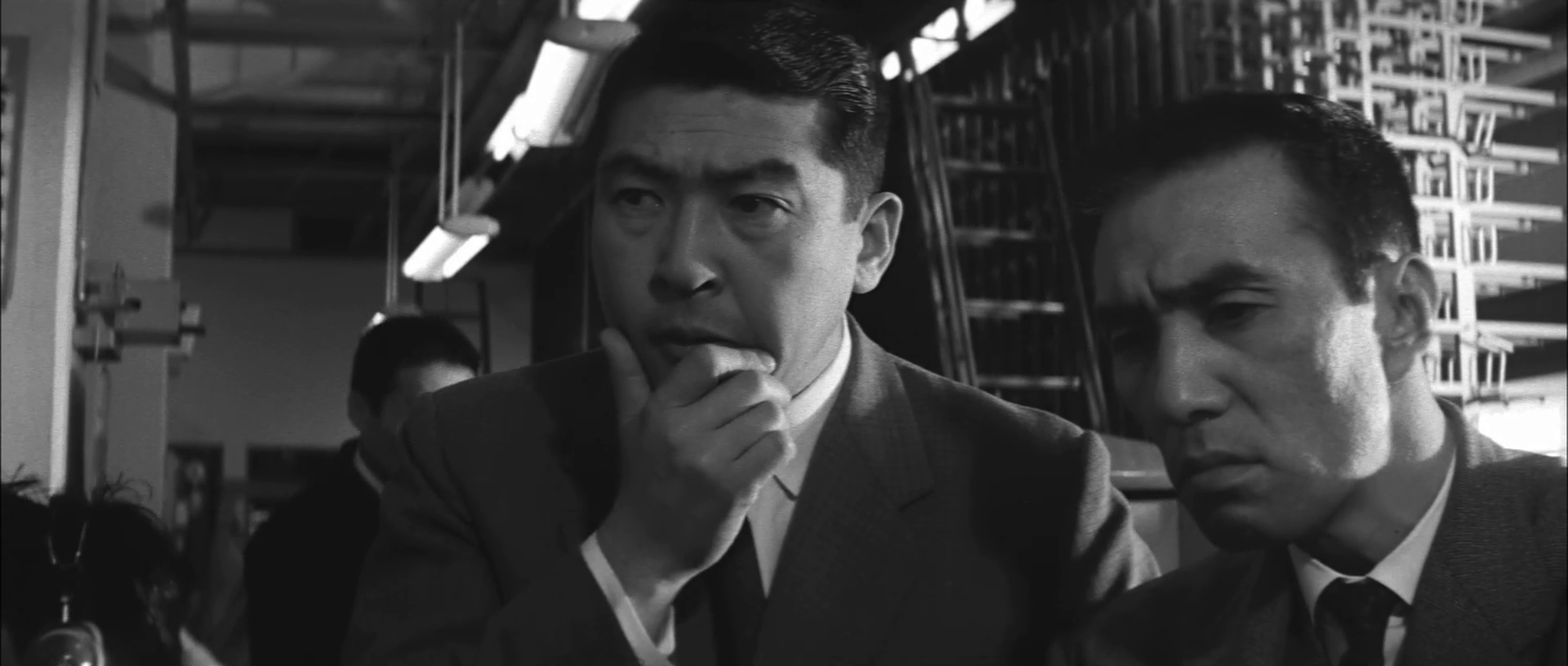
One of a number of films released in the early ’80s critical of the police force, To Trap a Kidnapper (誘拐報道, Yukai Hodo) draws inspiration from a real life case of child abduction but suggests that the police largely just get in the way and are only interested in apprehending the culprit rather than ensuring the boy’s safety. In any case, unlike the similarly themed High and Low, the film devotes most of its focus to the kidnapper’s desperation as a man apparently left behind by the rapidly rising tides of prosperity. 

Yet somewhat perversely the film opens with a scene of children playing and seven-year-old Hideyuki (Motoyoshi Wada) getting into trouble for flicking toy discs at his friend and deskmate Kaori (Kaori Takahashi). Hideyuki is then made to stand on his own in the playground as a punishment, though quickly makes things up to Kaori by gifting her the plastic discs he was playing with. Neither of them know it, but the children share a grim connection for it’s Kaori’s father Kazuo (Kenichi Hagiwara) who is responsible for kidnapping Hideyuki on his way home from school in the next town over.

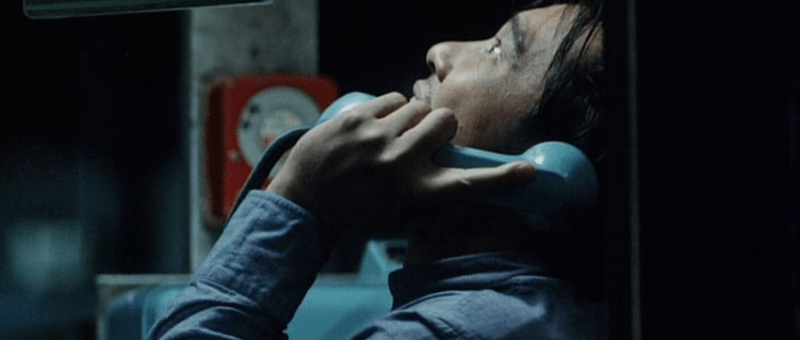
Both Hideyuki and Kaori attend a prestigious private institution but are being raised in very different circumstances. Kazuo was once a successful cafe owner but was swindled out of his business and is now in massive debt to a shady loanshark named Moriyasu who’s sold his promissory note on to a third party debt collector. Hideyuki’s father, Noboru Mitamura (Fujita Okamoto), is a doctor though there’s nothing that suggests the family is anything more than financially comfortable and they aren’t immediately able to get the money together for the ransom. Noboru has to ring round all his friends, family, and random acquaintances begging for emergency loans but without really being able to explain why he needs the money. Just having seen it noted on a school register that Hideyuki’s dad was medical professional Kazuo assumed they’d be a good target for a kidnapping and is in any case resentful of their nice middle class life. 

His wife, Yoshie (Rumiko Koyanagi), is in turn resentful of Kazuo for their reduced circumstances later lamenting that they moved house, swapped their big car for a smaller one and are even going to rehome their dog but if Kazuo is really so deeply in debt, something he had kept from her, then nothing they do really matters because their lives will never improve. What she can’t understand is why Kazuo was so keen on keeping Kaori in a private school that he’d get himself into financial hell rather than make a more pragmatic decision to let her go somewhere else. The obsession perhaps hints at his class anxiety, wanting his daughter to stay in a more resolutely middle class environment otherwise in strong contrast to the hometown he later visits where his elderly mother operates a loom in a moribund fishing village which the youngsters are slowly leaving for jobs in factories in neighbouring towns. 

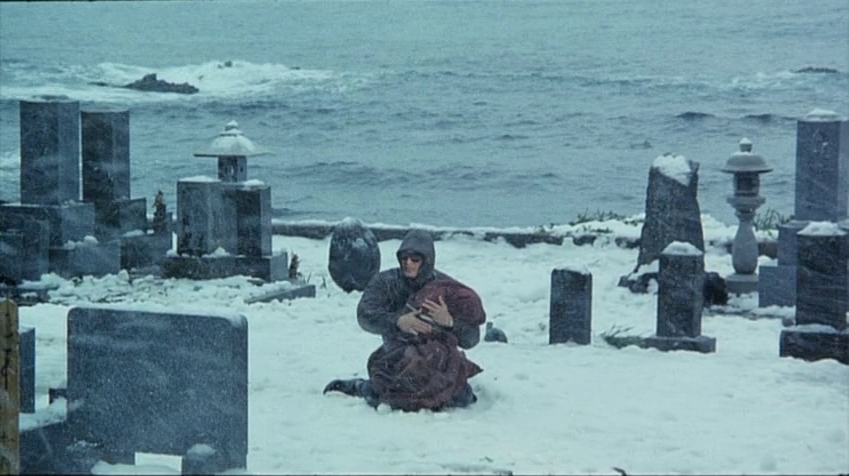
Perhaps in over his head, it at one point looks like Kazuo is about to dump Hideyuki’s body in the sea only to realise police divers are already searching the area. Despite himself, he begins to care for the boy though doesn’t really know what to do with him. He feeds him bread from convenience stores and keeps him tied up in the boot of his car wrapped in several blankets without really considering the possibility that he may die of cold or hypothermia left outside in the freezing winter. Realising the distraught parents have called in the police despite his warnings not to, he is too afraid to accept the ransom and is therefore at something of an impasse given he can’t very well give up the boy without getting the money.

Meanwhile, as the Japanese title implies the tale is alternately told from the perspective of the reporters at Yomiuri Shinbun who are originally quite annoyed by the police’s request for a news blackout to avoid panicking the kidnapper, suggesting it’s an infringement on their free speech if coming around in the acceptance that a child’s life is at stake. A rookie reporter, Kotaro (Shin Takuma) is involved in a dispute with his fiancée Tomo (Miwako Fujitani) who is having second thoughts because he’s always working while her parents are pressuring her to consider an arranged marriage. Kotaro refuses to write one of the dummy articles they’re putting together in the event that Hideyuki is killed describing it as morbid and irresponsible, but is very involved with the ongoing press investigation which simultaneously seems more rigorous than that of the police and accidentally gets in its way. A “suspicious car” that’s noticed outside a drop sport turns out to belong not to the kidnapper but a reporter on a stakeout wasting the police’s time.

Even they are eventually conflicted, the officer in charge on the ground later letting the Mitamuras leave on their own for the final drop empathising with them as a fellow parent and acknowledging the reason everything keeps going wrong is because the police got involved. Yet his boss orders him to follow them anyway, reminding him that the only job of the police is to catch the culprit seemingly indifferent to whether or not they rescue the hostage unharmed. Their tactics are quite naive, not considering that Kazuo will obviously realise that the Mitamuras are surrounded by undercover officers because they keep using the same ones and it’s odd to keep seeing that couple from the coffee shop everywhere they go. The big break in the case happens by accident just because a couple of traffic cops decide to ask a random car a few questions.

In any case, it’s Kaori who ends up suffering. She and her mother are also victims, unfairly hounded by the press and left with nowhere to go and no-one to turn to having had their lives turned upside down by her father’s desperate decision. He didn’t even know the kids were friends or the effect his actions would have on his daughter. Kazuo hadn’t really thought any of this through but acted only in jealousy and resentment, wanting payback against the Mitamuras for their nice middle class life and his own slice of the pie that he felt had been denied to him. In the end, the only winners are the press who can rejoice in selling their newspapers even if a remorseful Kotaro resents himself for taking a paparazzo photo of Yoshie and Kaori trying to leave town quietly. On seeing his article pasted on pillars at the station, even Tomo starts to change her mind reflecting that if he’s working on a story like this then perhaps working too much isn’t such a dealbreaker after all even if everyone seems to have forgotten about little Hideyuki in the headlong rush to dominate the newsstands by trying to lure a kidnapper into their trap.


Original trailer (no subtitles)

Ikiru (生きる, Akira Kurosawa, 1952)

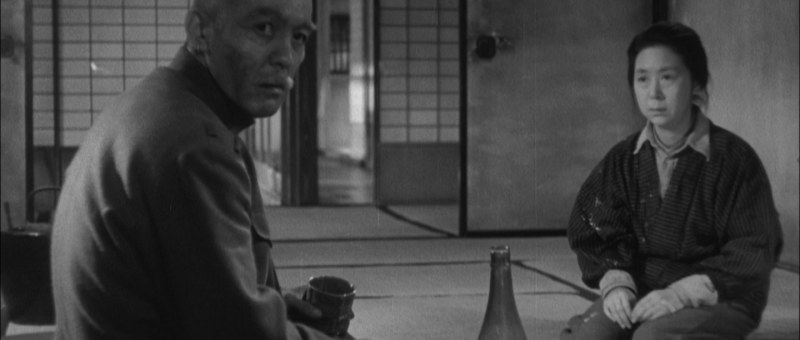
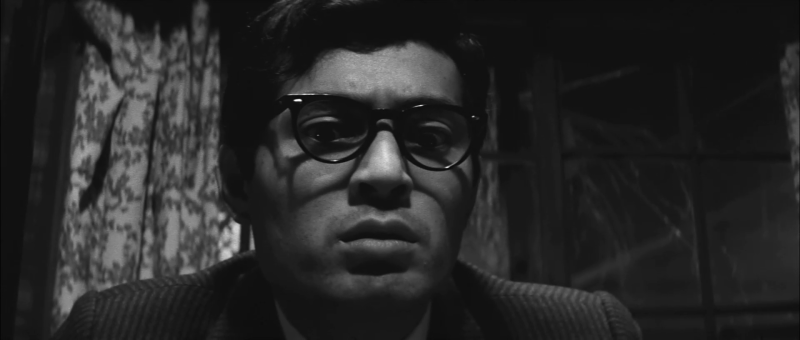
The Japanese economy may have embarked on a path towards recovery thanks to the stimulus of the Korean War, but in the early 1950s many might have thought it too soon to ask if survival in itself was enough yet this is exactly what disillusioned civil servant Kenji Watanabe finds himself asking after receiving the devastating news that he has advanced stomach cancer and year at most to live. “To live” is apt translation of Akira Kurosawa’s intensely moving existential melodrama, Ikiru (生きる), which tackles the compromises of the salaryman dream head on along with those of the contradictions of the sometimes dehumanising post-war society. 

As the opening voice over reveals to to us, Watanabe (Takashi Shimura) is man who died long ago or perhaps has never truly been alive. In some senses, he is nothing more than an embodiment of the seal he uses to stamp documents day in day out, a mere piston in an ever turning machine of relentless bureaucracy. A young woman, Miss Odagiri (Miki Odagiri), working in the Public Affairs department loudly reads out a joke someone has written about their boss, Watanabe, who has taken not a single day’s holiday in 30 years suggesting that it’s less that he fears city hall will grind to a halt without him than they’ll suddenly figure out city hall has no need of him at all. The irony is city hall does indeed grind to a halt in Watanabe’s absence as he, unthinkably, fails to turn up for work for days on end as the papers pile ever higher on his desk. “Nothing moves here without his seal” one of the workers admits, bewildered by this sudden break with protocol while salivating over its implications in the possibility that Watanabe’s chair may soon be empty. 

Yet Watanabe’s crisis is that he’s realised he’s wasted his life on a pointless bureaucratic career that’s done little more than keep a roof over his head. Even the roof is a fairly modest one and it’s clear that his grown up son Mitsuo (Nobuo Kaneko) considers him to be a stingy old miser, unable to understand why he’s never spent so much as a penny on himself and lives in a kind of self-imposed austerity. Perhaps to Watanabe this is what constitutes properness. He’s done everything he was supposed to do, got a steady job at city hall and eventually became the head of department, but now he feels foolish and lonely. Mitsuo and his wife seem to resent him and talk openly about their plans to use their inheritance, along with Watanabe’s retirement bonus, for a downpayment on a “modern” home the polar opposite of the pre-war townhouse where the family continue to live. 

Mitsuo and Kazue (Kyoko Seki) are perhaps emblems of the increasingly empty consumerism of the post-war era, emotionally disconnected from Watanabe and seeking only the flashy and new. Miss Odagiri, the young woman from work, immediately says that she’d love to live in a home like Watanabe’s rather than the crowded multiple occupancy flat she currently inhabits with her family. Cheerful and outgoing, Odagiri is on the other hand a symbol of a new generation that wants something more out of life than simple material comfort and might even be willing to trade it for a small amount of happiness. Having worked at city hall for all of 18 months, she decides that she just can’t take it anymore and is quitting to get a job in a factory making toy rabbits that she says allow her to feel as if she’s making friends with all the babies in Japan. 

To that extent, Watanabe is himself also a baby craving Odagiri’s company admitting that he envies her youth and vitality in realising he squandered his own and will never get it back. How uncomfortable it must be for her, their final meeting in a restaurant sandwiched between a loving couple and teenage girl’s birthday party as Watanabe, gaunt and shrunken, claws at the air and begs her to help him live. Yet even within the grotesquery the tone is ironic, the strains of “Happy Birthday” accompanying Watanabe down the stairs as a the high school climbs up to meet her friends signalling his (re)birth as a man with purpose and determination. Just as Odagiri had found meaning in the rabbit, Watanabe finds it deciding to get a playground built over a post-war swamp in the slums filled with raw sewage and mosquitos that left the local children ill. 

Yet children’s parks aren’t particularly profitable which is presumably why the petition to build one had been kicked all round city hall in the infernal wheel of bureaucracy in which Watanabe too is trapped. “You call this democracy?” one of the women bringing the petition asks, taking the clerk to task complaining that all they do is fob them off insisting it’s someone else’s responsibility to help while determined only to guard their own turf. “You’re not supposed to do anything at city hall” someone ironically adds, “the best way to protect your place in this world is to do nothing at all”. Watanabe did nothing at all for 30 years and it got him nowhere, his dedication to his job disrupting his relationship with his son though Watanabe is ironically one of the most emotional men and engaged fathers seen on screen in the post-war era. 

After his death, in the park he helped build for which the deputy mayor has taken credit, his colleagues put him on trial at the wake trying to work out why he did it and whether or not he even knew he was dying seeing as he told no one close him not even the son whom he felt he could no longer trust. They deny his role while both praising and condemning his passion as somehow improper, disrupting the dispassionate rhythms of the bureaucratic machine with human emotion. It was only coincidence, they say. The deputy mayor wanted an election and the yakuza wanted to turn the swamp into a red light district. “Did he think he could just build a park?” someone adds, bemused by his effrontery as a man from Public Affairs straying into the Parks Department’s territory. You have to protect your turf after all. Finally moved by Watanabe’s last ditch bid to make his life mean something, to feel alive and know he has lived, the the drunken salarymen, all but one who retreats to look at Watanabe’s photo above the altar, swear to follow his example. 

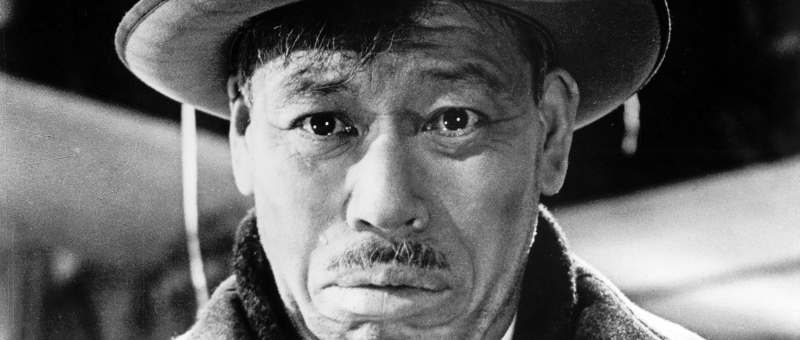
But of course the bureaucratic wheel keeps turning, another dangerous sewage problem diverted to another department continuing the literal pollution of the capitalistic post-war society. A kind of ghost story, Kurosawa lights Shimura from below, shadows cast across his gaunt face even by his “rakish” new hat while his huge eyes have a somehow haunted, grotesque quality filled with hungry desperation. Yet it’s to childhood that Watanabe eventually returns, “perfectly happy” sitting on a swing singing a song from his youth about the price age while surrounded by snow and at last painfully, absurdly alive. 


Ikiru screens at the BFI Southbank, London on 4th & 15th February 2023 as part of the Kurosawa season.

Original trailer (English subtitles)

Stepbrothers (異母兄弟, Miyoji Ieki, 1957)

The destructive effects of militarist folly are borne out in the fortunes of one bifurcated family in Miyoji Ieki’s impassioned social drama, Stepbrothers (異母兄弟, Ibou Kyodai). Ieki had joined Shochiku in 1940 and served as an assistant director to Minoru Shibuya making his directorial debut in 1944 taking over a project Shibuya had begun before being drafted, Torrent. After the war he became the head of the studio’s union and was subsequently dismissed during the Red Purge of 1950. Adapted from the novel by Torahiko Tamiya, Stepbrothers was produced by Dokuritsu Eiga which became a kind of refuge for left-leaning directors and makes a direct attack on lingering feudalism and the militarist past. 

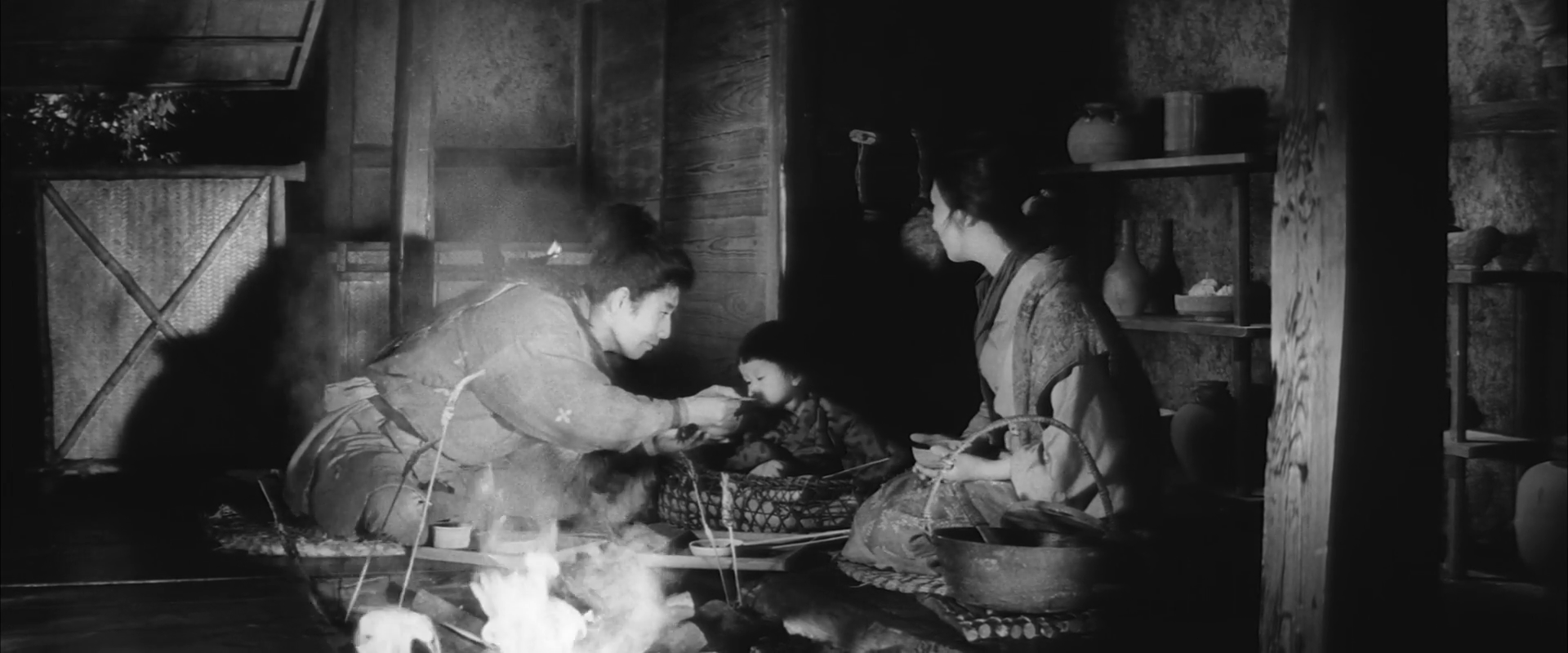
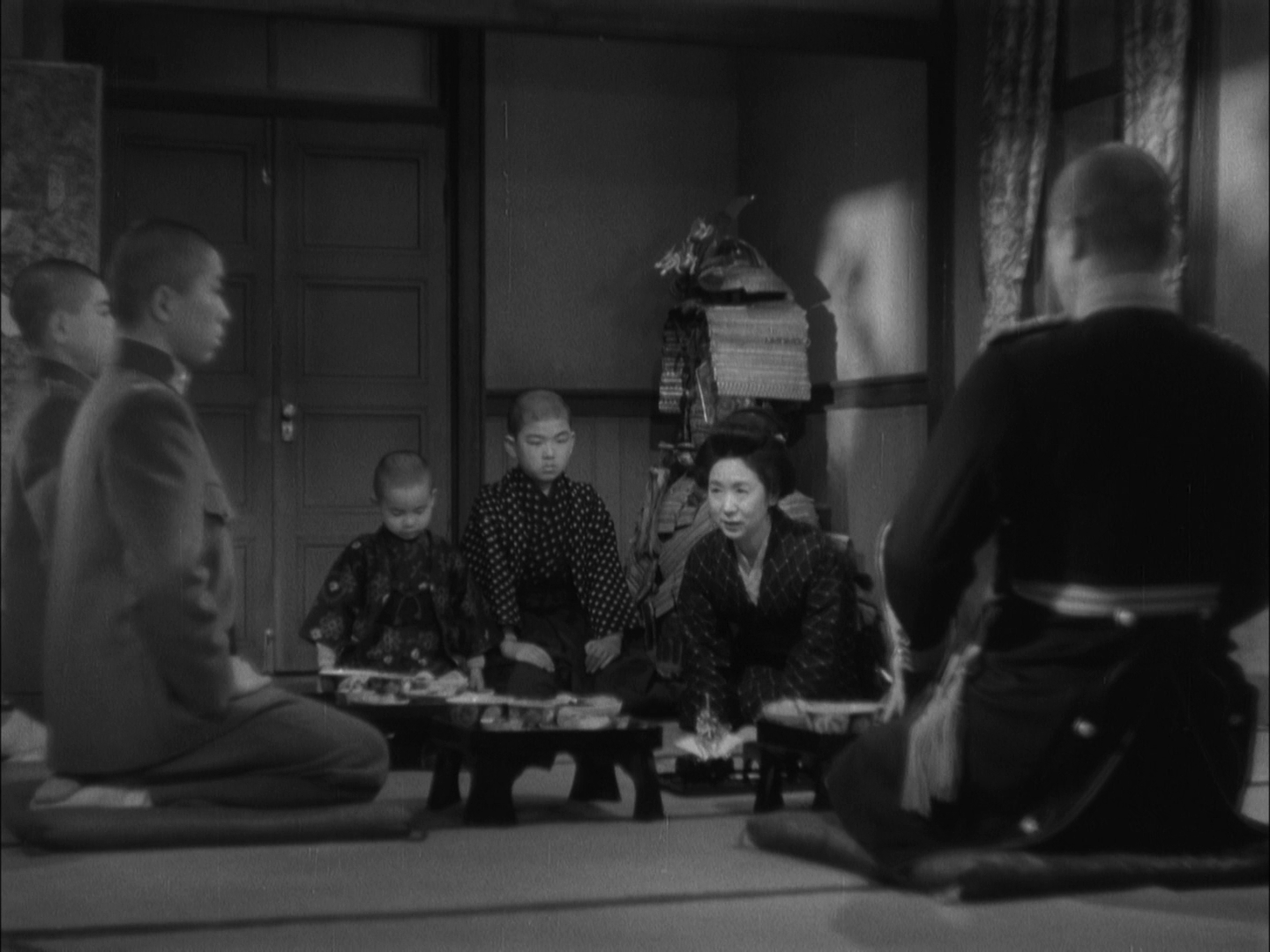
Spanning 25 years, the film opens in 1921 with pompous military officer Hantaro Kido (Rentaro Mikuni) riding his horse before immediately slapping his stableboy on dismounting apparently dissatisfied with his service in insisting there is something wrong with one of the horse’s shoes. This fear is later confirmed by the new maid he has just hied, Rie (Kinuyo Tanaka), who is the daughter of a recently deceased carriage driver. She has been hired because Hantaro’s wife is chronically ill and bedridden, no longer able to care for their two brattish sons Ichiro and Gojiro who imitate their father by pointing swords and guns at people while ordering them around. After asking Rie to check on the horse and observing her treating it with tenderness before pointing out the problem with its shoe unprompted, Hantaro loses control of himself, pushes her into the straw, and rapes her. With nowhere to turn Rie goes to the family friend who got her the job who discourages her from having an abortion and tries to make Hantaro take responsibility but he refuses to compensate her finally scoffing that there’s no way he would marry the mere daughter of a carriage driver. 

Challenged by his superior officer, however, he pledges to do just that in order to save the honour of the Kido family along with that of the regiment but is soon sent off to a less prestigious provincial position. In appointing Rie as a maid, Hantaro had expounded at length on his family lineage as guardians of a particular style of kendo, but there’s no denying that he has acted dishonourably while Rie is forced to marry the man who raped her and is then rendered little more than an unpaid servant in his home who is essentially raped every night for the remainder of her married life. After giving birth to the baby, a son Yoshitoshi, she has another some years later, Tomohide, but she and her children are not regarded as members of the family and are forced to sleep in the kitchen. Ichiro and Gojiro still call her Rie rather than mother and order her around like a servant while Hantaro simultaneously rejects her sons and insists they follow the family tradition by becoming fine soldiers. 

A poignant scene sees Gojiro looking on at Rie as Yoshitoshi and Tomohide cheerfully play cards with some of the servants one New Year implying he may in fact miss maternal closeness but is unable to express it because of his father’s code of manliness later tearfully asking his brother for memories of their mother when they are both grown men. The difference between the boys can seen in their names, those of Hantaro’s sons from his first marriage meaning something like “first son boss” and “strong second son” while those of Rie’s sons are much warmer, Yoshitoshi using the characters for good and benefit, and Tomohide’s wisdom and excellence. Ichiro and Gojiro continue to mercilessly bully Yoshitoshi and Tomohide, insulting them as sons of mistresses a term which Yoshitoshi does not fully understand but instantly associates with the way his family has been treated as other and inferior, confined to the parts of the house otherwise occupied by servants. When he says he’s no desire to become a soldier, Hantaro locks him in the cupboard under the stairs and seemingly never talks to him again. 

Rie tells him that he will understand her actions when he’s older but he continues to blame her for them, angry that could not reject Hantaro’s authority to protect him nor would she escape the situation by simply leaving it. His criticism is unfair and ignores her continued suffering given the reality that as a young woman with no family or fortune she is left with no means of supporting herself that would make it possible to escape. But he may also have a point in that she is also the product of a feudal and patriarchal society and is spiritually unable to refuse Hantaro’s corrupt authority over her even as he dismisses her as a carriage driver’s daughter and her sons as unworthy by his name. She suffers and placates him to protect them but Yoshitoshi sees only her complicity. 

Yet Hantaro’s pompous austerity which is also the code of the age later destroys him. He prattles on about his supposed military prowess while telling one of his sons that soldiers should be thought of as pawns to be sacrificed for the emperor only to lose both of them to the inevitable defeat. Portraits of his two sons sit proudly under a map of the Japanese empire now shorn of the flags he’d pinned to mark their victories, while Rie’s are hidden away on the shelf of a cupboard itself one of the few pieces of furniture they had not sold to survive in the difficult post-war period. Hantaro had rejected Tomohide (Katsuo Nakamura) who craved his approval because he was in poor physical health and therefore unable to fulfil his vision of manliness but it is he who alone survives having rejected his name after his father beat him for singing and sent Haru (Hizuru Takachiho), the cheerful servant girl he loved, away to be sold off to a brothel by her impoverished family. 

When Tomohide returns home after some years of wandering to a mother who thought him dead only for Hantaro to reject him, his only living son, Rie finally finds the strength to reject his authority. This time she refuses to leave, insisting that the house is rightfully Tomohide’s and he should not surrender it to a Hantaro who is now beaten and defeated, a pitiful old man who can barely walk and is perhaps consumed by the humiliation of his life’s folly. It’s his hypocrisy and moral cowardice along with the cold austerity of mindless militarism that have ruined all their lives, yet in Tomohide who truly crossed the barriers of class in continuing to help Haru with her chores there is a hope for a new future as his mother and he fill the bath together and assume ownership in equality of the home which has always been their own. 


Tale of Japanese Burglars (にっぽん泥棒物語, Satsuo Yamamoto, 1965)

“Even the cops wouldn’t keep innocent people in prison” a prisoner ironically exclaims in Satsuo Yamamoto’s farcical crime drama Tale of Japanese Burglars (にっぽん泥棒物語, Nippon Dorobo Monogatari), displaying a strange sense of faith in the system for one who’s already been caught out by it. It is in many ways the system at which Yamamoto takes aim, refusing to blame even the guilty for their crimes while condemning the society that forever tars not only them but their entire families with the criminal brush, similarly defaming the innocent while the mechanisms of the State actively abuse their power to ensure they continue to maintain it. 

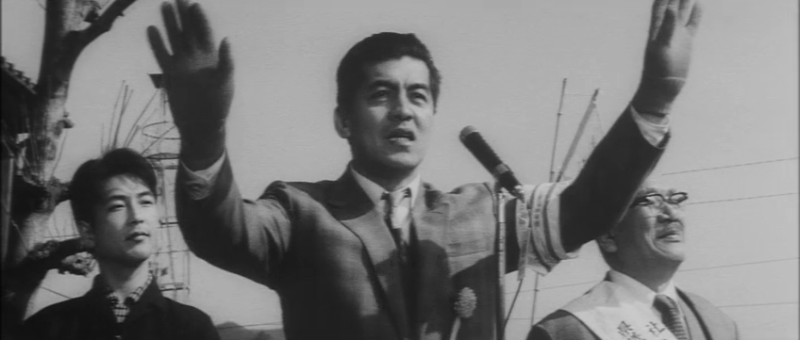
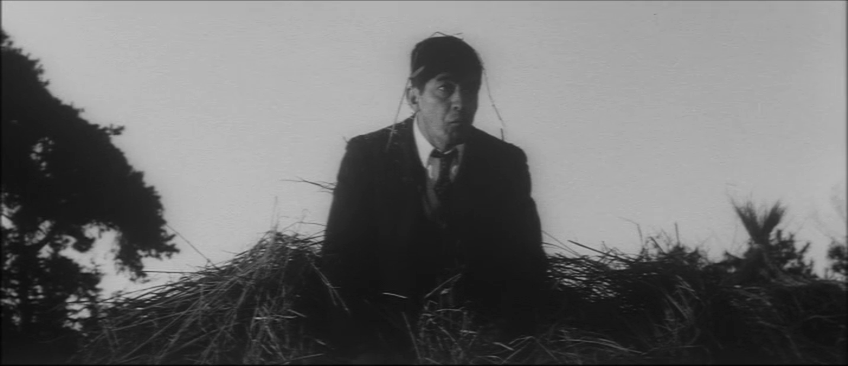
Set in 1948, the action takes place as the opening voiceover explains in an exaggerated accent which at times lends itself to lowkey comedy, at a moment of societal collapse in which cash has become almost worthless and the only items of value are clothing and rice. Yet Gisuke (Rentaro Mikuni) it seems was living a life of crime even before the war, the youngest of five brothers left to look after his mother and sister after his father’s death. While operating as an amateur unlicensed dentist having picked up the basics from his dad, Gisuke makes his living peddling black market kimonos stolen from local warehouses. After bungling one particular job he finds himself spotting a strange site on the railway tracks, overwhelmed by shadowy figures of nine men he first fears have come to tackle him but in the end simply pass by even calmly returning his call of good evening as they discuss among themselves the best way to the local hot spring. Taking refuge in a haystack, it’s not until the next morning that Gisuke learns of a train derailment that took the lives of the engineer and two crew members. He realises that the men he saw must have been the ones who sabotaged the track but he’s not a snitch and it’s none of his business so he decides to keep quiet. 

That is until he gets arrested for the botched burglary and ends up incarcerated alongside a member of the accused, Kimura (Mizuho Suzuki), who quickly befriends him and in fact becomes something of a labour activist even inside the prison negotiating better conditions for prisoners. Indebted, Gisuke maintains his silence strangely certain that Kimura and the others will soon be released because they are innocent despite already knowing that the judicial system is infinitely corrupt. The case at hand takes inspiration from the Matsukawa Derailment, a real life incident which Yamamoto had already dramatised in 1961’s Matsukawa Incident, in which suspicion had fallen on the Railway Union who, in the film, are seen leading a protest agitating for better working conditions. Kimura, a prominent unioniser, is picked up along with other members of the rail workers union and left-wing activists on largely spurious grounds solely to discredit their movement at the behest of an overly authoritarian police force. 

The irony is that Gisuke ends up in prison for a crime that he technically is not quite guilty of in that he’s arrested after his wife, a geisha he redeemed with his ill-gotten gains, unwittingly sells some stolen kimonos which he was storing for a friend on the run. Kimura by contrast is in prison for something of which he is entirely innocent, in effect a political prisoner. Yet the force that imprisons both of them is not so much the law as social censure in the stigmatisation of crime. Gisuke feels acutely guilty knowing that his family members continue to suffer because of his criminality, his sister unable to marry as each of her engagements is eventually broken off when they find out her brother’s been in jail. After getting out and vowing to go straight, Gisuke marries again and has a child but is perpetually worried that someone will find out about his past and that his son will forever be stigmatised as a “burglar’s kid”. It’s for this reason that he finds himself torn, refusing to help Kimura by testifying as to what he saw that night even after hearing that he’s been sentenced to death, unwilling to risk his newfound happiness even at the expense of another man’s life. 

Strangely, it’s the injustice of the situation which later changes his mind though in an unexpected way when he realises that his own son has escaped being tainted with his father’s criminal legacy while Kimura’s is bullied at school because his dad’s in jail even though he’s innocent. Pursued by authoritarian police officer Ando (Yunosuke Ito) who attempts to blackmail him into changing his story to incriminate Kimura he eventually decides to free himself by telling the truth despite realising that another witness was most likely murdered for signalling an intention to do the same. “But how is it that the police who are charged to catch us are even bigger liars than the thieves?” Gisuke asks the judge during his improbably humorous testimony, earning rapturous applause from the court in a touch of the absurd with even his wife, hitherto stoney faced despite the laughter all around her, cracking a smile seemingly warming up to his decision to play the hero even if it has taken him rather a long time to decide to do the right thing. 

Yamamoto doesn’t hang around to hear the verdict, perhaps because it’s Gisuke who’s really on trial and the judge appears to be his wife whose forgiveness is the only acquittal necessary. His crimes are in a sense not really his fault, Yamamoto seems to argue, but the fault of an indifferent society which left him with no other choice in order to support himself, the same society which then frustrates his attempts to live an “honest” life by forever tainting him as a “burglar” and tarring his entire extended family with the same brush. Only by owning his stigmatisation can he free himself of it, rejecting the illusionary power corrupt authority has over him while refusing to be complicit in their constant battle to hang on to it by levelling his marginalisation against him. Extremely ironic in terms of tone, often employing archaic screen wipes for comic effect, Yamamoto’s strangely hopeful tale implies that justice can in fact prevail but only when imperfect men commit to it even at the expense of their personal happiness. 


The Scarlet Camellia (五瓣の椿, Yoshitaro Nomura, 1964)

Little known outside of Japan, Yoshitaro Nomura is most closely associated with post-war noir and particularly with adaptations of Seicho Matsumoto’s detective novels, yet he had a wide and varied filmography directing in several genres including musicals and period dramas. The son of silent movie director Hotei Nomura, he spent the bulk of his career at Shochiku which had and to some degree still has a strong studio brand which leans towards the wholesome even if his own work was often in someway controversial such as in the shocking child abuse drama The Demon or foregrounding of leprosy in Castle of Sand. Part of the studio’s series of double-length epics, 1964’s Scarlet Camellia (五瓣の椿, Goben no Tsubaki) is nevertheless an unusual entry in Nomura’s filmography, adapting a novel by Shugoro Yamamoto essentially setting a policier in feudal Japan and perhaps consequently shot largely on stage sets rather than on location. 

Nomura opens with artifice as Shino (Shima Iwashita) stares daggers at an actor on the stage but later returns to his rooms every inch the giggling fan before finally offing him with her ornate silver hairpin leaving behind only the blood red camellia of the title. The first in a series of killings later branded the Camellia Murders, we later realise that the actor had to die because of his illicit relationship with Shino’s mother whom he brands a “nympho” and as we later discover had several extra-marital lovers. Extremely close to her father who, as we’re told, perished in a fire while resting in the country due to his terminal tuberculosis, Shino is apparently on a quest for revenge against the faithless men who humiliated him though her feelings towards her mother seem far more complex. 

Indeed, Shino regards her mother’s carrying on as “dirty” and seems particularly prudish even as she wields her sex appeal as a weapon in her quest for vengeance. Yet it’s not so much the free expression of sexuality which seems to be at fault but excess and irresponsibility. Shino resents her mother primarily for the ways in which she made her father suffer, off having fun with random men while he shouldered the burden of her family business which, Shino might assume, has contributed to his illness. Aoki (Go Kato), the Edo-era policeman to whose narrative perspective the second half turns, advances a similar philosophy in that there’s nothing wrong with having fun, he has fun at times too, but people have or at least should have responsibilities towards each other which the caddish targets of the Camellia Killer have resolutely ignored. He can’t say that he condones the killer’s actions, but neither can he condemn them because her motivations are in a sense morally justifiable. 

Realising the end is near, Shino indulges in a very modern serial killer trope in leaving a note for Aoki alongside one of her camellias in which she claims that she is exacting vengeance for “crimes not punishable by law”. There was nothing legally wrong in the way these men treated her mother or any other woman, but it is in a sense a moral crime. “You’re a woman and I’m a woman too” she later tells another scorned lover, a mistress thrown over by her patron with two small children after he tired of her, as she hands over a large sum of money and encourages her to return to her family in the country. Shino’s quest is essentially feminist, directed against a cruel and patriarchal society in which the use and abuse of women is entirely normalised, yet it is also slightly problematic in her characterisation of her mother as monstrous in her corrupted femininity for daring to embrace her sexuality in exactly the same way as her male counterparts though they, ironically, mainly seem to have been after her money rather than her body. 

Shino’s mother’s death is indeed regarded as “punishment from heaven” presumably for her sexual transgressions and neglect of her family, rejecting both the roles of wife and mother in a ceaseless quest for pleasure. Yet even in her resentment, Shino’s ire is directed firmly at the men taking the last of her targets to task when he justifies himself that women enjoy sex too and are therefore equally complicit by reminding him that he gets his moment of pleasure for free but the woman may pay for it for the rest of her life. Just as Shino’s mother neglected her family, the men harm not only their wives in their illicit affairs but cause concurrent damage to the mistresses they may later disown and the illegitimate children they leave behind. Abandoning the naturalism of his contemporary crime dramas for something much more akin to a ghost film with his eerie lighting transitions and grim tableaux of the skewered victims, Nomura crafts a melancholy morality tale in which the wronged heroine turns the symbol of constrained femininity back on the forces of oppression but is eventually undone by the unintended consequences of her quest for vengeance even as she condemns the architect of her misfortune to madness and ruin. 


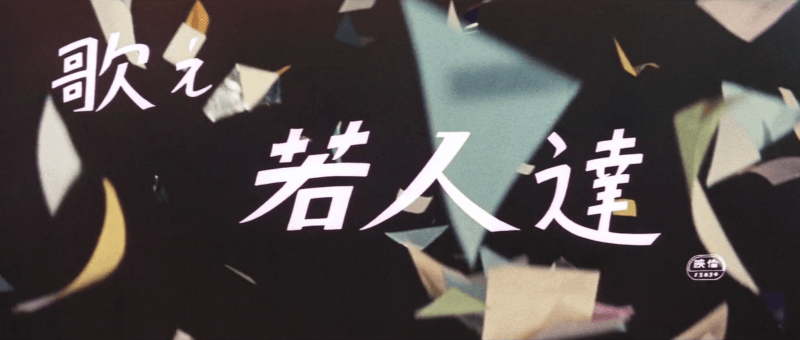
Sing, Young People (歌え若人達, Keisuke Kinoshita, 1963)

Keisuke Kinoshita has sometimes been dismissed by Western critics for his supposed sentimentality, but his mid-career comedies can be surprisingly cynical. Scripted not by Kinoshita but Taichi Yamada, 1963’s Sing, Young People (歌え若人達, Utae Wakodotachi) is in someways an exception to the rule, a breezy take on the student comedy updated for the present day, but underneath all the absurdist humour and jibs about youthful ennui is a real sense of adolescent hopelessness as these aimless young men ponder their “pitch-black” futures in a rapidly changing Japan where the best they can hope for is fulfilling the salaryman dream.  

Shooting in glorious colour, Kinoshita opens with a lengthly pan over contemporary Tokyo which the jaunty voice over describes as “the number-one city in the world” before homing in on the incongruous figure of a strangely dressed man holding a sign advertising “sensual massage beauties”. A relic of an earlier advertising age, the wandering sign man nevertheless catches sight of someone even “weirder” than he is, a student wearing a student’s cap! Kinoshita then takes us on a brief detour through Japan’s major universities demonstrating that no one is so uncool as to wear a student’s cap in the age of protest, drawing a direct contrast to the student comedies of old while showing us a series of scenes of students “playing” hard with part-time jobs in bands or as models, training hard in preparation for the upcoming Olympics, fomenting the revolution, or fighting in the streets. In the first of many meta touches, our hero, Mori, is eventually woken by the narrator after falling asleep in class, his eyes “gleaming with hopes for the future”. 

Or, perhaps not, he’s just tired. Mori (Tsutomu Matsukawa) is as he describes himself a man without hopes or dreams who believes that the road ahead of him is “pitch black”. Dropping a brush from the window washers’ platform at one of his part-time jobs, he asks himself if there shouldn’t be more to life than this. The only son of his widowed mother, he’s pinned everything on graduating from a top university but feels powerless and empty, adrift in the post-war landscape. Where his calculating friend Miyamoto (Yusuke Kawazu) fills the void with romance and a determination to “get lots of As” and then land a top job, his roommate Okada (Shinichiro Mikami) earnestly studies hard afraid to disappoint his austere family but also quietly resentful in his lack of autonomy, and the dopey Hirao (Kei Yamamoto) simply goes about being nice to people more or less forcing them to eat the traditional treats his loving mother is forever sending. 

Yet for all the bleakness Mori seems to see in his future, he only ever falls up. Luck follows him and he’s presented with ever more fantastic opportunities at every turn. In fact, it’s his slightly grumpy expression as he cleans the windows of an office building that leads to them snapping a picture and making him a cover star without ever bothering to ask his permission though they do eventually pay. Still Mori remains indifferent, telling a reporter who tries to interview him that he had nothing to do with the cover, he has no dreams or aspirations for the future but lives his life day by day. He describes himself only as “nervous”. His words run ironically over the magazine literally becoming tomorrow’s chip paper, used by a stall owner to wrap her croquettes, as a stand for a hot pot, and otherwise bundled up to be pulped. Nevertheless, the cover leads to great opportunities from a TV network looking for a fresh face to front their new youth-orientated drama serial. 

Despite all the promise, Mori remains indifferent, later irritating a new colleague and potential love interest (Shima Iwashita) when he idly suggests he might just give up acting and fall back on the salaryman dream. As she points out, she had to fight all the way to achieve her dreams of becoming an actress so hearing someone say they’re going to throw away a tremendous opportunity that came to them entirely by chance is mildly offensive. Miyamoto meanwhile is growing lowkey resentful, realising that maybe nothing matters after all it’s all just dumb luck. Mori deliberately didn’t do anything because he thought his life was pointless but everything has landed right at his feet while Miyamoto’s life is crumbling. He’s lost all his girlfriends and endured a lonely New Year alone in the dorm, coming to the conclusion that his future really is “pitch black”.

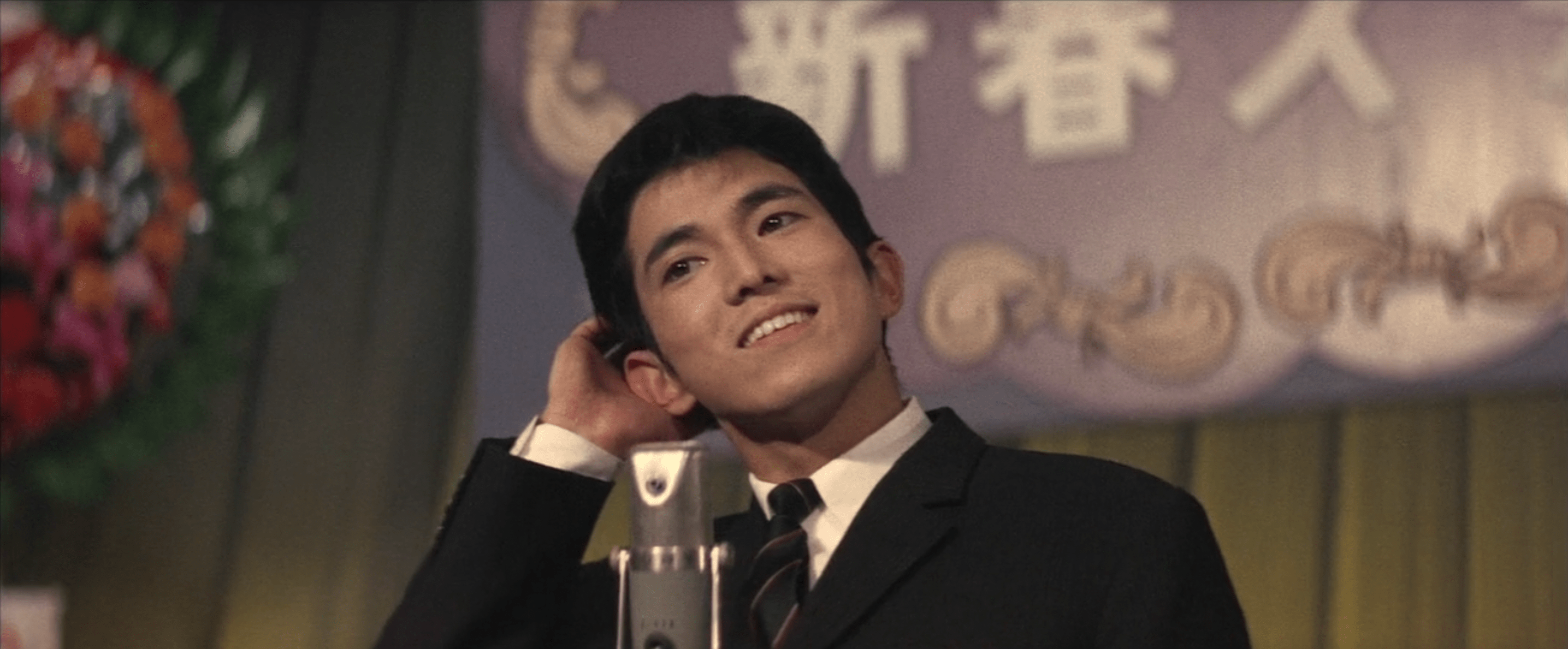
Nevertheless, it’s difficult to remain resentful about a friend’s accidental success and so each of the men eventually finds direction in even in directionlessness. Mori realises that he might as well ride his wave of fame for as long as it lasts, accepting in part at least his sense of powerlessness, while Okada does the reverse in deciding to rebel against his authoritarian family by marrying in secret. Miyamoto resolves to make a success of himself in his own way, and Hirao seemingly accepts the hand fate has dealt him with good humour. Kinoshita ramps up the meta comedy with Mori joining Shochiku, encouraged to try and work for that “excellent” director Keisuke Kinoshita, later referencing Garden of Women, while Mariko Okada and Keiji Sada turn up as onstage guests at an event launching him as a young actor. Playfully using outdated, quirky screen wipes and opening with an artsy title sequence featuring colourful confetti falling up, Kinoshita perhaps adopts a slightly ironic tone in satirising the all pervasive sense of confusion and hopelessness among the younger generation but does so with only sympathy for those coming of age in uncertain times.