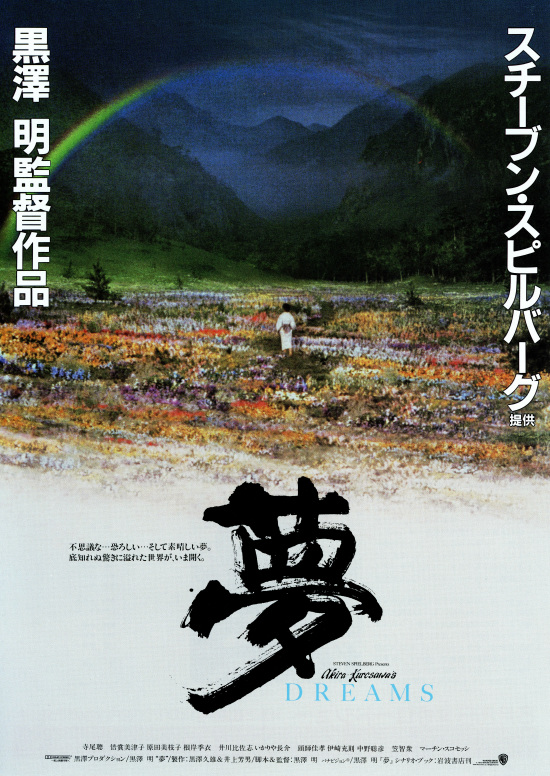
 Despite a long and hugely successful career which saw him feted as the man who’d put Japanese cinema on the international map, Akira Kurosawa’s fortunes took a tumble in the late ‘60s with an ill fated attempt to break into Hollywood. Tora! Tora! Tora! was to be a landmark film collaboration detailing the attack on Pearl Harbour from both the American and Japanese sides with Kurosawa directing the Japanese half, and an American director handling the English language content. However, the American director was not someone the prestigious caliber of David Lean as Kurosawa had hoped and his script was constantly picked apart and reduced.
When filming finally began, Kurosawa was fired and replaced with the younger and (then) less internationally regarded Kinji Fukasaku and Toshio Masuda. The film was an unmitigated failure which proved hugely embarrassing to Kurosawa, not least because it exposed improprieties within his own company. Other than the low budget Dodesukaden, Kurosawa continued to find it difficult to secure funding for the sort of films he wanted to make and in 1971 attempted suicide, thankfully unsuccessfully, but subsequently retreated into domestic life leaving a large question mark over his future career in cinema.
American directors who’d been inspired by his golden age work including George Lucas and Martin Scorsese were keen to coax Kurosawa back into the director’s chair, helping to fund and promote his two biggest ‘80s efforts – Ran, and Kagemusha, both large scale, epic jidaigeki more along the line of Seven Samurai than the arthouse leaning smaller scale of his contemporary pictures. The success of these two films and the assistance of Steven Spielberg, allowed him to move in a radically different direction for his next film. Dreams (夢, Yume) is an aberration in Kurosawa’s back catalogue, a collection of thematically linked vignettes featuring surreal, ethereal, noh theatre inspired imagery, it was unlike anything the director had attempted before and a far cry away from the often straightforward naturalism which marked his career up to this point.
Inspired by Kurosawa’s own dreams from childhood to the present day, Dreams is divided into eight different chapters beginning with a solemn wedding and ending in a joyous funeral. Each of the segments takes on a different tone and aesthetic, but lays bare many of the themes which had recurred throughout Kurosawa’s career – namely, man’s relationship with the natural world, and its constant need to tear itself apart all in the name of progress.
Casting his central protagonist simply as “I”, Kurosawa begins with an exact recreation of his childhood home and a little boy who disobeys his mother in leaving the house during a spell of sun streaked rain. Weather like this is perfect for a “kitsune” wedding, only fox spirits do not like their rituals to be witnessed by humans and punishment is extreme if caught, still, the boy has to know. His fate is echoed in the second story in which the still young I is lured to the spot where his family’s orchard once stood to be berated by the spirits of the now departed peach blossoms in the guise of the traditional dolls given to little girls at the Hina Matsuri festival. The spirits are upset with the boy, who starts crying, but not, as the spirits originally think because he’s mourning all of the peaches he’ll never eat but because he truly loved the this place and knows he’ll never see the glory of the full orchard in bloom ever again.
The spirits recognise his grief and contritely agree to put on a display of magic for him so that he may experience the beauty of peach trees in full blossom one last time. However, the illusion is soon over and the boy is left among the stumps where his beloved trees once stood. Later, the adult I finds himself in a monstrous nuclear apocalypse which has now become much harder to watch as the Ishiro Honda inspired horror of the situation has turned mount Fuji and the surrounding sky entirely red with no escape from the invisible radioactive poison. Quickly followed by I traipsing through a dark and arid land in which giant mutant dandelion provide the only sign of life aside from the remnants of post-apocalyptic humanity reduced to devouring itself in scenes worthy of Bruegel, these sequences paint the price of untapped progress as humans burn their world all the while claiming to improve it.
Humans are, in a sense, at war with nature as with themselves. The Tunnel sees an older I return from the war to encounter first an aggressive dog and then the ghosts of men he knew who didn’t make it home. Apologising that he survived and they didn’t, I contrives to send the blue faced ghosts back into the darkness of the tunnel while he himself is plagued by the barking, grenade bearing dog outside. The mountaineers of the blizzard sequence are engaged in a similar battle, albeit a more straightforwardly naturalistic one of human endurance pitted against the sheer force of the natural world. That is, until the natural becomes supernatural in the sudden appearance of the Snow Woman which the mountaineer manages to best in his resilience to the wind and cold.
The better qualities of humanity are to be found in the idyllic closing tale which takes place in a village lost to time. Here there is no electric, no violence, no crime. People live simply, and they die when they’re supposed to, leaving the world in celebration of a life well lived rather than in regret. People, says the old man, are too obsessed with convenience. All those scientists wasting their lives inventing things which only make people miserable as they tinker around trying to “improve” the unimprovable. As the young I says, he could buy himself as many peaches as he wanted, but where can you buy a full orchard in bloom?
Of course, Kurosawa doesn’t let himself off the hook either as the middle aged I finds himself sucked into a van Gogh painting, wandering through the great master’s works until meeting the man himself (played by Martin Scorsese making a rare cameo in another director’s film) who transforms his world through his unique perception but finds himself erased by it as his art consumes him to the point of madness. I wanders back through van Gogh’s landscapes, now broken down to their component parts before eventually extricating himself and arriving back in the gallery as a mere spectator. Even if the work destroyed its creator through its maddening imperfection it lives on, speaking for him and about him as well about a hundred other things for an eternity.
For all of the fear and despair, there is hope – in humanity’s capacity for endurance as in the Blizzard, in its compassion as in The Tunnel, and in its appreciation for the natural world as in The Peach Orchard alongside its need to re-envision its environment through the glorious imperfection of art. There is the hope that mankind may choose to live in The Village of the Water Mills rather than the hellish post apocalyptic world of fear and greed, however small and slim that hope maybe. Creating a living painting filled with hyperreal colour and a misty dreaminess, Kurosawa’s Dreams, like all dreams, speak not only of the past but of the future, not only of what has been but what may come. Equal parts despair and love, Kurosawa’s vision is bleak yet filled with hope and the intense belief in art as a redemptive, creative force countering humanity’s innate capacity for self destruction.
Original international trailer (irritating English language voiceover only)

 Those golden last few summers of high school have provided ample material for countless nostalgia filled Japanese comedies and 700 Days of Battle: Us vs. the Police (ぼくたちと駐在さんの700日戦争, Bokutachi to Chuzai-san no 700 Nichi Senso) is no exception. Set in a small rural town in 1979, this is an innocent story of bored teenagers letting off steam in an age before mass communications ruined everyone’s fun.
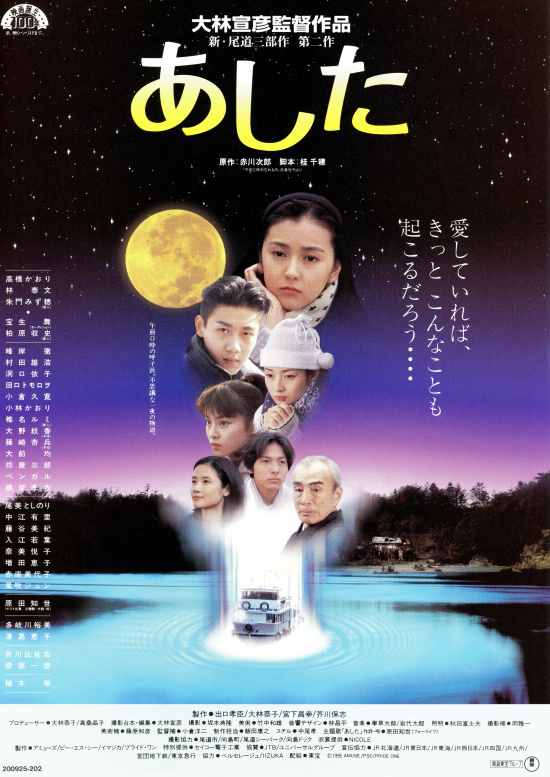 After completing his first “Onomichi Trilogy” in the 1980s, Obayashi returned a decade later for round two with another three films using his picturesque home town as a backdrop. Goodbye For Tomorrow (あした, Ashita) is the second of these, but unlike Chizuko’s Younger Sister or One Summer’s Day which both return to Obayashi’s concern with youth, Goodbye For Tomorrow casts its net a little wider as it explores the grief stricken inertia of a group of people from all ages and backgrounds left behind when a routine ferry journey turns into an unexpected tragedy.
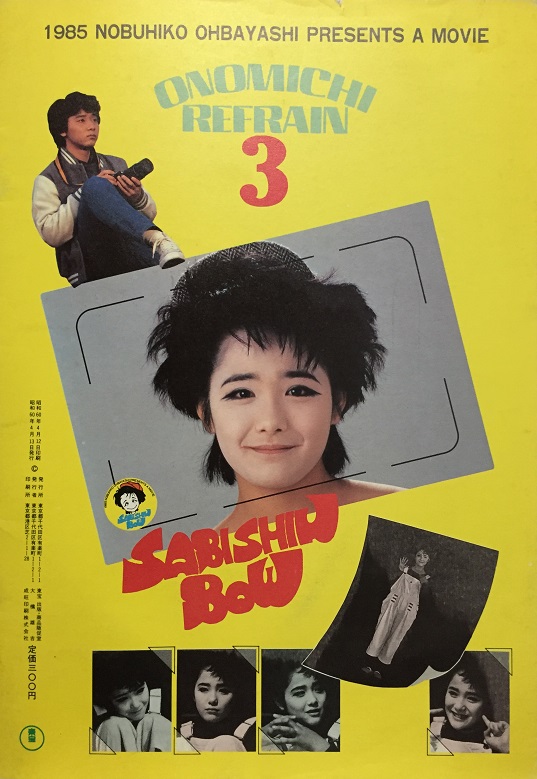 Miss Lonely (さびしんぼう, Sabishinbou, AKA Lonelyheart) is the final film in Obayashi’s Onomichi Trilogy all of which are set in his own hometown of Onomichi. This time Obayashi casts up and coming idol of the time, Yasuko Tomita, in a dual role of a reserved high school student and a mysterious spirit known as Miss Lonely. In typical idol film fashion, Tomita also sings the theme tune though this is a much more male lead effort than many an idol themed teen movie.
 The Girl Who Leapt Through Time is a perennial favourite in its native Japan. Yasutaka Tsutsui’s original novel was first published back in 1967 giving rise to a host of multimedia incarnations right up to the present day with Mamoru Hosoda’s 2006 animated film of the same name which is actually a kind of sequel to Tsutsui’s story. Arguably among the best known, or at least the best loved to a generation of fans, is Hausu director Nobuhiko Obayashi’s 1983 movie The Little Girl Who Conquered Time (時をかける少女, Toki wo Kakeru Shoujo) which is, once again, a Kadokawa teen idol flick complete with a music video end credits sequence.
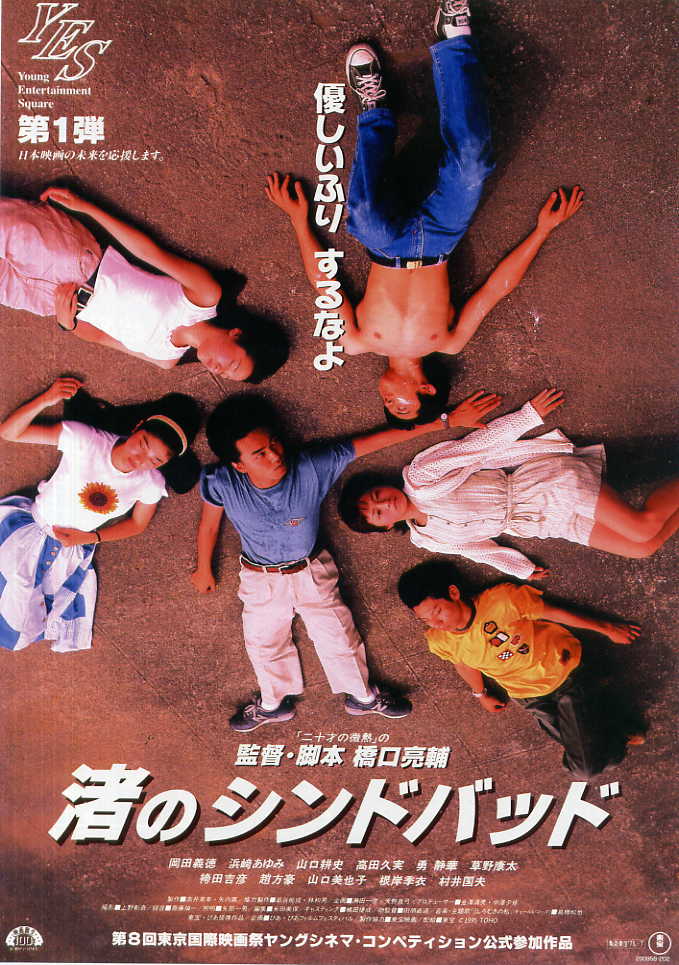 Adolescent romance is complicated enough at the best of times but the barriers are ever higher if you happen to be gay in a less than tolerant society. Ryosuke Hashiguchi’s second feature Like Grains of Sand (渚のシンドバッド, Nagisa no Sinbad) takes a slight step back in time from
 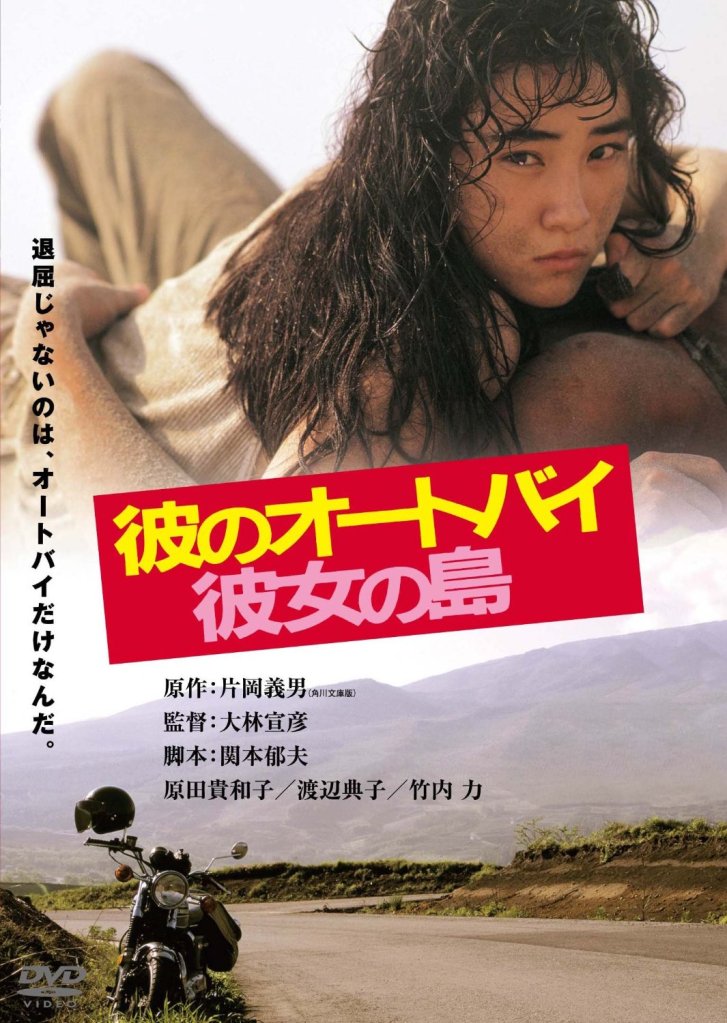 Like many directors during the 1980s, Nobuhiko Obayashi was unable to resist the lure of a Kadokawa teen movie but His Motorbike, Her Island (彼のオートバイ彼女の島, Kare no Ootobai, Kanojo no Shima) is a typically strange 1950s throwback with its tale of motorcycle loving youngsters and their ennui filled days. Switching between black and white and colour, Obayashi paints a picture of a young man trapped in an eternal summer from which he has no desire to escape.
 Ryuichi Hiroki has one of the most varied back catalogues of any Japanese director currently working. After getting his start in pink films and then moving into V-Cinema, Hiroki came to prominence with 2003’s Vibrator – an erotically charged exploration of modern alienation, but recent years have also proved him adept at gentle character drama. Her Granddaughter (娚の一生, Otoko no Isshou), though coming with its own degree of strangeness, is another venture into the world of peaceful, if complicated, adult romance.
 Nobuhiko Obayashi might be most closely associated with his debut, Hausu, which takes the form of a surreal, totally psychedelic haunted house movie, but in many ways his first feature is not particularly indicative of the rest of Obayashi’s output. 1984’s The Deserted City (AKA Haishi, 廃市), is a much better reflection of the director’s most prominent preoccupations as it once again sees the protagonist taking a journey of memory back to a distant youth which is both forgotten in name yet ever present like an anonymous ghost haunting the narrator with long held regrets and recriminations.
 Windows on Worlds