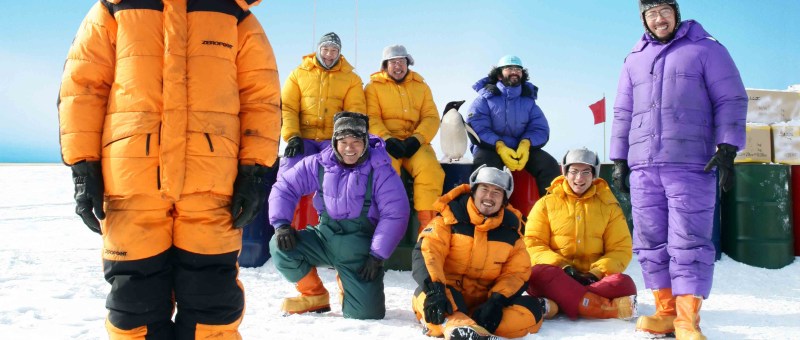
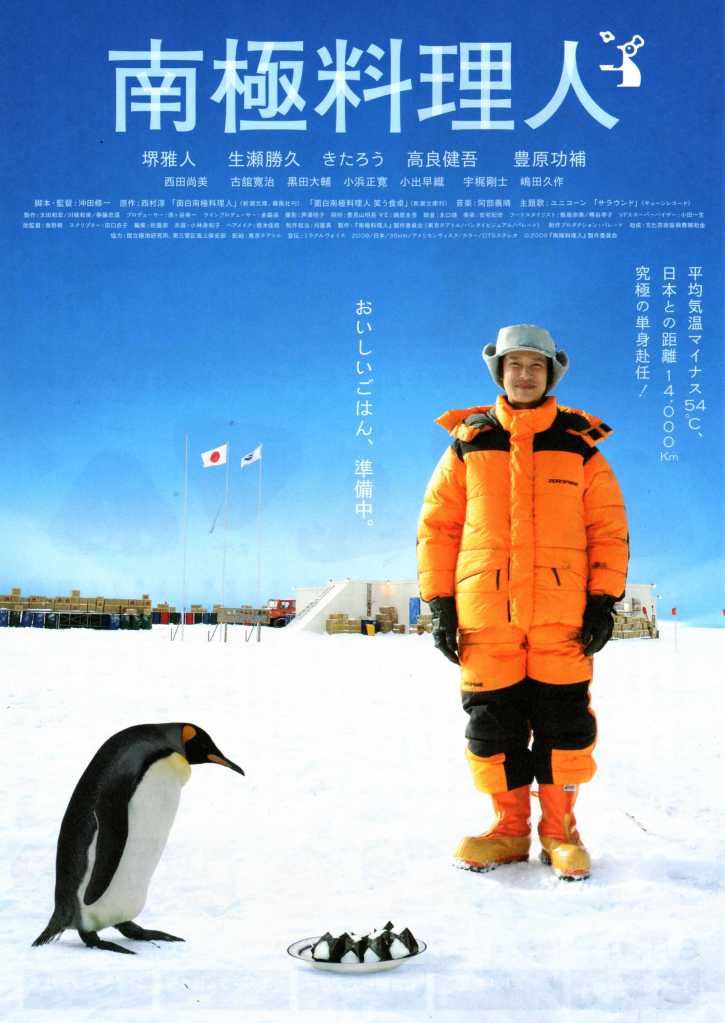
If there’s one thing which unites the universes present in the films of Shuichi Okita, aside from their warm and humorous atmosphere, it’s their tendency to take a generally genial, calm and laid-back protagonist and throw them into an inhospitable environment which they don’t quite understand. When it comes to “inhospitable”, the hero of The Chef of South Polar (南極料理人, Nankyoku Ryourinin) couldn’t have it much worse, unfairly transferred to a polar research station where the air temperature is so cold nothing, not even bacteria, can survive outside. Still, like all of Okita’s laid-back guys, he handles his difficult circumstances with a kind of stoical resignation until, of course, the situation can be handled no more.
Separated from his wife and children, Jun Nishimura (Masato Sakai) previously worked for the Japanese coastguard but has now been transferred (not altogether of his own volition) to a polar research station where he is responsible for all the culinary needs of the seven men who will be working together during the expedition which is intended to last one year. Each of the other men has his own part to play in the scientific endeavours but cooped up as they are, the greater issue is downtime as the guys revert to a kind of high school camp mentality, divided into various groups and activities from the “Chinese Research Club” to a bar being run by the doctor who is also training for a triathlon. 365 days in the freezing cold does eventually begin to take its toll but all of the crazy only serves to remind people how important it is that they all get on and make it through this together.
Based on the autobiographical writings of the real Jun Nishimura, Okita’s isolation experiment has a pleasantly authentic feeling as the titular chef laments the difficulties of the conditions but continues to churn out beautifully presented culinary treats despite the hostile environment. Resources are also strictly limited as the original provisions are intended to last the entire expedition, hence why most of the foodstuffs are canned, vacuum packed or frozen but there are a few luxuries on offer including some prize shrimp apparently left behind, uneaten, by a previous team which proves an additional occasion for celebration just as despair is beginning to set it in. Seeing as the men are all here for more than a year, celebratory occasions do present themselves with regularity from birthdays to “mid winter holiday” and even a good go at the Japanese festival of Setsubun with peanuts instead of beans.
Despite these brief moments of respite, being completely cut off from the outside world for such a long time with little natural light and hardly anything to do outside of research places its own kind of pressure on the minds of these top scientists. As their hair gets shaggier and their beards progressively less kempt, sanity also begins to slip. Each of the guys has their own particular marker, something they’re missing that’s playing on their minds until they eventually break completely. For some this could be realising they’ve eaten all of the ramen which exists in their tiny world and now have nothing left to live for, missing their kids, or realising that their girlfriend might have met someone else while they’ve been busy devoting themselves to science, but this being an Okita film even if an axe is raised it rarely falls where intended and the only cure for mass hysteria is guilt ridden kindness and a willingness to work together to put everything right again.
Of course, the other thing the guys have to put up with is the attitude of the outside world as everyone is very keen to ask them about the cute penguins and seals which they are sure must be everywhere at the South Pole, only to have to explain that it’s just too cold for cuteness though it does lead them to the epiphany that they are the only living creatures in this desolate place and so share a special kind of kinship. Filled with Okita’s usual brand of off the wall humour and gentle humanity, The Chef of South Polar is another warm and friendly tale of nice people triumphing over adversity through cooperation, mutual understanding and sustained belief in the healing power of ramen.
Original trailer (no subtitles)
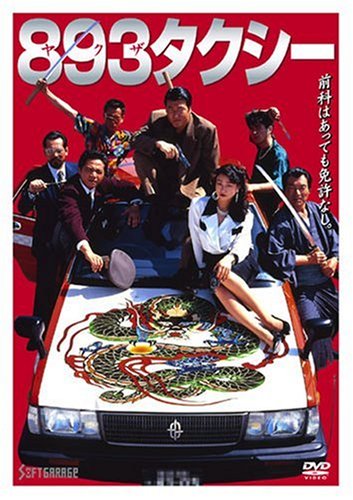 Like many fillmakers of his generation, Kiyoshi Kurosawa began directing commercially in the 1980s working in the pink genre but it was the early ‘90s straight to video boom which provided a career breakthrough. This relatively short lived movement was built on speed where the reliability of the familiar could be harnessed to produce and market low budget genre films with a necessarily high turnover. Kurosawa made his first foray into the V-cinema world in 1994 with the unlikely comedy vehicle Yakuza Taxi (893 タクシー, 893 Taxi). Although Kurosawa had originally accepted the project in the hope of being able to direct a large scale action film, his distaste for the company’s insistence on “jingi” (the yakuza code of honour and humanity) proved something of a barrier but it did, at least, lend free rein to the director’s rather ironic sense of humour.
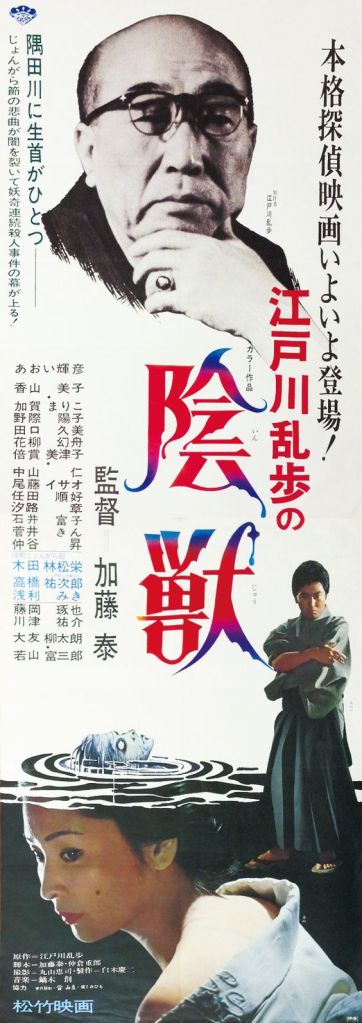 Edogawa Rampo (a clever allusion to master of the gothic and detective story pioneer Edgar Allan Poe) has provided ample inspiration for many Japanese films from
 Post-war cinema took many forms. In Korea there was initial cause for celebration but, shortly after the end of the Japanese colonial era, Korea went back to war, with itself. While neighbouring countries and much of the world were engaged in rebuilding or reforming their societies, Korea found itself under the corrupt and authoritarian rule of Syngman Rhee who oversaw the traumatic conflict which is technically still ongoing if on an eternal hiatus. Yu Hyun-mok’s masterwork Aimless Bullet (오발탄, Obaltan) takes place eight years after the truce was signed, shortly after mass student demonstrations led to Rhee’s unseating which was followed by a short period of parliamentary democracy under Yun Posun ending with the military coup led by Park Chung-hee and a quarter century of military dictatorship. Of course, Yu could not know what would come but his vision is anything but hopeful. Aimless Bullets all, this is an entire nation left reeling with no signposts to guide the way and no possible destination to hope for. All there is here is tragedy, misery, and inevitable suffering with no possibility of respite.
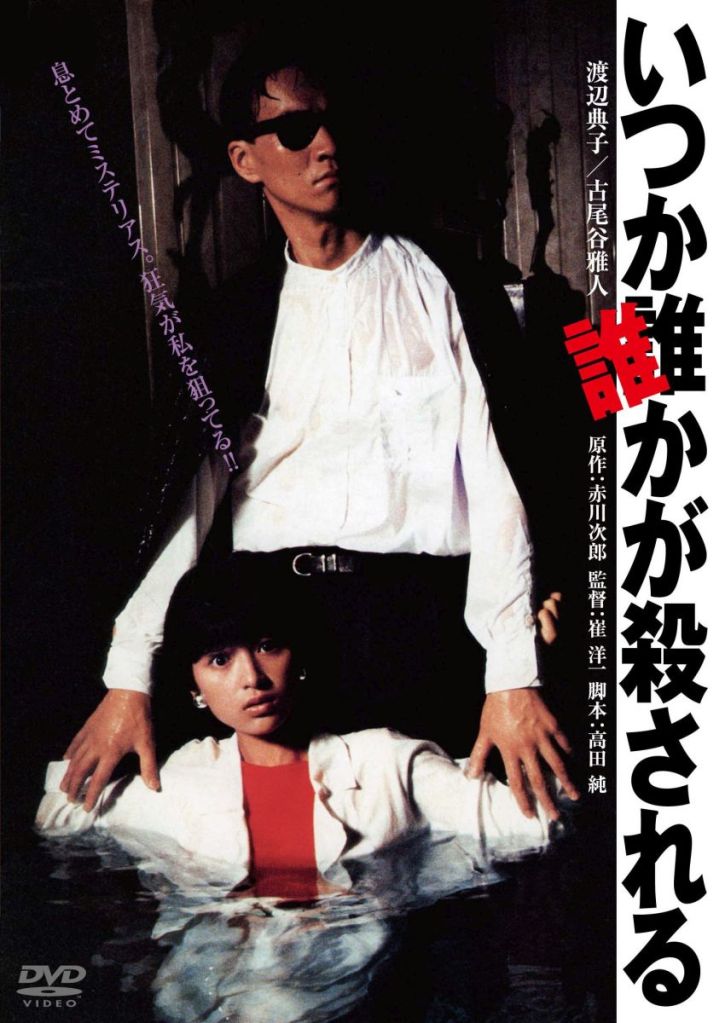 Haruki Kadokawa dominated much of mainstream 1980s cinema with his all encompassing media empire perpetuated by a constant cycle of movies, books, and songs all used to sell the other. 1984’s Someday, Someone Will be Killed (いつか誰かが殺される, Itsuka Dareka ga Korosareru) is another in this familiar pattern adapting the Kadokawa teen novel by Jiro Akagawa and starring lesser idol Noriko Watanabe in one of her rare leading performances in which she also sings the similarly titled theme song. The third film from Korean/Japanese director Yoichi Sai, Someday, Someone Will be Killed is an impressive mix of everything which makes the world Kadokawa idol movies so enticing as the heroine finds herself unexpectedly at the centre of an ongoing international conspiracy protected only by a selection of underground drop outs but faces her adversity with typical perkiness and determination safe in the knowledge that nothing really all that bad is going to happen.
 Raymond Yip Wai-man’s Cook up a Storm (决战食神, Juézhàn Shíshén) was scheduled to open at Chinese New Year but eventually found itself delayed and awkwardly repositioned as a Valentine’s Day date movie. Something of a rarity, there is no real romance in Cook up a Storm though it may inspire a post-movie visit to the nearest Chinese restaurant with its deeply felt tribute to classic Chinese cuisine and the raucous social gathering that often goes with it. Yip does his best to throw in as many themes as possible from the familiar tradition vs modernity to fathers and sons and the undue influence to China’s new ruling class who possess extreme wealth but (apparently) no taste. Most of these get somewhat lost in the meandering script which eventually falls into a conventional tournament narrative as two very different chefs face off in the kitchen before realising they have more in common than not.
 There are two kinds of people in the world, those who swing and those who…don’t – a metaphor which works just as well for baseball and, by implication, facing life’s challenges as it does for music. Shinobu Yaguchi returns after 2001’s
  Japan has really taken the underdog triumphs genre of sports comedy to its heart but there can be few better examples than Shinobu Yaguchi’s 2001 teenage boys x synchronised swimming drama Waterboys (ウォーターボーイズ). Where the conventional sports movie may rely on the idea of individual triumph(s), Waterboys, like many similarly themed Japanese movies, has group unity at its core as our group of disparate and previously downtrodden high school boys must find their common rhythm in order to truly be themselves. Setting high school antics to one side and attempting to subvert the normal formula as much as possible, Yaguchi presents a celebration of acceptance and assimilation as difference is never elided but allowed to add to a growing harmony as the boys discover all new sides of themselves in their quest for water borne success.
 Lav Diaz’s auteurist break through, Batang West Side is among his more accessible efforts despite its daunting (if “concise” by later standards) five hour running time. Ostensibly moving away from the director’s beloved Philippines, this noir inflected tale apes a police procedural as New Jersey based Filipino cop Mijares (Joel Torre) investigates the murder of a young countryman but is forced to face his own darkness in the process. Diaspora, homeland and nationhood fight it out among those who’ve sought brighter futures overseas but for this collection of young Filipinos abroad all they’ve found is more of home, pursued by ghosts which can never be outrun. These young people muse on ways to save the Philippines even as they’ve seemingly abandoned it but for the central pair of lost souls at its centre, a young one and an old one, abandonment is the wound which can never be healed.
 Windows on Worlds