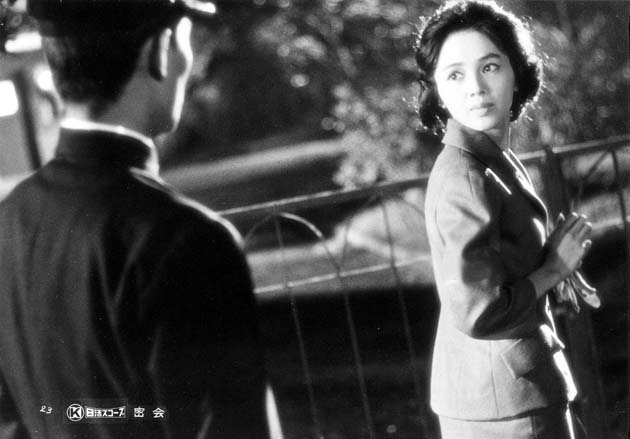
 Aside from the genre defining Crazed Fruit which kick-started the era of the “seishun eiga” and, in its own way, the Japanese New Wave, Ko Nakahira has remained under seen and under appreciated outside of Japan. Completed just three years after the youth fuelled frenzy of Crazed Fruit with its freewheeling playboys and their speedboat crises, The Assignation (密会, Mikkai) is a much more measured, mature meditation on social constraint, guilt and the slow drip feed of poisonous thought. Nakahira wastes none of his characteristic energy in the necessarily tight 76 minute runtime, but this is an exercise in high tension as a pair of illicit lovers are suddenly confronted with their crime after accidentally witnessing a murder.
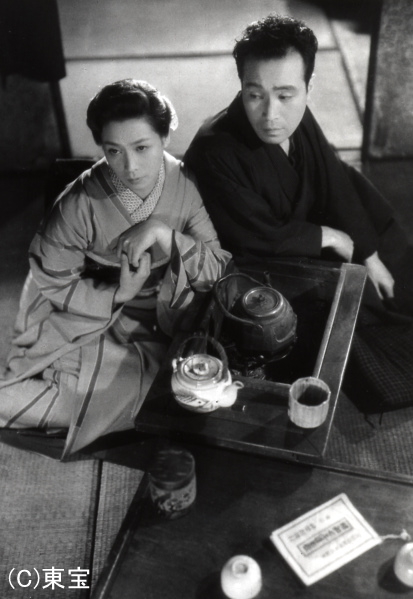
Neglected at home by her studious professor husband, Kikuko (Yoko Katsuragi) has embarked on affair with one of his students, Ikuo (Seiji Miyaguchi). Canoodling at a deserted woodland spot, the pair muse on their impossible love prompting Ikuo to wonder how it would be if Kikuko’s husband simply died. Kikuko quickly puts a stop to Ikuo’s dark and desperate thought but the seed of death has already been sown in the relationship as they’re quickly spotlighted by a pair of unexpected car headlights. Hiding behind a nearby bush, Kikuko and Ikuo witness some kind of struggle inside a taxi before a young man drags and older one out of the car and takes off at a run.
Traumatised, Ikuo and Kikuko finish dressing and attempt to rejoin regular society by avoiding the unusual level of traffic in this remote spot which includes another truck and, as luck would have it, a policeman on a bike. Troubled, the pair bid each other goodbye with the suggestion that they’d better not see each other for a while but the tension continues to mount as Ikuo’s youthful desire to do his civic duty conflicts with Kikuko’s middle aged preoccupation with her reputation and the possible scandal that would occur should the police discover the whole story of their sordid love affair.
Nakahira begins with a careful panning of trees against the film’s bouncy jazz soundtrack neatly underlining the dread hanging somewhere overhead. Scandalous for 1959, the ongoing affair between the naive student and the melancholy housewife is already tinged with doom from the outset despite the relaxed quality of their post-coital coversation. Ikuo is pained, he wants a full life with Kikuko, but she dampens his youthful dreams by already thinking of the end. Adopting a maternal tone, she talks about his future – graduation, a successful career, a lovely young girl his own age who become will his wife. She even wonders if he’ll invite her to the wedding so she can meet the woman who will complete his life in a way she never can. Though she may say she wants to stay with him forever in the throws of passion, hers is a pragmatic love which is more need than desire. The archetypal middle-class housewife, Kikuko may have made this brief weekday evening transgression but throwing off the constraints of propriety is not a step she she envisages taking.
Already guilt ridden over her moral transgression, Kikuko views the incident in the woods as some kind of karmic revenge for her carnal sin. A very frank discussion with her forthright sister-in-law who quizzes her about the marriage’s lack of offspring reveals the depths of her despair and loneliness as her husband barely acknowledges her existence and there is almost nothing for her to do around the house. Taking cooking classes just to get out for a while, she runs into Ikuo whose story is an equally common one of a young man’s infatuation with the pretty yet sad younger wife of his professor.
If mutual loneliness brought them together, guilt and fear will later tear them apart as they face their shared “crime” from opposing sides. For Kikuko her illicit meetings with man much younger than herself are a shameful secret which must be concealed at all costs. Ikuo, however, is in love and sees nothing “wrong” in his courtship of the older woman even if he sympathises with her desire to avoid a scandal and does not want to cause her pain. What bothers him is a sense of justice and social responsibility. He saw the killer’s face – if he goes to the police, the victim’s wife and children might at least be able to gain some peace of mind knowing that the perpetrator is behind bars even if little else will change for them. Kikuko, by contrast, can think of nothing other than herself and is willing to sacrifice all to keep her reputation intact.
The threat of discovery is ever present as Nakahira litters the scene with clues and threats from the constant flagging of possible witnesses to an errant leaf resting on the pot which Kikuko has so calculatedly prepared to back up her cooking class alibi. A dreamlike atmosphere pervades as superimposition and montage segue into Kikuko’s flights of fancy from her memories of the beginning of the affair to a premonition of the newspaper furore which awaits her should Ikuo follow through with his intention of revealing all to the police. In the end, someone is always watching. Despite the youthful tone and jaunty jazz soundtrack, the morality police will tolerate no transgression. The wages of sin are death, but it’s fear driven by guilt and social constraint which is its executioner.
 In the closing voice over of Banmei Takahashi’s Rain of Light (光の雨, Hikari no Ame), the elderly narrator thanks us, the younger generation, for listening to this long, sad story. The death of the leftist movement in Japan has never been a subject far from Japanese screens whether from contemporary laments for a perceived failure as the still young protestors swapped revolution for the rat race or a more recent and rigorous desire to examine why it all ended in such a dark place. Rain of Light is an attempt to look at the Asama-Sanso Incident through the eyes of the youth of today and by implication ask a few hard questions about the nature of revolution and social change and if either of those two things have any place in the Japan these young people now live in. Takahashi reframes the tale as docudrama in which his young actors and actresses, along with their increasingly conflicted director, attempt to solve these problems through recreation and role play, bridging the gap between the generations with a warning from those who dreamed of a better world that was never to be.
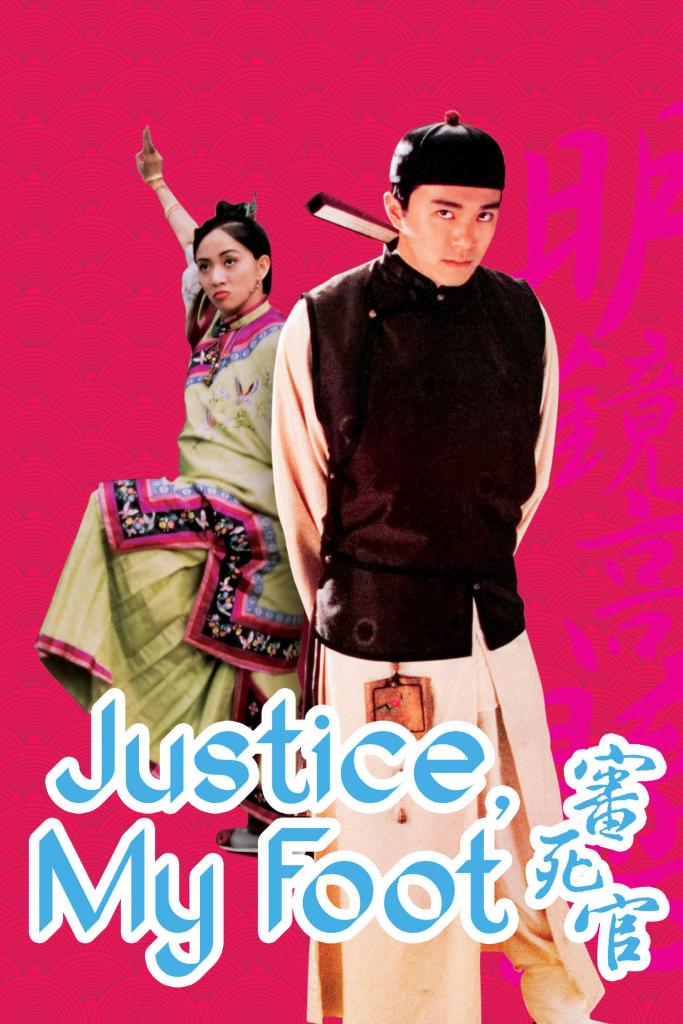 Stephen Chow has always been a force of nature but even before making his name as a director in the mid-90s, he contributed his madcap energy to some of the highest grossing movies of the era. Justice, My Foot! (審死官) is very much of the “makes no sense” comedy genre and, directed by Johnnie To for Shaw Brothers, makes great use of the collective propensity for whimsy on offer. Even if not quite managing to keep the momentum going until the closing scenes, Justice, My Foot! succeeds in delivering quick fire (often untranslatable) jokes and period martial arts action sure to keep genre fans happy.
 Japan was a strange place in the early ‘90s. The bubble burst and everything changed leaving nothing but confusion and uncertainty in its place. Tokyo, like many cities, however, also had a fairly active indie music scene in part driven by the stringency of the times and representing the last vestiges of an underground art world about to be eclipsed by the resurgence of studio driven idol pop. Bandage (Bandage バンデイジ) is the story of one ordinary girl and her journey of self discovery among the struggling artists and the corporate suits desperate to exploit them. One of the many projects scripted and produced by Shunji Iwai during his lengthy break from the director’s chair, Bandage is also the only film to date directed by well known musician and Iwai collaborator Takeshi Kobayashi who evidently draws inspiration from his mentor but adds his own particular touches to the material.
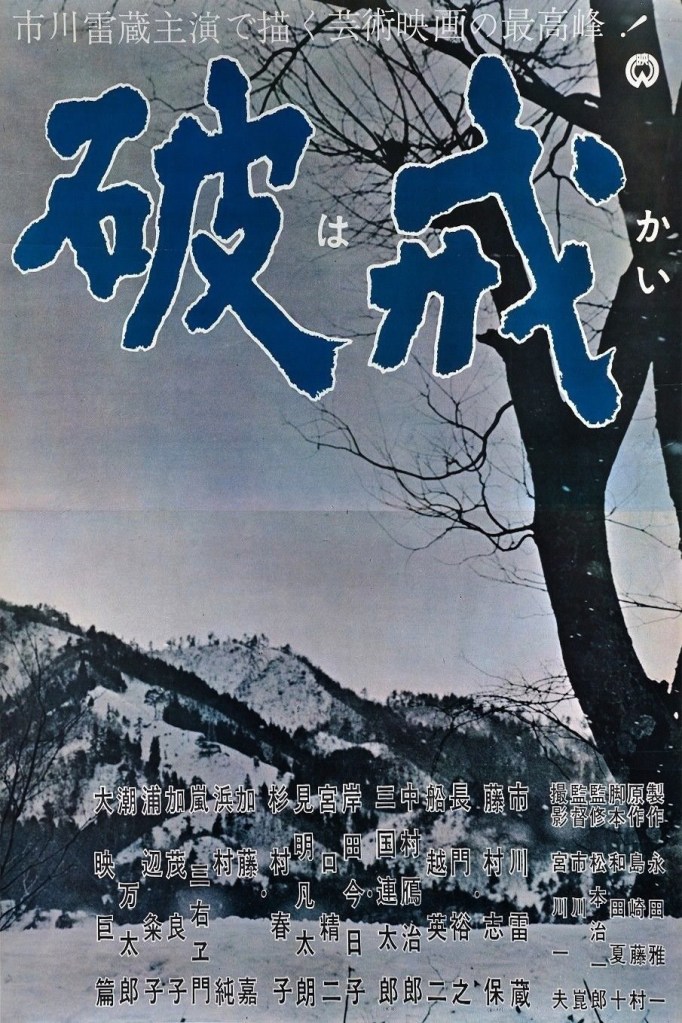 Kon Ichikawa’s approach to critiquing his society was often laced with a delicious slice of biting irony but he puts sarcasm to one side for this all too rare attempt to address the uncomfortable subject of Japan’s hidden underclass – the burakumin. The term itself simply means “people who live in hamlets” but from feudal times onwards it came to denote the kinds of people with whom others did not want to associate – notably those whose occupations dealt in some way with death from executioners and undertakers, to butchers and leatherworkers. Though outright discrimination against such people was outlawed during the Meiji restoration, social stigma and informal harassment remained common with some lingering tendency remaining even today.
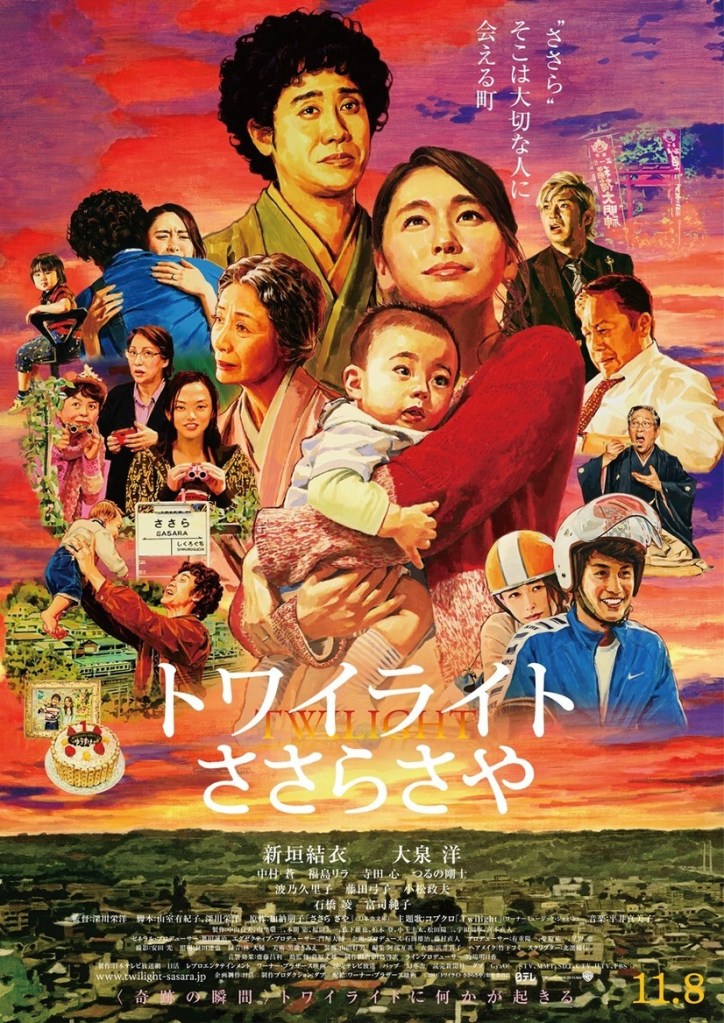 Japanese cinema has its fare share of ghosts. From Ugetsu to Ringu, scorned women have emerged from wells and creepy, fog hidden mansions bearing grudges since time immemorial but departed spirits have generally had very little positive to offer in their post-mortal lives. Twilight: Saga in Sasara (トワイライト ささらさや, Twilight Sasara Saya) is an oddity in more ways than one – firstly in its recently deceased narrator’s comic approach to his sad life story, and secondly in its partial rejection of the tearjerking melodrama usually common to its genre.
 Koji Wakamtasu had a long and somewhat strange career, untimely ended by his death in a road traffic accident at the age of 76 with projects still in the pipeline destined never to be finished. 2008’s United Red Army (実録・連合赤軍 あさま山荘への道程, Jitsuroku Rengosekigun Asama-Sanso e no Michi) was far from his final film either in conception or actuality, but it does serve as a fitting epitaph for his oeuvre in its unflinching determination to tell the sad story of Japan’s leftist protest movement. Having been a member of the movement himself (though the extent to which he participated directly is unclear), Wakamatsu was perfectly placed to offer a subjective view of the scene, why and how it developed as it did and took the route it went on to take. This is not a story of revolution frustrated by the inevitability of defeat, there is no romance here – only the tragedy of young lives cut short by a war every bit as pointless as the one which they claimed to be in protest of. Young men and women who only wanted to create a better, fairer world found themselves indoctrinated into a fundamentalist political cult, misused by power hungry ideologues whose sole aims amounted to a war on their own souls, and finally martyred in an ongoing campaign of senseless death and violence.
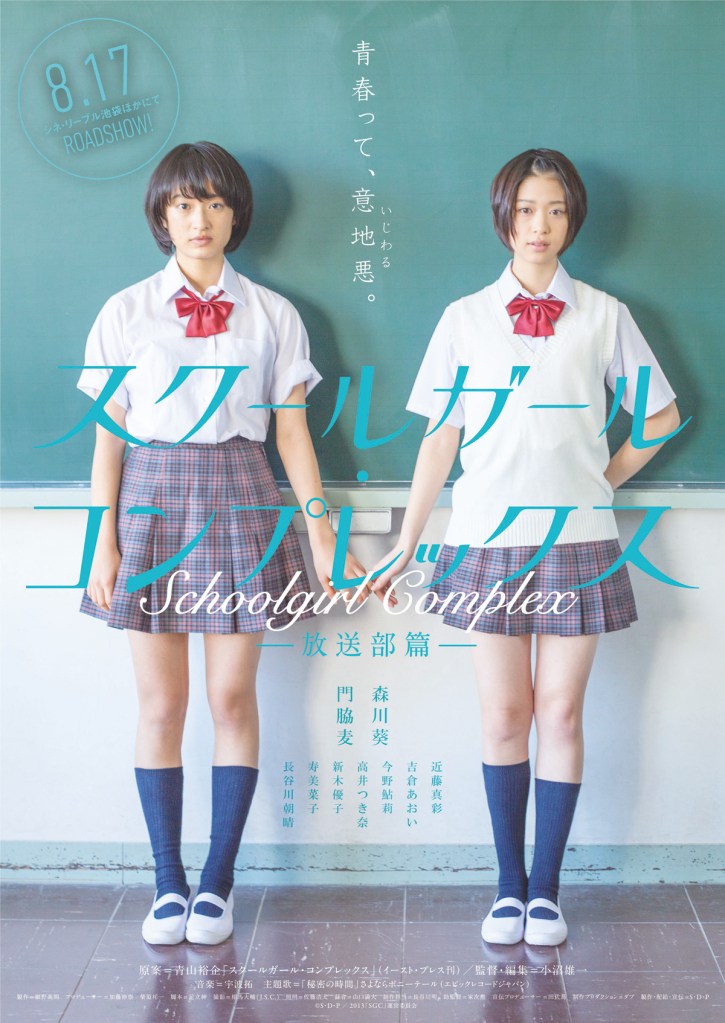 Schoolgirl Complex is a popular photo book featuring the work of Yuki Aoyama and does indeed focus on that most most Japanese of fixations – the school girl and her iconic uniform. Aoyama’s book presents itself as taking the POV of a teenage boy, gazing longly from a position of total innocence at the unattainable female figures who, in the book, are entirely faceless. Given a more concrete narrative, this filmic adaptation (スクールガール コンプレックス 放送部篇, Schoolgirl Complex Housoubu-hen) directed by Yuichi Onuma takes a slightly different tack in dispensing with high school boys altogether for a tale of self discovery and sexual confusion set in an all girls school in which almost everyone has a crush on someone, but sadly finds only adolescent suffering as so eloquently described by Osamu Dazai whose Schoolgirl informs much of the narrative.
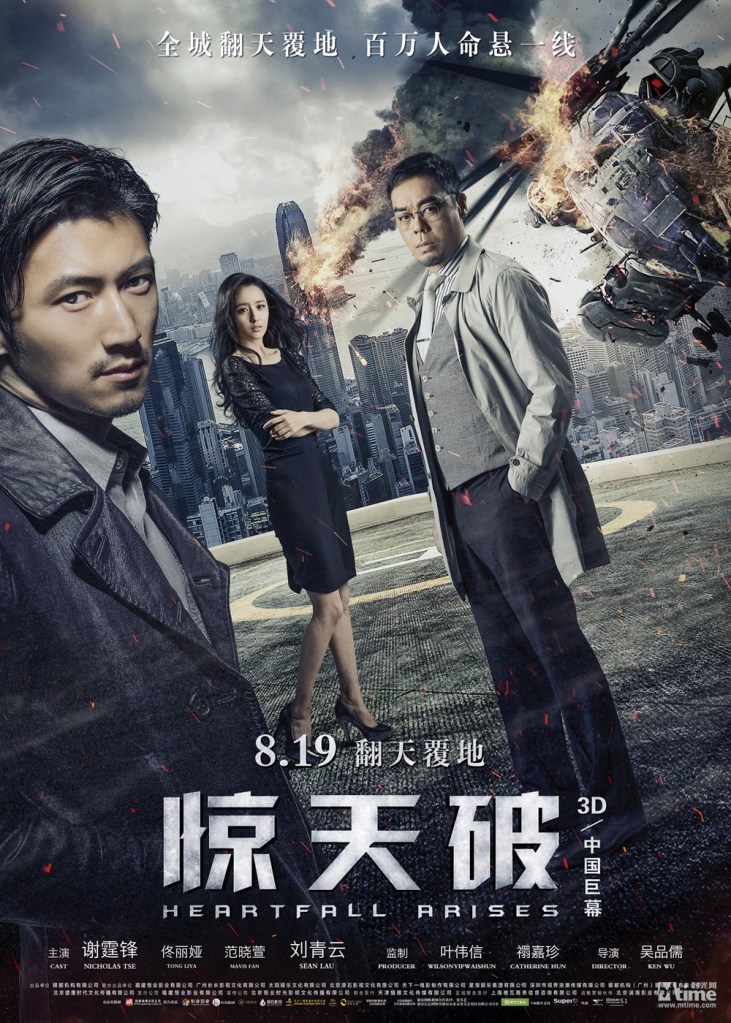 Sean Lau Ching-wan and Nicholas Tse are together again after being denied the opportunity to reteam for a sequel to the acclaimed
  Windows on Worlds