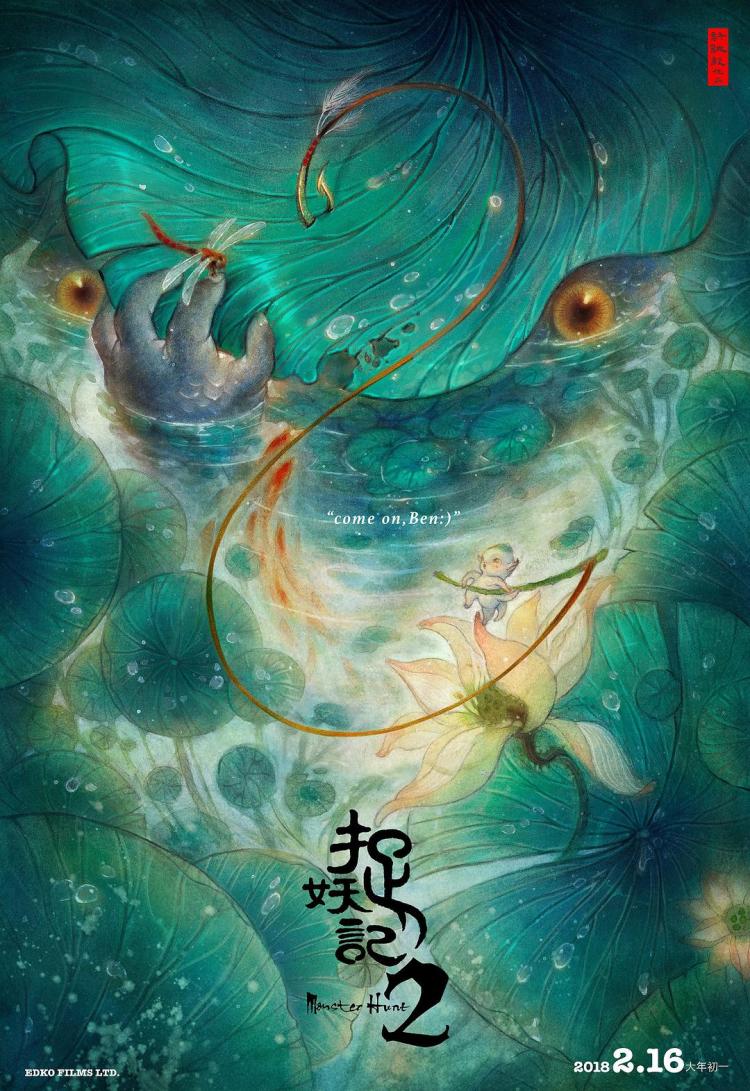
Monster Hunt 2 (捉妖記2, Raman Hui, 2018)

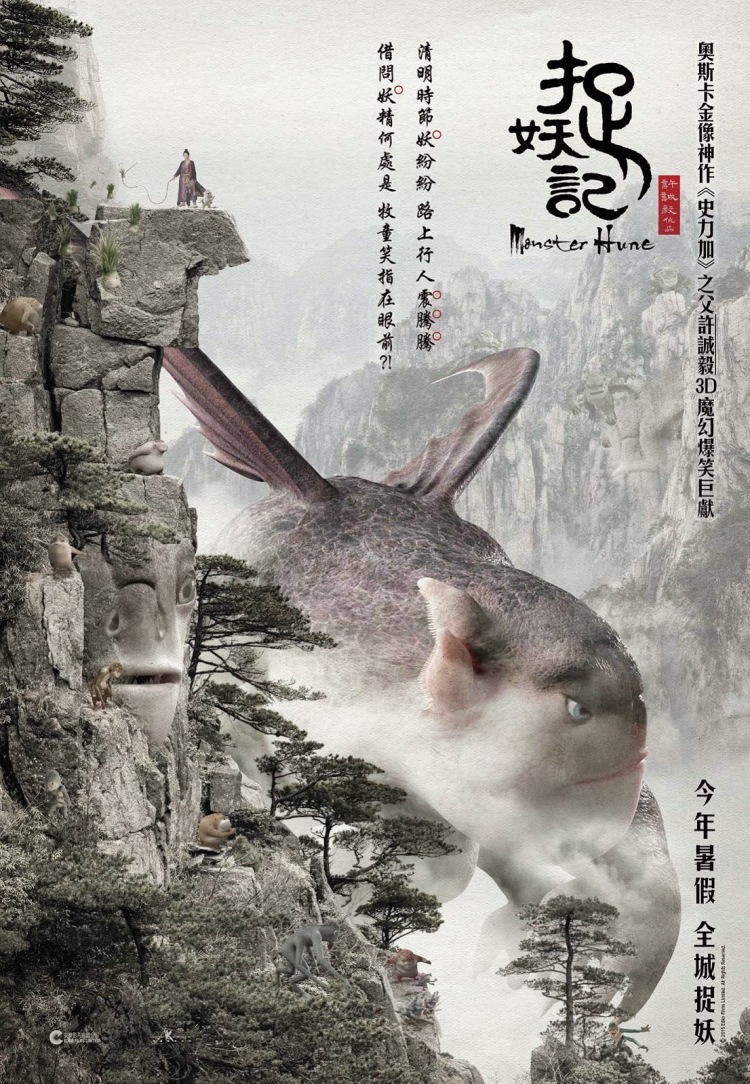
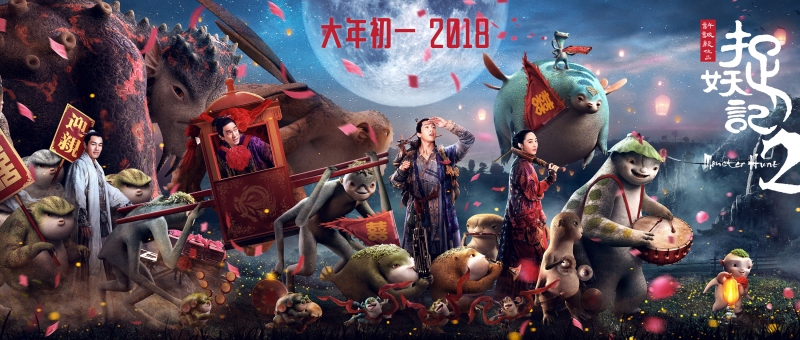
Monster Hunt Poster 2Despite numerous production difficulties, Monster Hunt went on to become a bona fide box office smash and international pop culture phenomenon on its release in 2015. Children and adults alike fell in love with the adorable little radish monster Wuba who, in grand fairytale tradition, is the secret heir to all of Monsterdom and the subject of a prophecy which posits him as the long awaited unifying force set to restore equality between humans and their Monster brethren. By the time this sequel, Monster Hunt 2 (捉妖記2, Zhuō Yāo Jì 2), rolls around, things are looking up for Wuba seeing as no one’s actively trying to eat him, but like so many kids in modern China he misses his human mum and dad who made a difficult decision at the end of the last film that Wuba should live with Monsters in Monsterland because it just wasn’t safe for him in the human realm.

Consequently Wuba has been living happily in the forest where the Monsters have made a little village for themselves. The Monster village is a place of laughter and song where everyone is welcome and they dance cheerfully all night long. That is, until evil monsters turn up looking for Wuba again, destroying the village and leaving him on the run all alone back in the human world. Meanwhile, Tianyin (Jing Boran) and Xiaolan (Bai Baihe) are on a quest to look for Tianyin’s long lost dad – a famous monster hunter who left Tianyin behind as a child to keep him safe, just like Tianyin had to leave Wuba. Nevertheless, though Tianyin and Xiaolan have developed a sparky domesticity, they’re both unwilling to admit how much they miss little Wuba and wish they could go get him back from Monsterland even if they know he’s probably safer hidden away from those who might want to do him harm. While looking for Tianyu and Xiaolan, Wuba gets himself semi-adopted by a very odd couple of chancers in the form of shady gambler Tu (Tony Leung) and his monster partner Ben-Ben.

Once again the theme is family. Monster Hunt spoke, perhaps, to all those separated families in modern China or more particularly to the children in revealing that parents sometimes have to make difficult choices and end up living apart from their kids so that they can give them a better life. Monster Hunt 2 accepts the premise but then provides an emotional correction in making plain the pain Tianyu and Xiaolan feel on being separated (perhaps forever) from Wuba, until they eventually settle on tracking him down and facing whatever dangers come their way together. They come to this realisation after saving a mother and son who’ve been (unfairly) arrested by the Monster Hunt Bureau and witnessing their happiness just in being together despite the sticky situation they may be in.

Meanwhile Wuba, sad and alone, is happy to have found himself a surrogate family in the form of kindly Ben-Ben and the spiky Tu – a virtual mirror of Tianyu and Xiaolan when they first met. As in the first film, Tu originally takes Wuba in because he wants to sell him to Madame Zhu (Li Yuchun) – a woman he has cheated in both love and money, whose patience apparently knows no end. This brief episode of Wuba and his two new uncles is a subversive one in terms of mainstream Chinese cinema, and unlike the early union of Tianyu and Xiaolan there is little comedy in the easy coupledom of Ben-Ben and Tu who become two men raising a child together in relative happiness. This is perhaps the reason for the strange coda in which Tu and Ben-Ben have a brief chat about girls, relegating Tu’s earlier awkward admission of affection one more of brotherhood than love and affirming their total heterosexuality (both the female love interests are also from the same species, just to make things crystal clear).

Yet the message is strong – families want to stay together, parents want to be with their kids and kids want to be with their parents so maybe the world should just let them, even if those families aren’t quite like everyone else’s. With much better production values than the first film and a much more consistent tone, Monster Hunt 2 is a vast improvement on its predecessor though it treads more or less the same ground and is content to meander between several set pieces with more than a few seemingly extraneous sequences of Tu getting up to mischief or Xiaolan using her feminine wiles on a nerdy inventor (though these at least add to the more complex arc of the feminised Tianyu and masculine Xiaolan each moving towards a gender neutral centre). Monster Hunt 2 maybe more of the same and little more than the next instalment in a series, but nevertheless its winning charm and gentle warmth are enough to ensure there will still be devotees of Wuba ready to reserve their seats for the inevitable part three.


Currently on limited release in UK cinemas. Screening locations for the UK, Ireland, US and Canada available via the official website.

International trailer (English subtitles)
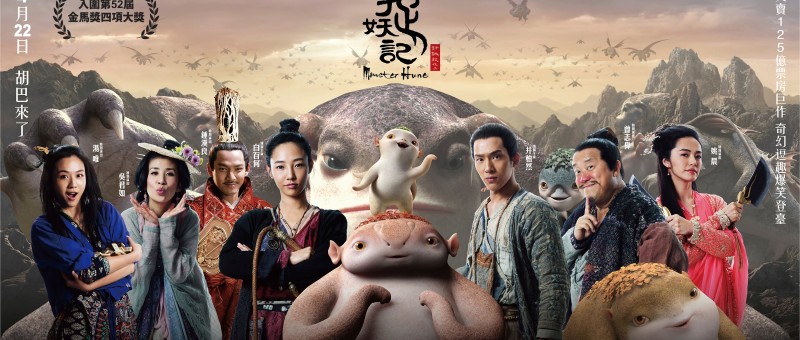
Monster Hunt (捉妖記, Raman Hui, 2015)

Monster Hunt posterA runaway box office hit and veritable pop culture phenomenon, you’d be forgiven for assuming that 2015’s Monster Hunt (捉妖記, Zhuō Yāo Jì) is nothing more than a slice of family friendly entertainment in the vein of a dozen other live-action/animation hybrid fantasy films. The monsters are cute, yes, and there is enough darkness here to rival Lord of the Rings, but there’s a little more going on under the surface of this otherwise heartwarming tale of a persecuted minority and its hidden princeling. A family drama of epic proportions, Monster Hunt speaks directly to China’s left behind children and to those who, perhaps, were worried their destiny had always been misplaced.

Set sometime in the distant fantasy past, Monster Hunt takes place in a universe in which men and Monsters co-exist but, owing to their defeat in a war, the Monsters have been forced back into the forests and mountains away from humankind many of whom no longer even believe they exist. However, there is fresh strife among the Monsters forcing a pregnant Queen to flee along with her retainers, straying into the human world in hope of saving her baby. Luckily she finds herself in a small village presided over by a kindly mayor with a limp, Tianyin (Jing Boran), who is also the son of a long missing Monster Hunter but much prefers domestic tasks such as cooking and sewing to hunting Monsters. The Queen manages to “transfer” her baby to Tianyin just before she dies, leaving him quite literally holding the baby assisted only by cynical bounty hunter Xiaolan (Bai Baihe).

Inspired by ancient folklore, Monster Hunt plays the chosen one trope to the max as Tianyin wrestles with his destiny while the baby, a true king displaced from his throne, awaits in ignorance. Like many contemporary fantasy tales, Monster Hunt also revels in subverting genre norms with its noticeably feminised hero. Tianyin is the son of a great warrior, but it’s his grandmother who practices kung fu and goes out looking for her long lost son, while Tianyin professes his love of domesticity, staying home cooking and sewing. His simplicity and softness is contrasted with the more masculine figure of the cynical Monster Hunter Xiaolan who becomes Tianyin’s casual love interest and the putative “father” in the loose family unit they form with the tiny baby radish-like figure they eventually christen Wuba.

The formation of a family unit in itself proves a problematic development for both Tianyin and Xiaolan who have both been abandoned by their own families and left to fend for themselves (with almost opposite results). Resentful at having been cast out by his apparently “heroic” father, Tianyin has definite views about the nature of fatherhood and the mistakes he does not wish to repeat with his own children while Xiaolan has grown wary of forming attachments altogether and strives to remind herself that she is only looking after Wuba until he’s big enough to sell on the Monster Hunter black market. Nevertheless, the pair cannot help becoming “accidental” parents even if they must first make a mistake they later need to rectify in trying to abandon their charge for financial gain. Tianyin “repeats” the “mistake” of his own father but finally comes to understand it for what it was – a father’s sacrifice of his paternal love to keep his child safe. Something that will certainly ring true for children who may be living apart from their own parents for reasons they don’t quite understand.

Yet a fairytale darkness is never far away as Tianyin and Xiaolan consider selling off little Wuba to a dodgy mahjong obsessed Monster fence (Tang Wei) who apparently knows how valuable he is but is planning to sell him to a local restaurant anyway. Despite the fact that everyone has forgotten Monsters exist, Monster meat is a delicacy reserved for the super rich (a subtle dig at China’s eat anything that can’t run faster than you philosophy ushered in by the sight of caged monkeys at the roadside) and little Wuba does look quite like a tasty daikon radish.

Cute monsters getting chopped up and eaten may be a horror too far for sensitive young children (if it weren’t for the fact the Monsters are all inspired by veggies Monster Hunt might be the greatest proselytising mechanism for vegetarianism the world has ever seen) but rest assured, little Wuba is quite the resourceful little tyke and he does after all have a grand destiny awaiting him. A tribute to unlikely heroes, gentle men, feisty women, and atypical families, Monster Hunt is an oddly subversive family friendly adventure and one which has clearly hit its mark in capturing the hearts of a whole generation who will doubtless be excited for the further adventures of Wuba as he moves closer towards his own Messianic destiny.


International trailer (English captions)

Born Under Crossed Stars (悪太郎伝 悪い星の下でも, Seijun Suzuki, 1965)

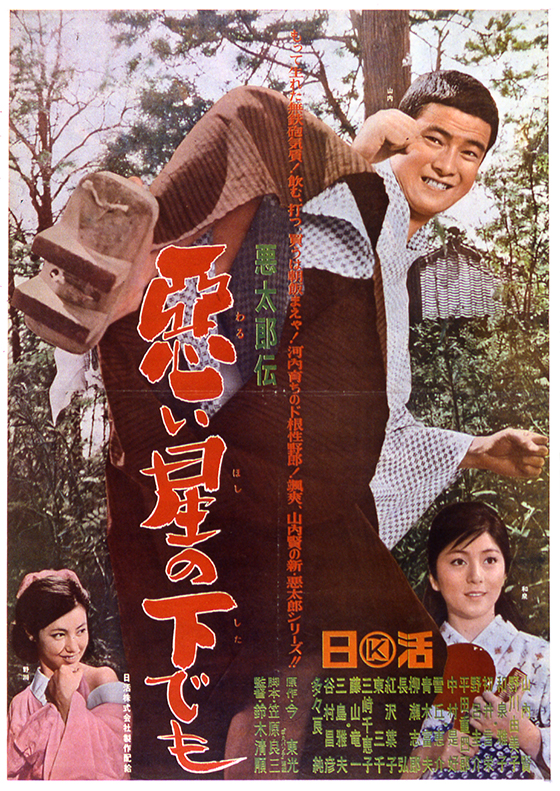
Born Under Crossed Stars posterFollowing his 1963 breakthrough, The Incorrigible, Seijun Suzuki returns to the work of Toko Kon for another tale of rural adolescent confusion in Born Under Crossed Stars (悪太郎伝 悪い星の下でも, Akutaro-den: Warui Hoshi no Shita demo). The Japanese title ties the film more closely to the earlier Kon adaptation by adding the preface “Stories of Bastards”, and once again stars Ken Yamauchi and Masako Izumi in leading roles though this time the setting is early Showa, swapping the promise and openness of Taisho for the rapidly closing doors of militarism. Much more obviously comedic than The Incorrigible, Born Under Crossed Stars is another anarchic coming of age tale in which an “incorrigible” youngster learns to find himself but is neatly undercut by the times in which he lives, his final triumph both a victory and a symbol of incoming tragedy.

Farmboy Jukichi (Ken Yamauchi) dreams of a way out of his lowly Osakan roots by getting into a prestigious local school, though his drunken father hardly sees the point of education and would prefer his son go out and earn some money. Jukichi is earning quite a bit working as a milkman for a local “cowboy” dairy farmer who’s recently returned from America but his sights are firmly set on university and a move into the city. Meanwhile, he experiences some personal turbulence thanks to his old friend, Yoshio (Jushiro Hirata). Yoshio gets himself into trouble with the Public Morals committee at school when he’s spotted out with a young lady – something which is against school regulations, but that’s not why he was stopped. Another boy, Oka (Keisuke Noro), wrote a letter to the girl Yoshio was with (who happens to be his cousin) but was rejected. Oka is abusing his position for personal point scoring. Jukichi can’t let it go and takes Oka to task, but his actions have serious repercussions when the humiliated Oka suddenly quits the school altogether.

Jukichi thinks Oka’s actions are very “manly”. Manliness is certainly something important to the boys at the school which has a noticeably militarist song along with various rituals involving fire and taiko drums, not to mention the shiny cap badges and weapons drills they seem to perform. As in Fighting Elegy released the following year, “manliness” precludes fraternising with women – sex has been placed off limits as the ultimate frivolity and a kind of theft of the zest of life which should be going towards more “productive” causes. Jukichi however, like The Incorrigible’s Konno has a taste for the ladies even if he reacts somewhat harshly to discovering Yoshio in flagrante with a girl in a park which turns out to be some kind of mass makeout spot behind a shrine. Uncovering the hypocrisy in his friend sets the two at odds and eventually turns them into enemies with disastrous consequences.     

Jukichi finds himself caught between two lovers – the elegant, shy sister of Yoshio, Suzuko (Masako Izumi), and the liberated, provocative Taneko (Yumiko Nogawa). Though resistant, Jukichi eventually succumbs to seduction and forever ruins his dreams in the process. Overcome with youthful frustrations, he channels his need for justice in a dangerous and destructive direction when he decides to start something with a bunch of local gangsters in a misguided attempt to avenge a wrong done to the father that has never supported him. Later seeing off an attack from the gangsters (tipped off by a remorseful Yoshio) Jukichi seals his fate, gives up on the “decent” life promised by a place at the prestigious middle school and commits himself to wandering, taking to the sea as one of many young men raised on nationalist myths finding their place in the military.

Another programme picture, Born Under Crossed Stars provides ample opportunity for Suzuki to embrace his taste for the strange – notably in his milk patter opening with its literal baby monkey, but also finding room for beetles on strings, “poisoned” manju buns, and illusionary visions. Sticking mainly to static camera, Suzuki nevertheless showcases his taste for unusual composition and editing, making use of rapid focus pulls, side wipes and dissolves to convey the passage of time. He closes with a voice over mimicking the one at the end of The Incorrigible only this time with a much more defiant (but in hindsight only tragic) declaration that Jukichi will continue living under his self made philosophy, vowing to do what ever it takes to survive and scale any wall which places itself in his path towards the achievement of his freedom.


Born Under Crossed Stars is the fifth of five films included in Arrow’s Seijun Suzuki: The Early Years. Vol. 1 Seijun Rising: The Youth Movies box set.

Original trailer (English Subtitles)

The Incorrigible (悪太郎, AKA The Bastard, Seijun Suzuki, 1963)

(C) Nikkatsu 1963

(C) Nikkatsu 1963

Seijun Suzuki often credits 1963’s Youth of the Beast as the real turning point in his directorial career, believing that it marked the first time he was ever really able to indulge his taste for the surreal to the extent that he truly wanted. The Incorrigible (悪太郎, Akutato, AKA Bastard), completed directly after Youth of the Beast, is another turning point of a kind in that it marks Suzuki’s first collaboration with set designer Takeo Kimura who would accompany him through his ‘60s masterpieces contributing to the uniquely theatrical aesthetic which came to be the director’s trademark.

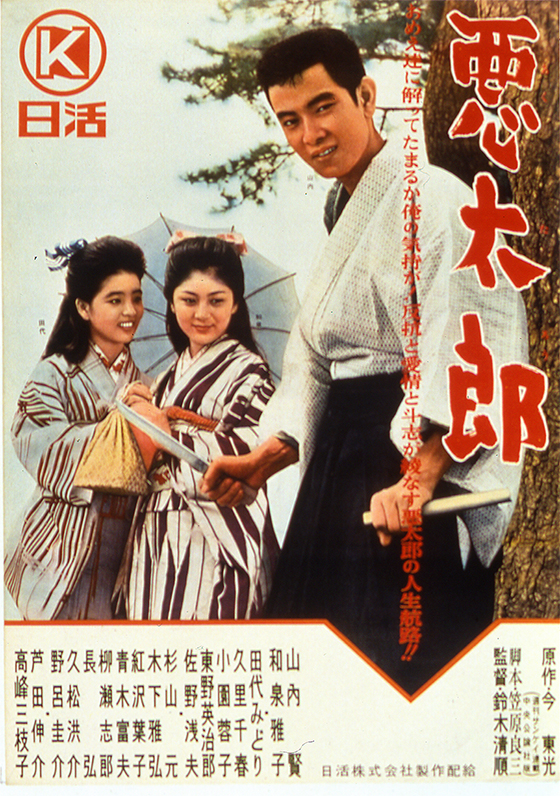
Inspired by an autobiographical novel by Toko Kon, The Incorrigible of the title, Togo Konno (Ken Yamauchi), is a young man coming of age in the early Taisho era. He’s of noble birth and enjoys both wealth and privilege – something of which he is well aware, but is also of a rebellious, individualist character believing himself above the normal rules of civil society. Expelled from his posh Kyoto school after getting into a dalliance with a teacher’s daughter (she’s been sent off to a convent), Konno is then abruptly abandoned by his mother who has tricked him into travelling to a remote rural town where a friend of a family friend has promised to reform him at his military middle school. Konno thinks he’s too clever for this, he makes a point of deliberately failing his entrance exam in the mistaken belief that failing to get in would make him free to travel to Tokyo and start life on his own. He’s wrong, and failure to pass the exam would only entail being held back a year. Konno capitulates and agrees to start his new life as one among many in a backward little village in Southern Japan.

Though set in the Taisho era, Konno’s youth seems to suffer from the same problems that would plague the young men of 30 years later. His school is proto-militarist and hot on discipline. The boys are trained to be strong rather than smart and have inherited all the petty prejudices of their parents which they hone to the point of weaponry. The “Public Morals” department operates almost like a mini military police for students – making routine inspections of students’ home lives and keeping an eye out for “illicit” activities round and about town. Konno sees himself as grown man with a rebellious heart – he smokes openly, keeps a picture of the girl who got him into this mess in his room, and tells bawdy, probably made up stories about how he lost his virginity to a geisha (for free). He will not bow to the morality police, or any authority but his own.

Authority is something Konno seems to be good at. Picked on for his continuing preference for Japanese dress, Konno neatly deflects the attentions of the Public Morals division and comes out on top. When they raid his room and complain about his novel reading habit, he shouts them all down and gets them to sit on the floor while he “educates” them about foreign literature. Militarism has not yet arrived, but anti-intellectualism is already on the up and up. Konno’s love of literature is one of his many “deficient” qualities as teachers and students alike bemoan his “frivolous” hobbies, seeing his sensitivity and disregard for the commonly accepted ideals as signs of his unwelcome “unmanliness”.

Konno’s other big problem is, as might be expected, girls. Having been in town only moments Konno takes a fancy to doctor’s daughter Emiko (Masako Izumi) – his desire is only further inflamed after catching sight of her in the book shop and realising she too has bought a copy of Strindberg’s Red Room. She doesn’t care for Strindberg’s misanthropy, but a bond is quickly forged between the two sensitive souls trapped in this “traditional” small town where feelings are forbidden and youth constrained by social stricture.

It is, however, a love doomed to fail. The majority of Suzuki’s early work for Nikkatsu had been contemporary youth dramas, yet the artfully composed black and white photography of the Taisho setting is a melancholic affair which rejects both the rage of the modern action dramas and Suzuki’s trademark detached irony. Using frequent dissolves, The Incorrigible conjures a strong air of nostalgia and regret, a sad love story without end. Yet at its conclusion it makes sure to inject a note of uplifting inspiration as our hero wanders off into a fog of confusion, filled with a passion for pursuing truth and vowing to live without losing hope.


The Incorrigible is the fourth of five films included in Arrow’s Seijun Suzuki: The Early Years. Vol. 1 Seijun Rising: The Youth Movies box set.

Original trailer (English subtitles)

Teenage Yakuza (ハイティーンやくざ, Seijun Suzuki, 1962)

teen age yakuza poster jpgNikkatsu’s stock in youthful angst could have a nasty edge, even in their early days, but even so the Japanese teen movie is often a charming affair in which plucky youngsters defy the perils of their time from a position of relative safety. Rebellious punks die in Nikkatsu Action, but in the poppier coming of age world, innocence wins out as the angry young man finds a way to repurpose his rage for the good of society. Though Seijun Suzuki is generally associated with his “incomprehensible” work for the studio which eventually fired him in 1968, his trademark sense of absurd irony is a perfect fit for the essentially innocent world of the small town teen in ‘60s Japan.

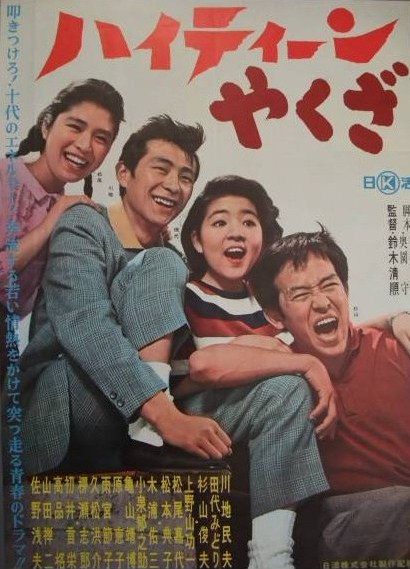
High schooler Jiro (Tamio Kawaji) lives in a fatherless family with a grown-up older sister (Noriko Matsumoto) thinking about marriage and a mother (Kotoe Hatsui) about to open a trendy coffee shop/jazz parlour. He’s best friends with Yoshio (Hajime Sugiyama) – son of the carpenter working on the cafe, and is a typical scatterbrained teenage boy who enjoys fighting and has a “part-time job” taking illicit bets at the bicycle races. His problems start when he wins big on a bet but is hassled by a couple of punks dressed up like cowboys who deprive him of his winnings. Getting revenge, Jiro and Yoshio end up in a fight with the local gangsters in which Yoshio is stabbed in the leg and crippled for life and to make matters worse, his dad is killed in a traffic accident rushing to the scene of the crime. Filled with remorse, Yoshio turns to the dark side and falls out with Jiro while the petty punks start upping the ante and terrorising the town. The daughter of a local restaurant owner, Kazuko (Midori Tashiro), pulls Jiro in to frighten the punks off and convinces her dad to pay him for his time. Soon enough the other store owners are doing the same and Jiro is earning a pretty penny but what he thinks of as public service the store owners are beginning to think of as extortion – Jiro has become the yakuza he feared.

Like many a Nikkatsu hero, Jiro is a good kid misunderstood. He thought he was the lone voice standing up to the yakuza, the only sheriff in town and a shining beacon of justice. He didn’t see danger in taking the money because he genuinely thought it was a gift given freely out of gratitude, and perhaps to begin with it was. Danger rears its head when his sister’s fiancé suggests that Jiro’s illicit bodyguard business might cause problems for him at work and thereby endanger their marriage. When his mum talks sense into him, Jiro decides to try stopping the payments but it’s already too late. Thinking Jiro is after more money the store owners are scared, assuming Jiro will either remove his protection or turn on them as the yakuza they now believe him to be.

This sudden reversal of his self perception deeply wounds Jiro. He believed he was acting in the best interests of everyone and now has to accept he was corrupted by greed and status. He was acting like a yakuza, if accidentally, and has to accept his complicity in his present predicament. Rather than lashing out in rage and becoming the thing he’s been branded, Jiro (eventually) swings the opposite way, commits to ridding the town of yakuza but accepts that delinquency is not his best weapon.

Teenage Yakuza (ハイティーンやくざ, High Teen Yakuza) is no lone wolf story – lone wolves die at the end of Nikkatsu pictures, but Jiro and his ilk need to live to restore the peacefully innocent atmosphere that was broken by the random cowboys at the beginning. Jiro realises that saving the town is not his responsibility – at least not his alone, and he cannot do it all by himself. If the town is to be saved, it has to be because everyone chose to save it – Jiro’s job is not to fight the “yakuza”, but to make everyone else understand that the “yakuza”’s power is illusionary. Leading by example, he gradually wins them over (even the petty delinquents his original exploits helped to corrupt), ousting the growing influence of the shady gangsters through simple resistance.

A shorter, more disposable effort, Teenage Yakuza perhaps allows Suzuki wider scope for experimentation or at least allows him to express his trademark irony in a more direct way than your average programmer would. Filled with the youthful energy of the frequently echoed pop song, the twisters in the jazz bars, and the soba noodle delinquent with her cheerful ukulele, this is less youth on fire than youth breezing through. Teenage Yakuza neatly subverts the ideology of Nikkatsu’s action line, refusing the bad end for the angry lone wolf and gleefully restoring order with a hippyish plea for the solidarity of goodness. 


Teenage Yakuza is the third of five films included in Arrow’s Seijun Suzuki: The Early Years. Vol. 1 Seijun Rising: The Youth Movies box set.

The Wind-of-Youth Group Crosses the Mountain Pass (峠を渡る若い風, Seijun Suzuki, 1961)

The Wind-of-Youth Group Crosses the Mountain Pass posterSeijun Suzuki made his first colour film in 1960 – Fighting Delinquents starred young matinee idol Koji Wada as a noble hearted construction worker with a temper who suddenly learns that he is the heir to an aristocratic fortune. Suzuki would make another two youth dramas starring Wada before getting to 1961’s The Wind-of-Youth Group Crosses the Mountain Pass (峠を渡る若い風, Toge wo Wataru Wakai Kaze, AKA Breeze on the Ridge) – this slice of colourful anarchy is a world away from Nikkatsu’s usual action fare though it does make space for the odd pop song or two.

Naive and cheerful university student Shintaro (Koji Wada) loves to travel and has taken off to wander around alone during the summer break. Getting thrown off a regular city bus for not having the cash for a ticket (his request to defer payment is not looked on kindly), Shintaro catches a lift with a group of travelling performers heading into the summer festival in the next town. Once there Shintaro showcases his lack of forethought once again when he happily sets down to start selling some of the “merchandise” he was given as a salary when the last place he worked at went bust. Not having realised that one generally needs a permit to sell goods in a market, Shintaro gets into an argument about the evils of monopolies and freedom verses regulation with the guy on the next stand all of which brings him to the attention of the yakuza. Luckily for Shintaro, he’s run into the nice kind of yakuza who just think he’s funny and invite him to travel on with them for a bit. Being so essentially good hearted and innocent, Shintaro agrees without thinking about all the reasons travelling around with a bunch of shady yakuza might not be a good idea.

Connecting with both the yakuza and the travelling players, Shintaro becomes involved in a number of interconnected crises – the biggest being the fate of the performers when a local gangster type swipes their headline act. The head of the troupe, Kinyo Imai (Shin Morikawa), is a traditional magician who performs in exaggerated Chinese dress complete with Fu Manchu moustache, but it doesn’t really matter how good he is, the rural audience is only here for the strip show. No stripper means no bookings which Kinyo knew already but it’s still a huge blow to his self esteem to realise that his magic doesn’t do the business anymore, especially as he’d always been conflicted about the strippers anyway.

Shintaro is one of Nikkatsu’s wandering heroes but unlike most he’s a cheerful soul who wanders out of a sense of curiosity and adventure rather than a need to escape something or someone at home. He likes meeting new people, even if the relationships are transitory and necessarily shallow, and treats everyone he meets with kindness and an open mind. In return he meets only kind and open people – even the yakuza are a generally decent sort who treat him like a new friend and can be relied upon to come to his aid if called. The only note of sourness arrives in the form of shady gangster Akita (Hiroshi Kondo) who pinches the troupe’s stripper, and their sometime patron who makes an indecent proposal to Kinyo as a kind of bet to decide whether he continues to fund their moribund performing career.

This being a regular program picture there’s not a lot of scope for experimentation but as it’s also a slightly odd entry to the Nikkatsu catalogue Suzuki does have the freedom to spice things up in his own particular way. Making the best use of colour film, Suzuki has a ball capturing Japan’s unique summer festival culture with its giant floats and cheerful market atmosphere. Wandering around the festival in a lengthy POV shot manages to exoticise something which would be quite ordinary to many viewers (at least those not born in large cities) but Suzuki’s other innovations are mostly relegated to one extremely interesting sequence in which Shintaro has a paint fight with yakuza he’s fallen out with (don’t worry, they both end up laughing like school boys). Every time Shintaro gets hit with paint, the entire screen tints to match neatly intensifying the effect and marking an early example of Suzuki’s love of colour play. Warm and goodnatured, The Wind-of-Youth Group Crosses the Mountain Pass is a gentle tale of youth finding its path but also one in which Suzuki takes advantage of the travelling motif to break from the regular programming and present an anarchic carnivale of music and song.


The Wind-of-Youth Group Crosses the Mountain Pass is the second of five films included in Arrow’s Seijun Suzuki: The Early Years. Vol. 1 Seijun Rising: The Youth Movies box set.

Original trailer (English subtitles)
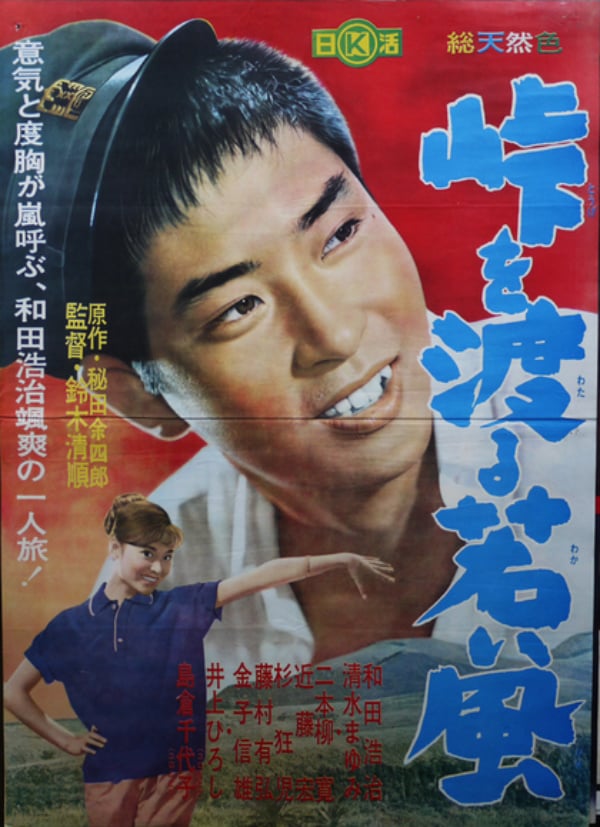
The Boy Who Came Back (踏みはずした春, Seijun Suzuki, 1958)

the boy who came back posterSeijun Suzuki may have been fired for making films that made no sense and no money, but he had to start somewhere before getting the opportunity to push the boat out. Suzuki’s early career was much like that of any low ranking director at Nikkatsu in that he was handed a number of program pictures often intended to push a pop song or starring one of the up and coming stars in the studio’s expanding youth output. The Boy Who Came Back (踏みはずした春, Fumihazushita Haru, AKA The Spring that Never Came) is among these early efforts and marks an early leading role for later pinup star Akira Kobayashi paired with his soon to be frequent leading lady, Ruriko Asaoka. A reform school tale, the film is a restrained affair for Suzuki who keeps the rage quelled for the most part while his hero struggles ever onward in a world which just won’t let him be.

Keiko (Sachiko Hidari) is a conductress on a tour bus, but she has aspirations towards doing good in the world and is also a member of the volunteer organisation, Big Brothers and Sisters. While the other girls are busy gossiping about one of their number who has just got engaged (but doesn’t look too happy about it), Keiko gets a message to call in to “BBS” and is excited to learn she’s earned her first assignment. Keiko will be mentoring Nobuo (Akira Kobayashi) – a young man getting out of reform school after his second offence (assault & battery + trying to throttle his father with a necktie, time added for plotting a mass escape). Nobuo, however, is an angry young man who’s done all this before, he’s not much interested in being reformed and just wants to be left alone to get back to being the cool as ice lone wolf that he’s convinced himself he really is.

Made to appeal to young men, The Boy Who Came Back has a strong social justice theme with Keiko’s well meaning desire to help held up as a public service even if her friends and family worry for her safety and think she’s wasting her time on a load of ne’er do wells. Apparently an extra-governmental organisation, BBS has no religious agenda but is committed to working with troubled young people to help them overcome their problems and reintegrate into society.

Reintegration is Nobuo’s biggest problem. He’s committed to going straight but he’s proud and unwilling to accept the help of others. He turns down Keiko’s offer to help him find work because he assumes it will be easy enough to find a job, but there are no jobs to be had in the economically straightened world of 1958 – one of the reasons Keiko’s mother thinks the BBS is pointless is because no matter how many you save there will always be more tempted by crime because of the “difficult times”. When he calms down and comes back, agreeing to an interview for work at his mother’s factory Nobuo leaves in a rage after an employee gives him a funny look. There are few jobs for young men, but there are none for “punks” who’ve been in juvie. Every time things are looking up for Nobuo, his delinquent past comes back to haunt him.

This is more literally true when an old enemy re-enters Nobuo’s life with the express intention of derailing it. His punk buddies don’t like it that he’s gone straight, and his arch rival is still after Nobuo’s girl, Kazue (Ruriko Asaoka). If Nobuo is going to get “reformed” he’ll have to solve the problem with Kajita (Jo Shishido) and his guys, but if he does it in the usual way, he’ll land up right in the slammer. Keiko’s dilemma is one of getting too involved or not involved enough – she needs to teach Nobuo to fix his self image issues (which are largely social issues too seeing as they relate to familial dysfunction – a violent father and emotionally distant mother creating an angry, fragile young man who thinks he’s worthless and no one will ever really love him) for himself, rather than try to fix them for him.

A typical program picture of the time, The Boy Who Came Back does not provide much scope for Suzuki’s rampant imagination, but it does feature his gift for unusual framing and editing techniques as well as his comparatively more liberal use of song and dance sequences in the (not quite so sleazy) bars and cabarets that Nobuo and his ilk frequent. Unlike many a Nikkatsu youth movie, The Boy Who Came Back has a happy ending as everyone, including the earnest Keiko, learns to sort out their various difficulties and walks cheerfully out into the suddenly brighter future with a much more certain footing.


The Boy Who Came Back is the first of five films included in Arrow’s Seijun Suzuki: The Early Years. Vol. 1 Seijun Rising: The Youth Movies box set.

Original trailer (English subtitles)

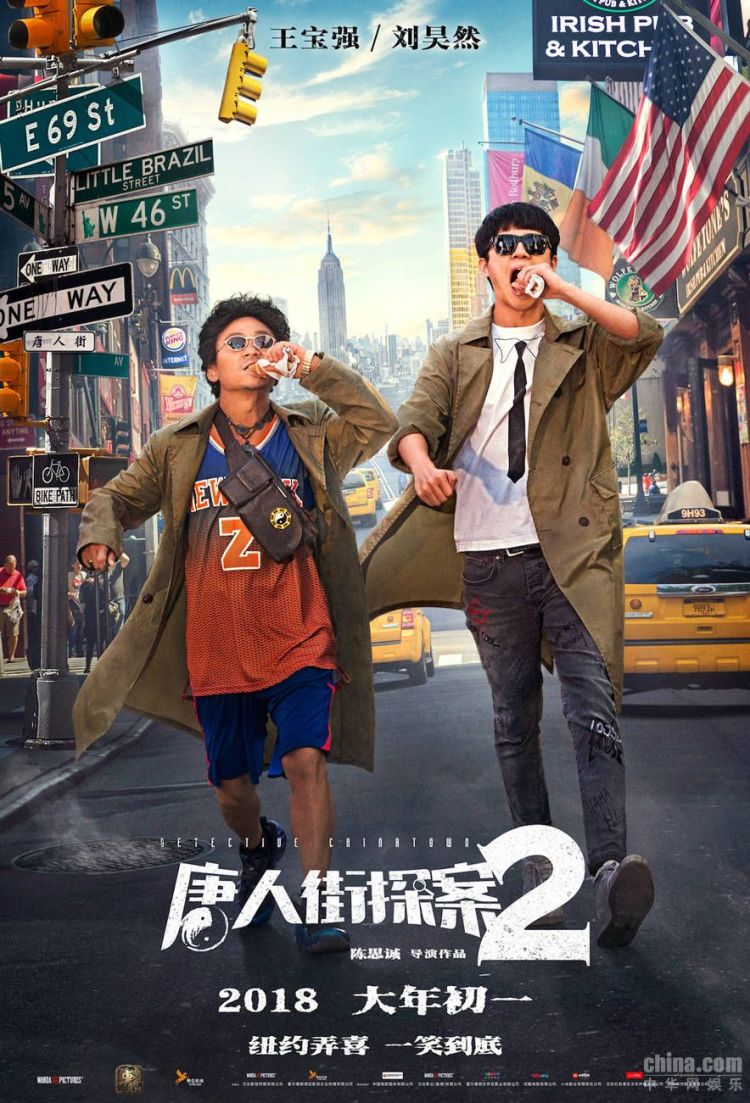
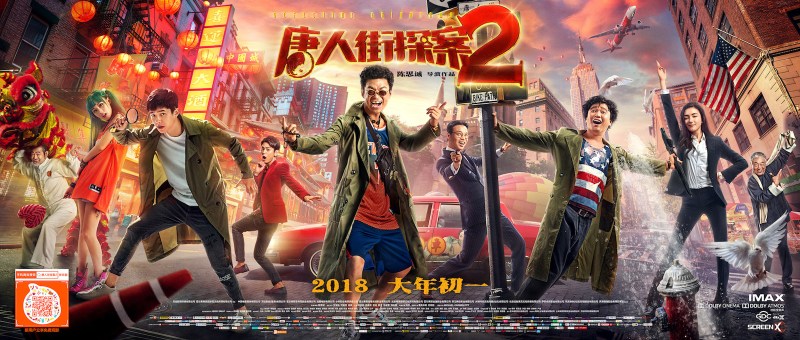
Detective Chinatown 2 (唐人街探案2, Chen Sicheng, 2018)

Detective Chinatown 2 posterBox office smash Detective Chinatown successfully pulled off the difficult feat of merging amusing buddy cop comedy with a holiday setting and intriguing cerebral mystery. Given the success of the first film it’s no surprise that the boys are back in town, or, as teased in the finale, in New York where another strange crime awaits their particular talents. Firmly a Chinese production taking place in an American city (though one using American crews), Detective Chinatown 2 (唐人街探案2, Tángrénj Tàn Àn 2) tries its best to maintain its unique character while shifting into American crime thriller territory, even if hampered by a stereotypical view of its target culture and some decidedly ropey English language dialogue.

Qin (Liu Haoran), now apparently a student at the police academy, has been tricked into coming to New York for Uncle Tang Ren’s (Wang Baoqiang) wedding to his love interest from the first film, Ah Xiang (Tong Liya). When he arrives, however, Qin quickly figures out that he’s in a room with some of the world’s best detectives – Ah Xiang left Tang Ren for someone with more money and so Tang Ren wants Qin to help him solve a mysterious New York murder for the reward promised by one of the victims’ grandfathers, a Chinatown gangster named Uncle Seven (Kenneth Tsang). Qin likes a good mystery so sticks around though the situation becomes decidedly more complicated after he finds and discounts the main suspect, Song Yi (Xiao Yang), leaving the trio on the run from the authorities, other detectives vying for the reward, and Uncle Seven’s guys some of whom have their own ulterior motives.

The most satisfying element of Detective Chinatown lay in the genuinely intricate nature of its locked room mystery and elegance of its resolution. Detective Chinatown 2 shifts away from the classical style of a European drawing room mystery for something altogether flashier and more American in keeping with its setting. It is, however, guilty of more than the faults of its genre in heavily signposting its solution from the midway point leaving any serious thriller fan twiddling their thumbs waiting for the penny to drop with ace detective Qin. Though a secondary twist offered after the killer has been unmasked helps to undercut the disappointment of such an anticlimax, it is not quite enough to compensate for the crushing obviousness of the central mystery.

Likewise, where Detective Chinatown existed firmly within a small Chinese enclave of Bangkok where everyone knew everyone, the move into the metropolis of Manhattan robs the film of its small-town charm. Despite the “Chinatown” tag, Chinatown itself is not a big player and as both of our guys are now full outsiders in another culture, we’re treated to a much less nuanced take on local stereotypes with several running gags likely to raise audience hackles with their tone-deaf approach to visualising the multicultural city. All of that aside, shooting in Central Manhattan with American crews also means much less creative freedom leaving the set pieces perhaps less impressive in terms of scale and ingenuity while the cinematography occasionally feels much more like standard American television than a big budget Chinese comedy.

Nevertheless the odd pairing of loudmouth Tang Ren and the comparatively subdued Qin, whose powers find even more impressive means of visualisation as he literally lifts buildings off a map and moves them round, remains the key selling point even though each half of the pair is also subjected to a bizarre round of sexual harassment from a biker boss with a tiny Chinaman fetish to a kung fu master with possible Alzheimer’s respectively. Though Chen generally relies on slapstick, the gags have a decidedly topical flavour – a police chief with terrible hair who makes off colour jokes and wants to build a wall to keep out all the annoying Chinese guys he can’t be bothered to deal with, for example, or the repeated references to immigration and the various dangers faced by those who’ve come from somewhere else and are trying to make a life for themselves. Yet the guys also keep running into people who unexpectedly speak Mandarin – perhaps a sign of the equally unexpected elevated status of Chinese visitors and their all important economic power. Detective Chinatown 2 is a mild disappointment after the duo’s impressive debut, but nevertheless does enough to spark interest in the teased Tokyo-set third instalment.


Currently on limited UK cinema release courtesy of Cine Asia. Screening details for UK, Germany, Australia, and New Zealand available via official website.

Original trailer (English subtitles)
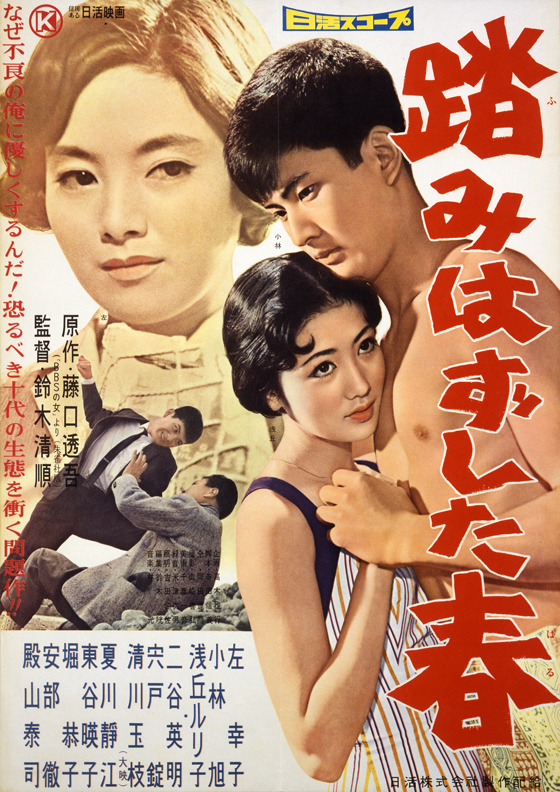
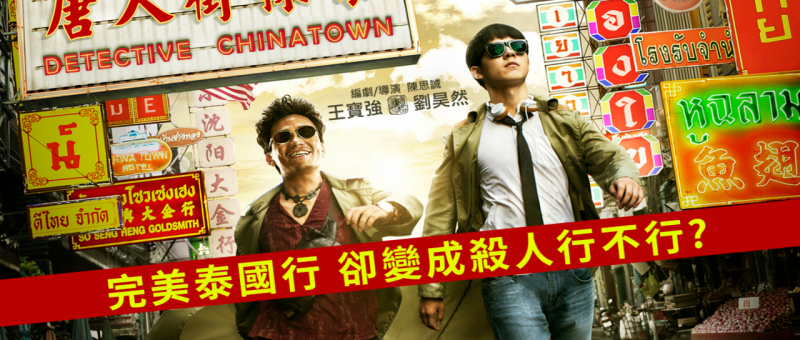
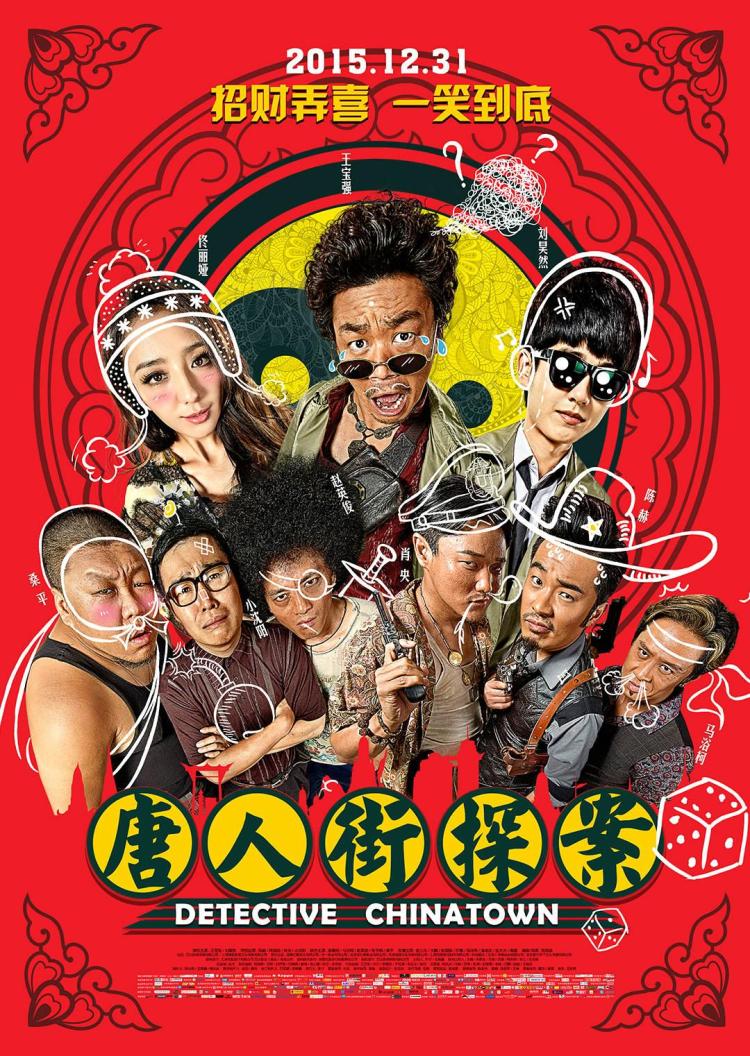
Detective Chinatown (唐人街探案, Chen Sicheng, 2015)

detective chinatown posterCrime exists everywhere, but so do detectives. When one young man fails his police exams because of an unfortunate impediment, he seeks refuge abroad only to find himself on a busman’s holiday when the relative he’s been sent to stay with turns out to be not quite so much of a big shot as he claimed and then gets himself named prime suspect in a murder. Detective Chinatown (唐人街探案, Tángrénj Tàn Àn) is one among many diaspora movies which find themselves shifting between a Chinese community existing to one side of mainland culture, and a mainland mentality. This time the setting is Bangkok but second time director Chen Sicheng is careful not to surrender to stereotype whilst also taking a subtle dig at men like uncle Tang Ren who can unironically refer to Thailand as a paradise while indulging in many of the aspects which might leave other residents with much more ambivalent emotions.

Qin (Liu Haoran), a young man with a fierce love of detective fiction, has his dreams shattered when his interview to get into the police academy is derailed by his stammer and an unwise tendency towards reckless honesty. His doting grandma who raised him suggests Qin take a holiday to take his mind off things by going to stay with his uncle who is, apparently, a hot shot detective in Bangkok – Qin might even get some valuable experience whilst thinking about a plan B. Sadly, uncle Tang Ren (Wang Baoqiang) has been sending big fish stories back home for years and though he claims to be the best PI in Chinatown, he’s really a petty marketplace fixer with a bad mahjong habit and a side hustle in “finding” lost dogs. When Tang Ren accepts an errand to transport a statue from a workshop, he accidentally finds himself the prime suspect in the murder of the sculptor who is himself the prime suspect in a heist of some now very missing gold. Qin, tainted by association, vows to use his awesome detective skills to find the real killer (and the gold) to clear his uncle’s name whilst generally serving justice and protecting the innocent.

Despite the fact his secret is clearly about to be exposed, Tang Ran greets his long lost relative with immense enthusiasm (which is, as it turns out, how he does everything). Wang Baoqiang commits absolutely to Tang Ren’s cynical good humour attacking his larger than life personality with gusto though one has to wonder why Qin’s poor unsuspecting grandma thought Tang Ren would be a good guardian for her teenage grandson, especially as his first act is to take him to a strip club and spike what might actually be the first real drink of his life. Qin, quiet (that stammer) and introspective, is not a good fit for the loud and brassy world of insincerity his uncle inhabits, but forced into some very challenging situations, the two men eventually manage to combine their respective strengths into a (hilariously) efficient crime fighting team.

Meanwhile, Qin and Tang Ren are also contending with some serious political shenanigans in the local police department. Two Chinese cops are currently vying for a promotion and the job has been promised to whichever of them manages to identify the murderer and locate the missing gold. Luckily or unluckily, cop 1 – Kuntai (Xiao Yang), is a good friend of Tang Ren’s and doesn’t want to believe he is secretly some kind of criminal genius (but could well believe he killed a guy by mistake). Cop 2 (Chen He) is a hard-nosed (!) type who, for some reason, dresses like a cowboy and has a crush on Tang Ren’s landlady (Tong Liya) with whom Tang Ren is also in love. What this all amounts to is that everyone is stuck running circles around each other, trapped inside the wheel of farce, while the gold and the killer remain ever elusive.

Qin, finally beginning to overcome his stammer, puts some of his hard won detective nouse to the test and eventually figures out what’s going on but, by that point, he’s also warmed to his uncle enough to let him do the big drawing room speech. Filled with slapstick and absurd humour as it is, Detective Chinatown is also a finely constructed mystery with an internally consistent solution that offers both poignancy and a degree of unexpected darkness when the final revelations roll around. It is, however, the odd couple partnership between the sullen Qin (secretly embittered) and larger than life Tang Ren (secretly melancholy) that gives the film its winning charm, ensuring there will surely be more overseas adventures for these Chinatown detectives in years in to come…


Currently available to stream in the UK & US via Amazon Prime Video.

Original trailer (English subtitles)
The Monkey King 3 (西遊記女兒國, Cheang Pou-soi, 2018)

the monkey king 3 posterSun Wu Kong and his band of merry scripture seekers will face many challenges on their journey to the West, but none so dangerous as the poison of love! Aaron Kwok reprises his role as the titular Monkey King in the third of the ongoing series directed by Cheang Pou-soi (here credited as Soi Cheang) but steps back a few paces into a supporting role while noble hearted monk Xuanzang (William Feng Shaofeng) takes centre stage to face the multifaceted dilemma of love and personal fulfilment vs the fulfilment of his quest to better the lives of all mankind. An age old problem, but one you can’t truly address until you have stake in the game.

Xuanzang, now returned and dressed in white, has a romantic destiny – something which makes him a little nervous as he happily sails along a picturesque river in the company of companions Wujing (Him Law) and Zhubajie (Xiaoshenyang) while Wu Kong (Aaron Kwok) flies along behind, apparently having mislaid his trousers somewhere along the way. All of a sudden the atmosphere darkens as the gang sail into a “demonic” area where they are attacked by a giant, whale-like river god and subsequently thrown into another dimension thanks to an intervention from the Goddess of Mercy (now played by Liu Tao in place of the series’ previous cameo from Kelly Chen).

The guys have inadvertently landed themselves in Womanland which is 100% man free. In fact men are illegal and to be executed on sight which is a bit of a problem seeing as it’s also impossible to leave. Not so much of a problem, however, as the strange moment which occurred between Xuanzang and the Queen of Womanland (Zhao Liying) as their eyes met during a near fatal fall from a cliff edge. Following the childish exuberance of the first film and the morbidly gothic horror of the second, it’s love which now threatens to derail our heroes’ quest and with it the possibility of salvation for all mankind.

Womanland was founded by a woman scorned who turned her back on faithless men forevermore, instructing her followers that men are selfish and duplicitous, that they lie to win the hearts of women which they later break in forsaking them for the next conquest. The holy scriptures of Womanland warn of the “poison of love” which is (usually, they say) spread from man to woman and leads to nothing but inescapable suffering. Foreswearing all romance (apparently there is no concept of romantic love in the all woman kingdom save the rumour that there was once a young woman who fell in love with a river she was never able to see) turns out not to be the best solution to the problem as we discover that all the ruckus in the world above is in someway caused by these repressed or denied emotions as well as by a failure to accept that sometimes feelings must be sacrificed in favour of greater responsibilities.

Whereas the second film pitted Wu Kong and Xuanzang against each other as advocates of compassion and rationality, this time Xuanzang must face a monk’s dilemma alone in deciding whether the love of one woman is equal to that of the whole of mankind. His choice is a forgone conclusion but serves to remind the monk that denying one’s true feelings is not the same as facing them and wilfully isolating oneself from possible suffering is not the same as overcoming it. The residents of Womanland discover something similar in the parallel journey of their embittered first minister (Gigi Leung) whose own unfulfilled romantic desires have made her cruel and vindictive only to be presented with another choice and find herself denying love for duty once again.

Duty, however, turns out to be warmer than it sounds – in Womanland, maternal love trumps the romantic, undercutting the otherwise progressive atmosphere of a society of women doing fine on their own with a return to maternity as central virtue of womanhood. Love is the force which threatens to undo carefully won civility (a “bourgeois affectation” as the more dogmatic definition would have it), but desire repressed rivals love scorned as a force to burn the world. Xuanzang has a choice to make, but the choice itself is not so important as the conscious act of choosing. Aside from a bizarre subplot featuring male pregnancy and forced abortion, Monkey King 3 makes a largely successful shift away from gung-ho adventuring into poignant romantic melodrama. With the gang en route to Fire Mountain, where will their journey take them next?


Currently on limited release in UK cinemas courtesy of China Lion Film.

International trailer (English subtitles)