 “Being good”. What does that mean? Is it as simple as “not being bad” (whatever that means) or perhaps it’s just abiding by the moral conventions of your society though those may be, no – are, questionable ideas in themselves. Mipo O follows up her hard hitting modern romance The Light Shines Only There by attempting to answer this question through looking at the stories of three ordinary people whose lives are touched by human cruelty.
The film begins with newbie teacher Okano (Kengo Kora) who is still trying to adjust to the extremely stressful life of a primary school teacher in charge of 38 little guys and girls. As he’s young and he’s only just started he’s filled with enthusiasm and is intent on doing his best to make a difference. On the other hand, he’s a young man with a private life of his own to think about and sometimes he’s just too tired to want to be bothered with a bunch of kids intentionally trying to push his buttons. When he notices one of the pupils hanging around the schoolyard everyday long after he should have gone home, he begins to worry about the boy’s life outside of school.
Strand two also features the life of an abused child as stressed out mother Masami (Machiko Ono) struggles to cope with her three year old daughter Ayane while her husband is frequently abroad on business. Having been an abused child herself, Masami enters a vicious cycle of hating herself for treating her daughter the way she does and resenting Ayane even more for making her feel this way. After becoming friends with a cheerful woman who seems completely at ease with her two rowdy kids, there may be a better way out on offer for Masami and Ayane.
The third tale is a little different than the other two as it encompasses themes of lonely older people in Japan’s rapidly ageing society and the position of those who are different from the norm. Akiko lost her entire family during the war and never had children of her own so she’s all alone now. Every evening while she’s sweeping the steps a young boy says “hello, goodbye” to her as he walks past. One day the boy is in a terrible panic because he’s somehow lost his house key but Akiko calms him down and takes him inside until his mother can come and fetch him.
Okano is full of good intentions. He wants to think himself a “good” person and genuinely wants to look after the young lives placed in his care. However, he is still young, inexperienced and a little bit vain so that the slightest bit of criticism niggles at him. Simply put, he just doesn’t really know what to do and several of his ideas backfire quite spectacularly or appear extremely ill-conceived. Some of this is still about him and his own idea of his being a “good person” rather than an altruistic desire to help the children under his care.
The same, however, cannot be said of the elderly lady who still takes such delight in the falling cherry blossoms which waft down from the school to her small suburban house. Akiko might be lonely, but there’s nothing selfish in the warmth she extends to others. When Hyato’s mother, Kazumi, arrives to fetch him, she’s immediately mortified, convinced that her son must have caused immense levels of trouble for this little old lady. Akiko claims not even to have noticed Hyato’s differences but remarks on how polite he is greeting her every evening and that he’s been the perfect houseguest – in fact she was enjoying herself so much she’s a little sorry Kazumi has turned up so quickly. Kazumi is completely overwhelmed by Akiko’s kindness – it’s the first time she’s ever heard anyone say something nice about her son rather than having people criticise him for being different. In fact, sometimes even she begins to forget how “good” he can be.
In the case of Masami and her daughter Ayane, it’s not that Masami is “bad” person but is responding to a cycle of violence that she finds impossible to escape. Masami doesn’t cope well with stressful situations, dislikes noise and disorder and has impossibly high (and arbitrary) standards for her daughter which result in “discipline” through physical violence. Nevertheless, Ayane loves her mother and, even if Masami recoils when Ayane tries to hug her, reacts with horror to cheerful friend Yoko’s joke of adopting her into their family. Ayane wants to be like her mum, taking delight in wearing a matching pair of shoes even if that means she can’t play with the other kids. As Masami was abused, so she abuses – will the cycle continue with Ayane? Luckily, the pair may have found a more gentle solution in the form of the kindly Yoko who proves far wiser than one would suspect.
As Okano’s sister tells him, when you’re nice to children, they’re nice to others. If everyone could be nicer to their children perhaps we could have a nicer world. The young boy whom Okano is trying to save has come to believe that he’s a “bad kid” – proven by the fact that Santa never comes to their house. He can’t bring himself to talk about his step father to his teachers and Okano’s interventions only make things worse for the boy. He needs someone to show him that he’s not at fault and that the world is not a bad place but it will take more than just “good will” to solve the problem. Sometimes, all you can do is knock on the door.
Reviewed as part of the Japan Foundation Touring Film Programme 2016.
This is the original trailer for the film but in my opinion it contains a few spoilers so bear that in mind if you plan on watching in the near future:
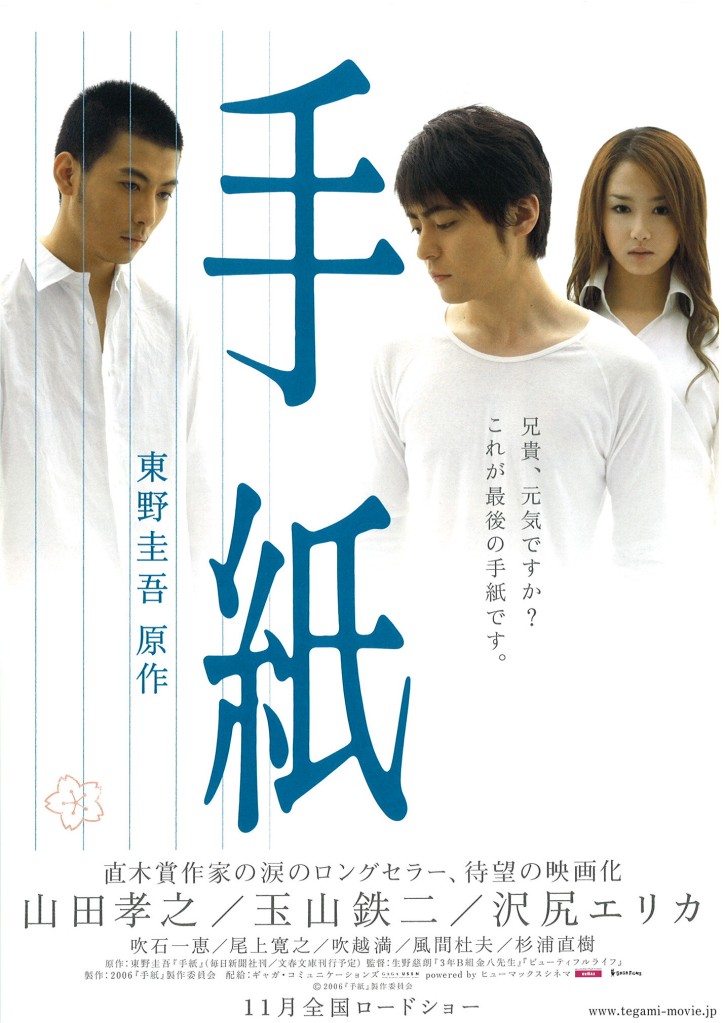 When it comes to cinematic adaptations of popular novelists, Keigo Higashino seems to have received more attention than most. Perhaps this is because he works in so many different genres from detective fiction (including his all powerful Galileo franchise) to family melodrama but it has to be said that his work manages to home in on the kind of films which have the potential to become a box office smash. The Letter (手紙, Tegami) finds him in the familiar territory of sentimental drama as its put upon protagonist battles unfairness and discrimination based on a set of rigid social codes.
 Kihachi Okamoto might be most often remembered for his samurai pictures including the landmark Sword of Doom but he had a long and extremely varied career which saw him tackle just about every conceivable genre and each from his own characteristically off-centre vantage point. The Elegant Life of Mr. Everyman (江分利満氏の優雅な生活, Eburi Man-shi no Yugana Seikatsu) sees him step into the world of the salaryman comedy as his hapless office worker reaches a dull middle age filled with drinking and regret imbued with good humour.
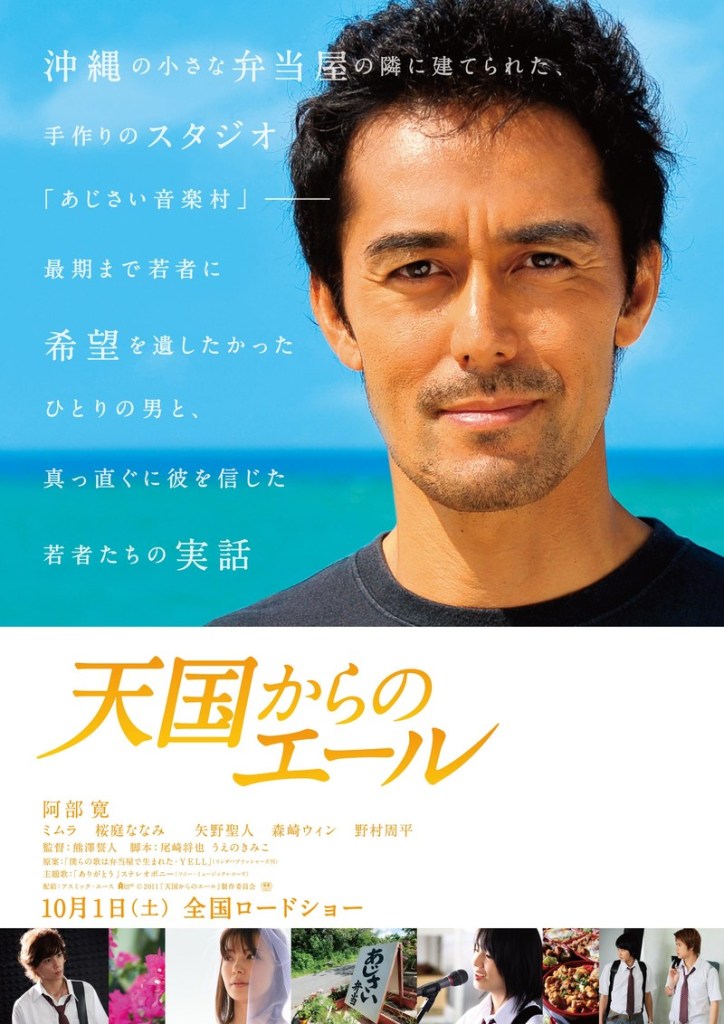 Okinawa might be a popular tourist destination but behind the beachside bars and fun loving nightlife there’s a thriving community of local people making their everyday lives here. Just like everywhere else, life can be tough when you’re young and the town’s teenagers lament that there’s just not much for them to do. A small group of high schoolers have formed a rock band but they’re quickly kicked out of their practice spot at school after a series of noise complaints from neighbours.
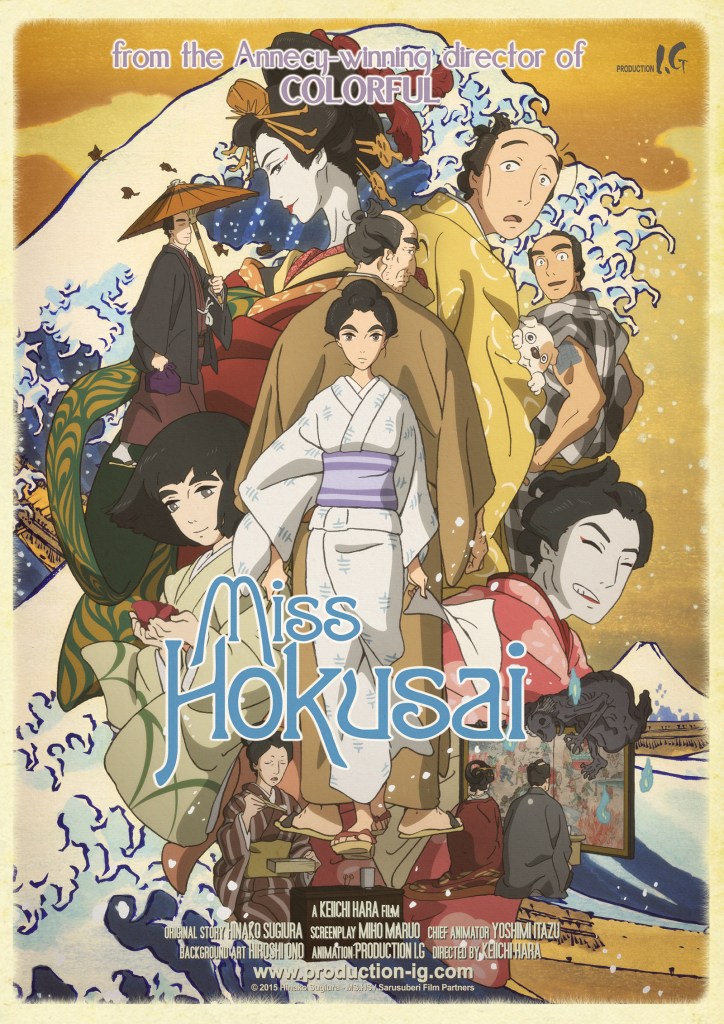 When it comes to the great Japanese artworks that everybody knows, the figure of Hokusai looms large. From the ubiquitous The Great Wave off Kanagawa to the infamous Dream of the Fisherman’s Wife, the work of Hokusai has come to represent the art of Edo woodblocks almost single handedly in the popular imagination yet there has long been scholarly debate about the true artist behind some of the pieces which are attributed to his name. Hokusai had a daughter – uniquely gifted, perhaps even surpassing the skills of her father, O-Ei was a talented artist in her own right as well as her father’s assistant and caregiver in his old age.
 A Japanese tragedy, or the tragedy of Japan? In Kinoshita’s mind, there was no greater tragedy than the war itself though perhaps what came after was little better. Made only eight years after Japan’s defeat, Keisuke Kinoshita’s 1953 film A Japanese Tragedy (日本の悲劇, Nihon no Higeki) is the story of a woman who sacrificed everything it was possible to sacrifice to keep her children safe, well fed and to invest some kind of hope in a better future for them. However, when you’ve had to go to such lengths to merely to stay alive, you may find that afterwards there’s only shame and recrimination from those who ought to be most grateful.
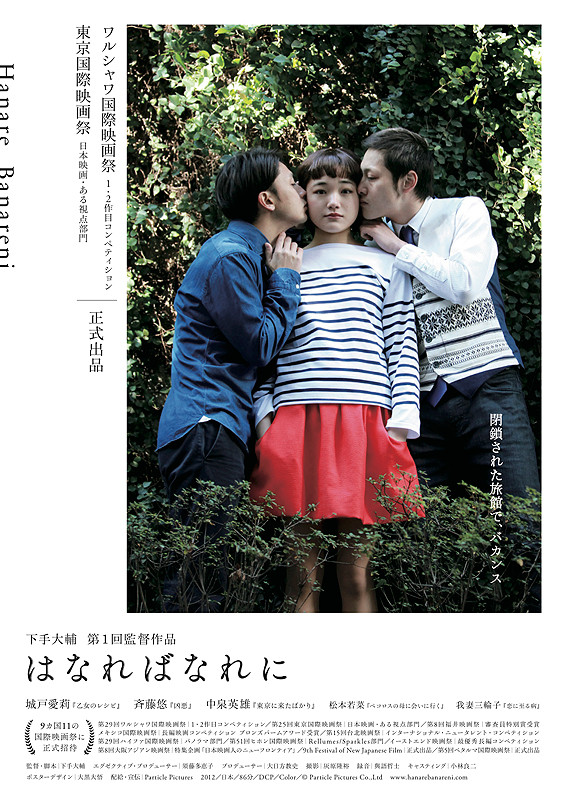 All these years later, it’s easy to forget just how revolutionary the wheezy, breezy youthfulness of the French New Wave was. Kuro proves that there’s life in this whimsical, summer seaside feeling yet as three misfits find themselves holing up at a disused small hotel to think about what they’ve done until they learn to grow up a little.
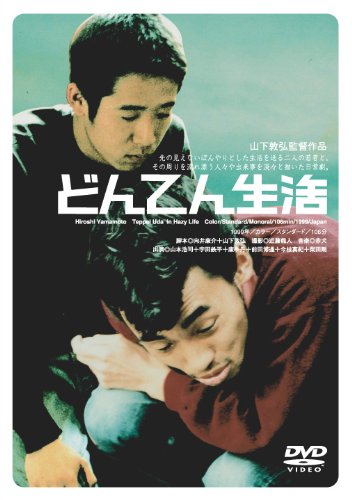 Starting as he meant to go on, Nobuhiro Yamashita’s debut feature film is the story of two slackers, each aimlessly drifting through life without a sense of purpose or trajectory in sight. His humour here is even drier than in his later films and though the tone is predominantly sardonic, one can’t help feeling a little sorry for his hapless, lonely “heroes” trapped in their vacuous, empty lives.
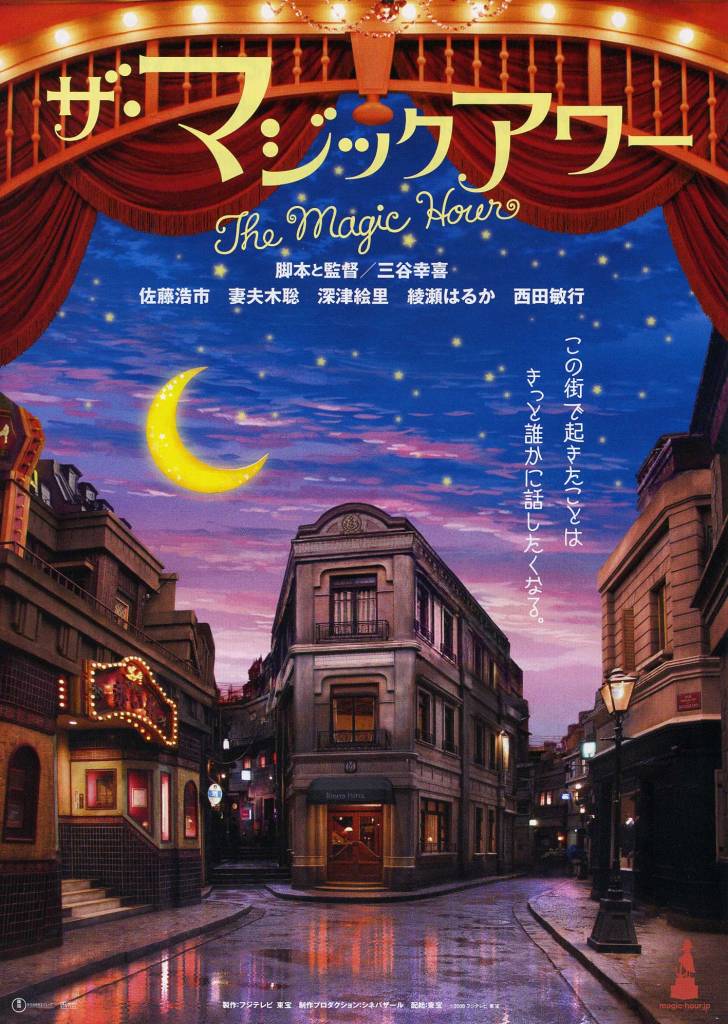 If there’s one thing you can say about the work of Japan’s great comedy master Koki Mitani, it’s that he knows his cinema. Nowhere is the abundant love of classic cinema tropes more apparent than in 2008’s The Magic Hour (ザ・マジックアワー) which takes the form of an absurdist meta comedy mixing everything from American ‘20s gangster flicks to film noir and screwball comedy to create the ultimate homage to the golden age of the silver screen.
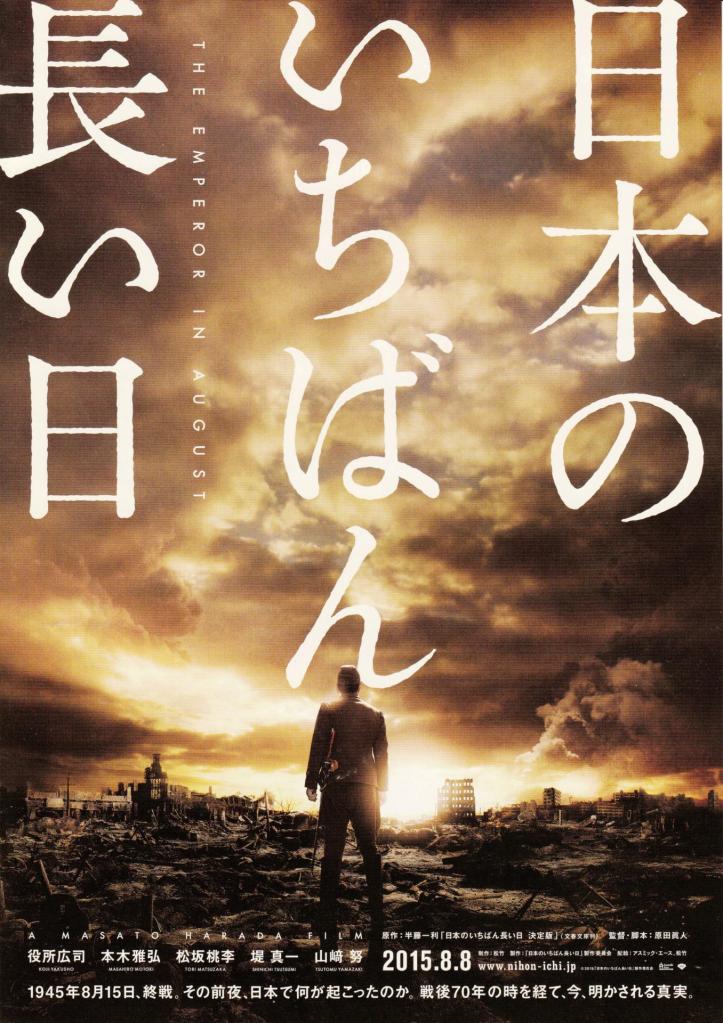 How exactly do you lose a war? It’s not as if you can simply telephone your opponents and say “so sorry, I’m a little busy today so perhaps we could agree not to kill each other for bit? Talk later, tata.” The Emperor in August examines the last few days in the summer of 1945 as Japan attempts to convince itself to end the conflict. Previously recounted by Kihachi Okamoto in 1967 under the title Japan’s Longest Day, The Emperor in August (日本のいちばん長い日, Nihon no Ichiban Nagai Hi) proves that stately events are not always as gracefully carried off as they may appear on the surface.
