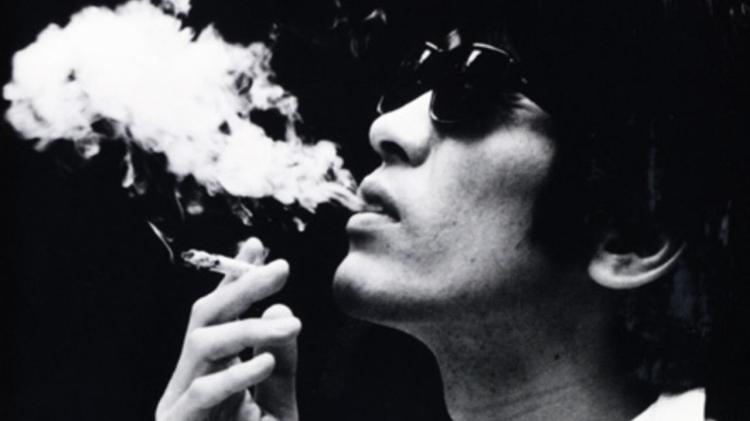
 When you learn someone has died, suddenly everything they have ever done becomes tragic. No matter how old they were, this fact remains. Ryuji is a film which is always going to be overshadowed by the fact that its leading actor and screenwriter sadly passed away at the extremely young age of 33 from a terminal illness only days after the film’s release. Well, in actuality, the film was only “released” in a very limited sense, perhaps no one really had the heart to go on with it. However, it left its mark on all who saw it and eventually became a cult hit and influential classic on VHS. On paper, its tale is conventional – an existential yakuza drama about a man torn between conflicting desires and his own nature but on film, it’s something else.
In fact, the film takes its time about setting its scene as Ryuji goes about his regular yakuza business of beatings and whoring but eventually things come to a crisis as he becomes a father and winds up in prison. His dutiful wife pulls some strings to get him out. However, when released, she explains that she only got the money from her father for a divorce as he wasn’t going to bail out a yakuza. After kicking up a fuss (literally) Ryuji realises his wife is just too good for a yakuza’s moll, so he sends her and their daughter back to his father-in-law. The fact is, Ryuji misses them. He’s tired. Of the life, of the violence, of the threat. He’s ready to try something more ordinary if it means he can go back to his wife and his child. Living honestly is hard too, though. Physically exhausting, and much less financially comfortable. Things are going well, for a time, before a familiar face from the past appears and the ghost of the old Ryuji begins to rise up again.
In many ways, Ryuji is caught in a confused cycle of frustration. He’s a violent man, a yakuza, but one who’s becoming bored with the constant threat and violence inherent in his world. He misses his wife and daughter but he doesn’t know of a path that leads back to them. Eventually he starts walking, unsure of where he’s headed and once he’s home he feels at peace, at last. However, such peace is not meant to last, the past will not let you rest. Old friends turn up one after the other, your decision to help them or not will carry more weight than you first realise. After these cracks appear, the old Ryuji, filled with rage and violence, bubbles to the surface. In the end, you can’t evade your nature, you’re either one thing or something else and however much you long to be the other thing, it can’t be done.
Shoji Kaneko was a talented stage actor who was looking for a cinematic epitaph. He wrote the script, played the leading role and brought the production together. He temporarily joined a real gang to learn just what it’s like to be a yakuza and brought some of his existential despair to his on screen persona. Ryuji is a hard man and a bruiser yet often tender with his wife and cute little girl (played by Kaneko’s real life daughter in another moment of filmic symmetry). He has to decide which side of himself is the one he values most and the film’s final scene is one of the most heartbreakingly moving in all of cinema. The sound disappears entirely, sentiment is conveyed by look alone and a man makes an irrevocable decision that is instantly understood even the absence of words.
If it be not now, yet it will come – the readiness is all. There is actually very little death in Ryuji considering it’s a yakuza picture (if an unconventional one) but the spectre of endings is hovering all around. Knowing what it’s impossible not to know, it’s hard not to read that ever present threat of eclipse into every scene. Ryuji’s decision is a permanent one, taken once it defines everything. Kaneko was also a father with a young daughter facing the end of his life, also weak but tender. Graceful yet robust, Ryuji’s story is one of a man who couldn’t reconcile the two sides of himself into something whole and so sacrificed the things he wanted most. Beautifully made and perfectly realised, Ryuji is a film that should have been more widely appreciated and now, perhaps, will finally be accorded the respect it deserves.
 Nobuhiro Yamashita has made something of a career out of championing the underdog and La La La at Rock Bottom (味園ユニバース, Misono Universe) provides yet another foray into the lives of the disposed and degraded. With a lighter touch than some of his previous work, the once again musically inflected film is another testament to the power of redemption and that you can still turn your life around if you only have the courage to take the chance.
 Actress of the moment Sakura Ando steps into the ring, literally, for this tale of plucky underdog beating the odds in unexpected ways. It would be wrong to call 100 Yen Love (百円の恋, Hyaku Yen no Koi) a “boxing movie”, it’s more than half way through the film before the protagonist decides to embark on the surprising career herself and though there are the training sequences and match based set pieces they aren’t the focus of the film. Rather, the plucky underdog comes to the fore as we watch the virtual hikkikomori slacker Ichiko eventually become a force to be reckoned with both in the ring and out.
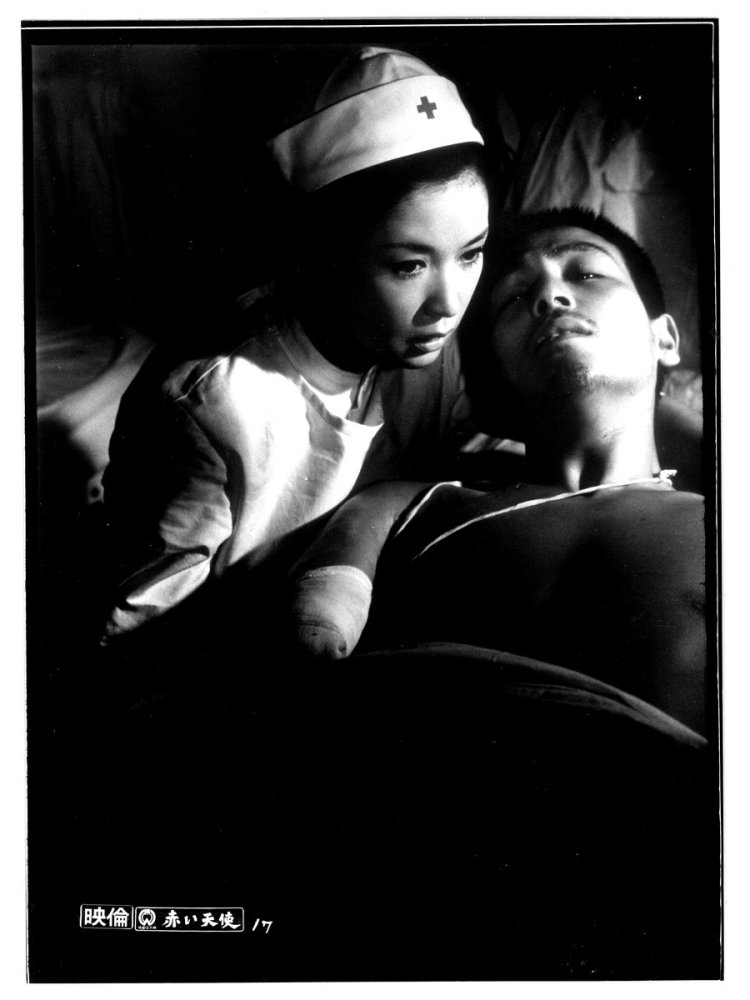 Red Angel (赤い天使, Akai Tenshi) sees Masumura returning directly to the theme of the war, and particularly to the early days of the Manchurian campaign. Himself a war veteran (though of a slightly later period), Masumura knew first hand the sheer horror of warfare and with this particular film wanted to convey not just the mangled bodies, blood and destruction that warfare brings about but the secondary effects it has on the psyche of all those connected with it.
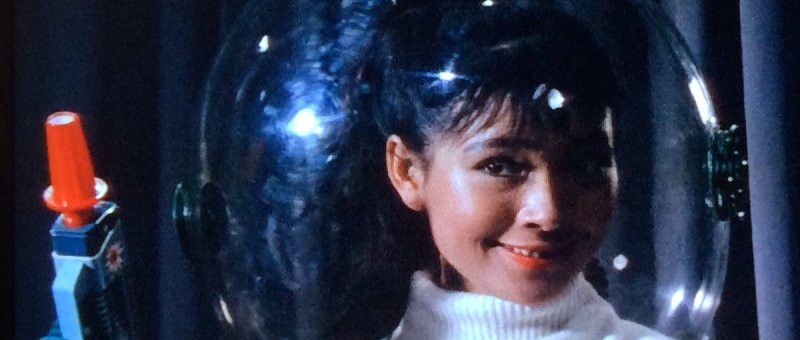
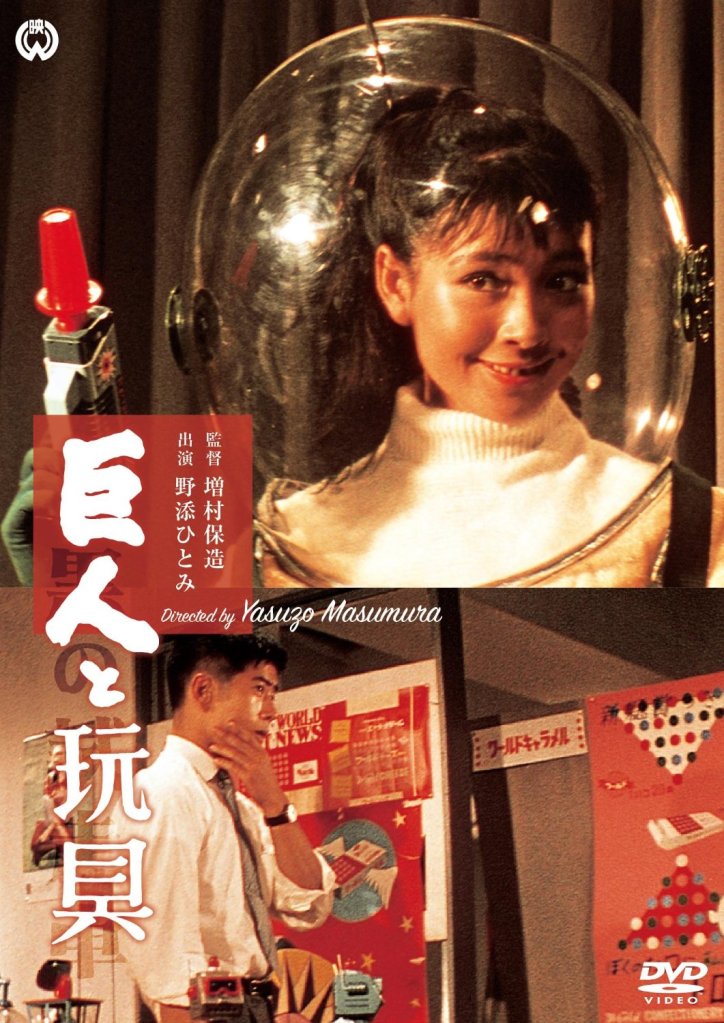
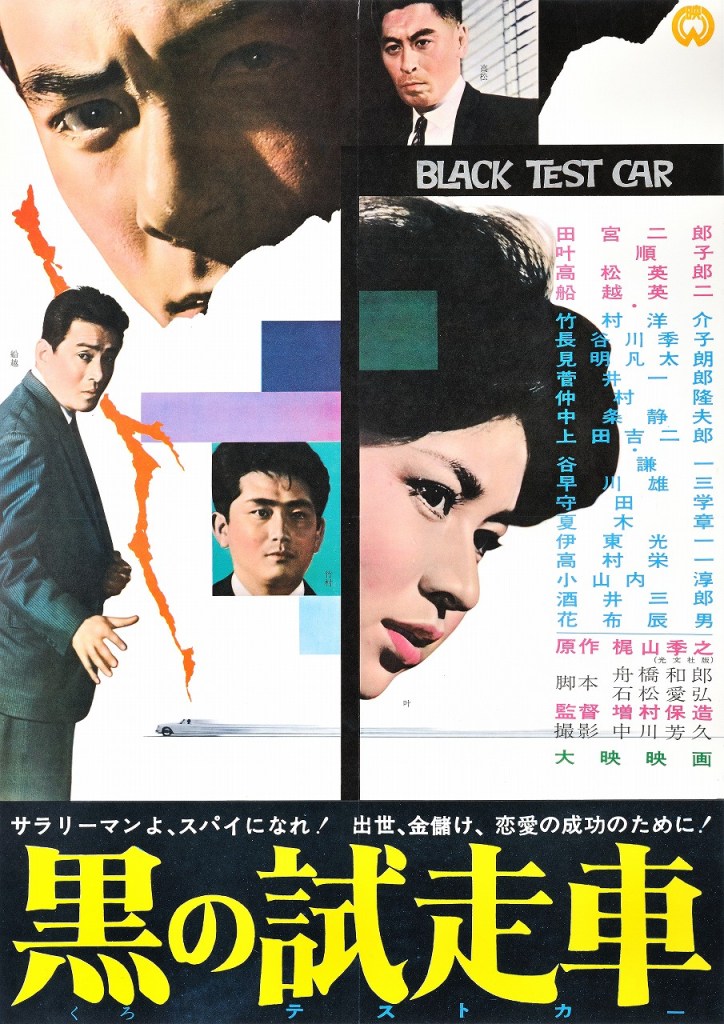 The automobile business is a high stakes game. Do you want to play faster, shinier and sleeker, or safer, family friendly and reliable? Family cars are the best sellers – everyone one wants something that’s reliable for getting to work every morning, getting the grocery shopping done and that you won’t worry about taking your kids to the park in. However, it’s the 1960s and lifestyles are shifting, men (in particular) are marrying later and they want to have fun before they do – hence having quite a lot of disposable income they can blow on a flashy two-seater sports car with no wife to complain about it. Tiger have just finished a new prototype called the Pioneer they plan to launch as a revolution in commercial sports cars which is super speedy but with the convenience of an everyday sedan. However, the Yamato company are also set to launch a new car and it keeps looking suspiciously like the Pioneer – does Tiger have a mole?
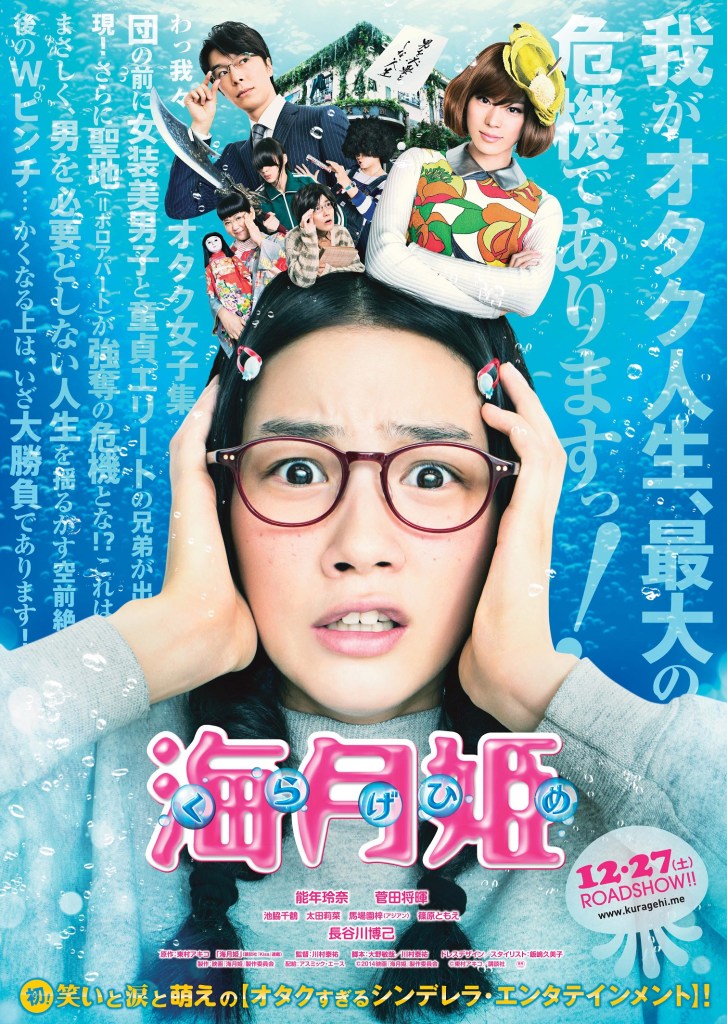 Originating as an ongoing manga series by Akiko Higashimura which was also later adapted into a popular TV anime, Princess Jellyfish adopts a slightly unusual focus as it homes in on the sometimes underrepresented female otaku.
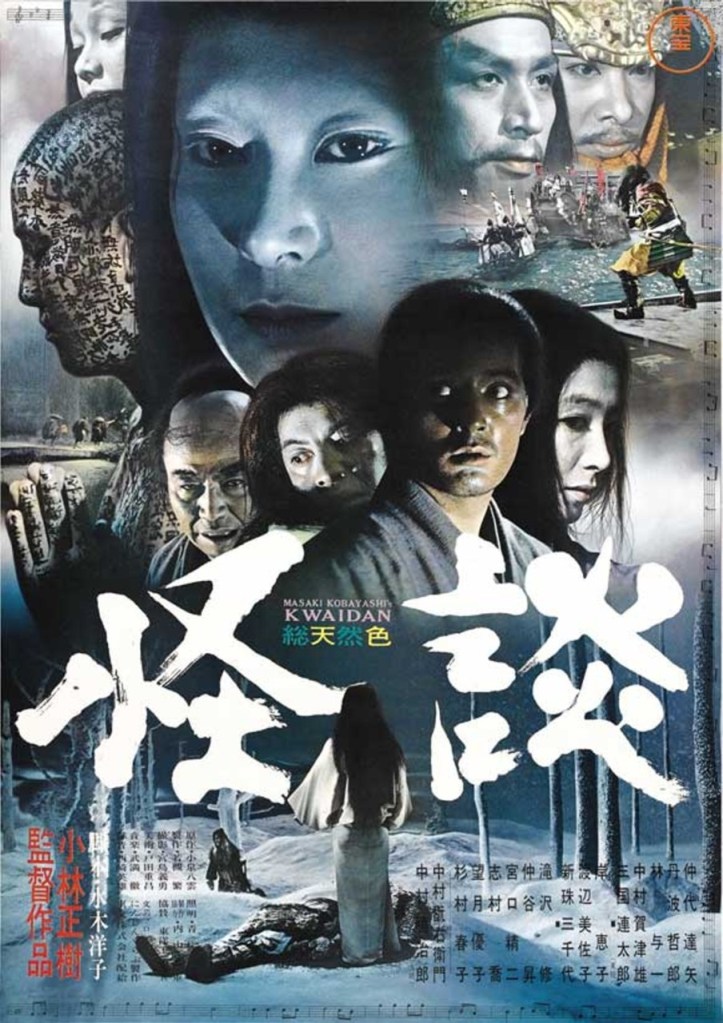 Kwaidan (怪談) is something of an anomaly in the career of the humanist director Masaki Kobayashi, best known for his wartime trilogy The Human Condition. Moving away from the naturalistic concerns that had formed the basis of his earlier career, Kwaidan takes a series of ghost stories collected by the foreigner Lafcadio Hearn and gives them a surreal, painterly approach that’s somewhere between theatre and folktale.
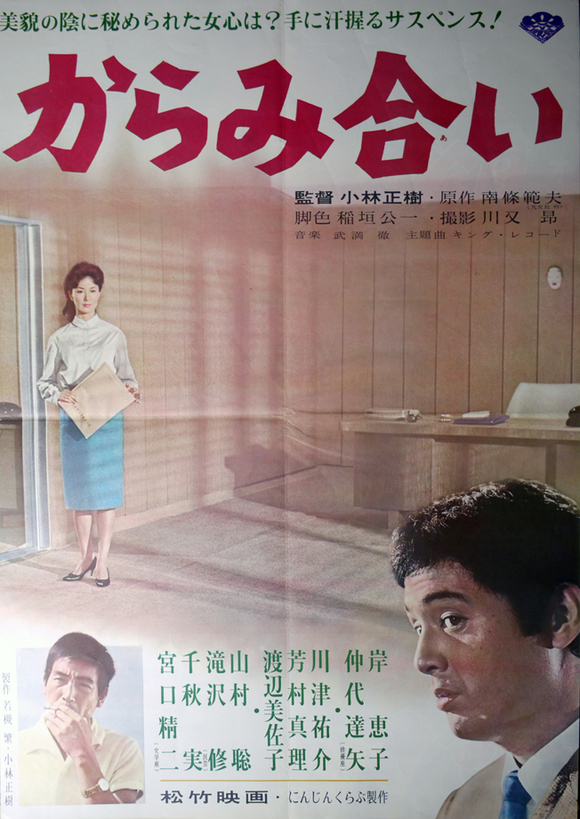 Kobayashi’s first film after completing his magnum opus, The Human Condition trilogy, The Inheritance (からみ合い, Karami-ai) returns him to contemporary Japan where, once again, he finds only greed and betrayal. With all the trappings of a noir thriller mixed with a middle class melodrama of unhappy marriages and wasted lives, The Inheritance is yet another exposé of the futility of lusting after material wealth.
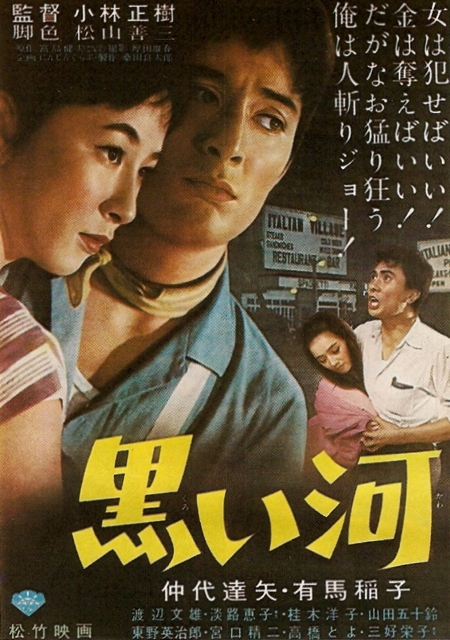 Masaki Kobayashi is still not enamoured with the new Japan by the time he comes to make Black River (黒い河, Kuroi Kawa) in 1957 which proves his most raw and cynical take on contemporary society to date. Set in a small, rundown backwater filled with the desperate and hopeless, Black River is a tale of ruined innocence, opportunistic fury and a nation losing its way.

