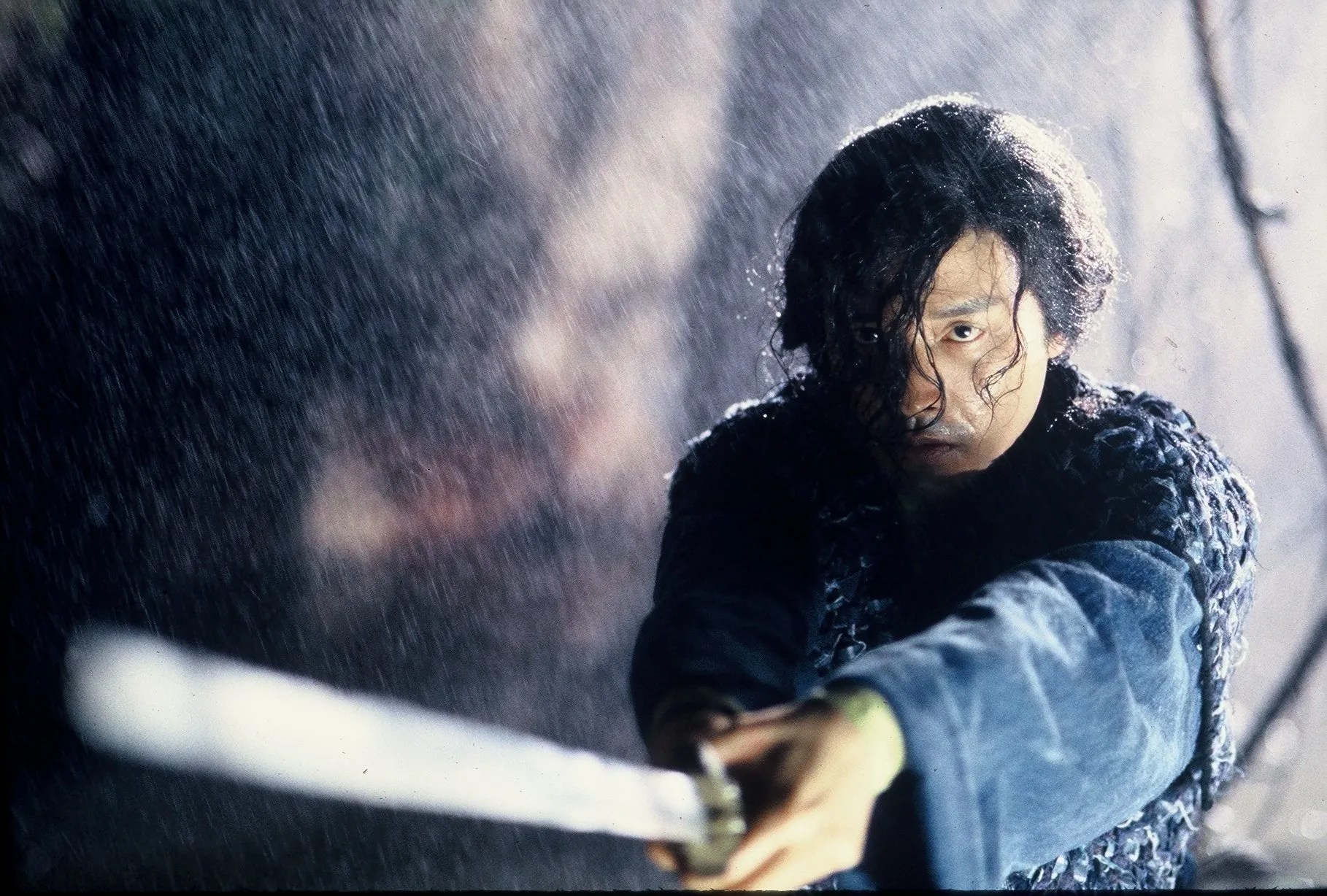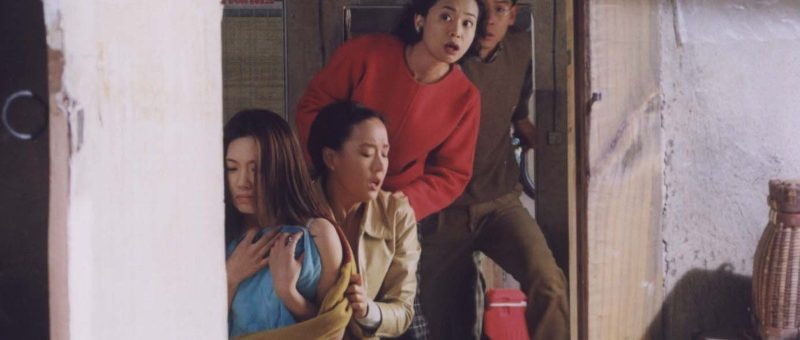
The Guard From Underground (地獄の警備員, Kiyoshi Kurosawa, 1992)

Ever feel like your job is trying to kill you? Released at the tail end of the Bubble era, Kiyoshi Kurosawa’s The Guard from Underground (地獄の警備員, Jigoku no Keibin) positions an office building as an industrial hell complete with a demon living in the basement but grimly suggests it’s just one of many hazards to be aware of for a woman in the corporate environment. Then again, the hellish guard himself has a sorrowful look in his eyes that speaks of true loneliness and might evoke pity if only in the fatalistic inevitability of his office-bound killing spree. 

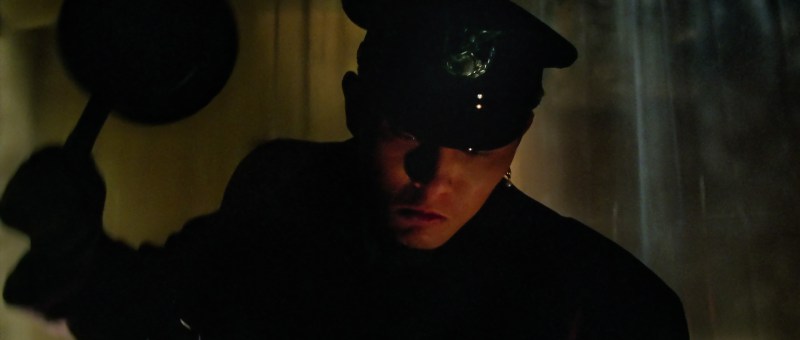
It has to be said, Akebono Trading should have another look at its hiring procedures through in any case there’s something odd about this building which feels more like an abandoned hospital than a place of business while we might also wonder why we’re seeing signs for cargo depots and engine rooms and staff getting locked in the filing room is apparently not an uncommon occurrence. The new security guard has the same name as a former sumo wrester acquitted of the murders of his stablemate and lover on the grounds of temporary insanity, Fujimaru (Yutaka Matsushige), and is himself a hulking presence, tall but of medium build so who knows if it’s really the same guy or just the office rumour mill going into overdrive.  

Meanwhile, the other new recruit is a refined young woman, Akiko (Makiko Kuno), who’s been brought on as an art expert to help a new division recently diverted into prospecting with art sales to assess what is and isn’t a fair market price for a priceless piece of art. As Akiko admits, she’s not well placed to give that information because her background is in curation so she’s not particularly well versed in the collector market but presumably the job pays a bit better than the museums sector so she’s trying to do her best. Her new boss, Kurume (Ren Osugi), is a bit of a weirdo (like all the other men in the building) and crassly remarks that paintings like women have no value if there’s no buyer while she struggles to understand what the point of her job is. Meanwhile we’re left to wonder if Section 12 is actually a real department at all or a shady enterprise set up to help the enigmatic boss, Hyodo (Hatsunori Hasegawa), improve his investment portfolio which will probably serve him well when the bubble finally bursts. 

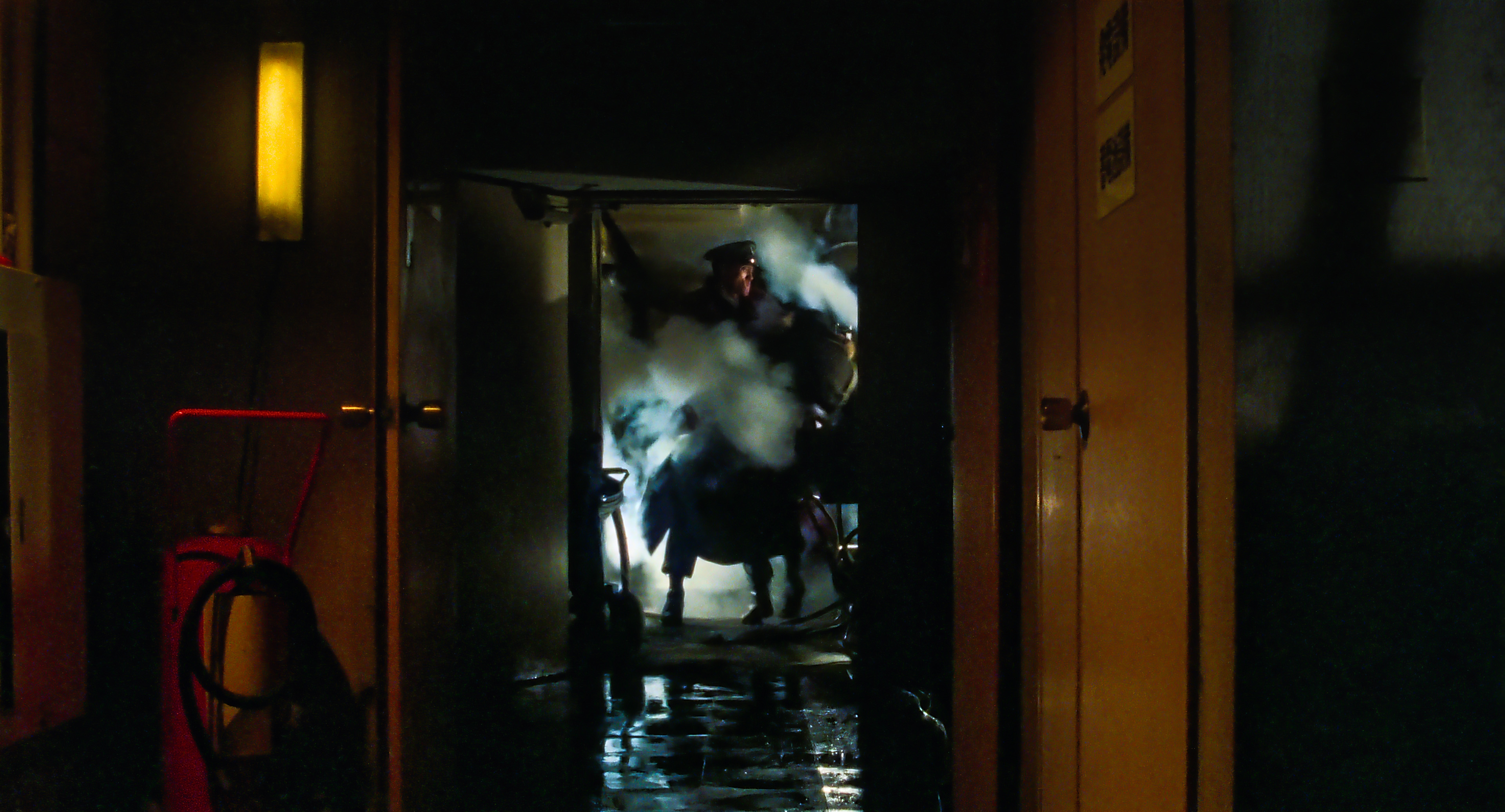
It’s tempting to read Fujimaru as a personification of corporate culture slowly picking off the employees and largely doing so by means of the building itself, electrocuting them by forcing their hand on the circuit breaker, bashing one inside a locker, or otherwise using his security guard’s truncheon to bludgeon them to death. To begin with, it seems as if he’s developed a fondness for Akiko and while that may be true in the same way King Kong develops a fondness for Fay Wray, it soon becomes clear that he isn’t in fact trying to protect her by taking out all the skeevy guys but seemingly killing for no reason. He looks a painting of Goya’s Saturn Devouring His Son with fascination, again hinting at his nature as the personification of capitalistic corporatism devouring the employees who might one day overthrow him, yet also lends the guard an eerie, mystical quality suggesting he merely enjoys the act of carnage though he does not actually eat anyone (that we see). More than that he seems almost like Frankenstein’s Monster, somehow lonely in identifying his otherness as he eventually confesses to Akiko remarking that “desolate time” flows through him unlike her “kind”. As he leaves, he pleads not to be forgotten. 

Akiko defeats him by refusing to believe his story and declaring herself disinterested in his truth possibly stood in good stead by the constant necessity of evading the attentions of the men around her such as those of Kurume who starts off giving paternalistic advice about looking after her parents and the preferential savings rates on post office accounts before randomly taking off his trousers. Anticipating his later career, Kurosawa makes the office a place of lurking dread and anxious eeriness only deepened by its industrial aesthetics along with the tiny windows leaking apocalyptic lighting from the oblivious outside world now cut off except for the new/old teletype text and ironic benefits of international time zones. “Traffic’s hell this time of day” a taxi driver chirpily advises, ironically delivering his passenger straight into its fiery depths. 


The Guard From Underground is released in the UK on blu-ray on 25th September courtesy of Third Window Films.

Trailer (English subtitles)

The Cold-Blooded Trap (冷血の罠, Takahisa Zeze, 1998)

“This place is full of people like me” a violent criminal jeers, admitting that he’s killed “plenty” of women but not necessarily the one he’s being questioned about. There is indeed something eerie that seems to have taken over this small corner of Shibuya in Takahisa Zeze’s dark millennial thriller The Cold-Blooded Trap (冷血の罠, Reiketsu no Wana). “Strange things are happening here” another investigator notes, “someone’s malice has infected this whole place.” Yet the sense of haunting may be closer to home than it first seems as two men attempt to come to terms with a traumatic past by solving present mystery. 

Even the police seem to concede that the strange goings on are a “continuation” of something else. As we first meet him private detective Fujiwara (Sho Aikawa) appears to be following a young woman home from the station only as we later discover she hired him herself to watch over her because she had the feeling she was being watched. Fujiwara watches her enter her apartment building and then calls her to say everything looks clear on the ground, but a short time later a body wrapped in sheets is dropped from the roof onto the street below. The weird thing is that it’s the same building Fujiwara’s sister Noriko used to live in, only she took her own life and that of her child by jumping off the roof five years previously. 

Not only does Fujiwara feel as if he failed in his duty to protect his client, but he’s forced into a similar contemplation in his latent guilt surrounding his sister’s death. The most obvious reason for Noriko to have considered suicide was that her salaryman husband Hanazono (Hidetoshi Nishijima) had been having an affair with a work colleague, Yoko (Asuka Kurosawa), yet Hanazono refuses to accept responsibility and is convinced that Noriko was murdered by a mysterious serial killer stalking the streets of Shibuya. 

The irony is that we first think Hanazono is the faceless killer after watching him enter the woman’s apartment building, only to learn that he may have been investigating Noriko’s death. Later these assumptions are overturned again, but even he concedes that he seems suspicious. Wandering around the city at night, he runs into women alone who immediately see him as a threat and assume he may be a dangerous criminal who means them harm. The realisation first shocks him, but then gives way to a physical high in the adrenaline rush of fleeing the scene. He comes to the conclusion that he must get into the killer’s mindset in order to catch him and begins actively stalking people around the city, following them home and checking mailboxes to find out names. 

Fujiwara doesn’t trust Hanazono for obvious and understandable reasons, but even so he begins following him as Hanazono continues to follow the killer. Zeze opens the film with fuzzy 90s camcorder footage trained on the forecourt of a station from a balcony opposite. The camera follows a woman as she leaves, and Fujiwara behind her with eerie intent evoking the mild paranoia of millennial surveillance. Later Hanazono films his own POV walking through the midnight city, once again lending the streets a sense of lurking malevolence and dread-fuelled fatalism even before he arrives at his shocking destination. 

Yet we wonder if Hanazono is just a paranoid obsessive with his giant map of crime insisting that seemingly isolated incidents of violence are somehow linked. Before Fujiwara hears about the woman’s death on the news they were reporting on insolvent banks hinting at a financial anxiety in the contemporary society, and as the suspect Fujiwara later tracks down suggests there are lot of distressed or perhaps disturbed people around. The crimes may really be random, but they are also connected by virtue of being provoked by an anxious society even if as Hanazono admits there are several criminals behind them. Whether or not he gets the answer he seeks, Fujiwara will have to accept that he too bears some responsibility as Hanazono has perhaps already done even if desperate to deny it. “I’ve always been responsible” he admits while taking control over his life, only the elliptical structure of the film may imply otherwise. Dark and eerie, Zeze captures a sense of millennial dread in the streets of the capital filled as they are with “random” crimes and lurking killers in the haunting anxiety of constant threat.


Clip (English subtitles)

Memento Mori (여고괴담 두번째 이야기, Kim Tae-yong & Min Kyu-dong, 1999)

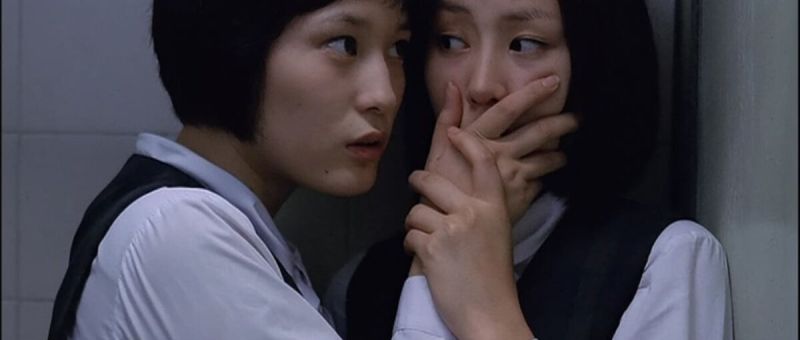
Internalised shame leads to tragic, unforeseen consequences in landmark South Korean horror Memento Mori (여고괴담 두번째 이야기, Yeogogoedam Dubeonchae Iyagi). The second in a thematic series of high school ghost stories, the film was radical for its time in its presentation of same sex romance in demonising not the love but the world that would not accept it while otherwise painting a fairly bleak picture of the educational landscape in which teachers are only ever symbols of a corrupt authority intent on enforcing oppressive patriarchal social codes.

The film’s heroine is in many ways an audience member, or at least a fairly passive observer of the ongoing drama who only later inserts herself into the narrative. Min-ah (Kim Min-sun) discovers a mysterious “diary” near the sports ground and is quickly hooked on its cryptic contents even before realising that it details a lesbian relationship between two of her classmates who were at one point “close” but have since “drifted apart”. The author, Hyo-shin (Park Ye-jin), is already considered “weird” by her classmates and does seem to have an otherworldly quality, most particularly in her tendency to speak in an uncanny manner. She is also accused of being a “lesbian” by an obnoxious fellow student laying bare the way these teens already enforce a social prejudice which oppresses them all. 

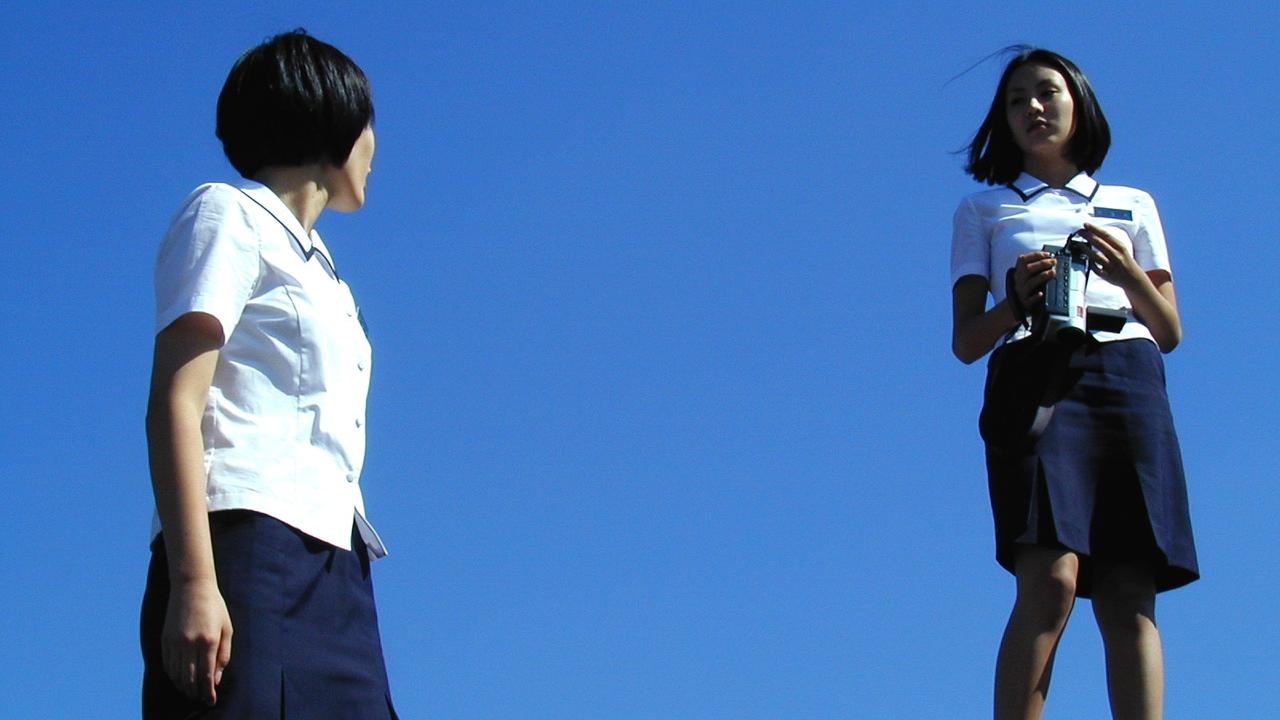
Min-ah’s friend Yeon-an (Kim Jae-in) has been fasting for the last few weeks to try and get her weight down before the school’s physical health check up, while Ji-won (Gong Hyo-jin) is similarly concerned with her chest measurement. This is an all girls school, and there is a clear preoccupation with the ability to conform to notions of conventional femininity while all of the teachers that we see aside from the school nurse are male and enforce discipline with quite shocking levels of violence. Yeon-an and Ji-won land up in trouble for playing around with a video camera they’d brought in to record choir practice when it’s discovered by a teacher who reacts as if he thinks the girls are on some kind of whistleblowing mission. He clearly feels that his authority has been questioned, which also implies that he knows his behaviour is “wrong”, and punishes the girls for their “rebellion” against him. 

After Hyo-shin dies in an apparent suicide, it is rumoured that she may have been pregnant which would certainly explain her desire to get out of the health check. In a flashback, she suggests that she may have drifted into an inappropriate sexual relationship with a dejected teacher, Mr. Goh (Baek Jong-hak), who claims that he doesn’t get on with his “materialistic” colleagues while fed up with the vacuous teenage girls he’s supposed to be teaching. Yet Mr. Goh appears to have suffered little after Hyo-shin’s death despite being the apparent father of her unborn child, leaving only Hyo-shin’s vengeful spirit to enact some kind of justice. 

It’s Mr. Goh who did in some way disrupt the relationship between Hyo-shin and Shi-eun (Lee Young-jin) who seems to feel on some level betrayed while deepening her inner conflict as regards her sexuality. Unlike the other girls, Shi-eun presents in a slightly more masculine fashion, not least because of her athleticism, and is filled with an internalised shame about her relationship with Hyo-shin which she otherwise does not share. In the dreamlike scene which opens the film, Hyo-shin and Shi-eun are plunged into water tied at the ankle by the red string of fate which in popular mythology signifies a true romantic connection. But as they fall together, Shi-eun begins to panic and unties herself. She violently pushes Hyo-shin away who then continues to sink into the murky depths below. This act of physical rejection is repeated several times, most notably when Hyo-shin kisses Shi-eun in front of their classmates shortly after she has been struck in the face by their teacher. Shi-eun pushes her away, and thereafter ignores her before directly stating that she is “ashamed” and does not care what Hyo-shin decides to do with her life. 

It’s this rejection that the film posits as the cause of Hyo-shin’s suicide, though the romance itself is constantly overshadowed by death. Obsessed with the diary, Min-ah eats a “magic” sweet stuck inside which is described as some kind of love poison for which Hyo-shin has an antidote, only in the climax of the film it seems to be the reverse and a kind of prelude to a double suicide. In the dreamworld created by Hyo-shin’s spirit, the schoolgirls assemble for something that looks a lot like a wedding though ostensibly a birthday party in which the couple is accepted by the world around them only in reality it can never happen in part because Shi-eun herself does not permit it to. 

Directors Kim and Min hint at the feverish atmosphere with blown out whites and strange angles even before entering the menacing dreamscape of Hyo-shin’s revenge, lending a note of unsteadiness to Min-ah’s obsessive investigation of the diary that perhaps reveals something of herself even as it draws her towards a dark spiritual destiny. In any case, what it leaves behind is a deep sense of melancholy for the tragedy of the teenage lovers who in the end maybe the ones haunted by the world around them.


Memento Mori screened as part of this year’s Queer East .

Trailer (English subtitles)
Rebels of the Neon God (青少年哪吒, Tsai Ming-Liang, 1992)

Towards the end of Tsai Ming-liangs’s Rebels of the Neon God (青少年哪吒, Qīngshàonián Nézhā), a young man exasperatingly stuffs a series of rags into the busted drain in his kitchen which has been relentlessly leaking water all over the apartment. In many ways it’s a kind of metaphor for his life as he attempts to staunch the flow of “bad luck” he’s been experiencing over the last few days, but like so many things for him it does not quite go to plan. 

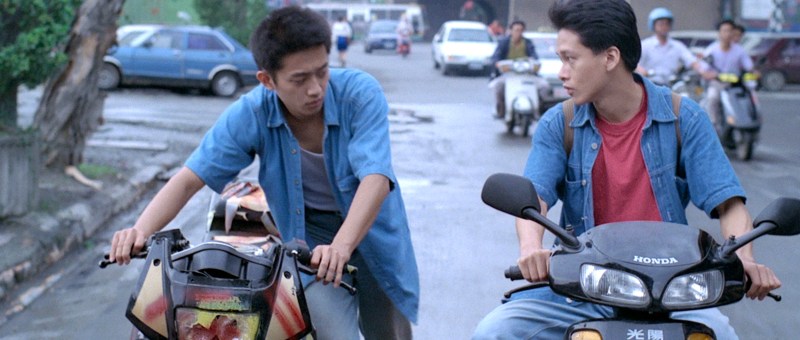
As to why, it’s not exactly clear except that A-tze (Chen Chao-jung) is a kind of outcast beneath the neon skies of a changing Taipei. He and his friend A-ping (Jen Chang-bin) earn their money breaking into telephone boxes and vending machines for loose change before at one point stealing the motherboards from arcade consoles and unsuccessfully trying to sell them back to the person they stole them from. All they get for their pain is a literal battering while A-tze’s frustrated romance with sometime girlfriend Mei-kuei (Wang Yu-wen) similarly flounders in the wake of his ennui. 

The karmic debt he bears is however mainly down to a random act of pointless violence in knocking the wing mirror off a taxi driver’s car for no real reason save momentary impulse. Even so, the taxi driver’s son Xiao-Kang (Lee Kang-sheng) had already been watching him and soon discovers a fascination with the rebellious young man that is ambiguous in quality. What becomes obvious is that Hsiao-kang is at odds with the world in which he lives. His mother (Lu Yi-ching) reveals that a fortune teller told her he is the reincarnation of “Neon God” Nezha, a chaotic child who later killed the authoritarian father with whom he could not get along. Hsiao-kang’s mother tells this to her husband (Miao Tien) as a kind of warning, advising that his authoritarian parenting style is doing his son no good, but Mr. Lee isn’t minded to listen. Finding out that Hsiao-kang has dropped out of cram school and kept the refunded tuition money for himself, Mr. Lee throws him out which of course leaves him free to follow A-tze all around Taipei day and night before childishly damaging his motorcycle. 

In disabling the bike, Hsiao-kang perhaps hoped to ruin A-tze’s freedom, symbolically taking from him independence and a sense of possibility. Then again, perhaps in another way he hoped to engineer a friendship. Riding around on his own scooter, he draws up behind A-tze pushing his to a garage and offers help but A-tze tells him to buzz off. In fact, A-tze never acknowledges Hsiao-kang. He never recognises him or realises that he’s being followed though he does later remember Mr. Lee and is struck by guilty futility not really knowing why he decided to arbitrarily ruin someone’s day while reflecting that all his days are ruined. The water in his apartment continues to rise all around him as if emphasising his mounting sense of despair. Mei-kuei tries to break up with A-tze before asking him to go away with her. They ask each other where they would go, but neither has any answer. 

A remorseful Mr. Lee later comes home and makes the point of leaving the front door ajar, symbolically open to his son’s return while Hsiao-kang remains lost. He visits a telephone dating service having heard Mei-kuei moonlight by answering one while working at the ice rink, but in the end cannot even pick up the phone. Staring at a picture of James Dean, he longs for the sense of rebellion he is drawn to in A-tze but is still the chaotic boy, dancing wildly like a wheelless Nezha and seemingly with no further sense of direction. In the end, it’s the city of Taipei which is the “neon god” of the title, arbitrarily ruling over each of the boy’s lives even as it ironically emerges from the authoritarian past into hypermodern urbanity. Hsiao-kang is little better off than the cockroach he ironically skewers on the point of his compass, and A-tze little than that which circles his overflowing drain carried inexorably on the current on a circular journey towards nowhere in particular. Many of Tsai’s key themes are already here, urban alienation, loneliness, futility, and the crushing sense of emptiness of life in the contemporary era even as he turns his gaze to the overcast skies of a city lit only by despair.


Rebels of the Neon God screened as part of this year’s Queer East .

Trailer (Traditional Chinese / English subtitles)

The Bride with White Hair (白髮魔女傳, Ronny Yu, 1993)

“This is the so-called underworld rule. You have no choice.” the hero of Ronny Yu’s gothic fairytale The Bride White Hair (白髮魔女傳) is told, only to reflect “Yes, I do.” though the world will eventually prove him wrong. Tinged with handover anxiety, the film finds its star-crossed lovers longing to exercise their choice of exile, to be allowed to live quietly outside of the political turbulence that surrounds them. But in the end their love is not strong enough to overcome their difference and doubt becomes the ultimate act of emotional betrayal. 

This is a tale that signals its tragedy from its inception. The Ching emperor is deathly ill and only a flower growing on a distant mountain that blossoms only once every 20 years can save him. “This flower is not for you” the emissaries are told by man who appears to be frozen in more ways than one, relating that he has waited 10 years for a woman who may have forgotten him. As a young man, Yi-hang (Leslie Cheung) was the roguish heir to the Wu Tang clan whose recklessness sometimes caused him to behave in unorthodox ways in the name of justice. The eight clans of Chung Yuan are beset on both sides, caught between the conflict of Ching and Ming while fearful of an “Evil Cult” that otherwise destabilises their icy grip over the local area. 

It’s becoming clear to Yi-hang that he may not be on the right side. The people are oppressed and starving but their attempt to procure a little sustenance for themselves leads to a bloody raid with clan soldiers cutting down peasants until a mysterious woman in white (Brigitte Lin) arrives wielding a whip that can cut people in half. Interrupted by a tragic scene while napping in the forest, Yi-hang is immediately smitten with the female assassin whom he later realises is the same girl he saw as a child who saved him from wolves with the song of her flute. 

The woman is an orphan taken in by the cult and trained up as an assassin. She has only a surname, Lien, and is then symbolically “reborn” when Yi-hang gives her her name, Ni-chang. Having fallen in love, the pair vow to leave the underworld together and live in the pastoral paradise of the watering hole where they first made love. “This underworld doesn’t belong to us, let them fight for it” Yi-hang insists, attempting to exercise his choice to escape a system he sees as corrupt before it strains his integrity but as he’ll discover he’s not as much choice as he thought. 

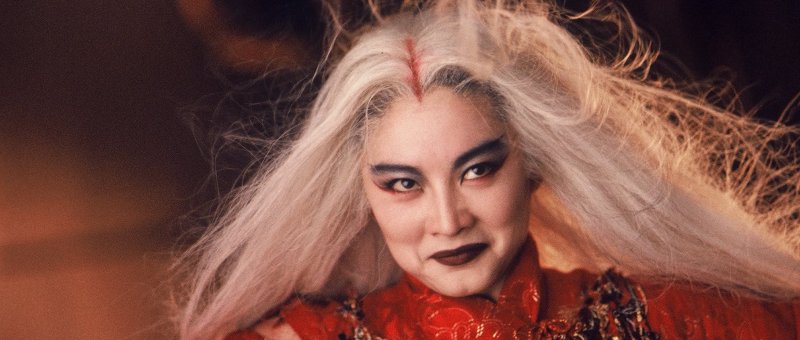
In the shadow of the Handover, it might be tempting to read Lien and Yi-hang as ordinary people who just want to live quietly and resent the intrusion of politics into their lives, though they remain caught between two opposing powers with no neutral space for them to occupy. The same could be said of the cult’s leaders, a pair of crazed conjoined twins, one male one female, who are fused at the back in a potent symbol of duality. The twins were once members of the Wu Tang clan but were betrayed and exiled, driven mad by their banishment. At the film’s conclusion, Yi-hang symbolically frees the twins by splitting them apart but their separation leads only to their deaths. In the end, Yi-hang betrays his love because the underworld does not permit it to exist. He doubts Lien’s word and his rejection of her sparks her metamorphosis into the title’s Bride with White Hair, a vengeful spirit of hurt and rage now condemned to eternal wandering just as Yi-hang is condemned to life a waiting only to watch a flower wither and die knowing that he has damned himself. 

Yu’s world of melancholy romanticism is typical of that of early ‘90s wuxia though carries a touch of the gothic not least in the Bride’s cobweb-like hair which eventually becomes her finest weapon. The pervading sense of longing seems to hint at a future act of imperfect union, tinged with volatile ambivalence but perhaps finally suggesting that this romance is doomed to failure because the corruption of the world into which Yi-hang, the authority, was born is simply too great to be conquered by the innocence of his love. 


The Bride with White Hair screens screens at UltraStar Cinemas Mission Valley April 23 as part of this year’s San Diego Asian Film Festival Spring Showcase.

Trailer (English subtitles)

Rhapsody in August (八月の狂詩曲, Akira Kurosawa, 1991)

“People do forget everything, and quickly too” a teenage girl laments preparing to meet her half-American uncle and feeling a little awkward having been admonished by her parents for inadvertently confronting him with the realities of the wartime past. The middle generation in Kurosawa’s tri-generational tale of the legacy of warfare Rhapsody in August (八月の狂詩曲, Hachigatsu no Rhapsody) have it seems an ambivalent attitude they’re in the process of imparting to their children that views talk of the atomic bomb as almost taboo, tiptoeing around it with their newfound American relatives lest they offend them but mostly out of a desire for economic gain that reflects an early post-war mentality almost entirely alien to their Bubble-era teenage kids.

It’s the children who are keenest to learn about their past, staying with their elderly and seemingly frail grandmother Kane (Sachiko Murase) over the summer while their parents have travelled to Hawaii to investigate after receiving a letter from Kane’s long lost younger brother Suzujiro who emigrated in the 1920s and has since become a wealthy man running a pineapple plantation. The problem is that Kane had a large number of siblings, at least 11, and honestly doesn’t remember one called Suzujiro who did after all leave the country 60 years previously and was never seen again. The children, Tadao (Hisashi Igawa) and Yoshie (Toshie Negishi), think her refusal to visit him in Hawaii is partly down to a lingering resentment for the dropping of the atomic bomb which killed her husband, but as she later tells the grandchildren that was 45 years ago and she no longer has any strong feelings either way about the Americans adding only that it was all the fault of the war.

Nevertheless, it’s clear that Kane lives with a sense of loss and the continuing trauma of witnessing the flash that is expressed by the bald spot on the back of her head. As the grandchildren ask her questions she begins to reflect more on the past, remembering a younger brother, Suzukichi, who witnessed the flash with her and later had some kind of breakdown locking himself away endlessly drawing pictures of eyes that she later explains mimicked that of the flash itself. Kurosawa depicts this memory with surrealist imagery, a red sky splitting open just as Kane described exposing an eye which seemed to stare down at them. Youngest grandson Shinjiro (Mitsunori Isaki) draws such an eye on the blackboard in the study room in his grandmother’s house, an eye which continues to observe the children as they contemplate the recent past as well as an older Japan exemplified by their grandmother’s tales of the water imp living in a nearby pool who might once have saved Suzukichi’s life. 

In some ways, it’s almost as if the middle generation has been passed over. The grandchildren are very close to their grandmother and resentful of their parents, irritated by their constant references to their American relatives’ wealth with Shinjiro directly asking them why they haven’t asked how Kane has been or bothered to say hello to her before showing off photos of the Hawaiin mansion owned by Suzujiro. Kane also sets them right after deciding she’d like to visit after all, explaining that she couldn’t care less or if he’s rich or not she’d just like to see her brother. Her refusal to accept him was perhaps an expression of her own inability to make peace with the past, having literally forgotten only latterly coming to believe that Suzujiro really is her brother and wanting to reintegrate him into her life as an expression of peace between nations. 

Kane had said that Tadao’s conviction that they should avoid mentioning the bomb was illogical and ridiculous, an attitude later borne out by the unexpected arrival of Suzujiro’s half-American son Clark (Richard Gere) who speaks pigeon Japanese and is somewhat mortified by his own ignorance not having realised that his uncle must have died in the atomic bombing of Nagasaki until inadvertently tipped off by eldest grandson Tateo’s (Hidetaka Yoshioka) telegram. Clark bonds with Kane and sadly reflects on his own lack of knowledge after visiting the school where his uncle died and seeing scores of contemporary children flood into the playground where the twisted metal of a melted climbing frame serves as a memorial for the young lives that were lost. The intention is not however to provoke an apology or apportion blame only to mourn the folly of war while trying to put the past aside to ensure it never happens again.

The kids wear jeans and T-shirts with the logos of American universities on, but are determined to fix the out of tune harmonium in their grandmother’s parlour as if literarily setting the past to rights. The song they play sings of a red rose in a field, a rose that Shinjiro later sees near the shrine during the memorial service for the bombing that comes to resemble Kane in the closing frames as she charges through the rain with her blown umbrella while her children and grandchildren chase after her as the ants had trailed the rose. “People will do anything just to win a war,” Kane admonishes her son, “sooner or later it will be the ruin of us all” reminding him that dropping the bomb didn’t stop people killing each other, even 45 years later war continues to ruin people’s lives. Like the rose “blossoming in innocence” she stands for peace and mutual compassion amid an expressionist storm of fear and resentment.


Rhapsody in August screens at the BFI Southbank, London on 19th & 25th February 2023 as part of the Kurosawa season.

Original trailer (no subtitles)

Ramayana: The Legend of Prince Rama (ラーマーヤナ ラーマ王子伝説, Ram Mohan, Yugo Sako, Koichi Sasaki, 1992)

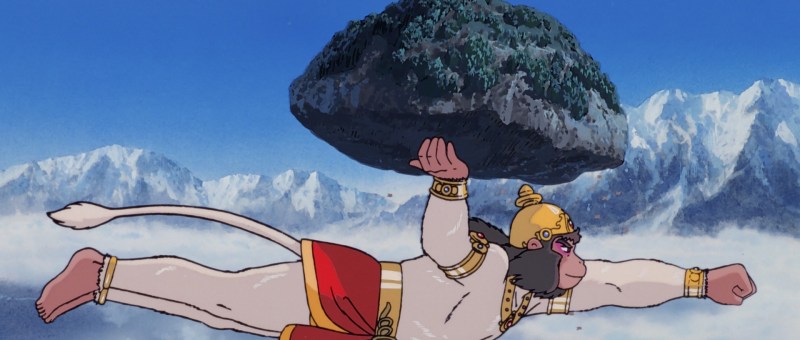
Raised in a Buddhist temple after an early orphanhood, documentary filmmaker Yugo Sako became a great devotee of Indian culture and apparently fell in love with the story of the Ramayana while filming a documentary for NHK, later reading as many as 10 different translations of the classic legend in Japanese. Certain that only animation could do justice to this epic tale of gods and demons, he proposed adapting it in the style of Japanese anime which was then gaining in popularity all over the world. 

It was though a somewhat sensitive topic. Following a minor misunderstanding concerning Sako’s documentary, complaints were submitted to the Japanese Embassy on behalf of religious organisations who objected to the film on the grounds that it was inappropriate for a Japanese company to adapt their national epic, that their culture was being misappropriated and that they worried the animation format may damage the ethics of the tale. Working with veteran director Ram Mohan, Sako had wanted to make the film in India with Indian animators but given all the difficulties he faced eventually decided to produce it in Japan bringing Mohan and other consultants with him to advise the Japanese animation team how best to reflect the local culture. 

Starring a cast of Indian actors, the film was released first in an English-language audio version only later dubbed into Hindi. In essence it follows Prince Rama (Nikhil Kapoor), the seventh of Lord Vishnu’s 10 incarnations and the first son of a good king, Dasharatha (Bulbul Mukherjee), who rules the happy and prosperous kingdom of Ayodhya. Rama is first called on to deal with a cannibalistic mother and son demon tag team terrorising the local forest but must then tackle the evil demon king Ravana (Uday Mathan) who kidnaps his beautiful wife, Sita (Rael Padmasee), in an attempt to intimidate him during a particularly low point in which he has been exiled to forest for 14 years because of some otherwise fairly gentle palace intrigue. Perhaps surprisingly, each of Rama’s three brothers are also goodhearted and righteous, possessing no desire to unseat him or usurp the throne for themselves despite the machinations of some around them. Rama is also well loved by his people who can see that he is a righteous person prepared to risk his life killing demons to protect them. 

Yet the lesson he learns through his journey to defeat Ravan’s darkness once and for all while rescuing Sita, is that it’s more important to be a good person than it is to be a good warrior. He laments that so many have lost their lives in this “avoidable war” and dreams of the day such sacrifices will no longer be necessary while even Sita begins to feel guilty on realising that people from a series of different kingdoms have died to win her freedom. Rama earns the censure of his brother Lakshman (Mishal Varma) when he suggests burning the bodies of fallen soldiers on both sides together, reflecting that they are all the same now and were so even before they died as were the creatures of the mountains and the sea. 

Even so, the difference is stark between the gloomy and ominous castle where Ravan holds court and the bright and airy chambers of government in Dasharatha’s home. The animation style is strongly reminiscent of the contemporary work of Studio Ghibli particularly in its depictions of the natural world along with the various demons with whom Rama comes into conflict which may not be surprising given that several key members of the creative team were Ghibli alumni. Yet it also reflects its Indian influences, featuring a soundtrack of traditional music along with several songs performed in sanskrit, musical sequences otherwise not generally a feature of this kind of animation in Japan. Epic in nature, it also employs the voice of a storyteller to fill in the blanks as Rama progresses from one adventure to the next while chasing his quest to free the world from darkness and war as represented by venal Ravan who is not above using trickery to disadvantage his foes nor wilfully sacrificing the lives of his men. Sadly, given the controversy which surrounded it, the film struggled at the box office and was largely relegated to a handful of festival screenings before being rediscovered by its intended audience after India’s Cartoon Network began regularly screening it finally allowing the film to take its place in animation history.


Ramayana: The Legend of Prince Rama screens at Japan Society New York on Jan. 20 as part of the Monthly Anime series.

Restoration trailer (Japanese narration, English voice track)

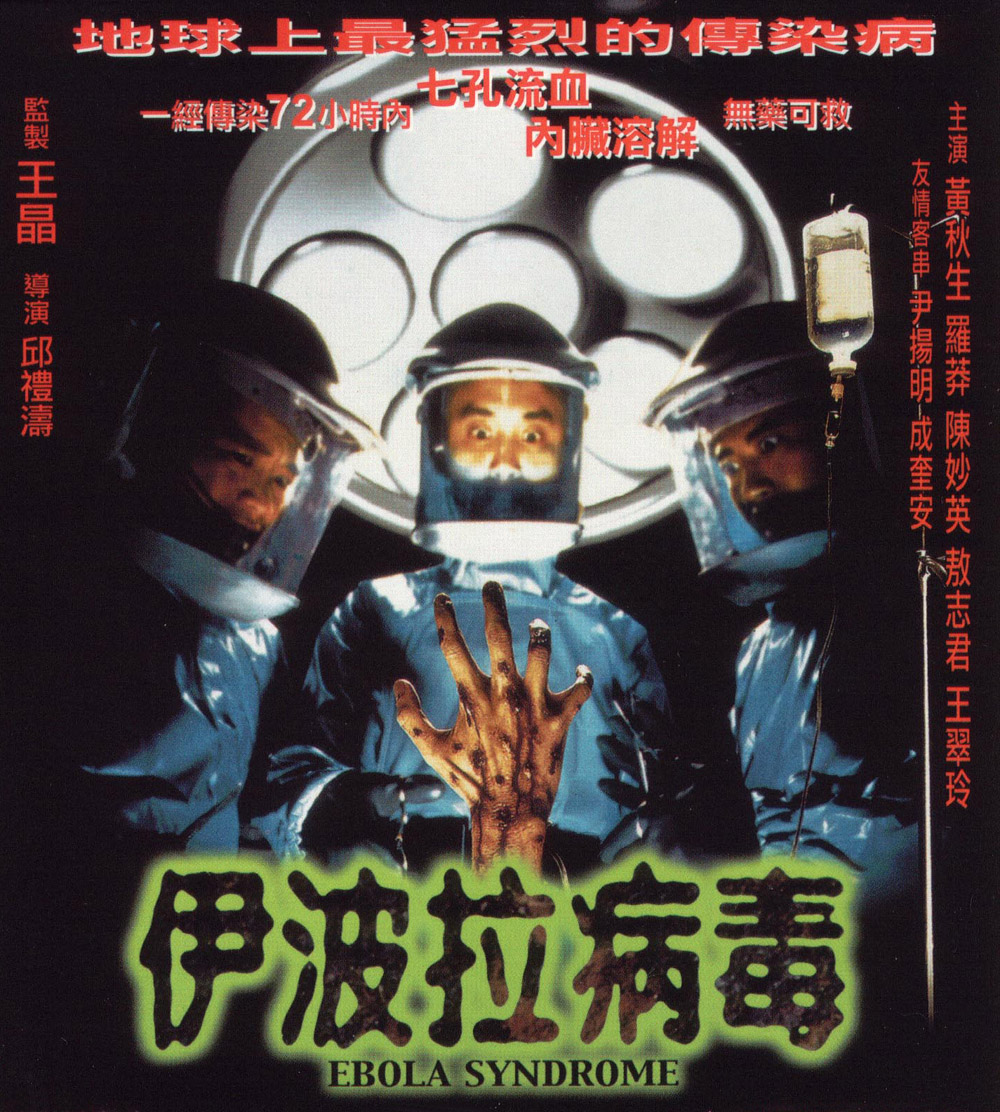
Ebola Syndrome (伊波拉病毒, Herman Yau, 1996)

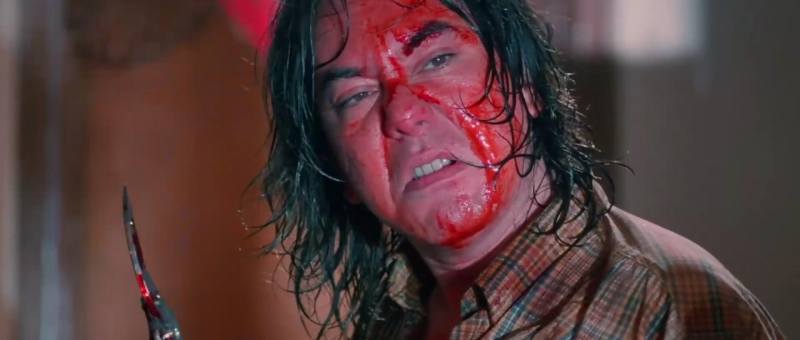
“I’ll fuck up whoever busts my balls!” snarls the protagonist of Herman Yau’s notorious 1996 Cat III exploitation film Ebola Syndrome (伊波拉病毒), seemingly filled with internalised rage in a sense of oppression as a little guy continually at the mercy of bosses who exploit and belittle him. Then again, Kai (Anthony Wong Chau-Sang) is not a nice guy and his various crimes are less those of an emasculated man towards an unfair society than a sociopathic disregard for conventional human morality. 

Even so, his first act of violence is a result of his attempt at petty class rebellion by sleeping with a mob boss’ wife only for the boss to come home and ritually humiliate him by ordering his wife to pee all over his treacherous underling before threatening to cut his bits off with a pair of secateurs. Kai, however, goes crazy and uses the shears to take out the boss, the associate, and the wife, pausing as he leaves to douse their terrified little girl in petrol in an ironic piece of foreshadowing only to be interrupted before he can light a flame. 10 years later in 1996, Kai is on the run working in a Chinese restaurant in Johannesburg where he is once again oppressed and belittled by the Taiwanese manager and his wife not to mention further displaced by the complicated racial politics of mid-90s South Africa. 

A minor comment on colonial corruptions in the anxiety surrounding Hong Kong’s imminent transition, Kai and his boss Kei (Lo Meng) find themselves in a difficult position in facing discrimination from all sides. Needing meat for their restaurant, they decide to strike a deal with the local indigenous community after being insulted by a white butcher but on their arrival walk into some kind of ritual conducted over the bodies of numerous locals who each have bloody welts all over their skin. On meeting with the leader, the pair immediately rip him off while he plays a grim joke on them as they discover two human bodies in place of the pig carcasses they’d intended to buy before he returns to set them straight.

This early moment of foreshadowing has its own dark irony as Kai will eventually end up once again murdering three people he accuses of busting his balls before mincing them up and turning them into “African Char-sui Bao” hamburgers. By this point Kai is already a “super spreader” having unknowingly contracted the ebola virus after raping a near comatose indigenous woman at the waterside who vomited white liquid in his face as he climaxed. In another instance of cruel cosmic irony, Kai turns out to be one of small amount of people effectively immune recovering quickly from what seems like flu but almost certainly having infected Kei and his wife and through them anyone who ate the African Char-sui Bao which is how ebola winds up in the city and eventually travels all the way to Hong Kong after Kai cuts his losses and goes home to live the high life on Kei’s savings. 

Yau does not hold back on the gore nor on the very real terror of the ravages of ebola as a doctor gruesomely dissects a human body remarking on the disintegration of its internal organs. At this point, Kai doesn’t know ebola’s what he has or that he’s passing it on but it’s unlikely he’d care. When the truth is finally revealed he runs anarchically through the streets with a meat cleaver shouting “ebola for everyone” and spitting at passersby as if taking his revenge against humanity itself. Yet he’s ultimately a wild animal trapped in civilised society caring for nothing other than the satisfaction of his immediate needs aside from his desperation to affirm his masculinity, not to be looked down on or bullied. We see him impassively chop up live frogs and witness the heads being torn off live chickens for others to drink their blood seeing him for what he is, an urban predator with no sense of conventional human value systems. 

Even so, the film seems to suggest this breed of malicious selfishness and amorality cannot be exorcised from the contemporary society while the infection continues to spread exponentially, the film’s bleak conclusion implying that the innocent will continue to suffer while the systemic causes of the disease go unexamined. Then again, Yau approaches his material with absurdly dark humour that implies that this really is some sort of cosmic joke in which all you can really do is laugh at life’s immense cruelties. 


Trailer (no subtitles)

Rainbow Trout (송어, Park Chong-won, 1999)

The hypocrisies of contemporary civility pass under the microscope in Park Chong-won’s creepingly intense drama, Rainbow Trout (송어, Song-o). As a collection of urbanites pile into a car and journey far into the mountains to rescue an old friend who’s dropped out and returned to the land as a fish farmer, they find themselves stepping into a world entirely contrary to their understanding but eventually expose themselves as petty, jealous, resentful and shockingly violent even in their disdain towards the “backwards” woodsmen they feel are harassing them.

The film both begins and ends with a tollbooth as the car carrying the urbanites first leaves and then returns to the “safety” of Seoul. Ominous signs pepper their journey, one of the men wondering if the pits on a mirror at a dangerous curve are bullet holes while his friend insists they’re more like pockmarks from small rocks swept up in a storm. Swept up in a storm might be one way to describe what later happens to the city dwellers, but it’s fair enough to say that they are fairly puffed up on the superiority of their urban civility over the earthy lives of the rural hunters. None of them can understand why their friend has made the choice to leave Seoul behind and live a primitive existence in a cabin in the woods. 

Chang (Hwang In-sung) even remarks that his fish sometimes commit suicide, Min (Yu In-chon) suggesting that being cooped up in a small space makes them feel anxious. The urbanites are not in a small space, they’re in the wide open countryside, but to them it is claustrophobic in its unfamiliarity. Though the trip starts off well enough as they reminisce with Chang and enjoy a night round the camp fire, the two men, bank clerk Min and his bbq restaurant owner friend Byung (Kim Se-dong), soon fall foul of a local hunter who doesn’t like where they’ve parked their car or possibly that they’ve parked it at all. Byung is forever performing his masculinity, making a show of chopping wood and lifting weights outside the cabin, but like Min otherwise unable to challenge the hunters and entering a mini vendetta of pettiness with them that is destined to end badly. Min meanwhile is preoccupied in knowing that his wife, Jun-hwa (Kang Soo-yeon), is still in love with Chang while Chang’s decision to leave the city seems in part to have been provoked by their marriage. Byung’s wife, on the other hand, ironically submits to her carnal desires after being caught stealing a rabbit from a trap by a lecherous hunter who later shows up with a gift of yet more meat which seems somehow like even more of a betrayal given that her husband runs a barbecue meat restaurant but is obviously not quite red-blooded enough for her. 

It’s the presence of Jun-hwa’s younger sister Se-hwa (Lee Eun-ju), however, that provokes further tensions in the group not least as she develops a fondness for Chang while local dog breeder Tae-joo (Kim In-kwon) develops a fascination for her. Tae-joo peeps on Se-hwa in the outhouse and creepily lurks around the cabin though he is perhaps just awkward if a little strange more than actively dangerous. Nevertheless he becomes the target for the husbands’ frustrated masculinity as they decide to exorcise some of their frustration on a mountain boy who is ill-equipped to resist them, unleashing uncivilised violence and barbarity that would bring them to the point of homicide. They assume Chang is like them, that he will side with the city, but Chang is now a mountain man and has shades of barbarity the husbands’ little suspect. As the crisis intensifies, the urbanites shift the blame and turn on each other, uncomfortably blaming Se-hwa as if it were her fault that the boy took a liking to her or that the men took it in the direction that they did. Se-hwa also finds herself a victim of male violence from an unexpected source but is again blamed for it less for her naivety than the simple fact of her existence as a young woman in this incredibly primal environment. 

The urbanites thought the hunters to be savage, but in reality were savage themselves only to convince themselves that they had done nothing wrong pleading with Chang to cover up their violence because Tae-joo is only a mountain boy while they are civilised people from the cities who could not have acted in anything other than a civilised way. They are in a sense like the rainbow trout, raised within a narrow frame and little understanding how to live outside of it, driven out of their minds by the removal of the guardrails of civility. On returning to the city they may convince themselves that the dark shadows within have disappeared but the fragility of their sophistication has already been exposed rendering them at least less honest than the huntsmen who made no pretence of their carnality. 


Rainbow Trout screened as part of this year’s London Korean Film Festival.

The Road to the Racetrack (경마장 가는 길, Jang Sun-woo, 1991)

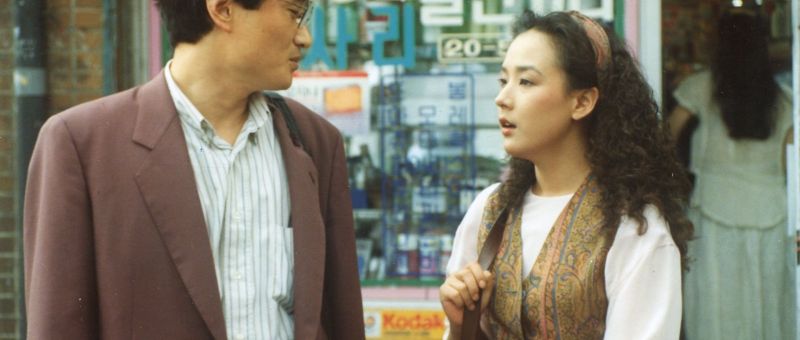
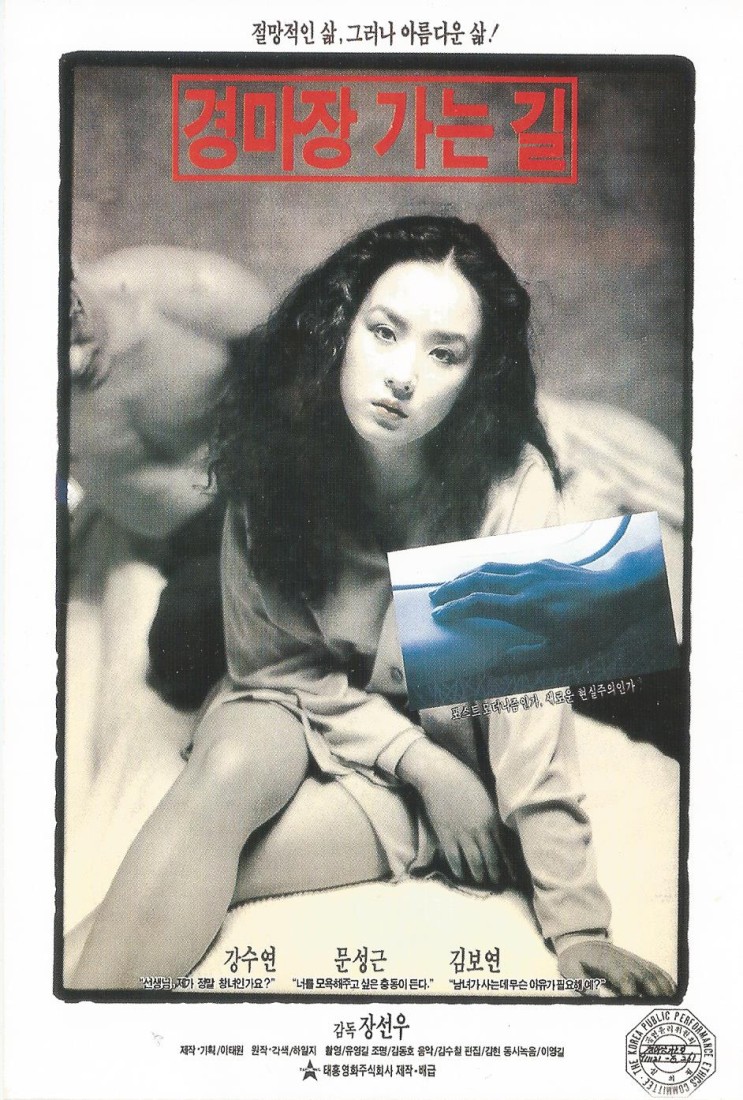
A pompous scholar returning home after five years living abroad in France struggles to adapt himself to a changed Korea in Jang Sun-woo’s literary drama, Road to the Racetrack (경마장 가는 길, Gyeongmajang Ganeun Kil). Hoping to rekindle an affair with a fellow student with whom he lived for three and a half years, the man known only as R (Moon Sung-Keun) finds himself frustrated by the same patriarchal norms which he manipulates in an attempt to dominate and control his former lover while little realising that it is she who truly has the upper hand as he pathetically follows and entreats while begging her to sleep with him. 

J (강수연), as the woman is known, shows little desire to pick up where they left off and roundly refuses to sleep with R who can speak of little else. She tells him that things are different in Korea and hints that the cause of her reluctance is that R is still married and in fact has two children. While J had (seemingly) been content to live with R as his “wife” in France, in Korea she feels a need to be married herself and obviously cannot marry R as his wife will not divorce him. Old-fashioned in her thinking, R’s wife (Kim Bo-yeon) assumes the cause of the discord in their marriage is that she was not a virgin when they married though it seems clear that since obtaining his PhD in France, R has begun to look down on his humble family and no longer wishes to associate with his uneducated spouse. An ironic soap opera scene precedes one of their conversations in which a husband cooly tells his wife that he will do as he pleases and has no intention of granting her a divorce fully highlighting R’s hypocrisy though his own wife is depicted more or less like the one on screen eventually screaming at him and refusing his demands to end their marriage. 

Though R had told his wife that the fact she had lovers before they married is not a factor in his desire for a legal separation, discovering that J has met someone else and is thinking of marrying him sends R into a tailspin of jealously. Badgering J into sex, he is ultimately unable to perform and complains that the “shadow” of the other man is putting him off his stride. He demands that she makes a choice and encourages her to tell her new man all about their time in France whereupon he might like R abruptly dump her for being an impure woman. Meanwhile, R complains that she’s treating him “like a rapist”, which is ironic because that is exactly how he is behaving. She cries and refuses, asking him if they “really have to” and still he pushes on violently pulling at her clothes until she gives in. He can’t seem to understand why it’s “different in Korea” when they lived together for three years in France, as if a single instance of consent has eternal permanence. 

J always returns to him if for unclear reasons in the increasing toxicity of their relationship. She addresses him as “doctor”, while he repeatedly insults her and calls her stupid, mocks her middle-class background in an attempt to deflect the class difference between them, implies she’s useless without him and that all her achievements are really his own. He claims to have written her PhD thesis for her, and is irritated that she’s had some success since returning to Korea having completed her studies a year before him. He reads an essay she’s written and while he may have a point about an ambiguous turn of phrase, further insults her by claiming that the only good bits are the bits she ripped from an old essay of his, but is clearly annoyed that she’s managed to get an essay published after showing it to another man who further edited it for her. Suddenly he explodes in rage and claims he feels exploited, insisting that J pay him monetary compensation for his emotional pain. 

The relationship only begins to work again once it becomes transactional perhaps hinting at a societal change in an increasingly capitalistic society. As J is unable to pay the sum he asked for, R insists she work off the amount by becoming his personal prostitute. Though effectively constrained by his wife’s refusal to divorce him, he thinks that he controls J and is reasserting his patriarchal authority. But then he is clearly the one in thrall to J following her around and refusing to let her go while her decision to continue meeting with him seems like it may partly be born of fear and a sense of inadequacy if also a delight in wielding her power. His contribution to J’s PhD leaves her feeling underconfident and a fraud, fearing he’s right and she’s not much of a scholar just a girl with rich parents who could send her France to study. But she’s also tied to him in service to outdated patriarchal social codes that were not in play in France in which he is both husband and not. When he strikes her, she immediately apologises.

The contrast between the two cultures is clear on R’s arrival as he wonders at the thousands of neon crosses that now colour the nighttime skyline of Seoul, remarking that’s as if he’d found himself in a European war cemetery. Both he and J seem to be adrift in a new society, aimless and with no particular place to go. Hoping to rekindle their love, R tries to force J to go abroad again but she refuses and declines to give an explanation. Incredibly frank in its sexual language, the file presents an otherwise bleak view of the toxic relationship between the former lovers who inhabit a series of seedy motels and are seemingly unable to escape the destructive cycle of their love while the pompous hero can only comment on his inability to orient himself in a changing city by recording the number of steps from each direction to the racetrack as if trying to reassure himself of the geographical integrity of the landscape of his memory.


The Road to the Racetrack screened as part of this year’s London Korean Film Festival.