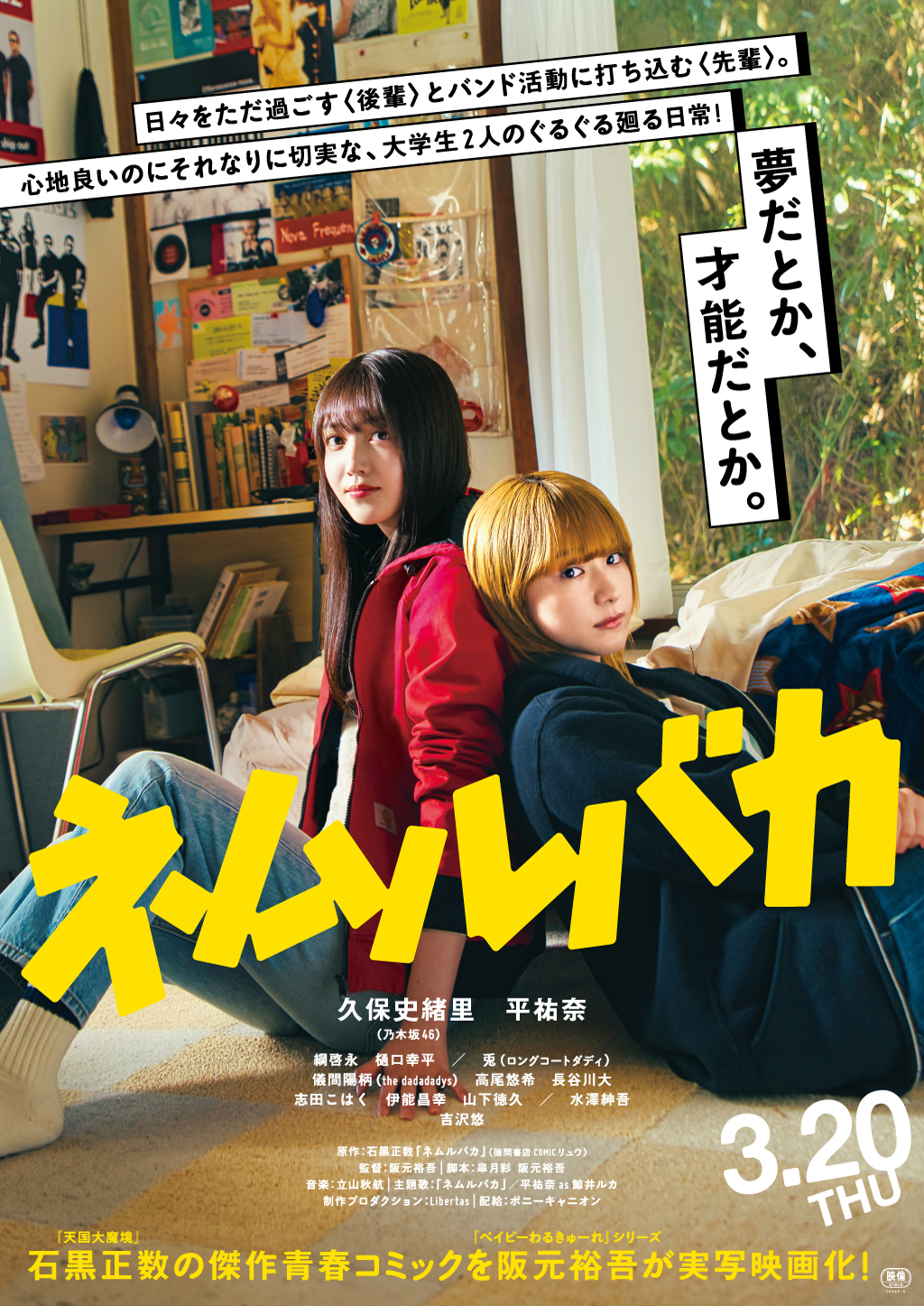
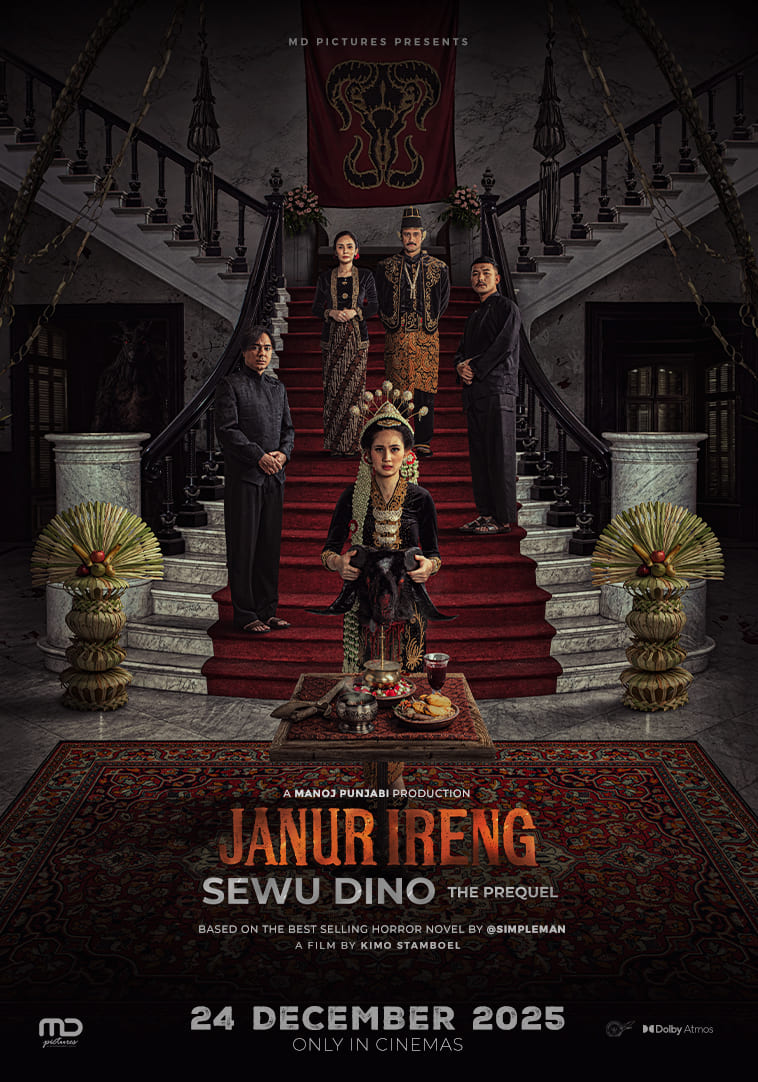
Petals and Memories (花まんま, Tetsu Maeda, 2025)

In many Japanese family dramas, there is an inherent sense of impending tragedy born of the notion that one family must necessarily be broken for another to be formed. Cultural sensibilities might insist that someone can only be part of one family at any time and any attempt to play a part in another is an act of betrayal. But reality is not so clean-cut and just because a woman gets married, it doesn’t really mean that she becomes a stranger to the people who raised her nor that they must completely sever ties with her even as they wish her well as she transitions to a new stage of life.

This is though what older brother Toshiki (Ryohei Suzuki) fears in Tetsu Maeda’s supernaturally tinged familial drama Petals and Memories (花まんま, Hanamanma). Adapted from a short story by Minato Shukawa, the story has an old-fashioned quality in which it could easily have been set back in the Showa era were it not for the fact that Kiyomi, the spirit that his sister Fumiko (Kasumi Arimura) claims to carry, was killed in the climatic year of 1995 which saw both the Kobe earthquake and sarin gas attack on the Tokyo subway. In any case, Toshiki has a distinctly Showa-era vision of masculinity and remains incredibly protective of his sister even if Fumiko has moved up in the world with her job in a university and engagement to a young professor who has the ability to converse with crows.

After their truck driver father was killed in an accident and their mother passed away in Toshiki’s teens, he’s essentially been forced into a parental position. Toshiki left school early and got a job in the factory where he still works in order to fulfil his father’s dreams of sending Fumiko to university. As such, he occasionally paints himself as a martyr and is keen to remind people how difficult it was for his mother to raise them on her own and that he’s sacrificed his future to provide for Fumiko. Her upcoming marriage is then to him a minor betrayal even if it’s also, culturally speaking, the fulfilment of his parents’ hopes for their daughter and thereby the end of his obligation.

The problem with that is Toshiki himself doesn’t have much of an identity outside of “big brother,” and is unable to see Fumiko as anything other than his little sister. When she tells him that she has memories of a previous life, he rejects them and says that he can’t bear to see his sister as “someone else”, repeatedly reasserting that she’s the daughter of his parents rather than those of Kiyomi. But Fumiko is also fiancée to Taro (Oji Suzuka) and friend to Komako (First Summer Uika). As she tries to counter him, more than anything she is simply herself which is something else Toshiki rejects in his categorisation of her only as his sister. Nevertheless, when she tells him that interacting with Kiyomi’s grieving father Mr Shigeto taught her what it was like to have a father seeing that she has no memory of her own is insensitive given that Toshiki has essentially been a father to her for most of her life. 

In clinging to his identity as a big brother, Toshiki may really be attempting to stave off his own fear of orphanhood as a man with no other family, but what he’s forced to reckon with is that his sister is “someone else” after all and not merely an extension of himself. In coming to terms with Kiyomi’s presence and extending compassion to her bereaved family rather than reacting in fear that they were trying to take his sister away from him, Toshiki begins to realise both that he didn’t actually raise Fumiko all alone but benefitted from the extended family of a community and that in her marriage his world is actually expanding rather than contracting. As the old adage goes, he’s not losing a sister so much as gaining a brother. In the “hanamanma” flower bento of the Japanese title, it becomes clear that Kiyomi’s love for her family transcended death and that she is not really lost to them even this most final parting but remains with them in spirit and memory. 


Petals and Memories screens as part of this year’s Japan Foundation Touring Film Programme.

Trailer (English subtitles)

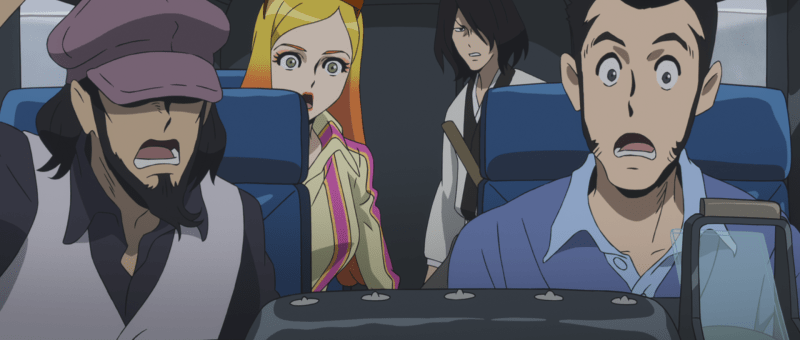
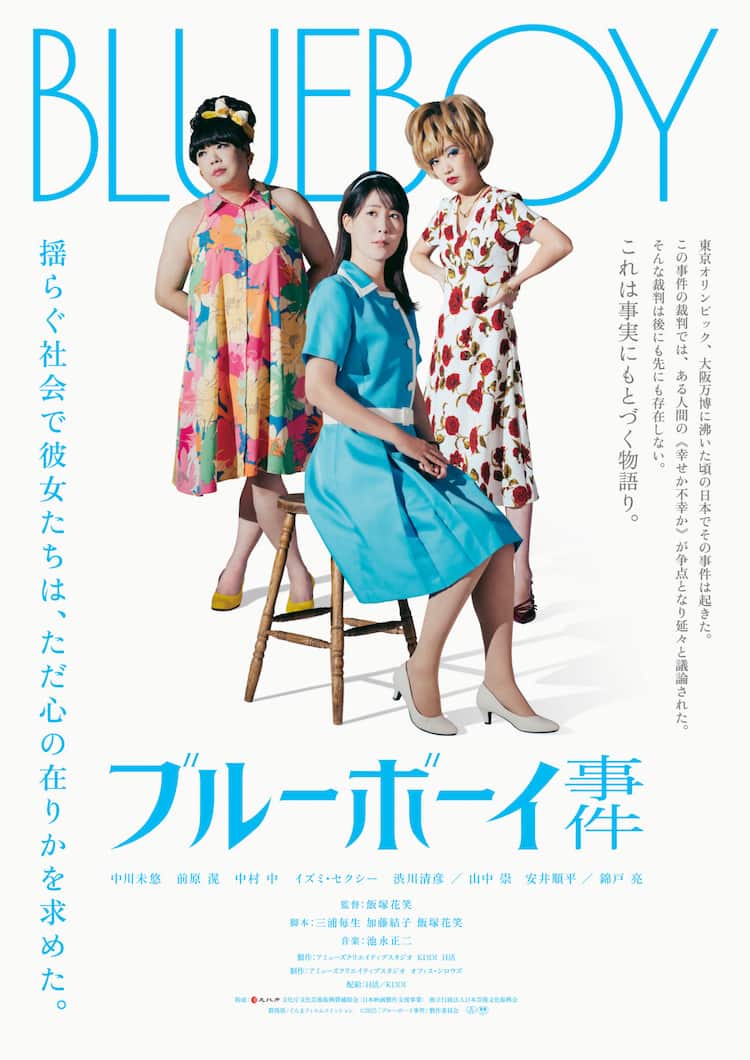
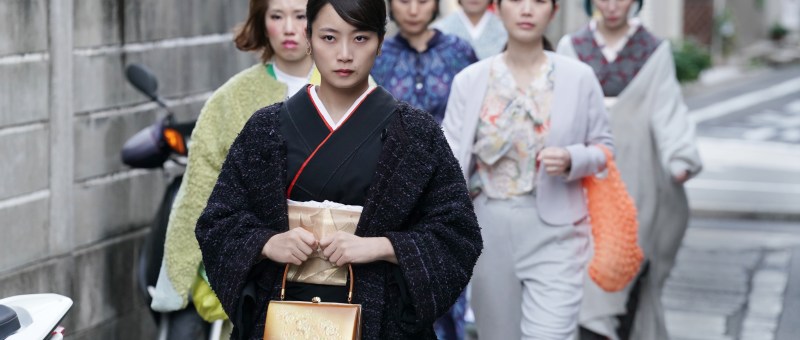
Blue Boy Trial (ブルーボーイ事件, Kashou Iizuka, 2025)

The police of mid-1960s Japan have a problem. They’re desperately trying to clean up the streets. But they keep running into transgender sex workers whom they can’t arrest because the working of the anti-prostitution laws explicitly targets women only, and in legal terms the people they’re picking up are regarded as male, so they have to release them. Knowing they can’t touch the women, a resentful police officer decides to go after the doctor who treated them instead.

Inspired by a real-life incident, Blue Boy Trial (ブルーボーイ事件, Blue Boy Trial) examines the social and legal repercussions of the actions taken against Dr Akagi (Takashi Yamanaka) after he was charged with supplying drugs illegally and breaking the anti-eugenics legislation by performing sterilisations while treating transgender people. Though Akagi agrees to plead guilty to the drugs charge, he refuses to move on eugenics, insisting that the surgery he performs is a legitimate medical practice that has nothing to do with any eugenicist ideology. The lawyer appointed for him, Kano (Ryo Nishikido), has an uphill battle ahead but hopes he can convince the judges by putting some of the women Akagi helped on the witness stand, to show that the treatment he gave them was medically necessary.

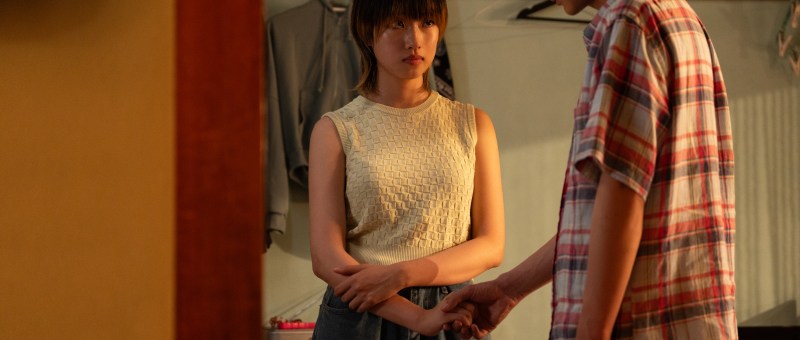
But part of the problem is necessarily that many of these women work in the sex industry. They aren’t respected, and their testimony won’t be either. That’s why Kano is keen to get Sachi on board seeing as she lives what the court will consider a conventional, “respectable” life like any other woman’s. Nevertheless, his request is insensitive and he appears not realise what exactly what he’s asking. If Sachi (Miyu Nakagawa) takes the stand she will be outing herself and putting the life she’s managed to build on the line. One of the other women Kano asks to testify takes her own life after being described as “mentally ill” in court and accosted by a drunk man outside it. When a picture of Sachi and her partner Akihiko (Ko Maehara) is featured in a newspaper report, she’s fired from her job in a cafe with her manager (Kiyohiko Shibukawa) accusing her of “fraud” for having responded to a job ad that clearly stated it was for “women only”.

Even Kano, to begin with, repeatedly refers to the women as “he” and uses slur words to describe them. Focussed more on winning the case, he pursues avenues that are offensive such as characterising the surgery as treatment for a mental health condition, asking why they “decided” to become women, and probing them on intimate details such as their sexual experiences as “men”.  Aside from prejudice towards the LGBTQ+ community, these attitudes also hint at the latent misogyny in the wider society which is still defined by traditional gender roles. Tokita (Junpei Yasui), the conservative prosecutor, makes a fairly nonsensical point about all the men who died in the war, accusing the women of being “selfish” and unpatriotic in giving up their manhood while panicked that transgender people threaten the very fabric of society as if he were worried that every man secretly wants to be a woman. In her emotional testimony, Sachi rejects his insistence on a socially defined gender binary and states that conforming to what he defines as a woman would also be inauthentic. What Akagi’s surgery helped her become was only her true self.

To that extent, Sachi’s partner Akihiko (Ko Maehara) is also unmanned by virtue of his disability. He too experienced prejudice and could not beat “small-town life”, much like Sachi in having been excluded by his otherness. He knows all about Sachi and has accepted her, presenting her with a ring though they cannot be legally married, but even in the big city they cannot find the freedom to live happy quiet lives. Sachi’s friend Ahko (Sexy Izumi) agreed to testify to claim the right to live well for the younger generation, so they could be free to live their lives without having to hide. The fact that Akagi is found guilty may not be surprising given the nature of the law as it was, though it did in a round about way legitimise the idea of confirmatory surgery as a legitimate medical procedure by suggesting guildelines to be followed in order for it to take place legally. Nevertheless, the first fully legal surgery did not take place until 30 years later, while those like Sachi continued to face prejudice and were forced to live their lives without the ability to be fully themselves. Even so, Sachi at least seems to have found her own happiness and fulfilment despite the social hostility that haunts her existence.


Blue Boy Trial screens as part of this year’s Japan Foundation Touring Film Programme.

Trailer (English subtitles)

Images: © 2025 “Blue Boy Trial” Film Partners

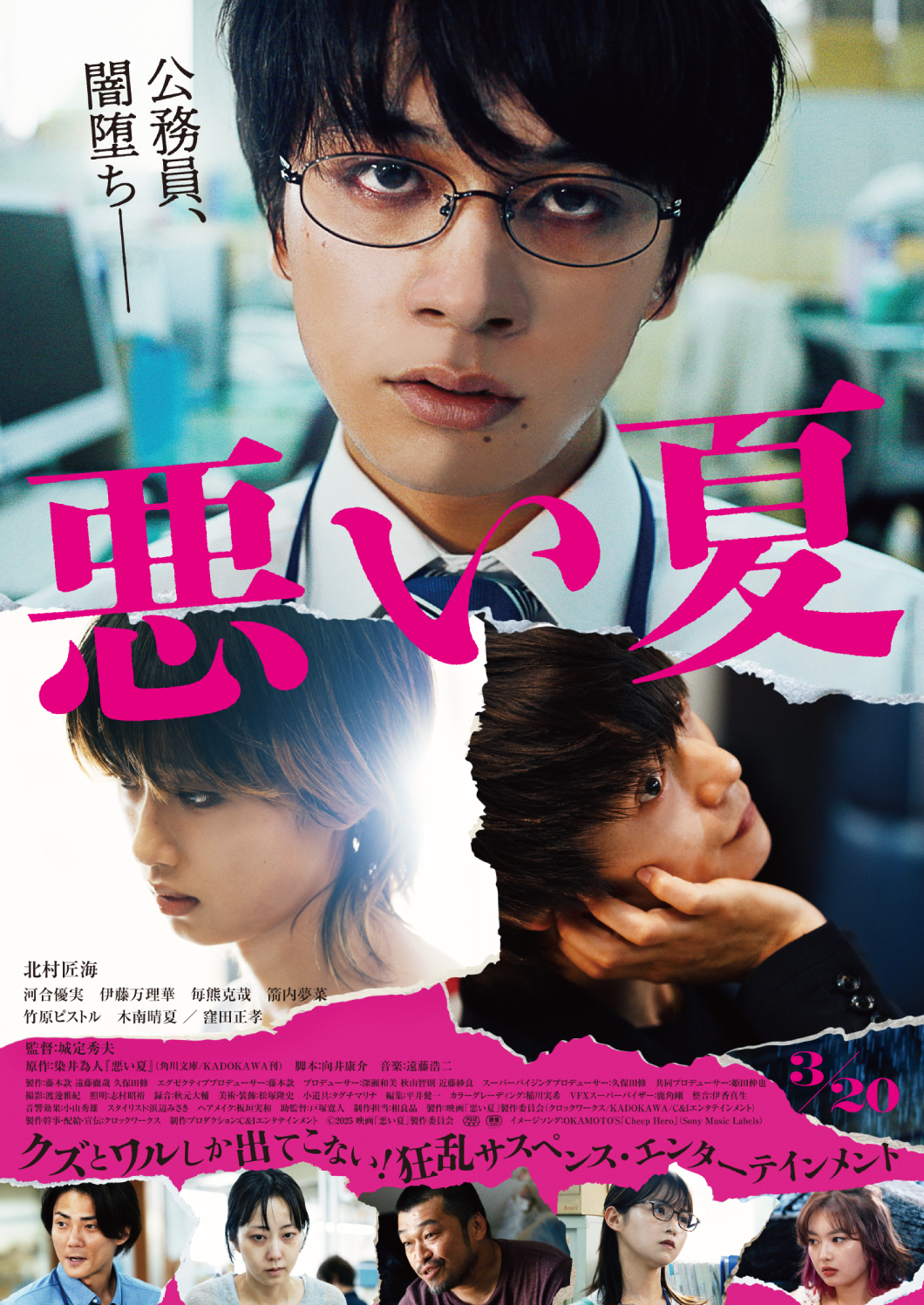
A Bad Summer (悪い夏, Hideo Jojo, 2025)

A well-meaning social worker finds himself dragged into an exploitative yakuza scam after trying to expose a colleague’s misconduct in Hideo Jojo’s adaptation of the novel by Somei Tamehito, A Bad Summer (悪い夏, Warui Natsu). Sasaki’s (Takumi Kitamura) colleagues are beginning to doubt he has what it takes for the job primarily because he is “too nice” and has trouble dealing with those who, to his superiors at least, are obviously misusing the system to claim benefits they aren’t entitled to. According to his hard-nosed colleague Miyata (Marika Ito), social welfare exists for those who find themselves “unavoidably” thrown into dire living conditions, which necessarily implies a degree of moral judgement on her part, while Sasaki is it seems keener to give people the benefit of the doubt and wants to try to help them even if it turns out they have been defrauding him.

“We must survive as bulwarks against moral decay,” Miyata intones, somewhat ironically, while pointing out that people who misuse the system make everything more difficult for “honest” clients. Sasaki later asks what exactly her morality is, but all she says is that the rules are the rules and any breach of them should be punished. The real world, however, is rarely so black and white. The truth is that it’s become too difficult to survive in this capitalistic society and a regular job alone no longer pays enough to support a single person let alone a family. 

While Sasaki falls deeper into an abyss of exploitation, a widowed single mother struggles to find a job while caring for her son that will keep them fed and a roof over their head. A woman at the factory where she eventually finds employment tells her about the welfare system, but she says she feels bad about taking other people’s money. That she later succumbs to shoplifting out of desperation suggests it was more the shame, humiliation, and stigma that kept her from applying. When she does eventually ask for help, she finds Sasaki in a downward spiral shouting at her for being an irresponsible mother and emphasising that benefits are only for those who’ve exhausted all other options, which she of course has, but is still made to feel like criminal just for reaching out. Though she is a prime example of the people they exist to help, Sasaki turns his back on her with potentially tragic consequences.

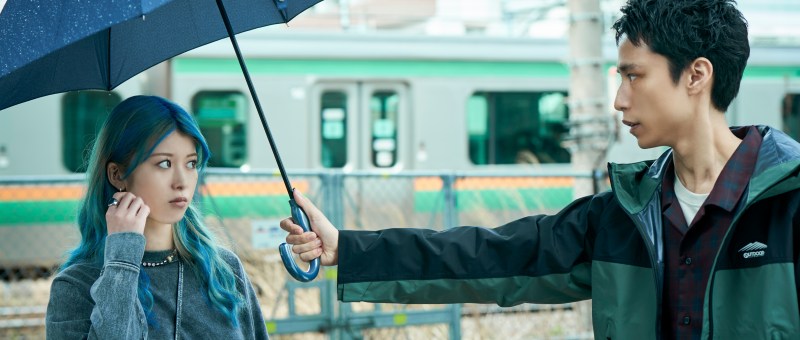
Other people had suggested to the widow that she simply remarry, laying bare to the extent to which women are still expected to remain economically dependent on men even in the 21st century. Another single mother, 22-year-old Aimi (Yumi Kawai), was convinced to apply for benefits by her friend Rika (Yumena Yanai), a bar hostess in a similar situation, but is sexually exploited by her case worker Takano (Katsuya Maiguma) who threatens to expose that she’s been working more ours than permitted meaning her benefits would stop. It’s also Rika who convinces her to get her yakuza boyfriend Ryu (Masataka Kubota) involved to sort out Takano, but he has another clever plan to use Takano as part of a popular yakuza scam in which they round up homeless people who may not know the benefits system exists and get them to apply so they can take most of their money while housing them in shelters they own. The plan is foiled when Miyata claims to have received a tip-off about Tanako exploiting his clients and enlists Sasaki to help investigate.

Sasaki seems genuinely interested in Aimi’s welfare along with that of her five-year-old daughter Misora which makes him the target of a side scam being run by Yamada (Pistol Takehara), one of his own clients who’s been fraudulently claiming on the grounds of an old back injury. The tragic thing is that Aimi, who seems to have had a disordered childhood herself, positively responds to the compassionate care offered by Sasaki who drifts into a relationship with her that is romantic and borderline inappropriate, though he is not her social worker and hasn’t done anything wrong. Aimi begins to see a more settled, ordinary life for herself which is eventually disrupted by destructive force of yakuza violence as Ryu forces Sasaki to process claims for the homeless people he’s exploiting. 

The wretchedness of his situation begins to destroy Sasaki’s integrity, which was according to Miyata their only real weapon against those who cheat the system. Unable to tell whether Aimi’s feelings for him were ever genuine, something she isn’t entirely sure of either, he sinks into a moral abyss having become all too aware of the chain of exploitation which exists in the contemporary society. The farcical, expressionist conclusion may signify that even when you fight back, nothing really changes and the only people who lose out are the most vulnerable, but there does at least seem to be a better life in sight for Aimi and Misora having escaped at least of the forces which were constraining them.


A Bad Summer screens as part of this year’s Japan Foundation Touring Film Programme.

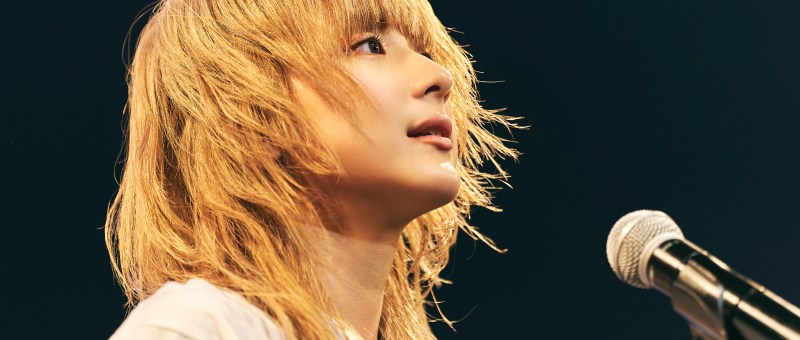
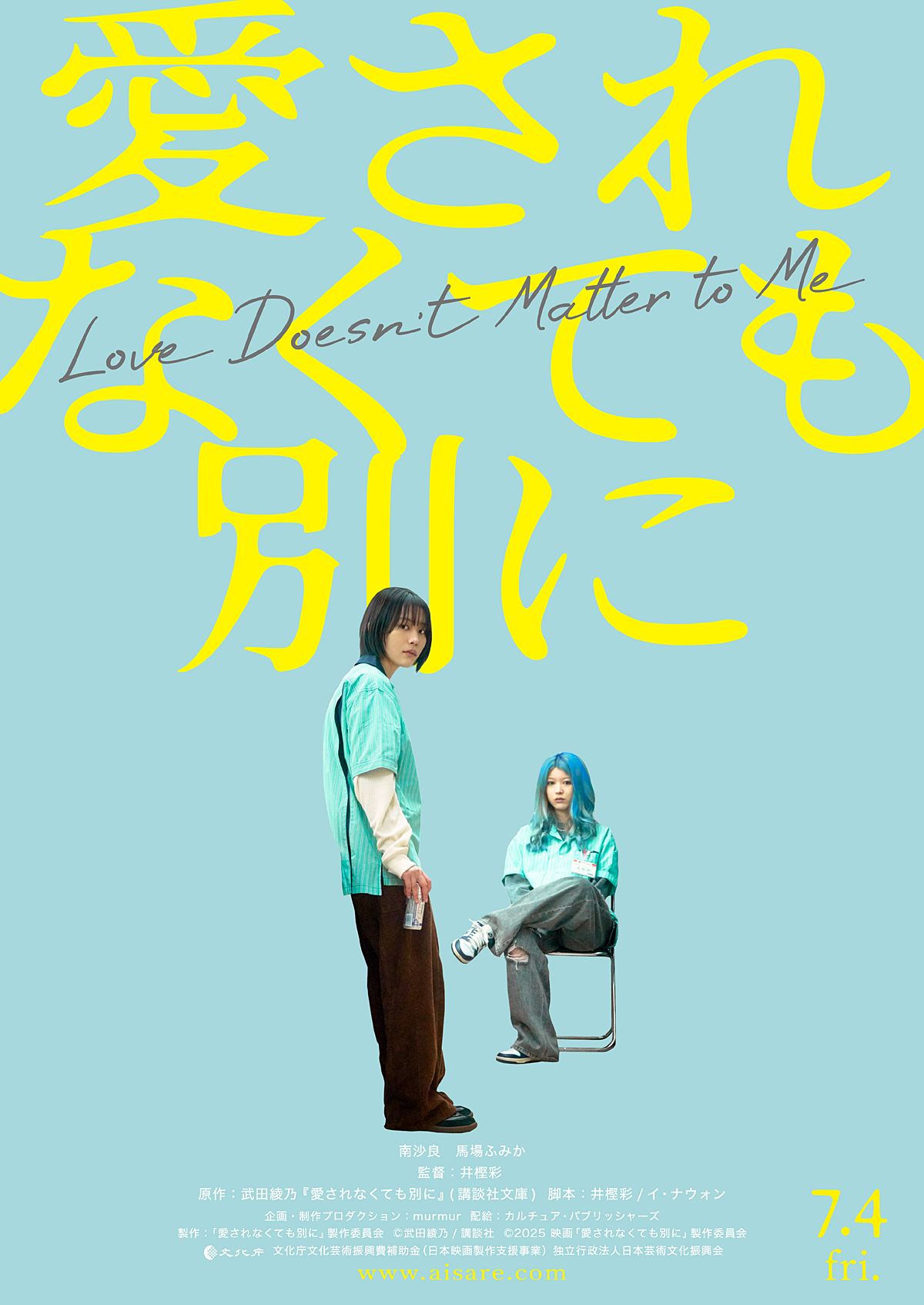
Love Doesn’t Matter to Me (愛されなくても別に, Aya Igashi, 2025)

Two young women find solace and solidarity in each other after escaping toxic familial environments in Aya Igashi’s adaptation of the novel by Ayano Takeda, Love Doesn’t Matter to Me (愛されなくても別に, Aisarenakutemo Betsuni). Though some might say that parents always love their children even if that love was not conveyed in the optimal way, the two women struggle with their contradictory impulses in craving the love of a parent who in other ways they know is past forgiveness.

The problem for Hiiro (Sara Minami) is that the roles have become reversed. She is effectively the parent of her irresponsible mother (Aoba Kawai) who treats her like a housekeeper and is intent on exploiting her labour. Hiiro’s mother didn’t want her to go to university and is still charging her rent and board to live at home while Hiiro works several part-time jobs to jobs to support them. She believes that her mother lives beyond her means, but is unaware of the extent to which she’s been financially abusing her by keeping both the child support her absent father had been sending and the student loan she’d taken out as a safety net. Having to work so hard also means that Hiiro is tired all the time and is prevented from taking part in normal university life or social activities which leaves her unable to make friends. At times she resents her mother so much she’s worried she might end up snapping and killing her to be free, but at the same time loves her and therefore puts up with her ill-treatment.

Enaga (Fumika Baba), meanwhile, is ostracised because her father is on the run after killing someone, though the reason she is resentful of her family is a history of sexual abuse and exploitation that have left her feeling worthless. As she later says there’s no point comparing your unhappiness to that of other people, otherwise you just end up making yourself more miserable as if you were trying to win an unhappiness competition. Nevertheless, learning of Enaga’s situation wakes Hiiro up to the possibility that other people are unhappy too and her life may not have been as comparatively bad as she felt it to be in the depths of her isolation. 

Yet what both women seem to crave is the positive maternal relationship they’ve each been denied. Hiiro gets to know another student, Kimura (Miyu Honda), who also has no friends partly owing to a judgemental attitude and poor social skills whom she later discovers to be from a wealthy background despite her being desperate to find a job and working alongside Hiiro at the convenience store. Kimura resents her mother (Shoko Ikezu) for being overly controlling and possessive. She’s come all this way to university to escape her, yet her mother calls every few hours and is angry if she doesn’t answer and makes frequent visits leaving Kimura with no freedom or social output. To Hiiro, Mrs Kimura’s actions seem to come from an obviously loving place and she might have a point that Kimura is naive, having been kept sheltered all life by her own helicopter parenting, which is why she’s been sucked into a cult. Hiiro sees in Mrs Kimura the love and affection she’d have liked from her own mother and is jealous rather than seeing how seeing Kimura feels suffocated and is driven to despair in being unable to escape her mother’s control.

Lady Cosmos (Yoko Kondo), the cult leader in whom Kimura has found salvation, tells each of the girls that they were loved by their imperfect parents and ought to love them back, but they seem to know better. Though she makes some perspicacious comments, Lady Cosmos also tells them exactly what they want to hear and attempts to occupy a more positive material space to be the loving mother they never had. But, of course, not so different from Hiiro’s mother, she’s bleeding Kimura dry by forcing her to pay extortionate amounts for readings and holy water. Ironically she’s still controlling her much like her own mother had, but Kimura thinks she’s found freedom in cult and resents any attempt to undercut Lady Cosmos’ belief system even if she’s at least on one level forcing herself to believe it rather than being a true believer. 

What might be surprising is that the two women effectively break free of the “cult” of family in accepting that their parents aren’t good for them and the decision to cut them out of their lives is valid rather than the breaking of a taboo or an unnatural rejection of the sacred bond between a mother and a child. Instead they effectively remake the image of family for themselves as one of mutual solidarity and unconditional love between two people who aren’t related by blood but have discovered a much deeper bond rooted in shared suffering.


Love Doesn’t Matter to Me screens as part of this year’s Japan Foundation Touring Film Programme.

Trailer (English subtitles)

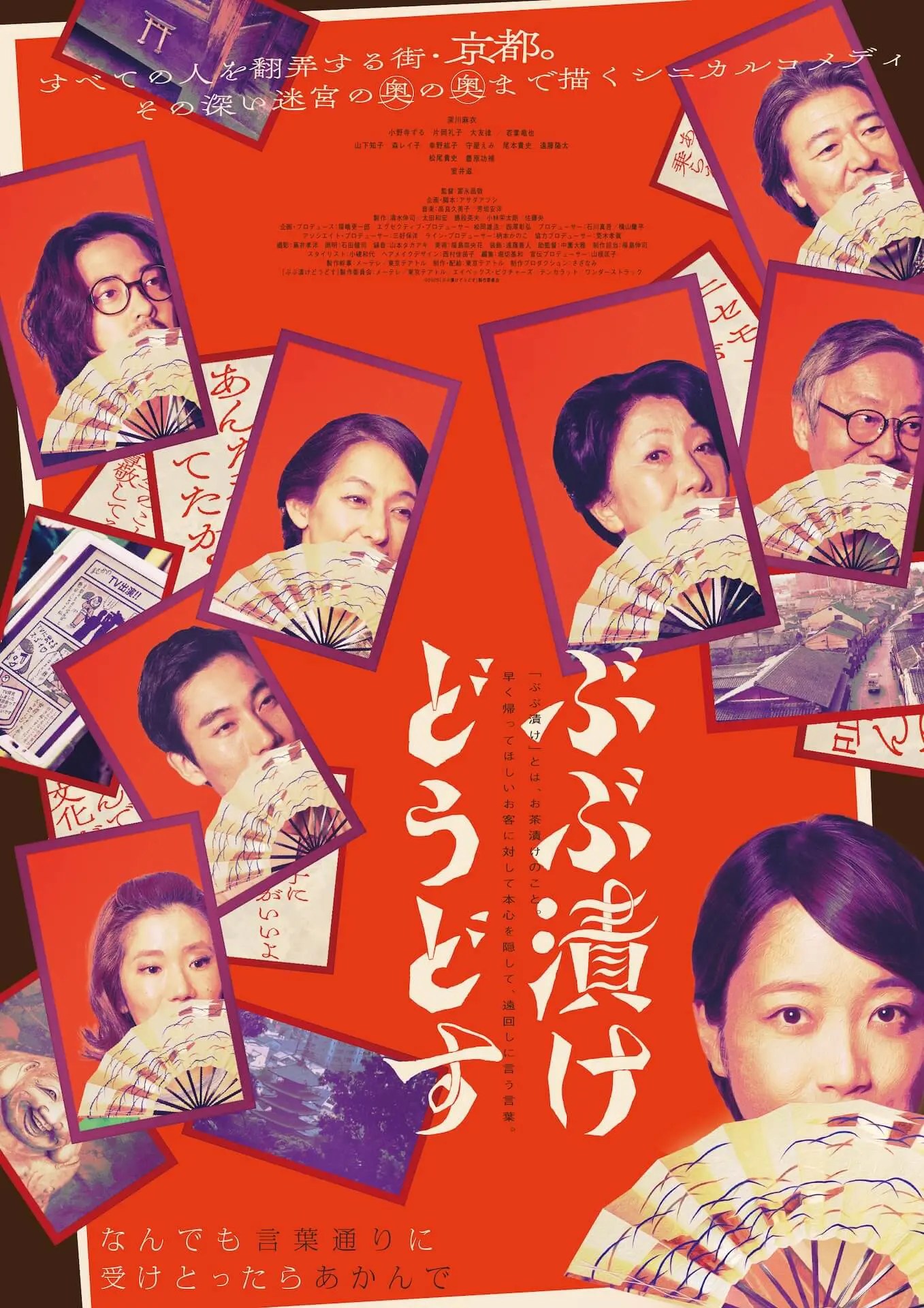
Strangers in Kyoto (ぶぶ漬けどうどす, Masanori Tominaga, 2025)

A former capital city, Kyoto is renowned as a historical centre and seat of tradition. But on the other hand, no one wants to live in a museum and while some of these old-fashioned ways of life might seem quaint or comforting, they’re also burdensome and for some an unwelcome imposition. Madoka (Mai Fukagawa), the wife of the 14th heir to a Kyoto fan seller is full of earnest wonder, but she’s also an outsider here and bringing with her own preconceptions and anxieties. 

To begin with, she’s come as a kind of cultural anthropologist directly interviewing local people to gain material for the manga she’s drawing with a friend. When one of the ladies she’s talking to explains that she runs a cafe in a former bathhouse that’s been sensitively adapted so that his traditional space can find new purpose in the modern world, Madoka is visibly disappointed which of course causes offence to her interviewee. Something similar happens when she interviews a woman running a traditional sweet shop who explains that their top-selling items are their halloween specials. They no longer sell anything that would have been on sale when the shop opened a few centuries ago. 

Madoka, who is not from Kyoto, is obsessed with preserving the city’s “true face” and fails to see that these businesses have survived because they’ve been able to adapt to the times when others could not. Repurposing old buildings to house modern businesses is one way of keeping the city alive. Meanwhile, she idolises her mother-in-law’s traditional lifestyle, but is after all experiencing it from the perspective of a guest. It may very well be much nicer to eat rice cooked over an open flame, but she’s not the one who’s got to get up early to stoke the fire or spend hours stirring the pot. She takes her responsibility as the wife of the 14th heir so seriously in part because she doesn’t understand what it entails. Her husband, Mario, meanwhile is keen to remind his mother that he has a life in Tokyo and won’t be returning to take over the shop, at least as long as his father is alive. 

Mario tries to warn Madoka about the complex nature of Kyoto social etiquette, but she fails to understand and makes a series of embarrassing faux pas that gradually destabilise the local equilibrium. In Kyoto, a particular brand of politeness rules in which one’s true feelings are never expressed openly but only through barbed comments that everyone nevertheless understands. So, when someone wants you to know that the party’s over and it’s time you went home, they’ll politely ask if you want any green tea over rice. This level of subtlety is lost on Madoka who comes from a city where size of the community means you have to be explicit.

It never really dawns on her that mother-in-law might have become so fed up with her that it’s easier just to sell the house and end 450 years of tradition than to tell her go home. Then again, it seems like she may be missing some social cues in Tokyo too, while it’s also fairly obvious in any culture that putting her awkward interactions into the manga could end up upsetting those around her. They do, after all, have a point that it’s inappropriate for her to make herself the self-appointed guardian of a place she’s isn’t from and doesn’t live in, disregarding the thoughts and feelings of those who do (not that they really told her what they were). 

Perhaps as she said she’s beginning to understand Kyoto in this regard by fighting back passive aggressively to claim her right to take over the fan shop. She might have a point about the comparatively ugly and utilitarian apartment blocks taking over the city as old buildings are bulldozed to make way for the new, but on the other hand it may not be possible to continue this business as it is and simply bringing in more tourists who’ll just clutter up the place and not buy anything may not be the answer. What the answer is may not be clear, but Madoka at least seems to have found her little niche in the heart of Kyoto, even if it is no longer so polite as to keep its irritation to itself.


Strangers in Kyoto screens as part of this year’s Japan Foundation Touring Film Programme.

Trailer (English subtitles)

Images: ©2025 Strangers in Kyoto Film Partners

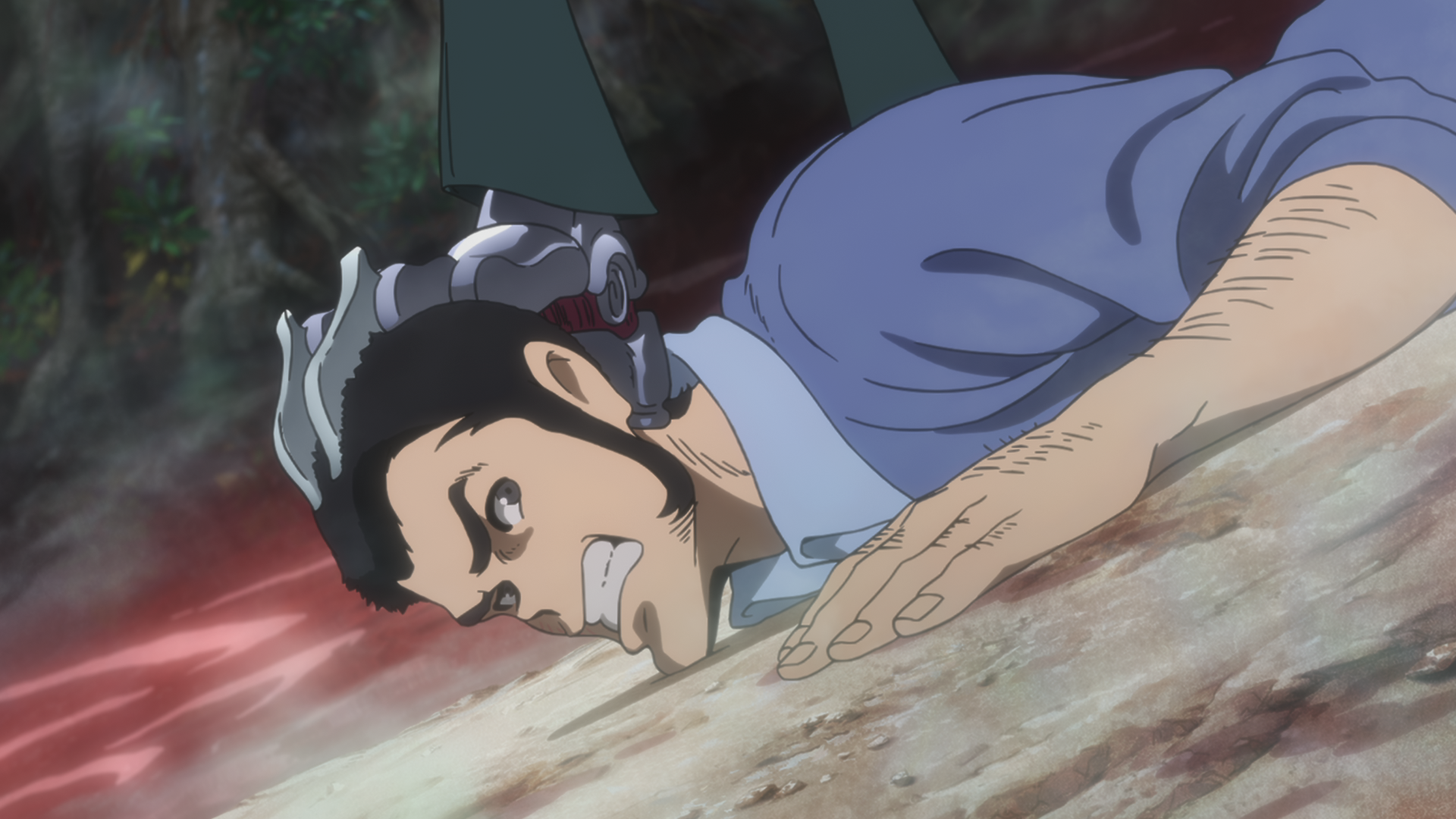
Streaming (스트리밍, Cho Jang-ho, 2025)

There’s a kind of collective fantasy that lies at the centre of live-streaming. A bargain between the streamer and the viewer not to break the illusion, but the power dynamics between the two are vague and shifting. The viewers give “stickers” to express their appreciation or try to manipulate the streamer, while the streaming tries to fulfil the viewer’s wishes in the hope of getting more stickers without being too obvious that they’re letting the viewers lead them by the nose.

What Cho Jang-ho’s Streaming (스트리밍) suggests is that the snake is eating its own tail and the desire for streaming success has led the streamers to make ever more questionable decisions and the viewers to demand increasingly extreme action which may cause harm to the streamer or others. There are several points at which we might wonder why Woo Sang (Kang Ha-neul) does not appear to have alerted the police nor do his viewers do so for him. They sit and watch passively while another streamer apparently gets up and takes her own life, some wondering if what’s just happened is for real and they ought to try calling someone or if it’s just another bit.

We might even wonder if any of this is “real” or just a game being played for the benefit of the viewers who each join in with what amounts to a kind of scavenger hunt as Woo Sang tries to track down a missing streamer, Matilda (Ha Seo-yoon), who went missing after he recruited her to help him investigate a series of murders. In his interactions with Matilda, we can see Woo Sang’s own insecurity. He’s clearly brought her on as a glamorous assistant, but she keeps upstaging him and he’s finding it increasingly hard to hide his irritation. When they role play what they think might have happened between the killer and his victim after they snuck out of a nightclub, he takes things too far and shows a dangerous capacity for misogynistic violence. Some of the viewer’s concerns that he may have harmed Matilda in some way in revenge for her taking the lucrative top spot on the streaming charts away from him may be understandable.

But at the same time, Matilda doesn’t quite seem to be on the level either and may, in fact, be using Woo Sang to further boost her popularity and stay number one which would allow her to keep 100% of takings rather than pay the 50% commission to the streaming service. Despite his critiques of other streamers, Woo Sang too is shown to be an amateur detective exploiting the serial killer case for his own gain while somewhat cavalier about Matilda’s safety after using her in his video. In truth, solving the serial killer case might be quite bad for his business because without it Woo Sang wouldn’t have any more material for his show. But then, while shows like this exist, content may also rise to meet them and the film almost implies that true crime gives rise to a kind of bloodlust that simultaneously glorifies the host and the killer who are profiting in terms of notoriety even if the streamer is taking all the money. 

“When interest becomes excessive, it turns into an obsession,” Woo Sang tells his viewers somewhat disdainfully of a man who may have become fixated on the public image of “Matilda”, though it might as well apply to himself and his audience of armchair detectives. “Staging means death,” he intones, though there’s no way to know he hasn’t made all this up himself and it wouldn’t really be surprising given the streamers’ obsession with being number one. Some of the viewers maybe be sceptical, but the truth is they’re all playing this game too and it’s all good fun until it’s not, leaving Woo Sang and his audience in way over their heads. Or then again, maybe his old-fashioned battle of wits with a Moriarty-like killer is just that, which would explain Woo Sang’s strange conviction that he will honour the terms of their agreement not to kill Matilda until the deadline expires even though Woo Sang thinks he’s seen through his attempt to throw him off the tracks. A little muddy in its messaging, the film nevertheless makes plain that it’s Woo Sang that has become dangerously obsessed and deluded by the persona he’s crafted for himself into believing that he alone can bring a killer to justice.


Trailer (Korean subtitles only)

Another World (世外, Tommy Kai Chung Ng, 2025)

The Another World (世外) in title of Tommy Kai Chung Ng’s animated adaptation of Saijo Naka’s novel SENNENKI -Thousand-year Journey of an Oni-, most obviously refers to that beyond our own which belongs to the dead and those who exist outside of time, but it also hints at the other worlds that might be possible if only we could find ways to channel our negative emotions into something more positive rather than allowing ourselves to be consumed by rage and resentment.

As Soul Keeper Gudo (Chung Suet-ying) says, the seeds of evil lie within us all though he does not necessarily believe that they destroy humans, rather that they may also push us to survive. Throughout his wandering adventures, the souls he encounters are angry for reasons that are not irrational but a natural consequence of the world in which they live. Goran is a powerless princess resented by her subjects for being the apparent victim of a curse. She blames herself for her mother’s death in childbirth and is consumed by feelings of worthlessness even before her father the king dies and riddles the court with conspiracy. Coming to believe that he was murdered, her rage blossoms turning her into a cruel despot inflicting crazed violence on her subjects until eventually fleeing the palace. Flower City is reduced to Wheat Village where the farmers are pressed by the occupying force which demands half of their already poor harvest and does not much care if they starve to death despite warnings that they won’t eat either if the peasants are either too weak or too dead to farm the land.

It’s starvation that is really the true evil most particularly when it is caused or exacerbated by human greed and cruelty. Echoing Yuri (Christy Choi Hiu-Tung), a young girl who does not know she is dead and is intent on finding her brother from whom she has been separated, Gudo makes this simple act of sharing food a means of connection and identification. Farmer Keung, meanwhile, believes that he can only free the village by becoming a “Wrath”, a creature of indiscriminate violence that arises when the seeds of evil blossom and threatens to destabilise both this world and the other. Gudo tries to dissuade him, showing him that those who succumb to their rage and anger often end up harming those closest to them no matter how much they say they’ll be different. But Keung’s eventual conviction that their salvation lies solidarity and standing together against the oppressive regime eventually backfires when they’re betrayed by its duplicitous soldiers. Ying too, a young orphan exploited as child labour and forced to work in a factory during the Industrial Revolution, witnesses someone close to her literally consumed by the machinery.

The film does not suggest that this rage is wrong or misplaced, only that giving in to it is a choice that only puts more fear and evil out into the world. Gudo suggests the solution is solidarity after all in that anyone can offer salvation, but it also requires time and faith in one’s self. His various charges must learn to forgive themselves before they can let go, lay down their burdens and prepare for reincarnation. This is really the only way it is possible to endure this impossible world, which is not to say that it cannot be changed or resisted but that the means of resistance is to live in the better world that does not yet exist rather than succumb to violence which will result only in more of the same.

Beautifully animated, the film appears to draw inspiration from the work of Studio Ghibli including a few homages in particular to Castle in the Sky, though relying more on verbal exposition than purely visual storytelling or thematic resonance. Nevertheless, there is something satisfying in the depiction of resentments as a series of knots to be untied leading to a gradual liberation as if symbolising the work to be done. The closing scenes perhaps imply that this world cannot be cured, even if the other one may be, but is not itself without hope, and that whatever else may be human warmth and the desire for the world to be better will endure.


Another World opens in UK cinemas 29th February courtesy of Central City Media.

UK trailer (English subtitles)

Back to the Past (尋秦記, Jack Lai & Ng Yuen-Fai, 2025)

Can history be changed, and if it can, should it be? In a way, Jack Lai & Ng Yuen-Fai’s Back to the Past (尋秦記) is an attempt to change history in itself in that it’s a long-awaited sequel to a television series that concluded more than 20 years ago. A passion project from star Louis Koo, the film opens in contemporary Hong Kong where the inventor of the time machine that sent Hong Siu-lung back in time to witness the ascension of the Qin emperor is released from being “wrongfully imprisoned” for attempting to change history.

Lung (Louis Koo) seems to have told those back in the Qin Dynasty that he came from a mysterious “hometown” . He’s now estranged from his former pupil, Qin Emperor Poon (Raymond Lam), after becoming disillusioned with his despotic rule. It seems that Lung’s inability to return to the present due to a broken amulet somehow contributed to Ken (Michael Miu) getting sent to prison. Now he’s out, he’s sending himself back to the past because, for otherwise unexplained reasons, he wants to become the Qin emperor himself to prove that it is possible to change history after all. Though it is apparently still 2025 in contemporary Hong Kong, Ken and his team have access to a lot of futuristic gadgets like metal discs that can suddenly transform into motorcycles, transparent holographic communication devices, and a headset that can give you the appearance of another person.

Thus Lung is a man doubly trapped in the past in that he has no way of knowing how the society developed in the years since he left. He’s essentially fighting a war on two fronts as he’s ambushed by Ken’s team, some of whom are only there to loot “ancient antiques”, while in fear of his life from Poon who blows hot and cold over wanting to kill him as a potential traitor. The TV series had ended on a cliff hanger in which Lung’s son Bowie changed his name to “Yu”, meaning eagle, but also giving him the name of the warlord who overthrew the Qin emperor but ended up becoming a dictator himself.

The incongruity of Qin Dynasty warriors facing off against Ken’s ultramodern kit with bows and arrows is indeed fascinating, though the puzzling lack of confusion among Lung’s friends and family is possibly explained away by having seen various other odd things from Lung’s “hometown” in the past. No one is very surprised when he puts on his future clothes either, while the bun clip hair extension one of his wives made him wear gets dropped pretty quickly. Aside from the clash of eras, there’s also a commentary on the nature of family as is perhaps expected for a (Western) New Year movie. Ken is given the opportunity to trade his captured daughter for Lung’s captured wife, but refuses, insisting that he only wants the Qin emperor. When one of his men is killed, Lung tells Poon that he won’t help him any more so he’ll have to make his own way to back to the palace. His wives, however, tell him that Poon is still family even if he did turn a bit evil, and after all he risked his life to save Bowie, so it would be mean to leave him behind.

Poon is the spiritual son who has disappointed his father, Lung by turning to the dark side but Lung can never quite give up on him while as much as he bangs on about having Lung killed, Poon can’t bring himself to do it either and seems to still want Lung’s approval just not as much as absolute power. Trapped in the past, Lung has come to realise that it’s family that’s important so it doesn’t really matter where you are as long as you’re all together. A tacked on “alternate ending” sells the New Year theme with the entirety of the Qin Dynasty cast being beamed to 2025 to enjoy some nice food and a fireworks display all together as a family after which Lung returns to the past and says he’ll never come back to the future. It’s tempting to read his declaration as an expression of the nostalgia inherent in the premise, that Lung wants to go back to an earlier time when things weren’t as complicated as they are now even if he’s still living under an oppressive regime. But at the same time, history can’t necessarily be reclaimed in that way and even for him things have moved on, though of course for those in the present it is still possible to change “history” and perhaps more difficult to do so if you can’t let go of an idealised past.


Trailer (English subtitles)
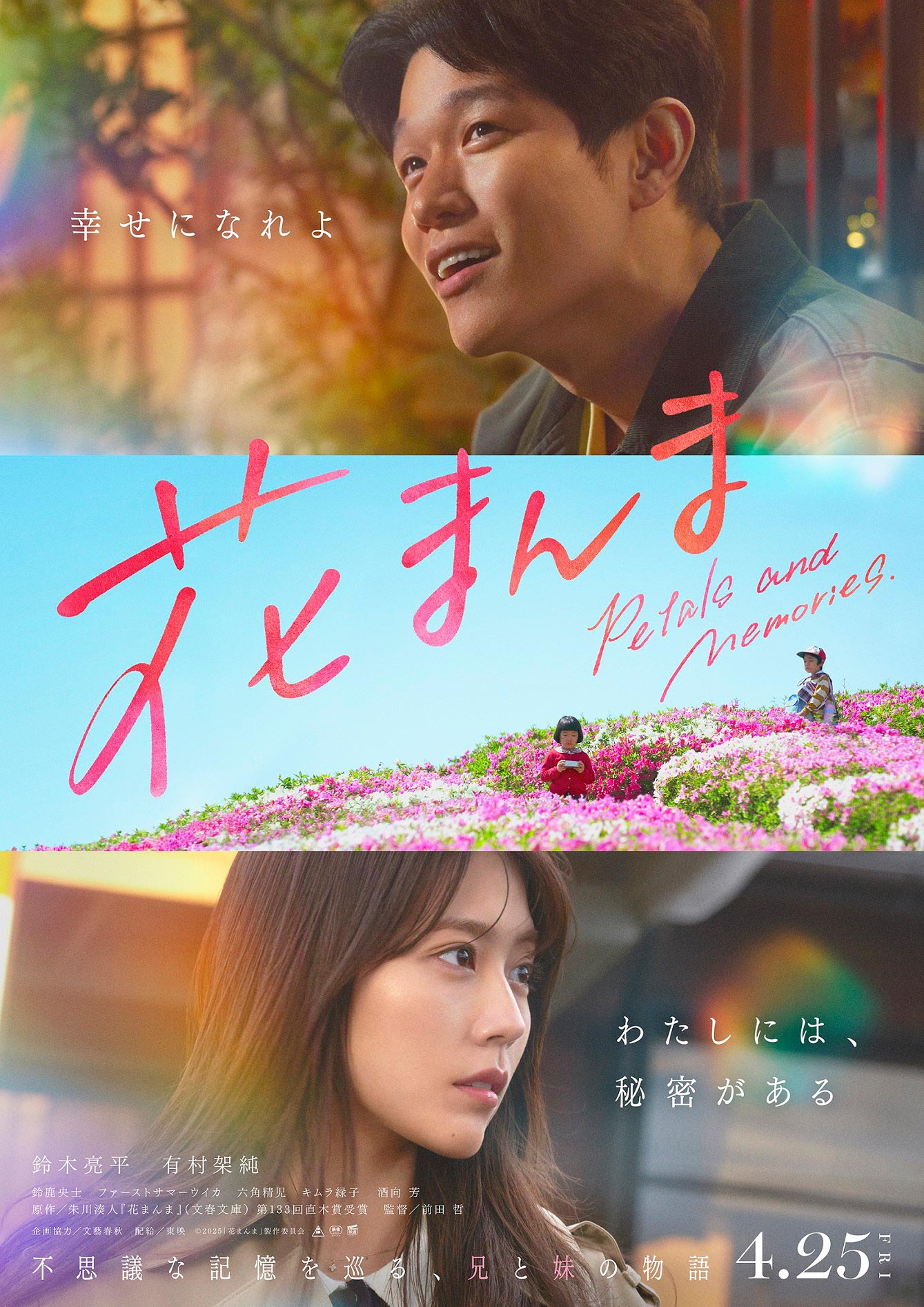
Left-Handed Girl (左撇子女孩, Tsou Shih-Ching, 2025)

A small family’s attempt to start over by moving to Taipei is frustrated by the baggage they take with them and that which was already there in Tsou Shih-Ching’s whimsical family drama, Left-Handed Girl (左撇子女孩, zuǒpiězi nǚhái). As women alone, they must contend with a patriarchal society and harsh economic environment along with a conservative culture that is often unforgiving of difference and reluctant to grant second chances to those it believes have transgressed its boundaries.

The titular left-handed girl, I-Jing (Nina Ye) describes the city as seeming like a magical place, though it’s certainly noisy and indifferent to her presence. Her mother Shu-Fen (Janel Tsai) laments that their apartment is smaller than it looked in the photo, as if signalling a sense of disappointment even before their new life has started. Oldest sister I-Ann (Ma Shih-Yuan) never finished high school and has got at a job at betel nut stand where the boss explains to a new recruit that her job is to create a sexual fantasy for the customer. I-Ann’s grandmother chastises her for her revealing outfit, warning her about “perverts and psychos” and that it’s dangerous to dress like that in the big city.

The grandparents are representative of a generation who grew up under an authoritarian regime and are fiercely traditional. Though the grandmother tells him to let it go, I-Jing’s grandfather is outraged and offended by her left-handedness. He tells her that it’s the Devil’s Hand meant only for doing the Devil’s work and bans her from using it in his home. I-Jing takes him a little literally and comes to believe that her left hand is an evil entity, but rather than being afraid, sees it as somewhat liberating in allowing her to do morally questionable things such as shoplifting. Only when an action habitually conducted with her left hand while forcing herself to draw with her right has unforeseen and tragic consequences does she begin to believe that her hand is a liability and consider cutting it off.

While her grandmother appears to be involved with some kind of human trafficking gang to make extra money, she’s reluctant to supply any more financial aid to Shu-Fen partly because of complaints from her siblings and particularly her sister. Though the grandmother had said the apartment would be left to the three of them equally, Shu-Fen knows she’s planning to leave everything to their brother whom she continues to idolise, though he’s long since moved to Shanghai and rarely visits. Awkwardly turning down another gig from her handler, she tells him her son has organised a lavish celebration for her 60th birthday. In reality, the daughters have planned everything with the son only arriving to mop up the glory. That it’s other women who perpetuate these outdated, patriarchal social codes is fully rammed home by the arrival of the wife of I-Ann’s boss with whom she has been having an affair. On learning that I-Ann is pregnant, she demands that I-Ann give the baby to them to raise if it’s a boy as they only have three girls. 

Shu-Fen, meanwhile, finds herself returning to care for her estranged husband who is dying of terminal cancer despite his abandonment and ill-treatment of her. Her decision doesn’t seem to be motivated by compassion or lingering affection so much as obligation. She feels she has to do this for him because he has no other family and she is still technically his next of kin. I-Ann in particular, along with the rest of her family, does not approve and is irritated that she’s once again allowing herself to be dragged down by a man. After he passes away, Shu-Fen is liable not only for all his medical fees but his funeral too, leaving her unable to meet her current expenses such as the rent for her pitch at a local hawker site where she supports the family with a noodle stand.

Her family also don’t seem to take to Johnny (Brando Huang), a man who seems nice and supportive, but also works as a market trader. The family appear to look down on him and implicitly on Shu-Fen for being engaged in what they see as a lowly occupation in much the same way that I-Ann becomes a figure of fun on bumping into some people from high school who are all now in university, though she left with no qualifications. Because of her betel nut store occupation, the boys treat her like a sex worker, while the boss, whom she did not know was already married, evidently never took their relationship very seriously. A desire to avoid reputational damage results in a series of destructive secrets that are abruptly blown open during the emotionally tense 60th anniversary party, but it does perhaps clear the air allowing the three women to reinforce their bond and finally begin living their own lives.


Trailer (English subtitles)
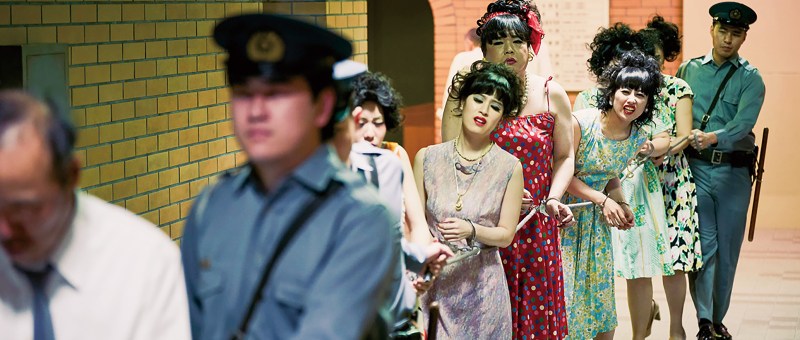
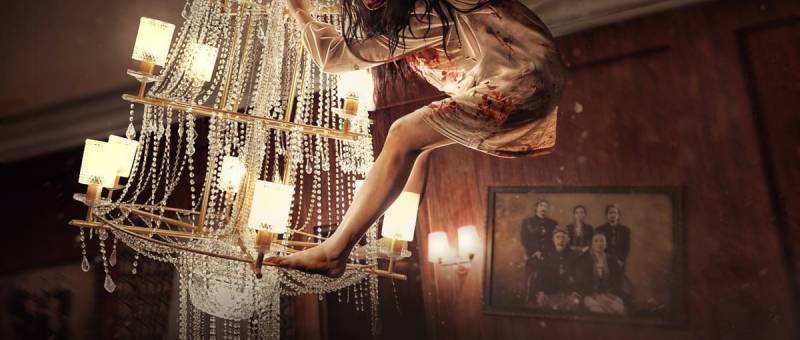
Revelations (계시록, Yeon Sang-ho, 2025)

A put upon pastor’s life begins to spiral out of control when he comes to suspect a recently released sex offender has kidnapped his child in Yeon Sang-ho’s grim spiritual drama, Revelations (계시록, Gyesirok). Less about the crime at its centre, the film is more an exploration of our intense desire to justify our actions and remake the world in a way that makes sense to us while refusing to see or accept the reality of others.

Min-chan (Ryu Jun-yeol) runs a small evangelical church that is part of a larger religious organisation and like any other ambitious employee is hoping for advancement. With the area undergoing redevelopment, a larger church is to be built and Min-chan’s wife Si-yeong (Moon Joo-yeon) comes to the conclusion that his mentor Pastor Jung gave him this smaller church to build a congregation in preparation for heading up this larger one. But Jung rather insensitively asks him if he can think of anyone to run it while suggesting that ideally he’d prefer to give it to his son, Hwan-su, though Hwan-su doesn’t feel ready and thinks Min-chan would be a better fit. Min-chan consoles himself by repeating the pastor’s words that God will show them the right person for the job and is secretly heartened when Hwan-su is out of the running due to the exposure of an extra-marital affair with a parishioner. But on the other hand, he’s recently discovered his wife has been having an affair with her personal trainer, which means he wouldn’t get the job either if anyone found out.

As such, he’s under an intense amount of pressure and increasingly dependent on revelations he believes are from God. When Yang-rae (Shin Min-jae) walks into his church, Min-chan is intent on recruiting him but is unnerved by his ankle bracelet. When his own child goes temporarily missing, he becomes convinced that Yang-rae has taken them, especially when he sees Yang-rae loading up his van with shovels. Though this is an example of Min-chan’s latent prejudice and a contradiction in his religiosity given that he has no idea what Yang-rae might have done and is uninterested in helping him only in increasing the numbers of his congregation, it turns out that Yang-rae has taken another child from among his parishioners. Having had an altercation with Yang-rae and attempting to cover up his crime, Min-chan pretty much forgets about A-yeong (Kim Bo-min) and believes he has received a revelation that she’s dead and it’s his mission to purge the evil of kidnappers by killing Yang-rae, coming over all fire and brimstone and ignoring Yang-rae when he points out they’ll never find A-yeong if he dies.

For Min-chan, Yang-rae has become a faceless figure of evil in a similar way he has for traumatised policewoman Yeon-hee (Shin Hyun-been) who is haunted by the ghost of her sister who took her own life after being kidnapped and tortured by Yang-rae. A psychiatrist she meets explains to her that the ghost isn’t real but only a manifestation of the guilt she feels for not being able to save her sister. Her desire to save A-yeong is also a means of making peace with the traumatic past, but even she is caught between the desire for revenge and that of finding her in being at least tempted to pull the trigger and kill Yong-rae herself. She had also been further harmed psychologically by the fact that Yong-rae got a reduced sentence on the grounds of the horrific childhood abuse he’d suffered at the hands of his step-father. But it’s only by acknowledging that he wasn’t a faceless evil but a real person with his own feelings and trauma that she can come to understand him and put the clues together to find A-yeong. 

As the psychiatrist says, Min-chan’s God, Yeon-hee’s ghost, and Yang-rae’s one-eyed monster are all the same thing. They’re trying to overcome the reality that most tragedies in life are caused by things we can’t control. Placed into a police cell, Min-chan has a large square window that floods the room with light, but also a large smudge in the wall that looks sort of like Jesus. He begins scrubbing at it, trying to clarify the image, but it just becomes muddier and could just as easily be a demon rather than God, leaving him finally uncertain as to from whom he was receiving his “revelations”, be they from God, the devil, or just his own confused mind, while dealing with the stress of having his masculinity and career progress undermined in being cheated on by his wife and passed over by his mentor. While Yeon-hui has laid her ghosts to rest, all Min-chan is left with is uncertainty.


Trailer (English subtitles)