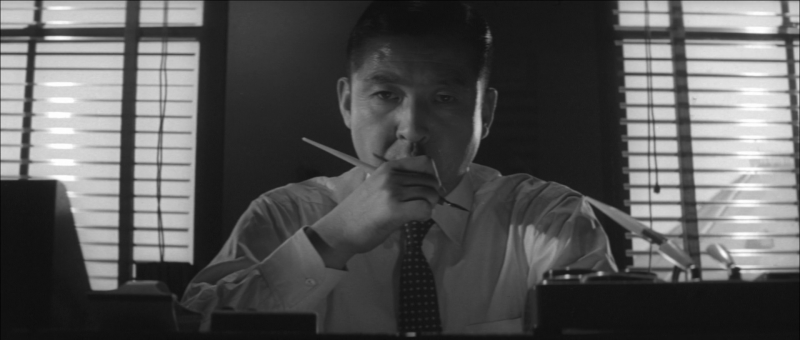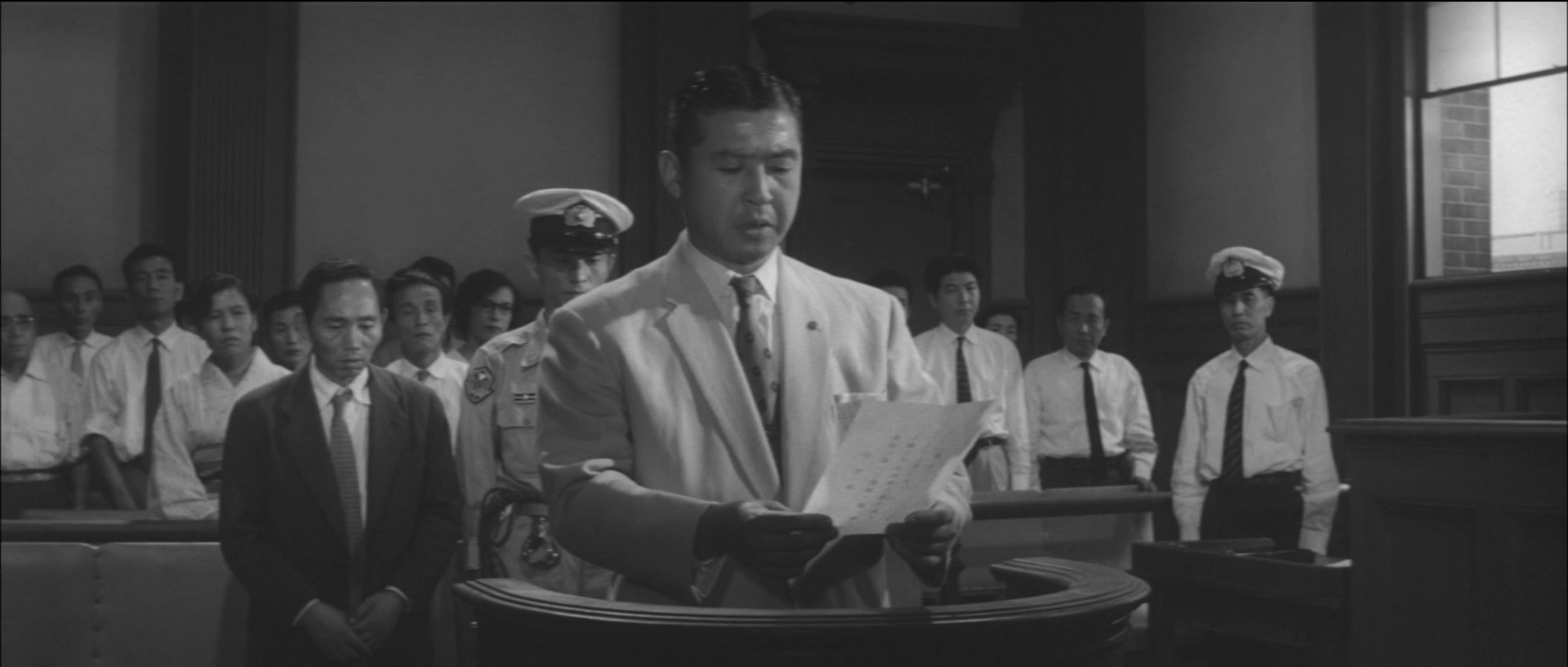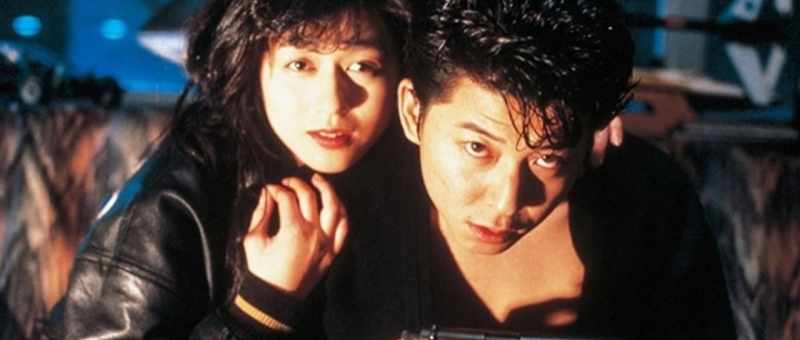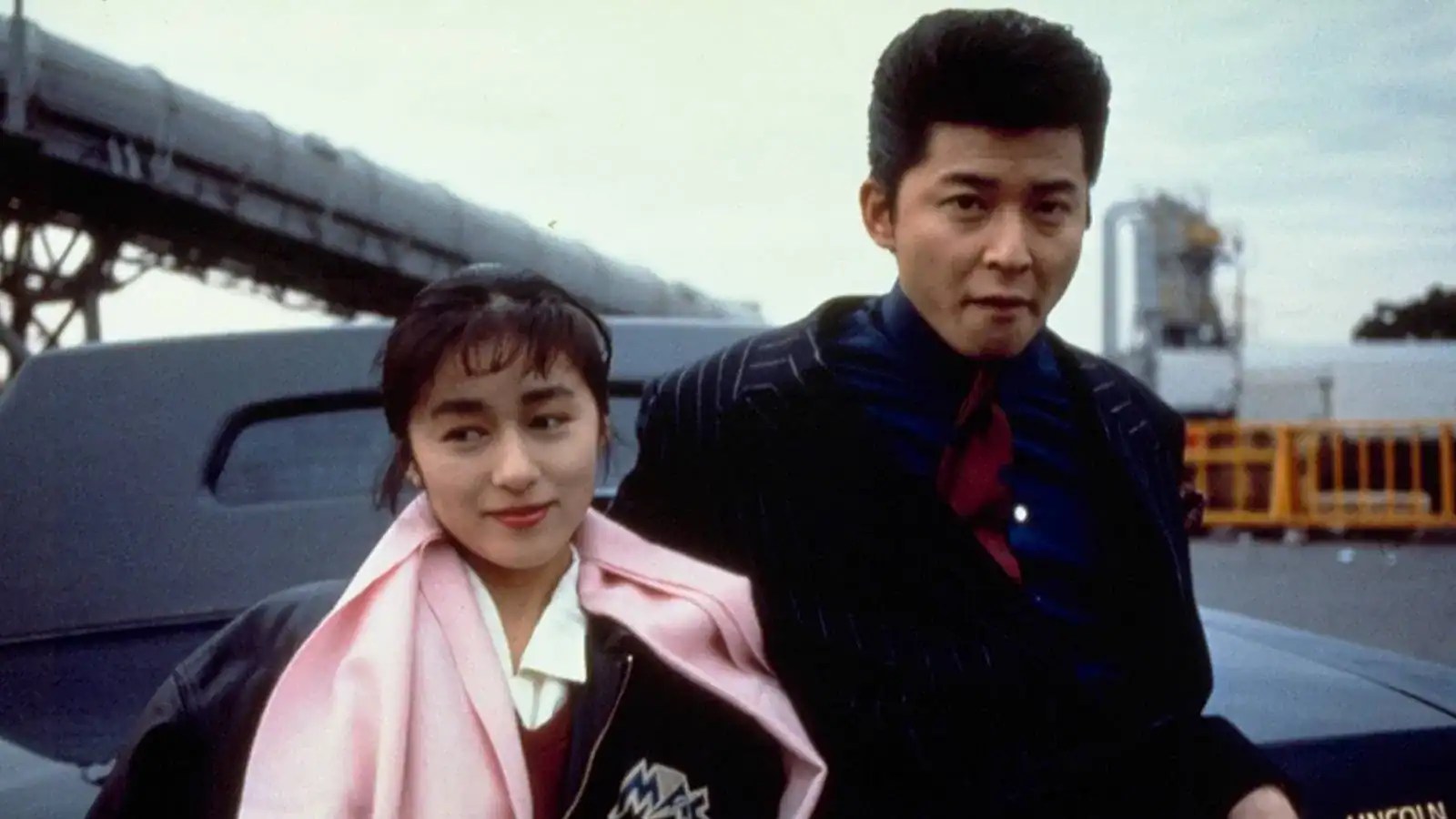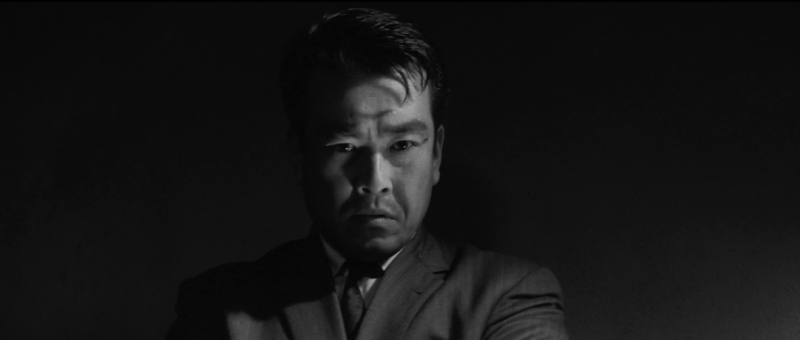
Neo Chinpira: Zoom Goes the Bullet (ネオ チンピラ 鉄砲玉ぴゅ~, Banmei Takahashi, 1990)

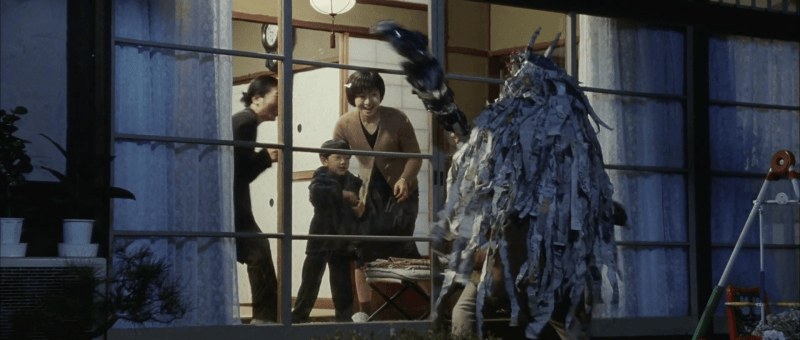
In the classic yazkua films of old, going to prison for the gang could be a badge of honour and one of the ways you could catapult yourself into the higher ranks. By the 1990s, however, the yakuza is a much depleted force and it seems few are willing to give up years of their lives on a point of honour for an uncertain reward. At least, that’s how it is for most of the gangsters at the centre of Banmei Takahashi’s Neo Chinpira: Zoom Goes the Bullet (ネオ チンピラ 鉄砲玉ぴゅ~, Neo Chinpira: Teppodama Pyu) , a slacker comedy in which a young hanger on faces a dilemma when he’s made the lookout on a squad sent to bump off a rival only for his squamates go to great lengths to injure themselves first so they won’t have to go through with it.

Junko (Sho Aikawa) is an unlikely hero. With a rockabilly quiff and a red jacket, he’s nominally the driver for gangster Yoshikawa (Toru Minegishi) which means he gets to drive his limo and act like a big man for a while making calls on his carphone. But as much as Junko shows off to his girlfriend Noriko, a hostess at a Korean bar, by instructing the landlady not to clear up his empty bottles because they’ll make a good weapon in an emergency, he’s otherwise something of a joke. The limo ends up getting “stolen” by a young woman who just likes American cars and sexually aroused by gunfire.

Even Yumeko (Chikako Aoyama) chuckles that Junko sounds like a girl when he says he wants to see the ocean while they’re driving around. “Junko” is ordinarily a girl’s name. He picked it up as a kind of hazing based on an alternate reading of his name kanji. She says the same thing again when he reveals he’s never brought a girl back to his place before, probably because it’s in a disused building he was given to manage where he’s surrounded by junk like an old barber’s chair and pinball machine while the figure of Humphrey Bogart in the Maltese Falcon looks down at him from a poster as if embodying his unattainable gangster dreams. As masculine icons go, Junko is also plagued by his uncle, Mizuta (Joe Shishido), a legendary gangster and representative of old school yakuza who take the code seriously and wouldn’t put up with people like Junko’s colleagues who engage in “zooming”, deliberately shooting themselves to get out of being ordered to carry out a hit. He’s not overly impressed by Junko either, unable to understand why he’d become an errand boy for a petty gangster rather than be his own boss as a small-time crook.

Junko’s dilemma is whether he’s really up to this task and will be to go through with it or will end up chickening out and injuring himself too. Crows are more cowardly than they seem, Yumeko explains in an obvious allegory for the yakuza. They pick a place and defend it as a group, while their numbers are way up lately so their individual turfs are shrinking. But now Junko’s all on his own and filled with uncertainty not knowing if he can pass this rite of passage and be accorded a man or will forever be trapped in a liminal space of adolescence never to be taken seriously or make any progress in his life. In an effort to toughen up, he swaps his red jacket for a suit and finally puts on a shiny leather overcoat, ripping off the buttons to bind it more tightly around him with the belt as if it were a kind of armour. 

Somehow the lighthearted ridiculousness of this world of bumbling yakuza and creepy corrupt cops lends an additional poignancy to Junko’s final gesture as he sets off on his path, not really believing he will return. He doesn’t even wait for the pictures he had taken at a photo booth. They won’t be much use to him where he’s going, but at the same time it’s like he’s treading water never quite getting closer to his destination but continuing along his long sad walk. Banmei Takahashi sticks firmly to his pink film roots, sticking in a weird sex scene at regular intervals as Yumeko becomes enraptured by pistols, but also has quite a lot of fun with his “uncool” gangsters and the lost young man who looks up to them while perhaps knowing that this image of stone cold masculinity only really exists in the movies.


Bonds of Love (愛のきずな, Takashi Tsuboshima, 1969)

On a rainy night, a salaryman trapped in a loveless marriage and unsatisfying career chances on a beautiful woman dressed in kimono waiting by the side of the road. He decides to double back and offer her a lift, which she ill-advisedly accepts, but as it turns out he is actually the one in danger. Adapted from the Seicho Matsumoto short story Tazutazushi, The Bonds of Love (愛のきずな, Ai no Kizuna) has underlying misogyny that paints the woman at its centre as a sort of elemental spirit who bewitches men and leads them to their doom even while the hero himself is selfish and insecure, mired in an inferiority complex and incapacitated by wounded male pride.

The fact that Ryohei (Makoto Fujita) is already married comes as a bit of a shock, abruptly revealed as it is by the nameplate on the suburban home he returns to after a date with Yukiko (singer Mari Sono) having told her that he lives alone at the company dorm. It seems obvious that he’s dissatisfied with his domestic life and fed up with his overly materialist wife Sanae (Chisako Hara) whose constant gripes only seem to needle at his sense of inadequacy. Today, she’s misplaced an expensive ring he’d used his annual bonus to buy her and when he notices it simply sitting next to the sink, she remarks that it’s not all that nice anyway. Ryohei at least feels that she resents him for not being more successful and having the financial power to buy her the frivolous gifts and status symbols she clearly desires. The power dynamic is in any case unbalanced because Sanae is the daughter of his boss which means she in effect has total control over his career. One word to her father, and he’s toast, but at the same time she can only help him so far with his advancement despite nagging him constantly about his future prospects. Meanwhile, the other men at the office make fun of him. They describe Ryohei as an idiot who’s only in his position by virtue of being the boss’ son-in-law. 

This of course further needles at his wounded male pride, but dating Yukiko, who adores him completely, on the side restores his sense of masculinity. After he claims to have been staying out late playing mahjong, Sanae cautions him that one of his colleagues is being transferred because of his gambling and womanising habits. At his leaving do, Miyata (Sachio Sakai) lays into Ryohei and says he’s the one who taught him how to pick up women and pretend to be single as if this is the way they overcome their sense of impotence while under the company’s thumb. Ryohei appears not to like him, perhaps because he reflects the qualities in himself he is least proud of. The news of his transfer therefore spooks Ryohei knowing that the same fate may befall him if his affair with Yukiko is exposed. 

But when Sanae does eventually suspect he’s cheating on her and complains to her mother, the boss rings Ryohei and basically tells him not to worry about it because a man’s not a man if he doesn’t play around. The conflict that Ryohei has is essentially one of conflicting masculinities, the one in which he is effectively emasculated but defines his status through a hierarchical relationship with other men within the corporate structure, and the other in which he defines it through romantic conquest which also represents a kind of freedom. But being a fairly conventional man, in the end Ryohei cannot bear to have his salaryman persona ripped away from him and will do whatever it takes to maintain his relationship with his wife and by proxy his boss to preserve his career.

Realising Yukiko poses a threat to that, he decides the only solution is to kill her but it’s also true that he’s confronted by a much more robust vision of masculinity in the form of her estranged husband Kenji (Makoto Sato) who went to prison after stabbing another man in a jealous rage. It’s clear that Ryohei is afraid of Kenji and definitely doesn’t want to end up getting stabbed. His “love” for Yukiko does not stand up to that kind of scrutiny and it’s her assertion that she’s going to tell Kenji all about their affair and ask for a divorce that shifts him into crisis mode. After all, he’s in flight from domesticity. Leaving Sanae, and with it destroying his career might not solve his problems even if what he eventually chooses is just that, to be free of the burden of the salaryman dream and move to a small town to open a shop with a woman who is in thrall to him and therefore continually submissive and loving in contrast to Sanae who only ever makes him feel small.

Yet, we can’t actually be sure how much of what happens later is actually real or just Ryohei imagining things because of his guilty conscience and continuing sense of inadequacy. Essentially, he gets a second chance to make better choices and finally gains the courage to abandon his salaryman persona only to be immediately confronted by both his transgressions and violent masculinity. Tsuboshima crafts an atmosphere of malevolence and noirish dread coupled with a spiritual sense of retribution born of the constant rains and gothic thunderstorm that heralds the final confrontation in which Yukiko is herself a harbinger of death leading weak willed men towards their doom to which they go all too willingly. 


Wait and See (あ、春, Shinji Somai, 1998)

In the opening sequence of Shinji Somai’s Wait and See (あ、春,  Ah haru), a large grey cat growls as it creeps through a suburban home and out into the garden where it sits outside a henhouse and loudly miaows at the birds trapped inside. In many ways, this is exactly what’s about to happen to the Nirasakis when a prodigal father suddenly returns to disrupt the life of his incredibly dull and emotionally distant son. 

Hiroshi (Koichi Sato) is the epitome of the ideal salaryman and seems to be living a charmed life having married into his wife’s wealthy family but under the surface nothing is quite as it seems to be. His wife Mizuho (Yuki Saito) seems to be suffering with some kind of mental distress and Hiroshi often appears indifferent or even cold towards to her. At the memorial service for his late father-in-law, Mizuho’s mother (Shiho Fujimura) and aunt (Chisako Hara) reflect on the late patriarch in less than favourable terms remarking that “everything was half measures” with him. He didn’t commit himself fully to either his family or his career and consequently achieved success with neither. 

The implication is that Hiroshi is much the same, simply going through the motions whether at work or at home and largely closed off to his wife at one point even drawing a curtain and leaving her in the dark to escape a conversation. “He never tells you anything” Mizuho’s mother points out after reading in the paper that the company where Hiroshi works may be in financial trouble, while Mizuho too complains that he never discusses anything with her only announcing the results when it’s already finished. 

Hiroshi had always believed his own father to have died when he was five years old, so it’s quite a surprise when the gnomish Sasaichi (Tsutomu Yamazaki) accosts him in the street and claims to be his long lost dad. Like the cat outside the henhouse, he’s set to create a disturbance but not quite the one everyone assumes it will be. Hiroshi’s mother Kimiyo (Sumiko Fuji) warns him that his crass working class dad will only cause embarrassment in the refined elegance of the upper-middle-class family he has married into. Yet Mizuho and her mother actually find Sasaichi quite amusing for the first couple of days, the mother very impressed by Sasaichi’s unreconstructed manliness which she finds so in contrast to the comparatively meek Hiroshi. Sasaichi fixes the leaky bath and sticking door that Hiroshi never got round to symbolising his lack of regard and inability to care for his home, which is in a sense ironic because Sasaichi was never really able to take care of anything. 

Sasaichi later explains that he left because his business failed and he ended up with debts to loansharks so he divorced Kimiyo and moved away to prevent them coming after her money. A fatherless son, Hiroshi struggles to construct the image of himself as a father and cannot create intimate relationships with people, but has settled for fulfilling the role of a successful member of society who can support a family financially even though the sense of himself as a provider is an illusion as his wife’s generational wealth already guarantees them a comfortable existence. Even so, this being the difficult post-bubble economy Hiroshi lives with a sense of economic anxiety but buries his head in the sand refusing to listen to a more savvy friend who can see the writing on the wall and tries to convince him to take a job at another company where he’s just secured a position for himself. But Hiroshi is afraid of change and ironically clings fast to his corporate family even while fearing it will leave him. 

He desperately doesn’t want to think that he is like Sasaichi, that he may fail his family by failing in his career or that he too is an uncouth, unrefined country bumpkin incapable of taking care of himself let alone anyone else. The again perhaps they’re more alike that he’d like to think. Hiroshi and Mizuho object when they realise Sasaichi’s been teaching their son Mitsuru (Keita Okada) how to play craps, but as his friend points out stockbroking is also really just legitimised high stakes gambling. He too wanders around until late at night because he doesn’t want to go home and makes his wife worry so she has to take sleeping pills .

Yet there’s also a side of him that is still the gentle boy from the country as he painstakingly raises chicks in the back garden. In the end, it’s Sasaichi who shows them the maternal warmth they need to grow, gestating the eggs in a pouch inside his haramaki only for them to hatch at the most ironic moment. Hiroshi gives his son a brief life lesson in explaining that the chicks that hatch from these eggs will go on to lay their own in a circular process of renewal just as he is passing on knowledge from his childhood to the next generation. The film begins and ends with a ritual of mourning, though Somai takes us through the passing season moving from Setsubun to Hinamatsuri as Sasaichi continues to outstay his welcome while attempting to repair his corrupted paternity. “Don’t worry, life will go on,” Mizuho reassures a more open Hiroshi finally coming to terms with his anxieties and willing to share them with his family in full knowledge of who he is as a man and a father in a world that’s anything but certain.


Original trailer (no subtitles)

The Desperate (どろ犬, Takaharu Saeki, 1964)

A bruiser cop railing against the system is pulled towards the dark side in Takaharu Saeki’s icy noir, The Desperate (どろ犬, Doro Inu). Adapted from a novel by Shoji Yuki, the film is one of only two Saeki directed in an otherwise lengthy career mainly spent in television and captures an eerie sense of existential dread as its detective hero sinks to even greater depths in a quest for self preservation while kicking back against the hypocrisies of the post-war society. 

As one officer puts it, Sugai (Minoru Oki) is one of many veteran officers who can’t adjust to new codes of justice in the democratic era. In the film’s opening sequence, he’s pulled aside and warned about using excessive force on a suspect only to counter that he knows the guy’s guilty so he doesn’t see what the problem is. Sugai had been particularly motivated about this case as the victim was an 18-year-old girl raped after accepting a lift from a stranger. She was so traumatised that she could hardly speak but did remember the registration plate of the car. She’d only been working because her father lost his factory job though he appears to have begun drinking and is abusive towards his daughter for her silence, later coming to the station to drop the charges after being paid off by the suspect’s lawyer. The legal definition of rape in this era is founded not on an idea of consent but whether violence was involved and the victim can be proved to have resisted physically. The guilty party, Tomita (Hideo Murota) claims that nothing illegal transpired in his car and then walks away with a smirk when his lawyer gets him off the hook. It’s all too much for Sugai to bear, resentful that the rich and powerful are now effectively above the law thanks to legislation he feels ties his hands as a police officer. 

It’s at this point he runs into petty yakuza Yamaguchi (Ko Nishimura) whom he’s been trying to turn as an informant, unwisely mouthing off about his dissatisfaction with contemporary law enforcement only for Yamaguchi to turn the tables and effectively blackmail him having discovered that Sugai has begun a relationship with the estranged wife of an imprisoned gangster. In an act of petty revenge and desperation, Sugai leaks info on “guilty” suspects who weren’t charged to Yamaguchi who exacts financial justice by extorting them for money while threatening to expose their immorality. 

Disappointed in him, the gangster’s wife, Chiyo (Chisako Hara), exclaims that Sugai’s no different from her husband and in truth he isn’t. Part of Sugai’s resentment lies in the fact his wife left him for another man while he was on a stakeout, frightened by his violence and insisting that she hated detectives. His old-fashioned police tactics include taking suspects to the dojo where beats the living daylights out of them. Later he tells another, more earnest officer, he reminds him of himself when he was younger implying that he has become corrupted by the times and the impossibility of justice, particularly for young women whom he feels an urge to protect, in a world ruled by money and status. He may feel some pangs of guilt for a rookie who is unfairly fingered as the mole on the grounds that he and Yamaguchi were originally from the same area and had a past acquaintance, but in the end is happy enough to scapegoat him for his wrongdoing while he continues trying to dig himself out a hole but falling still further into the abyss. 

Sugai is merely trying to save his own skin, but those around him are desperate too. His opposite number, Toku (Hisashi Igawa) is desperate to clear his name, while Chiyo is desperate for what she describes as a proper marriage to a proper man while seemingly kept captive in the apartment Sugai rents for her on his meagre police salary but does not live in himself. She wants to work and has an innocent desire to buy him some better shoes that he otherwise resents in its implied challenge to his masculinity that he evidently cannot afford all this additional expense coupled with the strain of keeping his problematic relationship with a gangster’s wife secret from his employers. In the end he claims that the problem was he couldn’t escape from being a detective, pushed into desperate acts of destruction as a man now exiled from his times unable to move on from post-war chaos into a newly democratic, consumerist Japan. Saeki ends his fatalistic vision with an image of a train reeling backwards, echoing the degree to which Sugai has lost control of his life and himself no longer a detective but only a man without a moral compass whose path can only lead in one direction. 


The Nineteen-Year-Old’s Map (十九歳の地図, Mitsuo Yanagimachi, 1979)

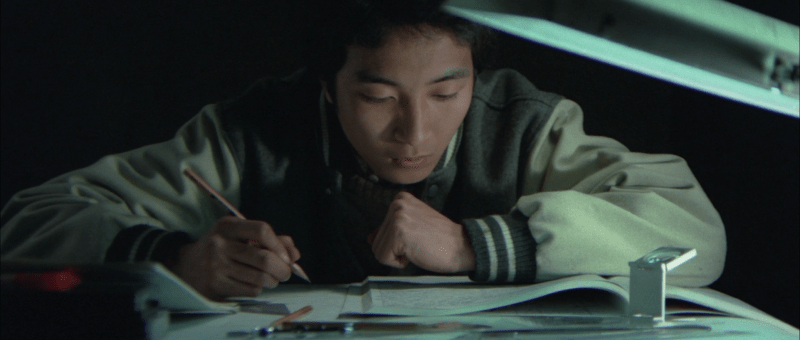
“What should I do with my life?”, the question becomes a frequent refrain in Mitsuo Yanagimachi’s dark tale of urban alienation, The Nineteen-year-old’s Map (十九歳の地図, Jukyusai no Chizu). Adapted from a novel by Kenji Nakagami which painted a bleak picture life on the margins of the economic miracle, the film’s quiet sense of unease hints at a coming explosion but also that there will never be one because in the end the hero is too filled with despair and ennui to ever follow through on the various threats he makes during a series of prank calls to people in the neighbourhood who’ve incurred his wrath.

The nineteen-year-old of the title, Yoshioka (Yuji Honma) is in theory a student taking a year out to study for university exams while earning his keep delivering papers for a newsagent where he lives in a dorm with several other paperboys all just as defeated and aimless as he is. They all, however, look down on and make fun of him for being a bit odd not least because he hangs around with a 30-year-old man who is still stuck living a like a teenager that the other guys think is creepy. Konno (Kanie Keizo) is creepy in a way, in that he’s an obvious image of what these boys might be in 10 years’ time if they do not manage to find something that will allow them to move forward, out of the slums and into a more fulfilling life. 

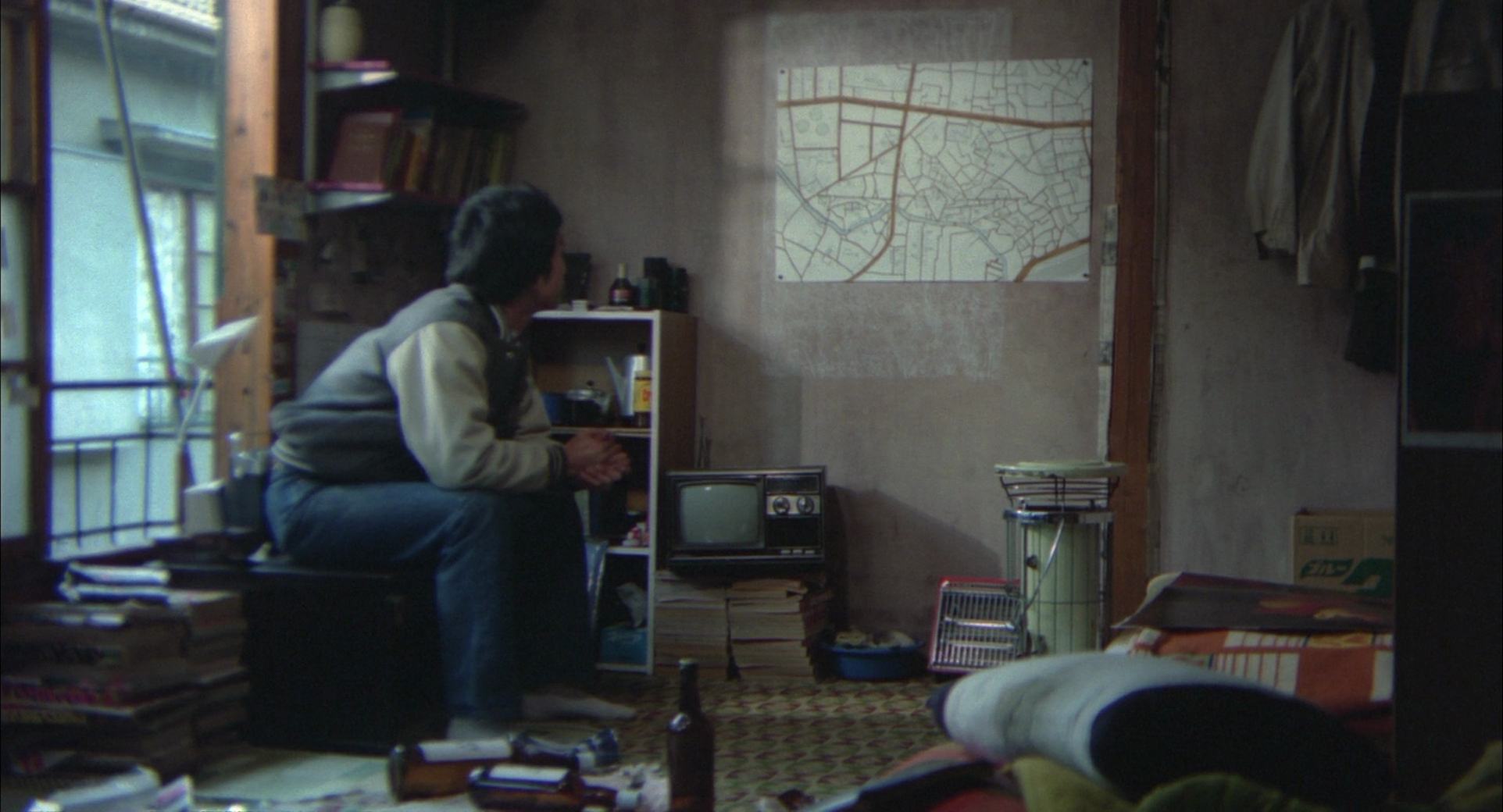
Yoshioka’s main outlet is making a map of the local area which he annotates with notes about the various people who live there, many of them on his paper round. If they do something to displease him or otherwise display something he regards as a moral failing he puts a large cross against their name, and when someone has three crosses he makes a harassing phone call threatening to burn down their house. It’s never quite clear whether his threats have any serious intent or if the threat itself is enough in allowing him to feel powerful and superior to world around him which he feels is rotten beyond repair. People often ask him where he’s from and he tells them but with slight hesitation, as if he’s not telling the entirety of the truth as perhaps confirmed by one woman’s attempt to probe his origins surprised that he doesn’t have any kind of rural accent while she’d never heard of the town he claimed to be from. 

One of the other boys at the newspaper office is an aspiring boxer, but he gets badly beaten in a fight and eventually leaves to join the Self Defence Forces. The meanest of them, Sato, has a sharp tongue but seemingly no more direction than Yoshioka finding his release through more direct forms of violence and hateful behaviour. Everyone around him is disappointed and filled with despair. Even the lady who runs the newsagent’s reflects on her unsatisfying life and the ruined hopes of her youth in which she dressed in fine kimonos and kept herself nice. Her only comfort is that she “saved a man deserted by his wife” even if she mainly treats him with contempt for his failure to repair the loose nail in the hallway she keeps catching her foot on, or fix the toilet which continually backs up and floods the bathroom. 

Yoshioka does seem to be followed around by leaky appliances while everywhere around him is dank and muddy. Konno has one ray of hope in his life in the form of a woman he calls Maria (Hideko Okiyama) who is covered in scars but still she survives. Maria is indeed a Madonna figure, a symbol of scarred purity and human suffering that Konno regards as a kind of salvation. Yet Konno’s attempt to reach her only leads to further ruin as he commits small but increasingly daring acts of crime from bag snatching to burglary to get the money to run away with her only to end up in prison still wondering what it is he should do with his life. 

Maria had told them of a dream she had in which hundreds of people emerged from her and went happily to heaven while she was left on the ground below. Some angels on a cliff tried to lift her up, but she found herself unable to reach out to them only standing immobile and looking up in jealousy. In his way, Yoshioka is much the same perhaps as Konno had said afraid to be happy and unable to envisage for himself a life outside of the slum. Konno sometimes introduces him as a student at a top university which seems to further press on his insecurity. Yoshioka rarely attends classes, spending all his time delivering papers or making his map of iniquity. He describes himself several times as a “right-winger” and at one point fantasises about taking part in a nationalist parade, but aside from his conservative takes on morality seems to have no real ideology save the fact that everyone, even the people who are actually nice to him, pisses him off. 

“Even if you’re angry at something, why should you explode the gas tanks?” a telephone operator reasonably asks after Yoshioka makes a prank call reporting a bomb threat on a train leaving Tokyo station while explaining that he also plans to blow up a set of gas cylinders to obliterate the town. The voice on the phone does not appear to take him seriously and sympathetically tries to talk him out of his strange delusion, but all Yoshioka can do is go home and cry in the utter impotence of his life. In the end, Maria is the only one who is able to feel any kind of joy. Finding a pretty dress while dumpster diving, she twirls cheerfully dancing around even with the leg which was left lame after a failed suicide attempt. This time she’s the one who tries to reach out, but Yoshioka ignores her and looks away as they head in different directions. It seems he will never really act on any of his threats, or be able to escape the futility of his life trapped on the margins of a prosperous society which he feels continues to reject him. Yanagimachi films his uneasy existence with naturalist detachment, capturing the mud and filth that cling to Yoshioka along with the strangely violent, goldfish-killing kids, the angry dads, and women who urinate in the street that occupy his round in this particular corner of the “hell” of modern Tokyo.


DVD release trailer (no subtitles)

The Approach of Autumn (秋立ちぬ, Mikio Naruse, 1960)

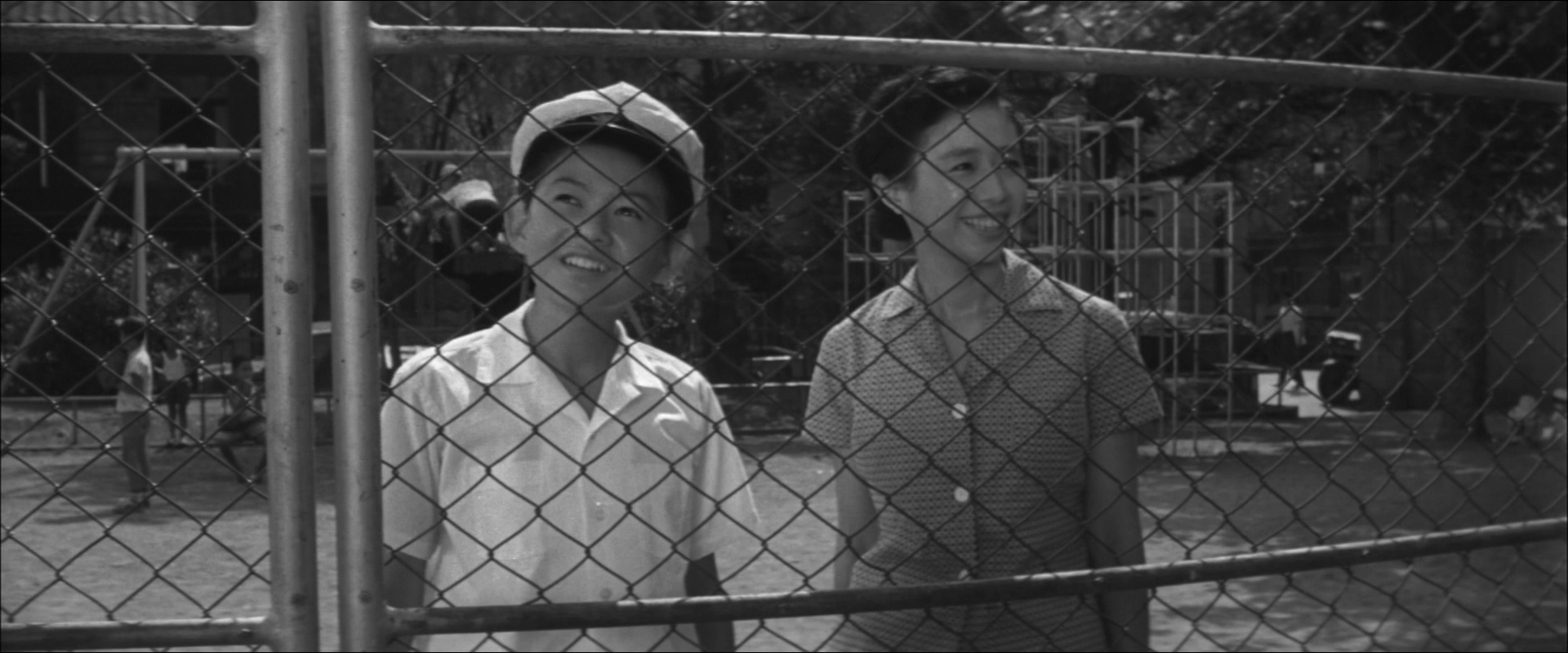
For a small boy in post-war Japan, childhood’s summer is already over in Mikio Naruse’s at times uncharacteristically cheerful The Approach of Autumn (秋立ちぬ, Aki Tachinu) . In truth, the Japanese title is the slightly more depressing “autumn has begun” echoing the dismal circumstances that the hero eventually finds himself in while working his way towards an understanding of the disappointments and loneliness of adulthood. Abandoned by his mother he remains alone, in a sense homeless, trapped between the new Japan and the old in a liminal space shrinking by the hour as the construction of modernity encroaches all around him. 

The amazement on Hideo’s (Kenzaburo Osawa) face is palpable as he exits a train station in the middle of Tokyo peering up at the high rise buildings amid busy city streets. He and his mother Shigeko (Nobuko Otowa) have travelled by train from rural Nagano following the death of his father intending to stay with his mother’s brother (Kamatari Fujiwara) who owns an old-fashioned grocery store in Ginza. What Shigeko has not really explained to her son is that they will not be living there together as she has taken a job as a live-in hostess at a nearby inn. 

Plunged into this unfamiliar world all alone, Hideo cannot help but feel awkward in the house of relatives he has never before met. His grown-up cousins playfully argue in front of him about having to share a room, while he makes a point of not eating too much at dinner though as Harue (Hisako Hara) jokes perhaps he doesn’t like the food seeing as his penny pinching uncle mainly feeds the family on fruit and veg from the store that’s gone past its best. Meanwhile, he struggles to make friends with the local children who mock his country bumpkin accent and use him as a scapegoat when it looks like they might get in trouble. His only companion is the precocious daughter of the owner of the inn where his mother works, Junko (Futaba Hitotsugi), who instantly takes to him and even goes so far as to beg her mother to adopt Hideo as an older brother. 

Junko is in a similarly liminal position herself as we later find out. Her mother (Murasaki Fujima) is the mistress of a wealthy businessman who only visits them every so often and appears to be well aware of the precarity of her position. Junko’s father, awkwardly inviting her out on a playdate with his other two children born to his legal wife who apparently knows everything and at least pretends to be alright with it, urges her mother to take advantage of rocketing Ginza land prices and sell the inn to buy a fancy new apartment but she is understandably wary. Running an inn is all she knows how to do and should he die or simply decide to drop her she’d be in trouble fairly quickly. Hideo’s cousins similarly nag their father to sell the shop, reminding him that with the increasing gentrification of the area there is no longer sufficient footfall to support it, and suggesting they use the money to buy larger premises in suburbia. Both Hideo and Junko are in a sense orphans of these liminal spaces, relics of a disappearing Japan soon to be eclipsed by endless office buildings symbols of the nation’s increasing economic prosperity. 

All of the sites on which the children play are earmarked for construction, Junko later explaining that the docks where they eventually head looking for the sea are built on reclaimed land big enough to build a baseball field. Like Hideo she longs for the country with clean air and unpolluted rivers though as Hideo points out it’s all the same to him, his mother isn’t in either place and so neither has any meaning for him. Her strange idea of adopting Hideo is in a way an attempt to anchor herself with family, assuring her mother that she’s old enough to understand but struggling to parse her family circumstances while deeply hurt on discovering she does have siblings after all only they don’t want to know her. She is looked down upon because of the choices her mother has made, as is Hideo especially after his mother leaves abruptly with a customer from the inn (Daisuke Kato) abandoning him with his uncle in search of romantic fulfilment which it seems she probably did not find considering a later telegram explaining she’s working as a maid at a hotel in the resort town of Atami. 

Shigeko is made out to be the villain, but she too is only chasing safety in a changing society hoping to find it in the arms of a reliable man be he a husband or not. Hideo may be an obstacle to that, but her anxiety is mostly maternal, unwilling to rely on her brother’s goodwill and knowing she will need to find a way to support her son even if she is not with him. Hideo’s cousins meanwhile are the youth of the new society. Harue has rejected the old-fashioned family grocers and now works in a department store while her former student protestor boyfriend is certain of getting a salaryman job seeing as there’s a massive labour shortage. Shotaro (Yosuke Natsuki), who is always kind to Hideo, runs around town on his scooter ferrying girls to the beach sometimes forgetting his melancholy cousin in favour of transitory pleasures. He envisages taking over the store and selling it to open up somewhere new, reassuring Hideo that there will always be a place for him there even while letting him down in the present. 

In the end, Hideo’s only friend is a beetle packaged in a box of apples from his grandma in the country which his uncle selfishly claims for the shop under the rationale that he can’t eat them all himself. A symbol of an older, rural Japan as well of the idyllic childhood for which Hideo’s longs, the beetle is as out of place in central Tokyo as he is the pair of them looking down on the sprawling city and out towards the barely visible sea from the roof of a department store which holds no sense of promise for them. Despite the bleakness of the ending, Naruse’s depiction of an ordinary childhood is deceptively cheerful perhaps implying that Hideo is merely enduring a period of adjustment only to leave him with the crushing weight of impossibility, trapped between the new society and the old with no home to go to. 


French release trailer (French subtitles only)

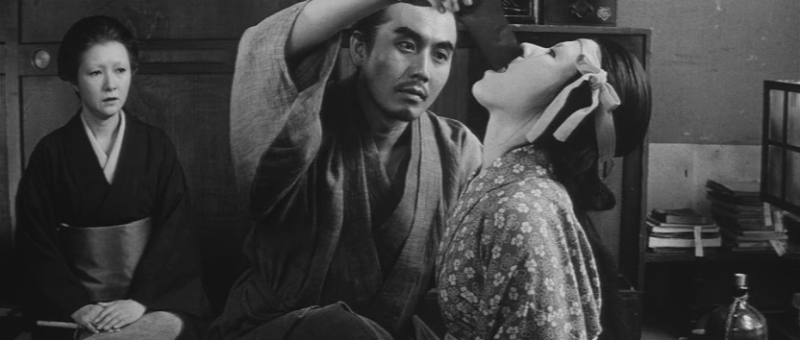
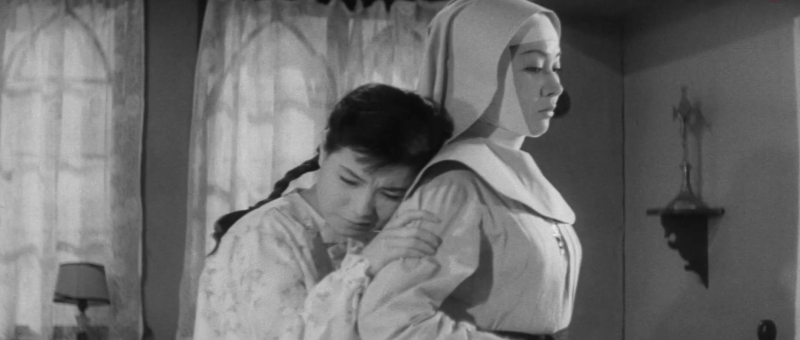
The Wife of Seishu Hanaoka (華岡青洲の妻, Yasuzo Masumura, 1967)

The close relationship between two women is disrupted by the reintroduction of a man in Yasuzo Masumura’s fictionalised account of the rivalry between the wife and mother of pioneering Japanese doctor Seishu Hanaoka. Scripted by Kaneto Shindo and adapted from the novel by Sawako Ariyoshi, the refocusing of the narrative is apparent in its title, not the life of but The Wife of Seishu Hanaoka (華岡青洲の妻, Hanaoka Seishu no Tsuma) less a tale of scientific endeavour than of domestic rivalry born of the inherently patriarchal social codes of the feudal society which cannot but help pit one woman against another while forcing each of them to play a role they may not wish to fulfil in order to secure their status and therefore their survival. 

Samurai’s daughter Kae (Ayako Wakao) first catches sight of the beautiful Otsugi (Hideko Takamine) at only eight years old and is instantly captivated by her, a fascination which persists well into adulthood when she is approached to marry into the Hanaoka household as wife to oldest son Seishu (Raizo Ichikawa) away studying to become a doctor like his father. Kae’s father originally objects to the match because of the class difference between the two families, Seishu’s father Naomichi (Yunosuke Ito) being only a humble country doctor of peasant stock whereas they had envisaged a grander station for their only daughter. Yet Kae is already old not to be married and continues to decline prospective suitors and so her mother and nanny (Chieko Naniwa) are minded to put it directly to her discovering that she is in fact more than willing to become a Hanaoka though mostly it seems in order to get close to Otsugi whom she has continued to idolise. 

The strange thing is that the wedding is conducted in Seishu’s absence, a medical text standing in for him while Kae in effect marries her mother-in-law Otsugi. These early days are spent in blissful tranquility as Kae does her best to be the ideal daughter-in-law, Otsugi even remarking that she’s come to love her more than a daughter. The two women share a room, Kae often staring longingly at the back of Otsugi’s head, their relationship one of mutual respect and affection that allows them to forget their respective stations but when three years later Seishu finally returns, it forces them apart in reverting to the roles of wife and mother their statuses conferred only by proximity to a man. 

Pregnant with her first child and about to become a mother herself, Kae’s resentment towards Otsugi begins to boil over. In an ironic premonition of the way the relationship between Masumura and his muse would eventually break down, she claims to have seen through Otsugi’s beauty and concluded that she is cold and calculating believing that she only brought her into the household as an unpaid servant forcing her to work a loom to raise money for Seishu’s medical training. Alternately jealous and condescending, Otsugi’s resentment is mediated through attempts to undermine her daughter-in-law’s authority finally leading to an ironic and absurdist battle between the two as they attempt to outdo each other volunteering to become test subjects for Seishu’s ongoing experiments to discover a safe anaesthetic in order save patients who require surgery but cannot endure the trauma. 

The marriage itself perhaps represents a moment of change in the feudal society, it becoming clear that the samurai are on their way down while skill and knowledge will define success in this new age of enlightenment. While Seishu works on his anaesthetic, the superstitious local community begins to view the Hanaokas with suspicion, believing that the misfortune that befalls them is the result of a curse owing to the large number of cats and dogs which have become casualties of Seishu’s failed experiments while a pedlar brings news of a mysterious disease attributed to the rain which is in fact due to mass malnutrition following a famine caused by the bad weather. When news of Seishu’s prowess as a doctor spreads they are soon overwhelmed with patients, many of whom cannot pay but are seemingly treated anyway. 

Seishu’s eventual victory is one of science over superstition, but it also requires faith which is the battleground contested between wife and mother. Having found a successful solution in cats, Seishu needs human test subjects with both instantly volunteering only to become locked into an absurd, internecine contest to prove who is the most self-sacrificing. The competition goes so far that it effectively becomes a game of dare with each determined to be the one to die for Seishu’s discovery but later realising that the stakes are even higher than first assumed because the winner will be dead but the loser saddled with guilt and possible ostracisation as someone who allowed their mother/daughter-in-law to die to in their place. 

Even so, the pair of them are described as “wonderful examples of womanhood” in their willingness to risk their lives for their “master’s success”. Kae is reminded that a woman’s job is to give birth to a healthy baby, later weaponising her ability to do so as currency in realising that Otsugi has all the control but the one thing she can’t do is bear Seishu’s child. Ironically enough, the cases Seishu is trying to treat are of aggressive breast cancer, the oft repeated maxim being that a woman’s breasts are her life and to remove them is as good as killing her contributing to the sense that maternity is the only thing that gives a woman’s life meaning. It’s not without irony that the first successful surgery under anaesthesia directly juxtaposes a massive tumour removed from a woman’s breast with a baby being removed from a pregnant Kae who, at this point having lost her sight as a consequence of Seishu’s experiments, must bear the pain with no relief. 

Brought together by tragedy, Kae comes to a better understanding of her relationship with her mother-in-law only after she dies learning to see her once again as the kind and beautiful woman she met at eight years old while her unmarried sister-in-law having witnessed their painful war of attrition prays that she won’t be reborn as a woman glad that she was never forced to become a bride nor a mother-in-law. “The struggles of the women in this house were in the end just to bring up one man” she laments, suggesting that Seishu most likely noticed the conflict between the two and used it to his advantage in getting them to participate in his experiments as they desperately tried to prove themselves the better through dying for his love. 

Going one step further, it seems that being a woman is an exercise in futility the only source of success lying paradoxically in birth or death alone, the natural affection between Otsugi and Kae neutered by the presence of Seishu who inserts himself as the pole around which they must dance for their survival. Kae becomes a local legend, a woman who sacrificed her sight in service of her husband but now rejects this mischaracterisation of her life along with the implication that it’s somehow a wife’s duty to deplete herself for her husband’s gain retreating entirely from the society of others while Seishu’s practice continues to prosper. Even so Masumura ends on a note of irony in the literal transformation of Kae into the figure of Otsugi recreating the opening scene as she walks among the bright flowers she can no longer see.


Original trailer (no subtitles)
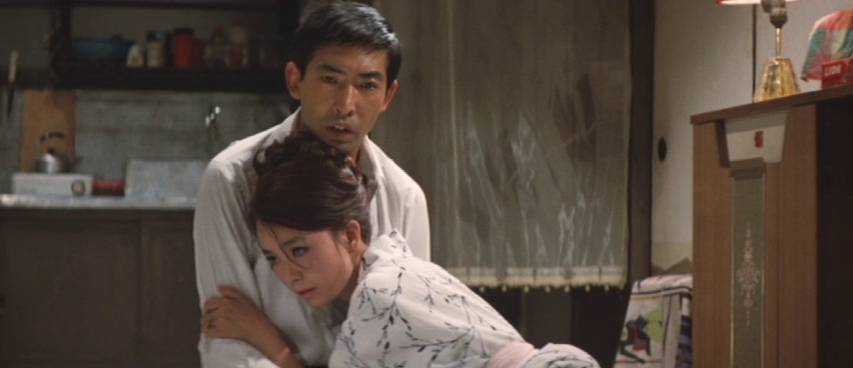
Woman of Design (その場所に女ありて, Hideo Suzuki, 1962)

“This job poisons you and deprives you of your youth” according to conflicted ad-exec Ritsuko (Yoko Tsukasa) trying her best to make it in the still very male world of adverting. A snapshot of the city in the early ‘60s, Hideo Suzuki’s workplace melodrama Woman of Design (その場所に女ありて, Sono Basho ni Onna Arite) considers the changing position of women through the eyes of four friends working at the same company, each facing challenges mainly at the hands of useless men while trying to claim a space for themselves as individuals but discovering that they are still subject to a binary choice when it comes to deciding their romantic futures. 

A woman of around 30, Ritsuko has worked her way up to a fairly senior position at Nishigin Advertising which at least appears to be a fairly progressive company run by a compassionate boss who treats his employees equally with respect for all. Nevertheless, Nishigin is very interested in its bottom line especially as the company is apparently not doing so well to the extent that they’ve unfortunately had to cut back on their “entertainment” budget which is apparently how they win and keep clients. A new opportunity has presented itself in the chance to win a contract with a pharmaceuticals company to market their brand new drug aimed at “revitalising” the lives of the over 40s. Unfortunately, they have a rival in the form of Daitsu and suave adman Sakai (Akira Takarada) who appears to have pipped Ritsuko to the post in “seducing” their sleazy PR guy.

Though focussed on her career and somewhat resistant to romance, Ritsuko finds herself attracted to Sakai if eventually wondering if he’s only using her for inside info on Nishigin which she doesn’t directly give him but their relationship does perhaps soften her attitude. Sakai’s minor betrayal in poaching the head of their art department will eventually destroy any genuine feelings they may have had for each other while leaving Ritusko painfully aware of her vulnerabilities as a female employee and of the costs of her momentary decision to break with her long-held determination to keep her professional and private lives entirely separate, admitting that her relationship with Sakai may have been a mistake but refusing to resign because of it. Meanwhile, the boss of the pharmaceuticals company with whom she seems to be on good terms tries to blackmail her into attending an omiai meeting implying he’ll be much more likely to give them the contract if she goes. Not that they necessarily mean she should give up her career, but even Ritsuko’s colleagues seem to be keen that she get married, shocked that she might determine to remain single for the rest of her life. 

That’s exactly the decision her friend Yuko (Akemi Kita) has made, dedicating herself to her career but also moody and embittered. In fact though it is no way explicit, Yuko is strongly coded as a lesbian with a possible crush on friend and colleague Mitsuko (Kumi Mizuno), herself in a difficult position apparently pushed into debt because of an attachment to a no good man whose hospitals bill she has been paying. Ritsuko’s deskmate Hisae (Chisako Hara), meanwhile, is a divorcee wondering what she’s going to do when her ex, whom she’s still hung up on, stops paying alimony, and her sister is forever badgering her for money because her brother-in-law is an irresponsible layabout who can’t hold down a steady job and has no real intention of doing so. “Men who live off women are the worst” Yuko exasperatedly exclaims thoroughly fed up with the bunch of two bit louses who seem to have ruined the lives of all her friends. 

It’s not difficult to understand why Ritsuko may be ambivalent about marriage, but even at work she’s not free of selfish, entitled men who routinely take credit for her work. Sleazy college Kura (Tsutomu Yamazaki) from the art department is forever sucking up to her only to attempt rape while discussing work at her apartment, later brushing the affair off while talking to a female colleague by affirming that older women aren’t his thing anyway. He also undercuts her by visiting the client himself to discuss ideas and changes. Kura later wins a big design prize in part thanks to the slogan Ritsuko came up with only to annoy his colleagues by implying he handled the whole campaign single-handedly. Meanwhile, though in some ways progressive her bosses are conservative when it comes to the business, shutting down the art director’s suggestion of running with an out of the box campaign (the sexier ad featuring a muscular man in his briefs which he later sells to Sakai is the one which ends up winning). Tsuboichi (Jun Hamamura) and Kura perhaps too feel constrained by a top down hierarchal structure which frustrates innovation and in their own ways rebel, but as Ritsuko later makes plain in her speech to the boss if she wants to keep her position she has to play by the rules. “Life’s short. Especially for a woman. We have no room for mistakes” as Yuko cheerfully agrees.

Yet even within that, Ritsuko manages to redefine her boundaries, making it clear that she won’t be doing the omiai. She does not, however, reject marriage entirely only state that “I will get married only when I feel the time is right”, for the moment at least entirely focused on her career. Though the future may have looked gloomy, the crisis passes and the mood brightens significantly with the news that another company is about to officially announce the launch of a long-rumoured anti-ageing cream which provides another potentially lucrative campaign opportunity for Nishigin and of course for Ritsuko should she win it. Having opened with a series of still frames followed by hazy footage of a sea of workers wandering towards their offices on an overcast morning, Suzuki closes in the twilight with the three ladies leaving the office, their friendship solidified as they head off to celebrate renewed hope for the future bolstered by a sense of female solidarity.


Nosari: Impermanent Eternity (のさりの島, Tatsuya Yamamoto, 2020)

“This is an illusion” a boatman explains to a lost young man “but sometimes people need it”. Produced by the Kyoto University of the Arts Department of Film Production, Tatsuya Yamamoto’s Nosari: Impermanent Eternity (のさりの島, Nosari no Shima) is the latest in a minor trend of indie dramas which see meandering young men find their feet while hiding out in moribund communities where the people are kind, honest, and willing to lend them space in which to figure themselves out enough to get back on the right path. 

This particular young man (Kisetsu Fujiwara) is an “ore ore” scammer, a popular form of telephone fraud in which the caller rings an elderly person and claims to be their grandson explaining in a panic that they’re in trouble and need money right away. The elderly person on the other end of the phone usually complies, either too estranged to realise that it isn’t their grandson’s voice or too anxious to give it much thought. On this particular occasion, however, the woman that the man rings after arriving on the small island of Amakusa appears not to understand, believing that he really is her grandson, Shota, suddenly arrived for a visit. The young man ends up going along with it, warming to the old woman, Tsuyako (Chisako Hara), and more or less forced to stay after she hides his phone and wallet (which contains money he’d already stolen from the honesty box in her music store). 

In some senses, “Shota’s” previous life as a cruel exploiter of the elderly is painted as a symptom of urban disconnection, that his alienated city life has robbed him both of empathy and basic morality though we know nothing of his wider circumstances save that he seems to be on the run from a series of similar crimes along the rail line out from Tokyo. It’s never exactly clear how much Tsuyako knows at any one time, though the movement of a photograph in the closing moments makes plain that she does indeed on some level realise that the man isn’t Shota no matter how much she’d like him to be. As the opening title card explained, the local people have a habit of simply accepting whatever it is that comes their way which is perhaps what Tsuyako decides to do with Shota, realising that he’s in trouble and wanting to help him by taking him into her home which does at least restore his sense of empathy for the elderly. 

The truth is however that Tsuyako is one of many elderly people left behind in a rapidly depopulating rural Japan, her son having moved away to the city and her husband presumably already passed away. Hers is the only shop still open in an eerily empty shopping arcade where she sits on a small stool waiting for customers that presumably rarely come, leaving an honesty box on the counter should she need to nip away. A parallel plot strand finds the host of a local radio programme, Kiyora (Ami Sugihara), desperately trying to find footage from back when the area was filled with life and industry but more or less coming up short. On her travels, she interviews an old man (Akira Emoto) who was once a master craftsman of noh masks but has recently turned to making lifelike scarecrows whose eerie presence attempts to make up for the sense of absence in the moribund town where, he points out, the elderly residents once played together as children. 

Kiyora also meets with a series of businessmen who have their own ideas about how to reinvigorate the town but comes up with few solutions to Japan’s ongoing rural depopulation crisis and is perhaps herself also lonely as one of the few youngsters remaining behind. She loves Amakusa for its serenity, often playing the calming soundscape on air for harried Tokyoites trapped on their cramped commuter trains but for her friend Yukari (Manami Nakata) country life seems stifling. She realises that those from the city long for the connection and kindness of the countryside, but she can’t stand the seasonal rhythm of rural life or the feeling of being under constant watch, peer pressured into dull activities she might not have much interest in solely to keep up appearances. 

For Shota, however, country connection seems to be exactly what he needed. “I don’t know what’s real and what’s false” he later complains, perhaps too invested in his temporary existence as Shota to fully appreciate the contradictions of his life. Gently cared for by Tsuyako he begins to realise that the world can also be kind, touched by her generosity as she tells him that on occasion there is more money in her honesty box than there should be but even if there were less it would be alright it just means that someone was in need. Arguing that something has been lost in the fracturing of communities, Nosari longs for a return to a more innocent, connected time in which people knew and supported each other, something of which seems to return in the busier Amakusa streets even if Kiyora finds herself suddenly surrounded by scarecrows in the loneliness of the empty arcade, striking up a friendship with a bashful harmonica player who later finds her way to Tsuyako’s store. For Shota, however, Amakusa has perhaps given him a better sense of himself, ready to head back out into the world with kindness and empathy in place of hardened cynicism. 


Nosari: Impermanent Eternity streamed as part of this year’s Nippon Connection.

Original trailer (no subtitles)
The Burning Buddha Man (燃える仏像人間, Ujicha, 2013)

“There are many strange things happening in this world” according to the mysterious young woman who appears in the brief live action sequences bookending Ujicha’s debut feature, The Burning Buddha Man (燃える仏像人間, Moeru Butsuzo Ningen). Who is she? One of the “space people” mentioned in the accompanying voice over which also points out that humans are hard to trust seeing as they don’t even trust each other, or merely a stand in for the omnipotent artist sitting down as she does and looking over her creation her butler dutifully waiting at her side? Who can say, it’s just one of many mysteries at the heart of Ujicha’s beguiling retro sci-fi/horror Buddhist conspiracy thriller animated in his now trademark and equally retro “gekimation” style. 

Taking place in the director’s native Kyoto, the action opens with a strange, alien-like creature breaking into a temple and firing some kind of laser from a phallic device on his belt directly into the head of a colossal Buddha statue. The couple who look after the family-run temple, mindful of their duty to protect their ancestral legacy, are perturbed and politely ask the creature to stop but are later caught in the crossfire when the statue suddenly disappears leaving only their bottom halves behind. Cue the arrival of teenage daughter Beniko (Yuka Iguchi) in her school uniform who is quickly taken in by weird old monk Enju (Minori Terada) who explains that he’s an old friend of her parents and that the theft of the statue is part of a spate of similar heists across the Kyoto area perpetrated by a crazed cult who are apparently intent on “rescuing” neglected Buddha statues from “disrespectful” modern people. Staying with him in his temple, however, Beniko starts to have doubts especially after encountering the strange-looking children who run wild in the grounds Enju claims are “disadvantaged” kids he’s taken in after they were abandoned by their parents because of their odd appearances, not to mention an encounter with Enju’s sculptor grandson Enji (Ryuki Kitaoka) who suddenly frees a small dog apparently trapped inside the uchiguri cavity of an Buddhist statue after being caught in the range of the “Matter Transference Device” used by the thieves to teleport the neglected icons to “safety”. 

A weird tale of spiritual fusion, The Burning Buddha Man’s villains have apparently forgotten all their Buddhist teachings and become “addicted” to melding with statues in order to harness their power and become all powerful beings. Beniko, however, is still pure of heart and is not after revenge for what happened to her parents but to save the wrongdoers by making them “reform”. To do so, however, she’ll have to undergo an apparently reversible transformation herself as well as journeying to another world where, she discovers, her elderly catatonic grandmother (Chisako Hara) has apparently been in training for just such an eventuality for the last couple of decades. “It’s easy just to kill them” Beniko later explains, “but no one can get out from their suffering that way” apparently hoping to undo some of the pain in the world caused by this strange new technology through an act of healing. 

As showcased in the live action intro/extro sequences in which the young woman painstakingly assembles and then disassembles her world, pausing briefly to look admiringly at a figure perhaps representing herself before handing it back to her gloved butler for safekeeping, Burning Buddha Man’s aesthetics consist of a series of beautifully painted backdrops and paper cut out puppets of its strange cast of characters which include a gang of Giger-esque biomechanical former Buddhist monks rendered monstrous by their experiments in spiritual enhancement. Amping up the body horror quotient, real liquid often oozes from their mouths made sickening in its viscosity while blood later fills the screen. Yet for all that there’s a strangely childlike glee in the macabre grimness as the wholesome heroine and her pure-hearted friends push back against the corruptions of hyper-religiosity and spiritual madness hoping to restore rather than destroy but ultimately finding themselves forging a purifying hellscape that ends only in fire (and a peculiar kind of sludge making its way towards the drain of all humanity). Deeply strange yet strangely charming Ujicha’s Buddhist body horror conspiracy thriller is undeniably dark but also imbued with a sense of ironic playfulness in its truly bizarre cosmology.


The Burning Buddha Man is available on blu-ray in the UK courtesy of Third Window Films in a set which also includes Ujicha’s second feature Violence Voyager as well as a selection of shorts.

Original trailer (English subtitles)