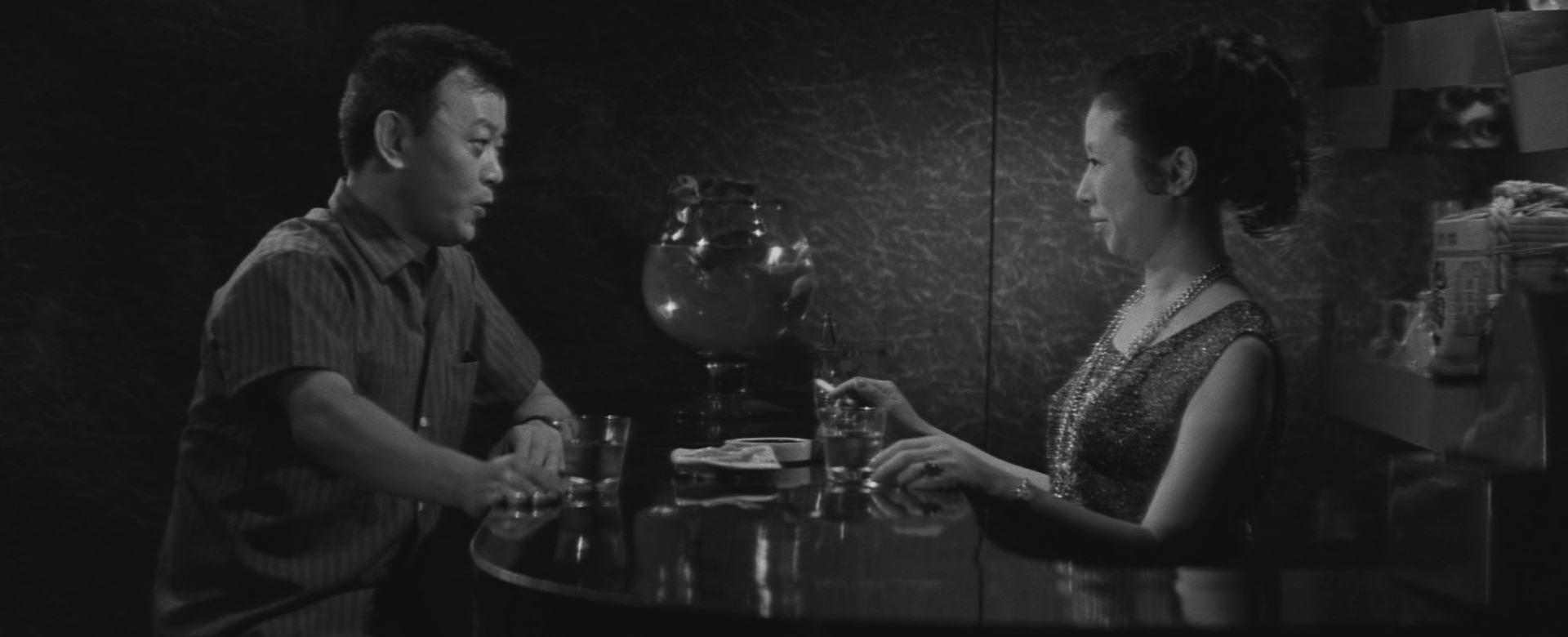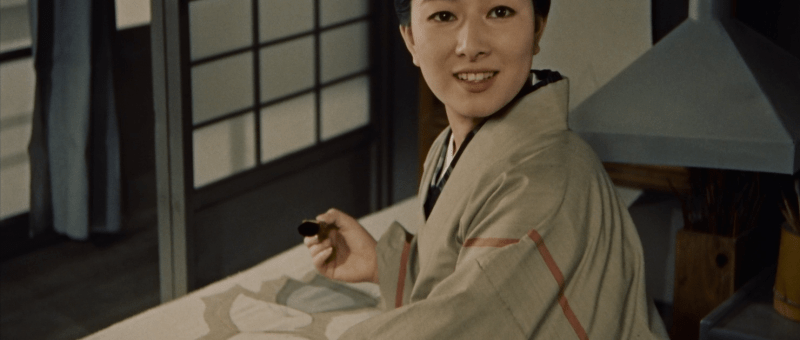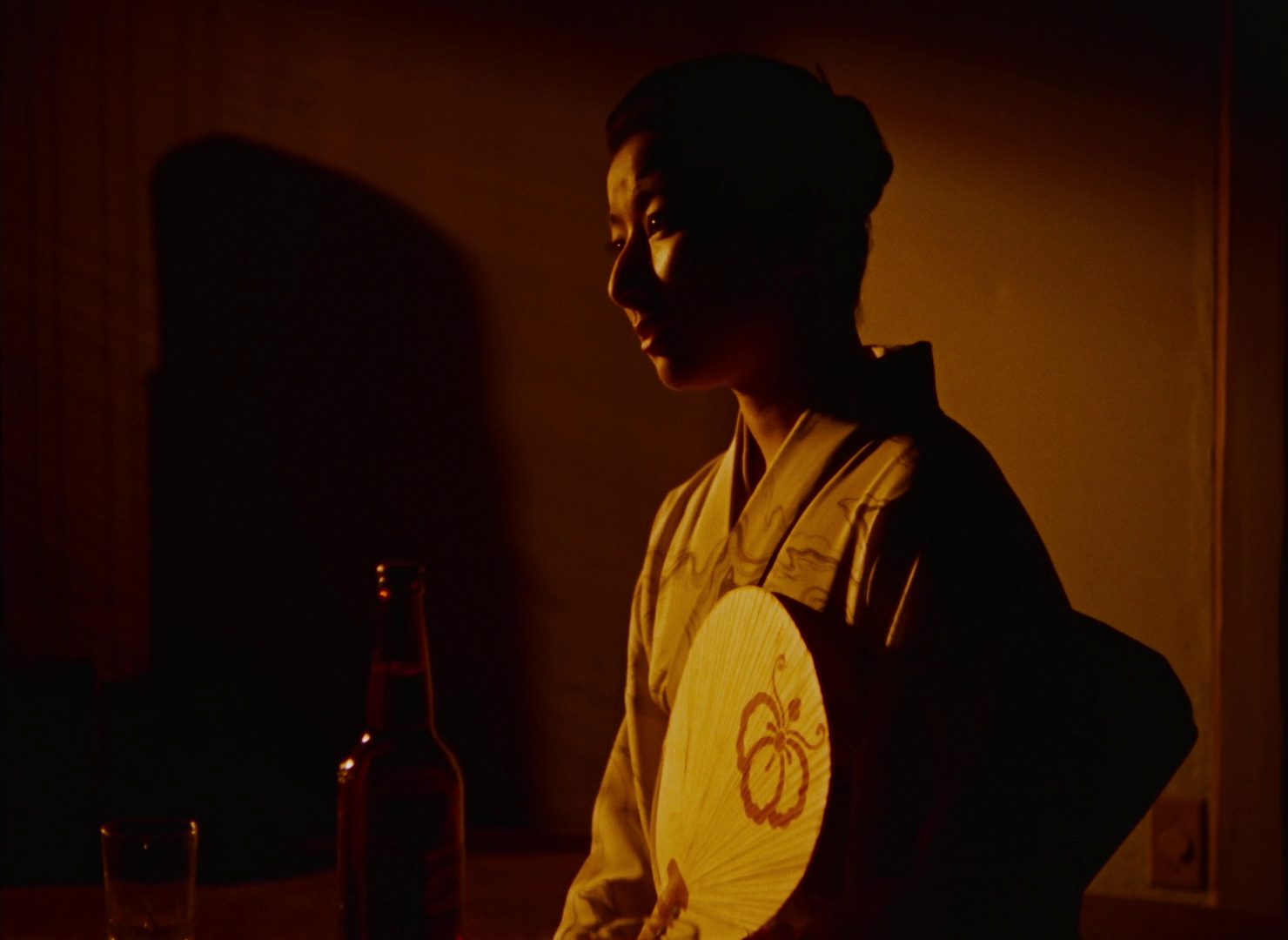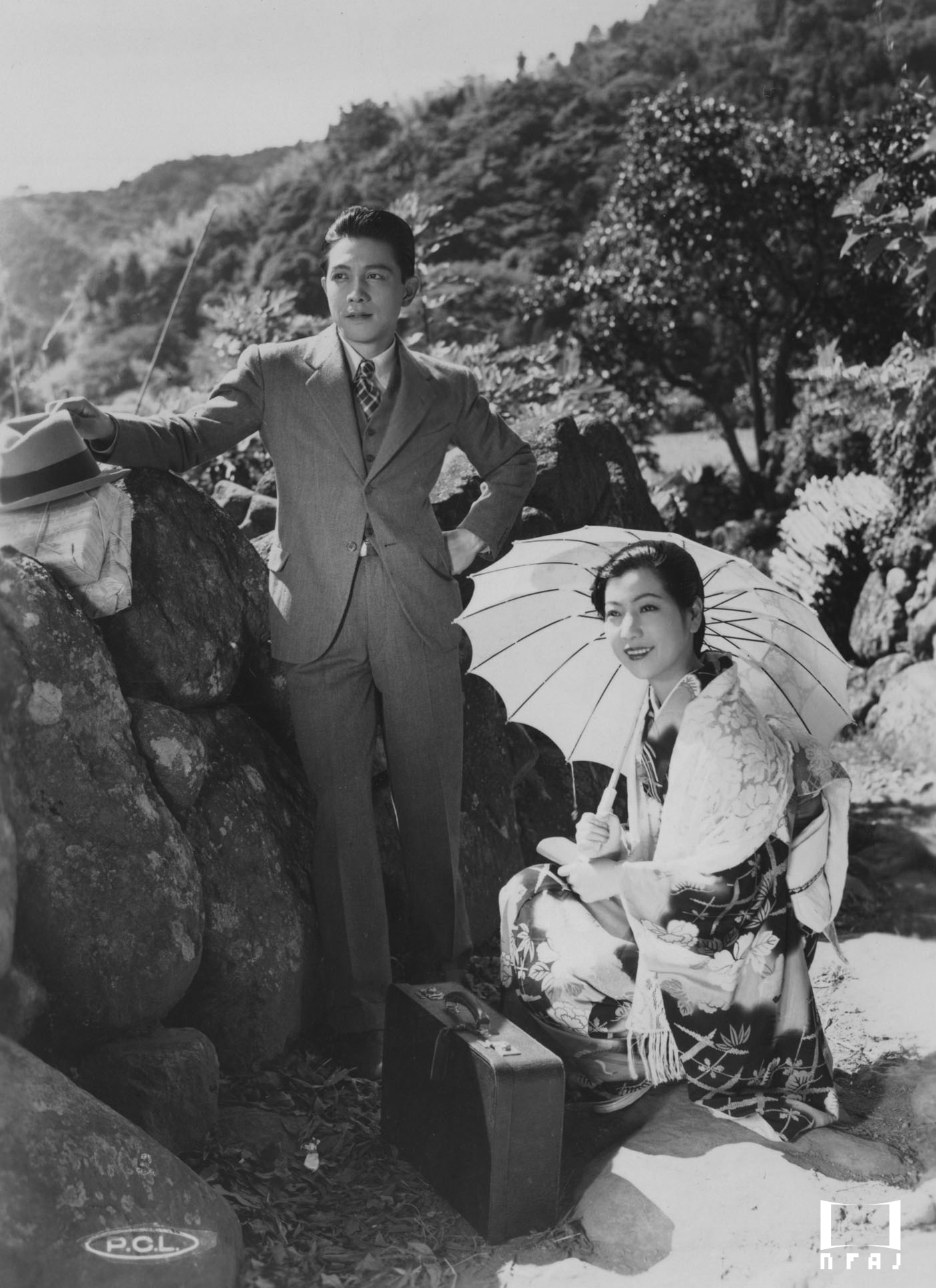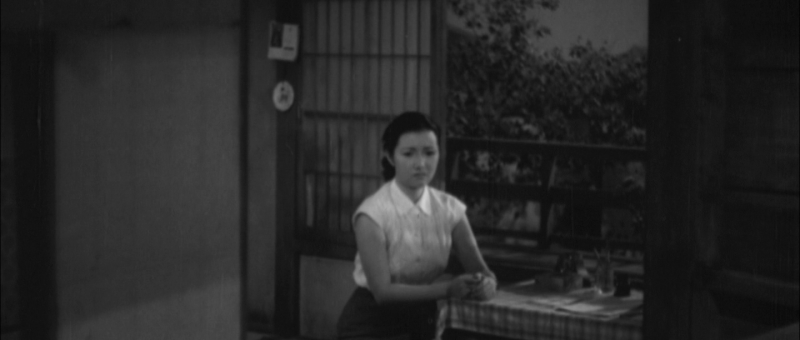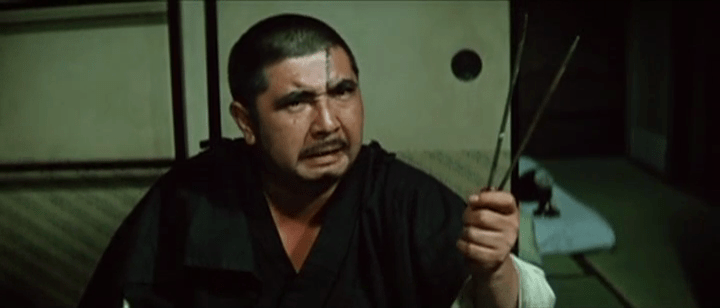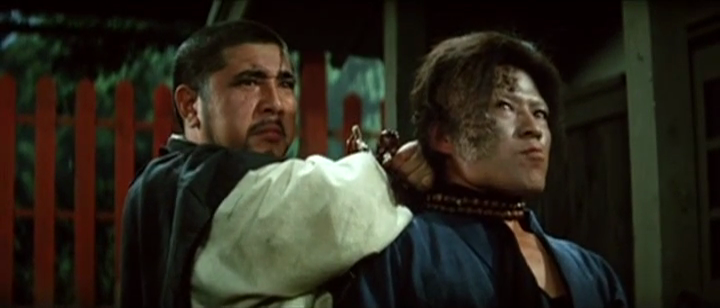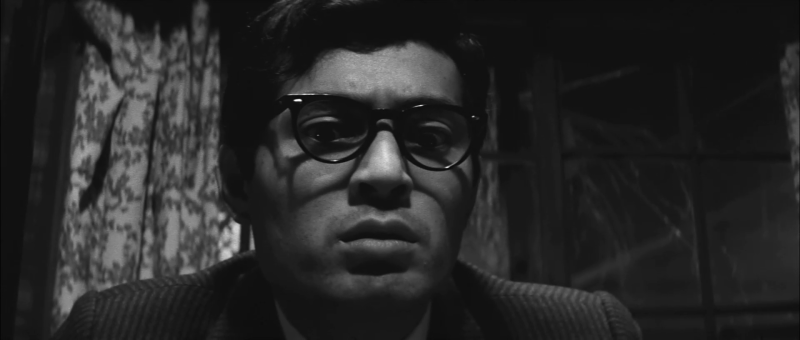
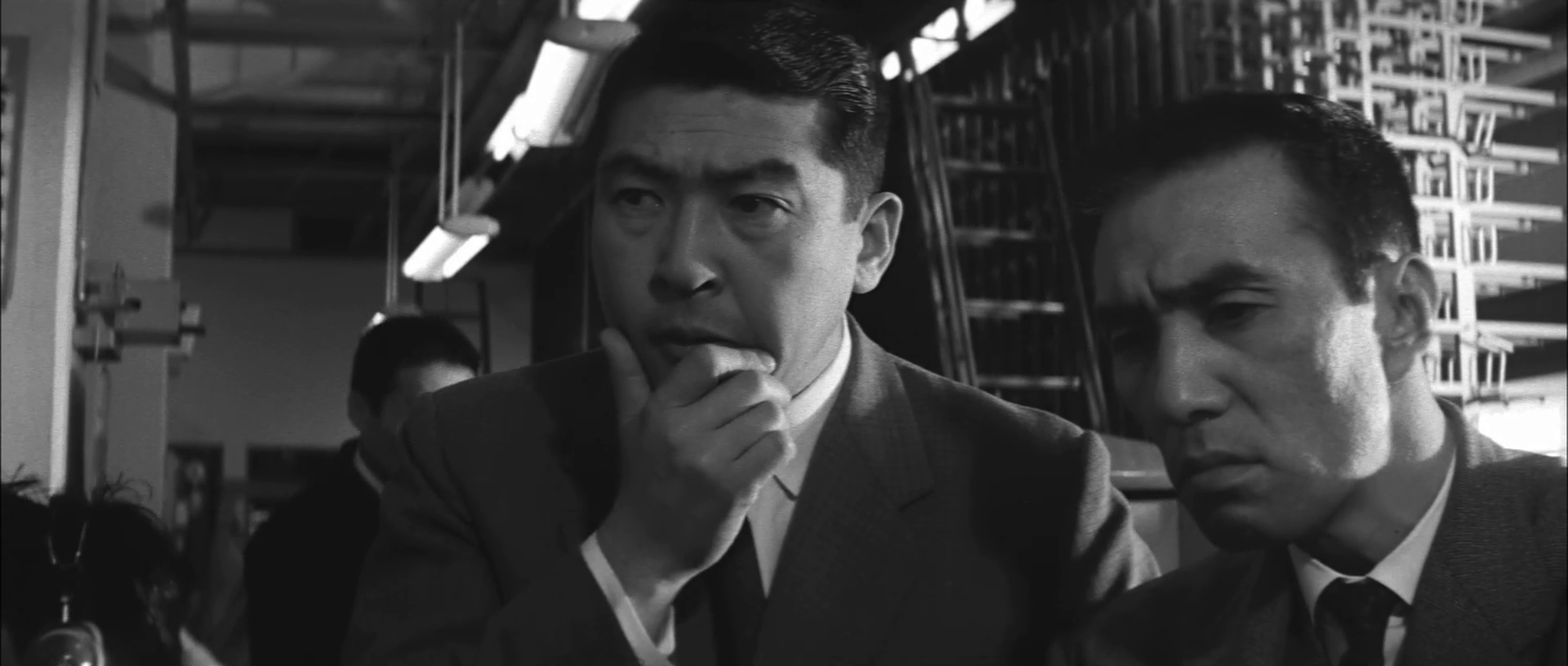
Undercurrent (夜の河, Kozaburo Yoshimura, 1956)

Is it possible to be both married and personally and artistically fulfilled? Marriage hangs over Kiwa (Fujiko Yamamoto) like a looming cage in Kozaburo Yoshimura’s sensuous melodrama Undercurrent (夜の河, Yoru no Kawa, AKA Night River). Scripted not by his regular writer Kaneto Shindo but frequent Mikio Naruse collaborator Sumie Tanaka adapting a novel by Hisao Sawano, the film finds its heroine caught between tradition and modernity while struggling to maintain her position as an independent woman and rightful heir to her father’s kimono dyeing business.

Everyone also keeps telling her that kimono itself is dying out, a relic of a bygone past now that everyone wears Western dress. Even Kiwa’s younger sister Miyoko (Michiko Ono) dresses exclusively in Western fashions and moves to Tokyo on her marriage. An ancient capital, Kyoto is the centre of historical elegance and the last bastion of these “outdated ideals”, yet several shops in their area have closed recently and people do things differently now. A wealthy woman comes to the shop with some fabric directly, cutting out the middlemen and haggling for a discount while cheerfully asking for her cab fare to be covered when Kiwa refuses the job. The young man they’ve taken in as an apprentice, Toshio, leaves to work in an electric factory complaining that “master” and “apprentice” are outdated concepts and that it’s against the Labour Law to force him to work overtime. Kiwa’s father Yujiro (Eijiro Tono), meanwhile, thinks this is just an expression of Toshio’s lack of commitment and that it’s only right that an apprentice should be applying himself to learning his craft every waking moment of the day. 

He was after all once an apprentice himself, but is both proud that his daughter has surpassed him in skill and guilty, fearful that Kiwa has sacrificed her own life and happiness to devote herself to kimono dyeing which is why she has never married. On one level, he’s happy if she’s happy and willing to leave marriage up to her, but also wary of the social censure of the neighbours including his kimono dyeing mentor who gives him a telling-off for his failure as a father to find a match for his daughter. When rumours arise that Kiwa has entered an affair with a married professor, the lady who helped Yujiro get started in business more or less tells him he should get her married to keep her in line. If hadn’t been for the war, she says, Kiwa would have been safely married off long ago and would probably have a gaggle of children to look after which would obviously prevent her from pursuing her art as a kimono dyer though the lady herself has obviously gone on working. 

Kiwa is drawn Takemura (Ken Uehara ) firstly because he’s wearing a tie that features one of her signature dyes which implies some kind of affinity between them. That the fact that he was touring a Nara temple alone with his daughter may have suggested he was a widower, though in truth Kiwa always knew he was married and that may have been a key part of what attracted her to him. She is after all, as Yujiro’s mentor said, a woman and experiences romantic desire even if the mentor is wrong to say that Kiwa sublimates her loneliness through art when in reality the reverse is true. After meeting Takemura even Yujiro remarks that she seems more like a woman, implying that her industry and forthrightness lend her a masculine quality as does her determination to get on in business. She first strikes up a business relationship with the sleazy Omiya (Eitaro Ozawa) whose wife is always watching him like a hawk though she manages to rebuff his attentions while establishing herself as business woman and in demand kimono designer. In pursuit of Takemura she is the one bringing him gifts and inviting him out for walks while Takemura remains somewhat conflicted and pulled along her wake.

Yet for all that, none of her family members really question the fact that she’s been carrying on with a married man and rather seem slightly relieved that she’s discovered an interest in romance or perhaps just anything outside of kimono dyeing. Even Takemura’s daughter suspects they’re romantically involved and doesn’t seem to mind. Yujiro remarks on Kiwa suddenly using the colour red which she never previously liked and it does seem to echo her reawakening passion. Takemura is also researching red fruit flies, which is less romantic, but also hints his barely suppressed longing. The film seems to align him with yellow flowers and Kiwa with pink. When they’re caught in a rainstorm and refuge in an inn owned by Kiwa’s childhood friend, the entire room in bathed in the glow of the Daimonji fire festival as their passions finally, and perhaps unwisely, overtake them as Takemura announces he’s thinking of moving far away perhaps to avoid this forbidden romance or otherwise for the health of his ailing wife who has been a Kyoto hospital for the last two years.

It’s finding out about Mrs Takemura’s likely terminal illness that seems to implode Kiwa’s romantic fantasy. After they’d made love for the first time, she had told Takemura that if she became pregnant she’d raise the child alone without intruding on his family life, which is to say she wasn’t really envisaging one with him. Her horror is on one level framed as guilt, that she now sees she’s committed an act of betrayal and resents Takemura when he tells her “it won’t be much longer” as if he were counting down the days until his wife passed away. Or worse, that he or others suspected that Kiwa willed her dead. But in reality the reverse is true. Mrs Takemura’s death is an existential threat to Kiwa’s independence. She doesn’t want to get married, even if loves Takemura, because if she did she wouldn’t be able to maintain her independence or career as a kimono dyer. She really does mean it when she says that likes it best when it’s just she and her father in their “cramped” old-fashioned dyeing shop without even an apprentice. 

A tortured art student who seems to pine for her tells her as much, disappointed in her for her relationship with Takemura not out of moral censure but because he fears she’s betraying her art. Okamoto is much younger than her and she’s not interested in him romantically even if he’s painting slightly lewd interpretations of his mental image of her. At one point he appears with a bandage around his neck that implies he may have tried to take his own life and eventually announces he’s leaving Kyoto because he can’t secure his identity there. Ironically he’s happy that Kiwa and Takemura are now free to love each other when the opposite is now true. Now that he’s no longer a married man, Kiwa can no longer love him and is denied the possibility of having both romantic and artistic fulfilment. She is perhaps free in another way, backed by a deep red cloth hanging up to dry as she watches the May Day parade pass by with all of its waving red flags having embarked on a life that is defiantly of her choosing and fulfilled by the passion of art.


Trailer (no subtitles)

Morning’s Tree-Lined Street (朝の並木路, Mikio Naruse, 1936)

A country girl comes to the city in search of a more glamorous life but largely finds only disillusionment and disappointment in Naruse’s 1936 drama Morning’s Tree-lined Street (朝の並木路, Ashita no Namikimichi). Naruse depicts Chiyo’s (Sachiko Chiba) spiritual journey literally as she takes the bus from her rural hometown all wide-eyed wonder and then arrives in the city to be bothered by a homeless man and then walk into a less salubrious area of the city with only her friend’s address to go on. 

In her hometown, everyone thinks Hisako (Ranko Akagi) works in a big office in Marunouchi, but in reality she’s now working in a hostess bar under the name “Shigeko.” Nevertheless, despite a degree of shame in her circumstances, Hisako doesn’t reject Chiyo and isn’t angry that she’s come and found out her secret. She talks her landlady, Okada, into letting her stay but discourages her from working in the bar. The current economic depression is evident in the fact that the bar isn’t doing so well and never has many customers, yet the “help wanted’ sign keeps going up and down outside. There’s even a running gag that the cook makes a permanent version so they won’t waste so much paper, only he spells “hostess” wrong, so they have to take it down anyway. 

The help wanted sign is a harbinger of doom for Chiyo who, it seems, is being drawn towards this kind of life. As Hisako had told her, it’s impossible for a country girl to find a job when there are already so many “desperate” people in Tokyo, and at the grand old age of 22 Chiyo is worried that she’s simply too old to find employment. By the standards of the time, she may be considered on the older side not to be married, and indeed Hisako tells her she’d be better off to go home and find a husband, but Chiyo wants both more and to find a grand romance. She romanticises an idea of poverty believing that she could be happy with a man she truly loved even if they had no money. Hisako doesn’t disillusion her, but may be inwardly rolling her eyes at her naivety. She has a boyfriend already, but he’s no good. He keeps turning up and pestering her for money which might be one reason Hisako can’t escape the life of a bar girl.

It is indeed money that gets in the way everyone’s relationships. Hisako reads in the paper about a salaryman who embezzled money to spend at a hostess bar and then died in a double suicide with one of the women who worked there. The dark fantasy the bar represents echoes the wider despair in the society coloured by economic depression and broken dreams in which the fantasy version of Ogawa admits that his life was without hope or joy. Chiyo gets close to a nice young man who comes into the bar who tries but fails to find her a legit job in an office in attempt to save her from becoming a bar girl. In the end, she gives in and becomes one. Ogawa says he thinks no less of her, but begins coming to the bar more often and appears to be spending beyond his means even while Chiyo warns him not to waste his money. 

What happens next turns out to be a cinematic fantasy informed by Chiyo’s naive desires in which Ogawa agrees to marry her but has already ruined himself by embezzling public funds and later asks her to die with him while she pleads that as long as they have love poverty is nothing to fear. In many ways, the dream shatters her illusions and confronts her with the stark reality of her life in playing out a best/worst scenario in which Ogawa is so deeply in love with her that willingly walks to his destruction, which is at least preferable to the truth, which is as Hisako says that a man may seem honest and sincere but will turn out to be a coward or else he’ll cheat on you.

Unable to find employment nor rely on men, the women have only each other and the solidarity of those like Mrs Okada her running a small bar in this rundown corner of the city where dreams go to die. Chiyo takes to her new life a little more than to her liking. She turns to Hisako and asks if she looks like a bad girl, fearful that it’s already changed her and it’s no longer possible to go back to being the innocent country girl who wanted a bigger life in the city. Her conviction might be brought home to her by the fact that Ogawa is promoted and sent out of Tokyo but doesn’t ask her to come with him, only leave his address in case she ever feels like writing. But at the same time it spurs her into a flurry of false positivity, committing herself to the job search despite knowing that it’s almost certainly futile. Throwing his note into the river and letting it flow away, she both sees through the naivety of her dream of escape through romance and also resigns herself to the life of a bar girl, like Hisako with nowhere else to go and no possibility of return only the vague and far off hope of salvation through employment.


Morning’s Tree-Lined Street screens 21st June at New York’s Metrograph as part of Mikio Naruse: The World Betrays Us – Part II.

Images: Collection of National Film Archive of Japan.

Lightning (稲妻, Mikio Naruse, 1952)

In many ways despite its matter of fact bleakness, Lightning (稲妻, Inazuma) is among the more optimistic of Mikio Naruse’s films ending on a note of cheerfulness and hope in which the storm has been broken and the heroine seems to have rediscovered a sense a faith in humanity. Yet the attitudes she displays are often contradictory and firmly at odds with the kind of Shitamachi spirit one might find in the films of a director such as Yoji Yamada in films like The Sunshine Girl released a decade later.

The qualities that most define Kiyoko (Hideko Takamine) are, as her mother Osei (Kumeko Urabe) suggests, an inner strength that eludes her older sister Mitsuko (Mitsuko Miura) and a forthrightness that sees her struggle to pursue the kind of life she wants rather than that she is expected to lead. Yet some might see her as snobbish and judgemental, at times attacking her mother for having married four times and given birth to four children each with different fathers. In this she sees a particular moral failing on the part of Osei, but perhaps also expresses a deeper distrust in her mother’s repeated attempts to find stability only through harnessing herself to a man. 

Echoing Takamine’s role in Hideko the Bus Conductor, Kiyoko has a job as a tour guide showing off the sites of bustling Ginza though explaining that this part of the city only really comes alive at night. The job gives her a sense of independence and self-sufficiency a woman in this era is not really permitted to have. Her oldest sister, Nui (Chieko Murata), asks if she contributes to the household but the meeker Mitsuko replies that she wanted to but they told her to save her money instead. In any case, it’s towards marriage that she’s pushed when Nui attempts to play matchmaker brokering an engagement with a 35-year-old baker, Goto (Eitaro Ozawa), who has aspirations of opening a love hotel into which Nui and her feckless husband Ryuzo (Kenzaburo Uemura) have invested. Of course, it turns out that Nui is herself having an affair with the baker who is oily in the extreme and disliked by most of the family though eventually manages to make his way into the beds of two of the sisters.

Kiyoko has little desire to marry and asks her mother if any of her four marriages made her happy, but her mother only says that happiness is not an important concept hinting the hardship she’s faced in her life and that a woman of her generation may have had to put up with a certain of degree dissatisfaction to keep a roof over her head and food on the table. While working on the bus, Kiyoko spots Mitsuko’s husband talking to another woman in the street but decides to say nothing only for him to suddenly die and the woman turn up with a baby asking for financial support. Kiyoko tells her sister that marriage is hell, but she smiles and says Kiyoko will be the exception in an expression of the various ways in which women enforce these arcane social codes against each other despite their own misery. Mitsuko too wants to escape but admits she doesn’t have Kiyoko’s courage which is how she too eventually falls into the clutches of Goto much to her sister’s disappointment. 

There is something undeniably poignant in Kiyoko’s frustrated defiance, looking longingly at the paintings and books of their lodger, a young woman from a more middle-class family working her way through university. Kiyoko says she wants to study too, but her mother shoots her down. She’s already 23, and it’s a little late to be picky about marriage let alone strike out for a more stereotypically middle-class life with a white collar job and nice house in the suburbs. It’s the suburbs though to which she eventually moves, without even bothering to tell any of her family. When the nice landlady asks if she has any she admits she has but also has nothing to do with them, which earns her a confused frown. She later says something similar to the pair of piano-playing siblings who live next-door in a kind of suburban utopia, quite clearly ashamed of her humble Shitamachi roots and family members she sees as common and immodest.

In any case, her admiration of the siblings and obvious attraction to the brother (Jun Negami) who is so much more sensitive and caring than her own (Osamu Maruyama) who appears to use the wartime bullets lodged inside him as an excuse not to move on with his life, suggest that she is still in the end looking for a conventional family only one she sees as more positive (or just posher). Perhaps it’s not so much marriage she rejects but dependency and subjugation, believing a marriage to a man like this might be one more of love and equality than the dissatisfying relationships experienced by her mother and sisters. The expressionistic bolt of lightning which appears during a difficult conversation with her mother is like the breaking of a storm, a kind of letting go in which her resentment begins to melt away and her mother agrees to retreat realising that unlike Mitsuko she can take care of herself and to that extent at least is an independent post-war woman. Ambivalent, but in its way warm and forgiving the film gives Kiyoko permission to embrace her aspiration, defy the social codes which constrain her and seek her own happiness, but also allows her to shed her cynicism in rediscovering a faith in humanity and re-embracing her admittedly imperfect mother all while leaving her behind. 


Wicked Priest 2: Ballad of Murder (極悪坊主 人斬り数え唄, Takashi Harada, 1968)

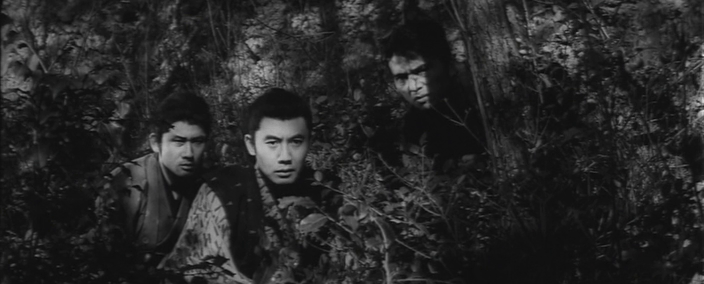
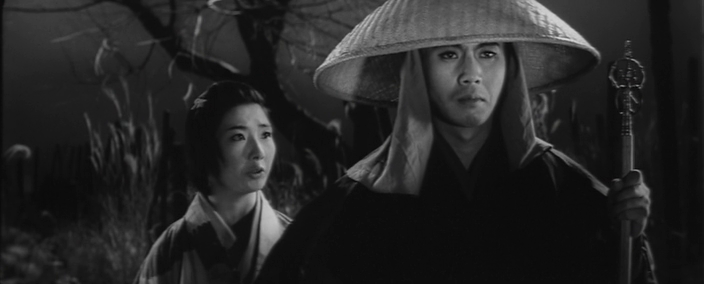
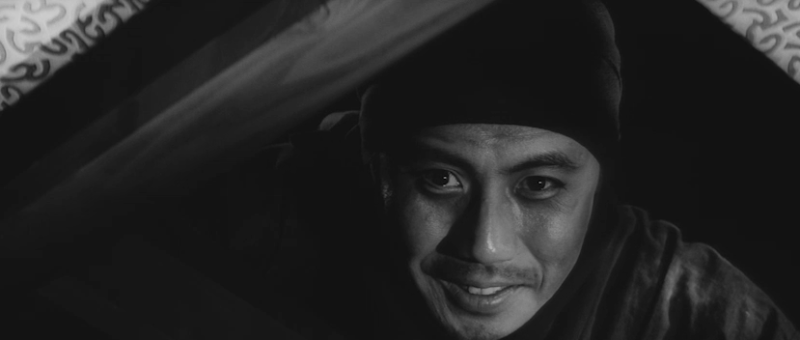
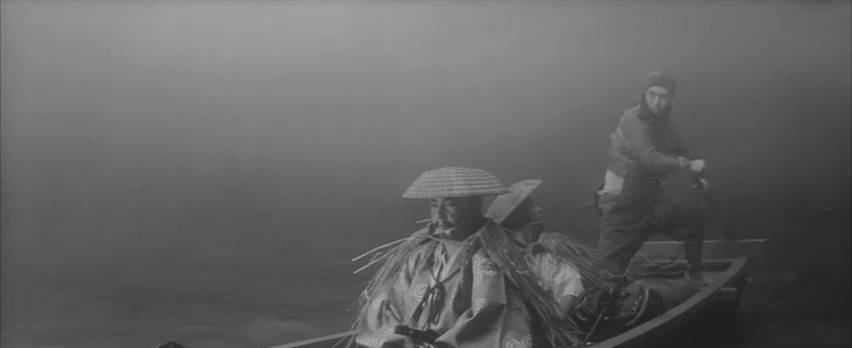
The Wicked Priest returns for a second instalment but once again finds himself confronted with imperfect paternity in The Wicked Priest 2: Ballad of Murder (極悪坊主 人斬り数え唄, Gokuaku Bozu: Hitokiri Kazoe Uta). This time directed by Takashi Harada, the series begins to embrace its anarchic nature in the sometimes cartoonish exploits of its hero who largely just wants to have a good time but is inconveniently called to missions of justice while silently stalked by ghosts of the past in the form of spooky monk Ryutatsu (Bunta Sugawara) whom he blinded in a fight at the end of the previous film. 

Now a lonely wanderer, Shinkai (Tomisaburo Wakayama) comes across a fleeing yakuza with a small boy in tow and steps in to help. As he discovers, the man, Rentaro (Asao Koike), is a former gangster whose wife has passed away leaving him the sole parent to Seiichi, a little boy of around six. Rentaro wants to turn himself in to the police so he can fully sever his ties to the underworld and start again along a more honest path to raise his son right, but needs to deliver him to his father, a jujitsu instructor, before he can. Somewhat surprisingly, Rentaro suddenly asks Shinkai, a man he’s never met before, to take Seiichi to his grandfather before rushing off supposedly to give himself over to justice. When Shinkai arrives, however, Iwai (Hideto Kagawa), the grandfather, refuses to let them in having disowned his son over a local scandal some years previously. 


As in the first film the major theme is paternal disconnection, Rentaro caught between wanting to be a good father to his son and seeking his own father’s approval. Fatherless himself, Shinkai cannot understand nor condone Iwai’s stubbornness in refusing even to look at his small grandson but resolves to care for him himself until his grandfather changes his mind or for as long as he is needed. Meanwhile it turns out that Rentaro was once involved with the evil gang, Godo, who have been causing trouble in the town by trying to muscle on the local cockfighting scene. 

Godo have also been force recruiting some of the local men to increase their dominance while schmoozing with a corrupt politician, Kadowaki (Hosei Komatsu), hoping to make cockfighting a local speciality, even going so far as to kidnap a young woman known to Shinkai and gift her to him. Shinkai manages to rescue her after dressing up as a head priest and subtly suggesting to Kadowaki that his election prospects might suffer if any rumours were to get out about untoward goings on in his household. Iwai explains that jujitsu is not meant to be a violent art used to tackle evil gangsters but is anyway posited as a kind of local resistance leader standing up to Godo but with little effect other than making himself a target for their ire while left vulnerable in their ability to use Rentaro against him. 

While getting mixed up in a local dispute trying to stand on the side of the little guy while looking after Seiichi, Shinkai’s exploits are often comedic in nature as he continues to play the part of the ironic monk though with real sincerity. Sneaking into a temple and belatedly discovering it to be a convent he becomes captivated by a Buddhist nun who appears to experience some kind of sexual awakening but then becomes fixated on him, insisting on becoming his wife and causing him to hide in a chicken coop to avoid her. On the other hand, his stalking by Ryutatsu takes on an almost spiritual quality as the near silent monk, now even more gaunt than before, shuffles his way towards him. Yet this Ryutatsu is a little more spiritual than before, agreeing to postpone his quest for vengeance unwilling to fight Shinkai with little Seiichi looking on and even at one point stepping in to protect him himself because all children are Buddha. Nevertheless, the film ends with another bloody battle surprising in its intensity with severed limbs and sudden violence as Shinkai ensures that those in the wrong get what’s coming to them, speeding up the wheel of karma by a turn or two to make sure they face justice, of one sort of another, in this world if not the next.  


The Wolves (狼, Kaneto Shindo, 1955)

Post-war desperation drives a collection of otherwise honest men and women towards a criminal act that for all its politeness they are ill-equipped to live with in Kaneto Shindo’s biting social drama The Wolves (狼, Okami). “Wolves” is what the criminals are branded, but the title hints more at the wolfish society which threatens to swallow them whole. After all, it’s eat or be eaten in this dog eat dog world, at least according to a cynical insurance salesman hellbent on exploiting those without means. 

Each of the five “criminals” is an employee at Toyo Insurance where they’re immediately pitted against each other, reminded that in order to qualify for a full-time position they need to meet their quotas for six months. The orientation meeting is cultilke in its intensity, the boss insisting that only in insurance can you become a self-made man while recounting his own epiphany as to the worthiness of his profession. They are told that the only two things they need are “faith and honesty”, and then “faith and pursuasion”, while encouraged to think of their work as an act of “worship”, “for the salvation of everyone”. 

Yet they’re also told to exploit their friends and family by pressuring them into taking out life insurance policies in order to help them meet their quotas. As one man points out, friends and relatives of the poor are likely to be poor themselves, but these are exactly the kind of people they’re expected to target. They’re told there’s no point going after the weathly because they’re already insured, but there’s something doubly insidious in trying to coax desperate people who can’t quite afford to feed themselves into paying out money they don’t have on the promise of protecting their families from ruin. One man even asks if the policy covers suicide and is told it does if you pay in for a year, sighing that he doesn’t want to wait that long.

“Suicide or robbery, choose one,” one of the salespeople reflects after failing to make their quota once again. They each have reasons to be desperate, all of them already excluded from the mainstream society and uncertain how they will find work if the job falls through. Akiko (Nobuko Otowa) is a war widow with a young son who is being bullied at school because of his cleft palate for which he needs an expensive operation. She’s already tried working as a bar hostess but is quiet by nature and found little success with it. Fujibayashi (Sanae Takasugi) is widowed too with two children and five months behind rent for a dingy flat in a bomb damaged slum where the landlord is about to turn off her electric. Harajima (Jun Hamamura) used to work in a bank but was fired for joining a union and is trapped in a toxic marriage to woman looking for material comfort he can’t offer. Mikawa (Taiji Tonoyama) too is resented by his wife, a former dancer, having lost his factory job to a workplace injury while the ageing Yoshikawa (Ichiro Sugai) was once a famous screenwriter but as he explains people in the film industry turn cold when you’re not hot stuff any more. 

Their unlikely descent into crime has its own kind of inevitability in the crushing impossibility of their lives. They may rationalise that what they’re doing is no different from the insurance company that exploits the vulnerable for its own gain, thinking that if they can just get a little ahead they’d be alright while feeling as if robbery and suicide are the only choices left to them and at the end of the day they want to survive. Perhaps you could call them “wolves” for that, but they’re the kind of wolves that give the guards from the cash van they robbed their train fare home after bowing profusely in apology. The real wolves are those like Toyo who think nothing of devouring the weakness of others, promising the poor the future they can’t afford while draining what little they have left out of them. As the film opens, Akiko looks down at a bug writhing in the dirt attacked by ants from all sides and perhaps recognises herself in that image as the sun beats down oppressively on both of them. Breaking into expressionistic storms and unsubtly driving past a US airbase to make clear the source of the decline, Shindo paints a bleak picture of the post-war world as a land of venal wolves which makes criminals of us all. 


Willful Murder (日本の熱い日々 謀殺・下山事件, Kei Kumai, 1981)

Beginning to piece something together, the dogged reporter at the centre of Kei Kumai’s Willful Murder (日本の熱い日々 謀殺・下山事件, Nihon no Atsui Hibi Bosatsu: Shimoyama Jiken) looks out at an industrial complex and reflects that when he visited it eight years previously it was a “piddling little factory” and has since become a “major company”. His comments might equally stand for Japan itself as Kumai charts the course of the nation’s post-war economic miracle viewing it as a kind of Faustian bargain with the Americans largely conducted by former militarists driven by personal gain and ideological fury. 

Based on the book by Kimio Yada, The Killing: The Shimoyama Incident, the film turns on the mystery surrounding the still unexplained death of Japan National Railways CEO Sadanori Shimoyama whose dismembered body was discovered by the railway tracks in July 1949 suggesting he had been hit by a train. Given the investigative techniques available at the time, Shimoyama’s demise has never been conclusively ruled either a murder or a suicide with experts from rival universities coming to opposing opinions and the police later closing the case in somewhat suspicious circumstances. 

Kumai’s film leans towards the murder angle though like the real life investigators cannot definitively rule out that Shimoyama may have taken his own life presumably due to the pressure he felt himself under after being ordered by the occupation authorities to dismiss 30,000 railway workers from their jobs as part of the so called “Dodge Line” economic plan intended to halt runaway inflation. As the film’s opening voice over also reveals, the Japan Railways Union was at the centre of the labour movement at the moment in which occupational approach was shifting from its original purpose of demilitarisation and democratisation, towards remilitarisation and capitalisation as the Americans sought to make Japan a foreign policy ally in their opposition towards communism in Asia. 

The film’s thesis is that US forces were already planning for the Korean War and urgently needed to crush the labour movement. Shortly after Shimoyama’s death, two other railway incidents occurred firstly with the runaway train in Mitaka which crashed into the station killing six and injuring 20, and then the Matsukawa derailment for which 17 men were falsely convicted (four sentenced to death) all of whom were members of the railway workers’ union. The conclusion that dogged reporter Yashiro (Tatsuya Nakadai) slowly comes to, is that Shimoyama was murdered and the train incidents staged to discredit the labour movement on the orders of the occupation forces while former militarist collaborators continued on the same path in a newly “democratic” Japan.

Japan certainly did very well out of the Korean War the economic stimulus of which allowed that “piddling little factory” to become a “major company” in under a decade much as the nation rocketed towards the economic prosperity which culminated in the 1964 Olympics against which the film’s finale is played. The portrait the Kumai paints is of a nation which has lost its soul, mired in hypocrisy which makes a mockery of “pacifism” and “democracy”. There are in fact at least three unexplained deaths presented in the film, the second of the being that of Michiko Kanba who was killed during the protests against the Anpo security treaty which was later forced through parliament despite clear public opposition. The same possibly corrupt pathologist is assigned to the autopsy and argues that the young woman died as the result of a crowd crush despite the attending physician’s report that the cause of death was strangulation. 

The true villain is however the American occupation and Japan’s continuing complicity even after it ended. Kumai includes several scenes of mass protest against the presence of the American military in Japan, and often places American soldiers ominously hovering in the corners of the frame such as those standing directly outside the police station. Yashiro attempts to interview a Korean man who tried to blow a whistle on the Shimoyama murder only to be arrested by US Counter Intelligence and later physically dragged out of the visiting room by a lurking MP. It all sounds like a conspiracy theory and one Yashiro doesn’t know if he should believe but then has to ask himself why all these people are seemingly being silenced if there is nothing to hide. He maintains his conviction that Shimoyama was murdered, but cannot necessarily say whether it was by a communist foreign nation as the Korean whistleblower had suggested or by the Americans trying to frustrate the “democracy” they’d previously been so keen on lest it disrupt their capitalist agenda. 

In the closing scenes, Yashiro is confronted by yet another death which cannot be ruled suicide or murder along with the realisation that he will never learn the truth. The grills from a grate on the platform of a train station above cast shadowy bars that imprison him in the shady cynicism of the Cold War society. Kumai films in boxy 4:3 academy ratio and in the black and white of golden age cinema, lending a degree of cinematic realism to his devastating tale of post-war moral decline which contains a note of inescapable dread in the faces of two men caught in the intermittent flashes of a train going by obscuring a truth that can never be revealed.


Beast Alley (けものみち, Eizo Sugawa, 1965)

In the opening title sequence of Eizo Sugawa’s Beast Alley (けものみち, Kemonomichi), a thick blob of inky blackness gradually expands over an aerial view of the city until it obscures it entirely. The title card which then appears is written in plain white, but will reappear at the film’s conclusion this time ashen as if it too had been singed by the deeply ironic flames with which the film ends. Based on a novel Seicho Matsumoto and scripted by The Beast Shall Die’s Yoshio Shirasaka, the film similarly takes an incredibly cynical view of the modern post-war society in which it is revealed the militarists are still basically in charge and presiding over a deeply corrupt social order. 

The big bad, Kito (Eitaro Ozawa), says as much when he states the need for reforming the nation’s “rotten political system” by which he means post-war democracy. Kito made his made his money doing deeply dodgy things in Manchuria in addition to running an exploitative coal mine in Japan. Now mainly bedridden, he basically runs the country as a far-right political fixer working in tandem with big business and the yakuza who have traditionally been big supporters of conservative and nationalist forces. Early on we see one of his underlings negotiating with politicians to ensure that Taiyo Roads will be hired be hired for a large scale construction project planning to put highways all the way through Tokyo. As we later discover, he’s prepared to go to great lengths in order to achieve his goal, going so far as to have a sex worker murdered to implicate the uncooperative CEO of a rival construction film into resigning by threatening to frame him for the crime so they can install their stooge in his position. 

It’s into this world that everywoman Tamiko (Junko Ikeuchi) is drawn while working as a hotel maid at a traditional Japanese inn. Trapped in a bad marriage to a man who is also bedridden yet still attempts to rape her when she returns home to find him in bed with the housekeeper, Tamiko longs for escape and is therefore ripe for the picking when approached by Kotaki (Ryo Ikebe), the manager of an upscale Western hotel, to join him in an unspecified enterprise which will apparently make her very rich. The only catch is that she will have to “get rid” of her “dependent”, which she probably wanted to do anyway, by burning down her house with him inside it. Once she’s done this, there is no turning back for her even if she had not developed complicated feelings for Kotaki who is both her salvation and damnation. 

Tamiko’s husband had failed to give her the comfortable life that he had promised, something which she thinks Kotaki can deliver even if it requires her to become the plaything of Kito whom does she actually seem to like even if aware of the precarity of her position and still in thrall to Kotaki. Leaving the hotel so abruptly was however a strategic error as it arouses the suspicious of (originally) earnest cop Hisatsune (Keiju Kobayashi) who quickly realises that Tamiko set the fire to kill her husband. Though he seemed to be motivated by justice, Hisatsune too is soon corrupted explaining to Tamiko that he has become cynical and jaded. Years of police work have shown him that true criminals know how to break the law and get away with it so he can’t do anything about them, but “good” people, like he implies Tamiko, are pushed into crime by desperation and are easily caught. Tamiko wields her sexuality against him by agreeing to a tryst, though when it doesn’t go to plan he tries blackmail and then rape before she, ironically, manages to escape from his bungled crime. 

Hisatsune’s corruption is gradual and self serving. He starts with suspicion, tailing Tamiko in the interests of justice but also because he desires her, before stumbling on the conspiracy, putting the pieces together, attempting to use them for his own gain and trying to blow a whistle mostly out of resentment. Kito’s reach is all encompassing. Hisatsune is warned off investigating certain aspects of the crime by his senior officers and is then fired on Kito’s instructions for fiddling his expenses after harassing Tamiko. He tries to give his findings to his boss but it goes nowhere and then tries the press but is given the brush off, the editor his reporter friend refers him to gently implying he’s just a crank with an axe to grind. Of course, it turns out that the reporter is already in league with dodgy lawyer Hatano (Yunosuke Ito) who is Kito’s right-hand man. 

The connections between the three men, Kotaki who was once a communist, Hatano, and Kito go back to Manchuria and the corruptions of militarist era which it becomes clear has never really ended. Kito has only one rival and it’s another faction of the conservative ruling party who are probably just waiting for him die. Attempts are made on his life and they don’t go well for those who make them. Even if Hatano hoped to simply inherit an empire he, as he points out, put in much of the work to build he is sorely mistaken while Tamiko may intellectually understand that Kito’s death would place her in a precarious position but carries on regardless. “You never know who will betray you in this world” Kotaki laments, echoing Kito’s later claim that his Buddhist statues are the only ones will never betray him even as sleeps next to a statue of Aizen Myo whom he ironically claims protects mankind from their lust and desire. 

It could be said that desire is Tamiko’s undoing, but as Hisatsune had suggested perhaps you couldn’t blame her for longing to be free of the bedridden husband who had not delivered what he promised her. As she said, she was doing what could to survive even if you’d think she’d know putting on a ring taken from the finger of a murdered woman is akin sealing your own fate. Sugawa shoots with a noirish sense of dread, tracking Tamiko with her coat drawn up around her face as she tries to leave the scene of her crime, and makes the most of his fiery imagery before ending on a note of cynical laughter amid the inescapable hell the of post-war society. 


Original trailer (English subtitles)

Rainbow Over the Pacific (夜明けの二人, Yoshitaro Nomura, 1968)

Yoshitaro Nomura is most closely associated with a series of gritty crime thrillers that dug deep into the dark heart of post-war Japan. It may seem surprising therefore to see him helming this generally cheerful if occasionally melancholy musical romance created as a star vehicle for singer Yukio Hashi in commemoration of 100 years of Japanese migration to Hawaii. Curiously pitched, Rainbow Over the Pacific (夜明けの二人, Yoake no Futari) arrives somewhere between extended tourist reel and accidentally colonialist soft propaganda that nevertheless never shies away from the complicated relationship between the two nations. 

As the film opens, hero Hideo (Yukio Hashi) is a something of a slacker working in a photo studio with a crush on an aspiring model. When she shows up late to what he thought was a date and then tells him she’s getting married before dumping her fiancé’s ex on him, he finds himself taking pity on the jilted girlfriend while they drown their mutual sorrows in the beerhalls of post-war Tokyo. Audrey Reiko Misaki (Jun Mayuzumi) is a third generation Japanese-Hawaiian who loves all things Japan and is becoming quite fond of Hideo though he abruptly tells her that it’s been fun but they live in different countries so it’s best they call it quits. Reiko goes back to Hawaii and tries to forget about her double romantic heartbreak in Japan while Hideo continues to be an unserious man berated by his grumpy granddad and exasperated mother not least because of his reluctance to get married. A year later his mentor takes him with him on a trip to the US stopping over in Hawaii where finds himself hoping for a fateful reunion with Reiko. 

Before that, however, he and his boss are met by a Japanese-American man who takes them on a tour of the island and explains that all the swanky hotels are owned by Japanese companies. “Anything you can find in Japan you can find in Hawaii” he insists, at once exoticising the environment and trying to sell it as a place that the growing Japanese middle classes might feel comfortable going on holiday because it is almost like being in Japan only of free of the intense atmosphere of the era of high prosperity where everyone works all the time. But then something a little strange happens, Sakata (Hiroyuki Nagato) points at the elephant in the room and begins talking about Pearl Harbour before visiting a cemetery where many men of Japanese descent who lost their lives fighting for the US in Europe are buried. Even so, he quickly points out that the Japanese community continue to dominate the political realities of the island with several Japanese-Americans elected to the Senate one of whom he actually interviews on camera. 

As for Hideo, he is at times a fairly crass tourist who accidentally mocks the traditional singing of a middle-aged Hawaiian. Much of the narrative appears to have been designed to take in most of the important tourist sites on the islands which are each marked with onscreen katakana as are several important landmarks in Japan in the later part of the film which almost does the same thing in showing off historical Kyoto and the Nara deer. After re-encountering Reiko, Hideo finds himself sucked into various kinds of romantic drama, accidentally coming between a local girl and her boyfriend whose relationship is strained by his wealthy father’s disapproval (much like Hideo he is thought to be an unserious man) and then getting into a dangerous situation with a rival suitor whose cool exterior masks a volatile intensity. 

Ironically enough, through his Hawaiian adventures Hideo becomes a “serious” man resolving to buckle down and work hard though seemingly abandoning his dreams of romance out of a kind of misplaced bro code that in a roundabout way undermines the message of solidarity between Hawaii and Japan in implying that Reiko must choose between the two but then refusing to respect her choice. Further parallels are drawn in the reunion of Hideo’s great uncle who has since become a respected teacher at a Japanese school and his grumpy grandfather who is exposed as a dissolute layabout who returned to Japan in disgrace after giving up in the face of the harshness of life for Japanese migrants, Nomura utilising stock footage to demonstrate the many difficulties they faced in trying to make new lives for themselves in Hawaii. Of course, this being a star vehicle for Hashi, he gets several opportunities to sing including a rendition of the title of song while the film at times turns into a musical though the melancholy, foggy conclusion perhaps plays against the expectations of the genre. In any case, the film appears to be a fascinating document of an increasingly globalising Japan which nevertheless looked for itself even while seeking escape.


Scandal (醜聞, Akira Kurosawa, 1950)

“Freedom of the press or harassment?” The more things change, the more they stay the same. Akira Kurosawa’s attack on the declining moral standards of the post-war society as reflected in the duplicity of the gutter press has unexpected resonance in the present day in which the media is simultaneously unwilling to challenge authority and in thrall to the populist allure of celebrity gossip with sometimes tragic results. The aptly named Scandal (醜聞) is essentially a morality tale which draws additional power from its seasonal setting and embodies the soul of the contemporary society in a conflicted lawyer consumed by internal struggle against despair and hopelessness. 

The more literal scandal however revolves around a well known singer, Miyako Saijo (Yoshiko (Shirley) Yamaguchi), and a motorcycle-riding artist, Ichiro Aoe (Toshiro Mifune), who meet by chance while staying at the same remote mountain inn. Having ironically headed to the mountains to escape the various “annoying things” that plague her in the city, Miyako has been pursued by two muckrakers from the tabloid press who take umbrage at her refusal to see them. They are then fairly delighted when they manage to snap a picture of Ichiro and Miyako standing on her balcony looking out at the mountains like a young couple in love. They deliver the photo to their seedy boss, Hori (Eitaro Ozawa), who is over the moon with excitement at his new business prospects. Suddenly Ichiro and Miyako are on posters all around the city with headlines such as “Love on a Motorcycle” and “Miyako Saijo’s secret love – revealed!”. 

Though Ichiro is a semi-public figure himself having been featured in magazine spreads as an artist on the rise, he is not a worldly man and is shocked by the idea that the press can make something up and print it with no consequences. He feels he must resist not just on a personal level angry to have been misrepresented but for the post-war future to ensure that the press is held to account and that it does not misuse its power to breach the privacy of ordinary citizens. To his mind, they only get away with it because most people just ignore them and wait for the scandal to pass, a sentiment born out by Hori who dismisses a concerned underling with the reminder that they’ve never yet been sued so they need have no fear saying whatever they like whether it’s true or not. “The kind of snobs we target think the law is beneath them” he adds, suggesting that most people prefer to think of the gutter press as something they can safely ignore and that it’s only themselves that they show up in their torrid obsession with the lives of others. 

But Hori also ironically defends his right to press freedom and quickly hits back that he’s being oppressed by those who wish to silence his right to free speech even when what he’s saying isn’t true. Lawyer Hiruta (Takashi Shimura) who offers to represent Ichiro in his lawsuit quickly identifies Hori as a duplicitous conman but also allows himself to be manipulated accidentally accepting a bribe after being led to believe that Hori has a top legal expert on retainer and the case is hopeless unless Miyako, who has so far maintained a dignified silence, can be persuaded to join as co-plaintiff. Ichiro had decided to accept Hiruta’s offer of representation largely on meeting his teenage daughter, Masako (Yoko Katsuragi), who has been bedridden with TB for the last five years. Masako is a pure soul whose isolation from the contemporary society has allowed her to maintain her innocence and humanity but it’s also true that it’s the society that made her ill in the first place.

The morality play reaches a climax on Christmas Day as Ichiro delivers a tree on his motorbike while Miyako sings carols for a radiant Masako who is at least sitting up and looking much healthier than she’s ever been before. But the more Hiruta debases himself, caught between an accidental debt to Hori, his own lack of conviction, and the frustrated desire to do right, the sicker she gets as if poisoned by post-war duplicity. Even so, Ichiro continues to defend him insisting that Hiruta isn’t a bad person just a weak one and that in the end he won’t be able to go through with betraying him but will eventually come clean and tell the truth when it counts. Ichiro’s faith is as much in the institutions of the new democratic Japan as it is in Hiruta as he explains at the trial admitting that he may have been naive in placing too much trust in the legal system thinking that he couldn’t lose because he knows he’s in the right. As the opposition lawyer points out, that’s not a very good legal argument because his client thinks he’s in the right too only he doesn’t know that Hori is both a liar and an idiot who’s staked everything on the assumption that Hiruta won’t expose him for bribery, which would at least strongly imply he can’t back up his story, because it would mean destroying himself. 

In the end it’s Hiruta who puts himself on trial, baring his soul to the court which he acknowledges he has betrayed in his negligence and wilful obstruction of justice. It’s a victory for truth and decency and a turn away from the duplicitous, capitalistic mores of men like Hori who think they can do whatever they want and only laugh at those who value fairness and compassion. “In all my 50 years I’ve never seen a more confused age” Hiruta explains speaking of post-war chaos and the forced comprises of the intervening years of despair and desperation. As he coaxes the denizens of a small bar into an early rendition of Auld Lang Syne on Christmas Day, each vowing that this time next year things really will be better, many of them breakdown in frustrated longing drowning their sorrows as they continue to yearn for better times they do not really believe will come. But then like all the best Christmas films, this is also a redemption story of a man who decided that it wasn’t too late after all and that he might have to destroy himself in order make himself anew and be the man his daughter always knew he could be even if in the end he could not save her from the ravages of the post-war society.


Scandal screens at the BFI Southbank, London on 10th & 24th January 2023 as part of the Kurosawa season.

Hit and Run (ひき逃げ, Mikio Naruse, 1966)

The contradictions of the contemporary society drive two women out of their minds in Mikio Naruse’s dark psychological drama, Hit and Run (ひき逃げ, Hikinige, AKA A Moment of Terror). Scripted by Zenzo Matsuyama and starring his wife Hideko Takamine in her final collaboration with the director, Naruse’s penultimate film takes aim at the persistent unfairness of a post-war society already corrupted by increasing corporatisation while caught at a moment of transition that leaves neither woman free to escape the outdated patriarchal social codes of the feudal era. 

The two women, both mothers to five-year-old boys, are mirror images of each other. Kuniko (Hideko Takamine), the heroine, is a widow working in a noodle bar and continually exasperated by her energetic son Takeshi who keeps escaping kindergarten to play pachinko which is not a suitable environment for a small child. Kinuko (Yoko Tsukasa), meanwhile, is mother to Kenichi and married to a high ranking executive at Yamano Motors, Kakinuma (Eitaro Ozawa). These two worlds quite literally collide when Kinuko, emotionally distressed and driving a little too fast, knocks over little Takeshi while he is out playing with some of the other neighbourhood boys. As she is with her lover, Susumu (Jin Nakayama), she decides to drive on abandoning Takeshi to his fate but discovers blood on the bumper of her shiny white convertible on returning home and thereafter decides to tell her husband everything aside from revealing her affair. Kakinuma covers the whole thing up by forcing their driver to take the rap to protect not his wife but the company along with his own status and success fearing that a scandal concerning his wife driving carelessly may have adverse consequences seeing as Yamano Motors is about to launch a new super fast engine that will make them worldwide industry leaders. 

Perhaps in a way the true villain, Kakinuma cares about nothing other than his corporate success. Kinuko states as much in complaining that he’s never once considered her feelings only his own and that their marriage was a failure from the start, little more than an act of exploitation in which she was traded by her father for money in return for political connections. For these reasons she seeks escape through her extra-marital affair but is unable to leave partly in the psychological conflict of breaking with tradition and partly because she has a son whom she would likely not be permitted to take with her even if it were practical to do so. Another woman says something similar in disparaging Kuniko, implying that her life is in some ways over as few men would be interested in marrying a widow with a child. 

Takeshi’s loss is therefore additionally devastating in severing Kuniko’s only lifeline. A brief flashback reveals that Kuniko was once a post-war sex worker, she and her yakuza brother Koji war orphans who lost their parents in the aerial bombing. When she married and had a child she thought the gods had smiled on her but in true Narusean fashion they gave only to take away leaving her a widow and finally robbing her even of her child. To add insult to injury, they try to put a price on her son’s life, a mere 500,000 yen for a boy of five hit by a car. When the driver stands in the dock, he gets off with only a 30,000 yen fine for the death of a child. Then again on visiting his home, there appears to be a boy of around five there too, perhaps you can’t blame him for taking the money having been robbed of his youth in wartime service. 

Still, on hearing from an eye witness that it was a woman who was driving, Kuniko quickly realises that Kinuko must have been responsible. Quitting her job she joins a maid agency in order to infiltrate the house and gain revenge later settling on the idea of killing little Kenichi, who takes an instant liking to her, to hurt his mother in the way she has been hurt only to be torn by her unexpected maternal connection with the boy. The conflict between the two women is emotional, but also tinged with class resentment that a wealthy woman like Kinuko should be allowed to escape justice with so little thought to those around her while Kuniko is tormented not only by her grief but the persistent injustice of the cover up. 

As in all things, it’s the lie that does the most damage in ironically exposing the truth of all it touches. Kinuko’s escape route is closed when her lover reveals that he’s lost faith in her, unable to trust a woman who’d run away from the scene of a crime and allow someone else to take the blame, while Kakinuma’s emotional abandonment of his social family for the corporate is thrown into stark relief by his immediate decision to further exploit their driver just as he will later their maid. Driven out of her mind, Kuniko has white hot flashes of lustful vengeance as she imagines herself engineering an accident for Kenichi, throwing him off a rollercoaster or coaxing him into traffic, only to regain her senses unable to go through with it so pushed to the brink of madness is she that no other action makes sense. 

Even so the conclusion is brutally ironic, Kuniko accused of a crime she did not commit but half believing that she must have done it because she wanted to so very much. Kakinuma gets a minor comeuppance, encouraged by his servant to make clear what actually happened and exonerate Kuniko thereby walking back his total commitment to the corporate (then again it seems his dream project was itself under threat from a potential plagiarism scandal) though the damage may already have been done. This societal violence of an unequal, increasingly corporatised and unfeeling society, eventually comes full circle bringing with it only death and madness as the two women seek escape from their internal torment. Naruse experiments with handheld camera and canted angles to emphasise the destabilisation of the women’s sense of reality along with blow out and solarisation in the visions that plague them, but curiously ends with a set of motor vehicle accident stats as if this had been a roundabout public information film to encourage careful driving. Then again perhaps in a way it is, a cautionary tale about the dangerous curves of untapped modernity and the cruelties of the nakedly consumerist era.