School in The Crosshairs (ねらわれた学園, Nobuhiko Obayashi, 1981)

Still most closely associated with his debut feature Hausu – a psychedelic haunted house musical, Nobuhiko Obayashi’s affinity for youthful subjects made him a great fit for the burgeoning Kadokawa idol phenomenon. Maintaining his idiosyncratic style, Obayashi worked extensively in the idol arena eventually producing such well known films as The Little Girl Who Conquered Time (starring Kadokawa idol Tomoyo Harada) and the comparatively less well known Miss Lonely and His Motorbike Her Island (starring a very young and extremely skinny Riki Takeuchi). 1981’s School in the Crosshairs (ねらわれた学園, Nerawareta Gakuen) marks his first foray into into the world of idol cinema but it also stars one of Kadokawa’s most prominent idols in Hiroko Yakushimaru appearing just a few months before her star making role in Shinji Somai’s Sailor Suit and Machine Gun.

Set once again in a high school, School in the Crosshairs is the ultimate teen movie for any student who’s ever suspected their place of education has been infiltrated by fascists but no one else has noticed. Top student Yuka (Hiroko Yakushimaru) is the archetypal Obayashi/idol movie heroine in that she’s not only bright and plucky but essentially good hearted and keen to help out both her friends and anyone else in trouble. Her life changes when walking home from school one day with her kendo obsessed friend Koji (Ryoichi Takayanagi) as the pair notice a little kid about to ride his tricycle into the path of a great big truck. Yuka, horrified but not quite knowing what to do, shouts for the little boy to go back only it’s time itself which rewinds and moves the boy out of harm’s way. Very confused and thinking she’s had some kind of episode, Yuka tests her new psychic powers out by using them to help Koji finally win a kendo match but when a strange looking man who claims to be “a friend”  (Toru Minegishi) arrives along with icy transfer student Takamizawa (Masami Hasegawa), Yuka finds herself at the centre of an intergalactic invasion plot.

Many things have changed since 1981, sadly “examination hell” is not one of them. Yuka and Koji still have a few years of high school left meaning that it’s not all that serious just yet but still, their parents and teachers have their eyes firmly on the final grades. Yuka is the top student in her class, much to the chagrin of her rival, Arikawa (Macoto Tezuka), who surpasses her in maths and English but has lost the top spot thanks to his lack of sporting ability. Koji is among the mass of students in the middle with poor academic grades but showing athletic promise even if his kendo career is not going as well as hoped.

Given everyone’s obsession with academic success, the aliens have hit on a sure thing by infiltrating a chain of cram schools promising impressive results. Grades aside, parents are largely laissez-faire or absent, content to let their kids do as they please as long as their academic life proceeds along the desired route. Koji’s parents eventually hire Yuka as a private teacher to help him improve only for her to help him skip out to kendo practice. Her parents, by contrast, are proud of their daughter and attentive enough to notice something’s not right but attribute her recent preoccupation to a very ordinary adolescent problem – they think she’s fallen in love and they should probably leave her alone to figure things out her own way. A strange present of an empty picture frame may suggest they intend to give her “blank canvas” and allow her to decide the course of her own life, but she has, in a sense, earned this privilege through proving her responsible nature and excelling in the all important academic arena.

School is a battlefield in more ways than one. Intent on brainwashing the teenagers of Japan, “mysterious transfer student” Takamizawa has her sights firmly set on taking over the student council only she needs to get past Yuka to do it. Takamizawa has her own set of abilities including an icy stare which seems to make it impossible to refuse her orders and so she’s quickly instigated a kind of “morality” patrol for the campus to enforce all those hated school rules like skirt lengths, smoking, and running in the halls. Before long her mini militia has its own uniforms and creepy face paint but her bid for world domination hits a serious snag when Yuka refuses to cross over to the dark side and join the coming revolution. Asking god to grant her strength Yuka stands up to the aliens all on her own, avowing that she likes the world as it and is willing to sacrifice her own life for that of her friends. Accused of “wasting” her powers, Yuka asks how saving people could ever be “wasteful” and berates the invaders for their lack of human feeling. Faced with the cold atmosphere of exam stress and about to be railroaded into adulthood, Yuka dreams of a better, kinder world founded on friendship and basic human goodness.

Beginning with a lengthy psychedelic sequence giving way to a classic science fiction on screen text introduction Obayashi signals his free floating intentions with Yuka’s desaturated bedroom floating over the snowcapped mountains. Pushing his distinctive analogue effects to the limit, Obayashi creates a world which is at once real and surreal as Yuka finds herself at a very ordinary crossroads whilst faced with extraordinary events. Courted by the universe, Yuka is unmoved. Unlike many a teenage heroine, she realises that she’s pretty happy with the way things are. She likes her life (exam stress and all), she loves her friends, she’ll be OK. Standing up for the rights of the individual, but also for collective responsibility, Yuka claims her right to self determination but is determined not to leave any of her friends behind.


Original trailer (no subtitles)

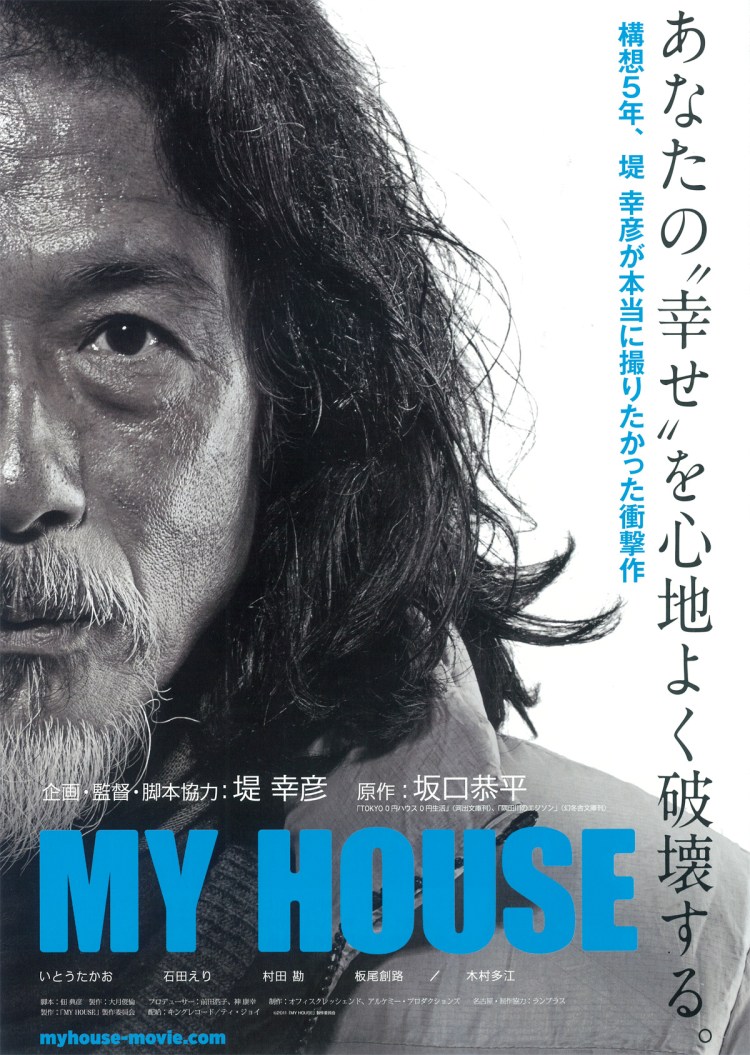
Caterpillar (キャタピラー, Koji Wakamatsu, 2010)

Koji Wakamatsu made his name in the pink genre where artistic flair and political messages mingled with softcore pornography and the rigorous formula of the genre. Wakamatsu rarely abandoned this aspect of his work but in adapting a well known story by Japan’s master of the grotesque Edogawa Rampo, Wakamatsu redefines his key concern as sex becomes currency, a kind of trade and power game between husband and wife. Caterpillar (キャタピラー), aside from its psychological questioning of marital relations, is a clear anti-war rallying call as a small Japanese village finds itself brainwashed into sacrificing its sons for the Emperor, never suspecting all their sacrifices will have been in vain when the war is lost and wounded men only a painful reminder of wartime folly.

Kyuzo Kurokawa (Shima Onishi) has returned from the war. This makes him luckier than many of the other young men who disappeared from the village over the last few years. His return, however, provokes howls of fear and disbelief from his long suffering wife, Shigeko (Shinobu Terajima), who refuses to believe the creature they’ve brought back from the battlefield is really her husband. Kyuzo has lost all of his limbs, has facial disfigurement from burns, and has also lost his voice and hearing. Sitting across from the remnants of her brother, Shigeko’s sister-in-law remarks that she’s glad they didn’t “send Shigeko back to her family” because she is obviously the one who will have to look after this entirely helpless though apparently conscious battle scarred man.

This being early in the war, the village is in a fury of patriotic zealotry, determined to make Japan glorious again in the name of the Emperor. Far from letting the case of Kyuzo dissuade them from their warlike fervour, his sacrifice becomes a totem. He’s not a man destroyed by war but a “war god” and the pride of the village, a testament to their love and devotion that they would send a son of theirs to war who would return to them even in such a ruined form. Shigeko, quickly getting over her initial revulsion, comes to realise that her husband’s new-found status is also her own. As the wife of the war god, she becomes his voice and mistress in a way she had never been permitted before.

Truth be told, the war did not ruin Kyuzo’s character. The marriage of Kyuzo and Shigeko was never a happy one and perhaps her initial reeling, wailing flight on learning of her husband’s return was more out of fear than disbelief and compassion. Despite a lengthy marriage the couple had no children (perhaps an explanation for that early “sent back” comment), and Kyuzo regularly beat his wife for her failure to bear him a male heir. Now his carer, the roles are reversed as Shigeko babies her defeated husband, lamenting that all he is is urge – sleep, eat, sex. Kyuzo’s needs are animal and definite despite the signs of intelligent communication in his eyes. Shigeko, constrained to satisfy them, bends his need to her own advantage.

Emasculated in a deeper way by Shigeko’s increasing dominance, Kyuzo first attempts to assert himself in resentment at being trotted out to sell the virtues of war in his pristine uniform even as a man destroyed by nationalised violence. Spitting in Shigeko’s face as she dresses him, he attempts to refuse but is powerless to reject her authority. As time wears on and Kyuzo submits to female authority, memories of his atrocities haunt him as the fire which marked his face mingles with the faces of the Chinese women he raped and killed as a brave son of Japan on Manchurian soil.

For Wakamatsu war and sexualised violence are synonymous as the local women train for defending their village by repeatedly penetrating hey bales with long spears crying out patriotic slogans as they go. The flag waving and furore never waver despite the evidence of Kyuzo’s suffering and the numerous young men who will never come home or have done so in square boxes wrapped with white cloth. Only nearing the end is Shigeko left wondering what will become of her war god husband when no one needs a talisman. What will the nation do with these men who’ve sacrificed so much and received nothing in return?

Wakamatsu’s message is an unmistakably anti-war one though the curious inclusion of the executions of the lower class war criminals “hanged by the country they fought to protect” almost undercuts it even if his sympathy lies with those who succumbed to a national madness and have been made to pay a personal price. Kyuzo becomes the literal caterpillar of the title, taunted by Shigeko as he writhes and crawls around, condemned to eternal undulation, but it’s Shigeko who has been in a chrysalis all this time waiting to emerge from the fear and tyranny which has marred her married life into something with more freedom and autonomy – much like a nation waking up and realising that its Emperor is just a man and the long years of suffering nothing more than brainwashed madness.


Original trailer (English subtitles)

The Girl in the Glass (ガラスの中の少女, Masanobu Deme, 1988)

The popularity of idol movies had started to wane by the late ‘80s and if this 1988 effort from Masanobu Deme is anything to go by, some of their youthful innocence had also started to depart. Starring Kumiko Goto, only 14 at the time, The Girl in the Glass (ガラスの中の少女, Glass no Naka no Shojo) is an adaptation of a novel by Yorichika Arima which had previously been filmed all the way back in 1960 starring another idol starlet – Sayuri Yoshinaga. Given a new, modern twist for the very different mid-bubble era, the 1988 edition of the familiar rich girl falls for poor boy narrative is no less tragic than it ever was. Gone is the cheerful, carefree invincibility of youth – The Girl in the Glass is a painful lesson in loss of innocence in which the forces of authority will always betray you but in the end you will betray yourself.

Middle schooler Yasuko (Kumiko Goto) has a very busy life. Accordingly, she maintains a coin locker at the station in which she keeps all the equipment she needs for her after school clubs which range from fencing to piano and cram school. Fiddling with the key one day she finds herself chatting with a rough young man who abruptly gives her something wrapped up in newspaper to stash in her locker with the instruction to meet him back there at nine to return it. Yasuko’s step-mother is a very strict woman who demands absolute punctuality and so Yasuko leaves a note to the effect that she’s taken the boy’s package home and will return it another time.

This is a big problem for the boy, Yoichi (Eisaku Yoshida), because the package contains a gun that some criminal types are quite keen to get back. After their factory closed, Yoichi and his Filipino friend have been forced into the fringes of the criminal underworld to make ends meet. Crafting pistols or adapting toy guns to fire real bullets, the boys are engaged in some shady stuff. Regretting his decision to get a random schoolgirl involved in all of this, Yoichi needs to get his gun back but also finds himself growing closer to Yasuko, particularly as he accompanies her on a personal journey to discover a few painful family truths.

Made the same year as Memories of You, The Girl in the Glass once again casts Goto as a spiky though eventually tragic heroine, unable to withstand the forces of time and society to fulfil her true love dream. The daughter of a prominent politician who is often absent for long stretches of time, Yasuko is devoted to her father though suspicious and hostile towards her noticeably cold step-mother. Her life is a tightly ordered one of swanky private school days followed by a series of clubs befitting an upper class girl, after which she is to return straight home lest she incur the wrath of her step-mother.

Yasuko, however, is getting to the age where doing what she’s told without question is no longer appealing. Yoichi’s appearance is then not an altogether unexpected development, but this very ordinary pull away from her overbearing family environment also coincides with its implosion as a chance telephone call tips Yasuko off to a long buried family secret. Yasuko’s father, so apparently doting on his pretty daughter, is forever the politician – cold, calculating and willing to sacrifice anything and everything for his political career.

Spouting nonsense about family values from the top of a bus with the resentful Yasuko made to stand beside him, Yasuko’s father is perhaps the symbol of a growing threat of a profligate and self centred authority whose selfishness and coldhearted austerity is already wreaking havoc on those who are excluded from Japan’s new found prosperity. Yoichi, fatherless, lives a typical working class life with his mother and younger sister. He’s left school but the factory where he worked has closed down and there are few other jobs for a high school graduate in these fast moving times. The family have taken in a Filipino friend, Jose, who also worked at the factory but is technically in the country illegally as his visa has expired. Yoichi has pulled Jose into the gun making business as a way to make ends meet, but even if the two are essentially nice kids making bad decisions, their accidental criminality will come back to haunt them.

About halfway through The Girl in the Glass, Yasuko and Yoichi end up on the run together. Holed up in Yasuko’s family summerhouse the pair enjoy a taste of domesticity as Yoichi cooks breakfast for an upperclass girl whose only culinary experiences have been in home-ec class, but their romantic dream is short lived. A stupid, pointless and tragic end, Deme dares to include the bizarrely silly outcome to a mad dash declaration of love which every viewer fears yet never believes will occur. The abrupt transition from romance to tragedy is not altogether successful as Yasuko’s coming of age takes on all of its painful, unforgivable wounds. Leaving on a note of total bitterness, there is no hope left for Yasuko, romantic love fails and familial love betrays. Strangely unforgiving, The Girl in the Glass lets no one off the hook from the corrupt politician, to the poor boy with empty pockets and a head full dreams, and the hardworking foreigner who finds himself caught up in someone else’s drama, but least of all Yasuko who is left with nothing more than the knowledge that she herself has been a prime motivator in all her suffering.


West North West (西北西, Takuro Nakamura, 2015)

This area has a weird magnetic field, claims one of the central characters in Takuro Nakamura’s West North West (西北西, Seihokusei), it’ll throw you off course. Barriers to love both cultural and psychological present themselves with almost gleeful melancholy in this indie exploration of directionless youth in modern day Tokyo. Three young women wrestle with themselves and each other in a complex cycle of interconnected anxieties as they attempt to carve out their own paths, each somehow aware of the shape their lives should take yet afraid to pursue it. The Tokyo of West North West is one defined by disconnection, loneliness and permanent anxiety but it is not the city which is the enemy of happiness but an internal unwillingness to find release from self imposed imprisonment.

After beginning with the twilight scene of a city in fog, Nakamura cuts to Iranian student Naima (Sahel Rosa) leaving the visa bureau with something on her mind. An attempt to call a friend strikes out when she discovers her with her fellow Chinese students busily chatting away in a language she does not understand. Taking refuge in a coffee shop, Naima spots another similarly depressed woman silently crying at a table in the very back corner.

Striking up a conversation, the two women unexpectedly begin a tentative friendship but Kei (Hanae Kan) has problems of her own. Trapped in a toxic relationship with fashion model Ai (Yuka Yamauchi) whose possessive, jealous, and entirely self-centred behaviour have turned her into a nervous wreck, Kei is acutely preoccupied with her lack of forward motion, feeling as if she’s just been somehow pushed out into the world with no clear idea of what it is she’s supposed to be doing.

Kei and Naima have much more in common than it might at first seem. Culturally displaced, Naima is at odds with her surroundings despite her native level language abilities but she finds a kind of ally in the taciturn Kei when an emotional outburst in the cafe causes commotion with an unpleasant fellow customer who objects either to the “inappropriate” loudness of her phone call or that it’s in another language. Naima is a retiring sort and mortified to have caused a fuss but Kei, coming to her rescue, is bored with accepting other people’s intolerance. Having felt so alone, pushed away from her only other real friend by an impenetrable barrier of culture and language, someone arriving and actively taking her side is an almost miraculous development.

Bonding instantly in their shared melancholy, the two women share a deepening sense of recognition as Naima begins spending more time with Kei, sleeping on her sofa and getting her to look after the pet bird which she refuses to name so that it will hurt less when they are eventually forced to part. Kei’s prejudices and preconceptions are pushed by Naima’s fierce attachment to her religion, but her eventual decision to casually state that she has a girlfriend meets with only mild surprise rather than rejection or moral questioning. Attempting to clarify Kei’s vague reply, Naima asks directly if Kei is a “lesbian” only for her to irritatedly deny the label – it’s just that she only falls in love with women, she says. Naima’s reasoned response that that’s pretty much the definition of “lesbian” leads to Kei quickly exiting the scene in confusion, not wanting to pursue this line of thought any further though it perhaps sends Naima in exactly the opposite direction.

Kei’s intense insecurity regarding her sexuality is one reason she seems to find it so hard to break things off with high maintenance girlfriend Ai despite her obvious unhappiness with the relationship. Ai, a low level fashion model, has a series of intense insecurities of her own though these have less to do with sexuality and more with power and control. Having realised that Kei is not as attached to her as she is to Kei, Ai’s jealous rages have Kei in a permanent state of fear from which she attempts to hide at a local pool only to have a full blown panic attack on receiving an unexpected phone call from her girlfriend.

An awkward hospital waiting room conversation with Ai’s mother explains much of her behaviour as she begins to lay out the various failings of her child and desire for her to give up modelling and live a “normal” life. Ai had not shared the fact that her lover was another woman, leaving her mother to feign politeness even whilst feeling he need to voice her “disgust” that her child had “these kinds of feelings”. Indifferent to Kei’s ongoing discomfort, Ai’s mother has a few home truths for the woman who’s corrupted her daughter, advising her to break up with Ai as soon as possible seeing as the relationship is doomed to failure.

In principle, Ai’s mother might have offended Kei but she has to concede that she has a point. Kei is not happy with Ai, but Ai will not let her go. Ai’s jealousy is both the catalyst and barrier for Kei’s growing feelings for Naima as she seeks a kindred spirit and gentle soul in refuge from Ai’s emotional violence. An awkward dinner party between the two makes plain the degree to which they are ill suited when Ai berates the sullen Kei for a lack of emotional readability ironically missing that Kei needs someone to understand her feelings instinctively – a level of connection on which self-centred Ai is ultimately unwilling to engage.

Ai’s attempt to warn off Naima in a worryingly threatening “stay away from my girl” speech eventually forces her to confront her own feelings and what exactly Kei is to her. Both women are repeatedly asked to provide a definition of their relationship, faltering each time, but Naima’s crisis runs deeper as she’s forced to confront herself on a more profound level. A group job interview provokes an unexpected moment of introspection as she’s cruelly asked what exactly she’s learned during her time in Japan and is thrown into silence before admitting that she does not know. Naima may indeed have learned or perhaps confirmed a few things about herself, but if she has she is still unable to accept them.

Beautifully played by Sahel Rosa, Naima’s isolation is palpable in her pain filled eyes and longing looks as she finds herself captivated by the more certain yet diffident Kei. Hanae Kan’s Kei is equally trapped within herself, essentially kind yet reserved, afraid to break things off with the controlling Ai yet confused by her growing feelings for the increasingly conflicted Naima. Returning to the fog filled cityscape, Nakamura leaves things as he finds them, refusing resolution as each of the central characters compromises themselves in one way or another, settling for something that seems “right” but feels essentially wrong. The melancholy greyness of a wintery sunset descends once again, leaving each of the three women rudderless but with an added burden of self knowledge tinged with regret and sorrow.


Reviewed at BFI Flare 2017.

Original trailer (English subtitles)

If you happen to understand either Japanese or German there’s an interesting video interview with director Takuro Nakamura produced for the Munich Film Festival:

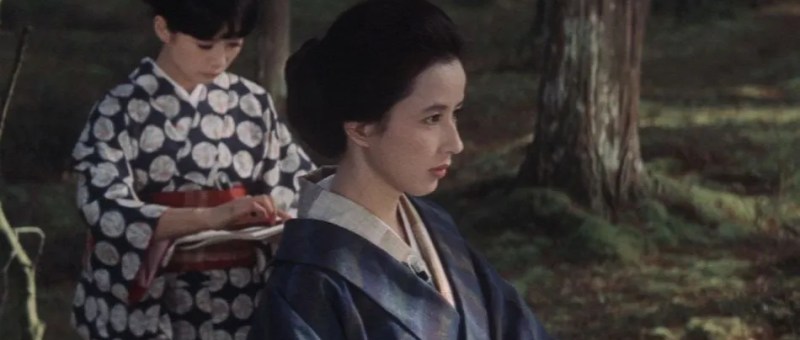
The Assignation (密会, Ko Nakahira, 1959)

Aside from the genre defining Crazed Fruit which kick-started the era of the “seishun eiga” and, in its own way, the Japanese New Wave, Ko Nakahira has remained under seen and under appreciated outside of Japan. Completed just three years after the youth fuelled frenzy of Crazed Fruit with its freewheeling playboys and their speedboat crises, The Assignation (密会, Mikkai) is a much more measured, mature meditation on social constraint, guilt and the slow drip feed of poisonous thought. Nakahira wastes none of his characteristic energy in the necessarily tight 76 minute runtime, but this is an exercise in high tension as a pair of illicit lovers are suddenly confronted with their crime after accidentally witnessing a murder.

Neglected at home by her studious professor husband, Kikuko (Yoko Katsuragi) has embarked on affair with one of his students, Ikuo (Seiji Miyaguchi). Canoodling at a deserted woodland spot, the pair muse on their impossible love prompting Ikuo to wonder how it would be if Kikuko’s husband simply died. Kikuko quickly puts a stop to Ikuo’s dark and desperate thought but the seed of death has already been sown in the relationship as they’re quickly spotlighted by a pair of unexpected car headlights. Hiding behind a nearby bush, Kikuko and Ikuo witness some kind of struggle inside a taxi before a young man drags and older one out of the car and takes off at a run.

Traumatised, Ikuo and Kikuko finish dressing and attempt to rejoin regular society by avoiding the unusual level of traffic in this remote spot which includes another truck and, as luck would have it, a policeman on a bike. Troubled, the pair bid each other goodbye with the suggestion that they’d better not see each other for a while but the tension continues to mount as Ikuo’s youthful desire to do his civic duty conflicts with Kikuko’s middle aged preoccupation with her reputation and the possible scandal that would occur should the police discover the whole story of their sordid love affair.

Nakahira begins with a careful panning of trees against the film’s bouncy jazz soundtrack neatly underlining the dread hanging somewhere overhead. Scandalous for 1959, the ongoing affair between the naive student and the melancholy housewife is already tinged with doom from the outset despite the relaxed quality of their post-coital coversation. Ikuo is pained, he wants a full life with Kikuko, but she dampens his youthful dreams by already thinking of the end. Adopting a maternal tone, she talks about his future – graduation, a successful career, a lovely young girl his own age who become will his wife. She even wonders if he’ll invite her to the wedding so she can meet the woman who will complete his life in a way she never can. Though she may say she wants to stay with him forever in the throws of passion, hers is a pragmatic love which is more need than desire. The archetypal middle-class housewife, Kikuko may have made this brief weekday evening transgression but throwing off the constraints of propriety is not a step she she envisages taking.

Already guilt ridden over her moral transgression, Kikuko views the incident in the woods as some kind of karmic revenge for her carnal sin. A very frank discussion with her forthright sister-in-law who quizzes her about the marriage’s lack of offspring reveals the depths of her despair and loneliness as her husband barely acknowledges her existence and there is almost nothing for her to do around the house. Taking cooking classes just to get out for a while, she runs into Ikuo whose story is an equally common one of a young man’s infatuation with the pretty yet sad younger wife of his professor.

If mutual loneliness brought them together, guilt and fear will later tear them apart as they face their shared “crime” from opposing sides. For Kikuko her illicit meetings with man much younger than herself are a shameful secret which must be concealed at all costs. Ikuo, however, is in love and sees nothing “wrong” in his courtship of the older woman even if he sympathises with her desire to avoid a scandal and does not want to cause her pain. What bothers him is a sense of justice and social responsibility. He saw the killer’s face – if he goes to the police, the victim’s wife and children might at least be able to gain some peace of mind knowing that the perpetrator is behind bars even if little else will change for them. Kikuko, by contrast, can think of nothing other than herself and is willing to sacrifice all to keep her reputation intact.

The threat of discovery is ever present as Nakahira litters the scene with clues and threats from the constant flagging of possible witnesses to an errant leaf resting on the pot which Kikuko has so calculatedly prepared to back up her cooking class alibi. A dreamlike atmosphere pervades as superimposition and montage segue into Kikuko’s flights of fancy from her memories of the beginning of the affair to a premonition of the newspaper furore which awaits her should Ikuo follow through with his intention of revealing all to the police. In the end, someone is always watching. Despite the youthful tone and jaunty jazz soundtrack, the morality police will tolerate no transgression. The wages of sin are death, but it’s fear driven by guilt and social constraint which is its executioner.


Rain of Light (光の雨, Banmei Takahashi, 2001)

In the closing voice over of Banmei Takahashi’s Rain of Light (光の雨, Hikari no Ame), the elderly narrator thanks us, the younger generation, for listening to this long, sad story. The death of the leftist movement in Japan has never been a subject far from Japanese screens whether from contemporary laments for a perceived failure as the still young protestors swapped revolution for the rat race or a more recent and rigorous desire to examine why it all ended in such a dark place. Rain of Light is an attempt to look at the Asama-Sanso Incident through the eyes of the youth of today and by implication ask a few hard questions about the nature of revolution and social change and if either of those two things have any place in the Japan these young people now live in. Takahashi reframes the tale as docudrama in which his young actors and actresses, along with their increasingly conflicted director, attempt to solve these problems through recreation and role play, bridging the gap between the generations with a warning from those who dreamed of a better world that was never to be.

After beginning with a voice-over and archive footage of the original protests beginning in the ‘60s, Takahashi introduces us to the main thrust of the conceit as veteran TV commercial director Tarumi (Ren Osugi) announces his intention to make a film about the Asama-Sanso Incident and hires indie film director Anan (Masato Hagiwara) as an AD who will also film behind the scenes footage. From here on in we swap between the various levels of the film as we meet the young men and women who will inhabit the roles of the student radicals of 40 years before and then witness the tragic events which befell them eventually culminating in the famous siege which became Japan’s first live broadcast news event gathering a record number of viewers across its ten hour duration.

This is a sad story and a difficult one to watch. As the student movement dwindled in the early 1970s, factionalism was rife and the scene chaotic. Two different factions merged to become known as the United Red Army and retreated to a secret mountain camp where they would train for the coming revolution, believing that only armed insurrection could destroy the old order and allow them to build the bright new socialist future for which they were fighting. However, in the extreme paranoia surrounding the underground movement, there had already been two murders of suspected traitors and suspicion was everywhere. Led by Kurashige (Taro Yamamoto) and Uesugi (Nae Yuki) the mountain lodge quickly becomes a place of fear and rigidity as dogmatic maoist slogans take on near religious significance. Pushing the “soldiers” through the process of continuous “self criticism”, the group places personal revolution as a paramount necessity for social change. Using the system to ease personal grudges or clear the political air, Kurashige and Uesugi bring about the deaths of several cadre members through beatings, exposure, or starvation before resorting to bare faced murder all in the name of “reform”.

Less interested in simply reviewing events, Takahashi’s treatment attempts to speak directly to the young people of today who, at least according to the video interviews conducted by Anan, know little of this traumatic era which presumably formed the backdrop to their parents’ lives. As time moves on it transpires that Tarumi has a much more personal connection to the material than he’d previously been able to admit and one which eventually sees him attempt to absent himself from the film’s completion. In the absence of their director, the cast take on the attributes of their characters in trying to understand his actions. Beginning to self criticise themselves, the actors attempt to find the fault that has driven their leader away despite the fact that his reasoning is entirely personal.

The young discuss the various merits of change and revolution but find their forebears hard to grasp. It is, indeed, impossible and all too possible to understand how this happened. Young men and women who wanted to change the world found their ideals misused, driven half mad by a kind of quasi-religious cultism which demanded nothing less than total commitment the rules of which were entirely decided by a deluded madman terrified of losing his own grip on power. Though some of the performers come to sympathise with their roles, this era of heavily politicised thought and activism is so entirely alien to them as to seem arcane.

Takahashi delineates each of the various media through differing camera effects and aspect ratios from the mid-range digital of the film within the film to the low grade video of the direct to camera “behind the scenes” footage. The film is itself the bridge which the director claims he wants to make yet eventually backs away from as his own painful past becomes the subject he does not want to address. Anan, the AD, pleads with the director to deliver his message to the young. The old, he says, talk about the past like it’s yesterday but refuse offer anything of real substance to those who have come after them. Tarumi does indeed tell his story in all of its pain and sadness, stopping to remind us, as the troupe of actors gleefully start throwing snowballs around, that this was a children’s revolution begun by young men and women who wanted nothing other than to build a better world. So what of the youth of today? Is such idealism still present, and if it is could it ever be as frustrated and misused as the unhappy revolutionaries of the post ’68 generation? The answer seems to be no, but then nothing came of the grand gestures and political posturing of 40 years ago, perhaps the genial, everyday goodness of the youth of today will have more luck.


Bandage バンデイジ (Takeshi Kobayashi, 2010)

Japan was a strange place in the early ‘90s. The bubble burst and everything changed leaving nothing but confusion and uncertainty in its place. Tokyo, like many cities, however, also had a fairly active indie music scene in part driven by the stringency of the times and representing the last vestiges of an underground art world about to be eclipsed by the resurgence of studio driven idol pop. Bandage (Bandage バンデイジ) is the story of one ordinary girl and her journey of self discovery among the struggling artists and the corporate suits desperate to exploit them. One of the many projects scripted and produced by Shunji Iwai during his lengthy break from the director’s chair, Bandage is also the only film to date directed by well known musician and Iwai collaborator Takeshi Kobayashi who evidently draws inspiration from his mentor but adds his own particular touches to the material.

High school girl Asako (Kie Kitano) is best friends with Miharu (Anne Watanabe) who likes all the same cool indie bands she does and is therefore upset to learn that she is dropping out of school because her parents have money problems. Luckily the girls run in to each other at a record store where Miharu works and bond again over the new CD of a band Miharu had recommended and Asako had fallen in love with – LANDS. Miharu also manages to get tickets to a LANDS concert and even swipes a couple of backstage badges from some retreating suits.

The girls sneak backstage and are immediately clocked by the band’s wily manager, Yukari (Ayumi Ito), but their adventure is derailed after they literally run into a band member and Asako loses a contact lens. The band’s lead singer, Natsu (Jin Akanishi), places a bandana across Asako’s temporarily blinded eye and rechristens her “Black Jack” before inviting both the girls to the post-show drinking session. Leaving early, Asako ends up arranging to meet Natsu at another bar later, beginning her long journey with the difficult, damaged musician as they navigate the turbulent “indie” record scene with all of its various traps and temptations.

Though Natsu and Asako may not actually be so far apart in age, you have to admit there’s a something not quite right in his sudden desire to befriend a starstruck high school girl. He does indeed seem to be after the obvious but after she resolutely turns him down, he keeps chasing her right until the end of the film. Despite remaining a little distant and afraid of this somehow very intense yet completely chilled out diva of a frontman, Asako becomes something like his only friend yet her presence continues to provoke tension within the group, particularly after she leaves high school and gets a job as a manager working alongside Yukari.

What first drew Asako to the music of LANDS was an identification with their melancholy lyrics echoing the alienation and loneliness she herself felt as a diffident adolescent. Her feelings towards Natsu are also driven by this same identification with his angst ridden lyrics but the qualities which attract him to her are those which she loathes in herself. Natsu, a narcissistic would be rock god, treats the band like his personal little empire, but deep down he knows he’s not its MVP. That would be the striking long haired guitar player, Yukiya (Kengo Kora), who the suits have pegged as the most likely to succeed. Natsu can write and his songs are good, if sometimes “uncommercial”, but he doesn’t quite have “it” in the same was as Yukiya does. Yukiya, by contrast, is (mostly) content to follow Natsu’s lead yet comes to resent his close relationship with Asako, regarding her as a kind of “Yoko” disrupting the band’s carefully crafted unity.

Yukiya’s attempt to destroy Asako is a calculated and cold one, motivated by his belief that she has “destroyed LANDS”. Laying bear his own pain and loneliness, Yukiya uses his internal darkness as an odd kind of seduction technique only to leave Asako on a barren shore sure of nothing other than the fear and confusion inside her heart. A dangerously violent confrontation with a drunken Natsu is the final trigger for Asako’s own moment of self realisation as she sees herself reflected in Natsu’s self destructive meltdown. United in mutual self loathing, the pair cement a melancholy though ultimately unrealisable bond which puts an end to Asako’s musical adventures.

Asasko is given a second opportunity to pursue a musical dream but one which is more on her own terms and reminds her of the potential and possibilities of music as art rather than the market driven mindset her agency job had done its best to instil. Natsu, it seems, has also rediscovered his artistry and may be in a better place to create away from the pressures that come with fronting an up and coming indie band. Defiantly exclaiming that the pain can’t reach him, Natsu might have found the “bandage” he’d been looking for which is, in a sense, his music – the dressing which staunches the weeping wounds of his pain and suffering. Music, like a bandage, is both salve and barrier – its message indirect but none the less deeply felt even if its effects are for internal use only. Asako and Natsu seem destined to walk on parallel paths but each has, at least, begun to discover their true selves as they continue to pursue their artistic dreams if perhaps at the expense of the personal.


Short scene from the film (no subtitles)

The Outcast (破戒, AKA The Broken Commandment, Kon Ichikawa, 1962)

Kon Ichikawa’s approach to critiquing his society was often laced with a delicious slice of biting irony but he puts sarcasm to one side for this all too rare attempt to address the uncomfortable subject of Japan’s hidden underclass – the burakumin. The term itself simply means “people who live in hamlets” but from feudal times onwards it came to denote the kinds of people with whom others did not want to associate – notably those whose occupations dealt in some way with death from executioners and undertakers, to butchers and leatherworkers. Though outright discrimination against such people was outlawed during the Meiji restoration, social stigma and informal harassment remained common with some lingering tendency remaining even today.

The Outcast (破戒, Hakai), adapted from the book by Toson Shimazaki (known as The Broken Commandment in English) is the story of a young man of burakumin lineage who has to hide his true identity in order to live a normal life in the Japan of 1904. Segawa’s father, formerly a village elder, sent his son away to live with his brother and his wife in a distant town where they could better hide their burakumin status to enjoy a better standard of life. Sadly, Segawa’s father dies after being trampled by a recalcitrant bull never seeing his son again and leaving him with the solemn commandment to live as a regular person, never revealing his connection with the burakumin world.

This debt to his father’s sacrifice creates a conflict in the heart of the young and idealistic Segawa (Raizo Ichikawa). Forced to listen to the casual racism all around him and unable to offer any kind of resistance, Segawa has become interested in the writings of a polemical political figure, Rentaro Inoko (Rentaro Mikuni), who has begun to write passionate political treatises advocating for burakumin rights. When Inoko turns up in Segawa’s town, he finds himself a new father figure and political mentor but continues to feel constrained by the debt of honour to his father’s sacrifice and is unable to confess his own burakumin heritage even to Inoko.

The world Segawa lives in is a conservative and stratified one in which old superstitions hold true even whilst hypocritical authorities use and abuse the trust placed in them. Inoko falls foul of local politics after he discovers a politician has married a wealthy burakumin woman solely for her money and is planning to expose him at a political rally. This same politician has already threatened to blackmail Segawa who continues to deny all knowledge of any burakumin related activities whilst failing to quell the eventual gossip surrounding Segawa’s lineage. The gossip causes problems at the school where Segawa had held a prestigious teaching position as the headmaster and school board fear the reaction of the parents. Though the people at the temple where Segawa takes refuge after growing tired of the racist inn owners in town are broadly supportive of the burakumin, the priest there has his own problems after having made a clumsy pass at his adopted daughter, Shio (Shiho Fujimura) – the daughter of a drunken teacher sacked by the school in order to avoid paying him a proper pension. At every turn the forces of authority are universally corrupt, selfish and venal, leaving no safe direction for a possible revolution of social justice to begin.

This is Segawa’s central conflict. After his experiences with Inoko, Segawa begins to want to follow in his footsteps, living out and proud as a burakumin and full time activist for burakumin rights. However, this would be undoing everything for which his father sacrificed so much. Talking things over with Inoko’s non-burakumin wife, Segawa is also presented with a third way – reveal his burakumin heritage and attempt to live honestly as an ordinary person, changing hearts and minds simply through leading a life among many other lives. This option seems attractive, especially as Segawa has fallen in love and would like to lead an ordinary life with a wife and family, but his youthful idealism is hungry for a greater, faster change than the one which will be born through simple integration. Despite the warnings of Inoko’s wife who believes change will occur not through activism but through the passage of time, Segawa decides his future lies in advancing the burakumin cause in the wider world.

When Segawa does choose to reveal himself, he finds that there is far more sympathy and support than he would ever have expected. A woman he has come to love wants to stay by his side, his previously hostile friend rethinks his entire approach to life and apologises, and even the children in his class convince their parents that their teacher is a good and a kind man regardless of whatever arbitrary social distinction may have been passed to him through an accident of birth. Segawa’s conflicted soul speaks not only for the burakumin but for all hidden and oppressed peoples who have been forced to keep a side of themselves entirely secret, faced with either living a lie in the mainstream world or being confined to life within their own community. His choice is one of either capitulation and collaboration, or resistance which amounts to a sacrifice of his own potential happiness in the hope that it will bring about liberation for other similarly oppressed people.

Scripted again by Natto Wada, The Outcast takes a slightly clumsy, didactic approach filled with long, theatrical speeches but does ultimately prove moving and inspiring in advocating for the fair treatment of these long maligned people as well as others facing similar discrimination in an unforgiving world. As a treatise on identity and rigid social attitudes, the film has lost none of its power or urgency even forty years later in a world in which progress has undoubtedly been made even if there are still distances to go.


Twilight: Saya in Sasara (トワイライト ささらさや, Yoshihiro Fukagawa, 2014)

Japanese cinema has its fare share of ghosts. From Ugetsu to Ringu, scorned women have emerged from wells and creepy, fog hidden mansions bearing grudges since time immemorial but departed spirits have generally had very little positive to offer in their post-mortal lives. Twilight: Saga in Sasara (トワイライト ささらさや,  Twilight Sasara Saya) is an oddity in more ways than one – firstly in its recently deceased narrator’s comic approach to his sad life story, and secondly in its partial rejection of the tearjerking melodrama usually common to its genre.

Unsuccessful Rakugo performer Yutaro (Yo Oizumi) met the love of his life during one of his sparsely attended recitations. Saya (Yui Aragaki) was the only one laughing but even she didn’t think he was very funny, she just liked him because he was trying so hard. Eventually, he married her and they had a lovely baby boy but before little Yusuke was even a year old, Yutaro got himself killed in a random traffic accident. Such is life. Still, knowing that Saya had no family of her own and having grown up without a father himself Yutaro feels even worse about leaving his wife and son all alone in such a stupid way. Therefore he decides to delay going to heaven so that he can stick around to help Saya in whatever way he can.

A crisis occurs when Yutaro’s estranged father (Ryo Ishibashi) suddenly turns up at the funeral laying claim to little Yusuke with no thought to the additional emotional ramifications of trying to snatch a baby from a grieving mother right over the coffin of her husband. Possessing the body of another guest, Yutaro manages to convince Saya to run leading her to retreat to her late aunt’s house in the peaceful rural village of Sasara.

Though the premise is a familiar one, Fukagawa neatly sidesteps the more maudlin aspects for a broadly comic approach in which Yutaro recounts the story of his death as if it were a rakugo tale. Possessing various people along the way, Yutaro does indeed help Saya adjust to her new life but eventually discovers that perhaps the reason he hasn’t passed over was one of the past rather than one of the future.

Saya’s arrival in Sasara gets off to a bad start – essentially forced out of the city to escape Yutaro’s father Saya causes unexpected trouble when it emerges that the corrupt local estate agent has been letting out her aunt’s house without telling her. If that weren’t enough, some of her valuables are almost stolen by a local delivery boy but, this being an ageing village, children are a rarity and so little Yusuke quickly captures the hearts of the neighbourhood grannies who eventually become Saya’s friends and staunch supporters. Familial problems are the name of the day from childlessness to children (hopefully) writing down possible signs of dementia or just leaving town and not coming back. Yutaro also helps Saya improve the life of another young woman with a son who doesn’t speak by allowing him to finally voice what he really feels, adding to the circle of female help and support which becomes the family Saya had always longed for.

Orphaned at a young age, raised by her grandmother until she died and having lost her only living relative in her aunt a few years previously, Saya had always wondered what it felt like to have a real family of her own. Yutaro had also lost his mother at a young age through illness and was estranged from his father who refused to visit her even on her deathbed. Yutaro’s untimely death adds to Saya’s ongoing sorrows but also ends the beginnings of the happy family they’d begun to build with each other. As it turns out, Yotaro’s limbo is less about his son and more about his father as he gets a last opportunity to bond with his outwardly harsh and cruel dad and come to a kind of understanding about fatherhood in hearing his side of the story. Life is too short for grudges, and even spirits sometimes need to give up the ghost so that the air can rest a little lighter.

Though there are the expected moments of sadness as Yotaro realises the number of people he can possess is dwindling and his time with Saya will be limited, Fukagawa keeps things light and whimsical with a kind of small town quirkiness aided by Oizumi’s spirited delivery. Adding in frequent rakugo references complete with painted backdrops and sound effects as well as a repeated motif which sees the little town remade as a diorama model, Twilight: Saya in Sarasa has a pleasantly old fashioned feeling which only adds to its wholesome emphasis on an extended family of community coupled with the continuing presence of Yutaro watching from somewhere on high. Warm and funny if a little lacking in impact, Twilight: Saya in Sasara is a rare instance of a ghost bringing people together in love and harmony through helping them get closer to their true emotions but one that is also keen to emphasise that we’re all only here for an unspecified time – better not to waste it with silly things like grudges.


Original trailer (no subtitles)

United Red Army (実録・連合赤軍 あさま山荘への道程, Koji Wakamatsu, 2007)

Koji Wakamtasu had a long and somewhat strange career, untimely ended by his death in a road traffic accident at the age of 76 with projects still in the pipeline destined never to be finished. 2008’s United Red Army (実録・連合赤軍 あさま山荘への道程, Jitsuroku Rengosekigun Asama-Sanso e no Michi) was far from his final film either in conception or actuality, but it does serve as a fitting epitaph for his oeuvre in its unflinching determination to tell the sad story of Japan’s leftist protest movement. Having been a member of the movement himself (though the extent to which he participated directly is unclear), Wakamatsu was perfectly placed to offer a subjective view of the scene, why and how it developed as it did and took the route it went on to take. This is not a story of revolution frustrated by the inevitability of defeat, there is no romance here – only the tragedy of young lives cut short by a war every bit as pointless as the one which they claimed to be in protest of. Young men and women who only wanted to create a better, fairer world found themselves indoctrinated into a fundamentalist political cult, misused by power hungry ideologues whose sole aims amounted to a war on their own souls, and finally martyred in an ongoing campaign of senseless death and violence.

Dividing the narrative into three distinct acts, Wakamatsu begins with a lengthy history lesson starting right back in 1960 with the birth of the student movement and the first casualty of the unborn revolution as a young woman loses her life protesting the rise of tuition fees. Despite the lack of success, the student movement intensifies during the turbulent 1960s with the renewal of the ANPO treaties and the perceived complicity of the Japanese government with America’s anti-communist warfare in Asia. Mixing archive footage with reconstructions and on screen text detailing timelines, names and affiliations these early segments are hard to follow but bear out the complexity and chaos which contributed to the inefficacy of the student movement. Soon, each of the leaders we have been introduced to has been removed from the scene leaving the older but inexperienced Tsuneo Mori (Go Jibiki) in charge of what was then the Red Army Faction.

Mori had only recently rejoined the movement after leaving in disgrace at fleeing a protest and thereby evading arrest. The Red Army Faction then merges with another sect, the Revolutionary Left Wing (RLF), to form the United Red Army. Led by Mori and a female commander, Nagata (Akie Namiki), the United Red Army holes up in a cabin in the woods in order to undergo military training for the upcoming armed insurrection. Prior to this, there had been a series of purges and executions in the city producing an atmosphere of terror and paranoia which only intensifies in the incestuous and claustrophobic environment of the ascetic mountain retreat.

Out of his depth and eager to prove himself, Mori’s revolutionary consciousness developes into a dangerous cult of personality in which his iron rule is more akin to fundamentalist religion than a serious political movement intended to change the world for the better. Wakamatsu’s depiction of these events is as terrifying as it is absurd. Maoist doctrine becomes a holy scripture as each of these would be revolutionaries is forced to undergo self criticism in order to devote themselves fully to the revolution and become a “true communist”. Brainwashed and naive, the cadre comply seeming not to realise that no self criticism they can offer will ever be good enough for Mori’s constant need for identity erasure and that each fault they offer will only be used to form the basis of the next charge levelled against them. What begins as questioning develops into screaming before descending into bloody violence and eventually murder.

If Mori’s fault is a kind of madness born of fear and insecurity, it is Nagata whose mania takes on an almost gleeful quality. A plain woman with unremarkable features and a sharp personality, Nagata, as she’s portrayed in the film, displays extreme issues relating to femininity. When an idealistic young woman arrives dressed in typical city fashions necessary to blend in with the capitalist bourgeoisie, Nagata wastes no time in berating her for her stylish clothes and makeup. Threatened both by the woman’s conventional beauty and high ranking position in another faction, Nagata takes especial care to make sure she herself remains on top. Despite being in a relationship with one cadre member and later leaving him for Mori (because it’s “right from the communist perspective”), Nagata cannot bear any hint of sexual activity and it is an ill judged kiss which ends up leading to the first set of mercilessly violent self criticism sessions eventually resulting in death as both parties are beaten and then tied up in the freezing mountain air where death by exposure is all but inevitable.

Mori declares that “leadership means beating” but when this is no longer enough the death sentences come thick and fast. Eventually, some members manage to escape and the mountain hideout is discovered. Splitting up and heading on the run, Mori and Nagata are captured while a group of five break into a mountain lodge where they take the caretaker’s wife hostage and remain under siege for nine days until the police eventually break in, arrest the terrorists and rescue the woman all of which became the first such event to be live broadcast on Japanese TV. The Asama-Sanso incident, as it came to be known, sealed the fate of the left wing protest movement in Japan as the terrorist violence of the renegade protestors forever coloured public perception.

Wakamatsu does not end his story here – returning to the captions which opened the film, he reveals to us the legacy of the failed student protest movement in the overseas activities of the Japanese Red Army, most notably in North Korea and the Middle East. The protest movement in Japan resulted in abject failure – the ANPO treaty survives, the Sanrizuka villages were destroyed and an airport built, the capitalist future arrived at speed heading into the bubble economy where the only revolution was consumerism. The glorious future of which these young people dreamed, free of class, gender, and social inequality, would not materialise as their idealism devolved into introspective dogmatic rhetoric, violence and murder. Trapped inside a fundamentalist cult, the true tragedy is that this was a children’s revolution – the vast majority of its victims under 25 years old, one just 16 and forced to participate in the death of his own brother. How much good could each of these socially conscious young people have gone on to do if only they’d found a less destructive cause? Would anyone want to live in the world born of this revolution? Contrasting the joyous camaraderie of the peaceful protests with the escalating, internecine violence of the URA, Wakamatsu’s vision of the movement he was once a part of is a necessarily bleak one but resolute in its gaze. Ugly, cold and unforgiving United Red Army is a warning from history which has only sympathy for those caught up in its terrible machinations.


Original trailer (English subtitles)