 Hiroshi Shimizu made over 160 films during his relatively short career but though many of them are hugely influential critically acclaimed movies, his name has never quite reached the levels of international renown acheived by his contemporaries Ozu, Naruse, or Mizoguchi. Early silent effort Japanese Girls at the Harbor (港の日本娘, Minato no Nihon Musume) displays his trademark interest in the lives of everyday people but also demonstrates a directing style and international interest that were each way ahead of their time.
A classic melodrama at heart, Japanese Girls at the Harbor begins with two school girls living their humdrum lives of commuting back and for to school in early 1930s Yokohama. Dora and Sunako attend a Catholic school in the “foreign quarter” of the city and are devoted best friends who swear they’ll stick together for ever. However, motorcycle riding bad boy Henry rips right through their friendship in the way that only a bad boy can. Sunako abandons Dora at the harbour to ride off with Henry (later apologising to her understanding friend) but it turns out that Henry likes hanging round with gangsters and also has something going with an older lady called Yoko.
Dora tells Sunako if she really loves Henry she’ll just have to accept him for what he is before going off to find the cheating louse herself and give him a piece of her mind. However, when Sunako catches Henry and Yoko together she loses the plot entirely and ends up running off out of the city. Time passes and Sunako returns but in shame as she’s become a prostitute living with a painter whom she doesn’t seem to care for very much at all. Can she repair the damage with the now married Dora and Henry and get herself out of the hell her existence has become, or is she forever doomed to the life of a fallen woman?
Made in 1933 just as Japan was heading into its militarist era, Japanese Girls at the Harbour has an oddly international mindset with its Western houses, names and a Christianising atmosphere. An international port, there’s plenty of the outside world to be found in Yokohama where things seem to leave much more often then they arrive. Sunako says watching the boats leave makes her feel sad, but it’s she who will go off on one of Shimizu’s trademark travels, running from a crime of passion and the ache of a breaking heart.
A true friend, Dora has not abandoned Sunako and is willing to welcome her back into her home. Henry, the first to meet Sunako (at her place of employ) is torn between the old attraction, feelings of guilt over what’s happened to her, and his responsibility to Dora as her husband. Shimizu introduces an interesting metaphorical device as Henry and Dora wind a ball of wool whilst sitting together in their Western style house but as soon as Sunako arrives it falls onto the floor and begins to unravel, eventually becoming tangled up around the feet of Henry and Sunako who dance in the living room while Dora prepares a meal. Suddenly seeing her married life unravel just like this shaggy ball of wool, Dora, though still devoted to her friend, begins to feel a little afraid that Sunako may be about to jump back on the bike with Henry, just as she did all those years ago.
Shimizu’s interest is much more with the two young women than it is with Henry who remains very much a prize not worth winning. This is Sunako’s fallen woman story – eventually she comes to feel that she’s bringing too much disruption into the lives of her old friends who were getting on so well before. Henry and Dora were her last lifeline to her old self, the only old friends she could still count on, but if she wants to save them (and herself) she will have to stay away and lose them forever. Her redemption lies in self sacrifice, in giving up something that made her profoundly happy for its own good despite the immense amount of suffering she will incur in doing so.
Shimizu was one of the earliest proponents of location shooting and he does make good use of the atmospheric Yokohama streets before heading indoors for the seedy, smoky clubs and cheap tenement housing. He also introduces a series of strange jump zooms at two moments of unusually high emotion which add a degree of panic to the scene as well as heightening the nuanced reactions of the characters in question. This, coupled with his use of dissolves which often sees characters simply evaporate from the frame like unwelcome ghosts of memory, lends to the almost noir-ish, melancholic tone with its dream-like blurring of the real and the merely recalled.
An interesting example of international cross pollination in the early 1930s before hard line militarism became entrenched, Japanese Girls at the Harbor is a pregnantly titled story of a wronged woman abandoned on the shore and left with the choice to board a boat to fairer climes or remain behind and risk destroying what she most loved. The past becomes something to be absorbed and then put to rest. Ghosts cannot travel by water, and so you must leave them behind, like girls at the harbour staring sadly at departing ships.
Japanese Girls at the Harbor is the first of four films in Criterion’s Eclipse Series 15: Travels with Hiroshi Shimizu box set.
Video clip of a climactic scene which showcases Shimuzu’s jump zoom technique (presented without musical score but does have subtitles for the really quite amazing intertitles which are a definite highlight of the film).
(Video clip courtesy of Mubi)
 Kon Ichikawa may be best remembered for his mid career work, particularly his war films The Burmese Harp and
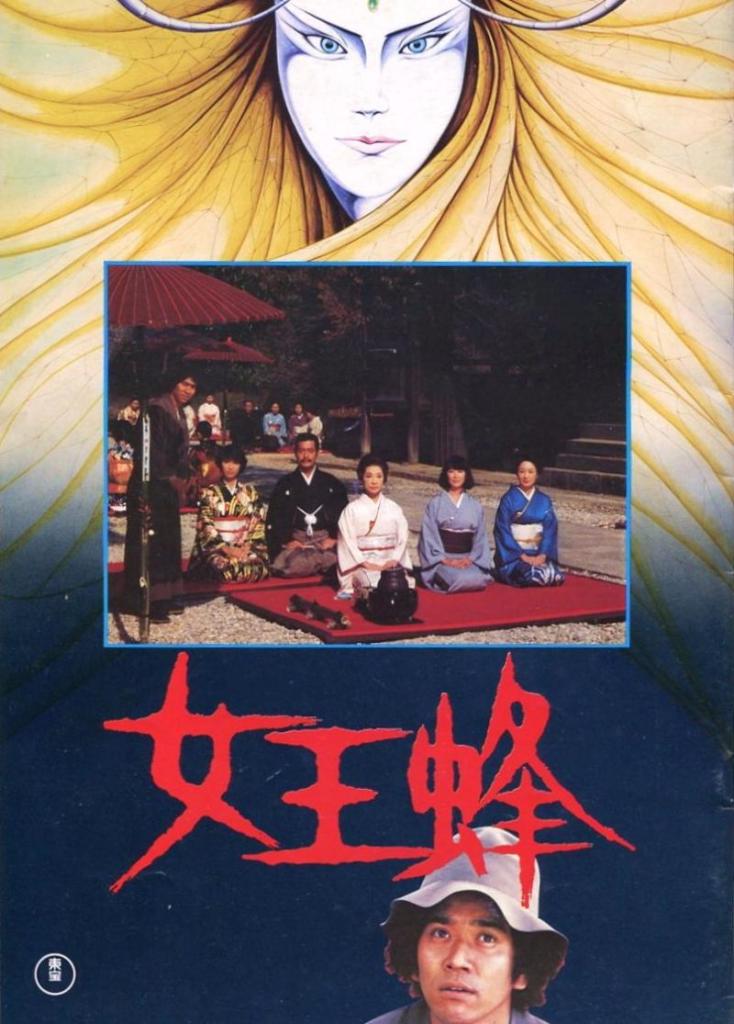
  These days, cats may have almost become a cute character cliche in Japanese pop culture, but back in the olden days they weren’t always so well regarded. An often overlooked subset of the classic Japanese horror movie is the ghost cat film in which a demonic, shapeshifting cat spirit takes a beautiful female form to wreak havoc on the weak and venal human race. The most well known example is Kaneto Shindo’s Kuroneko though the genre runs through everything from ridiculous schlock to high grade art film.
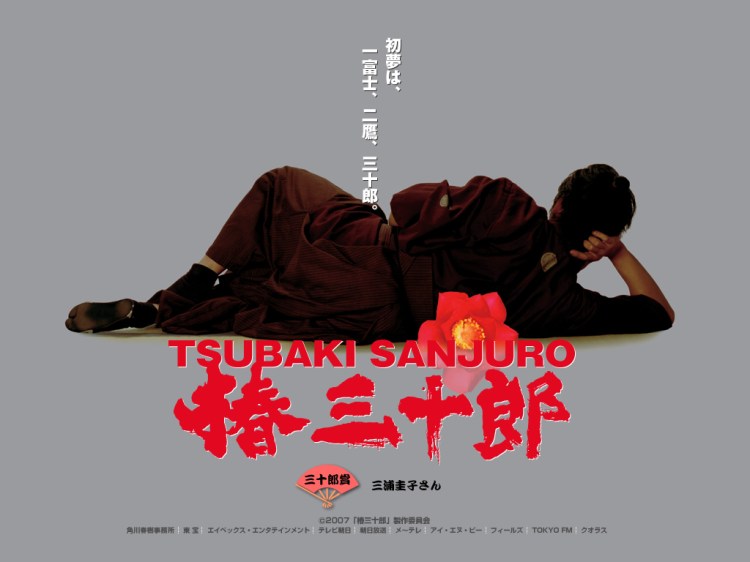 Generally speaking, where a film has been inspired by already existing source material, it’s unfair to refer to it as a “remake” even if there has been an iconic previous adaptation. That said, in the case of Tsubaki Sanjuro (椿三十郎), “remake” is very much at the heart of the idea as the film uses the exact same script as the massively influential 1962 version directed by Akira Kurosawa which also starred his muse Toshiro Mifune. Director Yoshimitsu Morita is less interested in returning to the story’s novelistic roots than he is in engaging with Kurosawa’s cinematic legacy.
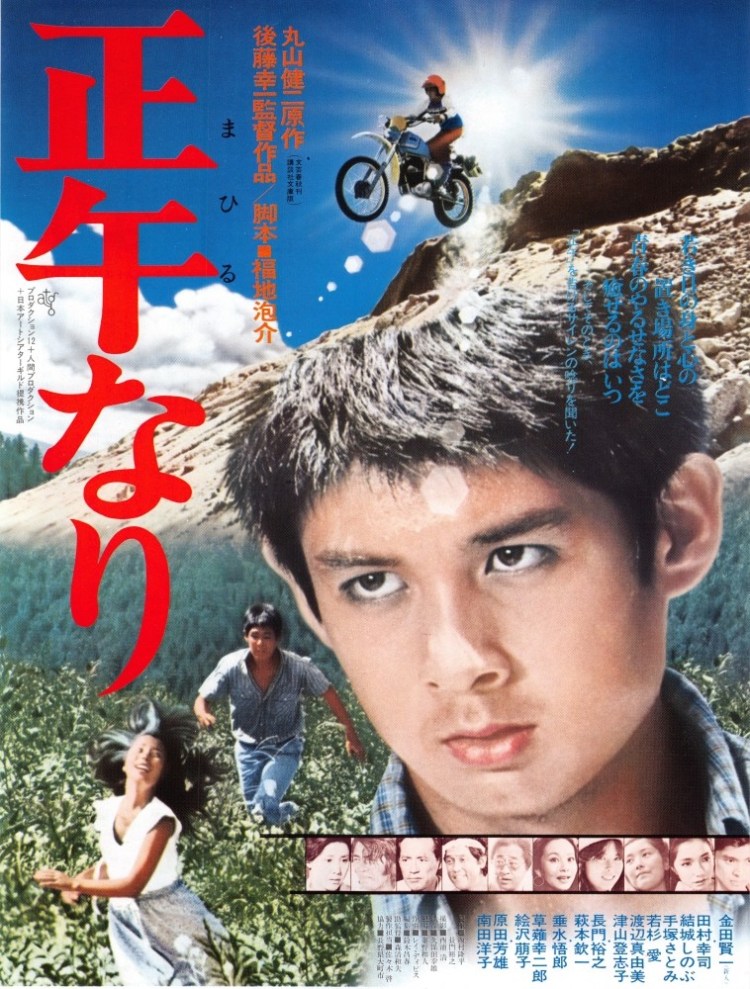 Koichi Goto’s Art Theatre Guild adaptation of Kenji Maruyama’s 1968 novel At Noon (正午なり, Mahiru Nari) begins with a young man on a train. Forlornly looking out of the window, he remains aboard until reaching his rural hometown where he makes a late entry to his parents’ house and is greeted a little less than warmly by his mother. The boy, Tadao, refuses to say why he’s left the big city so abruptly to return to the beautiful, if dull, rural backwater where he grew up.
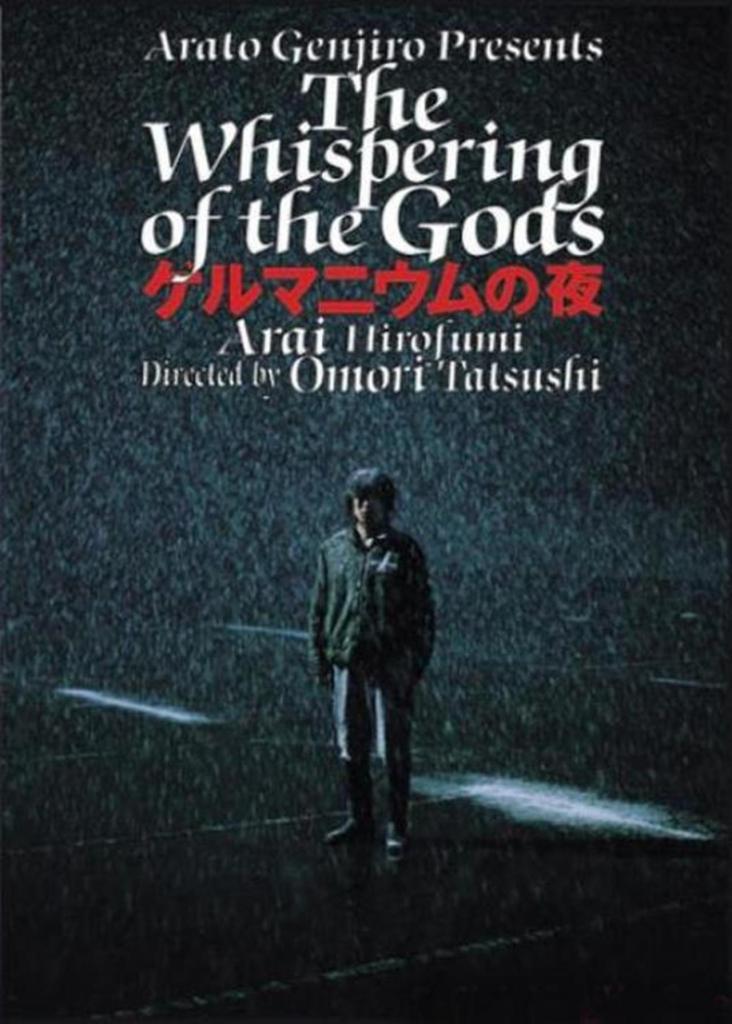 If you’ve ever wondered what it’s like to live in hell, you could enjoy this fascinating promotional video which recounts events set in an isolated rural monastery somewhere in snow covered Japan. A debut feature from Tatsushi Omori (younger brother of actor Nao Omori who also plays a small part in the film), The Whispering of the Gods (ゲルマニウムの夜, Germanium no Yoru) adapted from the 1998 novel by Mangetsu Hanamura, paints an increasingly bleak picture of human nature as the lines between man and beast become hopelessly blurred in world filled with existential despair.
 Nobuhiko Obayashi might be most closely associated with his debut, Hausu, which takes the form of a surreal, totally psychedelic haunted house movie, but in many ways his first feature is not particularly indicative of the rest of Obayashi’s output. 1984’s The Deserted City (AKA Haishi, 廃市), is a much better reflection of the director’s most prominent preoccupations as it once again sees the protagonist taking a journey of memory back to a distant youth which is both forgotten in name yet ever present like an anonymous ghost haunting the narrator with long held regrets and recriminations.
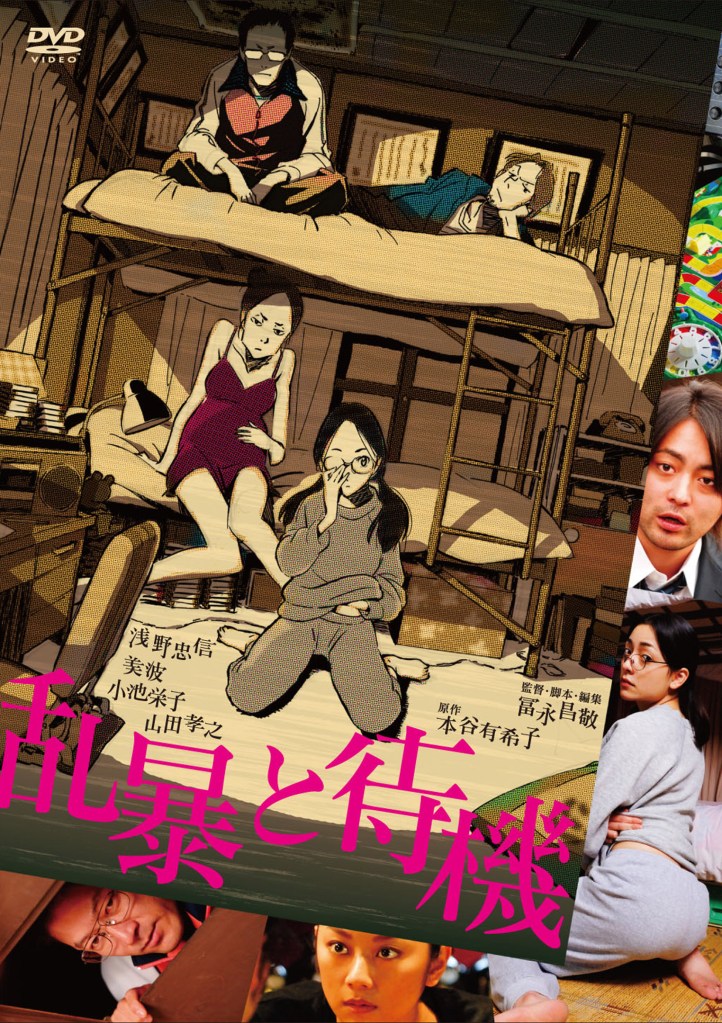 Vengeance is a dish best served cold, but then if you’re going to wait a while perhaps you should make sure to add plenty of salt and spice to the mix to disguise its rather rancid odour. Adapted from a play by Yukiko Motoya, Masanori Tominaga’s Vengeance Can Wait (乱暴と待機, Ranbou to Taiki) is the strange tale of four interconnected people who each become ensnared in a bizarre circle of violent revenge!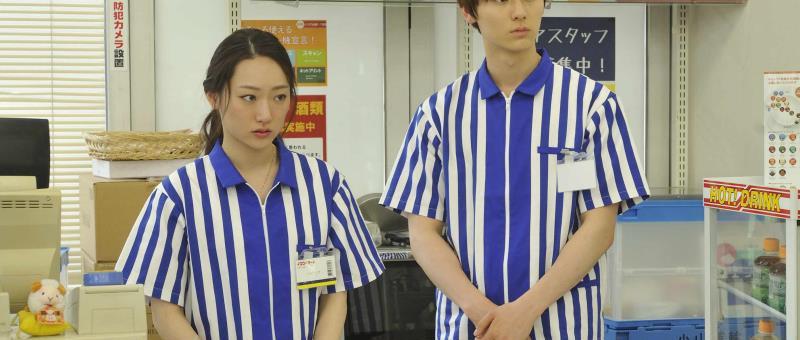
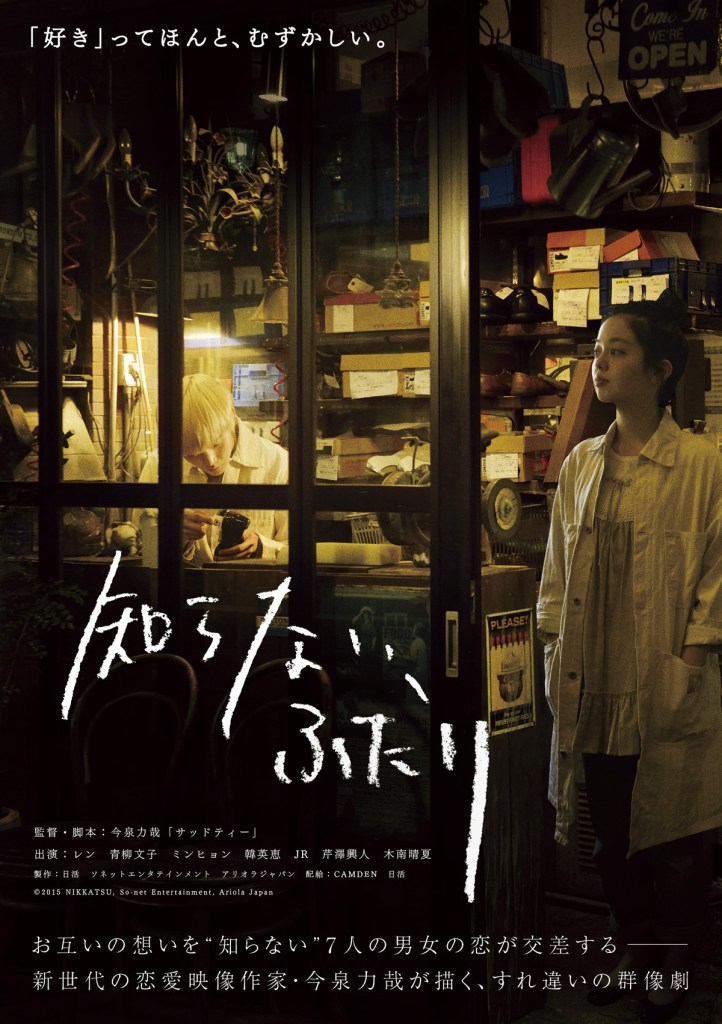 Ah young love! So beautiful, so complicated, so retrospectively trivial. Intrigue engulfs a group of young Koreans living in Japan, their co-workers, and even their English teacher and her fiancee in Rikiya Imaizumi’s indie youth meets boyband quirky romance movie, Their Distance (知らない、ふたり, Shiranai Futari). The aptly named picture paints a vista of misdirected love, miscommunication and misjudged honesty to show how messy romance can be even when it’s intent on being cute.
 Caesium is a chemical element which has the distinction of being one of the very few metals which remains liquid at room temperature. These days you’re most likely to hear about one of its isotopes which is produced as a result of nuclear fission and can pose a serious environmental problem following a nuclear related disaster. Caesium comes to be something of an obsessive concern for the 17 year old heroine of Ryo Saitani’s debut film, Cesium and a Tokyo Girl (セシウムと少女, Cesium to Shojo), as Mimi comes to connect the presence of caesium in the water with the constant soreness she’s been experiencing with her tongue since the disaster hit.
