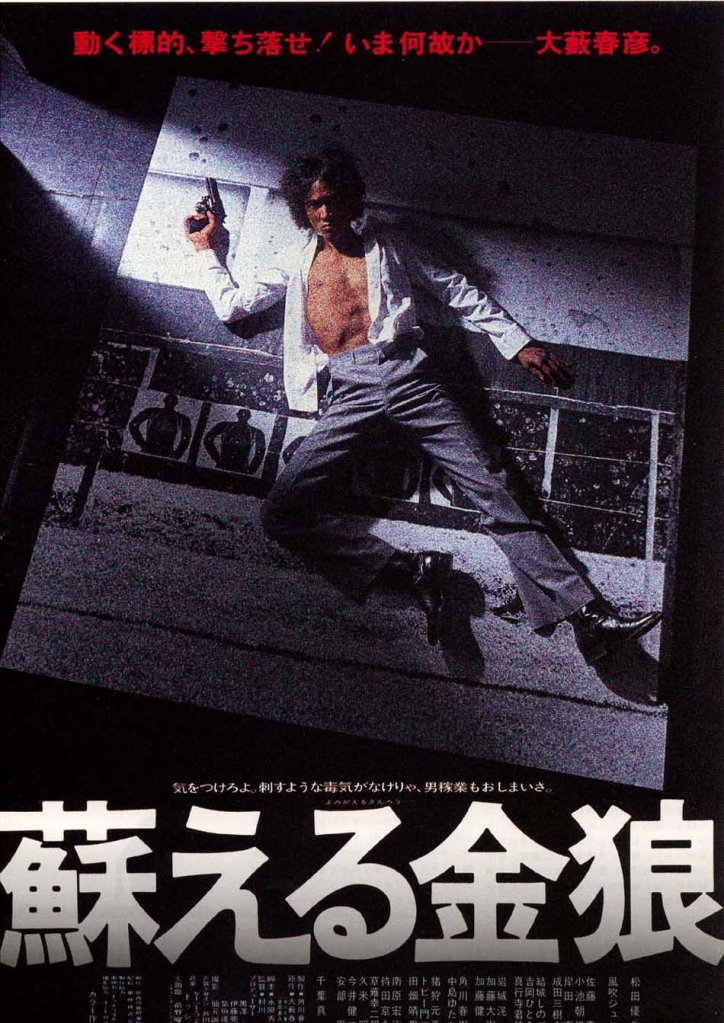
 You know how it is. You work hard, make sacrifices and expect the system to reward you with advancement. The system, however, has its biases and none of them are in your favour. Watching the less well equipped leapfrog ahead by virtue of their privileges, it’s difficult not to lose heart. Asakura (Yusaku Matsuda), the (anti) hero of Toru Murakawa’s Resurrection of Golden Wolf (蘇る金狼, Yomigaeru Kinro), has had about all he can take of the dead end accountancy job he’s supposedly lucky to have despite his high school level education (even if it is topped up with night school qualifications). Resentful at the way the odds are always stacked against him, Asakura decides to take his revenge but quickly finds himself becoming embroiled in a series of ongoing corporate scandals.
Orchestrating a perfectly planned robbery on his own firm in which Asakura deprives his employers of a large amount money, he’s feeling kind of smug only to realise that the bank had a backup plan. The serial numbers of all of the missing money have been recorded meaning he can’t risk spending any of it. Accordingly he decides the “safest” thing to do is exchange the problematic currency for the equivalent in heroine. His plan doesn’t stop there, however. He also knows the big wigs at the top are engaged in a high level embezzlement scam and seduces his boss’ mistress, Kyoko (Jun Fubuki), for the inside track. Asakura is not the only game in town as another detective, Sakurai (Sonny Chiba), is blackmailing some of the other bosses over their extra-marital activities. Playing both sides off against each other, Asakura thinks he has the upper hand but just as he thinks he’s got what he wanted, he discovers perhaps there was something else he wanted more and it won’t wait for him any longer.
Based on a novel by hardboiled author Haruhiko Oyabu, Resurrection of Golden Wolf is another action vehicle for Matsuda at the height of his stardom. Re-teaming with Murakawa with whom he’d worked on some of his most famous roles including The Most Dangerous Game series, Matsuda begins to look beyond the tough guy in this socially conscious noir in which an angry young man rails against the system intent on penning him in. A mastermind genius, Asakura is leading a double life as a mild mannered accountancy clerk by day and violent punk by night, but he has every right to be angry. If his early speech to a colleague is to be believed, Asakura worked hard to get this job. A high school graduate with night school accreditation, he’s done well for himself, but despite his friend’s assurance that Asaukura is ahead in the promotion stakes he knows there’s a ceiling for someone with his background no matter how hard he works or how bright he is.
Under the terrible wig and unfashionable glasses he adopts for his work persona, Asakura has a mass of unruly, rebellious hair and a steely gaze hellbent on revenge against the hierarchical class system. He is not a good guy. Asakura’s tactics range from fisticuffs with street punks to molesting bar hostesses, date rape, and getting his (almost) girlfriend hooked on drugs as a means of control, not to mention the original cold blooded murder of the courier he stole the company’s money from in the first place. The fact he emerges as “hero” at all is only down to his refusal to accept the status quo and by his constant ability to stay one step ahead of everyone else. When the system itself is this corrupt, Asakura’s punkish rebellion begins to look attractive despite the unpleasantness of his actions.
Adding in surreal sequences where Asakura dances around his lair-like apartment in a quasi-religious ritual with his silver mask, plus bizarre editing choices, eerie music and incongruous flamenco, Murakawa’s neo-noir world is an increasingly odd one, even if not quite on the level of his next film, The Beast Must Die. Very much of its time and remaining within the upscale exploitation world, Resurrection of Golden Wolf is necessarily misogynistic as its female cast become merely pawns exchanged between men to express their own status. The tone remains hopelessly nihilistic as Asakura nears his goal of the appearance of a stereotypically successful life with an executive job and possible marriage to the boss’ daughter only to find his conviction wavering. Hopelessly bleak, dark, and sleazy, Resurrection of Golden Wolf is, nevertheless, a supreme exercise in style marrying Matsuda’s iconic image with innovative direction which is hard to beat even whilst swimming in some very murky waters.
Again, many variations on the English title but I’ve gone with Resurrection of Golden Wolf as that’s the one that appears on Kadokawa’s release of the 4K remaster blu-ray (Japanese subs only).
Original trailer (English subtitles)
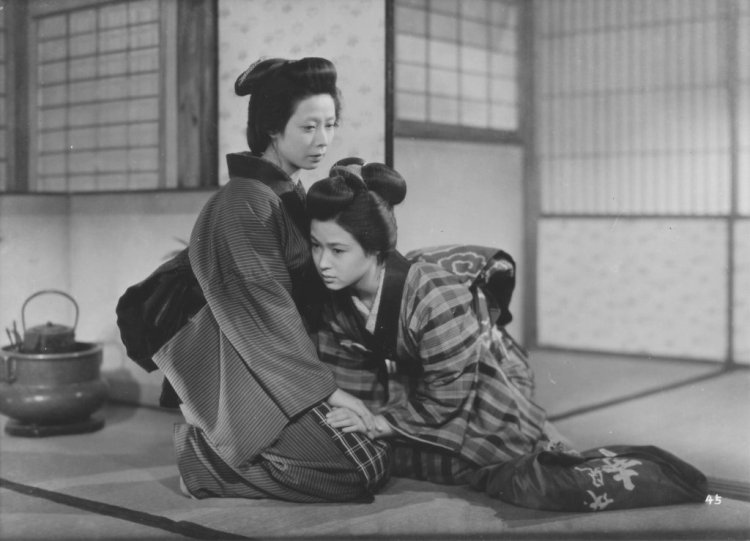 History marches on, and humanity keeps pace with it. Life on the periphery is no less important than at the centre, but those on the edges are often eclipsed when “great” men and women come along. So it is for the long suffering Tose (Chikage Awashima), the put upon heroine of Heinosuke Gosho’s jidaigeki The Fireflies (螢火, Hotarubi). An inn keeper in the turbulent period marking the end of the Tokugawa shogunate and with it centuries of self imposed isolation, Tose is just one of the ordinary people living through extraordinary times but unlike most her independent spirit sparks brightly even through her continuing strife.
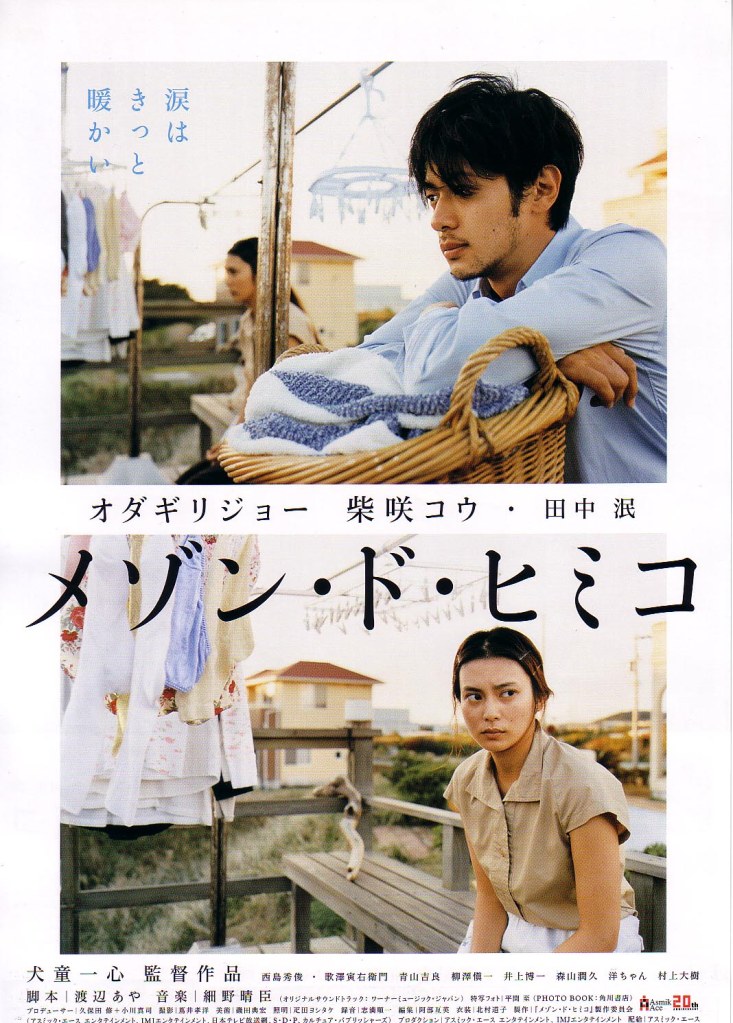 In Japan’s rapidly ageing society, there are many older people who find themselves left alone without the safety net traditionally provided by the extended family. This problem is compounded for those who’ve lived their lives outside of the mainstream which is so deeply rooted in the “traditional” familial system. La Maison de Himiko (メゾン・ド・ヒミコ) is the name of an old people’s home with a difference – it caters exclusively to older gay men who have often become estranged from their families because of their sexuality. The proprietoress, Himiko (Min Tanaka), formerly ran an upscale gay bar in Ginza before retiring to open the home but the future of the Maison is threatened now that Himiko has contracted a terminal illness and their long term patron seems set to withdraw his support.
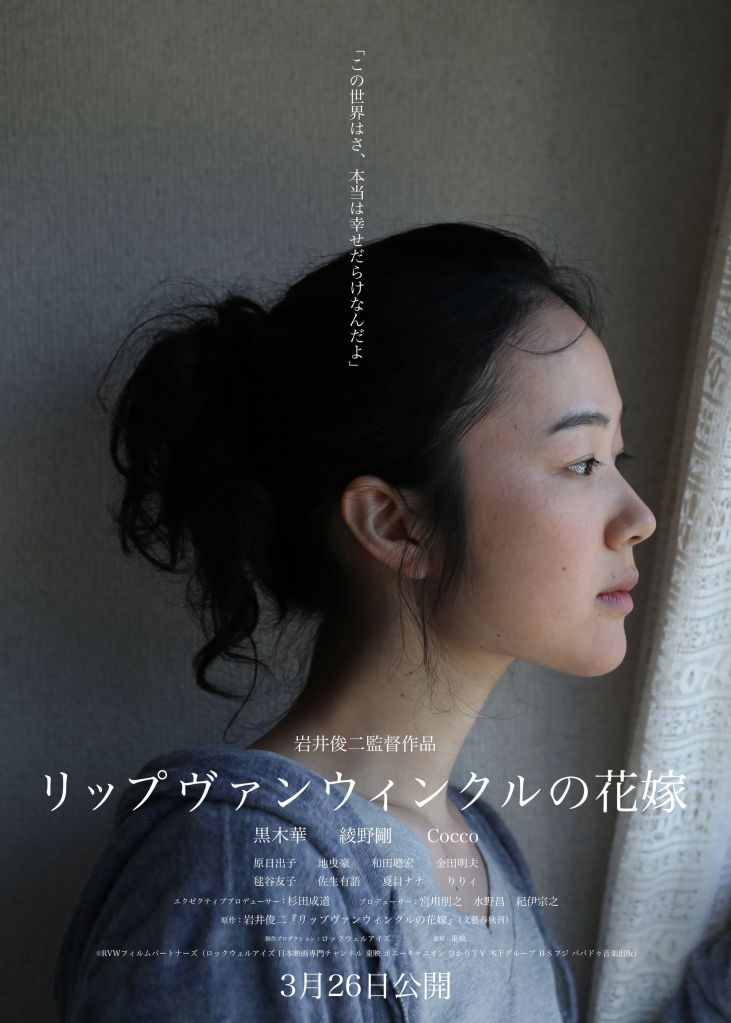 “Being naked in front of people is embarrassing” says the drunken mother of a recently deceased major character in a bizarre yet pivotal scene towards the end of Shunji Iwai’s aptly titled A Bride for Rip Van Winkle (リップヴァンウィンクルの花嫁, Rip Van Winkle no Hanayome) in which the director himself wakes up from an extended cinematic slumber to discover that much is changed. This sequence, in a sense, makes plain one of the film’s essential themes – truth, and the appearance of truth, as mediated by human connection. The film’s timid heroine, Nanami (Haru Kuroki), bares all of herself online, recording each ugly thought and despairing notion before an audience of anonymous strangers, yet can barely look even those she knows well in the eye. Though Namami’s fear and insecurity are painfully obvious to all, not least to herself, she’s not alone in her fear of emotional nakedness as she discovers throughout her strange odyssey in which nothing is quite as it seems.
 The ‘70s. It was a bleak time when everyone was frightened of everything and desperately needed to be reminded why everything was so terrifying by sitting in a dark room and watching a disaster unfold on-screen. Thank goodness everything is so different now! Being the extraordinarily savvy guy he was, Hiroki Kadokawa decided he could harness this wave of cold war paranoia to make his move into international cinema with the still fledgling film arm he’d added to the publishing company inherited from his father.
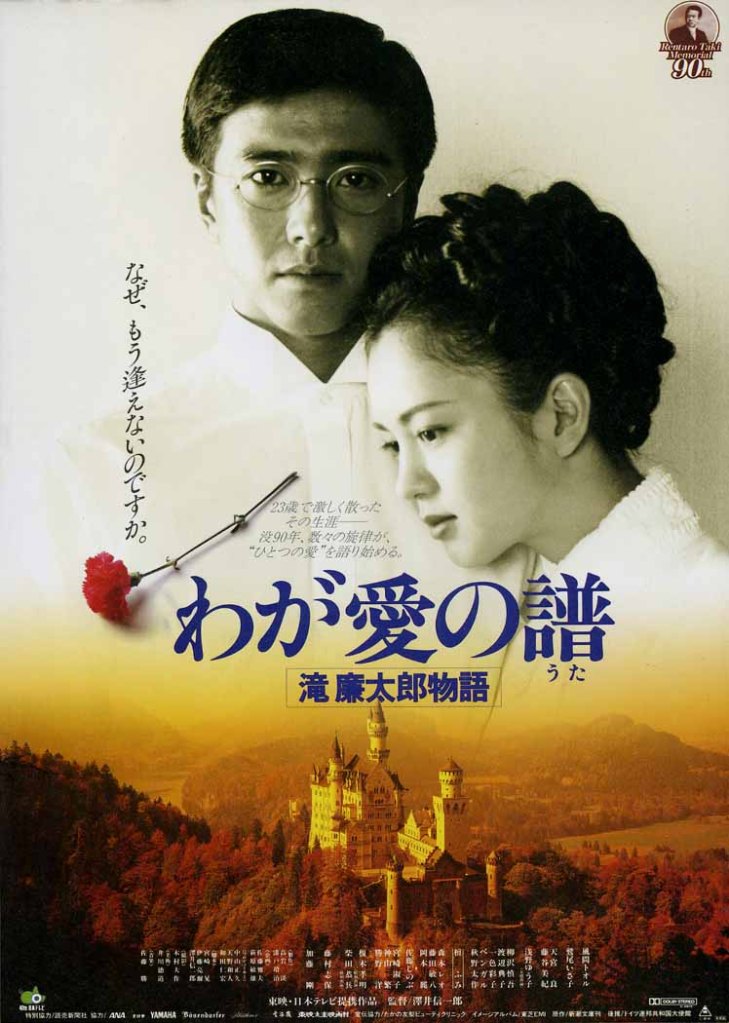 All those songs and rhymes you learnt as a child, somehow it’s strange to think that someone must have written them once, they seem to just exist independently. In Japan, the name behind many of these familiar tunes is Rentaro Taki – the first composer to set Japanese lyrics to European style “classical” music. It’s important to remember that even classical music was once contemporary, and along with the opening up of the nation during the Meiji era came a desire to engage with the “high culture” of other developed nations. The Tokyo Music School was founded in 1887 and Taki graduated from it just four years later in 1901. However, his career was to be a short one as his health gradually declined until he passed away of tuberculosis at just 23 years old. Bloom in the Moonlight (わが愛の譜 滝廉太郎物語, Waga Ai no Uta: Taki Rentaro Monogatari), also the title of one of his most well known and poignant songs, is the story of his musical career but also of the history of early classic music in Japan as the country found itself in a moment of extreme cultural shift.
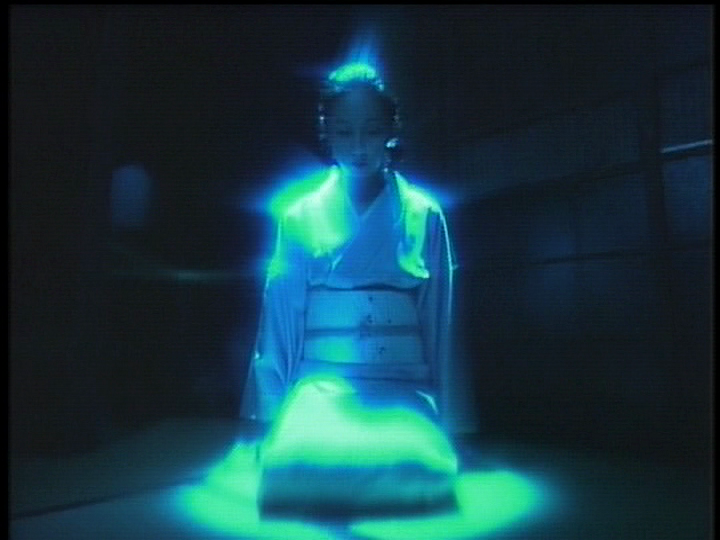 Akio Jissoji had a wide ranging career which encompassed everything from the Buddhist trilogy of avant-garde films he made for ATG to the Ultraman TV show. Post-ATG, he found himself increasingly working in television but aside from the children’s special effects heavy TV series, Jissoji also made time for a number of small screen movies including Blue Lake Woman (青い沼の女, Aoi Numa no Onna), an adaptation of a classic story from Japan’s master of the ghost story, Kyoka Izumi. Unsettling and filled with surrealist imagery, Blue Lake Woman makes few concessions to the small screen other than in its slightly lower production values.
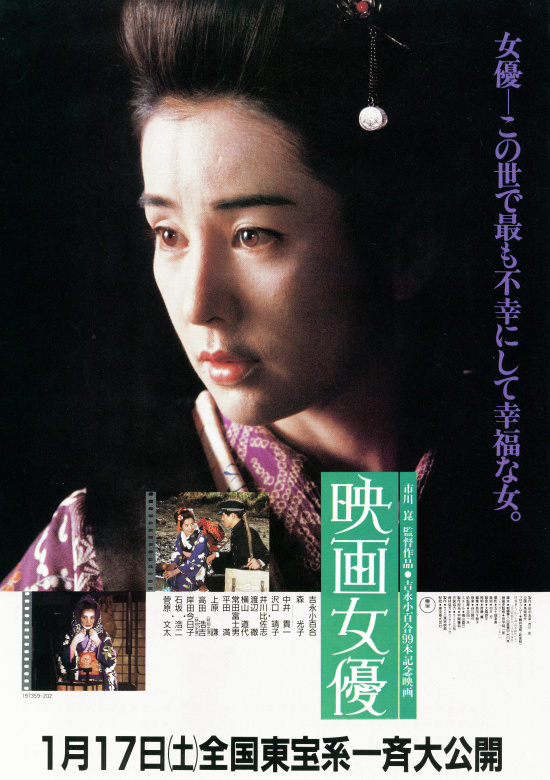 Kon Ichikawa was born in 1915, just four years later than the subject of his 1989 film Actress (映画女優, Eiga Joyu) which uses the pre-directorial career of one of Japanese cinema’s most respected actresses, Kinuyo Tanaka, to explore the development of Japanese cinema itself. Tanaka was born in poverty in 1909 and worked as a jobbing film actress before being “discovered” by Hiroshi Shimizu and becoming one of Shochiku’s most bankable stars. The script is co-written by Kaneto Shindo who was fairly close to the action as an assistant under Kenji Mizoguchi at Shochiku in the ‘40s before being drafted into the war. A commemorative exercise marking the tenth anniversary of Tanaka’s death from a brain tumour in 1977, Ichikawa’s film never quite escapes from the biopic straightjacket and only gives a superficial picture of its star but seems content to revel in the nostalgia of a, by then, forgotten golden age.
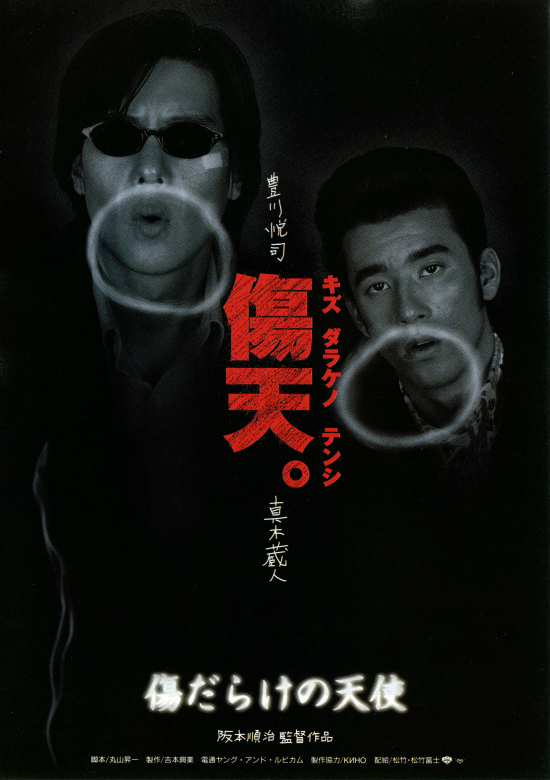 Despite having started his career in the action field with the boxing film Dotsuitarunen and an entry in the New Battles Without Honour and Humanity series, Junji Sakamoto has increasingly moved into gentler, socially conscious films including the Thai set Children of the Dark and the Toei 60th Anniversary prestige picture
  Windows on Worlds