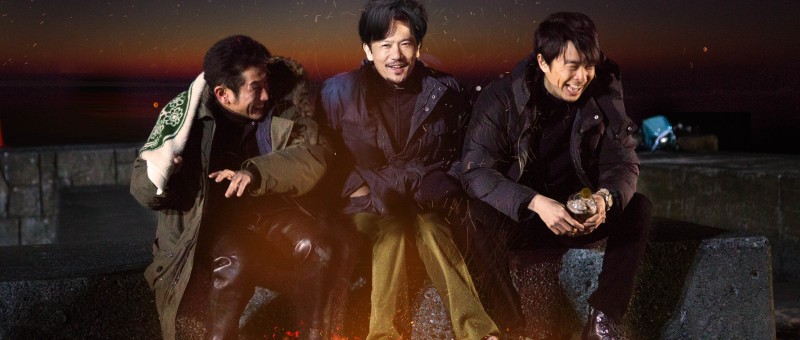
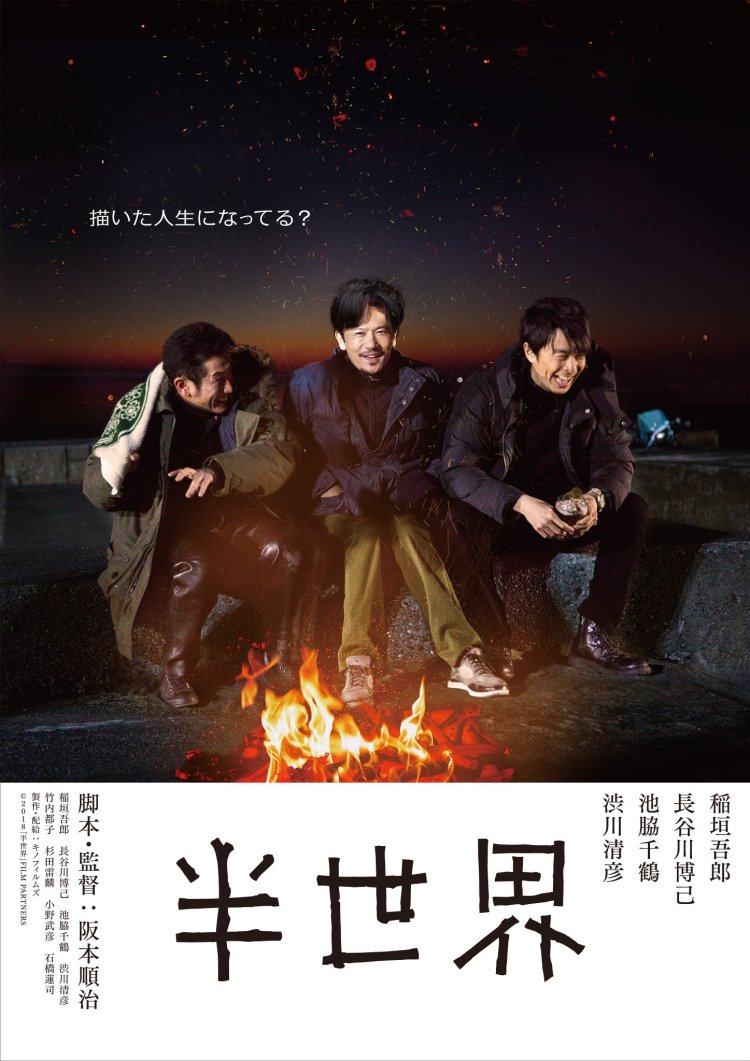
 Director Junji Sakamoto’s career has been more meandering than most. Shuttling between hyper masculine fighting dramas, issue movies, and broad comedies, Sakamoto has always displayed an intense interest in the depth of male friendship which where his latest feature, rural drama Another World (半世界, Hansekai), takes him. A deceptively gentle story of small-town homecoming eventually broadens into a meditation on fathers and sons, frustrated dreams, and middle-aged malaise as its three dejected heroes attempt to bridge the gulf of years between them in order to rekindle the simple, innocent friendship they forged as naive teenagers more than 20 years previously.
The drama begins when Koh (Goro Inagaki) spots childhood friend Eisuke (Hiroki Hasegawa) unexpectedly hanging around his old home, now sadly abandoned following the death of his mother. Eisuke, unlike his friends, left his hometown to join the self defence forces and see the world. He has not returned home in some years and his sudden appearance is a pleasant, if perhaps concerning, surprise. Koh calls the other leg of the triangle, Mitsuhiko (Kiyohiko Shibukawa), and the trio of teenage buddies reunite, but Eisuke still seems distant and remains holed up in his family home rarely venturing outside, reluctant to confide in his old friends about whatever it is that he’s going through.
Meanwhile, the small town guys have problems of their own. Koh made the stubborn decision to take over his father’s charcoal business mostly to spite him, but times have changed and not only is demand dwindling but his product is unfavourably compared to his dad’s. Despite a seemingly happy marriage to the supportive Hatsuno (Chizuru Ikewaki), his home environment is also tense with resentment high between father and son as Koh struggles to relate to sullen teen Akira (Rairu Sugita) who is, unbeknownst to him, being bullied by the local delinquents. Unique among the three, Mitsuhiko has never married and still lives at home where he helps out with the family’s struggling car dealership, but remains cheerful in himself and is the most invested in maintaining the relationship between his two best friends in place of forging new relationships of his own.
Eisuke brings a new dynamic back with him as he struggles to readapt to small town life. As Koh suggests, he likely came back because he didn’t know where else to go but to his old friends even if he doesn’t quite want to let them help him. Now divorced and struggling with PTSD from his time in service as well as guilt over the death of a colleague, Eisuke provides an unexpected source of support for the conflicted Akira as he teaches him how to fight in order to defend himself while imparting what he knows of Koh in order to smooth the path between father and son. Koh, he tells him, had a bad relationship with his own violent dad who forbad him from the charcoal business which is exactly why he rebelled and did it anyway. Still fighting the ghost of his father, Koh has not found a way to connect with his son other than to let him be.
In a sense, each of these now middle-aged men is living in their own individual worlds as they push back against the forces of desperation but as Koh tells Eisuke, this small town existence is the “real world” too. Eisuke longs for escape, eventually retreating to a life on the sea after exposing his barely suppressed rage through an ill-advised show of violence which was itself in service of friendship. He superficially rejects the attempts of his friends to bring him back into the intimacy of their younger days as if fearing he no longer belongs in this ordinary world of wholesome small-town pleasures, but continues to search for the time capsule they buried all those years ago as if longing to recover their buried innocence.
Yet there is hope for the younger generation at least. Akira, coming to understand his father, accepts that he has a choice and eventually decides to honour both his father’s legacy and his own desires as he ponders the lonely life of a charcoal maker while putting on the boxing gloves that will allow him to fight for a freer future. Tragedies strike, life doesn’t turn out liked you hoped, but it goes on all the same with or without you. A warm if melancholy tribute to the healing power of friendship and its capacity to endure despite the weight of ages, Another World puts middle-aged malaise in perspective as its three disappointed heroes begin to find accommodation with where their choices, informed by those who came before, have led them, finding both peace and resignation in their in their ordinary small-town existence.
Another World was screened as part of the 2019 Nippon Connection Film Festival.
Original trailer (no subtitles)

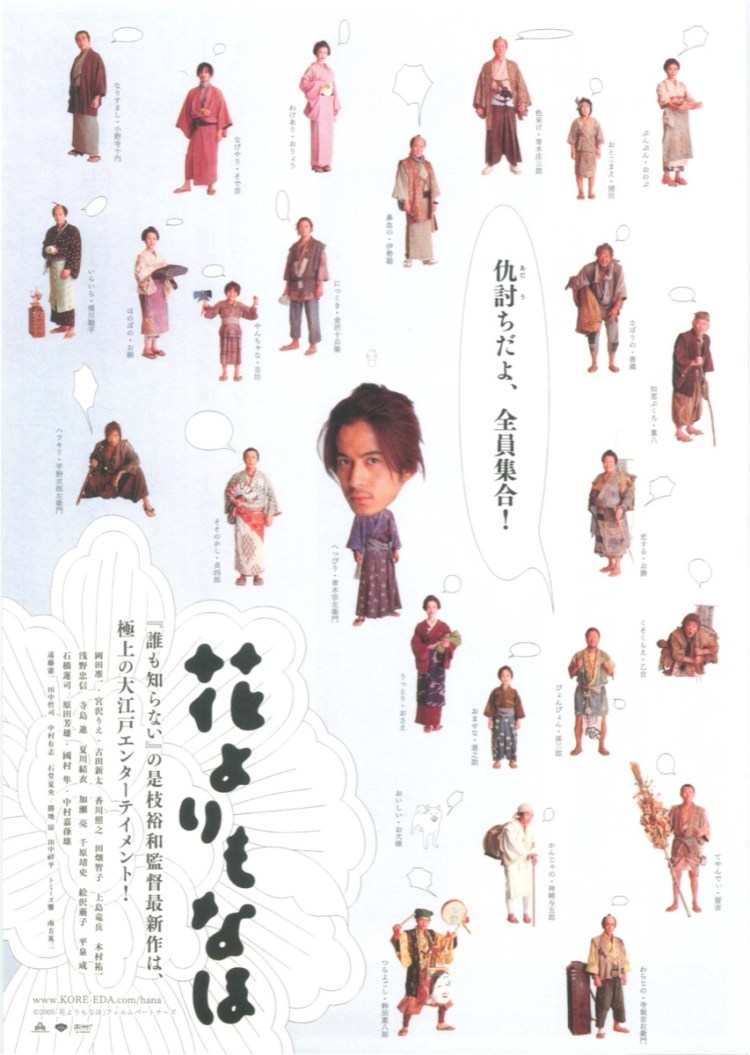
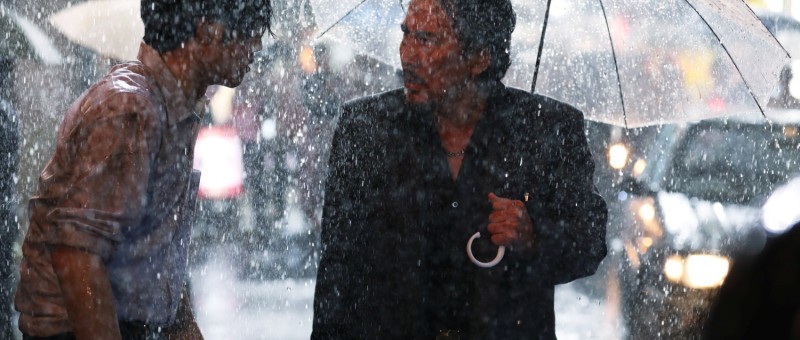

 “It’s not all about tofu!” screams the heroine of Akanezora: Beyond the Crimson Sky (あかね空), a film which is all about tofu. Like tofu though, it has its own subtle flavour, gradually becoming richer by absorbing the spice of life. Based on a novel by Ichiriki Yamamoto, Akanezora is co-scripted by veteran of the Japanese New Wave, Masahiro Shinoda and directed by Masaki Hamamoto who had worked with Shinoda on Owl’s Castle and Spy Sorge prior to the director’s retirement in 2003. Like the majority of Shinoda’s work, Akanezora takes place in the past but echoes the future as it takes a sideways look at the nation’s most representative genre – the family drama. Fathers, sons, legacy and innovation come together in the story of a young man travelling from an old capital to a new one with a traditional craft he will have to make his own in order to succeed.
 Times change so quickly. The “danchi” was a symbol of post-war aspiration and rising economic prosperity as it sought to give young professionals an affordable yet modern, convenient way of life. The term itself is a little hard to translate though loosely enough just means a housing estate but unlike “The Projects” (団地, Danchi) of the title, these are generally not areas of social housing or lower class neighbourhoods but a kind of vertical village which one should never need to leave (except to go to work) as they also include all the necessary amenities for everyday life from shops and supermarkets to bars and restaurants. Nevertheless, aspirations change across generations and what was once considered a dreamlike promise of futuristic convenience now seems run down and squalid. Cramped apartments with tiny rooms, washing machines on the balconies, no lifts – young people do not see these things as convenient and so the danchi is mostly home to the older generation, downsizers, or the down on their luck.
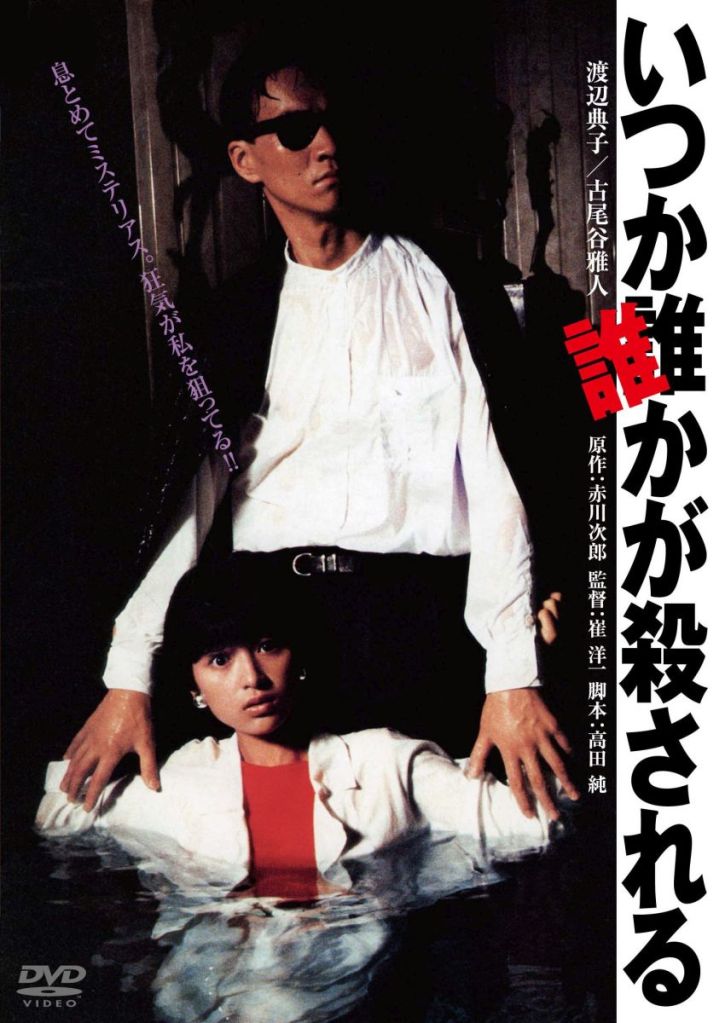 Haruki Kadokawa dominated much of mainstream 1980s cinema with his all encompassing media empire perpetuated by a constant cycle of movies, books, and songs all used to sell the other. 1984’s Someday, Someone Will be Killed (いつか誰かが殺される, Itsuka Dareka ga Korosareru) is another in this familiar pattern adapting the Kadokawa teen novel by Jiro Akagawa and starring lesser idol Noriko Watanabe in one of her rare leading performances in which she also sings the similarly titled theme song. The third film from Korean/Japanese director Yoichi Sai, Someday, Someone Will be Killed is an impressive mix of everything which makes the world Kadokawa idol movies so enticing as the heroine finds herself unexpectedly at the centre of an ongoing international conspiracy protected only by a selection of underground drop outs but faces her adversity with typical perkiness and determination safe in the knowledge that nothing really all that bad is going to happen.
