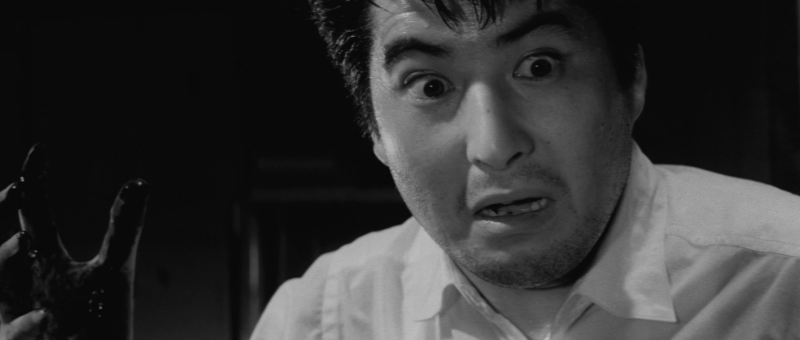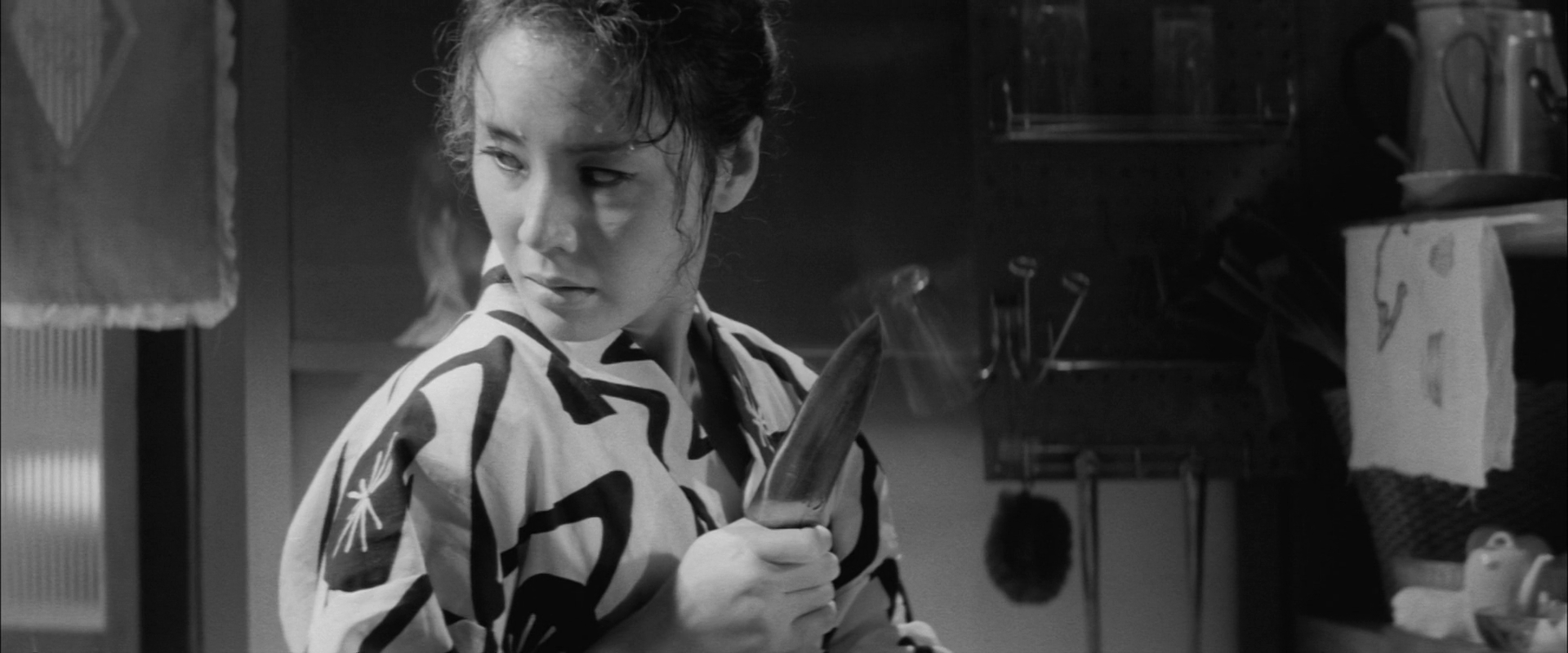
Classmates (あゝ同期の桜, Sadao Nakajima, 1967)

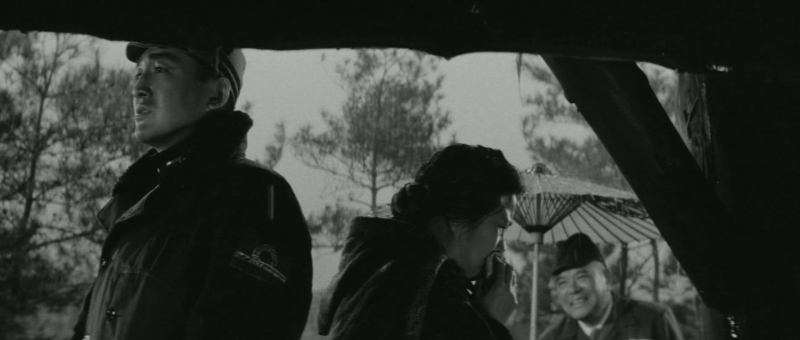
There had been films that dealt with the war before, but it was really with the generational shift that occurred among filmmakers in the mid-1960s that there was a greater willingness to reckon with the wartime past. Sadao Nakajima’s Classmates (あゝ同期の桜, Aa Doki no Sakura) was the first in a planned trilogy of war films at Toei, which was in other ways a studio that often leaned towards the right with its steady output of yakuza films, and most likely for that reason struggled to gain approval from studio heads. Taking its name from the military academy song, the film was inspired by a collection of essays put together from the letters and diaries kamikaze pilots had left behind. Nakajima had seen some of the letters sent back by the brother of a school friend, and reading them again on publication was determined to turn them into the film.

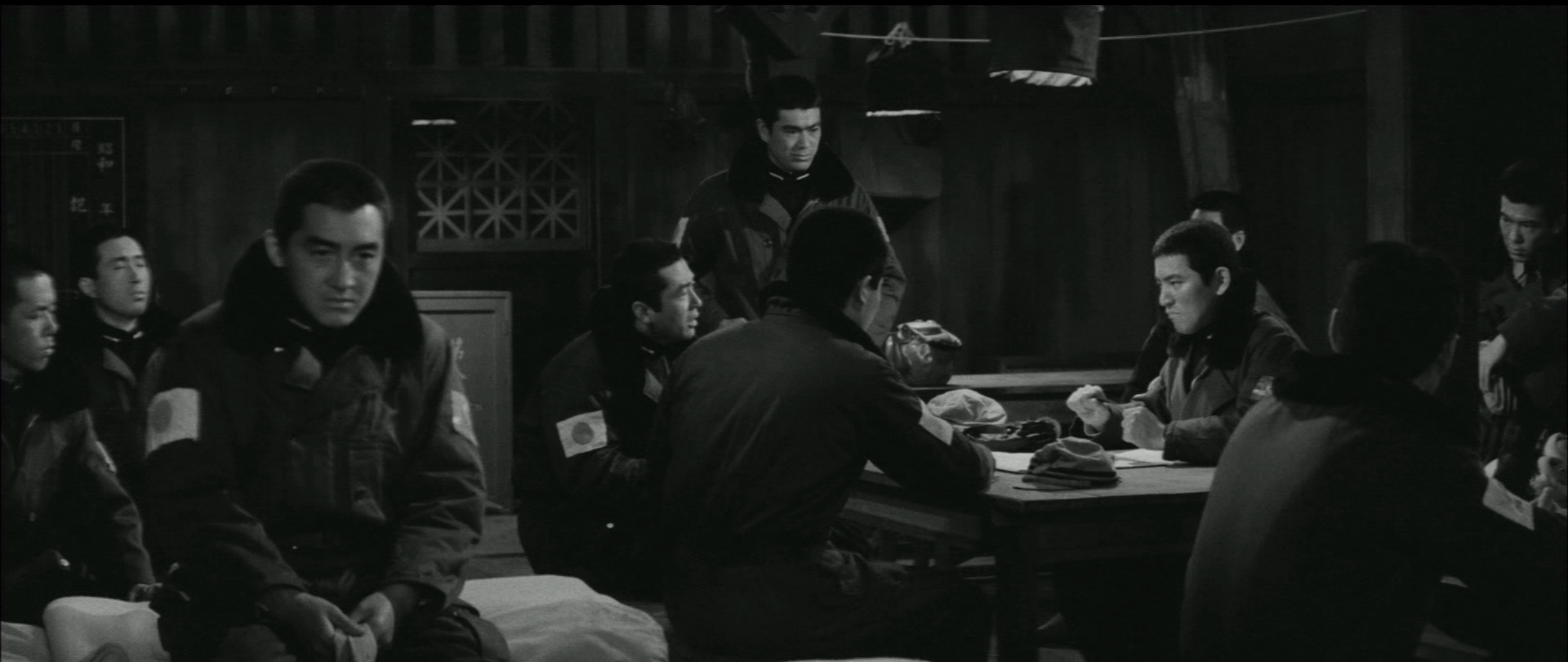
Nevertheless, only 25 years on from the end of the war it remained a sensitive topic. The film follows the men of the 14th class of reserve students who had previously had their draft notices deferred until they finished university but were now called up early because the war was going so badly. The majority of these men were allocated to kamikaze units and subsequently died in suicide attacks on US warships, though they received little in the way of training and mostly failed to hit their targets due to having limited fight experience. 

What might seem most surprising is that several of the men voice their opposition to the war along with the realisation that Japan is going to lose. Early on in training, one man deserts but the others are reminded that to do so amounts to treason and once caught, deserters will be executed by firing squad. This turns out not quite to be the case. Shiratori (Hiroki Matsukata), the resigned hero, encounters Taki (Mitsuki Kanemitsu) in Okinawa. where he’s working as ground staff. He’s insensible and appears to have lost his mind. The man working with him suggests that he was tortured so badly that it’s left him in a vacant state, though he’s still deployed for mindless tasks because they just don’t have the manpower.

Part of the reason for that is that they keep ordering people to die in a validation of the death cult that is militarism. On their arrival, the instructor tells the men he will have them all die, because dying for the emperor is their duty and destiny. The top brass insist this is the only way to win the war even though it’s counterproductive in that they’re running out of aircraft and skilled pilots even if one officer callously remarks that they have an endless supply of bodies. There’s also no real reason to send the planes up with two pilots as opposed to one, but they leave fully manned. The suicide missions are supposedly “voluntary”, but the men can’t really refuse due to a combination of peer pressure and military order.

When one pilot, Nanjo (Isao Natsuyagi), returns to base having been unable to reach his target, he’s immediately set upon by the others as a coward and a traitor. They accuse him of being afraid to die, leaving him feeling ashamed and frustrated by a sense of injustice while admitting that he didn’t want to die like a dog. He knows that he would not be able to go on living afterwards if he simply didn’t go through with it because the stigma of being a coward who let other men die so he could live would always be upon him. Eventually, he becomes so determined to prove himself that he insists on getting right back in his plane once it’s repaired and then blows himself up on the runway to prove a point.

Nanjo’s case is all the more poignant because he was a new father whose son was born after he was called up. He appears to have married quickly against his parents’ wishes and is now anxious that his family won’t accept his wife and child who will be left alone when he dies. His wife (Yoshiko Sakuma) desperately tries to see him to show him the baby, but manages only a few seconds before he’s forced to return to the barracks. Given a little more time, she brings a wedding dress for the impromptu ceremony they presumably skipped before, but ends up tearing it and giving Nanjo a strip as a kind of good-luck charm though like everything else it’s a gesture filled with futility.

It’s this sense of futility and resignation that seems to overtake Shiratori who knows he cannot escape his fate. To desert to is be killed anyway or to experience a spiritual death like Taki. He had introduced a friend, Hanzawa (Shinichi Chiba), to his sister and the two had become close, but he is forced to abruptly break up with her because he knows it’s unfair to string her along when he’s been sentenced to death. Reiko (Sumiko Fuji) will lose her brother and her boyfriend on the same day. Hanzawa and the other men visit a brothel on the night before their mission where they are treated as “gods”, though he sees only irony in the situation in which they are more like human sacrifices offered in prayer for an impossible victory. Their deaths will have no real meaning and are really only intended to instil fear in the enemy and weaken their morale rather than cause actual material damage to their fighting capability. Making use of stock footage, Nakajima freeze frames a plane in flight and points out at that point the men inside were still alive before cutting to a title card confirming the war ended just four months later. The title card at the beginning dedicated the film to the souls of those who died in the Pacific War, though it’s perhaps as quietly angry as it was permitted to be in 1967 in the senseless sacrifice of these men’s lives who were shamed, tricked, or forced at gunpoint into their cockpits and told they were disposable while those who stayed on the ground cheered and whooped at the grim spectacle of death.

That Guy and I (あいつと私, Ko Nakahira, 1961)

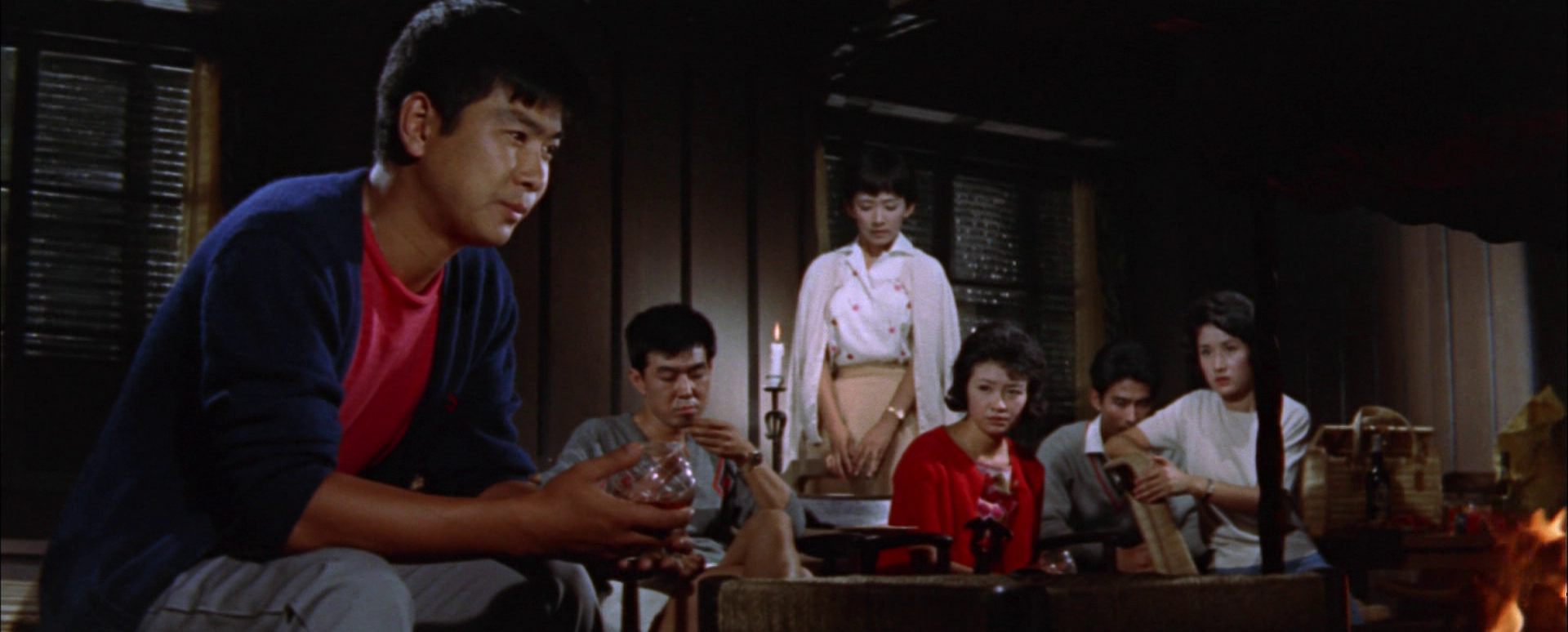
Likely intended as a slightly silly student rom-com, Ko Nakahira’s That Guy and I (あいつと私, Aitsu to Watashi) captures a sense of the changing gender roles and sexual mores of the early 1960s, if through a very male and at times even middle-aged lens. Adapted from a serialised novel by Yojiro Ishizaka and set amid the ANPO protests of 1960, the film is narrated by its heroine, a very ordinary young woman from a typical, moderately wealthy middle-class family, as she struggles with her attraction to a fabulously wealthy young man who pretends to be a boor but is actually a nice guy and unexpected feminist.

One of a new generation of women attending university with a prospect of independence, Keiko’s (Izumi Ashikawa) horizons seem to be broadening. She’s not exactly conservative and openly jokes about sex and dating with her friends, but is quite settled with her life, not particularly wanting anything more than she already has. Her psychology tutor highlights the problem of social inequality in their school that she had already raised in her opening voiceover in remarking that the rich kids all have cars and can drive themselves to school, while others are having to work to support themselves while they study. When he asks how much pocket money they all get, some are outraged and keen to stress they don’t get any help at all, but Keiko reveals that her parents actually give her a healthy allowance. It’s just that she has no real urge to spend it, so it’s been mounting up quietly in a desk drawer in her childhood bedroom while she still lives at home close to the university.

Saburo (Yujiro Ishihara), by contrast, boasts that he gets more than some people’s monthly wage as an allowance from his mother and blows it on drink, gambling, strip clubs and sex workers. It’s this last point that scandalises the female students who are all shocked and disapproving, even going so far as to ask the teacher to throw Saburo out because they don’t feel comfortable sharing a space with a man like that. The teacher also says he’s disappointed and wishes Saburo hadn’t added the last bit, only for Saburo to call him a hypocrite because sex work was legal in his day and he simply doesn’t believe that he’s never paid for sex. Most of the other boys join in on Saburo’s side, insisting that no man sees any problem with visiting sex workers which they regard as a natural right because the male sex drive is driven by “uncontrollable forces”.

But then there’s something unexpected that occurs among the female students in that some of them are obviously attracted by this very rough form of masculinity. “I’d rather have a wild beast than a meek sheep,” one intones, but nevertheless goes to join the group of girls confronting Saburo at the pool in the hope of gaining an apology for the offence he caused them. They’ve since found out that he probably made it up anyway, which is ironic because he claimed he’d only spoken the truth when they asked him to leave, but that’s somehow even worse because it means he said it deliberately to upset them. The upshot of it all is that Saburo ends up in the pool and is then forced to borrow some of the girls’ clothes while his dry off, signalling his awkward positioning between traditional masculinity and femininity in that he’s otherwise surprisingly sympathetic of women and makes sure to look out for them but in a way that encourages their independence and is never patronising. 

That might, in one way, be because of his unusual upbringing which is far more modern and bohemian than Keiko’s and in the beginning, at least, quite confusing for her. Saburo’s mother Motoko (Yukiko Todoroki) is a famous entrepreneur with a beauty shop empire. She writes her name in Western order and uses katakana for her first name which makes look foreign and therefore exciting and sophisticated even though it obviously isn’t. It was Saburo’s mild-mannered father who gave up his career in insurance to raise him, while his mother apparently blows off steam through numerous affairs. His father occasionally gets upset about this and the pair go through a charade of him leaving her while she professes her love for him, which seems to have a sexual dimension in itself. Perhaps this has given Saburo an alternative view of romantic relationships, though we also later discover that he was subject to what we’d now see as a form of sexual abuse as a teenager when his mother got a young but still adult woman, Michiko (Misako Watanabe), to essentially give him practical lessons in sex and satisfy his teenage urges, only he thought it was an organic romantic relationship and feels more than anything else emotionally betrayed. 

But then again, the film has a very of its time and defiantly male view of rape which is dealt with in a fairly flippant manner. Keiko rings her mother to tell her she’s realised that the reason she didn’t like the idea of her being at the ANPO protests was because she feared she’d be raped, which is at any rate an odd conversation to be having. Her mother asks her what her virginity has to do with ANPO, which is a fair question, but also implies that it’s not so much the physical and psychological harm of sexual assault that bothers her mother but the shame of premarital sex. One of the girls who goes to the protest, Ayako (Shigako Shimegi), is actually raped by the two boys she went with who deliberately plied her with alcohol and took her to a hotel knowing that she trusted them, but her roommate, who had a crush on one of the boys, immediately turns against her. Sadako (Kazuko Yoshiyuki), the most political of the students, calls her a slut who parades herself in front of men and says Ayako must have led them on. Only Keiko takes her side, walking her to the bath and waiting outside for her while admitting that she has conflicted thoughts about Saburo. She throws things at him to shoo him away, feeling that his presence as a man is inappropriate and not wanting him to see Ayako in this moment of vulnerability, but also she admits to herself because she’d be jealous and doesn’t want him to see a naked woman that isn’t her.

Something similar happens when she finds out about Saburo’s past and is jealous and resentful of Michiko, irrationally angry with Saburo, and on another level protective of him knowing that happened when he was a teenager was wrong. After she runs out into the rain and the pair argue about it, Saburo forces a kiss on her which, again, Keiko seems like in a show of robust manliness. Saburo is though also protective and sympathetic towards Ayako, insisting that that the way for her to move past her rape is to ensure she becomes financially independent and successful so that she can see it as just something unpleasant that happened to her rather than something that ruined her life or makes her unworthy of another man’s love. He even helps her to do that by getting her a job at his mother’s company. 

Saburo’s mother Motoko, meanwhile, gives Keiko some frank advice in disclosing the secrets of her life and Saburo’s birth. Even when Saburo suddenly announces their engagement without actually asking her, Keiko does not merely swoon but reflects that she’s got to have a proper think before actually agreeing which she is still free to do or not. Nevertheless, the film seems to have hit on a contradiction in redefining masculinity as both tough and soft. Keiko is despite herself attracted to Saburo’s forcefulness, but also his chivalrous nature and awkward kindness, his fair-mindedness and care, and recognition of women as actual human beings with interior lives and a right to independence. Nakahira may be a little less surreal than usual, but leans heavily into absurdity, on the one hand acknowledging the somewhat superficial quality of these privileged students’ lives in having them confront a band of angry rural workers and half-heartedly take part in the ANPO demonstrations without much thought to what they’re for or what they mean, but, in the end, characterises them as merely ordinary, slightly lost amid the rapid changes of the post-war society but otherwise cheerful and looking ahead to a bright future stretching out in front of them.


Trailer (no subtitles)

Wild Ducks and Green Onions (カモとねぎ, Senkichi Taniguchi, 1968)

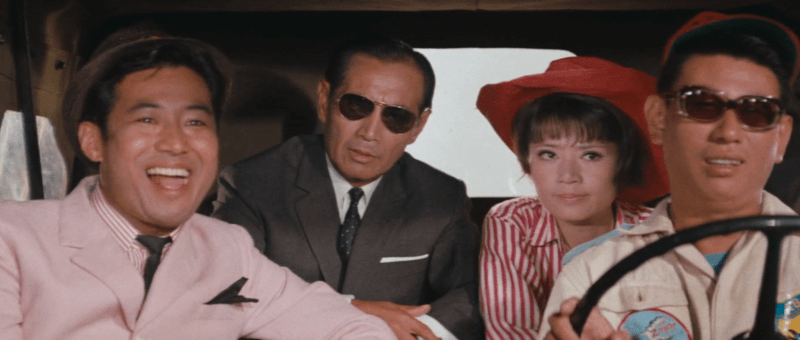
Outside of Japan, Senkichi Taniguchi is most likely best known as the director of Toshiro Mifune’s debut film Snow Trail, or else as the screenwriter of one of Akira Kurosawa’s lesser known works The Silent Duel. Yet throughout the 1960s, he also made a series of silly comedies including Wild Ducks and Green Onions (カモとねぎ, Kamo to Negi), an absurd crime caper revolving around a gentleman thief’s attempts to plot the perfect crime while assisted by two bumbling henchmen and a young woman with a hidden agenda.

The film’s Japanese title is likely inspired by a proverb, “a duck comes carrying an onion” which means something close to “there’s a sucker born every minute” though it might be up for debate who exactly is the sucker here. In any case, dapper mastermind Nobukichi (Masayuki Mori) has plotted the perfect heist which involves rigging a speedboat race by nobbling the propellers on two of the four boats and then betting accordingly. So far so good, but the enigmatic Mami (Mako Midori) has been watching their every move and is able to swipe the bag containing the money before henchmen Yosuke (Hideo Sunazuka) and Kyuhei (Tadao Takashima) can return it to their boss who for once has agreed to an equal split. The guys eventually track her down, but she tells them she spent the money on bail for her husband but it turns out he left the police station with two other women and hasn’t been seen since. The gang then determine to track him down to get the money back, but become involved in several other scams along the way. 

Despite having been able to rob them blind, all the men seem to be under the impression that Mami is a brainless airhead though she later reveals herself to speak fluent English and in fact comes up with a few scams of her own that are better than Nobukichi’s whom the guys refer to as “Cap’n”. Nevertheless, the guys only tolerate her because they need to find her husband though all’s not quite as it seems. Kyuhei in particular seems to have a rather misogynistic streak and is somewhat jealous that Nobukichi gets to have Mami to himself though he remains a perfect gentleman, sleeping on the sofa and giving her the bed. But it’s Kyuhei’s lascivious nature that eventually gets them into trouble when he tries to drag a reluctant Yosuke into a cinema screening pink films only to be pulled aside by some kind of anti-delinquency brigade who read off some unconvincing statistics stating that 80% of young male sex offenders are fans of pink films. 

This annoys them so much they decide to scam the organiser, Tomiko (Hisano Yamaoka), by appealing to her vanity and tricking her association, which is dedicated to conservative family values, into watching (and apparently enjoying) a porn film on school premises believing it to be an “educational movie”. Tomiko in some senses represents the forces of order against which the gang are rebelling, though she’ll get her revenge in time. In any case, they find a more worthy target after travelling to a seaside town and encountering the daughter of a man who has been poisoned by industrial pollution while the local factory insists everything is within “safe limits” and they aren’t the cause of the sickness spreading across the area. 

Conducting another expert heist to steal the secret documents to prove otherwise, Nobukichi could make a lot of money blackmailing the factory owner but instead gives the report to the man’s daughter so she can pursue justice and compensation for her father much to the chagrin of Mami and proving that it isn’t all about the money after all. Then again, he has another document that, once translated by Mami, reveals the factory has actually been producing Napalm for the Americans which is a bit of a grey area as far as the constitution is concerned. This time, they play a nasty trick on the heartless factory owner (Eijiro Tono) though he is hardly remorseful and in fact was too greedy to pay their blackmail money despite the vast sums it would cost him if the news ever got out. 

Despite its silliness and absurdity, the film takes an ironic swipe at serious issues of the day such as scandals like the Minamata disease and Mary Whitehouse-esque social campaigners ranting about a decline in morals while simultaneously enjoying the platform that protesting them grants them. In some ways, the gang themselves exist as a kind of rebellion against the salaryman society with their various scams presented as silly games targeting faceless or ridiculous figures who can either afford to lose the money or were ripe for a comeuppance though in the end, crime doesn’t really pay either and the gang find themselves hoist by their own petards, robbed of enjoying their ill-gotten gains by unexpected twists of fate. Very much of its time the film has a kind of charm in its whimsical score and pastel colours but has lingering darkness in its threats of unexploded bombs and hidden Okinawan torture facilities in a society increasingly ruled by amoral capitalists.


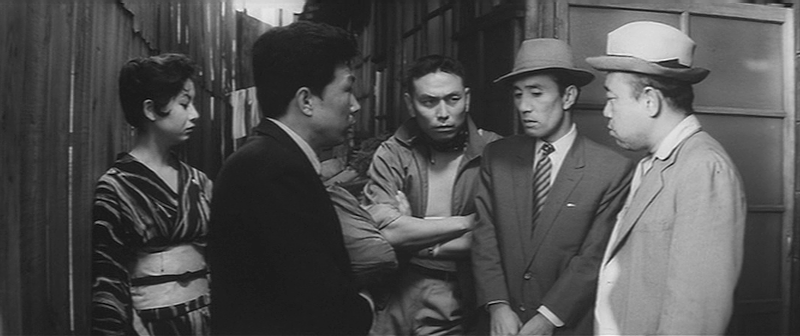
Jungle Block (地図のない町, Ko Nakahira, 1960)

The contradictions of the post-war era are thrown into stark relief in the forced redevelopment of slum area on the edge of an increasingly prosperous city in Ko Nakahira’s intense noir, Jungle Block (地図のない町, Chizu no nai Machi). The slightly unfortunate English title may hark back to that chosen for a US screening of Nakahira’s landmark film Crazed Fruit, Juvenile Jungle, or just echo the titles of classic Hollywood noir movies such as Asphalt Jungle and Blackboard Jungle, but otherwise has little to do with the content of the film. The Japanese title, meanwhile, means something like “a town not marked on the map” and hints at the invisibility of those who live in this slum, a self-built post-war shantytown inhabited by those largely left behind by the nation’s rising prosperity. 

Then again, Shinsuke (Ryoji Hayama) seems to have fallen behind on his own account. We’re later told that he resigned from his position at the hospital because of some kind of medical mistake for which he blames himself and has since taken to drink and gambling while working at the poor clinic run by his former mentor Kasama. The most immediate effect of his, perhaps unnecessary, decision to resign was that it prevented the marriage of his younger sister, Sakiko (Kazuko Yoshiyuki), as he was then financially dependent on her. Having delayed the wedding for two years waiting for Shinsuke to pull himself together, Sakiko and her fiancé are set upon by local gangsters working for yakuza turned politician and legitimate businessman Azusa (Osamu Takizawa). Sakiko attempts to take her own life and the relationship does not survive this crisis thanks to her fiancé’s wounded masculinity in having been unable to save her or stand up to the goons afterwards. 

As repeated flashbacks reveal, Azusa is the root of the disease spreading across the city. It’s he that’s intent on clearing the slum, as he says just doing what the government has asked him to do, planning to build luxury apartments on its site along with supermarkets and entertainment facilities. Perhaps it’s not an entirely bad thing to clear a slum, the living conditions are in themselves a health hazard, but Azusa has drastically cut the amount of compensation on offer preventing the residents from securing new places to live and essentially rendering them homeless which defeats the humanitarian justification for forcing them out when most of them don’t want to go. 

Kayoko (Yoko Minamida), an old flame of Shinsuke’s who’s since become a sex worker to pay off her father’s debts to loan sharks and ends up as Azusa’s mistress, has a cat that she confesses to mistreating which makes her feel better only to feel terrible afterwards. The film seems to align the cat with the people of the slums who are bullied by men like Azusa who have untold influence buying off police and politicians while he himself later holds public office. The cat eventually fights back by scratching Kayoko who acknowledges it’s her own fault for her treatment of it, while it’s clear that the anger of the slum dwellers will eventually boil over and they too will strike back against the corruptions of this post-war era which otherwise sees fit to leave them behind. 

Meanwhile, Shinsuke plots a revenge he may not have the courage to take explaining to Kasama (Jukichi Uno), otherwise the voice of moral reason, that it’s the city that sick and the only way to save it is an operation to remove the Azusa-shaped tumour that’s currently killing it. It’s not for mere convenience that his weapon of choice is a scalpel. Kasama, however, tells him that he’s got the wrong idea and it’s their responsibility as doctors to take the long-term view and patiently run their clinic to produce results in the far off future. But Kasama’s eventual decision would seem to walk that back, suggesting that perhaps a radical solution really is necessary to save the patient from the ravages of amoral capitalism. 

Then again, like Kayoko’s father Yoshichi (Jun Hamamura) who is branded a “cripple” and “only half a man” by Azusa, Shinsuke begins to realise that perhaps you can’t create lasting change on your own and taking out Azusa won’t solve the problem as someone else will simply rise to take his place. There is a pervasive sense of hopelessness, Shinsuke caught and frantic amid the dim backstreets of this rundown town desperate for revenge when the police are in league with Azusa and no one really cares about the residents of the slum who are beginning to lose the will to resist. Nevertheless, eventually rediscovering himself Shinsuke opts to follow Kasama’s path insisting that will join the ranks of “good, honest, people” who, like the cat, will eventually scratch back until then resisting by “doing the right thing” even in the face of violence and intimidation while staunching the flow of corruption and cruelty from the seeping wounds of the post-war society.


DVD release trailer (no subtitles)

Wolves of the Night (夜の狼, Yoichi Ushihara, 1958)

A cold-hearted yakuza starts to get second thoughts when confronted with the misery his actions create in Yoichi Ushihara’s slice of Nikkatsu Noir, Wolves of the Night (夜の狼, Yoru no Okami). Though the hero is ostensibly Tsukida (Ryoji Hayama), the conflicted gangster unable to reconcile himself with the fact that he has fallen in love with a women he himself destroyed, it’s equally about the women who get caught in the crossfire of a burgeoning gang war and are each victims of male greed and indifference.

In any case, gang boss Tachibana (Somesho Matsumoto) brings a lot of this on himself. The secondary narrative revolves around a woman, Takako (Mari Shiraki), who borrowed money from the Manji gang to build her bar, but now that it’s complete Tachibana swindles her by calling in the debt and foreclosing on the property, passing ownership to Tsukida with instructions to kick Takako out. She, however, doesn’t take well to this and is resentful of Tachibana for screwing her over so she vows revenge. Her original attempt to get it by seducing Tsukida doesn’t work out, so she recruits a yakuza from a rival gang to extort them claiming that they have mole and he’ll only reveal their identity when they hand over the cash. This plan has some pretty tragic consequences and not least for Tachibana himself, but none of this would have happened if he hadn’t behaved so badly in cheating Takako out of the bar she worked so hard to build. He’d also told Tsukida that the bar owner was a beauty and it was understandable if wanted to try seducing her. 

But by this point Tsukida has developed a fondness for Katsumi (Izumi Ashikawa), a young woman he first meets when she’s caught by some of his guys offering herself for sex work in their territory. The other ladies describe Katsumi as “odd” and “an outsider”. It’s clear from her behaviour and the way she’s dressed, not to mention a lack of awareness of the rules of the gang, that she’s never done this before and is terrified. Tsukida calls his men off and tells her to go home, but later realises that it’s his own fault she was put in this situation because he was responsible for collecting the debt her parents owed to Tachibana taken out because her father is bedridden. Tsukida seems shaken by the old lady’s intense resentment, but still takes their money if attempting to convince Tachibana not to pursue them any further because they have nothing left to give, correctly assuming that Katsumi resorted to sex work to get the money. 

It maybe the sense of guilt that proved the last straw as the old couple then take their own lives but rather than freeing her lead Katsumi on a lonely path of self-destruction driven only by her hated for Tachibana and Tsukida. The fact that she later becomes ill further emphasises her positioning as a symbol of a despoiled nation poisoned by the ruthless inhumanity of the post-war society, along with literal a embodiment of Tsukida’s guilty conscience. Tsukida rejects Takako as a person more like himself, an example of corrupted femininity using her body to manipulate men in a world in which a woman has little other power, and instead is drawn to Katsumi who was once innocent, demure, and cheerful but who he himself has destroyed through his own greed and heartlessness.

Spending some time in hospital following a failed suicide attempt seems to heal her in body body and soul, though the total about face in Katsumi’s feelings for Tsukida seems somewhat bewildering even if he did visit her every day and presumably win her over despite her resentment towards him for contributing to her parents’ deaths. Nevertheless, it’s his feelings for Katsumi that see Tsukida longing to quit the yakuza and retreat to the country to live a small, honest life with her free of the city’s corruption. But as so often in the movies, it’s not that simple and this time it’s a tragic consequence born of male failure and insecurity that eventually costs him his shot at a normal life even as his frenemy, a local policeman he often sees in the same bar and gives him unsolicited advice about how he should quit the yakuza, remains surprisingly supportive suggesting that his redemption may merely be on hold rather than cancelled. In any case, though shooting almost entirely on stage sets, Ushihara makes good use of stock footage of contemporary Ginza as a place of bright lights and equally dark shadows where gangsters lurk on every corner and mercy is in desperately short supply.

Endless Desire (果しなき欲望, Shohei Imamura, 1958)

In the noir films of the immediate post-war era, the protagonists are often haunted by an inescapable past that prevents them from moving on into the new democratic Japan. But in Shohei Imamura’s Endless Desire (果しなき欲望, Hateshinaki Yokubo) the situation is ironically reversed as a group of former soldiers who on the surface of things at least seem to have made moderately successful lives for themselves reunite to dig up buried treasure from the dying days of the war greedy for a little more glamour than the world has seen fit to show them.

Their venal amorality is directly contrasted with the bumbling earnestness of Satoru (Hiroyuki Nagato), a young man who fears his childhood sweetheart, butcher’s daughter Ryuko (Sanae Nakahara), is going to marry another man because he is unemployed and cannot find a job in the still difficult if steadily improving post-war economy. As such, he’s incredibly excited by the opportunity to get into the real estate business, wandering around town dressed in a suit and carrying a briefcase to scout properties or otherwise doing odd jobs for the gang, which is a shame because unbeknownst to him the business is a sham set up as a front by the crooks who’ve rented a vacant shop from Satoru’s land shark dad so they can tunnel their way to the treasure which they think is buried under Ryuko’s butcher’s shop. 

The changing nature of the times is rammed home by the fact that the shopping district, which stands atop the site of the former military hospital where the gang buried a barrel full of stolen morphine at the end of the war ten years previously, is itself about to be torn down. Effectively a post-war shantytown, the area is now ripe for redevelopment with the economy beginning to bounce back thanks to the stimulus of the Korea War. The post-war era is not quite “over”, but it’s definitely on its way out which makes the gang’s determination to recover the stolen morphine all the more ironic especially as the market for hard drugs may not be as a lucrative as it once was not to mention to the logistical difficulties of turning it into cash. 

Nevertheless, the desire for it immediately sets the gang against each other. The problem is that the lieutenant, Hashimoto, who set the whole thing up has apparently died and extra person has turned up to claim some of the loot despite the gang members having been told there should only be three of them. They were not particularly close in the war and cannot exactly remember each other while Hashimoto had them all work separately without knowing who else was on board so they don’t even know which one of them is the potentially uninvited guest. Meanwhile, the presence of a woman, Shima (Misako Watanabe), who claims to be Hashimoto’s sister sets them all on edge with masculine jealously as she sometimes gleefully plays the femme fatale later even trying to seduce the innocent Satoru, convincing him she’s a victim of domestic violence in need of rescue in an attempt to quiet his concerns over what might be going on at the shop. 

The fact is that none of the gang members can really claim to be desperate, all are simply greedy and selfish silently plotting to keep all the money for themselves rather than share it. One of them is eventually crushed under the barrel, an embodiment of their insatiable desire, but with their dying breath insists it’s theirs and no one else can have any. As old man later says, this kind of greed only leads to a bad end unlike the greed he’s patiently practiced over decades which seems to be taking a little here and there where you find it such as asking Shima for some extra money for “helping” her before asking the police about a reward and turning her in anyway.

Even Satoru’s dad is “greedy”, renting the crooks a shop he new would soon be knocked down and then complaining when his tenants try to take the tatami mats and shoji doors they’d paid for themselves out of his property. Greed maybe the way of the world, at least for those who unlike the diffident Satoru do not lack for self-confidence, but endless desire has only one reward. Darkly comic and often deeply ironic, Imamura plays with a noirish sense of fatalistic retribution but finally returns to a sense of childish innocence in the bumbling courtship of Satoru and Ryuko who may be her own kind of femme fatale playing two suitors against each other while refusing to be dominated by any man but nevertheless riding off into the sunset on her bicycle with a diffident Satoru chasing along behind her.


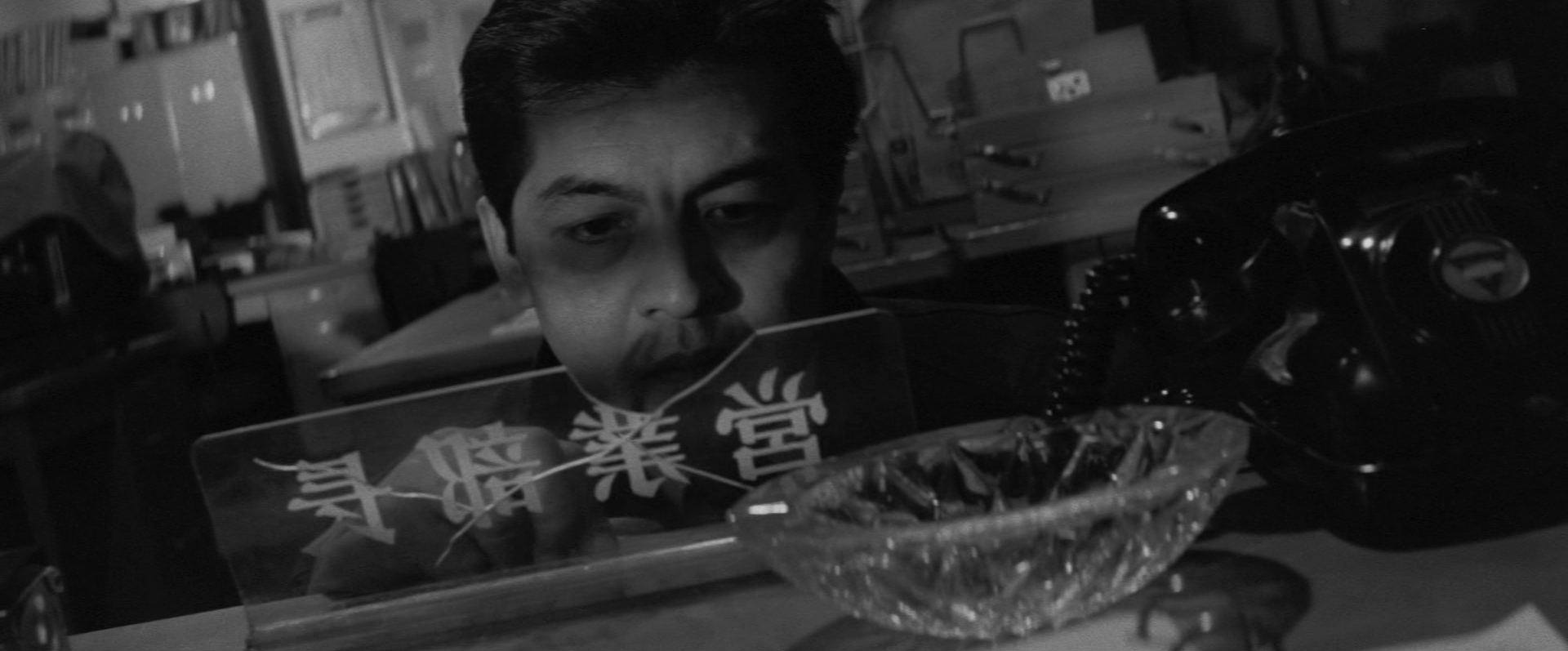
The Threat (脅迫, Kinji Fukasaku, 1966)

An ambitious executive is confronted with the emasculating nature of the salaryman dream when escaped convicts invade his home in an early thriller from Kinji Fukasaku, The Threat (脅迫, Odoshi). The threat in this case is to his family and implicitly his manhood in his ability or otherwise to protect them while accepting that his aspirational life has come at the expense of his integrity and left him, ironically, hostage to the whims of his superiors.

This much is obvious from the opening sequence which takes place at a wedding where Misawa (Rentaro Mikuni) is giving a speech congratulating two employees on their marriage. Misawa’s speech is long and boring, as such speeches tend to be, and according to some of the other guests disingenuous in giving glowing reports of two ordinary office workers while skirting around the elephant in the room which is that Misawa has played matchmaker to convince an ambitious junior to marry his boss’ mistress for appearance’s sake. As Misawa himself has done, the employee has sacrificed a vision of masculinity for professional gain in accepting that his wife’s body will “belong” to another man and it is the boss who will continue sleeping with her. 

The only person not aware what’s going on is Misawa’s naive wife, Hiroko (Masumi Harukawa), who enjoyed the wedding and remarked that the couple seemed very well suited giving rise to an ironic laugh from Misawa who of course knows that not to be the case. They return by car to a nice-looking home but one that stands alone at the end of a street preceded by a series of vacant lots presumably available to other similarly aspirant salarymen yet to make a purchase. Shortly after they arrive, two men force their way in and insist on staying explaining that they are the pair of escaped death row convicts that have been in the papers and are in fact in the middle of a kidnapping having taken the grandson of a prominent doctor with the intention of using the ransom money to illicitly board a ship and leave the country. 

Naked and covered in soap suds having been caught in the bath, Misawa is fairly powerless to resist and can only hope to appease the men hoping they will leave when their business is done. His acquiescence lowers his estimation in the eyes of his young son, Masao (Pepe Hozumi), who later calls him a coward and is forever doing things to annoy the kidnappers such as attempting to raise the alarm with visitors by smashing a glass or speaking out against them while Misawa vacillates between going along with the kidnapper’s demands or defying them to contact the police. After failing to retrieve the money when ordered to act as the bag man, Misawa stays out trying to find another way to get the cash and Masao wonders if he’ll come back or will in fact abandon them and seek safety on his own. Misawa really is tempted, darting onto a train out of the city his eyes flitting between the sorry scene of a small boy with a tearstained face tugging the sleeves of his father who seems to have fallen down drunk on the station steps, and a woman across from him breastfeeding an infant. He gets off the train only at the last minute as it begins to leave the station as if suddenly remembering his role as a father and a husband and deciding to make a stand to reclaim his patriarchal masculinity. 

The brainier of the kidnappers, Kawanishi (Ko Nishimura), had described Misawa as a like robot, idly playing with Masao’s scalextrics insisting that he could only follow the path they were laying down for him much as he’d already been railroaded by the salaryman dream. During a car ride Kawanishi had asked Misawa what he’d done in the war. Misawa replied that he was in the army, but had not killed anyone. Kawanishi jokes that he’d probably never raped a woman either, but to that Misawa gives no answer. Realising that the other kidnapper, Sabu (Hideo Murota), had tried to rape Hiroko he turns his anger towards her rather than the kidnappers striking her across the face and later raping her himself avenging his wounded masculinity on the body his of wife while unable to stand up to either of the other men. 

Kawanishi giggles and describes him as exactly the kind of man he assumed him to be but he’s both wrong and right. Misawa had been spineless, insecure in the masculinity he largely defined through corporate success though as Kawanishi points out most of what’s in the house is likely being paid for in instalments meaning that technically none of it’s actually his. He defined his position as a father as that of a provider, ensuring a comfortable life his wife and son rather than placing importance on his ability to protect them physically from the more rarefied threats of the contemporary society such as crime and violence. On leaving the train, another symbol of the path laid down for him both by the salaryman existence and by Kawanishi, he is able to reclaim a more primal side of his manhood in formulating a plan of resistance to lure the kidnappers away from his wife and son. 

But then in another sense, it’s Hiroko who is the most defiant often telling the kidnappers exactly what she thinks of them while taking care of the kidnapped baby and doing what she can to mitigate this awful and impossible situation in light of her husband’s ineffectuality and possible disregard. She is the one who finally tells Kawanishi that she no longer cares if he kills her but she refuses bow to his authority and he no longer has any control over her. Even so, the film’s conclusion is founded on Misawa’s reacceptance of his paternity in a literal embrace of his son, redefining his vision of masculinity as seen through the prism of that he wishes to convey to Masao as an image of proper manhood. Fukasaku sets Misawa adrift in a confusing city lit by corporatising neon in which the spectre of the Mitsubishi building seems to haunt him amid the urgent montage and tilting angles of the director’s signature style still in the process of refinement as Misawa contemplates how to negotiate the return of his own kidnapped family from the clutches of a consumerist society. 


Black Rain (黒い雨, Shohei Imamura, 1989)

Caught in a moment of transition, post-war Japan struggles to free itself from the lingering feudal legacy and the trauma of the immediate past in Shohei Imamura’s contemplative adaptation of the novel by Masuji Ibuse, Black Rain (黒い雨, Kuroi Ame). As many things change others stay the same, the Shizuma family burdened not only by the anxiety of a ghostly illness symptomless until it isn’t and the unfair prejudice of a wounded society, but the pressure of outdated patriarchal social codes along with a sense of filial failure in the inability to protect their ancestral estate. 

Imamura opens on the fateful morning the atomic bomb struck Hiroshima, voiceovers from 20-year-old niece Yasuko (Yoshiko Tanaka) and her uncle Shigematsu (Kazuo Kitamura), a soldier severing at a factory in the city, detailing what they were doing on that very ordinary day. What unfolds is a scene of hell, the train Shigematsu is riding on blown apart while he crawls free and tries to look for his wife, Shigeko (Kazuo Kitamura), packing up their house preparing for evacuation, eventually reuniting with Yasuko who had come into town to find them. Hoping to get to the factory, they make their way past charred and hideously warped bodies, a woman cradling her carbonised infant, a little boy overjoyed to have found his big brother only to go unrecognised because his face is melted away while skin hangs painfully from his forearms and fingertips. The brother only accepts him after checking his belt which has somehow miraculously survived. The trio eventually make it to comparative safety at the factory with relatively few injuries, only later learning of the implications of having been in such close proximity to the blast. 

Jumping ahead five years, the Shizumas are living quite comfortably in their ancestral home on a mountain estate largely spared the post-war agricultural land reforms because of its location, though Shigematsu attributes his mother’s dementia to an inability to accept the changing times not only their loss of a semi-aristocratic status but the essential failure of having proved unable to protect their ancestral lands. His immediate problem is however the marriage of the now 25-year-old Yasuko. We see him triumphantly leave a doctor’s office with a certificate stating that Yasuko is in good health he hopes will reassure her current suitor’s family in the face of persistent rumours that she too was a direct victim of the “flash”, rather than an indirect victim simply of the rain which Shigematsu mistakenly believes to have been less dangerous. 

At 25 this is Yasuko’s last chance, she’s aged out of the arranged marriage market. She has also had a promising job offer from the local post office but is minded to turn it down in the hopes of being married. Taking the post office job may be the most sensible option, but it also seems like defeat, an acceptance that she is unfit for marriage and a clear sign that Shigematsu and Shigeko have failed in their patriarchal duties to ensure that Yasuko finds a good husband and will be well looked after for the rest of her life. In this age, it is difficult for a woman to support herself alone even leaving aside the social stigma of being an unmarried woman. A marriage is therefore also a job, and the families fear one Yasuko may not be able to perform if as the rumours suggest her exposure to radiation may have left her unable to bear children. The situation is further complicated seeing as Shigematsu and Shigeko were not able to have children of their own, and with Yasuko’s mother Kiyoko having died young Yasuko is the last of the Shizuma line even if she technically may not bear their name. 

Lost in old memories and mistaking Yasuko for her mother, grandma (Hisako Hara) may have it right when she tells her not to marry for marriage only leads to death. Yet in an odd way, Yasuko’s liminal status perhaps grants her the right to turn away from these old-fashioned patriarchal expectations in making her own decision not marry even if she orients herself back towards the filial in requesting to stay with the aunt and uncle who raised her in order to care for them should they suddenly begin to experience symptoms of their exposure to “the flash”. Shigematsu continues to treat the notion of radiation sickness with an almost supernatural mentality, convinced that having seen the light or not is all that matters constantly trying to provide evidence that Yasuko was not there when the bomb went off while ignoring her exposure to the black rain which fell afterwards even while himself filled with the anxiety of not knowing if he may someday become ill even if he and Shigeko are in otherwise good health. 

He watches friends with secondary exposure become ill and die before him, recalling being asked to read sutras for the dead in the aftermath of the bomb though feeling himself unqualified, while some in the village perhaps jokingly accuse them of playing on their status as bomb victims as if they are merely lazy rather than actively sick. Meanwhile, across the way a young man with intense PTSD suffers flashbacks every time he hears an engine running and is compelled to throw himself in front of it as if it were an enemy tank. Yuichi (Keisuke Ishida) is ironically enough “a veteran of the suicide squad”, otherwise alright if fragile spending his days carving Buddhist Jizo statues may of which have grotesque, anguished expressions in contrast to the comforting, almost cute faces such statues usually bear. Just as the wider society distances itself from the survivors of the bomb, so they reject men like Yuichi. When Yuichi’s mother comes to propose an unlikely marriage between the two lonely youngsters who have become close after bonding through their shared anxieties, Shigematsu is offended, resenting the implication that they must believe Yasuko is a poor catch if daring to suggest she marry a man of a lower social class who is also in need of assistance in living with his mental illness. 

Yet her marriage continues to weigh heavily on Shigeko’s mind, feeling as if she has failed the Shizuma family in being unable to provide an heir and subsequently failing to secure a match for Yasuko. It is perhaps this anxiety that finally makes her ill, taking strange medicines provided by a dubious Shinto priestess who tells her it’s all her own fault for not being able to visit Kiyoko’s grave because someone has to stay at home to look after grandma. Only Shigematsu sees the writing on the wall, advising Yasuko that after grandma dies she should sell the estate and take the money as her dowry freeing her from the feudal and familial legacy and giving her permission to move into the modern post-war future even as she begins to doubt that the future has a place for her. 

Shooting in black and white and in a much more classical style than that which is found in his other work, Imamura adopts the aesthetics of Golden Age cinema to comment on the contemporary era now perhaps feeling itself sufficiently distanced from the toxicity of wartime trauma, suggesting that the entire society is in a sense soaked in black rain its inability to confront the recent past a poison slowly eating away at its foundations. “An unjust peace is better than a just war” Shigematsu is fond of saying, quoting Cicero dismayed by the heated geopolitical debates he hears on the radio he uses to set the clock, his friend dying without ever really understanding why the bomb was dropped, why on Hiroshima, why at that particular moment. Imamura denies us closure too, leaving on a note of anxiety if tempered with an all but forlorn hope for signs of a miracle on the horizon that the sickness can be healed and a better world will someday arrive.


Black Rain screens at the BFI on 28th December as part of BFI Japan and is also available on blu-ray as part of Arrow’s Imamura boxset or to stream in the UK via Arrow Player

Sun Above, Death Below (狙撃, Hiromichi Horikawa, 1968)

“Fighting is the only way I have to live my life” according to a hitman battling existential ennui in Hiromichi Horikawa’s Toho action B-movie, Sun Above, Death Below (狙撃, Sogeki). A starrier affair than the studio’s other forays into moody crime, Horikawa’s psychedelic exploration of a killer drawn to death nevertheless situates itself very much in the world of 1968 in which the hero’s attempt to escape his sense of emptiness through killing is directly linked to an increasing economic prosperity and its concurrent costs in the nation’s current geopolitical positioning. 

As if to signal this sense of societal anxiety, the first target Matsushita (Yuzo Kayama) knocks off is sitting in the back row of the last carriage on the Shinkansen out of Tokyo. His next job, however, will apparently be more complicated. A criminal gang want him to take out “five or six” targets at a specific location in order to intercept a fortune in gold smuggled by, as later becomes clear, an international Chinese gangster, though the men at the waterside greet each other in Arabic. The hit does not go entirely to plan but Matsushita is later able to bring the situation under control allowing the gang to get their hands on the gold. The smugglers, meanwhile, are obviously unhappy with this turn of events and send in their best hitman (Masayuki Mori), who permanently travels with a blonde companion, to take back what’s theirs. 

Matsushita is a killer for hire so he doesn’t really care very much about the gold and is even annoyed when the gang try to pay him with it, correctly surmising they didn’t really expect him to succeed so haven’t bothered bringing any cash. As he explains to love interest Shoko (Ruriko Asaoka), he doesn’t really care about anything. He simply shoots at the best target, man, with his favourite gun. He kills to feel alive, explaining that the intense concentration in which he becomes one with the gun as if it were an extension of his own body allows him to overcome his sense of existential dread which is why he’s so ice cool all the time. 

A fashion model obsessed with rare butterflies and the paradise to be found New Guinea Shoko dreams of a time in which they can become one under the sun, envisioning a future in which Matsushita has become friends with all the creatures of the forest. Yet as Matsushita tells an old friend, Fukazawa (Shin Kishida), running a secondhand gun shop near a US army base as a front for his revolutionary activities, he has no dream or ideal and knows nothing other than killing. Whereas as his friend is apparently working for some kind of never quite explained but seemingly left-wing/anarchist cause, Matsushita simply lives out his days of emptiness on some level knowing he’ll probably never make it to Shoko’s New Guinean utopia. 

Fukazawa nevertheless hints at the political instability all around them, firstly agreeing to pawn a gun for a pair of Americans after beer money, and then by handing Matsushita an AK47 apparently smuggled back from Vietnam via the American base. Matsushita’s sense of ennui is born of this growing unease with empty capitalistic consumerism and a concurrent sense of powerless in Japan’s ongoing complicity with American foreign policy in Asia. Displaying a sense of Sinophobia familiar from many similar films of this era, the big boss turns out to be Chinese while many that surround him are also from outside of Japan even if Matsushita’s rival is just a slightly older, crueller version of himself. 

One of Toho’s more serious crime dramas, Horikawa often veers into experimental territory with his psychedelic butterfly imagery Matsushita apparently having some kind of vision while experiencing carnal ecstasy that equates climax with literal gunshot, while his usage of stock footage featuring the New Guinean indigenous community along with an out of place blackface tribal dance performed in a hotel room clearly display some outdated attitudes otherwise unacceptable and potentially offensive in the present day. Nevertheless, Sun Above, Death Below largely lives up to its hardboiled title, the Japanese “Sniping” perhaps also hinting at the various ways Matsushita eventually strays into the crosshairs of his own inevitable destiny. 


Original trailer (no subtitles)

The Scarlet Camellia (五瓣の椿, Yoshitaro Nomura, 1964)

Little known outside of Japan, Yoshitaro Nomura is most closely associated with post-war noir and particularly with adaptations of Seicho Matsumoto’s detective novels, yet he had a wide and varied filmography directing in several genres including musicals and period dramas. The son of silent movie director Hotei Nomura, he spent the bulk of his career at Shochiku which had and to some degree still has a strong studio brand which leans towards the wholesome even if his own work was often in someway controversial such as in the shocking child abuse drama The Demon or foregrounding of leprosy in Castle of Sand. Part of the studio’s series of double-length epics, 1964’s Scarlet Camellia (五瓣の椿, Goben no Tsubaki) is nevertheless an unusual entry in Nomura’s filmography, adapting a novel by Shugoro Yamamoto essentially setting a policier in feudal Japan and perhaps consequently shot largely on stage sets rather than on location. 

Nomura opens with artifice as Shino (Shima Iwashita) stares daggers at an actor on the stage but later returns to his rooms every inch the giggling fan before finally offing him with her ornate silver hairpin leaving behind only the blood red camellia of the title. The first in a series of killings later branded the Camellia Murders, we later realise that the actor had to die because of his illicit relationship with Shino’s mother whom he brands a “nympho” and as we later discover had several extra-marital lovers. Extremely close to her father who, as we’re told, perished in a fire while resting in the country due to his terminal tuberculosis, Shino is apparently on a quest for revenge against the faithless men who humiliated him though her feelings towards her mother seem far more complex. 

Indeed, Shino regards her mother’s carrying on as “dirty” and seems particularly prudish even as she wields her sex appeal as a weapon in her quest for vengeance. Yet it’s not so much the free expression of sexuality which seems to be at fault but excess and irresponsibility. Shino resents her mother primarily for the ways in which she made her father suffer, off having fun with random men while he shouldered the burden of her family business which, Shino might assume, has contributed to his illness. Aoki (Go Kato), the Edo-era policeman to whose narrative perspective the second half turns, advances a similar philosophy in that there’s nothing wrong with having fun, he has fun at times too, but people have or at least should have responsibilities towards each other which the caddish targets of the Camellia Killer have resolutely ignored. He can’t say that he condones the killer’s actions, but neither can he condemn them because her motivations are in a sense morally justifiable. 

Realising the end is near, Shino indulges in a very modern serial killer trope in leaving a note for Aoki alongside one of her camellias in which she claims that she is exacting vengeance for “crimes not punishable by law”. There was nothing legally wrong in the way these men treated her mother or any other woman, but it is in a sense a moral crime. “You’re a woman and I’m a woman too” she later tells another scorned lover, a mistress thrown over by her patron with two small children after he tired of her, as she hands over a large sum of money and encourages her to return to her family in the country. Shino’s quest is essentially feminist, directed against a cruel and patriarchal society in which the use and abuse of women is entirely normalised, yet it is also slightly problematic in her characterisation of her mother as monstrous in her corrupted femininity for daring to embrace her sexuality in exactly the same way as her male counterparts though they, ironically, mainly seem to have been after her money rather than her body. 

Shino’s mother’s death is indeed regarded as “punishment from heaven” presumably for her sexual transgressions and neglect of her family, rejecting both the roles of wife and mother in a ceaseless quest for pleasure. Yet even in her resentment, Shino’s ire is directed firmly at the men taking the last of her targets to task when he justifies himself that women enjoy sex too and are therefore equally complicit by reminding him that he gets his moment of pleasure for free but the woman may pay for it for the rest of her life. Just as Shino’s mother neglected her family, the men harm not only their wives in their illicit affairs but cause concurrent damage to the mistresses they may later disown and the illegitimate children they leave behind. Abandoning the naturalism of his contemporary crime dramas for something much more akin to a ghost film with his eerie lighting transitions and grim tableaux of the skewered victims, Nomura crafts a melancholy morality tale in which the wronged heroine turns the symbol of constrained femininity back on the forces of oppression but is eventually undone by the unintended consequences of her quest for vengeance even as she condemns the architect of her misfortune to madness and ruin.