
 Leaving university is a stressful time in anyone’s life, but for the heroine of Ryutaro Nakagawa’s debut feature, Tale of a Raindrop (雨粒の小さな歴史, Amatsubu no Chiisana Rekishi), troubles seem to have arrived all at once. A young woman about to step out onto the adult stage, Michiru (Noa Sakakibayashi) is faced with a series of problems familial and personal as she learns to come to terms with abandonment by her estranged father through the strange repetition of her own adolescent life.
22 year old Michiru is about to graduate university, but her life has just taken a for the surreal. Her best friend dies, she finds out she has a younger sister only to lose her too, and then a strange guy with a Chaplin fixation thinks now is the best time to nervously declare his love. Receiving a letter from a mysterious young woman named Sayuri (Mio Minami), Michiru discovers her long lost father had another daughter and abandoned her too. Sayuri wants to get to know her father and asks Michiru for advice, but Michiru knows even less than she does. Raised by her mother alone, Michiru hasn’t thought of her father in years and knows nothing about him. The letter says he liked the song Ma Vie En Rose, the films of Charlie Chaplin, and foreign cigarettes, but precious little else.
From this point on Michiru’s life splits into a series of concentric circles. Somehow afraid to answer Sayuri’s letter, Michiru nevertheless wants to find out more about her familial relations, reading the book Sayuri suggested in her letter which her mother later confirms was among her father’s favourites and details the marriage of a snowflake and a raindrop which produces a child but then dissolves. It seems Michiru’s father was a nervous sort of man, a mumbler, who found it difficult to voice his feelings and had a tendency to leave his lovers after they had his child. Strangely enough, Michiru’s own suitor, a nervous cinephile who frequents the cinema where she works, is also a mumbler who loves Chaplin and can’t seem to make himself plain where it comes to emotional truths but this strange romantic circularity only seems to confuse Michiru further.
Meanwhile, Michiru’s close childhood friendship suddenly ends when she receives a call from her mother to say that Harumi has been killed by a train. There was no note, but it’s difficult not assume her death was a suicide, perhaps brought on by longterm abuse at the hands of her mentally ill father to whom Harumi had become the sole carer. Not having detected the extent of the sadness in her melancholy friend who often remarked that she wished Michiru was her sister, Michiru’s guilt and loneliness intensify as she contemplates the sudden revelation that she has a younger sister she never knew about.
Rather than answer the letter, Michiru opts to track Sayuri down, discovering that until very recently she had been living with a no good, drug addict boyfriend (Sosuke Ikematsu) intent on pimping her out for extra money. Hoping to get her new sister out of a dead end life on the fringes of the sex trade, she takes her in and the pair become firm friends but Sayuri’s life has been harder than Michiru could ever have imagined. Michiru’s upbringing was stable and loving whereas Sayuri’s was troubled and loveless. Sayuri’s only wish was to find the sister she hoped would be mired in the same misery and is disappointed to discover that another woman sharing her no good father’s genes has turned out fairly normal.
Looking for answers, Michiru eventually gets in touch with a friend of her father’s who, somewhat tactlessly, describes him as “like a father to me”. Oddly enough this nonbiological son is able to illuminate the latter part of her father’s life which seems to have been a sad and lonely one though she does find some evidence that perhaps she was always in his thoughts after all. Split into three chapters in which Michiru hears “the music pouring out from the world” and “the music pouring out from her”, before learning to embrace the “music pouring out from myself”, Michiru’s journey is a slow dance into adulthood as she learns to put the traumas of the past to one side, accepting their part in her formation but refusing to let them interfere with her future happiness. Elliptical and drenched in symbolism, Nakagawa’s feature debut is a beautifully restrained look at blossoming womanhood in which the past is neither friend nor enemy but a constant companion whose existence must be recognised but never dwelt on.
Available in most territories via iTunes, Amazon, YouTube, and Google Play.
Original trailer (no subtitles)
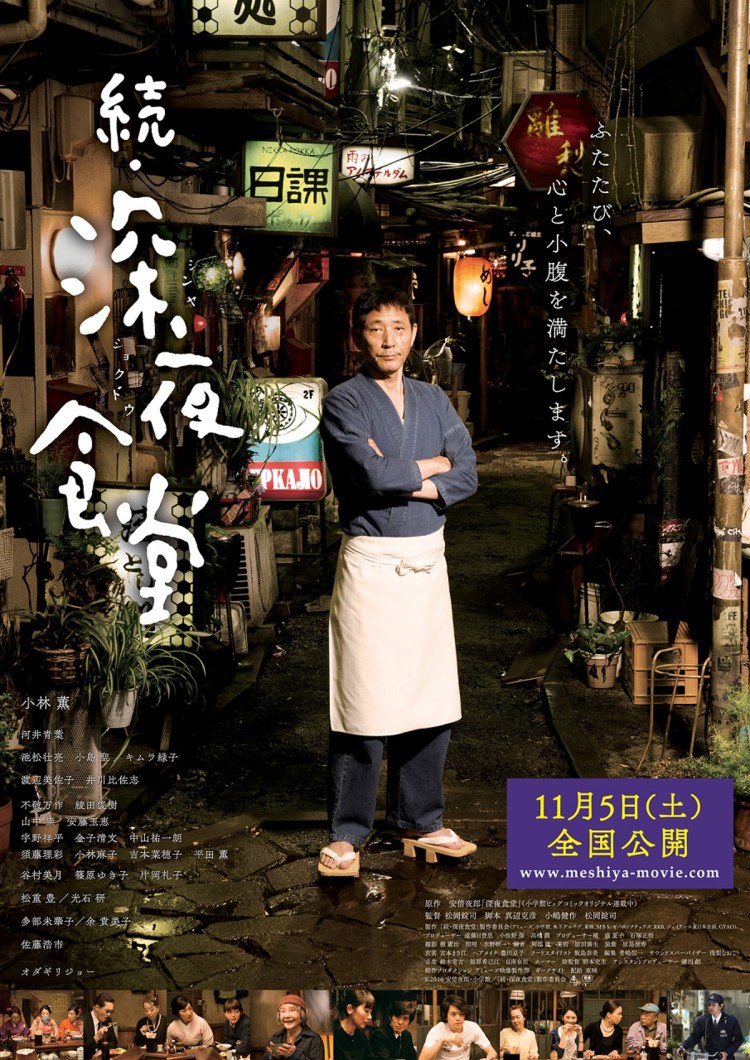 The Midnight Diner is open for business once again. Yaro Abe’s eponymous manga was first adapted as a TV drama in 2009 which then ran for three seasons before heading to the
  The criticism levelled most often against Japanese cinema is its readiness to send established franchises to the big screen. Manga adaptations make up a significant proportion of mainstream films, but most adaptations are constructed from scratch for maximum accessibility to a general audience – sometimes to the irritation of the franchise’s fans. When it comes to the cinematic instalments of popular TV shows the question is more difficult but most attempt to make some concession to those who are not familiar with the already established universe. Mozu (劇場版MOZU) does not do this. It makes no attempt to recap or explain itself, it simply continues from the end of the second series of the TV drama in which the “Mozu” or shrike of the title was resolved leaving the shady spectre of “Daruma” hanging for the inevitable conclusion.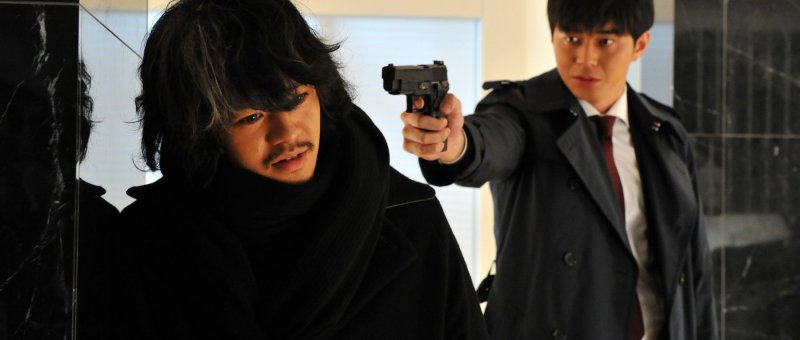
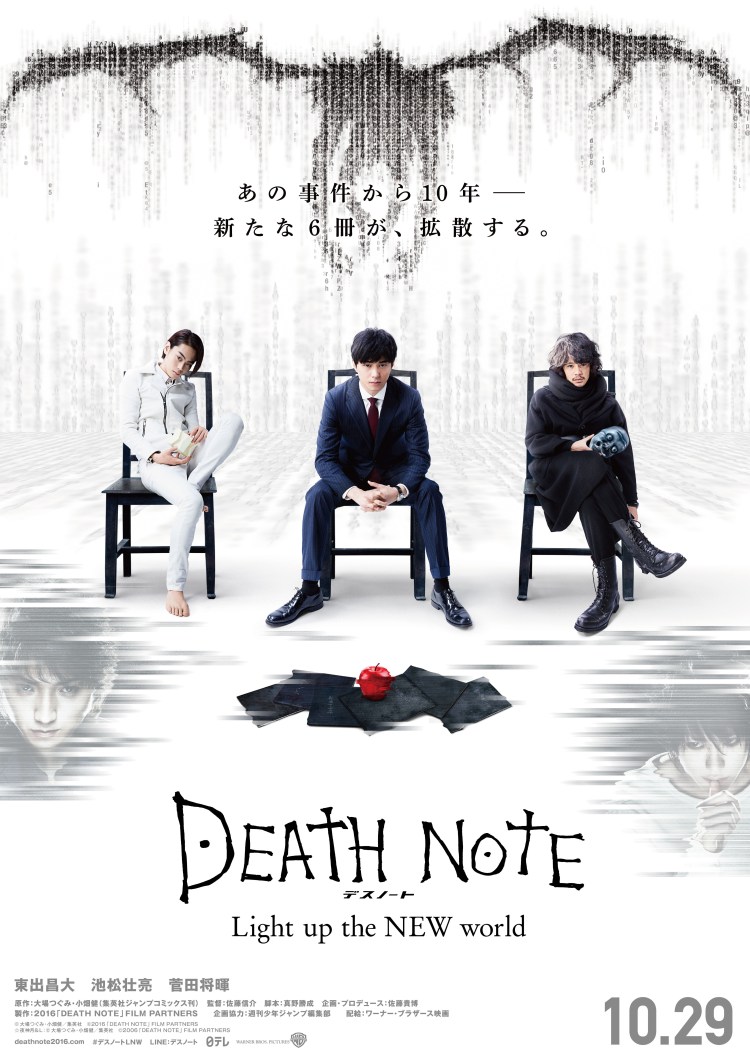 Tsugumi Ohba and Takashi Obata’s Death Note manga has already spawned three live action films, an acclaimed TV anime, live action TV drama, musical, and various other forms of media becoming a worldwide phenomenon in the process. A return to cinema screens was therefore inevitable – Death Note: Light up the NEW World (デスノート Light up the NEW World) positions itself as the first in a possible new strand of the ongoing franchise, casting its net wider to embrace a new, global world. Directed by Shinsuke Sato – one of the foremost blockbuster directors in Japan responsible for Gantz,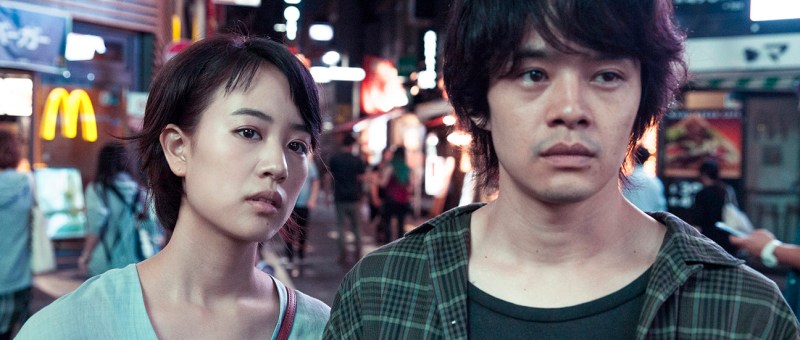
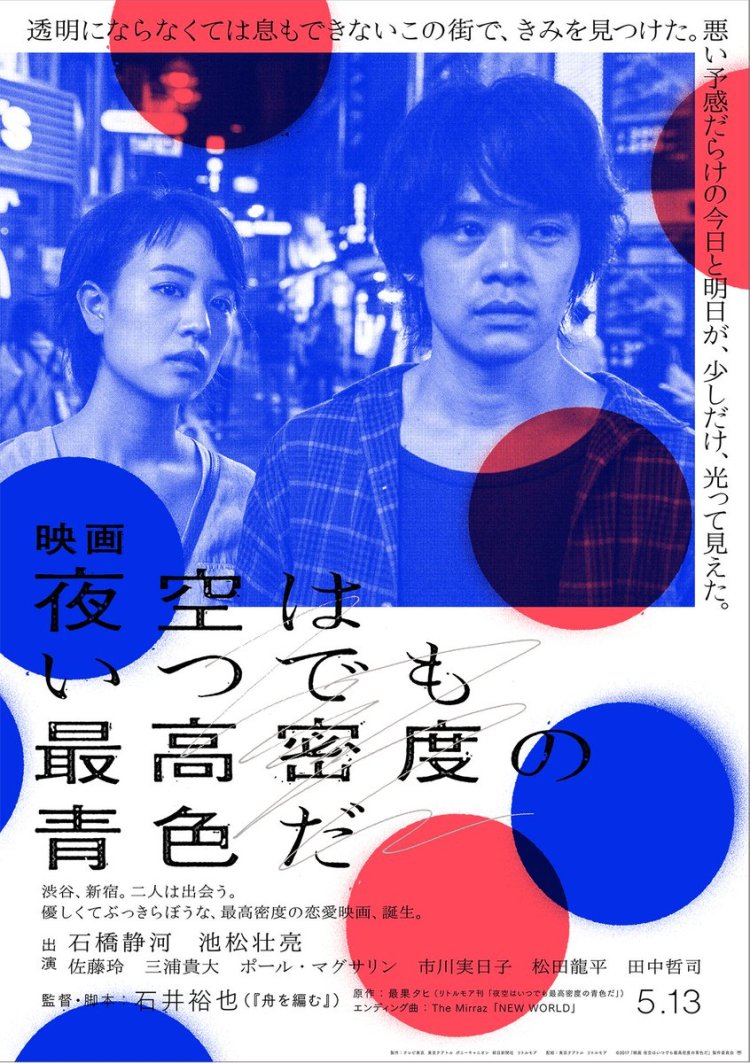 Learning to love Tokyo is a kind of suicide, according to the heroine of Yuya Ishii’s love/hate letter to the Japanese capital, The Tokyo Night Sky is Always the Densest Shade of Blue (夜空はいつでも最高密度の青色だ, Yozora wa Itsudemo Saiko Mitsudo no Aoiro da). This city is a mess of contradictions, a huge sprawling metropolis filled with the anonymous masses and at the same time so tiny you can find yourself running into the same people over and over again. Inspired by the poems of Tahi Saihate, The Tokyo Night Sky is at once a meditative contemplation of city life and an awkward love story between two lost souls who somehow find each other in its crowded backstreets.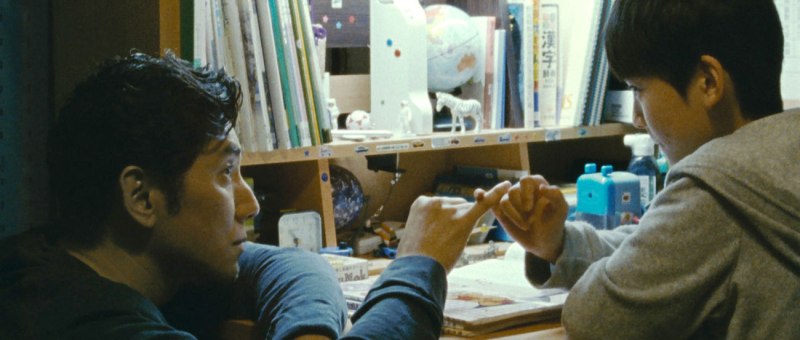
 Self disgust is self obsession as the old adage goes. It certainly seems to ring true for the “hero” of Miwa Nishikawa’s latest feature, The Long Excuse (永い言い訳, Nagai Iiwake) , in which she adapts her own Naoki Prize nominated novel. In part inspired by the devastating earthquake which struck Japan in March 2011, The Long Excuse is a tale of grief deferred but also one of redemption and self recognition as this same refusal to grieve forces a self-centred novelist to remember that other people also exist in the world and have their own lives, emotions, and broken futures to dwell on.
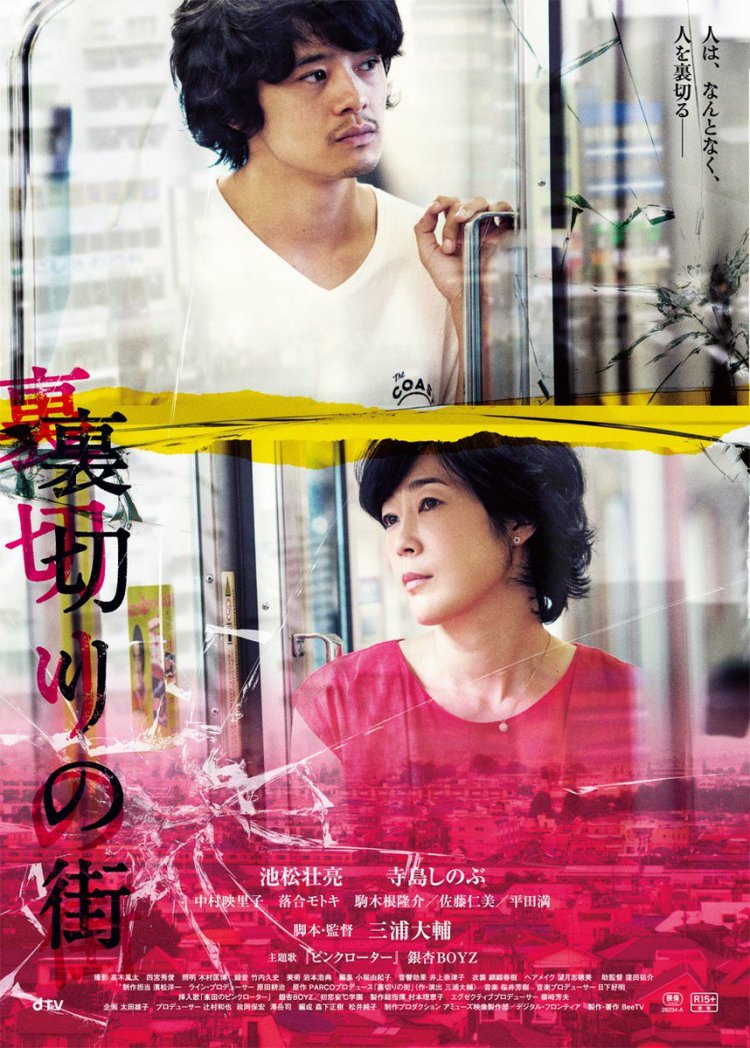 What is it that makes one person betray another? Following
 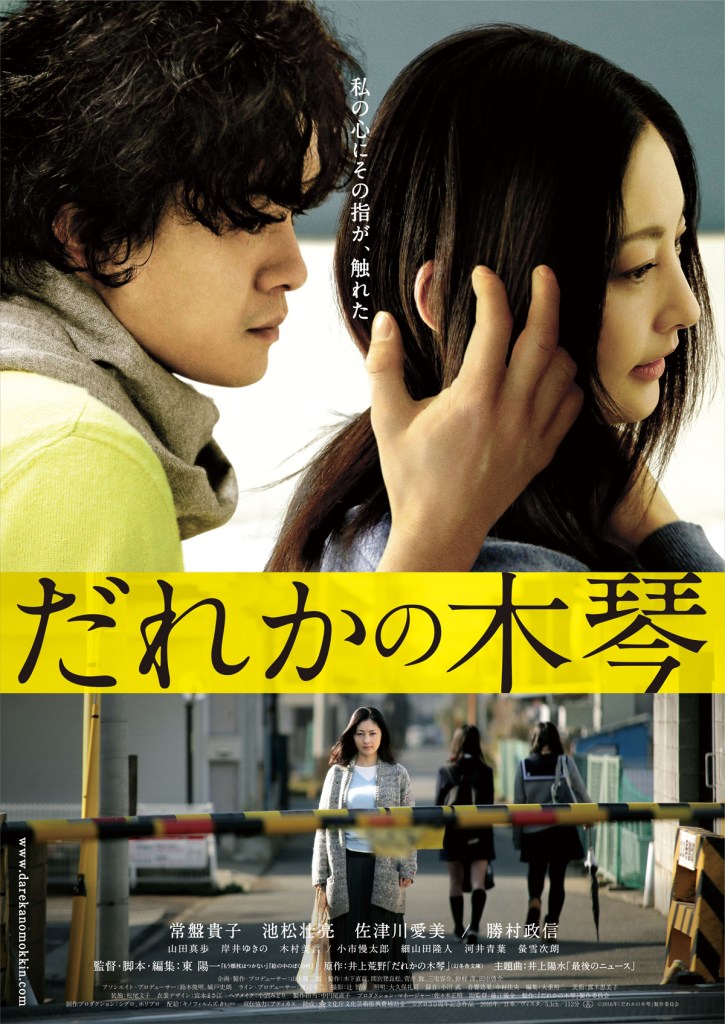 Yoichi Higashi has had a long and varied career, deliberately rejecting a particular style or home genre which is one reason he’s never become quite as well known internationally as some of his contemporaries. This slightly anonymous quality serves the veteran director well in his adaptation of Arane Inoue’s novel which takes a long hard look at those living lives of quiet desperation in modern Japan. Though sometimes filled with a strange sense of dread, the world of Someone’s Xylophone (だれかの木琴, Dareka no Mokkin) is a gentle and forgiving one in which people are basically good though driven to the brink by loneliness and disconnection.
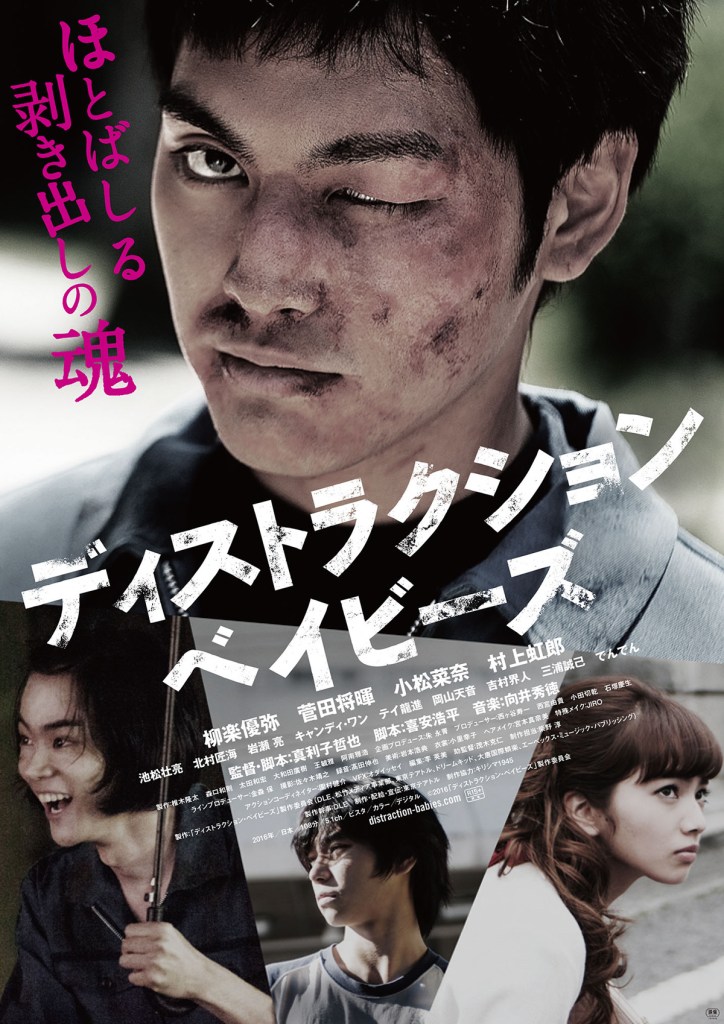 Post-golden age, Japanese cinema has arguably had a preoccupation with the angry young man. From the ever present tension of the seishun eiga to the frustrations of ‘70s art films and the punk nihilism of the 1980s which only seemed to deepen after the bubble burst, the young men of Japanese cinema have most often gone to war with themselves in violent intensity, prepared to burn the world which they feel holds no place for them. Tetsuya Mariko’s Destruction Babies (ディストラクション・ベイビーズ) is a fine addition to this tradition but also an urgent one. Stepping somehow beyond nihilism, Mariko’s vision of his country’s future is a bleak one in which young, fatherless men inherit the traditions of their ancestors all the while desperately trying to destroy them. Devoid of hope, of purpose, and of human connection the youth of the day get their kicks vicariously, so busy sharing their experiences online that reality has become an obsolete concept and the physical sensation of violence the only remaining truth.
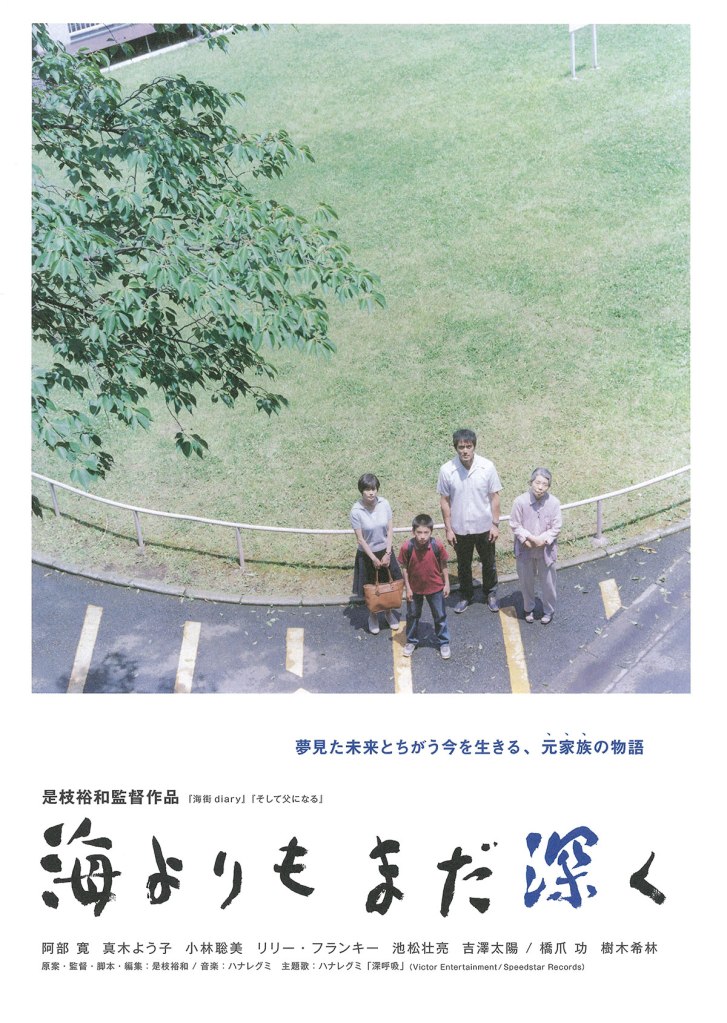 It’s never too late to be what you might have been – a statement attributed to George Eliot which may be as fake as one of the promises offered by the protagonist of Hirokazu Koreeda’s latest attempt to chart the course of his nation through its basic social unit, After the Storm (海よりもまだ深く, Umi yori mo Mada Fukaku). Reuniting Kirin Kiki and Hiroshi Abe as mother and son following their star turns in
