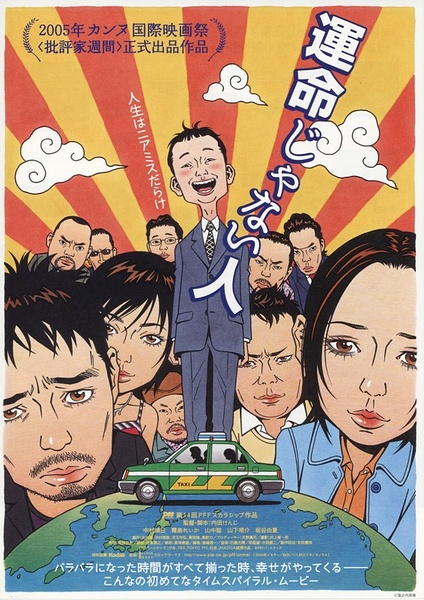
A Stranger of Mine (運命じゃない人, Kenji Uchida, 2005)

stranger of mineSometimes life throws you a pretty crazy night but unbeknownst to you the whole world has gone crazy too. For the disparate group of people at the centre of Kenji Uchida’s A Stranger of Mine (運命じゃない人, Unmei Janai Hito) , this proves to be more than usually true. A cute romantic encounter may end up going in a less than cinematic direction while ex-girlfriends, detectives and even the yakuza all conspire to frustrate the lovelorn dreams of a nice guy businessman who never even realises the total chaos which is ensuing all around him.

The film begins with a sad scene of a woman, Maki, carrying large bags and forlornly dropping a key through a letter box. She pawns what looks like an engagement ring and thinks about what to do next. Whilst sitting alone in a restaurant, a man asks her to join him and she is overjoyed to find some company. The man is Kanda, a small time detective and childhood friend of businessman Miyata who is also broken hearted as his girlfriend has left him. The girlfriend, “Ayumi”, is not all she seems and is already mixed up with yakuza boss Asai. Mix in a MacGuffin of some missing money and one ordinary night among millions just got very complicated indeed!

Uchida starts out with a fairly standard indie rom-com approach as the two brokenhearted jilted lovers Maki and Miyata are brought together by Kanda’s machinations but just as we think we’re about to head into some kind of Before Sunset scenario our perspective shifts and we find out just why it is that Kanda seems to be acting so manically. In fact, he’s been looking out for his friend all along but it’s getting kind of complicated at his end and the one thing he 100% does not want is for the rather innocent Miyata to figure out that he’s at the centre of dangerous mob caper because his ex-girlfriend, whom he still think is an angel, is really not the innocent flower he thought she was.

Just another night in the city, the point of view shifts around these five characters whose lives intersect like cogs turning some giant, unseen machine. We’re shown one set of events only to have our understanding of them undercut by seeing them again from another angle. Everything is a coincidence, or maybe nothing is, but each of these five characters wade into each other’s story leaving a drama filled wake with only poor Miyata seemingly oblivious to what’s really going on.

A Stranger of Mine plays like an extremely complex farce in which fate conspires to have some fun with five ordinary people and Uchida mines the situation for all the (sometimes dark) humour it can offer. Loosely split into three sections divided by title cards bearing the names of the characters, the film takes inspiration from classic Hollywood screwball comedies and film noir whilst adding a more modern, non-linear approach as Uchida plays and replays his scenes to make us see that things are not always the way they look at first glance.

While obviously a low budget, independent effort, A Stranger of Mine offers surprisingly high production values and boasts excellent performances from its tightly composed cast. The script is fiendishly complicated and exacting yet Uchida pulls it off with a keenly observed eye. Though improbable, the events are never implausible and play out with a kind of off beat inevitability that further underlines the film’s mildly ironic, comic tone. Gleefully playful, A Stranger of Mine may appear a little slight on the surface, but just as its multi-layered narrative suggests, the perspective only deepens on a closer look.


Unsubtitled trailer:

I Want to Be a Shellfish (私は貝になりたい, Shinobu Hashimoto, 1959)

shellfishAfter Japan was defeated and later occupied by the Americans, there came the painstaking exercise of examining what exactly had happened during the conflict and assessing is who, if anyone, could be held accountable for any wrongdoing. The so called “war criminals” were divided into classes according to the severity of their crimes with Tojo himself at the top who eventually paid with his life. However, many of the men who were given the same Class A rating were just rank and file soldiers who had been “following orders”, often because they feared for their own lives if they refused. The debut directorial effort from writer Shinobu Hashimoto who provided scripts for some of Akira Kurosawa’s most famous works, I Want to be a Shellfish (私は貝になりたい, Watashi wa Kai ni Naritai), examines just one of these tragically absurd cases.
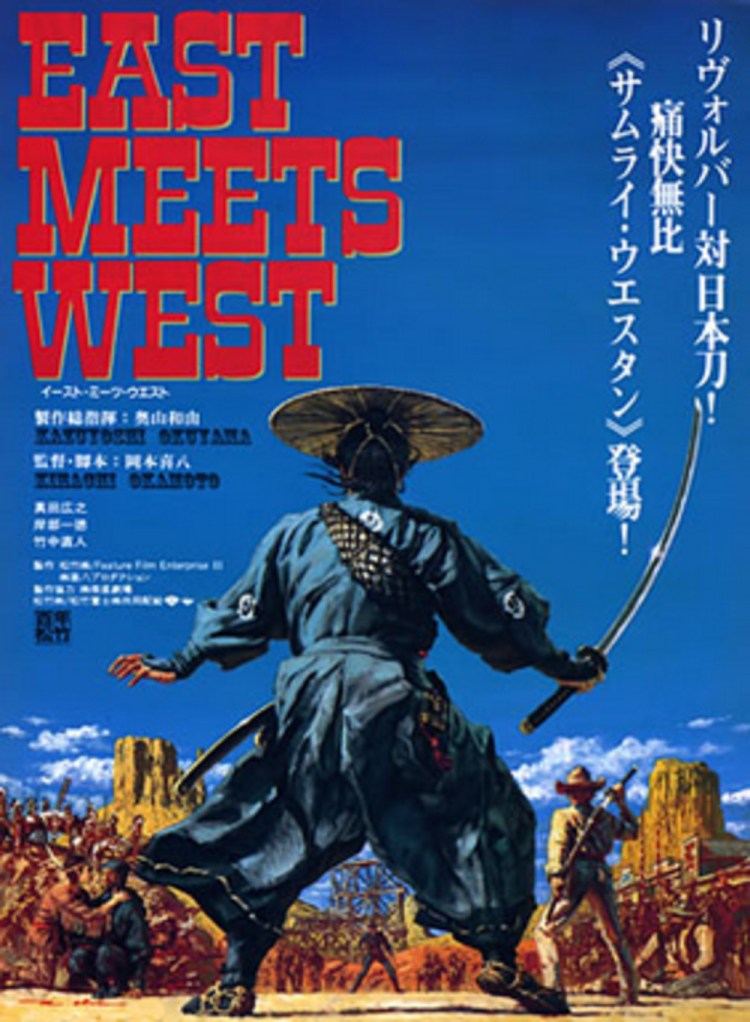
Barber Shimizu has finally started to make headway in his very own shop where he lives happily with his wife and son when he’s unexpectedly drafted into the army towards the end of the war. Unused to heavy physical labour and a fairly gentle man, he doesn’t take well to the soldier’s life and gets himself into trouble with his C/O. Stationed near Tokyo, Shimizu’s squad is charged with searching for a pair of US airmen thought to have bailed out after their plane was hit by anti-aircraft fire during a bombing raid over the city. When they eventually find the pilots, both have already died of their injuries.

At this point Shimizu’s captain makes a cruel and rash decision – rather than sending the bodies back to HQ or burying them there, he decides to use them as target practice for his raw recruits. When ordered to pick out the two weakest soldiers, the NCO picks Shimizu and another man, Takita, who are then ordered to bayonet the corpses to prove what fine soldiers they have become. Though they both fail the first time the captain berates them until they finally comply.

The war ends and Shimizu goes home to his family only to receive a knock on the door from the war crimes commission who drag him off to Tokyo for trial. The trial itself is a farce, Shimizu is charged with executing a prisoner of war – the fact the pilots were both dead when found and therefore were never executed and were never even prisoners is never revealed by anyone. Finally classified as a Class A War Criminal, Shimizu is sentenced to death for having stabbed a corpse.

It goes without saying that, yes, terrible crimes were committed during the war and some of them deliberately and wilfully. However, in Shimizu’s case his crime is an absurd one. Though the way in which his superiors have treated the fallen soldiers of their enemies is far from humane, Shimizu has committed no murder and was just following the orders of his superiors. Improper as it may have been, it hardly warrants the loss of his own life and that he’s being placed in the same category as members of execution squads and those who wilfully participated in crimes against civilians is more than a little disproportionate.

Perhaps the most controversial element of the film is that Shimizu seems to have been denied a fair trial. To those who can understand both languages, or even just from the subtitles provided for the translation of the American prosecutor’s questions, it’s obvious that the way in which his questioning is being conducted is far from ideal. The translation gap between the two languages is immense and leads to a series of misunderstandings which in no way aid Shimizu’s case.

It’s also clear that the panel in charge of the trial have very little understanding of how the Japanese military works and how this might differ from American military law. Shimizu is repeatedly questioned about how he feels about the order he was given – a strange question given that the idea of not following an order is not one which immediately presents itself. Shimizu repeats the credo he was taught that an order from his C/O is the same as one coming directly from the Emperor. However, when translated, the prosecutor infers that Shimizu thinks his order came from the Emperor himself and stupidly asks if Shimizu actually met the Emperor in person. Likewise, they ask why he didn’t simply refuse to follow the order and when he replies that he believed he would be shot, they ask why he didn’t ask to be referred to a military court which is just not something that would have been reasonably feasible for a Japanese soldier in this sort of situation.

The fact that the soldiers were already dead to begin with is never even mentioned, by anyone. The highest ranking officer who ordered the search is held responsible even though his orders were to bring the men in alive. Shimizu’s captain has since killed himself, conveniently, leaving everyone else to take the fall for his inhumane decision.

At the end of the film as Shimizu is faced with saying goodbye to a world which has dealt him nothing but hardship other than the wife and son he will be forced to leave behind, Shimizu utters the film’s title. He wishes he were a shellfish buried deep at the bottom of the ocean far from humans and their capacity for cruelty. No poverty, no draft, no war, no absurd trials – free from this world of torment. A lament for the little guy paying the price for world gone mad, I Want to be a Shellfish is a bleak and tragic tale which is filled with universal quality of melancholic absurdity which continues into its heartbreaking final moments.


Bonus trivia – Frankie Sakai (more usually seen as a singer or in comedic roles) also played Shimizu the previous year in an enormously successful TV drama. This story has in fact been filmed several times, most recently as a feature film in 2008 and was inspired by the book by Tetsutaro Kato who was sentenced to death as a war criminal though later had his sentence commuted and was released for “good behaviour” in 1952 (but may not have been quite as innocent as poor old Shimizu).


East Meets West (イースト・ミーツ・ウエスト, Kihachi Okamoto, 1995)

East_Meets_WestEast has been meeting West in the movies from time immemorial and though it’s often assumed that the traffic is only running in one direction, in reality the river runs both ways. Kihachi Okamoto was always fairly open about his love of Hollywood westerns, particularly those of John Ford, and even mixed a fair amount of wild west style action to his 1959 Manchurian war movie, Desperado Outpost. Returning to the theme almost 40 years later in East Meets West (イースト・ミーツ・ウエスト), Okamoto retains his wry, ironic eye but adopts a tone much more in keeping with the slightly silly exploitation cowboy movies of the ‘70s.
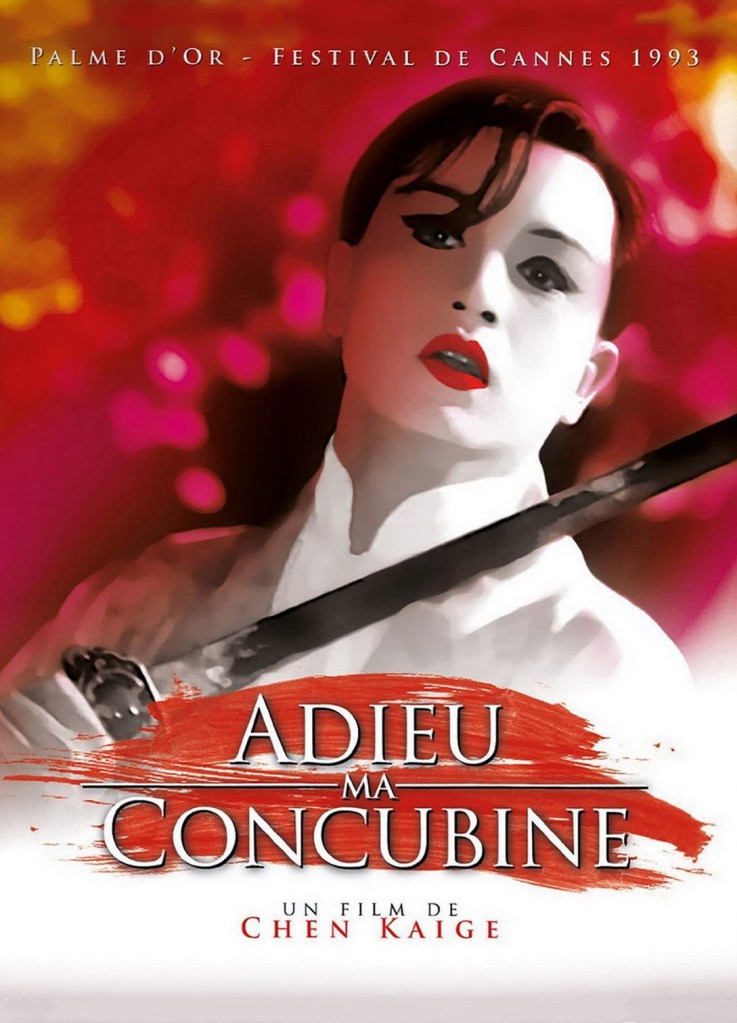
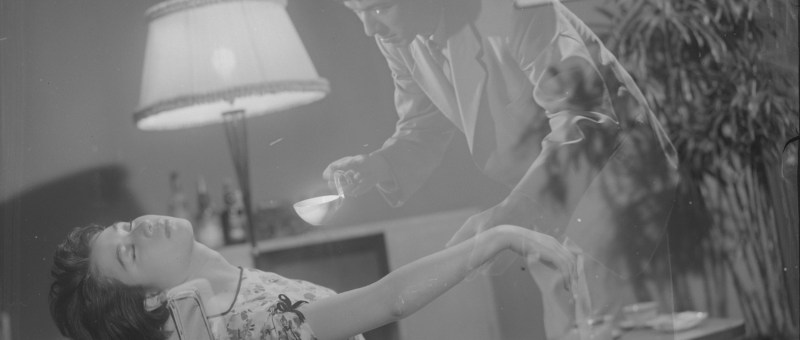
The tale begins with an American voiceover explaining the intricacies of the time period. It’s 1860 and America has been putting pressure on the recently opened Japan to agree to a trade deal. A delegation of two ships is shortly to arrive in San Fransisco which has also undergone many changes in the last few years after the influx of hopefuls during the 1848 goldrush transformed it from a peaceful fishing town to a dangerous prospector’s paradise. The situation in Japan is also turbulent and those who object to the recent foreign influences have a number of plots in motion. Once the boats leave a band of former samurai will assassinate the remaining official. The men on the boat will not hear of this until they return and the revolutionaries have also placed an assassin amongst those who will travel to America with the ultimate aim of assassinating the diplomat in charge of the delegation who was also responsible for the deaths of a number of “resistance” members in Japan.

However, everything gets derailed when a gang of bandits rob the bank just as the Japanese are about to deposit the money they’ve brought to seal the trade agreement. The group’s interpreter, Kamijo (Hiroyuki Sanada), takes advantage of his samurai training to cut down some of the bandits saving his own life but is unable to prevent them making off with the money. Taking to the road in the company of the young son of one of the bystanders who was killed, Kamijo becomes every inch the cowboy, standing apart ready to take his revenge. However, his mission is at times aided or hindered by an ace ninja working as a servant to the delegation, Tamejiro (Naoto Takenaka), who has accidentally ended up with a Native American wife.

East Meets West is a very silly film, it has very little in the way of serious intent but offers a fair amount of zany fun as its fish out of water samurai try to adapt to the ways of the Wild West. In many ways, it’s the classic cowboy movie as a bunch of strangers arrive and proceed to clean up the area which has become threatened by out of control bandit gangs. You have your mainstays like the lazy sheriff, meek vicar, and drunken doctor-cum-undertaker, the only difference is that the strangers are Japanese adventurers who fight with samurai swords and out of ideals of honour and justice rather than of survival or frontier values.

Indeed, it’s a little strange that East Meets West turned up in 1995 just a few years after Hollywood itself began to re-examine the western, re-injecting it with a little more realism and the grittiness and cruelty which filled frontier life but had been all but erased from the sanitised, romantic vision of the movie cowboy duelling pistols world. East Meets West references the classic western with its associated myths and tropes of clearly defined good guys taking down clearly defined bad guys to save the townspeople from moral and physical ruin. There are plenty of horse stunts and gunfights all offered with a kind of good natured (if sometimes black) humour that’s much more John Wayne than it is Clint Eastwood.

That said, there is a degree of cross cultural critique as the guys try to get used to their New World lives. Because English speakers have a problem with foreign names, Kamijo quickly becomes “Joe” and Tamejiro “Tommy” with Kamijo ending up with a little blond surrogate son and Tamejiro an enterprising Native American wife with whom he seems to develop quite a bond despite sharing no common language. Kamijo may have come to America with one singular mission in mind but once under the wide open skies he finds a kind of individual freedom that he hadn’t previously experienced and gradually loses his adherence to the rigid social codes of the samurai, exchanging them for the seemingly endless vistas of the ever expanding frontier.

Okamoto mines the dualities for all their worth – the chaos of the Meiji era contrasted with the organised lawlessness of the Wild West, yet East Meets West never quite transcends its western pastiche origins. With plenty of inventive and keenly observed comedy plus some nicely choreographed action scenes and excellent performances from the committed cast from both the English speaking American side and the Japanese actors, East Meets West proves an often entertaining experience but perhaps fails to offer the same level of social critique found in Okamoto’s previous work.


Farewell My Concubine (霸王别姬, Chen Kaige, 1993)

farewell-my-concubine-1993
French DVD cover

Review of Chen Kaige’s 1993 masterpiece Farewell My Concubine (霸王别姬, Bàwáng Bié Jī) first published by UK Anime Network.


“Why does the concubine have to die?” Spanning 53 years of turbulent, mid twentieth century history, Farewell My Concubine is often regarded as the masterpiece of fifth generation director Chen Kaige and one of the films which finally brought Chinese cinema to global attention in the early 1990s. Neatly framing the famous Peking Opera as a symbol of its nation’s soul, the film centres on two young actors who find themselves at the mercy of forces far beyond their control.

Beginning in 1924, Douzi (later Cheng Dieyi) is sold to an acting troupe by his prostitute mother who can no longer care for him. The life in the theatre company is hard – the boys are taught the difficult skills necessary for performing the traditional art form through “physical reinforcement” where beatings and torturous treatment are the norm. Douzi is shunned by the other boys because of his haughty attitude and place of birth but eventually finds a friend in Shitou (later Duan Xiaolou) who would finally become the king to his concubine and a lifelong companion, for good or ill.

Time moves on and the pair become two of the foremost performers of their roles in their generation much in demand by fans of the Opera. However, personal and political events eventually intervene as Xiaolou decides to take a wife, Juxian – formerly a prostitute, and shortly after the Japanese reach the city. Coerced by various forces, Dieyi makes the decision to perform for the Japanese but Xiaolou refuses. After the Japanese have been defeated Dieyi is tried as a traitor though both Xiaolou and Juxian come to his rescue. The pair run in to trouble again during the civil war, but worse is to come during the “Cultural Revolution” in which the ancient art of Peking Opera itself is denounced as a bourgeois distraction and its practitioners forced into a very public self criticism conducted in full costume with their precious props burned in front of them. It’s not just artifice which goes up in smoke either as the two are browbeaten into betraying each other’s deepest, darkest secrets.

Farewell My Concubine is a story of tragic betrayal. Dieyi, placed in the role of the concubine without very much say in the matter, is betrayed by everyone at every turn. Abandoned by his mother, more or less prostituted by the theatre company who knowingly send him to an important man who molests him after a performance and then expect him to undergo the same thing again as a grown man when an important patron of the arts comes to visit, rejected by Xiaolou when he decides to marry a prostitute and periodically retires from the opera, and finally betrayed by having his “scandalous” secret revealed in the middle of a public square. He’s a diva and a narcissist, selfish in the extreme, but he lives only for his art, naively ignorant of all political concerns.

Dieyi doesn’t just perform Peking Opera, he lives it. His world is one of grand emotions and an unreal romanticism. Xiaolou by contrast is much more pragmatic, he just wants to do his job and live quietly. On the other hand, Xiaolou refuses to perform for the Japanese (the correct decision in the long run), and has a fierce temper and ironic personality which often get him into just as much trouble as Dieyi’s affected persona. The two are as bound and as powerless as the King and the Concubine, each doomed and unable to save each other from the inevitable suffering dealt them by the historical circumstances of their era.

The climax of the opera Farewell My Concubine comes as the once powerful king is finally defeated and forced to flee with only his noble steed left beside him. He begs his beloved concubine to run to sanctuary but such is her love for him that she refuses and eventually commits suicide so that the king can escape unburdened by worry for her safety. Dieyi’s tragedy is that he lives the role of the concubine in real life. Unlike Xiaolou, his romanticism (and a not insignificant amount of opium) cloud his view of the world as it really is.

It’s not difficult to read Dieyi as a cipher for his nation which has also placed an ideal above the practical demands of real living people with individual emotions of their own. Farewell My Concubine ran into several problems with the Chinese censors who objected not only to the (actually quite subtle) homosexual themes, but also to the way China’s recent history was depicted. Later scenes including one involving a suicide in 1977, not to mention the sheer absurd horror of the Cultural Revolution are all things the censors would rather not acknowledge as events which took place after the birth of the glorious communist utopia but Farewell My Concubine is one of the first attempts to examine such a traumatic history with a detached eye.

Casting Peking Opera as the soul of China, Farewell My Concubine is the story of a nation betraying itself. Close to the end when Dieyi is asked about the new communist operas he says he finds them unconvincing and hollow in comparison to the opulence and grand emotions of the classical works. Something has been shed in this abnegation of self that sees the modern state attempting to erase its true nature by corrupting its very heart. Full of tragic inevitability and residual anger over the unacknowledged past, Farewell My Concubine is both a romantic melodrama of unrequited love and also a lament for an ancient culture seemingly intent on destroying itself from the ground up.


Farewell My Concubine is released on blu-ray in the UK by BFI on 21st March 2016.

Original US trailer (with annoying voice over):

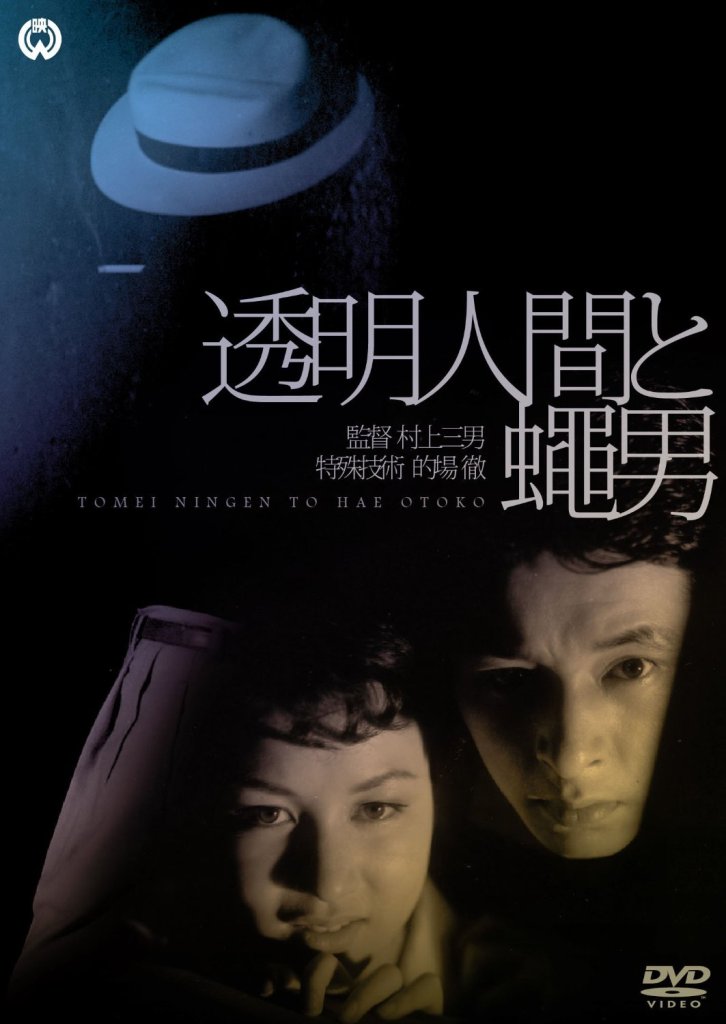
The Invisible Man vs The Human Fly (透明人間と蝿男, Mitsuo Murayama, 1957)

The Invisible Man Vs the Human FlyWho would win in a fight between The Invisible Man and The Human Fly? Well, when you think about it, the answer’s sort of obvious and how funny it would be to watch probably depends on your ability to detect the facial expressions of The Human Fly, but nevertheless Daiei managed to make an entire film out of this concept which is a sort of late follow-up to their original take on Invisible Man Appears from 1949. Like that film, The Invisible Man vs The Human Fly (透明人間と蝿男, Tomei Ningen to Hae Otoko) also adopts a deadpan, straightforward tone despite its rather ridiculous premise.

Tokyo is being plagued by a series of mysterious murders occurring in broad daylight in which the victim is stabbed through the back piercing the heart yet witnesses report seeing no suspicious activity near the crime scene. Perhaps The Invisible Man did it, hahaha….However, when the man sitting next to the professor in charge of researching the “imperceptibility device” is murdered in an aircraft toilet, the police get wise to a possibly surreal explanation for these bizarre crimes. The only other evidence they have is a connection between a sleazy nightclub owner, a friend of his and one of the murdered men who briefly served together during the war, the fact that one of the victims pointed at the sky before dying, and reports of a strange buzzing sound….

Interestingly, the major viewpoint here is from the policemen investigating the case and their attempts to get their heads around this extremely unusual series of events. As often happens with revisiting a form of technology which has been used for ill in the previous picture, here the “imperceptibility device” becomes a force for good as it might be able to help the powers at be stamp out The Human Fly. This time there’s not so much of the accompanying madness which is caused by going invisible but there’s still a heavy price to be paid as no one’s figured out a way of turning back which doesn’t involve rapid death from cancer immediately afterwards.

By contrast, The Human Fly is born of a man made serum developed by Japanese mad scientists during World War II and brought back by a man who was abandoned on an island by his comrades and subsequently left to take the wrap at a war crimes tribunal. He wants to use the technology to further his own success yet has a minion carrying out most of the dirty work. The Human Fly serum does, apparently, carry a number of psychological side effects including violent impulses, paranoia and addiction.

The special effects are not quite as good as in Invisible Man Appears though the invisible antics are not the focus of the film anyway. Bizarrely, The Human Fly is just a shrunken man who is somehow able to zip about like a regular fly even though he’s still dressed in his normal business suit and keeps his arms rigidly to his sides like some kind of human torpedo. Apparently, the buzzing sound is made because of his being very small (so says science) which gets around the inconvenient truth of him not having any wings or other fly-like characteristics other than the ability of flight.

It’s all very silly, though not quite silly enough in places. For the most part, the film plays out like a regular police procedural with slight noir undertones despite the obvious strangeness of the mysteries at hand. Though there’s obviously something to be made about the origin of the Human Fly serum and the anger of the “war criminal” who feels himself betrayed by his country, it’s a fairly subtle comment on post-war resentment. However, attitudes to the practice of scientific research do seem to have shifted with the researchers investigating the imperceptibility device cast as the good guys (though no particular reason for their work is ever offered) who can be relied upon to help catch the “bad guys” who are making use of “bad technology” to do “bad things”.

A fairly solid B-movie though one which is perhaps a little too po-faced for its genretastic title, The Invisible Man vs The Human Fly is an interesting mix of noir crime thriller with a little science fiction and even a few horror trappings thrown in. Thanks to its straightforward approach it may prove a little dull for genre enthusiasts but does offer its own kind of surreal iconography and it’s difficult to forget the sight of a tiny, angry looking besuited man flying around and committing random crimes while an invisible opponent stalks him from the shadows.


The Teahouse (成記茶樓, Kuei Chih-Hung, 1974)

TheTeaHouse+1974-248-bWhere oh where are the put upon citizens of martial arts movies supposed to grab a quiet cup of tea and some dim sum? Definitely not at Boss Cheng’s teahouse as all hell is about to break loose in there when it becomes the centre of a turf war in gloomy director Kuei Chih-Hung’s social minded modern day kung-fu movie The Teahouse (成記茶樓, Cheng Ji Cha Lou).
Wang Cheng runs a small teahouse which prides itself on being the kind of progressive environment where everyone looks after each other as long as they play by the rules. Unfortunately, one of his young guys – Blackie, fresh off the boat from the mainland, has got himself into bad company and into trouble with the law. However, as he’s a minor, he gets off with barely any punishment at all. Cheng tells him he can stay at the teahouse only if he pays properly for his crime leading him to try and get himself arrested all over again so he can go to jail (which actually proves very difficult).

Another unfortunate side effect of Blackie’s adventure is that it brings some unwanted gangster attention and when two young thugs come looking for one of the waitresses, Boss Cheng is not going to stand for any nonsense. However, after his attempts to help the girl have failed, he finds himself in trouble with two different sets of gangsters and also a meddling police inspector who seems intent on using the teahouse to trap the triads.

Boss Cheng is a good and decent man but also someone with his own opinions on justice who is not afraid to take matters into his own hands. His rules for workers at the teahouse emphasise obeying the law and behaving like responsible citizens, but he’s not above carrying out a little corrective action of his own if the need arises.

The biggest theme of the film is the rising inequality and place of migrants from the mainland in contemporary Hong Kong society but the first target Kuei has his sights set on is out of control youth. Because of the lenient laws regarding child criminality, the young men of Hong Kong run rampant, safe in the knowledge that nothing is going to happen to them while they remain under the age of responsibility. The two gangsters accused of raping and attempting to force the teenage waitress at the teahouse into prostitution give their ages as 14 and 15 respectively to the trial judge and are released without charge to go back to their life of crime with impunity and no respect for the law or conventional morality. Sadly, this system just creates another child criminal but one who will receive a jail sentence even if a lighter one to be served in a reform school rather than a prison.

Blackie was seduced into crime by a lack of funds – having managed to make it over from the mainland he has nothing other than his job at the teahouse and the support of Boss Cheng. One day a ragged looking little boy leading his sister by the hand wanders into the teahouse to beg for food. It turns out his small family escaped from the mainland too but his father never made it to Hong Kong and his mother is ill, leaving the children to try and fend for themselves. Boss Cheng takes pity on them and gives the boy a job plus paying for his school fees but he still finds himself beaten up by thugs not much older than himself in the street.

All the while, corrupt fat cats are messing with the system to keep the poor in their place while the rich get richer. Cheng takes great pleasure in playing off a corrupt industrialist who tried to use him as a sacrificial pawn in his own war against the triads (well, the triads he doesn’t like, anyway). Amusingly, one of the triad bosses seems to think Cheng is also a brother forcing him to pretend to know all about triad rituals to attempt to make a truce with them. The teahouse is situated right between the territories of two rival gangs making it a prime spot for conflict. However, the real problem comes when the police start muscling in, giving off the impression that Cheng has turned traitor on the triads. Soon, Cheng becomes the single biggest threat to his own teahouse and the progressive environment he hoped it would foster.

The Teahouse is actually a little ahead of its time concentrating not on kung fu or street fighting but mixing in a little gun play and some bloody knife crime. The shooting style is impressive throughout with a realistic, gritty atmosphere which aims to put the real streets on screen. The film does, however, have a tendency to fall into an episodic rhythm and suffers from its abrupt and slightly odd, downbeat ending which finishes things on an unsatisfying note. That said, The Teahouse is a stylishly shot and socially engaged action extravaganza that makes up for its minor shortcomings with a degree of chutzpah which looks forward to the classic heroic bloodshed movies of the ‘80s.


Seen as part of HOME’s CRIME: Hong Kong Style touring season.

Unsubtitled trailer (Mandarin):


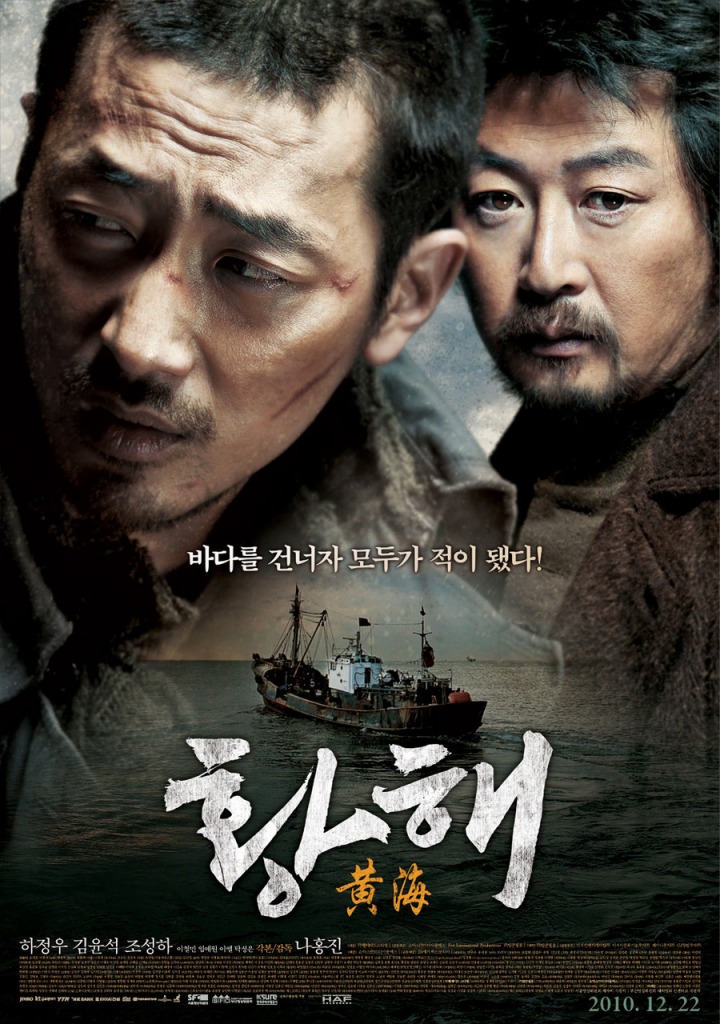
The Yellow Sea (황해, Na Hong-Jin, 2010)

yellow sea korean posterReview of Na Hong-Jin’s The Yellow Sea (황해, Hwang Hae, AKA The Murderer) – revised form of a piece first published by UK Anime Network in March 2012.


Gu-Nam (Ha Jung-Woo) is a taxi driver with a gambling problem. If the gambling wasn’t enough to get him into trouble, he’s also in debt to some gangsters over the money for his wife’s passage to South Korea. His wife was meant to be sending the money she’d make there back to him and their daughter to help pay off the debt, but no one’s heard from her in months. The obvious assumption is that she’s made a new life for herself and doesn’t want to be found, but Gu-Nam can’t quite bring himself to believe it. As a Joseonjok – a Chinese Korean from the Yanbian Korean Autonomous Prefecture, Gu-Nam had little chance of living an honest and prosperous life. Disowned by both China and Korea, many Joseonjoks are forced to resort to criminality in order to survive.

Just as it seems things are about to hit a crisis point, Gu-Nam receives an interesting job opportunity. Myung-ga (Kim Yun-Seok), the dog seller at the market, suggests Gu-Nam go to South Korea, kill a prominent businessman, look for his wife and return back to China (with the businessman’s thumb for proof). Assuming all goes well, Gu-nam will receive the pin number for an account with 57,000 Yuan, maybe return with his wife in tow or at least find out once and for all what the situation is between them, and finally get these gangsters off his back.

Still, sneaking into South Korea and committing a murder – it’s a big ask, and first off Gu-Nam rejects the idea out of hand but one conversation with his decidedly tough mother later and Gu-Nam has accepted. However, when he gets to Korea he finds things aren’t as simple as Myung-Ga made out. There seems to be a much bigger game in play than Gu-nam bargained for and it’s not long before he’s running from the police, gangsters, and just about everyone else.

If there’s one thing there’s a lot of in this film, it’s running. It’s difficult to think of another film that manages to make a good old fashioned foot chase quite so exciting. The set pieces are astonishing – multi-car pile-ups, police driving into and over each other, an extended chase sequence through a cargo boat – the list goes on, all with Gu-nam running desperately towards the camera. Propelled by pure survival instinct and later an intense need for revenge and an explanation, Gu-nam keeps running no matter what is coming for him.

One of those things is, of course, Myung-ga who’s now got a total mess on his hands that’s threatening to derail all of his current business arrangements (well, except the dog selling – something to fall back on). If there’s another thing there’s a lot of in this film, it’s stabbing (and later axing). Luckily for him, it seems Myung-ga is something of an expert at this as we find out in one scene where we see him, badly wounded, enter a room full of angry gangsters – the camera cuts away and we return to find all of the gangsters seemingly dead with very little fuss. He even tries to kill someone with a lamb bone at one point! Myung-ga is certainly not someone one would want to be meeting on a dark night (or ever buy a dog from). He is though, one of the most compelling film villains of recent years.

Speaking of stabbings, The Yellow Sea is a very violent and extremely bloody film. If you’re well versed in Korean crime dramas, you might be aware that South Korea has very tight gun laws, so much so that not even the toughest gangsters carry guns. Consequently what you have here is a lot of people sneaking around trying to get the drop on each other to stick the knife (or occasionally, hatchet) in. Obviously, it’s much quieter than gunfire but also much messier and much more physical. The only guns in the film are those which belong to the police, who are largely depicted as bumbling idiots who can’t tell one end of a gun from the other.

This Bounty Films release (distributed by Eureka in the UK) is the shorter 140 minute ‘Director’s Cut’. There is, however, some controversy about whether it really is a director’s cut or an international version prepared by the film’s co-producers Fox International. For the record, it runs about sixteen minutes shorter than the version seen in Korea. Despite being the shorter version, The Yellow River does still feel a little long at times and really pushes the ideal running time for a thriller of this kind. Nevertheless it does manage to keep the momentum going throughout and even has a streak of morbid humour running right through it.

A sad meditation on the futility of life, particularly for those who find themselves at the bottom of the pile and are forced to scrap like dogs for the little other people have left behind, The Yellow Sea is an exciting addition to the recent wave of Korean crime thrillers. Following on from his impressive debut The Chaser, The Yellow Sea certainly catapults director Na Hong-jin right into the top tier of Korean cinema.


The Yellow Sea is available on DVD and blu-ray from Eureka in the UK and on DVD from 20th Century Fox in the US.

Invisible Man Appears (透明人間現る, Nobuo Adachi, 1949)

Invisible man appearsReleased in 1949, The Invisible Man Appears (透明人間現る, Toumei Ningen Arawaru) is the oldest extant Japanese science fiction film. Loosely based on the classic HG Wells story The Invisible Man but taking its cues from the various Hollywood adaptations most prominently the Claude Rains version from 1933, The Invisible Man Appears also adds a hearty dose of moral guidance when it comes to scientific research.
Once again the action centres around an esteemed chemist, Professor Nakazato, who has been working on a serum to render living things invisible. So far he has a sample which works on animals but is reluctant to move on to human testing as A) he hasn’t found a way to reverse the procedure, and B) there are some unpleasant side effects in which the subject becomes increasingly violent and irrational. The professor currently has two top students who are helping him towards his goal and, inconveniently, both have taken a shine to his daughter, Machiko. Half joking, the professor remarks that whoever can solve the problem first will win his daughter’s hand.

A business associate of the professor, Kawabe, is also interested in Machiko and also in the rights to the professor’s important new discovery. The professor, however, is a responsible man and refuses to sell it in case it falls into the wrong hands. Shortly after the professor is kidnapped by a gang of armed thugs who plan to use the serum to steal a set of diamonds known as The Tears of Amour.

There’s plenty of intrigue with various twists and turns to the original story which keep the viewer on their toes as they try to figure out who exactly is the invisible man and what he’s really after. Actually, the solution is sort of obvious and heavily signposted but that doesn’t make it any less fun. Kawabe is a moustache twirling villain from the get go and it’s obvious he has various things going on in the background but there’s more to the story than a greedy business man trying to manipulate everyone around him for his own gains. There’s also an interesting subplot in which the younger sister of one of the scientists is a top actress at the Takarazuka Review and turns out to have a connection to the Tears of Amour.

All of the classic B-movie hallmarks are here from the slightly ridiculous sci-fi jargon to the classic women in peril shenanigans as the serum starts to take hold and the Invisible Man becomes increasingly paranoid. There’s nothing good or bad but thinking makes it so – so it would be for science as far as the film is concerned. According to the message at the film’s beginning and end, there is no scientific discovery which is innately “evil” but each is apt to be misused. It’s not difficult to see why this would be a popular, even essential, message in the Japan of 1949 and indeed it recurs in many films of this type including, of course, the original Godzilla. The professor takes responsibility for having invented something which, although not created with evil intent, has wrought such destruction on society but finds himself with nothing left to do other than apologise.

Director Nobuo Adachi uses a lot of classic silent cinema techniques such as dissolves and montages with a fair amount of handheld camera and some location shooting (though the majority of the film is studio bound). The special effects were supervised by Eiji Tsuburaya who would later become the founding father of tokusatsu and co-creator of the Godzilla franchise and are top notch for the time period. An enjoyably silly B-movie, The Invisible Man appears is a well crafted addition to the Invisible Man corpus and a fantastic example of Daiei’s post-war genre output.


Original trailer (English subtitles) – I wish all trailers were this much fun!

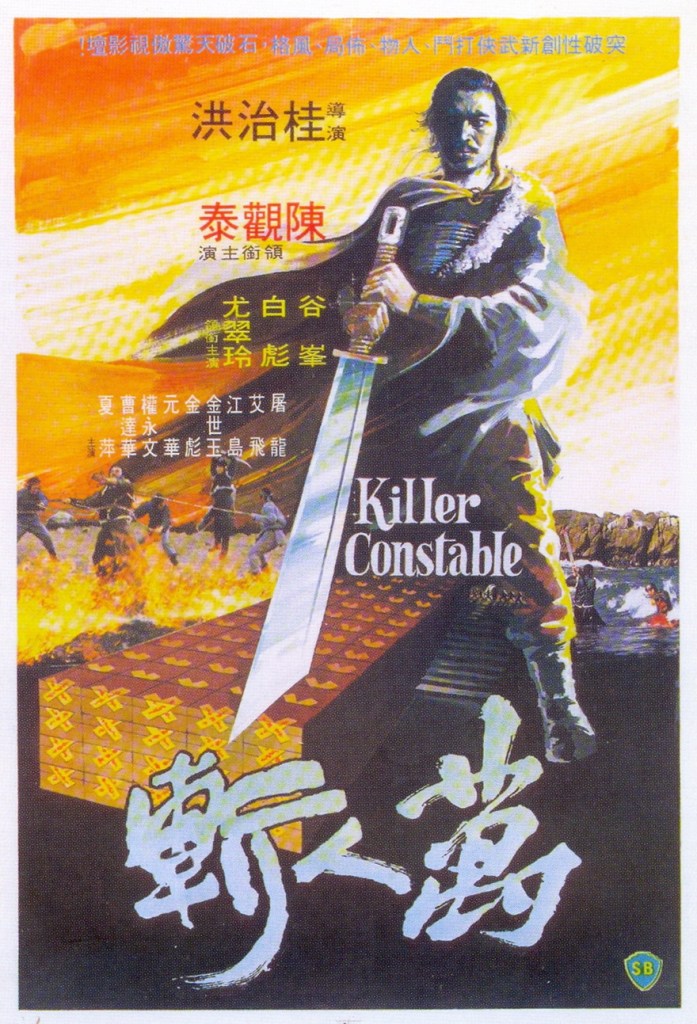
Killer Constable (萬人斬, Kuei Chih-Hung, 1980)

KillerConstable+1980-19-bEvery sovereign needs that one ultra reliable and supremely talented servant who can be called upon in desperate times. For the Dowager Empress of the Qing Empire, that man is Leng Tien-Ying – otherwise known as the Killer Constable. When a sizeable amount of gold goes missing from the Imperial Vaults, it’s Leng they call to try and get it back. However, what Leng doesn’t know is that there’s far more going on here than he could possibly have imagined and he’s about to wade into a trap so deep that you never even see the bottom.

At several points, the giant broadsword style weapon that Leng carries catches the light and appears to shine out with some kind of ethereal righteousness, yet if Leng wields the shining sword of justice he does so with a heart of ice. Early on one of his most trusted subordinates argues with him and says he intends to leave because he thinks Leng is more killer than policeman. He doesn’t take prisoners, where there’s reasonable proof of guilt he cuts the perpetrator down on the spot. At one point he tortures a suspect for information by mock drowning him in a lake while his wife and terrified children look on. When the wife complains, he hits her causing the husband to make the mistake of going for Leng which earns him the prize of getting his head cut off right in front of his family who are now left without any means of supporting themselves.

Leng cares only about the letter of the law. As the squad of policemen ride through the barren landscape, they pass through ruined towns filled with the starving and the desperate. One of the more compassionate men asks what’s happened here and if they, as policemen, shouldn’t be trying to help, but is reminded that these poor people are Hans and the policemen are Manchurians, so it’s just none of their business whether they live or die.

However, here is where Kuei’s film deviates from the accepted path. Leng’s generally bleak attitude to life is the one the film most closely identifies with. Any attempt at compassion is met with by betrayal, each act of kindness only earns retribution and being softhearted is almost another word for dying young. That is not to say the film is completely behind Leng as a hero or even as an anti-hero, he too will pay for the way he lives his life starting with realising that he alone is responsible for the deaths of the men that blindly followed him on a fruitless quest.

Killer Constable is more of a swordplay film than a kung-fu one and is filled with plenty of energetic and expertly choreographed fight sequences. The men fight in blazing heat (at one time literally), pouring rain and mud filled swamps against a suspiciously well trained gang of opponents who always seem to be lying in wait for them. The Killer Constable also seems to have something of a fetish for chopping off people’s legs which carries on right into the bloody finale with limbs flying off with oddly gleeful abandon.

As it turns out, the Killer Constable is not completely heartless, he’s just lived in this harsh world long enough to come to the opinion that the “bad” cannot be redeemed and need to be cut down like weeds so that the flowers can once again bloom. However, he, in his quest, has crossed the line and become that which he most hates. To nearly everyone else in the picture, Leng is a bad guy – the uncompromising face of the law and the knock at the door you most fear coming. In the film’s surprisingly downbeat ending he too will get what’s coming to him.

Bleak beyond measure, the only good and true thing in the cruel wold of Killer Constable is the blind daughter of one of the criminals. Kind and cheerful, she tries to help Leng as he lies wounded and is entrusted to him should her father die, yet she pays the heaviest price of all, left standing all alone in the rain waiting for the return of those who will never come home again. Far from heroic, Killer Constable is a critique of blind justice dealt out by self righteous egoists who will always discover the error of their ways far too late.


Seen as part of HOME’s CRIME: Hong Kong Style touring season.

Dolls (ドールズ, Takeshi Kitano, 2002)

dolls posterOutside of Japan where he is still primarily thought of as a TV comedian and celebrity figure, Takeshi Kitano is most closely associated with his often melancholy yet insistently violent existential gangster tales. His filmography, however, is one of the most diverse of all the Japanese “auteurs” and encompasses not only the aforementioned theatre of violence but also pure comedy and even coming of age drama. Dolls is not quite the anomaly that it might at first seem but perhaps few would have expected Kitano to direct such a beautifully colourful film inspired by one of Japan’s most traditional, if most obscure, art forms – bunraku puppet theatre.

After opening with a bunraku performance featuring an excerpt from the Chikamatsu play Courier For Hell, Kitano moves on to his overarching narrative which connects the tripartite structure in a tale inspired by the classic story The Bound Beggars. This first pair of lovers, Sawako and Matsumoto, wander blankly through the ever changing landscape tied together with a long red rope. The two had previously been a young couple, very much in love, but Matsumoto was pressured into abandoning Sawako to accept a semi-arranged marriage to his boss’ daughter. Distraught, Sawako attempts suicide only to survive but in an almost catatonic state.

The second pair of doomed romantics consists of an ageing yakuza who looks back on his life which has forced him to act in a way that he is not always proud of and now finds himself remembering the girlfriend he parted with thirty years ago after fearing he was about to lose his job. She promised to wait for him, he promised to return a fine man but he became a yakuza and never saw her again. All these years later, she’s still exactly where she said she’d be, waiting.

Story three is strange tale of modern love as a young man becomes obsessed with an idol star who only ever notices his rival. After she is injured in a car accident and decides to retire, the young man takes drastic action to be able to meet with her on what he sees as a more equal footing.

Fools for love, each and every one of them. Love has ruined them, removed rational choice from their field of vision, yet there’s something noble and beautiful in the way in which it has penetrated each of their lives. They love as if possessed by an incurable madness, Sawako tries to kill herself because her heart is broken, a woman grows old spending each Saturday lunch time sitting on a bench with a second lunch box which is going to go to waste, and a young man maims himself to finally get his love’s attention. Was it worth it, in the end? Perhaps not if the desperately sad outcomes of each of these stories is anything to go by.

Kitano rejects his idiosyncratic blue colour palate for a world of vibrant colours. Travelling through a year we move along the seasons as punctuated by their symbolic scenery from cherry blossoms to green verdant landscapes, the overwhelming redness of autumn leaves and finally the purity of the winter snow. We travel one way, but also in circles as we navigate the story of love as it too changes with its seasons yet remains unchanged in essence. Each of the lovers is no more free than a bunraku puppet, manipulated by forces outside of their control and forced into a desperate unhappiness that is in part vindicated by their romantic bonds.

Love is tender, love is cruel. Each of the men, in particular, makes terrible choices which cause only pain to the women they supposedly love and, in their pride and arrogance, they fail to realise the consequences of their actions until it is far too late. The tragic inevitability of life’s suffering and the inability to escape it are the foundation stones of Chikamatsu’s world.

Working with fashion designer Yohji Yamamoto Kitano has created a beautiful, theatrical world of hyper realistic colour and life. Like much of Kitano’s work, Dolls amounts to a sad collection of tales coloured by melancholy and a resignation to the pain and suffering inherent in being alive. The lovers are inexorably bound to each other for all eternity because of the suffering they have each endured at the other’s hand. This is a sad world, but it’s a beautiful one too and even if hurts one must try to live.


Dolls is re-released in the UK on blu-ray courtesy of Third Window films.

(This is an original release trailer and does not reflect the quality upgrade of Third Window Films’ blu-ray release)

I first saw this film I guess almost fifteen years ago (!) and I still occassionally get this song stuck in my head:

Review of Takeshi Kitano’s Dolls (ドールズ) – first published by UK Anime Network.