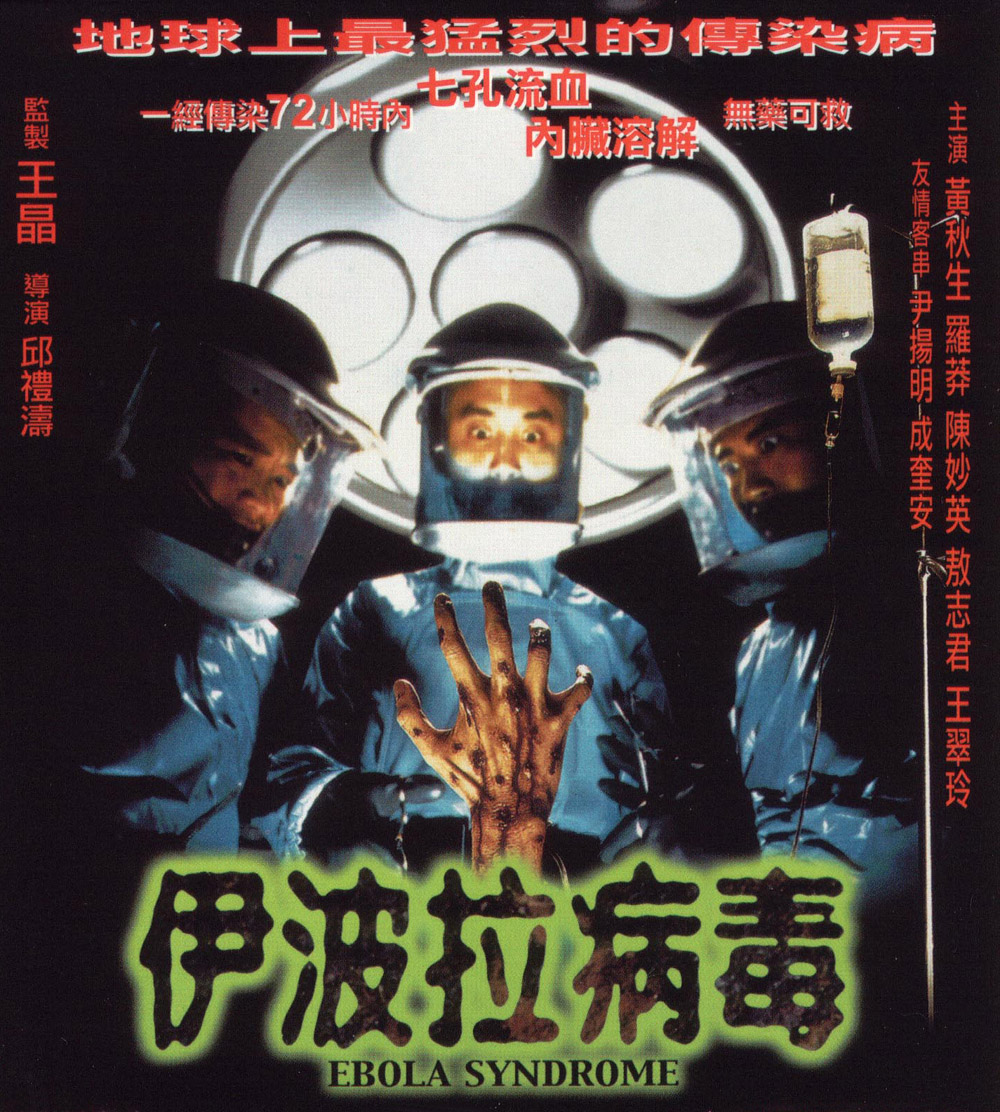
Ebola Syndrome (伊波拉病毒, Herman Yau, 1996)

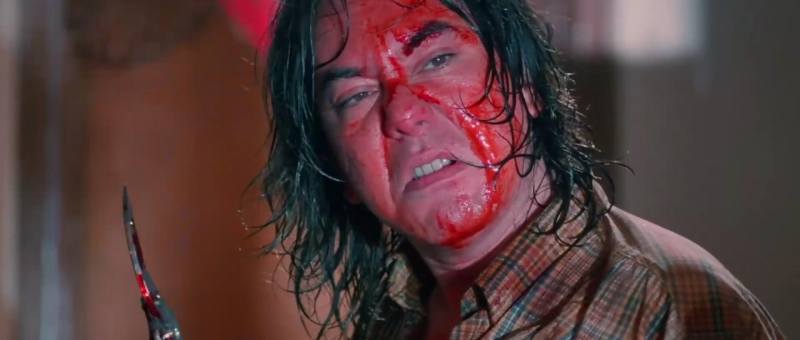
“I’ll fuck up whoever busts my balls!” snarls the protagonist of Herman Yau’s notorious 1996 Cat III exploitation film Ebola Syndrome (伊波拉病毒), seemingly filled with internalised rage in a sense of oppression as a little guy continually at the mercy of bosses who exploit and belittle him. Then again, Kai (Anthony Wong Chau-Sang) is not a nice guy and his various crimes are less those of an emasculated man towards an unfair society than a sociopathic disregard for conventional human morality. 

Even so, his first act of violence is a result of his attempt at petty class rebellion by sleeping with a mob boss’ wife only for the boss to come home and ritually humiliate him by ordering his wife to pee all over his treacherous underling before threatening to cut his bits off with a pair of secateurs. Kai, however, goes crazy and uses the shears to take out the boss, the associate, and the wife, pausing as he leaves to douse their terrified little girl in petrol in an ironic piece of foreshadowing only to be interrupted before he can light a flame. 10 years later in 1996, Kai is on the run working in a Chinese restaurant in Johannesburg where he is once again oppressed and belittled by the Taiwanese manager and his wife not to mention further displaced by the complicated racial politics of mid-90s South Africa. 

A minor comment on colonial corruptions in the anxiety surrounding Hong Kong’s imminent transition, Kai and his boss Kei (Lo Meng) find themselves in a difficult position in facing discrimination from all sides. Needing meat for their restaurant, they decide to strike a deal with the local indigenous community after being insulted by a white butcher but on their arrival walk into some kind of ritual conducted over the bodies of numerous locals who each have bloody welts all over their skin. On meeting with the leader, the pair immediately rip him off while he plays a grim joke on them as they discover two human bodies in place of the pig carcasses they’d intended to buy before he returns to set them straight.

This early moment of foreshadowing has its own dark irony as Kai will eventually end up once again murdering three people he accuses of busting his balls before mincing them up and turning them into “African Char-sui Bao” hamburgers. By this point Kai is already a “super spreader” having unknowingly contracted the ebola virus after raping a near comatose indigenous woman at the waterside who vomited white liquid in his face as he climaxed. In another instance of cruel cosmic irony, Kai turns out to be one of small amount of people effectively immune recovering quickly from what seems like flu but almost certainly having infected Kei and his wife and through them anyone who ate the African Char-sui Bao which is how ebola winds up in the city and eventually travels all the way to Hong Kong after Kai cuts his losses and goes home to live the high life on Kei’s savings. 

Yau does not hold back on the gore nor on the very real terror of the ravages of ebola as a doctor gruesomely dissects a human body remarking on the disintegration of its internal organs. At this point, Kai doesn’t know ebola’s what he has or that he’s passing it on but it’s unlikely he’d care. When the truth is finally revealed he runs anarchically through the streets with a meat cleaver shouting “ebola for everyone” and spitting at passersby as if taking his revenge against humanity itself. Yet he’s ultimately a wild animal trapped in civilised society caring for nothing other than the satisfaction of his immediate needs aside from his desperation to affirm his masculinity, not to be looked down on or bullied. We see him impassively chop up live frogs and witness the heads being torn off live chickens for others to drink their blood seeing him for what he is, an urban predator with no sense of conventional human value systems. 

Even so, the film seems to suggest this breed of malicious selfishness and amorality cannot be exorcised from the contemporary society while the infection continues to spread exponentially, the film’s bleak conclusion implying that the innocent will continue to suffer while the systemic causes of the disease go unexamined. Then again, Yau approaches his material with absurdly dark humour that implies that this really is some sort of cosmic joke in which all you can really do is laugh at life’s immense cruelties. 


Trailer (no subtitles)
One Wonderful Sunday (素晴らしき日曜日, Akira Kurosawa, 1947)

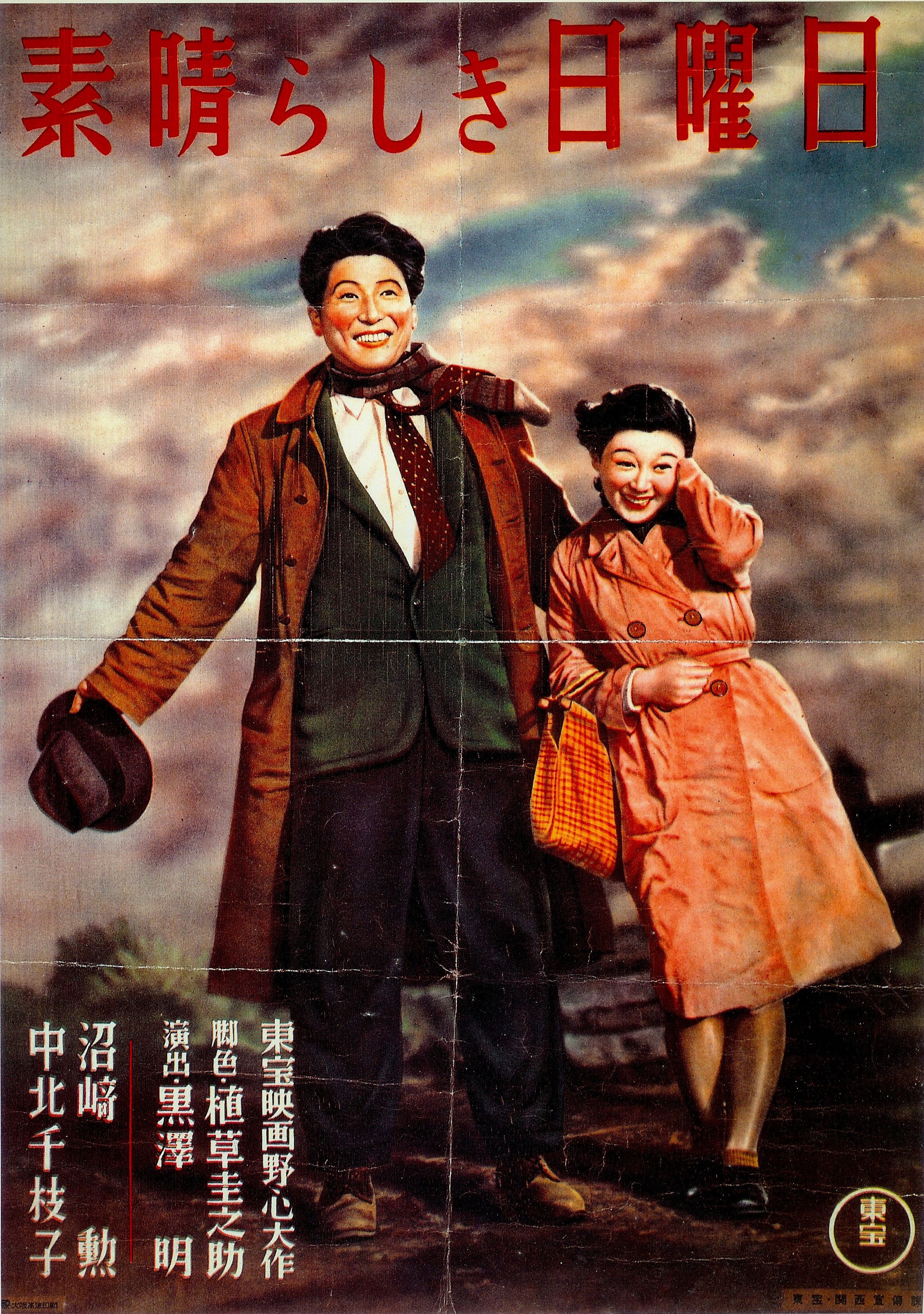
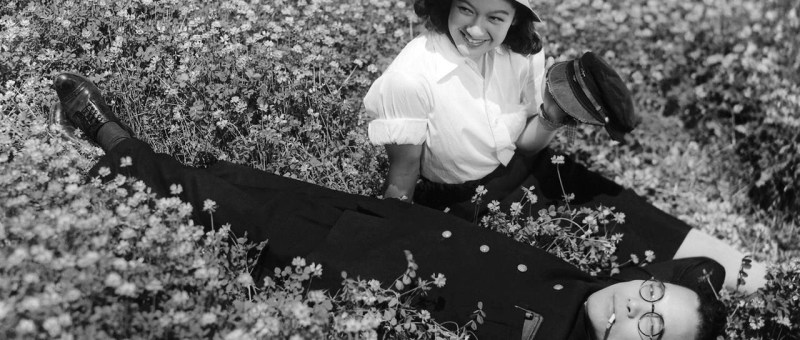
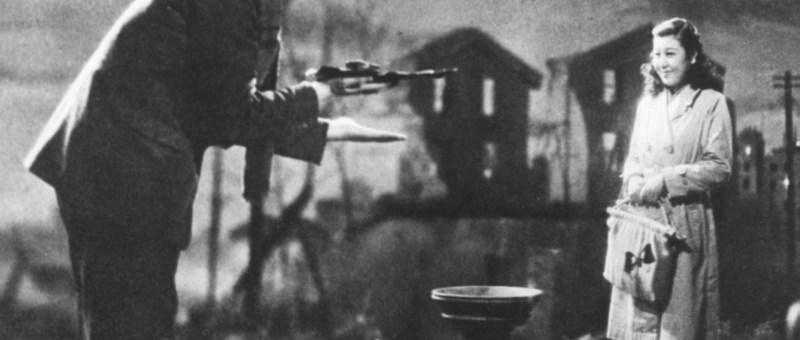
A young couple attempt to have a nice day out in Tokyo for only 35 yen but eventually discover something much more valuable in Akira Kurosawa’s surprisingly upbeat voyage through the backstreets of the post-war city, One Wonderful Sunday (素晴らしき日曜日, Subarashiki Nichiyobi). Though it may begin with frustration and progress to abject despair, the film allows its dejected heroes to find renewed hope for the future in the ashes of their defeat if only through the power of make-believe. 

Yuzo (Isao Numasaki) and Masako (Chieko Nakakita) are a young(ish) couple who’ve been together since before the war but are unable to marry because their precarious financial situation prevents them from finding a home in which they can live together. Though they are each in full employment, Masako currently lives with her sister and Yuzo with a friend. They can only spend Sundays together, but this particular Sunday Yuzo is fulled with frustration and resentment. He has only 15 yen, not much of a date as he tells Masako with irritation explaining that she’s had a wasted journey. She reveals that she has 20, but Yuzo has his male pride and is reluctant to take “a woman’s money” while internally humiliated not to be able to take her out on the town. Just before she had arrived, Yuzo had stared at an abandoned cigarette butt on the pavement. His desire soon overcame his shame. He picked it up and smoked it, only for Masako to bat it out of his hand as if insisting that he’s better than that. 

For her part, Masako is defiantly upbeat. Perhaps she’s putting on a brave face for Yuzo, but does her best to buoy his spirits so they can have a nice day together. It may be her only nice day all week. While she looks forward, he cannot move beyond the dissatisfying present. Masako begins by suggesting they check out a show home advertised on a billboard as a new kind of residence which is cheaper to build and available for only 100,000 yen for the first 100 buyers. She imagines how their life might be together in this space, while Yuzo merely sulks in the corner and points out the shoddiness of the build amid declining modern standards. It’s advertised as affordable, but they can’t afford it. Meanwhile, another man wanders in with a woman who is clearly his mistress. She exclaims that the place is a dump, “I hate matchbox houses”, while he agrees that it’s cheap for a reason and you get what you pay for. Presumably he already owns a home where his wife and family live and is about to drop a small fortune on a discreet love nest while his mistress, not unreasonably, attempts to haggle her way up to something a bit more fancy. Yuzo knows he won’t ever be able to afford even this “inexpensive” home that a wealthy man disdains as not worthy of his bit on the side. They’ve just come from seeing a crummy flat a few streets away which Masako asks directions to only to be put off by the doorman who warns them that the flat isn’t even really habitable and the landlord is heartless but they couldn’t afford that either even on the assumption they would both keep working (which depending on Masako’s job might not possible once she marries).

The landscape around them is in ruins. Yuzo and Masako wander through a bombed out city not yet ready for reconstruction looking for somewhere to stay out of the cold without eating into their 35 yen. He wants to give up and go home, but she convinces him to attend a concert of the music they heard on their first date before the war only when they get there all the cheaper tickets have been bought up by touts who sell them on at 50% markup. Beaten up for challenging the touts’ uncompromising cynicism, Yuzo hits rock bottom returning to his flat in a rundown tenement where a woman mopping the corridor gives Masako serious side eye. Frustrated, he tries to pressure her into premarital sex, her rock bottom coming a few minutes later when she firstly leaves in outrage and then returns as if admitting that their situation will never improve. 

“The war destroyed that dream” Yuzo had said of Masako’s attempt to rekindle his hopes for the future in the plan they made to open a cafe together after they married, but the reality of their mutual defeat finally seems to inspire defiance in the face of the world’s hostility. On their journey through the city, they’d encountered a ragged street kid who thought them fools after they refused his offer of ten yen for one of their rice balls and simply gave it to him out of human kindness. Yuzo felt himself a fool after trying to visit an old friend who’s done well for himself with a swanky cabaret bar only to be rebuffed and see his own image reflected in a mirror with his threadbare overcoat and battered hat juxtaposed with the image of a fine young couple eyeing him with disdain and suspicion. In the end Masako can only appeal to us, breaking the fourth wall in a moment reminiscent of Peter Pan asking us to clap if we believe in fairies as she tries to revive Yuzo’s sense of naive possibility to conduct an unfinished symphony of their imagined life together in a happier future of post-war Japan. Refusing to give in to their baser instincts, to become cynical and selfish or else simply to give up, this wonderful Sunday does seem to have given them a childish sense of hope that better days are on their way and until then there’s always next week. 


One Wonderful Sunday screens at the BFI Southbank, London on 3rd & 15th January 2023 as part of the Kurosawa season.

Seven Days War (ぼくらの七日間戦争, Hiroshi Sugawara, 1988)

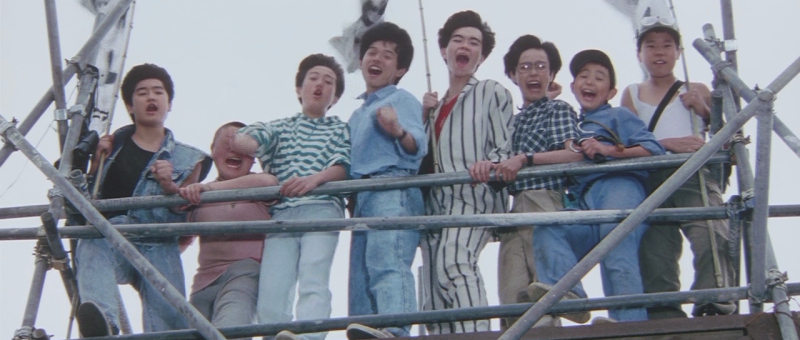
“What’s wrong with a little happiness?” one of the “eight heroes” of Aoba Jr. High Class 1-A asks, retreating from the duplicitous adult world into a teenage paradise. Another Kadokawa teen movie, Seven Days War (ぼくらの七日間戦争, Bokura no Nanoka-kan Senso) adapts the first in a series of Kadokawa novels by Osamu Soda and situates itself very much in the throws of the Bubble era in which the young rail not only against a rigid, conformist society but familial disappointment and the enduring legacy of the authoritarian past. 

According to the principal’s assembly speech, at Aoba Jr. High the motto for the day is “intellect, morality, and physique”. While he’s busy talking, another teacher, Yashiro (Shiro Sano), is patiently going through students’ bags and confiscating things he doesn’t like, even such innocent items as hairbrushes lest they should be used “to attract boys” rather than to maintain one’s appearance as the school would doubtless wish seeing as we later see the same teacher taking a ruler to make sure all the girls’ skirts are at regulation length. A boy late for assembly is also taken to task over his hair, accused of having had a perm and physically dragged towards a water butt by violent P. E teacher Mr. Sakae (Yasuaki Kurata) who later beats another overweight student for not performing well enough on the monkey bars. 

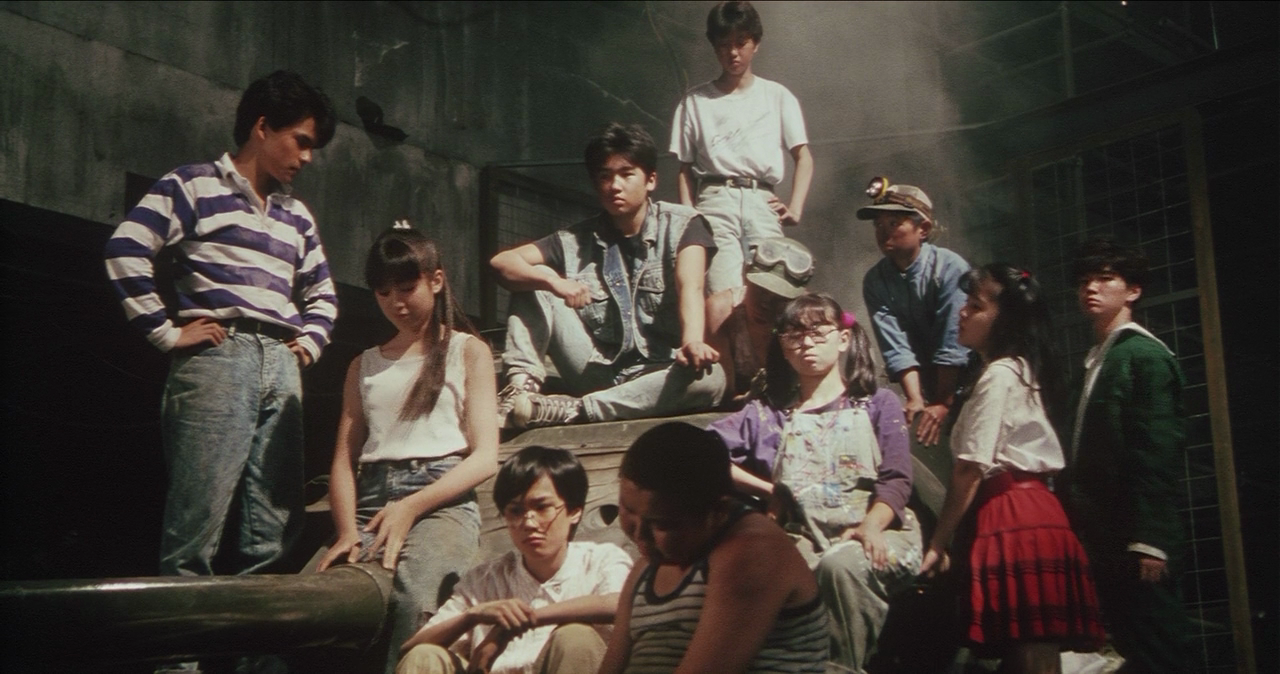
It’s small wonder the kids want to rebel. Eight of the boys in Yashiro’s class suddenly disappear one day, seceding to form their own society hiding out in a disused factory. Discovered and questioned, their only demands are to have the bad teachers fired and for all the students to be treated equally, but as expected their requests fall on deaf ears. Mindful of the school’s reputation, the principal tries to calm the anxious mothers but his underling, Nozawa (Yasuo Daichi), cooly absolves himself of all responsibility insensitively telling the parents that their children’s actions are obviously a reflection of poor parenting rather than a reaction to conditions at the school. 

As crude as that sounds, it’s accidentally echoed in another of the children’s demands in that they reject the idea that “children are robbers of parents’ lives”. Many of them are dealing with some degree of familial discord, often caused by the socio-economic stresses of the Bubble era in which everyone works all the time. The parents of ringleader Eiji (Kenichiro Kikuchi) are always arguing because his father is never around to help out at home, claiming that his golf weekends etc are essential work activities while his mother complains she’s worn out expected to handle the domestic responsibilities all alone. The broody Hiroshi (Toshitada Nabeshima) resents his mother for never being home, forever off working and communicating with him largely through answerphone messages. Nakao (Ken Ohsawa), the most studious of the boys, complains that he doesn’t really like the subjects he’s forced to study and only goes to cram school to please his parents. Hitomi (Rie Miyazawa), a female student who ends up joining the group later, is often left to her own devices with her father away working in Mexico and her mother always off “playing golf” which she seems to suspect is a euphemism for some other activity. 

What the kids want is to be free to be themselves, rejecting the salaryman straitjacket the mainstream world seems to be preparing for them. This being 1988, it goes without saying that the older teachers were children themselves during wartime and the legacy of militarism seems to have endured in their extreme love of order and discipline which has also infected the slightly younger and especially scary Yashiro. The wartime echoes are driven home by the very random find of a WWII tank for some reason hidden in the factory which the kids eventually repurpose and weaponise as part of their resistance, fortifying their hideout with a series of otherwise non-lethal booby traps to keep the authorities out even after the principal orders armed troops in. In the final confrontation, Nozawa turns up wearing a WWII German uniform only to be humiliatingly defeated by one of the gang’s Mousetrap-esque devices. 

Their rebellion, however, remains temporary and goodnatured, culminating in a beautiful fireworks display that has the adults admiring their artistry, while they later appear dressed once again in their school uniforms apparently considering their next revolutionary act. A Bubble-era time capsule, Seven Days War has much in common with other ‘80s kids movies, but positions its contemporary teens at the intersection of the authoritarian past and the consumerist present each of which conspire to rob them of their freedom but in their own way fighting back for their right to be themselves in a still conformist society.


Music video (no subtitles)

Intolerance (空白, Keisuke Yoshida, 2021)

At times of tragedy it may be natural to look for someone to blame, as if being able to pin all of this pain and anger on a single source would somehow help you to accept it. But in other ways tragedy is just a confluence of circumstances that are either everyone’s fault or no one’s. How far back can you really trace the blame? There would be no end it. That’s perhaps the conclusion that the protagonists of Keisuke Yoshida’s Intolerance (空白, Kuhaku) eventually come to, realising that their attempts to blame others are often born of a desire to deny their own responsibility or else to protect something else they fear losing. 

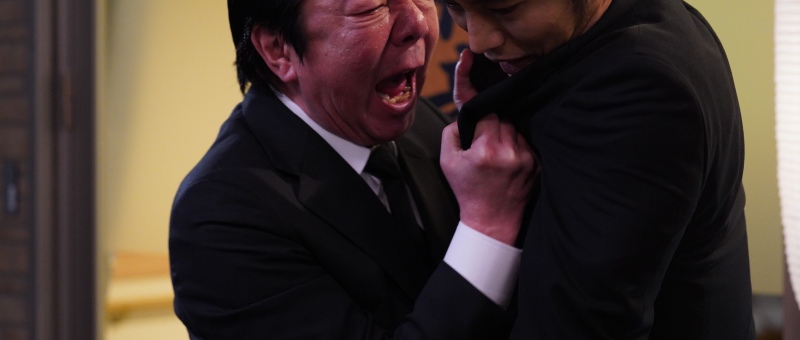
At least that’s how it is for grizzled fisherman Mitsuru (Arata Furuta), a man well liked by no one. A rude and violent bully, he terrorises all around him not least his teenage daughter Kanon (Aoi Ito) who is meek and passive with a slightly ethereal quality as if she’s learned that blending into the background is the best way to protect herself. Stopping in to a local convenience store on her way home from school, she’s accosted by resentful store manager Naoto (Tori Matsuzaka) who grabs her by the arm and accuses her of shoplifting nail polish. At some point, Kanon panics and bolts out of the store. Naoto chases her along a busy highway until she suddenly darts out into the road trying to get away from him and is hit first by a car driven by a young woman and then by a truck travelling in the opposite direction. Despite his gruff exterior, Mitsuru is quite clearly destroyed by his daughter’s death but becomes fixated on clearing her name of the shoplifting, insisting that he never saw her wear any makeup and that Naoto is to blame for her death in acting with such a heavy hand. 

Of course, it doesn’t occur to Mitsuru that Kanon may have worn makeup in secret and made sure to keep it from him knowing how he’d likely react. Likewise, perhaps she ran from the store because Naoto would have called her father and she was frightened of what he’d do if he found out she was caught pilfering, and pilfering nail polish at that. He remembers that she wanted to talk to him about something to do with school the night before she died but he didn’t listen, assuming she must have been being bullied and was forced to steal the nail polish only to hear that no one at school really even remembers her. She was a just a vague presence they can’t even quite identify. Her teacher meanwhile begins to reproach herself, realising that she failed in her duty of care repeatedly shouting at Kanon that she had “no motivation” rather than trying to help her find some or to get along in her own way, let alone figuring out what caused her to behave the way she did or if there were problems at home. Sick of Mitsuru’s belligerence the school finally set him on the new target of Naoto who was once accused of molesting a teenage girl he accused of shoplifting. 

Like Kanon, Naoto is a slightly hollow presence who also had a strained relationship with his father. As he lay dying, Naoto failed to answer his calls because he was playing pachinko and felt ashamed, afraid of another lecture from his dad about wasting his life on gambling. He struggles with his role in Kanon’s death, on the one hand guilty feeling he overreacted and inadvertently caused her to stray into harm’s way while otherwise resentful, justifying himself that it’s only natural for a storeowner to chase a shoplifter down the street. Both he and Mitsuru soon fall foul of a media culture that likes sympathetic victims and heartless villains, the media shocked by Mitsuru’s boorish behaviour but more so by Naoto’s callous indifference trimming an otherwise nuanced statement to imply that he feels his supermarket is the real victim as customers stay away or else issue complaints about their obviously heavy-handed shoplifter policy. 

“Imposing your own views on others is nothing more than torture” Naoto tells a well-meaning middle aged woman whose narcissistic cheerfulness is a neat mirror of Mitsuru’s intimidating aggression. Aggressively mothered by Kusakabe (Shinobu Terajima), Naoto carries an additional burden of guilt in realising he’s lost the store his father left to him, but she embarks on a tasteless “real victim” campaign insisting they did nothing wrong and it’s all Kanon’s fault for stealing in the first place. Kusakabe can’t bear to lose the store because it seems there’s not much else in her life. The film’s Japanese title translates as “blank” or “void” and it is indeed a void that Kusakabe is trying to fill in needing to feel needed by centring herself in her various volunteer activities such as working at a soup kitchen in addition to her crusade to save the store. 

It’s this giant abyss of grief and guilt which pulls each of them towards the edge, but in the end there’s really no way to apportion blame. The poor woman who first knocked Kanon down is completely undone by the experience though it really wasn’t her fault, repeatedly approaching Mitsuru asking for his forgiveness only to be cruelly rebuffed. It’s her mother’s (Reiko Kataoka) quiet show of dignity which stands in such stark contrast to his own white hot rage that finally forces him to realise the destructive quality of his intimidating behaviour, accepting his responsibility in his daughter’s death while understanding that in his fierce desire to control he robbed himself of the ability to know her. Really you can’t say whose fault it was, Mitsuru’s for the fear he instilled into his daughter, Naoto’s for his insecurity and misplaced zeal in hunting down a thief, the drivers’ for failing to brake, Kanon’s mother’s (Tomoko Tabata) for remarrying and having another child, the teacher’s for making Kanon feel useless, the other kids’ for rejecting her, or Kanon’s own for darting out into the road. For each of those there are a hundred other branches. There would be no end to it. But then, the strange thing is that Kanon shares her name with Buddhist deity of mercy, Mitsuru beginning to soften now willing to offer an apology where it’s due and to bear his own degree of guilt if not yet entirely able to forgive. In any case, ending in bright sunshine, Yoshida concludes with a return of the gaze between father and daughter that suggests forgiveness may indeed have arrived. 


Intolerance screened as part of this year’s Camera Japan

Original trailer (English subtitles)

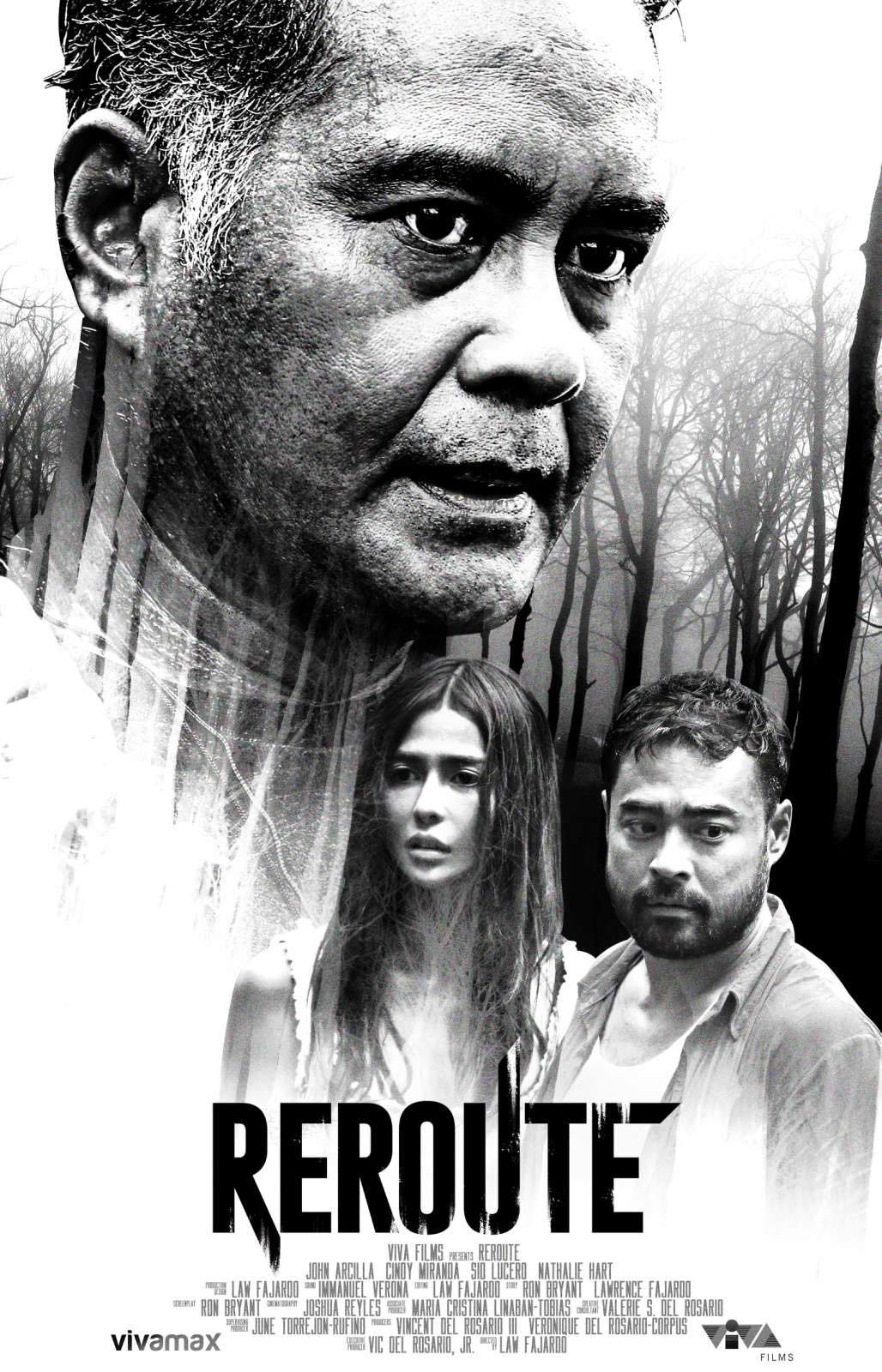
Reroute (Lawrence Fajardo, 2022)

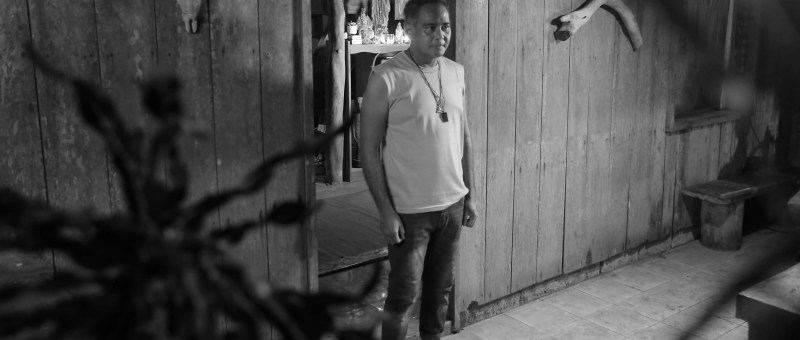
A young couple find themselves straying into a strange and purgatorial landscape after taking an ill-advised shortcut in Lawrence Fajardo’s eerie gothic horror, Reroute. Shot in a crisp black and white, Fajardo’s journey into darkness is one of intensely toxic masculinity born of a macho culture which manifests itself most clearly in the military and authoritarianism while the “private property” onto which the couple stray appears to be a liminal space inhabited by those who cannot live in the modern society. 

As for the couple, when we first meet them they are in the middle of a blazing row on a long distance drive mostly caused by the man, Dan’s (Sid Lucero), jealously and resentment towards the woman, Trina (Cindy Miranda), who supports them both with her down to earth job as a bank manager while he is in a band but technically unemployed. Dan’s volatility is palpable, quickly getting into a physical altercation with a local man at a rest stop much to Trina’s dismay but uncomfortably enough the fight seems to clear the air between them. Cooling off at the beach, they become warm and gentle with each other making love at the shore, but tensions rise once again when they approach their destination and discover that the road is closed because of a military exercise. The soldier on the checkpoint tells them to follow the diversion which involves going round in a huge circle adding hours onto their journey, but Dan doesn’t listen and decides, as he grew up in the area, to take a “shortcut” using the old road. To placate Trina he agrees to check directions with a local man whose house they’re passing but he tells them they’re on private property and should turn back. 

Again, Dan ignores him and the car breaks down stranding them in the middle of nowhere with no phone signal, Trina further blaming Dan for not having checked all of this out beforehand or made sure the car was in good condition. The following morning a man approaches and offers to help, but there’s no kindness in his eyes and something unsettling about the way he keeps staring at Trina. Gemo (John Arcilla) takes them back to his house and offers to radio a mechanic but otherwise spends his time responding to cryptic messages about some kind of military operation. “If I were you I’d leave now” Gemo’s wife, presumably, Lala (Nathalie Hart) advises Trina but it’s already too late. They’re miles from anywhere and this weird village seems to be completely cut off from the outside world.  

One level, the contrast between Gemo and Dan is stark. A former military man Gemo’s old-fashioned masculinity is rigid and austere while Dan is an underachieving slacker with an inferiority complex prone to fits of rage. In an ironic way, they could be father and son yet they fight over a girl, not Trina but the absent daughter of Gemo, Ariana, who passed away after getting an abortion at 16 when the boyfriend who got her pregnant abandoned her. Half-crazed, Gemo is convinced Dan is the man guy ruined his life and takes an extremely ironic form of revenge in proving his masculine dominance over the younger man while forcing Trina into the role of his 16-year-old daughter. 

Then again from what we later see perhaps Gemo is responsible for ruining his own life and those of the people around him as product of the society in which he lived, spouting religious aphorisms and talking of his military past suppressing protests by the Muslim community on Mindanao. This weird village where all the villagers seem to be on Gemo’s side and also involved in some kind of covert operation appears to be a kind of purgatorial space inhabited only by former soldiers who can not move on from the authoritarian past, yet Gemo is haunted by a different kind of ghost and commits a different kind of crime in trying to quell it. Trina is dragged into this bizarre series of events because of Dan’s wounded male pride, insisting he knew a shortcut and ignoring all the warnings, but in the end is the only one capable of ending the curse in forcing Gemo to accept the reality of his daughter’s death “so we can all be free”. Filled with an intense sense of dread and malevolence, Fajardo’s eerie drama ends in the mist-drenched forests of the remote countryside but perhaps suggests that escape is only possible through fully exorcising the past. 


Reroute screened as part of this year’s Udine Far East Film Festival.

Original trailer (English subtitles)

No Regrets for Our Youth (わが青春に悔なし, Akira Kurosawa, 1946)

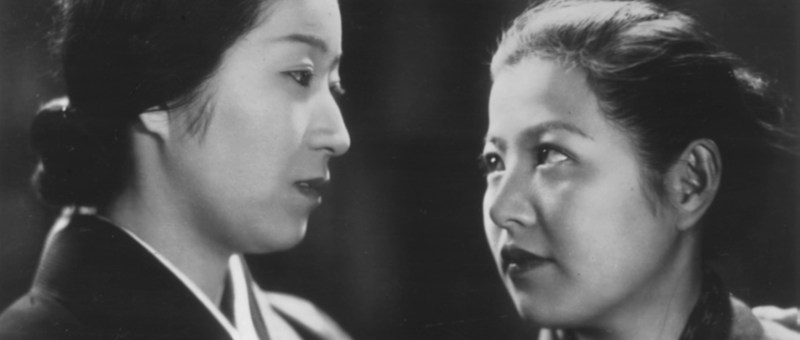
“Freedom is something you have to fight for” a young woman is ironically reminded by her progressively-minded father as she finds herself torn between the conservatism of her upbringing as an upper middle class daughter of an academic family and a bid for independence in the freedoms of the post-war society. In part a lament for a lost generation whose resistance towards rising militarism had been all but forgotten, No Regrets for Our Youth (わが青春に悔なし, Waga Seishun ni Kuinashi), is also the story of a post-war woman seeking new directions which in this case eventually send her back to the land.

Then again, there’s no denying that Yukie’s (Setsuko Hara) dilemma is framed as romantic, torn between a dynamic communist and a spineless conservative while otherwise in her youth fairly vacuous. As the film opens, she frolics with some of her father’s students at a local mountain that overlooks Kyoto University. Caught on a stepping stone she awaits help from either the charismatic Noge (Susumu Fujita) or the diffident Itokawa (Akitake Kono) before Noge boldly dashes forward and carries her to the bank. Seeing Itokawa looking sheepish and embarrassed, she tugs on his student cap as if she hasn’t quite yet made up her mind which path she will take. “If I married you, my life would be calm and peaceful,” Yukie later reveals to Itokawa, “but it would also be a bit boring”, whereas if she married Noge “my life would burn so brightly that I might be blinded.” 

Even so, her outlook as the professor’s daughter leans towards the conservative. During the picnic on the mountain, the students suddenly hear the sound of cadets training with firearms Yukie exclaiming that it makes her heart race before ominously discovering the body of a wounded solider in the overgrowth. She declares that she hates “leftists” and that her father is a “liberal” not a “red” but will any case eventually be vindicated. Though attracted to Noge’s passionate nature, she seems to find him dull company, “boring” in his constant conversation about the rise of fascism while visibly bristling when he all but calls her a vacuous socialite and says she needs a “slap in the face to grow up” which is in a sense what he’s just given her. Her life had been that of a privileged upperclass girl cosseted from the world, engaging with refined pursuits such as playing the piano and learning traditional flower arrangement. Her epiphany seems to come when she realises she’s been doing as she’s told, reminded that flower arrangement is a means of self-expression suddenly tearing the heads off chrysanthemums and crafting something truly avant-garde that is in its own way quietly shocking. Notably her flower arrangements while living with Noge are much more harmonious. 

Still she wavers, wondering if she should give in to the quiet life she’d have with a man like Itokawa, a man with no ideology who sides with the militarists and becomes a prosecutor because it is expedient to do so, or continue to wait for Noge who by this point has been in prison and ostensibly renounced his socialist beliefs to join the army. What she chooses independence, breaking with the conventional life her mother wanted for her to support herself with a job at a trading company in Tokyo. Running into Itokawa in the city, he strongly hints to her that Noge is, from his point of view, up to no good running a kind of think tank as an expert on China. 

When Yukie chooses Noge she implies it’s because she wants “something I can throw myself into body and soul”, hoping to join him in his new cause prepared as her father had warned her to make sacrifices in the struggle for freedom. In the one sense, it’s Yukie making up her own mind to abandon her privileged background to live her life with no regrets, but it’s also impossible to ignore that the cause she dedicates herself to is that of her husband. Committed to making Noge’s parents, both peasant farmers, understand that he was not an “ungrateful” son but a man who did his best to oppose the war and fight for peace and prosperity in Japan, she commits herself to the land and wins them over with the strength of her resolve. The hands that once played piano are now rough with work and it is in this she has found her purpose. Yet it’s difficult to say if the austerity of her new life represents ultimate freedom or only further constraint in the imperative of her continued suffering. Perhaps it doesn’t really matter, if as she says she has no regrets for her youth as she joins hands with the peasant farmers leaving her privileged upbringing behind her even as her mother remarks that with her father reinstated at the university it’s as if nothing had changed. There is then something quite poignant as she sits by the stream and sees the students file past her singing their song of protest that in the end went unheeded while she prepares to reject modernity in its entirety and return to the simplicity of the land.


No Regrets for Our Youth screens at the BFI Southbank, London on 2nd & 10th January 2023 as part of the Kurosawa season.

Eternally Younger Than Those Idiots (君は永遠にそいつらより若い, Ryuhei Yoshino, 2021)

An insecure young woman struggles to assume her place in the world while preparing to leave the aimless security of college life for an uncertain adulthood in Ryuhei Yoshino’s empathetic social drama, Eternally Younger Than Those Idiots (君は永遠にそいつらより若い, Kimi wa Eien ni Soitsura yori Wakai). Adapted from the novel by Kikuko Tsumura, Yoshino’s film has its share of quirky humour but seems to be overshadowed by a lingering darkness in which there is only constant suffering tempered by a longing for recognition which often goes unanswered.

Horigai (Yui Sakuma) is one of the lucky ones in that she’s already locked in a job for after graduation as a children’s social worker back in her hometown. After making a speech at a uni party, however, she’s challenged by a rude fellow student who calls her out for her arrogance in thinking she has the right to interfere in people’s lives. He has perhaps touched a nerve. Though it’s a job she’s always wanted, Horigai is worried that she isn’t up to it and won’t be able to help anyone in part because she feels herself to be somehow different from those around her and lacking the skills to see what everybody else just naturally sees. 

Her sense of inadequacy is thrown into relief by a chance meeting at a party with a soulful fellow student who has just been released after getting arrested for suspected kidnapping having allowed a little boy neglected by his parents to stay in his apartment. Though she bonds with him, he soon leaves her life in unexpected fashion leaving her with an unspoken story hanging in the air. At her part-time job doing quality control at a factory she befriends another young man, Yasuda (Yo Aoi), who eventually confides in her about a very personal problem which she had originally not taken very seriously only to feel bad that she didn’t notice how much pain it was causing and had in a sense even made it a little worse by unwittingly teasing him. She didn’t see it because, in this case understandably, she did not want to look but without fully realising did perhaps make a difference a life just by listening. 

Most of all, she berates herself for picking up on her new friend Inogi’s (Nao) buried trauma as manifested in a physical wound to her body. Horigai’s uni thesis is on the link between childhood environment and visions of success, exploring whether or not there’s a difference in the way people dream based on the way they were raised. Some of the answers are, if taken at face value, a little surprising, Inogi wishing for a beautiful daughter-in-law to take care of her in her old age perhaps hinting at her desire for the security of a conventional family, but also somewhat poignant in their seeming simplicity. When Horigai relates a traumatic childhood memory Inogai is brought nearly to tears, despite having just met her, in guilt and sorrow that she wasn’t there to help, a sentiment which is later returned when Horigai learns of her trauma while also reflecting on the fact that she survived it if only by force of will and the gentle kindness of someone who was simply there. 

Simply being there is as Horigai learns a big part of it, finally stepping into herself by daring to look at the things she didn’t want see and making a difference in someone’s life who might not have survived if she had simply gone about her business. Having believed herself a “defect”, unfit for human society and unable to make lasting connections with others she gains strength through mutual acceptance that gives her the confidence to be there for those who need her still uncertain if she is really up to the job but doing her best anyway. Death seems to overshadow her, haunted as she is by missing children and the spectres of those whose suffering she could not see, but she is finally able to rise above it in overcoming some of her own childhood trauma. Almost everyone is burdened with something be it guilt, loss, or the legacy of pain and abuse but it helps to have someone to help carry the load. “The world is full of scary shit. Want to try Mario Kart?” Inogai asks, and it might be as good a suggestion as any. 


Eternally Younger Than Those Idiots screened as part of this year’s Camera Japan

Original trailer (no subtitles)

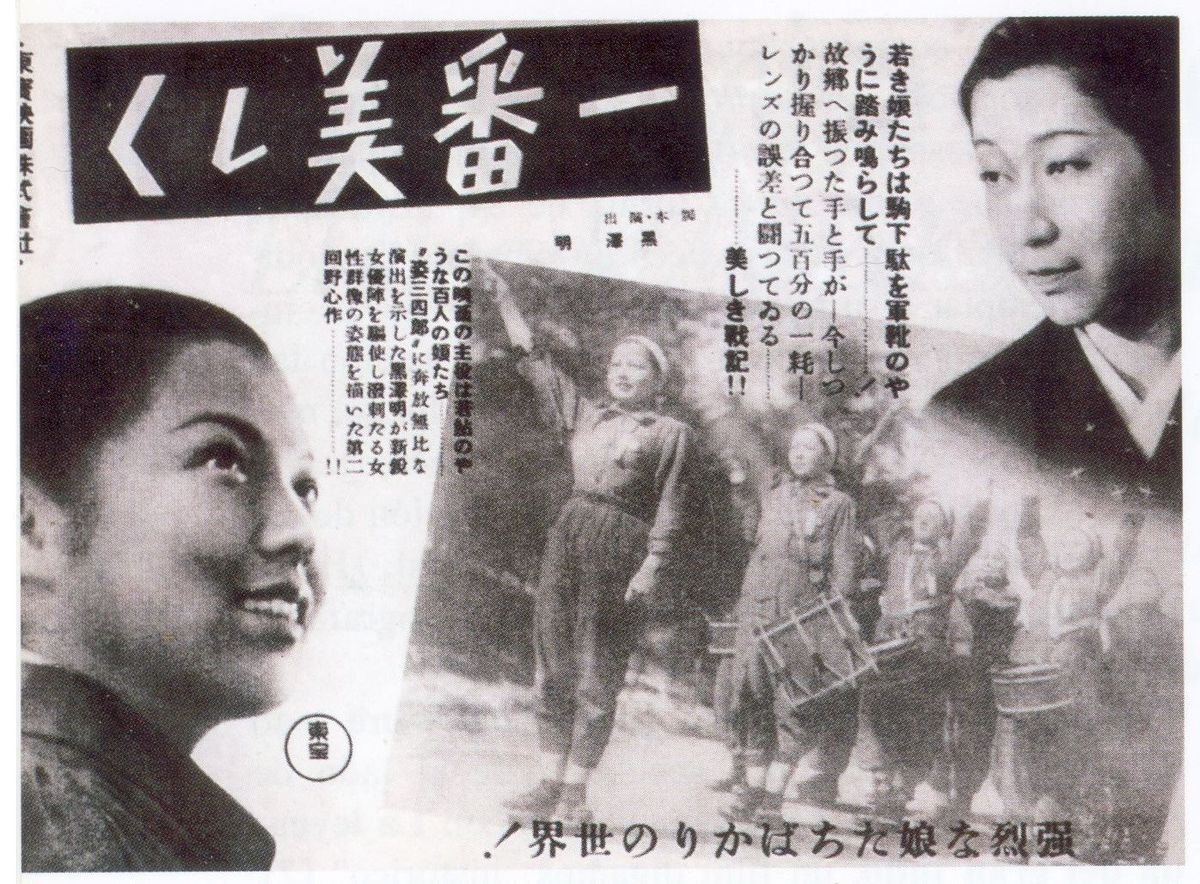
The Most Beautiful (一番美しく, Akira Kurosawa, 1944)

“One can’t improve productivity without improving one’s character” the manager of a factory crafting lenses for the military repeatedly insists, though by “character” he largely seems to mean a total erasure of the self in favour of service to the state. Kurosawa’s second feature is a National Policy Film intended to foster a spirit of patriotic fervour in which not only the factory girls at its centre but everyone else too must “become an outstanding human being” forgoing all human feeling to ensure Japan will win a war even the film seems to concede is already lost. 

Indeed, even for a relatively late propaganda film, The Most Beautiful (一番美しく, Ichiban Utsukushiku) makes little attempt to gloss over the undercurrent of defeat. At one point names of foreign territories fallen to the Americans briefly flash up on the screen leaving the girls looking increasingly bereft if resolving to work even harder. Then again even in the opening which sees all the workers lined up in military fashion it’s obvious that the factory is staffed by those who have not been deployed to more pressing duties, overwhelmingly teenage girls along with boys too young for the army, old men and those otherwise unable to serve in the military. 

Even so the atmosphere among the young women is often cheerful though the film is keen to show them overcoming their loneliness while bowing to photos of their far off parents, often farmers, in distant parts of Japan. They are looked after by a kind of nurse/chaperone, Mrs Mizushima (Takako Irie) whose husband has already been killed in the war marking her out as an example of the self-sacrifice that is being asked of the girls. Many of them have come of their own volition expressly to support the war effort and take their work incredibly seriously especially as the factory manager reminds them that the lenses they make are crucial to to production of military instrumentation and without them there would be no fighter planes or sniper rifles. 

So self-sacrificing are they that the girls go into huff when it’s announced that the factory will be entering a period of increased productivity (another thinly veiled hint that the war is not going well), yet they are upset not because they resent being asked to work harder, nor by the implication that they have more to give than they have been giving, but by the fact they’ve been underestimated having had their quotas increased by only 50% as opposed to the men’s 100%. Their leader, Watanabe (Yoko Yaguchi), explains that, though they know they cannot match the men, they are sure they can do better and will produce at least 2/3 more rather than just half. The managers seem to think that this is naive, but are wary of talking the girls down in fear of damaging their morale which they see as the most crucial thing when it comes to generating “productivity”. Yet that notion of “morale” is mostly a kind of internecine peer pressure brokered by petty competition and a desire not to be the one who lets everyone else down. Hence the girls continue working while they’re sick, which is no good at all for productivity if all they do is spread it around while unable to work at full capacity, afraid to tell anyone in case they get sent home to recover. 

Watanabe is tempted to to take a trip to see her family after receiving a letter from her father to say that her mother has been taken ill, though her parents are also fiercely patriotic and insist that she should not leave but stay and do her duty. She is guilted out of her temptation by another girl, Yamaguchi (Shizuko Yamaguchi), who is sickly by nature but has been hiding her suffering in order to be allowed to stay. Being out of the line fosters feelings of guilt and failure, not only in having let the country down but in increasing the burden on their friends who will now have to work harder in their stead. The “character” that they are supposed to be building, is in the end only in service of their “productivity” that they work to the point of collapse with no thought for themselves or their feelings wilfully sacrificing the opportunity to see dying relatives to prove their dedication. 

In what now might seem like subversive touches but just as well may have been sincere, Kurosawa often flashes signs and slogans which appear in the factory including one urging the girls to “follow the example of the war dead” suggesting that the only real way to prove your devotion is to die in the service of the emperor. On the other hand, the girls don’t actually seem to do a lot of factory work but are otherwise expected to participate in band practice banging out military marches on the drum or else improving their physicality through playing volleyball. In any case as they begin wear themselves out tempers begin to fray leaving the girls at odds, tired and resentful if not actively hopeless in beginning to realise they probably won’t make their overly ambitious quota as a tacit acceptance that Japan most likely is not going to win the war and all their efforts are for nothing. At the film’s conclusion, Mrs Mizushima exclaims that Watanabe has become “such a good girl”, ironically forced to abandon the directly filial for the national in prioritising her role as an imperial daughter rather than a biological one. Even so, the film discovers a much more comfortable sense of solidarity between the young women even if brokered by militarist fervour and a nihilistic bid for self-destruction in perpetual servitude. 


The Most Beautiful screens at the BFI Southbank, London on 1st & 9th January 2023 as part of the Kurosawa season.

Terrorizers (青春弒戀, Ho Wi Ding, 2021)

A collection of youngsters is drawn into a dangerous web of simmering violence in Ho Wi Ding’s Taipei-set drama, Terrorizers (青春弒戀, qīngchūn shì liàn). The film may share its name with an Edward Yang classic, but it is very clearly society that is the terroriser in this instance from toxic masculinity and social conservatism to youthful isolation, video games, and pornography. The film seems to ask if it’s ever really possible to move on from the past and discovers that it may not be though some may be prepared to help carry your baggage as they travel towards the future so long as they know what’s in it. 

The youngsters are brought together by the ominous presence of Ming Liang (Austin Lin Bo-Hong), an isolated young man who barely speaks and spends all his time playing video games. It’s him we see dressed in full ninja garb attacking a young woman, Yu Fang (Moon Lee), with a katana at the train station only for her boyfriend Xiao Zhang (J.C. Lin Cheng-Hsi) to heroically throw himself in front of her to fight Ming Liang off. 

Later a dejected middle-aged woman Ming Liang befriends ironically tells him that guy who protects his girlfriend is a real man, working the wound of Ming Liang’s bruised masculinity and causing him to double down on his frequent insistence that he can protect women, though later he indeed does on separating precocious teen Kiki (Yao Ai-Ning) from the previously diffident best friend who tried to assault her. Having given up on Yu Fang he begins stalking a woman from her acting class, Monica (Annie Chen Ting-Ni), whose admittedly no good ex boyfriend he later beats up assuming it will buy him white knight credits as a protector in the shadows when in reality he’s a total creep who cloned the key to her apartment and has been hiding in her wardrobe later driven into a frenzy by the irony of watching Yu Fang and Monica, the two women he wanted, deciding they’d rather be with each other. 

Part of Ming Liang’s problem is a sense of parental abandonment, something he shares with Yu Fang whose mother abandoned her when young while her relationship with her father, who has recently remarried, has always been strained. After his parents’ divorce, Ming Liang moved in with Yu Fang’s politician father after being palmed off off by his own, the implication being that he has never really been shown parental love or given any guidance about how to live in the world save that he gleaned from the violent video games he constantly plays along with voyeuristic pornography. 

Yu Fang and Ming Liang are attempting to escape the legacy of parental failure, but Monica is left with a much more recent dilemma in her history as an early cam girl named Missy, a character created by her ex, David, who has since moved on. The more Monica tries to chase her dreams, the more her past comes out to haunt her with creepy men for some reason making a point of telling her they saw her sex tape while on some occasions actually playing it for her on their phone. Hoping to crush her spirit, David tells her that she’ll always be Missy, unable to escape the social stigma of having participated in a pornographic video, while she and Yu Fang are subject to a public shaming when a tape of them goes viral allowing the authorities to all but justify Ming Liang’s attack on Yu Fang on the grounds that she stole his girlfriend and therefore was in the wrong as if such feudalistic behaviour could ever be permissible. 

Yu Fang finds herself terrorised by the media storm of the 24hr news cycle, her new life with Xiao Zhang in jeopardy while she feels ever more isolated realising that her father cares less for her wellbeing than the optics in the light of his ongoing political campaign. Ming Liang meanwhile is forever reminding people that his father is rich and influential as if his misuse of his status is a direct rebellion against it and the parents he feels abandoned him. The fact that the news essentially reframes the slashing incident as a defence of heterosexual love, demonising same sex relationships, only emphasises the tyranny of outdated social prejudice and misogyny as Yu Fang becomes the villain and Ming Liang the victim entirely ignoring his predatory stalking of Monica and otherwise disturbing behaviour. It may not be possible to effectively move on from the past, overcome the legacy of parental abandonment and develop the ability to trust in others, but there may be less destructive ways to take the past with you if only in finding someone willing to share your burden. 


Terrorizers screened as part of this year’s New York Asian Film Festival.

Festival trailer (English subtitles)

Images: © changheFilms 2021

You’ll Fall For Me (君は僕をスキになる, Takayoshi Watanabe, 1989)

Two mismatched friends find themselves caught up in an ironic love square in Takayoshi Watanabe’s infinitely charming Christmas rom-com, You’ll Fall for Me (君は僕をスキになる, Kimi wa Boku wo Suki ni Naru). A bubble-era nonsense comedy filled with surreal humour and zany gags along with genuine heart, the film pits friendship against love but not only of the romantic kind as the two women each consider acts of selflessness in knowing that pursuing, or preventing the other from pursuing, their romantic destiny will necessarily cause each of them pain. 

Beginning in the summer the film opens with a bizarre incident in which mousy pudding-obsessed librarian Tomoko (Yuki Saito) thinks she sees her neighbour across the way, Chika (Kuniko Yamada), jump off the roof of a nearby building only it turns out to be a strange practical joke. Chika certainly has a flair for the dramatic along with an unusual personality that has made her something of an outcast at her office job while even her friendship with Tomoko seems somewhat one-sided with her constant refrains of “you’re my best friend!” which are generally met by a blunt reply from Tomoko of “we’re not friends”. In any case, Chika’s current dilemma is that she doesn’t have a date lined up for Christmas Eve and thinks she’s jinxed because she always seems to get dumped right before the big day, while Tomoko is rather shy and it seems had no expectations of getting a boyfriend anyway. 

Their prospective suitors are a couple of salarymen, the feckless son of a CEO, Kyosuke (Masaya Kato), and his nerdy best friend Junpei (Senri Oe) who like Tomoko is a spectacles wearer. The pair have a typical meet cute when they bump into each other at a crossing and knock each other’s glasses off, each ending up with the wrong pair and not realising until it’s too late. Meanwhile, at the office, Kyosuke is being pressured by his father (Jo Shishido) to embrace adult responsibility and meet a prospective candidate for an arranged marriage who looks suspiciously like Chika though Kyosuke never looks at the photo. To get him off his back, he says he’s dating a woman from the company. Because he’s just that popular, a stage event is organised at which Kyosuke is supposed to announce who it is he has his eye on but he scandalises just about everyone by naming Chika who wasn’t really in the running. 

In the opening scenes, however, the guys had been indulging in a bit of 80s excess dribbling champagne from a helicopter some of which had rained down on Tomoko as if anointing her from above. She ends up having a second meet cute, this time with Kyosuke, who accidentally hypnotises her to think she’s a dog leading her to then attack him. A similar thing happens to Chika who is looked after by Junpei after having too much to drink on a date with Kyosuke at a nightclub where Tomoko had also agreed to go on an awkward date with Junpei. Inconveniently, the entirely mismatched Kyosuke ends up falling for the mousy charms of Tomoko who at this point doesn’t know that he’s “dating” Chika.

While the film presents an interesting picture of women in the workplace at the height of the bubble era, it also subtly undermines the prevailing consumerist culture of the age while preserving the romanticisation of Christmas. They two women each want to find a boyfriend to spend Christmas Eve with partly for reasons of social status and partly because they are simply quite lonely, Chika in particular very invested in her friendship with Tomoko while she, much more introverted, seems continually exasperated but despite herself allows Chika to dominate her existence. After becoming aware of their romantic conflict, the two women end up spending Christmas Eve together at a nice restaurant prioritising friendship over romance until one of them realises the other is unhappy and after discovering a note from their suitor asking them to meet in a local park chooses to spend the rest of the evening alone so her friend can go get her man. 

Then again, there’s a clear idea that Tomoko in particular is undergoing a kind of transformation signalling her shift away from Junpei by deciding to get contacts, putting on lipstick, and dressing in a slightly less mousy fashion while Chika’s attempt to become the sort of woman that Kyosuke would date by dressing and acting more like the other women in the office largely backfires. Meanwhile Kyosuke and Junpei are also changing, Kyosuke giving up his womanising ways and becoming more serious in his pursuit of Tomoko while Junpei comes to appreciate the vulnerable force of nature that is Chika. The film takes its title from Kyosuke’s attempt at hypnotising Tomoko into falling in love with him only to find that he’s the one who’s fallen under her spell as they move towards the anticipated Christmas Eve climax accompanied by the now classic song by Tatsuro Yamashita. Faced with the choice, the women do indeed choose friendship over love but discover that it isn’t really a choice at all because they both just want their friend to be happy even if it means a lonely Christmas for themselves as the ironic role reversal of the closing coda makes clear.


Original trailer (no subtitles)

Tatsuro Yamashita – Christmas Eve