 A late career entry from socially minded director Shohei Imamura, Dr. Akagi (カンゾー先生, Kanzo Sensei) takes him back to the war years but perhaps to a slightly more bourgeois milieu than his previous work had hitherto focussed on. Based on the book by Ango Sakaguchi, Dr. Akagi is the story of one ordinary “family doctor” in the dying days of World War II.
As Dr. Akagi (Akira Emoto) puts it, much of the the life of a family doctor involves running. If he breaks one leg, he’ll run on the other, if he breaks both legs, he’ll run on his hands, but he’ll do whatever it takes to get to his patients. Some of the villagers have branded him as a quack and nicknamed him “Doctor Liver” because his most frequent diagnosis is for hepatitis. Doctor Akagi is convinced that there really is an epidemic of contagious hepatitis plaguing the population and even has the evidence to back his theory up but with the war in crisis and so much else going on he’s having trouble getting anyone to listen to him. Nevertheless, Akagi fearlessly tries to find out what it is that’s causing this deadly disease to spread and hopefully put an end to it for good.
Imamura strikes an oddly comic tone here. Though the above synopsis may sound overly serious, for the vast majority of its running time Dr. Akagi is the story of a small fishing village going about its everyday life with the war just simply background. The town narrowly escapes being bombed by an American raid because it’s known that there’s prisoner of war camp nearby filled with allied soldiers and red cross personnel and there are certainly a lot of troops on the ground more or less running the show. However, despite the obvious hardships – lack of food being the biggest one, the townspeople are getting on with things in a fairly cheerful way.
Following a spot of pastoral care, Dr. Akagi ends up taking in a local girl as his assistant and housekeeper after her father has died leaving her to support her two younger siblings. Though a married woman with a husband away at the front, Sonoko (Kumiko Aso) has been making ends meet through prostitution with the rather unwelcome result that one of her regular customers wants to marry her (she does not reciprocate and after all already has a husband). Akagi doesn’t necessarily disapprove of the idea of prostitution or of openly expressed sexuality, but accepts that society does object to these ideas and takes Sonoko in so that she won’t have to sell herself (though she actually didn’t really mind very much and still finds herself called upon to provide her “services” even after she’s officially given up).
Akagi’s other supporters include a fellow doctor, Tomomi, who has become addicted to morphine after his wartime service and a drunken and lecherous buddhist monk who proves an essential ally when it comes to body snatching a recently buried corpse. Akagi gets himself into even more trouble when he takes in and treats an escaped Dutch POW who bears the scars of extreme torture by Japanese forces who are paranoid about possible spy action. Imamura is never afraid of raising the spectre of wartime brutality as his soldiers flit between righteous zealots committed to the letter of the law and bumbling idiots who can’t see that each of their actions is entirely counterproductive to their cause.
The most surprising moment comes when Akagi has a dream about his son who is an army doctor serving in Manchuria. After Akagi and his friend have conducted an autopsy to gain a fresh liver sample, Tomomi starts talking about his time in the army and a rumour about a group of doctors doing live dissections and possibly researching chemical weapons. Akagi is aghast and horrified but recounts his dream in which he stood before his son whose bloodied hands are extended towards him with a living patient writhing below. Akagi reminds him that he is a doctor and urges him to stop this barbaric practice but the nightmarish vision of this gloomy, blood-soaked room persists.
At the end of the film Sonoko and Akagi unwittingly end up viewing the giant mushroom cloud which arises after the atomic bomb blast in Hiroshima. Not knowing what it is, Akagi predictably sees it as a giant infected liver and wonders if the donor for his liver sample is angry with him but then thinks again and says the cloud is a representation of everybody’s anger towards this war. Akagi loses himself a little in the quest to solve the hepatitis question and after it leads him to neglect a patient he begins to question himself over his true motives and whether there’s really any point to what he’s trying to do. However, Dr. Akagi is a good and a kind man and eventually remembers what his true calling is – as a family doctor, running from one emergency to the next but always making sure his patients are well looked after. War or no war, life goes on – people get sick and they need to know there are men like Akagi out there that can always be relied upon to do the very best they can.
Dr. Akagi was originally released in the US by Kino Lorber but seems to be out of print. The good news is that the region free Korean disc comes with English subtitles.
Unsubbed trailer:
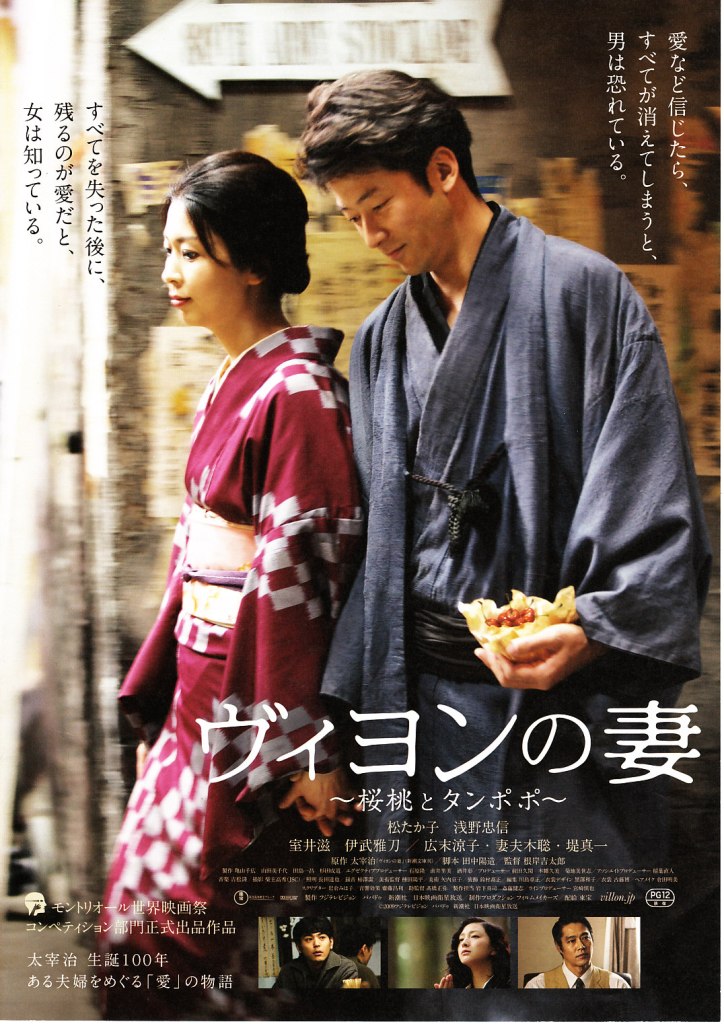 2009 marked the centenary year of Osamu Dazai, a hugely important figure in the history of Japanese literature who is known for his melancholic stories of depressed, suicidal and drunken young men in contemporary post-war Japan. Villon’s Wife (ヴィヨンの妻 〜桜桃とタンポポ, Villon no Tsuma: Oto to Tampopo) is a semi-autobiographical look at a wife’s devotion to her husband who causes her nothing but suffering thanks to his intense insecurity and seeming desire for death coupled with an inability to successfully commit suicide.
 It’s often posited that Japan rarely produces “science fiction” literature or movies and some say that’s because, well, they already live there. However, this isn’t quite true, there are just as many science fiction themed projects to be found in Japan as elsewhere you just have to look a little harder to find them. Depending on your point view, if you succeed in tracking down a copy of Cosmic Rescue -The moonlight generations- (コスミック・レスキュー ザ・ムーンライト・ジェネレーションズ), you may feel the quest was not entirely worth the effort.
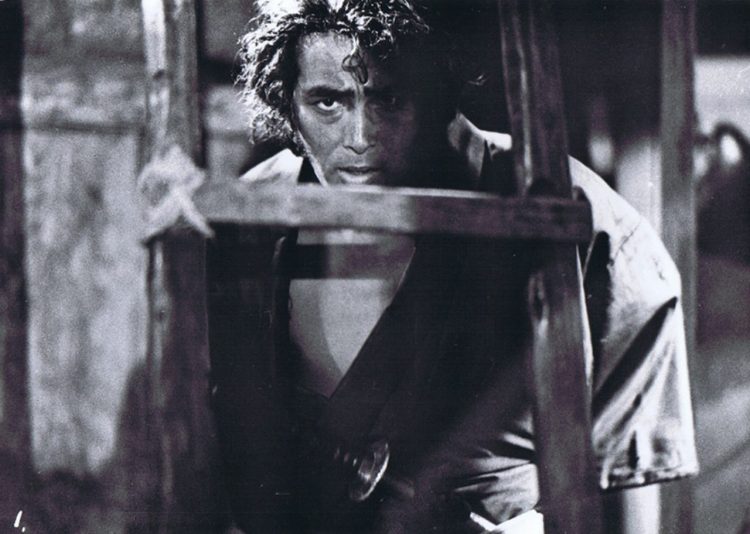 Sakamoto Ryoma is a legendary revolutionary of Japan’s Bakumatsu period which encompasses the chaos that ensued after Japan was forced open after centuries of self imposed isolation. Ryoma was a low level samurai from a small town who resented the unjust treated of the arrogant true samurai above him and skipped out on his clan without the proper permission to go study sword fighting in the city. After the arrival of the Americans and witnessing their far superior technologies, Ryoma was one of several men who became convinced that Japan needed to modernise quickly or become a slave to more advanced cultures. However, this was a turbulent era and there was general infighting among all factions and all sides and Ryoma was mysteriously assassinated in 1867 along with his friend and ally Nakaoka Shintaro.
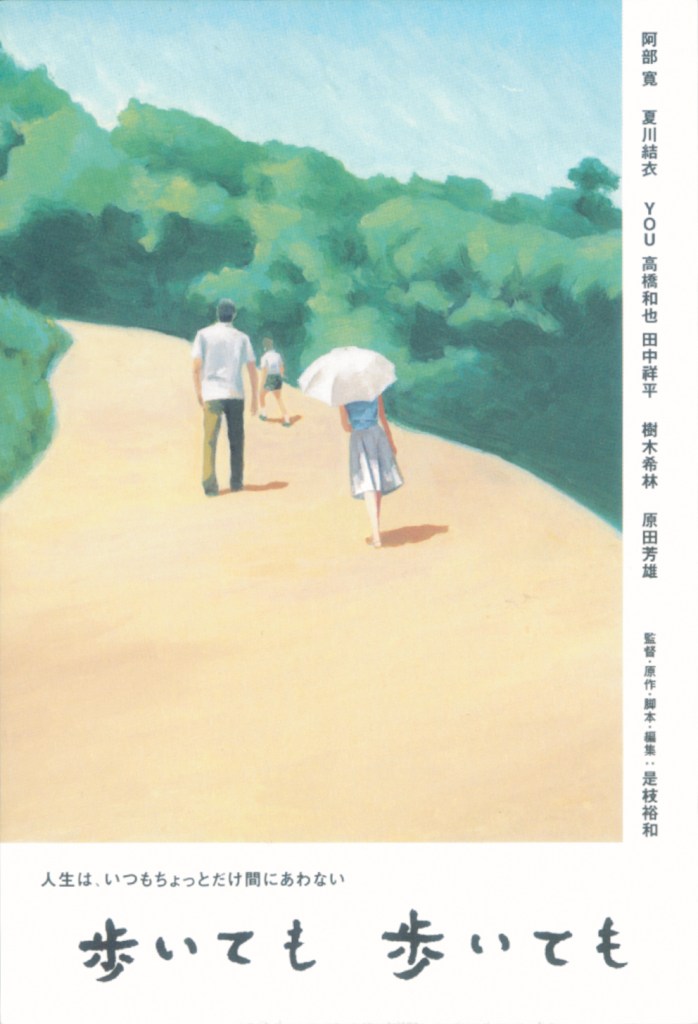 Life is full of choices, but the one thing you can’t choose is your family. Like it or not you’re stuck with them for life and even if you decide you want nothing to do with them ever again, they’ll still be hanging round in the back of your mind for evermore. Koreeda swings the camera back around the fulcrum of Japanese society for this dissection of the fault lines and earthquake zones rubbing up against this very ordinary family.
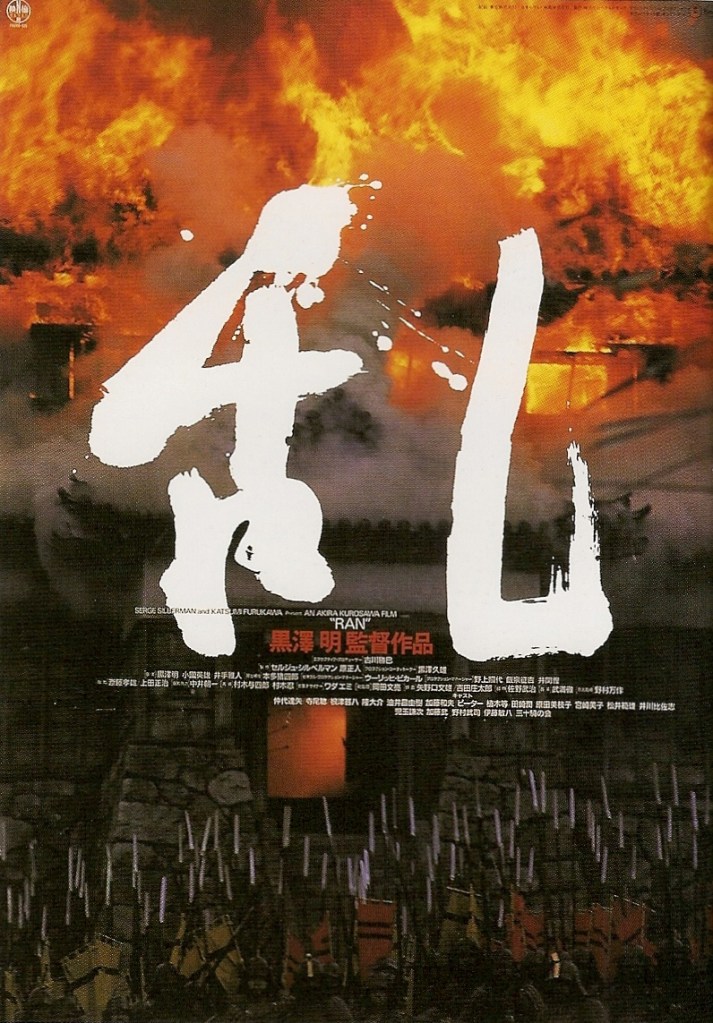 Akira Kurosawa is arguably the most internationally well known Japanese director – after all, Seven Samurai is the one “foreign film” everyone who “doesn’t do subtitles” has seen. Though he’s often thought of as being quintessentially Japanese, his fellow countryman often regarded him as too Western in terms of his filming style. They may have a point when you consider that he made three different movies inspired by the works of Shakespeare (The Bad Sleep Well – Hamlet, Throne of Blood – Macbeth, and Ran – King Lear) though in each case it’s clear that “inspired” is very much the right word for these very liberal treatments.
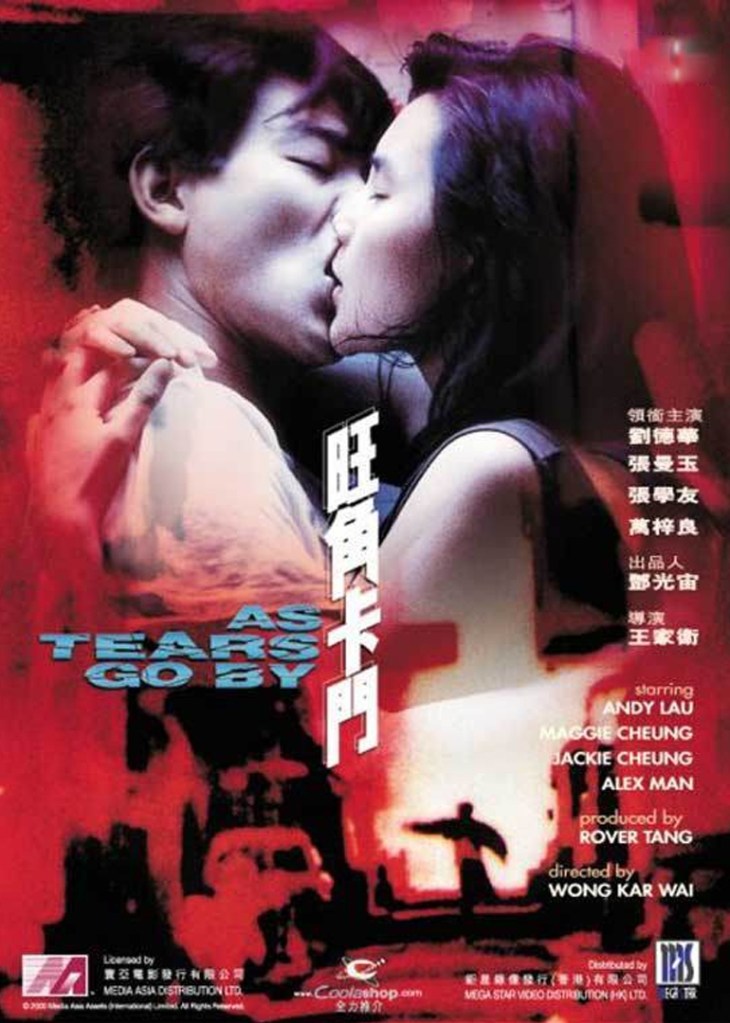 These days, Wong Kar-wai is an international auteur famous for his stories of lovelorn heroes trapped inside their memories, endlessly yearning in vain for the unattainable. In many ways his debut feature, As Tears Go By (旺角卡門, Mongkok Carmen) is little different save that it owes more to its vague heroic bloodshed, gangster inspiration and is less about memory than inevitability and a man abandoning his dreams of a better life with a woman he loves out of mistaken loyalty to his loose cannon friend.
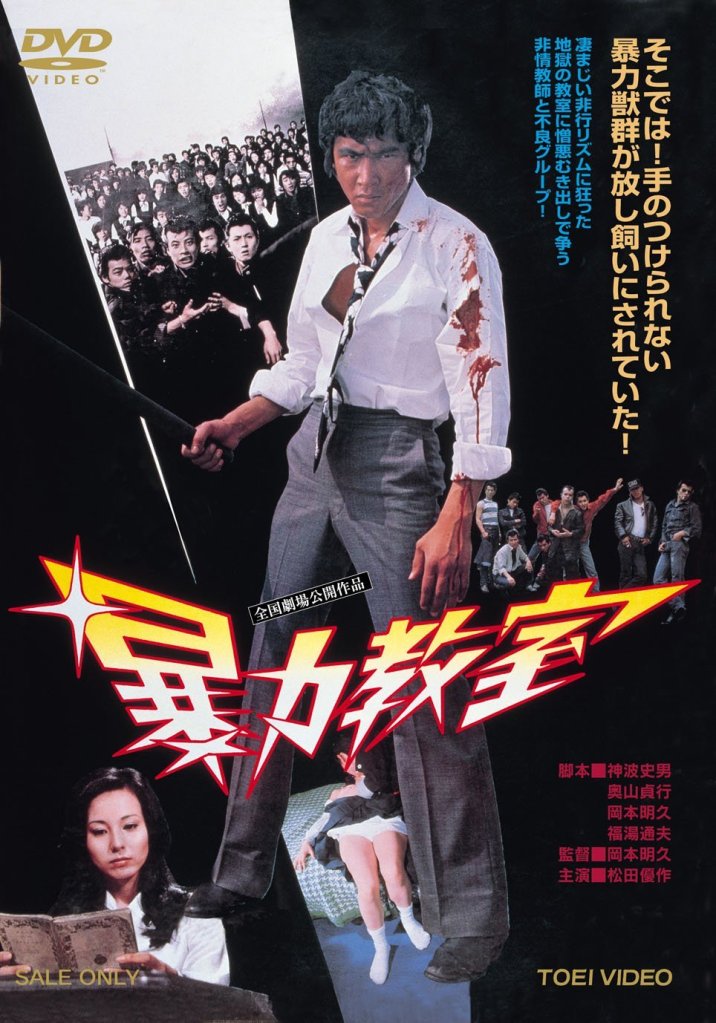 When the teachers are as corrupt as the students are disruptive, society is going to wind up with a complex set of problems. Classroom of Terror (暴力教室, Boryoku Kyoshitsu) is, in some ways exactly what it sounds like – delinquents! Sex, drugs, fighting! etc but also subverts these aspects of the bad teen movie by turning the camera right back on the adults who are perpetuating this world of unruly adolescents. An early entry for action star to be Yusaku Matsuda, Classroom of Terror sees him cast in a recognisably manly role though one with a greater degree of nobility.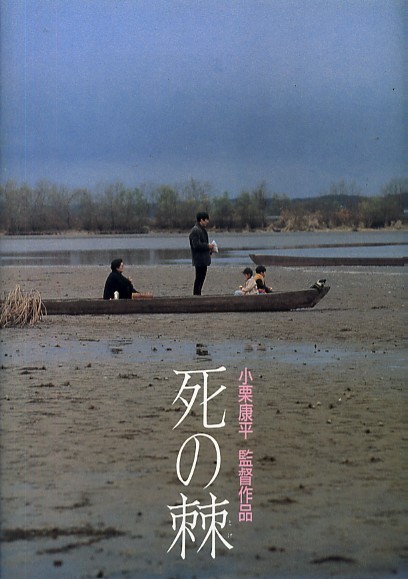
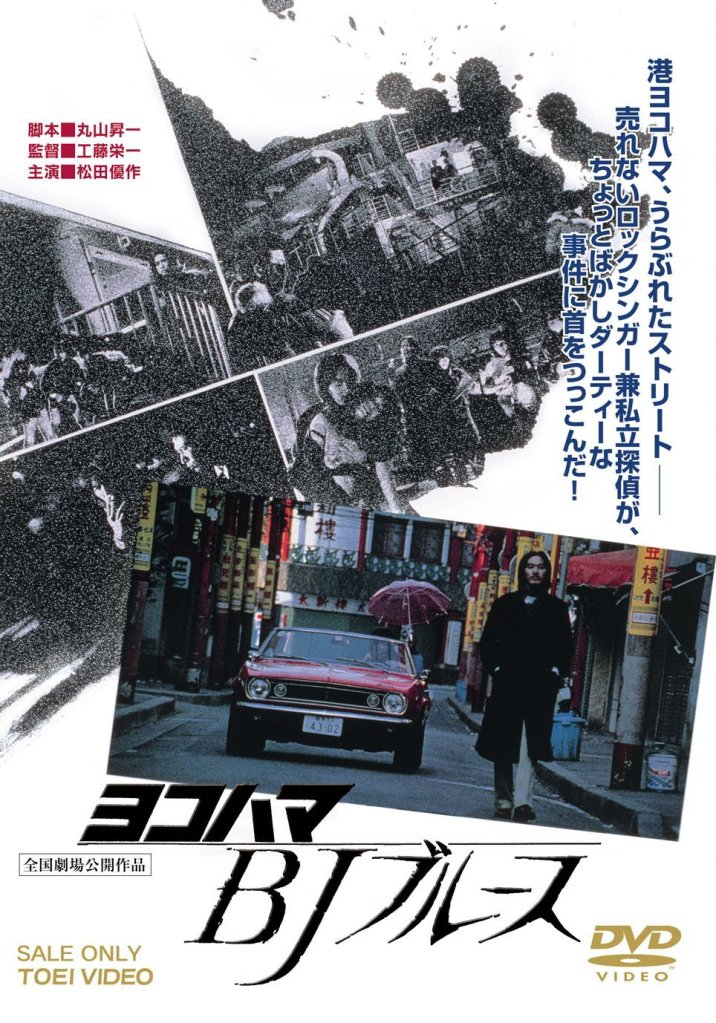 Yusaku Matsuda may have been the coolest action star of the ‘70s but by the end of the decade he was getting bored with his tough guy persona and looked to diversify his range a little further than his recent vehicles had allowed him. Matsuda had already embarked on a singing career some years before but in Eiichi Kudo’s Yokohama BJ Blues (ヨコハマBJブルース), he was finally allowed to display some of his musical talents on screen as a blues singer and ex-cop who makes ends meet through his work as a detective for hire.
 Windows on Worlds