The Military Policeman and the Dismembered Beauty (憲兵とバラバラ死美人, Kyotaro Namiki, 1957)

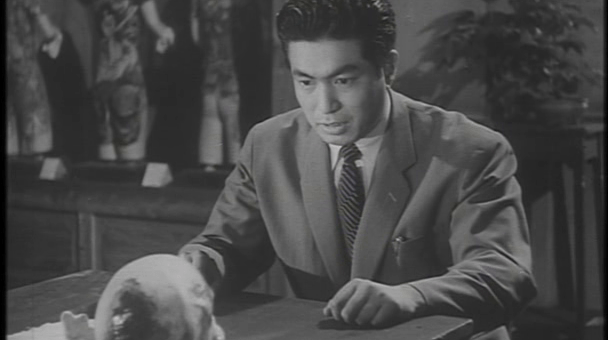
The Military Policeman and the Dismembered Beauty (憲兵とバラバラ死美人, Kenpei to Barabara Shibijin) was apparently a substantial hit on its release, though to modern eyes at least it doesn’t quite live up to the salaciousness of its title. In fact, it seems a little more interested in reassessing the militarist past while attempting to rehabilitate an authoritarian power and reframing it as good and compassionate unlike the corrupted killer who is selfish and ambitious to the extent that he’s literally poisoning the militarist wells. 

What we’re first introduced to, however, is a rather familiar tale of a soldier who’s gotten a girl pregnant but now won’t marry her mainly because he’s onto a good thing with a pretty girl from a prominent family so his girlfriend’s in the way. Though we see a prelude to the murder, we don’t get good a look at the soldier’s face (though we do hear his voice) which on one level hints at the generalised violent threat of the militarist machine but is also a neat plot device that allows us to into the crime but still maintains the mystery. When we do see the actual killing, it’s surprisingly frank for the time period and disturbing in its sexual charge though there is no gore involved save a grisly discovery in yet another well. 

The killing occurred shortly before the regiment left for Manchuria, which seems to be one way the killer sought to move on and leave his crime behind. The first hint of the corruption is discovered by a gang of new recruits as yet unused to the militarist machine. They notice that the water in the well in the barracks is bad, but are at first bullied and insulted by another soldier who’s been there longer and gives them a rather priggish speech about the sanctity of the regimental water. What they discover is that the water tastes bad because there’s a dismembered torso in there and has been for the last six months. One has to wonder why the culprit would think this a good place to hide a body given the risk of discovery and increasing suspicion but as it turns out no one is all that interested. The Military Police aren’t that keen on investigating themselves, and then we get the familiar conflict between the local cops and the specialists as a top investigator, Kosaka (Shoji Nakayama), is assigned to investigate the crime and insists on doing so thoroughly rather than just beating their favourite subject into a false confession. 

Kosaka is then posited as a nice Military Policeman, an emissary of legitimate authority rather than bumbling provincials who are ridiculous and self-serving not to mention incompetent and resentful. We’re told repeatedly that Kosaka is prepared to work with the civilian police unlike the other military policemen who insist on militarist primacy and refuse to allow the detectives onto the base to investigate. He’s a representative of a less authoritarian age that looks forward to the democratic future, but he is also a part of that organisation himself no matter how different he may seem to be and cannot escape the overarching structures of militarism. Nevertheless, his edges are further softened by a nascent romance with the middle-aged innkeeper at his lodging house while his assistant is after her sister, a childhood friend who can’t stop calling him by his old nickname. 

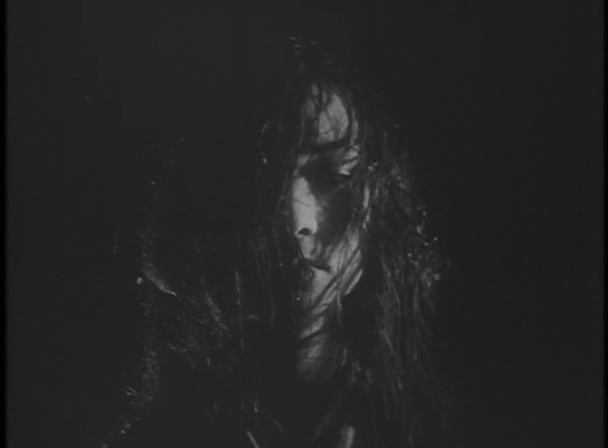
The two of them investigate scientifically, making frequent trips to the pathologist to discuss theories and evidence though Kosaka is eventually guided towards the solution after seeing the young woman’s ghost. The local military police meanwhile fixate on another soldier who has a reputation for using sex workers, one of whom has recently disappeared, though Kosaka thinks the man is a just a crook with what modern viewers make think of as a sex addition that sees him steal supplies from the kitchen to sell in order to finance his visits to the red light district. The military police whip him in an oddly sexually charged manner to try to get him to confess, but he maintains his innocence. One of the motives for the murder was seemingly that the victim planned to expose the affair, taking her concerns to the killer’s superior officer in an effort to force him to marry her which would have ruined his career prospects in what is supposed to be an organisation of honourable men. Unlike Kosaka who shares his name with the writer of the novel the film is based on which may have been inspired by true events, the other military police are largely like the killer, arrogant, selfish and unfeeling though all Kosaka himself represents is a supposedly more benevolent authority that for his niceness may not actually be all that much nicer.

Dancing Girl (踊子, Hiroshi Shimizu, 1957)

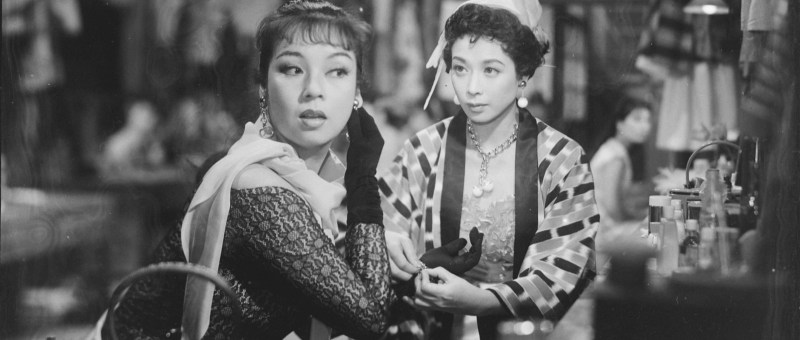
The sudden arrival of a younger sister throws the despair and disappointment of an ageing chorus dancer into stark relief in Hiroshi Shimizu’s Dancing Girl (踊子, Odoriko). Chiyo (Machiko Kyo) is indeed a dancing girl, waltzing her way through post-war Japan with seemingly little thought for others or the consequences of her actions aware only of her ability to dazzle and what it might win her if used in the right way while her sister quietly yearns for a more comfortable, conventional kind of life.

Hanae (Chikage Awashima) apologises for Chiyo’s childishness when she suddenly gets up to marvel at the snow during in an important meeting with choreographer Tamura (Haruo Tanaka) who has offered to take her on as a trainee dancer but he simply replies that it’s what makes her special in the way Hanae herself perhaps is not. In that sense there’s something a little uncomfortable in Tamura’s first word on meeting Chiyo being simply “sexy” uttered as if he were already salivating over her when the key to her appeal seems to lie in the awkward juxtaposition of her naivety and curvaceous figure. In many ways, it’s childishness that is Chiyo’s defining characteristic. She follows her impulses and is incapable of thinking beyond them. In a repeated motif we see her eat heartily as if she had not for eaten days or else to be snacking on something or other at a time when food is scarce. We later discover that she’s some kind of kleptomaniac, stealing at every opportunity even when she has no need to, simply taking something she wants without considering why it might not be right to do so as if all the world belonged to her. Meanwhile she embraces her sexuality without shame, sleeping with whomever she chooses but also doing so in a calculated effort to advance her own cause. 

The irony is that her rise coincides with her sister’s fall. Hanae has passed the age at which she might have become a star and is beginning to age out of her career as a chorus dancer. She tells her husband, Yamano (Eiji Funakoshi), that what she wants is a comfortable life and to become a mother though the couple have been married for five years and not yet conceived a child leading her wonder if there’s medical issue in play though Yamano confesses in what turns out to be an ironic comment that he doesn’t really want children anyway. In any case, they are each becoming tired of life in Asakusa and their mutually unsatisfying careers. Crushingly they each fear they have disappointed the other, Hanae sorry that she never made it as a dancer and wondering if Yamano would have been better off marrying someone from a less stigmatised profession, while he feels guilty that he could not give her a better standard of life and has failed to progress in his own career as a violinist. Chiyo’s arrival reinvigates them both in different ways. Hanae shifts into a maternal mode otherwise denied her in looking after Chiyo as she begins her career as a dancer, while Yamano begins with her a sexual affair that rekindles his masculine drive. 

But Chiyo also remains flighty and elusive. Essentially lazy, she soon tires of dancing and decides to become a geisha because it requires less rehearsal, then to give that up too to become someone’s second mistress. She rejects the conventional, settled life Hanae has come to long for and describes that in the countryside as “boring” when she suggests moving there having selflessly offered to adopt the baby Chiyo has also rejected which maybe Yamano’s or perhaps Tamura’s or someone else’s entirely not that it necessarily matters. The closing moments of the film perhaps imply a moralising rebuke of the new post-war vision of liberated sexuality, a despondent Chiyo once again making a surprise appearance and wanting to see her child but being afraid to do so unable to match up to the unsullied maternity of Hanae. Shimizu lends her passage a kind of transient quality in his restless camera which is in constant motion sliding laterally from one scene to another often coming to rest on emptiness even amid the bustling streets of a neon-lit Asakusa and the false promises of its illusionary glow.


Dancing Girl screens at Japan Society New York on May 18 as part of Hiroshi Shimizu Part 2: The Postwar and Independent Years.

An Osaka Story (大阪物語, Kozaburo Yoshimura, 1957)

A man who tries to escape his poverty ends up imprisoning himself in Kozaburo Yoshimura’s tragicomedy An Osaka Story (大阪物語, Osaka Monogatari). Inspired by the work of Saikaku Ihara, Kenji Mizoguchi had intended to direct but sadly passed away before shooting started with Yoshimura appointed to take over. The broadly comic overtones may be at odds with Mizoguchi’s signature style but ultimately lend weight to the film’s ironic conclusion in which the hero finds himself essentially oppressed by his own wealth in being entirely unable to relate to other people or see the world in ways undefined by money. 

It may be possible to understand Omiya’s (Ganjiro Nakamura) mania as a reflection of his intense fear of poverty, that he is so terrified of possible destitution that he can never really have enough or allow himself to enjoy what he has in case there is no more to come in the future. Even as so his daughter later says, wealth changes him. As the film opens, Omiya is a peasant farmer with a bad harvest who can’t pay the onerous taxes demanded by his exploitative lord. He decides to flee to Osaka with his family but is soon rebuffed by the man he’s gone to see who has just become a samurai and wants nothing to do with him. Wandering around the city, the kids eventually discover a thin layer of discarded rice at a storage area they manage to sweep up giving Omiya a new idea of how to save their family. 

In some ways, his fate is foreshadowed when he alone is unable to slip through the fence while his wife and children mop up grains from the floor. The image of him on one side of the bars is repeated in the closing scene, while his loyalty to the family he tried so hard to save is weakened by the influence of money. Yoshimura shows us a world founded on exploitation. “Those who worked so hard to grow it won’t see a single grain,” Omiya bitterly laments watching workmen unload vast quantities of rice while the peasants starve. When the rest of the family have finished sweeping up what others so casually discarded, Omiya does not use the rice to feed them but sells it to a broker and gives them millet instead. His life is then ruled by the doctrine of good enough, living in painful, penny-pinching austerity even after becoming wealthy as a dodgy tea merchant/loan shark. 

Omiya is one of those people who know the price of everything but the value of nothing. Back at their farm, he’d firmly rejected his wife’s offer to sell herself into sex work to save the family, asking “How could I carry on happily knowing you were suffering for it?”, but this is exactly what he proceeds to do. Omiya no longer cares about his family’s feelings and thinks only abut money but simultaneously refuses to spend any of it. One has to wonder what the point of the money is when he’s living a life not all that different from a peasant farmer save being free of the anxiety of immediate starvation. The only person he has any kind of respect for is a widow much like himself who is equally obsessed with penny-pinching and maximising profits. 

The pair bond in their parsimonious natures, but the mutual desire to get a good deal necessarily comes between them especially when Omiya decides to marry off his daughter (Kyoko Kagawa) to Mrs. Abumiya’s foppish playboy son Ichinosuke (Shintaro Katsu) who has been secretly spending money in the red light district without her knowledge. He too is being exploited, in his case by a geisha who manipulates him into getting the money to buy out her contract by threatening suicide. Meanwhile, Omiya’s meanness means he’s never actually taught his son much about handling money. His invitation to the pleasure quarters by Innosuke eventually provokes his rebellion as he starts to question his father’s philosophy and what money is for if you still can’t live a comfortable life. 

HIs daughter Onatsu asks him something similar, pleading with him to learn to understand other people’s feelings before leaving the shop to be with a kindhearted clerk, Chunzaburo (Raizo Ichikawa), with whom she has fallen in love. So little does he care for people that Omiya doesn’t even bother to live up to the image of a wealthy man. The man who turned him away after becoming a samurai eventually racks up large debts and loses his title allowing Omiya to buy his house as an act of revenge despite his wife and daughter’s protestations that they already have “enough” and did not need more. He refuses contracts the previous owners had set up, throws out a hairdresser who comes to give the ladies a more class-appropriate haircut, and refuses a loan to the daimyo in incredibly rude fashion not to mention embarrassing just about everyone by refusing to serve any food at a wake. 

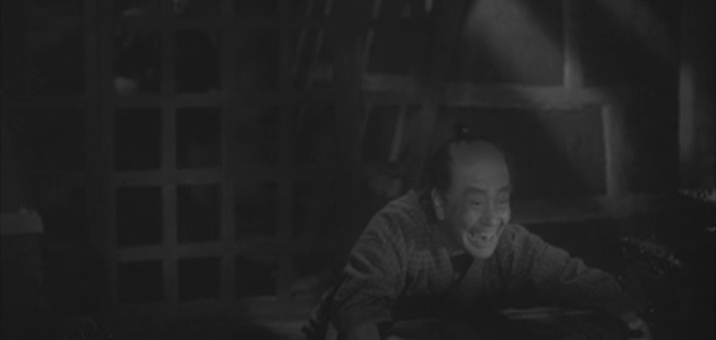
After ruining all of his personal relationships (except that with Mrs. Abumiya), Omiya experiences a kind of mental breakdown throwing himself over the chests of money in his vault and locking himself inside raving that everyone’s out to get their hands on his wealth. He’s just as much of a prisoner of this system as he was as a peasant farmer and has now imprisoned himself within a destructive delusion of capitalistic wealth. “Do what you have to do for a comfortable life,” Omiya’s son Kichitaro (Narutoshi Hayashi) had advised his sister, but this is what Omiya was trying to do too only for it massively backfire no matter what your personal definition of a “comfortable life” may be. Mrs. Abumiya tearfully wonders who’s going to inherit her money if not for her feckless son, but all Omiya can do is cackle wildly one like one possessed insisting that the money is his and his alone and not even death shall part him from it. In part a humorous take down of the contemporary society’s economic obsessions in a bid for ceaseless acquisition, the film is also a tragic tale of a man laid low by his addiction to money and the illusionary sense of comfort it provides him. 


The Eagle and the Hawk (鷲と鷹, Umetsugu Inoue, 1957)

Strapping sailors meditate on revenge and forgiveness while trapped aboard a moribund cargo ship in Umetsugu Inoue’s otherwise charming musical youth drama, The Eagle and the Hawk (鷲と鷹, Washi to Taka). One of several films Inoue released starring muse of the moment Ishihara, the film uses the boat as a kind of metaphor for a reluctance to deal with the unfinished past as several of its crew members are actively engaged in a self-imposed limbo wilfully remaining in a transient space floating between two harbours with no plans to disembark. 

This is most obviously true for the zombified Ken (Kinshiro Matsumoto) who wanders around the boat in a depressive daze unable to get over a girlfriend who left him for another man though as it turns out the bosun too is hiding out at sea waiting for the statue of limitations to run out on the murder of his lover 30 years previously. When two new recruits show up from the sailors union despite only one having been requested, many are under the assumption that they too are running from something on land though the boat itself is a confined environment from which there is no real escape so it’s also an ideal space for confrontation. 

The thing they may be running from is the murder of the boat’s chief engineer in the film’s noirish opening sequence in which a middle-aged man in a sailor’s cap is stalked by a youngster in jeans before being knifed with a ceremonial dagger. If they were running from that particular crime, it might be ironic that they chose this particular boat but then as the murdered man’s son, First Mate Goro (Hiroyuki Nagato), discovers the dagger was part of a set and the other one’s owned by the captain who seems very alarmed by the whole affair. Meanwhile, the captain’s daughter, Akiko (Ruriko Asaoka), has secretly stowed away along with Akemi (Yumeji Tsukioka), the heartbroken former girlfriend of one of the two new guys, Senkichi (Yujiro Ishihara). 

Women are regarded as unlucky on board, and it’s not difficult to guess why with Goro offering strict instructions to the new guys not to try anything with Akiko while one of the other sailors later attempts to rape Akemi with a palpable desperation existing within the crew. There is also a degree of homoerotic tension between the two new guys, the other being Sasaki (Rentaro Mikuni) who typically walks around shirtless in a pair of tight jeans and works hard to give the impression of having a mysterious past all of which leads Senkichi to suspect he’s an undercover cop possibly there after him or one of the other crew members though unbeknownst to (almost) everyone there is another crime in motion on board. 

As usual, it’s the past that’s come calling with Senkichi on the boat ironically running towards rather than away from a confrontation while others desperately try to cover up their crimes or deflect their responsibility for the dodgy dealings of their youth. Both Senkichi and Sasaki immediately remark that the boat’s a “junker” as soon as they get on board, implying that it too is on its way out, its disrepair a sign of its captain’s lack of respect and care for ship and crew alike. Then again, it seems the crew were intent on drinking half the cargo, most of them clearly happy in their work and enjoying a pleasant sense of camaraderie even on this crummy ship and its presumably not quite above board trip to Hong Kong which might hint at why Akemi shows up in cheongsam though for stowaways both women seem to have brought extensive wardrobes which in all honesty are not particularly well suited to life at sea. 

In any case, the boat becomes an unexpected place of healing and forgiveness largely brokered by manly magnanimity as Goro, on learning the truth behind his father’s murder, accepts that the killer’s motivations are “understandable” even while cautioning them against the fallacy of revenge which he insists will only create more hate and violence. He’s also fairly okay with Senkichi romancing his girl, Akiko, who sadly tells him she sees him more like a brother and isn’t interested in marrying him even if that’s what her father also expects neatly reflecting the dynamic which arises between Akemi and the lovelorn Ken who begins to cheer up and consider leaving the boat to open a transistor radio shop only for Akemi to describe him as a little brother while continuing to chase Senkichi despite his interest in Akiko. An expressionistic storm scene provides some divine justice, but also provokes a bittersweet romantic resolution which suggests it’s time to get off the boat and the face the past but with a kind of cheerfulness for the future otherwise at odds with the rage and violence of the original crime. Of course, this being a vehicle for Yujiro Ishihara, Inoue works in a few romantic scenes with his ukulele and a mournful song about the moon and ocean but finally sends him back to dry land a little more “grounded” for having found his sea legs.


The Eleventh Hour (どたんば, Tomu Uchida, 1957)

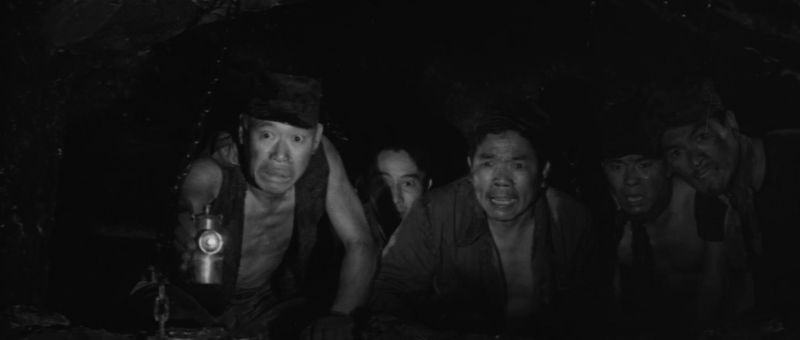
The problematic working practices of a post-war coal mine are thrown into stark relief when five men are trapped underground during a collapse in Tomu Uchida’s tense rescue drama, The Eleventh Hour (どたんば, Dotanba). Based on a TV play which was itself inspired by real events, the title alone tells us that we can expect a happy ending even if it’s somewhat undercut by the cynical quality of the fanfare with which it is greeted. Nevertheless, it’s clear that the mine itself reflects a dark side of the contemporary society even as it rocketed towards an economic miracle at least on one level fuelled by coal. 

The Towa mine is a small concern run by the owner, Sunaga (Yoshi Kato), who was a miner himself in his younger days, and the chief engineer Kusaka (Shin Tonomura). In the opening scenes it becomes apparent that they are having difficulty running the business effectively while chasing lucrative large-scale contracts. Kusaka pulls Sunaga aside and attempts to warn him that recent attempts to fit a replacement support beam have caused the structure to shift with the effect that it has begun leaking water. The implication is that Sunaga has attempted to cut corners and endangered the miners’ safety. He barely listens to Kusaka’s complaint before barking at him that it’s his responsibility to take care of, and he must be aware of the cost implications involved seeing as he more than anyone knows how hard it is to run this kind of business. 

Unfortunately for him, a sudden rainstorm spells disaster when the mine begins to flood. Some workers still underground are able to escape thorough a support tunnel that connects to another mine, but five are trapped at the other end having managed to climb to a higher shelf above the water. In the rain-soaked soil, some of the above ground structure also begins to collapse, while to his credit a distraught Sunaga calls in the police and miners’ union as soon as possible rather than trying to cover up the disaster to hide his mismanagement. 

For all that, Sunaga is not a stereotypically exploitative mine owner so much as a bad businessman possibly in over his head though as a former miner he should have known better. On the one hand, he had only just found out about the unstable support arch and could not have fixed it before the disaster but as he himself agrees he bears the ultimately responsibility for the way the mine was run which includes skimping on repairs and inspections. More than anyone else, he wants the men to be rescued alive and later tearfully tells his wife that he has considered suicide but is now resolved to sell the mine and his own home to compensate the families should the worst happen. Kusaka later does try to take his own life after witnessing the rescue effort flounder, a Buddhist priest later suggesting that his act may have been intended as a kind of human sacrifice as if he could save the men’s lives by offering up his own. 

Then again, the way some of the men put it it seems like some mine owners view the compensation money for workers killed on the job as a kind of fine they’re prepared to pay to maximise profits. The film briefly introduces the circumstances of the some of the men and their families, one a husband and father who asks for an advance on his pay because his wife and daughter are ill with something that could turn out to be measles. The amount of the compensation money isn’t clear, but may not be enough for a widow to raise a five-year-old daughter to adulthood. If these men die, their families may die with them. Other relatives waiting for news include an elderly man anxious for his only son, and a grandmother waiting for her grandson who only went to the mine to have a look around before potentially starting to work there. 

In the case of the young Yamaguchi (Shinjiro Ebara), the film hints at the way the industrialisation presented by the mine has disrupted local communities as farmers’ sons leave the land for the promise of better pay for working underground. Yamaguchi is taking the job because his father is ill with some kind of neurological complaint, possibly caused by industrial pollution, and he has argued with his brother presumably about money and the responsibility of earning his keep. While underground, he runs into a friend of his father’s, Banno (Takashi Shimura), who tells him that mining is not a job you can do for life and he himself seems far too old to be doing such physically strenuous work though he is the only one almost able to stand when the men are eventually lifted from the mine. 

A veteran miner, Banno too is perhaps complacent. He smokes underground and blows the cigarette out after every puff but only to avoid carbon monoxide rather than a potential explosion. Trapped underground twice before, he does his best to comfort the other men while reassuring them that their colleagues are working to rescue them as they speak. Most of the mine workers from the surrounding area have indeed come to help, along with a specialist rescue team from Tokyo, though they make little progress with the tools available to them. As a journalist puts it, small enterprises don’t have access to the same resources as large corporations and cannot simply order in larger pumps or better diggers. Many of the workers want want to give up with the main support coming from the korean miners from a neighbouring town though they get little thanks for the efforts. After overhearing a frustrated member of the rescue team employ a racist stereotype to describe them as lazy drunks only after money, they withdraw their labour. 

Sunaga is later forced to go back to the Koreans cap in hand with a personal apology, but though some of them are personally sympathetic they remark on the level of discrimination they’ve faced for the entirety of their careers and aren’t sure why they should help Sunaga now considering the way they’ve been treated. On a side note, standard workers protections would not apply if they were killed or injured during a rescue attempt meaning they’d be risking their families’ lives as well as their own for men who are almost certainly already dead. It’s not surprising that they overwhelmingly vote not to help leaving a dejected Sunaga devoid of all hope. 

Nevertheless, they eventually reconsider reflecting that if they were trapped underground they’d want to believe someone was coming and if they don’t come now then they won’t have any right to expect them to. It is workers’ solidarity that eventually saves the miners, from winch operator Michi (Masako Nakamura) who refuses to leave her post so that the men won’t feel “abandoned” to those who arrive to rejoin the rescue effort just when it seems the most hopeless. The solution to cracking the mine is found only by listening to a former employee who hints at its dark history in reminding them of a secret support tunnel sealed up after the war once military equipment had removed.

It might be tempting to read an allegorical message into the solution being the need to blast through the buried wartime past to rescue the men trapped on the other side though it may be a bit of a stretch. In any case the action outside is also somewhat ironic. As the mine collapse becomes national news and attracts rubbernecking crowds, a man turns up to sell ice cream, while journalists also report on the event from the close by. They seem broadly hopeful, but are also looking for a good story and all too quick to report on Kusaka’s suicide attempt. When the men are eventually rescued, they order a helicopter to drop confetti over the surrounding area (possibly unhelpful to local farmers) along with a bouquet for each of the men. Uchida had some experience of working in a mine during his time in Manchuria which had permanently ruined his health and had first hand knowledge of how a mine works and what happens when something goes wrong which explains the otherwise naturalistic opening sequence laying out the conveyor belt design of the complex as the coal is picked and transferred into pick up trucks that will take it to its new owners. It is however “dark and wet like hell” underground, a place that ideally no one should have to go and that all should eventually be rescued from. 


Yellow Crow (黄色いからす, Heinosuke Gosho, 1957)

A small family struggles to repair itself after eight years of wartime separation in Heinosuke Gosho’s post-war melodrama, The Yellow Crow (黄色いからす, Kiiroi Karasu). Rather than focus directly on the legacy of the traumatic past, Gosho takes aim at war itself in making plain that the family’s problem is the time that was stolen from them each in a way forced to address the gulf between the idealised family life they may otherwise have had and the post-war reality. 

As the film opens, nine-year-old Kiyoshi (Koji Shitara) is sketching with his class at a temple. His teacher Miss Ashiwara (Yoshiko Kuga) is a little worried about the strange picture he’s drawing, noting that where once he had been a happy child painting cheerful pictures in vibrant colours now he only uses black and yellow and there’s unsettling quality in his composition. Still, trying to comfort him she tells Kiyoshi not to worry and that he’s free to draw whatever he likes, only later showing the paintings to a child psychologist who advises that these colours are often used by children who are anxious and lonely usually because they’ve lost a parent in the war. Only, Kiyoshi is lucky because he has both a mother and a father, his dad having been recently repatriated from China after being interned as a prisoner of war. 

In a sense it’s Miss Ashiwara’s misconception that the family must be happy because they’ve been so fortunate that lies at the centre of the conflict. Mother Machiko (Chikage Awashima) and father Ichiro (Yunosuke Ito) are so keen to get back to “normal” that no one really tries to address the obvious problems of their situation merely to reassume the lives they led before the war. For little Kiyoshi who wasn’t even born when his father left that sense of normality is very different and necessarily disrupted by his father’s return in what can only seem like an intrusion into closeness he had previously shared with his mother. 

Where another director or screenwriter may have told the entirety of the story from Kiyoshi’s point of view, Gosho pulls back to show us the way the adults struggle and suffer in their confusion and disappointment. On the surface, it does not seem that Ichiro has been particularly affected by his wartime service, rather the problem is in his frustrated attempts to reintegrate into a society which is entirely different from the one he left. He himself is older, and is perhaps acutely aware that he is a stranger to his son at first hurt by his shyness and reluctance to acknowledge him but then consumed by a sense of failure in a working life that leaves him little time to bond with his son leaving Kiyoshi with yet another sense of rejection. Meanwhile though his job was kept open for him, the nature of the business has changed. His boss is much younger than he is and has no interest in training an old timer he thinks is only really there as a goodwill gesture. As his friend points out, had it not been for the war he’d be a manager by now but as the boss puts it he’s returned to Japan “too late”. 

All of this adds to his sense of displacement and contributes to his increasingly harsh treatment of Kiyoshi, constantly discouraging all of his interests such as his fascination with animals and talent for drawing telling him only that he should be studying useful things like maths and science. His parenting style is evidently much more authoritarian than Machiko’s had been, often taking the view that Kiyoshi has been spoiled and needs some discipline instilling in him. But Kiyoshi reads his father’s treatment of him only as rejection, that must think he’s a bad boy and not want him. The resentment he feels only grows when the parents have another child, Mitsuko. It’s obviously much easier for Ichiro to bond with her than the already grown Kiyoshi while Machiko is both weak from the birth and mindful of a new responsibility all of which leaves Kiyoshi feeling pushed out and unwanted. He often takes refuge at the home of the kindly woman next-door, Yukiko (Kinuyo Tanaka), and her adopted daughter Haruko with whom he rescues animals, including a wounded crow, much to his father’s consternation. 

Always the wise observer, it’s Yukiko who finally tries to coax Machiko towards a resolution to challenge her husband’s authoritarianism. After his father accuses him of being a threat to Mitsuko and tries to shut him in the shed overnight, finally releasing his pet crow, Kiyoshi tries to run away and later returns to Yukiko’s house where he asks her to adopt him. Listening in secret, Machiko is heartbroken realising that they’ve been going about this all wrong, too busy trying blindly reassume the lives they had before when they should have met each other with more compassion and understanding trying to listen to Kiyoshi, who can admittedly at times be difficult and unreasonable unwilling to recognise when he is in the wrong, rather than instantly scolding him. Machiko’s story perhaps fades into the background, but she too is struggling having realised that her hopes that everything would finally be alright now that Ichiro has returned were misplaced while caught between her husband and her son with a baby daughter to care for trying to keep the peace if nothing else.   

Gosho apparently chose yellow after consulting with child psychologists* and filmed in full colour to make the most of Kiyoshi’s attempts at artistic expression while capturing his youthful sense of loneliness and displacement, but equally treats his parents with a degree of sympathy for their own confusion and disappointment. Ichiro is not a bad man and often trying his best but frustrated, admitting that he would have liked to simply forgive Kiyoshi and get closer to him as his father but for whatever reason found himself lashing out in misplaced anger. The message for the post-war society is then one of generalised compassion, that there’s no point blindly trying to reassume one’s life as if nothing had happened and patience and mutual understanding will be necessary to repair the bonds that war has corrupted. Thus it is Ichiro who has to change, dropping his authoritarian distance in deciding to be kinder to his son finally going out to look for him when he tries to run away in the middle of a storm returning the colours to Kiyoshi’s world as he begins to feel more secure in his familial connections in the knowledge that he is loved and wanted as a child of the new post-war generation. 


*Arthur Nolletti Jr., The Cinema of Heinosuke Gosho: Laughter Through Tears, pg. 185

Cantankerous Edo (大江戸喧嘩纏, Kiyoshi Saeki, 1957)

A noble-hearted samurai on the run falls for a fireman’s sister in Kiyoshi Saeki’s hugely enjoyable jidaigeki musical adventure Cantankerous Edo (大江戸喧嘩纏, Oedo Kenka Matoi). Another vehicle for Hibari Misora and samurai movie star Hashizo Okawa, Saeki’s wholesome drama finds its heroes not only standing up to the oppressions of a rigid class system but also taking on a bunch of entitled sumo wrestlers intent on throwing their weight around having apparently lost sight of the tenets of traditional sumo wrestling such as fighting for justice and having a kind heart. 

To begin at the beginning, however, young samurai Shinzaburo (Hashizo Okawa) is on the run believing that he has accidentally killed another man who attacked him in order to clear the path towards his fiancée, Otae (Hiroko Sakuramachi), whom he wasn’t going to marry anyway because he realised she was in love with someone else and wanted to help marry him instead. Having escaped to Edo, he takes refuge inside a parade of firemen lead by Tatsugoro (Ryutaro Otomo) and his feisty sister Oyuki (Hibari Misora) who decide to take him in after hearing his story. Adopting the simpler, common name of “Shinza” he begins life as a fireman and gradually falls for Oyuki but remains a wanted man constantly dodging the attentions of his uncle, the local inquisitor, and the magistrates. 

More a vehicle for Okawa than Misora who plays a relatively subdued role save for boldly stealing the standard and climbing a roof herself when the others are delayed, Cantankerous Edo takes aim not particularly at a corrupt social order but of the oppressive nature of class divisions as Shinza discovers a sense of freedom and possibility he was previously denied as a samurai while living as a common man. It’s this desire for personal autonomy and the freedom to follow one’s heart that led to his exile from his clan, unwilling to marry a woman he knew not only did not love him but in fact loved someone else and would have been forever miserable if forced to marry him out of duty alone. “The life of a samurai who has to be somebody or not to suit another’s convenience is utterly stupid” he bluntly tells his uncle and Otae’s father, “how you cling onto family status, heritage, and honour. All that fuss, I hate it.” he adds before turning to Otae and encouraging her too to stand up to her father and insist on marrying the man she loves rather than be traded to another. 

Meanwhile, the two women exchange some contradictory messages about the nature of class and womanhood, the samurai lady Otae confessing that she isn’t sure she’s strong enough to fight for love in the face of tradition and filial duty in contrast to Oyuki’s spirited defence of Shinza the fireman insisting that firemen don’t think about such trivial things as name or family status before throwing themselves into harm’s way for the public good. “All women are weak” Otae sighs, Oyuki replying that they need to be strong for the men they love, “that’s what it means to be a woman”. Love may be in this sense a force of liberation, destabilising the social order but also a means of improving it, yet it still reduces women to a supporting role ironically as perhaps the film does to Misora who in contrast to some of her feistier performances takes something of a back seat. 

Romance aside, the main drama revolves around a conflict between the local sumo wrestlers who have turned into thuggish louts under their boorish leader Yotsuguruma (Nakajiro Tomita), taking against the fireman and forever spoiling for a fight. The samurai proving unexpectedly understanding, the sumo wrestlers become the main source of oppression in usurping a class status they don’t really have. The noble Tatusgoro tries to stave off the fight insisting that they aren’t brawling yakuza but responsible firemen here to serve the public good and should save their energy for fighting fires rather than their obnoxious neighbours. Nevertheless the fight cannot be held off forever. Tatsugoro is forced to redefine the nature of “fire” after hearing a warning bell informing him one of his men is in grave danger unable to manage their anger anymore.  

Saeki’s jidaigeki musical has surprisingly good production values for a Toei programmer, making space for a few songs along the way celebrating the valour of the firemen while Oyuki meditates on her potentially impossible romance and the perils of love across the class divide. While the conclusion may end up ironically reinforcing the hierarchical society, it does however make the case for the right to romantic freedom along with the necessity of human compassion in the face of inconsiderate arrogance and intimidation.


Note: This film is sometimes titled “Fight Festival in Edo” but according to Eirin’s database, the official English-language title is “Cantankerous Edo”. Rather confusingly, a very similar film with a very similar title (大江戸喧嘩まつり) was produced in colour at Toei in 1961 and is known as “Fight Festival in Edo” in English. Meanwhile, Hibari Misora also starred in another colour film with a very similar storyline in 1958 (唄祭りかんざし纏) which is known as “Girl with the Fire Banner” in English but listed as “Festival of Song” on Eirin’s database.

Throne of Blood (蜘蛛巣城, Akira Kurosawa, 1957)

In many ways, the underlying theme in Akira Kurosawa’s films of the 1950s is that we are incapable of knowing ourselves and are, as a forest spirit remarks in Throne of Blood (蜘蛛巣城, Kumonosu-jo), afraid to look into our own hearts and admit our darkest desires. In adapting Shakespeare’s Macbeth, Kurosawa is less interested in the pull of ambition than the insecurity that drives it along with the inability to transcend himself that precipitates the hero’s decline. 

Indeed, after Washizu (Toshiro Mifune) and his best friend Miki (Minoru Chiaki) ride into the misty forest domain of the witch-like seer who ominously turns her spinning while offering a moral lesson that neither of them heed, they sit on the ground and laugh about what they’ve heard. Yet as Washizu partly admits the old woman revealed something of himself to him in that she echoed a dream of which he was unwilling to speak. Miki asks what warrior would not want to be placed in charge of a castle, but for Washizu it’s almost a primal need to prove himself in surpassing other men. Miki, by contrast, is not so nakedly ambitious but he doesn’t really need to be because he has a son. Washizu has no heir, his line will end with him and so he has only this life to make something of his name. 

Having no heir also undermines his sense of masculinity, just as it undermines the femininity of his wife, Lady Asaji (Isuzu Yamada), who as a woman now likely too old to bear a child may fear for her position. Kurosawa styles Yamada’s face as a perfect noh mask while she delivers her lines with the intonation of noh theatre all of which lends her a fairly eerie presence which only deepens as she descends into the darkness and back out again hovering like a ghost. She is in a sense perhaps already dead if not otherwise possessed by some malignant spirit as she urges her husband on in their dark deeds like a demon on his shoulder even going so far as to present him with the spear he will use to murder his lord, the ultimate act of samurai transgression. 

Yet as Lady Asaji points out, the present lord killed the lord before him for the right to sit on the dais. When the lord comes to stay with them on a pretext of hunting while preparing to launch an attack on a potential rival, the couple are moved into a room previously inhabited by a retainer who’d tried to mount a rebellion but was defeated. He took his own life and the room is still stained with his blood which covers both walls and floor. Washizu ought to realise that this is his fate too, but deep down he wants the prophecy to be true, which it is if more in the letter than the spirit. Would he have done it if he had not met the forest spirit, or would he only idly have thought of it but never followed through? It’s not something that can be known, but his eventual failure is born more of his inability to accept this side of himself than it is the price of ambition in itself. “If you’re going to choose ambition choose it honestly with cruelty” the forest spirit later advises, and Washizu might have been more successful if had he done so earlier. 

Then again, the world he lives in is as Lady Asaji describes it a wicked one in which betrayal is an all but inevitable certainty. Washizu insists that Miki is his friend, and that making Miki’s son his heir satisfies the prophecy while binding him to him so that he cannot rebel even if he were minded to. But Lady Asaji assumes that Miki is ambitious too, suggesting that he may strike first or report his treachery in the hope of personal advancement. For the prophecy to come true, someone has to betray the lord though it need not have been either of them but there can be no trust or friendship in this world of fierce hierarchy and internecine violence. 

Both men should perhaps have realised that when they were trapped riding around the eerie lair of the forest spirit with its mists and cobwebs not to mention heaps of piled skeletons still in their armour all victims of ambition and the spirit’s false promises if also echoing the legacy of wartime folly. “Look upon the ruins of the castle of delusion” the noh chant that opens and closes the film intones, warning of illusionary riches and the price of deluding oneself along with the destruction wrought by those unable to break free of the spider’s web of human desire. 


Throne of Blood screens at the BFI Southbank, London on 21st February 2023 as part of the Kurosawa season.

Original trailer (no subtitles)

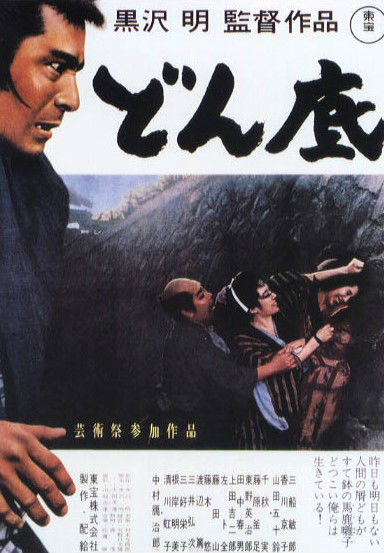
The Lower Depths (どん底, Akira Kurosawa, 1957)

“How can you go to hell if you’re already there?” quips a stoical gangster, perhaps the only denizen of a rundown tenement block no longer looking for escape in Akira Kurosawa’s adaptation of the Gorky play The Lower Depths (どん底, Donzoko). In general, much of Kurosawa’s post-war work decries deliberate falsehood but paradoxically suggests that some degree of self-delusion is essential for surviving an otherwise hopeless world. The wandering pilgrim who arrives like some kind of emissary from the land above says as much as he offers what may turn out to be false promises of a better world to come, but as one of his charges points out he does so “out of pity for those beyond hope.”

Then again, perhaps spirituality won’t save you either. As the film opens, it’s two monks who are seen throwing leaves over a cliff describing the settlement below as “just an old rubbish dump”, which in a sense it is if that were not such a cruel thing to say. In any case, the people who live here are all those who have already fallen into desperation, exiled from mainstream society and caught between a fierce desire to claw their way back up and the despair of knowing that in all likelihood they never will. A man who claims to be a former samurai waxes on his illustrious past, while a melancholy sex worker meditates on the lost love that reduced her to current position, and a stage actor laments his failing memory his mind now fogged by years of alcohol abuse that he says have already poisoned his “bitol organs”. A tinker secretly thinks he’s better than those around him. He’s only been here six months and insists that he’s a skilled craftsman who can continue working, but blames his desperate circumstances on the sickly wife whose death he quietly awaits assuming it will free him of this burden and thereafter this place.

It doesn’t, of course. He sells his tools to pay for her funeral, and otherwise appears lost no longer a husband to a dying wife. In essence the film revolves around a confrontation between the pilgrim who offers what may well be an illusion of salvation and the thief Sutekichi (Toshiro Mifune) who challenges him but begins to believe that it really may be possible for him to leave this place and take the woman he loves, Okayo (Kyoko Kagawa), with him or else fall further and remain trapped in this mortal hellscape. The problem there is that Sutekichi had previously been having an affair with the landlord’s wife Osugi (Isuzu Yamada) who is Okayo’s sister. Though Osugi, whose hope of escape through romance is dashed, first takes against her sister, she later offers to surrender her to Sutekichi if only he will assist her by killing her greedy husband Rokubei (Ganjiro Nakamura). 

In this cold and austere place which is in effect a living hell, there is a sense that many of the residents are already dead. Rokubei’s face is the palest of them all, suggesting that he is already too far gone ever to be saved and most likely doesn’t want to be anyway for in this terrible place he is in effect the king. Osugi is the queen, but often framed behind bars now a prisoner already too corrupt to leave the tenement behind. Her uncle, Deputy Shimazo (Kichijiro Ueda), has a largely illusionary sense of power in his position in a policeman which he prosecutes selectively and mostly at the service of the landlord. In the climactic closing scenes, his policeman’s baton is stolen by the drunkard Unokichi (Yu Fujiki) who dances through the streets with it demonstrating just how little authority he actually wields finally losing his position when the landlord is deposed and his familial connections become irrelevant. He inherits the landlord’s residence, but is reduced to the husband of the sweet seller Otaki (Nijiko Kiyokawa) whose status as a working woman is perhaps higher than his. 

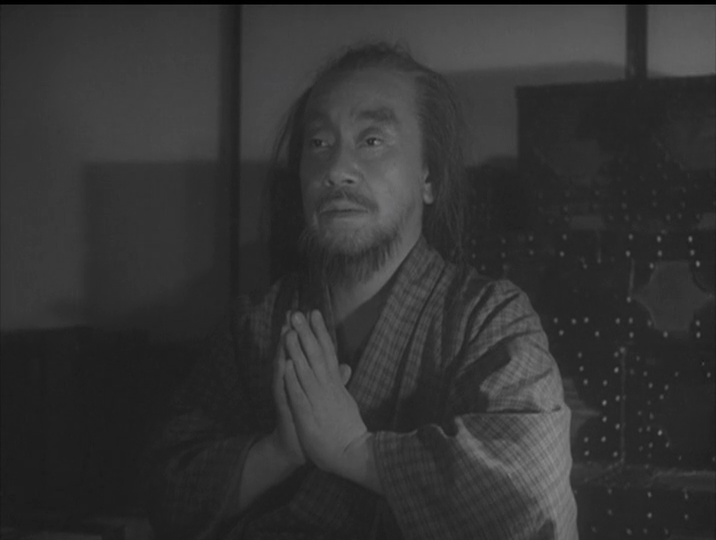
Yet the pilgrim seems to think there is still time to save Sutekichi who at heart wants to go straight but is also resentful admitting that in a world where swindlers prosper perhaps it is foolish not to be a swindler. The pilgrim promises all of them a “better place”. “As long as you believe you’ll find it, you surely will”, he explains telling the actor about a temple that can help him cure his alcoholism while simultaneously urging the tinker’s suffering wife to give in to her fate and go to Buddha’s embrace as soon as possible. Perhaps he sincerely believes these things to be true, but also seems to have a sense that even if they weren’t these hopeless people could not go on if they knew there was no way out. They all say they’ll leave, but discover there are only two means of escape, to die or fall still further in banishment from this already banished place. Only Okayo whose final whereabouts remain unknown may finally have been able to free herself. Staying almost exclusively with the claustrophobic confines of the drafty tenement as wind the whistles through it, Kurosawa frames the space of one of existential purgatory but perhaps suggests that in the absence of salvation a comforting falsehood is the only means of survival.


The Lower Depths screens at the BFI Southbank, London on 19th & 30th January 2023 as part of the Kurosawa season.

Freelance Samurai (桃太郎侍, Kenji Misumi, 1957)

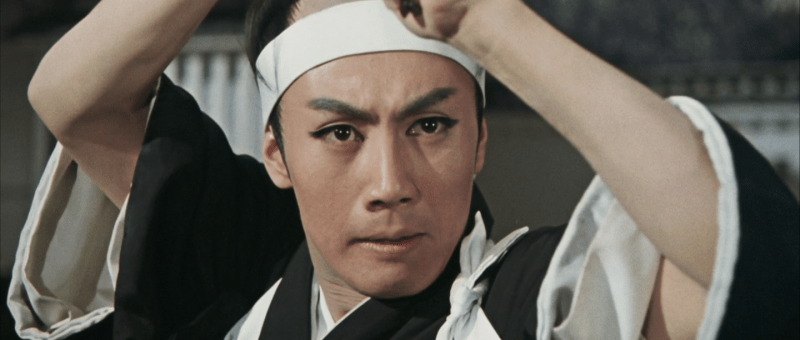
An abandoned son resolves to wander Japan killing the “demons” of Edo-era society in Kenji Misumi’s adaptation of the popular novel by Kiichiro Yamate, Freelance Samurai (桃太郎侍, Momotaro-Zamurai, AKA The Demon Crusader). Starring a young Raizo Ichikawa in dual roles as twins separated at birth, a familiar jidaigeki plot device, Misumi’s drama is among his most conventional but still finds the demon-hunting hero of the title resolutely rejecting the “silly rules of the samurai” in refusing to serve or be served while resisting the persistent corruptions of the feudal society. 

First spotted returning a paper balloon to some children playing in the street, the hero (Raizo Ichikawa) later gives his name as “Momotaro”, the legendary folklore champion who was born from a peach and then went on to befriend various forest creatures travelling with them to fight the cruel demons who had been oppressing the peasants of the farmland where his adoptive parents lived. The name is a sense ironic in that it reflects his own fatherless existence having discovered that he is actually Shinjiro, the younger brother of the heir to a nearby clan, Shinnosuke (also Raizo Ichikawa). At this particular cultural moment, twins were thought inauspicious with one usually cast out, Momotaro in someways more fortunate than most in that he was sent away and raised by his mother to whom he was apparently devoted. In fact, as he says, he only delayed his demon-killing mission out of consideration for her but that now that she has sadly passed away he is free to pursue justice as a wandering ronin determined to serve no master but himself. 

This insistence on justice and opposition to samurai oppression is made plain in the opening scene in which he rescues pickpocket Kosuzu (Michiyo Kogure) from two samurai she’d robbed who were hassling her. She of course falls in love with him, but is also party to the central conspiracy engineered by high ranking retainer Shuzen (Shosaku Sugiyama) who is plotting to unseat Shinnosuke in favour of the lord’s illegitimate young son Mantaro (Junta Yamamoto) with the help of ambitious underling Iga (Seizaburo Kawazu). Momotaro is swept into the intrigue when he rescues the beautiful daughter of loyal retainer Iori (Gen Shimizu), Yuri (Yoko Uraji), from an attempted kidnapping. Both sides want to recruit him for his bravery and sword skill, but Momotaro is reluctant to help either of them especially on discovering the ironic coincidence that he finds himself caught up in a succession struggle in the very clan which previously cast him out. 

Deciding to help when hearing that Shinnosuke has been poisoned, Momotaro demonstrates his strategic abilities in coming up with a ruse to trick the conspirators but remains somewhat conflicted remembering his mother’s dying words that he should hold no grudges even as a part of him continues to resent his abandonment. That may in part explain his defiant rejection of the hierarchal society, ignoring the “silly” rules of the samurai while insisting on equality in refusing to serve or be served by anyone else. In a nod to the folktale, his greatest friend is a humble peddler, Inosuke “the monkey man” (Shunji Sakai) who gives him a place to stay in the rundown tenement where he lives affectionately known as “ghost apartments”. Even so, Inosuke as much servant as sidekick, and while he is in a sense torn between the earthy pickpocket Kosuzu who is later redeemed through her loyalty to him and the beautiful samurai daughter Yuri it seems fairly clear that he will eventually opt for his class-appropriate match the only surprising thing being that it is she who transgressively breaks with convention in abandoning her samurai home in order to follow Momotaro out on the road as he hunts other “demons” corrupting the social order all over Japan. 

Shot in colour academy ratio, Freelance Samurai features little of Misumi’s trademark natural vistas save for the poignant pillow shots of flowers growing in the compound though it does reflect his preoccupation with absent fathers and perpetual wandering. In the many dualities in play, it is also interesting that Momotaro is depicted as the more capable of the brothers, Ichikawa’s characterisation of the cosseted Shinnosuke as a kind and compassionate, effete young man rather than the strapping warrior the heir to a clan is expected to be hinting perhaps at the perceived weakness that allowed the conspirators to assume they could usurp him. Similarly, it’s Michiyo Kogure’s tragic pickpocket undone by her love for the noble samurai that makes the deeper impression rather than the rather insipid Yuri who makes her mark only in her final decision to follow Momotaro unbidden. Momotaro’s quest may in a sense be ironic in that he outwardly rejects the superiority of the samurai but effectively preserves it even as he determines to clean out the oppressive “demons” intent on corrupting the land just as his folkloric namesake had done, but in its own way has its defiant nobility in his fierce love of justice and equality.