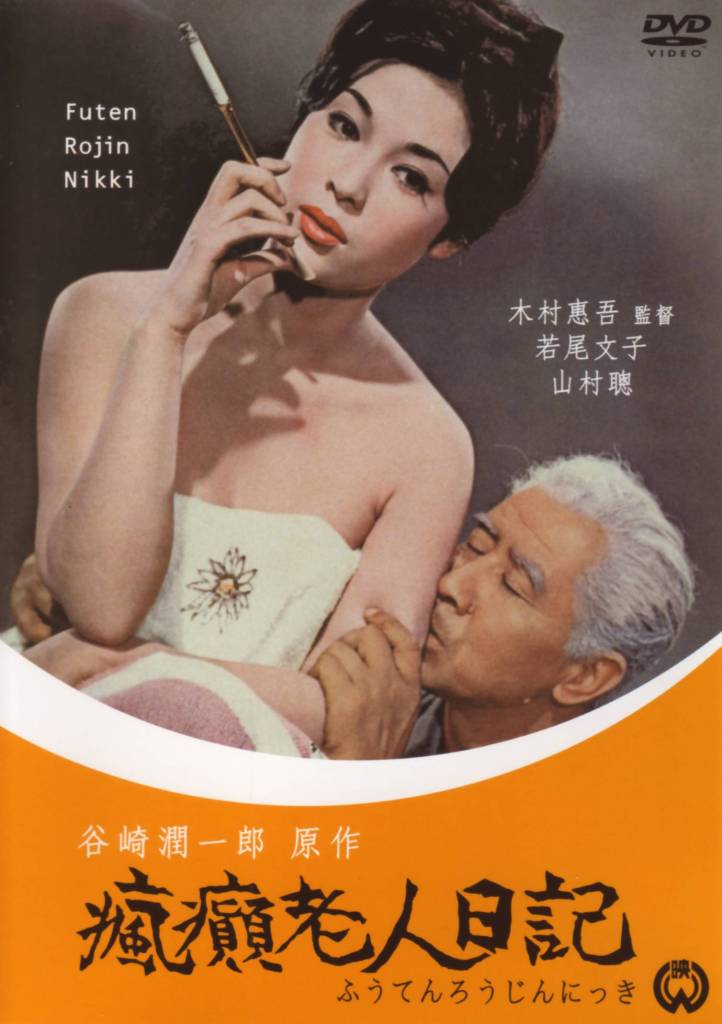
 Junichiro Tanizaki is giant of Japanese literature whose work has often been adapted for the screen with Manji alone receiving four different filmic treatments between 1964 and 2006. His often erotic themes tallied nicely with those of the director of the 1964 version, Yasuzo Masumura who also adapted Tanizaki’s The Tattooist under the title of Irezumi, both of which starred Masumura’s muse Ayako Wakao. Preceding both of these, Keigo Kimura’s Diary of a Mad Old Man (瘋癲老人日記, Futen Rojin Nikki) adapts a late, and at that time extremely recent, work by Tanizaki which again drew some inspiration from his own life as it explores the frustrated sexuality of an older man facing partial paralysis following a stroke. Once again employing Wakao as a genial femme fatale, Kimura’s film is a broadly comic tale of an old man’s folly, neatly undercutting its darker themes with naturalistic humour and late life melancholy.
Tanazaki’s stand in is a wealthy old man, Utsugi (So Yamamura), who has recently suffered a stroke which has paralysed his right hand and significantly reduced his quality of life. He currently operates a large household with a number of live-in staff, including a round the clock nurse, his wife, son, daughter-in-law, and grandson. The son, Joukichi (Keizo Kawasaki), is a successful executive currently having an affair with a cabaret dancer, leaving his extremely beautiful wife, Sachiko (Ayako Wakao), herself also formerly a dancer, at a loose end. Though approaching the end of his life and possibly physically incapable of acting on his desire, Utsugi is consumed with lust for Sachiko and thinks of little else but how to convince her to allow him even the smallest of intimacies. Sachiko, for her part, is not particularly interested in pursuing a romantic entanglement with her aged father-in-law but is perfectly aware of her power over him which she uses to fulfil her material desires. Meanwhile, Utsugi’s rather pathetic behaviour has not gone unnoticed by the rest of the household who view his desperation with a mix of pity, exasperation, and outrage.
Kimura’s film takes more of an objective view than the subjective quality of the title would suggest but still treats its protagonist with a degree of well intentioned sympathy for a man realising he’s reached the final stages of his life. Utsugi’s sexual desire intensifies even as his body betrays him but this very life force becomes his rebellion against the encroaching onset of decay as he clings to his virility, trying to off-set the inevitable. As such, conquest of Sachiko becomes his last dying quest for which he is willing to sacrifice anything, undergo any kind of degradation, simply to climb one rung on the ladder towards an eventual consummation of his desires.
Sachiko, instinctively disliked by her mother-in-law, is more than a match for Utsugi’s finagling. A young, confident, and beautiful woman, Sachiko has learned how to do as she pleases without needing permission from anyone for anything. In this, the pair are alike – both completely self aware yet also in full knowledge of those around them. The strange arrangement they’ve developed is a game of reciprocal gift giving which is less a war than a playful exercise in which both are perfectly aware of the rules and outcomes. Sachiko allows Utsugi certain privileges beginning with slightly patronising flirtation leading to leaving the bathroom door unlocked when she showers (behind a curtain) and permitting Utsugi to kiss and fondle her leg (even if she hoses it down, complaining it feels like being licked by a slug).
Tanizaki’s strange fetish is again in evidence as Utsugi finally deifies Sachiko in creating a print of the sole of her foot which he intends to have carved into his grave so he can live protected beneath her forever, as insects are under the foot of Buddha. This final act which takes the place of a literal consummation goes some way towards easing his desire but may also be the one which pushes him towards the grave he was seeking to avoid. Notably, Sachiko is bored and eventually exhausted by the entire enterprise even whilst Utsugi is caught in the throws of his dangerous ecstasy.
Other members of the household view the continuing interaction of Sachiko and Utsugi with bemusement, pitying and resenting the old man for his foolishness whilst half-admiring, half disapproving of Sachiko’s manipulation of his desires. Utsugi had been a stingy man despite his wealth and even now risks discord within his own family by refusing to assist his grown-up daughter who finds herself in financial difficulty and in need of familial support, yet lavishing vast sums on Sachiko for expensive trinkets even as she continues an affair with a younger man right under his nose. Still, Sachiko uses what she has and gets what she wants and Utsugi attempts to do the same only less successfully, completely self aware of his foolishness and the low probability of success yet buoyed with each tiny concession Sachiko affords him. A wry and unforgiving exploration of the link between sex and death, Diary of a Mad Old Man undercuts the less savoury elements of its source material with a broadly humorous, mocking tone gradually giving way to melancholy as the old man begins to accept his own impotence, the light around him dwindling while Sachiko’s only brightens.
 Before Seijun Suzuki pushed his luck too far with the genre classic
 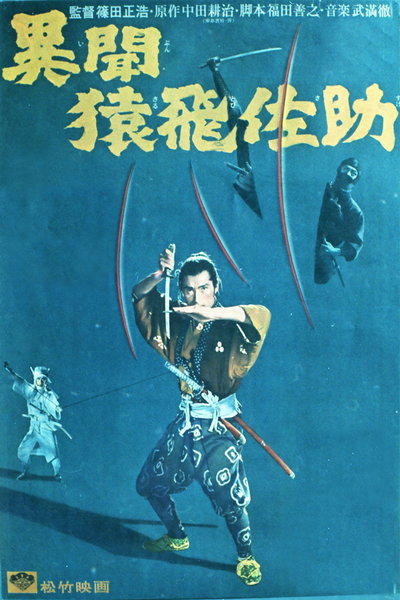 Nothing is certain these days, so say the protagonists at the centre of Masahiro Shinoda’s whirlwind of intrigue, Samurai Spy (異聞猿飛佐助, Ibun Sarutobi Sasuke). Set 14 years after the battle of Sekigahara which ushered in a long period of peace under the banner of the Tokugawa Shogunate, Samurai Spy effectively imports its contemporary cold war atmosphere to feudal Japan in which warring states continue to vie for power through the use of covert spy networks run from Edo and Osaka respectively. Sides are switched, friends are betrayed, innocents are murdered. The peace is fragile, but is it worth preserving even at such mounting cost?
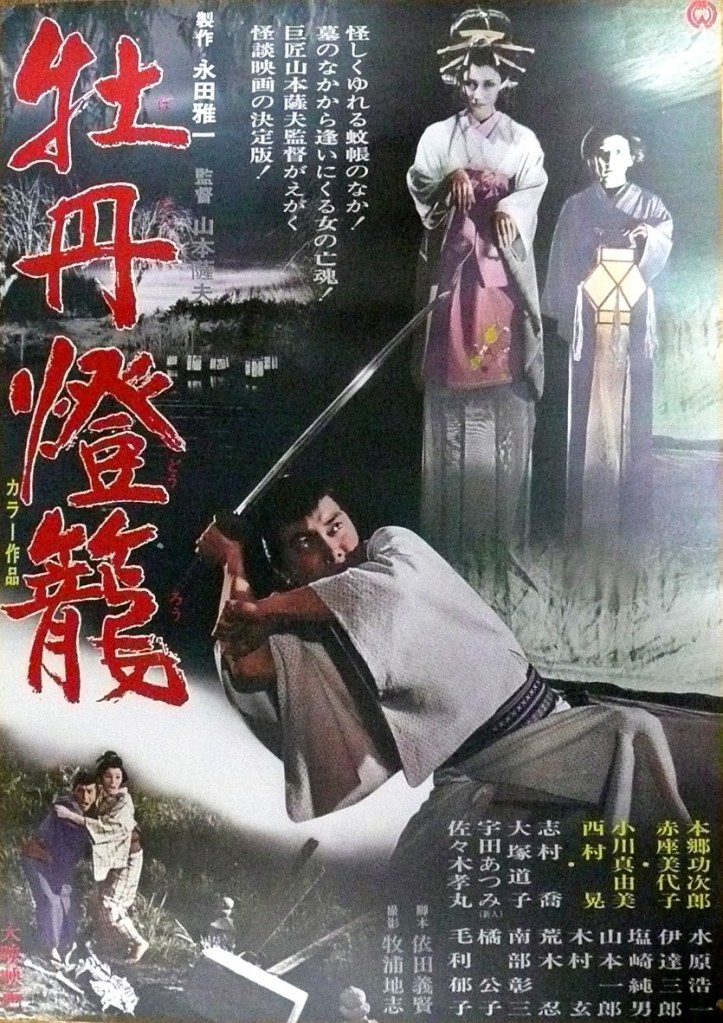 The Peony Lantern (牡丹燈籠, Kaidan Botan Doro) has gone by many different names in its English version – The Bride from Hades, The Haunted Lantern, Ghost Beauty, and My Bride is a Ghost among various others, but whatever the title of the tale it remains one of the best known ghost stories of Japan. Originally inspired by a Chinese legend, the story was adapted and included in a popular Edo era collection of supernatural tales, Otogi Boko (Hand Puppets), removing much of the original Buddhist morality tale in the process. In the late 19th century, the Peony Lantern also became one of the earliest standard rakugo texts and was then collected and translated by Lafcadio Hearn though he drew his inspiration from a popular kabuki version. As is often the case, it is Hearn’s version which has become the most common.
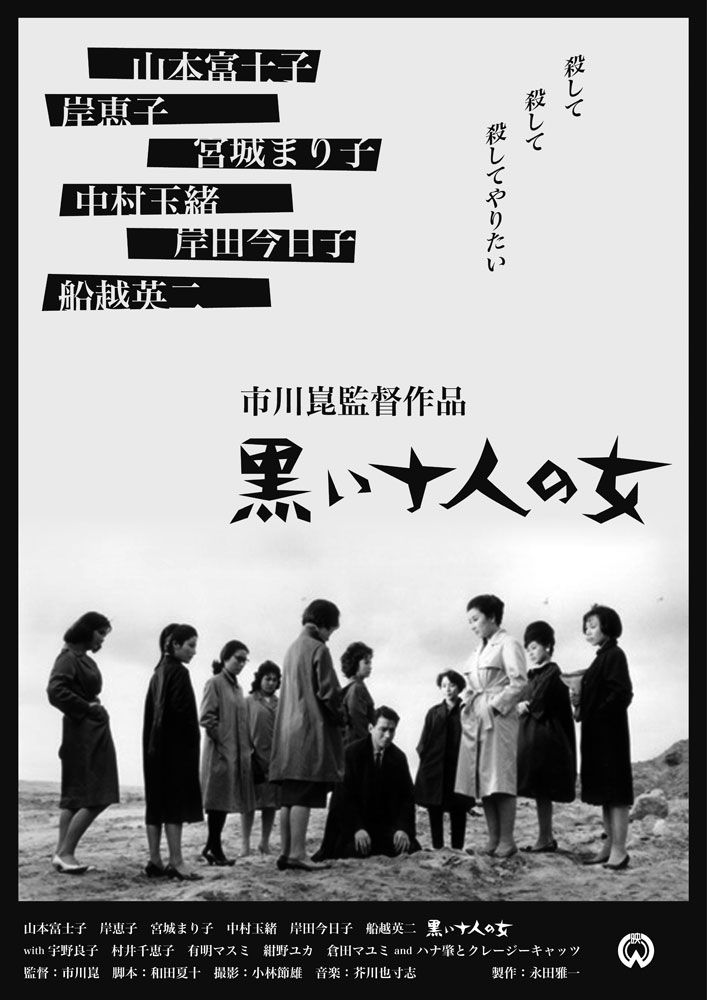 Kon Ichikawa, wry commenter of his times, turns his ironic eyes to the inherent sexism of the 1960s with a farcical tale of a philandering husband suddenly confronted with the betrayed disappointment of his many mistresses who’ve come together with one aim in mind – his death! Scripted by Natto Wada (Ichikawa’s wife and frequent screenwriter until her retirement in 1965), Ten Dark Women (黒い十人の女, Kuroi Junin no Onna) is an absurd noir-tinged comedy about 10 women who love one man so much that they all want him dead, or at any rate just not alive with one of the others.
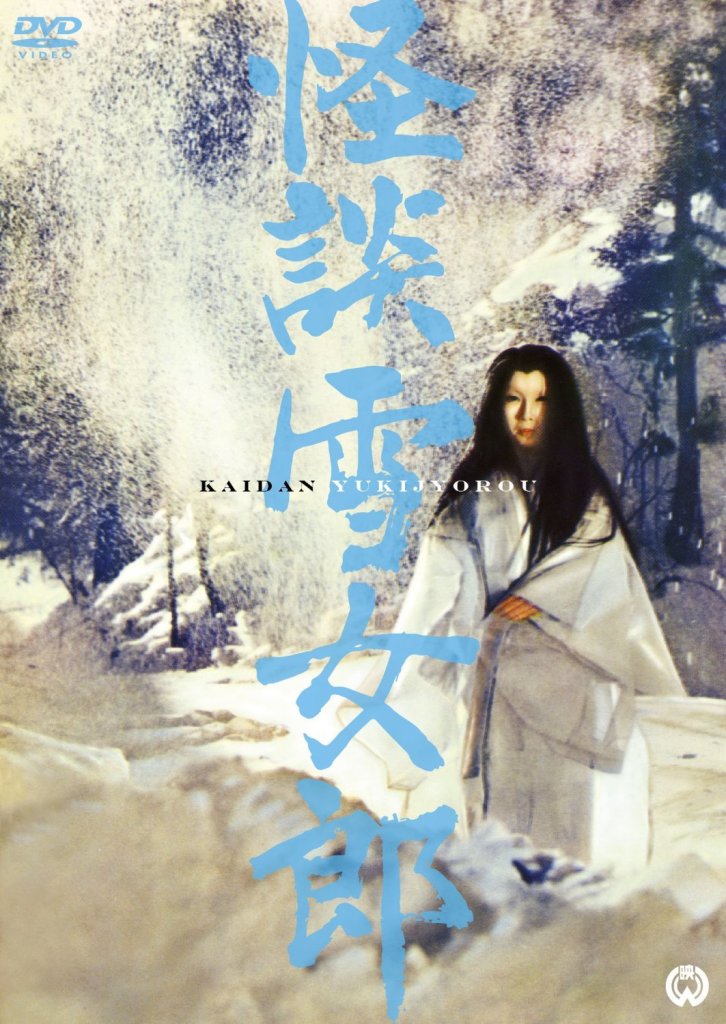 The Snow Woman is one of the most popular figures of Japanese folklore. Though the legend begins as a terrifying tale of an evil spirit casting dominion over the snow lands and freezing to death any men she happens to find intruding on her territory, the tale suddenly changes track and far from celebrating human victory over supernatural malevolence, ultimately forces us to reconsider everything we know and see the Snow Woman as the final victim in her own story. Previously brought the screen by Masaki Kobayashi as part of his
 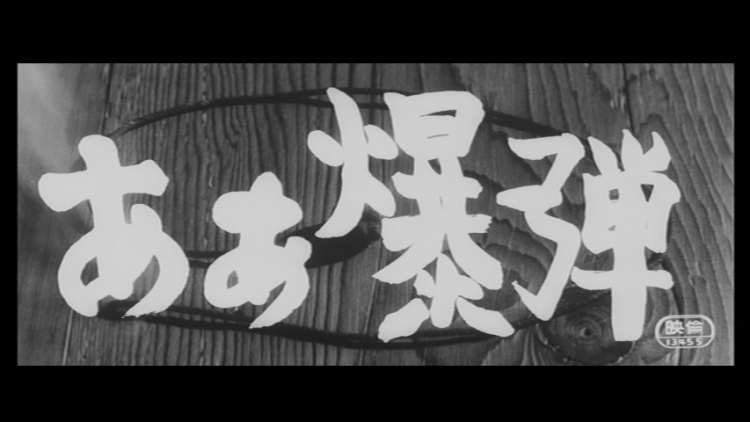 Being stood up is a painful experience at the best of times, but when you’ve been in prison for three whole years and no one comes to meet you, it is more than usually upsetting. Sixth generation Oyabun of the Ona clan, Daisaku, has made a new friend whilst inside – Taro is a younger man, slightly geeky and obsessed with bombs. Actually, he’s a bit wimpy and was in for public urination (he also threw a firecracker at the policeman who took issue with his call of nature) but will do as a henchman in a pinch. Daisaku wanted him to see all of his yakuza guys showering him with praise but only his son actually turns up and even that might have been an accident.
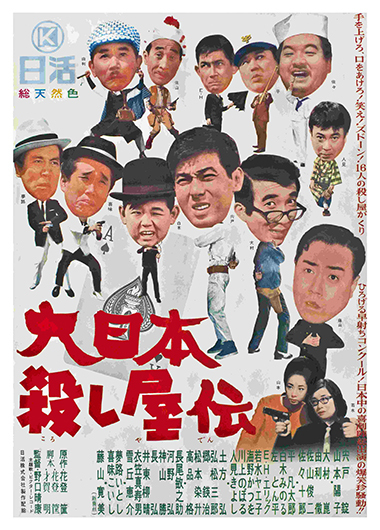 “If you don’t laugh when you see this movie, I’m going to execute you” abacus wielding hitman Komatsu warns us at the beginning of Haryasu Noguchi’s Murder Unincorporated (大日本殺し屋伝, Dai Nihon Koroshiya-den). Luckily for us, it’s unlikely he’ll be forced to perform any “calculations”, and the only risk we currently run is that of accidentally laughing ourselves to death as we witness the absurd slapstick adventures of Japan’s craziest hitman convention when the nation’s “best” (for best read “most unusual”) contract killers descend on a small town looking for “Joe of Spades” – a mysterious assassin known only by the mole on the sole of his foot.
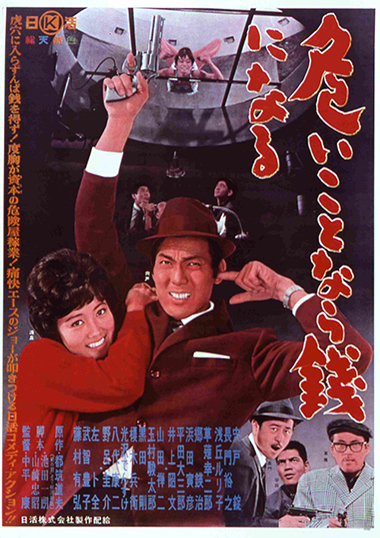 Where there’s danger, there’s money! Or, maybe just danger, who knows but whatever it is, it certainly doesn’t lack for excitement. Ko Nakahira is best known for his first feature, Crazed Fruit, the youthful romantic drama ending in speed boat murder which ushered in the Sun Tribe era. Though he later tried to make a return to more artistic efforts, it’s Nakahira’s freewheeling Nikkatsu crime movies that have continued to capture the hearts of audience members. Danger Pays (AKA Danger Paws, 危いことなら銭になる, Yabai Koto Nara Zeni ni Naru) is among the best of them with its cartoon-like, absurd crime caper world filled with bumbling crooks and ridiculous setups.
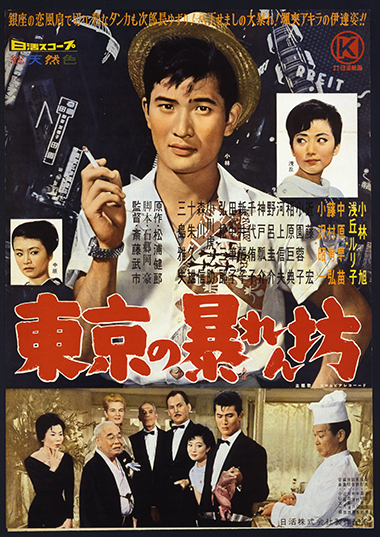 The bright and shining post-war world – it’s a grand place to be young and fancy free! Or so movies like Tokyo Mighty Guy (東京の暴れん坊, Tokyo no Abarembo) would have you believe. Casting one of Nikkatsu’s tentpole stars, Akira Kobayshi, in the lead, Buichi Saito’s Tokyo Mighty Guy is, like previous Kobayashi/Saito collaboration
  Windows on Worlds