 Although Masahiro Shinoda has long been admitted into the pantheon of Japanese New Wave masters, he is mostly remembered only for his 1969 adaptation of a Chikamatsu play, Double Suicide. Less overtly political than many of his contemporaries during the heady years of protest and rebellion, Shinoda was a consummate stylist whose films aimed to dazzle with visual flair or often to deliberately disorientate with their worlds of constant uncertainty. Like so many of the directors who would go on to form what would retrospectively become known as the Japanese New Wave, Shinoda also started out as a junior AD, in this case at Shochiku where he felt himself stifled by the studio’s famously safe, inoffensive approach to filmmaking.
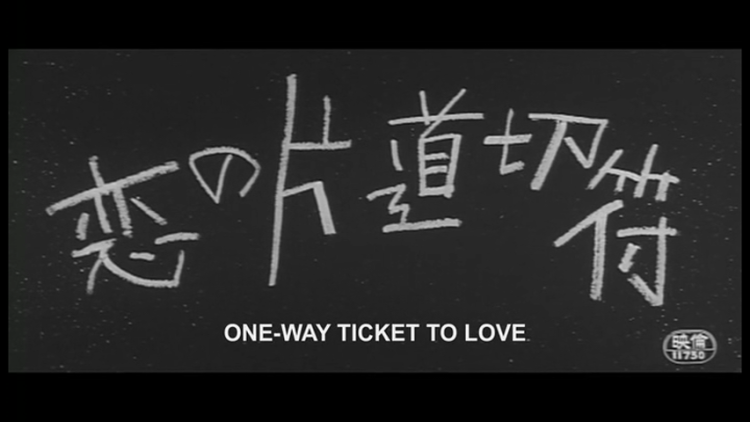
By the late ‘60s that approach was itself failing and so the studio began to take a few chances on new young directors including Shinoda who was afforded the opportunity to script and direct his first feature – One-way Ticket to Love (恋の片道切符, Koi no katamichi kippu). Studio mandated programme picture as it was, Shinoda still had to play by some of the rules – notably that the title song which is a Japanese cover of the 1959 Neil Sedaka hit needed to feature prominently. Shinoda does indeed showcase the song throughout the film though he also paints a dark and unforgiving picture of the burgeoning talent management industry whilst sympathising with those trapped in the underworld to which the effects of growing economic prosperity have yet to trickle down.
Down on his luck 20 year old alto-sax player Kenji Shirai (Kazuya Kosaka) has resorted to hanging around stations in Tokyo alongside a host of other unemployed artists trying to get picked up for a job and having little success. His luck changes when a young female talent fixer, Miss Yoshinaga (Yachiyo Otori), finds herself in need of an alto sax player with immediate effect. Kenji is elated to find work but somewhat troubled when the club is abruptly raided, giving him a taste of the precariousness of the underground club scene. Nevertheless, Yoshinaga hands him a card and tells him to come to her office tomorrow in case she has any more work for him.
On his way home, Kenji comes across a distressed woman crying her heart out dangerously near a high bridge. Fearing she is about to commit suicide, Kenji comforts her and then takes her home for the night before introducing her to Yoshinaga the next day in the hope that she may also have work for a young woman – she does, but as a nudie dancer. Mitsuko (Noriko Maki) reluctantly takes the job leaving Kenji conflicted but there’s more drama in both of their lives to come in the form of “The Japanese Elvis” Ueno (Masaaki Hirao), Mitsuko’s married ex-boyfriend Tajima, and an errant pistol belonging to Kenji’s petty yakuza roommate.
Although Shinoda was less noticeably political than many of the other directors of the time, his sympathy remains with those who feels themselves to be oppressed or have in someway been cast aside by an unforgiving world. Kenji in particular feels himself to be just such a person, remarking that the world is a cruel place in which people look after their own interests and are prepared to use and discard those less fortunate in order to get what they want. Describing himself and Mitsuko as nothing more than offerings fit for burning on the altar that is the post-war economy, Kenji’s sense of hopelessness is palpable. Despite having acted to rescue Mitsuko from her suicidal contemplation, he feels powerless to help her in any other way and honestly tells her so each time she comes to him for comfort or assistance. Though his earnestness has an honest quality in its determination not to deceive, it also has an air of cowardice as he refuses to even discourage the woman he loves from doing something he knows she will regret because he has already decided that resistance is futile.
Mitsuko, by contrast, finds herself entirely without agency. Betrayed by the man she loved on discovering that he was already married and had been stringing her along, she finds it difficult to adjust to living life alone. Consequently she finds herself wooed by the big idol star of the day, Ueno, and then swept into a studio scam in which the pair are tricked into a sexual relationship with dire consequences for both. Ueno, who sings the all important title song at several points throughout the film, might be in a more comfortable position than Kenji but he is no more free. The studio’s prime cash cow, Ueno is pimped out to his hoards of screaming teenage girls and denied anything like a private life outside of studio control. As the latest dancer at the club, Mitsuko is assured that she’s going out there a rookie and coming back a star but her fate, along with Ueno’s, is entirely in the hands of the managers who can make or break a career at will.
If the interpersonal drama fails to convince, Shinoda makes up for it with unusually dynamic and interesting cinematography much more like the youth movies Nikkatsu were making at the time than the usual Shochiku stateliness. Looking much more like the European New Wave, Shinoda makes fantastic use of tracking shots and unusual framing to draw attention to the isolation of his protagonists. The club set finale featuring the title song is a masterclass in tension as Kenji roams around the audience, caught among the crowd of screaming girls before pausing for an up close contemplation of Ueno which leads him to his final decision. A programme picture, but one in which Shinoda declared his stylistic intentions if not his scripting prowess. One-way Ticket to Love dazzles with visual flair but never captivates on anything other than a superficial level as its story of love frustrated by social inequality and controlling authority fails to deliver on the melancholy promise of the title.
Final sequence featuring the title song by Masaaki Hirao (English subtitles)
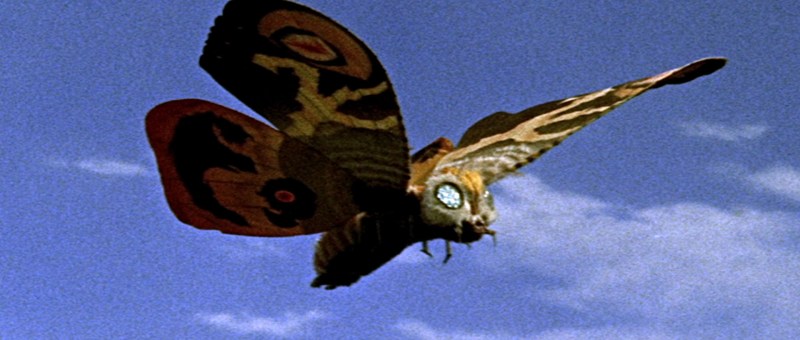
 Japan’s kaiju movies have an interesting relationship with their monstrous protagonists. Godzilla, while causing mass devastation and terror, can hardly be blamed for its actions. Humans polluted its world with all powerful nuclear weapons, woke it up, and then responded harshly to its attempts to complain. Godzilla is only ever Godzilla, acting naturally without malevolence, merely trying to live alongside destructive forces. No creature in the Toho canon embodies this theme better than Godzilla’s sometime foe, Mothra. Released in 1961, Mothra does not abandon the genre’s anti-nuclear stance, but steps away from it slightly to examine another great 20th century taboo – colonialism and the exploitation both of nature and of native peoples. Weighty themes aside, Mothra is also among the most family friendly of the Toho tokusatsu movies in its broadly comic approach starring well known comedian Frankie Sakai.
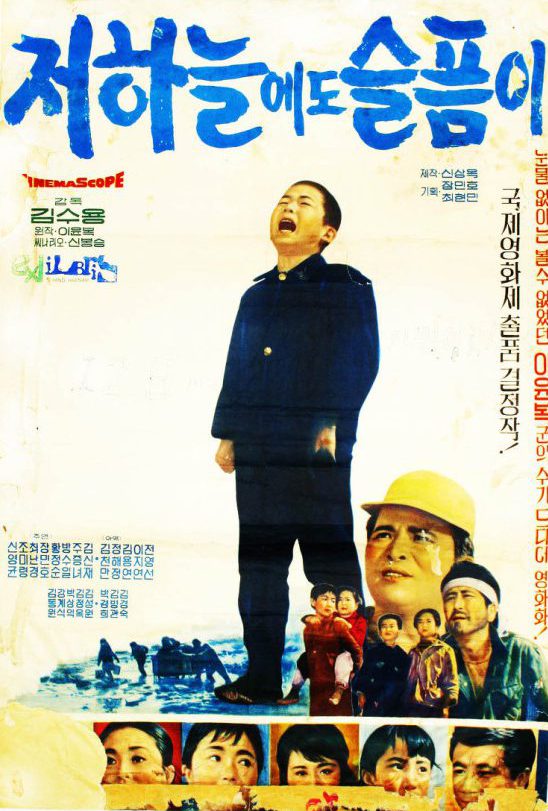 It’s a sorry enough tale to hear that many silent classics no longer exist, regarded only as disposable entertainment and only latterly collected into archives and preserved as valuable film history, but in the case of South Korea even mid and late 20th century films are unavailable thanks to the country’s turbulent political history. Though often listed among the greats of 1960s Korean cinema, Sorrow Even Up in Heaven (저 하늘에도 슬픔이, Jeo Haneuledo Seulpeumi) was presumed lost until a Mandarin subtitled print was discovered in an archive in Taiwan. Now given a full restoration by the Korean Film Archive, Kim’s tale of societal indifference to childhood poverty has finally been returned to its rightful place in cinema history but, as Kim’s own attempt to remake the film 20 years later bears out, how much has really changed?
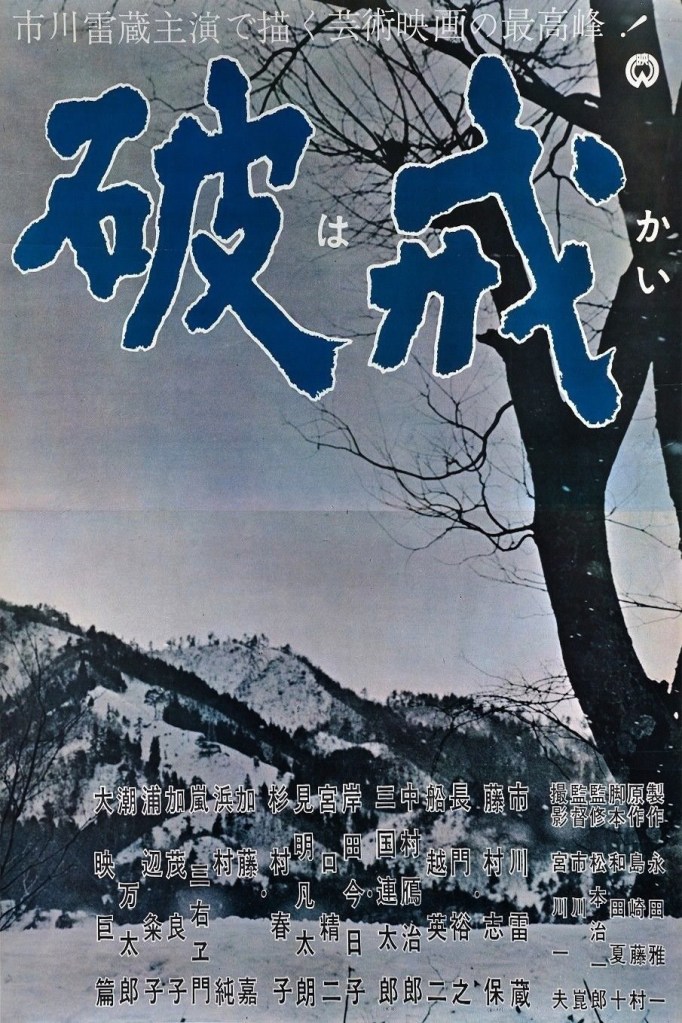 Kon Ichikawa’s approach to critiquing his society was often laced with a delicious slice of biting irony but he puts sarcasm to one side for this all too rare attempt to address the uncomfortable subject of Japan’s hidden underclass – the burakumin. The term itself simply means “people who live in hamlets” but from feudal times onwards it came to denote the kinds of people with whom others did not want to associate – notably those whose occupations dealt in some way with death from executioners and undertakers, to butchers and leatherworkers. Though outright discrimination against such people was outlawed during the Meiji restoration, social stigma and informal harassment remained common with some lingering tendency remaining even today.
 Post-war cinema took many forms. In Korea there was initial cause for celebration but, shortly after the end of the Japanese colonial era, Korea went back to war, with itself. While neighbouring countries and much of the world were engaged in rebuilding or reforming their societies, Korea found itself under the corrupt and authoritarian rule of Syngman Rhee who oversaw the traumatic conflict which is technically still ongoing if on an eternal hiatus. Yu Hyun-mok’s masterwork Aimless Bullet (오발탄, Obaltan) takes place eight years after the truce was signed, shortly after mass student demonstrations led to Rhee’s unseating which was followed by a short period of parliamentary democracy under Yun Posun ending with the military coup led by Park Chung-hee and a quarter century of military dictatorship. Of course, Yu could not know what would come but his vision is anything but hopeful. Aimless Bullets all, this is an entire nation left reeling with no signposts to guide the way and no possible destination to hope for. All there is here is tragedy, misery, and inevitable suffering with no possibility of respite.
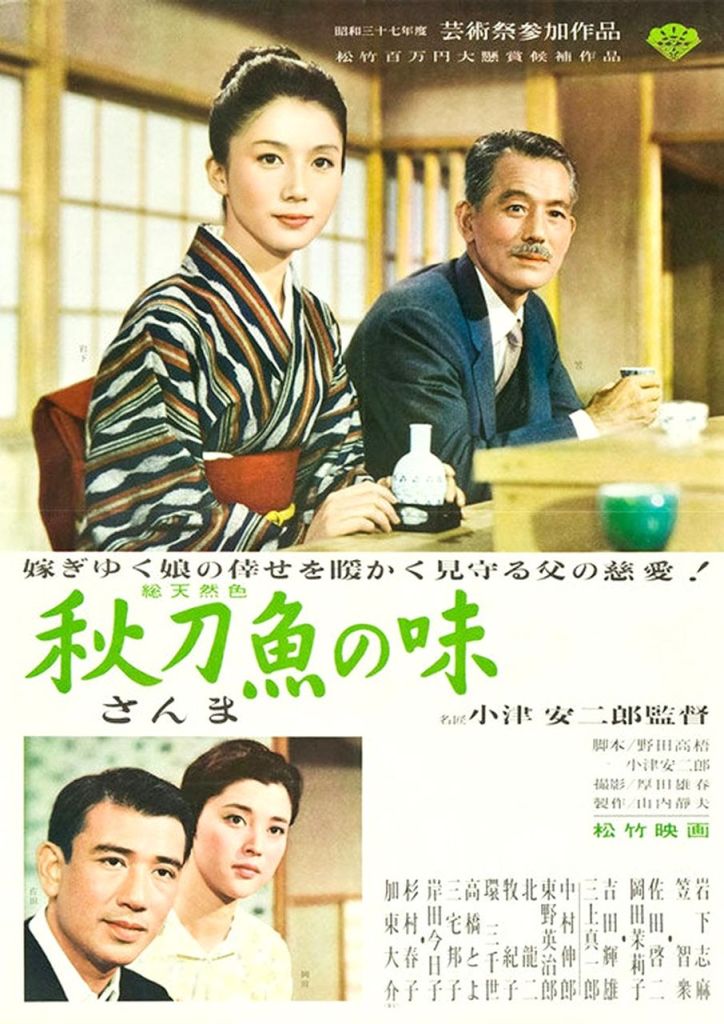 An Autumn Afternoon (秋刀魚の味, Sanma no Aji) was to be Ozu’s final work. This was however more by accident than design – despite serious illness Ozu intended to continue working and had even left a few notes relating to a follow up project which was destined never to be completed. Even if not exactly intended to become the final point of a thirty-five year career, An Autumn Afternoon is an apt place to end, neatly revisiting the director’s key concerns and starring some of his most frequent collaborators.
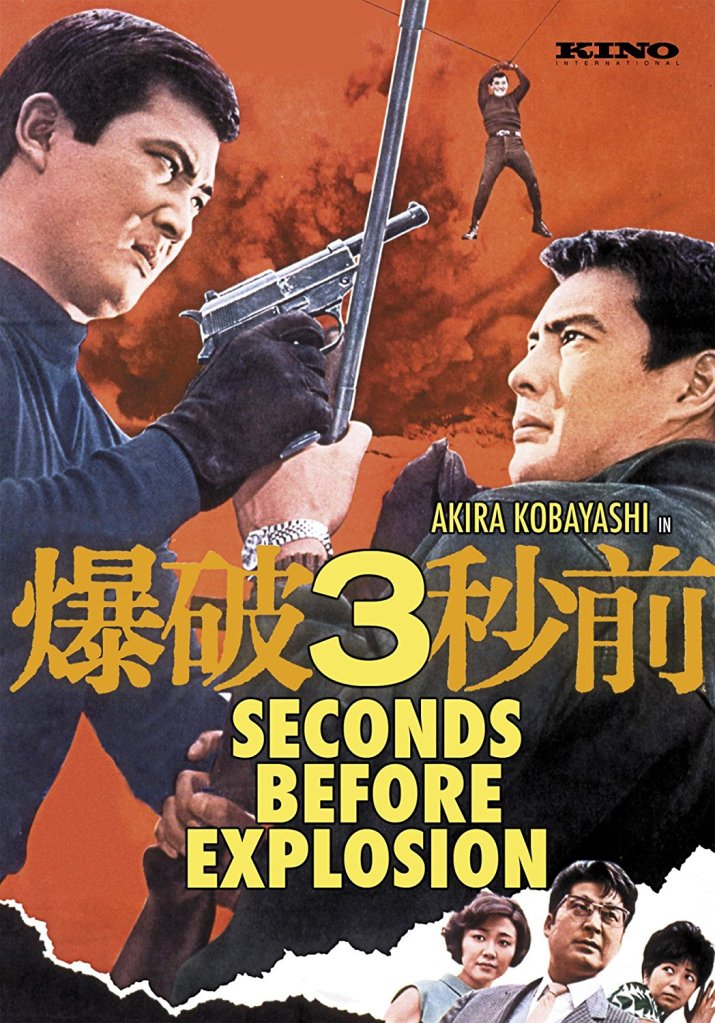 If Nikkatsu Action movies had a ringtone it would probably just be “BANG!” but nevertheless you’ll have to wait more than three rings for the Kaboom! in the admittedly cartoonish slice of typically frivolous B-movie thrills that is 3 Seconds Before Explosion (爆破3秒前, Bakuha 3-byo Mae). Once again based on a novel by Japan’s master of the hard boiled Haruhiko Oyabu, 3 Seconds Before Explosion is among his sillier works though lesser known director Motomu Ida never takes as much delight in making mischief as his studio mate Seijun Suzuki. What he does do is make use of Diamond Guy Akira Kobayashi’s boyish earnestness to keep things running along nicely even if he’s out of the picture for much of the action.
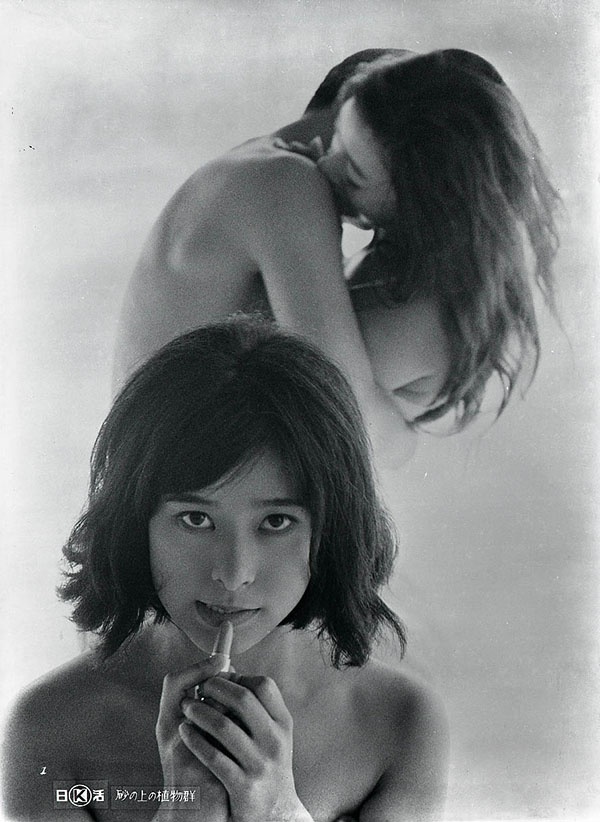 Despite being among the directors who helped to usher in what would later be called the Japanese New Wave, Ko Nakahira remains in relative obscurity with only his landmark movie of the Sun Tribe era, Crazed Fruit, widely seen abroad. Like the other directors of his generation Nakahira served his time in the studio system working on impersonal commercial projects but by 1964 which saw the release of another of his most well regarded films Only on Mondays, Nakahira had begun to give free reign to experimentation much to the studio boss’ chagrin. Flora on the Sand (砂の上の植物群, Suna no Ue no Shokubutsu-gun), adapted from the novel by Junnosuke Yoshiyuki, puts an absurd, surreal twist on the oft revisited salaryman midlife crisis as its conflicted hero muses on the legacy of his womanising father while indulging in a strange ménage à trois with two sisters, one of whom to he comes to believe he may also be related to.
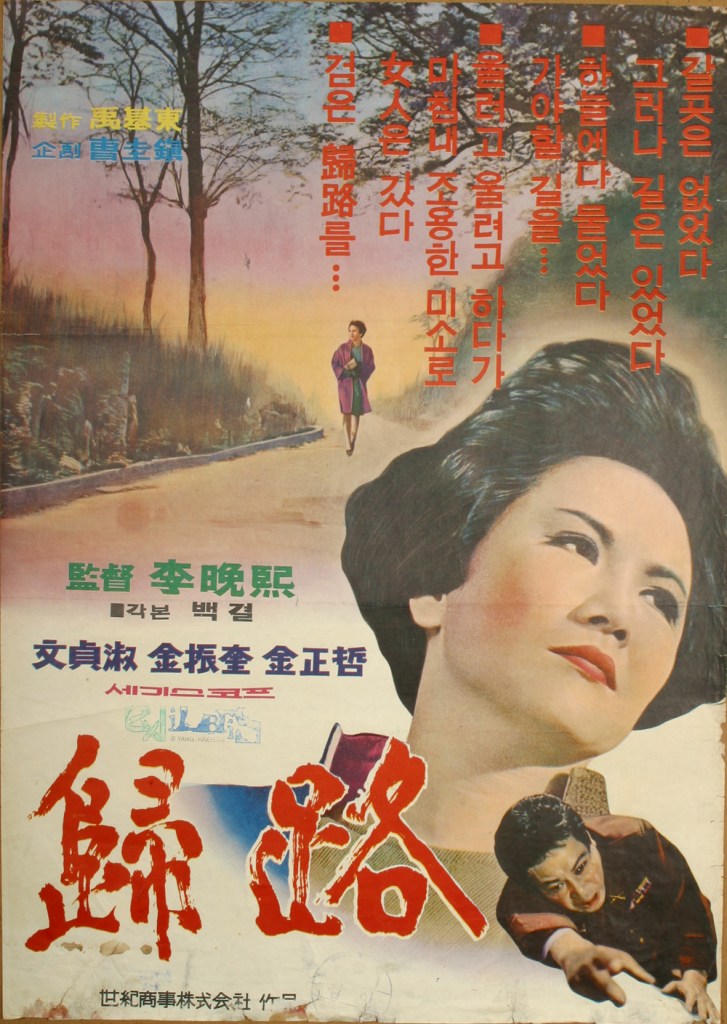 Lee Man-hee was one of the most prolific and high profile filmmakers of Korea’s golden age until his untimely death at the age of 43 in 1975. Like many directors of the era he had his fare share of struggles with the censorship regime enduring more than most when he was arrested for contravention of the code with his 1965 film Seven Female POWs and later decided to shelve an entire project in 1968’s
 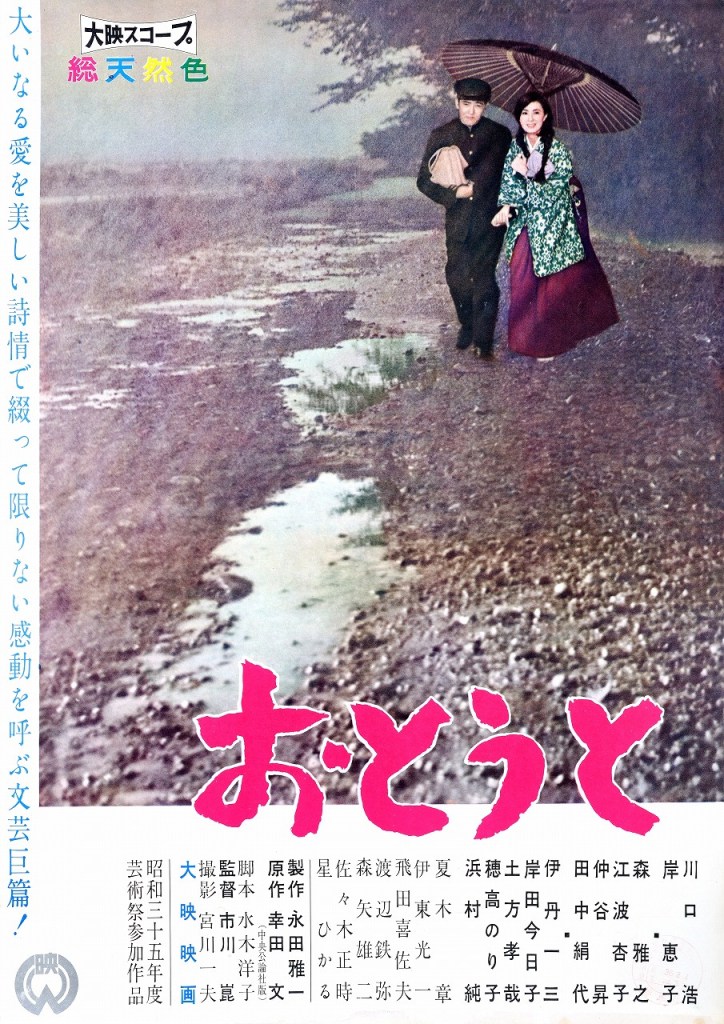 Perhaps oddly for a director of his generation, Kon Ichikawa is not particularly known for family drama yet his 1960 effort, Her Brother (おとうと, Ototo), draws strongly on this genre albeit with Ichikawa’s trademark irony. A Taisho era tale based on an autobiographically inspired novel by Aya Koda, Her Brother is the story of a sister’s unconditional love but also of a woman who is, in some ways, forced to sacrifice herself for her family precisely because of their ongoing emotional neglect.
