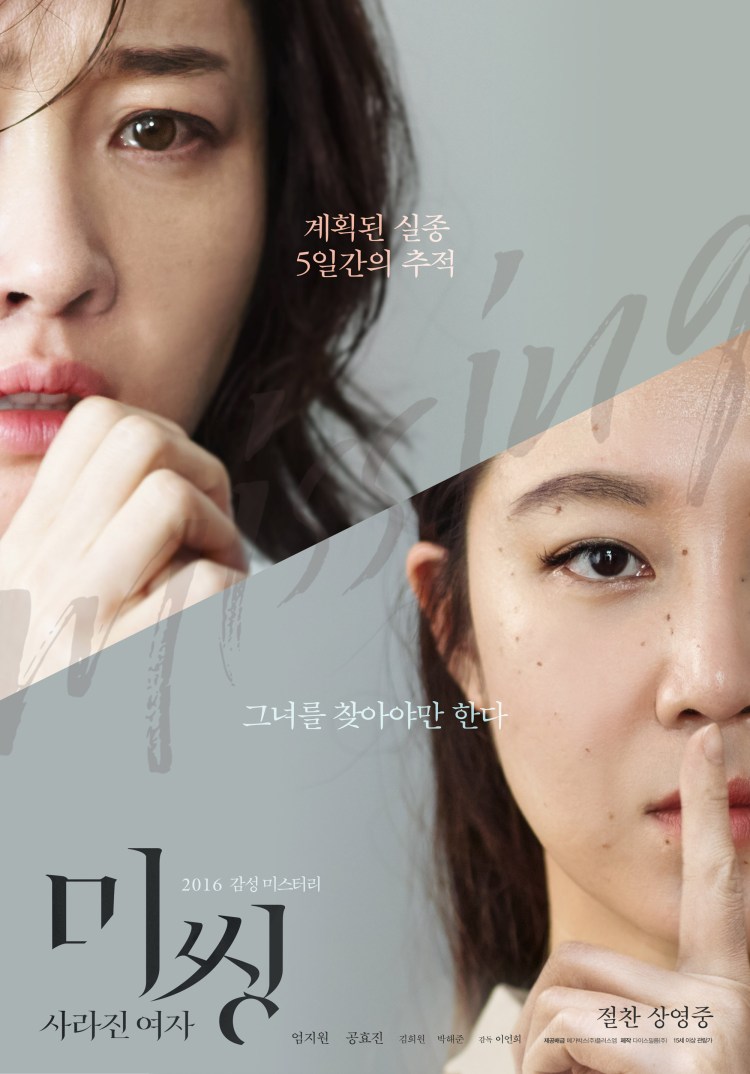
 Since ancient times drama has had a preoccupation with motherhood and a need to point fingers at those who aren’t measuring up to social expectation. E Oni’s Missing plays out like a Caucasian Chalk Circle for our times as a privileged woman finds herself in difficult circumstances only to have her precious daughter swept away from her just as it looked as if she would be lost through a series of social disadvantages. Missing is partly a story of motherhood, but also of women and the various ways they find themselves consistently misused, disbelieved, and betrayed. The two women at the centre of the storm, desperate mother Ji-sun (Uhm Ji-won) and her mysterious Chinese nanny Han-mae (Gong Hyo-jin) are both in their own ways tragic figures caught in one frantic moment as a choice is made on each of their behalves which will have terrible, unforeseen and irreversible consequences.
Ji-sun is a busy woman. Recently divorced from her philandering doctor husband, Ji-sun is in the middle of a nasty custody battle over her daughter, Da-eun, which she has technically already lost though refuses to concede. Seeing as Ji-sun is barely ever at home (and when she is, she’s often still working), Chinese nanny, Han-mae is on hand to help her out. Han-mae’s Korean is imperfect, but she’s good with Da-eun and seems to have the knack for calming both the little one and her mum.
Other than the custody battle heating up as Ji-sun’s mother-in-law is intent on getting her grand-daughter away from her son’s awful former wife, Ji-sun’s life was functioning pretty well, all things considered. When she comes home one day and realises Han-mae and Da-eun aren’t around she’s a little put out but assumes they’re just delayed, have stopped off with friends, or are off somewhere having a lovely time without her. When they haven’t comeback by nightfall Ji-sun starts to worry.
Missing does its best not to judge either of the women. Though there is the subtle criticism of Ji-sun’s parental absenteeism, it’s largely manifested through her own feelings of guilt and fear as she’s placed in the difficult position of unexpected, middle-aged single parenthood. Divorced from her cold-hearted, selfish, lothario of a husband, Ji-sun would have needed to get a high paying job and maintain a middle class lifestyle to have any hope of keeping her daughter though the need to maintain both of those things would necessarily mean that she won’t be able to spend a lot of time with her child. Torn between the need to prove she can support herself alone and the need to play a fuller role in her daughter’s life, Ji-sun is understanably squeezed from both ends and left with little choice about any of it.
The problems both she and Han-mae face are those of an inherently sexist and intolerant society which forces them to prove themselves as women and judges them harshly when it believes they’ve deviated from the expected course. Ji-sun’s bosses make overtly sexist comments towards her, exclaiming that this is why they “don’t like employing mothers”, the police don’t want to believe her kidnap story because she’s just another hysterical woman, and her ex-husband knows he can take their daughter simply because he’s a man with a good job and a ready home.
Han-mae’s life has been darker and crueller, though hers is a greater struggle as she finds herself in an even lower status through being non-Korean and having poor language skills. Language skills are something she’s actively been denied in order to keep her from trying to escape a life of serfdom but in any case Han-mae’s prospects are not good. Ji-sun’s investigations take her to some very dark places as she searches for her child and begins to understand the reasons why she was taken. As a mother, as woman, and as a human being it is impossible to not to understand why Han-mae’s story ends the way it does, but it’s also impossible to not acknowledge a degree of unwittingly complicity in her ongoing suffering.
The last scene brings us unwelcomely back to that early debate surrounding the true mother and the unbreakable bond between a parent and a child, solving a complex problem neatly and smoothing it over with the gloss of emotion. Early on in the courtroom, Ji-sun says she’d do whatever it it took to keep her daughter, even run away with her if she had to. Later she says so again to a shady guy in a police cell who has more idea of what “anything” might mean, but Ji-sun was already doing quite a lot for Da-eun in running herself ragged just for the right to be near her. Neither Ji-sun or Han-mae were in any way at fault in the series of events which brought them to this point, a decision was made for them which was to have terrible, irreversible consequences. The two women are victims of the same oppressive social codes, but life is very different for each of them and if Ji-sun had been guilty of anything at all it was a blinkered way of living in which women like Han-mae are a barely visible presence except when needed to fulfil their allotted role.
Reviewed as part of a series of teaser screenings for the London Korean Film Festival 2017 the next of which, Queen of Walking, takes place at Regent Street Cinema on 22nd May 2017 at 7.30pm.
Original trailer (English subtitles)
 Review of Zhang Lu’s A Quiet Dream (춘몽, Chun-mong) first published by
 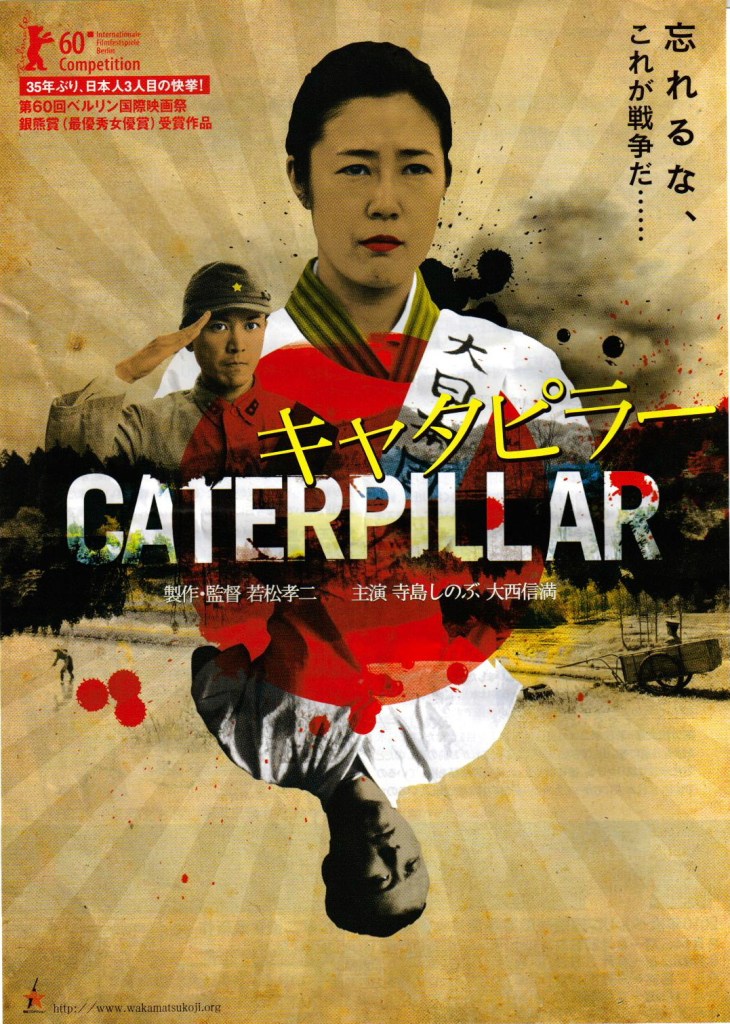 Koji Wakamatsu made his name in the pink genre where artistic flair and political messages mingled with softcore pornography and the rigorous formula of the genre. Wakamatsu rarely abandoned this aspect of his work but in adapting a well known story by Japan’s master of the grotesque Edogawa Rampo, Wakamatsu redefines his key concern as sex becomes currency, a kind of trade and power game between husband and wife. Caterpillar (キャタピラー), aside from its psychological questioning of marital relations, is a clear anti-war rallying call as a small Japanese village finds itself brainwashed into sacrificing its sons for the Emperor, never suspecting all their sacrifices will have been in vain when the war is lost and wounded men only a painful reminder of wartime folly.
 This area has a weird magnetic field, claims one of the central characters in Takuro Nakamura’s West North West (西北西, Seihokusei), it’ll throw you off course. Barriers to love both cultural and psychological present themselves with almost gleeful melancholy in this indie exploration of directionless youth in modern day Tokyo. Three young women wrestle with themselves and each other in a complex cycle of interconnected anxieties as they attempt to carve out their own paths, each somehow aware of the shape their lives should take yet afraid to pursue it. The Tokyo of West North West is one defined by disconnection, loneliness and permanent anxiety but it is not the city which is the enemy of happiness but an internal unwillingness to find release from self imposed imprisonment.
 Japan was a strange place in the early ‘90s. The bubble burst and everything changed leaving nothing but confusion and uncertainty in its place. Tokyo, like many cities, however, also had a fairly active indie music scene in part driven by the stringency of the times and representing the last vestiges of an underground art world about to be eclipsed by the resurgence of studio driven idol pop. Bandage (Bandage バンデイジ) is the story of one ordinary girl and her journey of self discovery among the struggling artists and the corporate suits desperate to exploit them. One of the many projects scripted and produced by Shunji Iwai during his lengthy break from the director’s chair, Bandage is also the only film to date directed by well known musician and Iwai collaborator Takeshi Kobayashi who evidently draws inspiration from his mentor but adds his own particular touches to the material.
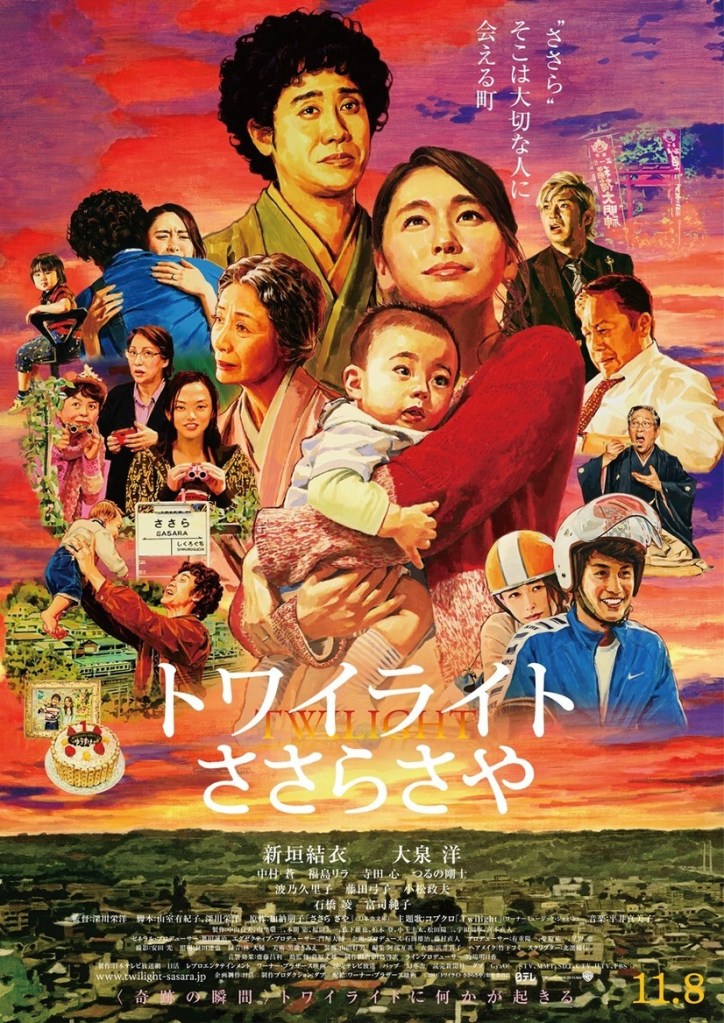 Japanese cinema has its fare share of ghosts. From Ugetsu to Ringu, scorned women have emerged from wells and creepy, fog hidden mansions bearing grudges since time immemorial but departed spirits have generally had very little positive to offer in their post-mortal lives. Twilight: Saga in Sasara (トワイライト ささらさや, Twilight Sasara Saya) is an oddity in more ways than one – firstly in its recently deceased narrator’s comic approach to his sad life story, and secondly in its partial rejection of the tearjerking melodrama usually common to its genre.
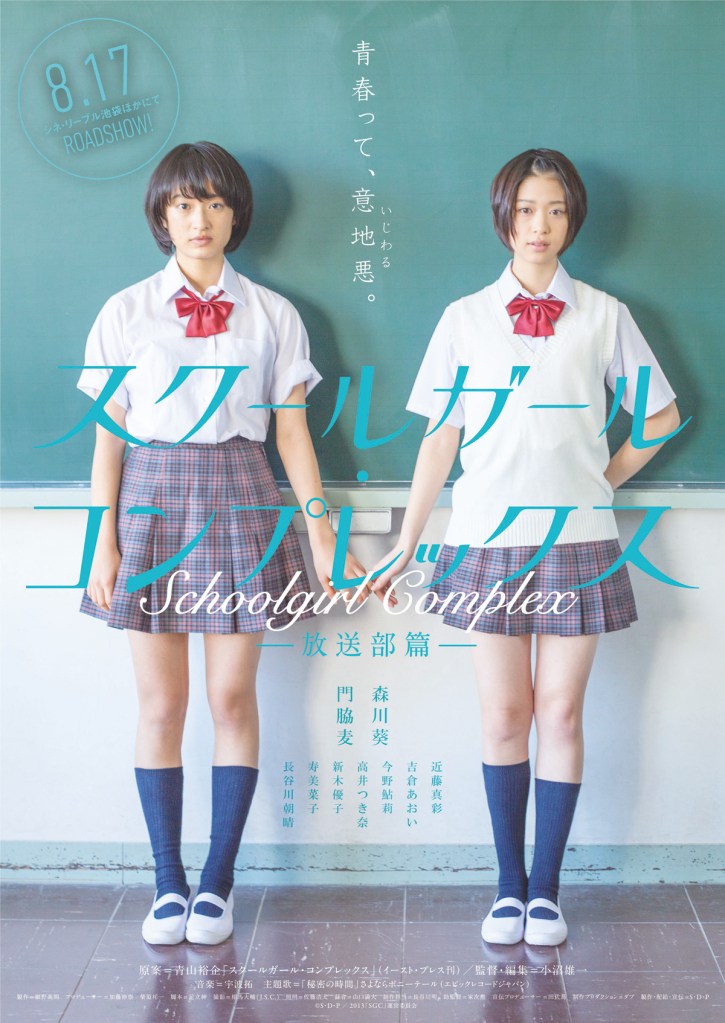 Schoolgirl Complex is a popular photo book featuring the work of Yuki Aoyama and does indeed focus on that most most Japanese of fixations – the school girl and her iconic uniform. Aoyama’s book presents itself as taking the POV of a teenage boy, gazing longly from a position of total innocence at the unattainable female figures who, in the book, are entirely faceless. Given a more concrete narrative, this filmic adaptation (スクールガール コンプレックス 放送部篇, Schoolgirl Complex Housoubu-hen) directed by Yuichi Onuma takes a slightly different tack in dispensing with high school boys altogether for a tale of self discovery and sexual confusion set in an all girls school in which almost everyone has a crush on someone, but sadly finds only adolescent suffering as so eloquently described by Osamu Dazai whose Schoolgirl informs much of the narrative.
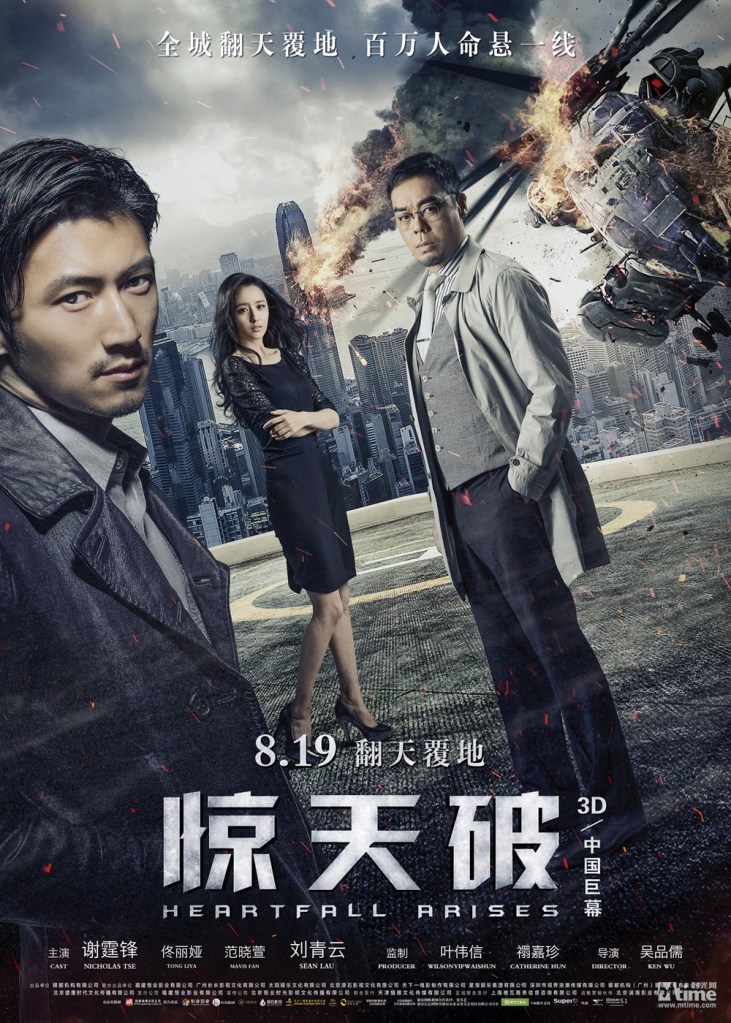 Sean Lau Ching-wan and Nicholas Tse are together again after being denied the opportunity to reteam for a sequel to the acclaimed
 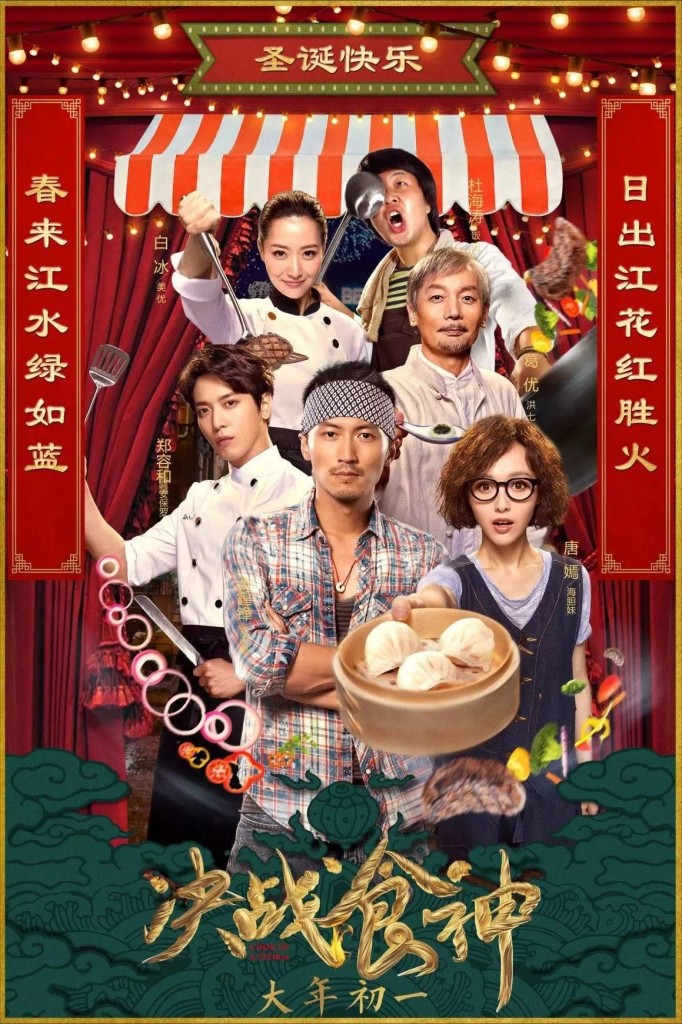 Raymond Yip Wai-man’s Cook up a Storm (决战食神, Juézhàn Shíshén) was scheduled to open at Chinese New Year but eventually found itself delayed and awkwardly repositioned as a Valentine’s Day date movie. Something of a rarity, there is no real romance in Cook up a Storm though it may inspire a post-movie visit to the nearest Chinese restaurant with its deeply felt tribute to classic Chinese cuisine and the raucous social gathering that often goes with it. Yip does his best to throw in as many themes as possible from the familiar tradition vs modernity to fathers and sons and the undue influence to China’s new ruling class who possess extreme wealth but (apparently) no taste. Most of these get somewhat lost in the meandering script which eventually falls into a conventional tournament narrative as two very different chefs face off in the kitchen before realising they have more in common than not.
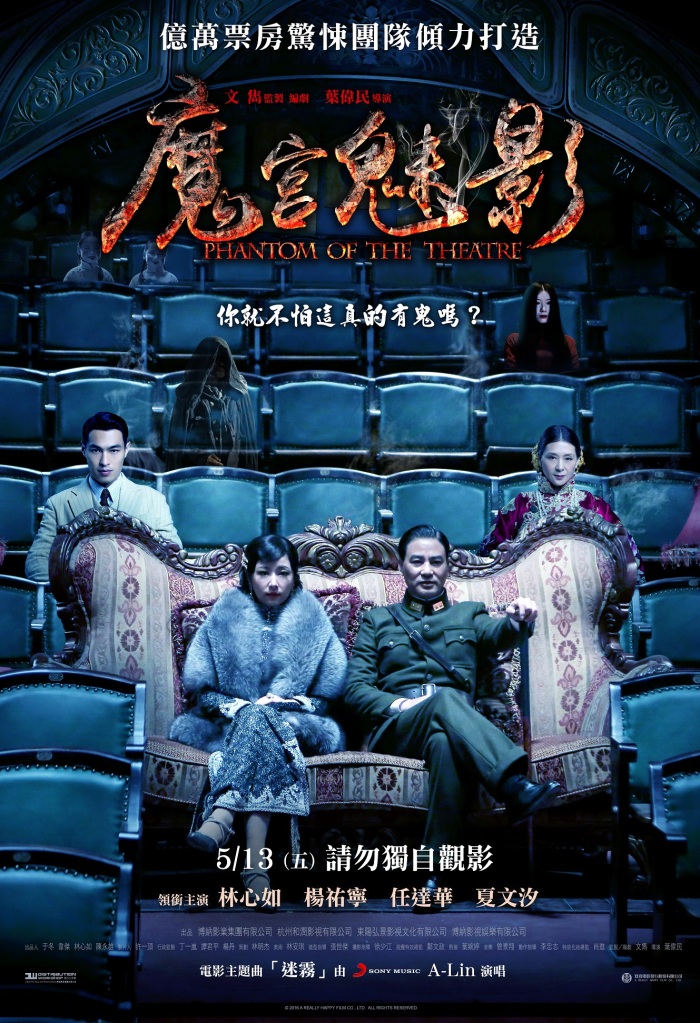 No ghosts! That’s one of the big rules when it comes to the Chinese censors, but then these “ghosts” are not quite what they seem and belong to the pre-communist era when the people were far less enlightened than they are now. One of the few directors brave enough to tackle horror in China, Raymond Yip Wai-man goes for the gothic in this Phantom of the Opera inspired tale of love and the supernatural set in bohemian ‘30s Shanghai, Phantom of the Theatre (魔宫魅影, Mó Gōng Mèi Yǐng). As expected, the thrills and chills remain mild as the ghostly threat edges closer to its true role as metaphor in a revenge tale that is in perfect keeping with the melodrama inherent in the genre, but the full force of its tragic inevitability gets lost in the miasma of awkward CGI and theatrical artifice.
