A wandering ghost trapped in an umbrella sticks around to get revenge on her philandering husband while becoming an accidental radio star in Fruit Chan’s torrid answer to Stanley Kwan’s Rouge, Finale in Blood (大鬧廣昌隆). Inspired by a classic folk legend passed down through Cantonese recitative, the film uses the medium of a ghost story to examine the nature of love as, as someone later puts it, love doesn’t necessarily “possession”.
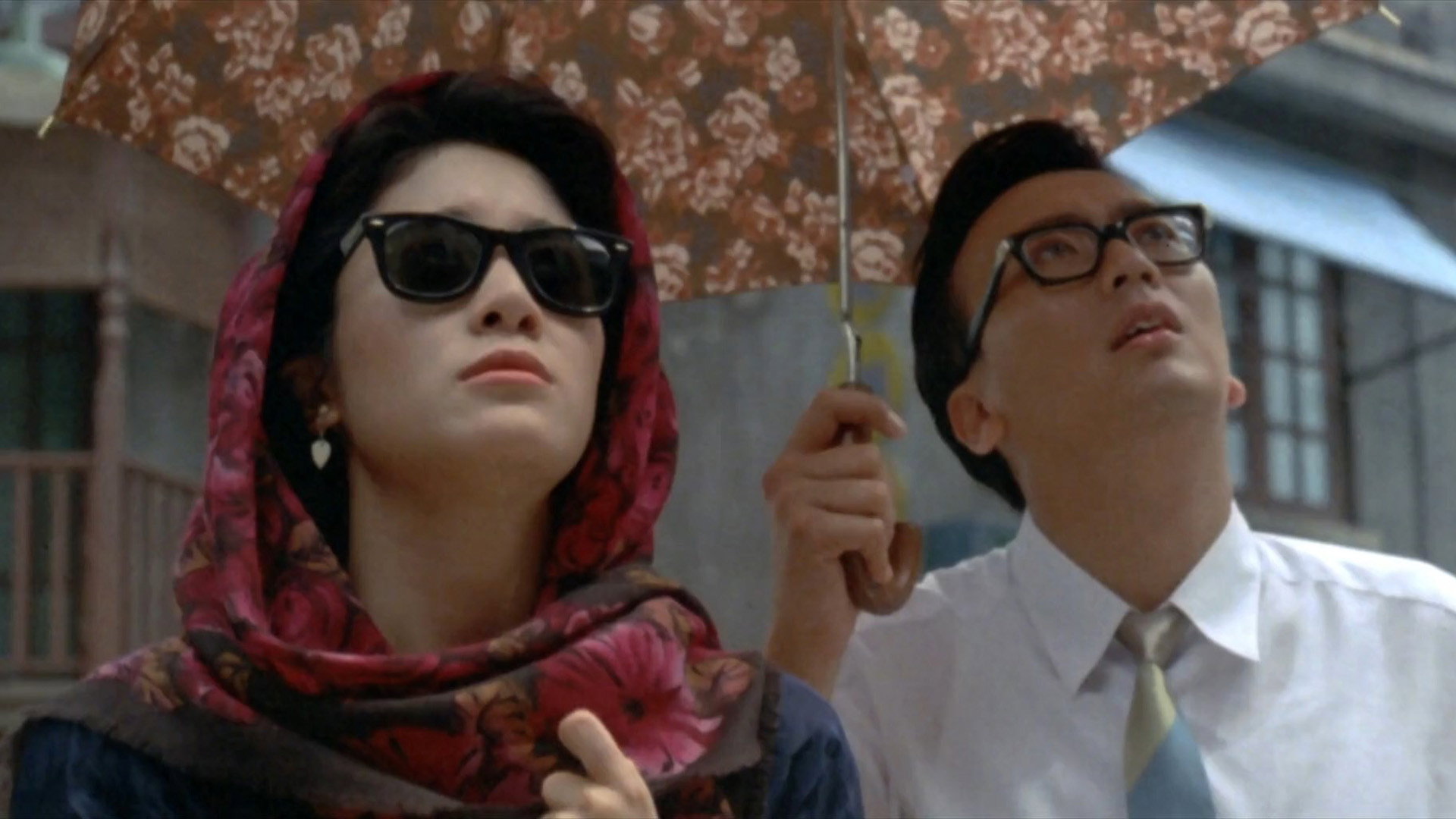
The witness to the tale is hapless radio announcer Ming-Pao (Lawrence Cheng Tan-Shui) whose job it is to read out food prices on a station that has become popular for its soap opera-esque tales of horror. Down on his luck, he agrees to help a friend who smuggles Western medicine complete a job only to find himself subject to a police rad during which he gets knocked into the harbour. Somehow he is saved by the haunted umbrella which turns out to belong to Fang Yin (Ruth Winona Tao), a recently deceased young woman who subsequently becomes attached to him and co-opts Ming-Pao into helping her get vengeance against her cheating husband, Ma (David Wu).
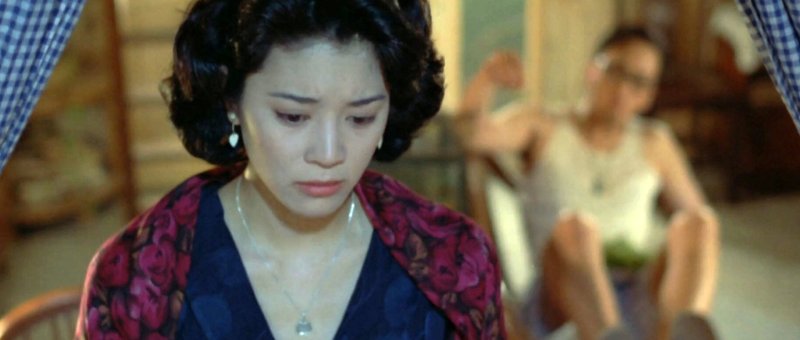
Ming-Pao ends up unexpectedly hosting the ghost story spot during which Fang Yin steps in to tell her own story, though everyone assumes it’s Ming-Pao mimicking a woman’s voice, and becoming a huge hit as the populace appears to sympathise with the various ways Fang Yin was made to suffer because of her husband’s poor treatment. The way she tells it, she came to Hong Kong to take over her father’s hotel, but found it quite a dull business before taking a liking to a mysterious guest who turned out to be an undercover policeman whose case she accidentally blows. Nevertheless, the pair enter an awkward courtship in which Ma seems to delight in introducing her to the seedier side of Hong Kong in its brothels and opium dens. Ma is evidently not a particularly diligent policeman, and has a kind of arrangement with a sex worker (Chikako Aoyama) who intensely resents Fang Yin and is confused about the ambiguous nature of the relationship she has with Ma.
Fang Yin also finds herself confused and humiliated as Ma often fails to return home, forcing her to go looking for him low places and often discovering him with his mistress. Ma meanwhile, defends himself claiming that it’s only natural for a man to stray and that he was just “on a moral holiday” when Fang Yin returned early from a trip and found the pair together. Ming-pao, meanwhile, is the total opposite of Ma. Though he may be a bit hapless, getting involved in his friend’s smuggling business, he feels sorry for Fang Yin and the way her husband treated her. Though he is originally irritated to have been saddled with a ghost, after that he tries his best to help Fang Yin, even digging up her body and placing it in moonlight so she can temporarily possess it. This does, however, place him at risk as Ma and his mistress begin noticing the similarities between the radio story and the murder they’ve committed.
In helping Fang Yin, however, Ming-Pao effectively uses the studio’s biggest star who has, against the odds, taken a likening to him mostly because of his performance on the radio show which is, of course, actually performed by Fang Yin. Though Sha-sha (Josephine Koo Mei-Wah) initially comes to the conclusion that Ming-Pao is the killer, she later sympathises with Fang Yin too and laments her situation as one third of an incredibly destructive love triangle. The unnamed sex worker is very possessive of Ma and almost boasts in claiming to have buried Fang Yin’s body herself. Ma is more equivocal, trying to placate Fang Yin though with a gun behind his back. Likewise, he eventually tells the sex worker that he never loved her and their relationship was always transactional. A coward, it’s never quite clear what his real feelings are, but only that this three-way relationship was always doomed to failure. Nevertheless, Ming-Pao’s smuggling friend diagnoses the problem as less one of Ma’s moral transgressions and more one of selfishness on the part of the women who should simply have learned how to be less “possessive” and share their man. Ming-Pao’s Hong Kong is though a more helpless place filled with a sense of despair and defeat. Chan lends the picture a kind of sleaziness, embracing the fetid atmosphere with rainstorms and sweatiness before ending on an ironic note of serenity as the three lovers are seemingly reunited for all eternity.
Trailer (no subtitles)