 Sometimes love makes you do crazy things. Some people find themselves accomplishing previously unattainable feats powered only by the sheer force of romance. Unfortunately for the hero of Swimming Upstream (バタアシ金魚, Bataashi Kingyo), Joji’s Matsuoka’s adaptation of Minetaro Mochizuki’s manga, the task he sets for himself is a very lofty one indeed and may actually require him to abandon his love to complete it. Then again, the object of his affections shows little signs of reciprocation in any case.
Love found Kaoru (Michitaka Tsutsui) with a bucket of water. That is, he was hanging around one day when swimsuited beauty Sonoko (Saki Takaoka) soaked him by mistake but far from being annoyed, Kaoru falls in love at first sight and begins to pursue the star of the swim team even if she remains resolutely cold towards him. Kaoru immediately joins up just to be close to her even though he is actually afraid of water and does not know how to swim. Nevertheless he sets himself the task of becoming an olympic swimmer and bringing home a gold medal for his lady love. Needless to day, Sonoko is still not very interested in him.
Assisted by a strange old lady of swimming coach in sporting matters, and with an unlikely ally in Sonoko’s mother when it comes to romance, Kaoru works hard at his twin goals but makes little progress with either. His world is briefly shattered when he spots Sonoko arm in arm with the school’s star swimmer and he also faces a romantic dilemma in the form of his friend Pu whose motorbike he keeps borrowing to try and impress Sonoko despite the fact that Pu obviously has a crush on him. Nevertheless, Kaoru is undeterred until, that is, Sonoko’s actions convince him he may be doing more harm than good.
Matusoka’s film is most clearly concerned with recreating the contemporary high school summer for the presumed target audience of teenagers. Though it loosely adapts a classic sports movie romance format with Kaoru giving it his all in training, it stops short of the triumphant underdog trope as Kaoru never achieves the kind of sporting success one would expect. Though he quickly learns to swim and makes some progress, Kaoru retains a lingering fear of the water and is among the very weakest at the club. Still deluding himself with his Olympian dream, Kaoru even attempts to challenge the champion swimmer of another team (played by a very young Tadanobu Asano in his first film role) in a race for the rights to Kaoru. Needless to say, nothing goes his way.
If duelling over the “rights” to a girl seems like an old fashioned idea, Swimming Upstream is a very old fashioned film in terms of its sexual politics. The film stars popular idol Saki Takaoka as the unattainable Sonoko but is told very much from Kaoru’s point of view in which Sonoko is something to be won rather than another human being with independent will. Sonoko’s behaviour often is hard to categorise but, to borrow a term from the film’s manga roots, could easily be described as tsundere wherein she consistently rejects Kaoru’s advances before warming up to the idea just as he’s beginning to cool off. There may a fine line between persistence and and inappropriate behaviour but Kaoru’s level of devotion is the kind that straddles it. The teenage audience of 1990, however, may have seen things a little differently than that of today.
The audience of 1990 would doubtless also have been shocked by Sonoko’s rebellious lack of compliance with regular social norms. Far from the docile, cute, obedient and polite aura of the traditionally perfect girl next door in which idol movies specialise, Sonoko throws angry looks at everyone and talks back to her mother with extremely harsh words (though her mother wisely refuses to be shocked by them). In fact Sonoko is universally awful to everyone to the extent that it later seems that even one of her closest friends does not actually like her very much, but the worse she gets the more Kaoru refuses to be dissuaded.
Matsuoka mostly chooses to keep things simple with a light hearted, summery atmosphere primed to appeal to his audience of youngsters. Though intended as an innocent romance, contemporary audiences may read more darkness into the relentless war between the icy Sonoko and determined Kaoru but the adolescent intensity of young love does at least ring true. Caught between the quirkiness of its general tone and the heaviness of its themes, Swimming Upstream flounders in making its central connection work, rendering its overworked metaphor of a finale less than successful but does offer strong performances from both of its central stars.
Clip (no subtitles)
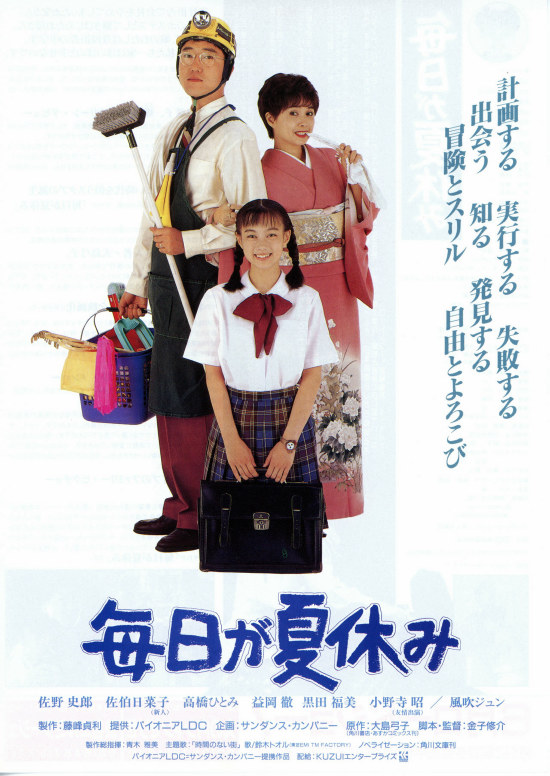 Summer Holiday Everyday – It’s certainly an upbeat way to describe unemployment but then everything is improbably upbeat and cheerful in the always sunny world of Shusuke Kaneko’s adaptation of Yumiko Oshima’s shoujo manga. Published in the mid-bubble era of 1988, Oshima’s world is one in which anything is possible but by the time of the live action movie release in 1994 perhaps this was not so much the case. Nevertheless, Kaneko’s film retains the happy-go-lucky tone and offers note of celebration for the unconventional as a path to success and individual happiness.
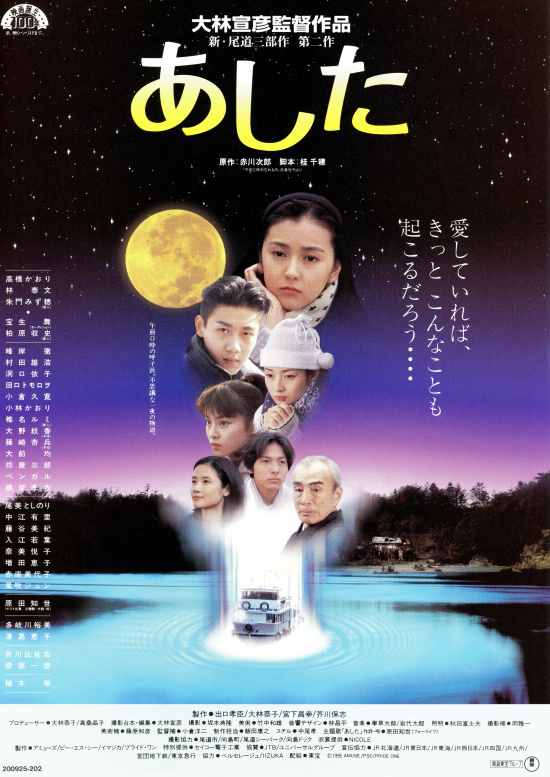 After completing his first “Onomichi Trilogy” in the 1980s, Obayashi returned a decade later for round two with another three films using his picturesque home town as a backdrop. Goodbye For Tomorrow (あした, Ashita) is the second of these, but unlike Chizuko’s Younger Sister or One Summer’s Day which both return to Obayashi’s concern with youth, Goodbye For Tomorrow casts its net a little wider as it explores the grief stricken inertia of a group of people from all ages and backgrounds left behind when a routine ferry journey turns into an unexpected tragedy.
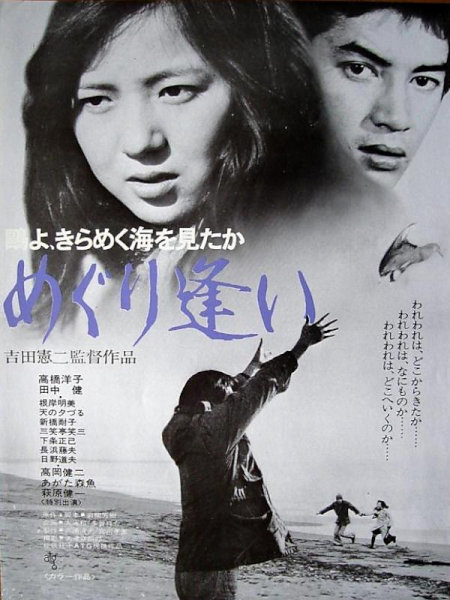 Sparkling seas sound like hopeful things, especially if you’re a majestic seagull flying far above, bathed in perpetual sunshine. But then, perhaps the water below is shining with the shards of broken hopes which float on its surface, is its beauty treacherous or in earnest? So asks the singer of the title song which recurs throughout the film as if to undercut even its brief moments of happiness. There is precious little joy to be found in the lives of the two protagonists of Oh Seagull, Have You Seen the Sparkling Ocean? : An Encounter (鴎よ、きらめく海を見たか めぐり逢い, Kamome yo, Kirameku Umi wo Mitaka: Meguriai), only pain and confusion as they try to rebuild their ruined lives in an uncaring city.
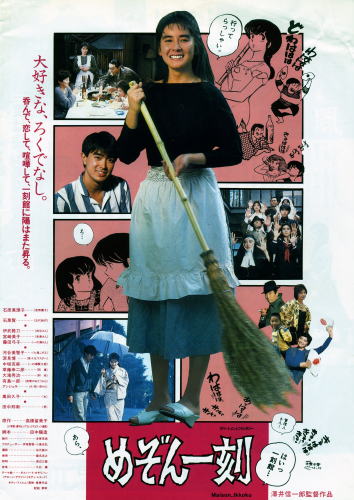 If you’ve always fancied a stay at that inn the
 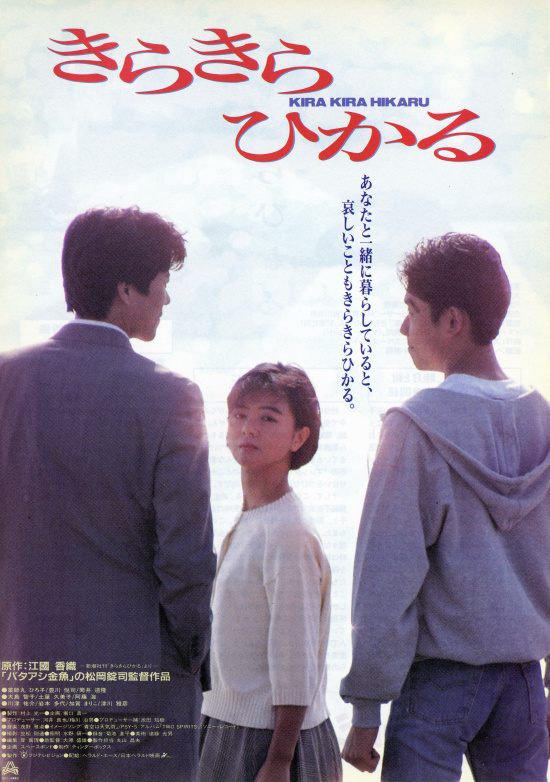 The end of the Bubble Economy created a profound sense of national confusion in Japan, leading to what become known as a “lost generation” left behind in the difficult ‘90s. Yet for all of the cultural trauma it also presented an opportunity and a willingness to investigate hitherto taboo subject matters. In the early ‘90s homosexuality finally began to become mainstream as the “gay boom” saw media embracing homosexual storylines with even ultra independent movies such as
 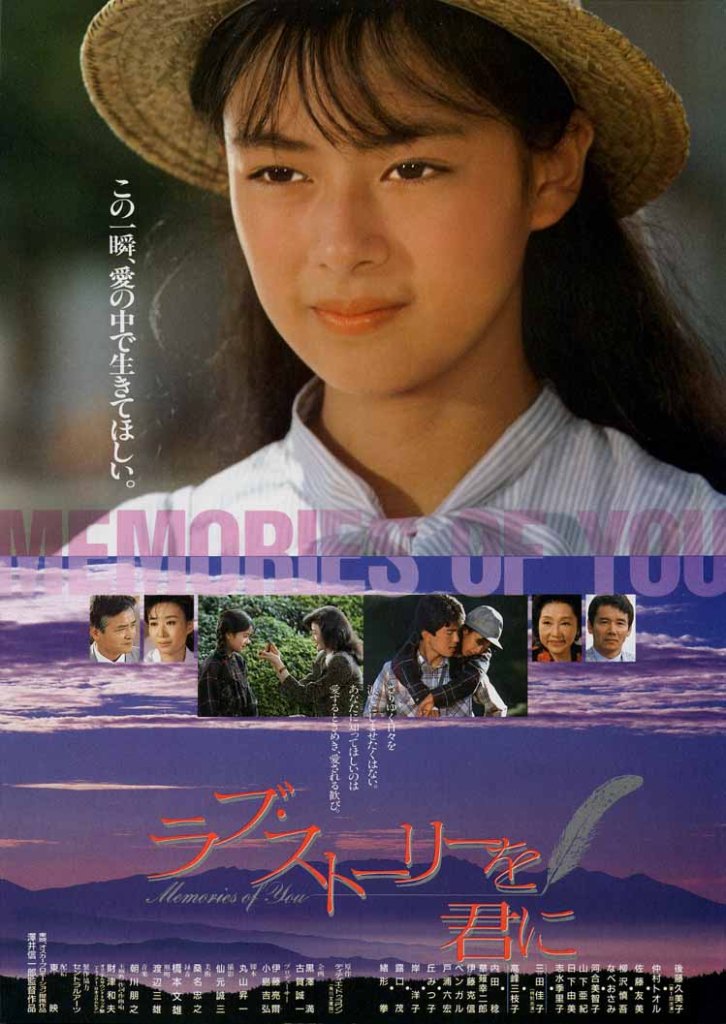 If you thought idol movies were all cute and quirky stories of eccentric high school girls with pretty, poppy voices then think again because Memories of You is coming for you and your faith in idols to make everything better. Directed by
 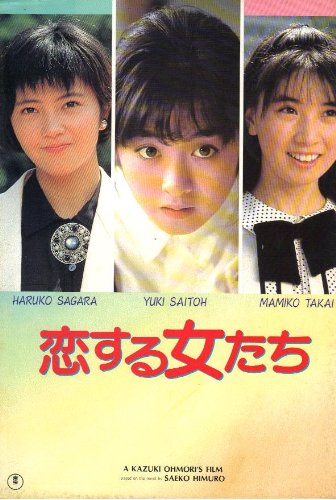 The friends you make in high school are the friends you’ll have the rest of your life, says Takako – the heroine of Kazuki Omori’s Young Girls in Love (恋する女たち, Koisuru Onnatachi). Only she doesn’t quite want hers – they’re weird and cause her nothing but trouble. Also one of them is too pretty so she soaks up all of the attention – where’s the fun in that? Takako is not altogether happy in her adolescence but at least she has her friends there beside her, right?
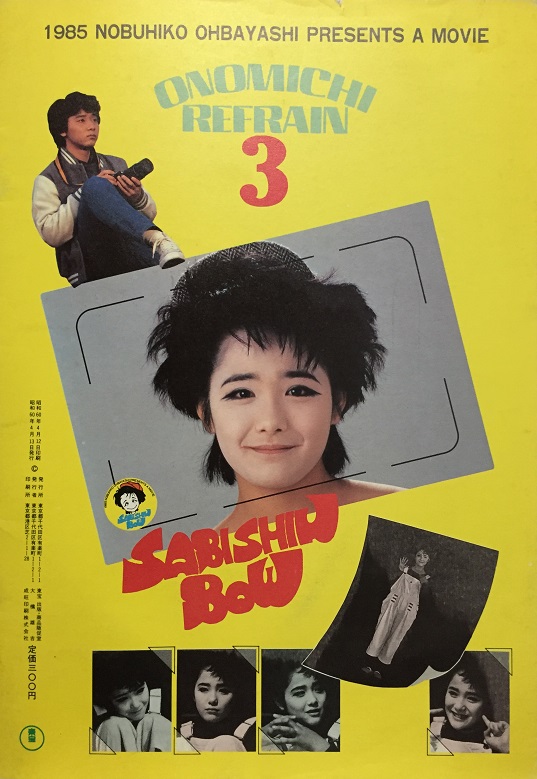 Miss Lonely (さびしんぼう, Sabishinbou, AKA Lonelyheart) is the final film in Obayashi’s Onomichi Trilogy all of which are set in his own hometown of Onomichi. This time Obayashi casts up and coming idol of the time, Yasuko Tomita, in a dual role of a reserved high school student and a mysterious spirit known as Miss Lonely. In typical idol film fashion, Tomita also sings the theme tune though this is a much more male lead effort than many an idol themed teen movie.
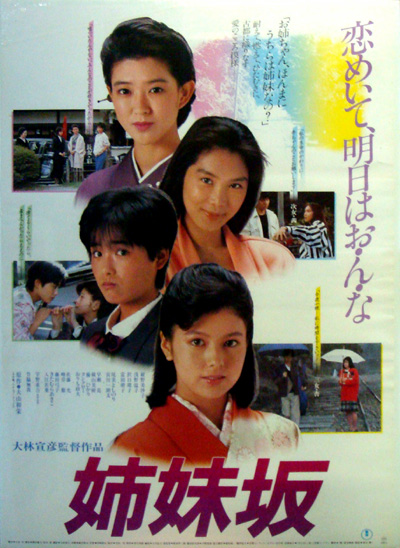 Nobuhiko Obayashi takes another trip into the idol movie world only this time for Toho with an adaptation of a popular shojo manga. That is to say, he employs a number of idols within the film led by Toho’s own Yasuko Sawaguchi, though the film does not fit the usual idol movie mould in that neither Sawaguchi or the other girls is linked with the title song. Following something of a sisterly trope which is not uncommon in Japanese film or literature, Four Sisters (姉妹坂, Shimaizaka) centres around four orphaned children who discover their pasts, and indeed futures, are not necessarily those they would have assumed them to be.
