Jungle Block (地図のない町, Ko Nakahira, 1960)

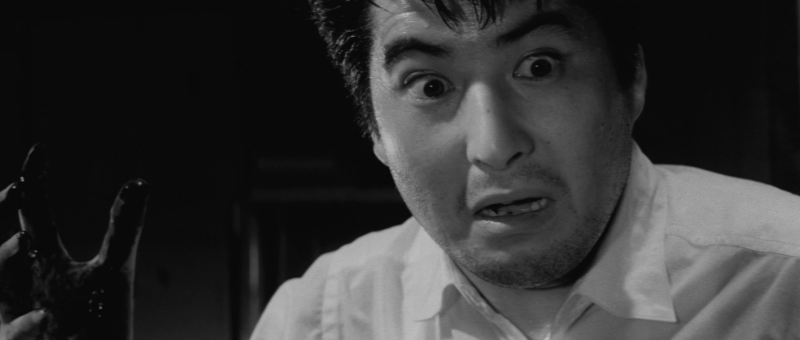
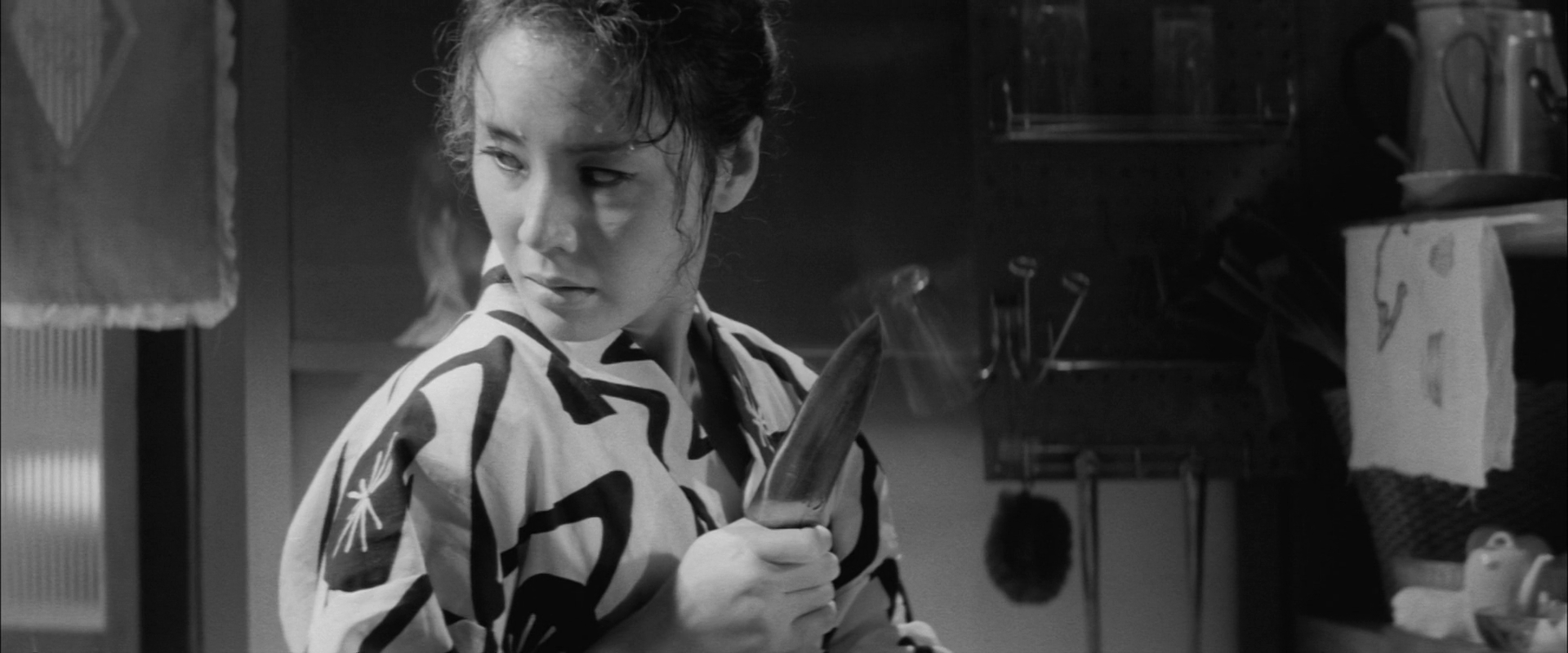
The contradictions of the post-war era are thrown into stark relief in the forced redevelopment of slum area on the edge of an increasingly prosperous city in Ko Nakahira’s intense noir, Jungle Block (地図のない町, Chizu no nai Machi). The slightly unfortunate English title may hark back to that chosen for a US screening of Nakahira’s landmark film Crazed Fruit, Juvenile Jungle, or just echo the titles of classic Hollywood noir movies such as Asphalt Jungle and Blackboard Jungle, but otherwise has little to do with the content of the film. The Japanese title, meanwhile, means something like “a town not marked on the map” and hints at the invisibility of those who live in this slum, a self-built post-war shantytown inhabited by those largely left behind by the nation’s rising prosperity. 

Then again, Shinsuke (Ryoji Hayama) seems to have fallen behind on his own account. We’re later told that he resigned from his position at the hospital because of some kind of medical mistake for which he blames himself and has since taken to drink and gambling while working at the poor clinic run by his former mentor Kasama. The most immediate effect of his, perhaps unnecessary, decision to resign was that it prevented the marriage of his younger sister, Sakiko (Kazuko Yoshiyuki), as he was then financially dependent on her. Having delayed the wedding for two years waiting for Shinsuke to pull himself together, Sakiko and her fiancé are set upon by local gangsters working for yakuza turned politician and legitimate businessman Azusa (Osamu Takizawa). Sakiko attempts to take her own life and the relationship does not survive this crisis thanks to her fiancé’s wounded masculinity in having been unable to save her or stand up to the goons afterwards. 

As repeated flashbacks reveal, Azusa is the root of the disease spreading across the city. It’s he that’s intent on clearing the slum, as he says just doing what the government has asked him to do, planning to build luxury apartments on its site along with supermarkets and entertainment facilities. Perhaps it’s not an entirely bad thing to clear a slum, the living conditions are in themselves a health hazard, but Azusa has drastically cut the amount of compensation on offer preventing the residents from securing new places to live and essentially rendering them homeless which defeats the humanitarian justification for forcing them out when most of them don’t want to go. 

Kayoko (Yoko Minamida), an old flame of Shinsuke’s who’s since become a sex worker to pay off her father’s debts to loan sharks and ends up as Azusa’s mistress, has a cat that she confesses to mistreating which makes her feel better only to feel terrible afterwards. The film seems to align the cat with the people of the slums who are bullied by men like Azusa who have untold influence buying off police and politicians while he himself later holds public office. The cat eventually fights back by scratching Kayoko who acknowledges it’s her own fault for her treatment of it, while it’s clear that the anger of the slum dwellers will eventually boil over and they too will strike back against the corruptions of this post-war era which otherwise sees fit to leave them behind. 

Meanwhile, Shinsuke plots a revenge he may not have the courage to take explaining to Kasama (Jukichi Uno), otherwise the voice of moral reason, that it’s the city that sick and the only way to save it is an operation to remove the Azusa-shaped tumour that’s currently killing it. It’s not for mere convenience that his weapon of choice is a scalpel. Kasama, however, tells him that he’s got the wrong idea and it’s their responsibility as doctors to take the long-term view and patiently run their clinic to produce results in the far off future. But Kasama’s eventual decision would seem to walk that back, suggesting that perhaps a radical solution really is necessary to save the patient from the ravages of amoral capitalism. 

Then again, like Kayoko’s father Yoshichi (Jun Hamamura) who is branded a “cripple” and “only half a man” by Azusa, Shinsuke begins to realise that perhaps you can’t create lasting change on your own and taking out Azusa won’t solve the problem as someone else will simply rise to take his place. There is a pervasive sense of hopelessness, Shinsuke caught and frantic amid the dim backstreets of this rundown town desperate for revenge when the police are in league with Azusa and no one really cares about the residents of the slum who are beginning to lose the will to resist. Nevertheless, eventually rediscovering himself Shinsuke opts to follow Kasama’s path insisting that will join the ranks of “good, honest, people” who, like the cat, will eventually scratch back until then resisting by “doing the right thing” even in the face of violence and intimidation while staunching the flow of corruption and cruelty from the seeping wounds of the post-war society.


DVD release trailer (no subtitles)

The Passionate Spinster (結婚相談, Ko Nakahira, 1965)

A woman still unmarried at the comparatively late age of 30 begins to go out of her mind while on a hellish descent into vice and crime in Ko Nakahira’s darkly comic satire, The Passionate Spinster (結婚相談, Kekkon Sodan). Shimako (Izumi Ashikawa) begins to feel as if her existence has no value as a single woman who has already aged out of the arranged marriage market, pressured by her family members to settle down and with seemingly no possibility of supporting herself as an independent woman almost as if such a thing could not exist even in the more enlightened world of 1965.

Shimako’s age is her primary problem. We often see her using some kind anti-aging device on her face and reapplying her makeup but as others reveal men in search of marriage are looking for women in their early 20s as is soon confirmed to her when she decides to visit a matchmaking agency after attending the wedding of a close friend, Mikiko (Michiyo Yokoyama), at which she is made to feel like something of an embarrassment giggled at by her younger coworkers who regard her with thinly concealed pity. As a voiceover explains, far more women sign up to matchmaking agencies than men while the age range is typically late 20s. Men’s only condition is that the woman be young, while women are mainly concerned with a man’s height and educational background. Shimako is not particularly picky and simply lists that she’d prefer a man of over 170cm in height, under 35 years old, and a university graduate but despite the beauty with which she is often credited she soon discovers that being over 30 is a deal breaker for most. 

The first man she meets remarks to the matchmaker that she looks “young” for her age and then inappropriately adds that she must be virgin, but eventually decides to marry a 24-year-old woman introduced by his boss. The second, a farmer with an interest in electronics, makes her an offer but is quickly vetoed by his family who feel that there must simply be something wrong with a woman who remains unmarried at 30. The last man the matchmaker, Tonobe (Sadako Sawamura), suggests is a 50-year-old widower named Hidaka (Tatsuo Matsushita) whom Shimako only considers out of desperation but later warms to uncomfortably because he reminds her of the father she lost in the war. Hidaka tells he that once they marry he will be a “father” to her too while taking this as a firm promise Shimako ends up sleeping with him to seal the deal. 

It’s with this that she damns herself, driven into a near nervous breakdown on realising that Hidaka may have been just another married man using a dating agency for extramarital sex. Then again, she’s told this by Tonobe who as it turns out, despite her frequent claims of being “not a yakuza” and concern for her agency’s reputation fearing she will be accused of running an illicit sex ring, is actually doing exactly that. Shimako accepted money from Hidaka and in so doing could be taken for a sex worker. Reminding her that sex work is against the law, Tonobe essentially blackmails Shimako into quitting her office job to work for the agency full time as a call girl, “protected” and “observed” by her two goons one of whom the agency’s other girl, Asako (Michiko Sasamori), suggests is actually Tonobe’s husband. 

In another kind of film, Shimako’s new line of work may have proved liberating, freeing her from the patriarchal ideals surrounding marriage, but it’s true enough that she falls into in a dangerous underworld as a virtual slave of the increasingly monstrous Tonobe whose demonic laughter begins to ring in Shimako’s ears along with all the criticism she’s received from men so far regarding her age. She seeks romantic escape after bumping into office lothario Takabayashi (Masaya Takahashi) who ironically asks her to pose as his fiancée to help him get rid of a problematic bar hostess who’s latched on to him. He promises to marry her too, only it soon transpires that he has massive debts and has been embezzling money from the company which he fears will soon be discovered because of an unexpected merger. Just as Hidaka had offered to become her father, Takabayashi likens her to his mother adding that he was never breast fed. 

With somewhat incestuous overturns, the lines between to blur between the ideals of wife and motherhood as Shimako becomes in effect responsible for a failed man pledging that she will use her body to pay off the debt that Takabayashi owes so that he won’t be prosecuted while believing that he will actually marry her. But her body belongs to Tonobe who reminds her that though she doesn’t care who she marries (an odd comment considering how they met) uncompensated romance is against the rules and she must now be punished in being sent to a further level of hell in essentially being offered up to an ogre in a remote Western-style mansion. Taking on gothic overtones, Shimako unexpectedly finds a kind of fulfilment while essentially embodying maternity in fulfilling the oedipal desires of a young man apparently driven mad who immediately tells her that avatars of his mother have appeared in this place before ominously adding that he has killed all the “fake” ones. Shimako later tells his sympathetic mother that her son was the best of the men she’s met while doing this kind of work and the first she’s slept with whose feelings were pure. 

Through this expressionist sequence which takes place during a gothic, violent storm surrounded by pictures of the Madonna, Shimako undergoes the first of her rebirths in effect giving birth to herself as a woman no longer quite so concerned with the necessity of being married though the film strongly implies she soon maybe. Her maternity is later reconfirmed when she unexpectedly reunites with her former boss, possibly the only “good” man seen in the film in having embraced his own paternity while caring for a wife with a longterm illness and raising his two children. His wife having died, when Shimako meets him again it’s almost as if she were meeting her own father in the memory she described to Hidaka though he is much closer to her in age while also unlikely to have any strong feelings either way regarding either her being over 30 or the scandals surrounding everything that happened to her after quitting the company. 

The film may suggest that it’s partly Shimako who is “old-fashioned”, something she later accuses her mother of being once she discovers that Shimako has been engaging in a sexual relationship with Takabayashi on only the promise of marriage, in contrasting her with the slightly younger Sakata (Kaoru Hama) who scoffs that she wants to put off her (already confirmed) marriage because she’s only 23 and wants to have a little fun first later seen in a nightclub with a gang of rough-looking guys who nearly cart off a near comatose Shimako, but then stops short of actually critiquing the institution of marriage only suggesting that Shimako’s intense anxiety was misplaced because the right man would have come along eventually. It may expose the matchmaking agency for what is really is and in its way fight back against the archaism of the arranged marriage along with the patriarchal social system and its intrinsic ageism but leans towards the view that a woman’s value lies in maternity in positioning Shimako to become a stepmother rather than simply a wife. Nakahira shoots with a noirish intensity before descending into a gothic eeriness in the demonic laughter of the incredibly sleazy Tonobe and creepiness of the mansion even if what Shimako discovers there is perversely a kind of purity that finally allows her to reclaim an image of herself as a pure woman even in the depths of her degradation. 


Willful Murder (日本の熱い日々 謀殺・下山事件, Kei Kumai, 1981)

Beginning to piece something together, the dogged reporter at the centre of Kei Kumai’s Willful Murder (日本の熱い日々 謀殺・下山事件, Nihon no Atsui Hibi Bosatsu: Shimoyama Jiken) looks out at an industrial complex and reflects that when he visited it eight years previously it was a “piddling little factory” and has since become a “major company”. His comments might equally stand for Japan itself as Kumai charts the course of the nation’s post-war economic miracle viewing it as a kind of Faustian bargain with the Americans largely conducted by former militarists driven by personal gain and ideological fury. 

Based on the book by Kimio Yada, The Killing: The Shimoyama Incident, the film turns on the mystery surrounding the still unexplained death of Japan National Railways CEO Sadanori Shimoyama whose dismembered body was discovered by the railway tracks in July 1949 suggesting he had been hit by a train. Given the investigative techniques available at the time, Shimoyama’s demise has never been conclusively ruled either a murder or a suicide with experts from rival universities coming to opposing opinions and the police later closing the case in somewhat suspicious circumstances. 

Kumai’s film leans towards the murder angle though like the real life investigators cannot definitively rule out that Shimoyama may have taken his own life presumably due to the pressure he felt himself under after being ordered by the occupation authorities to dismiss 30,000 railway workers from their jobs as part of the so called “Dodge Line” economic plan intended to halt runaway inflation. As the film’s opening voice over also reveals, the Japan Railways Union was at the centre of the labour movement at the moment in which occupational approach was shifting from its original purpose of demilitarisation and democratisation, towards remilitarisation and capitalisation as the Americans sought to make Japan a foreign policy ally in their opposition towards communism in Asia. 

The film’s thesis is that US forces were already planning for the Korean War and urgently needed to crush the labour movement. Shortly after Shimoyama’s death, two other railway incidents occurred firstly with the runaway train in Mitaka which crashed into the station killing six and injuring 20, and then the Matsukawa derailment for which 17 men were falsely convicted (four sentenced to death) all of whom were members of the railway workers’ union. The conclusion that dogged reporter Yashiro (Tatsuya Nakadai) slowly comes to, is that Shimoyama was murdered and the train incidents staged to discredit the labour movement on the orders of the occupation forces while former militarist collaborators continued on the same path in a newly “democratic” Japan.

Japan certainly did very well out of the Korean War the economic stimulus of which allowed that “piddling little factory” to become a “major company” in under a decade much as the nation rocketed towards the economic prosperity which culminated in the 1964 Olympics against which the film’s finale is played. The portrait the Kumai paints is of a nation which has lost its soul, mired in hypocrisy which makes a mockery of “pacifism” and “democracy”. There are in fact at least three unexplained deaths presented in the film, the second of the being that of Michiko Kanba who was killed during the protests against the Anpo security treaty which was later forced through parliament despite clear public opposition. The same possibly corrupt pathologist is assigned to the autopsy and argues that the young woman died as the result of a crowd crush despite the attending physician’s report that the cause of death was strangulation. 

The true villain is however the American occupation and Japan’s continuing complicity even after it ended. Kumai includes several scenes of mass protest against the presence of the American military in Japan, and often places American soldiers ominously hovering in the corners of the frame such as those standing directly outside the police station. Yashiro attempts to interview a Korean man who tried to blow a whistle on the Shimoyama murder only to be arrested by US Counter Intelligence and later physically dragged out of the visiting room by a lurking MP. It all sounds like a conspiracy theory and one Yashiro doesn’t know if he should believe but then has to ask himself why all these people are seemingly being silenced if there is nothing to hide. He maintains his conviction that Shimoyama was murdered, but cannot necessarily say whether it was by a communist foreign nation as the Korean whistleblower had suggested or by the Americans trying to frustrate the “democracy” they’d previously been so keen on lest it disrupt their capitalist agenda. 

In the closing scenes, Yashiro is confronted by yet another death which cannot be ruled suicide or murder along with the realisation that he will never learn the truth. The grills from a grate on the platform of a train station above cast shadowy bars that imprison him in the shady cynicism of the Cold War society. Kumai films in boxy 4:3 academy ratio and in the black and white of golden age cinema, lending a degree of cinematic realism to his devastating tale of post-war moral decline which contains a note of inescapable dread in the faces of two men caught in the intermittent flashes of a train going by obscuring a truth that can never be revealed.


Writhing Tongue (震える舌, Yoshitaro Nomura, 1980)

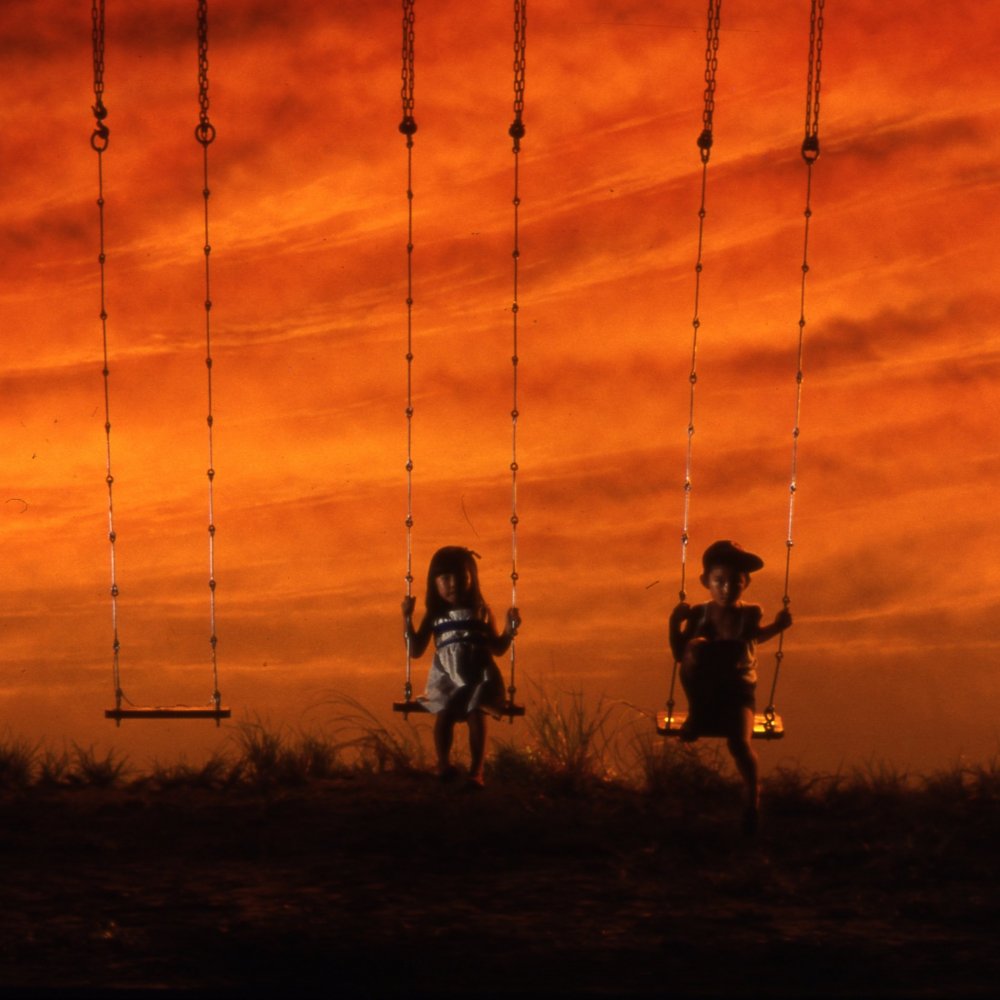
Yoshitaro Nomura is best known for his crime films often adapted from the novels of Seicho Matsumoto though his filmography was in fact much wider than many give him credit for. Even so, 1980’s Writhing Tongue (震える舌, Furueru Shita) may seem an odd entry adapted from the semi-autobiographical novel by Taku Miki exploring the psychological torment of the parents of a little girl who contracts tetanus while innocently playing near a pond. Like the following year’s Call From Darkness, Nomura’s intense drama eventually shifts into the realms of psychedelia in the father’s strange fever dreams while lending this harrowing tale of medical desperation the tones of supernatural horror. 

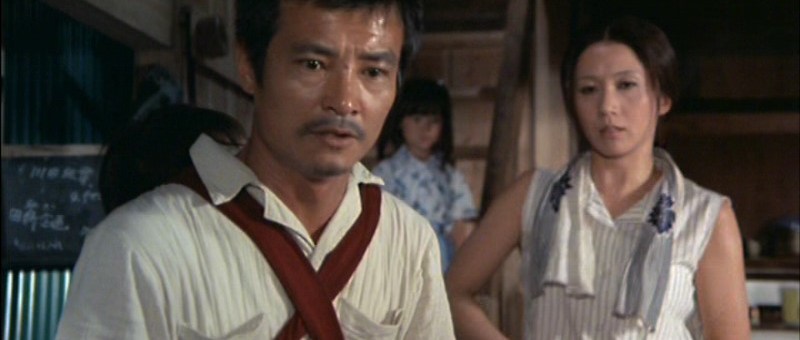
When five-year-old Masako (Mayuko Wakamori) seems to be under the weather, her mother Kunie (Yukiyo Toake) takes her to the hospital but is told by the disinterested doctor that she simply has a cold. This is a little surprising seeing as Masako’s main complaint is she that cannot open her jaw, probably the best-known indication of tetanus infection which is after all not so rare as to be easily missed by a medical professional. Still worried, Kunie keeps taking her daughter back especially once her leg becomes twisted leaving her struggling to walk, but the doctors that she sees don’t really listen to her, even implying that Masako is having some kind of early life breakdown because her father, Akira (Tsunehiko Watase), is overly strict with her. This may be in part because Masako, perhaps in fear, keeps saying that she could walk or open her mouth if she wanted but is choosing not to. In any case the true diagnosis is only discovered after the couple manage to get a referral from a friend to a larger hospital where the veteran professor (Jukichi Uno) quickly overrules his junior’s lack of concern to have Masako admitted right away later explaining that tetanus is a difficult disease to treat and unfortunately has a high mortality rate. 

The treatment dictates that Masako receive as little stimulation as possible, lying in an entirely dark room with minimal noise so as to avoid the violent convulsions that accompany overstimulation and cause her to bite her tongue. As Akira later puts it, all they can do is wait trapped alone in the dark and tiny room with Masako entirely powerless to help her and with little knowledge of what exactly is going on. Meanwhile, despite having been repeatedly reassured that the disease is not transmitted in that way, Akira is convinced he may have contracted tetanus after being bitten by Masako while trying to prise open her jaw. Kunie too later worries that she also has tetanus, the pair of them sucked into a claustrophobic world of isolation and medical paranoia in which they are unable to sleep or find relief while watching over their daughter. 

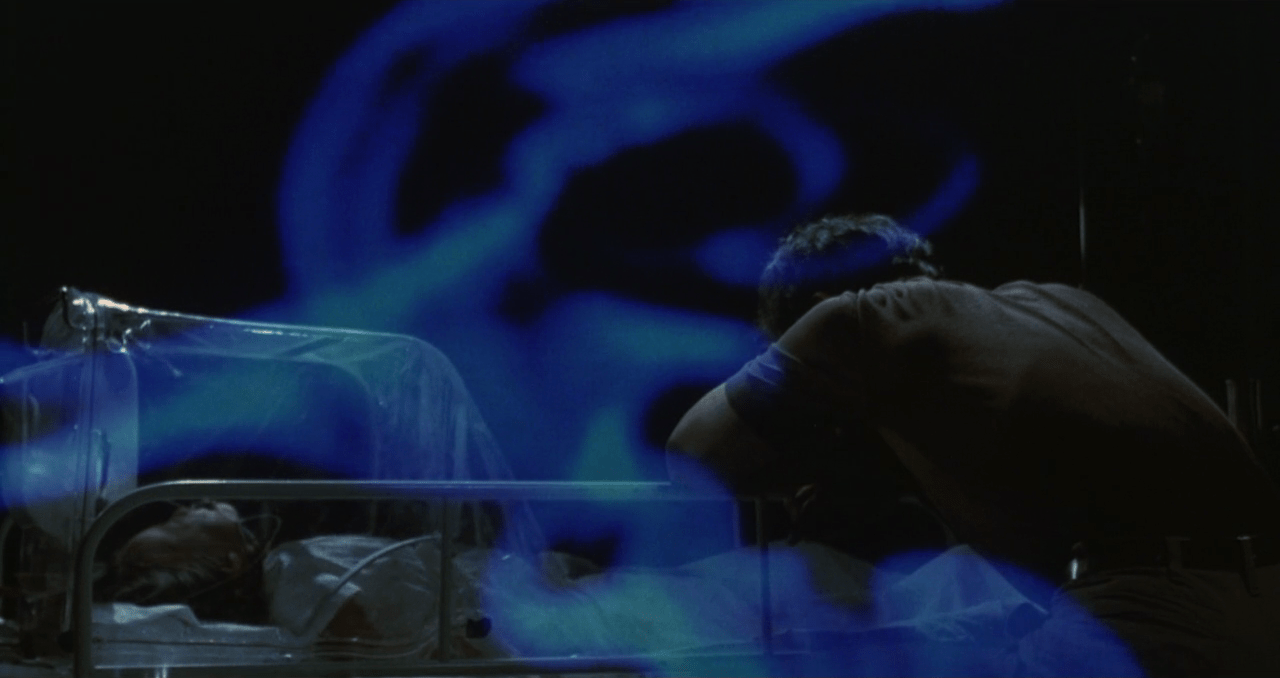
Some time later, Akira begins having bizarre psychedelic dreams recalling the time when he too was hospitalised as a child having contracted blood poisoning, remembering his own fear and confusion on being forced to endure “red injections” which he feared would “turn the whole world red” while the hieroglyphics he and his wife have been using to record Masako’s seizures dance before his eyes. He dreams of crows and blood rain while Kunie goes quietly out of her mind at one point threatening the sympathetic Doctor Nose (Ryoko Nakano) thinking it might be kinder to stop the treatment and let her daughter escape this excruciating pain. The utter powerless with which the couple are faced is filled with almost supernatural dread as if Masako had been possessed by some terrible evil, Akira attempting to speak directly to the bacteria asking them why it is they’re trying to colonise his daughter’s body and if they realise that in killing her they kill themselves too.

“It’s odd, our life. It’s so fragile” Akira sighs. All of this happened because of a tiny cut on a little girl’s finger the kind not even quite worth putting a plaster on and yet she might die from it. Convinced they all may die, Akira tells his wife to go home and put their affairs in order while she is so traumatised that she becomes unable to re-enter the room paralysed not out of physical disability but mental anguish. When Masako’s condition finally improves, Akira can hear his daughter crying that she’s frightened reminding him that he can never really understand the way she suffered through this terrible disease while all he could do was watch. A truly harrowing depiction of the hellish psychological torment of serious illness, Nomura’s occasionally psychedelic drama lays bare the fragility of life in a world of constant and unexpected dangers. 


Trailer (no subtitles)

The Demon (鬼畜, Yoshitaro Nomura, 1978)

By the late 1970s Japan had achieved its economic miracle, but it had yet perhaps to deal with the traumas of the immediate post-war era. Once again adapted from a story by Seicho Matsumoto, Yoshitaro Nomura’s shocking social drama The Demon (鬼畜, Kichiku) explores the radiating effects of orphanhood and economic privation on the family unit producing as a rather judgemental policeman eventually puts it a generation of parents who don’t know how to raise children and may even lack the inclination to do so even if thankfully not to the extent of the couple at the film’s centre.

Nomura opens with one of his trademark lengthy train sequences following a harried mother and her three children travelling in the sweltering heat from the countryside to the city as she makes a last, desperate attempt to remind the father, Sokichi Takeshita (Ken Ogata), of his responsibilities. Once a successful businessman, Sokichi has become financially ruined after a fire destroyed his print shop and no longer has the means to maintain a second household for his mistress and children at a discrete distance from the home he shares with his wife, Oume (Shima Iwashita). As Kikuyo (Mayumi Ogawa) points out to him, she is unable to support herself economically while caring for the children but he has little answer for her especially once the previously oblivious Oume overhears their conversation. After a series of heated arguments, Kikuyo makes the radical decision to simply abandon the children with their father and thereafter disappears having vacated her previous home and left no forwarding address. 

A part of the problem in the Takeshitas’ marriage had been that they have no children of their own, Sokichi remarking to Kikuyo, whom he met while she was working in a traditional teahouse where he used to take clients, that he had always wanted a child. Conventional gender roles have in a sense been reversed, Oume angrily insisting that her husband would never have made any money had not been for her while it appears that she is more or less in charge of their business affairs and he is the one largely looking after the children to the extent that they are “looked after”. To Oume, the siblings are partly a reminder that her husband betrayed her with another woman but also an attack on her femininity in reminding her that she was unable to become a mother while someone else has given birth to Sokichi’s children. For all of these reasons they are to her children which cannot continue to exist. She undermines Sokichi’s attachment to them by frequently questioning their paternity pointing out that they share little physical resemblance while reminding him that he met Kikuyo through her occupation on the fringes of the sex trade. 

Her mistreatment begins as neglect, refusing to feed or bathe “a stranger’s” child and then graduates to physical violence stuffing food into the mouth of Sokichi’s infant son Shoji after catching him playing with the dinner bowls. Yet when Sokichi finds her endangering the baby while moving heavy papers from a shelf he does nothing, suspecting his wife has become a threat to the children’s safety but also as she later implies wanting to be rid of them himself. The couple could, of course, have simply surrendered the children to an orphanage (it remains unclear how exactly their existence has been registered), but ultimately choose not to as if they wanted to obliterate the idea of them as if they had never been born. 

It may be tempting to view Sokichi as a helpless victim casting Oume as terrifying Lady Macbeth intimidating him into destroying the evidence of his indiscretion, but even if it was Sokichi “looking after” the children, it is finally he who must also “take care” of them. During his abandonment of his second child, 3-year-old daughter Yoshiko (Miyuki Yoshizawa), he takes her into a toy store where a group of boys are playing with remote control cars demonstrating that this is no longer an age of economic privation and that in the end the reason for the children’s second abandonment is not primarily financial even if Sokichi has been in a sense humbled, deluded into a false sense of security in his business success only to be robbed of the era’s increasing prosperity through a freak accident. “Everybody’s struggling” he eventually reflects as his assistant (Keizo Kanie) informs him that he is leaving, ironically to take better care of his ageing parents and small children presumably in a less toxic environment.

Yet as we discover the reasons for Sokichi’s sense of displacement stem back to his own post-war childhood, apparently born out of wedlock never knowing his father and then abandoned by his mother, bounced around between relatives all of them poor who viewed him as nothing more than a burden until effectively indentured to a print shop at ten years old by an uncle who stole his advance pay and once again abandoned him. These kinds of familial disruptions whether caused by a literal orphanhood or the economic constraints of the immediate post-war period have produced according to the moralising policeman at the film’s conclusion a generation of people who do not know how to parent because they were not effectively parented themselves many of whom go on to have children perhaps accidentally but have no idea how to relate to them, frightened of the responsibility or resentful of the “burden” as Sokichi eventually seems to have become. 

Nevertheless, Nomura ends on a note of ambiguity, the goodness in eldest son Riichi (Hiroki Iwase) emphasised as he refuses to name his father or reveal his abuse, an action interpreted by the police as an attempt to protect Sokichi but could equally be a trauma response owing to have been returned to him by the police once before. In any case the film asks if in being rescued from his toxic family circumstances, effectively orphaned, Riichi will simply end up continuing the cycle of displacement, another man unable to become a “father”. But then again, what of Kikuyo who branded Sokichi “inhuman” yet left her children with him and disappeared, perhaps as a neighbour implies with another man? A sympathetic policewoman (Shinobu Otake) reassures Riichi they’ll look for his mother, but as she too abandoned him would that actually help? The jury seems to be out on whether this sense of displacement, in essence the integrity of the traditional family, can ever effectively be repaired even as an increasingly consumerist society continues to erode its foundations. 


The Demon screens at the BFI on 12/19 December as part of BFI Japan. It is also available to stream in the US via Criterion Channel.

Original trailer (no subtitles)

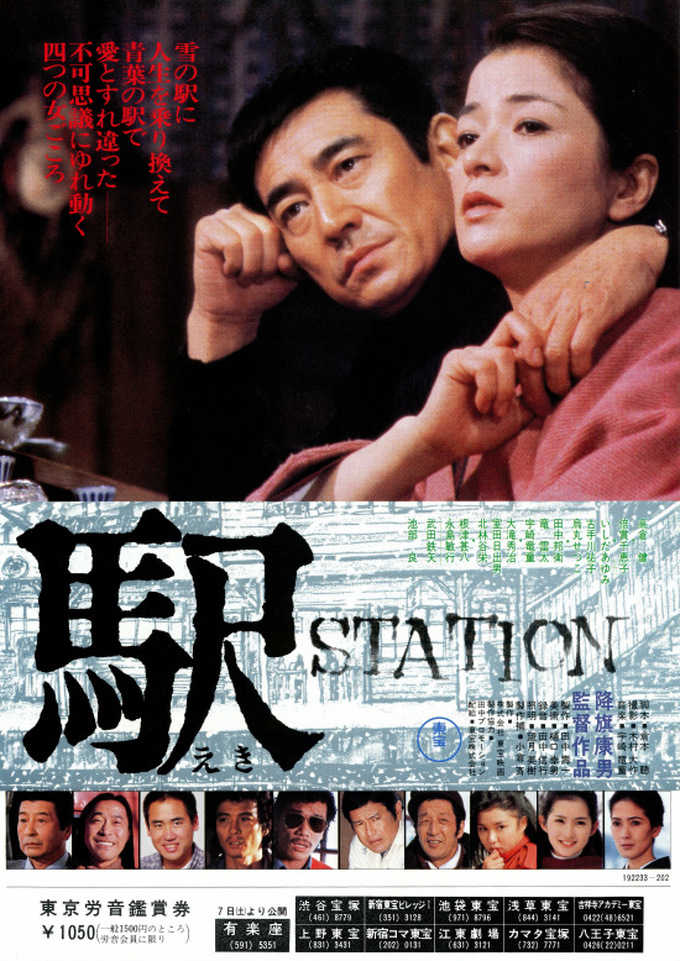
Station (駅, Yasuo Furuhata, 1981)

The thing about trains is, you can get off and wander round for a bit, but sooner or later you’ll have to go where the rails take you. You never have as much control as you think you have. The hero of Yasuo Furuhata’s Station (駅, Eki) is beginning to come to that conclusion himself, addressing the various stations of his life, the choices he made and didn’t make that have led him into a dejected middle-age, defeated, and finding finally that any illusion he may have entertained of living differently will not come to pass. 

In 1968, police detective Eiji Mikami (Ken Takakura) sends his wife (Ayumi Ishida) and son away for reasons which aren’t entirely clear. At this point in his life, he’s an aspiring marksman on Japan’s shooting team intensively training for the Mexico Olympics, which is perhaps why he felt he could no longer be a husband and a father, or at least not while also being a policeman. All that changes, however, when his friend and mentor is gunned down during a routine job, shot in the chest at point blank range by a man in a white Corolla while operating a check point to catch a killer on the run. In 1976, he goes to see his sister (Yuko Kotegawa) marry a man she might not love to escape a violent boyfriend and investigates a serial killer of women who rapes and murders girls in red skirts. In 1979, he’s haunted by the serial killing case coupled with his cool execution of hostage takers during a siege. Holing up in a small fishing village waiting for a boat home for New Year, he strikes up a relationship with a barmaid who is just as sad, lonely, and defeated as he is. 

When Mikami’s friend is shot, his wife tells the reporters that she thinks shooting at targets, which her husband had been training others to do, is a different thing than shooting at living beings. “One shouldn’t shoot at people” she tearfully insists, accidentally forcing Mikami into a double dilemma, knowing that his marksmanship skills were on one level useless in that they couldn’t save his friend while paradoxically told that they shouldn’t be used for that purpose anyway. But what really is the point in shooting holes in paper targets just to test your skill? Wandering into the hostage situation while posing as a ramen deliveryman, he cooly shoots the two bad guys without even really thinking about it, as if they were nothing more than paper. 

The Olympics overshadow his life. He gave up his wife and son for them, but no matter how hard you train, the Olympics eventually pass. Mikami is told he’s supposed to bring honour to Japan, representing not only the nation but the police force. He’s not allowed to investigate his friend’s death because they want him to concentrate on his shooting, but he is and was a policeman who wants to serve justice. While he’s waiting for the funeral, he sees a report on the news about a former Olympic marathon runner who’s taken his own life because he got injured and fell into a depression feeling as if he’d let down an entire nation. Mikami perhaps feels something the same, drained by responsibility, by the feeling of inadequacy, and by the potential for disappointment. After the Olympics he feels deflated and useless, wondering what the point of police work is while quietly rueful in suspecting the committee is about to replace him on the team after all. 

When he wanders into the only bar open on a snowy December evening, that is perhaps why he bonds so immediately with its melancholy proprietress, Kiriko (Chieko Baisho). The conversation turns dark. Kiriko tells him that a friend of hers who worked in a bar in the red light district killed herself last New Year, that it’s the most dangerous time for those who do this sort of work, not for any poetical reason but simply because it’s when their men come home. She tells him that she’s a lone woman, no virginal spinster but weighed down by the failure of old love. Swept up in the New Year spirit, Mikami starts to fall for her, but is also called back to the past by an old colleague who passes him his wife’s phone number and tells him she’s now a bar hostess in Ikebukuro. He starts to think about leaving the police and getting a local job, but fate will not allow it. Kiriko too sees her dream of love destroyed precisely by her desire to escape the pull of toxic romance. Back in 1976, Mikami had been party to a similar dilemma as the sister of his suspect kept her brother’s secret but secretly longed to escape its burden. Suzuko (Setsuko Karasuma) too lost love in trying to claim it and now works as a waitress in a small cafe in this tiny town, only latterly making an impulsive decision to try to leave and make a new future somewhere else. 

Mikami tears up the letter of resignation that declared him too tired of life to be a good policeman, once again boarding a train back to his rightful destination, knowing that a policeman’s what he is and will always be. He watched his wife wave goodbye from a station platform, saw a man betrayed on the tracks, and finally boarded the train himself, letting go of any idea he might have had about going somewhere else. Stations are after all transitory places, you can’t stay there forever. 


Original trailers (no subtitles)

Aki Yashiro’s Funauta which plays frequently throughout the film

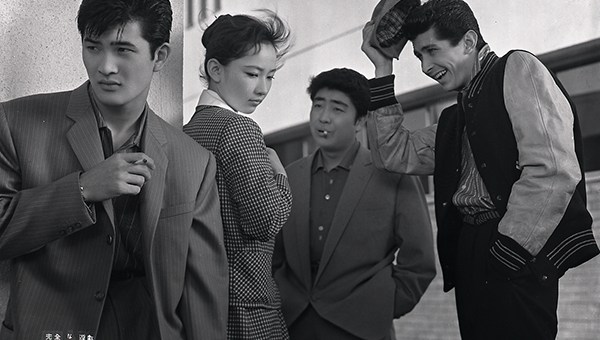
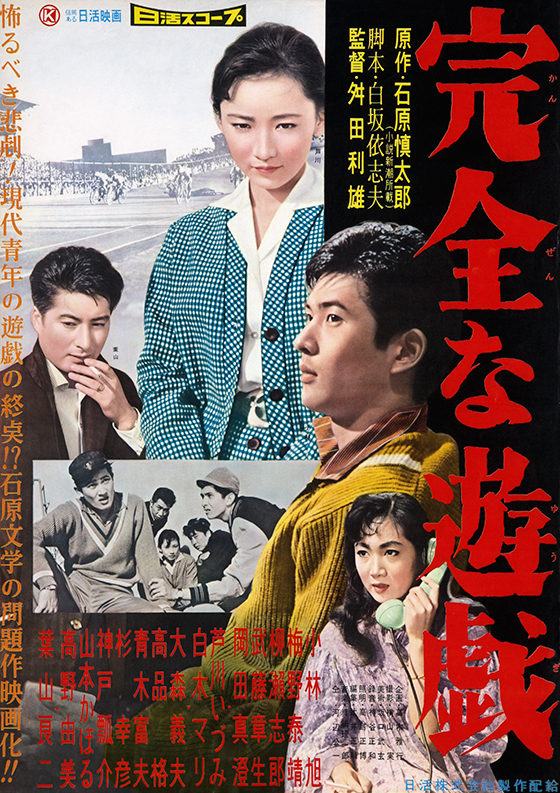
The Perfect Game (完全な遊戯, Toshio Masuda, 1958)

In the mid-1950s, Nikkatsu had courted controversy with a series of films depicting the amoral excesses of the immediate post-war generation. The “Sun Tribe” movies embedded themselves in a world of new bright young things who were largely independently wealthy and thoroughly bored by the ease of their lives. Nikkatsu was forced to halt production on the Sun Tribe films after only three (Toho and Daiei added one each of their own), but they did precipitate a wholesale shift towards youth movies which became the studio’s signature theme. 

Best remembered for his contributions to Nikkatsu’s action noir, Toshio Masuda’s The Perfect Game (完全な遊戯, Kanzenna Yugi, AKA The Tragedy of Today) arrived two years after the Sun Tribe craze but neatly picked up the baton dropped by Kon Ichikawa’s Punishment Room in its tale of nihilistic college boy amorality. As the film opens, our four heroes are playing mahjong and lamenting their lack of funds. They are all, it goes without saying, middle class boys largely supported by their parents who, as far as we know, are high ranking salarymen. They are not hungry, or worrying about how to pay rent or tuition, they are just bored and want extra money to go out having fun before they they are forced into the corporate straightjacket with the regular salaryman jobs many of them already have in the bag thanks to the tremendous power of nepotism. 

As the the opening text implied, they viewed their money making exploits as a game, proving how clever they think they are in getting one over on the universe, but all too quickly it spirals out of control. Toda (Yasukiyo Umeno), the ring leader, has come up with an ingenious money making scheme. It turns out that there’s an illegal betting office some distance away from the bicycle racing stadium that keeps taking bets until someone rings from the track and tells them who won, which means there’s about a five minute delay between the winner being declared and bets being called. The boys figure that if they can somehow beat the lag they can win big. To make it work, they ask their “friend” Kazu (Masumi Okada), who they seem to regard as a bit dim, to join them as well as recruiting an old codger to call the race before the boards go up. Surprisingly it works out, but unfortunately the yakuza-backed bookmaker, Matsui (Ryoji Hayama), wasn’t banking on such a big win and doesn’t have the funds to pay out in one go. 

Toda in particular is pissed off. The wind taken out of his sails, he’s not sure what to do which is when So (Akira Kobayashi), the pretty boy of the group, suggests an ironic punishment. Matsui had joked that he’d put up his adorable kid sister Kyoko (Izumi Ashikawa) as collateral if he couldn’t pay out, so why don’t the boys take him at his word and kidnap her. Rewinding a little, these snotty college boys are about to become kidnappers, adding a little blackmail on the side. This isn’t a fun game anymore, someone is going to get hurt whatever happens even if they can’t know the extent to which their plan to earn a few bucks to blow on jazz bars and pool rooms is going to incur collateral damage. 

Unlike the boys, Kyoko is a working class girl. She wants to keep her head down and work hard, not quite approving of her brother’s involvement with the yakuza and wishing he’d find an honest job but also acknowledging that he had few options and it’s his job at the bookies that’s been keeping them all this time. Their father died in the war, and their mother (Yumi Takano) is very ill, bedridden with heart trouble. Kyoko is no innocent, she brushes off So’s attempts to court her by revealing that dozens of creepy guys try the same thing every day, and most of them don’t stop at passing notes. For whatever reason she ends up warming to him, making him take her to a theme park while her mother worries at home, while he also begins to feel conflicted about the plan in falling for her for real. 

So’s mistake is the childish belief that they’re still playing a game and everything will be alright in the end. He foolishly trusts that his friend’s are men of honour and that Matsui will come up with the money and redeem his sister in no time at all. But money’s not easy to come by even if you’re a yakuza, and the boys might not want it anyway if it comes with additional complications. Visiting with Kyoko’s sickly mother, he perhaps begins to see the gap between his comfortable existence and theirs of constant struggle. He’d been so proud to tell Kyoko that he had an interview lined up at a big company because of family connections, but when he arrives there he feels irrelevant. The interview board only ask him questions about his dad, as if he didn’t really exist. Finally they ask him to talk about what he did at uni, what his “passions” are, if he did anything of note in the past few years, perhaps even fall in love? They’ve unwittingly touched a nerve, but So is in any case forced to reflect on the meaninglessness not only of his adolescence, but of his future. This interview has been a farce, but they’re giving him the job anyway because he’s his father’s son. What more is there to say?

The other boys are also worried about their job prospects, concerned that someone might talk and they’ll be forever tarnished by “youthful exuberance”, refusing to take any personal responsibility for the consequences of their “perfect game”. Unlike So they still want to live in that inherently unfair world which exists for upperclass men to do as they please. Toda and So weren’t quite like their friends. They felt conflicted. Toda embarrassed to be borrowing money from his girlfriend but rejecting the others’ belief that you don’t have to pay women back, only to angrily bark at her that there’s “no way a woman can understand” the intensely masculine debate he’s just had with So about responsibility, which he accepted by deflecting in pushing So’s complicity back on him in an attempt to share his guilt. Unlike the Sun Tribe films, youth takes responsibility for itself and its friends, but can find no way to atone for its moral abnegation. 


Original trailer (no subtitles)

Sandakan No. 8 (サンダカン八番娼館 望郷, Kei Kumai, 1974)

Sandakan 8 posterSome might argue that Japanese cinema has often been reluctant to examine the nation’s traumatic 20th century history with the proper rigour, but even if subtle and coming from unexpected angles there have been many and varied attempts to ask questions about the lingering consequences of feudalism. Sandakan No. 8 (サンダカン八番娼館 望郷, Sandakan Hachiban Shokan: Bokyo), inspired by a true life account of a woman unwittingly sold into sexual slavery as a child at the turn of the century, is not only a condemnation of socially approved people trafficking and its role in building the short-lived Japanese empire but a mild provocation of the contemporary society which refuses to engage with its traumatic past.

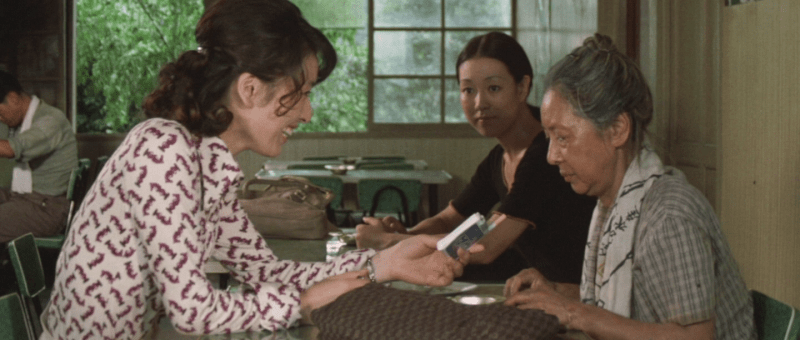
In the contemporary era, graduate student Keiko Mitani (Komaki Kurihara) is engaged in researching the “karayuki-san” – Japanese women who were sold into sexual slavery throughout Asia in the early 20th century. Almost forgotten, the karayuki-san are a taboo subject and even those still living in the areas from which women and girls were sent away are unwilling to speak of them. By chance, however, Keiko runs into an old woman in a cafe who speaks with a standard Tokyo accent and tells them that she spent most of her life “abroad”. Quickly realising she doesn’t mean she was a diplomat’s wife, Keiko wonders if the woman might be have been a karayuki-san and delays her return to Tokyo in order to find out.

There is something, it has to be said, ironically exploitative in Keiko’s determination to get the old woman, Osaki (Kinuyo Tanaka), to open up about a subject on which she so obviously does not want to be drawn. A visit to Osaki’s home reveals her to be living in a run-down hovel on the edge of town which is filled with stray cats whom Osaki feeds because “they’re all abandoned, but still they have to live”. Keiko gets herself brownie points by reacting politely to Osaki’s reduced living situation, eventually staying three weeks during which time she gradually teases out Osaki’s sad life story. Finally asking if there wasn’t anything Osaki might have liked to know about her, Keiko’s hypocrisy is fully brought home to her when Osaki admits that no one was more curious about Keiko than she was but that “people have reasons for not confiding in others” and if it’s something you need to ask about then it’s probably something that the other person may not want to share. In any case, Osaki seems to have known Keiko had an ulterior motive but does not regret sharing her story and has no worries about what Keiko might do with it as long as she makes sure to tell the truth.

The truth, in a sense, seems to be something the villagers feel themselves well acquainted with which is why Osaki lives in a shack on the edge of town. Tricked into sexual slavery as a child by an amoral people trafficker who lured her with promises of money to be made overseas, Osaki found herself in Borneo and a prisoner of “Sandakan No. 8” which was one of 10 numbered brothels on the island largely catering to Japanese travellers overseas, facilitating the expansion of the Japanese empire as accidental emissaries and ports of call. When Osaki was a child, Japan was a poor country and it was considered normal to sell one’s daughter in order to feed a family. Working overseas carried with it a kind of cache though no one, except perhaps her brother, seems to be fully aware of what Osaki is going to and she herself has not in any way chosen or consented to become a sex worker. When she eventually returns to Japan, she finds herself unwelcome in her brother’s house, which her money paid for, because of the shame associated with those who have “worked away”. Even 50 years later, she finds herself living alone, all but disowned by her only son, on the outskirts of her childhood village ostracised by the “respectable” townspeople who don’t for a second believe Osaki’s quick introduction of Keiko as her daughter-in-law.

The daughter-in-law deception is only one heartbreaking aspect of the complex relationship between the two women who are each, in a sense, hiding something from the other but end up forming a genuine connection anyway. Intensely lonely and having lived a life filled with suffering, Osaki is willing to pay for company with her story while Keiko is, not quite deliberately, using her loneliness against her in an attempt to earn her trust and get her to reveal her secrets. Nevertheless, Keiko is able to mine a rich and deep seem of 20th century trauma through the tragic story of just one woman which reaches out to hundreds like her some of whom rest in a graveyard in the forests of Borneo with their backs forever to Japan. The enemy is, once again, poverty more than it is patriarchy or even feudalism, a problem less of the essence in the rapidly improving post-war economy, but as Kumai is keen to point out, this system of state sanctioned people trafficking (finally outlawed only once Japan’s status on the world stage began to rise) had far wider implications than it might be thought which still echo into the present day and perhaps beyond if not for the efforts of women like Keiko who do not wish to forget.


Original trailer (no subtitles)

Bakumatsu Taiyoden (幕末太陽傳, Yuzo Kawashima, 1957)

bakumatsu taiyoden posterMany things were changing in the Japan of 1957. In terms of cinema, a short lived series of films known as the “Sun Tribe” movement had provoked widespread social panic about rowdy Westernised youth. Inspired by the novels of Shintaro Ishihara (later a right-leaning mayor of Tokyo), the movement proved so provocative that it had to be halted after three films such was the public outcry at the outrageous depictions of privileged young people indulging in promiscuous sex, drugs, alcohol, and above all total apathy – frivolous lives frittered away on self destructive pleasures. The Sun Tribe movies had perhaps gone too far becoming an easy source of parody, though the studio that engineered them, Nikkatsu, largely continued in a similar vein making stories of youth gone wild their stock in trade.

Yuzo Kawashima, a generation older than the Sun Tribe boys and girls, attempts to subvert the moral outrage by reframing the hysteria as a ribald rakugo story set in the last period of intense cultural crisis – the “Bakumatsu” era, which is to say the period between the great black ships which forcibly re-opened Japan to the outside world, and the fall of the Shogunate. The title, Bakumatsu Taiyoden (幕末太陽傳), literally means “legend of the sun (tribe) in the Bakumatsu era”, and, Kawashima seems to suggest, perhaps things now aren’t really so different from 100 years earlier. Kawashima deliberately casts Nikkatsu’s A-list matinee idols – in particular Yujiro Ishihara (the brother of Shintaro and the face of the movement), but also Akira Kobayashi and familiar supporting face Hideaki Nitani, all actors generally featured in contemporary dramas and rarely in kimono. Rather than the rather stately acting style of the period drama, Kawashima allows his youthful cast to act the way they usually would – post-war youth in the closing days of the shogunate.

They are, however, not quite the main draw. Well known comedian and rakugo performer Frankie Sakai anchors the tale as a genial chancer, a dishonest but kindly man whose roguish charm makes him an endearing (if sometimes infuriating) character. After a post-modern opening depicting contemporary Shinagawa – a faded red light district now on its way out following the introduction of anti-prostitution legislation enacted under the American occupation, Kawashima takes us back to the Shinagawa of 1862 when business was, if not exactly booming, at least ticking along.

Nicknamed “The Grifter”, Saiheiji (Frankie Sakai) has picked up a rare watch dropped by a samurai on his way to plot revolution and retired to a geisha house for a night of debauchery he has no intention of actually paying for. Though he keeps assuring the owners that he will pay “later” when other friends turn up with the money, he is eventually revealed to be a con-man and a charlatan but offers to work off his debt by doing odd jobs around the inn. Strangely enough Saiheiji is actually a cheerful little worker and busily gets on with the job, gradually endearing himself to all at the brothel with his ability for scheming which often gets them out of sticky situations ranging from fake ghosts to customers who won’t leave.

Saiheiji eventually gets himself involved with a shady group of samurai led by Shinshaku Takasugi (Yujiro Ishihara) – a real life figure of the Bakumatsu rebellion. Like their Sun Tribe equivalents these young men are angry about “the humiliating American treaty”, but their anger seems to be imbued with purpose albeit a destructive one as they commit to burning down the recently completed “Foreign Quarter” as an act of protest-cum-terrorism. The Bakumatsu rebels are torn over the best path for future – they’ve seen what happened in China, and they fear a weak Japan will soon be torn up and devoured by European empire builders. Some think rapid Westernisation is the answer – fight fire with fire, others think showing the foreigners who’s boss is a better option (or even just expelling them all so everything goes back to “normal”). America, just as in the contemporary world, is the existential threat to the Japanese notion of Japaneseness – these young samurai are opposed to cultural colonisation, but their great grandchildren have perhaps swung the other way, drunk on new freedoms and bopping away to rock n roll wearing denim and drinking Coca Cola. They too resent American imperialism (increasingly as history would prove), but their rebellions lack focus or intent, their anger without purpose or aim.

Kawashima’s opening crawl directly references the anti-prostitution law enacted by the American occupying forces – an imposition of Western notions of “morality” onto “traditional” Japanese culture. In a round about way, the film suggests that all of this youthful rebellion is perhaps provoked by the sexual frustration of young men now that the safe and legal sex trade is no longer available to them – echoing the often used defence of the sex trade that it keeps “decent” women, and society at large, safe. Then again, the sex trade of the Bakumatsu era is as unpleasant as it’s always been even if the familiar enough problems are played for laughs – the warring geisha, the prostitute driven in desperation to double suicide, the young woman about to be sold into prostitution against her will in payment of an irresponsible father’s debt, etc. One geisha has signed engagement promises with almost all her clients – it keeps the punters happy and most of them are meaningless anyway. As she says, deception is her business – whatever the men might say about it, it’s a game they are willingly playing, buying affection and then seeming hurt to realise that affection is necessarily false and conditional on payment of the bill.   

Playing it for laughs is, however, Kawashima’s main aim – asking small questions with a wry smile as Saiheiji goes about his shady schemes with a cleverness that’s more cheeky than malicious. He warns people they shouldn’t trust him, but in the end they always can because despite his shady surface his heart is in the right place. Warned he’ll go to hell if he keeps on lying his way though life, Saiheiji laughs, exclaims to hell with that – he’s his own life to live, and so he gleefully runs away from the Bakumatsu chaos into the unseen future.


Masters of Cinema release trailer (English subtitles)

Cruel Gun Story (拳銃残酷物語, Takumi Furukawa, 1964)

cruel-gun-story-poster.jpgIn the history of Japanese noir, the name Haruhiko Oyabu looms large. Oyabu’s gritty, pulp infused tales of tough guy heroes found their clearest expression in the hardline ‘70s with Toru Murakawa’s unique brand of macho action as seen in Resurrection of the Golden Wolf or The Beast Must Die, but a decade earlier they were also finding fertile ground in Nikkatsu’s harder B-movie noir. Based on a novel by Oyabu, Cruel Gun Story (拳銃残酷物語, Kenju Zankoku Monogatari) seems to owe more than a little to Kubrick’s The Killing in its crime never pays tale of honest crooks undercut by their unscrupulous comrades but the central message is that the gun is a cruel master and those living under its control will pay a heavy price.

Togawa (Jo Shishido) has just been (unexpectedly) given early release from a prison sentence incurred when he took revenge on the truck driver who knocked down his little sister (Chieko Matsubara) and confined her to a wheelchair for the rest of her life. Middle rank gangster Ito – formerly a crooked lawyer with a pencil mustache a supercilious air, has a job for him the gang thinks only he can do. The payout is 120 million yen – not to be sniffed at, but Togawa has reasons to be suspicious. He takes some convincing but finally relents when he finds out an old and trusted friend, Shirai (Yuji Kodaka), has already agreed. The gang have another three guys lined up but Togawa rules the third one out when he tests him and confirms he’s an untrustworthy blabbermouth. The other two are a former boxer with mild brain damage whose girlfriend has just left him, and an unscrupulous but clever chancer named Teramoto (Kojiro Kusanagi).

Following the general pattern, Furukawa walks us through the heist as it’s supposed to go if everything goes to plan complete with a 3D diagram and plastic toy cars but, of course, not everything goes to plan. The job is to steal the ticket money from the Japan Derby (much like the race course robbery in The Killing). The gang will set up fake road signs and station a “policeman” to divert the armoured car onto a small country lane where they will kill the police motorcycle escort, get rid of the guards, and load the truck onto a bigger lorry that they will then take to a disused US airbase they’ll use as their lair.

Disused American airbase could easily apply to the entirety of the surrounding area. Jets fly ominously overhead while the world Togawa and his guys inhabit is one of noirish jazz bars filled with foreigners, grimy boxing clubs, signs in English and the relics of destruction everywhere. This is a place for those who’ve already fallen through the cracks, even the gangsters are only really small fry – not yakuza but hoodlums ripped straight from the Edward G. Robinson playbook. This giant heist is the most audacious in living memory, pulling it off would be the finest achievement any of them would ever make, taking them out of their dead end environments and catapulting them into the criminal high life.

Togawa knows there’s something not right about this – he almost turns it down because he wants to be around to take care of his sister, but he also wants the money to pay for an operation he hopes will restore her mobility to assuage his guilt over having sent her out on the fateful day she was injured. Rie now lives in the care of kindly nuns and is a goodhearted, religious woman hoping for her big brother’s reformation. Togawa and his sister are also victims of war having lost their parents during the evacuation from Manchuria and have been essentially on their own ever since. Rie has become a living symbol of Togawa’s failures – his inability to protect her, to keep them both safe and together, and to free them of the ruined post-war landscape within which they both remain trapped. Rie pins her hopes on God, but Togawa says to hell with that – where has He been so far?

Having pinned his hopes on the gun, Togawa intends this to be the heist to end all heists. After this, he’ll be free to give his sister the life she deserves away from crime and the rundown town strewn with mementos of a distant, dethroned occupying power. The gun, however, is a divisive weapon and engenders nothing but mistrust among men. Resentful of Togawa’s solid friendships, the other guys turn on him as do his shady employers sending Togawa even further along the dark path to moral ruination than he already was. All that’s waiting for Togawa is a hollow victory and the intense disappointment of those whose faith in him was ultimately misplaced.