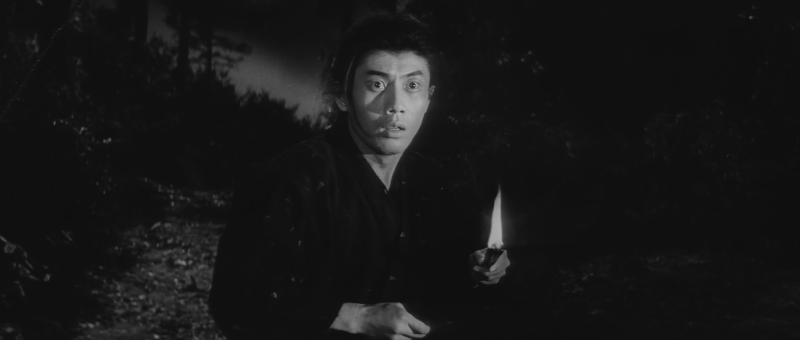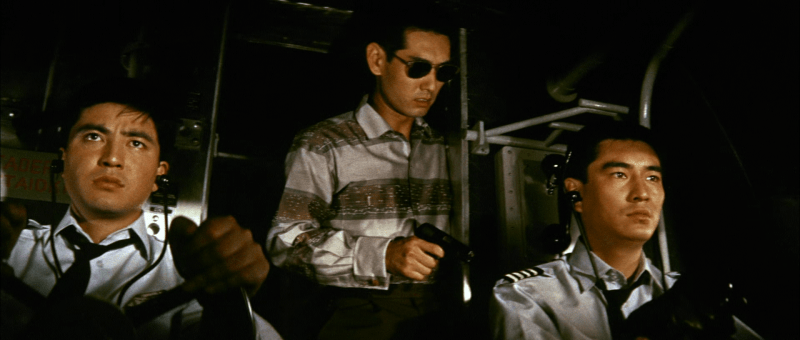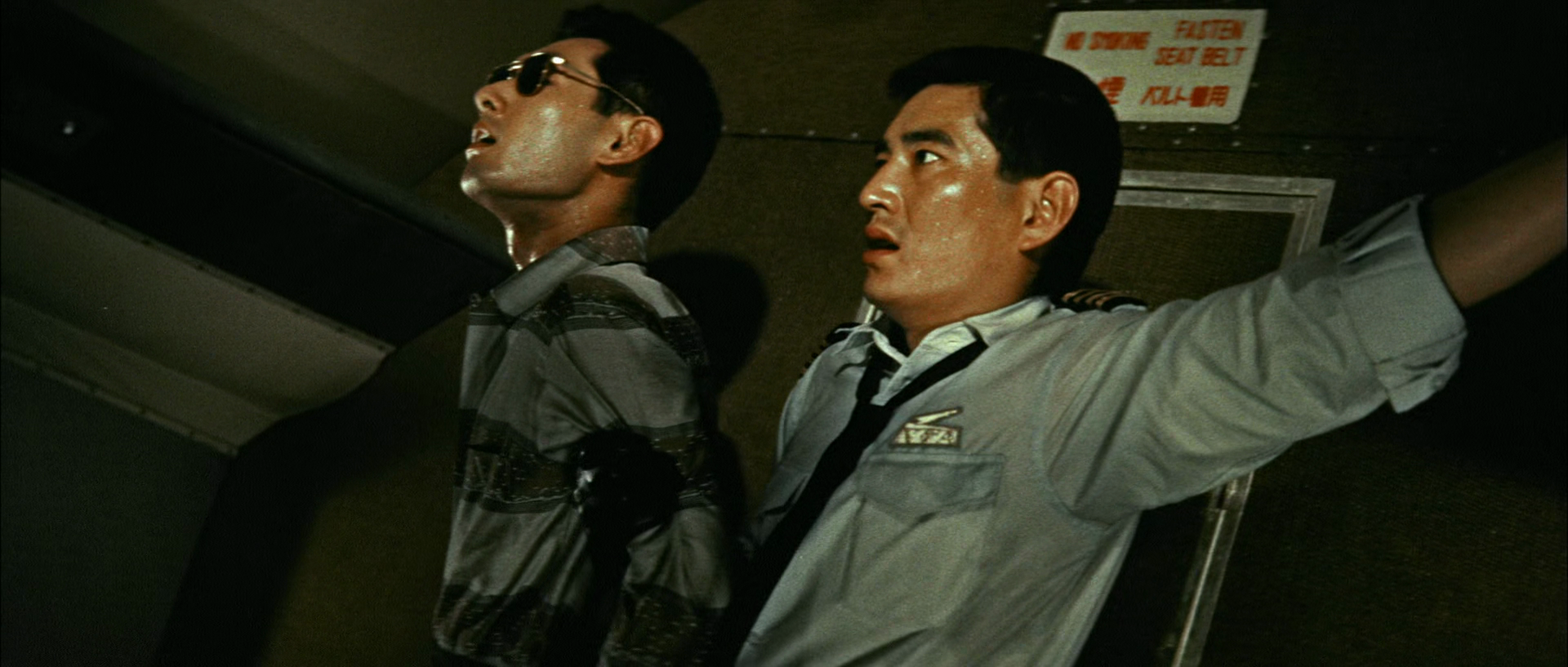
Four Hours of Terror (高度7000米 恐怖の四時間, Tsuneo Kobayashi, 1959)

It seems quite strange now to think of a time when air travel was both new and exciting and as easy as catching a bus. It’s this juxtaposition that Tsuneo Kobayashi’s hijacking thriller Four Hours of Terror (高度7000米 恐怖の四時間, Kodo Nanasen Metoru: Kyofu no Yojikan) plays with as an armed fugitive takes a passenger plane hostage in an attempt to escape after committing a murder while those on board struggle to accommodate themselves to this new form of transportation. 

This sense of exoticisation is obvious from the opening voiceover which sings the praises of Haneda airport as the gateway to a newly internationalised Japan though in actuality the flight in question is a domestic service travelling from Tokyo to Sapporo. The voiceover also introduces us to each of the passengers which come from differing strata of society and even includes a middle-aged American couple. There are in fact three generations of couples on board who seem to represent different stages of life from the newly wed students so wrapped up marital bliss that they barely notice anything else, to a long-married reporter and his wife on their first holiday together since their honeymoon, and an elderly couple returning from a trip to the capital who are mystified by this new age of mass media and air travel. The newlyweds apparently won this free trip on an aeroplane after agreeing to have their wedding broadcast on television in an early example of reality TV, reinforcing the sense of irony that they weren’t necessarily supposed to be on this doomed flight after all. 

Neither was car saleswoman Kazuko (Hitomi Nakahara) who has apparently been pulled away to Sapporo by a short notice business opportunity. She gets a standby ticket, as does her boyfriend/rival Fujio (Tatsuo Umemiya) who is also on track to the same opportunity. Weirdly, Kazuko is not overly sympathetic having randomly kicked a basket containing a little dog about to be smuggled on the plane by its doting owner, but does perhaps represent something of a more independent post-war womanhood even as she effortlessly deflects unwanted attentions from a client she may also have been exploiting in order to obtain his business. Having boarded the plane, she ends up sitting next to another man who requested a standby ticket and was using a surname that was the same as hers but evidently turns out to have been assumed. So lax is the security, you don’t necessarily have to travel under your legal name. In any case, she briefly flirts with him as an overture to a business relationship and also to annoy Fujio before overhearing a news report about the escaped fugitive on her portable radio.

Kida (Fumitake Omura), the fugitive, is dressed like a stereotypical yakuza which makes it odd that no one treats him with suspicion until they spot he’s carrying a gun which he had no trouble at all bringing on board. Though hijackings are not exactly unheard of, they aren’t particularly common either so no one would really suppose anyone had any reason to take a domestic flight to the provinces hostage, and really that was never Kida’s intention merely a last resort after being discovered. Later he gives a partial justification for his life of crime in that his mother beat him and then threw him off a cliff which is why he has a false leg. In any case, there’s a small moment of potential redemption towards the end when the kindly old lady tells him he can’t undo what he’s done, but could still resolve to change assuming they all survive this difficult situation with the plane which now has mechanical problems thanks to the gun going off. 

Even so, it’s the passengers who tie Kida up after the pilot ,Yamamoto (Ken Takakura), manages to disarm him by weaponising the plane. By flying to a high altitude, they knock him out with the air pressure, but are then faced with the mechanical failure of the landing gear which seems to be linked to with Yamamoto’s wartime trauma. A secondary drama revolves around his stoical character with one of the stewardesses apparently in love with him while simultaneously wary of his iciness given that he apparently showed no emotion after receiving the news his wife had passed away but simply flew the plane home as normal. Some see this as his devotion to the aircraft which is in a way a commitment to his duty over his human feelings, the factor that perhaps allows him to save the plane and get the passengers home safely. He is however saved by his love for his late wife with the cigarette case that contains her photo saving him from the worst effects of a bullet. 

The same may go for the co-pilot Hara (Kenji Imai) who is dragging his feet over his marriage to Yamamoto’s sister because he wants to achieve 3000 flight hours before getting married so he can call himself a real pilot. Though the film plants the seeds of these random plot threads and the social commentary that goes with them, it does not particularly engage while the hijacking itself remains fairly low key given that Kida is not a particularly “bad” bad guy. He just wants to go to a random place where the police won’t be waiting for him, but otherwise refrains from harassing the passengers save threatening a little boy travelling on his own to return to his parents after visiting his grandfather in Tokyo. In essence, there’s a kind of innocence and naivety in play which speaks to something of post-war hopefulness and a wonder in the frantic pace of progress in which the day is saved by keeping calm and carrying on even in the face of severe adversity.


Trailer (no subtitles)

Hiroshima (ひろしま, Hideo Sekigawa, 1953)

During the post-war occupation of Japan which lasted until 1952, the censorship regulations which replaced those of the militarist era perhaps ironically made it more or less impossible to criticise the US presence or depict the extent of wartime devastation lest it raise hostility towards American forces or reinforce a feeling of victimisation. For this reason, images of the atomic bombings were tightly controlled and the events rarely referenced in mainstream media, Hiroshi Shimizu’s Children of the Beehive being a notable if brief exception. Once the occupation was over, however, many assumed it would become easier to broach such taboo subjects. 

Hiroshima native Kaneto Shindo’s comparatively better known Children of Hiroshima, inspired by the book Children of the A Bomb: Testament of the Boys and Girls of Hiroshima, was released in 1952 shortly after the censorship regulations were lifted and stars his later wife Nobuko Otowa as a teacher who returns to Hiroshima to visit the graves of her parents killed in the atomic bombing and thereafter several of the children from a nursery school she once taught at who have survived but continue to suffer in various ways due to their experiences. Despite Shindo’s well known leftist credentials, many including the Japan Teachers’ Union who apparently owned the rights to the book though there is some dispute as to their involvement in the production, were disappointed with the film which they felt to be an overly sentimental studio melodrama that was ultimately unhelpful in supporting the anti-war political movement or accurately representing the hibakusha community. 

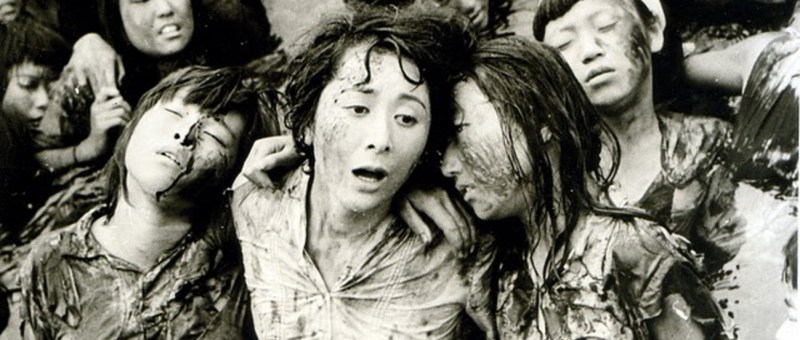
In response, the JTU commissioned a second version in order to better reflect their aims and ideals. Long unseen in either Japan or internationally prior to its recent restoration, Hideo Sekigawa’s Hiroshima (ひろしま) adopts a much more strident docudrama approach while, like Children of Hiroshima, maintaining a focus on the plight of children during the bombing and beyond though it seems somehow unlikely that teachers and parents would be wholeheartedly enthusiastic about showing such a deliberately harrowing piece to a sensitive younger audience. One criticism of Shindo’s film had been that he’d dodged dealing with the bombing itself by concerning himself only with the present-day aftermath. Sekigawa meanwhile focuses directly on the traumatic instant of the attack, utilising expressionistic techniques to recreate the living hell to which the city was reduced literally in flash. 

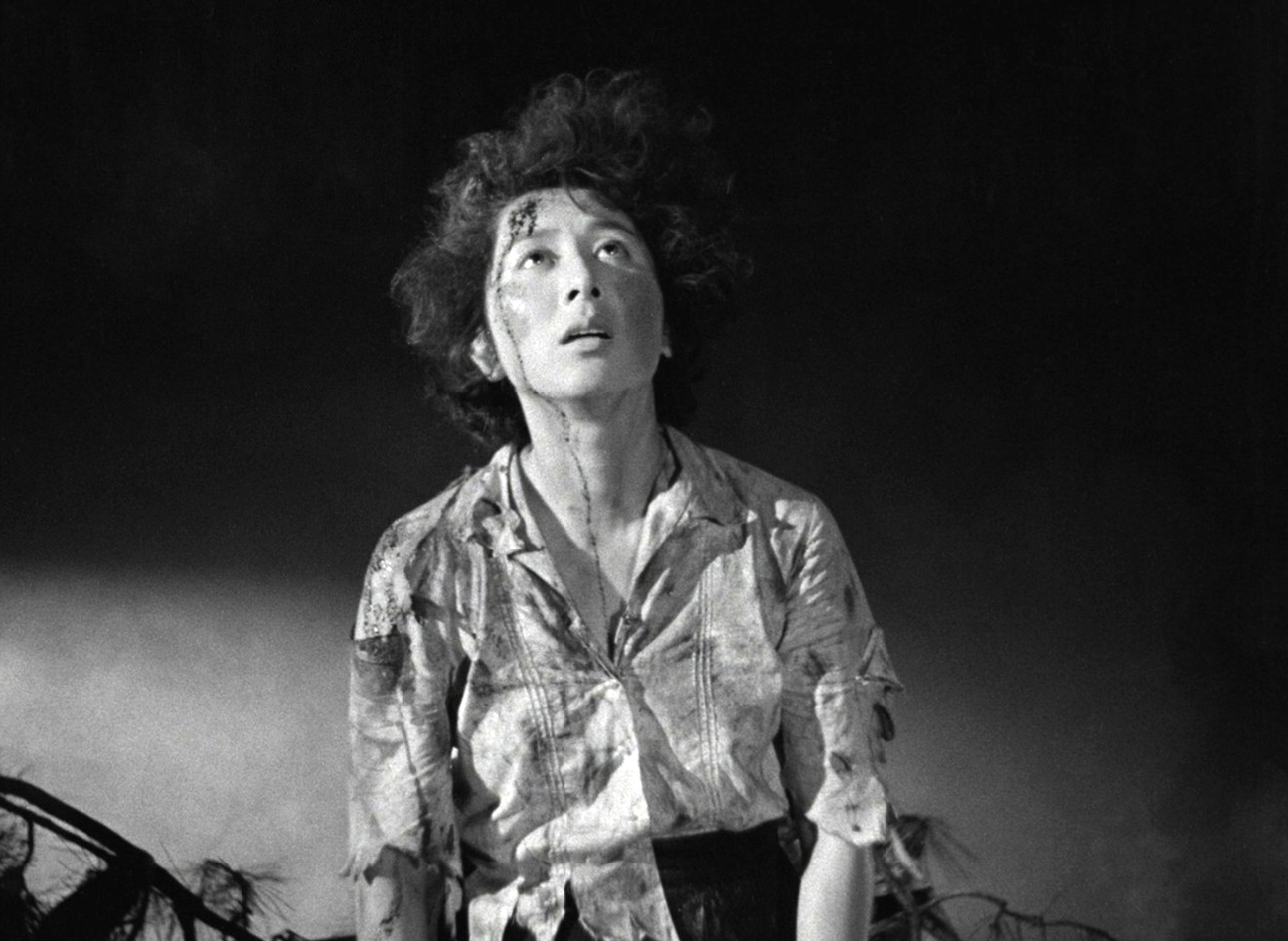
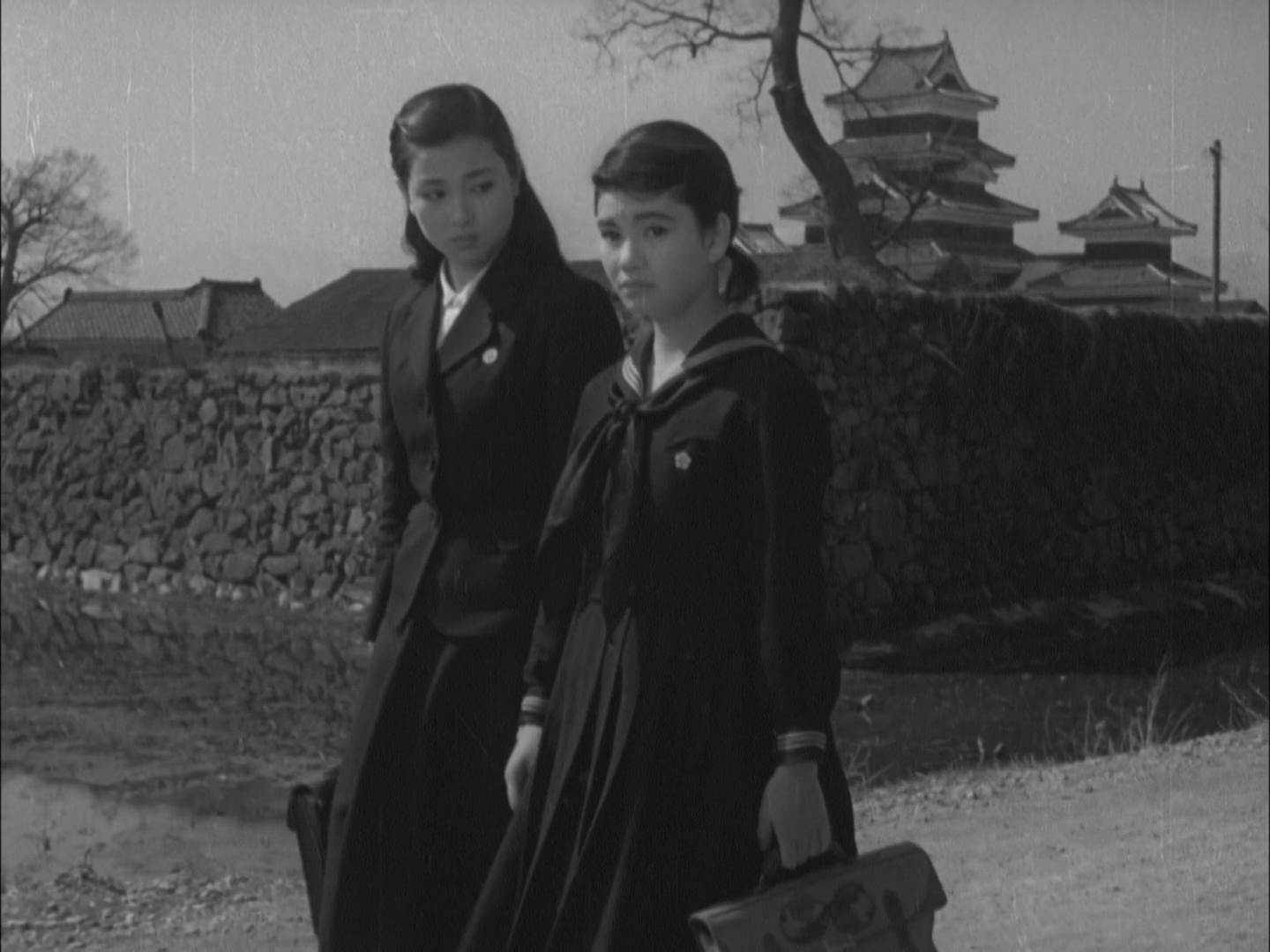
It’s clear however that the normal of that day was already far from normal. Rather than go about their studies, school children are working hard for the war effort helping to clear extensive bomb damage. A teacher and a class of school girls salvaging roof tiles from a ruined building pause to look at the sky. They can hear bombers but no sirens and it’s in that moment of stillness that everything changes. The world as it was implodes and is left in total collapse. Survivors search desperately for loved ones while stumbling through an unfamiliar landscape filled with crying children, charred bodies, rubble and fire. “This is hell” an injured man groans after managing to make his way to the field hospital, “hell”. 

Sekigawa bookends his tale with a contemporary framing sequence in which an idealistic teacher tries to instil compassionate values in his students some of whom are survivors of the bomb and still living with its effects including one suffering with radiation-related leukaemia who becomes very upset on listening to a radio lesson recounting the morning of the bombing from the point of view of the pilot flying the plane. Another of the students later comes to her defence, taking some of the others to task and lamenting that the suffering of those affected by the A Bomb is not taken seriously while victims still undergo a degree of social stigma even if they have no visible wounds. He is also very worried about his friend, Endo (Yoshi Kato), who later appears in the flashback to the aftermath of the bombing and has apparently gone off the rails, working in a cabaret bar and addicted to pachinko after losing his entire family. 

It’s through Endo that Sekigawa dramatises many of the secondary effects of the bombing in that he was not physically injured but is consumed by a sense of hopeless anxiety, intensely concerned about the prospect of another war and unable to envisage a successful future for himself in a world in which such horror can occur seemingly at random. It’s he who first introduces us to the parasitical disaster tourism that generates a grim trade in A-Bomb “souvenirs” as he passes a stall selling fake skulls as a child and then later attempts to sell actual human remains with inspirational stickers plastered on the top. The “better” future they have imagined for him is however in itself problematic, harking back to the traditional post-war solution of a factory job which directs aligns him with the nation’s push towards a capitalistic society, but is then undercut when he quits not because he is bored or lazy but because he discovered the factory was being used to produce artillery shells and he felt he could have nothing to do with it. 

Endo is also among a group of post-war street kids who learn to say the word “hungry” without knowing what it means to get bread and chocolate from passing Americans. A later more direct speech has them make a formal accusation that the Americans are responsible for the deaths of their parents and therefore bear a responsibility towards them which they should immediately repay with food. Some, including Shochiku who were originally set to distribute but later declined, described the film as overly anti-American, but Hiroshima largely refrains from mentioning the Americans other than a suggestion that the dropping of the bomb was itself a racist act in which they used the Japanese people as guinea pigs to test their new weapon, and focuses on the failure of the militarist authorities to respond in an appropriate fashion. We see a soldier read out a proclamation telling a ragged queue of survivors queuing up for food that the situation is “not unusual” in time of war and they should all return to their jobs despite the fact that there are no longer any buildings in which to work. Meanwhile, militarists talk of using the disaster to foment the war effort by marshalling hate and resentment towards the enemy while commanders refuse to take scientific advice that tells them Hiroshima may be uninhabitable for the next 70 years, obsessed only with continuing the war at all costs ironically insisting that their “fervent will” which “burns as brightly as a million stars” will bring them an assured victory.  

In the face of a second bombing, however, they are forced to accept that the war cannot continue, many of the victims left perplexed and defeated that despite their suffering the government has unconditionally surrendered and seemingly abandoned them. An abnegation of responsibility is also suggested by the presence of the street kids abandoned by their society and left to fend for themselves though Endo is eventually taken into a progressive care home from which he and other boys make numerous attempts to escape, in his case in the hope that he can find the sister from whom he became separated. Sekigawa does not make suggestions for the future, merely depict the difficult post-war reality while arguing for greater compassion in the contemporary era, one bomb survivor describing her despair in the knowledge that her disability is a barrier to marriage while finding work that can be done with her physical limitations is also difficult as is accessing government support. Sekigawa too may give in to a particular kind of sentimentality in the closing moments but it is indeed undoubtedly effective as a reminder of the human cost of war and our collective responsibility to ensure that it never happens again.


The Inferno (地獄, Tatsumi Kumashiro, 1979)

No one can escape from their sins according to the ominous voiceover that opens Tatsumi Kumashiro’s loose reimagining of Nobuo Nakagawa’s Jigoku, The Inferno (地獄, Jigoku). Then again, some of these “sins” seem worse than others, so why is it that a woman must bear a heavy burden for adulterous transgression while the man who killed her seemingly suffers far less? Perhaps hell, in this case, is born of conservative social attitudes more than anything else besides the darker elements of the human heart such as jealousy and romantic humiliation. 

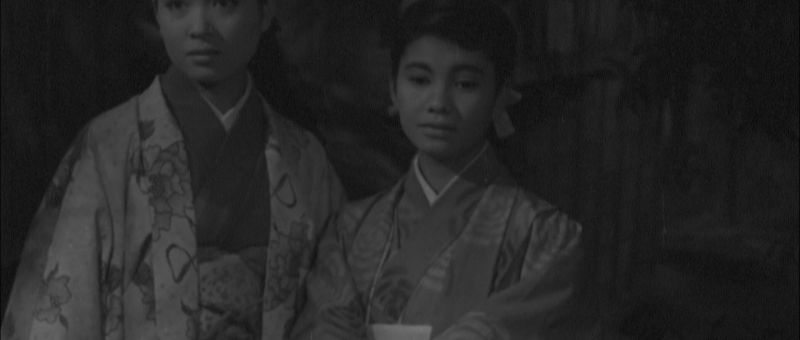
Those negative emotions are however as old as time as reflected in the folk song which opens the film about a young couple, though not the young couple currently onscreen, who are eloping because their incestuous desire is not accepted by the world around them. The connection between the couple onscreen might also be deemed semi-incestuous for Ryuzo (Ken Nishida) has run off with the wife of his brother, Miho (Mieko Harada), who is carrying (what she claims to be) Ryuzo’s child. Unpei (Kunie Tanaka), the brother, finally catches up with them and shoots Ryuzo with a shot gun. Miho tries to escape, but her foot is caught in a bear trap and Unpei decides to leave here there to die, while Ryuzo’s jealous wife Shima (Kyoko Kishida) later does the same. The body is found by local hunters, and in a strange miracle the baby is born from Miho’s dead body while Miho is dragged to hell for her “sins” where she learns that her baby has been born in hell but remains above. Not knowing what to do, the locals give the baby, Aki, to Shima but she obviously doesn’t want it and so swaps it with a foundling thanks to a weird old man, Yamachi, coming to love this other child, Kumi, as a daughter. 

This is quite literally a tale of the sins of the parents being visited on the child, the 20-year old Aki (Mieko Harada) later lamenting that she has no identity of her own and is solely a vehicle for her mother’s revenge. Though she apparently ends up in the same rural town “by chance” knowing nothing of her past, she resembles her mother physically and discovers she has some of her talents such as an innate ability to play the shamisen. What she also has is a trance-like lust that bewitches the men around her, though this is in a sense complicated by the fact it does not seem to be of her own volition so much so as a manifestation of her mother’s curse. Thus she ends up sleeping with the vulgar younger brother of the man she actually likes, Suchio, who in truly ironic fashion is actually her half-brother. She describes herself as having her mother’s “tainted blood”, while Shima later adds in a degree of class and social snobbery revealing that Miho had been a geisha Unpei unwisely fell for and was unworthy even of being a maid in their upper-middle class household let alone the wife of the second son. 

For all of her resentment, Shima is otherwise a loving mother to her sons and even to Kumi whom she is able to accept as a daughter in a way she would never have accepted Aki who was after all an embodiment of her husband’s betrayal. Colder and more austere than Aki or Miho would seem to be, she clings to the mummified body of her husband kept in a secret vault as a secret triumph over her humiliation laughingly remarking that now he’s hers forever and will never cheat on her again. Even if she left Miho to die, Shima does not particularly resist her fate well aware that her son has fallen for his half-sister (which probably wouldn’t have happened if she hadn’t swapped babies) and merely hoping Aki can be convinced to leave town alone rather than plotting any more drastic action. 

But the inferno of hell envelopes them all, crying out for retribution as the cycles of repressed or inappropriate attractions repeat themselves. Kumi realises that her love for her brother, Suchio, is actually not inappropriate because they are not related after all but is then consumed by her own hell in realising that he does in fact love his biological half-sister but is uncertain if he accept damnation in order to pursue it. What she, Miho, and Aki are punished for is female sexual desire aside the arguably taboo qualities of its direction though in hell it seems men are punished for this too, or more accurately for giving in to it, in a way they often aren’t in the mortal realm. “They cut their own flesh and blood for the vision of a woman in the future,” the guide explains as the brothers and Unpei literally climb over each other reaching for an illusionary representation of Aki/Miho at the top of the tree. In the mortal world they do something similar, grappling with each other, mired in competitions of masculinity as mediated through sexual dominance, conquest, or humiliation. 

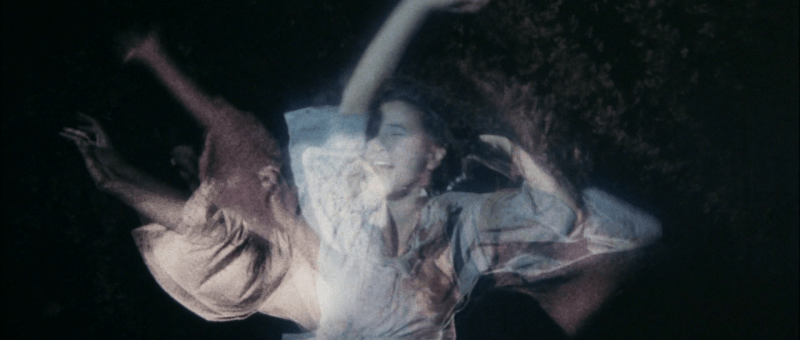
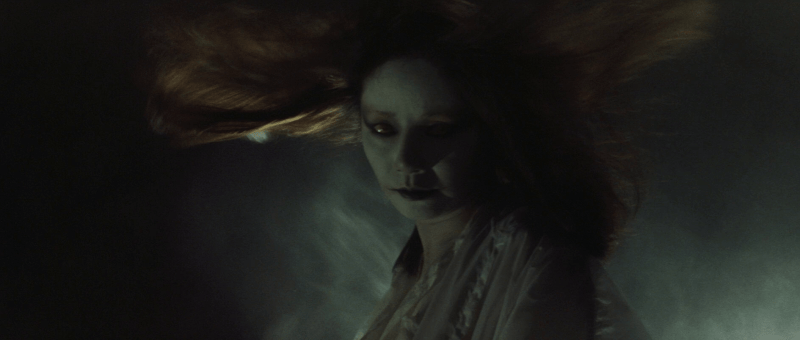
Yet Aki’s path to hell is also a confrontation with her femininity and her search for an identity as a woman by reuniting with the birth mother who died before she was born. Kumashiro’s visions of hell are terrifying and outlandish, a giant land in which the dead are thrown into a huge meat grinder they then have to push themselves. For the sin of eating meat, others are condemned to spend eternity eating human flesh. Miho has lost all sense of reason and is incapable of recognising her daughter seeing her only as another source of food but there is a kind of rebirth that takes place even if it’s only once again to be born in the underworld. Surreal and harrowing, Kumashiro’s eerie land of giant demons and shuffling corpses does indeed suggest that as the opening titles put it we all live our lives alongside hell.


Original trailer (no subtitles)

Village of Eight Gravestones (八つ墓村, Yoshitaro Nomura, 1977)

Can a curse end up being “real” just because people believe in it? Unlike many of his other crime films which were adapted from the novels of Seicho Matsumoto, Yoshitaro Nomura’s The Village of the Eight Gravestones (八つ墓村, Yatsuhaka-mura) edges towards the idea that the curse at its centre is real in a more literal sense with grimly grinning samurai standing on their hilltop and rejoicing in the fulfilment of the 400-year campaign of vengeance, but also hints at a toxic legacy of enmity and warfare along with a karmic sensibility found in many of Seishi Yokomizo’s other mysteries in which a noble family must account for the way it gained its riches. 

In this case, the Tajimi family which now owns most of the village became prosperous after betraying a band of eight displaced samurai during the Sengoku era. Fleeing the battlefield in defeat, the samurai had originally frightened the villagers when they came down off the mountain but were in actuality non-threatening, simply settling down to a life of farming and peaceful co-existence. But some members of the community became greedy and accepted the promises of riches from a rival clan for the service of eliminating the eight samurai. Cruelly inviting them to the local festival in what seemed like a moment of acceptance as members of the village, they betrayed them killing some by poison and others by the sword. 

Now, hundreds of years later, the Tajimi family is on the verge of extinction with the eldest daughter unable to bear children and the oldest son bedridden and soon to die which explains why they’re keen to track down long lost grandson Tatsuya Terada (Kenichi Hagiwara) who was presumably adopted by his stepfather and bears his name after his now deceased mother Teruko left the family to escape her abusive relationship with half-mad husband Yozo (Tsutomu Yamazaki). Surprisingly, it’s his maternal grandfather Ushimatsu Igawa (Yoshi Kato), who comes looking for him only to drop dead as soon as they meet of apparently strychnine poisoning in the first of several murders that all echo the ancestral curse placed upon the Tajimi family by samurai leader Yoshitaka Amako (Isao Natsuyagi) as he died. 

Like many of Nomura’s films this too features a journey only this one is in a sense into the past as Tatsuya ventures to the rural heart of Japan hoping to see his mother’s birthplace and satiate his curiosity about his birth father. What he discovers there is obviously a lot of what seems like unfounded local superstition along with a degree of unpleasant stigmatisation as he’s immediately accosted by a shamaness who calls him a murderer to his face for his connections with the Tajimis to whom he feels himself a stranger, and then is later blamed for all the weird goings on which only began after he arrived. The film uproots itself from the original 1948 setting to the present day which perhaps lessens the impact of its central theme about the legacy of violence and betrayal that is stoked by war and enmity along with the destructive capacity of human greed that encourages some to betray others for their own advancement only to discover that success founded on human sacrifice will never get you very far. 

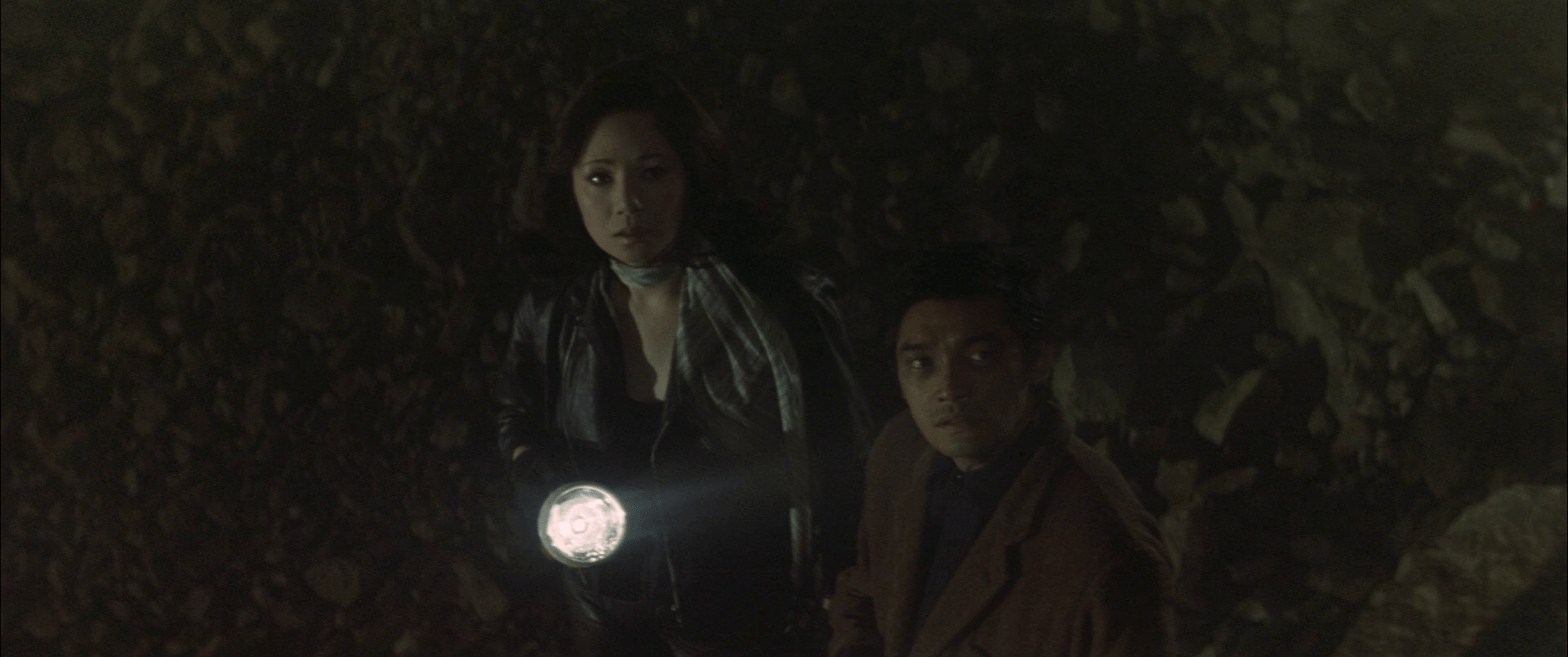
Ironically in a more real world sense, it turns out to be greed that motivates these present crimes with the villain hoping to usurp the Tajimi family fortune and utilising the curse as a means to do so. Much of the action takes place in a network of underground caves filled with glowing green lakes where the villain eventually takes on demonic proportions, face ghostly white with yellowish eyes and a crazed expression that echoes those of the samurai as they died. Nomura hints at the sense of ancient dread in this very old place while also surprisingly bloody in his flashbacks which feature scenes of shocking violence including severed heads one of which seems to lick its lips and stare intently even while on display. This being a Kindaichi (Kiyoshi Atsumi) mystery, the famous detective does indeed appear though remains a background presence quietly solving the crime behind the scenes while Tatsuya searches for the key to his own history and an escape from this legacy of violence and destruction in reclaiming his own identity.


Original trailer (no subtitles)

The Eleventh Hour (どたんば, Tomu Uchida, 1957)

The problematic working practices of a post-war coal mine are thrown into stark relief when five men are trapped underground during a collapse in Tomu Uchida’s tense rescue drama, The Eleventh Hour (どたんば, Dotanba). Based on a TV play which was itself inspired by real events, the title alone tells us that we can expect a happy ending even if it’s somewhat undercut by the cynical quality of the fanfare with which it is greeted. Nevertheless, it’s clear that the mine itself reflects a dark side of the contemporary society even as it rocketed towards an economic miracle at least on one level fuelled by coal. 

The Towa mine is a small concern run by the owner, Sunaga (Yoshi Kato), who was a miner himself in his younger days, and the chief engineer Kusaka (Shin Tonomura). In the opening scenes it becomes apparent that they are having difficulty running the business effectively while chasing lucrative large-scale contracts. Kusaka pulls Sunaga aside and attempts to warn him that recent attempts to fit a replacement support beam have caused the structure to shift with the effect that it has begun leaking water. The implication is that Sunaga has attempted to cut corners and endangered the miners’ safety. He barely listens to Kusaka’s complaint before barking at him that it’s his responsibility to take care of, and he must be aware of the cost implications involved seeing as he more than anyone knows how hard it is to run this kind of business. 

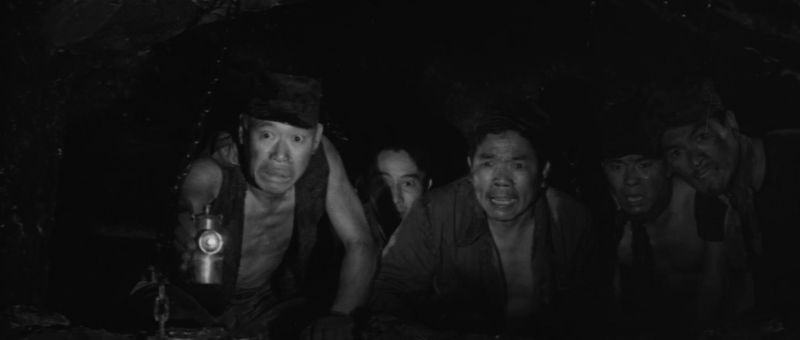
Unfortunately for him, a sudden rainstorm spells disaster when the mine begins to flood. Some workers still underground are able to escape thorough a support tunnel that connects to another mine, but five are trapped at the other end having managed to climb to a higher shelf above the water. In the rain-soaked soil, some of the above ground structure also begins to collapse, while to his credit a distraught Sunaga calls in the police and miners’ union as soon as possible rather than trying to cover up the disaster to hide his mismanagement. 

For all that, Sunaga is not a stereotypically exploitative mine owner so much as a bad businessman possibly in over his head though as a former miner he should have known better. On the one hand, he had only just found out about the unstable support arch and could not have fixed it before the disaster but as he himself agrees he bears the ultimately responsibility for the way the mine was run which includes skimping on repairs and inspections. More than anyone else, he wants the men to be rescued alive and later tearfully tells his wife that he has considered suicide but is now resolved to sell the mine and his own home to compensate the families should the worst happen. Kusaka later does try to take his own life after witnessing the rescue effort flounder, a Buddhist priest later suggesting that his act may have been intended as a kind of human sacrifice as if he could save the men’s lives by offering up his own. 

Then again, the way some of the men put it it seems like some mine owners view the compensation money for workers killed on the job as a kind of fine they’re prepared to pay to maximise profits. The film briefly introduces the circumstances of the some of the men and their families, one a husband and father who asks for an advance on his pay because his wife and daughter are ill with something that could turn out to be measles. The amount of the compensation money isn’t clear, but may not be enough for a widow to raise a five-year-old daughter to adulthood. If these men die, their families may die with them. Other relatives waiting for news include an elderly man anxious for his only son, and a grandmother waiting for her grandson who only went to the mine to have a look around before potentially starting to work there. 

In the case of the young Yamaguchi (Shinjiro Ebara), the film hints at the way the industrialisation presented by the mine has disrupted local communities as farmers’ sons leave the land for the promise of better pay for working underground. Yamaguchi is taking the job because his father is ill with some kind of neurological complaint, possibly caused by industrial pollution, and he has argued with his brother presumably about money and the responsibility of earning his keep. While underground, he runs into a friend of his father’s, Banno (Takashi Shimura), who tells him that mining is not a job you can do for life and he himself seems far too old to be doing such physically strenuous work though he is the only one almost able to stand when the men are eventually lifted from the mine. 

A veteran miner, Banno too is perhaps complacent. He smokes underground and blows the cigarette out after every puff but only to avoid carbon monoxide rather than a potential explosion. Trapped underground twice before, he does his best to comfort the other men while reassuring them that their colleagues are working to rescue them as they speak. Most of the mine workers from the surrounding area have indeed come to help, along with a specialist rescue team from Tokyo, though they make little progress with the tools available to them. As a journalist puts it, small enterprises don’t have access to the same resources as large corporations and cannot simply order in larger pumps or better diggers. Many of the workers want want to give up with the main support coming from the korean miners from a neighbouring town though they get little thanks for the efforts. After overhearing a frustrated member of the rescue team employ a racist stereotype to describe them as lazy drunks only after money, they withdraw their labour. 

Sunaga is later forced to go back to the Koreans cap in hand with a personal apology, but though some of them are personally sympathetic they remark on the level of discrimination they’ve faced for the entirety of their careers and aren’t sure why they should help Sunaga now considering the way they’ve been treated. On a side note, standard workers protections would not apply if they were killed or injured during a rescue attempt meaning they’d be risking their families’ lives as well as their own for men who are almost certainly already dead. It’s not surprising that they overwhelmingly vote not to help leaving a dejected Sunaga devoid of all hope. 

Nevertheless, they eventually reconsider reflecting that if they were trapped underground they’d want to believe someone was coming and if they don’t come now then they won’t have any right to expect them to. It is workers’ solidarity that eventually saves the miners, from winch operator Michi (Masako Nakamura) who refuses to leave her post so that the men won’t feel “abandoned” to those who arrive to rejoin the rescue effort just when it seems the most hopeless. The solution to cracking the mine is found only by listening to a former employee who hints at its dark history in reminding them of a secret support tunnel sealed up after the war once military equipment had removed.

It might be tempting to read an allegorical message into the solution being the need to blast through the buried wartime past to rescue the men trapped on the other side though it may be a bit of a stretch. In any case the action outside is also somewhat ironic. As the mine collapse becomes national news and attracts rubbernecking crowds, a man turns up to sell ice cream, while journalists also report on the event from the close by. They seem broadly hopeful, but are also looking for a good story and all too quick to report on Kusaka’s suicide attempt. When the men are eventually rescued, they order a helicopter to drop confetti over the surrounding area (possibly unhelpful to local farmers) along with a bouquet for each of the men. Uchida had some experience of working in a mine during his time in Manchuria which had permanently ruined his health and had first hand knowledge of how a mine works and what happens when something goes wrong which explains the otherwise naturalistic opening sequence laying out the conveyor belt design of the complex as the coal is picked and transferred into pick up trucks that will take it to its new owners. It is however “dark and wet like hell” underground, a place that ideally no one should have to go and that all should eventually be rescued from. 


Wind, Woman and Road (風と女と旅鴉, Tai Kato, 1958)

Tai Kato joined Toei’s Kyoto studio in 1956 having made his directorial debut at the independent production house Takara Productions in 1951 shortly after being letting go from Daiei in 1950 during the Red Purge (he had been chief secretary for studio’s the labour union). Heavily influenced by and a great admirer of Daisuke Ito, Kato had a passion for chanbara and jidaigeki which were Toei’s mainstays at the time, but even while making what were essentially programme pictures his approach was anything but conventional. With 1958’s Wind, Woman, and Road (風と女と旅鴉, Kaze to Onna to Tabigarasu), Kato embarked on what would become a signature style of “realistic” period drama otherwise at odds with the formulaic nature of the genre. 

As he would continue to do, Kato instructed his cast not to wear makeup and while casting kabuki actor/chanbara megastar Kinnosuke Nakamura insisted on a more modern performance style than the sometimes mannered theatricality of the traditional samurai film. Ginji is cocksure young man living on the road after being kicked out of the hometown he is now travelling towards because of a crime supposedly committed by his long absent father. On the way, he runs into Sentaro (Rentaro Mikuni), a middle-aged man recently released from prison who is struck by his appearance and immediately asks how old he is realising that Ginji is about the same age as his own son who died as a result of a fight. 

The two begin walking together and Ginji tells Sentaro that his village sends gold to the governor around this time every year as a bribe to get lower taxes which doesn’t make a lot of economic sense but evidently works for them. Last year, the gold was stolen by notorious bandit Hanzo the Shark (Eitaro Shindo) and two villagers were killed during the robbery. Ginji half jokes about teaming up to steal it, and then playfully attacks Sentaro leading the entourage escorting this year’s payment to flee in terror leaving the gold behind. Sentaro encourages Ginji to take the money back to the village, but he is later shot by the returning villagers who think they must be Hanzo’s henchmen pulling the same stunt as last year. 

Unlike the typical chanbara hero, Ginji is petulant and resentful. He has a very modern way of speaking and is rebellious in character as you might well expect him to be given his life experiences. The other villagers are not happy to see him and continue tar him with his father’s brush, sure that the son of a thief can’t be any better while Ginji pines for his late mother claiming that the villagers’ harassment along with the inability to support herself economically led her to take her own life. Once a member of Hanzo’s gang he vacillates between a desire to be accepted by the village and that to take his revenge on it. Sentaro meanwhile is determined to save him, regretful that he could not save his own son from the life that he had led as a yazkuza and petty criminal. 

There is a persistent sense that everyone here is at heart a wanderer. The doctor’s daughter Ochika (Yumiko Hasegawa) who develops a fondness for both men relates that she was lured away from the village by an itinerant actor and fell into a life of ruin before returning to discover that her mother had passed away. The headman’s adopted daughter Oyuki (Satomi Oka) with whom Ginji falls in love tells him that she too is an orphan, her father was a medicine pedlar who dropped dead in the village which then took her in. Echoing a sense of rootlessness in the post-war world, they are all in someway displaced and looking to restore connections which have previously been broken but largely failing or unable to do so. Ginji is torn between his criminal past and the reformed future offered to him by the more positive paternal relationship he develops with Sentaro who, unlike his own father, is readily accepted by the village which is unaware that he previously spent time in prison. 

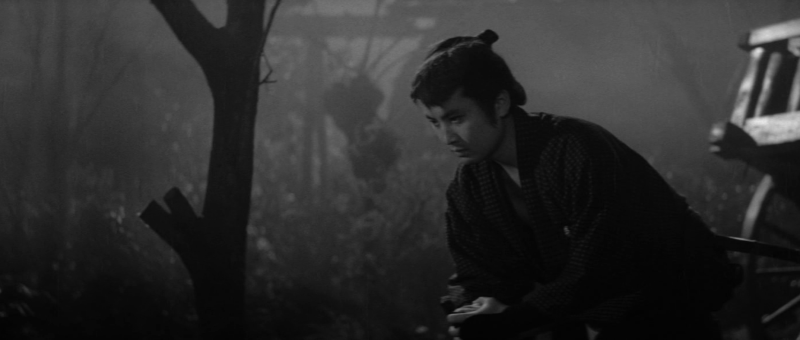
The final showdown takes place in a windswept clearing filled with Kato’s trademark mist as Ginji finally picks a side only to realise that that in the end he will always be a wanderer, a rootless figure whose only home is the road. Kato shoots a little higher than he would subsequently but still rests a little lower than the norm, emphasising a sense of destabilisation in Ginji’s volatility along with a painful longing that keeps him a lonely soul lost in the fog and on perpetual journey towards a long forgotten home. 


Japan Organized Crime Boss (日本暴力団 組長, Kinji Fukasaku, 1969)

A yakuza just out of jail emerges into a very different Japan in Kinji Fukasaku’s proto-jitsuroku gangster picture, Japan Organized Crime Boss (日本暴力団 組長, Nihon Boryoku-dan: Kumicho). A contemporary Oda Nobunaga is trying to unify the nation under his yakuza banner while fostering a nationalist agenda and colluding with corrupt politicians to prop up the 1970 renewal of the Anpo security treaty, but as it turns out some people aren’t very interested in revolutions of any kind save the opportunity to live a quiet life they once feared would elude them. 

As the film opens, a narratorial voice explains that the nation has now escaped from post-war chaos, but Japan’s increasing prosperity has led to a natural decline of the yakuza which has seen some try to ride the rising tides to find new ways to prosper. Exploiting its control of local harbours, the Danno group has quickly expanded though Osaka and on to the rest of the nation thanks largely to its strategist, Tsubaki (Ryohei Uchida), and his policy of convincing local outfits to ally with them and fight as proxies allowing Danno to escape all responsibility for public street violence. 

Perhaps strangely, the Danno group and others are acutely worried about optics and keen to present themselves as legitimate businessmen while using a prominent politician as a go-between to settle disputes between gangs. The yakuza already know they’re generally unpopular and fear that attracting too much attention will only bring them problems from the authorities. The politician needs Danno to look clean so that they can back them in opposing the protests against the Anpo treaty, while the yakuza organisation is later depicted as a militarised wing of the far right hoping to correct “misguided” post-war democracy while eradicating communism and instilling a sense of patriotic pride as they go. Of course, all of that will also likely be good for business while quite clearly marking these new conspiracy-minded yakuza as “bad”, hypocritical harbingers of a dangerous authoritarianism. 

Tsukamoto (Koji Tsuruta), the recently released lieutenant of the Hamanaka gang, is conversely the representative of the “good” yakuza who still care about the code and are genuinely standing up for the little guy against the oppressive forces now represented by bad yakuza. Hamanaka had allied with Danno while Tsukamoto was inside and was thereafter targeted by the local Sakurada group who have joined the Tokyo Alliance of yakuza clans opposed to Danno who continue to fight them by proxy. After his boss is killed and tells him that joining Danno was a mistake, Tsukamoto’s first thought is to rebuild the clan which he does by remaining neutral, refusing to engage in Danno’s proxy wars while protecting his men from their violence as mediated by the completely unhinged, drug-addled Miyahara (Tomisaburo Wakayama) and the anarchic Hokuryu gang. 

Miyahara comes round to Tsukamoto precisely because of his pacifist philosophy after he kidnaps one of his men and Tsukamoto stands up to him while making a point of not fighting back. As crazed as he is, Miyahara is a redeemable gangster who later also turns on Danno regretting having agreed to do their dirty work for relatively little reward. After a gentle romance with the sister of a fallen comrade, Tsukamoto, who lost his first wife to suicide while inside, begins to dream of leaving the life behind but as he and others discover there is no real out from the yakuza and the code must always be repaid. In failing to protect his clan he fails to save himself and becomes a kind of martyr for the ninkyo society taking on politicised yakuza and their lingering militarism. 

Fukasaku takes a typical ninkyo plot of a noble gangster standing up for what he believes is right against the forces of corruption and begins to undercut it with techniques such as voiceover narration and onscreen text that he’d later use in the jitsuroku films of the 1970s which firmly reject the idea of yakuza nobility seeing them instead as destructive forces born of post-war chaos and increasingly absurd in a Japan of rising economic prosperity. Men like Tsukamoto are it seems at odds with their times, unable to survive in the new society in which there is no longer any honour among thieves only hypocrisy and self-interest. 


The Shootout (凶弾, Toru Murakawa, 1982)

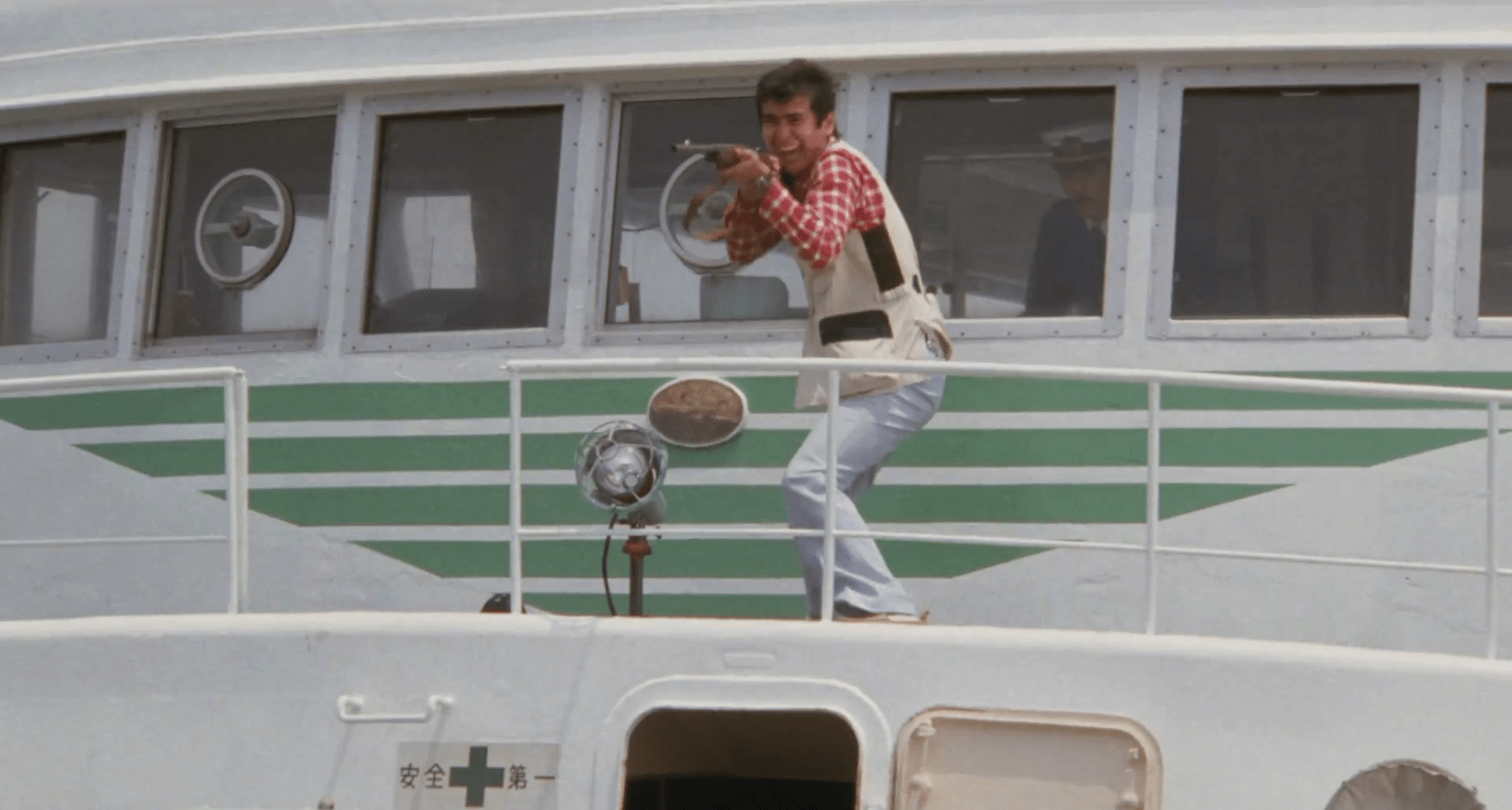
The seishun eiga or youth films of the 1960s often had an ambivalent attitude to rebellious youngsters who for various reasons were not able to accommodate themselves to the times in which they lived, but few were prepared to ask real questions about society’s responsibility towards young people in difficult situations who had often been let down by the same state institutions which only sought to demonise them. Based on a story by Hiroshi Fukuda which was inspired by a real life ferry hijack which outraged the nation when the police opted to shoot the teenage hijacker dead, Toru Murakawa’s The Shootout (凶弾, Kyodan) stars the nephew of 60s youth movie king Yujiro Ishihara and places the blame firmly at the door of the police and other public services whose gradual and needless escalation of events leads only to tragedy. 

Teenagers Hideo (Yoshizumi Ishihara), Numa (Masato Furuoya), and Soichi (Tatsuo Yamada) met in reform school and have become something like brothers. All of them either never knew their parents or lost them young and have developed a healthy distrust of authority thanks to their experiences. As the film opens, the boys run cheerfully through the streets of a small rural town headed to the mountains where they play with a shotgun Hideo inherited from his late father. While driving back the boys pick up a distressed young woman, Hiromi (Mio Takaki), running barefoot through the pouring rain, but soon come to the attention of a pair of bored policemen the older of whom has a definite problem with the “unreliable” youth of the day and all their “sissy” music. They pull car over for speeding which is a problem not only because Soichi has been drinking, but because it is also not his car. He took the neighbour’s when his was taken away and it’s been reported stolen. 

While the younger policeman processes Soichi, the older one decides to kick off after finding the shotgun, banging Hideo’s head against the side of the car and then attacking Numa with a police truncheon when he asks him politely to stop before punching him in the face and kneeing him in the stomach though at this point neither of the boys has made any attempt to resist. Continuing to kick him on the ground, the policeman tells Numa that he should have more respect for his parents which is something of a sore spot because Numa was a foundling raised in the care system. Snapping, Numa hits the policeman over the head with the shotgun leaving him crawling on the muddy ground in danger of drowning while having suffered a serious head injury. 

This is first of many needless escalations that the boys encounter. The policeman was not really interested in serving the law, only in validating his authority and in reality little better than a thug himself. If he had not needlessly inflicted violence on the two young men, which is in itself an act of extreme entitlement given his age and fitness level compared to that of two physically fit teenage boys, none of the succeeding action would have taken place. The boys feel that they are unfairly victimised and are understandably mistrustful of the police because as they say even when they are doing their best to adhere to the rules of mainstream society they are written off as reform school boys not least by the police who have already decided that they are innately bad and must be guilty of whatever it is they are accused. 

The boys find the same thing when they decide to turn themselves in after a few days on the run and go to their social worker for help. The social worker lives in a temple and first seems as if he’s going to help when they explain and ask him to mediate for them with the police who they fear will not listen to the real story, but it soon becomes clear that he only wants to help Hideo who is the grandson of a diplomat and a promising student while foundling Numa is according to him unsalvageable. If only the social worker had been prepared to listen to them, the hijacking would never have happened. All the boys ever ask for is that someone pay attention to their side of things, honestly without prejudice, but all they’re ever told is that the word of a reform school boy is worthless which really begs the question of what the reform school is for in the first place. 

Then again there are a handful of sympathetic officers including one in charge of the original incident who makes it clear to his men that they should not be judging the suspects on their backgrounds while another (Kunie Tanaka) who was responsible for arresting Hideo when he killed his sister’s no good violent boyfriend during a fight reflects that he had beautiful eyes for a murderer and has come to question the nature of contemporary policing feeling perhaps that boys like these deserve help rather than punishment. The only person who does make an effort to listen is the fatherly captain of the ferry which Hideo ends up hijacking (Tomisaburo Wakayama) who seems to be getting through to him only to have his progress undermined by the police who again only want to preserve their own authority. 

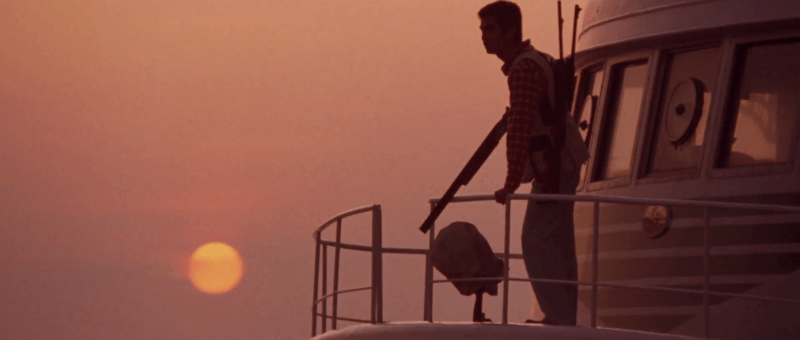
Comparing the ferryjacking to the 1972 Munich terrorist attack, which seems rather hyperbolic even though the situation is obviously dangerous given the hostage taker is an emotionally volatile teenage boy with at this point two powerful firearms, the police and Coast Guard determine that killing him is likely the only solution. Obviously never having studied much about hostage negotiation, they surround the boat when it stops to refuel pushing Hideo further into a corner and increasing the likelihood that he may end up feeling out of options and decide to take everyone else with him when he goes. From the police’s point of view, perhaps that adds an extra justification to their clear determination to kill when the implication is that to them boys like Hideo are just a threat to be neutralised, another powder keg reform school boy who would have caused trouble eventually. 

That the public do not agree with the police’s actions perhaps says something about contemporary social attitudes, that in general people do not want to live under such rigid authoritarianism and could see that Hideo was merely a frightened boy who could have been talked down if again someone, other than the captain who did his best to save him, had been prepared to listen rather than once again needlessly escalating the situation to preserve the image of police authority. On the flip side, we’re also shown that the shooting has an adverse effect on the remorseful police sniper who is also at a moment of emotional strain caring for a wife dying of a brain tumour at only 25. Reminiscent of Rebel Without a Cause, The Shootout like its heroes has a healthy distrust of authority figures but also a small faith in the wider public while asking serious questions about the way society treats those who are often the most in need of care and protection. 


The Sand City in Manchuria (砂漠を渡る太陽, Kiyoshi Saeki, 1960)

A pure hearted doctor stands strong against the forces of imperialism if somewhat ambivalently in Kiyoshi Saeki’s wartime drama The Sand City in Manchuria (砂漠を渡る太陽, Sabaku wo Wataru Taiyo). “Why isn’t there just one country? I don’t want a country” a young Chinese woman exclaims towards the film’s conclusion in what is intended as an anti-war statement but also invites the inference that the one country should be Japan and that China is wrong to resist the kind of “co-existence” that the idealistic hero is fond of preaching. 

Dr. Soda (Koji Tsuruta), known as Soh, has been in Manchuria for two years running a poor clinic in a trading outpost on a smuggling route through the desert. He came, he later tells another Japanese transplant, after being talked into it by a pastor who told him about US missionaries who endured hardship in the Gobi desert and lamented that no Japanese people had been willing to take on such “thankless” work in the midst of the imperial expansion. There is a kind of awkwardness in Soda’s positioning as the good Japanese doctor which perhaps reflects the view from 1960 in that he objects to the way the Japanese military operates in Manchuria and most particularly to Japanese exceptionalism which causes them to look down on the local Chinese community as lesser beings, but within that all he preaches is equality and co-existence which suggests that he sees nothing particularly wrong in Japan being in Manchuria in the first place while implying that the Chinese are expected to simply co-exist with an occupying force to which they have in any case been given no choice but to consent. 

Nevertheless, it’s clear that the Japanese are in this case the bad guys. Soda is at one point accosted by a drunken soldier who takes against his choice to adopt Chinese dress while rudely refusing to pay his rickshaw driver. The animosity of some in the town is well justified as we hear that their mother was murdered by a Japanese soldier, or that they were raped by Japanese troops and now have nothing but hate for them to they extent that they would withhold vital medical treatment from a child rather than consider allowing Soda to treat them. Soda’s main paying job is working at an opium clinic hinting at the various ways imperialist powers have used the opium trade to bolster their control over the local population, while it later becomes clear that one of the Chinese doctors has been in cahoots with a corrupt Japanese intelligence officer to, ironically, syphon off opium meant for medical uses and sell it to addicts in a truly diabolical business plan. 

Though Soda is well respected in the town because he offers free medical treatment to those who could never otherwise afford it, he is sometimes naive about their real living conditions. Outraged that a young woman has been sold into sexual slavery, he marches off to the red light district to buy her back but is confused on his return realising her family aren’t all that happy about it because they cannot afford to feed her and were depending on the money she would send them because the father has become addicted to opium and can no longer work. The girl, Hoa (Yoshiko Sakuma), becomes somewhat attached to Soda but he is largely uninterested in her because she is only 17, while her affection for him causes tension with the daughter of an exiled Russian professor which is only repaired once they all start working together for the common good after the town after it comes under threat from infectious disease. 

In an echo of our present times, it seems not much has changed in the last 80 years or so, the townspeople quickly turn on Soda once it become clear that he’s putting the town on lockdown to prevent the spread of infectious meningitis after a Russian soldier stumbles in and dies of it. The disease firstly exposes the essential racism even among those Japanese people who have lived in Manchuria longterm such as the mysterious Ishida (So Yamamura) who remarks that diseases like that only affect the Manchurians and they’ll be fine because they are “more hygienic”, while simultaneously painting the infection as a symptom of foreign corruption delivered by the Russian incursion. Soda visits a larger hospital to get the samples confirmed but is told that the disease has not been seen in Manchuria before and so they have no vaccine stocks leaving him dependent on the smuggling network to get the supplies he needs. As the town is a trading outpost whose entire economy is dependent on the business of travellers just passing through, the townspeople are obviously opposed to the idea of keeping them out fearing that they will soon starve going so far as to tear down Soda’s quarantine signs while throwing stones at his house. 

In another irony, it’s Ishida’s pistol that wields ultimate control immediately silencing the mayor’s objections in a rude reminder of the local hierarchy. Many of the townspeople including inn owner Huang (Yunosuke Ito) and Hoa’s sister Shari (Naoko Kubo) are involved with the resistance to which Soda seems to remain quite oblivious and in any case adopts something of a neutral position but gains a grudging respect from Huang thanks to his humanitarianism that eventually saves him from brutal bandit Riyan (a rare villain role for a young Ken Takakura). In any case, as the corrupt Japanese officials pull out to escape the imminent Russian incursion, Soda decides to stay in part to atone for the sins of the Japanese in an acceptance of his responsibility as a Japanese person if one who has not (directly) participated in the imperialist project even if he was in a sense still underpinning it. Essentially a repurposed ninkyo eiga starring Koji Tsuruta as a morally upright man surrounded by corruption but trying to do the right thing to protect those who cannot protect themselves, there is an undeniable awkwardness in the film’s imperialist ambivalence but also a well intentioned desire to look back at the wartime past with clearer eyes and a humanitarian spirit. 


The Great White Tower (白い巨塔, Satsuo Yamamoto, 1966)

“It’s about the right thing to do, it’s about conscience, and Prof. Zaizen lacks conscience” according to a star witness at the conclusion of a medical malpractice trial in Satsuo Yamamoto’s adaptation of the novel by Toyoko Yamasaki, The Great White Tower (白い巨塔, Shiroi Kyoto). One of a series of films heavily critical of the medical system in the midst of rising economic prosperity, Yamamoto’s tense political drama presents the succession intrigue at a university hospital as an allegory for the nation as a whole implying that lingering feudalistic and authoritarian thinking has poisoned the contemporary society. 

This is in part reflected in the way in which major hospitals are often run as large family businesses where succession is a dynastic matter. In this case, however, the scene is a prominent university hospital in Osaka at which the head of the surgical department, Azuma (Eijiro Tono), is about to retire. Generally, one of his assistant professors would simply move up after being approved by a board comprised of other department heads but the problem is no one, and especially not Azuma, is particularly happy with the most likely candidate, Zaizen (Jiro Tamiya). The issue between them seems to be one of ambition and authority. Zaizen is regarded by all as an excellent doctor with a stellar track record but he is also cold and arrogant with no regard for departmental protocol all of which of course offends Azuma as does his background and person. The son of a country teacher, Zaizen prospered through the dedicated labour of his widowed mother along with family connections before marrying into the extraordinarily wealthy and influential Zaizen family who run a large obstetrics clinic. Consequently, he is free to pursue his interests and lacks the economic anxiety that might make another employee wary of pushing his luck. 

His humble background might have placed a chip on Zaizen’s shoulder but it’s also clear he’s part of a new generation that does things differently from the last, apparently keen to build a public media brand appearing in a glossy magazine which brands him “the magic scalpel” thanks to his success in treating pancreatic cancer. While they might not be able to argue with his track record, other doctors worry that Zaizen has developed a god complex and is slapdash with his practice often timing his operations and smugly pleased with himself when hitting a new record. Azuma first picks him up on this in the case of elderly patient, questioning his treatment decisions in accusing him of neglecting to fully consider the patient’s post-op wellbeing. This then becomes something of a recurring theme as good doctor Satomi (Takahiro Tamura) is minded to bring Zaizen in on the tricky case of a man, Sasaki (Nobuo Minamikata), he suspects may have pancreatic cancer but has been repeatedly diagnosed with chronic gastritis. 

Though it’s political intrigue that in some senses leads him to Zaizen, Satomi is otherwise depicted as the responsible physician who deeply cares for his patients’ wellbeing and not much at all for interoffice politics. Thus he continues to investigate Sasaki’s case even when other doctors tell him he’s wasting too much time on one patient and should just leave it at gastritis. Zaizen, meanwhile, is the exact opposite taking one look at the X-rays and deciding it is pancreatic cancer after all but thereafter ignoring Satomi’s advice after taking over the case refusing to run a CT scan to verify that the cancer hasn’t spread to the lungs as Satomi fears it might have. 

For Zaizen Sasaki ceases to matter, to him the human body is no different to a machine and he perhaps more engineer than doctor even as he proclaims medicine more art than science in insisting that he just knows the early signs of pancreatic cancer while others are unable to detect them. After the first operation we see him perform, a grateful wife stops to thank him profusely for saving her husband’s life though he treats her coldly and implies it’s all part of the job before going outside to celebrate his private glory in his record-breaking feat. It’s then a minor irony that he finds himself later slapped with a malpractice suit by Sasaki’s wife upset that he was unavailable as her husband was dying because he was preoccupied with the ongoing elections for Azuma’s successor.

The implication is that the dehumanisation of the health industry has reduced it to the status of any other company, the head doctors no better than ambitious salarymen whose lives are defined by their job titles. The various department heads eventually descend into factions with Azuma plumping for an external candidate, Kikukawa (Eiji Funakoshi), while others line up behind Zaizen or his internal rival Kasai (Koichi Ito). Influence is brokered largely by outright bribery or industry manipulation by external influential players including Zaizen’s wealthy father-in-law and a professor in Tokyo who can offer monetary perks, access to funding, and potential promotions to those willing to vote for their chosen candidate. The main argument against Zaizen is his bad character, yet the fact he has been carrying on an affair with a bar hostess is never used against him even as they prepare to smear a rival candidate with his mistress even suggesting they hire a hitman to take him out completely. Zaizen’s minions meanwhile make an ill-advised visit to Kikukawa to ask him to withdraw bizarrely stating the importance of maintaining “democracy” even as they themselves deliberately undermine it for their own gain.  

It’s this sense of feudalistic, fascistic authoritarian chumminess that Azuma’s daughter Saeko (Shiho Fujimura) later decries in asking her father why he did nothing to change such a destructive system while he himself had the power to do so the implication being that he saw no need because he continued benefit from it. Only she and Satomi present any kind of challenge to the hypocrisy that pervades the medical system but eventually discover that there is no place for integrity in the contemporary society. Zaizen miraculously falls upwards every time because his success is more expedient that his failure. Even the Tokyo professor brought in as an expert witness during the malpractice suit declares that Zaizen is unfit to be a physician because of his arrogance and total lack of human feeling but pulls back from testifying that he caused the death of his patient through negligence later explaining to a colleague that if a university professor were to be found guilty of malpractice it would undermine public faith in the medical system. 

If can’t they can’t have faith in the medical system, the very people who are supposed to care for them when they are most in need, how can they have faith in anything else? As the rather bleak conclusion makes clear, the entire system is rotten to the core and no longer has any place for idealists like Satomi who are continually pushed to the margins by those jockeying for power in this infinitely corrupt society defined by hierarchy and cronyism while ordinary people, like Sasaki, continue to pay the price. Just as in his opening sequence, Yamamoto takes a scalpel to the operations of the medical industry to expose the messy viscera below but ultimately can offer no real cure in the face of such an overwhelming systemic failure. 


Original trailer (no subtitles)