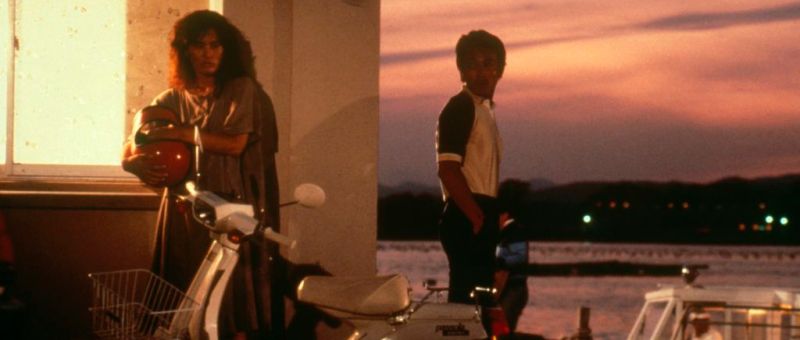
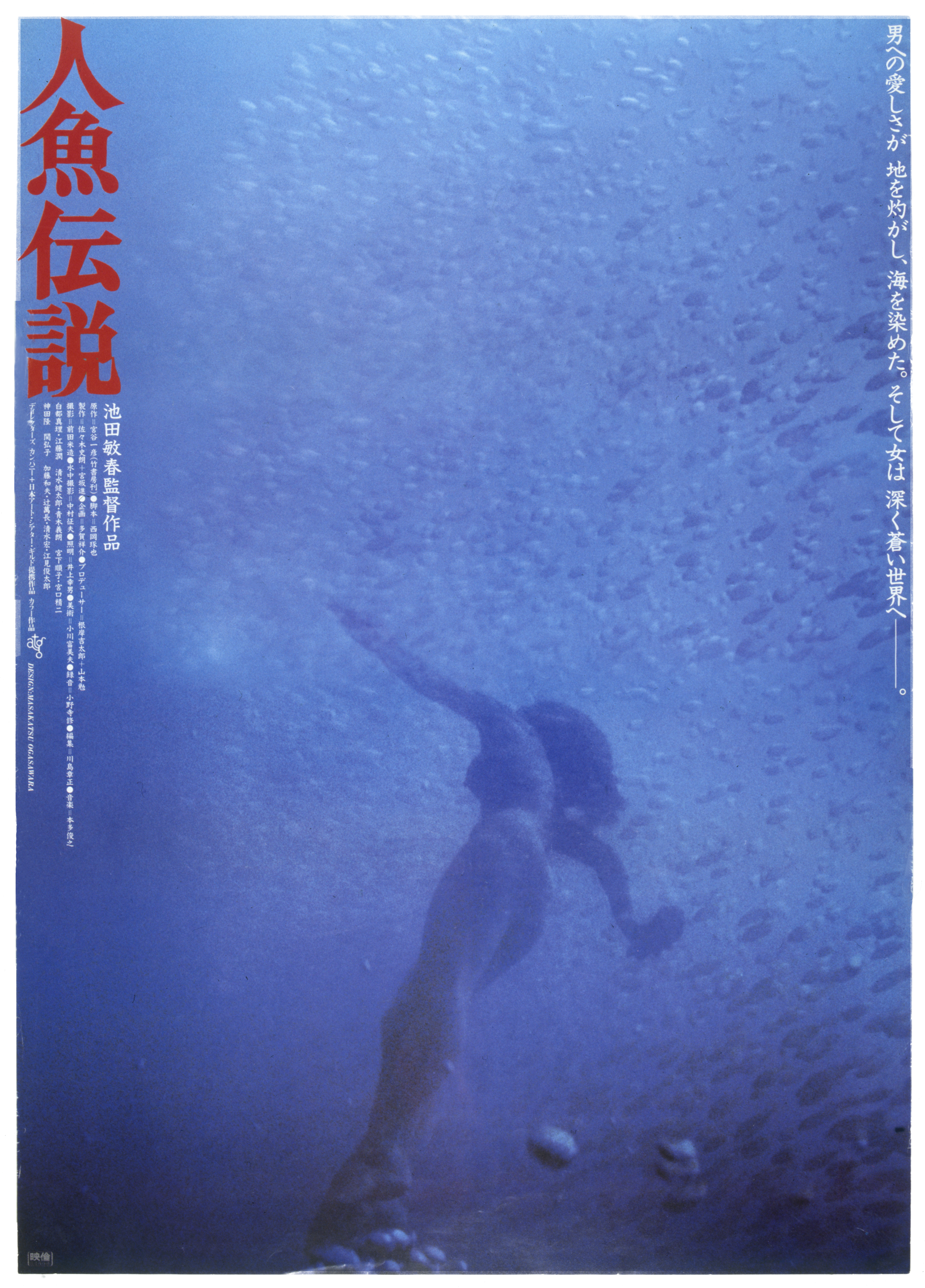
Mermaid Legend (人魚伝説, Toshiharu Ikeda, 1984)

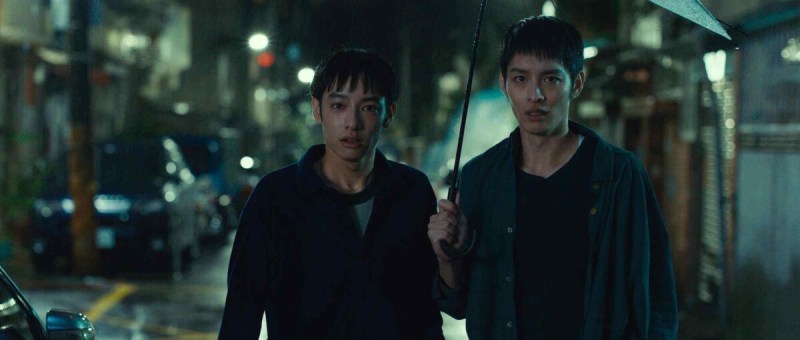
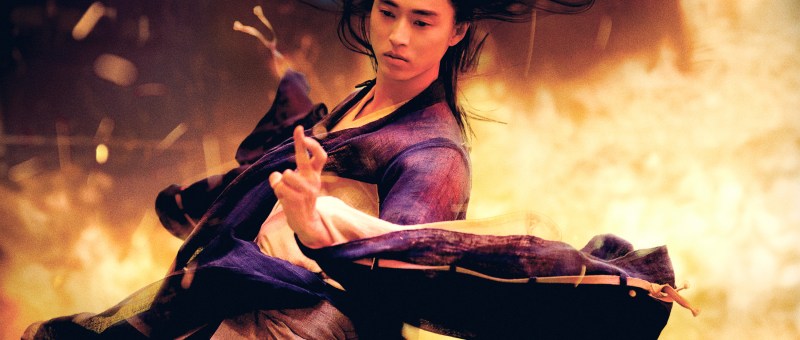
“Even if someone kills you, you wouldn’t die,” a drunken husband somewhat sarcastically replies having pledged to come back and haunt his wife if he died and she married a man who didn’t drink. His words take on a prophetic quality given that the heroine of Toshiharu Ikeda’s Mermaid Legend (人魚伝説, Ningyo Densetsu) takes on a quasi-supernatural quality as an embodiment of nature’s revenge after someone tries, and fails, to kill her having already killed her husband for witnessing their murder of another man who’d tried to resist their plans of buying up half the town to build a nuclear plant. 

By the mid-1980s, Japan’s economy had fully recovered from post-war privation and was heading into an era of unprecedented prosperity which is to say that the coming of a power plant was not welcomed with the same degree of hope and excitement as it may have been in the 1950s when it was sold not only as a new source of employment for moribund small towns but an engine that would fuel the new post-war society. Several industrial scandals such as the Minamata disease had indeed left those in rural areas fearful of the consequences of entering a faustian pact with big business, which is one reason why the guys from Kinki Electric Power sell it as an amusement park project though even this has the locals wary not just of the disruption it will bring to their lives and potential ruin of their livelihoods which are dependent on the protection of the natural environment but that what is promised simply won’t be delivered. Fisherman Keisuke (Jun Eto) says as much when lamenting a previous aquaculture programme which didn’t pan out and caused lasting damage to marine life. 

In any case, as others say there’s no money in going out to sea anymore and its clear that the old-fashioned, traditional way of life practiced by Keisuke and his newlywed wife Migiwa (Mari Shirato) is no longer sustainable. Migiwa is an abalone diver working without modern equipment but using heavy weights to dive deep enough to reach the shells. As such she’s dependent on her husband to pull her back up to the boat when she tugs the rope. She must put her life entirely in his hands though in truth, he does not seem to take his responsibility all that seriously. The couple bicker relentlessly and not even she really believes him when he says he witnessed a murder which might be understandable given the extent of his drinking. All of which is further evidence against her when she manages to escape from the assassination plot and runs straight to the nearest policeman who thanks her for turning herself in implying he believes she is responsible for Keisuke’s death. 

The possible collusion of the policeman hints as a further sense of distrust in authority which has become far too close to corporate interests. Shady industrialist Miyamoto (Yoshiro Aoki) ropes in both the mayor and the head of the fishing association in his talks with Kinki Electric Power along with Shimogawa from the local tourist board who evidently opposes the plans as he is the man Keisuke witnesses being murdered. As Miyamoto says “sometimes your hands get a little dirty” though he never “directly” involves himself matters such as these. The situation is complicated by an unresolved love triangle between Miyamoto’s spineless son Shohei (Kentaro Shimizu), a sometime photographer, who is resentful of Keisuke and in love with Migiwa complaining that Keisuke always outdrinks him and gets the girl too hinting at his sense of wounded masculinity. Isolated by his class difference, he appears not to approve of his father’s actions but later does little to stop them and eventually sides with corporate interest over his feelings for Migiwa who in any case seems to have become more attached to Keisuke following his death which she vows to avenge. 

There is there is something quite strange in the prophetical quality of Keisuke’s words also predicting the “black sweat” of the Jizo on the beach and the mystical storm which does eventually sweep everything clean destroying the signs for the new nuclear power plant already installed on the beach. In this way, Migiwa becomes a vengeful force of nature taking up arms against those who wilfully ravage and pollute the natural environment while damaging the lives of those who lived on its shores such as herself and Keisuke. She takes revenge not only for the murder of her husband by corrupt capitalists but against that corruption itself even as she laments that “no matter how many I kill, they just keep coming.” “Don’t worry, maybe all this was just a dream,” Keisuke once again prophetically intones though it’s difficult to know if it’s defeating the capitalist order that is a fantasy or the maintenance of the idealised rural life to which Migiwa seemingly finds her way back swimming into an unpolluted sea surrounded by the floating barrels of ama divers and clear blue skies, a creature of nature once again.


Mermaid Legend screened as part of this year’s JAPAN CUTS.
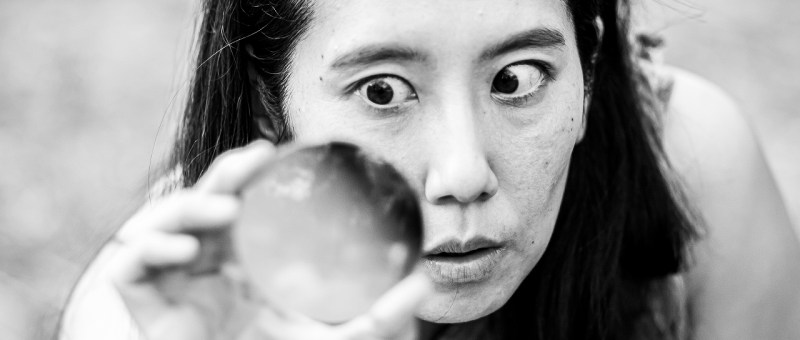
Motion Picture: Choke (映画(窒息), Gen Nagao, 2023)

Humans place themselves above animals precisely because of their ability to communicate and work together to create complex plans that allow them to overcome their circumstances. Robbed of our speech, would we still say the same? Gen Nagao’s dialogue-free drama Choke (映画(窒息), Eiga Chissoku) takes place in a world in which language appears to have disappeared. Humans communicate only through gesture and are therefore prevented from explaining themselves fully, able to rely only on the vagueness of feeling to convey their thoughts and intentions. 

Yet we might not quite grasp this at first, because the heroine (Misa Wada) lives a solitary life in which she rarely needs to talk to anyone anyway. Shot in a crisp black and white, this appears to be some kind of near future, post-apocalyptic world in which even ancient technologies have largely been forgotten. The woman lives in a concrete structure, presumably a disused factory which is dotted with broken machinery that the woman largely ignores as she lives her simple and repetitive life of waking, fetching water, hunting, cooking and eating. We have no reason to think that she is unhappy for besides the occasional sigh, she simply gets on with her daily tasks and then goes to sleep seemingly unafraid of external threats.

But it is indeed male violence that punctures her world when she’s set upon by three men, seemingly an older man and his grown-up sons one of whom holds her still while the middle-aged man rapes her after breaking the magnifying glass she’d bought off a cheerful pedlar enraptured by the wonder of instant fire (well, while the sun shines at least). Her world becomes darker and she finds herself haunted by a shadowy figure that hovers over her as she sleeps. But then, her trap catches a young man (Daiki Hiba) whom she at first seems as if she’s going to kill and eat but later reconsiders and lets him go presumably calculating he poses no threat to her. The young man has a goofy grin and cheerful disposition, returning to bring the woman gifts and follow her around doing odd jobs before the pair develop a relationship and start living as a couple. The young man even devises a system of bamboo pipes to bring water from the brook so the woman won’t need to carry buckets back and forth anymore in a seeming rediscovery of technology born of his desire to make her life easier.

This more nurturing, protective kind of masculinity brings a new a dimension to her life but their harmonious days do not last long before male violence intrudes once again and proves a corrupting influence for the young man who seemingly becomes cruel and vengeful, though not toward the woman even as she begins to reconsider her relationship with him and if this kind of inhumanity is something she can tolerate in the idyll she’d crafted for herself before he arrived. Then again, in trying to deal with it is there something that becomes cruel or violent in herself in that wasn’t that way before even if doing so also makes her sad and leaves her lonely?

Until then she’d found only wonder in the natural world, repurposing the disused, man-made structures of the factory to make music in the rain and more problematically filled with childish glee when something wanders into her trap. But nature holds its dangers too even if there don’t appear to be any predators here besides man in the form of poisonous mushrooms easily mistaken for the edible kind. Even so, it’s violence that finally poisons her world. A senseless kind of violence that doesn’t seem to be about competition for resources, but only an animal lust and craving for dominance. If only they could communicate in a more concrete way perhaps it could be avoided, but then that doesn’t seem to have worked out that way for us who face such threats every day with words often ignored. 

In any case, Nagao finally heads into a more abstract space as the woman seems to react to the abrupt halt of the film’s soundtrack followed by the removal not only of speech but sound from her world as is if she had lost her hearing. Her reality fractures and we can’t be sure she hasn’t just imagined anything that went before or that she has been targeted by some unseen supernatural or spiritual force for her transgressions leading to her exile from a disintegrating paradise. Obscure and haunting, the film nevertheless has a kind of cheerfulness in its innate absurdity captured in the lunking physicality of the actors who move with a cartoonish strangeness and exaggerate their facial expressions in a strenuous attempt to communicate in the absence of words. The message seems to be that in the end we ruin things for ourselves, either through violence or simply doing what we think is right but in the end may really be no different nor any better.


Motion Picture: Choke screened as part of this year’s JAPAN CUTS.

Original trailer (dialogue free)

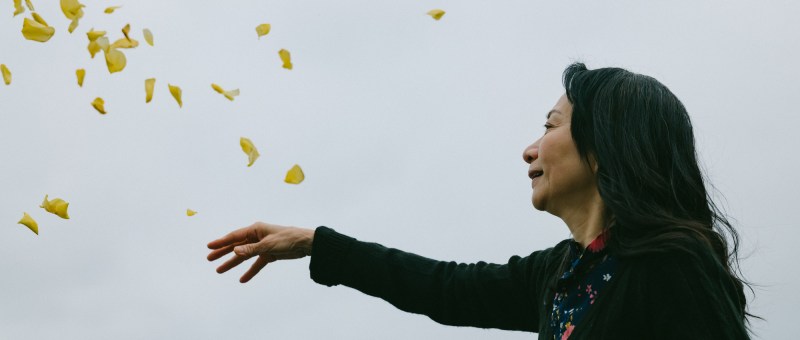
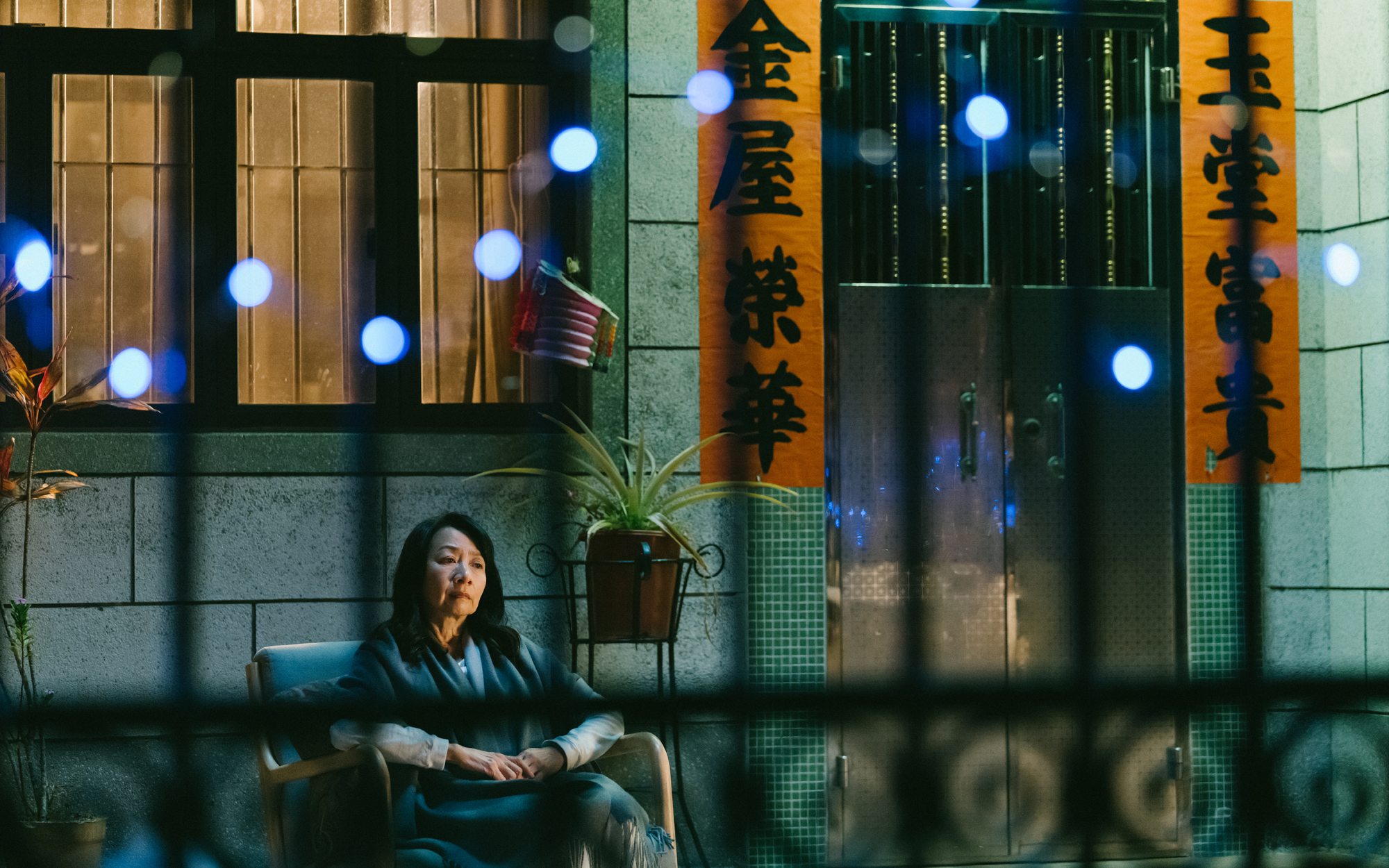
All Shall Be Well (從今以後, Ray Yeung, 2024)

There’s nothing that breaks a family apart as quickly as an inheritance. As a cynical lawyer points out, even mothers and sons fall out when it comes to money, so there’s nothing like it to to focus minds with an us and them mentality to clearly define who is and isn’t included under the umbrella of family. But why is it that meaningless pieces of paper hold so much sway over us when we ought to by be governed by the emotional truths that until a moment earlier ruled our lives?

Angie (Patra Au Ga Man) had been fond of saying “because we’re family.” She never doubted her place in that of her partner who all appear, at least outwardly, to love her and accept her relationship with Pat in the way they’d accept any other marriage. But when Pat (Maggie Li Lin Lin) suddenly passes away in her sleep after one last family celebration the situation changes. Well-meaning family members step in to help with the work that must be done when someone dies, but perhaps unwittingly begin to take over slowly erasing Angie from their lives as not really one of them after all.

Her problems are two-fold. The biggest being that Pat never got round to making a will, nor did she think to put Angie on the deeds to the apartment they shared together or leave her financially provided for seeing as she’d managed all the money they’d made when they owned a factory and ran it together. The secondary problem is that Hong Kong does not recognise same sex marriage and so their relationship was not legally recognised. Had Angie been legally married to Pat, she should have inherited everything anyway because she was her spouse even without a will but with things the way they are she’s at the mercy of Pat’s brother Shing (Tai Bo). She never thought this would be a problem, because they’re family, but slowly realises that perhaps they don’t actually see her that way and with Pat gone no longer feel the need to include her.

Her sister-in-law Mei (Hui So Ying) insists on using a feng shui expert to plan the funeral who quickly puts the kibosh on Angie’s desire to have Pat buried at sea as she’d requested. Leaving aside the possibility that the feng shui master is conning them and receiving financial incentives from the people who run the columbarium, the family quickly begin to ignore Angie’s concerns swayed by the claims that interring her ashes will be more beneficial for her descendants which are Mei and Shing’s children seeing as Angie and Pat had none of their own.

A little disappointed in her kids, Mei at one point insensitively remarks that Angie is lucky not to have any though we’re also told that she almost gave in to parental pressure to marry a man in order to become a mother. Daughter Fanny (Fish Liew) makes lowkey racist remarks about her Indian neighbours as a way of expressing her frustration with her moribund marriage and unsatisfying living arrangements, while son Vincent (Leung Chung Hang) struggled to find employment and now works as an Uber driver thanks to the gift of a car from Angie and Pat which allows him to earn a living. He’s originally upset with his family’s suggestion of kicking Angie out of the apartment, but is also in a difficult position himself when his girlfriend becomes pregnant and they can’t find anywhere habitable to live on the kind of salary an Uber driver can earn. Though in her 60s, Mei is still doing a physically strenuous job as a hotel maid while Shing has taken a position he finds degrading as a nightwatchman at a carpark following the closure of his restaurant some years previously. 

The implication is these socio-economic pressures encourage them the abandon their responsibility to Angie as the beloved aunt they’ve known all their lives. But then there’s also the mild homophobia that rears its head, introducing Angie as Pat’s “best friend” and not allowing her to stand in the front with family at Pat’s funeral as if their relationship wasn’t really real because they were both women. Of course they may have behaved the same way had Pat been a man, squeezing Angie out because she had no legal claim as a common-law spouse, but it certainly seems to make it easier for them to abandon her and take everything she worked so hard to build with Pat as if they were really entitled to it. Shing justifies himself that he has to look after “his” family, which doesn’t include Angie, while cruelly implying that it’s what Pat would have wanted. 

In the end, Angie is left with no other option than to sue for her “rightful” share as a ”dependent” in an effort to force the family to recognise the legitimacy of her relationship with Pat. Thankfully she has another family in her community, though her own still living parents only partially accepted her relationship with Pat again referring to her as a “best friend” and making cracks about how she never married. But her family was Pat, and Pat is gone. Yeung paints a touching picture of grief as Angie reacts all the things she did with Pat but now alone, accompanied only by a sense of absence and comforted by her memories while otherwise exiled from a world that had seemed until then filled with familial love.


All Shall Be Well screened as part of this year’s New York Asian Film Festival.

Trailer (English subtitles)

Brave Citizen (용감한 시민, Park Jin-pyo, 2023) [Fantasia 2024]

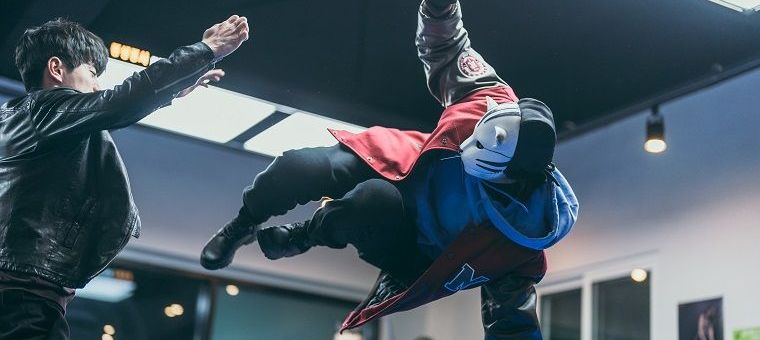
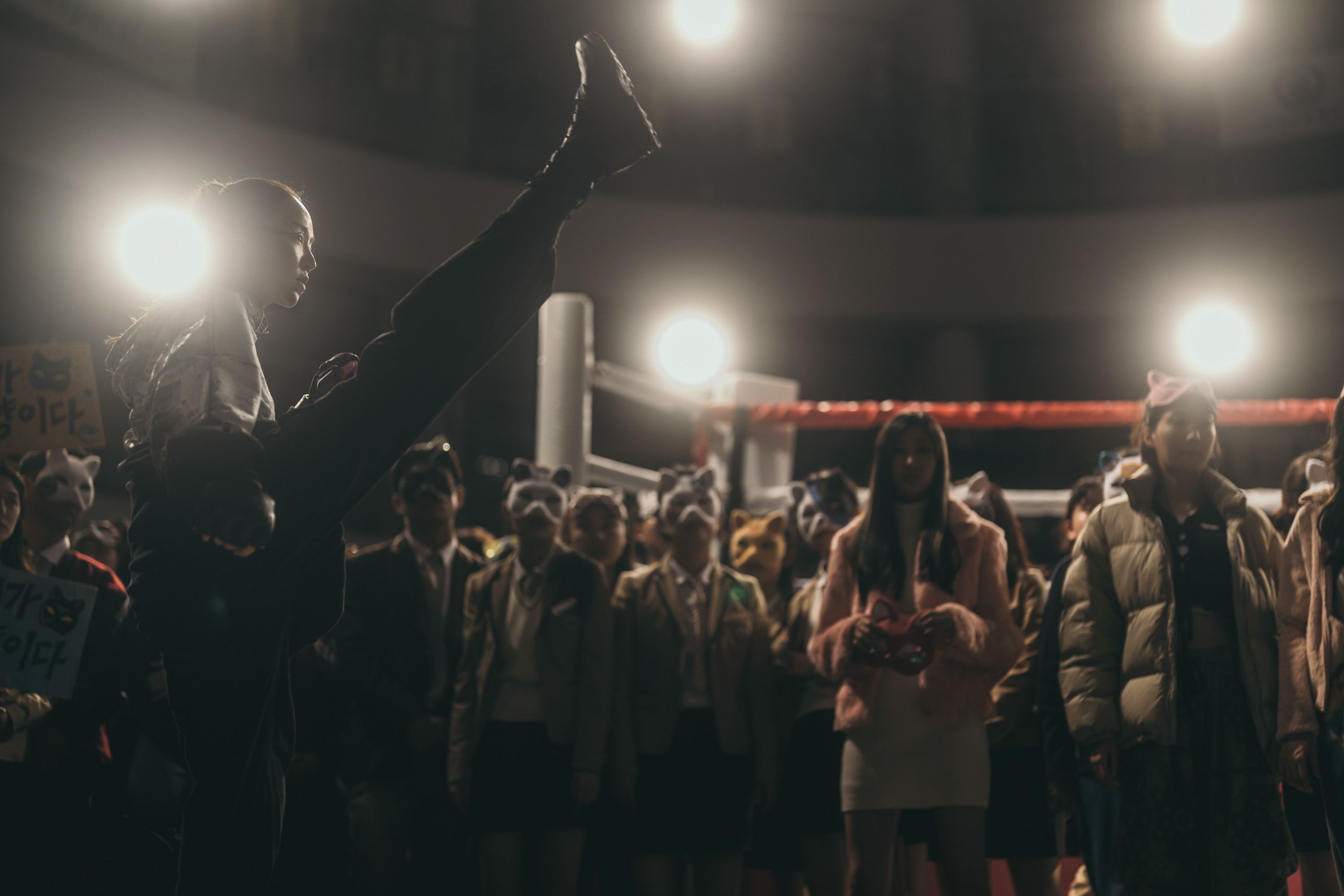
There’s an intentional irony in the mantra teacher Si-min (Shin Hae-Sun) is fond of repeating that “If you do nothing, nothing will happen,” in that on the one hand it means that until people decide to act a dissatisfying status quo will continue, but on the other it may also seem threatening implying that if only you keep quiet nothing will happen to you. The main thrust of Park Jin-pyo’s webtoon adaptation Brave Citizen (용감한 시민) does seem to be that abuses of power take place because so few people are willing to challenge them or indeed to stand up for those who cannot stand up for themselves.

That’s something Si-min discovers when a student comes to her and says he’s being harassed by notorious bully Su-kang (Lee Jun-Young). A former boxer/martial artist, Si-min is on a temp contract and evidently waited quite some time to be offered a position so takes it to heart when her boss, Mrs Lee (Cha Chung-Hwa), warns her not make waves and jeopardise her hopes of being hired full-time. Somewhat cynical she tries to talk herself out of standing up for him, talking herself into turning a blind eye to injustice as nothing to do with her but at the end of the day she isn’t someone who can just sit by and take it nor watch as others are harmed while Su-kang goes unchallenged. 

He’s unchallenged largely due to the socio-economic conditions of contemporary Korea in which the wealthy and well-connected are able to live above the law. When one of Su-kang’s victims tries to report him to the police, they are the ones who end up accused of making a false report while Su-kang gets off scot free because he counts judges and prosecutors among his relatives while his mother is a prominent lawyer. His family apparently also donate large amounts of money to the school, which has won a series of “anti-bullying awards,” which is why he can’t be expelled. Si-min’s predecessor took her own life because of Su-kang’s bullying while pretty much everyone is scared stiff of him.

It’s for these reasons that Si-min turns to violence in the hope of giving Su-kan a little “off-site education” and perhaps you can’t blame her when faced with such intransigence from compromised authority. Yet standing up for the students is also a way of learning to stand up for herself, not to succumb to turning a blind eye to injustice simply because it’s more convenient. It’s this wilful suppression of one’s rage towards the persistent injustices of society that ends up spreading them, a continuous chain of abuse in which people take out their frustrations on those unable to defend themselves like the drunk man who yells at Si-min in the street and comes to realise he’s picked on the wrong person. 

Then again, when questioned why he behaves this way Su-kang only answers that “it’s fun”. It’s difficult to believe he would be insecure in his status, yet he persistently mocks those he sees as socially inferior, “nobodies” and ”hobos”, as opposed to elites like himself. The suggestion is that he and his friends have become this way because of a lack of boundaries and a sense of invincibility, which is partly what annoys him so much about an intervention from an authoritarian figure such as Si-min over whom he has no authority because she has decided not to grant it to him. 

This might be what makes her a “brave citizen,” the name of an award granted to ordinary people working in favour of justice that her father had once won after otherwise ruining his life through unwisely guaranteeing a loan and being left on the hook for paying it back. Embracing the absurdity of the webtoon, Park goes big and bold painting the inequalities of the contemporary society in stark relief while injecting a sense of catharsis into Si-min’s attempts to smack some sense into the bullies while rediscovering her own desire to challenge injustice rather than remain complicit with it even if it is personally inconvenient. Her rebellion encourages others to do the same while robbing the bullies of their privileged position and exposing them to the consequences of their actions. Of course, fighting violence with violence may not be the best solution but does at least allow Si-min to make the most of what she has and to recover the self that had been beaten down and defeated but is now capable of fighting back both for herself and others.


Brave Citizen screened as part of this year’s Fantasia International Film Festival.

International trailer (English subtitles)

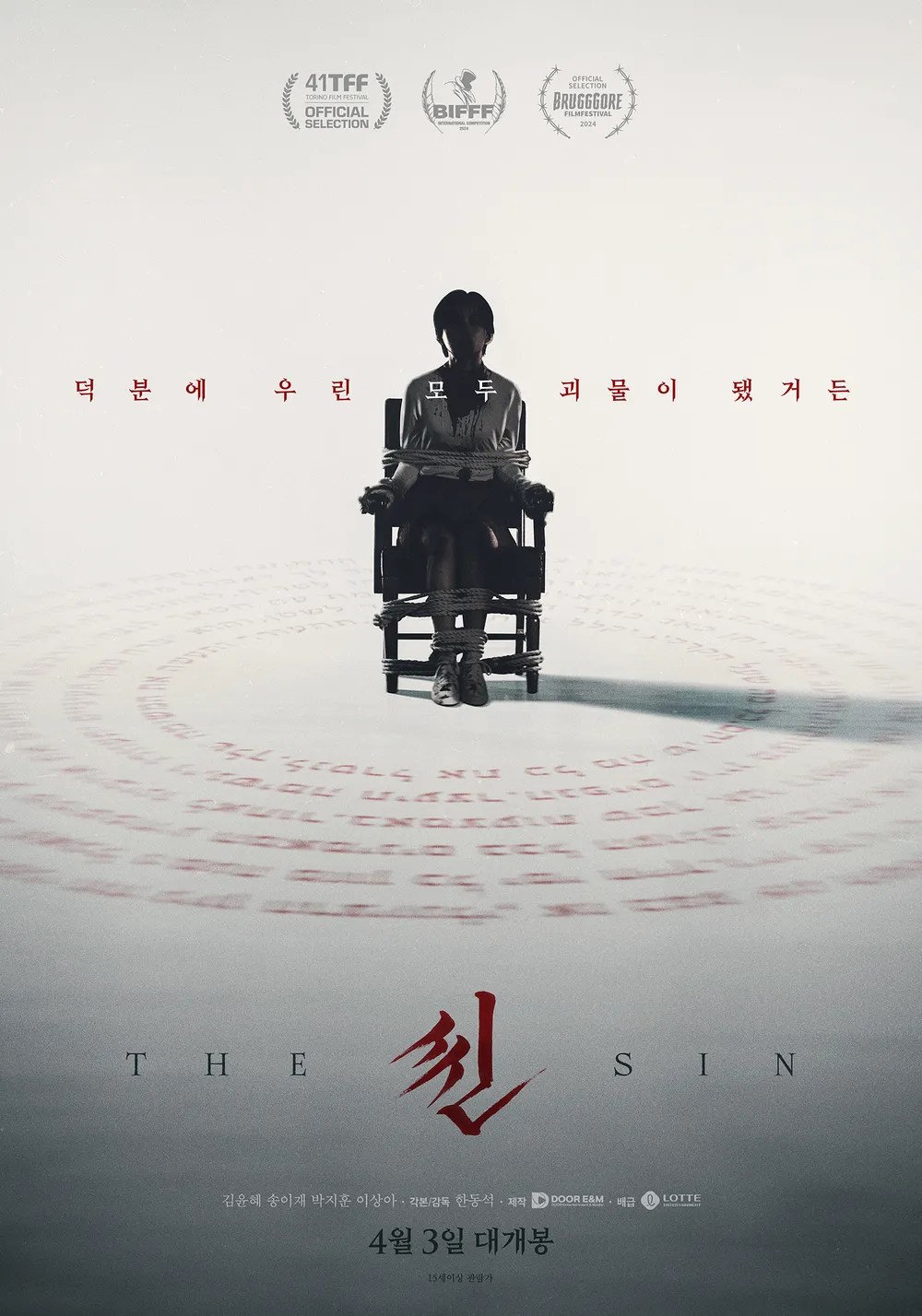
The Sin (씬, Han Dong-seok, 2023)

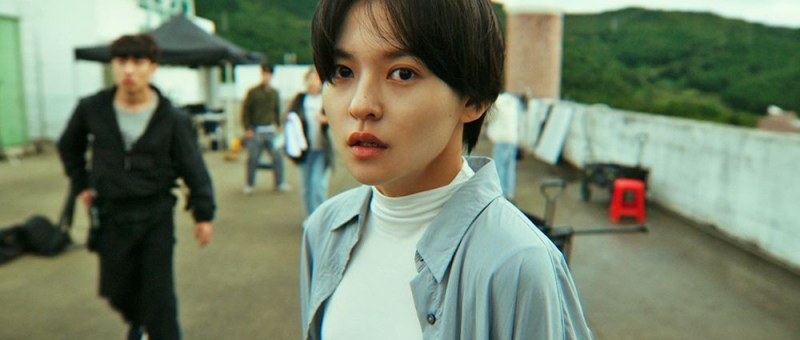
According to the opening title card of Han Dong-seok’s genre-hopping horror, sin is like a lost child that will one day come looking for its parents. The film’s ostensible heroine at times hears voices suggesting that someone or something will eventually come looking her, and later says that she is ready for their arrival, but before that we have to wonder what it is she means and what if anything that is happening is actually real or at least in keeping with our assumptions.

There are many reasons why we begin to feels we can’t trust Si-yeong’s (Kim Yoon-Hye) perspective. Not only is she already somewhat distant and preoccupied on her arrival at a disused university in the mountains but we also later learn that she’s taking a large amount of medication apparently for migraines and PTSD stemming from a barely remembered accident. She also seems less than pleased to encounter former colleague Chae-yoon (Song Yi-Jae) who brings up memories that seem unpleasant to her while there’s a kind of frostiness between them that’s only exacerbated by the fact Si-yeong was not even aware she’d have a co-star in this experimental dance movie directed by a man known for being “unkind” to actors. 

In any case, strange things do indeed begin befalling her from a body dropping right in front of her feet before she enters the building to the eventual murder and suicide of her colleagues who then return as zombie-like creatures. The film cycles rapidly through a series of genres beginning as a slasher with a Suspiria-like sense of eeriness as dancer Si-yeong’s mental state starts to unravel before drifting into the undead, cults, and shamanistic folk horror with the weird symbols dotted around the campus. 

Because things are very wrong on the outside too, Si-yeong even ends up running into a gang of murderous corrupt cops paranoid she’s found their stash of stolen drugs while otherwise pursued by riflemen apparently employed by a vengeful CEO. It’s true enough that we don’t know what’s going on for most of the film, and part of that may be that Si-yeong doesn’t know either because her mental state is unstable. We’re not even really sure if Chae-yoon is real or merely Si-yeong’s projection of her internal conflict, dressed as she is in the same outfit and with the same haircut to the point the two women are often barely distinguishable. Perhaps it’s this unpleasant memory that Si-yeong is trying to avoid, though it’s clear in very general terms that she’s running from something as much as she’s being chased and that her flight may be orchestrated to bring her to a specific location whether physical or spiritual.

What’s chasing her is the apparent “sin” of the title, though everyone might not see it as such or maybe believe their own sins were either justified or will be paid for later. For the purely evil, sin as a concept may not even exist if there’s no prospect of remorse though it’s hard to reconcile the docile, sweet and somewhat etherial Si-yeong with the fragmented memories of a past that may or may not be her own. “Thanks to you, we all became monsters,” she’s later told by someone about to something pretty monstrous but maybe they too were monstrous to begin with, or nobody was, and a well-meaning attempt to exorcise evil from the world has only produced more of it. 

Just when you think you have it all figured out, Han throws in a post-credits sequence pouring more fuel on the fire and hinting at even greater back story in a world ruled by dark and unseen supernatural forces. It doesn’t make sense, but wilfully so and frustrates in a positive way in our desperation to understand something that cannot be understood much as Si-yeong attempts to understand the rapidly disintegrating world around her. The concrete fact does seem to be that one must pay for ones sins, though those who do may not be the ones we’d expect. Gory and incredibly creepy, the film plays with our senses as much as Si-yeong’s, undermines our sense of reality, and finally leaves with the unsettling vision of a pervasive evil lurking in the mirror or the depths or the dark corners of a mind already shrouded in delusion. 


The Sin screened as part of this year’s New York Asian Film Festival.

International trailer (English subtitles)

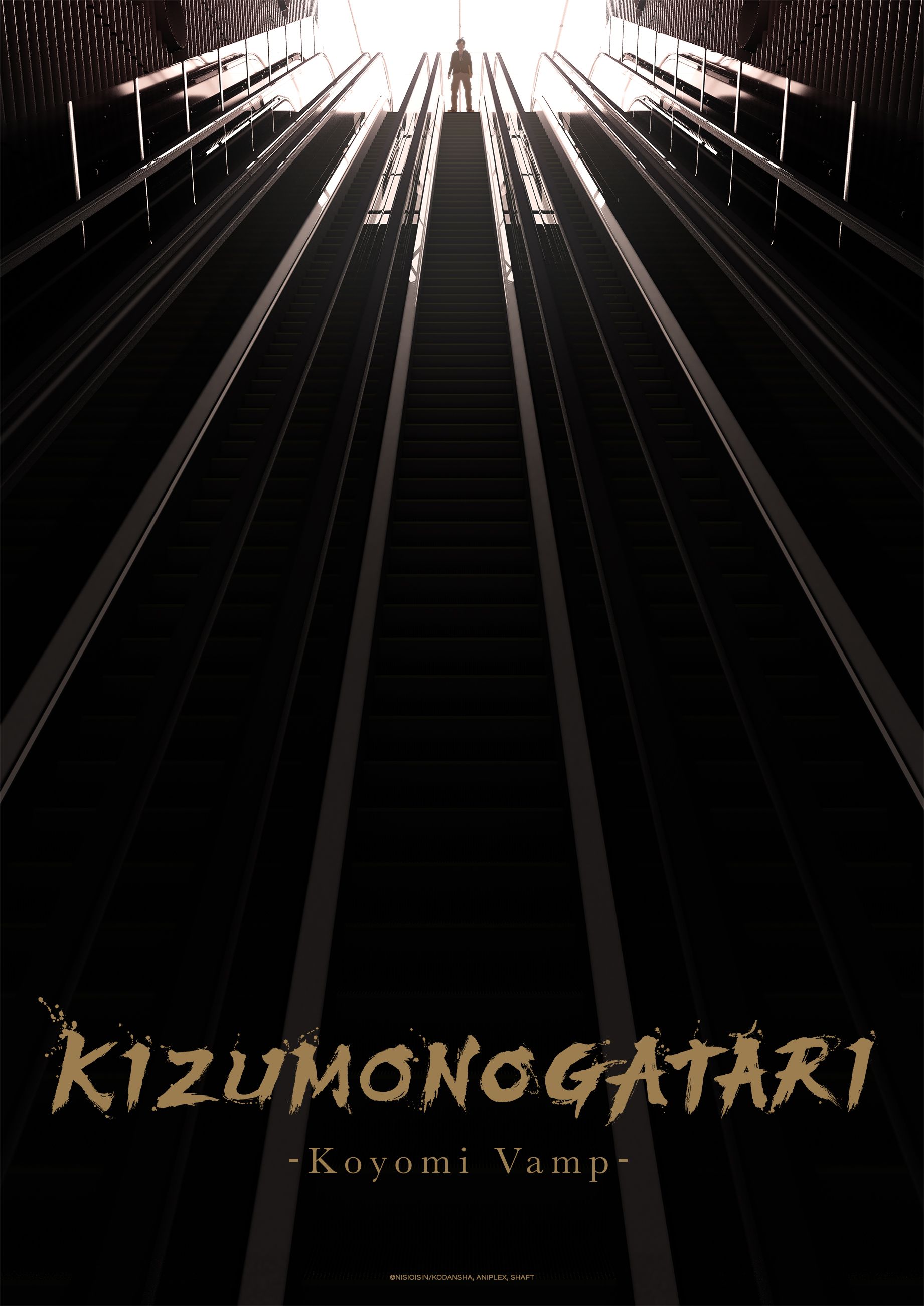
Kizumonogatari -Koyomi Vamp- (傷物語 -こよみヴァンプ-, Tatsuya Oishi, 2023) [Fantasia 2024]

A young man walks into an empty subway station already ominously strewn with blood and finds there the corpse of a woman shorn of her limbs. The corpse rises and begs him to have her life by sacrificing his own in allowing her to suck his blood and surprisingly the young man agrees. He does not, however, die but is brought back as something else, not quite human and definitely subservient to the creature he has saved. 

Running 2.5 hours, Tatsuya Oishi’s Kizumonogatari -Koyomi Vamp- (傷物語 -こよみヴァンプ-) is in fact a compilation of three films released in 2016 and a part of the long running Kizumonogatari series which originated with Nisio Isin’s light novels and has gone to spawn an expansive universe of interconnecting spin-offs. This is technically a prequel, and in that sense begins with a black slate but also deliberately drops us into confusion with breakneck pace through the hero’s quest to recover himself and his place in the world after this rude awakening to the supernatural. 

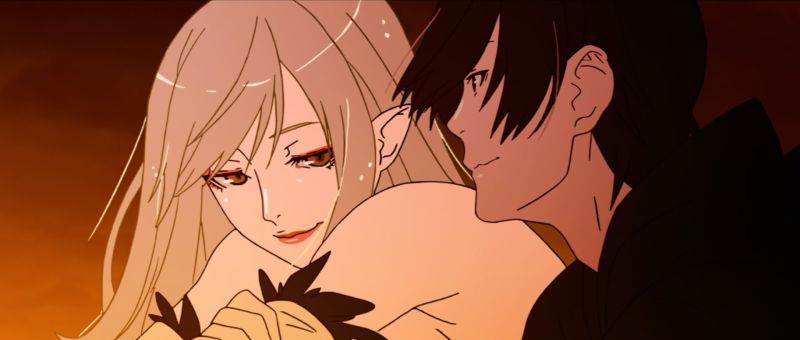
Rude is in many ways a defining characteristic of Kiss-shot, the 500-year old vampire Araragi finds bleeding in the subway station at that point a blonde and alluring figure of forbidden desire. Araragi is drawn to her in an unconscious death wish linked with the sexual desire he struggles to understand, running into the subway minutes after buying a pornographic magazine from a convenience store after striking up a friendship with fellow student Hanekawa. But once he saves her life, Kiss-shot is transformed into a cheeky little girl who now tells him that he is her minion and he must recover her severed limbs from a trio of vampire in order to be restored to humanity even as the power dynamic between them becomes confused and distorted.

In his vampire state, Araragi becomes immortal, powerful and free of mortal jeopardy yet he remains uncertain and insecure while reliant on the support of Hanekawa who encourages him to reject his desire for death and remain alive. But this also presents a problem to Araragi who sees himself as self-sacrificing and is unwilling to accept the what he sees as a self-sacrifice from Hanekawa for whom he feels unworthy and inadequate. In some senses it’s a typically self-centred, adolescent male perspective that rejects any idea of her own agency and assumes Hanekawa performs these actions for him rather than considering that she performs them for herself and is simply doing what she wants to do which in the end is not really about him at all. He declares it a burden he’s too weak to carry, which might in some senses be fair but also again a mischaracterisation that is further evidence of his lack of self-worth.

It’s this sense of inadequacy that lies behind his desire to reclaim his humanity along with the concurrent disgust he feels in the degradations of vampirism. It genuinely comes as a surprise to him that Kiss-shot feeds on human beings and lost her own humanity so long ago that she no longer gives it a second thought. She is after all only being what she is, but like Araragi is drawn to death partly out of frustrated longing and lingering boredom with a relentless yet apparently uneventful 500 years behind her in which the only other highlight was her previous minion who rejected this life much more quickly than she ever expected.

Even so, Oishi lends their mutual dilemma a degree of absurdity in the expectedly comic sight of severed heads littering a sports filed or launching themselves in toothy attacks. Heavily inspired by the French New Wave, he breaks the action with sometimes barely legible title cards often reading a single world while his composition has a kind of jauntiness that is also bleak and melancholy. The world surrounding Araragi veers between the pristine entrance to the high school, and post apocalyptic devastation littered with crows emblematised by the depilated cram school in which Kiss-shot keeps him. Backgrounds often have a photo realistic quality that further sets the world at a kilter when matched with the more conventional character designs of the central players. The conclusion that Araragi is presented with amounts a sharing of the misery which is also akin the burden he didn’t want to carry but also perhaps symbolic of his path towards adulthood in acceptance of compromise and selflessness in being willing to carry a small part of others’ pain and despair and allowing them to carry a part of his own.


Kizumonogatari -Koyomi Vamp- screened as part of this year’s Fantasia International Film Festival.

Original trailer (English subtitles)

Pierce (刺心切骨, Nelicia Low, 2023)

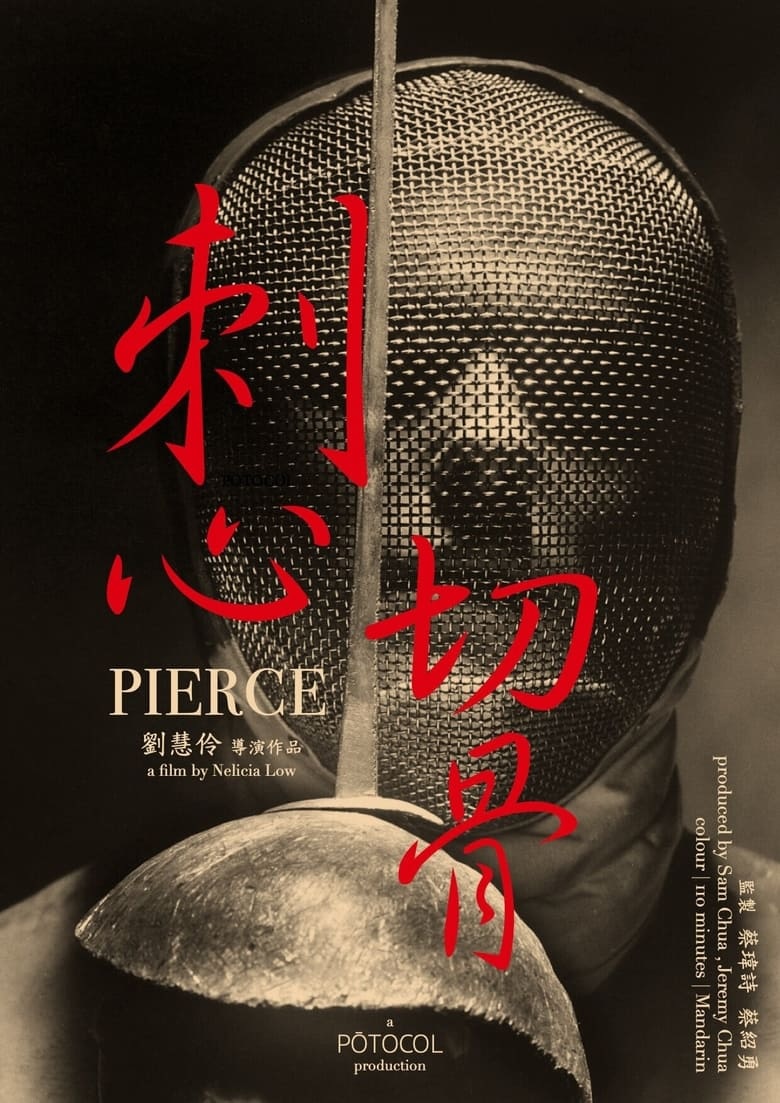
What are the limits of unconditional love and is it always a good thing? The hero of Nelica Low’s intense fraternal drama Pierce (刺心切骨, cì xīnqiè gǔ) is desperate to believe that his older brother is innocent of a crime he’s been imprisoned for for the last seven years, but in another sense it seems like the fact itself doesn’t matter to him. What he wants is the emotional intimacy of authenticity which is something he doesn’t seem to get from his steely mother intent on crafting a protective bubble of fantasy that may be as much for herself as her son.

In any case, Ai Ling (Ding Ning) is convinced that Zihan (Tsao Yu-ning) was born bad. She needs no convincing that when he stabbed his opponent with a broken blade during a fencing competition he did so knowingly and it was an act of murder rather than an accident as he claims. Zijie (Liu Hsui-fu), her sensitive younger son, is not so sure and feels that his mother’s total rejection of his brother is unfair. He needs to believe in part that Zihan is innocent because he once saved him from drowning though according to his mother if she had not arrived when she did Zihan would happily have watched him die. Ai Ling also says that she suspected Zihan had harmed Zijie during their childhood, but if this is true then Zijie appears not to remember it or perhaps willingly suppresses his memories of cruelty because it would be too difficult for him to accept that his own brother tried to kill him. 

But objectively speaking, there is something not quite right about Zihan who seems to be a charmer with manipulative tendencies. He was once a three time national fencing champion, and as he says fencing is all about figuring out your opponent’s intentions without letting them see your own. Of course, the way he behaves could equally be because of the way his mother behaves towards him. In some senses he too is a broken blade, apparently craving his mother’s approval and affection and perhaps becoming what she believed him to be out of frustration and resentment. He lies all too easily, crashing a dinner party with Ai Ling’s wealthy suitor Zhuang and his family and leaning into her cover story that he had been away studying medicine in the US while adding a touch of his own in a tearful story of wanting to specialise in radiology having watched his father painfully pass away of cancer. 

Of course, even if he is a raging sociopath, that doesn’t necessarily mean he committed an apparently motiveless murder or that he has no feelings at all for his brother who dotes on and idolises him with almost incestuous intensity. Zihan instantly picks up on the fact his brother is gay and that a boy in the fencing club has a crush on him, offering nothing other than support and reassurance of the kind he’d never get from Ai Ling. When Zhuang tries to set Zijie up with a girl and he declines, he broaches the idea he might not be straight but Ai Ling immediately changes the subject implying that probably she already knows but it’s another thing she’s papered over perhaps afraid that it might damage her relationship with Zhuang who appears to come from a wealthy family though they may not be as conservative as she fears them to be. 

In contract to the intimacy Zijie craves, beginning to confess himself, Ai Ling protects and distances herself from others through deliberate misrepresentation. Zhuang seems at least that he would be more upset about the deceit than that Ai Ling has a son who involved in a high profile, violent crime and also appears not to care that Zijie maybe gay while otherwise attempting to bond with him and be a sincere father figure. His love may in fact be unconditional in a way Ai Ling’s clearly is not whereas Zijie finds himself wavering, confronted by contradictory evidence that suggests his brother may not be so innocent after all. Deciding into a Grand Guignol fantasy in its final stretches, Low fills the screen with an ominous red, the billowing curtains creating an artificial dreamscape of ambiguous reality in which the brothers, each of them, discover at least their own truth and the answers they were seeking which may in its way be all they really needed.


Pierce screened as part of this year’s New York Asian Film Festival

Original trailer (English subtitles)

A Samurai in Time (侍タイムスリッパー, Junichi Yasuda, 2024) [Fantasia 2024]

Is there something a little sad about being forced to reenact your reality as theatre, or is it something to be proud of in adapting to the times and bringing the essence of what you once were with you? Junichi Yasuda’s A Samurai in Time (侍タイムスリッパー, Samurai Time Slip) like A Boy and His Samurai sees an Edo-era retainer transported to the present day but is less about contrast with the feudal past than how to carry on or start again when your time has ended.

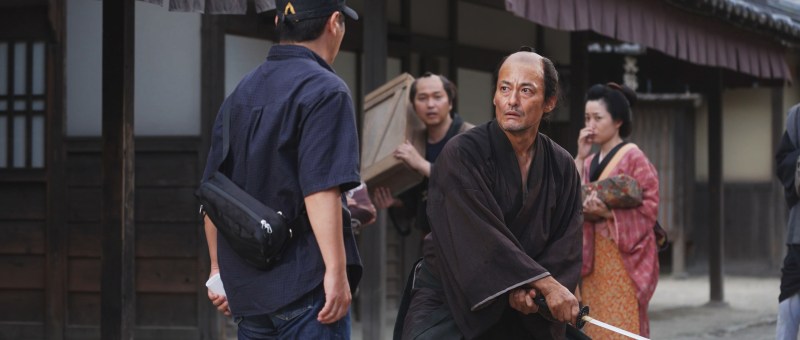
At least that’s how it is for Kosaka Shinzaemon (Makiya Yamaguchi), a member of the Aizu Clan loyal to the Tokugawa Shogunate in the twilight of the feudal era. In arriving in our present, he’s forced to admit that days of the samurai are long over, and finds himself a man with out a place, adrift in a classless society in which the only skill he possesses, swordsmanship, is all but obsolete. The irony is that, after being transported by a Terminator-style lightening strike, Shin arrives on the set of a jidaigeki, or samurai-themed television drama which is to say an artificial recreation of his reality. Thus he’s confused when he tries to ask passers-by for directions and they seem alarmed and ignore him while his attempt to intervene when a young lady is bullied by rogue samurai earns him a dressing down from a man in strange dress we obviously know is the director. When he’s knocked out from a bump on the head, everyone assumes he’s got amnesia and has become confused between his role as an extra on a samurai drama in which he may have overinvested and his “real” life, which in a way maybe true.

Just as he’d come from the end of the feudal era, so he’s arrived in the dying days of the jidaigeki. Once a mainstay of the entertainment industry in its heyday of the ’50s and ‘60s when historical dramas ruled the airwaves, the genre has long been in decline and somewhat out of favour with both filmmakers, seeing as they’re much more expensive to make, and audiences. In fact, the place where Shin arrives is a former shooting set that’s been turned into a theme park recreating the reality of the jidaigeki serial rather than that of the feudal era.

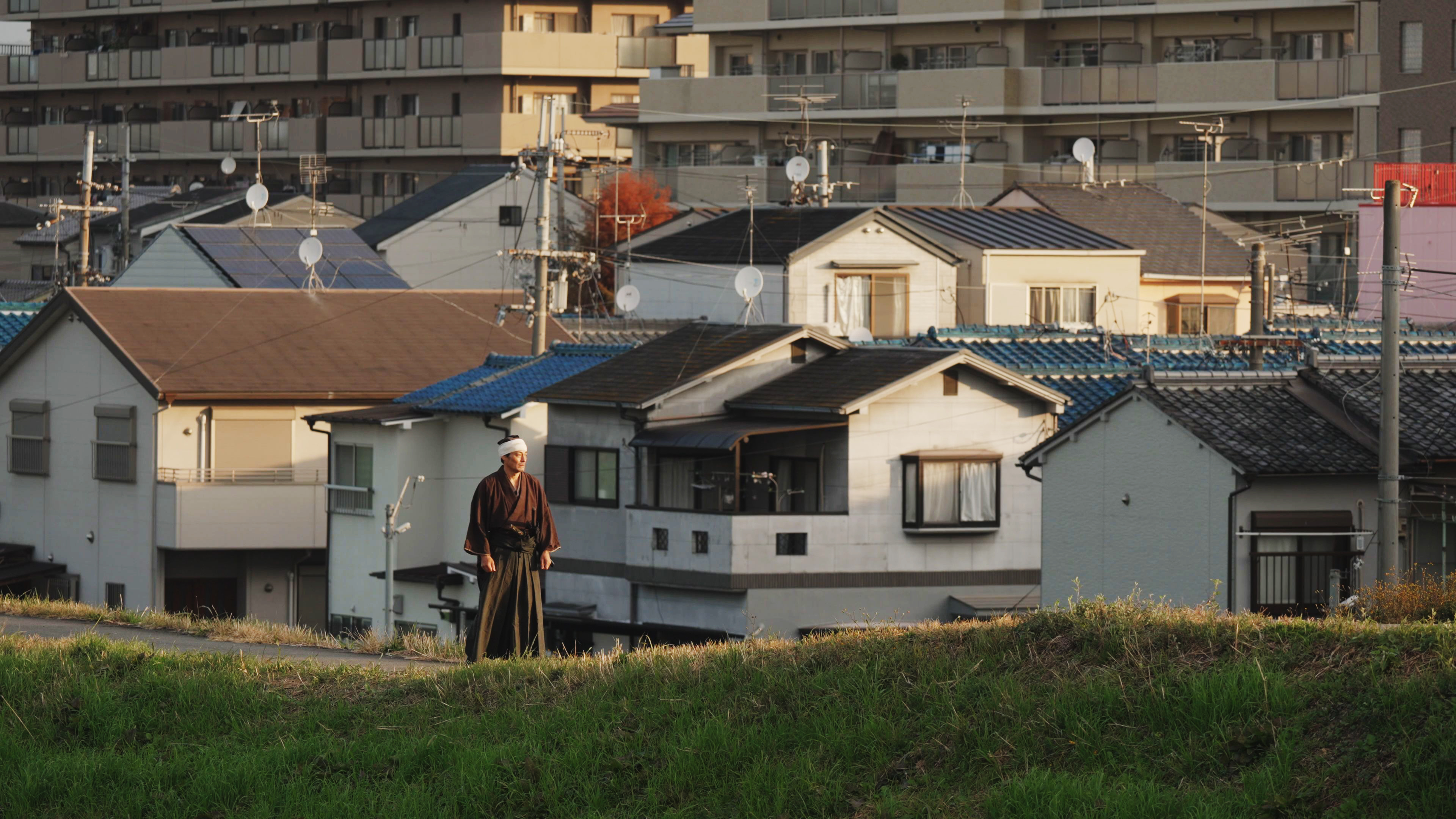
In an analogy which might prove slightly awkward, Shin’s fate is aligned with that of the jidageki itself but by accident of birth he is also on the wrong side of history both literally and metaphorically. As he later learns, his Aizu clan and the shogunate it served would not prevail. Yet ultimately he likes this new Japan, a place of prosperity where anyone and everyone is free to eat what to him seems like the food of the elite. Embarking on a career as a jidaigeki stuntman, a kiriyaku or extra who dies on screen, he becomes committed to protecting the jidaigeki in the same way he protected the shogunate even as everyone around him says he must be mad to take up this sort of work now when jobs are few and far between. 

To that extent, it’s really about learning to adapt to another reality preserving what you can (and wish to) about the past but continuing to move forward like a samurai living life fully in service of an ideal. In a sense, this is something the Aizu could not do for they were defeated during in the Boshin War which solidified the victory of progressive revolutionaries who believed that modernisation and Westernisation were the only ways to save Japan bringing the age of the samurai to a close. In strange ways, Shin finds himself re-enacting this internal dilemma through his meta performance, bringing a note of authenticity to the jidaigeki genre which as we can see from that being filmed is not always terribly serious or earnest about historical accuracy. 

There is though an earnest desire to preserve it, if also to modernise for a contemporary era accepting that the days of classic jidaigeki are over but the genre may live again if in different ways. Through roleplaying his internal conflict, Shin is able to overcome his lingering feelings of guilt towards the clan and attachment to the more destructive sides of the samurai code, rejecting his opportunity for revenge and deciding to live well instead in this brave new world seemingly filled with potential for reinvention and recreation in which the past need not be cast away or overwritten but carried forward into new futures of its own.


A Samurai in Time screened as part of this year’s Fantasia International Film Festival.

Original trailer (English subtitles)


The Yin Yang Master Zero (陰陽師ゼロ, Shimako Sato, 2024)

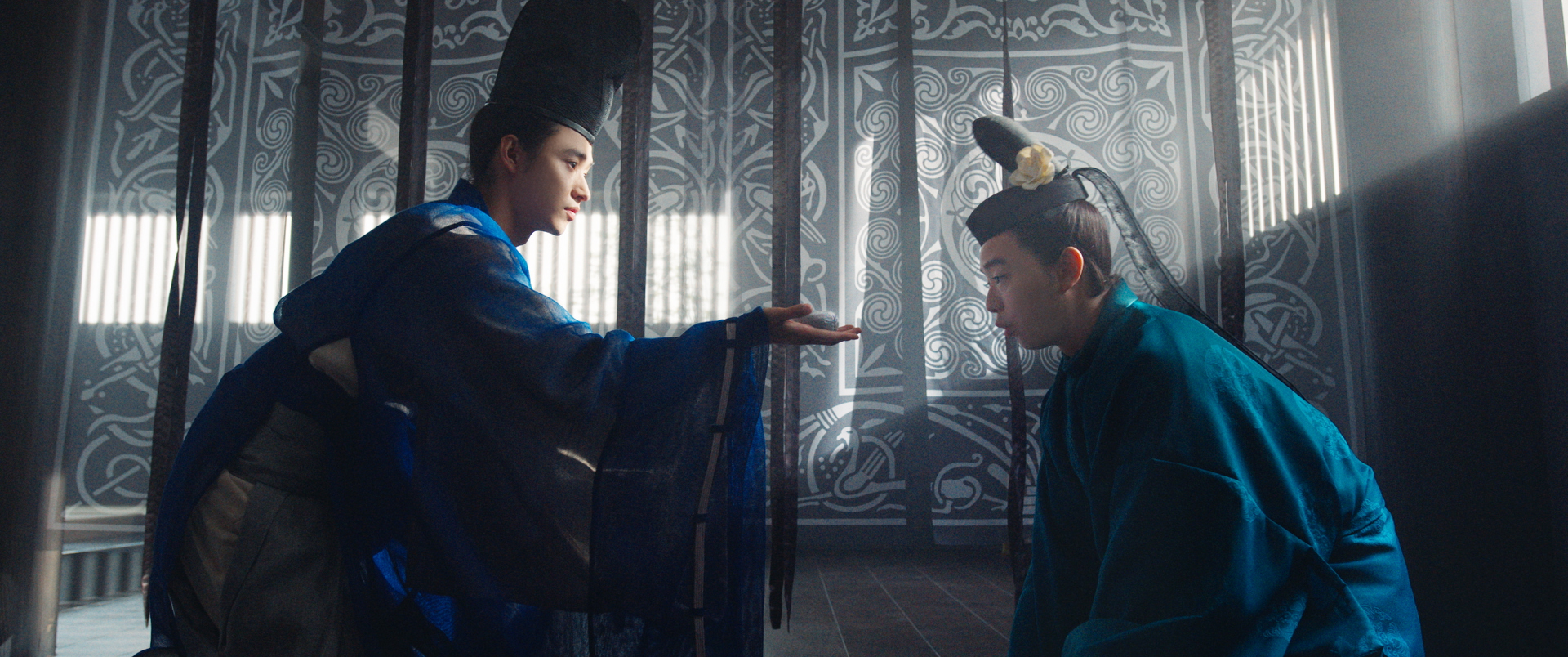
In the Heian era, who was it that kept the social order in check if not the onmyoji or “Yin Yang Master”? Shimako Sato’s big budget fantasy drama is technically a kind of prequel origin story adapted from Baku Yumemakura’s series of novels which were previously adapted as pair of movies in the early 2000s, and introducing the young Abe no Seimei (Kento Yamazaki), a Detective Dee-esque exorcist working as a state magician to protect the nation from supernatural threats such as demons and curses in an era in which ordinary people lived side-by-side with goblins and monsters.

That said, Seimei doesn’t really believe in that sort of thing, though in an ironic twist knows it to have a kind of truth at least, and is sick of being called out to look at a potential goblin infestation that turns out to be nothing more than a creaky old house settling amid the changeable weather. Which is all to say, he is both an earnest scientist looking for rational explanations to strange phenomena and an excellent diviner who can catch a dragon spirit in a bottle. In a touch of the Sherlock Holmes, he’s also gruff and aloof, distinctly uninterested in achieving high position and makes no secret of his contempt for his fellow alchemists insisting the Ying Yang Masters merely perpetuate superstitions to keep people frightened and themselves in employment.

When one of the other alchemists turns up dead of a suspected curse, the cat is set amongst the pigeons as the young apprentices respond to the offer of his higher status spot of they can solve the crime. This of course exposes their own greed and vanity as they each fall over each other desperate for a chance to get another foot on the ladder in a hierarchal system, a step that must be taken if they’re to make it all the way to the position of the emperor’s advisor on spiritual matters. Seimei’s disinterest further arouses suspicion against him with a fellow alchemist already 45 years old and stuck at the bottom rank directly accusing him of the crime perhaps less out of a genuine conviction than a desire to advance himself. 

In any case, Seimei investigates in a more modern, scientific way gaining access to crime scene and corpse ironically through a connection he’s made at court to an influential musician, Hiromasa (Shota Sometani), who hired him to sort out a problem the princess, Yoshiko (Nao Honda), was having with snapping strings on her harp. That turned out to be caused by a giant golden dragon spirit which Seimei later claims represented her feelings for Hiromasa, who is also quietly in love with her, which are somewhat forbidden because of the class difference between them. In this way, the spirits are merely a manifestation of the conflict between personal feelings and the social order as Yoshiko finds herself all but powerless, a princess in a golden cage to be sent wherever she is called with no real say over her fate. 

Fittingly, these feelings are resolved in a kind of artificial reality that Seimei believes to be a space of shared consciousness though he’s also fond of remarking on the malleability of “reality” and the ways in which vision and perspective can be manipulated. Then again, he also says all that matters is what they are seeing and experiencing in that very moment which is as good a benchmark for objective reality as anything else. There is something quite poignant about his developing relationship with Hiromasa which has its homoerotic qualities even as he becomes the “idiot” stand in for the audience, a kind of Watson figure that Seimei can explain everything to so that he can explain it to us. Even we can see the restrictions of the court and the irony in the eventual victory of “order” rather than personal freedom as volatile emotional forces must be put back in their bottles lest they create problems for everyone. Such conditions will doubtless create a series of cases of Seimei and Hiromasa to solve in a potential series starring the ace exorcist and his flautist friend in a Heian society beautifully brought to life by Sato’s sumptuous production design and flair for fantasy action.


The Yin Yang Master Zero screened as part of this year’s New York Asian Film Festival

Original trailer (English subtitles)

House of Sayuri (サユリ, Koji Shiraishi, 2024) [Fantasia 2024]

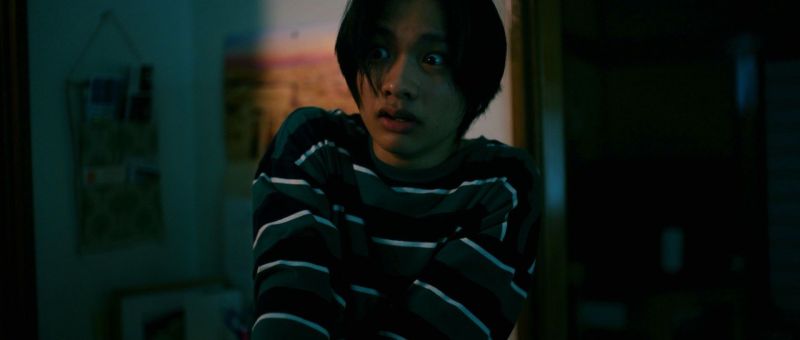
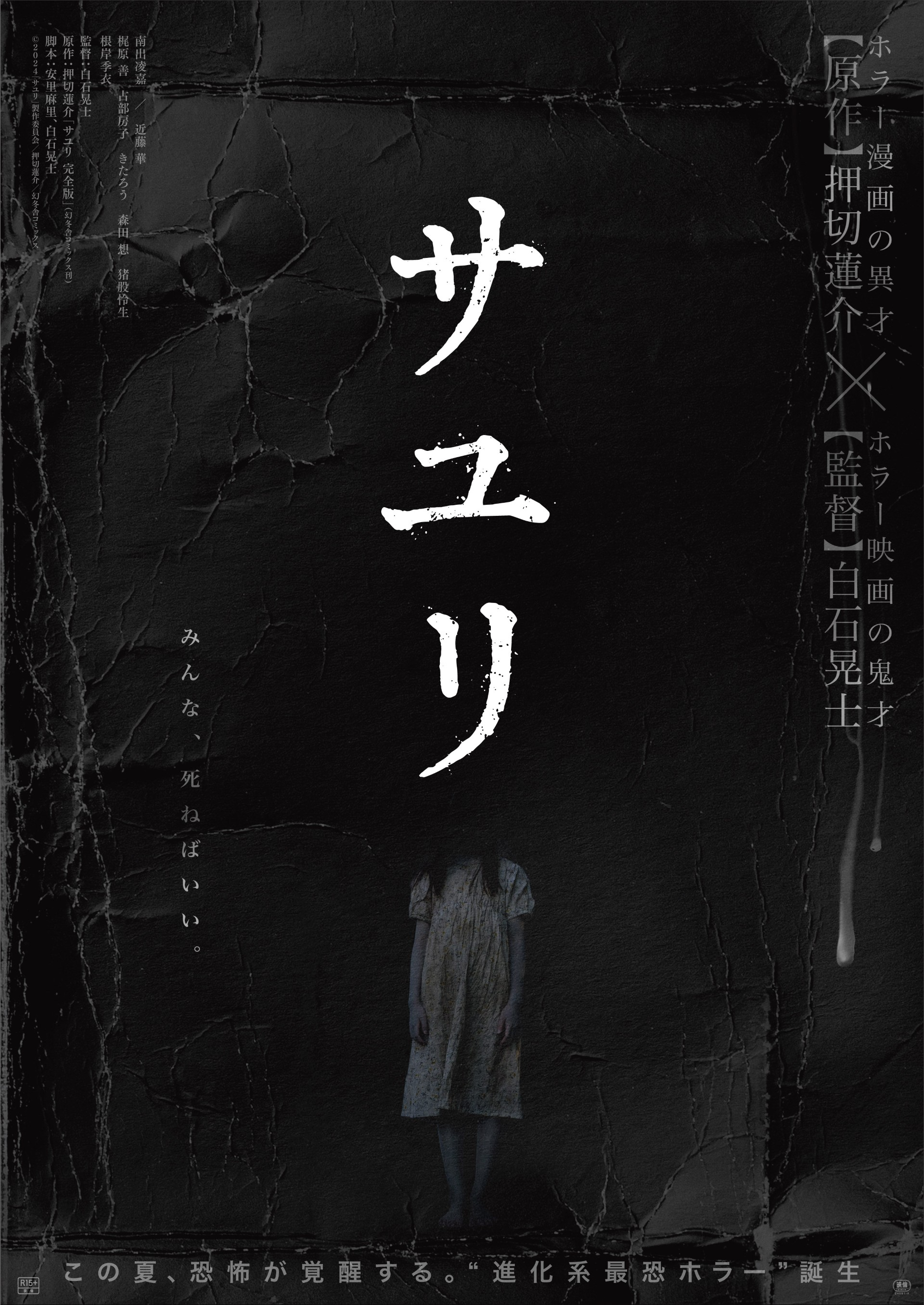
An excited family discover the perils of buying a “used” home in Koji Shiraishi anarchic haunted house horror House of Sayuri (サユリ, Sayuri). Unlike many other nations, Japan does not really have a comparable housing market as, given changing building regulations etc, it’s common to demolish the original structure and build a bespoke home in its place rather than move into one someone else has vacated. That obviously means that opting for an existing property can be a little bit cheaper, which is presumably how the Kakimis have finally managed to move into what they describe as the dream home, escaping a cramped city apartment for a spacious rural mansion with room enough for grandma and grandpa too.

Of course, this particular home is probably cheaper because something untoward once happened there, though the Kamikis probably don’t know that, and everyone who’s lived there since has moved out a short time later. In a way referencing Shiraishi’s previous work, we can’t really tell whether the malevolent spirit wants the family out or is merely trapped in a loop of revenge on the family that badly betrayed them. In any case, it makes its way through the Kamiki family unit starting with daughter Keiko and causing all manner of strange events in the house. Sensibly, older son Norio begins to ask why they don’t just move but the parents are so committed to their dream of homeownership that they can’t bear the thought and remain determined to hang on to it at whatever cost. 

In any case, some wise words from grandma advance a more positive way of battling the ghost, that they should fight it with the force of their lives. They laugh in its face and shout vulgar phrases that send it scuttling away in outrage. The best way to fight the darkness, grandma says, is to live well. Like the house itself, it seems grandma has a well hidden secret that makes her the film’s key asset, a hilarious force of nature and eternal wise woman otherwise ignored because her dementia undermines her credibility. Meanwhile, Norio makes an unexpected friend at school who just happens to be a psychic and is keen to warn that a little girl ghost has latched on to him and it would obviously be better if he could just move out on account of all the evil emanations that appear to be coming from his home.

But as grandma says, it’s the grudges of the living they ought to be afraid of. The house of course holds its secrets and its labyrinthine, multilevel structure is perfect for concealing them. Unfortunately the Kamikis have bought into this poisoned legacy and slowly start seeing their familial bonds fracturing while the ghost takes advantage of their vulnerabilities, their negative emotions and insecurities. In a sense it becomes a question of whether they can endure a place of trauma to maintain their dreams of homeownership or are prepared to make the more sensible decision of ceding ground and moving somewhere less toxic while Norio tries to reclaim his place in his family and protect what remains of it. 

Truly heading in some unexpected directions particularly in its unpredictable send half, the film takes on an absurdist quality but also returns to classic genre tropes of the legacy of child abuse and the betrayal of a parent who saw and did nothing perhaps because, like the Kamikis, they were prepared to accept this this kind of toxicity to maintain a happy family home and be seen as a model upper-middle class family living in a country mansion. It turns out, the only way to exorcise this much more literal ghost is by directly confronting the traumatic past and attempting to find accommodation with it be that through violence or forgiveness. But as grandma had said, the best weapon is love and life, throwing back at the ghost what it no longer has in a defiant expression of being alive and that joy contains which is also of course as grandpa had said a way of honouring the dead resolving to make the most of one’s remaining time in their memory. In any case, Norio discovers that you do not have to continue living in a haunted house but unlike a ghost are in fact free to leave the scene of trauma and seek new happiness in a less upsetting place.


House of Sayuri screened as part of this year’s Fantasia International Film Festival.

International trailer (English subtitles)