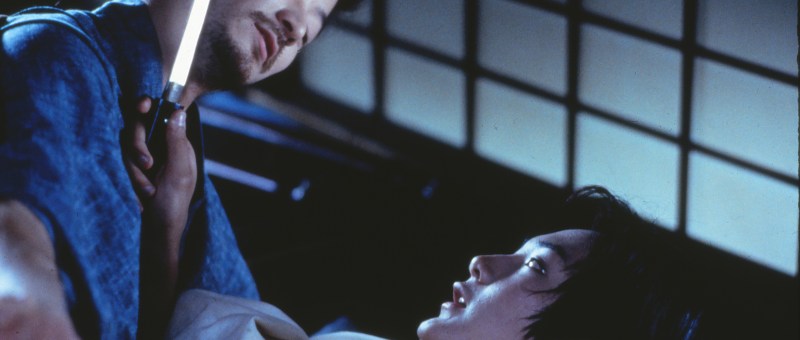
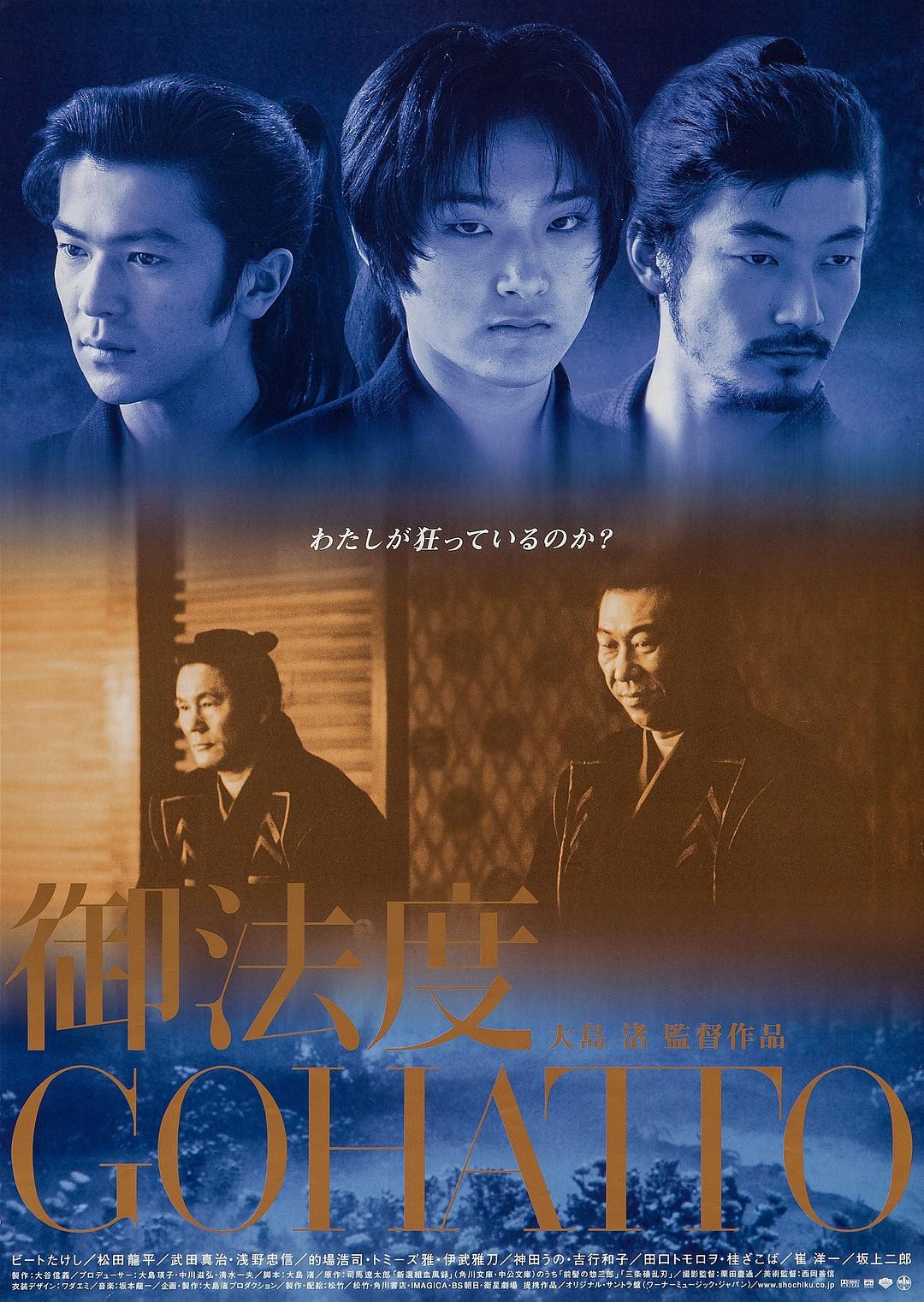
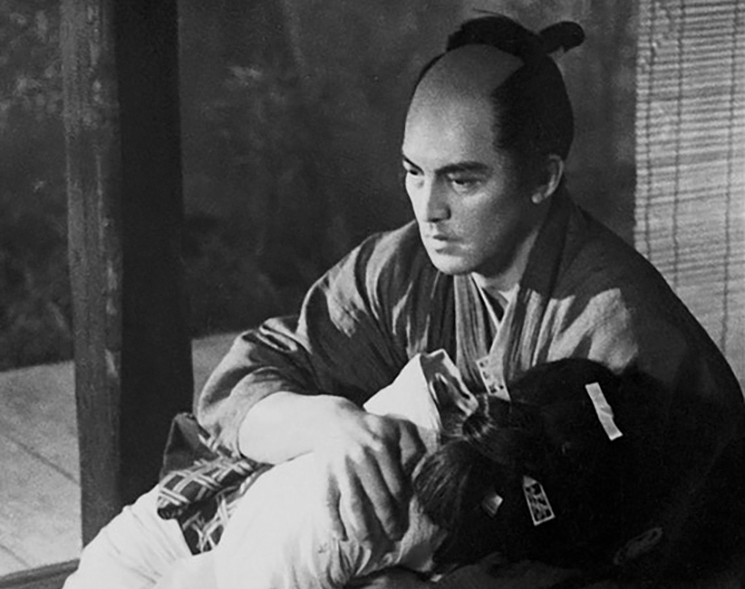
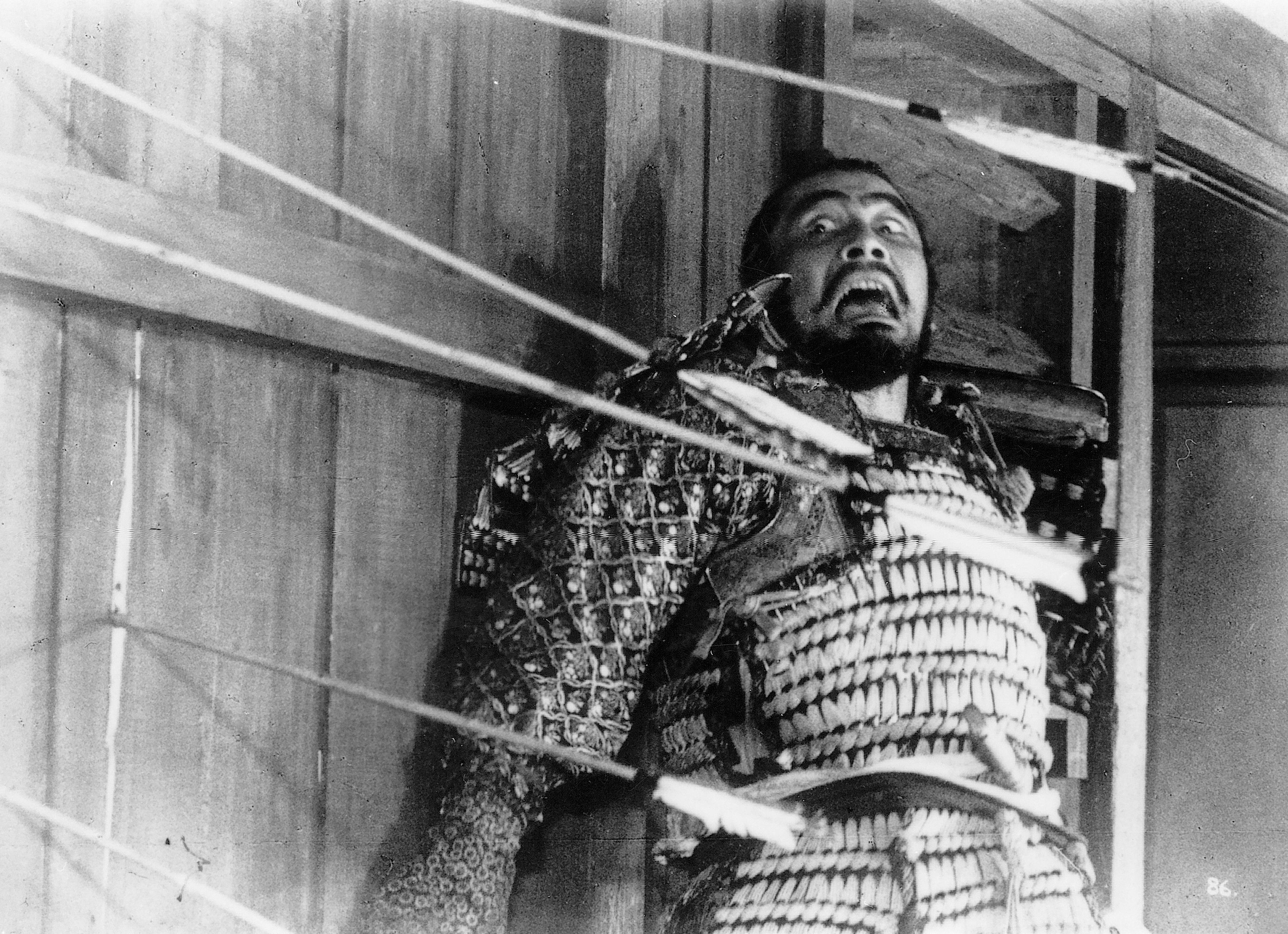
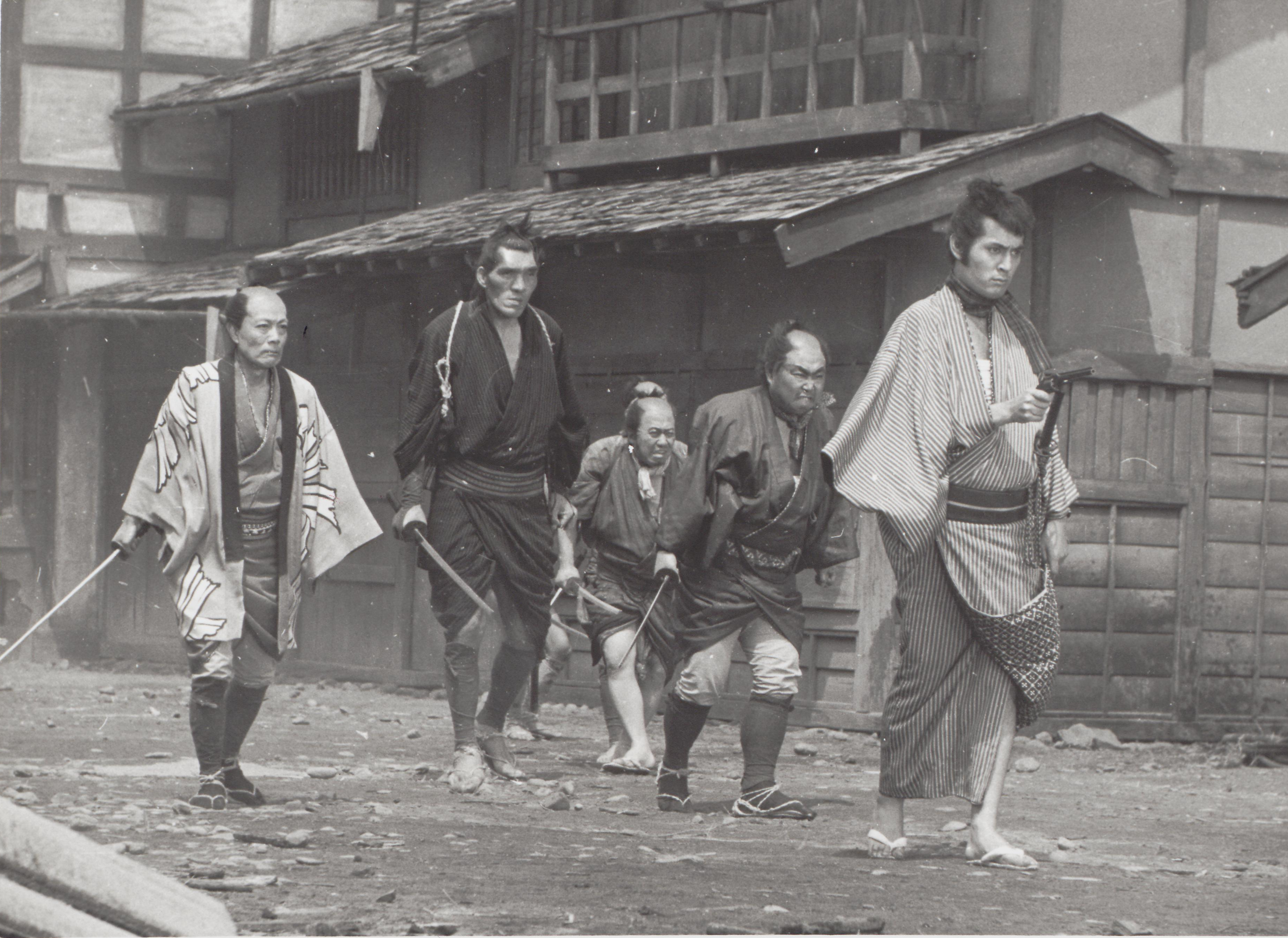
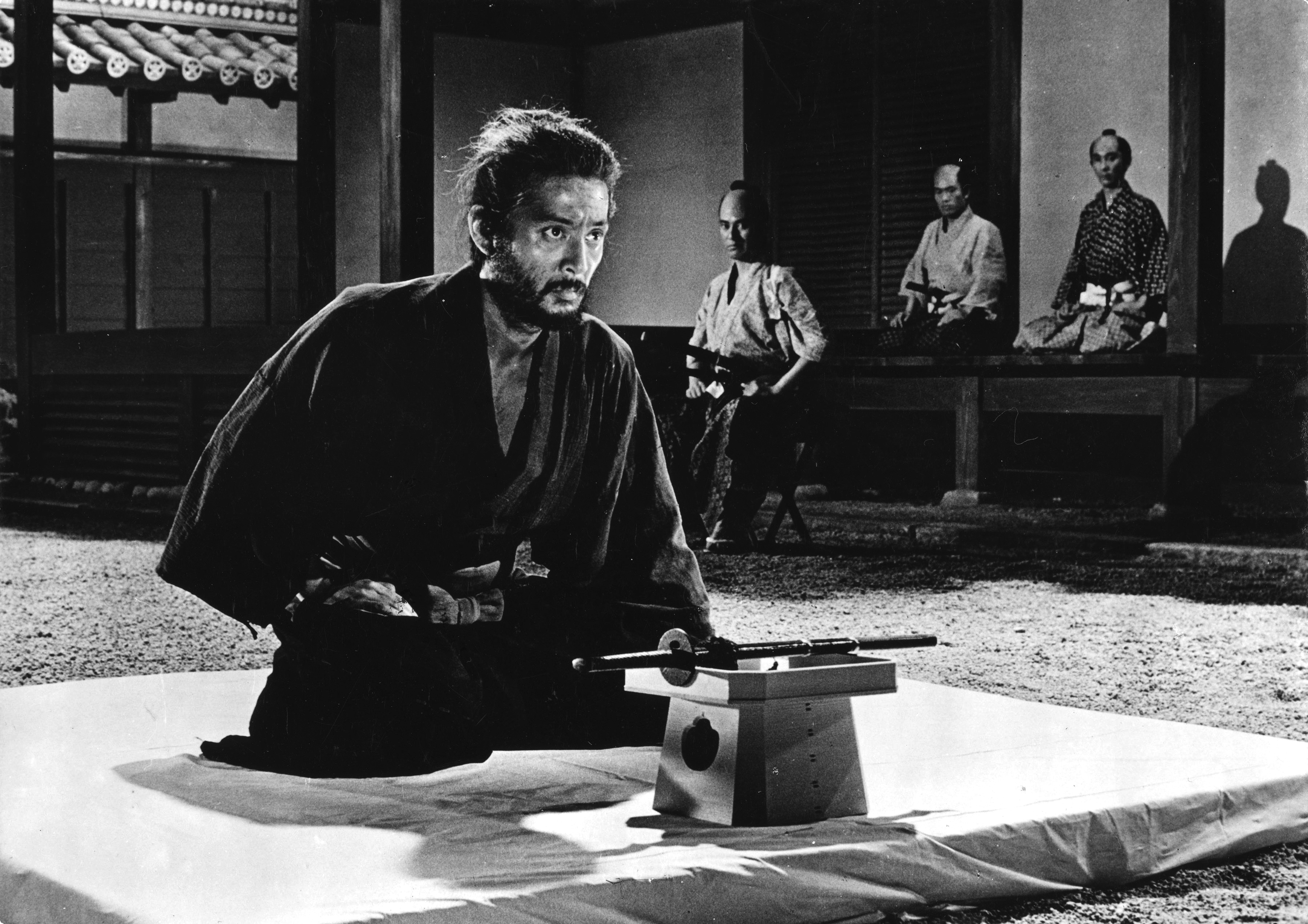
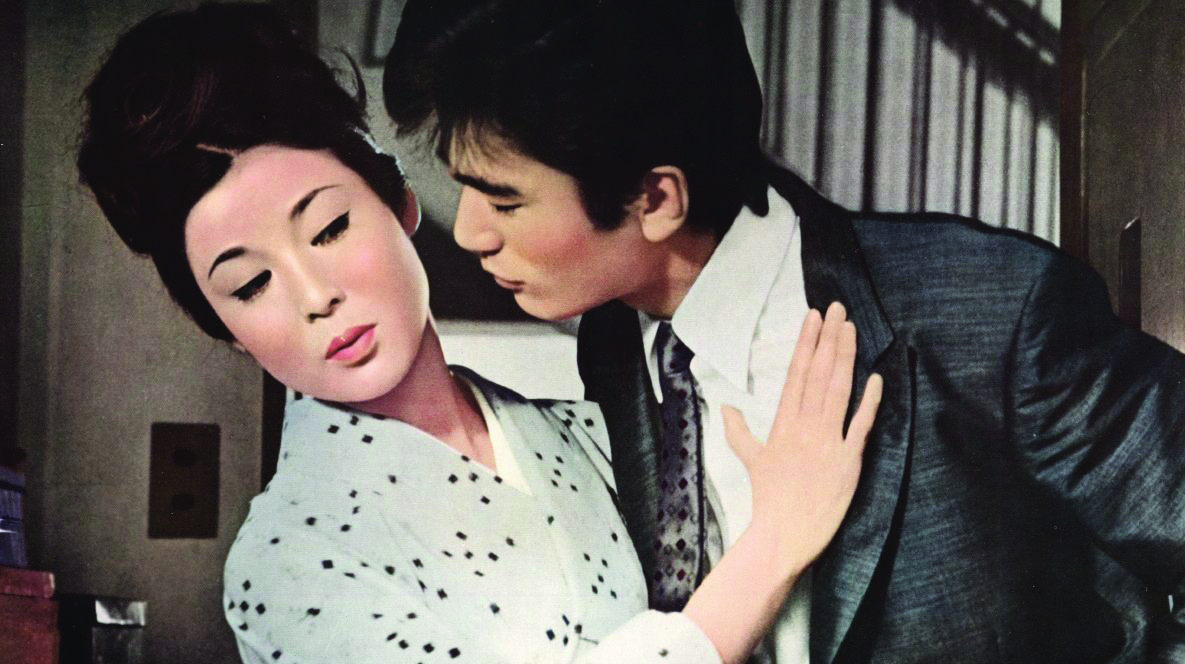
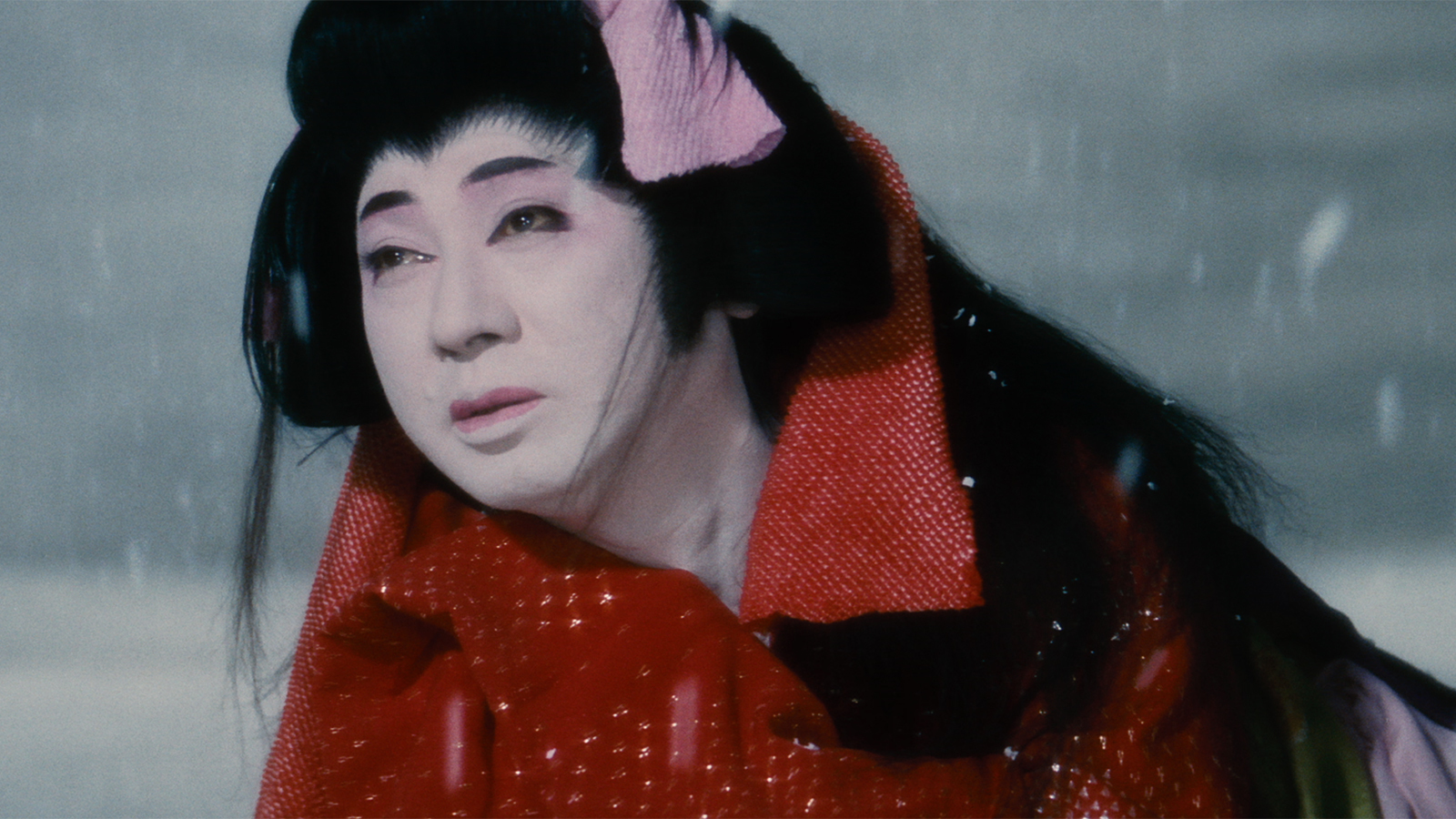
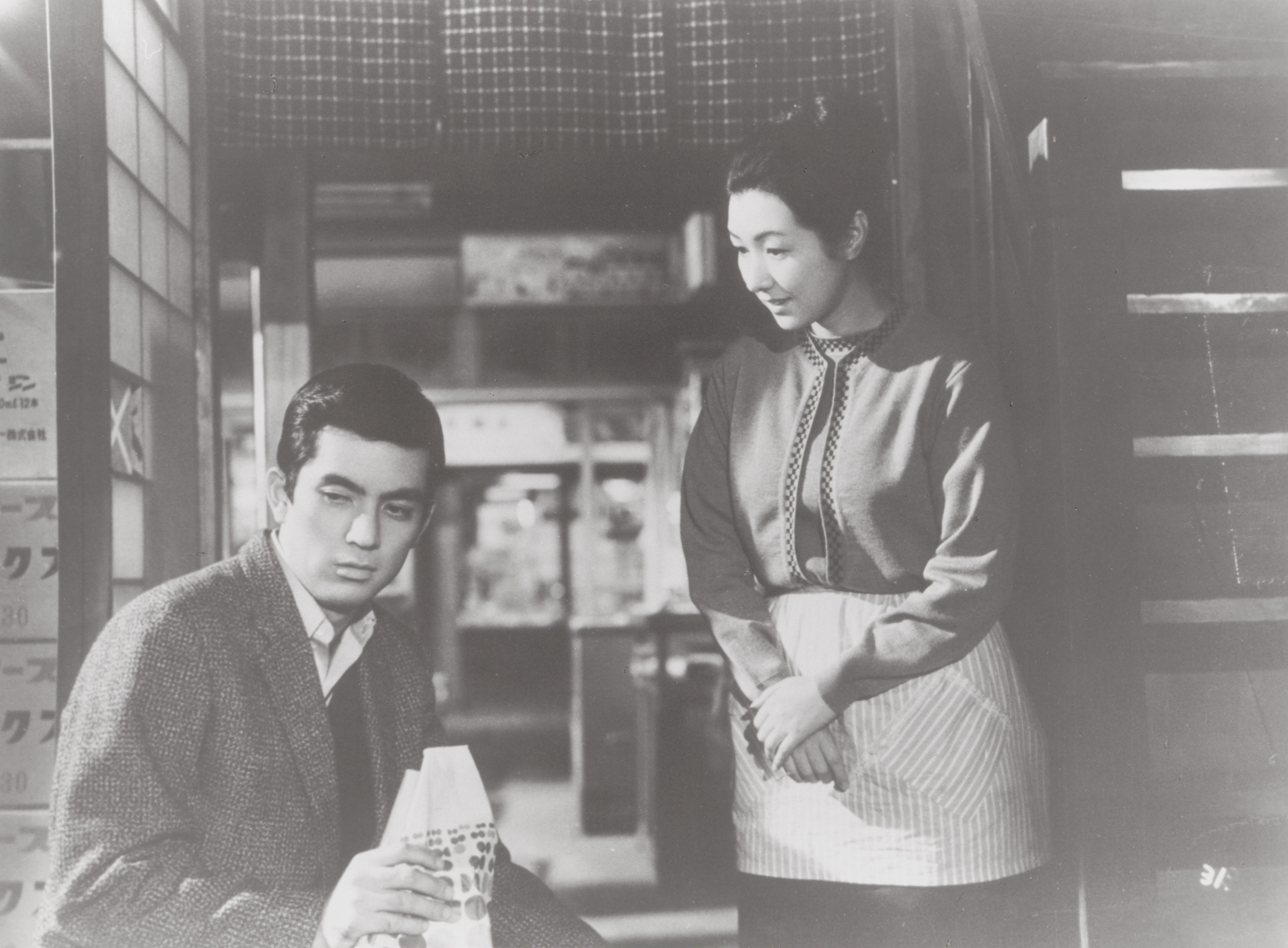
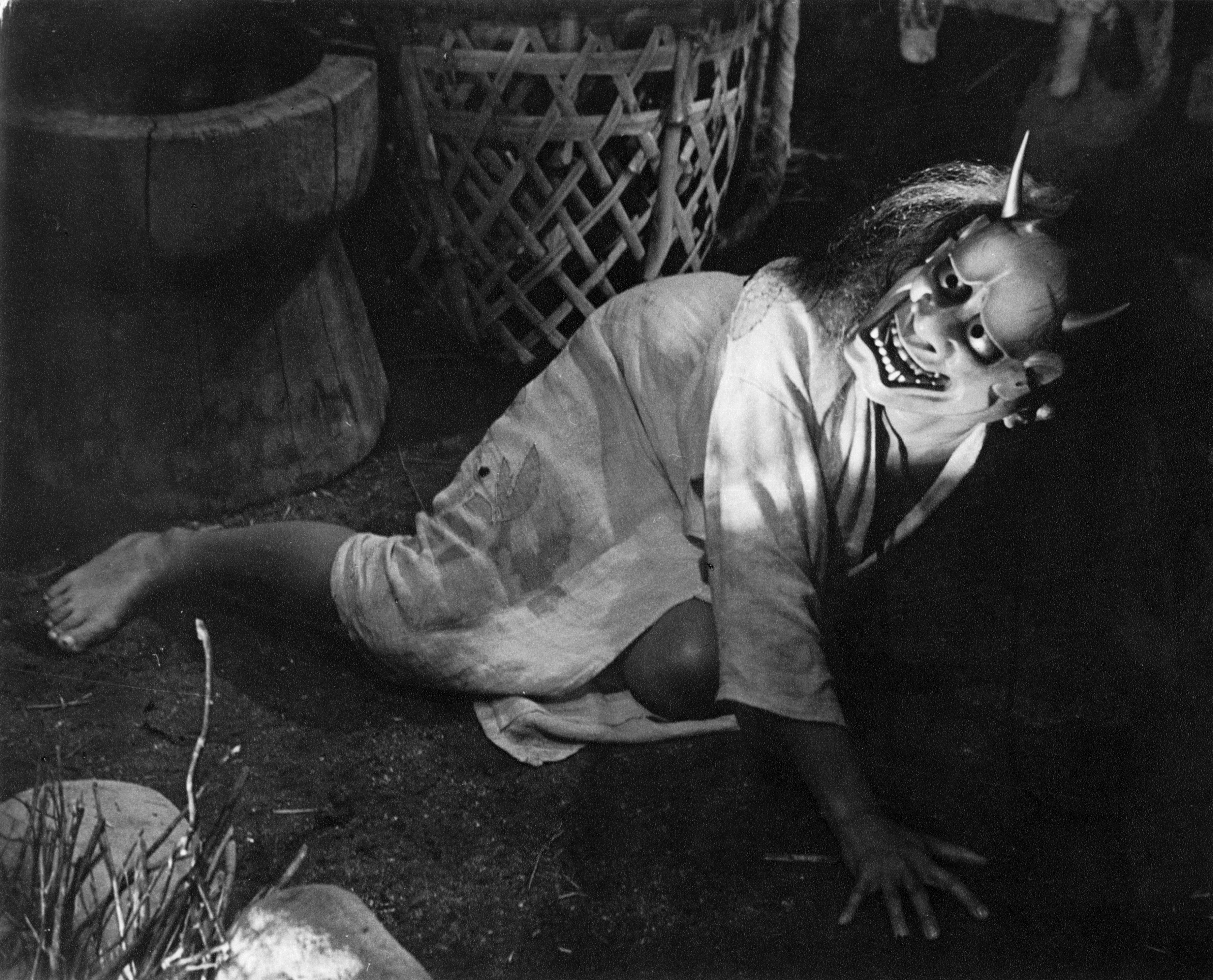
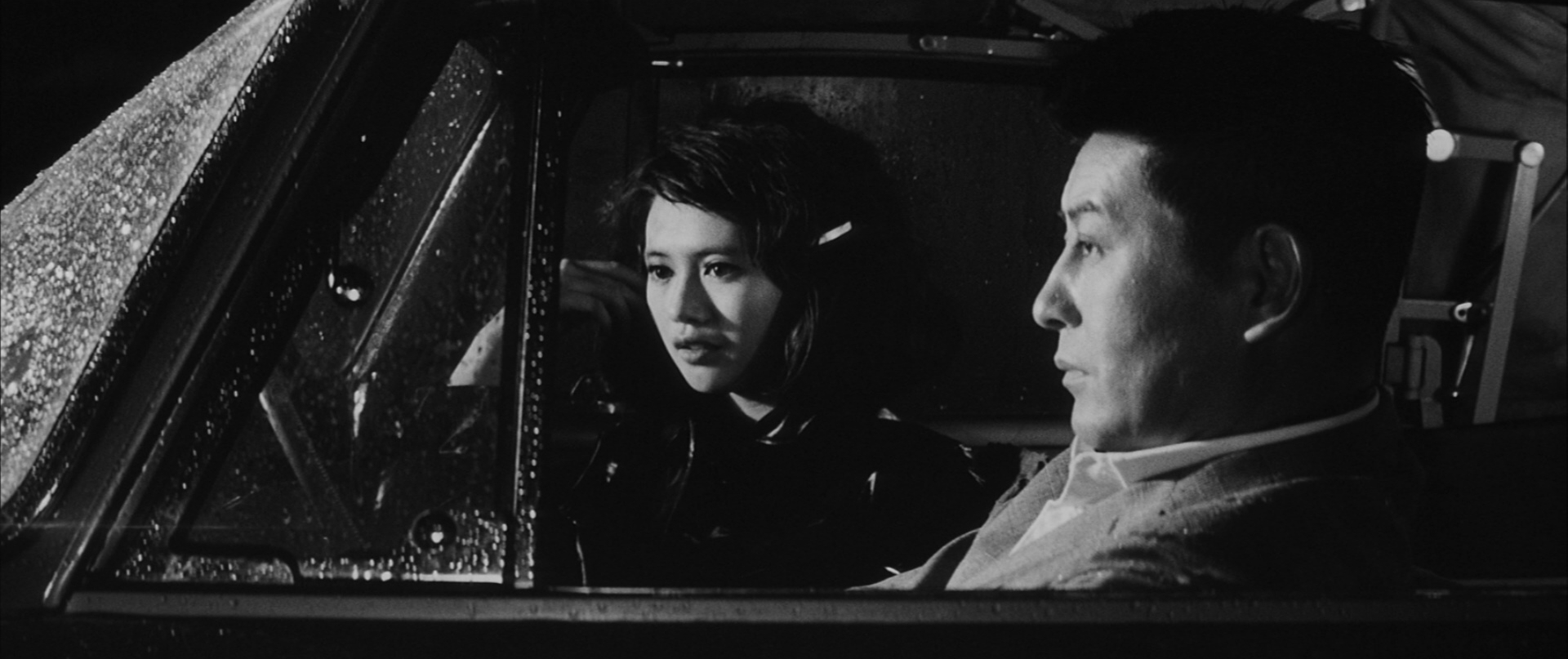
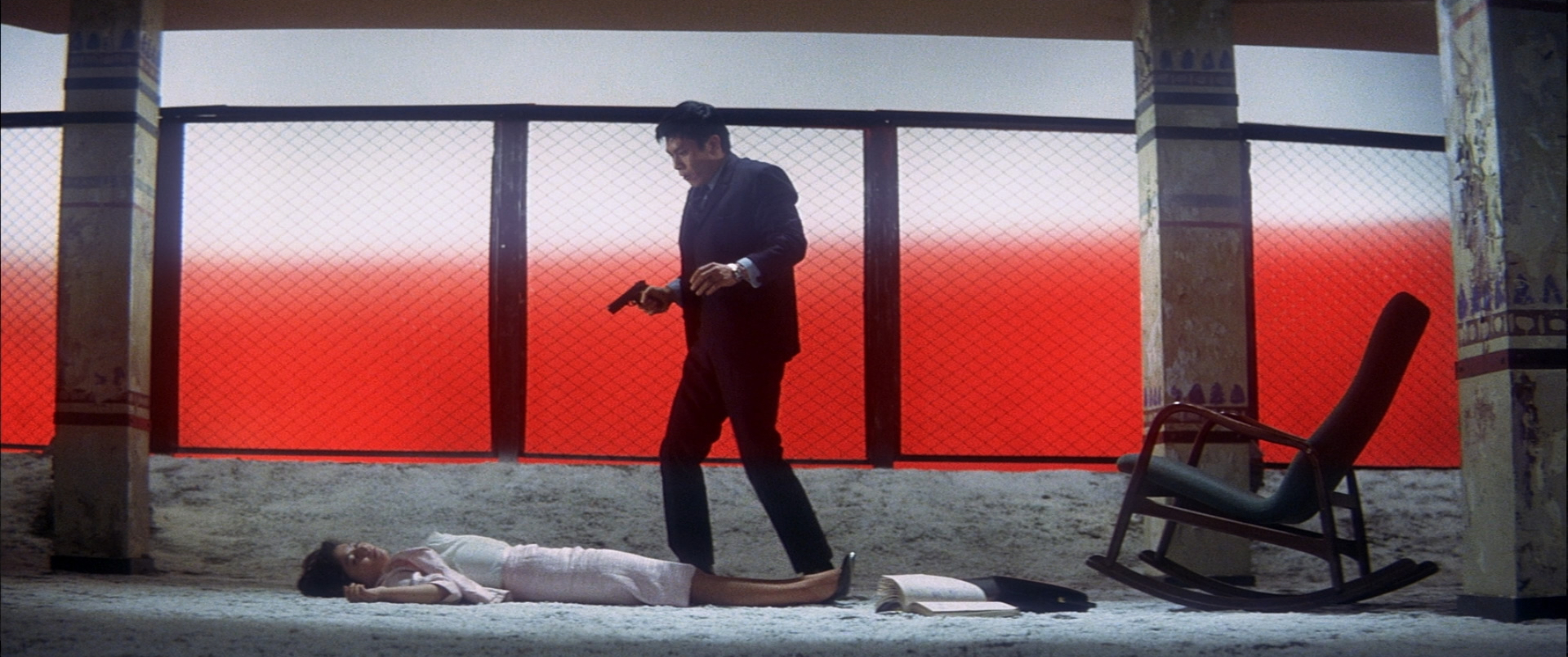
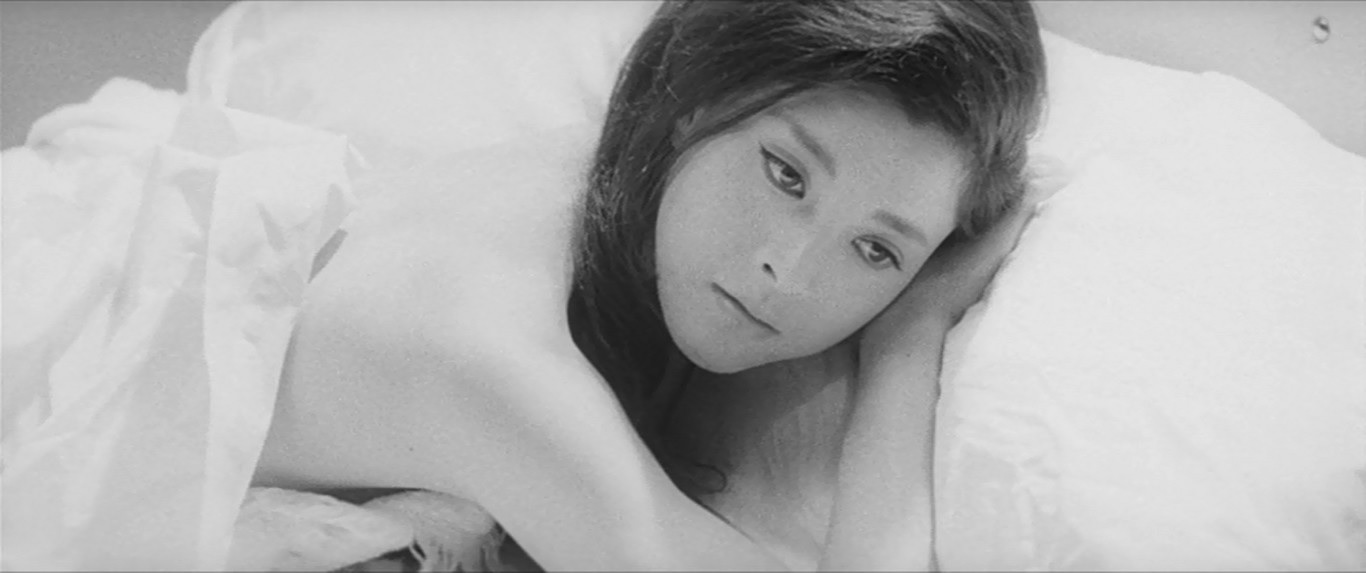
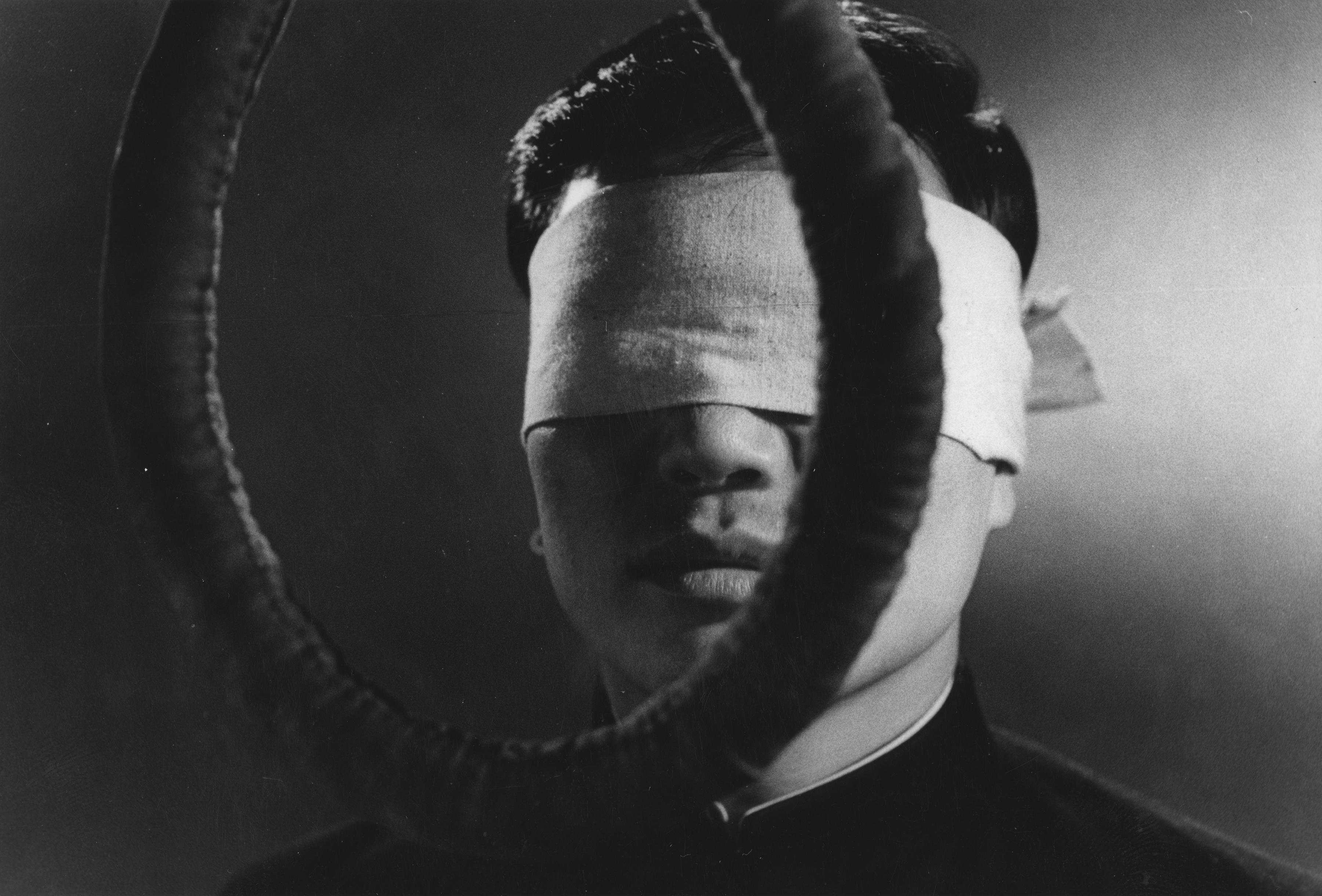
Nagisa Oshima once said that his hatred of Japanese cinema extended to absolutely all of it, decrying the hackneyed nativism of “foggy beauty and stupid gardens”, yet his final film is filled with Mizoguchian mist and almost a paen to Japanese aesthetics which ends with a cherry blossom tree in full bloom cut down in its prime. Burdened by the slightly more salacious title “Taboo”, Gohatto is less about love between men in an intensely homosocial world even as it asks what it might mean by “forbidden” or “against the law” than it is about idealism and aesthetics as its band of contradictory conservatives unknowingly approach the end of their world in a coming modernity ushered in by dangerous beauty.
Set in the Kyoto of 1865, a scant three years prior to the Meiji Restoration, the film opens with an audition of sorts as the Shinsengumi search for promising new recruits among talented swordsmen. Already a mess of contradictions, the Shinsengumi is, loosely, a kind of official police force dedicated to defending the Shogunate against the revolutionary forces set on restoring power to the emperor. Nevertheless, in an odd way and in contrast to the elite Mimawarigumi which was staffed only by direct retainers to the Shogun, the Shinsengumi was noted for its lowkey egalitarianism in that it made a point of admitting those of ordinary birth as well as lower level samurai and ronin. Of course, the notions of equality only went so far and perhaps only fuelled its reputation for merciless savagery, but also make it a strangely progressive force fighting against progress in defence of the feudal status quo.
Only two of the hopefuls are thought to be any good, one a young ronin, Tashiro (Tadanobu Asano), and the other a beautiful boy, Kano Sozaburo (Ryuhei Matsuda), the third son of a wealthy merchant whose line were once samurai but are no longer counted among the noble retainers. A talented swordsman, Sozaburo’s dangerous beauty presents an existential threat to the Shinsengumi order, the steely Hijikata (Takeshi Kitano) looking on conflicted in witnessing the way his commander, Kondo (Yoichi Sai), looks at this vision of androgynous beauty remarking that he had not known him to be “that way inclined”.
Being that way inclined does not seem to be a particular issue within the Shinsengumi, it is not against their draconian rules and in fact appears to be tolerated at least as long as it causes no further problems. Kondo is however mindful of the chaos caused by a similar wave of homoerotic lust which took hold shortly before a climactic battle which would prove to be their last success. What Sozaburo seems to arouse in them is something more dangerous than the accepted patterns of love between military men which is in a sense sublimated as a mentor/student relationship, loyalty more than romance. Tashiro, who is of a similar age to the apparently 18-year-old Sozaburo, lets his desire be known, vowing to sleep with him before he dies ironically acknowledging Sozaburo for what he is, an angel of death.
For his part, Sozaburo remains curiously passive in each of his encounters, aroused only it seems by the act of killing. Yet Hijikata discerns that he has indeed become Tashiro’s lover on witnessing them fight, Sozaburo losing clumsily despite being the more skilled in a dynamic that mimics their relationship in which Tashiro is the dominant partner. Aware of the danger in Sozaburo’s allure, Kondo suggests having a superior take him to the red light district to show him the delights of woman hoping to guide him back towards a less dangerous path, only the attempt backfires on several levels. Firstly, Sozaburo has no interest in women and continues to decline believing his commander is also hitting on him (like everyone else), thereafter determined to seduce him after all. Another retainer does indeed succeed in seducing Sozaburo, developing a mild obsession, but later ends up dead, Tashiro a main suspect in his murder with the motive of sexual jealousy though all of this additional violence is perhaps only an expression of Sozaburo’s dangerous beauty.
As so often, sex if not love becomes the force which destabilises the social order only here it’s equated both with death and with an alternative mediation of male violence. Perhaps reflecting the way they look to the 18-year-old Sozaburo who makes a faux pas in accidentally suggesting at least one of them is of pensionable age, the ranking members of the Shinsengumi are played by actors already well into their golden years as if relics of a bygone era though in reality most were in their 30s. As Soji (Shinji Takeda), a filial figure like Sozaburo wearing long hair, puts it, there are no old men in their unit which is in essence an anti-revolutionary force. Nevertheless, the Shinsengumi is on the wrong side of history and already living in its end times, perhaps ushered towards its doom by the figure of the beautiful boy. “You were too beautiful”, Hijikata eventually laments as he finally perhaps understands the nature of the revolution he is witnessing. Perverse to the last, Oshima sets his ethereal finale in a stygian fog and pays an ironic tribute to the Mizoguchian classicism he so railed against in his youth, taking a sword to the cherry blossoms as he like Hijikata severs his own legacy in a moment of destructive beauty.
“This is a story about my lunch every day. Nothing more, nothing less” the hero of Atsushi Kaneshige’s slice of comfort cinema, 461 Days of Bento: A Promise Between Father and Son (461個のおべんとう, 461ko no Obento), claims though it is of course something more than that. Based on an essay by musician Toshimi Watanabe who himself starred in Dad’s Lunch Box, Kaneshige’s gentle drama is another in the recent series inspired by the “papaben” phenomenon of fathers suddenly taking an interest in domestic matters by preparing tasty, nutritious and elegantly prepared packed lunches for their school-aged children.
Obviously inspired by Watanabe’s real life, 461 Bento opens with cheerful home video footage of the early years of hero Kouki (Shunsuke Michieda) before shifting darker as the relationship between his parents begins to sour eventually ending in divorce. Kouki is given a choice whether to live with mum or dad, remaining behind in the family home with musician Kazuki (Yoshihiko Inohara) while his mum Shuko (Emi Kurara) moves out taking the tree they planted together with her. With the stress of the divorce, young Kouki ends up failing his high school entrance exams and is set back a year, eventually getting in the following spring. Hoping to encourage him, Kazuki offers to make a bento lunch every day for the next three years on the condition that Kouki pledges to not to skip school.
In true papaben tradition, Kazuki ends up getting far too into the art of bento filling the kitchen with new gadgets while sometimes coming into conflict with his bandmates through investing all of his creative energies in innovative lunch recipes. Yet Kouki isn’t quite convinced by his father’s newfound passion, assuming it’s merely a new hobby he’ll soon get tired of rather than something he’s actively doing out of love for his son. Consequently, he’s originally a little embarrassed when his classmates appear unduly impressed by the quality of his dad’s work though it later helps him make a few friends which had otherwise been a little difficult seeing as he is a year older than everyone else.
Being a year older continually weighs on Kouki’s mind, adding to the already onerous pressures of high school life his sense of anxiety intensifying as graduation nears. He complains he feels creepy hanging out with younger kids, and insists he can’t afford to fail and risk being held back again even older than everyone else at the beginning of college. Meanwhile he’s lowkey resentful towards his father blaming him for the end of his parents’ marriage while also seemingly ambivalent towards his mother for giving him the choice of where to live unfairly blaming her for leaving him even though it was his own choice to stay with his father. He rebels passive aggressively against his parents’ gentle support as they refuse to pressure him insisting he be free to do and be what he wants, while floundering in confusion over the next steps in his life.
Kazuki is fond of telling him that everything will work out in the end, life’s not a race after all, only for Kouki to fire back that everything always works out for him because he just does whatever he wants and forces everyone else to go along with it which is why his mum left. Harsh words, but not without truth as new girlfriend Maka (Junko Abe) expresses something similar confessing that being with Kazuki makes her feel lonely and as he lives so defiantly in the moment it’s difficult to believe in the future of their relationship. Kouki cruelly tells Shuko he can choose a father for himself suggesting he might move in with his mother and her new boyfriend, but contrary to expectation Kazuki is serious about fatherhood giving his son the space for his adolescent angst while trying to be quietly supportive through his bento endeavours.
The papaben phenomenon may be in itself a little sexist in exoticising a perfectly ordinary task just because it’s being done by a man thereby ironically reinforcing the idea that children’s lunches are a woman’s responsibility, but it does undoubtedly broker a reconciliation between father and son as the young Kouki begins to come to an understanding of his father’s love for him, overcoming the trauma of his parents’ divorce and gaining the courage to step forward into an independent future. A heartwarming coming-of-age tale, 461 Bento is about more than a boy’s lunch but also of the quiet power of unconditional love as mediated through the most ordinary act of care.
461 Days of Bento: A Promise Between Father and Son screened as part of this year’s Camera Japan
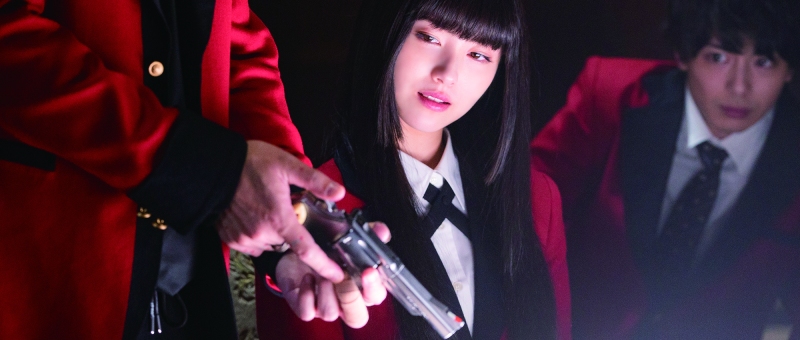
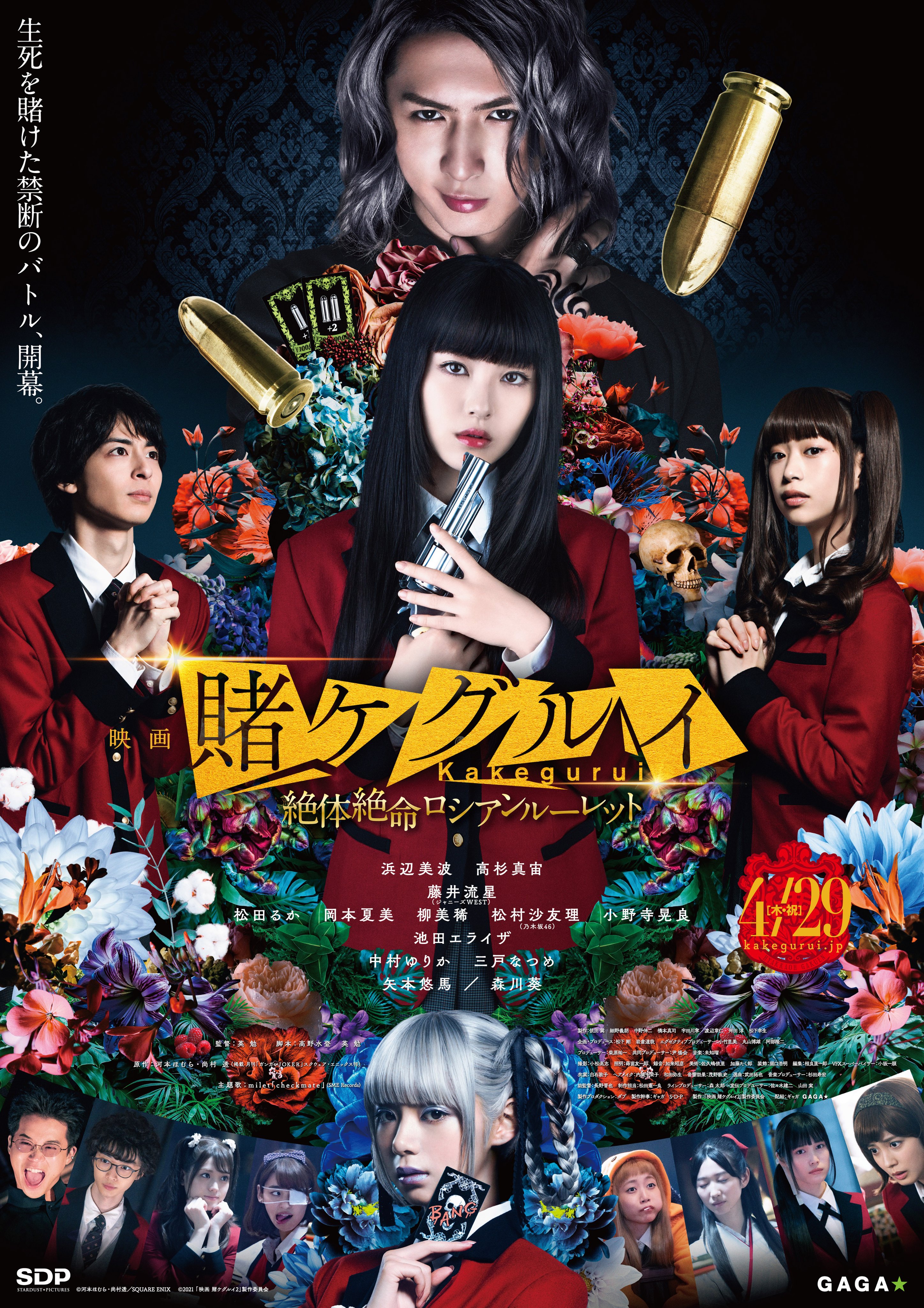
Closet revolutionary or compulsive gambler, Yumeko Jabami (Minami Hamabe) continues to be a thorn in the side of the Student Council in the sequel to hit movie Kakegurui, itself a sequel to a two-series live action drama adapted from the manga by Homura Kawamoto. Set as the opening expositionary narration explains at school for the elite Hyakkaoh Academy where social hierarchy is determined by skill in gambling, Ultimate Russian Roulette (映画 賭ケグルイ 絶体絶命ロシアンルーレット, Eiga Kakegurui: Zettai Zetsumei Russian Roulette) sees the rattled Student Council making a counterproductive and potentially ruinous decision in bringing back a previously exiled player in the hope of permanently neutralising Yumeko.
Makuro Shikigami (Ryusei Fujii) was suspended some years ago for his part in the “House Pets’ Curse” which led to most of the school being demoted to its lowest, near untouchable ranks. At Hyakkaoh Academy, students are required to pay a tithe to the Council and those who can’t pay end up as “House Pets”, humiliatingly treated as cats and dogs. Yumeko’s friend Meari (Aoi Morikawa) fears she may have fallen foul of the curse herself having hit a lengthy losing streak, but it’s not until Shikigami begins twisting the situation to his advantage that Yumeko is snared by his manipulative trap.
Yumeko, meanwhile, is in the middle of a depressive episode largely down to her reluctance to take part in the school’s upcoming sports’ day. Just as in the previous film her long game was better cakes in the cafeteria, her end goal here is trying to get the event cancelled by whatever means possible. In any case, we also witness another dark side to the oppressive rule of the Student Council as a demoted Maeri finds herself in a literal chain gang forced into hard labour building the facilities for the sports festival in what seems to be a minor dig at preparations for the Olympics. Yumeko and Meari are, however, responsible gamblers in that they refuse to bet on other people’s safety or at least refuse to be complicit in games which are designed to inflict harm or cruelty on others.
As Shikigami explains in his opening monologue, the skills needed for gambling are strategy, ability to read your opponents, and a killer instinct. This is something Yumeko knows well, she plays players not games and sees straight through Shikigami realising that his crazed psychopathy is an act to mask the meticulous quality of his external manipulations. Nevertheless she is also caught out by her unwillingness to put her friends in danger, willingly sacrificing herself instead. The Student Council too are seemingly caught off guard little realising that Shikigami presents just as much of a threat to their authority as Yumeko and is equally uncontrollable with far fewer principles. Still as Student Council President Kirari (Elaiza Ikeda) ominously reflects, “there must be chaos before order”.
In any case, they find themselves awkward allies in facing off against Shikigami in the promised game of Russian roulette mediated through a card game but played for real. The Student Council leaves itself surprisingly vulnerable in a loophole which allows House Pets to challenge them directly overruling all of the other school regulations, while Shikigami too falls victim to his own arrogance never quite expecting to be challenged having achieved his primary goals of seizing control of the school via the Council. The only way to beat him is to play him at his own game, disrupting his self-serving plotting and tendency to cheat in an insult to the art of gambling while undermining his confidence in his own intellectual superiority. “Only a twisted mind could beat you” he says of Yumeko believing himself to be a twisted mind though as it turns out perhaps not quite twisted enough.
Temporarily siding with authority in order to put a stop to Shikigami’s authoritarian potential, Yumeko does not so much challenge the system as work around it while protecting herself and her friends from Shikigami’s machinations. What she defends is in a sense gambling itself, rejecting Shikigami’s intention to subvert it to his own advantage. Maintaining the same absurdist, manga-esque aesthetic as the first film complete with cartoonish CGI pupil shrinking, slick onscreen graphics, and even this time a random musical number, Hanabusa significantly ups the ante with bomb threats and unexpected Satanism while leaving the door open for the next instalment with Yumeko’s final instruction to “Bring on the Madness”.
Celebrating the 50th anniversary of his musical debut in 2019, Haruomi Hosono has undoubtedly had a long and varied career shifting from countercultural folk rock to avant-garde electronica and bubble-era pop music. In later years, he’s become known internationally primarily for his film scores and particularly that of Hirokazu Koreeda’s Palme d’Or winning Shoplifters. Capturing footage from Hosono’s 2019 anniversary world tour, Taketoshi Sado’s documentary is equally meandering struggling perhaps to find a clear through line in regards to Hosono’s works.
As such, it rockets through his early days with interesting family trivia such as his grandfather having been the sole Japanese Titanic survivor, his father’s secret dancing dreams, and his mother’s love of music. Picking up with his time at university, Sado more or less charts Hosono’s musical evolutions in chronological order though with little cultural context outside of a brief evocation of post-war devastation at the time of the musician’s birth. Accordingly he begins with Hosono’s uni folk rock band Apryl Fool which broke up after one album onto the hugely influential Happy End, various side projects, the avant-garde Yellow Magic Orchestra days, writing bubble era pop songs for idol stars such as Seiko Matsuda’s Tengoku no Kiss, and finally music for film composing the title track “Kaze no Tani no Naushika” for Hayao Miyazaki’s Nausicaä.
Meanwhile, Sado shuttles between direct to camera monologues from Hosoda himself intercut with concert footage from the 2019 tour, legendary gigs, and rather a lot of Hosoda doing his famous silly walks. Sado does not include direct interviews with Hosoda’s collaborators or fellow artists, mainly allowing him to speak for himself, but does include footage of him with some who have been influenced by his music such as singer-song writer and actor Gen Hoshino who is apparently such a fan that he first met the artist while cosplaying his Harry Hosoda outfit from his famous Yokohama China gig, and LA musician Mac DeMarco who also appears onstage singing in Japanese at Hosoda’s LA concert. Actress Kiko Mizuhara and sister Yuka meanwhile also spend some time travelling with Hosoda in the UK appearing on stage in Brighton, while London’s Barbican Hall concert was also notable for the unexpected onstage appearance of Ryuichi Sakamoto briefly reuniting the Yellow Music Orchestra.
The brief backstage footage from the event is among the more interesting in the slightly awkward interactions of the three band members despite Hosono’s claim that musicians can pick up where they left off with each other even after many years through the universal language of music. The 2019 tour however leaned heavily into Hosono’s boogie boogie covers rather than original tracks, while Sado seems content to mix and match between various concerts and adding vox pop comments from excited fans waiting to get in long after the first footage of the evening appears. Despite building towards the brief YMO reunion, he offers little commentary on relations between the former band members or why such an event is so viewed as so momentous. Rather he suggests that Hosono’s various musical projects existed more or less concurrently serving particular purposes in reflecting his specific creative desires.
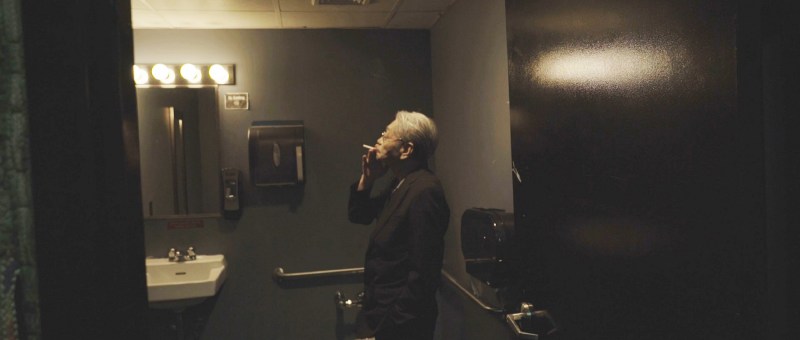
“The keyword is free, when when I touch what’s free my heart dances” Hosoda explains in one of his monologues, hinting at this process of continual meandering between musical genres that culminates perhaps paradoxically with revisiting the music of his childhood in American boogiewoogie. The film’s ironic title is apparently inspired by Hosono’s love of smoking, as he explains he needs cigarettes to create and there is music in a puff of smoke. Hosoda does indeed nip off for a puff rather a lot, often seen with a tobacco or electronic cigarette in his hand or else doing some of his silly walks. Footage from Hosoda’s diaries and early illustrations fill in the blanks of Sado’s rough chronology, though he does begin to rely on footage from other interviews particularly towards the documentary’s end. Despite offering a comprehensive if whistle-stop tour of Hosono’s varied discography, there’s no denying that No Smoking remains somewhat superficial offering, only an unannotated overview, but does undoubtedly offer insight in following the man himself as he celebrates such a significant career milestone.
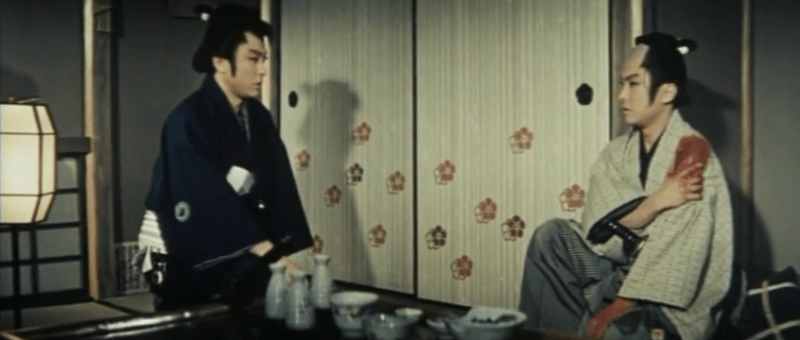
“Everything is money these days” as a pirate king cheerfully proclaims in Nobuo Nakagawa’s tale of Edo-era corruption, Phantom Goblin (まぼろし天狗, Maboroshi Tengu). Perhaps named to capitalise on Nakagawa’s reputation for spookiness, Phantom Goblin features no real ghosts and only metaphorical goblins in the bright red tengu masks sported by the hero’s mysterious clan while otherwise conforming to the Toei programmer house style and starring jidaigeki superstar Hashizo Okawa in a double role as brothers separated at birth and reunited by their resistance towards the inherently corrupt authority of Edo society.
Drawing parallels with the present day, the film opens at a bawdy banquet at which corrupt councillor Tanuma (Isao Yamagata) is being entertained by a pair of local social climbers with a floor show of dancing girls. Shortly after the performance begins, however, one of the women collapses writhing in agony and loudly crying out for drugs. Embarrassed, the lords would rather this not get out deciding to finish the woman off and dump her body in a nearby well. Unfortunately for them, the plan is interrupted by local policeman Shuma Moriya (Hashizo Okawa) who arrives in time to hear the woman exclaim the words “drugs” and “mastermind” before she passes away. Determined to figure out the truth, Moriya heads to the not so secret hideout of a local gang but is shot in the arm and has to take refuge in an inn where he encounters a man who looks just like himself, Kyonosuke Asakawa (also Hashizo Okawa) of the Goblin clan, who eventually sends him to his estate to recover and assumes his position as policeman in order to root out the truth.
A former hatamoto who apparently resigned his position after finding himself unable to support corrupt lords, Kyonosuke declares himself “frustrated with how things are run”, realising that the system is rotten beyond repair on hearing that Moriya has been fired by a corrupt magistrate apparently in league with the conspirators. While comparatively rare in Edo-era dramas, drugs are a controversial subject in any age but in keeping with the sensibilities of the early ‘60s Phantom Goblin eventually slips into the Sinophobia then rampant in contemporary crime dramas as it becomes clear the drugs trade in the feudal economy is being driven by Chinese pirates trafficking it in from overseas while weak willed lords enable their rise to power.
There is however a touch of conservatism in Kyonosuke’s desire to see justice served in that he fears a world in which “if you can buy power and position with money, then one day we will have a chief counsellor who is a pirate”. While he’s undoubtedly got a point, it’s also true that he is in a sense protecting his own privilege conveyed by birth rather than worth in addition to rejecting the influence of the “foreign” as he raises his sword against a Chinese pirate in order to target the corrupt lords who’ve been collaborating with him in order to bolster their own power and position. Kyonosuke wanted to “clean out evil in Edo”, but eventually succeeds rather ironically in simply becoming a part of the system himself after having supposedly cleaned it out by getting rid of the “obviously” corrupt elites.
Recovering from his shoulder injury and flirting with the adopted sister of Kyonosuke, Moriya is largely relegated to a secondary role though the secret brotherhood of the two never develops into much of a plot point even as they bond as men too honest for the world in which they live. Nor do the respective romantic dilemmas ever materialise even as the conflicted figure of a female bandit in love with the noble policeman is forced to pay for her crimes with her life, unable to progress into the purified world the brothers are about to create. Working in the Toei house style, Nakagawa abandons his taste for the strange or otherworldly contenting himself only with a few ironic tengu masks and the literal shadows surrounding the shady mastermind while indulging in genre staples such as the comic relief provided by Kyonosuke’s bumbling retainers and the double casting of Hashizo Okawa as two brothers alike in both appearance and sensibility who find themselves unable to accept the increasing corruption of their society and determine to oppose it.
Shinya Tsukamoto burst onto the scene with indie cyberpunk classic Tetsuo: The Iron Man, an avant-garde body horror exploration of dehumanising industrialisation. After performing as a virtual one man band, however, Tsukamoto’s second film, Hiruko the Goblin (ヒルコ/妖怪ハンター, Hiruko / Yokai Hunter), was his studio first accepting the opportunity to direct a feature adaptation of Daijiro Morohoshi’s Yokai Hunter manga. Some have seen this as a huge stylistic departure, shifting from the punk aesthetics of Tetsuo towards warmly nostalgic summer adventure, but it is in fact perfectly in keeping with Tsukamoto’s earlier 8mm work such as Adventures of Electric Rodboy while also reminiscent of the kind of wistful teen adventures Nobuhiko Obayashi among others had been making throughout the Bubble era.
Nevertheless, Hiruko’s main lessons seem to relate to the dangers of buried history and its corrupted parental legacy. The franchise protagonist, Reijiro Hieda (Kenji Sawada), is a once promising archeologist ostracised by his peers for his determination to prove the existence of yokai or “goblins”. Still grieving the death of his wife Akane (Chika Asamoto), Reijiro is summoned to her hometown by his brother-in-law, high school teacher Mr. Yabe (Naoto Takenaka), who informs him that he’s found something in a burial mound which he believes was built “by the ancients to appease evil spirts”. Yabe insists that he doesn’t believe in yokai, but thinks it might be a good opportunity for Reijiro to further investigate his theory. By the time Reijiro arrives, however, Yabe has already disappeared along with high school girl Tsukishima (Megumi Ueno) after exploring the tomb alone.
Though set in the present day, Tsukamoto plays with horror serial gothic motifs such as the creepy tombs, suspicious janitor, and the continually befuddled Reijiro dressed in his old-fashioned white suit while armed with an arsenal of yokai fighting gadgets all contained in the Mary Poppins-like suitcase he continually carries around though at one point he seems to try catching escaped yokai with fly paper and is generally found wielding bug spray. Despite constantly working with dirt, an early joke sees him undone by spotting a creepy crawly in his room. This does not bode well for him, because Hiruko’s end game is convincing its victims to decapitate themselves before attaching their severed heads to weird, spider-like bodies.
It does this seemingly by locating a pleasant, poignant memory and promising to prolong it forever. Reijiro’s nephew Masao (Masaki Kudou) is almost seduced on seeing an idyllic scene of missing high school girl Tsukishima dressed in white and enjoying a picnic on a summer’s day only to be suddenly brought back by his uncle. The inheritor of a curse, Masao is often struck by fits of furious burning in which his clothes seem to steam while he later displays strange scars on his back which take on the appearance of human faces. His predicament is largely his grandfather’s fault in having kept from his father the truth about the mound, leading him towards an over curious investigation during which it appears he accidentally released a bunch of demons from their eternal imprisonment. Now all Hiruko wants is to find the spell to open the door so they can all escape for good.
Having been in a sense betrayed by a corrupted parental legacy, Masao nevertheless finds salvation in his history by way of his uncle who has of course memorised the entirety of the “Kojiki”, an ancient chronicle of myth and folklore, and recognises the two passages necessary for opening and closing the stone enclosure one found on a broken stele and the other hidden inside an ancient helmet appropriated by Yabe. Masao can only save himself and lift the curse by learning the truth which had been hidden from him, ironically putting on the helmet while others lose their heads.
Yet Hiruko itself is also perhaps a manifestation of grief, something which cannot be eliminated but must in a sense be contained. Reijiro is almost tricked by Hiruko on being shown a vision of his late wife, unwittingly revealing the opening spell in return for being able to remain within the memory. Masao is similarly seduced by his vision of Tsukishima, but must then deal with the loss of his father who sacrificed himself trying to save others having realised his mistake in unearthing truths intended to stay buried. The fault lies however with Yabe’s own father whose attempt to keep him safe only endangered him.
In keeping with much of Tsukamoto’s work, Hiruko’s threat lies in the loss of bodily autonomy and corporeal destruction forcing the victim into an act of mortal self-harm and thereafter repurposing and remaking the physical form in its own image. Tsukamoto’s characteristically elaborate practical effects and use of creepy stop motion add to the sense of the uncanny, horror lurking in dark corners everywhere waiting for the opportunity to strike. Even so, Hiruko is not without its sense of silliness, Tsukamoto playing gleefully with genre archetypes while conforming fully to the summer adventure movie necessarily filled with a sense of wistful nostalgia. Having contained their demons, Masao and Reijiro emerge at summer’s end, but are greeted with another hazy goodbye if each a little more secure in having learned to accommodate their corrupted legacies.
“What can we do? It’s for the victory of our country” one woman stoically laments as her family home is demolished in an attempt to mitigate the damage from potential aerial bombing in Hiroshi Kurosaki’s wartime drama, Gift of Fire (太陽の子, Taiyo no Ko). A co-production between Japanese broadcaster NHK and American distributor Eleven Arts, Kurosaki’s ambivalent interrogation of the price of progress asks some difficult questions about scientific ethics while simultaneously suggesting we may have been stoking a fire we cannot fully control in a bid for a technological evolution which has become unavoidably politicised.
The hero, Shu (Yuya Yagira), is an idealistic young man who excels at running experiments. He has been spared the draft because his work has been deemed essential for the war effort as he is part of the research team at Kyoto University working on the development of an atomic bomb. A theoretical thinker, Shu has not fully considered the implications of the project and largely views it as a problem they are trying to solve in the name of science rather than a concerted attempt to create a super weapon with the potential to bring death and destruction to the entire world.
Others meanwhile are beginning to question the ethical dimensions of their work. The team is equipped with a shortwave radio receiving the American broadcasts and is fully aware that Japan is losing the war. There are frequent power outages which interfere with their research, while food shortages are also becoming a problem. The potter Shu has been visiting in order to acquire Uranium usually used for a yellow glaze tells him that he rarely needs to use colour anymore because the vast majority of his output is plain white funerary urns for boys who come back as bones. Some of the scientists feel guilty that they are living in relative safety while other young men their age are fighting and dying on the front line, while others wonder if working on the bomb, which will almost certainly not be finished in time, is the best way to help them. They also wonder if scientists should be involved in the creation of weapons at all, but their mentor Arakatsu (Jun Kunimura) justifies the project under the rationale that they aren’t just trying to make a bomb but to unlock the power of the atom and harness its intrinsic energy to take humanity into a brave new world.
As it turns out, Arakatsu may not have expected the project to succeed but was in a sense using it in order to protect his students by ensuring they would be exempt from the draft. Another senior researcher meanwhile points out the Americans are also working on a bomb, and if they don’t finish it first the Russians will. Arakatsu claims this war, like most, is about energy but nuclear energy may be infinite and therefore its discovery has the potential to end human conflict forevermore. Still, it’s difficult for Shu reconcile himself to the reality of what he was working on seeing the devastation inflicted on Hiroshima. The scientists are plunged into a deep sense of guilt and despair that they failed to prevent this tragedy, but also perhaps relief in knowing they were not responsible for inflicting it on the city of San Francisco as had been the plan.
Arakatsu claims he wants to change the world through science, a sense of purpose that appeals to Shu even while he remains firmly in the present moment. His childhood friend, Setsu (Kasumi Arimura), however is looking far ahead already thinking about what to do when the war is over. Seeing through the wartime propaganda disturbed by the answers the high school girls co-opted to fill-in at her factory give when asked about their dreams that all they want is to marry as soon as possible and raise children to serve the nation, she aims to educate. Shu’s brother Hiroyuki (Haruma Miura), meanwhile, is a conflicted soldier filled with guilt for having survived so long crying out that he can’t be the only one not to die. The theory that nothing is ever created or destroyed becomes an odd kind of justification, yet Shu is also forced to admit that destruction can be “beautiful” while claiming that scientific progress is a body already in motion which cannot be stopped. “The nature of science transcends humanity” Shu is told by an accented voice speaking in English, insisting that the bomb is merely another stop on the inevitable march of progress in the great chain reaction of history. Kurosaki’s melancholy drama preserves both the beauty and wonder of scientific discovery as well as its terrible ferocity but offers few answers as to the extent of its responsibilities.
The Olympics may be over, but BFI’s long-awaited Japan season finally makes its way to the big screen this October with a vast programme spanning a century of cinema from early masterpiece Souls on the Road right up to a preview of Ryusuke Hamaguchi’s recent festival favourite Drive My Car.
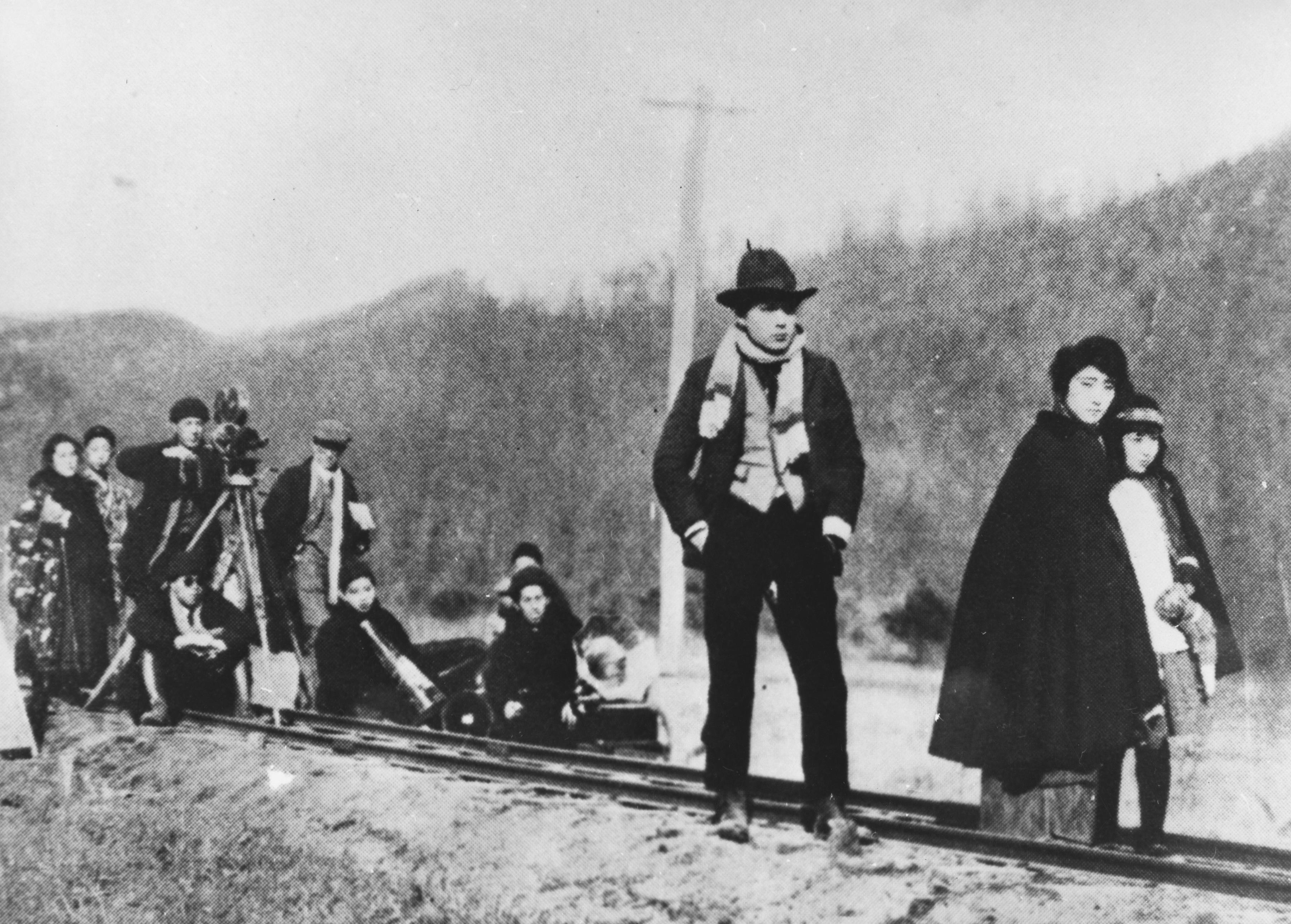
A landmark of early Japanese cinema directed by and starring Minoru Murata, Souls on the Road draws inspiration both from Gorky’s The Lower Depths and German novel Mutter Landstrasse, das Ende einer Jugend by Wilhelm August Schmidtbonn featuring four interconnected tales of mercy and and its absence. Review.
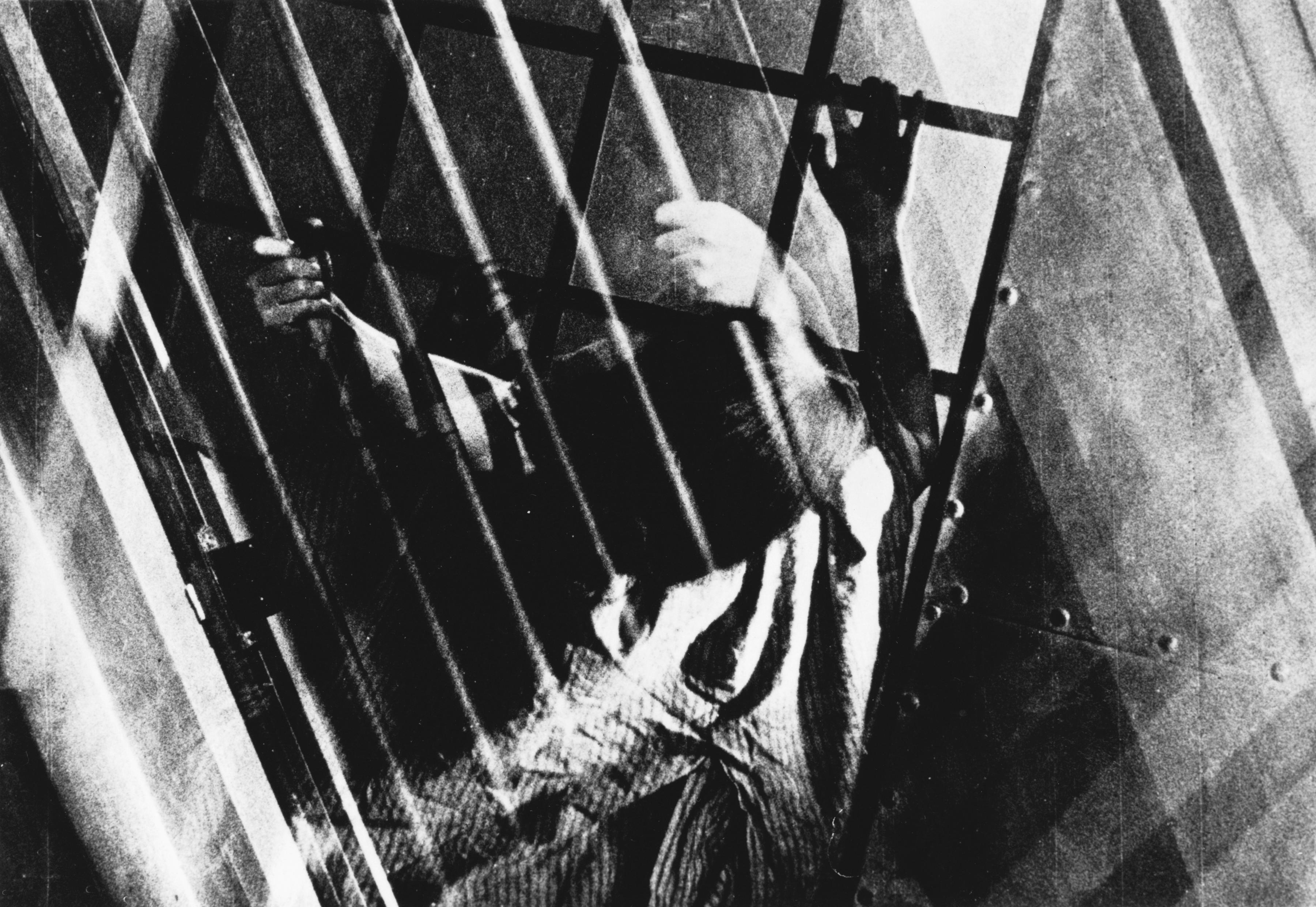
Teinosuke Kinugasa’s avant-garde masterpiece inspired by a story by Yasunari Kuwabata set in a rural psychiatric institution where a janitor attempts to secretly care for the wife his abuse drove into madness.
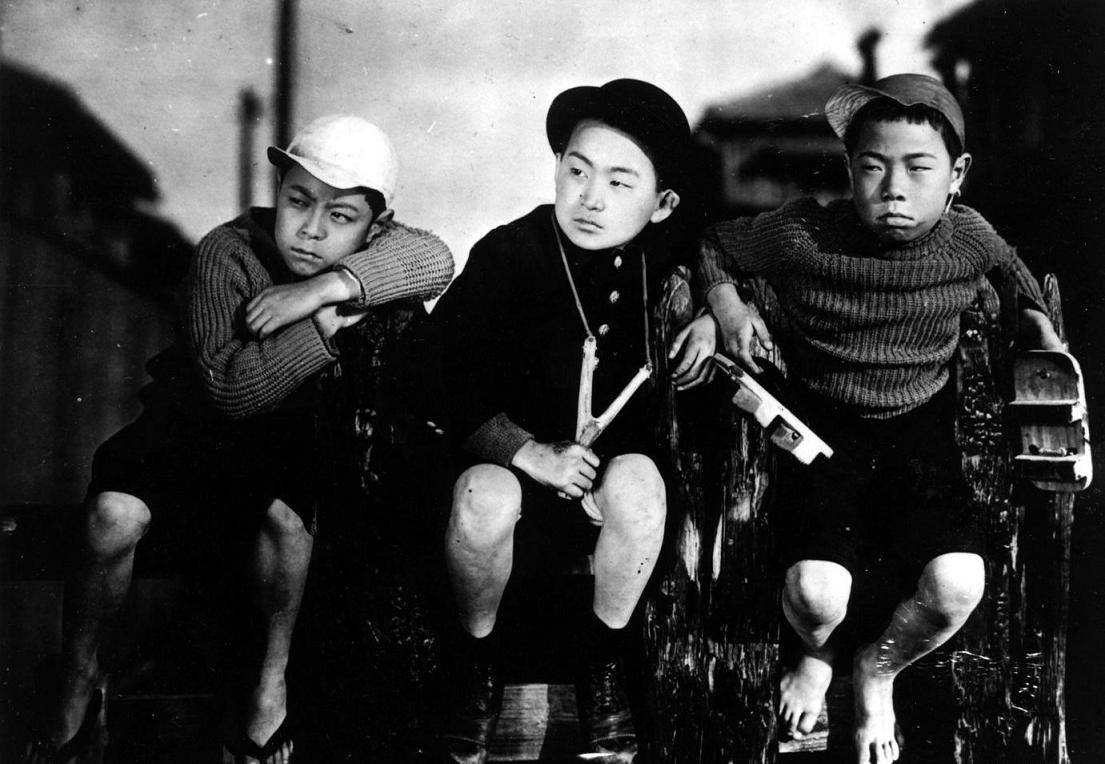
Early silent classic from Yasujiro Ozu in which the faith of two young boys in their salaryman dad is shaken when they spot him humiliating himself for his boss’ benefit. Review.
Cheerful talkie from Yasujiro Shimazu centring on the close relationship between two suburban families which is disrupted first by the unexpected return of a married daughter and then by the spectre of political destabilisation. Review.
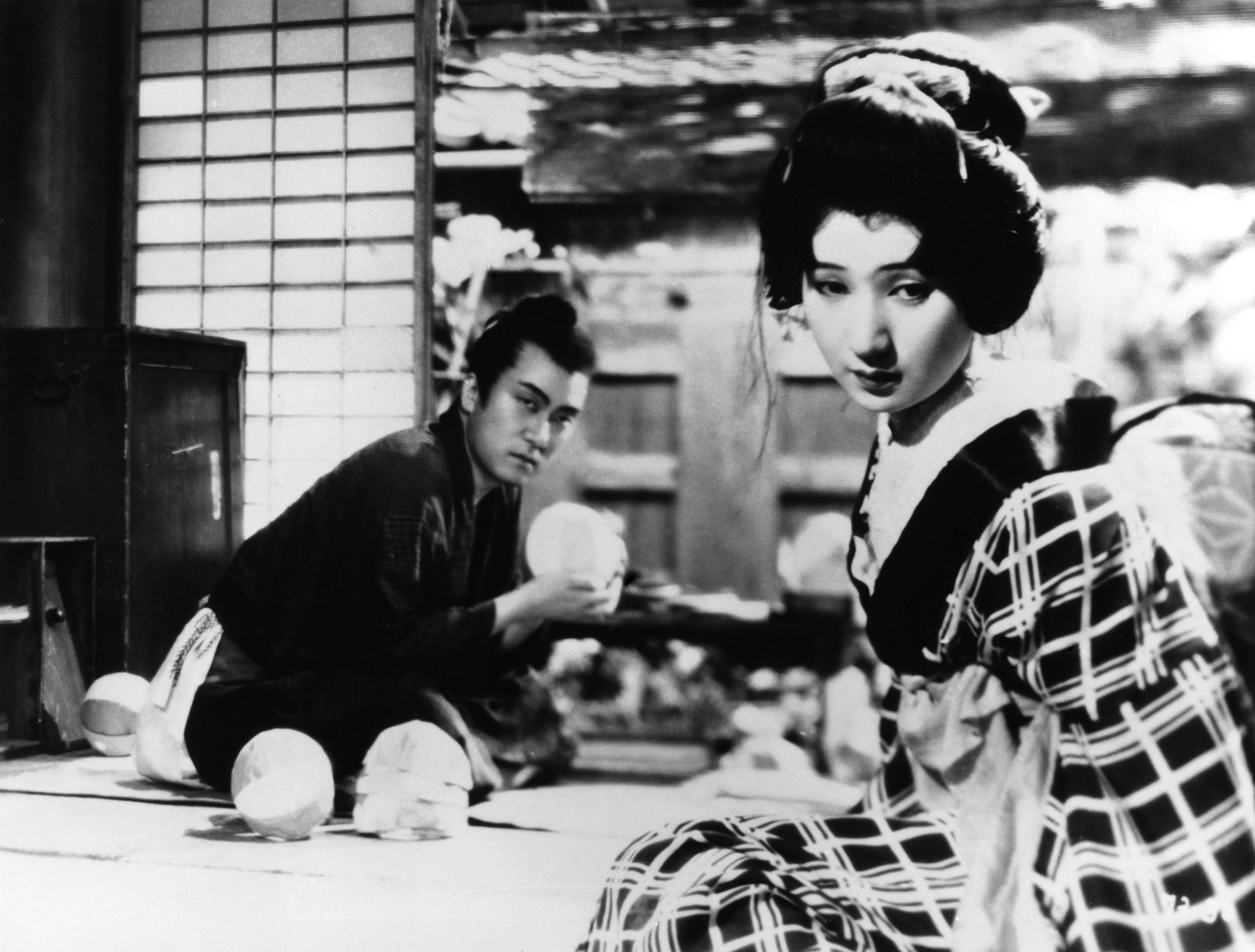
The final film from Sadao Yamanaka who sadly died a year later on the Manchurian front after losing his military exemption, Humanity and Paper Balloons chronicles everyday despair in an impoverished street in Edo. Review.
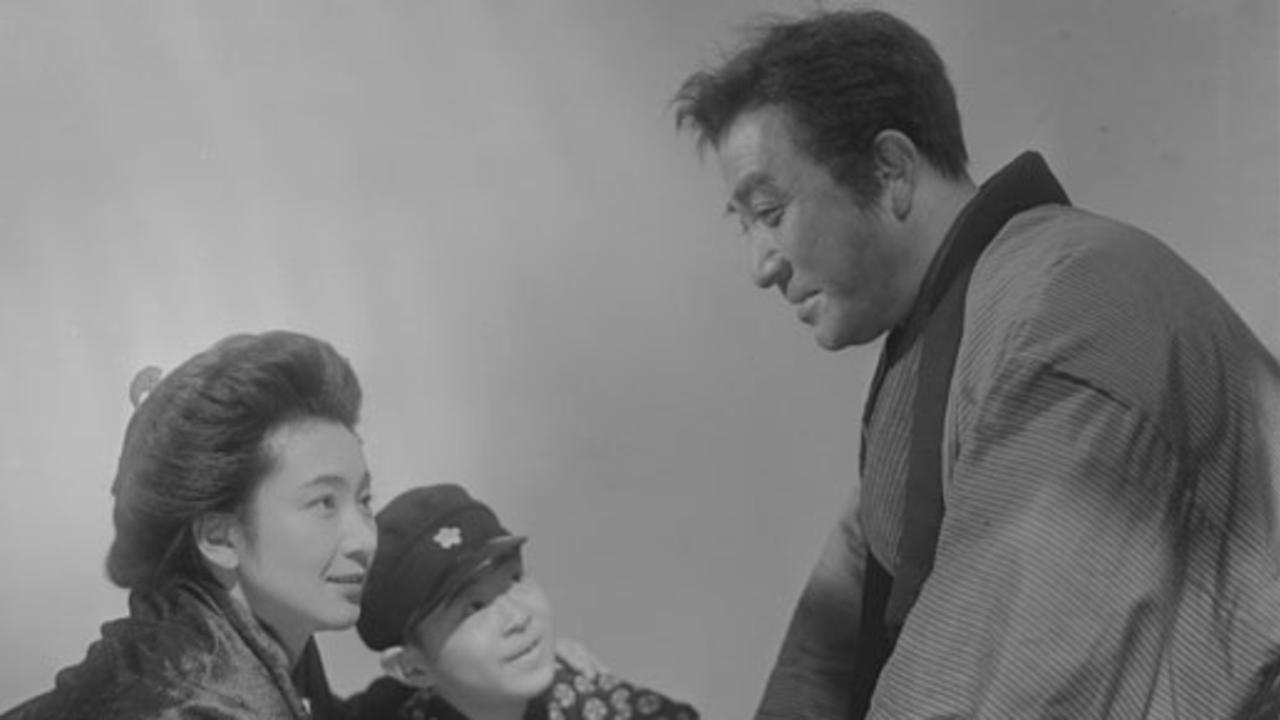
Director Hiroshi Inagaki later remade this film as The Rickshaw Man in 1958 starring Toshiro Mifune and Hideko Takamine. Nevertheless this original take on the life of an impoverished rickshaw driver who becomes a surrogate parent to a fatherless little boy is often regarded as the better of the two.
Closely associated with the cinema of children, Hiroshi Shimizu’s post-war independent film follows a series of war orphans and the demobbed soldier guiding them towards a new Japan. Review.
The third in Mizoguchi’s series of films focussing on female emancipation, My Love Has Been Burning stars Kinuyo Tanaka in a biopic of Meiji-era feminist Eiko Hirayama. Review.
MON 18 OCT 14:30 NFT3 / TUE 19 OCT 20:35 STUDIO / WED 20 OCT 17:50 NFT3 / THU 4 NOV 18:00 NFT2 / THU 18 NOV 20:30 NFT3* / SUN 21 NOV 11:30 NFT1
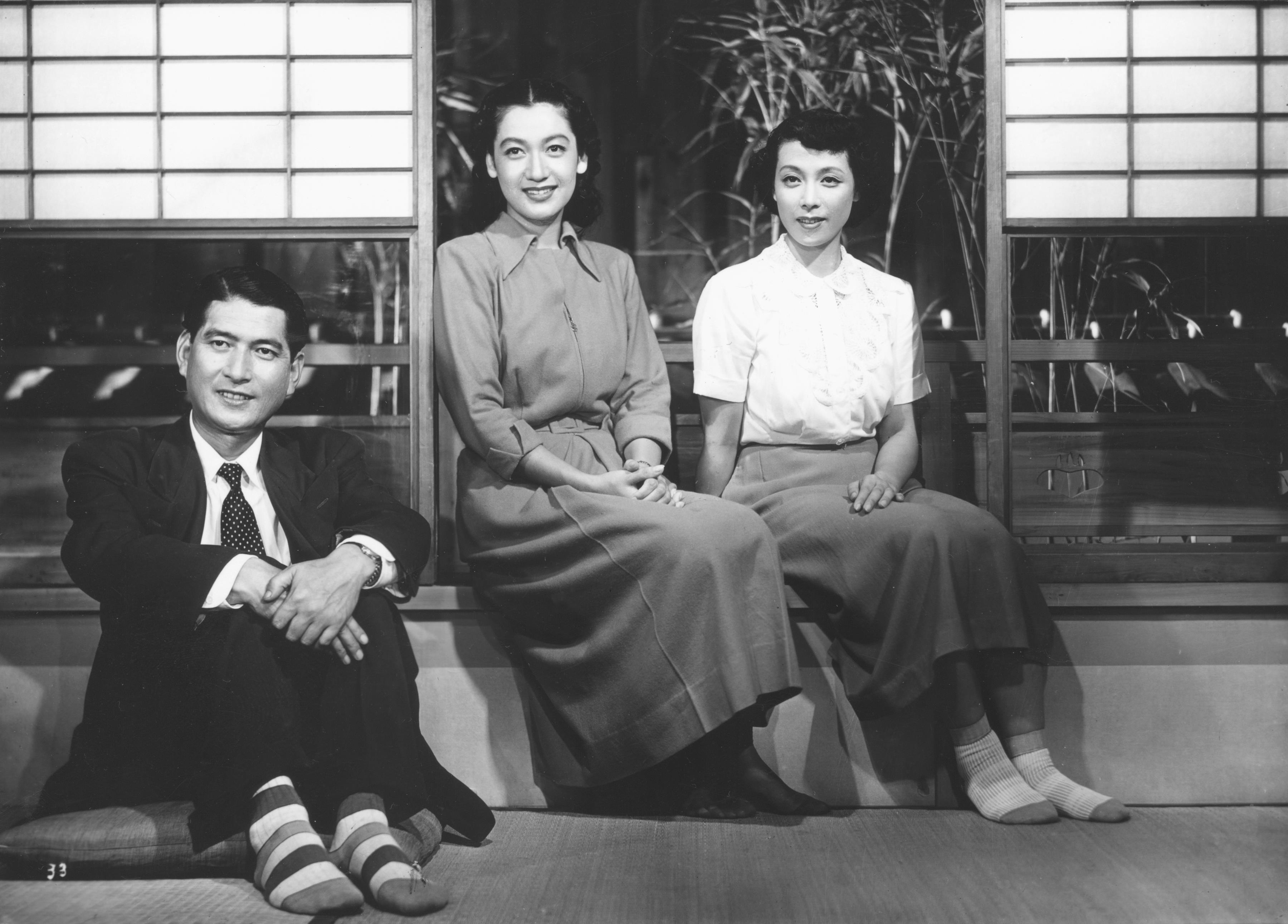
Second in the “Noriko Trilogy”, Early Summer stars Setsuko Hara as a woman who resists arranged marriage but scandalises her family when she accepts a proposal from the mother of the widower living next-door.
MON 18 OCT 18:10 NFT2 / WED 20 OCT 20:40 NFT2 / THU 21 OCT 14:40 STUDIO / MON 8 NOV 14:30 NFT2 / TUE 23 NOV 14:30 NFT3
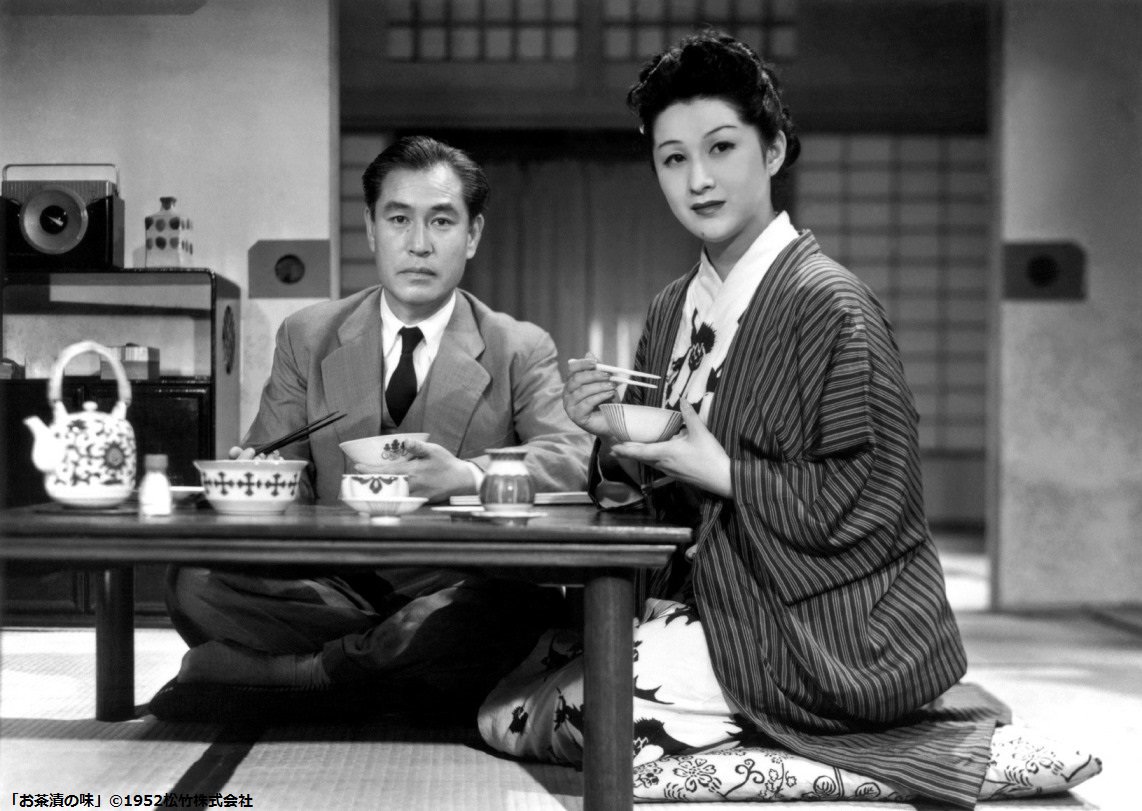
Marital crisis in the younger generation provokes an epiphany in the life of an unhappily married woman in Ozu’s wry exploration of the meaning of wedded bliss. Review.
MON 18 OCT 20:20 NFT3 / THU 21 OCT 14:30 NFT1 / SAT 13 NOV 14:10 NFT1 /TUE 30 NOV 14:00 NFT3
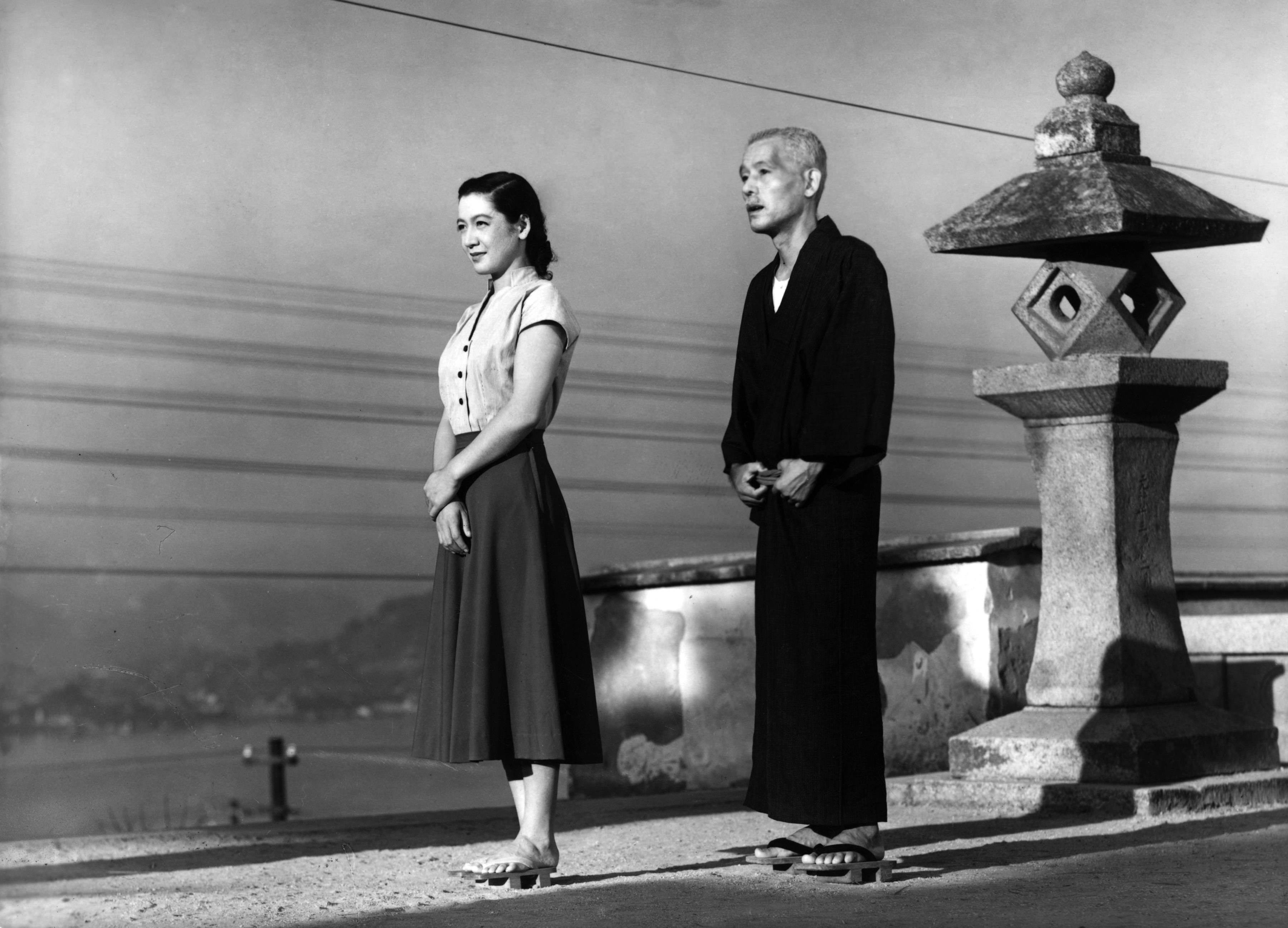
Post-war classic in which an old couple from the country make a rare trip to the city to see their grown up children but are disappointed to discover that they don’t have much time for them.
Landmark directorial debut from actress Kinuyo Tanaka scripted by Keisuke Kinoshita and starring Masayuki Mori as an embittered war veteran making a living writing letters on behalf of illiterate women to the GIs who left them behind while fixating on the supposed betrayal of his first love (Yoshiko Kuga) who married someone else and later became the mistress of an American soldier. Review.
A demoted salaryman begins to find a new sense of solidarity with his fellow humans while staying in a bustling Osaka boarding house in a characteristically bittersweet drama from Heinosuke Gosho. Review.
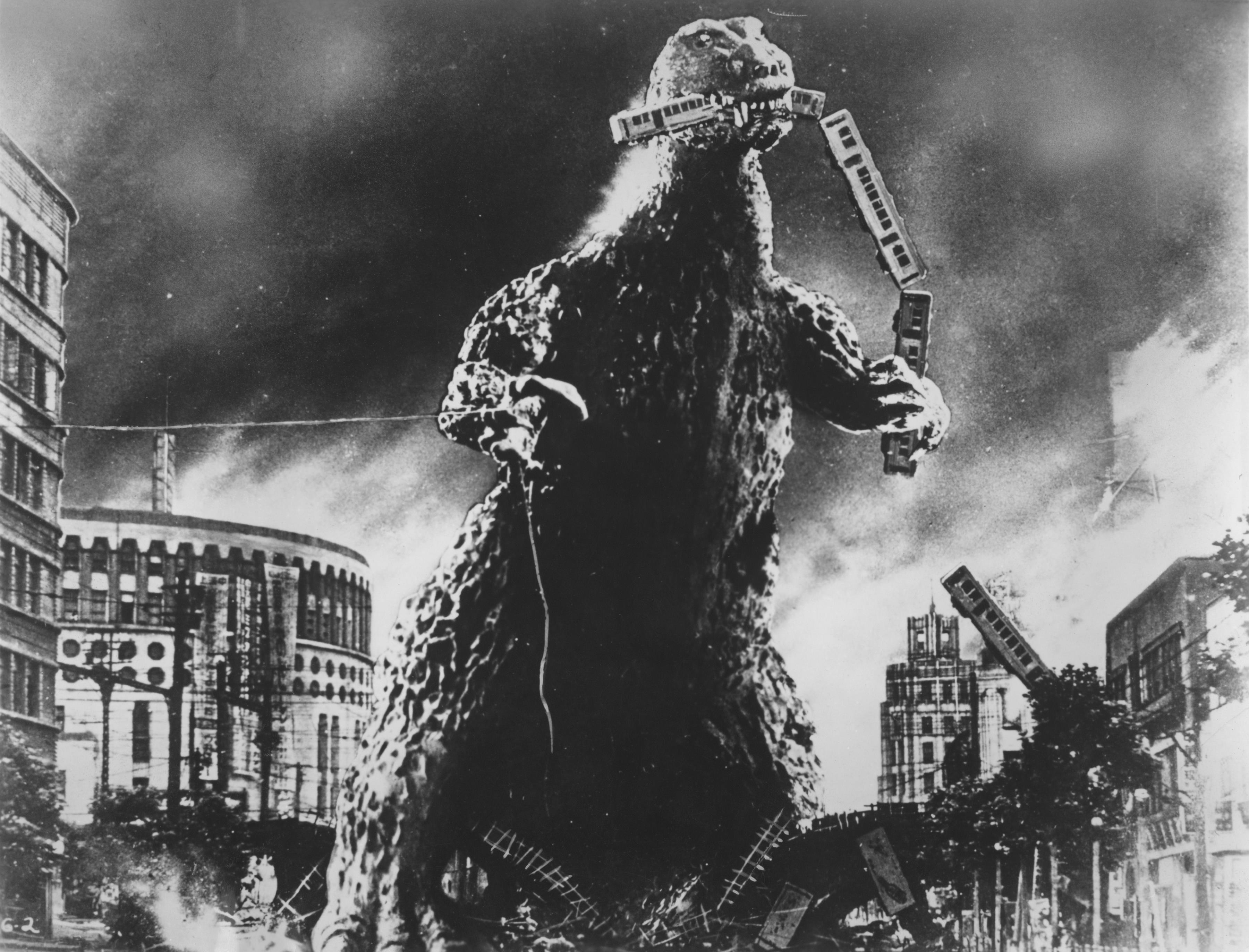
Ishiro Honda’s landmark monster movie needs no introduction, advancing a strong anti-nuclear message as a giant sea lizard is awoken from its slumber by human violence and goes on a grumpy rampage through contemporary Tokyo.
Mizoguchi’s Heian-era tale follows two aristocratic children who are captured by bandits and sold into slavery while trying to unite with their exiled father.
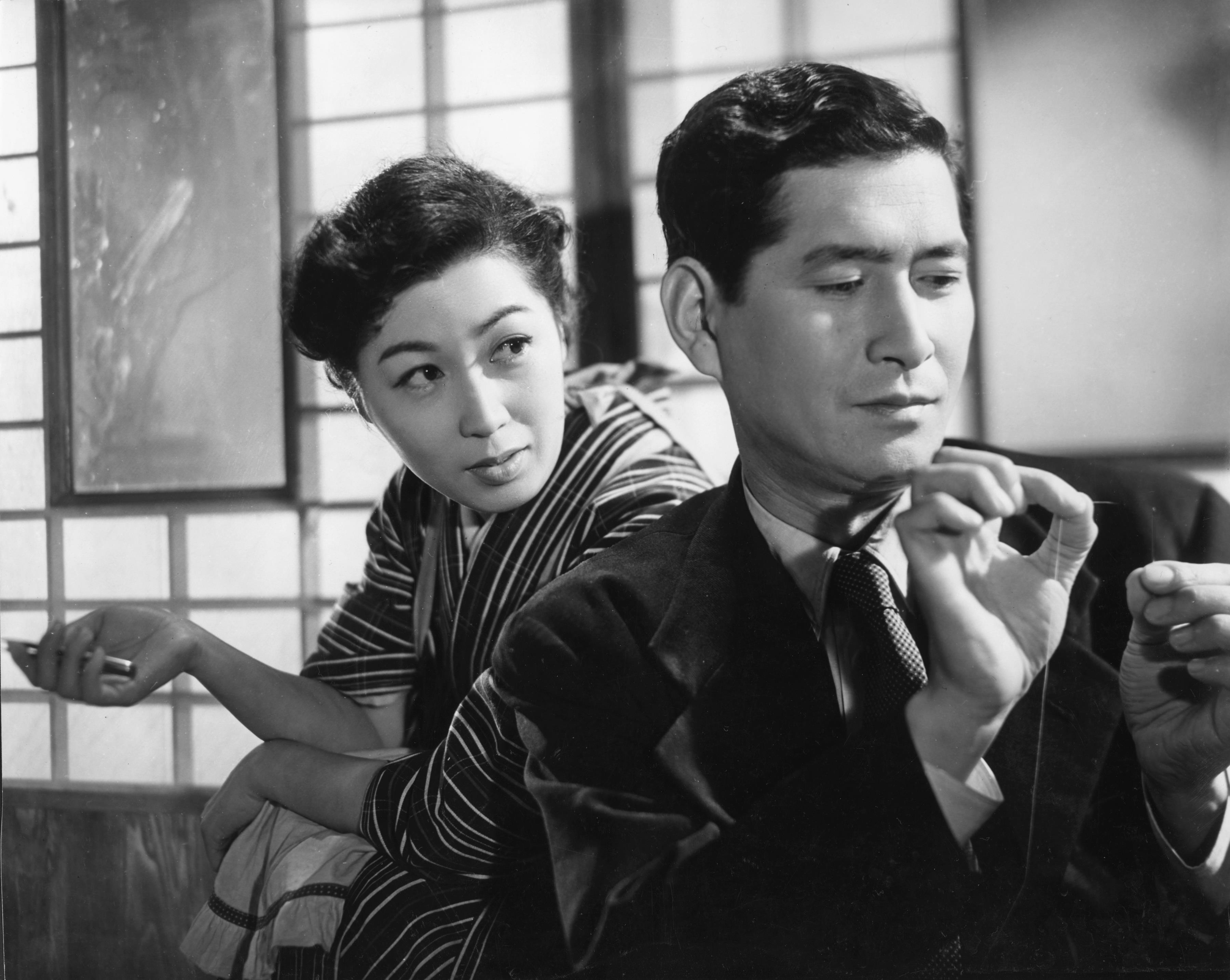
Adaptation of the novel by Sakunosuke Oda in which the married son of a wealthy family (Hisaya Morishige) takes up with a geisha (Chikage Awashima) but struggles to adapt to his life without money or status. Review.
TUE 19 OCT 14:30 NFT2 / WED 20 OCT 20:15 STUDIO / THU 21 OCT 17:40 NFT2 / SAT 20 NOV 15:20 NFT3 / TUE 23 NOV 17:40 NFT2
An example of a darker Ozu, Early Spring finds the relationship between a young couple (Ryo Ikebe & Chikage Awashima) strained by the duplicities of the salaryman dream as the husband is drawn into an affair with a woman at the office (Keiko Kishi).
The life of a loyal retainer (Rentaro Mikuni) is thrown into chaos by rumours that his wife (Ineko Arima) has betrayed him with a travelling musician (Masayuki Mori) in Tadashi Imai’s tense social drama co-scripted by Kaneto Shindo & Shinobu Hashimoto. Review.
Powerful drama decrying samurai hypocrisy starring Tatsuya Nakadai as a ronin who requests permission to commit seppuku in the courtyard of a lord as an act of revenge for the forced suicide of his adopted son.
WED 20 OCT 14:15 NFT1 / THU 11 NOV 20:40 NFT3 / SAT 20 NOV 12:40 NFT3
Kazuo Hasegawa returns to the role of Yukinojo in Kon Ichikawa’s remake of the classic tale as a successful onnagata attempts to take revenge for the deaths of his parents. Review.
FRI 12 NOV 18:20 NFT2 / SUN 14 NOV 18:20 NFT3 / FRI 26 NOV 21:00 NFT1
Melodrama scripted by Zenzo Matsuyama and starring Hideko Takamine as a war widow who patiently rebuilt and maintained her husband’s family grocery shop for 18 years only for her sister-in-laws to force her out in order to turn it into a supermarket, while her much younger brother-in-law suddenly confesses his lifelong love.
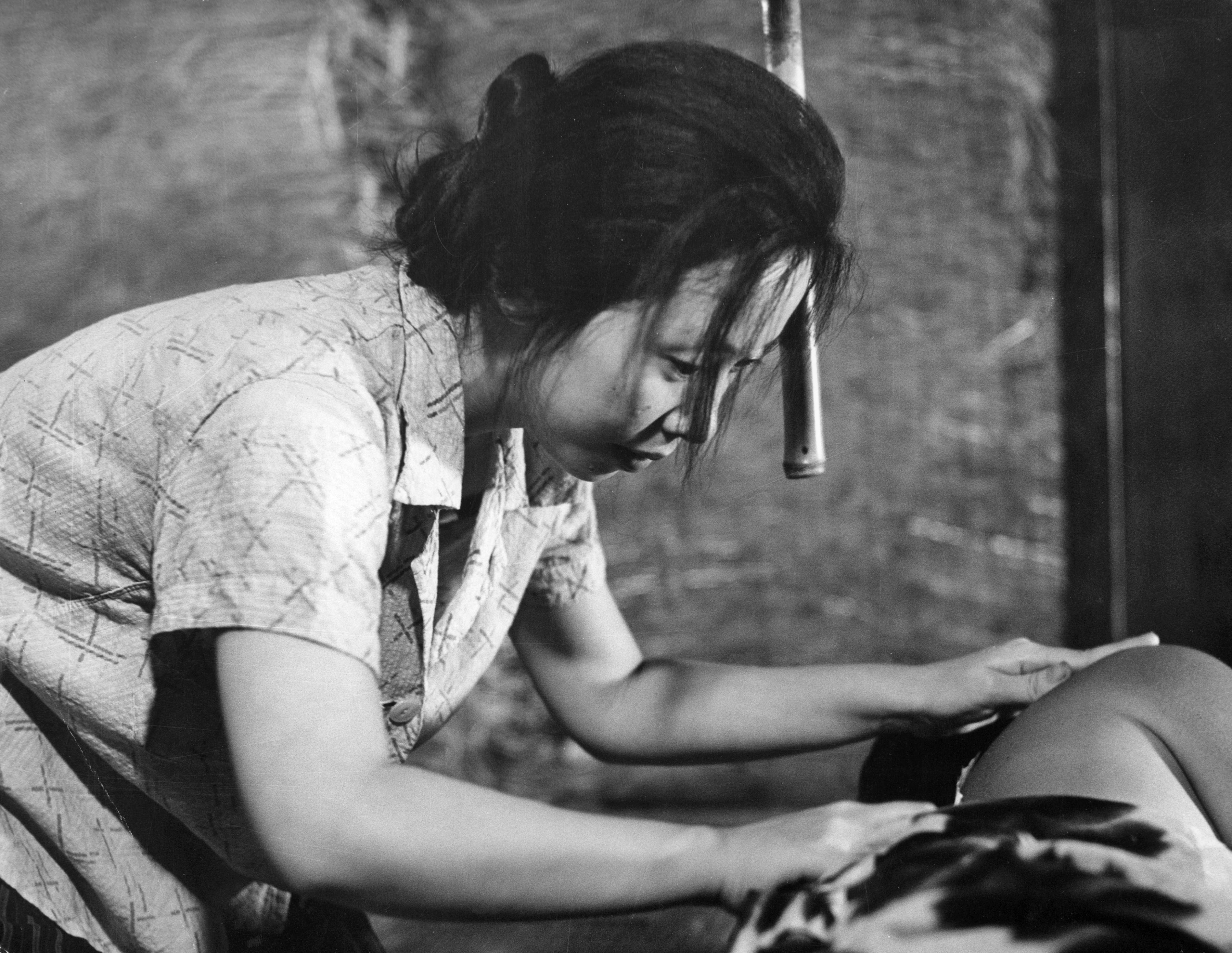
An old woman (Nobuko Otowa) finds herself sinking to depths of inhuman depravity in a desperate need to survive in Kaneto Shindo’s grim fable of feudal Japan. Review.
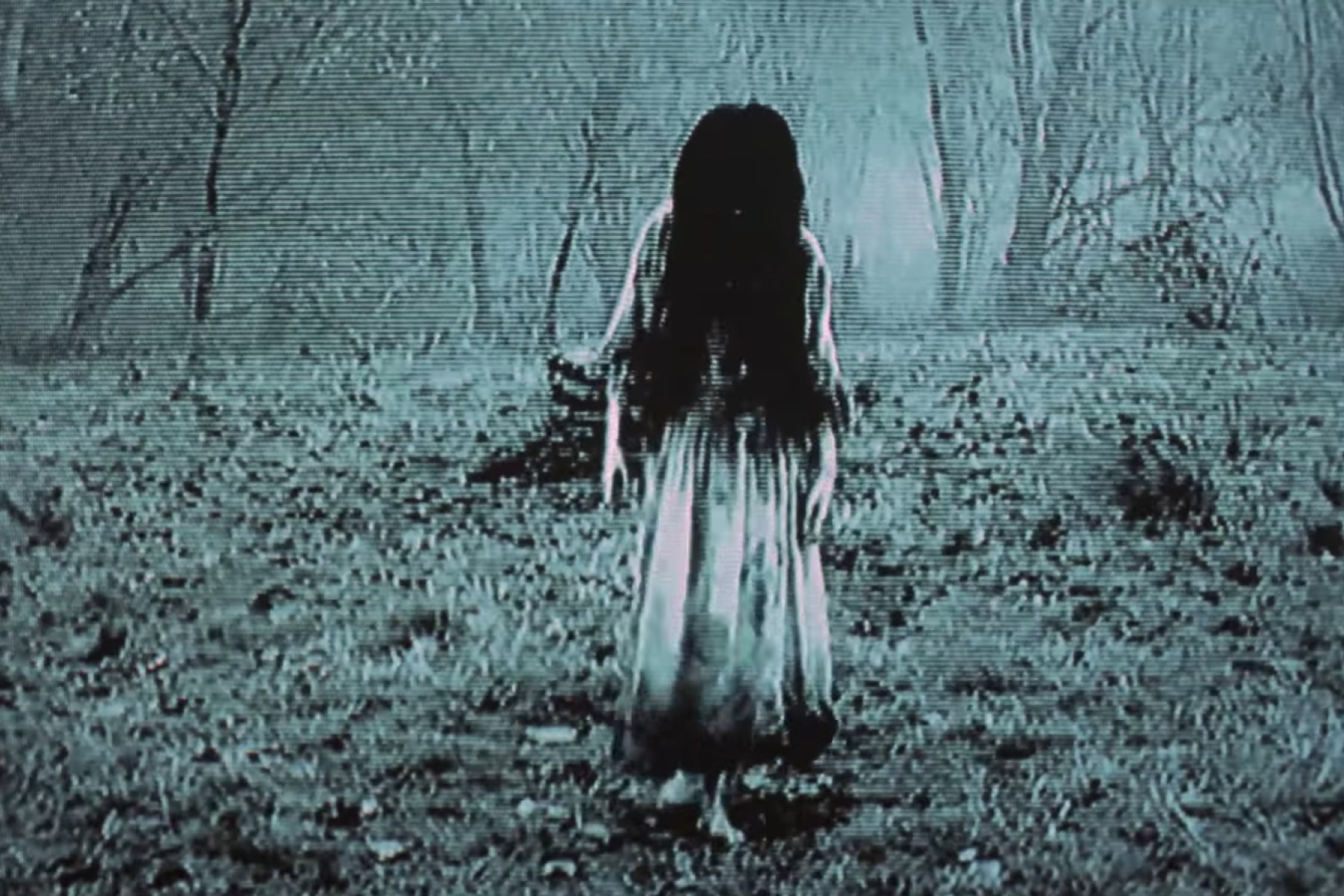
A single-mother (Nanako Matsushima) begins investigating claims that teenagers are dying seven days after watching a creepy VHS tape in Hideo Nakata’s seminal piece of J-horror adapting the novel by Koji Suzuki.
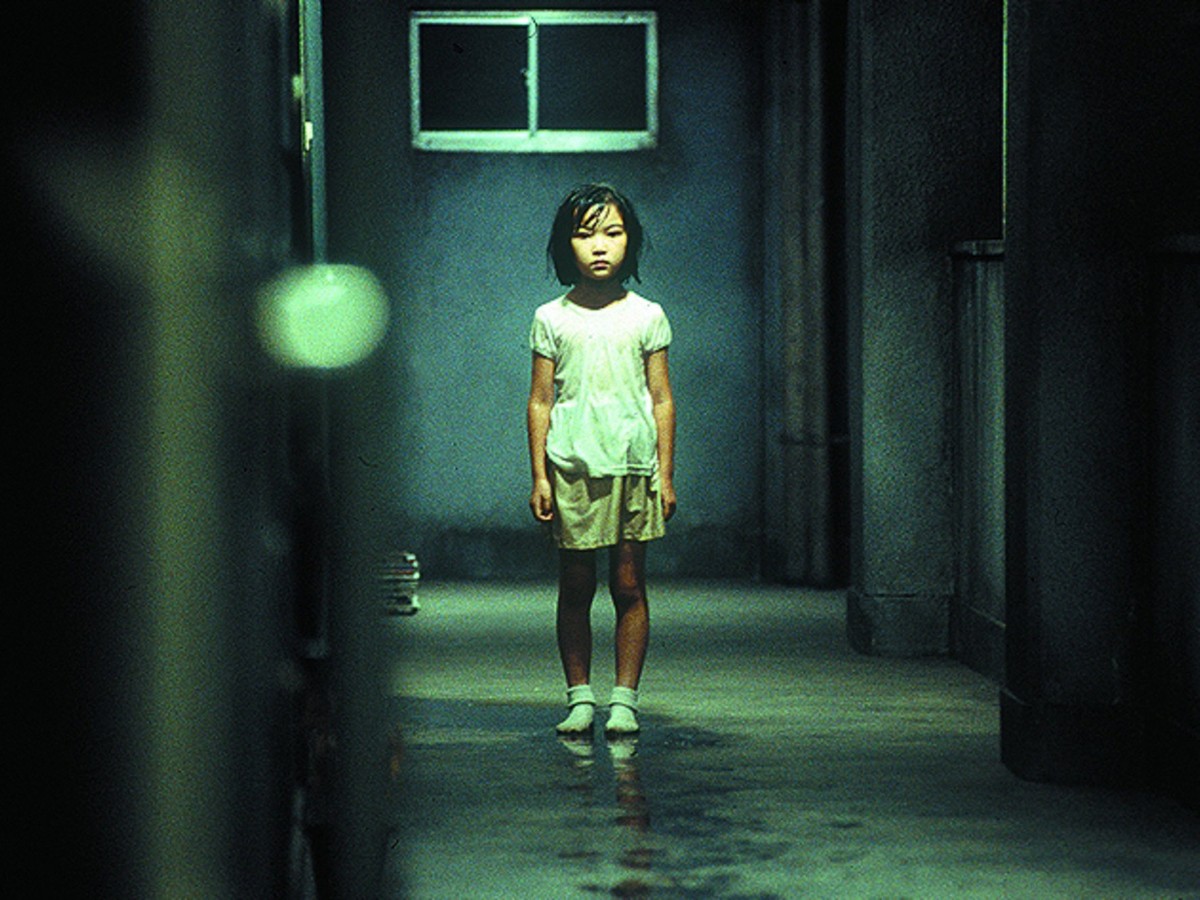
A woman in the midst of a divorce and custody battle is haunted by the spectre of a lonely child in Hideo Nakata’s adaptation of the Koji Suzuki novel. Review.
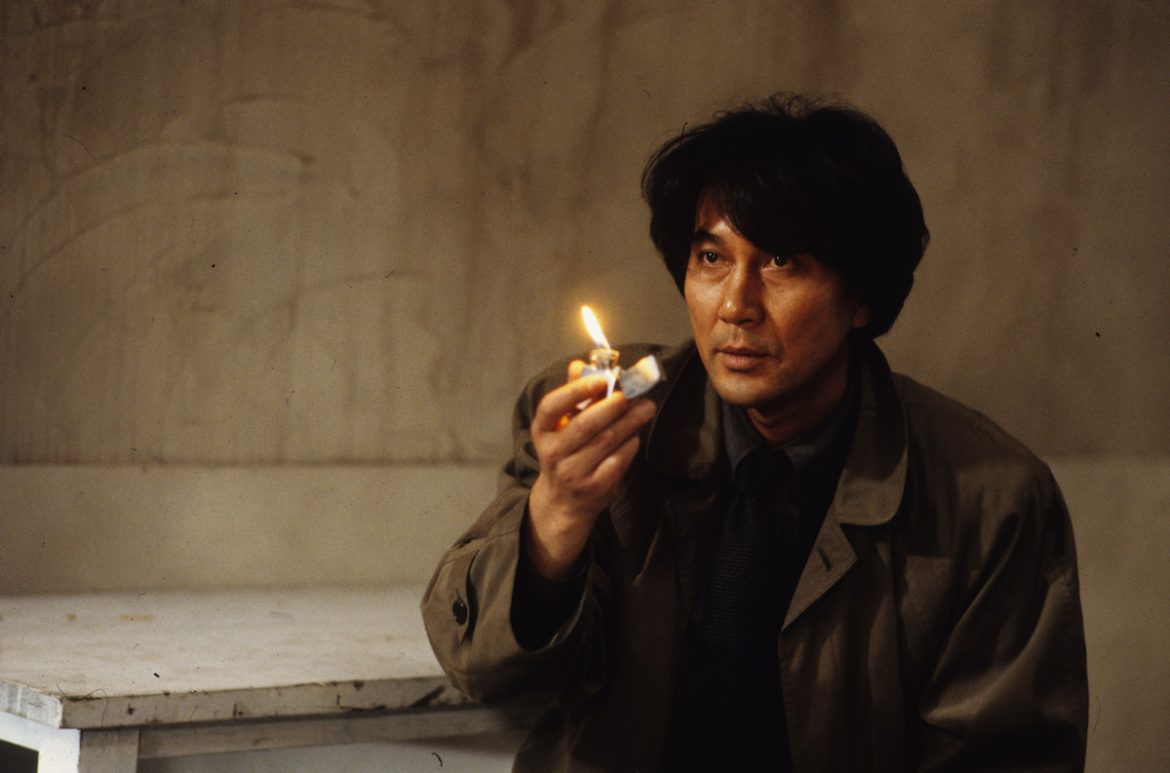
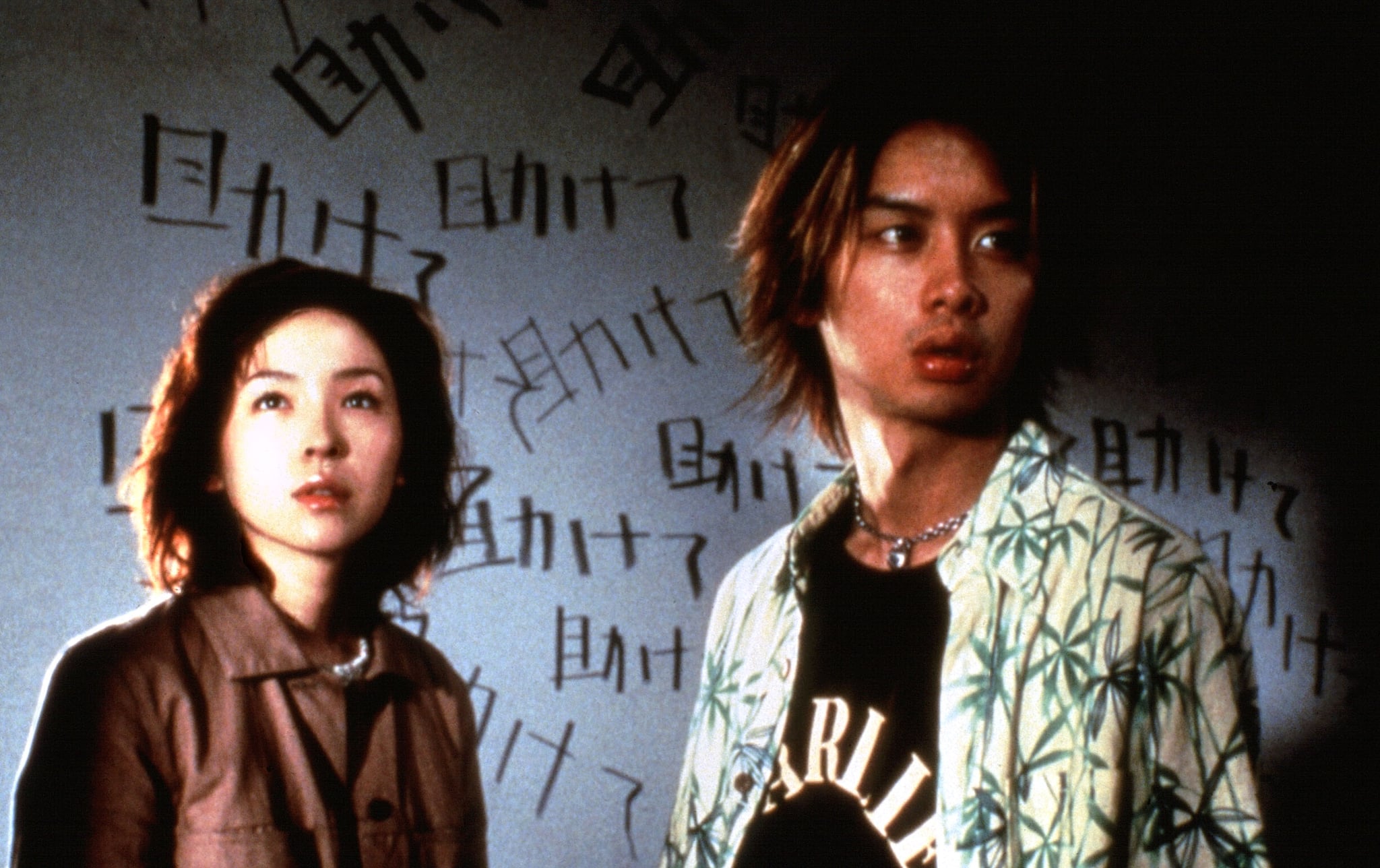
Death is eternal loneliness in Kiyoshi Kurosawa’s tech-fearing horror classic starring Kumiko Aso as a young woman investigating the suicide of a close friend. Review.
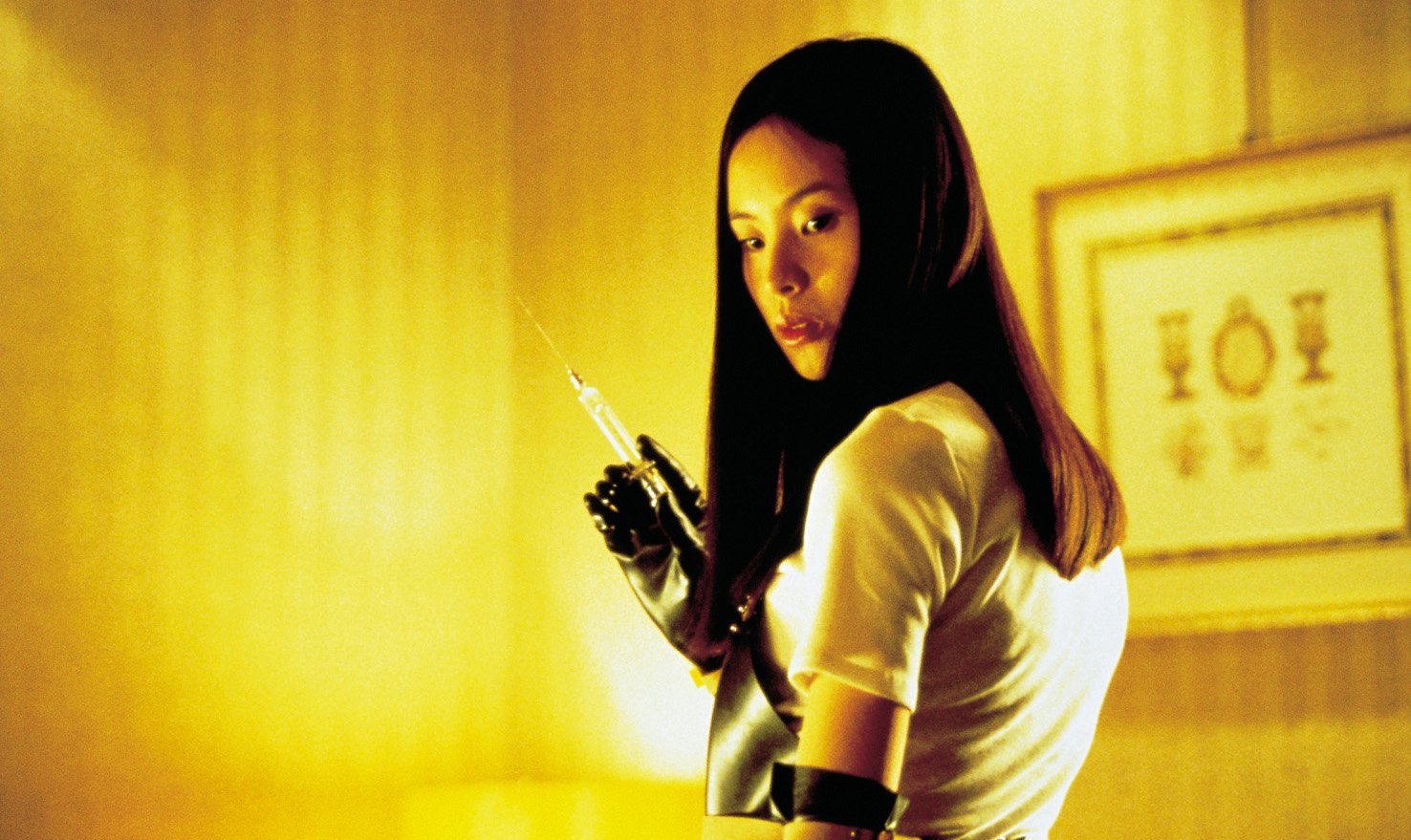
Takashi Miike’s deceptive drama begins as a gentle romcom before edging slowly towards the horrific as a widower (Ryo Ishibashi) takes his his friend’s advice and sets up a fake audition to find the perfect wife but ends up finding something quite different.
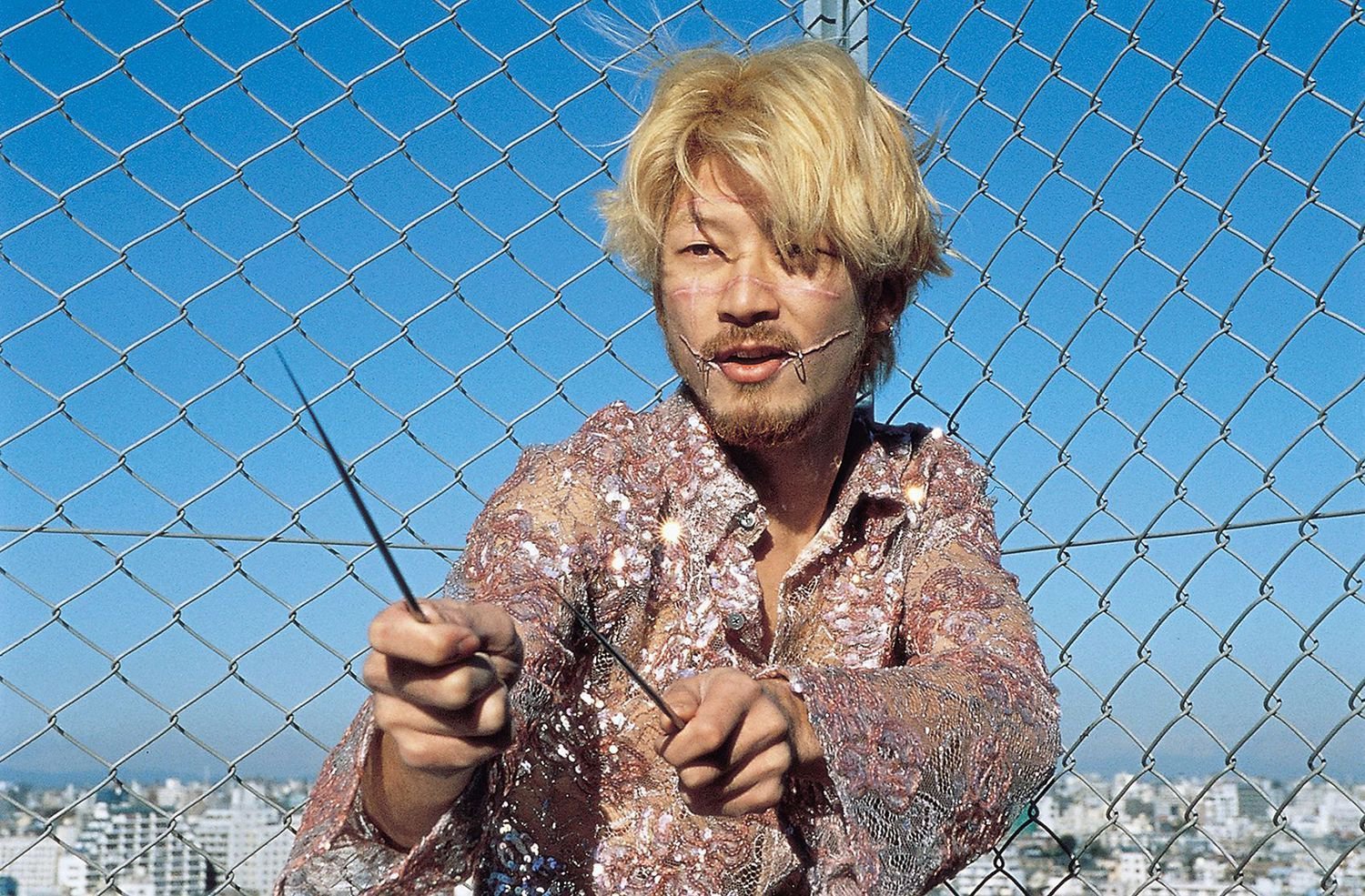
Takashi Miike’s adaptation of the manga by Hideo Yamamoto in which a sadistic yakuza footsoldier (Tadanobu Asano) pursues a repressed psychopathic killer (Nao Omori).
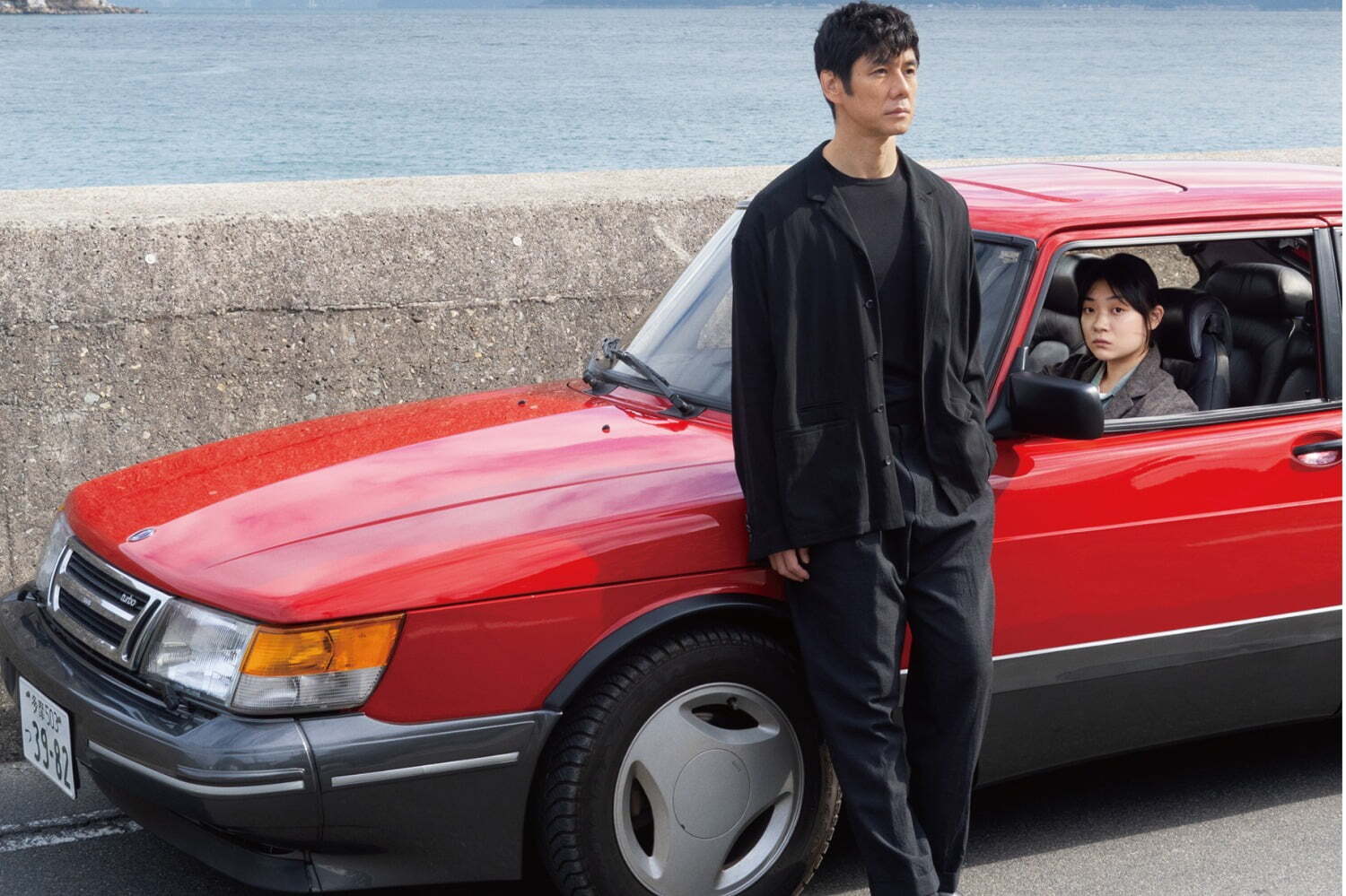
A stage actor and director (Hidetoshi Nishijima) attempting to come to terms with the death of his unfaithful wife casts her lover in his upcoming multi-lingual production of Uncle Vanya while developing a relationship with the reticent young woman driving his car in Hamaguchi’s adaptation of the Haruki Murakami short story.
Screening between 1 and 31 December
(Exact screening dates TBC)
Woman of the Dunes (Hiroshi Teshigahara, 1964)
A bug collector (Eiji Okada) eventually comes to appreciate his new life of simplicity after being trapped in a hole in the sand with a mysterious woman (Kyoko Kishida) in Teshigahara’s adaptation of the Kobo Abe novel.
Visually striking noir from Masahiro Shinoda starring Ryo Ikebe as a recently released yakuza who enters a destructive relationship with a female gambler (Mariko Kaga).
A Fugitive From the Past (Tomu Uchida, 1965)
A fugitive murderer (Rentaro Mikuni) attempts to forge a new identity for himself in the post-war society but discovers the past is not so easily buried in a late career masterpiece from Tomu Uchida. Review.
Tokyo Drifter (Seijun Suzuki, 1966)
Visually striking, surreal yakuza movie from Seijun Suzuki starring Tetsuya Watari as a yakuza targeted by a rival outfit after his own gang is disbanded.
Woman of the Lake (Kiju Yoshida, 1966)
Yoshishige (Kiju) Yoshida’s adaptation of Yasunari Kawabata’s The Lake starring Mariko Okada as an adulterous woman blackmailed by a third party over nude photos taken by her lover.
Silence Has No Wings (Kazuo Kuroki, 1966)
The first feature from continually underrepresented director Kazuo Kuroki, Silence Has No Wings follows a caterpillar from Nagasaki to Hokkaido.
Death By Hanging (Nagisa Oshima, 1968)
Brechtian drama from Nagisa Oshima in which a Korean student is hanged but survives having lost his memory. Unsure of the ethics of re-executing a man who cannot acknowledge his crimes because he does not remember them, the prison staff proceed to act them out.
Funeral Parade of Roses (Toshio Matsumoto, 1969)
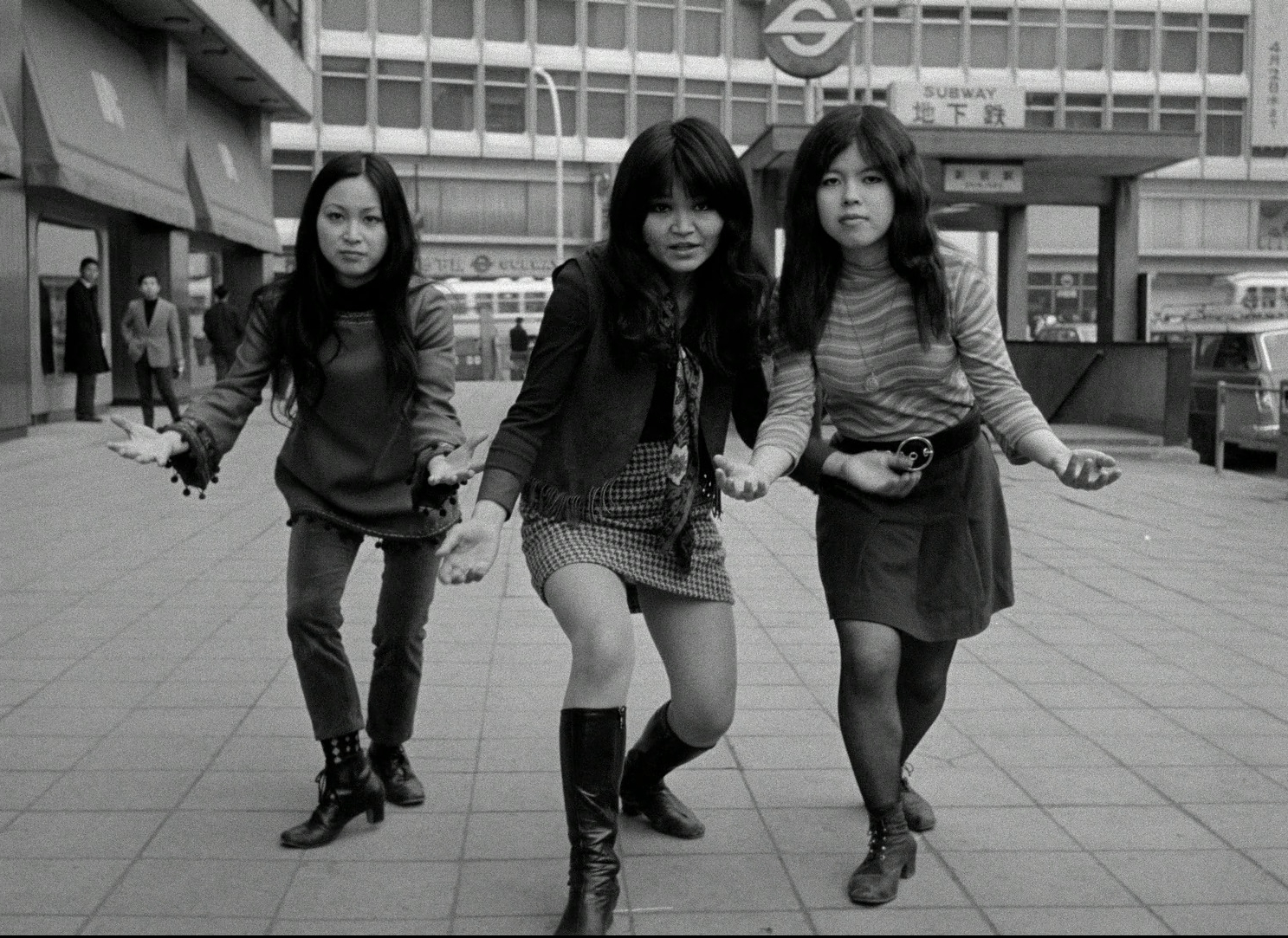
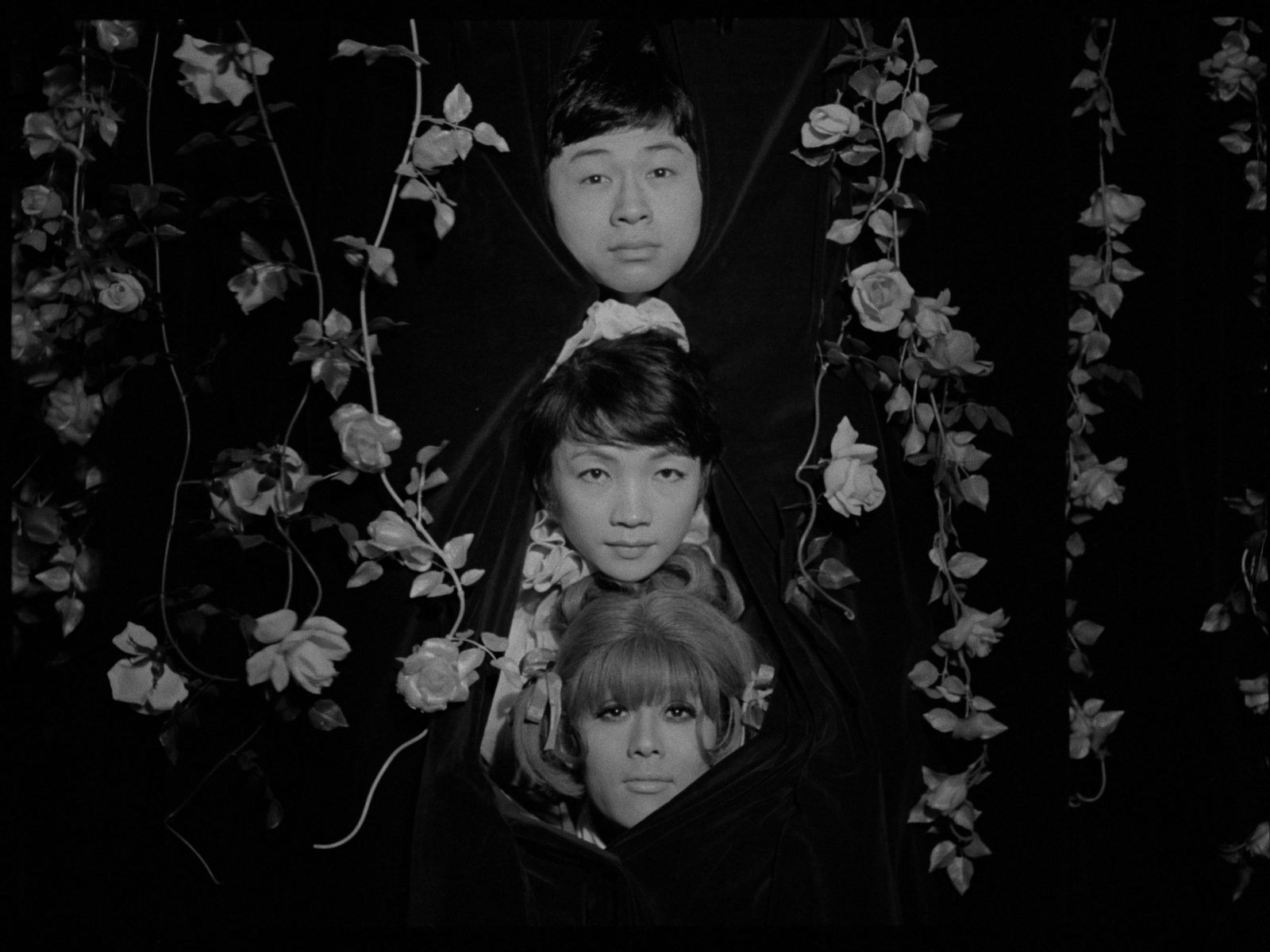
Toshio Matsumoto repurposes Oedipus Rex to explore the impossibilities of true authenticity in an anarchic voyage through late ’60s counterculture Shinjuku. Review.
Shinobugawa (Kei Kumai, 1972)
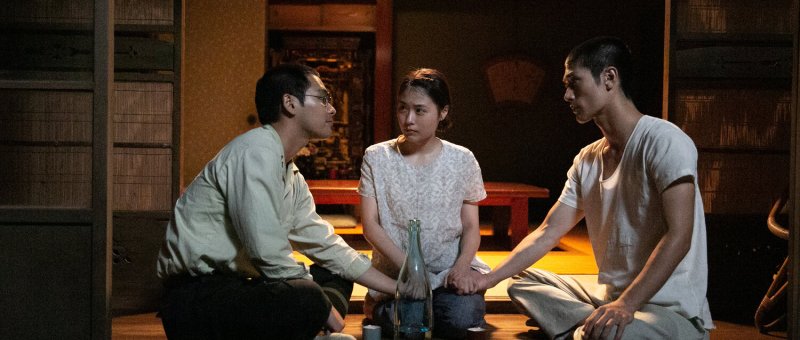
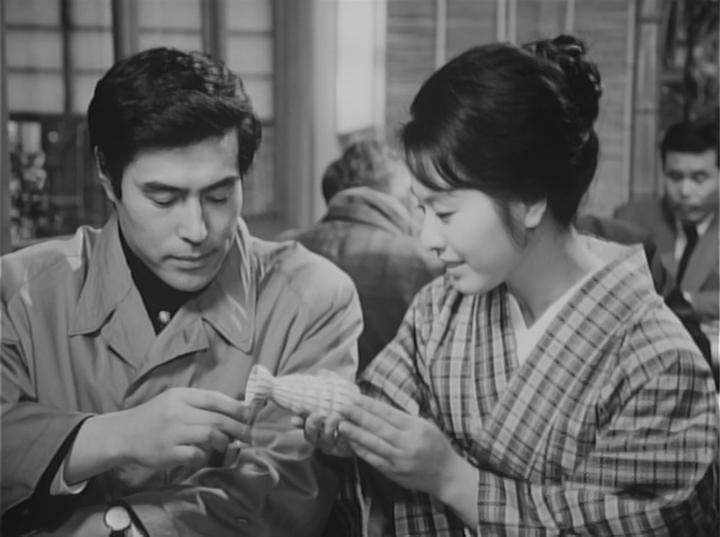
Two dejected youngsters (Go Kato & Komaki Kurihara) find new strength to embrace post-war freedom in the power of loving and being loved in Kei Kumai’s delicate romance. Review.
In The Realm of the Senses (Nagisa Oshima, 1976)
Inspired by the notorious story of Sada Abe, Oshima’s controversial drama sees two lovers retreat from an increasingly authoritarian society into a private world of self-destructive eroticism.
The Demon (Yoshitaro Nomura, 1978)
A single-mother (Mayumi Ogawa) leaves her three children with their married father (Ken Ogata) when he stops supporting them financially but his wife (Shima Iwashita) is far from happy about the situation in Yoshitaro Nomura’s shocking psychological drama adapted from the novel by Seicho Matsumoto.
The Man Who Stole the Sun (Kazuhiko Hasegawa, 1979)
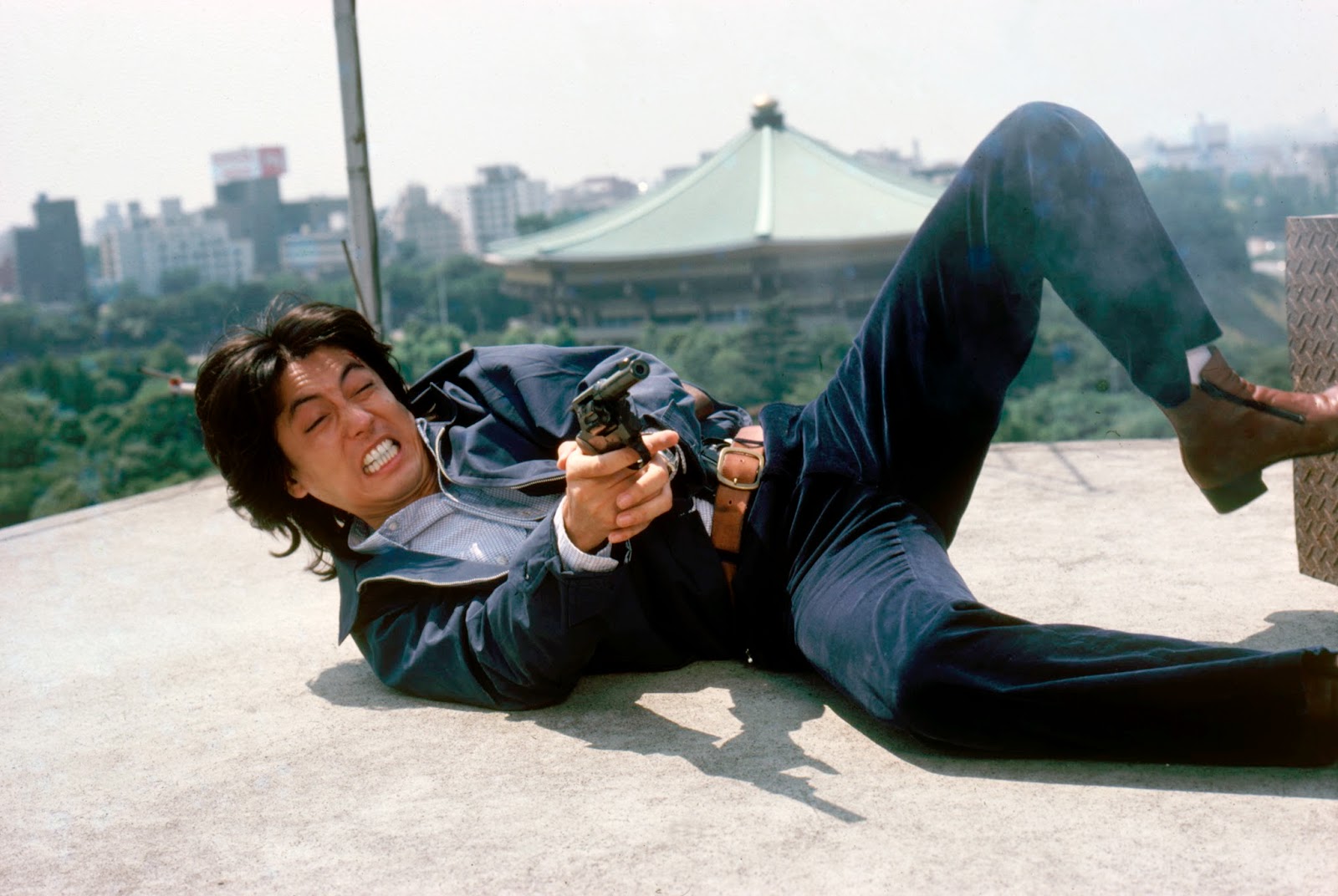
’70s pop icon Kenji Sawada stars as a nerdy high school science teacher belittled by his students and the wider society around him but plotting revenge by building a mini atom bomb in his apartment. Review.
Muddy River (Kohei Oguri, 1981)
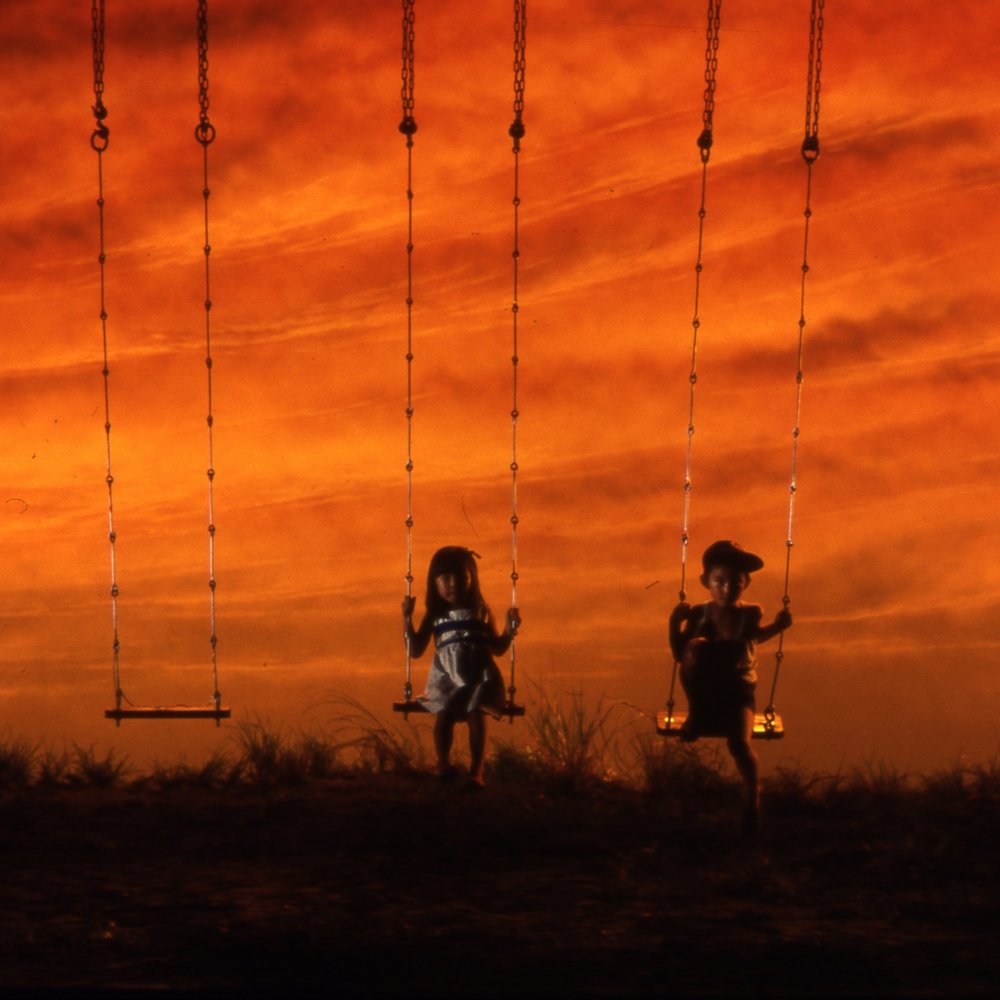
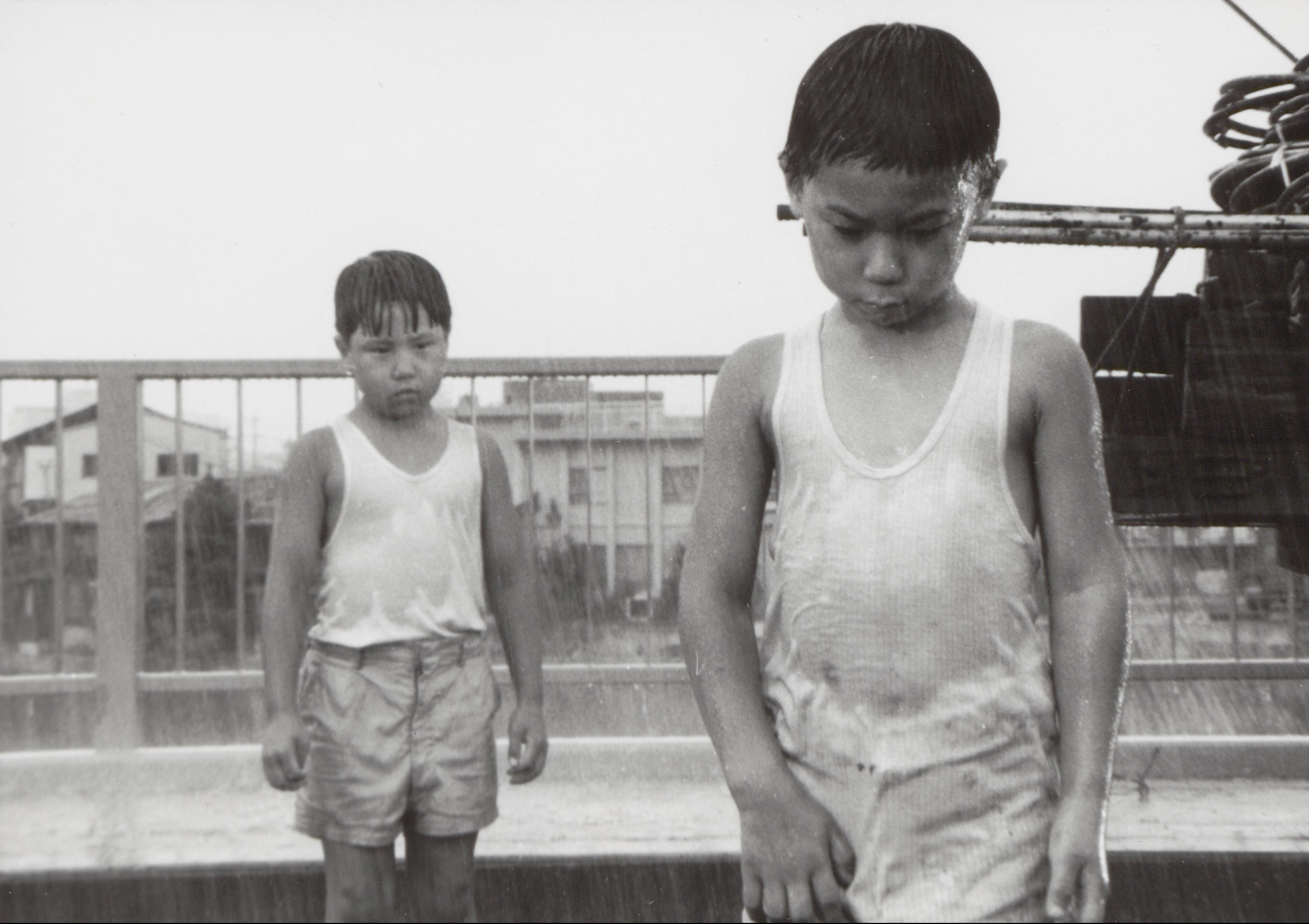
Two children living by the river in post-war Osaka become friends but their innocent connection is disrupted by the muddiness of life in Kohei Oguri’s moving drama.
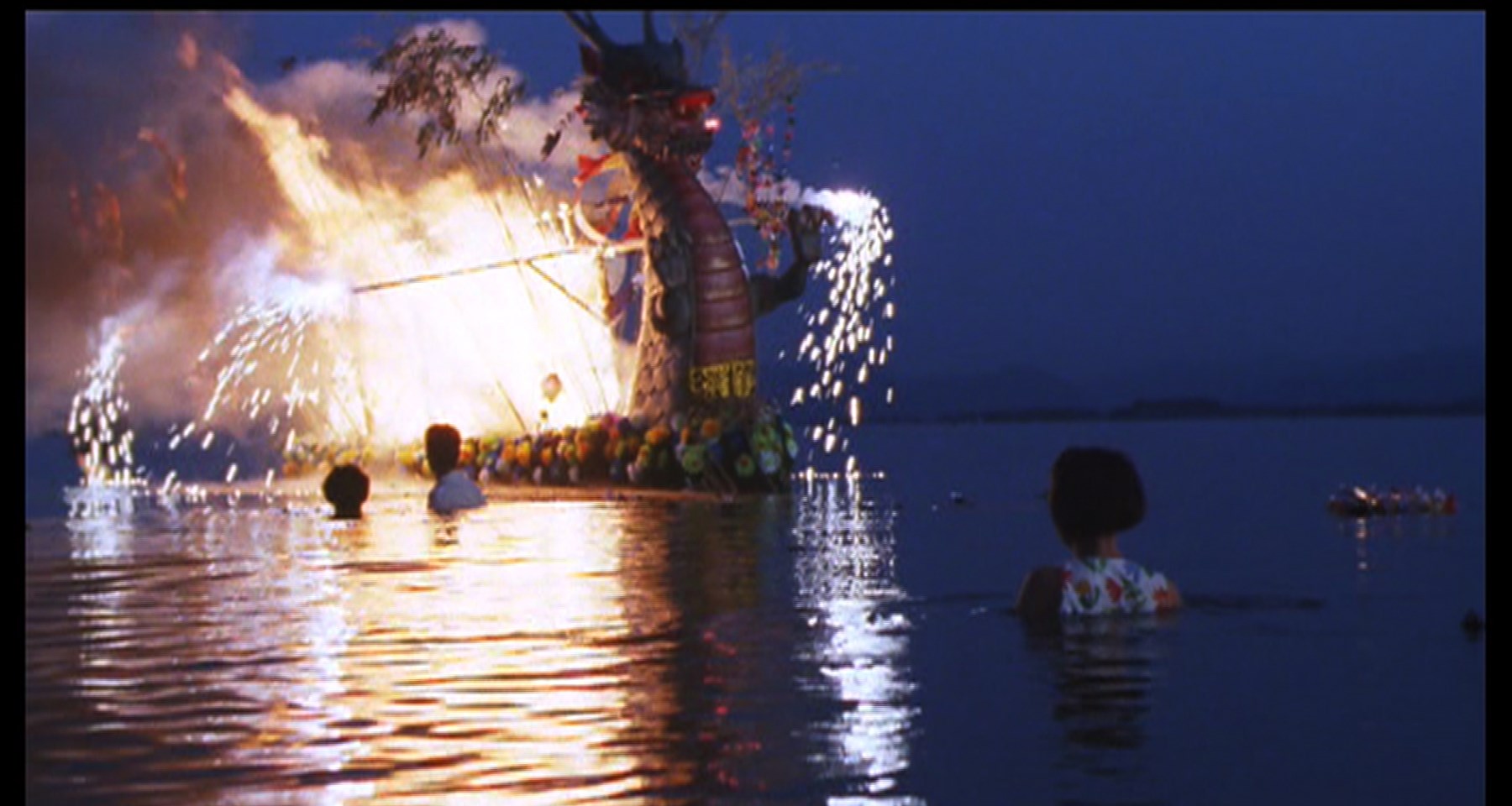
Fire Festival (Mitsuo Yanagimachi, 1985)
A stubborn lumberjack’s refusal to sell his land to developers set on building a marine park sets him at odds with his community culminating in a fiery act of violence in Mitsuo Yanagimachi’s ’80s indie drama.
Tampopo (Juzo Itami, 1985)
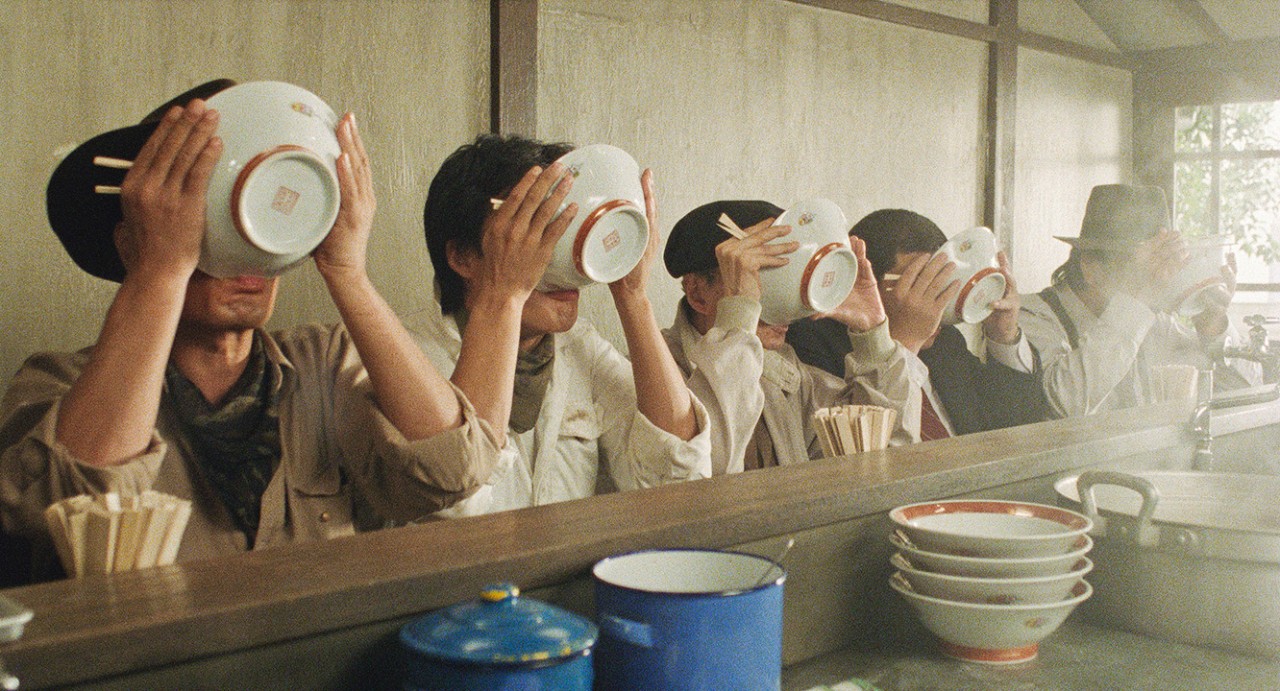
Juzo Itami’s comedy classic starring his wife Nobuko Miyamoto as the titular Tampopo, a recent widow struggling to run a small ramen bar eventually rescued by Tsutomu Yamazaki’s wandering truck driver ramen master. Review.
The Emperor’s Naked Army Marches On (Kazuo Hara, 1987)
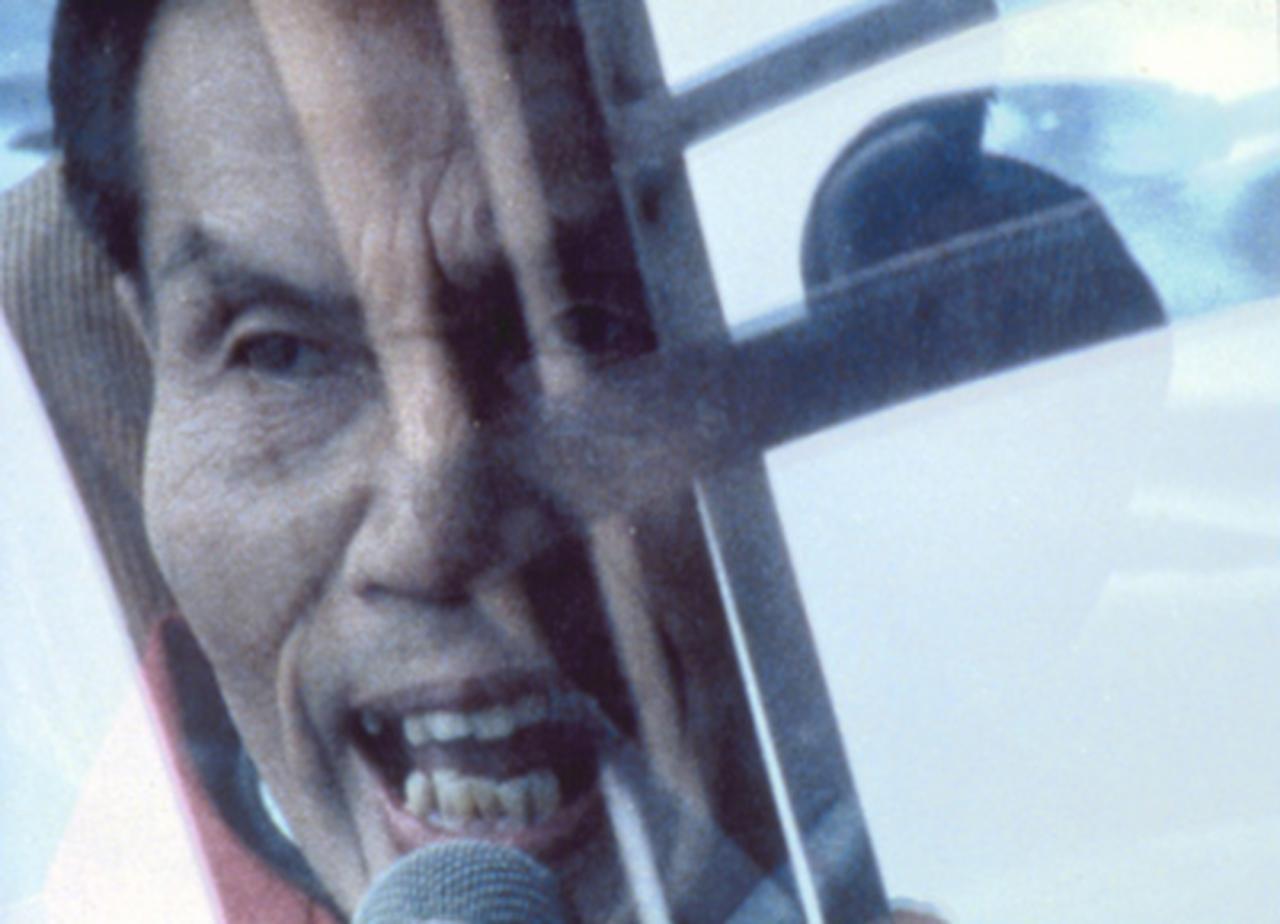
Kazuo Hara’s landmark documentary following confrontational Pacific War veteran Kenzo Okuzaki. Review.
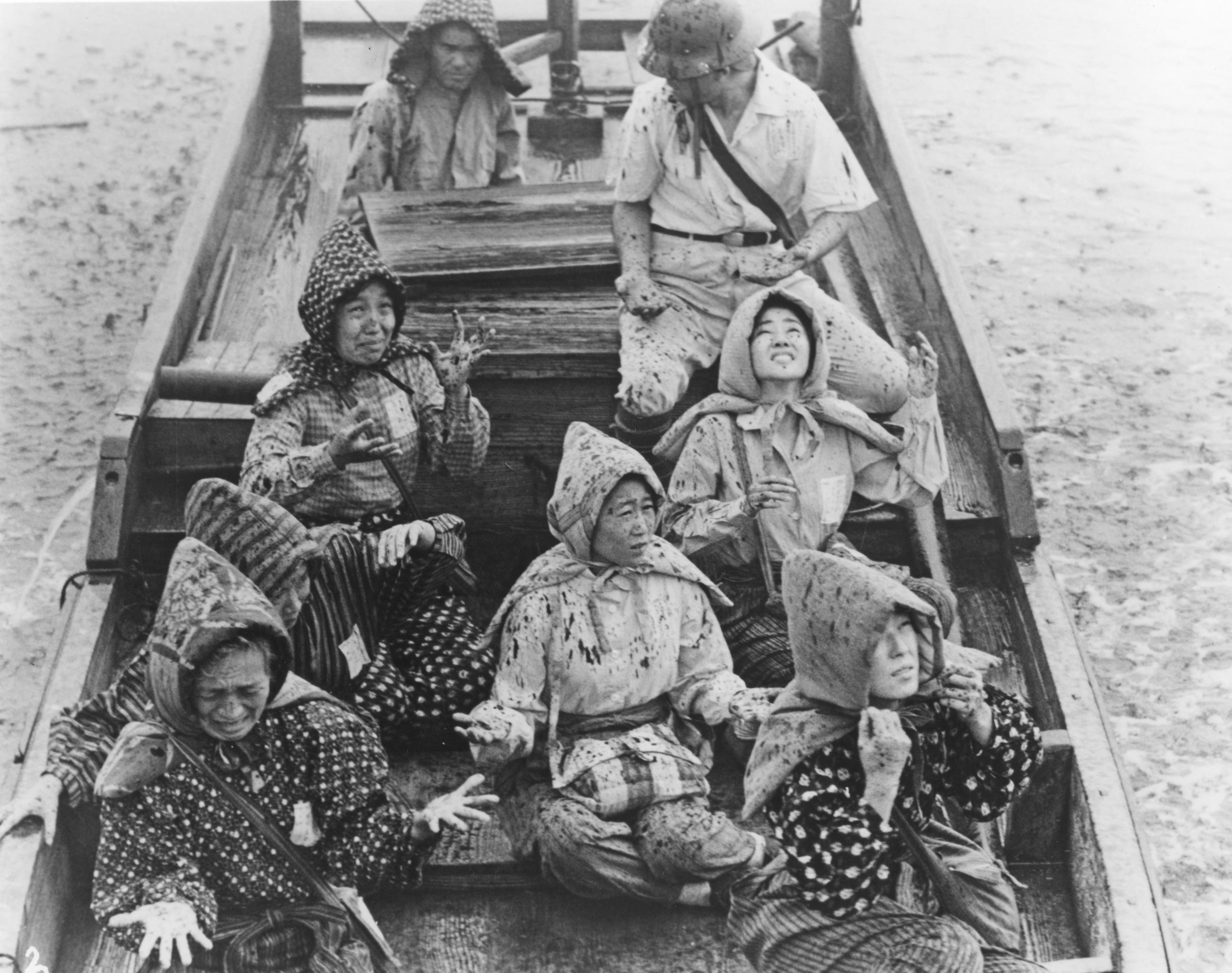
Drama centring on the survivors of the atomic bomb dropped on Hiroshima. A young woman living with her uncle and aunt finds her marriage prospects all but ruined because of her presence in the city when the bomb was dropped but later bonds with a young man suffering from wartime PTSD.
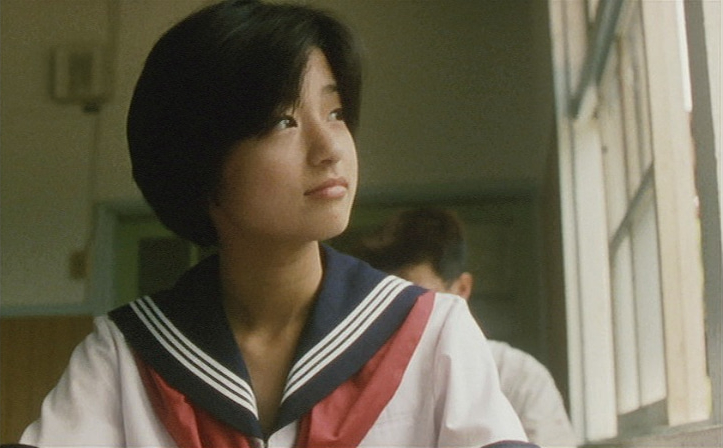
Moving (Shinji Somai, 1993)
Shinji Somai’s moving youth drama in which a young girl (Tomoko Tabata) struggles to come to terms with her parents’ impending divorce.
Love Letter (Shunji Iwai, 1995)
Much loved ’90s romantic melodrama from Shunji Iwai starring pop star Miho Nakayama in dual roles as a young woman struggling to move on after the sudden death of her fiancée, and an old classmate of his who happened to share the same name.
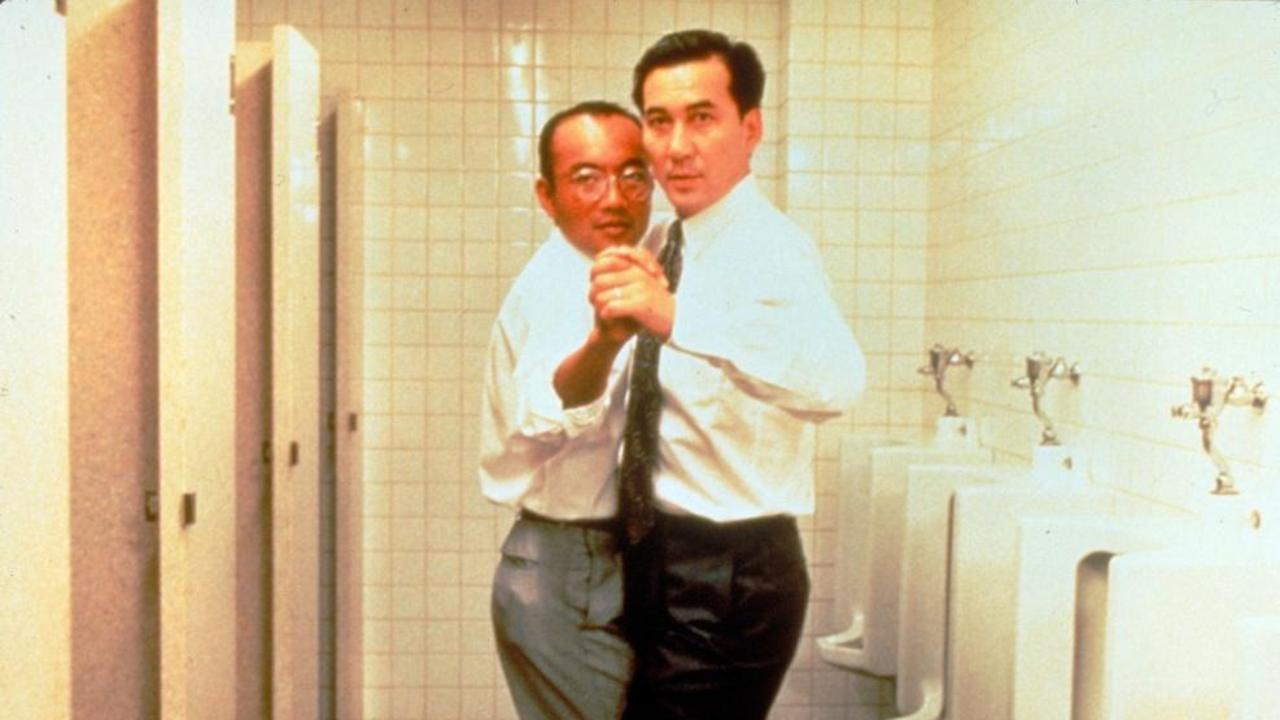
Shall We Dance (Masayuki Suo, 1996)
An unexpected ’90s international hit later remade in Hollywood, Shall We Dance? stars Koji Yakusho as a dejected middle-aged man having achieved the salaryman dream but found it unfulfilling discovering a new lease on life after taking up ballroom dancing.
Suzaku (Naomi Kawase, 1997)
Naomi Kawase’s fictional feature debut follows the disintegration of a small family after a railway threatens their rural way of life.
After Life (Hirokazu Kore-eda, 1998)
Hirokazu Kore-eda ponders the meaning of life as the recently deceased are invited to re-create their favourite memory as film before moving on. Review.
Wheel of Fortune and Fantasy (Ryusuke Hamaguchi, 2021)
A triptych of romantic tales from Ryusuke Hamaguchi in which a young woman realises her friend is unwittingly dating her ex, a student attempts to seduce a professor, and two women connect through an instance of mistaken identity.
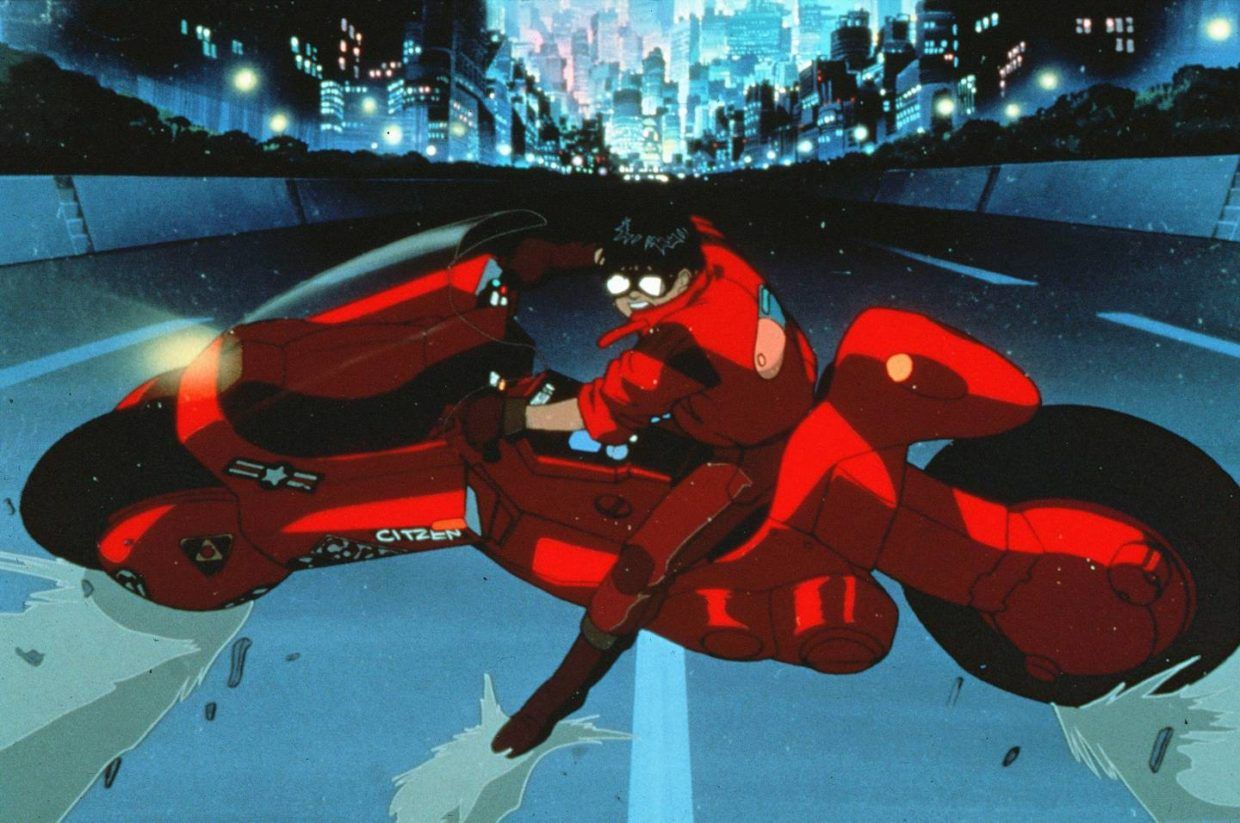
SCREENING AT BFI IMAX: Akira (Katsuhiro Otomo, 1988)
Katsuhiro Otomo’s seminal anime adaptation of his own manga is set in a dystopian Tokyo of 2019 in which a delinquent biker ends up with superpowers after crashing into a recently released test subject from a government lab.
Battle Royale (Kinji Fukusaku, 2000)
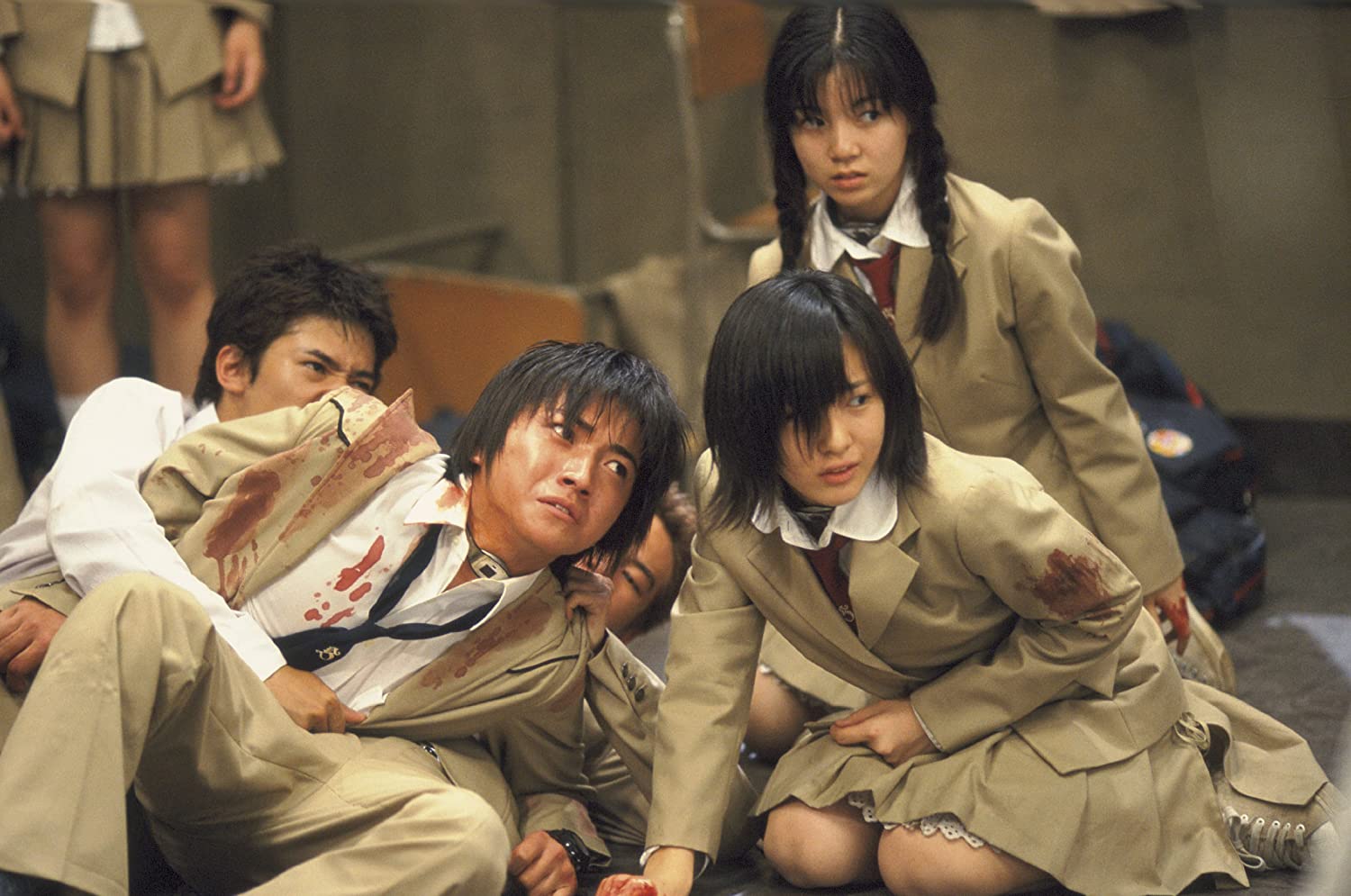
A group of teens is sent to an island where they are told to kill each other off until there is only one survivor in this zeitgeisty adaptation of the cult novel by Koushun Takami which would become the final film directed by Battles Without Honour and Humanity’s Kinji Fukasaku.
THU 11 NOV 18:10 NFT3: Female Archetypes in Classical Japanese Cinema – Panel discussion featuring academics Alejandra Armendáriz-Hernández, Jennifer Coates and Kate Taylor-Jones discussing the presentation and creation of on-screen female archetypes.
BFI Japan runs October to December 2021 at BFI Southbank and selected partners across the country. For the full details on this and other BFI seasons be sure to check out the BFI’s website where you can also find a link to BFI Player. You can also keep up with all the latest news by following the BFI on Twitter, Facebook, Instagram, and YouTube.
“Tokyo is where everyone comes to make their dreams come true, right?” a naive young woman exclaims having just abandoned her life in the country to chase freedom and independence in the capital. “You’re wrong” her reluctant, infinitely jaded host tries to correct her, “Tokyo is where everyone gets killed by their dreams”. Tokyo is indeed the place dreams come to die in the debut feature from music video director Takeshi Maruyama, Spaghetti Code Love (スパゲティコード・ラブ). As one dejected Tokyoite puts it in her slightly pretentious opening monologue, what they’re chasing isn’t love, or money, or success but “approval” wanting desperately to find acceptance but more often than not encountering only defeat and despair.
At least, that’s according to intense artist Kurosu (Rikako Yagi) who has become moderately successful but remains somewhat insecure knowing that her success is partially built on that of her famous parents. She insists that there are two kinds of people in the world, those who meekly put up with a disappointing reality and those who defiantly “create their own world”. She of course claims to be the latter, a highly individualist artist who takes no shit from anyone but that doesn’t excuse her tendency to behave like a total diva in an effort to assert he superiority over others, humiliating aspiring photographer Tsubasa (Nino Furuhata) by likening his set up to an ad placed by a rural supermarket.
Tsubasa meanwhile is himself conflicted having come to Tokyo to further his career as a photographer but desperate for work and afraid of selling out. He came because he thought it was better to regret the things you’ve done rather than those you haven’t and that he’d always wonder if he stayed at home, but now he’s wondering if it’s better not to try, that the possibility of what might have been is easier to bear than knowing you tried and didn’t work out. Painting a slightly rosier version of his Tokyo life on social media he offers a Twitter friend the opportunity to visit him in the capital out of politeness only for her turn up, insist on staying with him in his tiny apartment, and make him feel even worse with her childish idealism which has a kind of poignancy in its unrealistic hopefulness.
Like Tsubasa, aspiring singer-songwriter Cocoro (Toko Miura) is beginning to wonder if her dreams are worth pursuing as she meditates on the success of prettier rivals in both her work and romantic lives, spotting ex Shingo (Hiroya Shimizu) with his new squeeze and irritated when he smirks at her from across the courtyard. A cold and aloof young man fond of giving overly scientific explanations for philosophical questions, Shingo has decided that unhappiness is the result of broken attachment and so he’s decided to have no attachments at all even going so far as to have no fixed address living by apartment hopping every 10 days. As he discovers to his cost, living life with no connections may be fine on the day to day but you’ll be in a fix if you wind up in trouble and have no one to ask for help. His new girlfriend Natsu (Saya Kagawa), by contrast, has the opposite problem working as a sex worker in part as a means of protecting herself from romantic heartbreak by avoiding emotional intimacy. While Cocoro wonders what her life would be if she were as pretty as Natsu, Natsu meditates on the pretty girl paradox admitting that some things come easy but others slip through her fingers. She claims to love lonely people because lonely people don’t up and leave without warning.
But loneliness manifests in many forms such as that exhibited by Shizuku (Kaho Tsuchimura), a part-time waitress with extreme low self-esteem who’s staked her existence being on the perfect partner for her boyfriend while terrified he’ll leave her an anxiety later borne out by the fact he’s married to someone else and apparently only using her as a “fun” break from his presumably less patriarchal domestic life. And then there’s Uber Eats driver Amane (Kura Yuki) and his unwise attachment to a low level idol star who’s since retired. Obsessing over her rather banal favourite aphorism about whether a falling tree in the forest makes a sound if no one’s around to hear it he vows to forget her once he’s made 1000 deliveries but realises that a romantic attachment is hard to break even if it’s entirely one sided.
On the flip side, broken hearts eventually bring two next-door neighbours together as they mutually abandon their unhealthy coping mechanisms of online psychics and compulsive peanut butter eating while bonding in a shared sense of romantic disappointment realising the terrible men who dumped them aren’t worth all this aggro. A pair of emo high school students suddenly realise growing old isn’t so bad after all, and a kid struggling with his life plan survey suddenly realises that “no plan” is also a plan before careering off on a borrowed skateboard. Tokyo can be cruel and unforgiving, but so can everywhere else. Shot with true visual flair, Maruyama’s ethereal, floating camera follows this interconnected yet isolated band of young people all over the city as they search for love, chase their dreams, and yearn for connection allowing them each at least if not fulfilment then possibility as they learn to accentuate the positive in a sometimes hostile environment.
The OL, or “office lady” occupies a peculiar place in Japanese pop culture if not the society itself. The evolution of the typing pool, the OL exists to one side of office life, treated as domestic staff in the corporate environment and in many ways expected to be invisible. As such, an OL performs stereotypically feminine tasks in the office such as keeping the place clean and their male bosses looked after in addition to handling often dull and pointless admin work. It goes without saying that in general being an OL is a young woman’s job with the expectation that most will either find a way to transition onto a more viable career track or simply leave the world of work behind to marry and become a regular housewife.
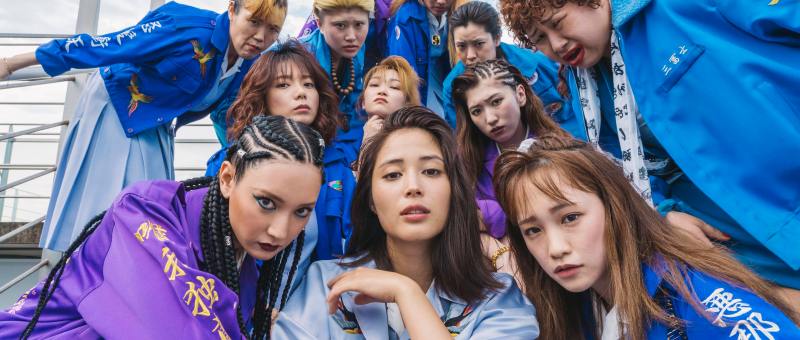
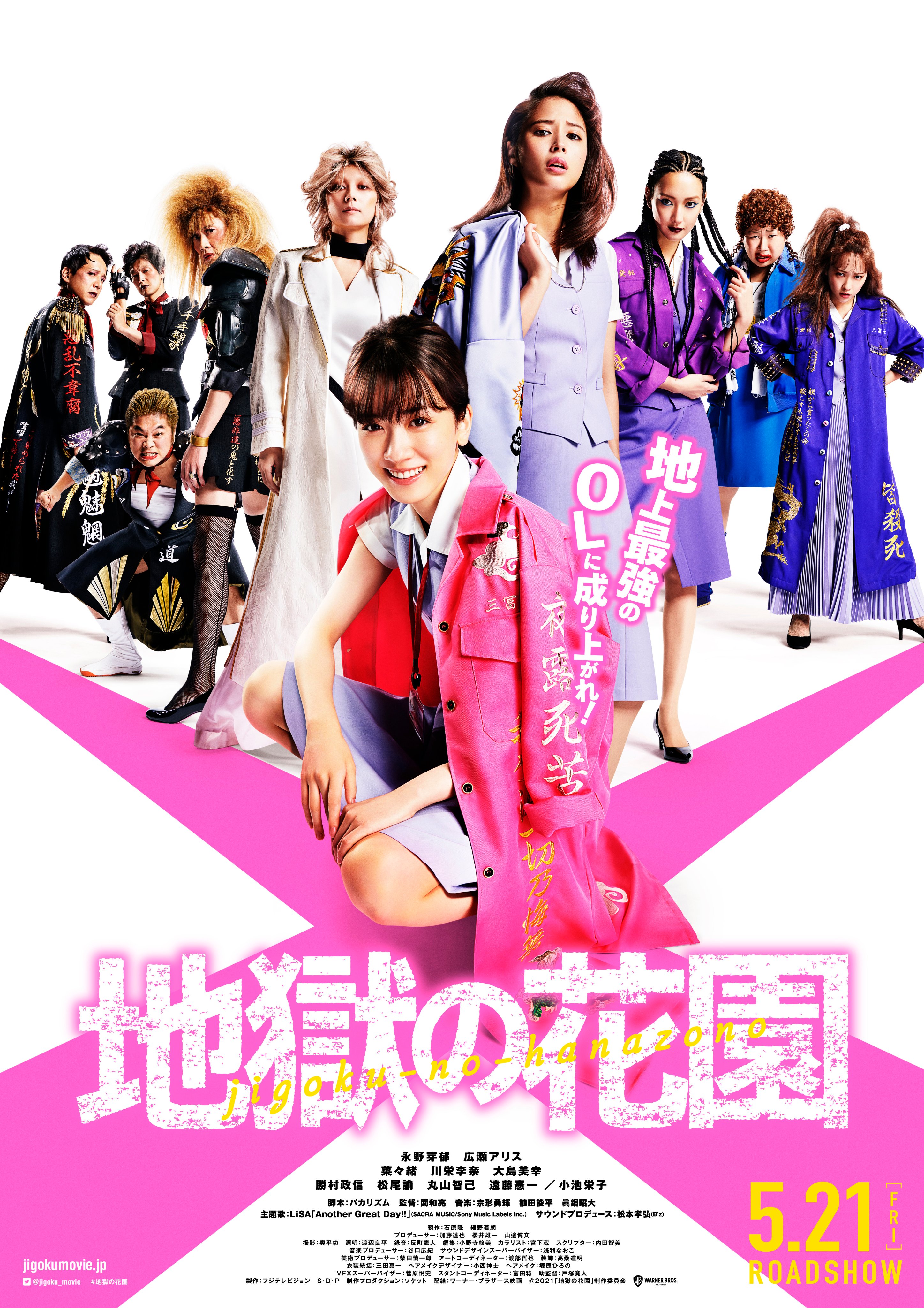
It’s this image of the OL as the embodiment of bland geniality that is at the centre of Kazuaki Seki’s zany comedy Jigoku-no-Hanazono: Office Royale (地獄の花園, Jigoku no Hanazono), a repurposing of “yankee” high school delinquent manga for the world of the office lady scripted by comedian Bakarhythm. A devotee of yankee manga, 26-year-old OL Naoko (Mei Nagano) explains that even office ladies have their warring factions outlining the tripartite fault lines at play in even her small company where the head OLs from Sales, R&D, and Manufacturing constantly vie for hegemony through physical dominance. She however merely observes from the sidelines defiantly living her “ordinary” office lady life. That is until new hire Ran Hojo (Alice Hirose) arrives to upset the precarious workplace power balance.
Naoko first catches sight of Ran after she challenges some of the OLs from her company as they harass a timid male employee in the street though they don’t become best friends until after Ran spots a salaryman trying to upskirt her at a bus stop and decides to teach him a lesson. Despite being a yankee, it seems that Ran is also trying to live a normal OL life, bonding with Naoko over their shared love of a TV drama, but is not exactly good at the job and regards fighting as her one and only skill. Perhaps speaking to an inner insecurity born of being a woman in a conformist and patriarchal society, each of the women struggle to see themselves as protagonists in their own lives rather than mere supporting players unwittingly both playing the role of the ditzy best friend to the competent hero.
In one of her many meta quips commenting on the action and how it would play out if she were a character in a yankee manga, Naoko laments her status as the “comic book hero’s boring friend” which is extremely ironic seeing as she is certainly the heroine of this movie given that it’s her voiceover we’re hearing and her POV we generally adopt. Yet Seki sometimes undercuts her by shifting to a rival voiceover offered by Ran herself doubtful of her proper place in the narrative and eventually descending into an existential crisis after an unexpected setback shatters her sense of self.
Nevertheless, even if as the de facto leader of her company’s OLs Ran advocates for equality insisting there are no bosses and no underlings only women standing together, Office Royale generally embraces rather than attacks societal sexism particularly in its somewhat unexpected conclusion which ends in ironic romance rather than female solidarity. Even so, it’s interesting that the OLs lose interest in delinquency once the hierarchy of fists has been fairly decided, acknowledging the superior skills of a better fighter and thereafter living peacefully rather than continuing the internecine determination to sit at the top of the pyramid which is the hallmark of the high school yankee manga.
While the final arc strays into some potentially problematic territory with the uncomfortable humour of four male actors playing the top fighters of a rival gang of OLs from another company, Office Royale offers a series of surprisingly well choreographed fight scenes even if eventually descending into manga-esque cartoonish violence while much of the humour stems from Naoko’s adorably nerdy voiceover musing on what would happen next if this were a yankee manga. In the end, however, it’s less a tale of office lady infighting than of a pair of young women coming to a better understanding of themselves even if they do so through the potentially destructive medium of pugilism.