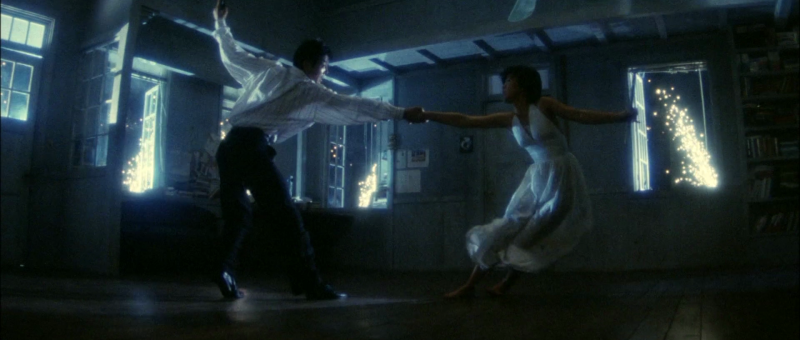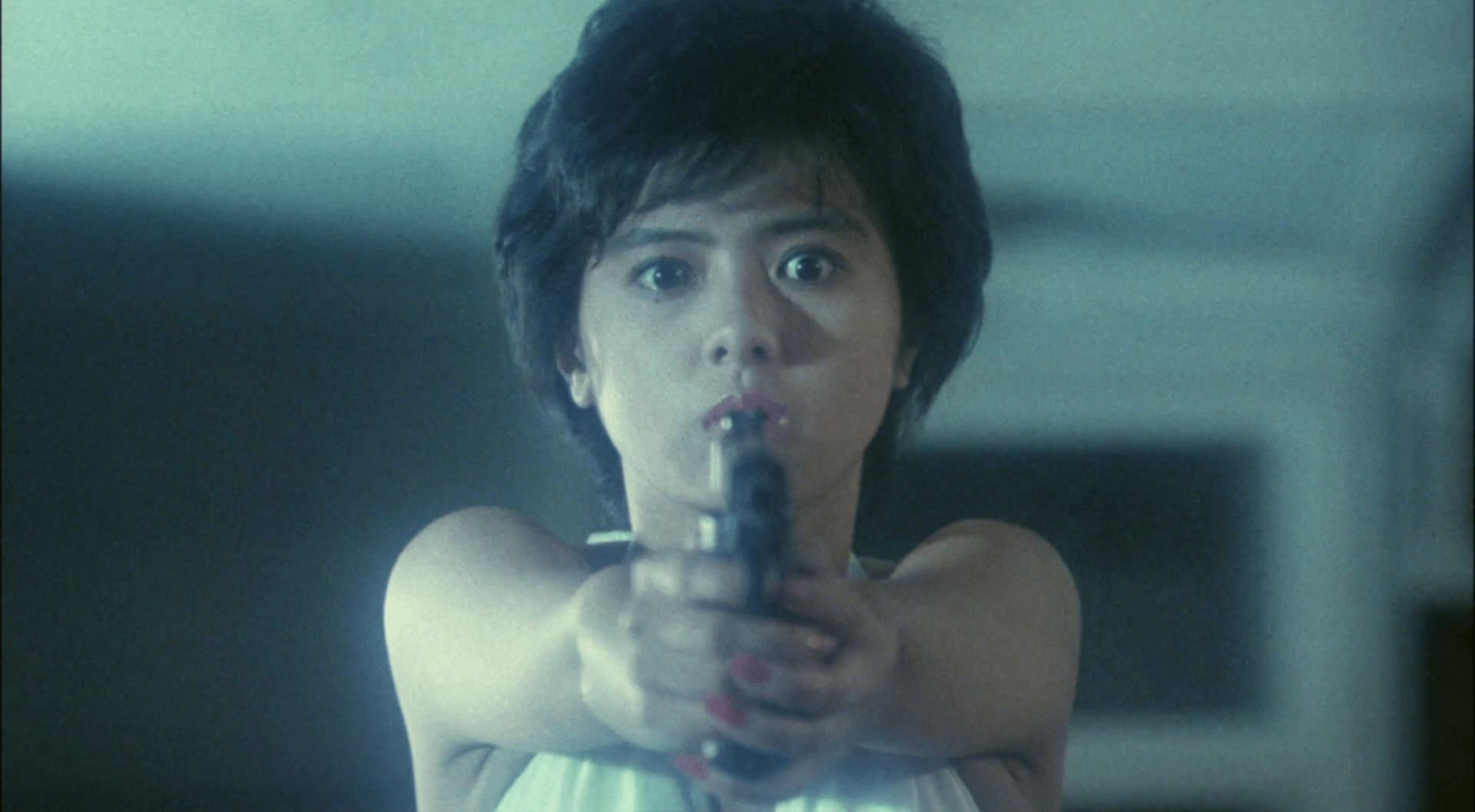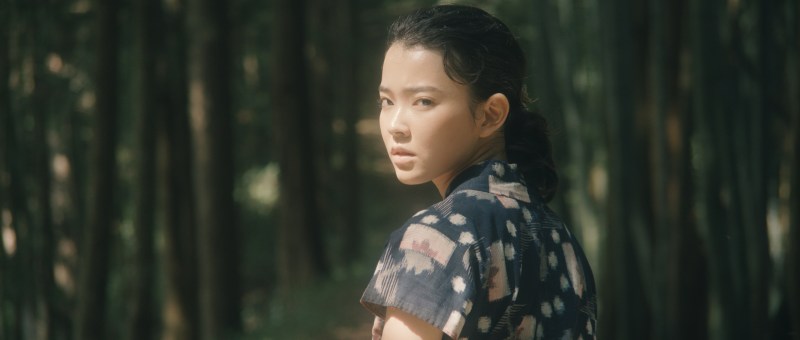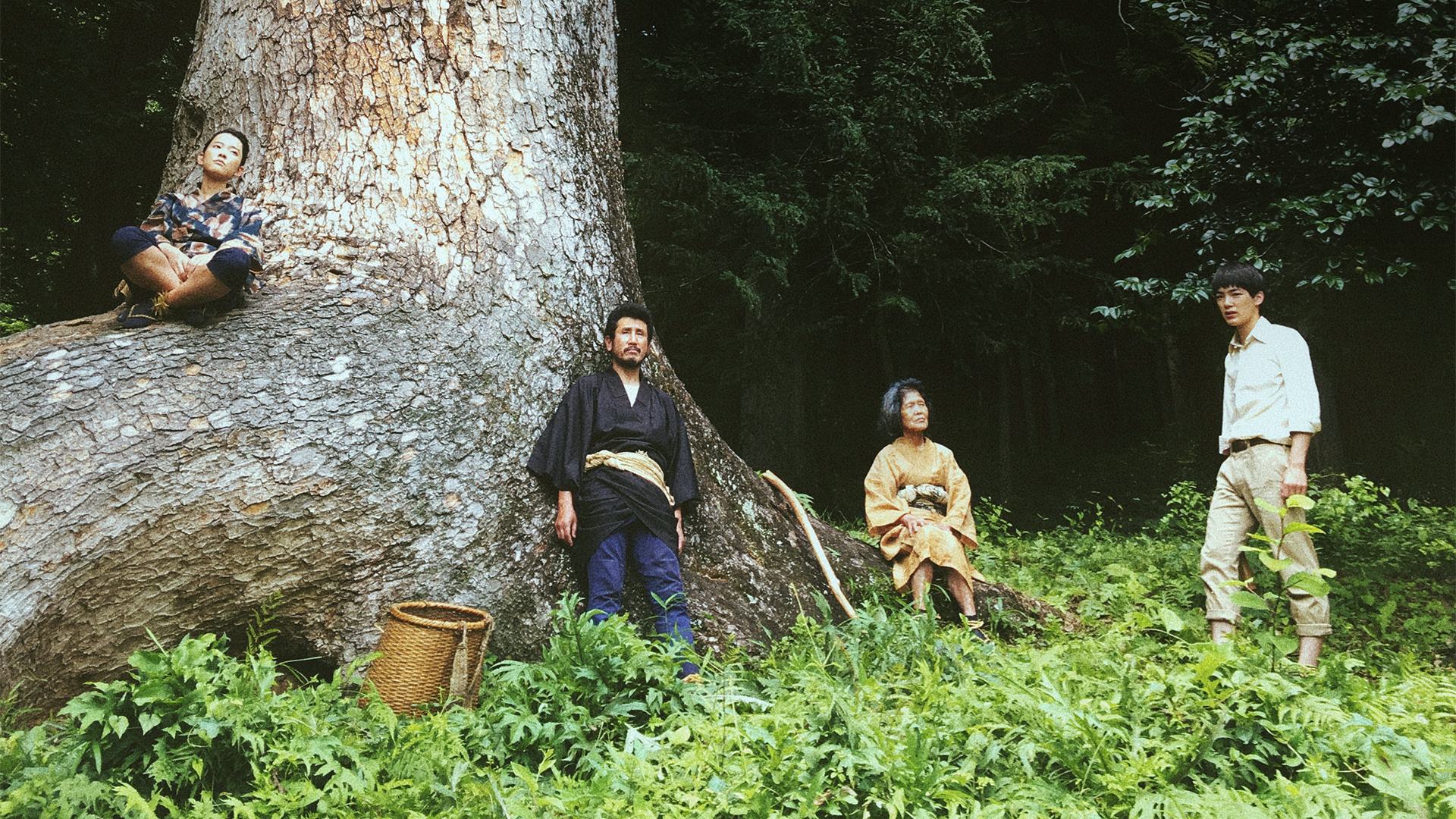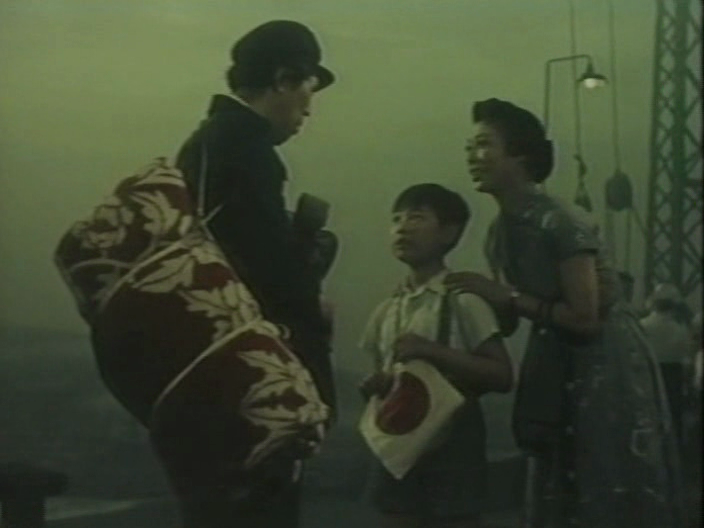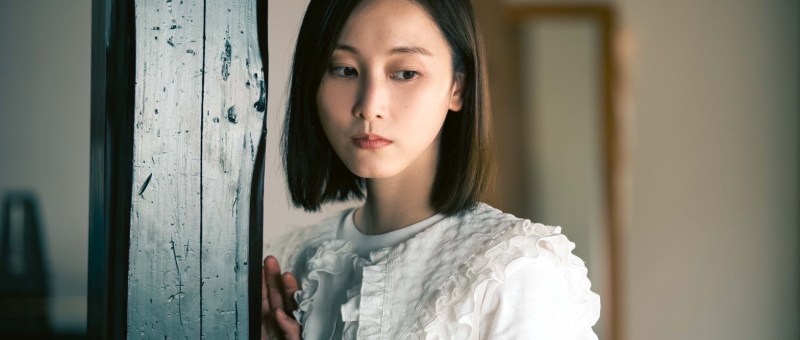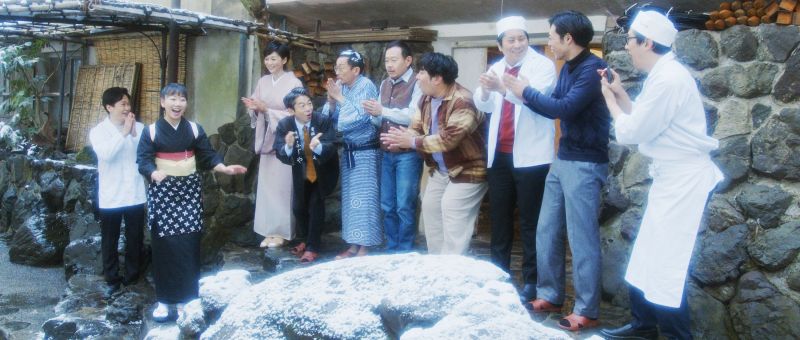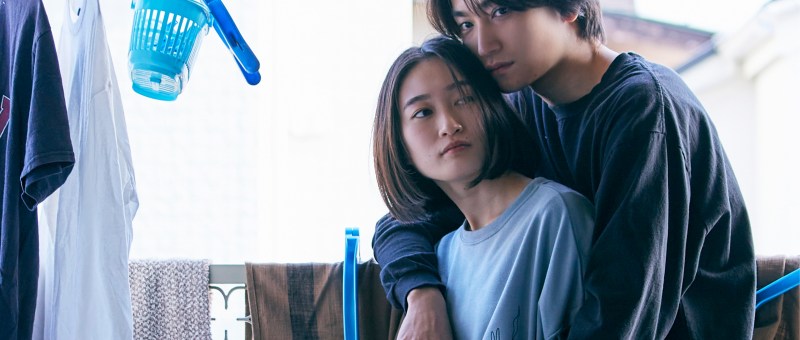
From the End of the World (世界の終わりから, Kazuaki Kiriya, 2023)

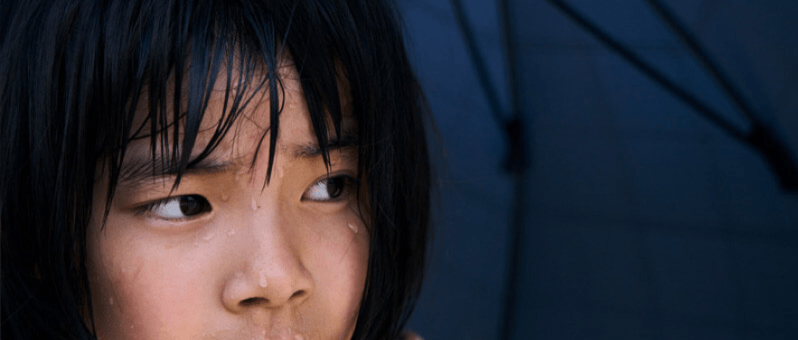
Charged with the responsibility of saving the world, a teenage girl wonders if she should in Kazuaki Kiriya’s pre-apocalyptic drama, From the End of the World (世界の終わりから, Sekai no Owari kara). After all, the suffering will continue. People will continue to be cruel and selfish. Maybe it’s better to let humanity fizzle out and least save the planet. But really whether any of this is “real” or not, what’s she’s looking for is an escape from her grief and loneliness and a world that is a little kinder and less self-destructive. 

Shortly after losing her grandmother, who had been raising her after her parents were killed in a car accident, Hana (Aoi Ito) begins having strange dreams where she’s cast back to what seems to be feudal Japan where she meets a young indigenous girl whose family have been wiped out by marauding samurai. The girl’s guardian, an older woman (Mari Natsuki), explains to her that her arrival in this place has been foretold by some kind of scripture painted on the ceiling of a cave and that her duty is to deliver a letter to a shrine. Not too long later, she’s accosted by some kind of mysterious authority which seems very interested in her dreams, eventually taking her to a strange base in another cave where she meets an old woman (also Mari Natsuki) who looks exactly like the one saw in her dream. The world will apparently end in two week’s time, though she alone has the ability to alter what has been written through the power of her dreams which allows her to change people’s thoughts and thereby rewrite their destiny. 

She does not do this deliberately, but reacts instinctively to the events she encounters which the old woman claims exist in the “Sea of Sentiment”, a great confluence of human thought on which the world is built. “Understanding things is overrated. Everything’s an illusion. What’s important is your feelings,” another mysterious presence (Kazuki Kitamura) tells her, a man who exists between dream and reality and would rather the world end because as long as it exists he cannot die. In some respects, he may represent Hana’s depression suggesting that to continue to live is only to prolong her suffering and that it’s better for everyone to simply give in and let fate take its course while she weighs up kindness and vengeance using her newfound powers for “selfish” reasons to end the torment she’s been suffering at the hands of a bullying classmate who’s long been blackmailing her in taking advantage of her precarious position as a financially disadvantaged orphan. 

The quest that the old woman sends her on is really into the depths of her own heart which is wounded not only by a medical issue she seems to have forgotten but a pair of childhood traumas buried behind a door she did not want to open. The real message that she’s supposed to deliver has its own paradoxical sense of poignancy, “from the end of the world to you in the future”, which signals her nihilism and despair but also a desire for some kind of continuation or rebirth in a better, kinder world less marked by suffering or selfishness. Then again, the way of achieving that world is still rooted in violence only of a more knowing kind that heads off one particular kind of disaster and allows Hana to save “herself” in all her incarnations, but perhaps doesn’t do very much to change the human “foolishness” to which the old woman ascribes humanity’s destruction.  

Logically, it doesn’t quite hang together and not all of it makes sense (understanding things is overrated), but it has its own kind of internal consistency even if at times somewhat incoherent as it well might be if it were all the dream of a lonely teenage girl who’s given up on the idea of a future for herself because her life has been too full of suffering and unfairness. It’s no coincide the date of the end of the world is set for the same day as her high school graduation ceremony. Her world really is ending if in a less literal way leaving her all alone and forced into a more concrete adulthood while her peers get to chase their dreams a little longer by moving on to higher education while she’ll have to look for work to support herself. She may feel that nothing she does makes any difference and that she is powerless to change her fate, but also realises that she is not as alone as she thought. Featuring top notch production values and some striking production design, Kiriya’s sci-fi action drama is quietly touching in its final resolution that despite everything Hana still wants to love the world even if it’s making it very difficult. 


From the End of the World screens in New York Aug. 5 as part of this year’s JAPAN CUTS.

Teaser trailer (no subtitles)

Under the Turquoise Sky (ターコイズの空の下で, KENTARO, 2021)

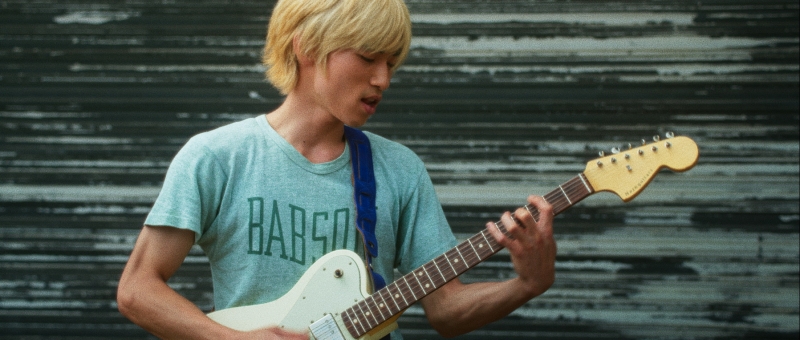
An aimless young man unexpectedly embarks on a spiritual journey after being sent to Mongolia to look for the daughter his grandfather left behind 70 years previously when he was a prisoner of war in the dreamlike debut feature from actor KENTARO, Under the Turquoise Sky (ターコイズの空の下で, Turquoise no Sora no Shita de). A circular tale of longing and abandonment, the film is both a charmingly surreal road movie and a poetic meditation on time and memory amid the infinite expanses of the Mongolian Steppe. 

Our guide is “horse thief” Amaraa (Amarsaikhan Baljinnyam) who cheerfully rides off on a stallion owned by the ageing Saburo (Akaji Maro) only to be chased down by police officers in much the same way he will be again on his return to Mongolia. Saburo jokingly asks him if he meant to ride all the way home and perhaps he did, in a way. Falling asleep in the van he later shares with Saburo’s grandson Takeshi (Yuya Yagira) he dreams of stealing an old lover away from her wedding to another man replying only that he’s been “busy” when she asks why he made no attempt to contact her during the previous three years. One might also ask why Saburo never returned to Mongolia and the woman and child he left behind, but perhaps there is no real reason save life and then it was too late. Now close to the end of his days, Saburo charges Amaraa with the mission of tracking his now 70-year-old daughter down taking the spoilt and selfish Takeshi with him in the hope that he will spontaneously discover purpose in his life. 

There is something quite poignant in the melancholy strains of My Dear Companion accompanying the van’s passage along a lonely Mongolian road, a song that at least in its more modern version is a lament for lost love and a yearning for one who seems to have disappeared to a distant land no longer caring for those they once loved. The other frequent refrain is that of Beautiful Dreamer which similarly hints at the impossibility of romantic resolution particularly as it plays over Amaraa’s fantasy of reclaiming a love he once left behind. On arrival in Mongolia, Amaraa quickly reverts to traditional dress, dismissing the driver Saburo has hired for them along with his fancy car to take off in a much more ordinary van stopping every so often to ask everyone they run into if they’ve ever heard of a woman named “Japanese Tsermaa” until getting some helpful directions from a traditional shaman with a surprisingly familiar face. 

Unable to speak the language, Takeshi mostly looks on amused but soon discovers that words are often superfluous. Amaraa even at one point has a totally wordless negotiation with a fellow nomad over borrowing his motorbike and sidecar when the van inevitably breaks down. Suddenly left alone in the expanses of the Mongolian Steppe, Takeshi enters a kind of dreamscape and almost lives his grandfather’s life over again after being taken in by a pregnant woman who gives him Mongolian clothing and shares with him the local food, but the outside world soon comes calling and just like his grandfather he leaves behind a woman and child along with the sea and the sky having experienced some kind of enlightenment that shakes him out of his hedonistic aimlessness. 

But then it’s almost as if it never happened at all. He simply takes his grandfather’s place while the wheel keeps on turning. Workers in his grey office block shuttle about like ants in an ant farm even if, as we gradually realise, united under the turquoise sky that stretches from Mongolia though fading as if goes. Unexpectedly moving in its moments of reunion, the film makes the most of the beautiful Mongolian landscape shot a stunning 8K while exploring the warmth and hospitality of the local people who share their culture with a bemused stranger who finally gives himself over to their dance. “What’s important is that we’re together now” Amaraa tells the woman in his dream, hinting at the impossibility of his circular journey and the poetic yearning that underlies these various stories of lost love some eventually recovered at least in part but others left to echo on the breeze as faint memories of other lives painfully unlived.


Under the Turquoise Sky screens in New York Aug. 4 as part of this year’s JAPAN CUTS.

International trailer (dialogue free)

The Possessed (妖婆, Tadashi Imai, 1976)

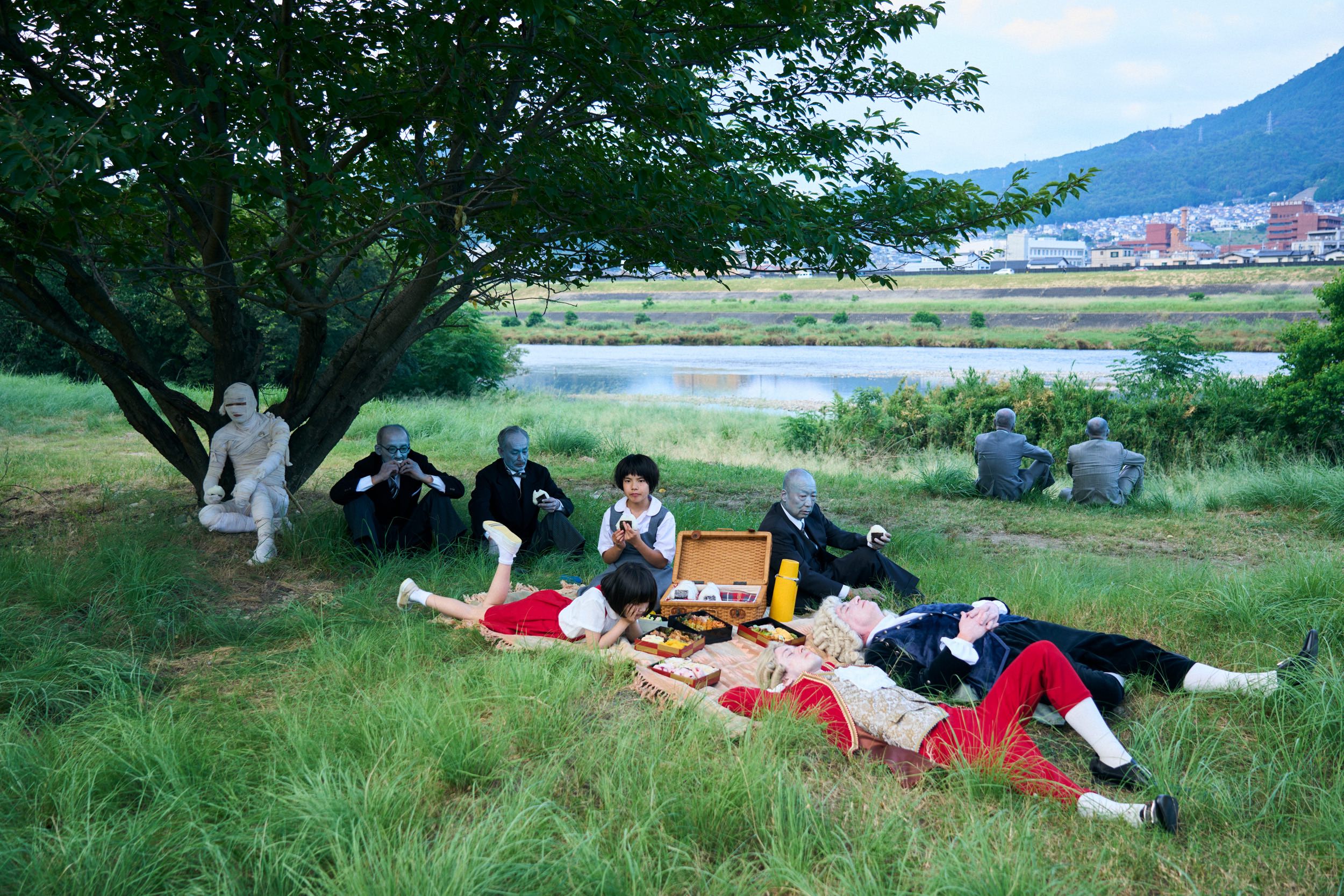
Shinto priests, black magic, and demonic possession. As the opening voiceover of Tadashi Imai’s The Possessed (妖婆, Yoba) remarks, you can hardly believe that such things could happen in the modern world alongside cars, trains, and telephones yet the tale we’re about to be told begins in 1919. Based on a story by Akutagawa, the film is however less a contemplation of ancient superstition amid rising modernity than the destructive patterns of class and patriarchy which conspire against the lives of two women who had once been good friends. 

In 1919, Shima (Machiko Kyo) marries Shinzo (Shinjiro Ehara) who has taken her name and become the presumptive heir of her family. Everyone at the wedding remarks on what a good catch he is, adding almost as an after thought that Shima seems happy about it too. The problem is that Shinzo is repeatedly unable to consummate the marriage. Part of this seems to be down to his wounded masculinity in having married into the family. He resents being under the thumb of his father-in-law along with the rumours that he only married Shima for her money even though this appears to be exactly what he has done. Perhaps further humiliated by his inability to perform, Shinzo tells Shima that it’s her fault because there is something wrong with her body that prevents him from becoming sufficiently aroused. Being a sheltered woman of the Taisho era, Shima wonders if her husband has a point and visits a doctor to find out but as expected he tells her there’s nothing at all wrong with her and it’s most likely Shinzo’s performance anxiety that is to blame. 

However, when her cousin Sawa’s (Kazuko Ineno) comb is found inside Shinzo’s kimono sleeve, the family begin to realise that the problem is he prefers her. He later admits as much and reveals that he’s planning to move closer to the family’s goldmine in Hokkaido and install Sawa in a house there as his common law wife with Shima left behind as a spouse of symbolic value. Shima has already felt herself haunted, but it’s at this point that the family brings in a Shinto priest who explains that Shinzo is possessed by an evil spirit though also giving the more rational advice that she should probably divorce him. Shima is forced to endure a strange ritual including purification by waterfall, but is also sexually assaulted by the randy priest though it it’s not completely clear that she fully realises what has happened to her. 

The implication is that the family treated Sawa as a kind of poor relation they trotted out to keep Shima company because she was an only child. Having grown resentful of Shima’s class privilege, Sawa’s jealousy manifested as covetousness that made her intent on taking whatever Shima had. She too later resorts to shamanistic black magic, fearful that Shima bears her a grudge for ruining her life and hoping to neuter any dark energy that she might be emanating in order to protect her teenage daughter Toshi (Miki Jinbo) who, ironically, has been betrothed to the son of a kimono shop named Shinzo (Taro Shigaki). 

Sawa never married and bore her child out of wedlock. She implies that she depended on men for financial support but never elaborates further. Shima, meanwhile, has been able to build an independent life for herself as a well-respected tailor. “It’s not normal for someone to suffer this much” a shamanically-inclined midwife later tells her when she too becomes pregnant out of wedlock but loses both the child and the man. The boot is perhaps on the other foot, Shima envies the life Sawa has with the one thing that will always be denied her, a child of her own. The midwife had once again told her that she was possessed, this time by the vengeful spirit of her lover’s daughter with his legal wife she fears may have been drowned deliberately by her mother out of jealousy. 

Shima is given a talisman of beads from the goddess of mercy, Kanon, and told that she can have what she wants if she prays hard enough, but Sawa is told the same thing and ends up going too far with the help of a shamaness praying to Basara Okami who later affirms that Sawa’s request comes with a price for the god wants Shima as a human sacrifice which is not really what Sawa had in mind. There is perhaps something symbolic in Shima’s gradual wasting away, becoming old before her time in her loneliness and sorrow (she is only supposed to be 33 at the film’s conclusion, actress Machiko Kyo was 52 at the time) even if she were not having the life force sucked out of her by a supernatural entity, though both women eventually pay a heavy price for their jealousy set against each other by a fiercely patriarchal and classist society which forces them to compete for husbands and standing. 

Imai’s photography is noticeably eerie if occasionally surreal as in the frequent and increasing sight of frogs, usually sign of good fortune or fertility but here ominous harbingers of supernatural dread in league with dark shamanistic forces. As the voiceover admits, it’s difficult to believe that these primitive ideas can exist side by side with the motor car but then again jealousy is as old as time itself and unlikely to disappear from the human psyche anytime soon even if in this case it could have been avoided if only the world were a little more equal. The film’s conclusion suggests it may now be, in a way, with a love match in the younger generation bringing the cycle of envy and resentment to a close even if the vengeful ghost of Shima may still be lurking somewhere in the shadows. 


Winny (Yusaku Matsumoto, 2023)

Can a creator be held legally responsible for what other people might decide to do with their creation? For some, that is the essential question of the trial at the centre of Yusaku Matsumoto’s legal drama Winny, but in speaking more to the present day than the early 2000s in which the real life events took place the film is more concerned with freedom of speech in a society in which established authorities may seek to resist the democratisation of information. 

A talking head seen on television at one point suggests that peer-to-peer file sharing programme Winny disrupts the democratic copyright regime, but according to its creator Isamu Kaneko (Masahiro Higashide) the appeal of peer-to-peer is that it is by nature democratic in forging a network of machines on an equal footing. Nevertheless, in November 2003 two people were arrested for using Winny to share copyrighted material and Isamu’s home was searched by the Kyoto police who arrested him for aiding and abetting copyright infringement. He and his lawyers argue that to charge the developer is wrongheaded and irresponsible in that it will necessarily stifle technological advance if developers are worried about prosecution if their work is misused by others while his intention in any case had not been to undermine copyright laws but essentially for technological innovation in and of itself. 

Meanwhile, the film devotes much of its running time to a concurrent police corruption scandal in which a lone honest cop is trying to blow a whistle on a secret slush fund founded on fraudulently produced expense receipts. The implication is that the reason the police decided to go after Isamu is that they feared Winny’s potential to expose their own wrongdoing. A member of the police force had apparently used Winny and introduced a vulnerability to the police computer system that allowed confidential data to be leaked, and Winny is indeed later used to publicly disseminate evidence which proves the claims of the whistleblower, Semba (Hidetaka Yoshioka), are true. Semba had previously tried to take his concerns to the press privately but was ignored, the editor simply printed a police press release without investigation unwilling to rock the boat. But a programme like Winny exists outside of the establishment’s control which is why, the film suggests, the police in particular resent it. 

A younger officer Semba reproaches at his station gives the excuse that everybody does it and refusing to fill in the false receipts would make it difficult for him to operate in an atmosphere in which corruption has become normalised. Even the police use Winny, a prison guard confiding in Isamu that he’s used the programme to download uncensored pornography while prosecution lawyers conversely attempt to embarrass Isamu by leaking pictures of his porn collection to the press and bringing it up on the stand. “Everybody does it” is not a good defence at the best times aside from being a tacit admission of guilt but reinforces a sense that the police operates from a position of being above the law. A particularly smug officer thinks nothing of perjuring himself on the stand, spluttering and becoming defensive when Isamu’s lawyers expose him in a lie. 

Isamu is depicted as a rather naive man whose social awkwardness and childlike innocence leave him vulnerable to manipulation. He’s told to sign documents by the police so he signs them thinking it’s better to be cooperative, taking the advice he’s given when he questions a particular sentence that he can correct it later at face value while assuming that he’ll be able to straighten it all out in court by telling them the truth and that he signed the documents because the police told him to. Meanwhile, he’s almost totally isolated, prevented from talking to friends and family out of a concern that he may use them to conceal evidence. 

The film seems to suggest that the stress of his ordeal which lasted several years may have led to his early death at the age of 42 soon after his eventual acquittal. In any case he finds a kindred spirit in his intellectually curious lawyer (Takahiro Miura) who defends him mostly on the basis that the right to innovate must be protected and a developer can not be responsible for the actions of an end user any more than a man who makes knives can be held accountable for a stabbing. Matsumoto captures the sense of wonder Isamu seems to feel for the digital world and has a great deal of sympathy for him as an innocent caught up in a game he doesn’t quite understand while fiercely defending his right to express himself, along with all of our own, without fear no matter what the implications may be.


Winny screens in New York Aug. 2 as part of this year’s JAPAN CUTS.

Original trailer (no subtitles)
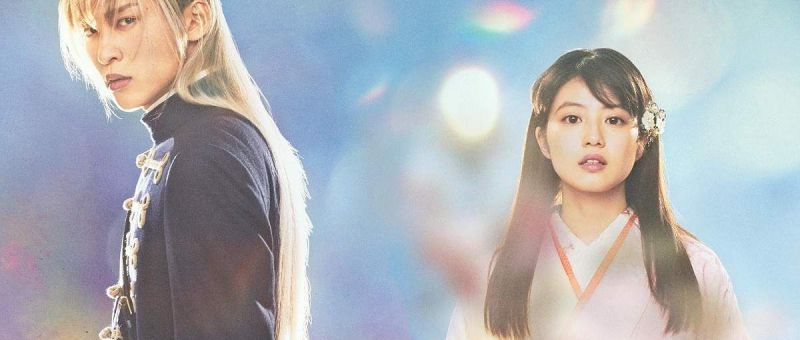
Father of the Milky Way Railroad (銀河鉄道の父, Izuru Narushima, 2023)

Generations of Japanese children have grown up with Kenji Miyazawa’s much loved classic Night on the Galactic Railroad but Miyazawa remained largely unknown in his lifetime and passed away from pneumonia at the young age of 37 in 1933 with the book that would make his name still unpublished. His story has been told before, most notably by Kazuki Omori in 1996’s Night Train to the Stars, but Izuru Narushima’s Father of the Milky Way Railroad (銀河鉄道の父, Ginga Tetsudo no Chichi), adapted from the Naoki Prize-winning novel by Yoshinobu Kadoi, takes a slightly different angle in exploring the life of his generally supportive father, Masajiro (Koji Yakusho).

As he’s fond of saying, Masajiro is a product of the modern era and a very modern father even in some ways by the standards of today. The film opens (and closes) with him on a train, this time hurrying home having received a telegram informing him that his first child has been born. So excited is he that he offends his own father by running past him on the way to see the baby without offering the proper greeting. Kisuke (Min Tanaka) is indeed more of a traditionalist raised with feudal values that are fast becoming out of date in the new society. As the head of the household, it’s he who gives the baby his name, Kenji, written with the characters for intelligence and healing which will indeed define his character if leaving him somewhat at odds with his society. 

Such a devoted father, Masajiro breaks with tradition and accepted gender roles in insisting on accompanying Kenji to hospital when he is taken ill despite his father’s admonition that caring for the sick is a role reserved for women. Kisuke also tells him his decision to have Kenji educated is wrongheaded, that literature and the arts only confuse a man and may prove more ruinous to him than drink or women. Annoyingly, Kisuke may have a point in that on his return from middle school Kenji (Masaki Suda) immediately rejects the family’s business as pawnbrokers having read too many Russian novels in which they are depicted as exploiters of the poor. He decries Masajiro’s justification that they support farmers who would otherwise be unable to access other forms of financial help such as bank loans and be forced to sell their daughters into sex work as mere sophistry. Masajiro may share some of his concerns, but remains in part wedded to some aspects of feudalism in insisting that as the oldest son Kenji has no choice other than to take over the family pawn shop.

Nevertheless, he also educates his daughter, Toshi (Nana Mori), who later begins working as a school teacher and is able to convince him to allow Kenji to further his studies only for Kenji to suddenly announce he wants to go to agricultural college to better understand their customers who are after all predominantly farmers. Having sent him away to be educated, Masajiro laments that Kenji knows “nothing of the world” after seeing him taken in by an obvious sob story from a duplicitous customer reflecting that his liberal education may have given him ideas that prevent him from living successfully in the society in which he lives. Kenji continues to resist the idea of taking over the pawnbroker’s while evidently unsuited to it before worrying his family further by becoming dangerously obsessed with radical new Buddhist sect Nichiren. 

It’s with this that Masajiro cannot really help him and begins to lose his patience as Kenji gives in nihilistic despair believing that nothing he does has any real meaning. His literary gifts are appreciated only in the wake of a tragedy that reconnects him with his childhood self while finally freeing Masajiro to embrace his son’s natural gifts as a writer rather than trying to force him to take over the family business. In truth, the film barely touches on the novel from which it takes its title if subtly hinting at it and bookending itself with the celestial train motif, but rather takes its lead from one of Miyazawa’s best known poems about his desire to become a better, more selfless, less self-defeating person that is perhaps inspired by his “modern” father’s “new” ideas of a society founded above all else on love. Perhaps it’s not so bad to know nothing of the world after all.  


Father of the Milky Way Railroad screens in New York July 29 as part of this year’s JAPAN CUTS.

Original trailer (no subtitles)
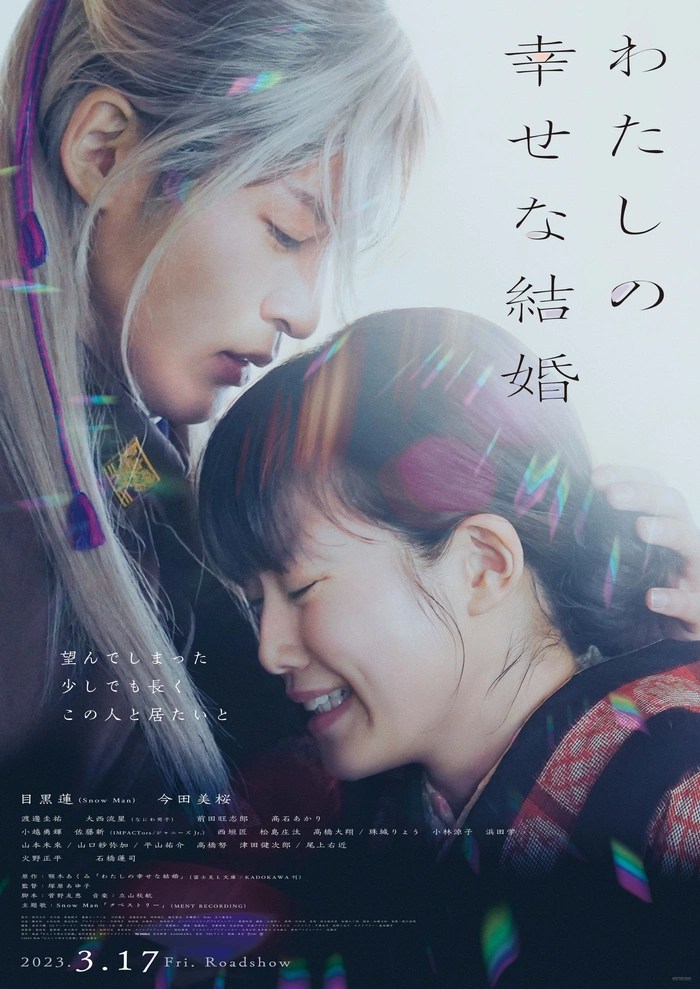
Insomniacs After School (君は放課後インソムニア, Chihiro Ikeda, 2023) [Fantasia 2023]

Two teens begin to overcome their fears and anxieties after bonding over their shared insomnia in Chihiro Ikeda’s adaptation of the Makoto Ojiro manga, Insomniacs After School (君は放課後インソムニア, Kimi wa Hokago Insomnia). It may seem strange in some ways that the pair find their inability to sleep so embarrassing that they keep it a secret from those around them, but then it’s difficult to tell people you’re having trouble sleeping without explaining why which is admittedly to enter the place of emotional vulnerability that each of them is otherwise avoiding. 

Namiki (Daiken Okudaira) describes himself as being overwhelmed by negative thoughts while his days are filled with despair. Unable to sleep at home he struggles to keep his eyes open at school and is otherwise reserved, rejected by many of his peers for being gloomy and aloof with only one real friend to whom he has disclosed his persistent insomnia. When he ventures into a part of the school others avoid thinking it is haunted, he discovers another “ghost” in classmate Isaki (Nana Mori) who also suffers from insomnia and had carved out this small corner of the disused astronomy club as a private lunchtime nap space. Luckily for him, Isaki, who is cheerful and outgoing, is willing to share and soon they become firm friends who decide that their empty nights of dark despair could otherwise be filled with fun and adventure. 

Neither of them really discuss why they aren’t able to sleep until their friendship is more deeply established and the facts emerge somewhat naturally but instead draw strength from their new connection while laying claim to their “sanctuary” in the school’s disused observatory as a place where they can find peace. Discovered by a teacher they have to keep up the pretence of restarting the astronomy club which means deciding on some sort of goal activity as proof that they have a right to the space all of which leads them down a secondary path that distracts them from their sleeplessness as they determine to put on stargazing events and enter a photography competition which requires a short sojourn in the country as well as making entreaties to their classmates for additional help and support. 

Then again, that might be contrary to their original wishes given that what they wanted from the observatory was a private place to sleep free from the stresses of their home lives which are in themselves fairly wholesome problems running from health anxiety to abandonment issues. Parallel scenes remind us that their struggles are largely the same, each has come to blame themselves for things which weren’t their fault and has developed a need to be seen as “good” which has led to chronic people pleasing and low self-esteem. But what their stargazing mission begins to teach them is that some things in life are beyond your control so there’s no point worrying about them, while the sense of eternity they discover watching the movement in the skies helps them overcome an adolescent fear of mortality in realising that “human existence doesn’t disappear so easily” and those who are gone still live on in the hearts of minds of others in the great confluence of humanity. 

Where night had been something to endure, they now find new ways to appreciate their lives in a world that seems more full of possibility than fear. Ikeda’s adaptation revels in its wholesomeness with even its slow-burn romantic subplot relatively innocent in its earnestness as the pair monologue over a voice notes app and quite literally lean on each other for support even if it’s not clear whether their insomnia actually improves or they just find better ways of living with it thanks to the new community they’ve found in the re-formed astronomy club which like most clubs is more about just hanging out than it is about serious study of the stars. Making the most of its picturesque small-town setting, the film discovers a quiet sense of serenity in the beauty of the landscape along with its ever expanding vistas in which the teens learn to overcome their mutual anxieties and embrace the infinite possibilities of life thanks to a true friendship founded on empathy and compassion.


Insomniacs After School screened as part of this year’s Fantasia International Film Festival.

Original trailer (English subtitles)

Best Wishes to All (みなに幸あれ, Yuta Shimotsu, 2023)

A young woman is confronted with an uncomfortable truth on return to her old hometown in Yuta Shimotsu’s eerie horror satire, Best Wishes to All (みなに幸あれ, Mina ni Sachi Are). Is there really a finite amount of happiness in the world or would there be plenty to go around if only we weren’t all so selfish? The unnamed heroine (Kotone Furukawa) claimed she wanted to become a nurse to “save people” but in the end starts to wonder if the only way to be happy in a cynical world is to meet it on its own terms. 

Even so, there’s something decidedly strange about her reunion with her grandparents. She notices them behaving oddly but isn’t sure whether to chalk it up to their age and not having seen them for a long time, only there’s something a little creepy in their overt “happiness” as they cryptically look up at the ceiling as if gazing at a higher power or suddenly start making pig noises before remarking that they should be happy as they eat their bacon that the animal has achieved its purpose in life. Meanwhile, for unclear reasons they forbid her from hanging out with a childhood friend who stayed in town to take over his father’s farm despite showing promise as an artist.

He too cryptically adds that he thinks there’s enough happiness in the world for everyone to have some without needing to hoard it, adding to the heroine’s unease as she tries to investigate the strange noises coming from behind a locked door in her grandparents’ home. Soon, she begins to discover what it is that makes them “happy” and is confused and appalled, unsure whether she should believe her eyes or has actually gone out of her mind in this already quite weird place. 

On leaving the city, she’d paused on a pedestrian crossing to help an old lady with her bags while a salaryman had knocked hers out of her hands by walking into her. She was the sort of person that thought it was important to help others or at least to be considerate, but is confronted with an uncomfortable truth in being asked if she can go on pretending that her happiness isn’t bought with the suffering of someone else somewhere in the world even if they aren’t exactly “visible” to her. She tries to revolt and reject the strange goings on at her grandparents’ but is told that it’s the way of the world, that it’s happening everywhere, and that really she knows but has chosen not to see because when it comes right down to it she’s as selfish as everyone else and isn’t willing to sacrifice her own happiness to “save” someone else from suffering.

Meanwhile, she realises that some families are being shunned in the village for resisting and these families largely are “unhappy”, though undoubtedly some of that at least must be down to their stigmatisation. She and her friend save a high school boy who was being bullied, but even he later relates to her that he’s decided to “live smart” by going along with the local practice even if it doesn’t seem right to him because it’s pointless to resist when everyone is doing it. Another rejectee also tells her that the village philosophy is a fallacy because even if someone “should” be miserable there’s no way to know how they really feel and if you’re only basing your idea of “happiness” on external validation then of course you’ll always be miserable. 

Confronted with a bizarre series of events, she begins to wonder if she’s going out of her mind and none of this is really happening even while pressured to submit herself to the ways of the village. In effect, she’s being asked to choose her level of comfort with complicity, acknowledging directly that her “happiness” is based on a quite literal exploitation, drained out of those less fortunate than herself. Her friend remained convinced that there is plenty of happiness to go around without needing to extract it from others, but the lessons she learns are more cynical, no longer stopping to help old ladies with their shopping and suspicious of those who do while proudly declaring herself “happy” with her new “reality”. Shimotsu excels in finding the eeriness of the every day in which an ordinary jar of miso or a workman’s tool box can seem to radiate evil while the grandparents’ ordinary house has an incredibly ominous atmosphere that raises a note of uncanniness in their “happy home” suggesting that their quasi-beatific state is more akin to curse than blessing. 


Best Wishes to All screens in New York July 27 as part of this year’s JAPAN CUTS.

Trailer (no subtitles)

THE FIRST SLAM DUNK (Takehiko Inoue, 2022)

Takehiko Inoue’s basketball-themed manga Slam Dunk is a ‘90s landmark that also spawned a hugely popular TV anime adaptation. A few attempts had been made over the years to produce a feature-length film, but Inoue had turned them all down until, that is, the production team were able to come up a unique look that matched the author’s vision and truly made it seem as if the characters were “alive”. Finally impressed, Inoue then agreed to script and direct the anime himself even going so far as to retouch scenes in both 3DCG and 2D to ensure they fulfilled his high expectations. 

Titled The First Slam Dunk, the film takes place entirely over a single game but switches its focus from the protagonist of the manga, red-haired former delinquent Sakuragi (Subaru Kimura), to “Speedster” Ryota Miyagi who makes up for his short stature with nimble manoeuvres. Inoue cuts between the championship match with rivals Sanno and the players’ private lives as they battle their demons and insecurities on the court and off. 

Originally from Okinawa, Ryota lost his father and brother in quick succession. Sota had been something of a mentor figure, getting him into basketball and encouraging him to keep playing even if others said there was no point because he was simply too small. When Sota chose to cut their practice short to go fishing with some friends, Ryota was of course upset and angry saying a few things he came to regret when Sota was lost at sea and never came back. “Cocky” as someone later describes him, Ryota uses bravado to mask his insecurity and struggles to redefine his relationships with his grief-stricken mother and younger sister while also competing with the shadow of his absent brother whose number he continues to wear even after moving to the mainland and joining a new high school team, Shohoku. 

As he later says, basketball was a means of dealing with his grief though it was difficult for his mother to support him because its associations with Sota. Showcasing the stories not otherwise told in the manga, Inoue taps into an adolescent sense of existential crisis and individual anxiety as filtered through the basketball game in which, as their quietly supportive middle-aged coach tells them, it’s only over when you decide to give up. Meanwhile, the guys from Sanno are experiencing something similar and most particularly Ryota’s opposing number, Kawata, even if the team is also given an edge of uncanny invincibility in the sometimes suspicious aura of their coach. 

Only by facing their individual anxieties can the guys begin to play a full role on the team, each of them as the coach says bringing their own unique talents and learning to play to each other’s strengths. In the end it comes down to willpower and self belief, continuing to play even when victory seems impossible and pressing for the final slam dunk even as the seconds tick down to zero. Inoue captures a real sense of tension in the game scenes, the dynamism of the 3DCG and the use of motion capture paying off along with some innovative creative decisions that really allow the game to come “alive” in the way Inoue seems to have envisioned with victory hardly assured as the guys go all out utilising not only their physicality but strategy and psychology in trying to claw their way back from 20 points behind with time fast running out. 

Very different stylistically from the average anime sports movie and particularly one following a previous TV adaptation, Inoue displays a truly remarkable sense of cinematic composition while he largely steers away from the kind of high school cliches common to the genre concentrating instead on strong characterisation and an otherwise poignant story of learning to live with grief as Ryota begins to become his own man while honouring his brother’s legacy. Often dazzling in its dexterity, Inoue’s directorial debut excels both on the court and off finding the small moments of doubt and confusion among each of its heroes and witnessing them achieve a psychological slam dunk that allows them to keep moving forward despite their fears and anxieties in refusing to give up even when it might seem hopeless. 


THE FIRST SLAM DUNK screens July 26 as the opening night gala of this year’s JAPAN CUTS and opens in cinemas in the US & Canada July 28 courtesy of GKIDS.

Home Sweet Home (スイート・マイホーム, Takumi Saitoh, 2023)

“The secret is in the basement” is not a phrase which inspires confidence when viewing a potential new living space, but as it turns out the cellar is the least of their worries in Takumi Saitoh’s eerie adaptation of Rinko Kamizu’s mystery horror novel, Home Sweet Home (スイート・マイホーム). The Kiyosawas are just looking for somewhere warm where they can enjoy life as a family in comfort and security, but if something sounds too good to be true then it usually is as they will discover to their cost. 

The saleswoman at Magic Homes describes the Kiyosawas as “the ideal family” for whom she is glad to build an “ideal” home. To many they may look “ideal” in that husband Ken (Masataka Kubota) has a steady job as a personal trainer while wife Hitomi (Misako Renbutsu) is a stay at home mum to four-year-old Sachi. But of course nothing’s quite as it seems and there are already cracks in the foundations of this happy family home as Ken has been having a years’ long affair with co-worker Yurie (Ririka). After finally deciding to take the plunge on the house, the affair comes to a natural end point as Yurie too decides to marry her longterm boyfriend with the aim of starting a family. But not long after the Kiyosawas have moved in to their new “magic home” complete with new addition Yuki, Yurie’s husband receives a video showing an unrecognisable Ken entering her apartment with the presumed motive of blackmail lending a note of anxiety to his moment of familial bliss. 

To begin with, the house itself takes on a eerie quality especially with the ominous rumble of the single AC unit in the pitch-black basement. The home does not seem to have been particularly well thought out for families with small children as the tiny doors leading to the hatch are at a toddler’s height and don’t appear to have any kind of safety locks in place. Everything else is run off the central smart system including a network of CCTV cameras sold to the family as a convenience that would allow them to keep an eye on the children wherever they might be in the house while getting on with other things, but also undoubtedly a privacy worry and no one likes to feel watched in their own home. Watched is exactly how they start to feel, Hitomi convinced someone’s been in the house while looking around realising how many vents and ducts there are ominously staring down at them in every room. 

Ken’s brother Satoru (Yosuke Kubozuka) is suffering with a mental illness that makes him paranoid, repeatedly insisting that there are people watching them and they need to protect the family because they are everywhere in the ceilings and the floors. Though it first seemed to us that the house was the problem, the family’s desire for conventional suburban living biting back at them, we wonder if the problem is Ken and his reckless endangerment of his family through his affair. When first viewing the house, the couple had been accosted by a creepy salesman, Amari (Yohei Matsukado), who makes barbed remarks about looking after the family that have Ken suspecting he’s got it in for them because they chose someone else to handle their sale or perhaps resents them for not being “ideal” enough to live in one of his “magic homes”. 

But then what is the “ideal” family, who gets to decide that? Why should the Kiyosawas have to fulfil a stereotypical ideal just to be judged worthy of homeownership? There might be something chilling in the uniformity of the house’s design, a utopian vision of suburban bliss founded on outdated patriarchal social norms of the nuclear family though in this case slightly adjusted for a new era, but then again the call is coming from within the house in more ways than one in Ken’s delayed response to traumatic childhood incident and concurrent anxiety around being able to protect his family in fulfilment in the social “ideal” for fatherhood. It’s the “ideal” that is the true enemy from the generic house design to the unfair expectations placed on the Kiyosawas to live up to a particular kind of suburban properness in order to qualify for the right to live there. Paranoid and eerie, Saito conjures a world of constant tensions in which we are all being “watched” if not to say judged and any bug in the system must be quickly removed so that the “ideal” may prevail.  


Home Sweet Home screens July 27 as part of this year’s New York Asian Film Festival.

Original trailer (no subtitles)
Images: ©2023 Rinko Kamizu, KODANSHA Ltd./ “Home Sweet Home” Film Partners

Hello! Junichi (ハロー!純一,  Katsuhito Ishii, Kanoko Kawaguchi, Atsushi Yoshioka, 2014)

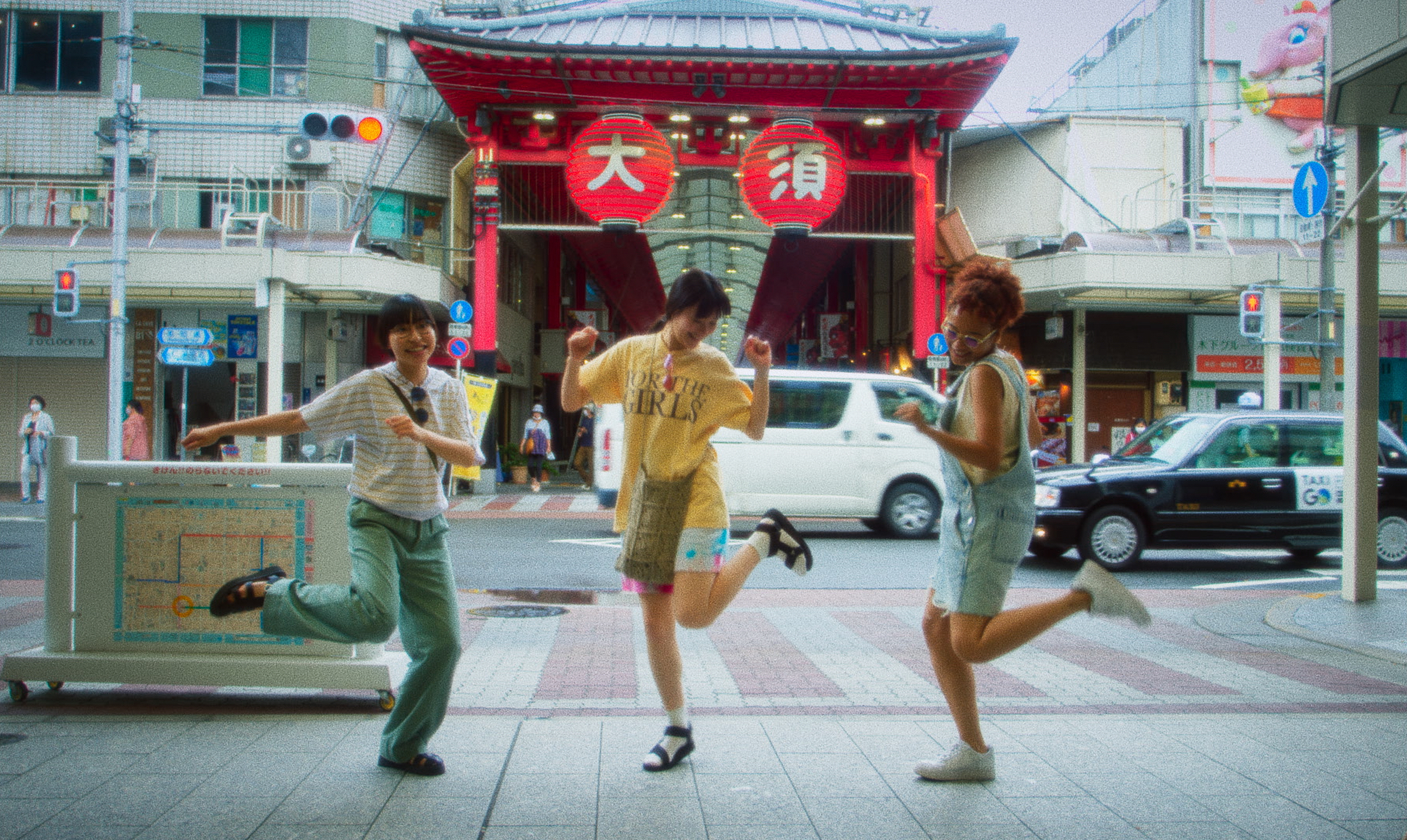
A collection of confused nine-year-olds decides the best way to solve all their problems is to start a band in charming kids ensemble movie, Hello! Junichi (ハロー!純一). Co-directed by Katsuhito Ishii, Kanoko Kawaguchi, and Atsushi Yoshioka, the film is more linear and less surreal than most of Ishii’s other work but has a refreshing take on the childhood adventure movie as the kids each deal with their various problems many of which still plague the adults around them. 

After all as kindhearted rocker Takao (Ryu Morioka) admits, the children aren’t really all that different from us. Shy and a little on the timid side, Junichi (Amon Kabe) is a peripheral member of his friendship group and perpetual fall guy who lists his only talent as the ability to carry everybody’s bags. His main problem is that he borrowed a rabbit-shaped eraser from his crush, Maeda, about a month ago and is too shy to return it. Now all he can think about is whether he should pluck up the courage or pretend to have forgotten. Things get more complicated when a new student teacher, the beautiful Miss Anna (Hikari Mitsushima), joins his school and confiscates the eraser as part of a cruel power game before agreeing to give it back if he helps her find out who scratched an offensive word into the side of her flashy car. 

Miss Anna is either the best teacher in the world or the absolute worst. She arrives dressed for a night out and puts on a cutie pie act for her dejected middle-aged boss Achikita (Yoshiyuki Morishita) which she immediately drops as soon as he leaves the room inappropriately giving the children far too much information about her personal life but they do at least get some maths out of it. She also smokes by an oil can round the back of the building and talks like an aggressive high school girl when her boss’ back is turned, but eventually comes round to her responsibility as a teacher after bonding with the kids. 

In comparison to some, Junichi’s problems aren’t really all that big except that his parents have to work late so he often has to prepare dinner for himself and his philosophising grandpa (Tatsuya Gashuin). Kuramoto (Yohei Hotta) meanwhile is beginning to act out at school because he’s got problems at home caused by his father’s gambling addiction which forces his mother (Chizuru Ikewaki) to run herself ragged just to stay afloat. With Miss Anna’s help, the kids decide to put on a concert for Mrs Kuramoto’s birthday which might on one level be charmingly naive but does in the end seem to cheer her up while allowing them to bond over their shared issues many of which are romantic in nature. 

During the opening sequence in the park, child actor Machida (Shoma Suginomori) had given the other boys some grown up love advice he picked up on set which amounted to getting girls to like you by giving them cliched compliments such as remarking on the beauty of their smile. It’s not terribly good advice and a little a bit patronising not mention insincere, but amusingly enough is the same approach eventually taken by Takao when he and Miss Anna awkwardly try to address their mutual attraction. In the end, she has to concede that she doesn’t know what to say either and they end up having a rather childish conversation about favourite foods which is all to say it doesn’t get any easier and the adults don’t necessarily know much more than the kids. 

Then again, there are some distinctly bad examples in Achikita’s thankfully ineffective attempt at workplace harassment and stalking of Miss Anna even if he eventually gives the most important life lesson in dressing down a trio of teenage bullies by telling them they have to learn love and appreciation or they’ll be weak men incapable of protecting anyone. Protecting people is something Junichi’s been worried about too, especially after failing to act when he spotted female classmate Tanaka (Rio Sasaki) duct taped to a pole by the bullies though she thankfully managed to save herself while uttering some particularly choice language for a nine-year-old. Still as his grandfather tells him he’s an unpolished stone. He has a weak side and a strong side and is still in the process of settling though the real business of growing up may be knowing which to be when. Charmingly quirky and infinitely warmhearted, Ishii, Kawaguchi, and Yoshioka masterfully capture an authentic sense of childhood anxiety while suggesting that none us is really so different after all. 


Hello! Junichi is out now the UK on blu-ray as part of Third Window Films’ Katsuhito Ishii Collection.

Original trailer (English subtitles)