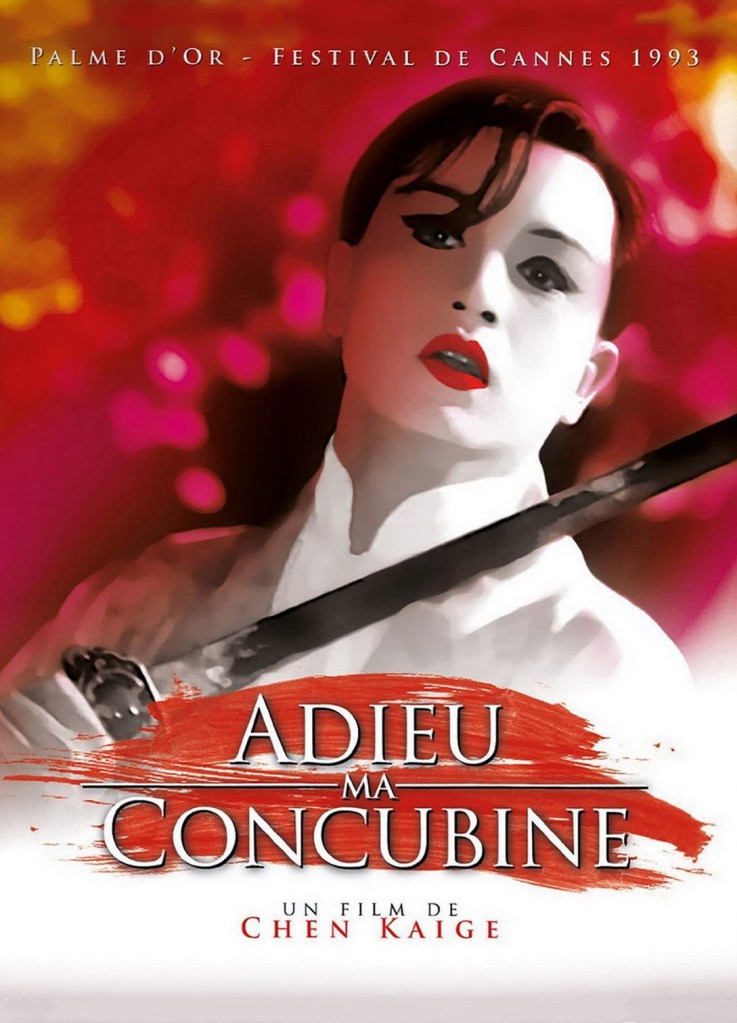
Review of Chen Kaige’s 1993 masterpiece Farewell My Concubine (霸王别姬, Bàwáng Bié Jī) first published by UK Anime Network.
“Why does the concubine have to die?” Spanning 53 years of turbulent, mid twentieth century history, Farewell My Concubine is often regarded as the masterpiece of fifth generation director Chen Kaige and one of the films which finally brought Chinese cinema to global attention in the early 1990s. Neatly framing the famous Peking Opera as a symbol of its nation’s soul, the film centres on two young actors who find themselves at the mercy of forces far beyond their control.
Beginning in 1924, Douzi (later Cheng Dieyi) is sold to an acting troupe by his prostitute mother who can no longer care for him. The life in the theatre company is hard – the boys are taught the difficult skills necessary for performing the traditional art form through “physical reinforcement” where beatings and torturous treatment are the norm. Douzi is shunned by the other boys because of his haughty attitude and place of birth but eventually finds a friend in Shitou (later Duan Xiaolou) who would finally become the king to his concubine and a lifelong companion, for good or ill.
Time moves on and the pair become two of the foremost performers of their roles in their generation much in demand by fans of the Opera. However, personal and political events eventually intervene as Xiaolou decides to take a wife, Juxian – formerly a prostitute, and shortly after the Japanese reach the city. Coerced by various forces, Dieyi makes the decision to perform for the Japanese but Xiaolou refuses. After the Japanese have been defeated Dieyi is tried as a traitor though both Xiaolou and Juxian come to his rescue. The pair run in to trouble again during the civil war, but worse is to come during the “Cultural Revolution” in which the ancient art of Peking Opera itself is denounced as a bourgeois distraction and its practitioners forced into a very public self criticism conducted in full costume with their precious props burned in front of them. It’s not just artifice which goes up in smoke either as the two are browbeaten into betraying each other’s deepest, darkest secrets.
Farewell My Concubine is a story of tragic betrayal. Dieyi, placed in the role of the concubine without very much say in the matter, is betrayed by everyone at every turn. Abandoned by his mother, more or less prostituted by the theatre company who knowingly send him to an important man who molests him after a performance and then expect him to undergo the same thing again as a grown man when an important patron of the arts comes to visit, rejected by Xiaolou when he decides to marry a prostitute and periodically retires from the opera, and finally betrayed by having his “scandalous” secret revealed in the middle of a public square. He’s a diva and a narcissist, selfish in the extreme, but he lives only for his art, naively ignorant of all political concerns.
Dieyi doesn’t just perform Peking Opera, he lives it. His world is one of grand emotions and an unreal romanticism. Xiaolou by contrast is much more pragmatic, he just wants to do his job and live quietly. On the other hand, Xiaolou refuses to perform for the Japanese (the correct decision in the long run), and has a fierce temper and ironic personality which often get him into just as much trouble as Dieyi’s affected persona. The two are as bound and as powerless as the King and the Concubine, each doomed and unable to save each other from the inevitable suffering dealt them by the historical circumstances of their era.
The climax of the opera Farewell My Concubine comes as the once powerful king is finally defeated and forced to flee with only his noble steed left beside him. He begs his beloved concubine to run to sanctuary but such is her love for him that she refuses and eventually commits suicide so that the king can escape unburdened by worry for her safety. Dieyi’s tragedy is that he lives the role of the concubine in real life. Unlike Xiaolou, his romanticism (and a not insignificant amount of opium) cloud his view of the world as it really is.
It’s not difficult to read Dieyi as a cipher for his nation which has also placed an ideal above the practical demands of real living people with individual emotions of their own. Farewell My Concubine ran into several problems with the Chinese censors who objected not only to the (actually quite subtle) homosexual themes, but also to the way China’s recent history was depicted. Later scenes including one involving a suicide in 1977, not to mention the sheer absurd horror of the Cultural Revolution are all things the censors would rather not acknowledge as events which took place after the birth of the glorious communist utopia but Farewell My Concubine is one of the first attempts to examine such a traumatic history with a detached eye.
Casting Peking Opera as the soul of China, Farewell My Concubine is the story of a nation betraying itself. Close to the end when Dieyi is asked about the new communist operas he says he finds them unconvincing and hollow in comparison to the opulence and grand emotions of the classical works. Something has been shed in this abnegation of self that sees the modern state attempting to erase its true nature by corrupting its very heart. Full of tragic inevitability and residual anger over the unacknowledged past, Farewell My Concubine is both a romantic melodrama of unrequited love and also a lament for an ancient culture seemingly intent on destroying itself from the ground up.
Farewell My Concubine is released on blu-ray in the UK by BFI on 21st March 2016.
Original US trailer (with annoying voice over):
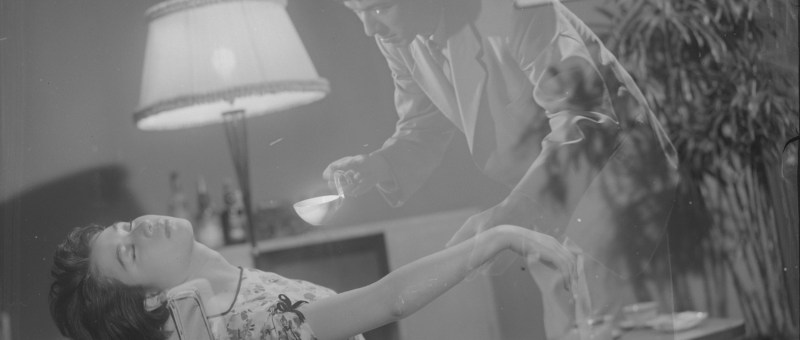
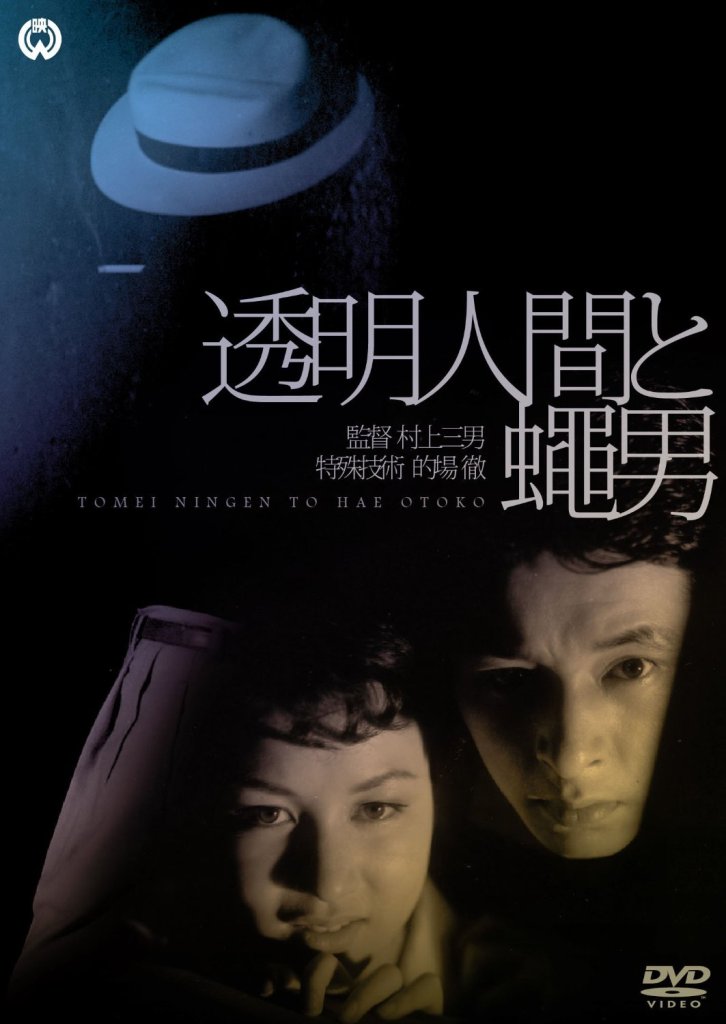 Who would win in a fight between The Invisible Man and The Human Fly? Well, when you think about it, the answer’s sort of obvious and how funny it would be to watch probably depends on your ability to detect the facial expressions of The Human Fly, but nevertheless Daiei managed to make an entire film out of this concept which is a sort of late follow-up to their original take on
  Where oh where are the put upon citizens of martial arts movies supposed to grab a quiet cup of tea and some dim sum? Definitely not at Boss Cheng’s teahouse as all hell is about to break loose in there when it becomes the centre of a turf war in gloomy director Kuei Chih-Hung’s social minded modern day kung-fu movie The Teahouse (成記茶樓, Cheng Ji Cha Lou).

 Released in 1949, The Invisible Man Appears (透明人間現る, Toumei Ningen Arawaru) is the oldest extant Japanese science fiction film. Loosely based on the classic HG Wells story The Invisible Man but taking its cues from the various Hollywood adaptations most prominently the Claude Rains version from 1933, The Invisible Man Appears also adds a hearty dose of moral guidance when it comes to scientific research.
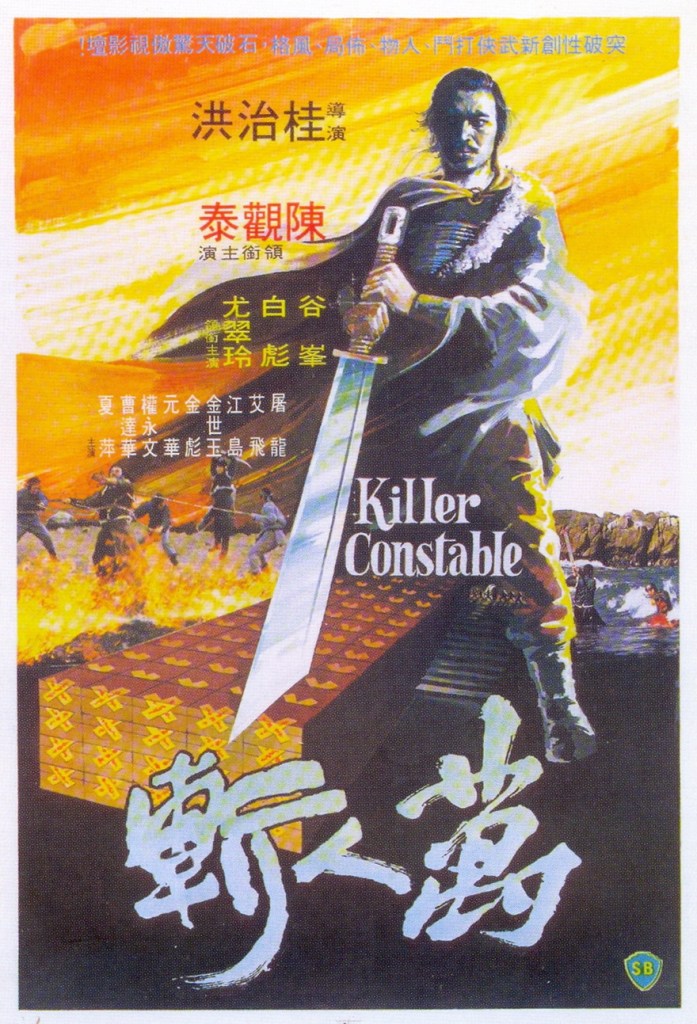 Every sovereign needs that one ultra reliable and supremely talented servant who can be called upon in desperate times. For the Dowager Empress of the Qing Empire, that man is Leng Tien-Ying – otherwise known as the Killer Constable. When a sizeable amount of gold goes missing from the Imperial Vaults, it’s Leng they call to try and get it back. However, what Leng doesn’t know is that there’s far more going on here than he could possibly have imagined and he’s about to wade into a trap so deep that you never even see the bottom.
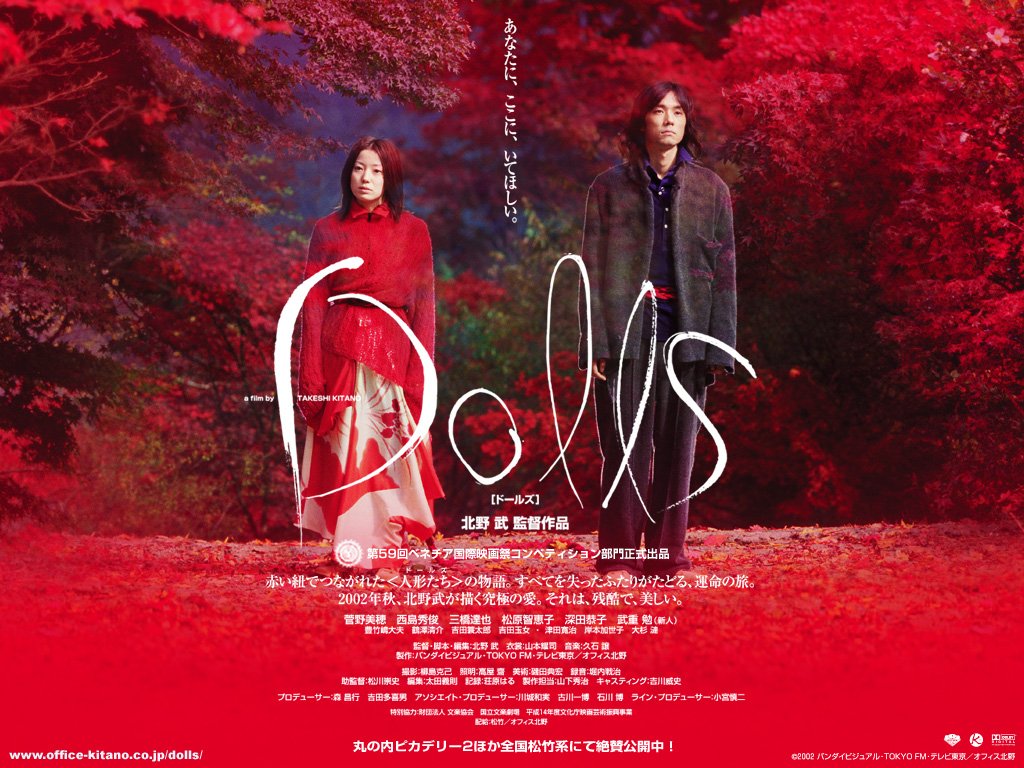 Outside of Japan where he is still primarily thought of as a TV comedian and celebrity figure, Takeshi Kitano is most closely associated with his often melancholy yet insistently violent existential gangster tales. His filmography, however, is one of the most diverse of all the Japanese “auteurs” and encompasses not only the aforementioned theatre of violence but also pure comedy and even coming of age drama. Dolls is not quite the anomaly that it might at first seem but perhaps few would have expected Kitano to direct such a beautifully colourful film inspired by one of Japan’s most traditional, if most obscure, art forms – bunraku puppet theatre.
 Italian cinema once had a hearty appetite for genre fare, but has long since abandoned the weird and wacky in favour of the arty or the populist. You wait years for an Italian superhero movie and then two come along at once. Following on from Gabriele Salvatores’ much younger skewing The Invisible Boy which perhaps owed more to Spy Kids than anything else, first time director Gabriele Mainetti brings us a bloody, R-rated yet humour filled look at the superhero genre filtered through Japanese manga and anime rather than US comic books.
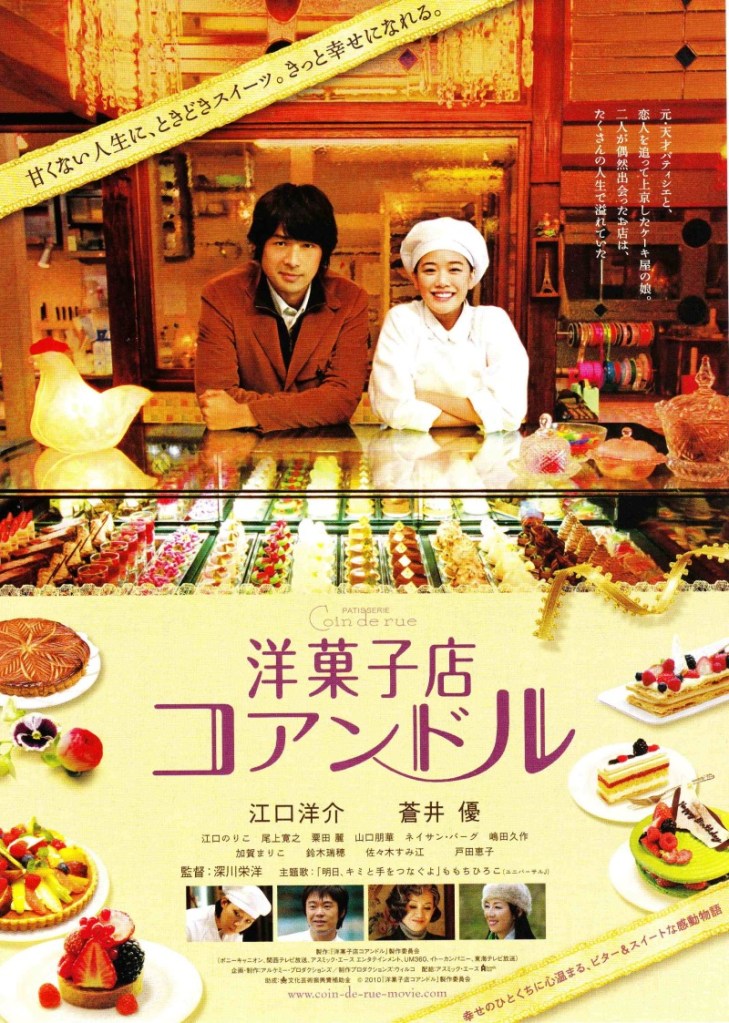 You know how it is, when you’re from a small town perhaps you feel like a big fish but when you swim up to the great lake that is the city, you suddenly feel very small. Natsume has come to Tokyo from her rural backwater town in Kagoshima to look for her boyfriend, Umi, who’s not been in contact (even with his parents). When she arrives at the patisserie he’d been working at she discovers that he suddenly quit a while ago without telling anyone where he was going. Natsume is distressed and heartbroken but notices that the cafe is currently hiring and so asks if she may take Umi’s place – after all she grew up helping out at her family’s cake shop!
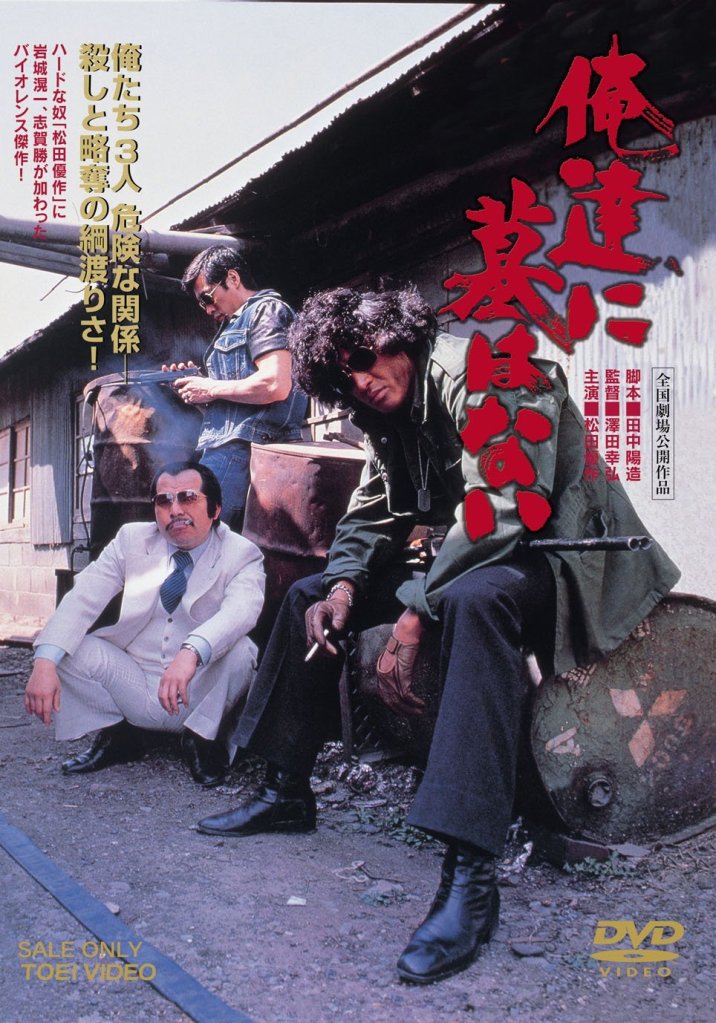 Though he might not exactly be a household name outside of Japan, the late Yusaku Matsuda was one of the most important mainstream stars of the ‘70s and ‘80s. Had he not died at the tragically young age of 40 after refusing chemotherapy for bladder cancer to star in what would become his final film, Ridley Scott’s Black Rain, he’d undoubtedly have continued to move on from the action genre in which he’d made his name. No Grave For Us (俺達に墓はない, Oretachi ni Haka wa Nai) is fairly typical of the kinds of films he was making in the late ‘70s as he once again plays a cool, streetwise hoodlum mixed up in a crazy crime world where no one can be trusted.
