This Year’s Love (今年の恋, Keisuke Kinoshita, 1962)

The friendship between two underachieving teenage boys hints a series of conflicts in a changing society while accidentally bringing their respective siblings together in Keisuke Kinoshita’s cheerful romantic comedy, This Year’s Love (今年の恋, Kotoshi no Koi). In many ways, it’s the older siblings who appear to be stuck while the parents are largely content to let life be and the boys rejecting the conventional paths laid out for them while attempting to overcome their loneliness and sense of despair through the sincerity of their interclass friendship. 

As the film opens, high school boys Hikaru (Masakazu Tamura) and Ichiro (Ryuji Ishikawa) have been lured to a patch of grass above the city where they’re assaulted by an older bully who for some reason resents the fact that they weren’t wearing their traditional students caps even though such things are perhaps already outdated in the rapidly changing society of 1962. In any case, Hikaru vows revenge, deciding to give up golf club and a series of other things to take up boxing, instructing Ichiro to abandon the “girly” sport of basketball and join him. Neither boy is currently doing very well at their studies, with Ichiro’s prim and proper sister Mikako (Mariko Okada) convinced that Hikaru is a bad influence on her brother assuming that he is another spoilt rich kid set on leading him astray. 

In fact, she’s not entirely wrong. Hikaru does seem to be somewhat aimless probably because his family is wealthy and he doesn’t see much urgency in the situation nor hold that kind of anxiety for his future though is fond of telling people that he feels quite depressed. While Ichiro lives in Ginza where his family run a successful restaurant, Hikaru lives in a large townhouse in nearby Yokohama cared for largely by their kindhearted housekeeper (Chieko Higashiyama) and a live-in maid while his older brother Tadashi (Teruo Yoshida) is currently a graduate student heading towards a regular salaryman job. Their mother having died some time ago and their father always away on business, care for Hikaru has largely fallen to Tadashi who is nevertheless a young man himself with his own life to be getting on with. Similarly Mikako has largely taken on a maternal role when it comes to caring for Ichiro because her parents are always busy with the restaurant. Part of the reason she’s resentful of Hikaru is that she’s the one the school keeps calling in about her brother’s poor academic performance while Ichiro is always off messing around with his rich kid friend. 

Mikako seems to take against Hikaru in part because he is rich, assuming that wealthy people are necessarily decadent and lazy while concerned that Ichiro’s head is being turned by seeing the way the other half live without understanding what it takes to live that way. The Aikawas aren’t exactly poor, they also have a live-in maid and their quarters behind the restaurant are spacious enough, though they couldn’t quite claim to be middle class because they work in the hospitality sector which is still somewhat looked down upon. In any case, dressing exclusively in kimono Mikako is extremely uptight and obsessed with properness. She further takes against the Yamadas after an awkward first meeting with Tadashi who is dumped by his fed up girlfriend in her restaurant and ends up getting beer thrown in his face, while his father later turns up with his secret longterm mistress, a maid from an inn in Atami, leaving Mikako scandalised and embarrassed. 

Ironically enough, Tadashi’s name quite literally means “correct” though even if he isn’t quite as hardline as Mikako he also wants the best for his brother. Because of the realities of life in post-war Japan, both boys explain that they find it hard to study in part because they are lonely often left home alone with no one to talk to which is one reason they value their friendship so deeply. Hikaru’s mother has passed away and his father is largely absent, while Ichiro’s parents are always working in the restaurant as is Mikako even if she’s largely been delegated other maternal duties. Tadashi and the housekeeper attempt to set Hikaru straight that he needs to do well in school because he’ll have to be able to get a good job to support himself, but Hikaru is part of a new generation that doesn’t the see point in the emptiness of the salaryman lifestyle. Tadashi might not either, but he’s going along with it anyway whereas as Mikako is completely wedded to the idea of aspirational respectability intent that Ichiro should do his best to get into college and catapult himself into the middle classes.

Her cheerfully laidback parents meanwhile barely finished school and have done alright for themselves with restaurant. They aren’t that bothered if Ichiro isn’t academically inclined because they can train him up as a chef even if that isn’t quite the future Mikako had envisaged for him in her upwardly mobile worldview. Nevertheless, she’s not quite as prim as she makes out, sneaking the odd cigarette here and there, and despite herself begins to fall for Tadashi’s goofy charms while bonding in shared love for their siblings. In the end she’s the one who has to learn that it’s alright to have a little fun now and then and if longtime widower Mr Yamada has a girlfriend that’s probably alright too. The boys’ teacher hints that he finds it strange they aren’t more into girls, Hikaru apparently so popular that the phone at his house never stops ringing but he turns them all down because he’s too consumed with ennui to date, introducing an additional transgressive element to their friendship along with their bid for manliness with their new obsession with boxing which as Mikako’s maid points out does feature a series of shirtless musclebound men. Perhaps Mikako’s newfound appreciation for romantic freedom wouldn’t stretch that far, but it does seem to have opened her up to new possibilities in a less judgemental future as she rings in the new year in the old capital of Kyoto. 


The Wild, Wild Rose (野玫瑰之戀, Wong Tin-lam, 1960)

A free-spirited nightclub singer’s dreams of love are shattered by fragile masculinity and an unforgiving society in Wong Tin-lam’s take on the classic opera Carmen, The Wild, Wild Rose (野玫瑰之戀, yě méiguī zhī liàn). Where similar films of the era may paint the heroine’s plight as punishment for her subversion of societal norms, Wong’s musical noir implies that perhaps she was too good, too pure-hearted for the increasingly selfish and judgemental society around her while the man she loves is simply too weak to accept her transgressive femininity. 

It’s with the man, Hanhua (Chang Yang), that we first enter the world of the EW Ritz cabaret bar. An “elite” English graduate, Hanhua has fallen on hard times and unable to find teaching work has been forced to take a job he sees as sordid and degrading as a pianist in a nightclub. He and his teacher fiancée Suxin (So Fung), literally the girl next-door, joke about it outside, Hanhua asking her if she’s worried about all the “pretty bad women” in such establishments and pointing at his engagement ring as an amulet of protection against predatory femme fatales. Once inside, however, he’s instantly captivated by the alluring singer, Sijia (Grace Chang), who nevertheless takes against Hanhua because unbeknownst to him he’s displacing her regular piano player, Old Wang (Lui Tat), who’s being let go by the greedy boss for showing up late because his wife is seriously ill. 

Unable to accept such callous behaviour, Sijia tries to use her position to speak up on Wang’s behalf and almost loses her own job in the process while irritating her stage rival and the boss’ squeeze Meimei (Shen Yun). While Meimei sings a quiet romantic ballad on the dance floor, Sijia embarks on a crowd-pleasing, gender-bending routine in the bar which proves both that she is the star in this establishment and that she can bend the crowd to her will turning them on whoever she sees fit. After a fight breaks out, Hanhua finds himself physically restraining Sijia to prevent her from stabbing Meimei with an icepick. Though this originally annoys her, Sijia is quite clearly turned on watching Hanhua fight off all of the other men who rose up to defend her honour. Once he is wounded, she again asserts her authority by calling them off and proceeding to flirt with Hanhua who leaves with Suxin vowing never to return. 

But as Old Wang had said, it’s tough to find a job these days and faced with his mother’s excitement about his new career prospects Hanhua has no choice but continue working at the Ritz. We can perhaps tell something of Hanhua’s background from the interior of his home which though modest has a large classical portrait on one wall and is otherwise neat and well organised. He evidently envisaged a conventional middle-class life for himself and is humiliated to have been reduced to a mere piano player in a backstreet bar, the kind of place that he sees as sordid and dangerous and would not ordinarily think of himself visiting. He sees Sijia in much the same way but perhaps stops short of admitting her danger, refusing to look at her or only with contempt while furiously denying his barely controlled desires of the kind which were perhaps unleashed by the fight at the bar. 

Yet all the qualities which attract her to him are the ones he eventually wants to destroy in her rebellious goodness and refusal to follow the unjust rules of her society. She tells him point blank not only in her song but repeatedly to his face that she is a fickle woman who believes there are no good men and is essentially in this only for a good time for as long as it lasts. In fact, her interest in him largely stemmed from a bet with a guy at the bar that she couldn’t seduce him in 10 days, stung by his rough rejection of her after the fight. But Hanhua is too conventional a man to understand or accept her. He gives in to his desires after discovering that she slept with a rich man only to get the money for a life saving operation for Old Wang’s wife, witnessing her self-sacrificing goodness and therefore deciding that she is “worthy” of him after all. Ultimately he expects her to play the role of a conventional housewife, refusing to allow her to continue singing in nightclubs even while he is unable to find another job having served time in prison for bludgeoning her abusive ex. His fragile masculinity had also caused him to blow up at Suxin when she went to the headmaster at her school and asked him to give Hanhua a less degrading job, humiliated to have a woman beg for him just he is humiliated to be supported by Sijia and especially by her doing a job he thinks is somehow improper. 

It is not Sijia who ruins Hanhua, but Hanhua himself and the toxicity of conventional social codes that feed into his sense of resentment. His obsessive desire to possess Sijia, to dominate and tame her, drives him to drink and uselessness to the point he completely degrades himself, pathetically pleading with Sijia not to leave, prepared to allow her to return to work or even take other lovers if only she does not abandon him. Sijia meanwhile is in a sense tamed by her love for Hanhua in that she decides that love is sacrifice, that she must live a more conventionally proper life as Hanhua’s wife and eventually that she must separate from him in order to preserve his future. In this she is redeemed in the eyes of Suxin and Hanhua’s mother who realise that she is a good woman who genuinely cared for Hanhua, but is finally done in by her goodness. Her morality cares nothing for properness and all for humanity, her kindness to Old Wang and her best friend eventually repaid while all Hanhua can think of is a redemption of his masculinity through violence driven just like Don José to the peak of madness in obsessive love. But there’s more than just inevitable tragedy in Sijia’s fate, there is a deep sense of injustice and that Hanhua’s actions were as much about stifling her transgressive goodness as they were about vindicating himself as a man which in any case is only pathetic in its unrighteousness. Masterful in its musicality, Wong’s romantic noir positions its heroine as dangerous but only because she is better than the world around her and the world around her knows but does not want to see. 


The Wild, Wild Rose screens in Amsterdam on 27th/29th/31st October as part of this year’s Imagine Fantastic Film Festival.

Lust of the White Serpent (蛇精の淫, Morihei Magatani, 1960)

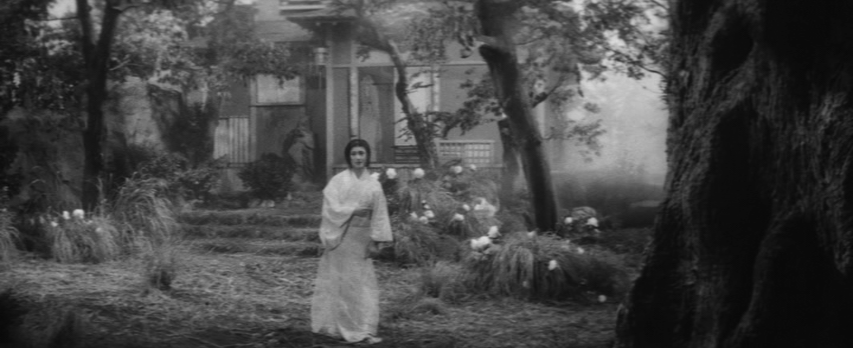
The lingering inequalities of the feudal society are manifested in a snake woman’s thwarted desire for love in Morihei Magatani’s Shintoho horror Lust of the White Serpent (蛇精の淫, Jasei no In). Not quite as salacious as its title may imply, Magatani’s film takes a sympathetic view of the classic snake lady painting her as a tragic heroine betrayed by the codes of the mortal world with its persistent classism and misogyny while offering the conflicted hero caught between the old and the new only a compromised escape in spirituality. 

In what the opening voiceover describes as a local legend that has been passed on “since ancient days” though seemingly taking place in the relatively recent past, village boy Minokichi (Hiroshi Asami) hears a woman’s screams while walking along a mountain path and investigates to find her writhing around in the long grass. Having been attacked by a snake, the woman, Kinu (Kinuko Obata), seems confused though Minokichi recognises her as the daughter of the village headman and offers to carry her home. Unfortunately Kinu’s retinue immediately jump to the conclusion that filthy peasant boy Minokichi must have abducted her, roundly beating him for having dared to lay his hands on such a fine lady. “Even if you try to interact with them, they won’t treat you as an equal. This our fate” his mother reminds him cautioning him against any further attempts at interclass friendship. 

The problem is that the half-crazed Kinu has apparently imprinted on Minokichi and insists that she will marry only him or else die. This is unwelcome news for her father who had been considering marrying her off to the son of a local businessman who has learning difficulties on the promise of a seat on the prefectural council. As for Minokichi, he is technically betrothed to childhood friend Kiyo (Yumiko Matsubara) but is growing resentful having fallen for Kinu but knowing that their romance is impossible because of the barrier of social class. In a surprising move, Kinu’s father chooses his daughter’s happiness over both the current social order and his own financial gain in formally offering Kinu to Minokichi who is then conflicted, at first reassuring Kiyo that he cannot accept only for her to tell him that he must on hearing the rather naive conviction of the local policeman that this taboo-breaking interclass union will liberate the villagers from their subjugation by the townspeople and they’ll never be looked down again. 

As it turns out, Kinu has been possessed by the spirit of a snake woman, Sakurako, who fell in love with Minokichi after he saved her when she became trapped on a rock. The pair had had a brief affair a year earlier which Minokichi’s mother had put a stop to fearful that Minokichi was falling victim to a curse and that Sakurako meant to drain him of his energy and move on. “My background doesn’t matter, does it?” Sakurako had ironically asked having explained to Minokichi that she was just “a poor girl with no one to turn to” echoing the forbidden quality of Minokichi’s romance with Kinu. Yet their relationship is also transgressive in spanning two worlds. “Intimacy with an animal is non-Buddhistic behaviour” Minokichi is later scolded by an intense priest though still finding himself drawn to Sakurako despite the entreaties of his mother and Kiyo trying to drag him back to the village and his “proper” place in the contemporary social order. 

As for Kinu little thought is given to this reckless usurpation of her body, Sakurako seemingly having chosen her to appeal to Minokichi’s desire for social advancement. Once everyone knows she is possessed by a snake spirit things get even stranger with some of the men in the village believing that the only way to tell is to sleep with her. Having tried a shinto shamaness who confirmed a diagnosis of possession by a white snake, Kinu’s father tries a Western doctor branded a “horny weirdo” by the villagers. Despite everyone knowing this and that he is clearly drunk, the doctor is left alone in a room with Kinu and proceeds to rape her while the servant Sakuzo who had beaten Minokichi merely for touching his mistress watches silently from outside. When Sakurako strangles the doctor, winding her snake body around his chest, it is read as an expression of the snake’s curse, everyone instantly understanding what the doctor had done but merely covering up the crime while later petitioning Kinu’s father to have her sent away to save them from the havoc she is wreaking with storms, droughts, and floods in protest at her unhappy fate. 

Minokichi who was supposed to unite two worlds and dissolve barriers finds himself in a liminal state no longer a member of either, Kiyo’s father refusing to welcome him back into the village while having separated from Kinu on realising she is a snake woman denies him a place in the town. While he tells himself that he should know his place, reintegrate himself into the village and accept his proper social role by settling down and marrying Kiyo as he was supposed to do he cannot let go of his desire for Sakurako/Kinu and in the end cannot resist following her even if or perhaps precisely because it may lead to his death. When the “curse” is broken he is led away once again only this time by the priest as a new devotee of Buddhism reinforcing a spiritual message but ironically also implying that Minokichi’s fault was in trying to help others, firstly the snake and secondly Kinu, when he should like his mother advised have minded his own business and refrained from interacting with those outside of his immediate community be they beautiful noblewomen or alluring snake spirits. Though light on effects, Magatani ups the atmosphere with copious fog while employing a series of dissolves for the snake women’s transformations and some superimposition for their wrathful curses. The message may be know your place or you’ll end up nowhere, but the film nevertheless has unexpected sympathy for the lonely Sakurako beaten into submission by a cruel and misogynistic society. 


Original trailer (no subtitles)

The Hunter’s Diary (猟人日記, Ko Nakahira, 1964)

Ko Nakahira is most closely associated with the seminal Nikkatsu Sun Tribe film Crazed Fruit which sent Yujiro Ishihara to stardom though he began his career at Shochiku in 1948 alongside Seijun Suzuki who like Nakahira would transfer to the newly re-established Nikkatsu when it resumed production in 1954. Suzuki was rather famously let go in 1968 due to creative differences with Nakahira also leaving the studio that year in similar circumstances having decamped to Shaw Brothers in Hong Kong in 1967 where he remade some of his previous hits including 1964’s Hunter’s Diary (猟人日記, Ryojin Nikki). 

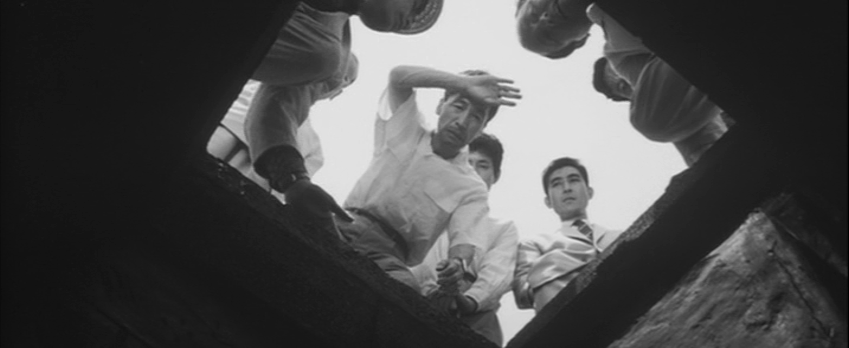
Based on a mystery novel by Masako Togawa who in fact stars in her only film role as the hero’s little seen wife, Hunter’s Diary is one of a string of films in the mid-1960s critical of the functioning of the legal system in the post-war society. Nakahira opens with a lengthy sequence introducing new forensic technologies which anticipate the use of DNA as an investigative tool in the use of blood type analysis to place a suspect at a crime scene. This science will however be undercut by the sympathetic lawyer Hatanaka (Kazuo Kitamura) who reminds us that the presence of such evidence is not proof in and of itself in much the same way that DNA has since become the new smoking gun and is as susceptible to misuse as any other kind of forensic technique. 

It’s a problem for the hero, Honda (Noboru Nakaya), because his blood type is incredibly rare. In fact he was once in the paper for saving a baby by coming to the rescue with a donation just in time which as we later discover is ironic because much of his behaviour is shaped by the loss of his own child who was born with osteogenesis imperfecta and did not survive. The traumatic circumstances of the birth left his wife, Taneko, with a fear of pregnancy that eventually destroyed their marriage. The couple now live largely apart, she in her family’s country mansion painting disturbing pictures and he in the city “hunting” women for one night stands adopting the persona of a man who is foreign or part-Japanese. There is something of the fear of foreignness seen in other similarly themed films of the era in the fact that Honda’s child is born in Mexico while the couple had met and married in the US, Taneko convinced that had they returned to Japan earlier her baby may have survived while Honda claims that “intellectual” women are drawn to foreign men as he assumes his rather creepy “Monsieur Soubra” alter-ego complete with a funny accent and slightly broken Japanese. 

He positions his “hunting” as a way of dealing with the collapse of his marriage and his guilt over the death of his child overcoming his sense of impotence through transgressive sexuality though many of the women Hatanaka later interviews describe him as disappointingly vanilla and as we discover his games might have begun long before. Meanwhile the women are themselves judged for their sexuality, the discovery of a male muscle magazine in the home of a mousy spinster somewhat amusing to Honda while the unintended darkness of his sport is brought home by the film’s opening sequence in which a 19-year-old woman who became pregnant after he seduced and abandoned her takes her own life in shame and desperation only to be branded an “idiot” by her grieving sister for having slept with a man she had only just met. When a previous conquest of his is murdered in her apartment, Honda is momentarily worried but assumes it’s a grim coincidence. When her death is followed by that of a woman who could have provided him with an alibi he comes to the conclusion that someone is trying to frame him. 

Hatanaka’s conviction is that “the law is everything in court” and that Honda should not be judged on his moral character for his sleazy philandering only on the basis of the evidence presented which he believes may have been deliberately planted to incriminate him. His investigations take him to unlikely places discovering the potentially unethical practices of blood donation programs along with the illegal sale of blood and other bodily fluids such as semen while seeing the tables turned on visiting a gay bar where a male sex worker reports a weird encounter with a suspicious client, and salesman continues to frequent a Turkish bath hoping to run into a woman who seduced him but may only have been interested in his blood type. Honda soon forgets the name of the woman who took her own life, but is haunted by the visions of the women he has harmed while simultaneously rejecting the labels placed on him as a pervert or a predator and believing that his child’s death is punishment for his “abnormal sexuality” as some may brand it. 

This sense of guilt is also reflected in his worry that he is a “spreader of death”, as if though he did not kill them directly he were the carrier of a disease or else some kind of grim reaper beckoning these women towards their demise though he evidently thinks little of them outside of their status as trophies and does not stop to consider the consequences of his actions on others. Above his bed in his city hideout (officially he lives in a hotel) there is a picture of a fox hunt making plain that his satisfaction lies in the chase rather than its conclusion yet otherwise his motives are rather banal. He cannot leave his wife because he married into her prominent family and his social standing depends on his connection to them, likewise he decides against alerting the police or the building’s caretaker on discovering one of the women’s bodies because his reputation would be ruined if were to become involved in a murder and his secret life exposed. Ironically his salvation comes precisely because of this social standing when his wealthy father-in-law hires Hatanaka to handle his appeal and save him from the death penalty. 

Hatanaka had resigned from a previous position in opposition to the system, disappointed on meeting the lawyer who defended Honda at trial and realising they did not attempt to mount a defence nor investigate his case simply try to mitigate it in the hope of working it down to a custodial sentence. He instructs his naive young assistant who wonders if Honda is the sort of man they should be saving that she should approach every case on its merits as if the defendant is innocent without bringing in external moral judgements on his character. As he tells him, Honda may be legally vindicated but his moral judgement would depend on how he lives his life from then on later offering him a kind of absolution in telling him that one of his conquests, who does not want to be identified, gave birth to a son who is healthy and happy signalling that his is not an original sin and he does not bear that kind of responsibility for the death of his child. Veering towards the avant-garde Nakahira makes frequent use of superimposition and dissolves to reflect Honda’s fracturing mental state along with the persistence of his guilt while shifting into the purely documentarian in his lengthy explanation of forensic techniques and the science behind blood types but always returns to the Hitchcockian interplay of sex, death, and remorse which is true source of Honda’s trial. 


DVD remaster trailer (no subtitles)

The Approach of Autumn (秋立ちぬ, Mikio Naruse, 1960)

For a small boy in post-war Japan, childhood’s summer is already over in Mikio Naruse’s at times uncharacteristically cheerful The Approach of Autumn (秋立ちぬ, Aki Tachinu) . In truth, the Japanese title is the slightly more depressing “autumn has begun” echoing the dismal circumstances that the hero eventually finds himself in while working his way towards an understanding of the disappointments and loneliness of adulthood. Abandoned by his mother he remains alone, in a sense homeless, trapped between the new Japan and the old in a liminal space shrinking by the hour as the construction of modernity encroaches all around him. 

The amazement on Hideo’s (Kenzaburo Osawa) face is palpable as he exits a train station in the middle of Tokyo peering up at the high rise buildings amid busy city streets. He and his mother Shigeko (Nobuko Otowa) have travelled by train from rural Nagano following the death of his father intending to stay with his mother’s brother (Kamatari Fujiwara) who owns an old-fashioned grocery store in Ginza. What Shigeko has not really explained to her son is that they will not be living there together as she has taken a job as a live-in hostess at a nearby inn. 

Plunged into this unfamiliar world all alone, Hideo cannot help but feel awkward in the house of relatives he has never before met. His grown-up cousins playfully argue in front of him about having to share a room, while he makes a point of not eating too much at dinner though as Harue (Hisako Hara) jokes perhaps he doesn’t like the food seeing as his penny pinching uncle mainly feeds the family on fruit and veg from the store that’s gone past its best. Meanwhile, he struggles to make friends with the local children who mock his country bumpkin accent and use him as a scapegoat when it looks like they might get in trouble. His only companion is the precocious daughter of the owner of the inn where his mother works, Junko (Futaba Hitotsugi), who instantly takes to him and even goes so far as to beg her mother to adopt Hideo as an older brother. 

Junko is in a similarly liminal position herself as we later find out. Her mother (Murasaki Fujima) is the mistress of a wealthy businessman who only visits them every so often and appears to be well aware of the precarity of her position. Junko’s father, awkwardly inviting her out on a playdate with his other two children born to his legal wife who apparently knows everything and at least pretends to be alright with it, urges her mother to take advantage of rocketing Ginza land prices and sell the inn to buy a fancy new apartment but she is understandably wary. Running an inn is all she knows how to do and should he die or simply decide to drop her she’d be in trouble fairly quickly. Hideo’s cousins similarly nag their father to sell the shop, reminding him that with the increasing gentrification of the area there is no longer sufficient footfall to support it, and suggesting they use the money to buy larger premises in suburbia. Both Hideo and Junko are in a sense orphans of these liminal spaces, relics of a disappearing Japan soon to be eclipsed by endless office buildings symbols of the nation’s increasing economic prosperity. 

All of the sites on which the children play are earmarked for construction, Junko later explaining that the docks where they eventually head looking for the sea are built on reclaimed land big enough to build a baseball field. Like Hideo she longs for the country with clean air and unpolluted rivers though as Hideo points out it’s all the same to him, his mother isn’t in either place and so neither has any meaning for him. Her strange idea of adopting Hideo is in a way an attempt to anchor herself with family, assuring her mother that she’s old enough to understand but struggling to parse her family circumstances while deeply hurt on discovering she does have siblings after all only they don’t want to know her. She is looked down upon because of the choices her mother has made, as is Hideo especially after his mother leaves abruptly with a customer from the inn (Daisuke Kato) abandoning him with his uncle in search of romantic fulfilment which it seems she probably did not find considering a later telegram explaining she’s working as a maid at a hotel in the resort town of Atami. 

Shigeko is made out to be the villain, but she too is only chasing safety in a changing society hoping to find it in the arms of a reliable man be he a husband or not. Hideo may be an obstacle to that, but her anxiety is mostly maternal, unwilling to rely on her brother’s goodwill and knowing she will need to find a way to support her son even if she is not with him. Hideo’s cousins meanwhile are the youth of the new society. Harue has rejected the old-fashioned family grocers and now works in a department store while her former student protestor boyfriend is certain of getting a salaryman job seeing as there’s a massive labour shortage. Shotaro (Yosuke Natsuki), who is always kind to Hideo, runs around town on his scooter ferrying girls to the beach sometimes forgetting his melancholy cousin in favour of transitory pleasures. He envisages taking over the store and selling it to open up somewhere new, reassuring Hideo that there will always be a place for him there even while letting him down in the present. 

In the end, Hideo’s only friend is a beetle packaged in a box of apples from his grandma in the country which his uncle selfishly claims for the shop under the rationale that he can’t eat them all himself. A symbol of an older, rural Japan as well of the idyllic childhood for which Hideo’s longs, the beetle is as out of place in central Tokyo as he is the pair of them looking down on the sprawling city and out towards the barely visible sea from the roof of a department store which holds no sense of promise for them. Despite the bleakness of the ending, Naruse’s depiction of an ordinary childhood is deceptively cheerful perhaps implying that Hideo is merely enduring a period of adjustment only to leave him with the crushing weight of impossibility, trapped between the new society and the old with no home to go to. 


French release trailer (French subtitles only)

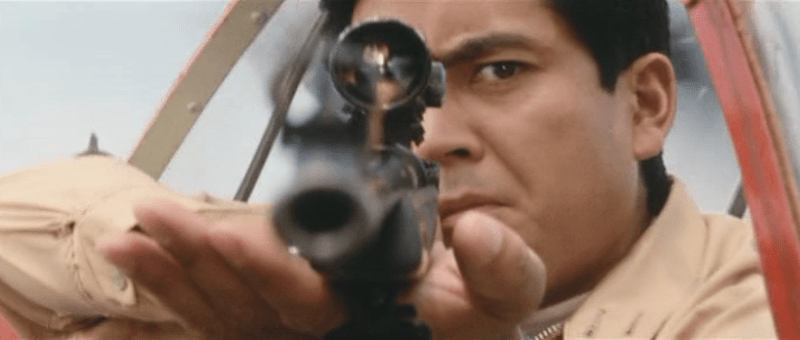
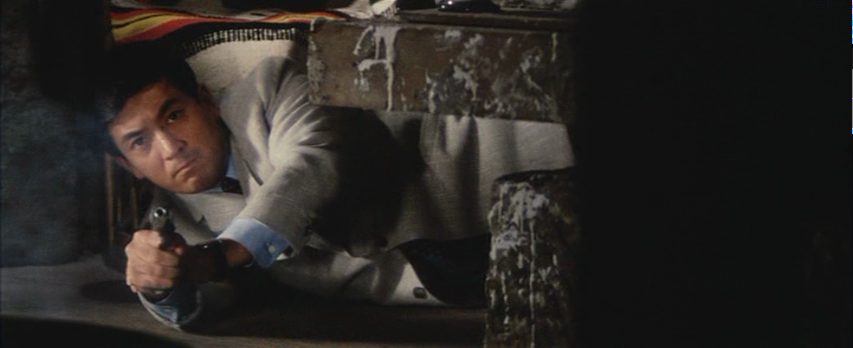
The Age of Assassins (殺人狂時代, Kihachi Okamoto, 1967)

“Hey, what’s going on around here?” a sidekick asks directly to camera at the conclusion of Kihachi Okamoto’s characteristically anarchic conspiracy-thriller-cum-spy-spoof The Age of Assassins (殺人狂時代, Satsujinkyo Jidai). Sparked by Bond mania, the late 1960s saw a marked trend in B-movie espionage parody though Okamoto’s take on the genre is darker than the norm even if embracing his trademark taste for absurdist humour leaving us wondering who our hero really is and which side, if any, he’s really on in the confusing geopolitical realities of 1967 Japan. 

As we first meet him, the hero is bumbling professor of criminal psychology Shinji Kikyo (Tatsuya Nakadai) who has extreme myopia and a persistent case of athlete’s foot not to mention a prominent mother complex. Unbeknownst to him, he’s one of three targets picked not quite at random by Rudolf von Bruckmayer (Bruno Lucique), former Gestapo chief, who is interested in hiring some assassins trained by the megalomaniac psychiatrist Mizorogi (Hideyo Amamoto) who’s been turning his mentally distressed patients into hyper-efficient killing machines (sometimes literally) under the rationale that all great men throughout history have been in a certain sense “crazy”. Mizorogi is also in charge of a eugenicist project titled “The Greater Japan Population Control Council” which believes that Japan is already overpopulated but they have to ensure that “the lives of people who might become useful in the future must not be destroyed before they’re born.” Therefore, “the people who will be useless should be asked to bow out”, the assassin calmly explains shortly before Shinji is saved by the divine energy of his late mother as her bust falls from a shelf and knocks the killer out. 

The central conceit plays into a real anxiety about the post-war baby boom expressed in earlier films such as Yuzo Kawashima’s Burden of Love while attacking the capitalistic philosophy that regards some people as more useful than others. By the late 1960s, Nazis had begun to make frequent appearances in these kinds spy spoofs as comedy villains usually crazed to the point of being little real threat. Mizorogi too is eventually exposed as exalting the “mad” interested more in the art of chaos and the impulse to murder than in any greater political goal. Indeed, the central MacGuffin turns out to be less to do with a grand conspiracy to create some kind of super society than the very B-movie-esque missing diamond known as Cleopatra’s Tear.

Okamoto piles each of these subplots one on top of the other as if he were making it up as he goes along suddenly undercutting what we thought we knew with an unexpected reversal. Shedding his glasses and shaving his scraggly beard, Shinji shifts from myopic professor to suave super agent using profiling and psychology to stay one step ahead while encountering plots by spiritualist cults, overly cheerful self defence force officers in the middle of training exercises, and eccentric assassins. From a modern standpoint, it might seem uncomfortable that each of the killers is manifesting disability in order to seem non-threatening, a female operative concealing a deadly weapon behind an eyepatch, while her poetry-obsessed colleague stores his in a fake crutch, but then again they are each pawns of a game being played by the crazed Mizorogi. Aided by female reporter Keiko (Reiko Dan) and car thief sidekick Otomo Bill (Hideo Sunazuka), Shinji seems to bumble from one bizarre episode to another but may actually be far more in charge of the situation than we might have assumed. 

Among the most visually striking of Okamoto’s late ‘60s pictures and once again making great use of animation, Age of Assassins features high concept production design, Mizorogi’s asylum lair a maddening corridor of Omega-shaped passages with ornate cell bars on either side behind which we can see a room full of men often engaged in what seems to be a military exercise regime while the plaster effigies of human form seem to be bursting from the walls. As in all of Okamoto’s films the central message lies in the absurdity of violence suggesting in a sense that the dog-eat-dog ethos of contemporary capitalist consumerism is in itself a kind of internecine madness countered only by Shinji’s rather childish mentality crafting his various gadgets out of household objects while attacking this elitist individualism with nothing more sophisticated than a vegetable peeler. 


Original trailer (no subtitles)

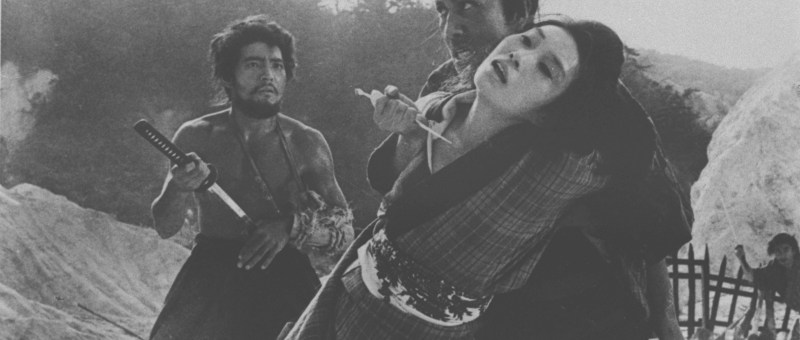
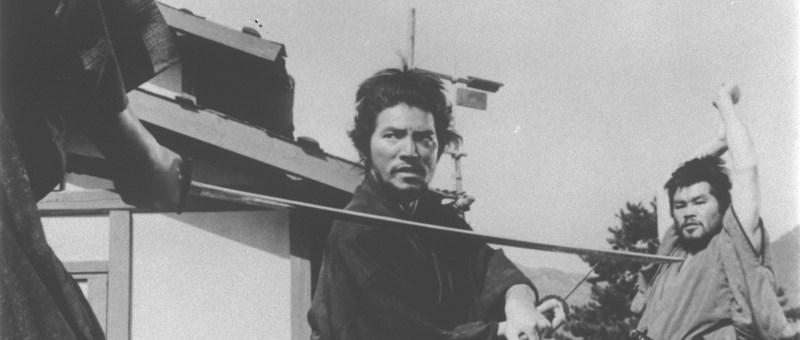
Kill! (斬る, Kihachi Okamoto, 1968)

“Samurai aren’t as great as you might think” according to a jaded retainer in Kihachi Okamoto’s Kill! (斬る, Kiru) but it’s a message that the ambitious farmer at the film’s centre struggles to take in. Having been a victim of samurai violence he resolves to become a samurai while a former samurai turned yakuza drifter attempts to show him the hypocritical realities of the samurai life as they find themselves swept into local intrigue when a band of young revolutionaries arrive to cut down a corrupt and oppressive lord. 

Corrupt and oppressive is perhaps the defining image of the samurai in post-war cinema, but like the film’s title that cuts both ways. Farmer Tabata (Etsushi Takahashi) sold his lands to buy a sword after witnessing peasants cut down during an uprising but he’s decided the best way out of oppression is to become an oppressor and is dead set on achieving samurai glory through the time-honoured method of distinguishing himself in battle. That may prove a little difficult given that his new boss, Ayuzawa (Shigeru Koyama), immediately mocks him for swinging his sword as if it were a scythe. Then again as former samurai Genta (Tatsuya Nakadai) explains to him, if you don’t know what you’re doing you can always just stab people which at the end of the day does rather undermine the idea of samurai elegance in the art of killing. 

Genta keeps trying to tell Tabata that “samurai are no good” but Tabata still wants to be one anyway even after learning that Ayuzawa means to double cross them, hiring ronin to take out the young samurai whose sense of honour he manipulated to eliminate the admittedly corrupt (but aren’t they all?) lord for his own political gain while planning to send in his retainers to finish off the job to ensure there are no witnesses. Genta gave up his samurai status because he was “disgusted” by just this sort of duplicity along with the meaningless codes of loyalty that govern samurai society and caused him to betray a friend who was acting only in the interests of justice. Leader of the ronin Jurota (Shin Kishida) did something similar though in his case for love when his fiancée’s father was condemned on false charges and she and her mother exiled. He wants not land or status but only money in order to redeem the woman he loves from a geisha house and like Genta is under no illusions about the nature of samurai life having figured out most of what’s going on but hoping to emerge with the means to liberate both himself and his wife from samurai oppression. 

Even the elderly chamberlain later rescued by Genta tries to warn Tabata that the samurai life isn’t all it’s cracked up to be, hinting at the ways they are also oppressed by their own code while clearly gleeful to have had the opportunity of stepping into a teahouse for the first time responding to Genta’s request to stay put that if he could he’d like to stay put for the rest of his days. Both former samurai, neither Genta nor Jurota are minded to draw their swords knowing that whatever the outcome it would be unhappy while the young who thought it was their duty to change the world by removing one who brought shame on their names are faced with the realisation that they have been used and their resistance will count for nothing. Even their bond as brothers banding together to achieve a common goal is eventually disrupted by alcohol and petty jealousy.

Genta acts as a kind of chorus, touched by the naivety of the seven samurai holed up in a mountain lodge because they believed in justice, while knowing that the society itself is innately unjust and already beyond redemption. Tabata eventually comes to a similar conclusion having gained samurai status but found it quite literally uncomfortable deciding to shake off his newfound nobility and rejoin Genta as a cynical yet pure hearted wanderer because the only way to escape samurai oppression is to actively live outside it. The final irony is that it’s the elderly chamberlain who eventually sets him, and all they women trapped in indentured servitude at the geisha house, free using samurai gold to enable them to escape a system he himself cannot escape but does not exactly support while Genta enlists the help of local peasants to hold a festival of rebellion to cover the final assault. Marked by Okamoto’s characteristically absurd humour and cartoonish composition along with the eerily gothic emptiness of the deserted ghost town where not even yakuza can survive the film takes on a quasi-spiritual dimension in which Genta and the gang eventually walk out of hell if only into a purgatorial freedom. 


Kill! screens at Japan Society New York on Sept. 2 as part of the Monthly Classics series.

Original trailer (no subtitles)

The End of Summer (小早川家の秋, Yasujiro Ozu, 1961)

Fathers in Ozu are usually sentimental and doting, sometimes insensitive or austere, but by and large responsible. The crises the family faces are generally emotional more than they are practical, few Ozu fathers fail in a duty of care towards their wives and children. And then, there’s Manbei (Ganjiro Nakamura). The hero of Ozu’s penultimate film, The End of Summer (小早川家の秋, Kohayagawa-ke no Aki), is quite the opposite. He does as he pleases and enjoys his life to the fullest without really noticing the effect his behaviour has those around him. But then, as his sister later puts it, he was a very happy man which is rare thing in this society so perhaps he had something right after all. 

Produced for Toho and set in Osaka rather than the usual Shochiku and Tokyo, the film opens not with Manbei but with his brother-in-law Kitagawa (Daisuke Kato) trying to set up Manbei’s widowed daughter-in-law Akiko (Setsuko Hara) with a widowed industrialist obsessed with cows. Meanwhile, the family is also trying to find a match for his youngest daughter, Noriko (Yoko Tsukasa), who is put off by the whole idea of an arranged marriage and worried that Manbei and her older sister Fumiko (Michiyo Aratama) may try to pressure her into accepting because their family sake brewery is trouble. Fumiko’s husband Hisao (Keiju Kobayashi) is technically running the brewery and favours a merger to save the business but Manbei is resistant. Manbei himself is largely absent and his increasing habit of skipping out during the day is beginning to worry the family, especially when they discover he’s been visiting an old mistress with a 21-year-old daughter he thinks is his. 

Followed to a cafe, Manbei exclaims that summer refuses to end in an accidental metaphor for his life. For him everything is sunshine and rainbows, scuttling away from the family home like a little boy sneaking out after dark while the now grownup kids are left behind to clean up his messes. Manbei is a widower, and aside from the financial dimension, perhaps it’s not a huge problem if he wants to go and hang out with an old flame, but Fumiko in particular is scandalised remembering the various humiliations he put her late mother through when she was just a child. Hisao advises her that perhaps it’s best not to bring it up. Manbei isn’t going to change his behaviour and it’s only going to create more drama whereas it might be more manageable if they all pretend not know. Fumiko, however, can’t stay silent even if she knows her father isn’t going to listen to her and in fact lies quite baldly about what he’s been doing in Kyoto. 

Fumiko is on the side of marrying Noriko off, but unlike her husband, father, and uncle, is keen to emphasise that they should move slowly and be sure to take her feelings into account. Rather than her sister, Noriko turns to Akiko for support. Originally in favour of meeting the prospective husband, after all you can always turn it down if you don’t like him, she cautions Noriko that the most important thing is character rather than behaviour and that it’s essential to marry without regret. Noriko feels as if she’s obliged to do as everyone says, but is secretly in love with a young man she met on a skiing holiday who has just been transferred to Sapporo. Akiko, meanwhile, was not altogether taken with the cow-loving widower, but in any case would prefer to maintain her present way of life as a single mother even while others pressure her to remarry. 

The conclusion Noriko comes to is, perhaps strangely, inspired by her carefree father in that she decides it’s best to do what will make her the most happy rather than simply going along with what everyone else wants her to do which may or may not be in her best interest. Fumiko grudgingly admits that though her father was often exasperating perhaps he was the only thing holding the family together. Ozu broadly lends the irresponsible but never malicious Manbei tacit approval in celebrating the fact that he lived the life he wanted to live and he was at least defiantly happy in his own eternal summer, but then ends on an uncharacteristically morbid note as two farmers wash vegetables in the river opposite a crematorium remarking on the increasing number of crows while resigning themselves to the cycle of life. Smoke and crows await us all, perhaps Manbei had it right and the thing is to be happy while you can without taking much notice of what others might have to say about it. 


Hit and Run (ひき逃げ, Mikio Naruse, 1966)

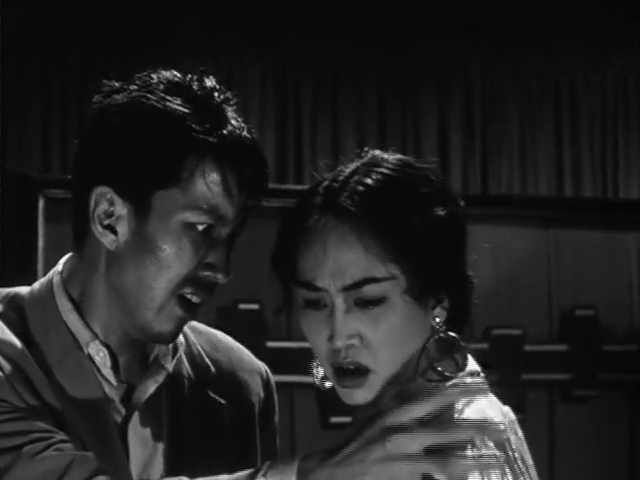
The contradictions of the contemporary society drive two women out of their minds in Mikio Naruse’s dark psychological drama, Hit and Run (ひき逃げ, Hikinige, AKA A Moment of Terror). Scripted by Zenzo Matsuyama and starring his wife Hideko Takamine in her final collaboration with the director, Naruse’s penultimate film takes aim at the persistent unfairness of a post-war society already corrupted by increasing corporatisation while caught at a moment of transition that leaves neither woman free to escape the outdated patriarchal social codes of the feudal era. 

The two women, both mothers to five-year-old boys, are mirror images of each other. Kuniko (Hideko Takamine), the heroine, is a widow working in a noodle bar and continually exasperated by her energetic son Takeshi who keeps escaping kindergarten to play pachinko which is not a suitable environment for a small child. Kinuko (Yoko Tsukasa), meanwhile, is mother to Kenichi and married to a high ranking executive at Yamano Motors, Kakinuma (Eitaro Ozawa). These two worlds quite literally collide when Kinuko, emotionally distressed and driving a little too fast, knocks over little Takeshi while he is out playing with some of the other neighbourhood boys. As she is with her lover, Susumu (Jin Nakayama), she decides to drive on abandoning Takeshi to his fate but discovers blood on the bumper of her shiny white convertible on returning home and thereafter decides to tell her husband everything aside from revealing her affair. Kakinuma covers the whole thing up by forcing their driver to take the rap to protect not his wife but the company along with his own status and success fearing that a scandal concerning his wife driving carelessly may have adverse consequences seeing as Yamano Motors is about to launch a new super fast engine that will make them worldwide industry leaders. 

Perhaps in a way the true villain, Kakinuma cares about nothing other than his corporate success. Kinuko states as much in complaining that he’s never once considered her feelings only his own and that their marriage was a failure from the start, little more than an act of exploitation in which she was traded by her father for money in return for political connections. For these reasons she seeks escape through her extra-marital affair but is unable to leave partly in the psychological conflict of breaking with tradition and partly because she has a son whom she would likely not be permitted to take with her even if it were practical to do so. Another woman says something similar in disparaging Kuniko, implying that her life is in some ways over as few men would be interested in marrying a widow with a child. 

Takeshi’s loss is therefore additionally devastating in severing Kuniko’s only lifeline. A brief flashback reveals that Kuniko was once a post-war sex worker, she and her yakuza brother Koji war orphans who lost their parents in the aerial bombing. When she married and had a child she thought the gods had smiled on her but in true Narusean fashion they gave only to take away leaving her a widow and finally robbing her even of her child. To add insult to injury, they try to put a price on her son’s life, a mere 500,000 yen for a boy of five hit by a car. When the driver stands in the dock, he gets off with only a 30,000 yen fine for the death of a child. Then again on visiting his home, there appears to be a boy of around five there too, perhaps you can’t blame him for taking the money having been robbed of his youth in wartime service. 

Still, on hearing from an eye witness that it was a woman who was driving, Kuniko quickly realises that Kinuko must have been responsible. Quitting her job she joins a maid agency in order to infiltrate the house and gain revenge later settling on the idea of killing little Kenichi, who takes an instant liking to her, to hurt his mother in the way she has been hurt only to be torn by her unexpected maternal connection with the boy. The conflict between the two women is emotional, but also tinged with class resentment that a wealthy woman like Kinuko should be allowed to escape justice with so little thought to those around her while Kuniko is tormented not only by her grief but the persistent injustice of the cover up. 

As in all things, it’s the lie that does the most damage in ironically exposing the truth of all it touches. Kinuko’s escape route is closed when her lover reveals that he’s lost faith in her, unable to trust a woman who’d run away from the scene of a crime and allow someone else to take the blame, while Kakinuma’s emotional abandonment of his social family for the corporate is thrown into stark relief by his immediate decision to further exploit their driver just as he will later their maid. Driven out of her mind, Kuniko has white hot flashes of lustful vengeance as she imagines herself engineering an accident for Kenichi, throwing him off a rollercoaster or coaxing him into traffic, only to regain her senses unable to go through with it so pushed to the brink of madness is she that no other action makes sense. 

Even so the conclusion is brutally ironic, Kuniko accused of a crime she did not commit but half believing that she must have done it because she wanted to so very much. Kakinuma gets a minor comeuppance, encouraged by his servant to make clear what actually happened and exonerate Kuniko thereby walking back his total commitment to the corporate (then again it seems his dream project was itself under threat from a potential plagiarism scandal) though the damage may already have been done. This societal violence of an unequal, increasingly corporatised and unfeeling society, eventually comes full circle bringing with it only death and madness as the two women seek escape from their internal torment. Naruse experiments with handheld camera and canted angles to emphasise the destabilisation of the women’s sense of reality along with blow out and solarisation in the visions that plague them, but curiously ends with a set of motor vehicle accident stats as if this had been a roundabout public information film to encourage careful driving. Then again perhaps in a way it is, a cautionary tale about the dangerous curves of untapped modernity and the cruelties of the nakedly consumerist era.  


Space Monster Wangmagwi (우주괴인 왕마귀, Gwon Hyeok-jin, 1967) [Fantasia 2022]

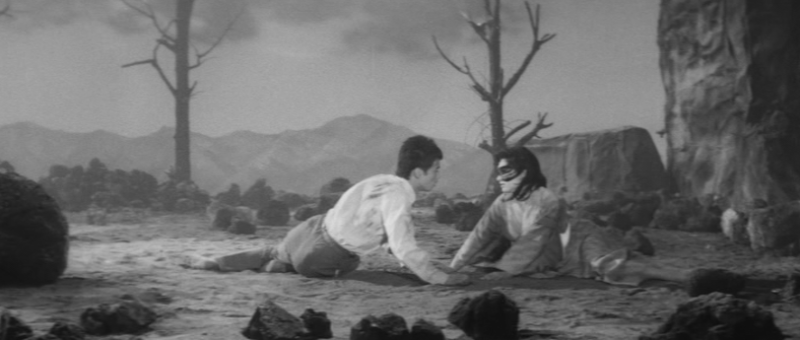
In Japan’s classic kaiju movies, the fault usually lies not with the monster but with humanity. The kaiju itself is neither good nor bad but simply what it is and its rampage is often a response to humanity’s mistreatment of the natural world or irresponsible scientific endeavour. In Korean monster movie Space Monster Wangmagwi (우주괴인 왕마귀, Ujugoein Wangmagwi), however, the threat is more concretely extra-terrestrial though the monster may be equally blameless apparently tortured and manipulated by an evil imperialist power hellbent on the colonisation of the Earth.

Shiny-suited aliens in impractical helmets are already on their way where they plan to disguise their invasion with the help of a passing typhoon. Their grand plan is to drop their space monster, Wangmagwi, onto the planet’s surface and let him run rampage until humanity has been subdued and they can claim the Earth. What they didn’t count on, however, is humanity’s spirited resistance led by brave Korean armed forces members and for some reason a plucky little boy with a pocket knife who manages to climb inside Wangmagwi and weaken him by taking out his vital organs. 

Wangmagwi’s extraterrestrial origins may hint at a fear of invasion most obviously from the North along with Cold War paranoia rather than an attempt to reckon with past transgressions or fear of new technology. The alien invaders are eventually forced to abandon their mission and turn back having experienced unanticipated human resistance vindicating the nation’s ability to defend itself even as the armed forces consider quite radical action such as the possibility of using nuclear weapons which the aliens from the planet Gamma admit would be disadvantageous seeing as they then wouldn’t be able to live on the planet either. 

Even so, the tone of the film is at least close to parody with the local population flailing about in panic trying to figure out what the best course of action might be. There is a particular irony in the captain of the spaceship’s explanation that the invasion has been 10 years in the planning so they can’t let it go wrong, while bride-to-be Ahn Hee feels something similar because she’s been planning her wedding all her life so this whole alien invasion thing is very inconvenient for her. Despite the warnings, Hee and her mother head to the wedding hall anyway with her in her full wedding dress waiting for airman fiancée Oh (Namkoong Won) to arrive though all military personnel have already been ordered back to base. Obviously, having her wedding cancelled at such short notice is distressing, but given there’s a rampaging kaiju on the loose Hee’s hysterics seem both childish and irresponsible though she later pays for them in being kidnapped by Wangmagwi and carried around just like Fay Wray in King Kong.

Meanwhile, the film throws in a lengthy comic relief sequence revolving around two middle-aged men who set up a bet to see who is the most cowardly leveraging their life savings, homes, and even a wife who later throws herself on the other man’s mercy hoping he’ll help her escape the kaiju because her own husband is too useless to be relied upon. Conversely, the military aren’t finding this funny at all instantly springing into action risking their lives to stop Wagmagwi’s rampage through the capital city which after all has only recently been rebuilt. The little boy meanwhile, seemingly an orphaned street kid, complains that grownups are all cowards incapable of facing Wangmagwi and so he’ll have to do it himself. 

The film ends on a note of familial reconciliation in which Hee and Oh pledge to adopt the boy suggesting that the threat has been overcome and normality has now returned while the Gamma simply sacrifice Wangmagwi in deciding to cut their losses and return home. Despite the comic overtones, the praise of the armed forces is sincere leaning into an authoritarian message that the military is necessary for protection of the nation while subtly undercutting it by suggesting that it’s a fearless boy who is responsible for Wangmagwi’s downfall though in reality it’s the Gamma who eventually turn on him, ordering his “termination” through a “self-destruct” mechanism. Featuring some impressive model work, Space Monster Wangmagwi never takes itself too seriously, packing in portentous storm noises alongside its tokusatsu-inspired effects, but does perhaps have something to say about the anxieties of the Korean society in the late 1960s. 


Space Monster Wangmagwi screened as part of this year’s Fantasia International Film Festival.