Children in the Wind (風の中の子供, Hiroshi Shimizu, 1937)

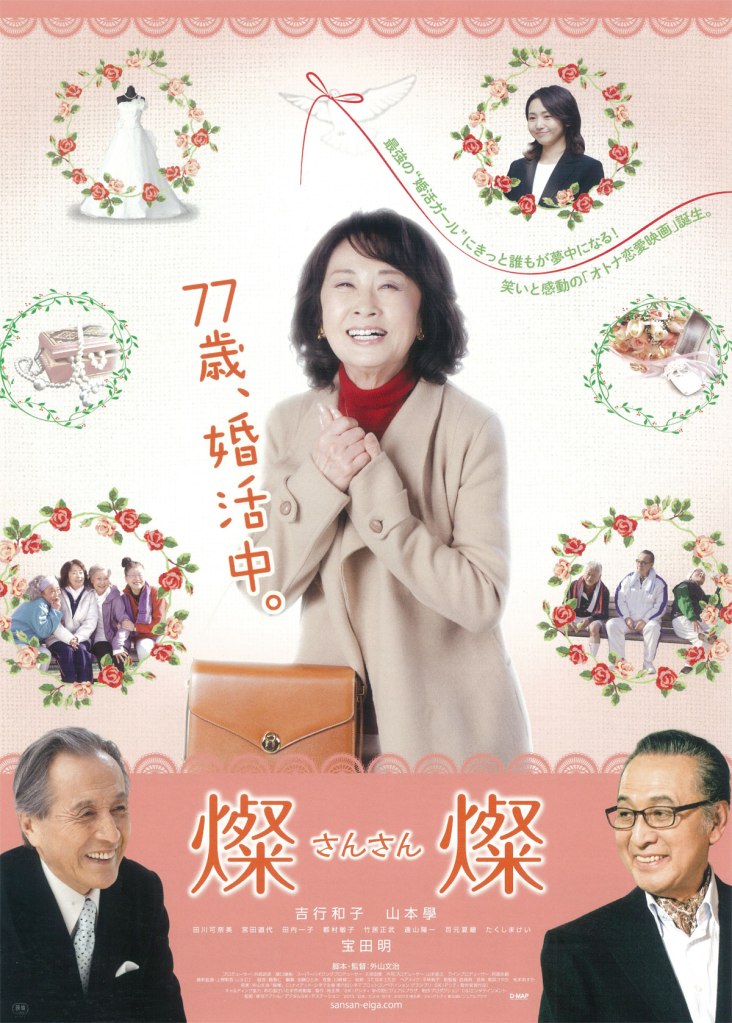
vlcsnap-2016-12-06-23h27m52s218It would be a mistake to say that Hiroshi Shimizu made “children’s films” in that his work is not particularly intended for younger audiences though it often takes their point of view. This is certainly true of one of his most well known pieces, Children in the Wind (風の中の子供, Kaze no Naka no Kodomo), which is told entirely from the perspective of the two young boys who suddenly find themselves thrown into an entirely different world when their father is framed for embezzlement and arrested.  Encompassing Shimizu’s constant themes of injustice, compassion and resilience, Children in the Wind is one of his kindest films, if perhaps one of his lightest.

Brothers Zenta (Masao Hayama) and Sampei (Bakudan Kozo) live a fairly comfortable life in a small town with their accountancy clerk father (Reikichi Kawamura) and doting mother (Mitsuko Yoshikawa). Older brother Zenta is the stereotypically good boy who studies hard, gets good grades, and causes no trouble. Sampei, by contrast, is a handful. Running out of the house to play Tarzan with the other neighbourhood kids even though he’d promised his mother he’d stay home to study to improve his awful performance at school, Sampei is the loveable rascal that no one quite knows what to do with. Despite their mother’s protestations, the boys’ father is content to let Sampei run riot for now, he’s only young after all.

When their father is accused of embezzling company funds, sacked, and later arrested, the boys’ world begins to crumble. The other kids won’t play with them anymore, their dad isn’t home, and their mother is worrying about money now that her husband has lost his job. Sampei is packed off to an uncle’s while Zenta stays behind to try and get a job to help out. Unfortunately, Sampei does not take well to his new environment and starts misbehaving even more than usual by disappearing up trees, riding a bucket down a river, running off to meet kappa, and even trying to run away with the circus!

All of this is told more or less from Sampei’s point view meaning that the facts of his father’s case recede into the background while Sampei’s worry and confusion comes to the fore. Having been in the office to deliver his father’s lunch when the coup occurred, Sampei can tell something awful has happened and tries to comfort his dad by closing all the blinds to block out the nosy kids’ faces peeking in from outside, and grabbing his father’s hat to get him to come home. Reassuring his dad that it’s all fine because he can just start a better company of his own, Sampei puts a childishly brave face on things while his ashen faced father walks home in silence. Of course, because Sampei is a child, no one explains to him exactly what’s happened, so no one explains it to us either, but we can perhaps infer a little more from the adults’ passing conversation than the still innocent Sampei.

The boys’ relationship with their father is one of the film’s warmest elements as, in contrast to the stereotypically austere salaryman dad, he delights in playing with his children, even breaking off from worrying about his impending doom by launching into a game of sumo. Sampei and Zenta know their father couldn’t have really done anything bad, so they aren’t really worried and though they miss him, they are sure he’ll be home soon. It’s not until fairly late on that they start to realise the gravity of the situation and how difficult things are for their mother, but once they do they become determined to support her too.

This being a (happy) Shimizu film, the injustice is finally undone and everything goes back to normal which what all children always want. Children, more than adults, are apt to forget quickly and so it’s not long before the other neighbourhood kids start responding to Sampei’s Tarzan call once again. In a typically nice touch, Sampei even invites his arch rival, Kinta – the son of the man who framed his dad for embezzlement in the first place, to come and see the approaching circus with him. A final gesture of reconciliation signals the end to hostilities as a possibly life changing event becomes a humorous summer interlude in the boys’ early lives. Warm and lighthearted, Children in the Wind is perhaps not as cutting or incisive as some of Shimizu’s more socially conscious efforts, but is filled with his characteristic compassionate humanism in its childlike certainty in justice and the willingness to forgive and forget.


A Crowd of Three (ケンタとジュンとカヨちゃんの国, Tatsushi Omori, 2010)

crowd-of-threeTatsushi Omori’s debut feature The Whispering of the Gods proved so controversial that he was left with no choice other than to set up his own temporary cinema to screen it. Five years later he returned with another uncompromising look at modern society which is only a little less grim than its predecessor. A Crowd of Three (ケンタとジュンとカヨちゃんの国, Kenta to Jun to Kayo-chan no Kuni) takes what has become a staple of quirky indie comedy dramas – a small group of disconnected people taking a road trip to look for something better, and turns it into a depressingly nihilistic voyage to nowhere. Never quite achieving the kind of painful, angst ridden atmosphere of disaffected young men desperately trying to break out of a social straight jacket, A Crowd of Three is an oddly cold film, undercut with a pervasive layer of misogyny and hopelessness which makes its ultimate destination somewhere few will wish to travel.

Kenta (Shota Matsuda) and Jun (Kengo Kora) are young men working dead end construction jobs. Growing up together almost like brothers in the same orphanage the pair share an intense bond but also a shared sense of having been badly let down by life even at such a young age. Their main source of relief seems to be in picking up “loose women” from the street by asking random ladies on their own for their ages. One evening Jun picks up Kayo (Sakura Ando) – a melancholy woman with low self esteem who sleeps around because she is insecure about her own plain looks. After Kenta is assaulted by the foreman, he decides to take revenge by smashing up the office and his boss’ car before taking off on a journey north to see his (biological) brother who is currently in prison.

Kayo tags along with the pair after apparently having fallen in love with Jun who is only interested in her for easy sex and occasional cash tips. Despite the fact that the film’s original Japanese title is “Jun, Kenta, and Kayo’s Country”, Kayo is quickly cast aside by the pair of travellers who think it’s funny to throw all of her stuff out of the window and abandon her at a service station in the middle of nowhere. Getting thrown out of cars and left behind in remote places is something which happens to Kayo repeatedly throughout the film as she tries to follow Jun despite his obvious indifference towards her.

Kayo just wants to feel love, but at least as far as the film goes she’s looking for it in all the wrong places. Even if Jun does start to feel something more genuine for her in the end, it’s born of a kind of shared insecurity as he worries about a repetitive strain injury from using the pneumatic drill which turns his hand white at moments of stress. After literally jilting Kayo, Jun takes up with a vacuous bar hostess who does, indeed, recoil from his pale hand. The bar hostess has very ordinary dreams – a big house, wealthy husband, children. She’s even planned out her own death. These are all things which Jun could never give her, a middle school drop out with no family he already fears he has no future but at least he’s not railroaded onto a pre-determined course and is free to choose his destination even if he feels there is nowhere for him to go.

Kenta expresses this early in the film when he states that there are two kinds of people – those who choose how they’re going to live, and those who don’t. The boys feel as if they’re in the no choice category – unceremoniously kicked out of social care and expected to fend for themselves with no education or contacts, reliant on poorly paid temporary work to get by. In a slightly overworked metaphor, Kenta and Jun’s jobs on demolition projects point to their desire to dismantle their world but the more they smash away at it the less progress they make. Kenta’s literal smashing of the car and office belonging to his boss are his final act of choice but again it gets him nowhere. Even talking to his brother who is in prison for the most heinous of crimes, Kenta finds no encouragement but only cold rejection.

A Crowd of Three goes to some very dark places ranging from work place harassment to child abuse and sexualised violence, but it largely fails to capitalise on its grim atmosphere to make any kind of impact aside from the pervasive melancholia. Omori mostly sticks to a straight forward approach with some interesting editing choices and composition but largely relies on the quality performances of his leading players. Far from youth aflame with nihilistic rage, A Crowd of Three is bleaker than bleak and frozen throughout making the battling of its heroes to transcend their difficult social circumstances a forlorn hope of epic proportions.


Original trailer (no subtitles)

24 Hour Playboy (愛と平成の色男, Yoshimitsu Morita, 1989)

24-hour-playboyYoshimitsu Morita is an enigma. While directing some of the most acclaimed Japanese films of the 80s including The Family Game or the Soseki adaptation Sorekara, his primary dedication was to the “popular” which meant he did his share of more commercial projects such as the Kadokawa idol movie Main Theme or Banana Yoshimoto adaption Kitchen. As might be discerned from the title, 24 Hour Playboy (愛と平成の色男, Ai to Heisei no Irootoko) is among his more populist efforts and is most concerned with capturing the unique quality of its time as mid-bubble Japan said goodbye to the traumatic Showa era for the (hopefully) more prosperous Heisei.

After opening with a series of scenes of the luxury to be found in the modern era from expensive rolexes to elegant yachts, the film zooms in on its hero, Nagashima (Junichi Ishida), as he receives a call from his girlfriend to the effect that she will be visiting him shortly. However, Nagashima’s first action is to leap over his balcony and run down the hill below to hide out in his car and play his saxophone before taking refuge at his younger sister’s place. Nagashima has a serious problem in that he finds himself unable to sleep and is longing for a woman who can really tire him out. Consequently he’s become the “24 hour playboy” of the title, flirting with women here there and everywhere all day long hoping to find the one who can send him straight to bed.

Unusually for a film set in the age of consumerism, Nagashima is not a high powered executive or something more glamorous like an actor or a singer, he is, in fact, a dentist. When not inappropriately flirting with the young women who end up in his dentist’s chair, Nagashima also has a sideline as a jazz saxophonist which seems to be what he’d really like to do with his life but presumably is not as lucrative as the unexpectedly elite world of dentistry.

The consumerist society runs as background throughout the film as Nagashima enjoys a fairly upscale lifestyle perfect for a playboy with visits to trendy nightclubs and late night driving ranges, but the film also gets a lot of milage out of the literal change in era occurring just at the time the film was made. The traditional Japanese dating system takes its name from the emperor – the Showa era began in 1926 and was witness to both Japan’s tragic affair with militarism and expansionist warfare and the beginnings of its return to prosperity in the now nostalgic ‘70s and ‘80s. With the death of Hirohito in January 1989, his son Akihito assumed the throne and began the “Heisei” era. The film was released in 1989 but “Heisei” is referenced several times throughout both as a joke on the fact that “Heisei” means “peace everywhere” and in Nagashima’s comments that some things have already improved in the extremely young new regime.

In keeping with Morita’s determination to stay up to the minute, the film is very much of its time but paints its transitional moment as one of excitement and possibility but also of confusion and inertia. When Nagashima tells a late night barman that he doesn’t know what he wants, he’s talking about more than drinks though he seems happy enough with the gimlet the bar tender picks out for him. Nagashima’s insomnia is apparently caused by not having a good woman to share his bed, but he spends the film playing four women off against each other without ever being really serious about any of them.

After his sometime girlfriend whom he ran out on in the beginning starts talking marriage, Nagashima hatches a plan to get his sister to pretend to be a religious nutcase to put her off. Later he gets another girlfriend to pretend to be his wife and mother of his three children to rid himself of one of the others, gets rid of another by telling her he’s off to “dentists without borders”, and even ends up treating two of his simultaneous girlfriends at the same time in adjacent dental surgeries. Nagashima’s behaviour is caddish in the extreme, thinking only of himself and never really seeing the women in front of him as entities separate from their relationship with him.

A throwback to feckless ‘60s male heroes whose casual womanising represented aspirational male fantasy, Nagashima’s exploits are depicted in a light hearted and humorous way eased by the fact that the women don’t seem to mind very much even after they discover that they aren’t Nagashima’s one and only. Eventually outed as a love rat in the papers, Nagashima’s accidental fame, far from causing outcry and condemnation, attracts a vast crowd of ladies wanting in on the action for themselves.

Oddly the one woman Nagashima does seem to be able to connect with is his sister whom he ironically describes as the one woman he doesn’t understand. Frequently staying over at her apartment, Nagashima often remarks that he wishes all women like her or that all women were his sister, which is an extremely odd thing to say in the circumstances but she is the one woman he seems to have a fully realised conception of and is able to relate to on a human level.

Necessarily very much of its time – the Heisei era is even referenced in the slightly ironic title, 24hr Playboy is one of Morita’s most disposable efforts but is also a perfect reflection of contemporary society in its increasingly consumerist fervour where dentists can live like playboy millionaires and the sheer abundance of choice leaves young men paralysed with indecision. Nagashima’s playboy lifestyle is mined for comic value as he plays the melancholic hero who doesn’t know what he wants and and so has a massive fear of (and yet intense desire for) commitment, but Morita is always careful to point out his essential ridiculousness as Nagashima’s “Heisei” lifestyle becomes less “peaceful” with each additional girlfriend and the increasingly elaborate excuses needed to jilt them.


Welcome to the Quiet Room (クワイエットルームにようこそ, Suzuki Matsuo, 2007)

welcome-to-the-quiet-roomEveryone has those little moments in life where you think “how did I get here?”, but thankfully most of them do not occur strapped to a table in an entirely white, windowless room. This is, indeed, where the heroine of Suzuki Matsuo’s adaptation of his own novel Welcome to the Quiet Room (クワイエットルームにようこそ, Quiet Room ni Yokoso) finds herself after a series of events she can’t remember but which seem to have involved pills and booze. A much needed wake up call, Asuka’s spell in the Quiet Room provides a long overdue opportunity to slow down and take a long hard look at herself but self knowledge can be a heavy burden.

After her initial confusion, Asuka (Yuki Uchida) is informed by the no nonsense matron, Eguchi (Ryo), that she’s been brought in after an overdose. Everyone seems to assume it’s a suicide attempt, though Asuka can’t remember a thing. Apparently her roommate found her and called and ambulance and has now signed the committal papers which means Asuka is stuck here until the doctors say she’s fit to leave. Aside from the obvious, this is bad news because Asuka has a series of tight deadlines she’s been busting her gut to meet and is worried about losing her contracts. Whatever she might feel about it, it seems as if Asuka will have to rely on the kindness of strangers a little longer before she can finally get back to her exciting freelance world.

Aspects of Asuka’s previous life are illuminated gradually through flashback accompanied by her post-committal deadpan voiceover. After a brief career as a model, Asuka got married, divorced, and then hooked up with her present roommate, Tetsuo (Kankuro Kudo), who hooked her up with a series of freelance writing gigs which have only contributed to her stress levels with their ever present deadlines. Prior to her hospitalisation, Asuka was a rather silly, perky woman with a self confessed preference for “idiots” when it came to her circle of friends. Slowly and in the absence of her regular methods of self medication, all of Asuka’s illusions about herself and the way she was living her life begin to crumble. Finally able to cut through the noise, Asuka is forced to come to terms with a significant amount of guilt relating to a decision taken during her marriage whilst also acknowledging the effect crippling depression has had on her way of life.

Whilst in the hospital, Asuka comes in to contact with the other residents who have various needs and demands, each exemplifying the problems plaguing modern women. Tellingly, the majority of the women on the ward are younger – some just teenagers or young adults, all suffering with various kinds of eating disorders. One such patient, Miki (Yu Aoi), quickly befriends Asuka and teaches her how to survive in the increasingly surreal hospital environment. Asuka later makes friends with another recovering overdose patient around her own age, Kurita (Yuko Nakamura), but conversely finds herself harassed by the ward’s resident fixer, former adult video actress Nishino (Shinobu Ootake), while other residents make repeated escape attempts or go to great lengths to set their hair on fire.

Asuka’s Wizard of Oz inspired outfit, hair, and the silver Dorothy slippers which play into a repeated motif of Asuka’s memories of a high school culture festival, all reinforce the idea of the hospital as a strange otherworldly place in which Asuka will be residing temporarily until she completes her quest. The temporary nature of the space gives Asuka’s journey a rather melancholy atmosphere as she’s encouraged to forget all about her time there when transitioning back to the “real world” meaning that the fragile bonds and friendships created during in her hospital sojourn will have to be left behind. Finally learning to calm down and take charge of herself, Asuka rediscovers a long absent inner strength and the last image we see of her is in raucous laughter after an catching sight of an improbable event through a car window.

Matsuo opts for a less madcap treatment than the far out comedy of Otakus in Love but carefully balances an absurd sense of humour with dramatic weight as Asuka’s personal discoveries are intercut with increasingly surreal episodes. Yuki Uchida shines in a early comeback role as the two very different Asukas even if she almost has the show stolen out from her by another beautiful performance from Yu Aoi as the sensitive goth Miki. Tackling a weighty subject with warmth and good humour, Welcome to the Quiet Room is another characteristically off the wall character piece from Suzuki, but all the better for it.


Original trailer (no subtitles)

Be With You (いま、会いにゆきます, Nobuhiro Doi, 2004)

be-with-youWhen it comes to tragic romances, no one does them better than Japan. Adapted from a best selling novel by Takuji Ichikawa, Be With You (いま、会いにゆきます, Ima, ai ni Yukimasu) is very much part of the “Jun-ai” or “pure love” boom kickstarted by Crying Out Love In the Center of the World released the same year but taps into Japan’s long history of supernaturally tinged love stories, filled with the weight of impending tragedy and the essential transience of the human experience.

Like many such tales, Be With You begins with a framing sequence set 12 years after the main events, but unusually it’s directed from the point of view of the soon-to-be 18 year old, Yuji (Yuta Hiraoka). Receiving a birthday cake from a bakery which has apparently only stayed open because of its promise to deliver birthday cakes to him every year until he turns 18, Yuji begins to reflect on the “miracle” which he and his father experienced all those years ago.

Yuji’s mother passed away at the age of 28 when he was only 5 years old. However, before she died, Mio (Yuko Takeuchi) had prepared a special picture book for Yuji to try and help him process what was happening. In the book, Mio has gone to a place called “Archive Star” and will return for the first rainy season a year after her death. Improbable as it is, Yuji and his father Takumi (Shido Nakamura) discover a woman who looks exactly like Mio lost in the forest during the first rains. Stunned the pair take her home but Mio has no knowledge of her former life as a wife and mother. Gradually, Mio begins to fall in love with her husband all over again whilst bonding with her young son, but their happiness is short lived as Mio realises her time with them is limited.

Because Mio can’t remember, we experience the love story between the teenage Takumi and Mio firstly through his eyes as he tells her of his unrequited high school crush when she sat at the desk across from him for two years during in which he was too shy to say anything. Later we hear the same story again from Mio’s perspective through her diary where we learn, not altogether surprisingly, that she felt the same way. The pair mirror each other throughout their courtship, wanting to say something but lacking the courage and looking for excuses to try and push the situation in a better direction. Other than the mutually unresolved attempts at phone calls and an unreturned pen, Mio and Takumi essentially relive their original romance in the brief time they are able to share together from repeated motifs of untied shoelaces and clumsiness with a bicycle, to innocent in pocket hand holding.

Takumi has an ongoing medical condition which interferes with his motor functions, slowing him down and giving him an air of soulful melancholy later compounded by his romantic tragedy. Having been a champion runner on a sports scholarship to college, the diagnosis causes extreme disruption to his life and leads him to the typically jun-ai decision to break up with Mio because he feels as if he’d be a burden to her. A year after Mio passed away, Takumi is doing his best to bring up his son but is a little distant and struggling to take care of the domestic environment. When Mio realises that she can’t take care of them forever, she switches her focus to trying to prepare her husband and son for life alone – teaching Yuji how to fry eggs and do the laundry, whilst renewing her emotional bond with Takumi. There’s no happy ending in store for Mio, the loss cannot be avoided and perhaps it might even be worse to have had this brief respite from the ongoing pain, but the six week rainy season does, at least, provide an opportunity to say those things that might have otherwise gone unsaid.

Nobuhiro Doi films in a typically elegant fashion making great use of the area’s natural beauty to create a fairy tale atmosphere from the mysterious, life giving forest. The poignancy of the tale is all the deeper knowing that Mio eventually understood what would happen to her, but chose a brief life with Takumi and her son over the possibility of a longer one without them. Heartbreakingly sad, yet a testament to the importance of appreciating the present which all too soon becomes the past, Be With You is a genuinely romantic love story, not only between a husband and a wife but an entire family carrying the weight of a tragic loss but easing the burden by treasuring the memory of the intense love shared between them.


Original trailer (no subtitles)

Resurrection of Golden Wolf (蘇る金狼, Toru Murakawa, 1979)

resurrection-golden-wolfYou know how it is. You work hard, make sacrifices and expect the system to reward you with advancement. The system, however, has its biases and none of them are in your favour. Watching the less well equipped leapfrog ahead by virtue of their privileges, it’s difficult not to lose heart. Asakura (Yusaku Matsuda), the (anti) hero of Toru Murakawa’s Resurrection of Golden Wolf (蘇る金狼, Yomigaeru Kinro), has had about all he can take of the dead end accountancy job he’s supposedly lucky to have despite his high school level education (even if it is topped up with night school qualifications). Resentful at the way the odds are always stacked against him, Asakura decides to take his revenge but quickly finds himself becoming embroiled in a series of ongoing corporate scandals.

Orchestrating a perfectly planned robbery on his own firm in which Asakura deprives his employers of a large amount money, he’s feeling kind of smug only to realise that the bank had a backup plan. The serial numbers of all of the missing money have been recorded meaning he can’t risk spending any of it. Accordingly he decides the “safest” thing to do is exchange the problematic currency for the equivalent in heroine. His plan doesn’t stop there, however. He also knows the big wigs at the top are engaged in a high level embezzlement scam and seduces his boss’ mistress, Kyoko (Jun Fubuki), for the inside track. Asakura is not the only game in town as another detective, Sakurai (Sonny Chiba), is blackmailing some of the other bosses over their extra-marital activities. Playing both sides off against each other, Asakura thinks he has the upper hand but just as he thinks he’s got what he wanted, he discovers perhaps there was something else he wanted more and it won’t wait for him any longer.

Based on a novel by hardboiled author Haruhiko Oyabu, Resurrection of Golden Wolf is another action vehicle for Matsuda at the height of his stardom. Re-teaming with Murakawa with whom he’d worked on some of his most famous roles including The Most Dangerous Game series, Matsuda begins to look beyond the tough guy in this socially conscious noir in which an angry young man rails against the system intent on penning him in. A mastermind genius, Asakura is leading a double life as a mild mannered accountancy clerk by day and violent punk by night, but he has every right to be angry. If his early speech to a colleague is to be believed, Asakura worked hard to get this job. A high school graduate with night school accreditation, he’s done well for himself, but despite his friend’s assurance that Asaukura is ahead in the promotion stakes he knows there’s a ceiling for someone with his background no matter how hard he works or how bright he is.

Under the terrible wig and unfashionable glasses he adopts for his work persona, Asakura has a mass of unruly, rebellious hair and a steely gaze hellbent on revenge against the hierarchical class system. He is not a good guy. Asakura’s tactics range from fisticuffs with street punks to molesting bar hostesses, date rape, and getting his (almost) girlfriend hooked on drugs as a means of control, not to mention the original cold blooded murder of the courier he stole the company’s money from in the first place. The fact he emerges as “hero” at all is only down to his refusal to accept the status quo and by his constant ability to stay one step ahead of everyone else. When the system itself is this corrupt, Asakura’s punkish rebellion begins to look attractive despite the unpleasantness of his actions.

Adding in surreal sequences where Asakura dances around his lair-like apartment in a quasi-religious ritual with his silver mask, plus bizarre editing choices, eerie music and incongruous flamenco, Murakawa’s neo-noir world is an increasingly odd one, even if not quite on the level of his next film, The Beast Must Die. Very much of its time and remaining within the upscale exploitation world, Resurrection of Golden Wolf is necessarily misogynistic as its female cast become merely pawns exchanged between men to express their own status. The tone remains hopelessly nihilistic as Asakura nears his goal of the appearance of a stereotypically successful life with an executive job and possible marriage to the boss’ daughter only to find his conviction wavering. Hopelessly bleak, dark, and sleazy, Resurrection of Golden Wolf is, nevertheless, a supreme exercise in style marrying Matsuda’s iconic image with innovative direction which is hard to beat even whilst swimming in some very murky waters.


Again, many variations on the English title but I’ve gone with Resurrection of Golden Wolf as that’s the one that appears on Kadokawa’s release of the 4K remaster blu-ray (Japanese subs only).

Original trailer (English subtitles)

The Fireflies (螢火, 1958, Heinosuke Gosho)

bxbnzqmccaa5-cg-jpg-largeHistory marches on, and humanity keeps pace with it. Life on the periphery is no less important than at the centre, but those on the edges are often eclipsed when “great” men and women come along. So it is for the long suffering Tose (Chikage Awashima), the put upon heroine of Heinosuke Gosho’s jidaigeki The Fireflies (螢火, Hotarubi). An inn keeper in the turbulent period marking the end of the Tokugawa shogunate and with it centuries of self imposed isolation, Tose is just one of the ordinary people living through extraordinary times but unlike most her independent spirit sparks brightly even through her continuing strife.

Beginning in the “present” – the late 1860s, Tose is the de facto manager of Teradaya, a successful inn in Kyoto. Japanese history buffs will instantly recognise the name of the establishment, as well as that of Tose’s 18 year old adopted daughter, Oryo (Ayako Wakao). Nevertheless, that story can wait as we flashback with Tose as she gazes blankly at a stretch of water, remembering the time she first came to Teradaya as a young bride. The daughter of peasant farmers, Tose was not welcomed by her mother-in-law, Sada, both because of the class differences, and because the man she’s married is not Sada’s son but that of a concubine and she would prefer her biological daughter, Sugi, to inherit. Tose’s husband Isuke, though by no means unpleasant towards her, is a feckless man obsessed with cleaning and singing folk songs, leaving the bulk of the work to his wife.

Tose bears all, taking on the running of Teradaya and making it the most popular inn in town thanks to her friendliness, efficiency, and discretion. However, her position is threatened when she is almost ruined by a bizarre scam involving dummies and ventriloquism. Vindicated, Tose’s position is strengthened but there is more trouble in store when Sugi runs off with the conman leaving her infant illegitimate daughter in Tose’s care. Becoming a mother as she’s always wanted, Tose begins to find a little more fulfilment in her life only to have her dreams cruelly dashed once again. In an act of kindness she later adopts another orphaned girl, Oryo, who arrives at the inn starving and in the care of an older man who’d been looking after her since her doctor father was murdered for supposedly collaborating with the rebel ronin trying to over throw the shogunate.

This is the first mention of the ongoing political instability present in the country at large but largely unseen in the peaceful world of a small inn in Kyoto. Of course, you can’t say Teradaya and Oryo without eventually saying Sakamoto Ryoma (Miki Mori). Ryoma does eventually arrive in all his revolutionary glory albeit in an appropriately humanised form and proceeds to turn Tose’s life upside down in more ways than one. Locked into her loveless, but far from cruel, marriage Tose’s spirited nature is reignited by Ryoma’s fervour. Falling in love with him for his commitment to creating a better world for all, Tose’s dreams drift a little but are dashed again when she realises he and Oryo are the more natural pair.

Though Tose reacts badly to the discovery that Oryo is also in love with Ryoma, she is later able to patch things up, entrusting the man she loves to her daughter in an act of maternal sacrifice. Tose talks about her admiration for those who sacrifice all of themselves for other people but this is exactly what she has done with her own life, only in a much quieter way. Where Ryoma was a father to a movement, Tose is a mother to the world. Denied a child of her own through her husband’s indifference, Tose first adopts her niece and then an orphaned girl but consistently acts in the best interests of others rather than herself. Hearing the cries of betrayed revolutionaries, she describes them as sounding like howling babies – an idea she repeats several times including when describing Oryo’s famous naked dash from the bath to warn Ryoma of the impending arrival of the Shinsengumi. Tose’s only instinct is to silence those cries through maternal warmth, even if it ultimately causes her pain.

Tose, for Gosho at least, is no less a heroic figure than Ryoma as her everyday acts of kindness and strength contribute to an ongoing social change. Where other inn owners turn in the rebels either for material gain, active opposition, or desire to avoid the hassle, Tose stands firm and allows Teradaya to become known as a safe haven for the revolutionary movement. Ryoma shone brighter but for a short time, whereas Tose’s life goes on and Teradaya continues to be the favourite stop for beleaguered travellers passing through the old capital in these difficult times. Reconciling with her husband who finally offers the possibility of having a child of their own to inherit the inn, there is a glimmer of hope for Tose once again even if it’s clear that Isuke hasn’t really changed. It may seem that Tose’s firefly has blinked out as she takes her dull and self centred husband back, vowing to spend less time on the inn as she does so, but there is a glint of light in her few final words which are followed by putting her apron straight back on to meet the first boat, shouting the virtues of her beloved Teradaya all the way.


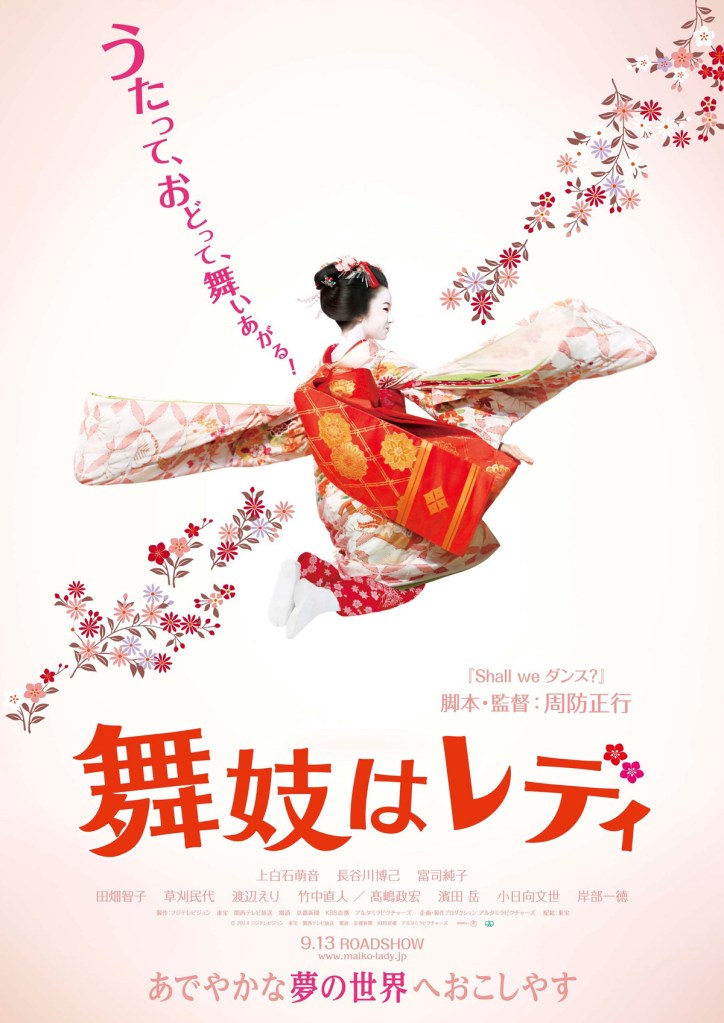
La Maison de Himiko (メゾン・ド・ヒミコ, Isshin Inudo, 2005)

la-maison-de-himikoIn Japan’s rapidly ageing society, there are many older people who find themselves left alone without the safety net traditionally provided by the extended family. This problem is compounded for those who’ve lived their lives outside of the mainstream which is so deeply rooted in the “traditional” familial system. La Maison de Himiko (メゾン・ド・ヒミコ) is the name of an old people’s home with a difference – it caters exclusively to older gay men who have often become estranged from their families because of their sexuality. The proprietoress, Himiko (Min Tanaka), formerly ran an upscale gay bar in Ginza before retiring to open the home but the future of the Maison is threatened now that Himiko has contracted a terminal illness and their long term patron seems set to withdraw his support.

Haruhiko (Joe Odagiri), Himiko’s much younger lover and the manager of the home, is determined to reunite his boss with his estranged daughter, Saori (Kou Shibasaki), before it’s too late. Saori is a rather sour faced and sullen woman carrying a decades long grudge against the father who abandoned her as a child and consigned her mother to a life of misery and heartbreak, so Haruhiko’s invitations are not warmly received. Haruhiko is not the giving up type and manages to sweet talk Saori’s colleague into revealing her desperate financial situation which has her already working two jobs with a part-time stint in a combini on top of her regular work during which she finds herself looking at lucrative ads for work on sex lines. When Haruhiko offers her a well paying gig helping out at the home, she has no choice but to put her pride aside.

The exclusively male residents of La Maison de Himiko lived their lives during a time when it was almost impossible to be openly gay. Consequently many of them have been married and had children but later left their families to live a more authentic life. Unfortunately, times being what they were, this often meant that they lost contact with their sons or daughters, even if they were able to keep in touch with their ex-wives or other family members for updates. For these reasons, La Maison de Himiko provides an invaluable refuge for older men who have nowhere else to go as they enter the later stages of their lives. The home provides not only a safe space where everybody is free to be themselves but also a sense of community and interdependence.

Though the situation is much improved, it is still imperfect as the home and its residents continue to face prejudice from the outside world. Saori, still carrying the pain of her father’s rejection, views his choice as a selfish one which placed his own desires above the duty he should have felt towards his wife and child. Partly driven by her resentment, Saori has a somewhat negative view of homosexuality on arriving at the home, offering up a selection of homophobic slurs, and is slow to warm to the residents. Gradually getting to know her father again and through her experiences at the home, her attitude slowly changes until she finds herself physically defending her new found friend when he’s set upon by a drunken former colleague who publicly shames him in a nightclub.

The home is also plagued by a gang of bratty kids who often leave homophobic graffiti scrawled across the front wall. One of their early tricks involves throwing a bunch of firecrackers under a parked car to stun Saori so they can hold her captive for a bit because they have really a lot of questions about lesbians and they wondered if she was one, though one wonders what they’d do if someone answered them seriously. Predictably, the leader of the bratty kids may be engaging in these kinds of behaviours because he’s confused himself. Thankfully La Maison de Himiko is an open and forgiving place, welcoming the boy inside to offer support to a young man still trying to figure himself out.

This is not a coming out story, but it is a plea for tolerance and acceptance through which Saori herself begins to blossom, easing her anger and resentment and sending her trademark scowl away with them. One of her closest friends at the home is a shy man who lived most of his life in the closet but makes the most beautiful embroidered clothes and elegant dresses. Sadly, the most lovely of them is reserved for his funeral – he’s too ashamed to wear it alive because he doesn’t like the way he looks in the mirror. Eventually he and Saori end up having an unconventional fancy dress party in which they both break out of their self imposed prisons culminating in a joyous group dance routine in a local nightclub.

Joe Odagiri turns in another nuanced, conflicted performance as the increasingly confused Haruhiko who finds himself oddly drawn to Saori’s sullen charms though the film thankfully avoids “turning” its male lead for an uncomfortable romantic conclusion. A young man among old ones, Haruhiko is somewhat out of place but has his own empty spaces. Revealing to Saori that he lives only for desire he betrays a nagging fear of his own emptiness and journey into a possibly lonely old age. Nevertheless, La Maison de Himiko is generally bright and cheerful despite some of the pain and sadness which also reside there. A warm and friendly tribute to the power of community, La Maison de Himiko is a hymn in praise of tolerance and inclusivity which, as it makes plain, bloom from the inside out.


Original trailer (no subtitles)

And the fantastic dance sequence from the film

Plus the original version of the song (Mata Au Hi Made) by Kiyohiko Ozaki

A Bride for Rip Van Winkle (リップヴァンウィンクルの花嫁, Shunji Iwai, 2016)

the_bride_of_rip_van_winkle“Being naked in front of people is embarrassing” says the drunken mother of a recently deceased major character in a bizarre yet pivotal scene towards the end of Shunji Iwai’s aptly titled A Bride for Rip Van Winkle (リップヴァンウィンクルの花嫁, Rip Van Winkle no Hanayome) in which the director himself wakes up from an extended cinematic slumber to discover that much is changed. This sequence, in a sense, makes plain one of the film’s essential themes – truth, and the appearance of truth, as mediated by human connection. The film’s timid heroine, Nanami (Haru Kuroki), bares all of herself online, recording each ugly thought and despairing notion before an audience of anonymous strangers, yet can barely look even those she knows well in the eye. Though Namami’s fear and insecurity are painfully obvious to all, not least to herself, she’s not alone in her fear of emotional nakedness as she discovers throughout her strange odyssey in which nothing is quite as it seems.

We first meet Nanami on an internet blind date with the man who will later become her husband. Looking lost and alone, she passively waits for her online suitor to find her in the busy city streets. Tetsuya (Go Jibiki) does indeed turn up and assume control of the situation, to which Nanami submits just as she has to everything else. Bonding over little more than their shared vocation of teaching the pair drift into a relationship and then later into a marriage, as is the natural order of things.

Though she seems happy enough, Nanami vents her frustrations in her caustic online blog. Isn’t this all just too easy? She asks herself. It’s almost like online shopping, she simply added a boyfriend to her basket and now she’s about to check out. A failure to win over Tetsuya’s mother adds to her sense of unease as does the fact she has no close friends or relatives (aside from her soon to be divorced parents) to invite to the wedding. Her decision to take the advice of an online friend and employ the shady fixer Amuro (Go Ayano) to hire a selection of professional party goers to bulk out her side of the hall will prove to be a disastrous one (though perhaps more in the short term), turning her entire life inside out.

Nanami’s essential personality trait is her passivity. Like Rip Van Winkle, she is largely asleep while things happen all around her. Though she dreamed of being a teacher, Nanami has only been able to find temporary supply roles with an agency but even this seems unlikely to last thanks to her softly spoken nature which makes classroom teaching a poor fit for her shy, attention avoidant personality. Discovered at her part time combini job by an old university friend, Nanami is embarrassed and has even been wearing a (useless but endearing) disguise in case any of her students come by despite the fact she chose a store far away from the school. Her friend now works at a hostess bar which Nanami finds a little bit shocking. That kind of unconventional way of living is not something she would contemplate, and so when offered the extremely dull but comfortable life alongside the dull but comforting Tetsuya, Nanami settles.

After Amuro spectacularly derails her non-happiness, Nanami is cast adrift which eventually leads her straight back into Amuro’s web of morally dubious activities. Taking a job as a maid at the cheap hotel she ends up in after leaving Tetsuya, Nanami also works part time as another of Amuro’s professional guests which is where she meets motivator no. 2 – Mashiro (Cocco), “actress” and all round live wire. Bonding over sad karaoke, Nanami and Mashiro later wind up working together as live in maids in a creepy, isolated mansion filled with poisonous animals. Enforced proximity leads to genuine friendship and then to more than that, but, ironically enough, Mashiro has not been entirely honest about her intentions and Nanami is soon adrift once again.

Undergoing a “fake” wedding that’s sort of real (in contrast with the “real” wedding which was sort of “fake”), at least in sentiment, Nanami looks much happier than in the extremely bizarre ceremony which bound her to Tetsuya. Nanami and Mashiro’s union was “engineered” yet mutually beneficial and ultimately genuine despite its artificial genesis. Making a last, heartbreaking speech, Mashiro attempts to explain herself and her life philosophy in a final act of nakedness. She prefers to pay for connection because, she says, the world is too full of kindness. There is so much happiness out there that it’s completely overwhelming. Sometimes there’s more truth in the lie than there is in the reality.

The resurfaced Iwai is both more cynical and more romantic than he has ever been before. He has serious things to say about constructed identities and disconnectedness, that the increasingly open nature of the anonymous online world only makes the real one seem less reliable and harder to navigate. We’ve all been wearing masks but we turned them round when we went online, and now perhaps we’re forgetting that we made them in the first place. Nanami may be adrift again at the film’s conclusion but she finds herself in a world of infinite possibilities. Emerging with more certainty and firmer sense of self, Nanami has retaken control and even if she doesn’t know where she’s going, the choice is entirely her own. Another beautifully nuanced, endlessly affecting character study from Iwai, A Bride for Rip van Winkle is a gloriously rich experience, filled with both hope and despair, but told with all the ethereal warmth and strangeness of the best of dreams.


This review refers to the 180 minute director’s cut, rather than the shorter international or four hour TV version.

Original trailer (English subtitles)

Virus (復活の日, Kinji Fukasaku, 1980)

virusThe ‘70s. It was a bleak time when everyone was frightened of everything and desperately needed to be reminded why everything was so terrifying by sitting in a dark room and watching a disaster unfold on-screen. Thank goodness everything is so different now! Being the extraordinarily savvy guy he was, Hiroki Kadokawa decided he could harness this wave of cold war paranoia to make his move into international cinema with the still fledgling film arm he’d added to the publishing company inherited from his father.

Adapted from a pessimistic, post-plague novel in the vein of Andromeda Strain penned by Japan Sinks’ Sakyo Komatsu, Virus (復活の日, Fukkatsu no Hi) was, at that time, the most expensive Japanese movie ever made. Using an international cast with the bulk of the dialogue in English, Kadokawa’s hopes were high but his dream was ultimately dashed when the film bombed at the box office and ended up being unceremoniously sold off to cable TV in a re-edited international version which removed almost all of the Japanese scenes. Since its original release, the film has accrued something of a negative reputation and left a stain on the resume of its otherwise popular director Kinji Fukasaku  (whose other international effort, Tora! Tora! Tora! didn’t do him any favours either) but Virus is far from the disaster it’s often regarded to be, even if extremely flawed.

Seismologist Yoshizumi (Masao Kusakari) witnesses the ruined state of his homeland in December 1983 from the comfort of a British submarine. Reminiscing about the woman who left him because of his scientific obsessions, Yoshizumi becomes our catalyst for a flashback to learn exactly how the world was destroyed in just a couple of years. Genetic experiments to create new viruses were banned in 1981 but in the following February a dodgy deal goes down in East Germany and the most dangerous biological weapon ever created is accidentally unleashed when the plane it was travelling on crashes into the Alps. It’s not long before “Italian flu” is laying waste to half of Europe before reaching Asia and the Americas. The virus is all powerful and no serious attempts to combat it are possible given the lack of time, but, the virus is dormant at below zero temperatures so the antarctic polar research station becomes humanity’s last hope for survival.

Though the film is funded and produced by Japan, it clearly positions America as its global leader. This is, however, countered by the fact that the weapon itself was being developed in America as a “credible deterrent” against Russian aggression now that Russia and the US are about even on Nukes. The bad guys are the American intelligence officials who have been continuing the research illegally without the President’s knowledge. In a touch of ironic Soviet-style manoeuvring, a research scientist trying to blow the whistle on this frighteningly destructive project is thrown into a mental hospital.

Rather than the struggle to find a cure, Virus prefers to focus on the immediate effects of the epidemic as the civilised world crumbles with alarming speed. Zipping around the major world capitals with death tolls placed against picturesque landmarks, Fukasaku mixes in stock footage of real rioting and civil unrest (of which he had a lot to choose from by 1980) as people take to the streets in desperation. Hospitals overflow with the infected, and the bodies pile up unceasingly.

The situation in Antartica is calmer if concerned. Some researchers opt for suicide whilst others club together to discuss possible plans for the survival of the human race. Unfortunately, this being a scientific community in the 1980s, there are 800 men and just 8 women, which leads to a number of obvious social problems. The remaining women are quickly convinced to become a kind of comfort team “accommodating” the needs of the attendant men. If the need really was to repopulate as quickly as possible, such an extreme re-imagining of current social mores would hardly be necessary, but strangely the women seem to accept their sudden conversion to forced prostitution with stoic pragmatism. Civility is maintained, and the outpost colony survives without too many problems but another threat arrives when Yoshizumi predicts a major earthquake event set to hit Washington that may activate its secret nuclear weapons which are trained on Moscow. That hardly matters now except that Moscow’s nukes are pointed at their research base owing to a slight political misunderstanding.

The research base is a testament to international cooperation with representatives from all continents, all working together peacefully (well, mostly – Lopez (Edward James Olmos) is…a passionate man) for the betterment of science. When it comes down to it, Yoshizumi and the American soldier Carter (Bo Svenson) are the lone duo heading back into plague infested Washington in an attempt to shut down the nuclear weapons systems before it’s too late.

Where Virus differs from many of the similarly themed films of the time is in its generally benevolent view of humanity. Despite the fact that the virus was man made, constructed to perpetuate an ongoing arms race, and was released due to bad luck and avarice, the majority of people are good, progressive sorts who want to work together to figure all of this out. Where the re-edited US version opts for a bleaker than bleak ending, the Japanese version does at least demonstrate the strength of human endurance as Yoshizumi trudges south in search of the survivors. The world is not restored, but there is still a kind of life possible if only those left behind can choose to live it.

Fukasaku opts for a more straightforward approach than some of his more frenetic work, but introduces an interesting device when the exhausted, hungry, and lonely Yoshizumi passes through a church. A mental dialogue with Christ on the cross is offered entirely in subtitles, as is the later “conversation” with a skeleton lying next to it who asks Yoshizumi some tough questions about his relationships and intentions.

These more spiritual enquiries play into the secondary theme of Yoshizumi’s ongoing guilt over abandoning his pregnant girlfriend to head off to Antarctica. Though adding to Yoshizumi’s backstory, his lost love in Japan occupies slightly more of the running time than is comfortable only to end on an ambiguous, if bleak, note which has little to do with anything else going on at the time. It does, however, feed into the mirroring developments at the research station when Yoshizumi is charged with looking after a pregnant woman and then becomes attached both to her and to the baby. It’s Yoshizumi’s love for another man’s wife and child coupled with the failure to save his own which drive him onward, but the romantic subplot often feels like an after thought and never achieves the kind of impact it hopes for.

Though a meandering, unwieldy beast, Virus is undoubtedly ambitious and often successful even if its production values don’t always live up to its famously high budget. Despite odd casting decisions which find Americans commanding British submarines and Brits playing Norwegians with English accents the largely international cast acquits itself well. Virus’ world is an oddly rational one where those left behind are willing to put aside their differences to work together rather than selfishly try to save themselves (though the film offers no ideas on how anyone is going to survive on Antartica when the supplies run out). As such, its vision is as bleak as many ‘70s dystopias but it also offers a brief glimmer of hope in allowing Yoshizumi to trudge to a kind of home, even if it’s one of ongoing uncertainty and primitive survival.


This review refers to the full 156 minute cut rather than the 108 minute US version.

Original trailer (no subtitles)