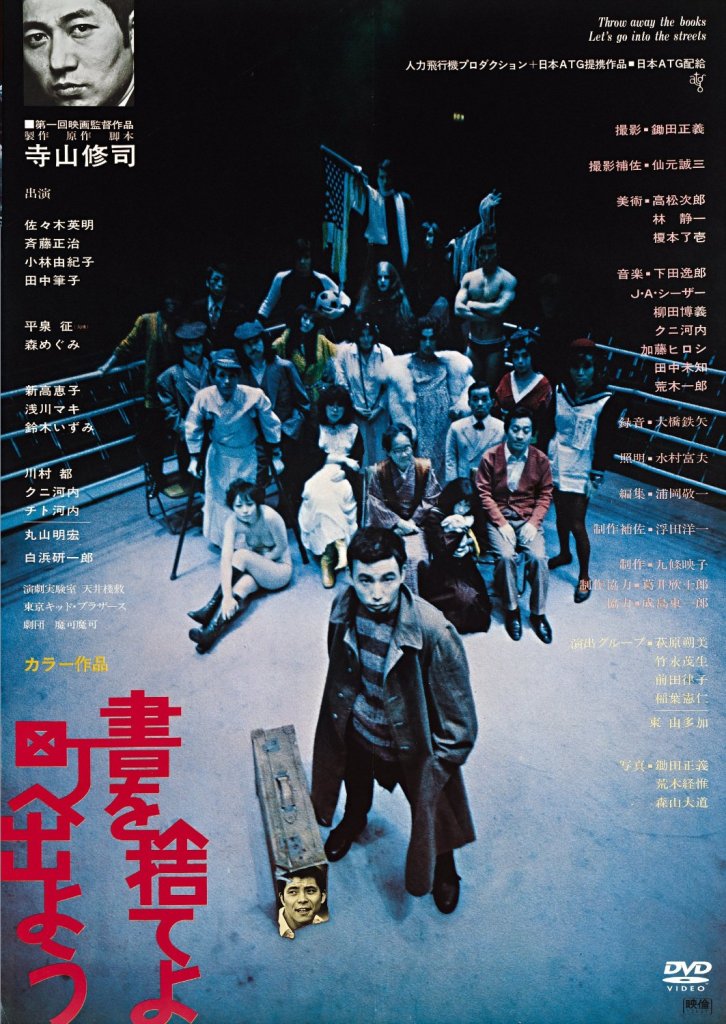
 Caught in a moment of transition in more ways than one, Throw Away Your Books, Rally in the Streets (書を捨てよ町へ出よう, Sho o Suteyo Machi e Deyo) is a clarion call to apathetic youth in the dying days of ‘60s youthful rebellion. Neatly bridging the gap between post-war avant-garde and the punk cinema of the ‘70s and ‘80s, Terayama experiments gleefully with a psychedelic, surreal rock musical which is first and foremost a sensory rather than a cerebral experience.
The film opens with an uncomfortably long black screen which has a subtle soundscape running behind it. Just when you begin to think there’s something wrong with the video, a young man dressed in a trench coat (collar turned up) appears and berates our idiocy for haven fallen for the trick. What are we doing here, sitting in a dark room waiting for something to happen when the real action is, and always has been, out in the streets? We’re trapped in here – we’re the ones inside the screen, the boy is free to smoke and we are free only to watch him do it.
It becomes clear that we are also trapped within the realm of his unrealisable dreams. He worked at a factory but he didn’t like it so he quit. He wanted to be a boxer but it frightened him so he gave up. He hears a story of a Korean boy who built a glider and tried to fly home on his own only to crash somewhere over the ocean. He envies the moments of blue skies the Korean boy flew through as the brief fulfilment of a dream. From this point on he builds a glider in his mind but is perpetually unable to launch finally seeing it too go up in flames.
The boy says he comes from a dead end place where he lives with his unemployed father, needy grandmother and younger sister whose attachment to her pet rabbit is beginning to raise eyebrows. He finds another outlet for his youthful masculinity in the local football team (football is the most manly because the ball is bigger) where an older brother substitute tries to introduce him to the better things in life including sending him to a local prostitute to “make him a man” and teaching him about “sophisticated” western dining and marxist discourse. Throughout all of this the boy remains alone, perpetually observing from the outside but never successfully finding his way in. There’s a repeated riddle – what has one way in and two ways out? We expect an answer that carries some profound weight about the nature of human existence but, no, after all it’s just a pair of trousers.
Terayama travels from black to white – beginning with the bleak opening which is all darkness and silence, he takes us to an ending of blinding white light and the eclipse that will come to us all. The boy tells us the the film will be over soon and no one will remember him – that’s all that’s left to show, a blank white screen and the images of men who will shortly disappear. However, this is not the end though we see the white screen interrupt us a few more times, the boy has another monologue in which he tells us how the film has consumed him so that the lines between reality and fantasy have become indistinguishable. The film crew have become his family, the actor playing his father is, in a sense, his father, the 28 day shoot has become an entire universe which lives and dies inside the film. A film is something which only lives in the dark, when we flick on the lights, the magic is broken and it dies.
The boy says he loved this world but does not love the cinema yet the film is rife with cinematic references and Terayama is always careful to remind us we’re watching a film by deliberately making us aware of the camera. He calls out Polanski, Oshima, and Antonioni by name and even sings a love song to Ken Takakura as well as pledging his devotion to female leading yakuza actress Junko Fuji. Yet the world of the film is totally its own encompassing proto-punk rock songs, surrealistic imagery and inserted street art quoting artists and dreamers including the Russian futurist poet Mayakovsky. As in his other work Terayama also employs Godard style colour filters from the violent green of the boy’s family life to the standard colouring of the football club and the purple tinged insert scene in which a group of hopefuls read out classified ads featuring men seeking men, missing wives and mothers, and finally a couple of obvious scams.
Way ahead of its time and successfully anticipating the anarchic pop-punk movement which was to come some years later Terayama’s youthful masterpiece remains one of the most important if inscrutable films of the era. Sadly, Terayama died at the young age of 47 in 1983 walking into his own blank white screen but even in this first feature length effort he imprinted all the pain and rage of his times into a story of a young man lost and confused in the modern consumerist era. It calls on youth to awaken, go out into the streets and do something, anything, but also has little faith that it will. We’ll go on watching Ken Takakura to feel like a tough guy before going back to being vaguely disappointed with our circumstances but doing nothing much of anything at all about it. We too, live only in the film, inside the dream, until the screen burns white and our dreams dissolve with it.
This trailer was created for a specific film screening (The North Star Ballroom is where the screening took place) but does have subtitles. It’s a little NSFW though, be warned.
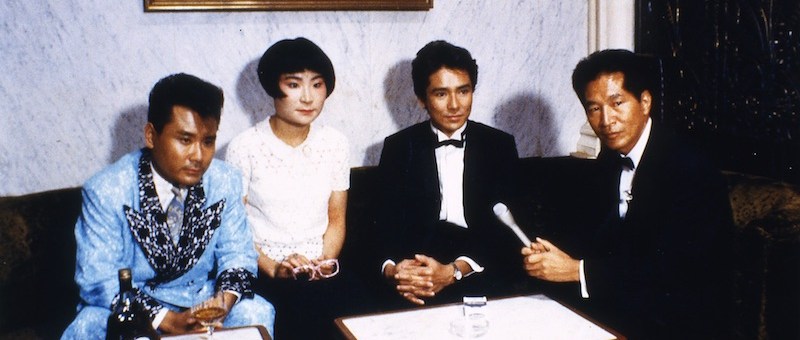
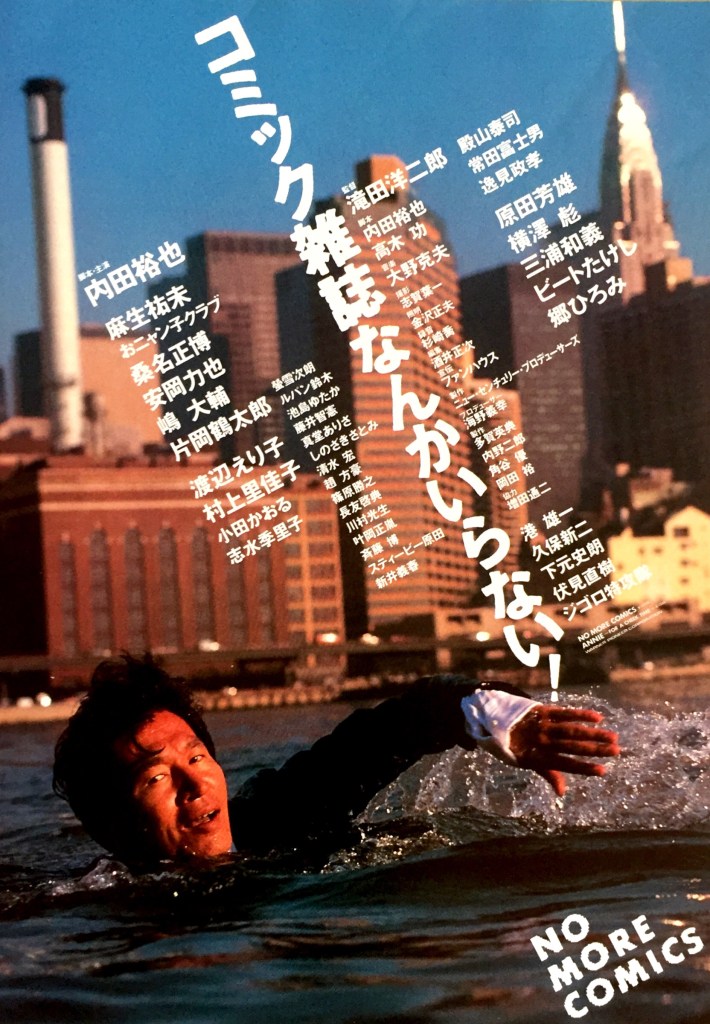 The word “paparazzo” might have been born with La Dolce Vita but the gossip hungry newshound has been with us since long before the invention of the camera. Yojiro Takita’s 1986 film No More Comics! (コミック雑誌なんかいらない, Komikku zasshi nanka iranai AKA Comic Magazine) proves that the media’s obsession with celebrity and “first on the scene” coverage is not a new phenomenon nor one which is likely to change any time soon.
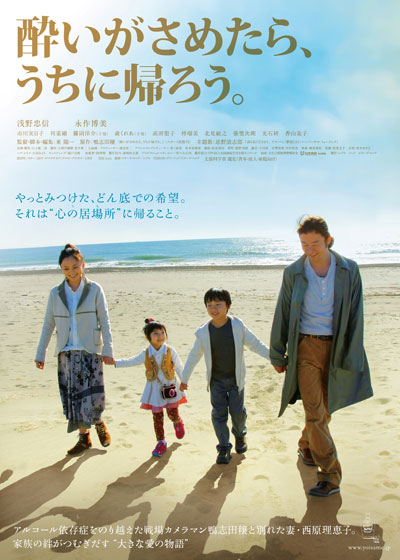 Alcoholism is not a theme which has exactly been absent from the history of cinema. From the booze drenched regret of Days of Wine and Roses to the melancholic inevitability of Leaving Las Vegas and the disdaining irony of Barfly, there has been no shortage of unsympathetic portrayals of drunkenness when it comes to the silver screen. Yoichi Higashi’s Wandering Home (酔いがさめたら、うちに帰ろう, Yoi Ga Sametara, Uchi Ni Kaerou) walks something of a middle road here as it embraces the classic “issue drama” mould but also aims for a naturalistic character study in adapting the true life memoirs of photojournalist Yutaka Kamoshida (husband of well known mangaka Reiko Saibara).
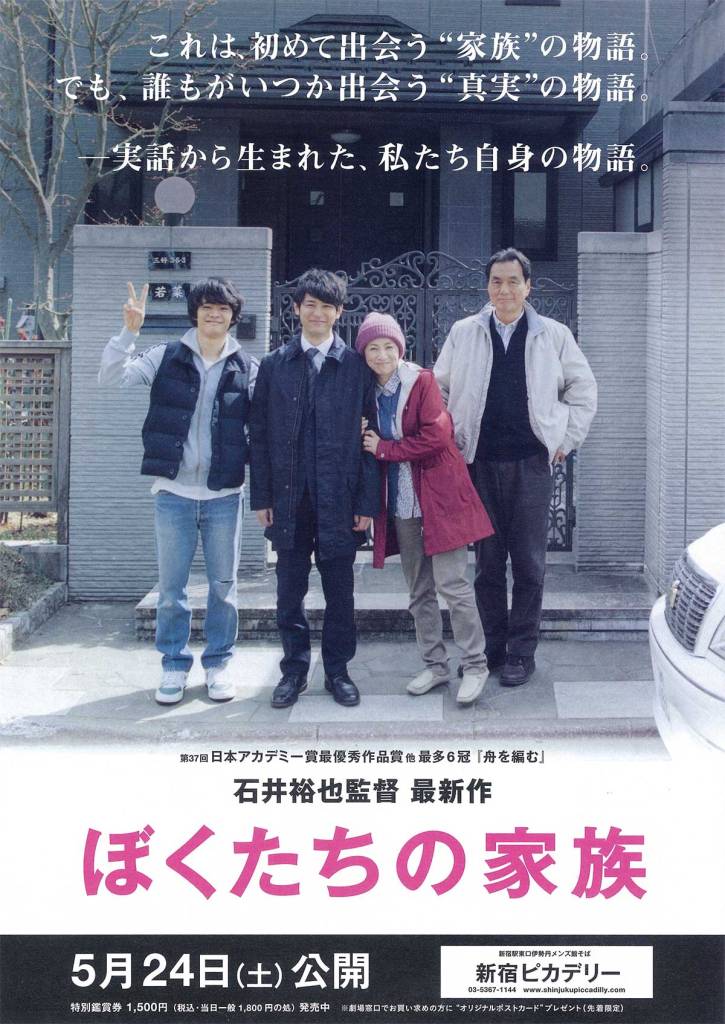 Yuya Ishii’s early work generally took the form of quirky social comedies, but underlying them all was that classic bastion of Japanese cinema, the family drama. If Ishii was in some senses subverting this iconic genre in his youthful exuberance, recent efforts have seen him come around to a more conventional take on the form which is often thought to symbolise his nation’s cinema. In Our Family Ishii is making specific reference to the familial relations of a father and two sons who orbit around the mother but also hints at wider concerns in a state of the nation address as regards the contemporary Japanese family.
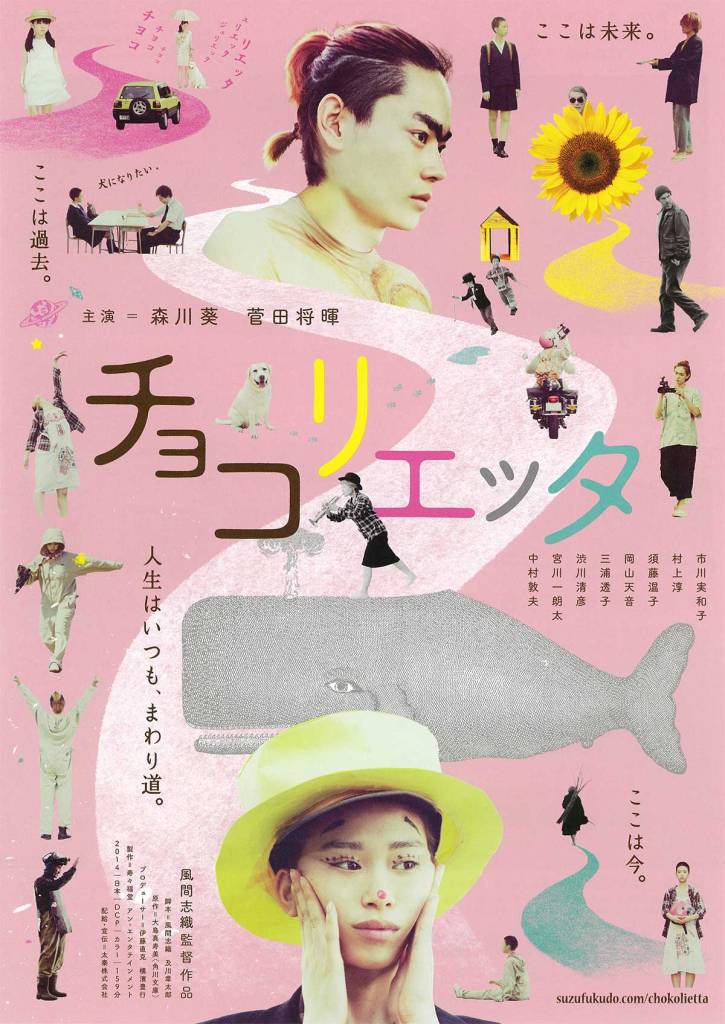 When examining the influences of classic European cinema on Japanese filmmaking, you rarely end up with Fellini. Nevertheless, Fellini looms large over the indie comedy Choklietta (チョコリエッタ) and the director, Shiori Kazama, even leaves a post-credits dedication to Italy’s master of the surreal as a thank you for inspiring the fifteen year old her to make movies. Full of knowing nods to the world of classic cinema, Chokolietta is a charming, if over long, coming of age drama which becomes a meditation on both personal and national notions of loss.
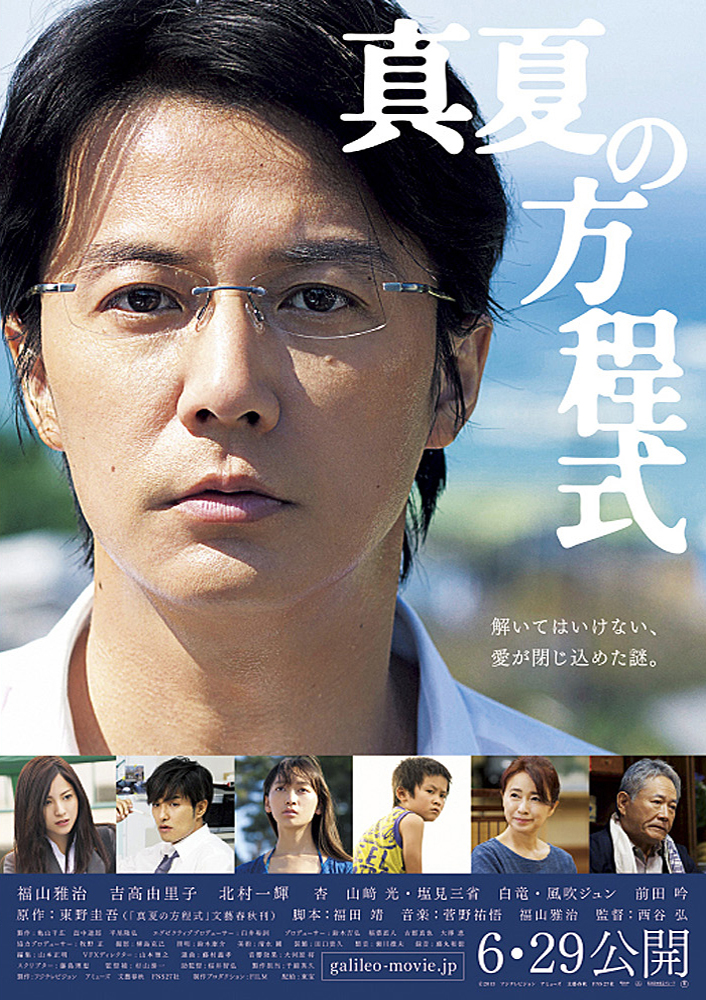 Sometimes it’s handy to know an omniscient genius detective, but then again sometimes it’s not. You have to wonder why people keep inviting famous detectives to their parties given what’s obviously going to unfold – they do rather seem to be a magnet for murders. Anyhow, the famous physicist and sometime consultant to Japan’s police force, “Galileo”, is about to have another busman’s holiday as he travels to a small coastal town which is currently holding a mediation between an offshore mining company and the local residents who are worried about the development’s effects on the area’s sea life.
 As you read the words “adapted from the novel by Kanae Minato” you know that however cute and cuddly the blurb on the back may make it sound, there will be pain and suffering at its foundation. So it is with A Chorus of Angels (北のカナリアたち, Kita no Kanariatachi) which sells itself as a kind of mini-take on Twenty-Four Eyes (“Twelve Eyes” – if you will) as a middle aged former school mistress meets up with her six former charges only to discover that her own actions have cast an irrevocable shadow over the very sunlight she was determined to shine on their otherwise troubled young lives.
 Despite being one of the most prolific directors of the ‘80s and ‘90s, the work of Yoshimitsu Morita has not often travelled extensively overseas. Though frequently appearing at high profile international film festivals, few of Morita’s films have been released outside of Japan and largely he’s still best remembered for his hugely influential (and oft re-visited) 1983 black comedy, The Family Game. In part, this has to be down to Morita’s own zigzagging career which saw him mixing arthouse aesthetics with more populist projects. Main Theme is definitely in the latter category and is one of the many commercial teen idol vehicles he tackled in the 1980s.
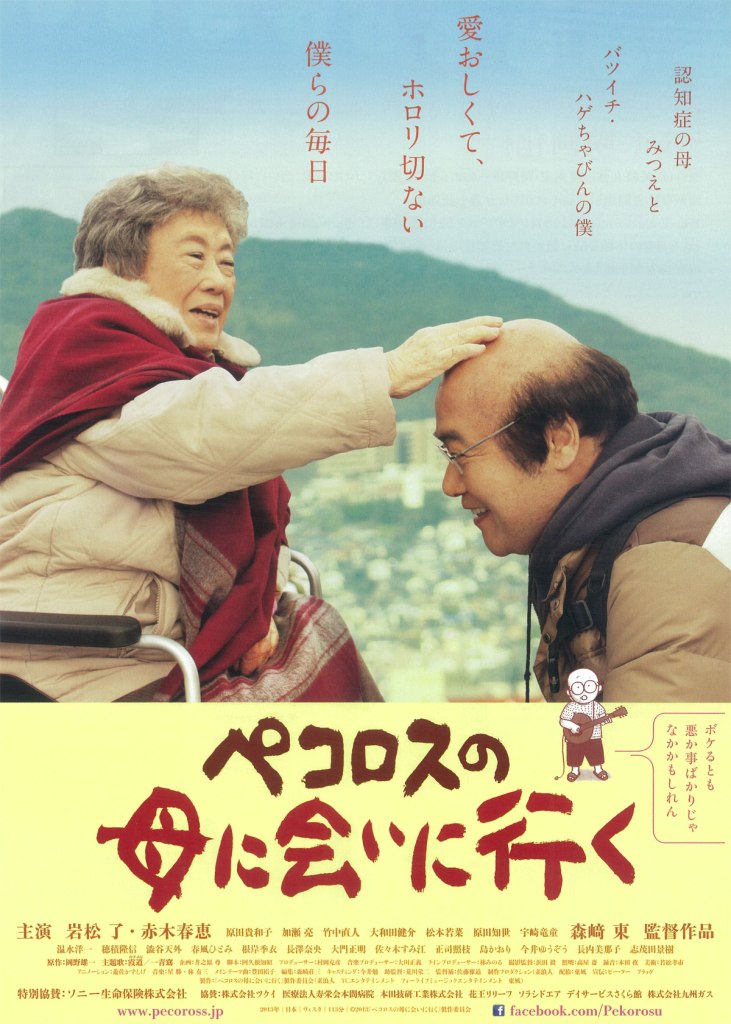 Topping the “best of 2013” lists in both Kinema Junpo and Eiga Geijitsu (something of a feat in itself), Pecoross’ Mother and Her Days (ペコロスの母に会いに行く, Pecoross no Haha ni Ai ni Iku) is a much more populist offering than might be supposed but nevertheless effectively pulls at the heartstrings. Addressing the themes of elder care and senile dementia in Japan’s rapidly ageing society, the film is both a tribute to a son’s love for his mother and to the personal suffering that coloured the majority of the mid-twentieth century in Japan.
 Windows on Worlds